Product
Folder
Sample &
Buy
Support &
Community
Tools &
Software
Technical
Documents
DRV8816
SLRS063C – SEPTEMBER 2013 – REVISED FEBRUARY 2016
DRV8816 DMOS Dual 1/2-H-Bridge Motor Drivers
1 Features
3 Description
•
The DRV8816 provides a versatile power driver
solution with two independent ½-H bridge drivers.
The device can drive one brushed DC motor or one
winding of a stepper motor, as well as other devices
like solenoids. A simple INx/ENx interface allows
easy interfacing to controller circuits.
1
•
•
•
•
•
•
H-Bridge Motor Driver Individual
– Drives a DC Motor or Other Loads
– Low RDS(on) MOSFETs (0.4-Ω TYP)
Low-Power Sleep Mode
100% PWM Supported
8- to 38-V Operating Supply Voltage Range
Thermally Enhanced Surface Mount Package
Configurable Overcurrent Limit
Protection Features
– VBB Undervoltage Lockout (UVLO)
– Charge Pump Undervoltage (CPUV)
– Overcurrent Protection (OCP)
– Short-to-Supply Protection (STS)
– Short-to-Ground Protection (STG)
– Overtemperature Warning (OTW)
– Overtemperature Shutdown (OTS)
– Fault Condition Indication Pin (nFAULT)
A low-power sleep mode is provided which shuts
down internal circuitry to achieve very-low quiescent
current draw. This sleep mode can be set using a
dedicated nSLEEP pin.
Internal protection functions are provided for UVLO,
charge pump fault, OCP, short-to-supply protection,
short-to-ground protection, overtemperature warning,
and overtemperature shutdown. Fault conditions are
indicated through a nFAULT pin
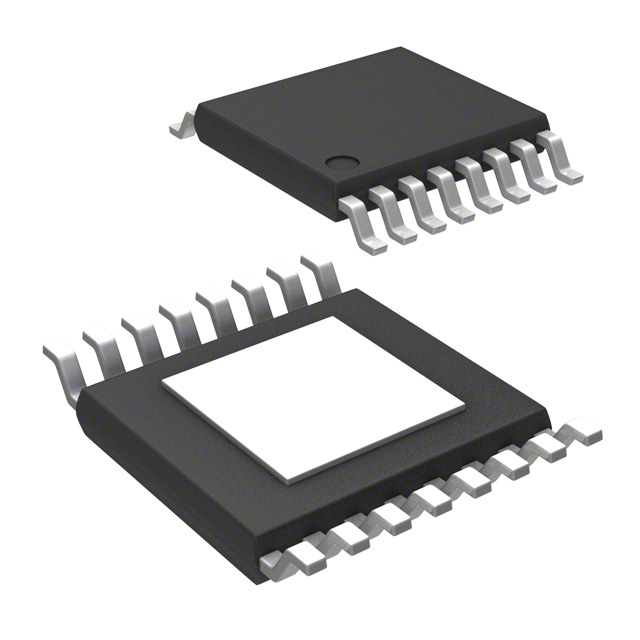
The DRV8816 is packaged in a 16-pin HTSSOP
package with PowerPAD™ (Eco-friendly: RoHS & no
Sb/Br)
2 Applications
•
•
•
•
The output stages use N-channel power MOSFETs
configured as ½-H-bridges. The DRV8816 is capable
of peak output currents up to ±2.8 A and operating
voltages up to 38 V. An internal charge pump
generates needed gate drive voltages.
Printers
Industrial Automation
Robotics
Motorized Levers
Device Information(1)
PART NUMBER
DRV8816
PACKAGE
HTSSOP (16)
BODY SIZE (NOM)
4.40 mm × 5.00 mm
(1) For all available packages, see the orderable addendum at
the end of the data sheet.
Simplified Schematic
8V to 38 V
4
DRV8816
EN / IN
nSLEEP
Controller
nFAULT
VPROPI
Brushed DC
Motor Driver
2.8A peak
BDC
Protection
1
An IMPORTANT NOTICE at the end of this data sheet addresses availability, warranty, changes, use in safety-critical applications,
intellectual property matters and other important disclaimers. PRODUCTION DATA.
�DRV8816
SLRS063C – SEPTEMBER 2013 – REVISED FEBRUARY 2016
www.ti.com
Table of Contents
1
2
3
4
5
6
7
Features ..................................................................
Applications ...........................................................
Description .............................................................
Revision History.....................................................
Pin Configuration and Functions .........................
Specifications.........................................................
1
1
1
2
3
4
6.1
6.2
6.3
6.4
6.5
6.6
4
4
4
5
5
6
Absolute Maximum Ratings ......................................
ESD Ratings..............................................................
Recommended Operating Conditions ......................
Thermal Information ..................................................
Electrical Characteristics...........................................
Typical Characteristics ..............................................
Detailed Description .............................................. 8
7.1
7.2
7.3
7.4
Overview ................................................................... 8
Functional Block Diagram ......................................... 8
Feature Description................................................... 8
Device Functional Modes........................................ 11
8
Application and Implementation ........................ 13
8.1 Application Information............................................ 13
8.2 Typical Application ................................................. 13
9
Power Supply Recommendations...................... 16
9.1 Bulk Capacitance .................................................... 16
9.2 Power Supervisor.................................................... 16
10 Layout................................................................... 17
10.1 Layout Guidelines ................................................. 17
10.2 Layout Example .................................................... 18
10.3 Thermal Protection................................................ 18
11 Device and Documentation Support ................. 19
11.1
11.2
11.3
11.4
11.5
Documentation Support ........................................
Community Resource............................................
Trademarks ...........................................................
Electrostatic Discharge Caution ............................
Glossary ................................................................
19
19
19
19
19
12 Mechanical, Packaging, and Orderable
Information ........................................................... 19
4 Revision History
NOTE: Page numbers for previous revisions may differ from page numbers in the current version.
Changes from Revision B (October 2014) to Revision C
Page
•
Updated description for nFAULT pin. .................................................................................................................................... 3
•
Removed the RVPROPI component........................................................................................................................................... 3
•
Changed the Functional Block Diagram image ...................................................................................................................... 8
•
Changed the Typical Application image ............................................................................................................................... 13
•
Changed the Layout Example image ................................................................................................................................... 18
Changes from Original (September 2013) to Revision A
Page
•
Added Handling Rating table, Feature Description section, Device Functional Modes, Application and
Implementation section, Power Supply Recommendations section, Layout section, Device and Documentation
Support section, and Mechanical, Packaging, and Orderable Information section ............................................................... 4
•
Updated Figure 5.................................................................................................................................................................. 12
2
Submit Documentation Feedback
Copyright © 2013–2016, Texas Instruments Incorporated
Product Folder Links: DRV8816
�DRV8816
www.ti.com
SLRS063C – SEPTEMBER 2013 – REVISED FEBRUARY 2016
5 Pin Configuration and Functions
nFAULT
EN2
IN1
GND
nSLEEP
EN1
OUT1
SENSE
16
PowerPAD - GND
1
2
3
4
5
6
7
15
14
13
12
11
10
8
9
IN2
VPROPI
VCP
GND
CP2
CP1
OUT2
VBB
Pin Functions
PIN
NAME
NO.
TYPE
DESCRIPTION
POWER AND GROUND
CP1
11
PWR
CP2
12
—
GND
4, 13,
PPAD
VBB
VCP
Charge pump switching node
Connect a 0.1-µF X7R capacitor rated for VBB between CP1 and CP2
PWR
Device ground
Connect to system ground
9
PWR
Power supply input
Connect to main power supply. Bypass to GND with a 0.1-µF ceramic
capacitor and a larger bulk capacitor rated for at least the VBB voltage
14
PWR
Charge pump output
Connect a 0.1-µF 16-V ceramic capacitor between VCP and VBB
I
½-H bridge enable
Logic high enables ½-H bridge output; logic low puts the FETs in HI-Z;
internal pull-down
I
½-H bridge control
Logic high enables the high-side ½-H bridge FET; logic low enables
the low side FET; internal pull-down
CONTROL
EN1
6
EN2
2
IN1
3
IN2
16
nFAULT
1
O
Fault indication pin
Pulled logic low with fault condition; open-drain output requires an
external pull-up. This output is indeterminate in sleep mode
nSLEEP
5
I
Device sleep mode
Pull logic low to put device into a low-power sleep mode; internal pulldown
OUT1
7
O
½-H bridge output
OUT2
10
O
½-H bridge output
SENSE
8
O
H-bridge low-side connect
15
O
Current-proportional output
OUTPUT
Connect directly to GND or through a sense resistor to set OCP
VPROPI
VPROPI
Table 1. External Components
COMPONENT
CVBB
(1)
PIN 1
VBB
PIN 2
RECOMMENDED
GND
0.1-µF ceramic capacitor and a larger bulk capacitor rated for at least the VBB
voltage
0.1-µF 16-V ceramic capacitor
CVCP
VCP
VBB
RnFAULT
VCC (1)
nFAULT
>1 kΩ resistor
RnSLEEP
VCC (1)
nSLEEP
If nSLEEP isn't actively controlled, use a pull-up resistor of less than 20 kΩ
RSENSE
SENSE
GND
Optional low-value resistor. If not used, connect SENSE pin directly to GND.
VCC is not a pin on the DRV8816, but a VCC supply voltage pullup is required.
Submit Documentation Feedback
Copyright © 2013–2016, Texas Instruments Incorporated
Product Folder Links: DRV8816
3
�DRV8816
SLRS063C – SEPTEMBER 2013 – REVISED FEBRUARY 2016
www.ti.com
6 Specifications
6.1 Absolute Maximum Ratings
over operating free-air temperature range (unless otherwise noted) (1)
VBB
V(SENSE)
MIN
MAX
UNIT
Power supply voltage
–0.6
40
V
Charge pump positive switching pin (CP2)
–0.6
VBB + 7
V
Charge pump negative switching pin (CP1)
–0.6
VBB
V
Digital pin voltage range (IN1, IN2, EN1, EN2, nSLEEP, nFAULT)
–0.3
7
V
VBB to OUTx
–0.6
40
V
OUTx to SENSE
–0.6
40
V
–0.5
1.0
V
A
Sense voltage (SENSE)
(2)
H-bridge output current (OUT1, OUT2, SENSE)
0
2.8
VPROPI pin voltage range (VPROPI)
–0.3
3.6
V
TA
Operating ambient temperature
–40
85
°C
TJ
Operating junction temperature
–40
190
°C
Tstg
Storage temperature
–40
125
°C
(1)
(2)
Stresses beyond those listed under Absolute Maximum Ratings may cause permanent damage to the device. These are stress ratings
only, which do not imply functional operation of the device at these or any other conditions beyond those indicated under Recommended
Operating Conditions. Exposure to absolute-maximum-rated conditions for extended periods may affect device reliability.
Transients of ±1 V for less than 25 ns are acceptable.
6.2 ESD Ratings
VALUE
V(ESD)
(1)
(2)
Electrostatic discharge
Human-body model (HBM), per ANSI/ESDA/JEDEC JS-001 (1)
±2000
Charged-device model (CDM), per JEDEC specification JESD22C101 (2)
±500
UNIT
V
JEDEC document JEP155 states that 500-V HBM allows safe manufacturing with a standard ESD control process
JEDEC document JEP157 states that 250-V CDM allows safe manufacturing with a standard ESD control process.
6.3 Recommended Operating Conditions
Power dissipation and thermal limits must be observed.
MIN
MAX
VBB
Power supply voltage
8
38
V
VI
Input pin voltage
0
5.5
V
fPWM
Applied PWM signal (IN1, IN2, EN1, EN2)
100
kHz
IOUT
H-bridge output current
2.8
A
TA
Ambient temperature
85
°C
4
–40
Submit Documentation Feedback
UNIT
Copyright © 2013–2016, Texas Instruments Incorporated
Product Folder Links: DRV8816
�DRV8816
www.ti.com
SLRS063C – SEPTEMBER 2013 – REVISED FEBRUARY 2016
6.4 Thermal Information
DRV8816
THERMAL METRIC (1)
PWP (HTSSOP)
UNIT
16 PINS
RθJA
Junction-to-ambient thermal resistance (2)
(3)
43.9
°C/W
RθJC(top)
Junction-to-case (top) thermal resistance
30.8
°C/W
RθJB
Junction-to-board thermal resistance (4)
25.3
°C/W
ψJT
Junction-to-top characterization parameter (5)
1.1
°C/W
ψJB
Junction-to-board characterization parameter
(6)
25
°C/W
RθJC(bot)
Junction-to-case (bottom) thermal resistance (7)
5.6
°C/W
(1)
(2)
(3)
(4)
(5)
(6)
(7)
For more information about traditional and new thermal metrics, see the IC Package Thermal Metrics application report, SPRA953.
The junction-to-ambient thermal resistance under natural convection is obtained in a simulation on a JEDEC-standard, high-K board, as
specified in JESD51-7, in an environment described in JESD51-2a.
The junction-to-case (top) thermal resistance is obtained by simulating a cold plate test on the package top. No specific JEDECstandard test exists, but a close description can be found in the ANSI SEMI standard G30-88.
The junction-to-board thermal resistance is obtained by simulating in an environment with a ring cold plate fixture to control the PCB
temperature, as described in JESD51-8.
The junction-to-top characterization parameter, ψ JT , estimates the junction temperature of a device in a real system and is extracted
from the simulation data for obtaining θ JA , using a procedure described in JESD51-2a (sections 6 and 7).
The junction-to-board characterization parameter, ψ JB , estimates the junction temperature of a device in a real system and is extracted
from the simulation data for obtaining θ JA , using a procedure described in JESD51-2a (sections 6 and 7).
The junction-to-case (bottom) thermal resistance is obtained by simulating a cold plate test on the exposed (power) pad. No specific
JEDEC standard test exists, but a close description can be found in the ANSI SEMI standard G30-88.
6.5 Electrical Characteristics
over recommended operating conditions (unless otherwise noted)
PARAMETER
TEST CONDITIONS
MIN
TYP
MAX
UNIT
POWER SUPPLIES (VBB)
VBB
VBB operating voltage
8
IVBB
VBB operating supply current
IVBBQ
VBB sleep-mode supply current nSLEEP = 0, TJ = 25°C
ƒPWM < 50 kHz
38
6
Charge pump on, Outputs disabled
V
mA
3.2
mA
10
µA
CONTROL INPUTS (IN1, IN2, EN1, EN2, nSLEEP)
VIL
Input logic low voltage
IN1, IN2, EN1, EN2
0
0.8
V
VIH
Input logic high voltage
IN1, IN2, EN1, EN2
2
5.5
V
VIL
Input logic low voltage
nSLEEP
0
0.8
V
VIH
Input logic high voltage
nSLEEP
IIL
Input logic low current
IN1, IN2, EN2, nSLEEP
VIN = 0 V
0
μA
IIH
Input logic high current
IN1, IN2, EN2, nSLEEP
VIN = 5 V
25
μA
IIL
Input logic low current
EN1
VIN = 0 V
0
μA
IIH
Input logic high current
EN1
VIN = 5 V
100
μA
RPD
Pulldown resistance
2.2
IN1, IN2, EN2, nSLEEP
EN1
5.5
200
V
kΩ
50
SERIAL AND CONTROL OUTPUT (nFAULT)
VOL
Output logic low voltage
Isink = 1 mA
0.4
V
DMOS DRIVERS (OUT1, OUT2, SENSE)
RDS(on)
Output ON resistance
VTRIP
SENSE trip voltage
Vf
Body diode forward voltage
Source driver, IOUT = –2.8 A, TJ = 25°C
0.48
Source driver, IOUT = –2.8 A, TJ = 125°C
0.74
Sink driver, IOUT = –2.8 A, TJ = 25°C
0.35
Sink driver, IOUT = –2.8 A, TJ = 125°C
0.52
RSENSE between SENSE and GND
500
0.85
0.7
mV
Source diode, If = –2.8 A
1.4
Sink diode, If = 2.8 A
1.4
Submit Documentation Feedback
Copyright © 2013–2016, Texas Instruments Incorporated
Product Folder Links: DRV8816
Ω
V
5
�DRV8816
SLRS063C – SEPTEMBER 2013 – REVISED FEBRUARY 2016
www.ti.com
Electrical Characteristics (continued)
over recommended operating conditions (unless otherwise noted)
PARAMETER
tpd
TEST CONDITIONS
OUTx propagation delay
tCOD
Crossover delay
DAGain
VPROPI amplifier gain
MIN
TYP
From High-Z to High
70
From High-Z to Low
700 (1)
From High to High-Z
120
From High to Low
700
From Low to High-Z
350
From Low to High
350
Sense = 0.1 to 0.4 V
MAX
UNIT
ns
500
ns
5
V/V
PROTECTION CIRCUITS
VUVLO
VBB UVLO
VBB rising
(2)
VCPUV
VCP UVLO
IOCP
Overcurrent protection trip level
VBB rising; CPUV recovery
tDEG
Overcurrent deglitch time
tOCP
Overcurrent retry time
TOTW
Thermal warning temperature
6.5
7.5
V
12
13.8
V
3
A
3.0
µs
1.6
ms
Die temperature Tj
160
°C
TOTW HYS Thermal warning hysteresis
Die temperature Tj
15
°C
TOTS
Thermal shutdown temperature
Die temperature Tj
175
°C
Thermal shutdown hysteresis
Die temperature Tj
15
°C
TOTS
(1)
(2)
HYS
If OUT2 is High, the typical time for OUT1 to go from High-Z to Low is 1700 ns.
Whenever VCP is less than VM + 10 V, a CPUV event occurs. This fault will be asserted whenever VBB is below 12 V. Note that the Hbridges will remain enabled until VBB = VUVLO even through nFAULT is pulled low.
6.6 Typical Characteristics
Quiescent Current (µA)
9
8
1.02
±40ƒC
Source Driver
1.00
25°C
125°C
RDS(ON) (normalized)
10
7
6
5
4
3
2
0.96
0.94
0.92
0.90
0.88
1
0
0.86
8V
32 V
Supply Voltage
Figure 1. IVBBQ vs VBB
6
Sink Driver
0.98
8V
38 V
32V
Supply Voltage
C001
C002
Figure 2. RDS(ON) vs VBB (normalized to VBB = 8V)
Submit Documentation Feedback
Copyright © 2013–2016, Texas Instruments Incorporated
Product Folder Links: DRV8816
�DRV8816
www.ti.com
SLRS063C – SEPTEMBER 2013 – REVISED FEBRUARY 2016
Typical Characteristics (continued)
Charge Pump Voltage (V)
60
50
40
30
20
10
0
5V
15 V
25 V
35 V
Supply Voltage
45 V
C003
Figure 3. VCP vs VBB
Submit Documentation Feedback
Copyright © 2013–2016, Texas Instruments Incorporated
Product Folder Links: DRV8816
7
�DRV8816
SLRS063C – SEPTEMBER 2013 – REVISED FEBRUARY 2016
www.ti.com
7 Detailed Description
7.1 Overview
The DRV8816 uses 4 CMOS inputs to control 2 high-voltage high-current outputs, while integrating protection
features, fault reporting, a sleep mode, and current sensing. EN1 and IN1 control OUT1, and EN2 and IN2
control OUT2, according to Table 2. The device is designed to drive two independent loads or one brushed DC
motor, as shown in Figure 4 and Table 3.
When an RSENSE resistor is used, the DRV8816 will automatically disable itself if VSENSE exceeds 500mV—this
provides a user-programmable overcurrent threshold. The VPROPI output equals the sense voltage amplified by
a factor of 5, and it can be used by a microcontroller to know the motor current, in order to Pulse-Width Modulate
the DRV8816 inputs and regulate motor current.
7.2 Functional Block Diagram
VCP
Power
VBB
bulk
0.1µF
0.1µF
VCP
VBB
VBB
Predriver
VCP
OUT1
CP1
0.1µF
CP2
Charge
Pump
VCP
BDC
VBB
GND
Predriver
Regulators
GND
OUT2
Core
Logic
PPAD
SENSE
RSENSE
IN1
IN2
Protection
Outputs
x5
EN1
EN2
nSLEEP
Inputs
VPROPI
Overcurrent
Monitoring
nFAULT
Temperature
Sensor
Voltage
Monitoring
7.3 Feature Description
7.3.1 Bridge Control
The DRV8816 is controlled using separate enable and input pins for each ½-H-bridge.
8
Submit Documentation Feedback
Copyright © 2013–2016, Texas Instruments Incorporated
Product Folder Links: DRV8816
�DRV8816
www.ti.com
SLRS063C – SEPTEMBER 2013 – REVISED FEBRUARY 2016
Feature Description (continued)
Table 2 shows the logic for the DRV8816.
Table 2. DRV8816 Logic
ENx
INx
OUTx
0
X
Z
1
0
L
1
1
H
If a single DC motor is connected to the DRV8816, it is connected between the OUT1 and OUT2 pins as shown
in Figure 4. Two DC motors may also be connected to the DRV8816. In this mode, it is not possible to reverse
the direction of the motors; the motors will turn only in one direction. The connections are shown in Figure 4.
VBB
BDC
OUT1
OUT1
VBB
OUT1
BDC
BDC
BDC
OUT2
OUT2
OUT2
BDC
Figure 4. Bridge Control
Table 3 shows how motor operation for a single-brushed DC motor is controlled.
Table 3. Motor Operation for a Single-Brushed DC Motor
EN1
(1)
EN2
IN1
IN2
OUT1
OUT2
X
(1)
Operation
0
X
X
X
Z
X
0
X
X
X (1)
Z
Off (coast)
Off (coast)
1
1
0
0
L
L
Brake
1
1
0
1
L
H
Reverse
1
1
1
0
H
L
Forward
1
1
1
1
H
H
Brake
The Half-H bridges are independent; output state depends on ENx and INx.
Table 4 shows how motor operation for dual-brushed DC motors is controlled.
Table 4. Motor Operation for a Dual-Brushed DC Motor
Motor connected to
GND
Motor connected to
VBB
ENx
INx
OUTx
Operation
0
X
Z
Off (coast)
1
0
L
Brake
1
1
H
Forward
ENx
INx
OUTx
Operation
0
X
Z
Off (coast)
1
0
L
Forward
1
1
H
Brake
Submit Documentation Feedback
Copyright © 2013–2016, Texas Instruments Incorporated
Product Folder Links: DRV8816
9
�DRV8816
SLRS063C – SEPTEMBER 2013 – REVISED FEBRUARY 2016
www.ti.com
7.3.2 Charge Pump
The charge pump is used to generate a supply above VBB to drive the source-side DMOS gates. A 0.1-μF
ceramic monolithic capacitor should be connected between CP1 and CP2 for pumping purposes. A 0.1-μF
ceramic monolithic capacitor should be connected between VCP and VBB to act as a reservoir to run the highside DMOS devices. The VCP voltage level is internally monitored, and in the case of a fault condition, the
outputs of the device are disabled.
VBB
0.1 µF
VCP
CP1
VM
0.1 µF
CP2
Charge
Pump
Figure 5. Charge Pump
7.3.3 VPROPI
The VPROPI output is equal to approximately 5× the voltage present on the SENSE pin. VPROPI is meaningful
only if there is a resistor connected to the SENSE pin; If SENSE is connected to ground, VPROPI measures 0 V.
Also note that during slow decay (brake), VPROPI measures 0 V. VPROPI can output a maximum of 2.5 V,
because at 500 mV on SENSE, the H-bridge is disabled.
7.3.4 Protection Circuits
The DRV8816 is fully protected against VBB undervoltage, charge pump undervoltage, overcurrent, and
overtemperature events.
7.3.4.1 VBB UVLO
If at any time the voltage on the VBB pin falls below the UVLO threshold voltage, all FETs in the H-bridge will be
disabled and the charge pump will be disabled. Operation will resume when VBB rises above the UVLO
threshold. Note that nFAULT does not indicate a UVLO because the CPUV fault is always asserted below VBB =
12 V.
7.3.4.2 VCP UVLO (CPUV)
During a CPUV event, the VCP voltage is measured to be below VCP + 10 V. If at any time the voltage on the
VCP pin falls below the UVLO threshold voltage, the nFAULT pin is driven low. The nFAULT pin is released after
operation has resumed. Note that this fault does not disable the output FETs and allows the device to continue
operating. When VBB is below 12 V, this fault condition is always asserted and nFAULT is pulled low.
10
Submit Documentation Feedback
Copyright © 2013–2016, Texas Instruments Incorporated
Product Folder Links: DRV8816
�DRV8816
www.ti.com
SLRS063C – SEPTEMBER 2013 – REVISED FEBRUARY 2016
7.3.4.3 OCP
The current flowing through the high-side and low-side drivers is monitored to ensure that the motor lead is not
shorted to supply or ground. If a short is detected, all FETs in the H-bridge are disabled, nFAULT is driven low,
and a tOCP fault timer is started. After this period, tOCP, the device is then allowed to follow the input commands
and another turn-on is attempted (nFAULT becomes high again during this attempt). If there is still a fault
condition, the cycle repeats. If after tOCP expires it is determined the short condition is not present, normal
operation resumes and nFAULT is released.
7.3.4.4 OTW
If the die temperature increases past the thermal warning threshold, the nFAULT pin is driven low. After the die
temperature has fallen below the hysteresis level, the nFAULT pin is released. If the die temperature continues to
increase, the device enters overtemperature shutdown as described in OTS .
7.3.4.5 OTS
If the die temperature exceeds safe limits, all FETs in the H-bridge are disabled and the charge pump is shut
down. After the die temperature has fallen to a safe level, operation automatically resumes.
7.4 Device Functional Modes
7.4.1 SENSE
A low-value resistor can be placed between the SENSE pin and ground for current-sensing purposes. The PCB
should be designed with wide metal paths on each side of the resistor, to minimize IR drop that would decrease
sense accuracy. Likewise, the distance from the sense resistor to the DRV8816 and bulk capacitor should be
minimized.
To set a manual overcurrent trip threshold, place a resistor between the SENSE pin and GND. When the SENSE
pin rises above 500 mV, the H-bridge output is disabled (High-Z). The device will automatically retry with a period
of tOCP. The overcurrent trip threshold can be calculated using ITRIP = 500 mV/Ω. The overcurrent trip level
selected cannot be greater than IOCP.
If a sense resistor is not used, tie the SENSE pin directly to GND; in that case, the IOCP detection of current
through the internal FETs still functions.
Submit Documentation Feedback
Copyright © 2013–2016, Texas Instruments Incorporated
Product Folder Links: DRV8816
11
�DRV8816
SLRS063C – SEPTEMBER 2013 – REVISED FEBRUARY 2016
www.ti.com
Device Functional Modes (continued)
VOUT+
VOUT- High-Z
IPEAK
IOUTx
IOCP
Enable,
Source
or Sink
tOCP
tDEG
nFAULT
Motor Lead
Short Condition
Normal DC
No Fault Condition
Figure 6. Overcurrent Threshold
12
Submit Documentation Feedback
Copyright © 2013–2016, Texas Instruments Incorporated
Product Folder Links: DRV8816
�DRV8816
www.ti.com
SLRS063C – SEPTEMBER 2013 – REVISED FEBRUARY 2016
8 Application and Implementation
NOTE
Information in the following applications sections is not part of the TI component
specification, and TI does not warrant its accuracy or completeness. TI’s customers are
responsible for determining suitability of components for their purposes. Customers should
validate and test their design implementation to confirm system functionality.
8.1 Application Information
The DRV8816 is typically used to drive a brushed DC motor.
8.2 Typical Application
ADC
PU
VPROPI
EN2
Controller
optional
RC filter
IN2
nFAULT
IN1
VCP
GND
DRV8816
GND
nSLEEP
CP2
EN1
CP1
0.1µF
OUT2
OUT1
SENSE
0.25Ÿ
0.1µF
VBB
PPAD
0.1µF
100µF
+
±
8V - 38V
Power Supply
BDC
Figure 7. Typical Application
8.2.1 Design Requirements
Table 5 shows parameters to consider when designing.
Table 5. Design Parameters
DESIGN PARAMETER
REFERENCE
Motor voltage
VBB
EXAMPLE VALUE
24 V
Motor RMS current
IRMS
0.8 A
Motor startup current
ISTART
2A
Motor current trip point
ITRIP
2.5 A
Submit Documentation Feedback
Copyright © 2013–2016, Texas Instruments Incorporated
Product Folder Links: DRV8816
13
�DRV8816
SLRS063C – SEPTEMBER 2013 – REVISED FEBRUARY 2016
www.ti.com
8.2.2 Detailed Design Procedure
8.2.2.1 Motor Voltage
The motor voltage to use will depend on the ratings of the motor selected and the desired RPM. A higher voltage
spins a brushed DC motor faster with the same PWM duty cycle applied to the power FETs. A higher voltage
also increases the rate of current change through the inductive motor windings.
8.2.2.2 Power Dissipation
The power dissipation of the DRV8816 is a function of RMS motor current and the each output’s FET resistance
(RDS(ON)).
Power » IRMS 2 ´ (High-Side RDS(ON) + Low-Side RDS(ON) )
(1)
For this example, the ambient temperature is 35°C, and the junction temperature reaches 65°C. At 65°C, the
sum of RDS(ON) is about 1Ω. With an example motor current of 0.8A, the dissipated power in the form of heat will
be 0.8A² x 1Ω = 0.64W.
The temperature that the DRV8816 reaches will depend on the thermal resistance to the air and PCB. It is
important to solder the device PowerPAD to the PCB ground plane, with vias to the top and bottom board layers,
in order dissipate heat into the PCB and reduce the device temperature. In the example used here, the DRV8816
had an effective thermal resistance RθJA of 47°C/W, and:
(2)
8.2.2.3 Motor Current Trip Point
When the voltage on pin SENSE exceeds VTRIP (0.5V), overcurrent is detected. The RSENSE resistor should be
sized to set the desired ITRIP level.
RSENSE = 0.5V / ITRIP
(3)
To set ITRIP to 2A, RSENSE = 0.5V / 2A = 0.25Ω.
To prevent false trips, ITRIP must be higher than regular operating current. Motor current during startup is typically
much higher than steady-state spinning, because the initial load torque is higher, and the absence of back-EMF
causes a higher voltage and extra current across the motor windings.
It can be beneficial to limit startup current by using series inductors on the DRV8816 output, as that allows ITRIP
to be lower, and it may decrease the system’s required bulk capacitance. Startup current can also be limited by
ramping the forward drive duty cycle.
8.2.2.4 Sense Resistor Selection
For optimal performance, it is important for the sense resistor to be:
• Surface-mount
• Low inductance
• Rated for high enough power
• Placed closely to the motor driver
The power dissipated by the sense resistor equals IRMS² x R. For example, if peak motor current is 3A, RMS
motor current is 2A, and a 0.05Ω sense resistor is used, the resistor will dissipate 2A² x 0.05Ω = 0.2W. The
power quickly increases with higher current levels.
Resistors typically have a rated power within some ambient temperature range, along with a de-rated power
curve for high ambient temperatures. When a PCB is shared with other components generating heat, margin
should be added. It is always best to measure the actual sense resistor temperature in a final system, along with
the power MOSFETs, as those are often the hottest components.
Because power resistors are larger and more expensive than standard resistors, it is common practice to use
multiple standard resistors in parallel, between the sense node and ground. This distributes the current and heat
dissipation.
14
Submit Documentation Feedback
Copyright © 2013–2016, Texas Instruments Incorporated
Product Folder Links: DRV8816
�DRV8816
www.ti.com
SLRS063C – SEPTEMBER 2013 – REVISED FEBRUARY 2016
8.2.3 Application Curves
Figure 8. Forward Drive, Fast Decay
Figure 9. Reverse Drive, Fast Decay
Figure 10. Forward Drive, Slow Decay
Figure 11. Reverse Drive, Slow Decay
Submit Documentation Feedback
Copyright © 2013–2016, Texas Instruments Incorporated
Product Folder Links: DRV8816
15
�DRV8816
SLRS063C – SEPTEMBER 2013 – REVISED FEBRUARY 2016
www.ti.com
9 Power Supply Recommendations
9.1 Bulk Capacitance
Having appropriate local bulk capacitance is an important factor in motor drive system design. It is generally
beneficial to have more bulk capacitance, while the disadvantages are increased cost and physical size.
The amount of local capacitance needed depends on a variety of factors, including:
• The highest current required by the motor system.
• The power supply's capacitance and ability to source current.
• The amount of parasitic inductance between the power supply and motor systems.
• The acceptable voltage ripple.
• The type of motor used (Brushed DC, Brushless DC, Stepper).
• The motor braking method.
The inductance between the power supply and motor drive system will limit the rate current can change from the
power supply. If the local bulk capacitance is too small, the system will respond to excessive current demands or
dumps from the motor with a change in voltage. When adequate bulk capacitance is used, the motor voltage
remains stable and high current can be quickly supplied.
The datasheet generally provides a recommended value, but system-level testing is required to determine the
appropriate sized bulk capacitor.
Power Supply
Parasitic Wire
Inductance
Motor Drive System
VBB
+
±
+
Motor
Driver
GND
Local
Bulk Capacitor
IC Bypass
Capacitor
Figure 12. Example Setup of Motor Drive System with External Power Supply
9.2 Power Supervisor
Control input nSLEEP is used to minimize power consumption when the DRV8816 is not in use. This disables
much of the internal circuitry, including the internal voltage rails and charge pump. nSLEEP is asserted low. A
logic high on this input pin results in normal operation. When switching from low to high, the user should allow a
1-ms delay before applying PWM signals. This time is needed for the charge pump to stabilize.
16
Submit Documentation Feedback
Copyright © 2013–2016, Texas Instruments Incorporated
Product Folder Links: DRV8816
�DRV8816
www.ti.com
SLRS063C – SEPTEMBER 2013 – REVISED FEBRUARY 2016
10 Layout
10.1 Layout Guidelines
The printed circuit board (PCB) should use a heavy ground plane. For optimum electrical and thermal
performance, the DRV8816 must be soldered directly onto the board. On the underside of the DRV8816 is a
thermal pad, which provides a path for enhanced thermal dissipation. The thermal pad should be soldered
directly to an exposed surface on the PCB. Thermal vias are used to transfer heat to other layers of the PCB.
The load supply pin, VBB, should be decoupled with an electrolytic capacitor (typically 100 μF) in parallel with a
ceramic capacitor placed as close as possible to the device. The ceramic capacitors between VCP and VBB,
connected to VREG, and between CP1 and CP2 should be as close to the pins of the device as possible, in
order to minimize lead inductance.
PTOT = RDS(ON) ´ (IOUT(RMS) )2
where
•
•
•
PTOT is the total power dissipation.
RDS(ON) is the resistance of the HS plus LS FETS.
IOUT(RMS) is the RMS output current being applied to each winding.
(4)
The voltage rating for bulk capacitors should be higher than the operating voltage, to provide margin for cases
when the motor transfers energy to the supply.
IOUT(RMS) is equal to approximately 0.7× the full-scale output current setting.
The maximum amount of power that can be dissipated in the device is dependent on ambient temperature and
heatsinking.
Note that RDS(ON) increases with temperature, so as the device heats, the power dissipation increases.
10.1.1 Ground
A ground power plane should be located as close to DRV8816 as possible. The copper ground plane directly
under the thermal pad makes a good location. This pad can then be connected to ground for this purpose.
Submit Documentation Feedback
Copyright © 2013–2016, Texas Instruments Incorporated
Product Folder Links: DRV8816
17
�DRV8816
SLRS063C – SEPTEMBER 2013 – REVISED FEBRUARY 2016
www.ti.com
10.2 Layout Example
nFA ULT
IN2
EN2
VPROPI
IN1
VCP
GND
GND
nSLEEP
CP2
EN1
CP1
OUT1
OUT2
SENSE
VBB
+
Figure 13. DRV8816 Layout Example
10.3 Thermal Protection
If the die temperature exceeds approximately 150°C, the device is disabled until the temperature drops to a safe
level. Any tendency of the device to enter thermal shutdown is an indication of either excessive power
dissipation, insufficient heatsinking, or too high an ambient temperature.
18
Submit Documentation Feedback
Copyright © 2013–2016, Texas Instruments Incorporated
Product Folder Links: DRV8816
�DRV8816
www.ti.com
SLRS063C – SEPTEMBER 2013 – REVISED FEBRUARY 2016
11 Device and Documentation Support
11.1 Documentation Support
11.1.1 Related Documentation
For related documentation see the following:
• DRV8816 Evaluation Module, SLVU971
• Shelf-Life Evaluation of Lead-Free Component Finishes, SZZA046
11.2 Community Resource
The following links connect to TI community resources. Linked contents are provided "AS IS" by the respective
contributors. They do not constitute TI specifications and do not necessarily reflect TI's views; see TI's Terms of
Use.
TI E2E™ Online Community TI's Engineer-to-Engineer (E2E) Community. Created to foster collaboration
among engineers. At e2e.ti.com, you can ask questions, share knowledge, explore ideas and help
solve problems with fellow engineers.
Design Support TI's Design Support Quickly find helpful E2E forums along with design support tools and
contact information for technical support.
11.3 Trademarks
PowerPAD, E2E are trademarks of Texas Instruments.
All other trademarks are the property of their respective owners.
11.4 Electrostatic Discharge Caution
These devices have limited built-in ESD protection. The leads should be shorted together or the device placed in conductive foam
during storage or handling to prevent electrostatic damage to the MOS gates.
11.5 Glossary
SLYZ022 — TI Glossary.
This glossary lists and explains terms, acronyms, and definitions.
12 Mechanical, Packaging, and Orderable Information
The following pages include mechanical, packaging, and orderable information. This information is the most
current data available for the designated devices. This data is subject to change without notice and revision of
this document. For browser-based versions of this data sheet, refer to the left-hand navigation.
Submit Documentation Feedback
Copyright © 2013–2016, Texas Instruments Incorporated
Product Folder Links: DRV8816
19
�PACKAGE OPTION ADDENDUM
www.ti.com
15-Apr-2015
PACKAGING INFORMATION
Orderable Device
Status
(1)
Package Type Package Pins Package
Drawing
Qty
Eco Plan
Lead/Ball Finish
MSL Peak Temp
(2)
(6)
(3)
Op Temp (°C)
Device Marking
(4/5)
DRV8816PWP
ACTIVE
HTSSOP
PWP
16
90
Green (RoHS
& no Sb/Br)
CU NIPDAU
Level-3-260C-168 HR
-40 to 85
DRV8816
DRV8816PWPR
ACTIVE
HTSSOP
PWP
16
2000
Green (RoHS
& no Sb/Br)
CU NIPDAU
Level-3-260C-168 HR
-40 to 85
DRV8816
(1)
The marketing status values are defined as follows:
ACTIVE: Product device recommended for new designs.
LIFEBUY: TI has announced that the device will be discontinued, and a lifetime-buy period is in effect.
NRND: Not recommended for new designs. Device is in production to support existing customers, but TI does not recommend using this part in a new design.
PREVIEW: Device has been announced but is not in production. Samples may or may not be available.
OBSOLETE: TI has discontinued the production of the device.
(2)
Eco Plan - The planned eco-friendly classification: Pb-Free (RoHS), Pb-Free (RoHS Exempt), or Green (RoHS & no Sb/Br) - please check http://www.ti.com/productcontent for the latest availability
information and additional product content details.
TBD: The Pb-Free/Green conversion plan has not been defined.
Pb-Free (RoHS): TI's terms "Lead-Free" or "Pb-Free" mean semiconductor products that are compatible with the current RoHS requirements for all 6 substances, including the requirement that
lead not exceed 0.1% by weight in homogeneous materials. Where designed to be soldered at high temperatures, TI Pb-Free products are suitable for use in specified lead-free processes.
Pb-Free (RoHS Exempt): This component has a RoHS exemption for either 1) lead-based flip-chip solder bumps used between the die and package, or 2) lead-based die adhesive used between
the die and leadframe. The component is otherwise considered Pb-Free (RoHS compatible) as defined above.
Green (RoHS & no Sb/Br): TI defines "Green" to mean Pb-Free (RoHS compatible), and free of Bromine (Br) and Antimony (Sb) based flame retardants (Br or Sb do not exceed 0.1% by weight
in homogeneous material)
(3)
MSL, Peak Temp. - The Moisture Sensitivity Level rating according to the JEDEC industry standard classifications, and peak solder temperature.
(4)
There may be additional marking, which relates to the logo, the lot trace code information, or the environmental category on the device.
(5)
Multiple Device Markings will be inside parentheses. Only one Device Marking contained in parentheses and separated by a "~" will appear on a device. If a line is indented then it is a continuation
of the previous line and the two combined represent the entire Device Marking for that device.
(6)
Lead/Ball Finish - Orderable Devices may have multiple material finish options. Finish options are separated by a vertical ruled line. Lead/Ball Finish values may wrap to two lines if the finish
value exceeds the maximum column width.
Important Information and Disclaimer:The information provided on this page represents TI's knowledge and belief as of the date that it is provided. TI bases its knowledge and belief on information
provided by third parties, and makes no representation or warranty as to the accuracy of such information. Efforts are underway to better integrate information from third parties. TI has taken and
continues to take reasonable steps to provide representative and accurate information but may not have conducted destructive testing or chemical analysis on incoming materials and chemicals.
TI and TI suppliers consider certain information to be proprietary, and thus CAS numbers and other limited information may not be available for release.
Addendum-Page 1
Samples
�PACKAGE OPTION ADDENDUM
www.ti.com
15-Apr-2015
In no event shall TI's liability arising out of such information exceed the total purchase price of the TI part(s) at issue in this document sold by TI to Customer on an annual basis.
Addendum-Page 2
�PACKAGE MATERIALS INFORMATION
www.ti.com
23-Aug-2016
TAPE AND REEL INFORMATION
*All dimensions are nominal
Device
DRV8816PWPR
Package Package Pins
Type Drawing
SPQ
HTSSOP
2000
PWP
16
Reel
Reel
A0
Diameter Width (mm)
(mm) W1 (mm)
330.0
12.4
Pack Materials-Page 1
6.9
B0
(mm)
K0
(mm)
P1
(mm)
5.6
1.6
8.0
W
Pin1
(mm) Quadrant
12.0
Q1
�PACKAGE MATERIALS INFORMATION
www.ti.com
23-Aug-2016
*All dimensions are nominal
Device
Package Type
Package Drawing
Pins
SPQ
Length (mm)
Width (mm)
Height (mm)
DRV8816PWPR
HTSSOP
PWP
16
2000
367.0
367.0
38.0
Pack Materials-Page 2
��PACKAGE OUTLINE
PWP0016B
PowerPAD TM TSSOP - 1.2 mm max height
SCALE 2.400
PLASTIC SMALL OUTLINE
C
6.6
TYP
6.2
SEATING PLANE
PIN 1 ID
AREA
A
16
1
0.1 C
14X 0.65
2X
4.55
5.1
4.9
NOTE 3
8
4.5
4.3
B
9
16X
0.30
0.19
0.1
C A
B
(0.15) TYP
SEE DETAIL A
4X 0.15 MAX
NOTE 5
2X 0.95 MAX
NOTE 5
THERMAL
PAD
0.25
GAGE PLANE
3.0
2.4
0 -8
1.2 MAX
0.15
0.05
0.75
0.50
(1)
3.0
2.4
DETAIL A
TYPICAL
4218971/A 01/2016
PowerPAD is a trademark of Texas Instruments.
NOTES:
1. All linear dimensions are in millimeters. Any dimensions in parenthesis are for reference only. Dimensioning and tolerancing
per ASME Y14.5M.
2. This drawing is subject to change without notice.
3. This dimension does not include mold flash, protrusions, or gate burrs. Mold flash, protrusions, or gate burrs shall not
exceed 0.15 mm per side.
4. Reference JEDEC registration MO-153.
5. Features may not be present.
www.ti.com
�EXAMPLE BOARD LAYOUT
PWP0016B
PowerPAD TM TSSOP - 1.2 mm max height
PLASTIC SMALL OUTLINE
(3.4)
NOTE 9
SOLDER MASK
DEFINED PAD
(3)
16X (1.5)
SYMM
SEE DETAILS
1
16
16X (0.45)
(1.1)
TYP
SYMM
(3)
(5)
NOTE 9
14X (0.65)
8
9
( 0.2) TYP
VIA
(1.1) TYP
METAL COVERED
BY SOLDER MASK
(5.8)
LAND PATTERN EXAMPLE
SCALE:10X
SOLDER MASK
OPENING
METAL
METAL UNDER
SOLDER MASK
SOLDER MASK
OPENING
0.05 MIN
ALL AROUND
0.05 MAX
ALL AROUND
SOLDER MASK
DEFINED
NON SOLDER MASK
DEFINED
SOLDER MASK DETAILS
PADS 1-16
4218971/A 01/2016
NOTES: (continued)
6. Publication IPC-7351 may have alternate designs.
7. Solder mask tolerances between and around signal pads can vary based on board fabrication site.
8. This package is designed to be soldered to a thermal pad on the board. For more information, see Texas Instruments literature
numbers SLMA002 (www.ti.com/lit/slma002) and SLMA004 (www.ti.com/lit/slma004).
9. Size of metal pad may vary due to creepage requirement.
www.ti.com
�EXAMPLE STENCIL DESIGN
PWP0016B
PowerPAD TM TSSOP - 1.2 mm max height
PLASTIC SMALL OUTLINE
(3)
BASED ON
0.125 THICK
STENCIL
16X (1.5)
(R0.05) TYP
1
16
16X (0.45)
(3)
BASED ON
0.125 THICK
STENCIL
SYMM
14X (0.65)
9
8
SYMM
METAL COVERED
BY SOLDER MASK
(5.8)
SEE TABLE FOR
DIFFERENT OPENINGS
FOR OTHER STENCIL
THICKNESSES
SOLDER PASTE EXAMPLE
EXPOSED PAD
100% PRINTED SOLDER COVERAGE BY AREA
SCALE:10X
STENCIL
THICKNESS
SOLDER STENCIL
OPENING
0.1
0.125
0.15
0.175
3.35 X 3.35
3 X 3 (SHOWN)
2.74 X 2.74
2.54 X 2.54
4218971/A 01/2016
NOTES: (continued)
10. Laser cutting apertures with trapezoidal walls and rounded corners may offer better paste release. IPC-7525 may have alternate
design recommendations.
11. Board assembly site may have different recommendations for stencil design.
www.ti.com
�IMPORTANT NOTICE
Texas Instruments Incorporated (TI) reserves the right to make corrections, enhancements, improvements and other changes to its
semiconductor products and services per JESD46, latest issue, and to discontinue any product or service per JESD48, latest issue. Buyers
should obtain the latest relevant information before placing orders and should verify that such information is current and complete.
TI’s published terms of sale for semiconductor products (http://www.ti.com/sc/docs/stdterms.htm) apply to the sale of packaged integrated
circuit products that TI has qualified and released to market. Additional terms may apply to the use or sale of other types of TI products and
services.
Reproduction of significant portions of TI information in TI data sheets is permissible only if reproduction is without alteration and is
accompanied by all associated warranties, conditions, limitations, and notices. TI is not responsible or liable for such reproduced
documentation. Information of third parties may be subject to additional restrictions. Resale of TI products or services with statements
different from or beyond the parameters stated by TI for that product or service voids all express and any implied warranties for the
associated TI product or service and is an unfair and deceptive business practice. TI is not responsible or liable for any such statements.
Buyers and others who are developing systems that incorporate TI products (collectively, “Designers”) understand and agree that Designers
remain responsible for using their independent analysis, evaluation and judgment in designing their applications and that Designers have
full and exclusive responsibility to assure the safety of Designers' applications and compliance of their applications (and of all TI products
used in or for Designers’ applications) with all applicable regulations, laws and other applicable requirements. Designer represents that, with
respect to their applications, Designer has all the necessary expertise to create and implement safeguards that (1) anticipate dangerous
consequences of failures, (2) monitor failures and their consequences, and (3) lessen the likelihood of failures that might cause harm and
take appropriate actions. Designer agrees that prior to using or distributing any applications that include TI products, Designer will
thoroughly test such applications and the functionality of such TI products as used in such applications.
TI’s provision of technical, application or other design advice, quality characterization, reliability data or other services or information,
including, but not limited to, reference designs and materials relating to evaluation modules, (collectively, “TI Resources”) are intended to
assist designers who are developing applications that incorporate TI products; by downloading, accessing or using TI Resources in any
way, Designer (individually or, if Designer is acting on behalf of a company, Designer’s company) agrees to use any particular TI Resource
solely for this purpose and subject to the terms of this Notice.
TI’s provision of TI Resources does not expand or otherwise alter TI’s applicable published warranties or warranty disclaimers for TI
products, and no additional obligations or liabilities arise from TI providing such TI Resources. TI reserves the right to make corrections,
enhancements, improvements and other changes to its TI Resources. TI has not conducted any testing other than that specifically
described in the published documentation for a particular TI Resource.
Designer is authorized to use, copy and modify any individual TI Resource only in connection with the development of applications that
include the TI product(s) identified in such TI Resource. NO OTHER LICENSE, EXPRESS OR IMPLIED, BY ESTOPPEL OR OTHERWISE
TO ANY OTHER TI INTELLECTUAL PROPERTY RIGHT, AND NO LICENSE TO ANY TECHNOLOGY OR INTELLECTUAL PROPERTY
RIGHT OF TI OR ANY THIRD PARTY IS GRANTED HEREIN, including but not limited to any patent right, copyright, mask work right, or
other intellectual property right relating to any combination, machine, or process in which TI products or services are used. Information
regarding or referencing third-party products or services does not constitute a license to use such products or services, or a warranty or
endorsement thereof. Use of TI Resources may require a license from a third party under the patents or other intellectual property of the
third party, or a license from TI under the patents or other intellectual property of TI.
TI RESOURCES ARE PROVIDED “AS IS” AND WITH ALL FAULTS. TI DISCLAIMS ALL OTHER WARRANTIES OR
REPRESENTATIONS, EXPRESS OR IMPLIED, REGARDING RESOURCES OR USE THEREOF, INCLUDING BUT NOT LIMITED TO
ACCURACY OR COMPLETENESS, TITLE, ANY EPIDEMIC FAILURE WARRANTY AND ANY IMPLIED WARRANTIES OF
MERCHANTABILITY, FITNESS FOR A PARTICULAR PURPOSE, AND NON-INFRINGEMENT OF ANY THIRD PARTY INTELLECTUAL
PROPERTY RIGHTS. TI SHALL NOT BE LIABLE FOR AND SHALL NOT DEFEND OR INDEMNIFY DESIGNER AGAINST ANY CLAIM,
INCLUDING BUT NOT LIMITED TO ANY INFRINGEMENT CLAIM THAT RELATES TO OR IS BASED ON ANY COMBINATION OF
PRODUCTS EVEN IF DESCRIBED IN TI RESOURCES OR OTHERWISE. IN NO EVENT SHALL TI BE LIABLE FOR ANY ACTUAL,
DIRECT, SPECIAL, COLLATERAL, INDIRECT, PUNITIVE, INCIDENTAL, CONSEQUENTIAL OR EXEMPLARY DAMAGES IN
CONNECTION WITH OR ARISING OUT OF TI RESOURCES OR USE THEREOF, AND REGARDLESS OF WHETHER TI HAS BEEN
ADVISED OF THE POSSIBILITY OF SUCH DAMAGES.
Unless TI has explicitly designated an individual product as meeting the requirements of a particular industry standard (e.g., ISO/TS 16949
and ISO 26262), TI is not responsible for any failure to meet such industry standard requirements.
Where TI specifically promotes products as facilitating functional safety or as compliant with industry functional safety standards, such
products are intended to help enable customers to design and create their own applications that meet applicable functional safety standards
and requirements. Using products in an application does not by itself establish any safety features in the application. Designers must
ensure compliance with safety-related requirements and standards applicable to their applications. Designer may not use any TI products in
life-critical medical equipment unless authorized officers of the parties have executed a special contract specifically governing such use.
Life-critical medical equipment is medical equipment where failure of such equipment would cause serious bodily injury or death (e.g., life
support, pacemakers, defibrillators, heart pumps, neurostimulators, and implantables). Such equipment includes, without limitation, all
medical devices identified by the U.S. Food and Drug Administration as Class III devices and equivalent classifications outside the U.S.
TI may expressly designate certain products as completing a particular qualification (e.g., Q100, Military Grade, or Enhanced Product).
Designers agree that it has the necessary expertise to select the product with the appropriate qualification designation for their applications
and that proper product selection is at Designers’ own risk. Designers are solely responsible for compliance with all legal and regulatory
requirements in connection with such selection.
Designer will fully indemnify TI and its representatives against any damages, costs, losses, and/or liabilities arising out of Designer’s noncompliance with the terms and provisions of this Notice.
Mailing Address: Texas Instruments, Post Office Box 655303, Dallas, Texas 75265
Copyright © 2017, Texas Instruments Incorporated
�