INA183
INA183
SBOSA08 – FEBRUARY
2021
SBOSA08 – FEBRUARY 2021
www.ti.com
INA183 2.7-V to 26-V, High-Precision Current Sense Amplifier
1 Features
3 Description
•
•
The INA183 is a high-precision voltage-output,
current-shunt monitor (also called current-sense
amplifier)
commonly
used
for
overcurrent
protection, precision-current measurement for system
optimization, or in closed-loop feedback circuits. This
device can sense drops across shunt resistors at
common-mode voltages from 2.7 V to 26 V. Three
fixed gains are available: 50 V/V, 100 V/V, and
200 V/V. The low offset of the zero-drift architecture
enables current sensing with maximum drops across
the shunt as low as 10-mV full-scale.
•
•
•
•
Wide Common-Mode Range: 2.7 V to 26 V
Offset Voltage: ±170 μV (Maximum)
(Enables Shunt Drops of 10-mV Full-Scale)
Accuracy:
– Gain Error ±0.4% (Maximum Over
Temperature):
– 0.5-μV/°C Offset Drift (Maximum)
– 10-ppm/°C Gain Drift (Maximum)
Choice of Gains:
– INA183A1: 50 V/V
– INA183A2: 100 V/V
– INA183A3: 200 V/V
Quiescent Current: 130 μA (Maximum)
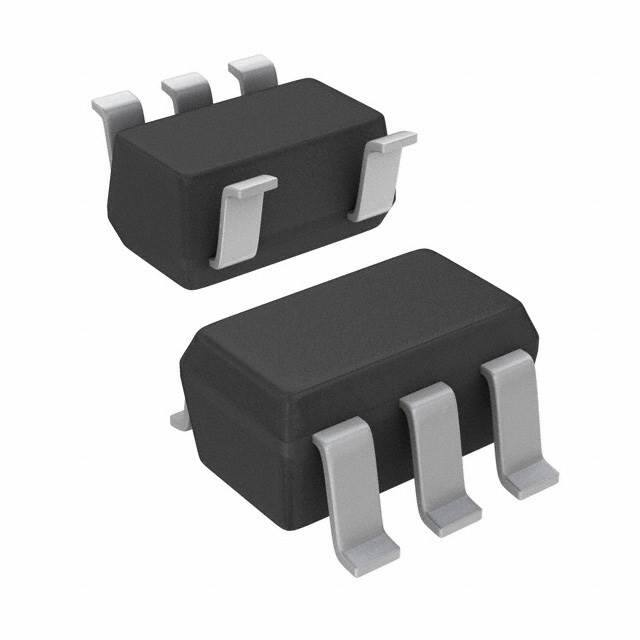
Package: 5-Pin SOT-23
This device operates by drawing power from the IN+
pin drawing a maximum of 130 µA of supply current.
All versions are specified from –40 °C to 125 °C and
are offered in the 5-pin SOT-23 package.
2 Applications
•
•
•
•
Device Information(1)
Servers
Power Supplies
Battery Management
Telecom Equipment
PART NUMBER
INA183
(1)
PACKAGE
SOT-23 (5)
BODY SIZE (NOM)
2.90 mm × 1.60 mm
For all available packages, see the orderable addendum at
the end of the data sheet.
RSENSE
VS = 2.7 V to 26 V
CBYP
0.1 …F
IN+
INLOAD
INA183
OUT
GND
Typical Application
An©IMPORTANT
NOTICEIncorporated
at the end of this data sheet addresses availability, warranty, changes, use in
safety-critical
applications,
Copyright
2021 Texas Instruments
Submit
Document
Feedback
intellectual property matters and other important disclaimers. PRODUCTION DATA.
Product Folder Links: INA183
1
�INA183
www.ti.com
SBOSA08 – FEBRUARY 2021
Table of Contents
1 Features............................................................................1
2 Applications..................................................................... 1
3 Description.......................................................................1
4 Revision History.............................................................. 2
5 Device Comparison......................................................... 3
6 Pin Configuration and Functions...................................3
7 Specifications.................................................................. 4
7.1 Absolute Maximum Ratings ....................................... 4
7.2 ESD Ratings .............................................................. 4
7.3 Recommended Operating Conditions ........................4
7.4 Thermal Information ...................................................4
7.5 Electrical Characteristics ............................................5
7.6 Typical Characteristics................................................ 6
8 Detailed Description......................................................10
8.1 Overview................................................................... 10
8.2 Functional Block Diagram......................................... 10
8.3 Feature Description...................................................10
8.4 Device Functional Modes..........................................11
9 Application and Implementation.................................. 12
9.1 Application Information............................................. 12
9.2 Typical Application.................................................... 13
10 Power Supply Recommendations..............................15
11 Layout........................................................................... 15
11.1 Layout Guidelines................................................... 15
11.2 Layout Example...................................................... 15
12 Device and Documentation Support..........................16
12.1 Documentation Support.......................................... 16
12.2 Receiving Notification of Documentation Updates..16
12.3 Support Resources................................................. 16
12.4 Trademarks............................................................. 16
12.5 Electrostatic Discharge Caution..............................16
12.6 Glossary..................................................................16
13 Mechanical, Packaging, and Orderable
Information.................................................................... 16
4 Revision History
NOTE: Page numbers for previous revisions may differ from page numbers in the current version.
2
DATE
VERSION
NOTES
February 2021
*
Initial Release.
Submit Document Feedback
Copyright © 2021 Texas Instruments Incorporated
Product Folder Links: INA183
�INA183
www.ti.com
SBOSA08 – FEBRUARY 2021
5 Device Comparison
Table 5-1. Device Comparison
PRODUCT
GAIN
INA183A1
50
INA183A2
100
INA183A3
200
6 Pin Configuration and Functions
IN+
GND
GND
IN-
OUT
Figure 6-1. DBV Package 5-Pin SOT-23 Top View
Table 6-1. Pin Functions
PIN
NAME
GND
SOT-23
I/O
1, 2
Analog
IN–
4
Analog input
IN+
5
Analog input
OUT
3
Analog output
DESCRIPTION
Device ground. Both pins must be connected to ground.
Connect to load side of shunt resistor.
Connect to supply side of shunt resistor.
Output voltage.
Submit Document Feedback
Copyright © 2021 Texas Instruments Incorporated
Product Folder Links: INA183
3
�INA183
www.ti.com
SBOSA08 – FEBRUARY 2021
7 Specifications
7.1 Absolute Maximum Ratings
over operating free-air temperature range (unless otherwise noted)
Analog inputs, , IN+, IN– (1)
Output
MIN
MAX
Differential (VIN+) – (VIN–)
GND – 0.3
26
V
Common-mode (2)
GND – 0.3
26
V
GND – 0.3
(IN+) + 0.3
V
–55
150
°C
150
°C
150
°C
(2)
Operating temperature
Junction temperature
Storage temperature, Tstg
(1)
(2)
–65
UNIT
VIN+ and VIN– are the voltages at the IN+ and IN– terminals, respectively.
Input voltage at any terminal may exceed the voltage shown if the current at that terminal is limited to 5 mA.
7.2 ESD Ratings
MIN
V(ESD)
(1)
(2)
Electrostatic
discharge
Human-body model (HBM), per ANSI/ESDA/JEDEC
MAX
JS-001(1)
UNIT
±3500
Charged-device model (CDM), per JEDEC specification JESD22-C101(2)
V
±1000
JEDEC document JEP155 states that 500-V HBM allows safe manufacturing with a standard ESD control process.
JEDEC document JEP157 states that 250-V CDM allows safe manufacturing with a standard ESD control process.
7.3 Recommended Operating Conditions
over operating free-air temperature range (unless otherwise noted)
MIN
NOM
12
VS
Supply voltage range, voltage at IN+ pin
2.7
TA
Operating free-air temperature
–40
MAX
UNIT
26
V
125
°C
7.4 Thermal Information
INA183
THERMAL METRIC (1)
DBV (SOT-23)
UNIT
5 PINS
RθJA
Junction-to-ambient thermal resistance
164.2
°C/W
RθJC(top)
Junction-to-case (top) thermal resistance
60.1
°C/W
RθJB
Junction-to-board thermal resistance
36.6
°C/W
ψJT
Junction-to-top characterization parameter
10.3
°C/W
ψJB
Junction-to-board characterization parameter
36.3
°C/W
RθJC(bot)
Junction-to-case (bottom) thermal resistance
N/A
°C/W
(1)
4
For more information about traditional and new thermal metrics, see the Semiconductor and IC Package Thermal Metrics application
report.
Submit Document Feedback
Copyright © 2021 Texas Instruments Incorporated
Product Folder Links: INA183
�INA183
www.ti.com
SBOSA08 – FEBRUARY 2021
7.5 Electrical Characteristics
at TA = 25 °C, VSENSE = VIN+ – VIN–, and VIN+ = 12 V, unless otherwise noted.
PARAMETER
CONDITIONS
MIN
TYP
MAX
UNIT
INPUT
VCM
Common-mode input range
TA = –40 °C to +125 °C
2.7
CMRR
Common-mode rejection ratio
VIN+ = 2.7 V to 26 V, VSENSE = 10 mV,
TA = –40 °C to +125 °C
100
VOS
Offset voltage, RTI (1)
VCM = 12 V
±25
±170
dVOS/dT RTI vs temperature
TA = –40 °C to +125 °C
0.1
0.5
μV/°C
IIB
VSENSE = 0 mV
30
40
μA
Input bias current (IB-)
26
120
V
dB
μV
OUTPUT
G
EG
Gain
A1 devices
50
A2 devices
100
V/V
A3 devices
200
V/V
Gain error
VOUT = 0.5 V to VIN+ – 0.5 V,
TA = –40 °C to +125 °C
Gain error vs temperature
TA = –40 °C to +125 °C
Nonlinearity error
VOUT = 0.5 V to VIN+ – 0.5 V
Maximum capacitive load
No sustained oscillation
±0.1%
3
V/V
±0.4%
10 ppm/°C
±0.01%
1
nF
VOLTAGE OUTPUT
VSP
Swing to IN+
RL = 10 kΩ to GND, TA = –40 °C to +125 °C
VSN
Swing to GND
RL = 10 kΩ to GND, VIN+ - VIN- = -10 mV,
TA = –40 °C to +125 °C
(VIN+) –
(VIN+) – 0.2
0.05
(VGND) +
0.005
(VGND) +
0.05
V
V
FREQUENCY RESPONSE
BW
Bandwidth
SR
Slew rate
A1 devices
CLOAD = 10 pF
80
kHz
A2 devices
CLOAD = 10 pF
30
kHz
A3 devices
CLOAD = 10 pF
14
kHz
0.4
V/μs
25
nV/√Hz
NOISE, RTI (1)
Voltage noise density
POWER SUPPLY
IQ
(1)
Quiescent current, (IN+)
VSENSE = 0 mV
IQ over temperature
TA = –40 °C to +125 °C
83
130
μA
140
μA
RTI = referred-to-input.
Submit Document Feedback
Copyright © 2021 Texas Instruments Incorporated
Product Folder Links: INA183
5
�INA183
www.ti.com
SBOSA08 – FEBRUARY 2021
7.6 Typical Characteristics
TA = 25 °C, VS = VIN+ = 12 V (unless otherwise noted)
Figure 7-1. Input Offset Voltage Production
Distribution
Figure 7-2. Offset Voltage vs. Temperature
Figure 7-3. Common-Mode Rejection Production
Distribution (A1 Devices)
Figure 7-4. Common-Mode Rejection Production
Distribution (A2 Devices)
1.0
0.8
CMRR (mV/V)
0.6
0.4
0.2
0
-0.2
-0.4
-0.6
-0.8
-1.0
-50
-25
0
25
50
75
100
125
Temperature (°C)
Figure 7-5. Common-Mode Rejection Production
Distribution (A3 Devices)
6
Figure 7-6. Common-Mode Rejection Ratio vs.
Temperature
Submit Document Feedback
Copyright © 2021 Texas Instruments Incorporated
Product Folder Links: INA183
�INA183
www.ti.com
SBOSA08 – FEBRUARY 2021
Figure 7-7. Gain Error Production Distribution (A1
Devices)
Figure 7-8. Gain Error Production Distribution (A2
Devices)
1.0
0.8
Gain Error (%)
0.6
0.4
0.2
0
–0.2
–0.4
–0.6
–0.8
–1.0
–50
0
25
50
75
100
125
150
Temperature (°C)
Figure 7-9. Gain Error Production Distribution (A3
Devices)
Figure 7-10. Gain Error vs. Temperature
70
Common-Mode Rejection Ratio (dB)
160
60
G = 200
50
Gain (dB)
–25
40
30
G = 50
G = 100
20
10
0
10
140
120
100
80
60
40
20
0
10
100
1k
10k
100k
1M
10M
1
Frequency (Hz)
10
100
1k
10k
100k
1M
Frequency (Hz)
Figure 7-11. Gain vs. Frequency
Figure 7-12. Common-Mode Rejection Ratio vs.
Frequency
Submit Document Feedback
Copyright © 2021 Texas Instruments Incorporated
Product Folder Links: INA183
7
�INA183
www.ti.com
Output Voltage Swing (V)
SBOSA08 – FEBRUARY 2021
V+
(V+) - 0.5
(V+) - 1.0
(V+) - 1.5
(V+) - 2.0
(V+) - 2.5
(V+) - 3.0
VS = 5V to 26V
VS = 2.7V
to 26V
VS = 2.7V
GND + 3.0
GND + 2.5
GND + 2.0
GND + 1.5
GND + 1.0
GND + 0.5
GND
TA = -40°C
TA = +25°C
TA = +105°C
VS = 2.7V to 26V
0
5
10
15
20
25
30
35
40
Output Current (mA)
Figure 7-13. Output Voltage Swing vs. Output
Current
Figure 7-14. Input Bias Current vs. Common-Mode
Voltage
Input Bias Current (mA)
30
29
28
27
26
25
-50
-25
0
25
50
75
100
125
Temperature (°C)
Figure 7-16. Quiescent Current vs. Temperature
100
G = 50
Referred-to-Input
Voltage Noise (200 nV/div)
Input-Referred Voltage Noise (nV/—Hz )
Figure 7-15. Input Bias Current vs. Temperature
G = 200
G = 100
10
1
10
100
1k
10k
100k
Time (1s/div)
Frequency (Hz)
Figure 7-17. Input-Referred Voltage Noise vs.
Frequency
8
Figure 7-18. 0.1-Hz to 10-Hz Voltage Noise
(Referred-to-Input)
Submit Document Feedback
Copyright © 2021 Texas Instruments Incorporated
Product Folder Links: INA183
�INA183
www.ti.com
SBOSA08 – FEBRUARY 2021
10mVPP Input Signal
30
VCM
VOUT
14
24
10
18
6
12
2
6
-2
0
-6
Output Voltage (V)
2VPP Output Signal
Common-mode Voltage (V)
Input Voltage
(5mV/diV)
Output Voltage
(0.5V/diV)
18
-6
Time (100ms/div)
Time (200µs/div)
Figure 7-19. Step Response (10-mVPP Input Step)
Figure 7-20. Common-Mode Voltage Transient
Response
VDIFF = 0 V
Figure 7-21. Inverting Differential Input Overload
VCM = 12-V Pulse
Figure 7-22. Start-Up Response
Figure 7-23. Brownout Recovery
Submit Document Feedback
Copyright © 2021 Texas Instruments Incorporated
Product Folder Links: INA183
9
�INA183
www.ti.com
SBOSA08 – FEBRUARY 2021
8 Detailed Description
8.1 Overview
The INA183 is a 26-V common-mode, zero-drift topology, current-sensing amplifier meant for high-side, currentsensing applications. The device is a specially-designed, current-sensing amplifier that can accurately measure
voltages developed across a current-sensing resistor. The device is capable of measuring current on input
voltage rails as high as 26 V and as low as 2.7 V.
The zero-drift topology enables high-precision measurements with maximum input offset voltages as low as
170 µV with a maximum temperature contribution of 0.5 µV/°C over the full temperature range of –40 °C to +125
°C.
8.2 Functional Block Diagram
The simplified functional diagram below shows the device power is provided by the voltage on the IN+ pin. This
diagram also shows the nominal values for the internal gain set resistors. The nominal value of these resistors
can vary by 20% or more; however, the matching between these resistors is tightly controlled. The matching of
these internal resistors results in a precise fixed gain that varies very little over temperature.
R2
R1
_
IN-
OUT
R1
IN+
+
R2
DEVICE
GND
GAIN
R1
R2
INA183A1
50
20 NŸ
1 0Ÿ
INA183A2
100
10 NŸ
1 0Ÿ
INA183A3
200
5 NŸ
1 0Ÿ
8.3 Feature Description
8.3.1 Single-Supply Operation from IN+
The INA183 does not have a dedicated power-supply. Instead, an internal connection to the IN+ pin serves
as the power supply for this device. This allows the device to be used in applications where lower voltage or
sub-regulated supply rails are not present. The operational voltage range on this pin is 2.7 V to 26 V and is
designed for power-supply applications. The maximum current drawn from the IN+ pin is 130 μA, when the
current sense voltage is zero.
8.3.2 Low Gain Error and Offset Voltage
The maximum gain error of the INA183 is 0.4% and is specified over the full operational temperature range.
The low gain error allows for accurate measurements as the sense voltage increases, and is designed for
applications that need to detect overcurrent conditions accurately. The offset voltage of the INA183 is specified
to be ±170 μV for all gain options. The low offset voltage allows for increased accuracy when the sense voltage
is small or allows for reduction in the size of the current sense resistor with less impact on the total measurement
accuracy. Smaller value resistors reduce the power loss in the application which allows the use of lower wattage
resistors that are generally lower cost.
8.3.3 Low Drift Architecture
The INA183 features low drift for both the gain error and offset voltage specifications. The low gain error drift of
10 PPM/ºC results from the well matched internal resistor network that sets the device gain. The low offset drift
10
Submit Document Feedback
Copyright © 2021 Texas Instruments Incorporated
Product Folder Links: INA183
�INA183
www.ti.com
SBOSA08 – FEBRUARY 2021
is due to the internal chopping architecture of the amplifier. Input chopping reduces both the offset and offset drift
since any change in offset is canceled with each chopping cycle. The maximum input offset drift of the INA183
is 0.5 μV/ºC. The low drift of the gain error and offset voltage provides accurate current measurement over the
operational temperature range of -40ºC to 125ºC that exceeds the performance of most discrete current sensing
implementations.
8.4 Device Functional Modes
8.4.1 Normal Operation
The INA183 is in normal operation when the following conditions are met:
•
•
•
The voltage at the IN+ pin is between 2.7 V and 26 V.
The maximum differential input signal times the gain is less than VIN+ minus the output voltage swing to VIN+.
The minimum differential input signal times the gain is greater than the swing to GND.
During normal operation, this device produces an output voltage that is the amplified representation of the
difference voltage from IN+ to IN–.
8.4.2 Unidirectional, High-Side Operation
The INA183 measures the differential voltage developed by current flowing through a resistor that is
commonly referred to as a current shunt resistor or current-sensing resistor. The INA183 operates in high-side,
unidirectional mode only, meaning it only senses current sourced from a power supply to a system load as
shown in Figure 8-1.
12-V
Supply
R2
ISENSE
IN+
R1
+
RSENSE
R1
IN±
Internal
Amplifier
OUT
±
R2
Load
GND
Figure 8-1. High-Side Unidirectional Application
8.4.3 Input Differential Overload
If the differential input voltage (VIN+ – VIN–) times gain exceeds the voltage swing specification, the INA183
drives the output as close as possible to the IN+ pin or ground, and does not provide accurate measurement of
the differential input voltage. If this input overload occurs during normal circuit operation, then reduce the value
of the shunt resistor or use a lower-gain version with the chosen sense resistor to avoid this mode of operation.
If a differential overload occurs in a fault event, then the output of the INA183 returns to the expected value
approximately 30 µs after removal of the fault condition. When the input differential voltage is overloaded the
bias currents will increase by a significant amount. The increase in bias currents will occur even with the device
is powered down. Input differential overloads less than the absolute maximum voltage rating do not damage the
device or result in an output inversion.
Submit Document Feedback
Copyright © 2021 Texas Instruments Incorporated
Product Folder Links: INA183
11
�INA183
www.ti.com
SBOSA08 – FEBRUARY 2021
9 Application and Implementation
Note
Information in the following applications sections is not part of the TI component specification,
and TI does not warrant its accuracy or completeness. TI’s customers are responsible for
determining suitability of components for their purposes, as well as validating and testing their design
implementation to confirm system functionality.
9.1 Application Information
The INA183 measures the voltage developed across a current-sensing resistor when current passes through it.
The ability to drive the reference pin to adjust the functionality of the output signal offers multiple configurations,
as discussed throughout this section.
9.1.1 RSENSE and Device Gain Selection
Choosing the largest possible shunt resistor will maximize the accuracy of any current-sense amplifier. A large
sense resistor maximizes the differential input signal for a given amount of current flow and reduces the error
contribution of the offset voltage. However, there are practical limits as to how large the current-sense resistor
can be in a given application because of the resistor size and maximum allowable power dissipation. Equation 1
gives the maximum value for the current-sense resistor for a given power dissipation budget:
RSENSE
PDMAX
IMAX2
(1)
where:
•
•
PDMAX is the maximum allowable power dissipation in RSENSE.
IMAX is the maximum current expected to flow through RSENSE.
An additional limitation on the size of the current-sense resistor and device gain is due to the power-supply
voltage at the IN+ pin, and device swing-to-rail limitations. To ensure that the current-sense signal is properly
passed to the output, both positive and negative output swing limitations must be examined. Equation 2 provides
the maximum values of RSENSE and GAIN to keep the device from exceeding the positive swing limitation.
IMAX ª RSENSE ª *$,1 < VSP
(2)
where:
•
•
•
IMAX is the maximum current that will flow through RSENSE.
GAIN is the gain of the current-sense amplifier.
VSP is the positive output swing as specified in the data sheet.
Positive output swing limitations should be considered when selecting the value of RSENSE. There is always a
trade-off between the value of the sense resistor and the gain of the device under consideration. If the sense
resistor selected for the maximum power dissipation is too large, then it is possible to select a lower-gain device
to avoid positive swing limitations.
12
Submit Document Feedback
Copyright © 2021 Texas Instruments Incorporated
Product Folder Links: INA183
�INA183
www.ti.com
SBOSA08 – FEBRUARY 2021
The negative swing specification limits how small the sense resistor value can be for a given application.
Equation 3 provides the limit on the minimum value of the sense resistor.
IMIN ª RSENSE ª *$,1 > VSN
(3)
where:
•
•
•
IMIN is the minimum current that will flow through RSENSE.
GAIN is the gain of the current-sense amplifier.
VSN is the negative output swing of the device.
9.2 Typical Application
Figure 9-1 shows the basic connections for the INA183. The input pins, IN+ and IN–, must be connected as
close as possible to the shunt resistor to minimize any resistance in series with the shunt resistor.
RSENSE
CBYP
12V Server
Power
Supply
0.1 …F
IN+
IN-
INA183
Server 12-V
Subsystem
OUT
GND
Figure 9-1. Typical Server Application
A power-supply bypass capacitor is required on the IN+ pin. Applications with noisy or high-impedance power
supplies may require additional decoupling capacitors to reject power-supply noise. Connect bypass capacitors
close to the device pins.
In server applications, the INA183 typically monitors the current on the 12-V bus that is distributed to various
server sub-systems like memory, storage, or CPU power. The monitored current can be used by the server for
fault detection or sub-system power optimization.
9.2.1 Design Requirements
Table 9-1 lists the design setup for this application.
Table 9-1. Design Parameters
DESIGN PARAMETERS
EXAMPLE VALUE
High-side supply voltage (VIN+)
12 V
Maximum sense current (IMAX)
5A
Gain option
50 V/V
9.2.2 Detailed Design Procedure
The maximum value of the current-sense resistor is calculated based on choice of gain, the value of the
maximum current the be sensed (IMAX), and the power-supply voltage (VIN+). When operating at the maximum
current, the output voltage must not exceed the positive output swing specification, VSP. Under the given design
parameters, Equation 4 calculates the maximum value for RSENSE as 47.2 mΩ.
RSENSE <
VSP
IMAX u GAIN
(4)
Submit Document Feedback
Copyright © 2021 Texas Instruments Incorporated
Product Folder Links: INA183
13
�INA183
www.ti.com
SBOSA08 – FEBRUARY 2021
For this design example, a value of 40.2 mΩ is selected because, while the 40.2 mΩ is less than the maximum
value calculated, 40.2 mΩ is still large enough to give an adequate signal at the current-sense amplifier output.
To reduce resistor power losses or to operate over a reduced output range, smaller value resistors can be used
as the expense of dynamic range and low current accuracy.
9.2.3 Application Curve
Figure 9-2 shows the output response of the device to a sinusoidal current.
VSENSE (20 mV/div)
INA183A2 VOUT (1 V/div)
Time (25µs/div)
Figure 9-2. INA183 Output Response
14
Submit Document Feedback
Copyright © 2021 Texas Instruments Incorporated
Product Folder Links: INA183
�INA183
www.ti.com
SBOSA08 – FEBRUARY 2021
10 Power Supply Recommendations
The device is powered from the IN+ pin with a voltage from 2.7 V to 26 V. The voltage at the output will also
be limited by this voltage during overload or fault conditions. Also, the INA183 can withstand the full input signal
range up to 26 V on the IN– pin, regardless of whether the device has power applied or not.
11 Layout
11.1 Layout Guidelines
•
•
Connect the input pins to the sensing resistor using a kelvin or 4-wire connection. This connection technique
ensures that only the current-sensing resistor impedance is detected between the input pins. Poor routing of
the current-sensing resistor commonly results in additional resistance present between the input pins. Given
the very low ohmic value of the current resistor, any additional high-current carrying impedance can cause
significant measurement errors.
Place the power-supply bypass capacitor as close as possible to the IN+ pin and ground pins. TI
recommends using a bypass capacitor with a value of 0.1 μF. Additional decoupling capacitance can be
added to compensate for noisy or high-impedance power supplies.
11.2 Layout Example
Direction of
Current Flow
RSHUNT
Bus Voltage:
2.7 V to 26 V
LOAD
CBYPASS
VIA to Ground
Plane
Current Sense
Output
GND
GND
OUT
IN+
IN-
Figure 11-1. Recommended Layout
Submit Document Feedback
Copyright © 2021 Texas Instruments Incorporated
Product Folder Links: INA183
15
�INA183
www.ti.com
SBOSA08 – FEBRUARY 2021
12 Device and Documentation Support
12.1 Documentation Support
12.1.1 Related Documentation
For related documentation see the following:
•
•
INA183A1-A3EVM User's Guide
TIDA-00302 Transient Robustness for Current Shunt Monitor
12.2 Receiving Notification of Documentation Updates
To receive notification of documentation updates, navigate to the device product folder on ti.com. Click on
Subscribe to updates to register and receive a weekly digest of any product information that has changed. For
change details, review the revision history included in any revised document.
12.3 Support Resources
TI E2E™ support forums are an engineer's go-to source for fast, verified answers and design help — straight
from the experts. Search existing answers or ask your own question to get the quick design help you need.
Linked content is provided "AS IS" by the respective contributors. They do not constitute TI specifications and do
not necessarily reflect TI's views; see TI's Terms of Use.
12.4 Trademarks
TI E2E™ is a trademark of Texas Instruments.
All trademarks are the property of their respective owners.
12.5 Electrostatic Discharge Caution
This integrated circuit can be damaged by ESD. Texas Instruments recommends that all integrated circuits be handled
with appropriate precautions. Failure to observe proper handling and installation procedures can cause damage.
ESD damage can range from subtle performance degradation to complete device failure. Precision integrated circuits may
be more susceptible to damage because very small parametric changes could cause the device not to meet its published
specifications.
12.6 Glossary
TI Glossary
This glossary lists and explains terms, acronyms, and definitions.
13 Mechanical, Packaging, and Orderable Information
The following pages include mechanical, packaging, and orderable information. This information is the most
current data available for the designated devices. This data is subject to change without notice and revision of
this document. For browser-based versions of this data sheet, refer to the left-hand navigation.
16
Submit Document Feedback
Copyright © 2021 Texas Instruments Incorporated
Product Folder Links: INA183
�PACKAGE OPTION ADDENDUM
www.ti.com
7-Feb-2021
PACKAGING INFORMATION
Orderable Device
Status
(1)
Package Type Package Pins Package
Drawing
Qty
Eco Plan
(2)
Lead finish/
Ball material
MSL Peak Temp
Op Temp (°C)
Device Marking
(3)
(4/5)
(6)
INA183A1IDBVR
ACTIVE
SOT-23
DBV
5
3000
RoHS & Green
SN
Level-2-260C-1 YEAR
-40 to 125
2BRQ
INA183A1IDBVT
ACTIVE
SOT-23
DBV
5
250
RoHS & Green
SN
Level-2-260C-1 YEAR
-40 to 125
2BRQ
INA183A2IDBVR
ACTIVE
SOT-23
DBV
5
3000
RoHS & Green
SN
Level-2-260C-1 YEAR
-40 to 125
2BSQ
INA183A2IDBVT
ACTIVE
SOT-23
DBV
5
250
RoHS & Green
SN
Level-2-260C-1 YEAR
-40 to 125
2BSQ
INA183A3IDBVR
ACTIVE
SOT-23
DBV
5
3000
RoHS & Green
SN
Level-2-260C-1 YEAR
-40 to 125
2BTQ
INA183A3IDBVT
ACTIVE
SOT-23
DBV
5
250
RoHS & Green
SN
Level-2-260C-1 YEAR
-40 to 125
2BTQ
(1)
The marketing status values are defined as follows:
ACTIVE: Product device recommended for new designs.
LIFEBUY: TI has announced that the device will be discontinued, and a lifetime-buy period is in effect.
NRND: Not recommended for new designs. Device is in production to support existing customers, but TI does not recommend using this part in a new design.
PREVIEW: Device has been announced but is not in production. Samples may or may not be available.
OBSOLETE: TI has discontinued the production of the device.
(2)
RoHS: TI defines "RoHS" to mean semiconductor products that are compliant with the current EU RoHS requirements for all 10 RoHS substances, including the requirement that RoHS substance
do not exceed 0.1% by weight in homogeneous materials. Where designed to be soldered at high temperatures, "RoHS" products are suitable for use in specified lead-free processes. TI may
reference these types of products as "Pb-Free".
RoHS Exempt: TI defines "RoHS Exempt" to mean products that contain lead but are compliant with EU RoHS pursuant to a specific EU RoHS exemption.
Green: TI defines "Green" to mean the content of Chlorine (Cl) and Bromine (Br) based flame retardants meet JS709B low halogen requirements of