®
ISO103
ISO
103
Low-Cost, Internally Powered
ISOLATION AMPLIFIER
FEATURES
APPLICATIONS
● SIGNAL AND POWER IN ONE
DOUBLE-WIDE (0.6") SIDE-BRAZED
PACKAGE
● 5600Vpk TEST VOLTAGE
● 1500Vrms CONTINUOUS AC BARRIER
RATING
● WIDE INPUT SIGNAL RANGE:
–10V to +10V
● WIDE BANDWIDTH:
20kHz Small Signal, 20kHz Full Power
● BUILT-IN ISOLATED POWER:
±10V to ±18V Input, ±50mA Output
● MULTICHANNEL SYNCHRONIZATION
CAPABILITY (TTL)
● BOARD AREA ONLY 0.72in.2 (4.6cm2)
● MULTICHANNEL ISOLATED DATA
ACQUISITION
● ISOLATED 4-20mA LOOP RECEIVER AND
POWER
● POWER SUPPLY AND MOTOR CONTROL
● GROUND LOOP ELIMINATION
+VC
V IN
–VC
Com 1
Gnd 1
Sense
Duty Cycle
Modulator
Duty Cycle
Demodulator
Com 2
–VCC2
Sync*
+VCC2
Sync
+VCC1
Ps Gnd
Rectifiers
Filters
V OUT
Oscillator
Driver
–VCC1
Enable
Gnd 2
*Ground if not used
DESCRIPTION
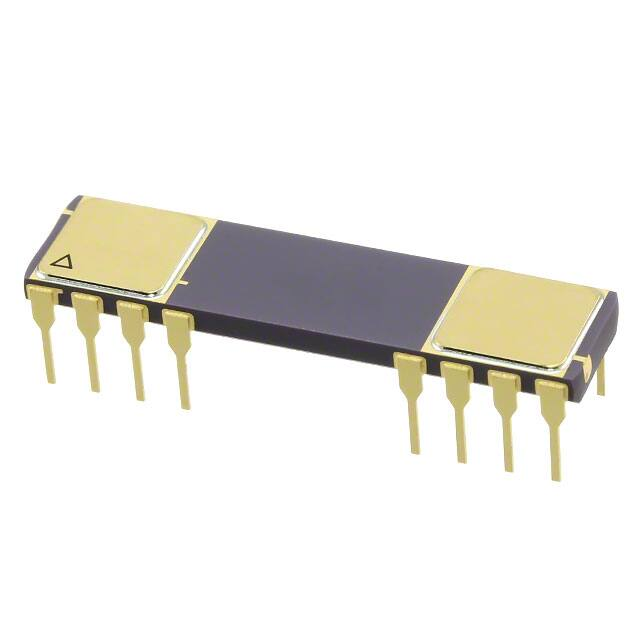
The ISO103 isolation amplifier provides both signal
and power across an isolation barrier. The ceramic
non-hermetic hybrid package with side-brazed pins
contains a transformer-coupled DC/DC converter and
a capacitor-coupled signal channel.
Extra power is available on the isolated input side for
external input conditioning circuitry. The converter is
protected from shorts to ground with an internal current limit, and the soft-start feature limits the initial
currents from the power source. Multiple-channel synchronization can be accomplished by applying a TTL
clock signal to paralleled Sync pins. The Enable con-
trol is used to turn off transformer drive while keeping
the signal channel demodulator active. This feature
provides a convenient way to reduce quiescent current
for low power applications.
The wide barrier pin spacing and internal insulation
allow for the generous 1500Vrms continuous rating.
Reliability is assured by 100% barrier breakdown
testing that conforms to UL1244 test methods. Low
barrier capacitance minimizes AC leakage currents.
These specifications and built-in features make the
ISO103 easy to use, as well as providing for compact
PC board layouts.
International Airport Industrial Park • Mailing Address: PO Box 11400, Tucson, AZ 85734 • Street Address: 6730 S. Tucson Blvd., Tucson, AZ 85706 • Tel: (520) 746-1111
Twx: 910-952-1111 • Internet: http://www.burr-brown.com/ • Cable: BBRCORP • Telex: 066-6491 • FAX: (520) 889-1510 • Immediate Product Info: (800) 548-6132
©
SBOS001
1989 Burr-Brown Corporation
PDS-1004E
Printed in U.S.A. August, 1999
�SPECIFICATIONS
ELECTRICAL
At TA = +25°C and VCC2 = ±15V, ±15mA output current unless otherwise noted.
ISO103
PARAMETER
ISOLATION
Rated Continuous Voltage(1)
AC, 60Hz
DC
Test Breakdown, 100% AC, 60Hz
Isolation-Mode Rejection
Barrier Impedance
Leakage Current
GAIN
Nominal
Initial Error
Gain vs Temperature
Nonlinearity
INPUT OFFSET VOLTAGE
Initial Offset
vs Temperature
vs Power Supplies
vs Output Supply Load
SIGNAL INPUT
Voltage Range
Resistance
CONDITIONS
MIN
TMIN to TMAX
TMIN to TMAX
10s
1500Vrms, 60Hz
2121VDC
1500
2121
5657
240Vrms, 60Hz
VO = –10V to 10V
VO = –5V to 5V
1
±0.12
±60
±0.026
±0.009
VCC2 = ±10V to ±18V
IO = 0 to ±50mA
±20
±300
0.9
±0.3
SIGNAL OUTPUT
Voltage Range
Current Drive
Ripple Voltage, 800kHz Carrier
Ripple Current
Rated Output Voltage
Output
Load Regulation
Line Regulation
Output Voltage vs Temperature
Voltage Balance Error, ±VCC1
Voltage Ripple (800kHz)
Output Capacitive Load
Sync Frequency
TEMPERATURE RANGE
Specification
Operating
Storage
TYP
MAX
UNITS
✻
✻
✻
✻
✻
Vrms
VDC
Vpk
dB
dB
Ω || pF
µA
2
±0.3
±100
±0.075
✻
±0.08
±20
±0.018
✻
±0.15
±50
±0.050
±0.025
V/V
% FSR
ppm/°C
% FSR
%FSR
±60
±500
✻
✻
✻
✻
✻
✻
mV
µV/°C
mV/V
mV/mA
±15
200
✻
✻
✻
V
kΩ
±10
±5
±12.5
±15
25
5
1000
4
✻
✻
✻
✻
✻
✻
✻
✻
V
mA
mVp-p
mVp-p
pF
µV/√Hz
✻
✻
✻
kHz
V/µs
µs
400Ω/4.7nF (See Figure 4)
20
1.5
75
0.1%, –10/10V
IO = ±15mA
IO = 0mA
No Filter
CIN = 1µF
Load = 15mA
50mA Balanced Load
100mA Single-Ended Loads
Balanced Load
MIN
±10
Capacitive Load Drive
Voltage Noise
POWER SUPPLIES
Rated Voltage, VCC2
Voltage Range
Input Current
ISO103B
MAX
✻
✻
✻
130
160
1012 || 9
1
Output Voltage in Range
FREQUENCY RESPONSE
Small Signal Bandwidth
Slew Rate
Settling Time
TYP
±10
±14.25
10
10
±15
+90/–4.5
+60/–4.5
60
3
±15
No External Capacitors
CEXT = 1µF
0.3
1.12
2.5
0.05
50
5
Sync-Pin Grounded (2)
1.6
✻
±18
±15.75
✻
✻
✻
✻
✻
✻
✻
✻
✻
✻
✻
✻
✻
✻
✻
✻
✻
1
–25
–25
–25
✻
✻
✻
✻
+85
+85
+125
✻
✻
✻
✻
✻
✻
V
V
mA
mA
mAp-p
mAp-p
V
V
V
%/mA
V/V
mV/°C
%
mVp-p
mVp-p
µF
MHz
°C
°C
°C
✻ Specifications same as ISO103.
NOTE: (1) Conforms to UL1244 test methods. 100% tested at 1500Vrms for 1 minute. (2) If using external synchronization with a TTL-level clock, frequency should
be between 1.2MHz and 2MHz with a duty-cycle greater than 25%.
®
ISO103
2
�ABSOLUTE MAXIMUM RATINGS
PIN CONFIGURATION
Supply Without Damage .................................................................... ±18V
VIN, Sense Voltage ............................................................................. ±50V
Com 1 to Gnd 1 or Com 2 to Gnd 2 .............................................. ±200mV
Enable, Sync ........................................................................... 0V to +VCC2
Continuous Isolation Voltage ..................................................... 1500Vrms
VISO, dv/dt ..................................................................................... 20kV/µs
Junction Temperature ...................................................................... 150°C
Storage Temperature ...................................................... –25°C to +125°C
Lead Temperature,10s .................................................................... 300°C
Output Short to Gnd 2 Duration ............................................... Continuous
±VCC1 to Gnd 1 Duration .......................................................... Continuous
+VC
1
24 Ps Gnd
+VCC1
2
23 Gnd 1
–VCC1
3
22 VIN
–VCC1 4
ELECTROSTATIC
DISCHARGE SENSITIVITY
Any integrated circuit can be damaged by ESD. Burr-Brown
recommends that all integrated circuits be handled with
appropriate precautions. Failure to observe proper handling
and installation procedures can cause damage.
21 Com 1
Com 2 9
16 –VCC2
VOUT 10
15 Sync*
Sense 11
14 +VCC2
Gnd 2 12
13 Enable
*Operation requires this pin be grounded or driven with TTL levels.
ESD damage can range from subtle performance degradation to complete device failure. Precision integrated circuits
may be more susceptible to damage because very small
parametric changes could cause the device not to meet
published specifications.
PACKAGE/ORDERING INFORMATION
PRODUCT
PACKAGE
PACKAGE
DRAWING
NUMBER(1)
ISO103
24-Pin DIP
231
SPECIFIED
TEMPERATURE
RANGE
–25°C to +85°C
PACKAGE
MARKING
ORDERING
NUMBER(2)
TRANSPORT
MEDIA
NOTES: (1) For detailed drawing and dimension table, please see end of data sheet, or Appendix C of Burr-Brown IC Data Book. (2) Models with a slash (/) are
available only in Tape and Reel in the quantities indicated (e.g., /2K5 indicates 2500 devices per reel). Ordering 2500 pieces of “ISO103/2K5” will get a single 2500piece Tape and Reel. For detailed Tape and Reel mechanical information, refer to Appendix B of Burr-Brown IC Data Book.
The information provided herein is believed to be reliable; however, BURR-BROWN assumes no responsibility for inaccuracies or omissions. BURR-BROWN assumes
no responsibility for the use of this information, and all use of such information shall be entirely at the user's own risk. Prices and specifications are subject to change
without notice. No patent rights or licenses to any of the circuits described herein are implied or granted to any third party. BURR-BROWN does not authorize or warrant
any BURR-BROWN product for use in life support devices and/or systems.
®
3
ISO103
�TYPICAL PERFORMANCE CURVES
At TA = +25°C, VCC2 = ±15VDC, ±15mA output current, unless otherwise noted.
IMR/LEAKAGE vs FREQUENCY
RECOMMENDED RANGE OF ISOLATION VOLTAGE
Non-Specified
Signal
Operation
2100V
at 75kHz
100
Operational
Region
10
IMR
1m
100µ
120
Leakage at
240Vrms
110
10µ
100
1µ
90
1
100
1k
10k
100k
1M
10
10M
DISTORTION vs FREQUENCY
3
0
1
–3
Gain (dB)
3
VO = 2Vp-p
0.1
VO = 20Vp-p
0.03
0.01
20
100
1k
1k
10k
100n
100k
GAIN/PHASE vs FREQUENCY
10
0.3
100
Isolation Voltage Frequency (Hz)
Isolation Voltage Frequency (Hz)
THD+N (%)
Leakage at
1500Vrms
130
45
PHASE
–6
90
–9
135
–12
180
–15
100
10k 20k
0
GAIN
Frequency (Hz)
1k
10k
Phase Shift (°)
2.1k
1k
Isolation-Mode Rejection (dB)
Maximum Isolation Voltage (Vpk)
Barrier Voltage Rating
Barrier Leakage Current (Arms)
10m
140
10k
100k
Small Signal Frequency (Hz)
ISOLATED POWER SUPPLY
LOAD REGULATION AND EFFICIENCY
LARGE SIGNAL TRANSIENT RESPONSE
20
17
60
10
0
–10
16
45
Output Voltage
Balanced Loads
15
30
Output Voltage
Single-Ended Loads
14
15
13
–20
0
50
100
0
0
0
Time (µs)
10
20
20
40
30
60
±V CC1 Supply Output Current (mA)
®
ISO103
4
40
80
Efficiency (%)
±V CC1 Output Voltage (V)
Output Voltage (V)
Balanced Load Efficiency
�TYPICAL PERFORMANCE CURVES (CONT)
At TA = +25°C, VCC2 = ±15VDC, ±15mA output current, unless otherwise noted.
ISOLATION POWER SUPPLY VOLTAGE
vs TEMPERATURE
ISOLATED POWER SUPPLY LINE REGULATION
19
2
18
17
±15mA Load
1
∆ V CC2 (%)
15
14
1.12V/V
13
0
12
–1
11
10
9
–2
10
11
12
13
14
15
16
17
18
19
–25
0
25
+V CC2 (V)
50
75
100
Temperature (°C)
ISOLATED SUPPLY VOLTAGE AND V OS
vs SYNC FREQUENCY
250
5
VCC1
125
2.5
VOS
0
0
∆ V CC1 (mV)
9
∆ V OS (mV)
+V CC1 (V)
16
–125
–2.5
–250
–5
1
1.5
2
2.5
Sync Frequency (MHz)
®
5
ISO103
�The ISO103 isolation amplifier contains a transformercoupled DC/DC converter that is powered from the output
side of the isolation amplifier. All power supply pins (1, 2,
3, 4, 14, and 16) of the ISO103 have an internal 0.1µF
capacitor to ground. L1 is used to slow down fast changes in
the input current to the DC/DC converter. C1 is used to help
regulate the voltage ripple caused by the current demands of
the converter. L1, C1, and C2 are optional, however, recommended for low noise applications.
The DC/DC converter creates an unregulated ±15V output
to ±VCC1. If the ISO103 is the only device using the DC/DC
converter for power, pins 1 and 2 and pins 3 and 4 can be
connected directly without CO or LO in the circuit. If an
external capacitor is used in this configuration, it should not
exceed 1µF. This configuration is possible because the
isolation amplifier and the DC/DC converter are synchronized internally.
If additional devices are powered by the DC/DC converter
of the ISO103, the application may require that the ripple
voltage of the ISO103 converter be attenuated. In which
case, LO and CO should be added to the circuit. The inductor
is used to attenuate the ripple current and a higher value
capacitor can be used to reduce the ripple voltage even
further.
THEORY OF OPERATION
The block diagram on the front page shows the isolation
amplifier’s synchronized signal and power configuration,
which eliminate beat frequency interference. A proprietary
800kHz oscillator chip, power MOSFET transformer drivers, patented square core wirebonded transformer, and single
chip diode bridge provide power to the input side of the
isolation amplifier as well as external loads. The signal
channel capacitively couples a duty-cycle encoded signal
across the ceramic high-voltage barrier built into the package. A proprietary transmitter-receiver pair of integrated
circuits, laser trimmed at wafer level, and coupled through a
pair of matched “fringe” capacitors, result in a simple,
reliable design.
SIGNAL AND POWER CONNECTIONS
Figure 1 shows the proper power supply and signal connections. All power supply pins should be bypassed as shown
with the π filter for +VCC2, an option recommended if more
than ±15mA are drawn from the isolated supply. Separate
rectifier output pins (±VCC1) and amplifier supply input pins
(±VC) allow additional ripple filtering and/or regulation. The
separate input and output common pins and output sense are
low current inputs tied to the signal source ground, output
ground, and output load, respectively, to minimize errors
due to IR drop in long conductors. Otherwise, connect Com
1 to Gnd 1, Com 2 to Gnd 2, and Sense to VOUT at the
ISO103 socket. The enable pin may be left open if the
ISO103 is continuously operated. If not, a TTL low level
will disable the internal DC/DC converter. The Sync input
must be grounded for unsynchronized operation while a
1.2MHz to 2MHz TTL clock signal provides synchronization of multiple units.
OPTIONAL GAIN AND OFFSET ADJUSTMENTS
Rated gain accuracy and offset performance can be achieved
with no external adjustments, but the circuit of Figure 2a
may be used to provide a gain trim of ±0.5% for the values
shown; greater range may be provided by increasing the size
of R1 and R2. Every 2kΩ increase in R1 will give an
additional 1% adjustment range, with R2 ≥ 2R1. If safety or
convenience dictate location of the adjustment potentiometer on the other side of the barrier from the position shown
in Figure 2a, the position of R1 and R2 may be reversed.
Isolation
Barrier
–VCC2
+VCC2
VIN
Com
C1
L I (3)
C2 1µF
1µF
+
24
23
PS Gnd 1
Gnd
*Optional Filtering:
For LO
0 ≤ LO < 10µH
CO < 1µF
For LO
LO ≥ 10µH, < 10Ω
CO ≤ 10µF
22
VIN
21
Com 1
16
–VCC2
15
Sync
14
13
+VCC2 Enable
(2)
10µF
Tantalum
(1)
ISO103
+VC +VCC1
1
2
–VCC1
3
CO
4
Com 2
9
VOUT Sense Gnd 2
10
CO
L O*
+
–VC
11
12
Sense
VOUT
L O*
Com 2
Supply
Outputs
Com Return
–
FIGURE 1. Signal and Power Connections.
®
ISO103
NOTES: (1) Enable = pin open
or TTL high. (2) Ground sync
if not used. (3) π filter reduces
ripple current; L1 = 10µH,