National Semiconductor is now part of
Texas Instruments.
Search http://www.ti.com/ for the latest technical
information and details on our current products and services.
�March 10, 2009
3-Channel Constant Current LED Driver with Integrated
Boost Controller
General Description
Features
The LM3431 is a 3-channel linear current controller combined
with a boost switching controller ideal for driving LED backlight panels in space critical applications. The LM3431 drives
3 external NPN transistors or MOSFETs to deliver high accuracy constant current to 3 LED strings. Output current is
adjustable to drive strings in excess of 200 mA. The LM3431
can be expanded to drive as many as 6 LED strings.
The boost controller drives an external NFET switch for stepup regulation from input voltages between 5V and 36V. The
LM3431 features LED cathode feedback to minimize regulator headroom and optimize efficiency.
A DIM input pin controls LED brightness from analog or digital
control signals. Dimming frequencies up to 25 kHz are possible with a contrast ratio of 100:1. Contrast ratios greater than
1000:1 are possible at lower dimming frequencies.
The LM3431 eliminates audible noise problems by maintaining constant output voltage regulation during LED dimming.
Additional features include LED short and open protection,
fault delay/error flag, cycle by cycle current limit, and thermal
shutdown for both the IC and LED array. The enhanced
LM3431A features reduced offset voltge for higher accuracy
LED current.
■ LM3431Q/LM3431AQ are Automotive Grade products
■
■
■
■
■
■
■
■
■
■
■
■
■
■
■
■
■
■
that are AEC-Q100 grade 1 qualified (-40°C to 125°C
operating junction temperature)
3-channel programmable LED current
High accuracy linear current regulation
Analog and digital PWM dimming control
Up to 25kHz dimming frequency
>100:1 contrast ratio
Integrated Boost controller
5V-36V input voltage range
Adjustable switching frequency up to 1MHz
LED short and open protection
Selectable fault shutdown or automatic restart
Programmable fault delay
Programmable cycle by cycle current limit
Output Over Voltage Protection
No Audible Noise
Enable pin
LED Over-Temperature shutdown input
Thermal Shutdown
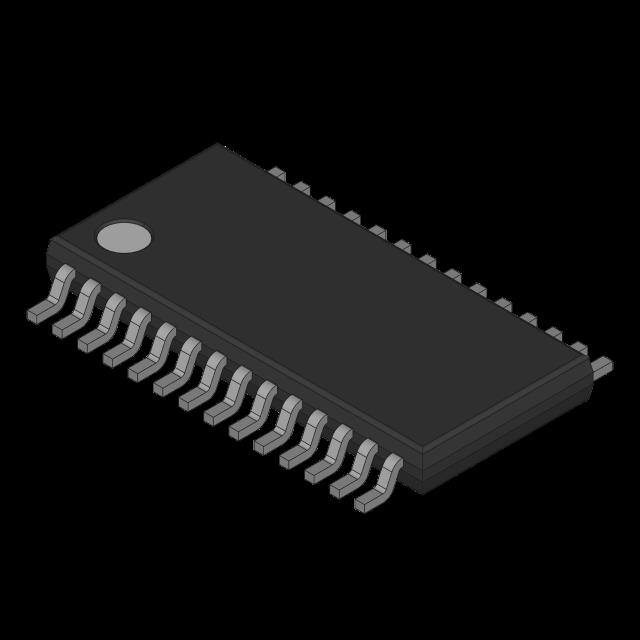
TSSOP-28 exposed pad package
Applications
■ Automotive Infotainment Displays
■ Small to Medium Format Displays
Typical Application Circuit
30041101
© 2009 National Semiconductor Corporation
300411
www.national.com
LM3431/LM3431A/LM3431Q/LM3431AQ 3-Channel Constant Current LED Driver with Integrated
Boost Controller
LM3431/LM3431A/LM3431Q/
LM3431AQ
�LM3431/LM3431A/LM3431Q/LM3431AQ
Connection Diagram
30041102
Top View
28 Lead Plastic Exposed Pad TSSOP
Ordering Information
Order Number
Operating Temp
Range
Package
Type
Package
Drawing
Supplied As
LM3431MHX
-40°C to 125°C
TSSOP-28
MXA28A
Tape and Reel of 2500 Units
LM3431MH
-40°C to 125°C
TSSOP-28
MXA28A
Rail of 48 Units
LM3431AMHX
-40°C to 125°C
TSSOP-28
MXA28A
Tape and Reel of 2500 Units
LM3431AMH
-40°C to 125°C
TSSOP-28
MXA28A
Rail of 48 Units
LM3431QMHX
-40°C to 125°C
TSSOP-28
MXA28A
Tape and Reel of 2500 Units
LM3431QMH
-40°C to 125°C
TSSOP-28
MXA28A
Rail of 48 Units
LM3431AQMHX
-40°C to 125°C
TSSOP-28
MXA28A
Tape and Reel of 2500 Units
LM3431AQMH
-40°C to 125°C
TSSOP-28
MXA28A
Rail of 48 Units
Feature
AEC-Q100 Grade 1
qualified. Automotive
Grade Production Flow*
*Automotive Grade (Q) product incorporates enhanced manufacturing and support processes for the automotive market, including defect detection methodologies.
Reliability qualification is compliant with the requirements and temperature grades defined in the AEC-Q100 standard. Automotive grade products are identified
with the letter Q. For more information go to http://www.national.com/automotive.
www.national.com
2
�Pin #
Pin Name
1
VIN
Description
2
PGND
3
VCC
4
LG
Boost controller gate drive output. Connect to the NFET gate.
5
CS
Boost controller current sense pin. Connect to the top side of the boost current sense resistor.
6
ILIM
Boost controller current limit adjust pin. Connect a resistor from this pin to the Boost current sense resistor
to set the current limit threshold.
7
MODE/F
Dimming mode selection pin. Pull high for digital PWM control. Or connect to a capacitor to GND to set
the internal dimming frequency.
8
FF
Feedforward pin. Connect to a resistor to ground to control the output voltage over/undershoot during
PWM dimming.
9
RT
Frequency adjust pin. Connect a resistor from this pin to ground to set the operating frequency of the
boost controller.
Power supply input.
Power ground pin. Connect to ground.
Internal reference voltage output. Bypass to PGND with a minimum 4.7 µF capacitor.
10
REF
11
REFIN
Reference voltage. Use this pin to provide the REFIN voltage.
This pin sets the LED current feedback voltage. Connect to a resistor divider from the REF pin.
12
COMP
Output of the error amplifier. Connect to the compensation network.
13
SGND
Signal ground pin. Connect to ground.
14
AFB
Anode feedback pin. The boost controller voltage feedback during LED off time. Connect this pin to a
resistor divider from the output voltage.
15
SS/SH
Soft-start and sample-hold pin. Connect a capacitor from this pin to ground to set the soft-start time.
16
DLY
Fault delay pin. Connect a capacitor from this pin to ground to set the delay time for shutdown.
17
CFB
Cathode feedback pin. The boost controller voltage feedback. Connect through a diode to the bottom
cathode of each LED string.
18
SC
19
LEDOFF
LED short circuit detection pin. Connect through a diode to the bottom cathode of each string.
A dual function pin. The LEDOFF signal controls external drivers during PWM dimming. Or connect to
ground to enable automatic fault restart.
20
SNS3
21
NDRV3
22
SNS2
23
NDRV2
24
SNS1
25
NDRV1
26
THM
LED thermal monitor input pin. When pulled below 1.2V, device enters standby mode.
27
DIM
PWM dimming input pin. Accepts a digital PWM or analog voltage level input to control LED current duty
cycle.
28
EN
Enable pin. Connect to VIN through a resistor divider to set an external UVLO threshold. Pull low to
shutdown.
EP
Current feedback for channel 3. Connect to the top of the channel 3 current sense resistor.
Base drive for the channel 3 current regulator. Connect to the NPN base or NFET gate.
Current feedback for channel 2.
Base drive for the channel 2 current regulator.
Current feedback for channel 1.
Base drive for the channel 1 current regulator.
Exposed pad. Connect to SGND.
3
www.national.com
LM3431/LM3431A/LM3431Q/LM3431AQ
Pin Descriptions
�LM3431/LM3431A/LM3431Q/LM3431AQ
CS
VCC
Storage Temperature
Soldering Dwell Time, Temp.
Absolute Maximum Ratings (Note 1)
If Military/Aerospace specified devices are required,
please contact the National Semiconductor Sales Office/
Distributors for availability and specifications.
Voltages from the indicated
pins to SGND:
VIN
EN
DIM
MODE/F
REFIN
THM
DLY
SNSx
NDRVx
CFB
SC
AFB
-0.3V to 7V
-0.3V to 7V
-65°C to +150°C
Infrared
Vapor Phase
-0.3V to 37V
-0.3V to 10V
-0.3V to 7V
-0.3V to 7V
-0.3V to 7V
-0.3V to 7V
-0.3V to 7V
-0.3V to 7V
-0.3V to 7V
-0.3V to 7V
-0.3V to 40V
-0.3V to 7V
20sec, 240°C
75sec, 219°C
ESD Rating (Note 2)
Human Body Model
Operating Ratings
2 kV
(Note 1)
VIN
Junction Temp. Range
4.5V to 36V
-40°C to +125°C
Thermal Resistance (θJA)
(Note 3)
TSSOP-28 (0.5W)
Power Dissipation (Note 4)
TSSOP-28
32°C/W
3.1W
Electrical Characteristics
Specifications in standard type are for TJ = 25°C only, and limits in boldface type
apply over the junction temperature (TJ) range of -40°C to +125°C. Unless otherwise stated, VIN = 12V. Minimum and Maximum
limits are guaranteed through test, design, or statistical correlation. Typical values represent the most likely parametric norm at TJ
= 25°C, and are provided for reference purposes only. (Note 5)
Symbol
Parameter
Conditions
Operating VIN Current (Note 6)
Min
Typ
Max
Units
DIM = 5V
4.0
4.85
mA
System
IQ
IQ_SB
Standby mode VIN current
EN = 1V
3.7
IQ_SD
Shutdown mode VIN Current
EN = 0V, Vin = 36V
15
23
VCC
VCC voltage
Iload = 25 mA, Vin = 5.5 to 36V
5
5.24
VCCILIM
VCC current limit
UVLO
UVLO threshold
4.80
72
VIN rising, measured at VCC
4.36
hysteresis
VEN_ST
VEN
mA
EN rising
Enable pin On threshold
EN rising
4.50
hysteresis
V
V
0.75
1.185
V
mA
0.28
Enable pin Standby threshold
uA
V
1.230
1.275
V
115
165
mV
Linear Current Controller
VREF
Reference Voltage
IREF < 300 µA
2.5
2.55
V
IREFIN
REFIN input bias current
REFIN = 300 mV
14
80
nA
Line regulation
5.5V < VIN < 36V
0.0001
ΔVREF / ΔVIN
VNDRV
2.45
%/V
NDRVx drive voltage capability
INDRVx = 5 mA
INDRV_SK
NDRVx drive sink current
NDRVX = 0.9V
4
3.7
6
8
mA
V
INDRV_SC
10
15
20
mA
20
30
µA
NDRVx drive source current
NDRVX = 0.9V
ISNS
SNSx input bias current
SNSx = 300 mV
VOS
SNSx amp offset voltage
REFIN = 300 mV (LM3431)
-5
+5
mV
VOS
SNSx amp offset voltage
REFIN = 300 mV (LM3431A)
-3
+3
mV
VOS_DELTA
Ch. To Ch. offset voltage mismatch
(Note 7)
REFIN = 300 mV, 25°C (LM3431)
5.5
mV
VOS_DELTA
Ch. To Ch. offset voltage mismatch
(Note 7)
REFIN = 300 mV, -40°C to +125°C
(LM3431)
6
mV
VOS_DELTA
Ch. To Ch. offset voltage mismatch
(Note 7)
REFIN = 300 mV, 25°C (LM3431A)
3.5
mV
VOS_DELTA
Ch. To Ch. offset voltage mismatch
(Note 7)
REFIN = 300 mV, -40°C to +125°C
(LM3431A)
4
mV
www.national.com
4
�bw
VLEDOFF
VDIM
TDIM
Parameter
Conditions
Min
Typ
SNSx amp bandwidth
At unity gain
2
MHz
LEDOFF voltage
DIM low
5
V
DIM threshold
MODE/F > 4V
1.9
Max
2.3
Units
V
hysteresis
0.8
V
Minimum internal DIM pulse width
(Note 8)
0.4
µs
100
ns
DIMDLY_R
DIM to NDRV delay time
DIM rising
DIMDLY_F
DIM to NDRV delay time
DIM falling
90
ns
THMODE/F
MODE/F threshold
For Digital Dimming control
3.8
V
IMODE/F
MODE/F source/sink current
40
uA
VMODE_L
MODE/F minimum voltage
Analog dimming mode
0.37
V
VMODE_H
MODE/F peak voltage
Analog dimming mode
2.5
V
VSC_SHORT
SC high threshold
LED short circuit fault, SC rising
5.7
6
6.2
V
VSC_OPEN
SC open clamp voltage
LED open circuit fault, SC rising
3.16
3.50
3.87
V
IDLY_SC
DLY source current
DLY = 1.0V
57
73
µA
IDLY_SK
DLY sink current
DLY = 1.0V
Protection
DLY threshold voltage
DLY rising
VDLY_reset
VDLY
DLY reset threshold voltage
DLY falling
TDLY_BLK
DLY blank time
DIM rising
VTHM
THM threshold
ITHM
THM hysteresis current
THM = 1V
IILIM
ILIM max source current
COMP = 2.0V
VAFB_max
AFB overvoltage threshold
VAFB_UVP
AFB undervoltage threshold
TSD
Thermal shutdown threshold
39
1.8
2.40
3.16
350
1.23
V
mV
1.6
1.19
AFB falling
2.8
µA
µs
1.27
9.6
V
µA
40
46
µA
1.87
2.0
2.22
V
0.73
0.85
0.98
V
31
160
°C
Boost controller
VCFB
CFB voltage
DIM high
1.60
ICFB
CFB source current
DIM high
35
CFBTC
ΔVCFB / ΔVIN
CFB temperature coefficient
CFB Line regulation
5.5V < VIN < 36V
SS/SH source current
At EN going high
SS/SH voltage
At end of soft-start cycle
VRT
RT voltage
RRT = 34.8 kΩ
FSW
Switching Frequency
Minimum Switching Frequency
Maximum Switching Frequency
ISS/SH
VSS_END
Ton_min
DMAX
1.71
1.82
50
65
µA
-2.6
mV/°C
0.001
%/V
13
19
24
µA
1.80
1.85
1.90
V
kHz
1.22
V
RRT = 34.8 kΩ
651
700
749
RRT = 130 kΩ
180
200
220
RRT = 22.6 kΩ
900
1000
1100
170
230
Minimum on time
Maximum duty cycle
V
80
ns
85
%
ILIMgm
ILIM amplifier transconductance
COMP to ILIM gain
85
umho
Vslope
Slope compensation
Peak voltage per cycle
75
mV
ICOMP_SC
COMP source current
VCOMP = 1.2V, AFB = 0.5V
155
µA
ICOMP_SK
COMP sink current
VCOMP =1.2V, AFB = 1.5V
150
µA
Error amplifier transconductance
CFB to COMP gain, DIM high
230
umho
Gate Drive On Resistance
Source Current = 200 mA, VIN = 5.5V
6.4
Ω
Sink Current = 200 mA
2.2
Source, LG = 2.5V, VIN = 5.5V
0.35
Ω
A
Sink, LG = 2.5V
0.70
A
EAgm
RLG
ILG
Driver Output Current
5
www.national.com
LM3431/LM3431A/LM3431Q/LM3431AQ
Symbol
�LM3431/LM3431A/LM3431Q/LM3431AQ
Note 1: Absolute Maximum Ratings are limits beyond which damage to the device may occur. Operating Ratings are conditions under which operation of the
device is intended to be functional. For guaranteed specifications and test conditions, see the Electrical Characteristics.
Note 2: The human body model is a 100pF capacitor discharged through a 1.5 kΩ resistor into each pin.
Note 3: The Thermal Resistance specifications are based on a JEDEC standard 4-layer pcb. θJA will vary with board size and copper area.
Note 4: The maximum allowable power dissipation is a function of the maximum junction temperature, TJ_MAX, the junction-to-ambient thermal resistance, θJA,
and the ambient temperature, TA. The maximum allowable power dissipation at any ambient temperature is calculated using: PD_MAX = (TJ_MAX – TA)/θJA. The
maximum power dissipation is determined using TA = 25°C, and TJ_MAX = 125°C.
Note 5: All room temperature limits are 100% production tested. All limits at temperature extremes are guaranteed through correlation using standard Statistical
Quality Control (SQC) methods. All limits are used to calculate Average Outgoing Quality Level (AOQL).
Note 6: IQ specifies the current into the VIN pin and applies to non-switching operation.
Note 7: VOS_DELTA specifies the maximum absolute difference between the offset of any pair of SNS amplifiers.
Note 8: The minimum DIM pulse width is an internal signal. Any pulse width may be applied to the DIM pin or generated via analog dimming mode. A pulse width
less than 0.4 µs will be internally extended to 0.4 µs.
www.national.com
6
�Unless otherwise specified the following conditions apply: VIN =
VREF vs. Temperature
CFB Voltage vs. Temperature
30041104
30041105
SNS 1, 2, 3 VOS vs Temperature (LM3431 or LM3431A)
Delta VOS Max vs Temperature (LM3431 or LM3431A)
30041107
30041106
IQ_SB vs Temperature
IQ_SD vs Temperature
30041108
30041109
7
www.national.com
LM3431/LM3431A/LM3431Q/LM3431AQ
Typical Performance Characteristics
12V, TJ = 25°C.
�LM3431/LM3431A/LM3431Q/LM3431AQ
Normalized Switching Frequency
vs. Temperature (700 kHz)
Efficiency vs. Input Voltage
LED Current = 140 mA x 3, LED Vf = 25V
30041110
30041111
Line Transient Response
Dimming Transient Response
30041112
30041113
LED Ripple Current
NDRV Waveforms
30041115
30041114
www.national.com
8
�LM3431/LM3431A/LM3431Q/LM3431AQ
Block Diagram
30041116
9
www.national.com
�www.national.com
10
FIGURE 1. Typical Application Schematic
30041117
LM3431/LM3431A/LM3431Q/LM3431AQ
�The LM3431 combines a boost controller and 3 constant current regulator controllers in one device. To simplify the description, these two blocks will be described separately as
Boost Controller and LED Current Regulator. All descriptions
and component numbers refer to the Figure 1 schematic. The
LED bottom cathode nodes (VC1 – VC4) are referred to simply as the cathode.
SOFT-START
The SS/SH pin is a dual function softstart and sample/hold
pin. The SH function is described in sections below. When the
EN pin is pulled above the programmable UVLO threshold
and VCC rises above the internal UVLO threshold, the SS/SH
pin begins sourcing current. This charges the SS cap (C6)
and the SS pin voltage in turn controls the output voltage
ramp-up, sensed via the AFB pin. The softstart capacitor is
calculated as shown below, where 20 µA is the typical softstart source current:
Boost Controller
The LM3431 is a current-mode, PWM boost controller. Although the LM3431 may be operated in either continuous or
discontinuous conduction mode, the following guidelines are
designed for continuous conduction operation. This mode of
operation gives lower output ripple and better LED current
regulation.
In continuous conduction mode (when the inductor current
never reaches zero), the boost regulator operates in two cycles. In the first cycle of operation, the NFET is turned on and
current ramps up and is storing energy in the inductor. During
this cycle, diode D1 is reverse biased and load current is supplied by the output capacitors - C8 and C9 in Figure 1.
In the second cycle, the NFET is off and the diode is forward
biased. Inductor current is transferred to the load and output
capacitor. The ratio of these two cycles determines the output
voltage and is expressed as D or D’:
The LED current regulators are held off until softstart is completed. During softstart, current limit is active and the CFB pin
is monitored for a cathode short fault (See LED protection
section). When the SS/SH voltage reaches 1.85V, the current
regulators are activated, LED current begins flowing, and output voltage control is transferred to the CFB pin. Typical
startup is shown below in Figure 2.
where D is the duty cycle of the switch.
Maximum duty cycle is limited to 85% typically.
As input voltage approaches the nominal output voltage, duty
cycle and switch on time are reduced. When the on time
reaches minimum, pulse skipping will occur. This increases
the output ripple voltage and can cause regulator saturation
and poor LED current regulation. If input voltage equals or
exceeds the set output voltage, switching will stop and the
output voltage will become unregulated. This will force an increase in the LED cathode voltage and NPN regulator power
dissipation. Although this condition can be tolerated, it is not
recommended.
Therefore, input voltage should be restricted to keep on time
above the minimum (see Switching Frequency section) and
at least 1V below the set output voltage.
30041121
FIGURE 2. Typical Startup Waveforms
(From power-on, DIM = high)
OUTPUT VOLTAGE, OVP, and SH
The LM3431 boost controls the LED cathode voltage in order
to drive the LED strings with sufficient headroom at optimum
efficiency. When the LED strings are on, voltage is regulated
to 1.7V (typical) at the CFB pin, which is one diode Vf above
the LED cathode voltage. Therefore, when the LED strings
are on, the output voltage (LED anodes, shown as VA in Figure 1) will vary according to the Vf of the LED string, while the
LED cathode voltage will be regulated via the CFB pin.
The AFB pin is used to regulate the output voltage when the
LED strings are off, which is during startup and dimming off
cycles. During LED-off times, the cathode voltage is not regulated.
AFB should set the initial output voltage to at least 1.0V (CFB
voltage minus one diode drop) above the maximum LED
string forward voltage. This ensures that there is enough
headroom to drive the LED strings at startup and keeps the
ENABLE and UVLO
The EN pin is a dual function pin combining both enable and
programmable undervoltage lockout (UVLO). The shutdown
threshold is 0.75V. When EN is pulled below this threshold,
the LM3431 will shutdown and IQ will be reduced to 15 µA
typically. The typical EN pin UVLO threshold is 1.23V. When
the EN voltage is above this threshold, the LM3431 will begin
softstart. Below the UVLO threshold, the LM3431 will remain
in standby mode. A resistor divider, shown as R1 and R2 in
Figure 1, can be used to program the UVLO threshold at the
EN pin. This feature is used to shutdown the IC at an input
voltage higher than the internal VCC UVLO threshold of 4.4V.
11
www.national.com
LM3431/LM3431A/LM3431Q/LM3431AQ
The EN UVLO should be set just below the minimum input
voltage for the application.
The internal UVLO is monitored at the VCC pin. When VCC
is below the threshold of 4.4V, the LM3431 is in standby mode
(See VCC section).
Operation Description
�LM3431/LM3431A/LM3431Q/LM3431AQ
SS/SH voltage below its maximum. The AFB pin voltage at
the end of softstart is 1.85V typically, which determines the
ratio of the feedback resistors according to the following equation:
The AFB resistors also set the output over-voltage (OVP)
threshold. The OVP threshold is monitored during both LED
on and LED off states and protects against any over voltage
condition, including all LEDs open (See Open LED
section).The OVP threshold at Vout can be calculated as follows:
30041124
Because OVP has a fixed 2.0V threshold sensed at AFB, a
larger value for R19 will increase the OVP threshold of the
output voltage. During an open LED fault, the output voltage
will increase by 2.6V typically (see LED Protection section).
Therefore, at least this much headroom above the nominal
output voltage is required to avoid a false OVP error. Note
that because of the high output voltage setting at the end of
softstart, a brief open LED error may occur during the short
time it takes for the cathode voltage to drop to its nominal
level. Figure 2 shows a typical startup waveform, where both
Vout and the SS/SH voltage reach their peak before the LED
current turns on. Once LED current starts, SS/SH and Vout
drop to the nominal operating point.
While the LEDs are on, the AFB voltage is sampled to the SS/
SH pin. During LED-off time, this SS/SH voltage is used as
the reference voltage to regulate the output. This allows the
output voltage to remain stable between on and off dimming
cycles, even though there may be wide variation in the LED
string forward voltage. The SS/SH pin has a maximum voltage of 1.9V. Therefore, the AFB voltage when the LEDs are
on must be below this limit for proper regulation. This will be
ensured by setting the AFB resistors as described above.
During LED-off cycles, there is minimal loading on the output,
which forces the boost controller into pulse skipping mode. In
this mode, switching is stopped completely, or for multiple cycles until the AFB feedback voltage falls below the SS/SH
reference level.
FIGURE 3. Switching Frequency vs RT
For a given application, the maximum switching frequency is
limited by the minimum on time. When the LM3431 reaches
its minimum on-time, pulse skipping will occur and output ripple will increase. To avoid this, set the operating frequency
below the following maximum setting:
INDUCTOR SELECTION
Figure 4 shows how the inductor current, IL, varies during a
switching cycle.
SWITCHING FREQUENCY
The switching frequency can be set between 200 kHz and 1
MHz with a resistor from the RT pin to ground. The frequency
setting resistor (R6 in Figure 1) can be determined according
to the following empirically derived equation:
30041126
RT = 35403 x fSW-1.06
FIGURE 4. Inductor Current, SW Voltage, and VOUT
Where the fSW is in kHz and the RT result is in kohm.
The important quantities in determining a proper inductance
value are IL(AVE) (the average inductor current) and ΔiL (the
peak to peak inductor current ripple). If ΔiL is larger than 2 x
IL(AVE), the inductor current will drop to zero for a portion of the
cycle and the converter will operate in discontinuous conduction mode. If ΔiL is smaller than 2 x IL, the inductor current will
stay above zero and the converter will operate in continuous
conduction mode.
To determine the minimum L, first calculate the IL(AVE) at both
minimum and maximum input voltage:
www.national.com
12
�CURRENT SENSING
Switch current is sensed via the sense resistor, R3, while the
switch is on and the inductor is charging. The sensed current
is used to control switching and to monitor current limit. To
optimize the control signal, a typical sense voltage between
50mV and 200mV is recommended. The sense resistor can
therefore be calculated by the following equation:
Where IOUT is the sum of all LED string currents at 100% dimming. IL(AVE) will be highest at the minimum input voltage.
Then determine the minimum L based on ΔiL with the following equation:
A good starting point is to set ΔiL to 150% of the minimum IL
(AVE) and calculate using that value. The maximum recommended ΔiL is 200% of IL(AVE) to maintain continuous current
in normal operation. In general a smaller inductor (higher ripple current) will give a better dimming response due to the
higher dI/dt. This is shown graphically below.
Since IL(AVE) will vary with input voltage, R3 should be determined based on the full input voltage range, although the
resulting value may extend somewhat outside the recommended range.
CURRENT LIMIT
Current limit occurs when the voltage across the sense resistor (measured at the CS pin) equals the current limit threshold voltage. The current limit threshold is set by R4. This value
can be calculated as follows:
Where 40 µA is the typical ILIM source current in current limit
and ILlim is the peak (not average) inductor current which
triggers current limit.
To avoid false triggering, current limit should be set safely
above the peak inductor current level. However, the current
limit resistor also has some effect on the control loop as seen
in the block diagram. For this reason, R4 should not be set
much higher than necessary. When current limit is activated,
the NFET will be turned off immediately until the next cycle.
Current limit will typically result in a drop in output and cathode
voltage. This will cause the COMP pin voltage to increase to
maximum, which will trigger a fault and start the DLY pin
source current (see LED Protection section). The LM3431 will
continue to operate in current limit with reduced on-time until
the DLY pin has reached its threshold. However, the current
limit cannot reduce the on-time below the minimum specification.
In a boost switcher, there is a direct current path between
input and output. Therefore, although the LM3431 will shutdown in a shorted output condition, there are no means to limit
the current flowing from input to output.
Note that if the maximum duty cycle of 85% (typical) is
reached, the LM3431 will behave as though current limit has
occurred.
30041129
FIGURE 5. Inductor Current During Dimming
The resulting peak to peak inductor current is:
And the resulting peak inductor current is:
Peak inductor current will occur at minimum VIN.
The inductor must be rated to handle both the average current
and peak current, which is the same as the peak switch current. As switching frequency increases, less inductance is
required. However, some minimum inductance value is required to ensure stability at duty cycles greater than 50%. The
minimum inductance required for stability can be calculated
as:
VCC
The VCC pin is the output of the internal voltage regulator. It
must be bypassed to PGND with a minimum 4.7 µF ceramic
capacitor. Although VCC is capable of supplying up to 72 mA,
external loads will increase the power dissipation and temperature rise within the LM3431. See the TSD section for
more detail. Above 72 mA, the VCC voltage will drop due to
current limit. Since the UVLO threshold is monitored at this
pin, UVLO may be enabled by a VCC over current event.
For input voltages between 4.5V and 5.5V, connect VCC to
VIN through a 4.7Ω resistor. This will hold VCC above the UVLO threshold and allow operation at input voltages as low as
Where R3 is the sense resistor determined in the next section.
Although the inductor must be large enough to meet both the
13
www.national.com
LM3431/LM3431A/LM3431Q/LM3431AQ
stability and the ΔiL requirements, a value close to minimum
will typically give the best performance.
�LM3431/LM3431A/LM3431Q/LM3431AQ
4.5V. It may also be necessary to add additional VIN and VCC
capacitance for low VIN operation.
The off-state voltage of the NFET is approximately equal to
the output voltage plus the diode Vf. Therefore, VDS(MAX) of
the NFET must be rated higher than the maximum output
voltage. The power losses in the NFET can be separated into
conduction losses and switching losses. The conduction loss,
Pcond, is the I2R loss across the NFET. The maximum conduction loss is given by:
DIODE SELECTION
The average current through D1 is the average load current
(total LED current), and the peak current through the diode is
the peak inductor current. Therefore, the diode should be rated to handle more than the peak inductor current which was
calculated earlier. The diode must also be capable of handling
the peak reverse voltage, which is equal to the output voltage
(LED Anode voltage). To improve efficiency, a low Vf Schottky
diode is recommended. Diode power loss is calculated as:
PCOND = RDS(ON) x DMAX x IL(AVE)2
where DMAX is the maximum duty cycle for the given application and RDS(ON) is the on resistance at high temperature. The
switching losses can be roughly calculated by the following
equation:
PDIODE = Vf x IOUT
NFET SELECTION
The drive pin of the LM3431 boost switcher, LG, must be
connected to the gate of an external NFET. The NFET drain
is connected to the inductor and the source is connected to
the sense resistor. The LG pin will drive the gate at 5V typically.
The critical parameters for selection of a MOSFET are:
1. Maximum drain current rating, ID(MAX)
2. Maximum drain to source voltage, VDS(MAX)
3. On-resistance, RDS(ON)
4. Total gate charge, Qg
In the on-state, the switch current is equal to the inductor current. Therefore, the maximum drain current, ID, must be rated
higher than the current limit setting. The average switch current (ID(AVE)) is given in the equation below:
Where tON and tOFF are the NFET turn-on and turn-off times.
Power is also consumed in the LM3431 in the form of gate
charge losses, Pg. These losses can be calculated using the
formula:
Pg = fSW x Qg x VIN
where Qg is the NFET total gate charge. Pg adds to the total
power dissipation of the LM3431 (See TSD section).
Fast switching FETs can cause noise spikes at the SW node
which may affect performance. To reduce these spikes a drive
resistor up to 10Ω can be placed between LG and the NFET
gate.
ID(AVE) = IL(AVE) x D
www.national.com
14
�The input capacitor must be capable of handling this rms current. Input ripple voltage increases with increasing ESR as
well as decreasing input capacitance. A typical value of 10 µF
will work well for most applications. For low input voltages,
additional input capacitance may be required to prevent tripping the UVLO. Additionally, a ceramic capacitor of 1 µF or
larger should be placed close to the VIN pin to prevent noise
from interfering with normal device operation.
Where RL is the load resistance corresponding to LED current, and Kf is calculated as shown:
OUTPUT CAPACITOR SELECTION
The output capacitor in a boost converter provides all the output current when the switch is on and the inductor is charging.
As a result, the output capacitor sees relatively large ripple
currents. The output capacitor must be capable of handling
more than the rms current, which can be estimated as:
Since the control-to-output response will shift with input voltage, the compensation should be calculated at both the minimum and maximum input voltage.
The zero created by the ESR of the output capacitor, fz1, is
generally at a very high frequency if the ESR is small. If low
ESR capacitors are used fz1 can be neglected and if high ESR
capacitors are used, CC2 can be added (see below).
A current mode control boost regulator has an inherent right
half plane zero, RHPz. This has the effect of a zero in the gain
plot, causing a +20dB/decade increase, but has the effect of
a pole in the phase, subtracting 90° in the phase plot. This
can cause instability if the control loop is influenced by this
zero. To ensure the RHP zero does not cause instability, the
control loop must be designed to have a bandwidth of less
than one third the frequency of the RHP zero. The regulator
also has a double pole, fpn, at one half the switching frequency. The control loop bandwidth must be lower than 1/5 of fpn.
A typical control-to-output gain response is shown in Figure
6 below.
Additionally, the ESR of the output capacitor affects the output
ripple and has an effect on transient response during dimming. For low output ripple voltage, low ESR ceramic capacitors are recommended. Although not a critical parameter,
excessive output ripple can affect LED current.
The output capacitance requirement is somewhat arbitrary
and depends mostly on dimming frequency. Although a minimum value of 4 µF is recommended, at lower dimming frequencies, the longer LED-off times will typically require more
capacitance to reduce output voltage transients.
When ceramic capacitors are used, audible noise may be
generated during LED dimming. Audible noise increases with
the amplitude of output voltage transients. To minimize this
noise, use the smallest case sizes and if possible, use a larger
number of capacitors in parallel to reduce the case size of
each. Output transients are also minimized via the FF pin
(See Setting FF section). Setting the dimming frequency
above 18 kHz or below 500 Hz will also help eliminate the
audible effects of output voltage transients.
When selecting an output capacitor, always consider the effective capacitance at the output voltage, which can be less
than 50% of the capacitance specified at 0V. Use this effective
capacitance value for the compensation calculations below.
COMPENSATION
Once the output capacitor is selected, the control loop characteristics and compensation can be determined. The COMP
pin is provided to ensure stable operation and optimum transient performance over a wide range of applications. The
following equations define the control-to-output or power
stage of the loop:
30041140
FIGURE 6. Typical Control-to-Output Bode Plot
15
www.national.com
LM3431/LM3431A/LM3431Q/LM3431AQ
INPUT CAPACITOR SELECTION
Because the inductor is at the input of a boost converter, the
input current waveform is continuous and triangular. The inductor ensures that the input capacitor sees relatively low
ripple currents. The rms current in the input capacitor is given
by:
�LM3431/LM3431A/LM3431Q/LM3431AQ
Once the control-to-output response has been determined,
the compensation components are selected. A series combination of Rc and Cc is recommended for the compensation
network, shown as R9 and C4 in the typical application circuit.
The series combination of Rc and Cc introduces a pole-zero
pair according to the following equations:
where RO is the output impedance of the error amplifier, approximately 500 kΩ. The initial value of RC is determined
based on the required crossover frequency from the following
equations using the maximum input voltage:
30041143
FIGURE 7. Typical Compensation and Total Loop Bode
Plots
When using an output capacitor with a high ESR value, another pole, fpc2, may be introduced to cancel the zero created
by the ESR. This is accomplished by adding another capacitor, CC2, shown as C13 in the Figure 1. The pole should be
placed at the same frequency as fz1. This pole can be calculated as:
Where B is the mid-frequency compensation gain (in v/v), R4
is the current limit setting resistor, Acm is the control-output
DC gain, and the gm values are given in the electrical characteristic table. Fcross is the maximum allowable crossover
frequency, based on the calculated values of fpn and RHPz.
Any Rc value lower than the value calculated above can be
used and will ensure a low enough crossover frequency. Rc
should set the B value typically between 0.01v/v and 0.1v/v
(-20db to -40db). Larger values of RC will give a higher loop
bandwidth.
However, because the dynamic response of the LM3431 is
enhanced by the FF pin (See Setting FF section) the RC value
can be set conservatively. The typical range for RC is between
300ohm and 3 kΩ. Next, select a value for Cc to set the compensation zero, fzc, to a frequency greater or equal to the
maximum calculated value of fp1 (fzc cancels the power pole,
fp1). Since an fzc value of up to a half decade above fp1 is
acceptable, choose a standard capacitor value smaller than
calculated. Confirm that fpc, the dominant low frequency pole
in the control loop, is less than 100 Hz and below fp1. The
typical range for CC is between 10 nF and 100 nF. The compensation zero-pole pair is shown graphically below, along
with the total control loop, which is the sum of the compensation and output-control response. Since the calculated
crossover frequency is an approximation, stability should always be verified on the bench.
To ensure this equation is valid, and that CC2 can be used
without negatively impacting the effects of RC and CC, fpc2
must be at least 10 times greater than fzc.
LED Current Regulator
SETTING LED CURRENT
LED current is independently regulated in each of 3 strings by
regulating the voltage at the SNS pins. Each SNS pin is connected to a sense resistor, shown in the typical application
schematic as R10 - R13. The sense resistor value is calculated as follows:
Where ILED is the current in each LED string, REFIN is the
regulated voltage at the REFIN pin, and INDRV is the NPN
base drive current. If using NFETs, INDRV can be ignored. A
minimum REFIN voltage of 100 mV is required, and 200mV
to 300mV is recommended for most applications. The REFIN
voltage is set with a resistor divider connected to the REF pin,
shown as R7 and R8 in the typical application schematic. The
resistor values are calculated as follows:
The sum of R7 and R8 should be approximately 100k to avoid
excessive loading on the REF pin.
www.national.com
16
�In analog mode, the MODE/F pin will generate a triangle wave
with a peak of 2.5V and minimum of 0.37V. The DIM pin voltage is compared to the MODE/F voltage to create an internal
PWM dimming signal whose duty cycle is proportional to the
DIM voltage. When the DIM voltage is above 2.5V, the duty
cycle is 100%. Duty cycle will vary linearly with DIM voltage
as shown in Figure 8. Typical analog dimming waveforms are
shown below in Figure 9.
If NFETs are used, the NDRV current can be ignored. NPN
transistors should be selected based on speed and power
handling capability. A fast NPN with short rise time will give
the best dimming response. However, if the rise time is too
fast, some ringing may occur in the LED current. This ringing
can be improved with a resistor in series with the NDRV pins.
The NPNs must be able to handle a power equal to ILED x NPN
voltage. Note that the NPN voltage can be as high as approximately 5.5V in a fault condition. The NDRV pins have a
limited slew rate capability which can increase the turn-on
delay time when driving NFETs. This delay increases the
minimum dimming on-time and can affect the dimming linearity at high dimming frequencies. Low VGS threshold NFETs
are recommended to ensure that they will turn fully on within
the required time. At dimming frequencies above 10 kHz,
NPN transistors are recommended for the best performance.
CFB AND SC DIODES
The bottom of each LED string is connected to the CFB and
SC pins through diodes as shown in Figure 1. The CFB pin
receives voltage feedback from the lowest cathode voltage.
The other string cathode voltages will vary above the regulated CFB voltage. The actual cathode voltage on these
strings will depend on the LED forward voltages. This ensures
that the lowest cathode voltage (highest Vf) will be regulated
with enough headroom for the NPN regulator. The SC pin
monitors for LED fault conditions and limits the maximum
cathode voltage (See LED Protection section). In this way,
each LED string’s cathode is maintained within a window between minimum headroom and fault condition.
Both the CFB and SC diodes must be rated to at least 100
µA, and the CFB diode should have a reverse voltage rating
higher than VOUT. With these requirements in mind, it is best
to use the smallest possible case size in order to minimize
diode capacitance which can slow the LED current rise and
fall times.
30041149
FIGURE 8. Analog Mode Dimming Duty Cycle vs. DIM
voltage
DIMMING
The LM3431 is compatible with both analog and digital LED
dimming signals. The MODE/F pin is used to select analog or
digital mode. When MODE/F is pulled above 3.8V, digital
mode is enabled and a PWM signal up to 25 kHz can be applied to the DIM pin. In this mode, the LED current regulators
will be active when DIM is above 2V (typical) and inactive
when DIM is pulled below 1.1V (typical). Although any pulse
width may be used at the DIM pin, 0.4 µs is the minimum LED
on time (in either digital or analog mode). This limits the minimum dimming duty cycle at high dimming frequencies. For
example, at 20 kHz, the dimming duty cycle is limited to 0.8%
minimum. At lower dimming frequencies, the dimming duty
cycle can be much lower and the minimum depends on the
application conditions including the FF setting (see Setting FF
section). In analog dimming mode, the MODE/F pin is used
to set the PWM dimming frequency, and duty cycle is controlled by varying the analog voltage level at the DIM pin. To
30041150
FIGURE 9. Analog Dimming Mode Waveforms
In PWM dimming, the average LED current is equal to the set
LED current (ILED) multiplied by the dimming duty cycle. The
average LED current tracks the dimming ratio with exceptional linearity. However, the accuracy of average LED current
depends somewhat on the rise and fall times of the external
current regulators. This becomes more apparent with short
17
www.national.com
LM3431/LM3431A/LM3431Q/LM3431AQ
operate in analog mode, connect a capacitor from MODE/F
to ground, shown as C5 in the typical application (without the
pull-up resistor installed). The dimming frequency is set according to the following equation:
NDRV
The NDRV pins drive the base of the external NPN or Nchannel MOSFET current regulators. Each pin is capable of
driving up to 15 mA of base current typically. Therefore, NPN
devices with sufficient gain must be selected. The required
NDRV current can be calculated from the following equation,
where β is the NPN transistor gain.
�LM3431/LM3431A/LM3431Q/LM3431AQ
In practice the FF pin also has a small effect on the control
loop response. As a final step, switching stability at 100%
dimming duty should be re-verified once the Rff value has
been selected. At the optimal Rff setting, output voltage transients will be minimized and the cathode voltage will be stable
across the range of input voltage and dimming duty cycle.
The ideal cathode response illustrated in Figure 10 may not
be achievable over the entire input voltage range. However,
LED current will not be affected as long as the cathode voltage
remains above the regulator saturation voltage and below the
open LED fault threshold (See Open LED section).
A wide input voltage range will cause a wider variation in the
feedforward effect, thus making duty cycles less than 1%
more difficult to achieve. For any given application there is a
minimum achievable dimming duty cycle. Below this duty cycle, the cathode voltage will begin to drift higher, eventually
appearing as an open LED fault (See LED Protection section).
During an LED open fault condition, cathode voltage overshoot will tend to increase. If Rff is not set appropriately, high
overshoots may be detected as an LED short fault and lead
to shutdown.
on-times. To ensure good linearity, select NPN regulators
with short and similar rise and fall times.
SETTING FF
To minimize voltage transients during LED dimming, the output voltage is regulated via the AFB pin during LED off times.
However, because the control loop has a limited response
time, voltage transients can never be completely eliminated.
If these transients are large enough, LED current will be affected and ceramic output capacitors may generate audible
noise. The FF pin speeds up the loop response time, and thus
minimizes output voltage transients during dimming.
A resistor connected from FF to ground, Rff, sets the FF current which is injected into the control loop at the rising and
falling edge of the dimming signal. In this way, the FF pin creates a correction signal before the control loop can respond.
A smaller FF resistor will generate a larger correction signal.
The minimum recommended Rff value is 10k.
Since the amount of FF correction required for a given application depends on many factors, it is best to determine a FF
resistor value through bench testing. Use the following procedure to determine an optimal Rff value:
An Rff value of approximately 20k is a good starting point. A
20 kΩ potentiometer in series with a 10 kΩ resistor works well
for bench testing.
The dimming frequency must be selected before setting Rff.
Confirm that boost switching operation is stable at 100% dimming duty cycle.
Adjust Rff until the COMP pin voltage is between 0.8V and
0.9V. Next, monitor the cathode voltage response at a low
dimming duty cycle while adjusting Rff until the overshoot and
undershoot is minimal or there is a slight overshoot.
Check the cathode voltage response at the lowest input voltage and lowest dimming duty cycle and adjust Rff if necessary. This is typically the worst case condition.
The curves in Figure 10 below show the variation in cathode
voltage with different Rff settings. Notice that at the ideal setting, both the cathode voltage and COMP voltage are flat. For
clarity, the 3 cathode voltage curves in this figure have been
offset; all FF settings will result in the cathode voltage settling
at 1.2V typically.
LED PROTECTION
Fault Modes and Fault Delay
The LM3431 provides 3 types of protection against several
types of potential faults. The table below summarizes the fault
protections and groups the fault responses into three types
(the auto-restart option is described in the next section).
Fault Mode Summary
Fault
Mechanism
Action
Response
1 LED
open
SC > 3.1V
DLY
charges
continue to
regulate
1 LED
short
SC > 3.1V
DLY
charges
continue to
regulate
All LEDs
open
AFB > 2.0V
DLY
charges
Shutdown or
auto-restart
Output
overvoltage
AFB > 2.0V
DLY
charges
Shutdown or
auto-restart
multiple
LED short
SC > 6.0V
DLY
charges
Shutdown or
auto-restart
Multiple
LED
short,
VIN