LM34919B
LM34919B-Q1
www.ti.com
SNVS623B – MAY 2010 – REVISED JULY 2013
LM34919B Ultra-Small 40-V 600-mA Constant On-Time
Buck Switching Regulator
Check for Samples: LM34919B, LM34919B-Q1
FEATURES
TYPICAL APPLICATIONS
•
•
•
•
•
1
2
•
•
•
•
•
•
•
•
•
•
•
•
•
•
AEC-Q100 Grade 1 Qualified (-40°C to 125°C)
Maximum Switching Frequency: 2.6 MHz
(VIN=14V,Vo=3.3V)
Input Voltage Range: 6V to 40V
Integrated N-Channel Buck Switch
Integrated Startup Regulator
No loop compensation Required
Ultra-Fast transient Response
Operating frequency remains constant with
Load Current and Input Voltage
Maximum Duty Cycle Limited During Startup
Adjustable Output Voltage
Valley Current Limit At 0.64A
Precision Internal Reference
Low Bias Current
Highly Efficient Operation
Thermal Shutdown
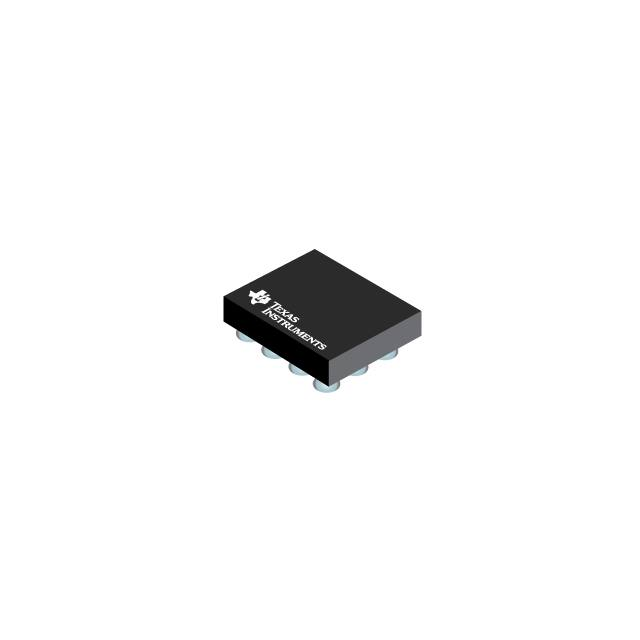
10-Pin DSBGA Package
•
Automotive Safety and Infotainment
High Efficiency Point-Of-Load (POL) Regulator
Non-Isolated Telecommunication Buck
Regulator
Secondary High Voltage Post Regulator
DESCRIPTION
The LM34919B Step-Down Switching Regulator
features all of the functions needed to implement a
low cost, efficient, buck bias regulator capable of
supplying 0.6A to the load. This buck regulator
contains an N-Channel Buck Switch, and is available
in a 10-pin DSBGA package. The constant on-time
feedback regulation scheme requires no loop
compensation, results in fast load transient response,
and simplifies circuit implementation. The operating
frequency remains constant with line and load
variations due to the inverse relationship between the
input voltage and the on-time. The valley current limit
results in a smooth transition from constant voltage to
constant current mode when current limit is detected,
reducing the frequency and output voltage, without
the use of foldback. Additional features include: VCC
under-voltage lockout, thermal shutdown, gate drive
under-voltage lockout, and maximum duty cycle
limiter.
Basic Step-Down Regulator
6V - 40V
Input
VIN
VCC
C3
C1
LM34919B
RON
BST
C4
L1
RON/SD
SHUTDOWN
VOUT
SW
D1
SS
R1
R3
ISEN
C2
C6
FB
RTN
SGND
R2
1
2
Please be aware that an important notice concerning availability, standard warranty, and use in critical applications of
Texas Instruments semiconductor products and disclaimers thereto appears at the end of this data sheet.
All trademarks are the property of their respective owners.
PRODUCTION DATA information is current as of publication date.
Products conform to specifications per the terms of the Texas
Instruments standard warranty. Production processing does not
necessarily include testing of all parameters.
Copyright © 2010–2013, Texas Instruments Incorporated
�LM34919B
LM34919B-Q1
SNVS623B – MAY 2010 – REVISED JULY 2013
www.ti.com
Connection Diagram
SW
D3
BST
C1
C3
VCC
SGND
B1
B3
SS
RON/SD
A1
A3
FB
VIN
D1
ISEN
D2
A2
D3
D2
D1
C3
C1
B3
B1
A3
A2
A1
RTN
Figure 1. Bump Side
Figure 2. Top View
Pin Descriptions
Pin No.
Name
A1
RON/SD
A2
RTN
A3
FB
B1
SGND
B3
SS
C1
Description
Application Information
On-time control and
shutdown
An external resistor from VIN to this pin sets the buck switch on-time.
Grounding this pin shuts down the regulator.
Circuit Ground
Ground for all internal circuitry other than the current limit detection.
Feedback input from
the regulated output
Internally connected to the regulation and over-voltage comparators. The
regulation level is 2.5V.
Sense Ground
Re-circulating current flows into this pin to the current sense resistor.
Softstart
An internal current source charges an external capacitor to 2.5V, providing the
softstart function.
ISEN
Current sense
The re-circulating current flows through the internal sense resistor, and out of
this pin to the free-wheeling diode. Current limit is nominally set at 0.64A.
C3
VCC
Output from the startup Nominally regulated at 7.0V. An external voltage (7V-14V) can be applied to
regulator
this pin to reduce internal dissipation. An internal diode connects VCC to VIN.
D1
VIN
Input supply voltage
Nominal input range is 6.0V to 40V.
D2
SW
Switching Node
Internally connected to the buck switch source. Connect to the inductor, freewheeling diode, and bootstrap capacitor.
D3
BST
Boost pin for bootstrap
capacitor
Connect a 0.022 µF capacitor from SW to this pin. The capacitor is charged
from VCC via an internal diode during each off-time.
This integrated circuit can be damaged by ESD. Texas Instruments recommends that all integrated circuits be handled with
appropriate precautions. Failure to observe proper handling and installation procedures can cause damage.
ESD damage can range from subtle performance degradation to complete device failure. Precision integrated circuits may be more
susceptible to damage because very small parametric changes could cause the device not to meet its published specifications.
2
Submit Documentation Feedback
Copyright © 2010–2013, Texas Instruments Incorporated
Product Folder Links: LM34919B LM34919B-Q1
�LM34919B
LM34919B-Q1
www.ti.com
SNVS623B – MAY 2010 – REVISED JULY 2013
Absolute Maximum Ratings (1)
VIN to RTN
44V
BST to RTN
52V
SW to RTN (Steady State)
-1.5V to 44V
ESD Rating, Human Body Model (2)
2kV
BST to VCC
44V
BST to SW
14V
VCC to RTN
14V
SGND to RTN
-0.3V to +0.3V
SS, RON/SD to RTN
-0.3V to 4V
FB to RTN
-0.3 to 7V
Storage Temperature Range
-65°C to +150°C
For soldering specs see:
Junction Temperature
(1)
(2)
150°C
Absolute Maximum Ratings are limits beyond which damage to the device may occur. Operating Ratings are conditions under which
operation of the device is intended to be functional. For specifications and test conditions, see the Electrical Characteristics.
The human body model is a 100 pF capacitor discharged through a 1.5kΩ resistor into each pin.
Operating Ratings (1)
VIN
6.0V to 40V
−40°C to + 125°C
Junction Temperature
(1)
Absolute Maximum Ratings are limits beyond which damage to the device may occur. Operating Ratings are conditions under which
operation of the device is intended to be functional. For specifications and test conditions, see the Electrical Characteristics.
Copyright © 2010–2013, Texas Instruments Incorporated
Product Folder Links: LM34919B LM34919B-Q1
Submit Documentation Feedback
3
�LM34919B
LM34919B-Q1
SNVS623B – MAY 2010 – REVISED JULY 2013
www.ti.com
Electrical Characteristics
Specifications with standard type are for TJ = 25°C only; limits in boldface type apply over the full Operating Junction
Temperature (TJ) range. Minimum and Maximum limits are specified through test, design, or statistical correlation. Typical
values represent the most likely parametric norm at TJ = 25°C, and are provided for reference purposes only. Unless
otherwise stated the following conditions apply: VIN = 12V, RON = 20 kΩ. See (1).
Symbol
Parameter
Conditions
Min
Typ
Max
7.4
Units
Startup Regulator, VCC
VCCReg
UVLOVCC
VCC regulated output
VIN = 12V
6.6
7
VIN =6V, ICC = 3 mA,
5.3
5.91
VIN-VCC dropout voltage
ICC = 0 mA, non-switching
VCC = UVLOVCC + 250 mV
20
VCC Output Impedance
0 mA ≤ ICC ≤ 5 mA, VIN = 6V
24
0 mA ≤ ICC ≤ 5 mA, VIN = 8V
12
V
mV
Ω
VCC current limit (2)
VCC = 0V
VCC under-voltage lockout threshold
measured at VCC
VCC increasing
5.25
VCC decreasing
5.1
VCC under-voltage lock-out threshold
measured at VIN
VIN increasing, ICC = 3 mA
5.25
5.6
V
VIN decreasing, ICC = 3 mA
5.1
5.4
V
15
UVLOVCC hysteresis, at VCC
mA
V
5.25
150
V
mV
UVLOVCC filter delay
100 mV overdrive
IQ
IIN operating current
Non-switching, FB = 3V, SW = Open
0.78
3
1.0
mA
µs
ISD
IIN shutdown current
RON/SD = 0V, SW = Open
215
330
µA
0.5
1.0
Ω
3.6
4.40
Switch Characteristics
Rds(on)
Buck Switch Rds(on)
ITEST = 200 mA
UVLOGD
Gate Drive UVLO
VBST - VSW Increasing
2.65
VBST - VSW Decreasing
3.2
V
UVLOGD hysteresis
400
mV
Pull-up voltage
2.5
V
10.5
µA
Softstart Pin
VSS
Internal current source
VSS = 1V
Threshold
Current out of ISEN
Current Limit
ILIM
0.52
0.64
0.76
A
Resistance from ISEN to SGND
135
mΩ
Response time
50
ns
On Timer
tON - 1
On-time
VIN = 12V, RON = 20kΩ
127
tON - 2
On-time
VIN = 24V, RON = 20 kΩ
110
tON - 3
On-time
VIN = 6V, RON = 20 kΩ
335
Shutdown threshold
Voltage at RON/SD rising
Threshold hysteresis
Voltage at RON/SD
Minimum Off-time
VIN = 6V, ICC = 3mA
60
88
120
VIN = 8V, ICC = 3mA
58
82
118
SS pin = steady state
2.440
2.5
2.550
0.4
170
0.74
213
ns
ns
ns
1.2
40
V
mV
Off Timer
tOFF
ns
Regulation and Over-Voltage Comparators (FB Pin)
VREF
FB regulation threshold
FB over-voltage threshold
FB bias current
(1)
(2)
4
FB = 3V
V
2.9
V
1
nA
Typical specifications represent the most likely parametric norm at 25°C operation.
VCC provides self bias for the internal gate drive and control circuits. Device thermal limitations limit external loading
Submit Documentation Feedback
Copyright © 2010–2013, Texas Instruments Incorporated
Product Folder Links: LM34919B LM34919B-Q1
�LM34919B
LM34919B-Q1
www.ti.com
SNVS623B – MAY 2010 – REVISED JULY 2013
Electrical Characteristics (continued)
Specifications with standard type are for TJ = 25°C only; limits in boldface type apply over the full Operating Junction
Temperature (TJ) range. Minimum and Maximum limits are specified through test, design, or statistical correlation. Typical
values represent the most likely parametric norm at TJ = 25°C, and are provided for reference purposes only. Unless
otherwise stated the following conditions apply: VIN = 12V, RON = 20 kΩ. See (1).
Symbol
Parameter
Conditions
Min
Typ
Max
Units
Thermal Shutdown
TSD
Thermal shutdown temperature
175
°C
Thermal shutdown hysteresis
20
°C
61
°C/W
Thermal Resistance
θJA
Junction to Ambient
0 LFPM Air Flow
Copyright © 2010–2013, Texas Instruments Incorporated
Product Folder Links: LM34919B LM34919B-Q1
Submit Documentation Feedback
5
�LM34919B
LM34919B-Q1
SNVS623B – MAY 2010 – REVISED JULY 2013
www.ti.com
Typical Performance Characteristics
6
Efficiency at 2.1 MHz, 3.3V
Efficiency at 250 kHz, 3.3V
Figure 3.
Figure 4.
Efficiency at 2.1 MHz, 5V
VCC vs. VIN
Figure 5.
Figure 6.
VCC vs. ICC
ICC vs. Externally Applied VCC
Figure 7.
Figure 8.
Submit Documentation Feedback
Copyright © 2010–2013, Texas Instruments Incorporated
Product Folder Links: LM34919B LM34919B-Q1
�LM34919B
LM34919B-Q1
www.ti.com
SNVS623B – MAY 2010 – REVISED JULY 2013
Typical Performance Characteristics (continued)
ON-TIME vs. VIN and RON
Voltage at the RON/SD Pin
Figure 9.
Figure 10.
Operating Current into VIN
Shutdown Current into VIN
Figure 11.
Figure 12.
VCC UVLO at Vin vs. Temperature
Gate Drive UVLO vs. Temperature
Figure 13.
Figure 14.
Copyright © 2010–2013, Texas Instruments Incorporated
Product Folder Links: LM34919B LM34919B-Q1
Submit Documentation Feedback
7
�LM34919B
LM34919B-Q1
SNVS623B – MAY 2010 – REVISED JULY 2013
www.ti.com
Typical Performance Characteristics (continued)
8
VCC Voltage vs. Temperature
VCC Output Impedance vs. Temperature
Figure 15.
Figure 16.
VCC Current Limit vs. Temperature
Reference Voltage vs. Temperature
Figure 17.
Figure 18.
Soft-Start Current vs. Temperature
On-Time vs. Temperature
Figure 19.
Figure 20.
Submit Documentation Feedback
Copyright © 2010–2013, Texas Instruments Incorporated
Product Folder Links: LM34919B LM34919B-Q1
�LM34919B
LM34919B-Q1
www.ti.com
SNVS623B – MAY 2010 – REVISED JULY 2013
Typical Performance Characteristics (continued)
Minimum Off-Time vs. Temperature
Current Limit Threshold vs. Temperature
Figure 21.
Figure 22.
Operating & Shutdown Current vs. Temperature
RON Pin Shutdown Threshold vs. Temperature
Figure 23.
Figure 24.
Copyright © 2010–2013, Texas Instruments Incorporated
Product Folder Links: LM34919B LM34919B-Q1
Submit Documentation Feedback
9
�LM34919B
LM34919B-Q1
SNVS623B – MAY 2010 – REVISED JULY 2013
www.ti.com
BLOCK DIAGRAM
6V to 40V
Input
VIN
C1
GND
LM34919B
7V SERIES
REGULATOR
VCC
VCC
UVLO
C5
RON
ON
TIMER
RON START
FINISH
RON/SD
SS
0.8V
OFF
TIMER
START
FINISH
BST
Gate Drive SD
UVLO
2.5V
10.5 PA
VIN
C4
LOGIC
C6
LEVEL
SHIFT
Driver
FB
REGULATION
COMPARATOR
OVER- VOLTAGE
2.9V COMPARATOR
RTN
C3
L1
SW
THERMAL
SHUTDOWN
VOUT
D1
CURRENT LIMIT
COMPARATOR +
-
64 mV
RSENSE
100 m:
+
R1
R3
ISEN
C2
R2
SGND
GND
10
Submit Documentation Feedback
Copyright © 2010–2013, Texas Instruments Incorporated
Product Folder Links: LM34919B LM34919B-Q1
�LM34919B
LM34919B-Q1
www.ti.com
SNVS623B – MAY 2010 – REVISED JULY 2013
VIN
7.0V
UVLO
VCC
SW Pin
Inductor
Current
2.5V
SS Pin
VOUT
t1
t2
Figure 25. Startup Sequence
Copyright © 2010–2013, Texas Instruments Incorporated
Product Folder Links: LM34919B LM34919B-Q1
Submit Documentation Feedback
11
�LM34919B
LM34919B-Q1
SNVS623B – MAY 2010 – REVISED JULY 2013
www.ti.com
FUNCTIONAL DESCRIPTION
The LM34919B Step Down Switching Regulator features all the functions needed to implement a low-cost,
efficient buck bias power converter capable of supplying at least 0.6A to the load. This high voltage regulator
contains an N-Channel buck switch, is easy to implement, and is available in a DSBGA package. The regulator’s
operation is based on a constant on-time control scheme, where the on-time is determined by VIN. This feature
allows the operating frequency to remain relatively constant with load and input voltage variations. The feedback
control requires no loop compensation resulting in very fast load transient response. The valley current limit
detection circuit, internally set at 0.64A, holds the buck switch off until the high current level subsides. This
scheme protects against excessively high current if the output is short-circuited when VIN is high.
The LM34919B can be applied in numerous applications to efficiently regulate down higher voltages. Additional
features include: Thermal shutdown, VCC under-voltage lockout, gate drive under-voltage lockout, and maximum
duty cycle limiter.
Control Circuit Overview
The LM34919B buck DC-DC regulator employs a control scheme based on a comparator and a one-shot ontimer, with the output voltage feedback (FB) compared to an internal reference (2.5V). If the FB voltage is below
the reference the buck switch is turned on for a time period determined by the input voltage and a programming
resistor (RON). Following the on-time the switch remains off until the FB voltage falls below the reference but not
less than the minimum off-time. The buck switch then turns on for another on-time period. Typically, during startup, or when the load current increases suddenly, the off-times are at the minimum. Once regulation is
established, the off-times are longer.
When in regulation, the LM34919B operates in continuous conduction mode at heavy load currents and
discontinuous conduction mode at light load currents. In continuous conduction mode current always flows
through the inductor, never reaching zero during the off-time. In this mode the operating frequency remains
relatively constant with load and line variations. The minimum load current for continuous conduction mode is
one-half the inductor’s ripple current amplitude. The operating frequency is approximately:
VOUT x (VIN ± 1.5V)
FS =
-10
0.565 x 10 x (RON + 1.4 k:) x VIN
(1)
The buck switch duty cycle is approximately equal to:
VOUT
tON
=
DC =
VIN
tON + tOFF
(2)
In discontinuous conduction mode current through the inductor ramps up from zero to a peak during the on-time,
then ramps back to zero before the end of the off-time. The next on-time period starts when the voltage at FB
falls below the reference - until then the inductor current remains zero, and the load current is supplied by the
output capacitor. In this mode the operating frequency is lower than in continuous conduction mode, and varies
with load current. Conversion efficiency is maintained at light loads since the switching losses decrease with the
reduction in load and frequency. The approximate discontinuous operating frequency can be calculated as
follows:
2
FS =
VOUT x L1 x 6.27 x 10
RL x (RON)
20
2
(3)
where RL = the load resistance.
The output voltage is set by two external resistors (R1, R2). The regulated output voltage is calculated as
follows:
VOUT = 2.5 x (R1 + R2) / R2
(4)
Output voltage regulation is based on ripple voltage at the feedback input, normally obtained from the output
voltage ripple through the feedback resistors. The LM34919B requires a minimum of 25 mV of ripple voltage at
the FB pin. In cases where the capacitor’s ESR is insufficient additional series resistance may be required (R3).
12
Submit Documentation Feedback
Copyright © 2010–2013, Texas Instruments Incorporated
Product Folder Links: LM34919B LM34919B-Q1
�LM34919B
LM34919B-Q1
www.ti.com
SNVS623B – MAY 2010 – REVISED JULY 2013
Startup Regulator, VCC
The start-up regulator is integral to the LM34919B. The input pin (VIN) can be connected directly to line voltage
up to 40V, with transient capability to 44V. The VCC output regulates at 7.0V, and is current limited at 15 mA.
Upon power up, the regulator sources current into the external capacitor at VCC (C3). When the voltage on the
VCC pin reaches the under-voltage lockout threshold of 5.25V, the buck switch is enabled and the Softstart pin is
released to allow the Softstart capacitor (C6) to charge up.
The minimum input voltage is determined by the VCC UVLO falling threshold (≊5.1V). When VCC falls below the
falling threshold the VCC UVLO activates to shut off the output. If VCC is externally loaded, the minimum input
voltage increases.
To reduce power dissipation in the startup regulator, an auxiliary voltage can be diode connected to the VCC pin.
Setting the auxiliary voltage to between 7V and 14V shuts off the internal regulator, reducing internal power
dissipation. The sum of the auxiliary voltage and the input voltage (VCC + VIN) cannot exceed 52V. Internally, a
diode connects VCC to VIN (see Figure 26).
VCC
C3
BST
C4
L1
LM34919B
D2
SW
VOUT
D1
ISEN
R1
R3
SGND
R2
C2
FB
Figure 26. Self Biased Configuration
Regulation Comparator
The feedback voltage at FB is compared to the voltage at the Softstart pin (2.5V). In normal operation (the output
voltage is regulated), an on-time period is initiated when the voltage at FB falls below 2.5V. The buck switch
stays on for the programmed on-time, causing the FB voltage to rise above 2.5V. After the on-time period, the
buck switch stays off until the FB voltage falls below 2.5V. Input bias current at the FB pin is less than 100 nA
over temperature.
Over-Voltage Comparator
The voltage at FB is compared to an internal 2.9V reference. If the voltage at FB rises above 2.9V the on-time
pulse is immediately terminated. This condition can occur if the input voltage or the output load changes
suddenly, or if the inductor (L1) saturates. The buck switch remains off until the voltage at FB falls below 2.5V.
ON-Time Timer, and Shutdown
The on-time is determined by the RON resistor and the input voltage (VIN), and is calculated from:
tON =
0.565 x 10
-10
x(RON + 1.4 k:)
VIN - 1.5V
+ 55 ns
(5)
The inverse relationship with VIN results in a nearly constant frequency as VIN is varied. To set a specific
continuous conduction mode switching frequency (FS), the RON resistor is determined from the following:
Copyright © 2010–2013, Texas Instruments Incorporated
Product Folder Links: LM34919B LM34919B-Q1
Submit Documentation Feedback
13
�LM34919B
LM34919B-Q1
SNVS623B – MAY 2010 – REVISED JULY 2013
RON =
VOUT x (VIN - 1.5V)
FS x 0.565 x 10
-10
www.ti.com
- 1.4 k:
x VIN
(6)
In high frequency applications the minimum value for tON is limited by the maximum duty cycle required for
regulation and the minimum off-time. The minimum off-time limits the maximum duty cycle achievable with a low
voltage at VIN. At high values of VIN, the minimum on-time is limited to ≊ 90 ns.
The LM34919B can be remotely shut down by taking the RON/SD pin low (see Figure 27). In this mode the SS
pin is internally grounded, the on-timer is disabled, and bias currents are reduced. Releasing the RON/SD pin
allows normal operation to resume. The voltage at the RON/SD pin is between 1.4V and 5.0V, depending on VIN
and the RON resistor.
VIN
Input
Voltage
RON
LM34919B
RON/SD
STOP
RUN
Figure 27. Shutdown Implementation
Current Limit
Current limit detection occurs during the off-time by monitoring the recirculating current through the free-wheeling
diode (D1). Referring to the Block Diagram, when the buck switch is turned off the inductor current flows through
the load, into SGND, through the sense resistor, out of ISEN and through D1. If that current exceeds 0.64A the
current limit comparator output switches to delay the start of the next on-time period. The next on-time starts
when the current out of ISEN is below 0.64A and the voltage at FB is below 2.5V. If the overload condition
persists causing the inductor current to exceed 0.64A during each on-time, that is detected at the beginning of
each off-time. The operating frequency is lower due to longer-than-normal off-times.
Figure 28 shows the inductor current waveform. During normal operation the load current is Io, the average of
the ripple waveform. When the load resistance decreases the current ratchets up until the lower peak reaches
0.64A. During the Current Limited portion of Figure 28, the current ramps down to 0.64A during each off-time,
initiating the next on-time (assuming the voltage at FB is