LME49990
www.ti.com
SNOSB16C – DECEMBER 2009 – REVISED APRIL 2013
LME49990 Overture™ E-Series
Ultra-low Distortion, Ultra-low Noise Operational Amplifier
Check for Samples: LME49990
FEATURES
DESCRIPTION
•
•
The LME49990 is part of the ultra-low distortion, low
noise, high slew rate operational amplifier series
optimized and fully specified for high performance,
high fidelity applications. The LME49990 combines
low voltage noise density (0.9nV/√Hz) with vanishing
low THD+N (0.00001%). The LME49990 has a high
slew rate of ±22V/μs and an output current capability
of ±27mA. It drives 600Ω loads to within 2V of either
power supply voltage.
1
23
Easily Drives 600Ω Load
Output Short Circuit Protection
APPLICATIONS
•
•
•
•
•
•
•
Ultra High Quality Audio Signal Processing
Active Filters
Preamplifiers
Spectrum Analyzers
Ultrasound Preamplifiers
Sigma-Delta ADC/DAC Buffers
The Exposed Pad (DAP) of Unit Should NOT
be Grounded. It is Internally Connected to VEE.
KEY SPECIFICATIONS
•
•
•
•
•
•
•
•
Input Noise Density (f = 1kHz)
– 0.9 nV/√Hz (typ)
– 1.3 nV/√Hz (max)
THD+N
– (AV = 1, VOUT = 3VRMS, fIN = 1kHz)
RL = 600Ω: 0.00001 %
1/f Corner Frequency: 43 Hz (typ)
Slew Rate: ±22 V/μs (max)
Gain Bandwidth
– (AV = 104, RL = 2kΩ, f = 90kHz)
110 MHz (typ)
PSRR: 144 dB (typ)
CMRR: 137 dB (typ)
Power Supply Voltage Range: ±5V to ±18 V
The LME49990’s outstanding Gain (135dB), CMRR
(137dB), PSRR (144dB), and VOS (130μV) give the
amplifier
excellent
operational
amplifier
DC
performance. The LME49990 has a wide supply
range of ±5V to ±18V. The LME49990 is unity gain
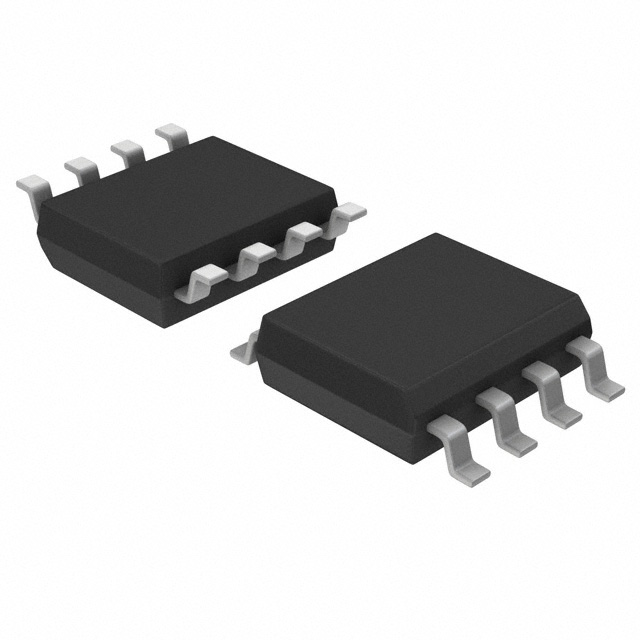
stable and is available in an 8-lead narrow body
SOIC and VQFN.
Figure 1. Voltage Noise Spectral Density
Figure 2. THD+N vs Frequency
1
2
3
Please be aware that an important notice concerning availability, standard warranty, and use in critical applications of
Texas Instruments semiconductor products and disclaimers thereto appears at the end of this data sheet.
Overture is a trademark of Texas Instruments.
All other trademarks are the property of their respective owners.
PRODUCTION DATA information is current as of publication date.
Products conform to specifications per the terms of the Texas
Instruments standard warranty. Production processing does not
necessarily include testing of all parameters.
Copyright © 2009–2013, Texas Instruments Incorporated
�LME49990
SNOSB16C – DECEMBER 2009 – REVISED APRIL 2013
www.ti.com
Connection Diagram
Figure 3. See Package Number D0008A
See Package Number NKQ0008B
2
Submit Documentation Feedback
Copyright © 2009–2013, Texas Instruments Incorporated
Product Folder Links: LME49990
�LME49990
www.ti.com
SNOSB16C – DECEMBER 2009 – REVISED APRIL 2013
These devices have limited built-in ESD protection. The leads should be shorted together or the device placed in conductive foam
during storage or handling to prevent electrostatic damage to the MOS gates.
ABSOLUTE MAXIMUM RATINGS (1) (2)
Power Supply Voltage
(VS = V+ - V-)
38V
−65°C to 150°C
Storage Temperature
Input Voltage
Output Short Circuit
(V-) - 0.3V to (V+) + 0.3V
(3)
Continuous
Power Dissipation
Internally Limited
ESD Rating
(4)
ESD Rating
(5)
200V
ESD Rating
(6)
1000V
2000V
Junction Temperature
150°C
Thermal Resistance
θJA (SOIC)
145°C/W
θJA (VQFN)
52.5°C/W
Soldering Information
Infrared or Convection (20 sec)
(1)
(2)
(3)
(4)
(5)
(6)
260°C
“Absolute Maximum Ratings” indicate limits beyond which damage to the device may occur, including inoperability and degradation of
device reliability and/or performance. Functional operation of the device and/or non-degradation at the Absolute Maximum Ratings or
other conditions beyond those indicated in the Recommended Operating Conditions is not implied. The Recommended Operating
Conditions indicate conditions at which the device is functional and the device should not be operated beyond such conditions. All
voltages are measured with respect to the ground pin, unless otherwise specified.
If Military/Aerospace specified devices are required, please contact the Texas Instruments Sales Office/Distributors for availability and
specifications.
Amplifier output connected to GND, any number of amplifiers within a package.
Human body model, applicable std. JESD22-A114C.
Machine model, applicable std. JESD22-A115-A.
Charge device model, applicable std JESD22–C101–A.
OPERATING RATINGS (1)
Temperature Range
TMIN ≤ TA ≤ TMAX
–40°C ≤ TA ≤ 85°C
±5V ≤ VS ≤ ±18V
Supply Voltage Range
(1)
“Absolute Maximum Ratings” indicate limits beyond which damage to the device may occur, including inoperability and degradation of
device reliability and/or performance. Functional operation of the device and/or non-degradation at the Absolute Maximum Ratings or
other conditions beyond those indicated in the Recommended Operating Conditions is not implied. The Recommended Operating
Conditions indicate conditions at which the device is functional and the device should not be operated beyond such conditions. All
voltages are measured with respect to the ground pin, unless otherwise specified.
Submit Documentation Feedback
Copyright © 2009–2013, Texas Instruments Incorporated
Product Folder Links: LME49990
3
�LME49990
SNOSB16C – DECEMBER 2009 – REVISED APRIL 2013
www.ti.com
ELECTRICAL CHARACTERISTICS (1)
The following specifications apply for VS = ±15V, RL = 2kΩ, fIN = 1kHz, and TA = 25°C, unless otherwise specified.
LME49990
Symbol
Parameter
Conditions
Typical
(2)
Limit
(3)
Units
(Limits)
POWER SUPPLY
±5
±18
VCC
Operating Supply Voltage
ICCQ
Quiescent Current
VCM = 0V, VO = 0V, IO = 0mA
VCC = ±5V
VCC = ±15V
VCC = ±18V
PSRR
Power Supply Rejection Ratio
VCC = ±5V to ±18V
TMIN−TMAX
V (min)
V (max)
8
9
9
10
11
12
144
137
119
116
dB (min)
dB (min)
0.00002
% (max)
%
mA (max)
DYNAMIC PERFORMANCE
THD+N
Total Harmonic Distortion + Noise
AV = 1, VO = 3VRMS, RL= 1kΩ
f = 1kHz
f = 20kHz
0.00001
0.00003
IMD
Intermodulation Distortion
AV = 1, VO = 3VRMS
Two-tone 60Hz & 7kHz 4:1
0.000017
%
GBWP
Gain Bandwith Product
AV = 104, RL = 2kΩ, f = 90kHz
110
MHz
FPBW
Full Power Bandwidth
AV = –1, VO = 20VPP, RL = 1kΩ
291
kHz
Slew Rate
AV = –1, VO = 20VPP
RL = 1kΩ
22
Settling time
AV = –1, VO = 10VPP, RL = 1kΩ
0.01%
590
SR
ts
16.5
V/μs (min)
ns
VO = ±10V
AVOL
Open-Loop Gain
RL = 2kΩ
TMIN – TMAX
135
124
120
dB (min)
dB
RL = 600Ω
TMIN – TMAX
130
122
120
dB (min)
dB
f = 10Hz
1.4
f = 100Hz
1.0
f = 1kHz
0.88
f = 10kHz
0.88
30
0.12
1
2.8
NOISE
eN
Input Noise Voltage Density
V_NOISE
RMS Voltage Noise
BW = 0.1Hz to 10Hz
BW = 10Hz to 20kHz
BW = 10Hz to 1MHz
iN
Input Current Noise Density
f = 1kHz
(1)
(2)
(3)
4
nV/√Hz
nV/√Hz
1.3
nV/√Hz (max)
nV/√Hz
0.2
1.2
nVPP
μV (max)
μV (max)
pA/√Hz
The Electrical Characteristics tables list ensured specifications under the listed Recommended Operating Conditions except as
otherwise modified or specified by the Electrical Characteristics Conditions and/or Notes. Typical specifications are estimations only and
are not ensured
Typical values represent most likely parametric norms at TA = +25ºC, and at the Recommended Operation Conditions at the time of
product characterization and are not ensured.
Datasheet min/max specification limits are specified by test or statistical analysis.
Submit Documentation Feedback
Copyright © 2009–2013, Texas Instruments Incorporated
Product Folder Links: LME49990
�LME49990
www.ti.com
SNOSB16C – DECEMBER 2009 – REVISED APRIL 2013
ELECTRICAL CHARACTERISTICS(1) (continued)
The following specifications apply for VS = ±15V, RL = 2kΩ, fIN = 1kHz, and TA = 25°C, unless otherwise specified.
LME49990
Symbol
Parameter
Conditions
Typical
(2)
Limit
(3)
Units
(Limits)
INPUT CHARACTERISTICS
Offset Voltage
VCC = ±18V, VCM = 0v, VO = 0V
VCC = ±18V, TMIN − TMAX
VOS Drift
Input Offset Voltage Drift vs
Temperature (ΔVOS/ΔTemp)
VCC = ±18V, TMIN − TMAX
IBIAS
Input Bias Current
VCC = ±18V, VCM = 0v, VO = 0V
VCC = ±18V, TMIN − T MAX
30
150
500
1000
nA (max)
nA (max)
IOS
Input Offset Current
VCC = ±18V, VCM = 0v, VO = 0V
VCC = ±18V, TMIN − TMAX
35
95
400
1000
nA (max)
nA (max)
VIN-CM
Common-Mode Input Voltage Range
12
11
V (min)
–10V