LMH6628
www.ti.com
SNOSA02D – MAY 2002 – REVISED MARCH 2013
LMH6628 Dual Wideband, Low Noise, Voltage Feedback Op Amp
Check for Samples: LMH6628
FEATURES
DESCRIPTION
•
•
•
•
•
•
•
The Texas Instruments LMH6628 is a high speed
dual op amp that offers a traditional voltage feedback
topology featuring unity gain stability and slew
enhanced circuitry. The LMH6628's low noise and
very low harmonic distortion combine to form a wide
dynamic range op amp that operates from a single
(5V to 12V) or dual (±5V) power supply.
1
23
Wide Unity Gain Bandwidth: 300MHz
Low Noise: 2nV/√hZ
Low Distortion: −65/−74dBc (10MHz)
Settling Time: 12ns to 0.1%
Wide Supply Voltage Range: ±2.5V to ±6V
High Output Current: ±85mA
Improved Replacement for CLC428
APPLICATIONS
•
•
•
•
•
•
High Speed Dual Op Amp
Low Noise Integrators
Low Noise Active Filters
Driver/receiver for Transmission Systems
High Speed Detectors
I/Q Channel Amplifiers
Each of the LMH6628's closely matched channels
provides a 300MHz unity gain bandwidth and low
input voltage noise density (2nV/√hZ). Low 2nd/3rd
harmonic distortion (−65/−74dBc at 10MHz) make the
LMH6628 a perfect wide dynamic range amplifier for
matched I/Q channels.
With its fast and accurate settling (12ns to 0.1%), the
LMH6628 is also an excellent choice for wide
dynamic range, anti-aliasing filters to buffer the inputs
of hi resolution analog-to-digital converters.
Combining the LMH6628's two tightly matched
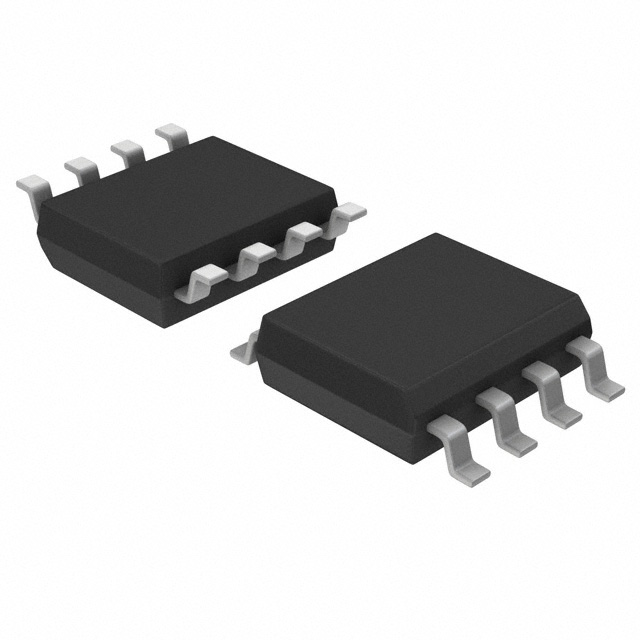
amplifiers in a single 8-pin SOIC package reduces
cost and board space for many composite amplifier
applications such as active filters, differential line
drivers/receivers,
fast
peak
detectors
and
instrumentation amplifiers.
The LMH6628 is fabricated using TI’s VIP10™
complimentary bipolar process.
To reduce design times and assist in board layout,
the LMH6628 is supported by an evaluation board
(CLC730036).
Connection Diagram
Figure 1. 8-Pin SOIC, Top View
1
2
3
Please be aware that an important notice concerning availability, standard warranty, and use in critical applications of
Texas Instruments semiconductor products and disclaimers thereto appears at the end of this data sheet.
VIP10 is a trademark of Texas Instruments.
All other trademarks are the property of their respective owners.
PRODUCTION DATA information is current as of publication date.
Products conform to specifications per the terms of the Texas
Instruments standard warranty. Production processing does not
necessarily include testing of all parameters.
Copyright © 2002–2013, Texas Instruments Incorporated
�LMH6628
SNOSA02D – MAY 2002 – REVISED MARCH 2013
www.ti.com
Figure 2. Inverting Frequency Response
These devices have limited built-in ESD protection. The leads should be shorted together or the device placed in conductive foam
during storage or handling to prevent electrostatic damage to the MOS gates.
Absolute Maximum Ratings (1) (2)
Human Body Model
ESD Tolerance
(3)
2kV
Machine Model
200V
Supply Voltage
13.5
See (4)
Short Circuit Current
Common-Mode Input Voltage
V+ - V−
Differential Input Voltage
V+ - V−
Maximum Junction Temperature
+150°C
−65°C to +150°C
Storage Temperature Range
Lead Temperature (soldering 10 sec)
(1)
(2)
(3)
(4)
+300°C
Absolute Maximum Ratings indicate limits beyond which damage to the device may occur. Operating Ratings indicate conditions for
which the device is intended to be functional, but specific performance is not ensured. For ensured specifications, see the Electrical
Characteristics tables.
If Military/Aerospace specified devices are required, please contact the Texas Instruments Sales Office/ Distributors for availability and
specifications.
Human body model, 1.5kΩ in series with 100pF. Machine model, 0Ω In series with 200pF.
Output is short circuit protected to ground, however maximum reliability is obtained if output current does not exceed 160mA.
Operating Ratings (1)
Thermal Resistance (2)
Package
(θJC)
(θJA)
SOIC
65°C/W
145°C/W
−40°C to +85°C
Temperature Range
Nominal Supply Voltage
(1)
(2)
2
±2.5V to ±6V
Absolute Maximum Ratings indicate limits beyond which damage to the device may occur. Operating Ratings indicate conditions for
which the device is intended to be functional, but specific performance is not ensured. For ensured specifications, see the Electrical
Characteristics tables.
The maximum power dissipation is a function of TJ(MAX), θJA and TA. The maximum allowable power dissipation at any ambient
temperature is PD = (TJ(MAX)-TA)/ θJA. All numbers apply for packages soldered directly onto a PC board.
Submit Documentation Feedback
Copyright © 2002–2013, Texas Instruments Incorporated
Product Folder Links: LMH6628
�LMH6628
www.ti.com
SNOSA02D – MAY 2002 – REVISED MARCH 2013
Electrical Characteristics (1)
VCC = ±5V, AV = +2V/V, RF = 100Ω, RG = 100Ω, RL = 100Ω; unless otherwise specified. Boldface limits apply at the
temperature extremes.
Symbol
Parameter
Conditions
Min
Typ
Max
Units
Frequency Domain Response
GB
Gain Bandwidth Product
VO < 0.5VPP
SSBW
-3dB Bandwidth, AV = +1
VO < 0.5VPP
SSBW
-3dB Bandwidth, AV = +2
VO < 0.5VPP
GFL
Gain Flatness
VO< 0.5VPP
GFP
Peaking
GFR
Rolloff
LPD
Linear Phase Deviation
200
MHz
300
MHz
100
MHz
DC to 200MHz
0.0
dB
DC to 20MHz
.1
dB
DC to 20MHz
.1
deg
180
Time Domain Response
TR
Rise and Fall Time
1V Step
4
ns
TS
Settling Time
2V Step to 0.1%
12
ns
OS
Overshoot
1V Step
SR
Slew Rate
4V Step
300
1
%
550
V/µs
Distortion And Noise Response
HD2
2nd Harmonic Distortion
1VPP, 10MHz
−65
dBc
HD3
3rd Harmonic Distortion
1VPP, 10MHz
−74
dBc
2
nV/√Hz
Equivalent Input Noise
VN
IN
XTLKA
Voltage
1MHz to 100MHz
Current
1MHz to 100MHz
Crosstalk
Input Referred, 10MHz
2
pA/√Hz
−62
dB
63
dB
Static, DC Performance
GOL
Open-Loop Gain
VIO
Input Offset Voltage
DVIO
IBN
DIBN
IOS
56
53
±.5
Average Drift
5
Input Bias Current
±.7
Average Drift
150
Input Offset Current
IOSD
0.3
Average Drift
±2
±2.6
mV
µV/°C
±20
±30
µA
nA/°C
±6
µA
5
nA/°C
PSRR
Power Supply Rejection Ratio
60
46
70
dB
CMRR
Common-Mode Rejection Ratio
57
54
62
dB
ICC
Supply Current
7.5
7.0
9
Per Channel, RL = ∞
12
12.5
mA
Miscellaneous Performance
RIN
Input Resistance
CIN
Input Capacitance
ROUT
(1)
Output Resistance
Common-Mode
500
kΩ
Differential-Mode
200
kΩ
Common-Mode
1.5
pF
Differential-Mode
1.5
pF
Closed-Loop
.1
Ω
Electrical Table values apply only for factory testing conditions at the temperature indicated. Factory testing conditions result in very
limited self-heating of the device such that TJ = TA. No specification of parametric performance is indicated in the electrical tables under
conditions of internal self heating where TJ > TA. See Note 6 for information on temperature de-rating of this device." Min/Max ratings
are based on product characterization and simulation. Individual parameters are tested as noted.
Submit Documentation Feedback
Copyright © 2002–2013, Texas Instruments Incorporated
Product Folder Links: LMH6628
3
�LMH6628
SNOSA02D – MAY 2002 – REVISED MARCH 2013
www.ti.com
Electrical Characteristics(1) (continued)
VCC = ±5V, AV = +2V/V, RF = 100Ω, RG = 100Ω, RL = 100Ω; unless otherwise specified. Boldface limits apply at the
temperature extremes.
Symbol
VO
Parameter
Output Voltage Range
VOL
RL = 100Ω
CMIR
Input Voltage Range
IO
Output Current
4
Conditions
Min
RL = ∞
±3.2
±3.1
Common- Mode
±50
Submit Documentation Feedback
Typ
Max
Units
±3.8
V
±3.5
V
±3.7
V
±85
mA
Copyright © 2002–2013, Texas Instruments Incorporated
Product Folder Links: LMH6628
�LMH6628
www.ti.com
SNOSA02D – MAY 2002 – REVISED MARCH 2013
Typical Performance Characteristics
(TA = +25°, AV = +2, VCC = ±5V, Rf =100Ω, RL = 100Ω, unless specified)
Non-Inverting Frequency Response
Inverting Frequency Response
Figure 3.
Figure 4.
Frequency Response
vs.
Load Resistance
Frequency Response
vs.
Output Amplitude
Figure 5.
Figure 6.
Frequency Response
vs.
Capacitive Load
Gain Flatness & Linear Phase
Figure 7.
Figure 8.
Submit Documentation Feedback
Copyright © 2002–2013, Texas Instruments Incorporated
Product Folder Links: LMH6628
5
�LMH6628
SNOSA02D – MAY 2002 – REVISED MARCH 2013
www.ti.com
Typical Performance Characteristics (continued)
(TA = +25°, AV = +2, VCC = ±5V, Rf =100Ω, RL = 100Ω, unless specified)
6
Channel Matching
Channel to Channel Crosstalk
Figure 9.
Figure 10.
Pulse Response (VO = 2V)
Pulse Response (VO = 100mV)
Figure 11.
Figure 12.
2nd Harmonic Distortion
vs.
Output Voltage
3rd Harmonic Distortion
vs.
Output Voltage
Figure 13.
Figure 14.
Submit Documentation Feedback
Copyright © 2002–2013, Texas Instruments Incorporated
Product Folder Links: LMH6628
�LMH6628
www.ti.com
SNOSA02D – MAY 2002 – REVISED MARCH 2013
Typical Performance Characteristics (continued)
(TA = +25°, AV = +2, VCC = ±5V, Rf =100Ω, RL = 100Ω, unless specified)
2nd & 3rd Harmonic Distortion
vs.
Frequency
PSRR and CMRR (±5V)
Figure 15.
Figure 16.
PSRR and CMRR (±2.5V)
Closed Loop Output Resistance (±2.5V)
Figure 17.
Figure 18.
Closed Loop Output Resistance (±5V)
Open Loop Gain & Phase (±2.5V)
Figure 19.
Figure 20.
Submit Documentation Feedback
Copyright © 2002–2013, Texas Instruments Incorporated
Product Folder Links: LMH6628
7
�LMH6628
SNOSA02D – MAY 2002 – REVISED MARCH 2013
www.ti.com
Typical Performance Characteristics (continued)
(TA = +25°, AV = +2, VCC = ±5V, Rf =100Ω, RL = 100Ω, unless specified)
Open Loop Gain & Phase (±5V)
Recommended RS
vs.
CL
Figure 21.
Figure 22.
DC Errors
vs.
Temperature
Maximum VO
vs.
RL
0.5
0.2
0.2
VIO
0
0.1
-0.2
0
-0.4
IBN
-0.1
-0.2
-0.3
-40
-0.6
IBI
IBN, IBI (PA)
0.4
0.3
MAXIMUM VO (VOLTS)
0.6
0.4
VIO (mV)
4
0.8
VS = ±5V
3.5
3
-0.8
0
40
80
120
-1
160
2.5
TEMPERATURE (°)
Figure 23.
8
25
125
75
50
100
LOAD RESISTANCE (:)
150
Figure 24.
Submit Documentation Feedback
Copyright © 2002–2013, Texas Instruments Incorporated
Product Folder Links: LMH6628
�LMH6628
www.ti.com
SNOSA02D – MAY 2002 – REVISED MARCH 2013
Typical Performance Characteristics (continued)
(TA = +25°, AV = +2, VCC = ±5V, Rf =100Ω, RL = 100Ω, unless specified)
Voltage & Current Noise
vs.
Frequency
2-Tone, 3rd Order Intermodulation Intercept
1000
40
30
20
1000
100
100
CURRENT NOISE
10
10
VOLTAGE NOISE
10
1
1
100
10
1
10
FREQUENCY (MHz)
100
1k
10k
100k 1M
CURRENT NOISE (pA/ Hz)
VOLTAGE NOISE (nV/ Hz)
INTERCEPT POINT (+dBm)
50
1
10M
FREQUENCY (Hz)
Figure 25.
Figure 26.
Settling Time
vs.
Accuracy
1
SETTLING ACCURACY (%)
VO = 2VPP
0.1
0.01
5
10
15
20
25
30
35
TIME (ns)
Figure 27.
Submit Documentation Feedback
Copyright © 2002–2013, Texas Instruments Incorporated
Product Folder Links: LMH6628
9
�LMH6628
SNOSA02D – MAY 2002 – REVISED MARCH 2013
www.ti.com
APPLICATION SECTION
LOW NOISE DESIGN
Ultimate low noise performance from circuit designs using the LMH6628 requires the proper selection of external
resistors. By selecting appropriate low valued resistors for RF and RG, amplifier circuits using the LMH6628 can
achieve output noise that is approximately the equivalent voltage input noise of 2nV/
multiplied by the desired
gain (AV).
DC BIAS CURRENTS AND OFFSET VOLTAGES
Cancellation of the output offset voltage due to input bias currents is possible with the LMH6628. This is done by
making the resistance seen from the inverting and non-inverting inputs equal. Once done, the residual output
offset voltage will be the input offset voltage (VOS) multiplied by the desired gain (AV). Application Note OA-7
(SNOA365) offers several solutions to further reduce the output offset.
OUTPUT AND SUPPLY CONSIDERATIONS
With ±5V supplies, the LMH6628 is capable of a typical output swing of ±3.8V under a no-load condition.
Additional output swing is possible with slightly higher supply voltages. For loads of less than 50Ω, the output
swing will be limited by the LMH6628's output current capability, typically 85mA.
Output settling time when driving capacitive loads can be improved by the use of a series output resistor. See
Figure 22.
LAYOUT
Proper power supply bypassing is critical to insure good high frequency performance and low noise. De-coupling
capacitors of 0.1μF should be placed as close as possible to the power supply pins. The use of surface mounted
capacitors is recommended due to their low series inductance.
A good high frequency layout will keep power supply and ground traces away from the inverting input and output
pins. Parasitic capacitance from these nodes to ground causes frequency response peaking and possible circuit
oscillation. See OA-15 (SNOA367) for more information. Texas Instruments suggests the CLC730036 (SOIC)
dual op amp evaluation board as a guide for high frequency layout and as an aid in device evaluation.
ANALOG DELAY CIRCUIT (ALL-PASS NETWORK)
The circuit in Figure 28 implements an all-pass network using the LMH6628. A wide bandwidth buffer (LM7121)
drives the circuit and provides a high input impedance for the source. As shown in Figure 29, the circuit provides
a 13.1ns delay (with R = 40.2Ω, C = 47pF). RF and RG should be of equal and low value for parasitic insensitive
operation.
499:
499:
VIN
+
499:
LM7121
-
-
½
LMH6628
499:
-
½
LMH6628
+
Rf
VOUT
+
C
R
C
R
Figure 28. Circuit That Implements an All-pass Network Using the LMH6628
10
Submit Documentation Feedback
Copyright © 2002–2013, Texas Instruments Incorporated
Product Folder Links: LMH6628
�LMH6628
www.ti.com
SNOSA02D – MAY 2002 – REVISED MARCH 2013
VIN, VOUT (100mV/DIV)
VIN
VOUT
TIME (10 ns/DIV)
Figure 29. Delay Circuit Response to 0.5V Pulse
The circuit gain is +1 and the delay is determined by the following equations.
(1)
Td
1
dI
;
(2)
360 df
where Td is the delay of the op amp at AV = +1.
The LMH6628 provides a typical delay of 2.8ns at its −3dB point.
FULL DUPLEX DIGITAL OR ANALOG TRANSMISSION
Simultaneous transmission and reception of analog or digital signals over a single coaxial cable or twisted-pair
line can reduce cabling requirements. The LMH6628's wide bandwidth and high common-mode rejection in a
differential amplifier configuration allows full duplex transmission of video, telephone, control and audio signals.
In the circuit shown in Figure 30, one of the LMH6628's amps is used as a "driver" and the other as a difference
"receiver" amplifier. The output impedance of the "driver" is essentially zero. The two R's are chosen to match
the characteristic impedance of the transmission line. The "driver" op amp gain can be selected for unity or
greater.
Receiver amplifier A2 (B2) is connected across R and forms differential amplifier for the signals transmitted by
driver A2 (B2). If RF equals RG, receiver A2 (B1) will then reject the signals from driver A1 (B1) and pass the
signals from driver B1 (A1).
Vin
Rin
R
Rg
+
-
R
Rf
+
A2
Rin
Rg
Rf
Vout
Vin
B1
Coax Cable
+
-
Vout
+
B2
Figure 30. Full Duplex Transmit and Receive Using the LMH6628
The output of the receiver amplifier will be:
(3)
Submit Documentation Feedback
Copyright © 2002–2013, Texas Instruments Incorporated
Product Folder Links: LMH6628
11
�LMH6628
SNOSA02D – MAY 2002 – REVISED MARCH 2013
www.ti.com
Care must be given to layout and component placement to maintain a high frequency common-mode rejection.
The plot of Figure 31 shows the simultaneous reception of signals transmitted at 1MHz and 10MHz.
Figure 31. Simultaneous Reception of Signals Transmitted at 1MHz and 10MHz
POSITIVE PEAK DETECTOR
The LMH6628's dual amplifiers can be used to implement a unity-gain peak detector circuit as shown in
Figure 32.
Figure 32. LMH6628's Dual Amplifiers Used to Implement a Unity-Gain Peak Detector Circuit
The acquisition speed of this circuit is limited by the dynamic resistance of the diode when charging Chold. A plot
of the circuit's performance is shown in Figure 33 with a 1MHz sinusoidal input.
Figure 33. Circuit's Performance With a 1MHz Sinusoidal Input
12
Submit Documentation Feedback
Copyright © 2002–2013, Texas Instruments Incorporated
Product Folder Links: LMH6628
�LMH6628
www.ti.com
SNOSA02D – MAY 2002 – REVISED MARCH 2013
A current source, built around Q1, provides the necessary bias current for the second amplifier and prevents
saturation when power is applied. The resistor, R, closes the loop while diode D2 prevents negative saturation
when VIN is less than VC. A MOS-type switch (not shown) can be used to reset the capacitor's voltage.
The maximum speed of detection is limited by the delay of the op amps and the diodes. The use of Schottky
diodes will provide faster response.
ADJUSTABLE OR BANDPASS EQUALIZER
A "boost" equalizer can be made with the LMH6628 by summing a bandpass response with the input signal, as
shown in Figure 34.
Figure 34. "Boost" Equalizer Made With the LMH6628 by Summing a Bandpass Response With the Input
Signal
The overall transfer function is shown in Equation 4.
(4)
To build a boost circuit, use the design equations Equation 5 and Equation 6.
(5)
(6)
Select R2 and C using Equation 5. Use reasonable values for high frequency circuits - R2 between 10Ω and 5kΩ,
C between 10pF and 2000pF. Use Equation 6 to determine the parallel combination of Ra and Rb. Select Ra and
Rb by either the 10Ω to 5kΩ criteria or by other requirements based on the impedance Vin is capable of driving.
Finish the design by determining the value of K from Equation 7.
(7)
Figure 35 shows an example of the response of the circuit of Figure 34, where fo is 2.3MHz. The component
values are as follows: Ra=2.1kΩ, Rb = 68.5Ω, R2 = 4.22kΩ, R = 500Ω, KR = 50Ω, C = 120pF.
Submit Documentation Feedback
Copyright © 2002–2013, Texas Instruments Incorporated
Product Folder Links: LMH6628
13
�LMH6628
SNOSA02D – MAY 2002 – REVISED MARCH 2013
www.ti.com
Figure 35. Example of Response of Circuit of Figure 34, Where fo is 2.3MHz
14
Submit Documentation Feedback
Copyright © 2002–2013, Texas Instruments Incorporated
Product Folder Links: LMH6628
�LMH6628
www.ti.com
SNOSA02D – MAY 2002 – REVISED MARCH 2013
REVISION HISTORY
Changes from Revision C (March 2013) to Revision D
•
Page
Changed layout of National Data Sheet to TI format .......................................................................................................... 14
Submit Documentation Feedback
Copyright © 2002–2013, Texas Instruments Incorporated
Product Folder Links: LMH6628
15
�PACKAGE OPTION ADDENDUM
www.ti.com
30-Sep-2021
PACKAGING INFORMATION
Orderable Device
Status
(1)
Package Type Package Pins Package
Drawing
Qty
Eco Plan
(2)
Lead finish/
Ball material
MSL Peak Temp
Op Temp (°C)
Device Marking
(3)
(4/5)
(6)
LMH6628MA
NRND
SOIC
D
8
95
Non-RoHS
& Green
Call TI
Level-1-235C-UNLIM
-40 to 85
LMH66
28MA
LMH6628MA/NOPB
ACTIVE
SOIC
D
8
95
RoHS & Green
SN
Level-1-260C-UNLIM
-40 to 85
LMH66
28MA
LMH6628MAX/NOPB
ACTIVE
SOIC
D
8
2500
RoHS & Green
SN
Level-1-260C-UNLIM
-40 to 85
LMH66
28MA
(1)
The marketing status values are defined as follows:
ACTIVE: Product device recommended for new designs.
LIFEBUY: TI has announced that the device will be discontinued, and a lifetime-buy period is in effect.
NRND: Not recommended for new designs. Device is in production to support existing customers, but TI does not recommend using this part in a new design.
PREVIEW: Device has been announced but is not in production. Samples may or may not be available.
OBSOLETE: TI has discontinued the production of the device.
(2)
RoHS: TI defines "RoHS" to mean semiconductor products that are compliant with the current EU RoHS requirements for all 10 RoHS substances, including the requirement that RoHS substance
do not exceed 0.1% by weight in homogeneous materials. Where designed to be soldered at high temperatures, "RoHS" products are suitable for use in specified lead-free processes. TI may
reference these types of products as "Pb-Free".
RoHS Exempt: TI defines "RoHS Exempt" to mean products that contain lead but are compliant with EU RoHS pursuant to a specific EU RoHS exemption.
Green: TI defines "Green" to mean the content of Chlorine (Cl) and Bromine (Br) based flame retardants meet JS709B low halogen requirements of








 工商网监
湘ICP备2023018690号
工商网监
湘ICP备2023018690号