LMS202E
www.ti.com
SNLS160D – DECEMBER 2002 – REVISED APRIL 2013
LMS202E 15KV ESD Rated, 5V Single Supply TIA/EIA-232 Dual Transceivers
Check for Samples: LMS202E
FEATURES
DESCRIPTION
•
•
The LMS202E features two transmitters and two
receivers for RS-232 communication. It has a DC-toDC converter that permits the device to operate with
only a single +5V power supply. The on-chip DC-toDC converter which utilizes four external 0.1μF
capacitors to generate dual internal power supplies
for RS-232 compatible output levels.
1
2
•
•
•
•
•
•
•
ESD Protection for RS-232 I/O Pins
±15kV-IEC1000 4-2 (EN61000-4-2) Contact
Discharge
±8kV-IEC1000 4-2 (EN61000-4-2) Air-Gap
Discharge
±15kV Human Body Model
Single +5V Power Supply
230 Kbps Data Rate
On-Board DC-to-DC Converter
0.1μF Charge Pump Capacitors
Drop-In Replacement to Maxim’s MAX202E
APPLICATIONS
•
•
•
POS Equipment (Bar code reader)
Hand-Held Equipment
General Purpose RS-232 Communication
The device meet EIA/TIA-232E and CCITT V.28
specifications up to 230kbits/sec. The LMS202E is
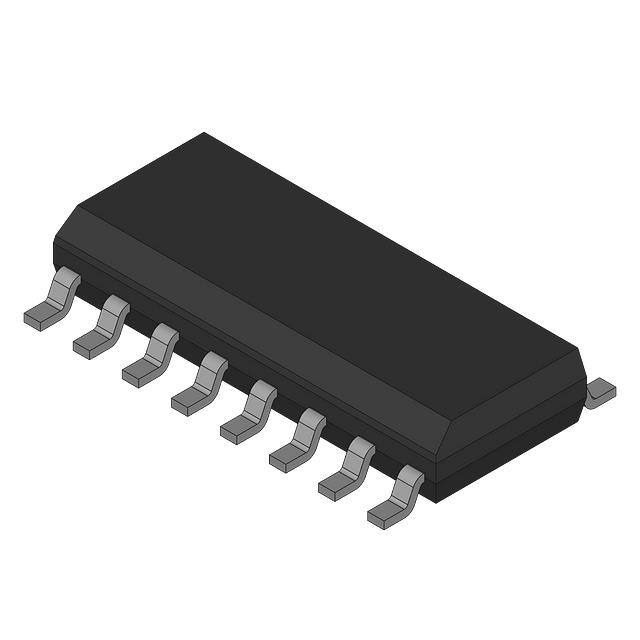
available in a 16 pin narrow and wide SOIC package.
The transmitter outputs and receiver inputs have
±15kV electrostatic discharge (ESD) protection. The
LMS202E survives a ± 15kV ESD event to the RS232 input and output pins when subjected according
to Human Body Model or IEC 1000-4-2 (EN61000-42), air-gap specification. It survives a ±8kV discharge
when subjected to IEC 1000-4-2 (EN61000-4-2),
contact specification. This device is designed for use
in harsh environments where ESD is a concern.
CONNECTION DIAGRAM AND TYPICAL CIRCUIT
1
2
Please be aware that an important notice concerning availability, standard warranty, and use in critical applications of
Texas Instruments semiconductor products and disclaimers thereto appears at the end of this data sheet.
All trademarks are the property of their respective owners.
PRODUCTION DATA information is current as of publication date.
Products conform to specifications per the terms of the Texas
Instruments standard warranty. Production processing does not
necessarily include testing of all parameters.
Copyright © 2002–2013, Texas Instruments Incorporated
�LMS202E
SNLS160D – DECEMBER 2002 – REVISED APRIL 2013
www.ti.com
PIN DESCRIPTIONS
Pin Number
Pin Name
Pin Function
1, 3
C1+, C1−
External capacitor connection pins. Recommended external capacitor C1 = 0.1μF (6.3V)
2
V+
Positive supply for TIA/EIA-232E drivers. Recommended external capacitor C4 = 0.1μF (6.3V)
4, 5
C2+, C2−
External capacitor connection pins. Recommended external capacitor C2 = 0.1μF (16V)
6
V−
Negative supply for TIA/EIA-232E drivers. Recommended external capacitor C3 = 0.1μF (16V)
7, 14
T1out, T2out
Transmitter output pins conform to TIA/EIA-232E levels. The typical transmitter output swing is ±8V
when loaded 3kΩ load to ground. The open-circuit output voltage swings from (V+ − 0.6V) to V−
8,13
R1in, R2in
Receiver inputs accept TIA/EIA-232
9, 12
R1out and R2out
Receiver output pins are TTL/CMOS compatible
10, 11
Tin1, Tin2
Transmitter input pins are TTL/CMOS compatible. Inputs of transmitter do not have pull-up resistors.
Connect all unused transmitter inputs to ground
15
GND
Ground pin
16
VS
Power supply pin for the device, +5V (±10%)
These devices have limited built-in ESD protection. The leads should be shorted together or the device placed in conductive foam
during storage or handling to prevent electrostatic damage to the MOS gates.
ABSOLUTE MAXIMUM RATINGS
(1) (2)
VS
−0.3V to 6V
V+
(VS − 0.3V) to + 14V
+0.3V to −14V
V−
−0.3V to (V+ +0.3V)
Driver Input Voltage, TIN
Receiver Input Voltage, RIN
± 30V
(V− −0.3V to (V+ +
0.3V)
Driver Output Voltage TO
−0.3 to (VS + 0.3)
Receiver Output Voltage RO
Short Circuit Duration, TO
ESD Rating
Continuous
IEC 1000-4-2)
(3)
See
(4)
Air-Gap Discharge
15kV
Contact Discharge
Human Body Model
8kV
(5)
See
(4)
See
(6)
ESD Rating (MM)
Soldering Information
(20sec.)
(3)
(4)
(5)
(6)
(7)
2
(7) (6)
235°C
150°C
−65°C to +150°C
Storage Temperature Range
(2)
2kV
200V
Infrared or Convection
Junction Temperature
(1)
15kV
Absolute Maximum Ratings indicate limits beyond which damage to the device may occur. Operating Ratings indicate conditions for
which the device is intended to be functional, but specific performance is not ensured. For specifications and the test conditions, see the
Electrical Characteristics.
If Military/Aerospace specified devices are required, please contact the Texas Instruments Sales Office/ Distributors for availability and
specifications.
IEC 1000-4-2, 330Ω in series with 150pF
ESD rating applies to pins 7,8 13 and 14
Human Body Model, 1.5kΩ in series with 100pF
ESD rating applies to pins 1, 2, 3, 4, 5, 6, 9, 10, 11, 12, 15 and 16
Machine model, 0Ω in series with 200pF
Submit Documentation Feedback
Copyright © 2002–2013, Texas Instruments Incorporated
Product Folder Links: LMS202E
�LMS202E
www.ti.com
SNLS160D – DECEMBER 2002 – REVISED APRIL 2013
OPERATING RATINGS
Supply Voltage VS
4.5V to 5.5V
Ambient Temperature Range, TA
Commercial (C)
0°C to +70°C
−40°C to +85°C
Industrial (I)
Package Thermal Resistance
(1)
SO
71°C/W
WSO
55°C/W
The maximum power dissipation is a function of TJ(MAX), θJA, and TA. The maximum allowable power dissipation at any ambient
temperature is PD = (TJ(MAX) − TA)/ θJA. All numbers apply for packages soldered directly onto a PC board.
(1)
ELECTRICAL CHARACTERISTICS
Over recommended operating supply and temperature ranges unless otherwise specified
C1 = C2 = C3 = C4 = Cbp = 0.1μF
Symbol
Parameter
Conditions
(1)
Min
Typ (2)
Max
(1)
Units
DC Characteristics
IS
Supply Current
No Load, TA = 25°C
IINPUT
Input Leakage Current
VTHL
Input Logic Theshold Low
VTHH
Input Logic Theshold High
TIN
VOL
TTL/CMOS Output Voltage
Low
ROUT, IOUT = 3.2mA
VOH
TTL/CMOS Output Voltage
High
ROUT, IOUT = −1.0mA
1
7
mA
TIN = 0V to VS
±10
μA
TIN
0.8
V
Logic
2.0
V
0.4
3.5
V
VS −0.1
V
RS-232 Receiver Inputs
−30
VRI
Receiver Input Voltage Range
VRTHL
Receiver Input Theshold Low
VS = 5V, TA = 25°C
VRTHH
Receiver Input Theshold High
VS = 5V, TA = 25°C
VHYST
Receiver Input Hysteresis
VS = 5V
RI
Receiver Input Resistance
0.8
+30
V
1.4
V
2
2.4
V
0.2
0.6
1.0
V
VS = 5V, TA = 25°C
3
5
7
kΩ
±8
RS-232 Transmitter Outputs
VO
Transmitter Output Voltage
Swing
All transmitters loaded with 3kΩ to GND
±5
RO
Output Resistance
VS = V+ = V− = 0V,
VO = ± 2V
300
IOS
Output Short Circuit Current
V
Ω
±11
±60
mA
Timing Characteristics
DR
Maximum Data Rate
CL = 50pF to 1000pF,
RL = 3kΩ to 7kΩ
230
TRPLH
TRPHL
Receiver Propagation Delay
CL = 150pF
0.08
TDPLH
TDPHL
Transmitter Propagation
Delay
RL = 3kΩ, CL = 2500pF
All transmitters loaded
2.4
VSLEW
Transition Region Slew Rate
TA = 25°C, VS = 5V
CL = 50pF to 1000pF, RL = 3kΩ to 7kΩ
Measured from +3V to −3V or vice versa
3
kbps
6
μs
1
μs
30
V/μs
ESD Performance: Transmitter Outputs and Receiver Inputs
ESD Rating
(1)
(2)
Human Body Model
±15
IEC 1000-4-2, Contact
±8
IEC 1000-4-2, Air-gap
±15
kV
All limits are specified by testing or statistical analysis
Typical Values represent the most likely parametric norm.
Submit Documentation Feedback
Copyright © 2002–2013, Texas Instruments Incorporated
Product Folder Links: LMS202E
3
�LMS202E
SNLS160D – DECEMBER 2002 – REVISED APRIL 2013
www.ti.com
TYPICAL CHARACTERISTICS
Transmitter Output High Voltage vs. Load Capacitance
4
Transmitter Slew Rate vs. Load Capacitance
Submit Documentation Feedback
Copyright © 2002–2013, Texas Instruments Incorporated
Product Folder Links: LMS202E
�LMS202E
www.ti.com
SNLS160D – DECEMBER 2002 – REVISED APRIL 2013
APPLICATION INFORMATION
CAPACITOR SELECTION
The recommended capacitors are 0.1μF. However, larger capacitors for the charge pump may be used to
minimized ripples on V+ and V− pins.
POWER SUPPLY DECOUPLING
In some applications that are sensitive to power supply noise from the charge pump, place a decoupling
capacitor, Cbp, from VS to GND. Use at least a 0.1µF capacitor or the same size as the charge pump capacitors
(C1 − C4).
CHARGED PUMP
The dual internal charged-pump provides the ±10V to the to transmitters. Using capacitor C1, the charge pump
converts +5V to +10V then stores the +10V in capacitor C3. The charge pump uses capacitor C2 to invert the
+10V to −10V. The −10V is then stored in capacitor C4.
ELECTROSTATIC DISCHARGE PROTECTION
ESD protection has been placed at all pins to protect the device from ESD. All pins except for the transmitter
output pins (pins 7 and 14) and receiver input pins (pins 8 and 13) have a ESD rating of 2kV Human Body Model
(HBM) and 200V Machine Model (MM). The RS-232 bus pins (pins 7, 8, 13 and 14) have a more robust ESD
protection. The RS-232 bus pins have a ESD rating of 15kV HBM and IEC 1000-4-2, air-gap. In addition the bus
pins meet an ESD rating of 8kV with IEC 1000-4-2, contact. The ESD structures can withstand a high ESD event
under the following conditions: powered-on, powered-off, and Input connected to high and low with outputs
unloaded.
HUMAN BODY MODEL
The Human Body Model is an ESD testing standard, defined in Mil-STD-883C method 3015.7. It simulates a
human discharging an ESD charge to the IC device. The rise time is approximately 10 ns and decay time is
approximately 150 ns. The waveform is obtained by discharging 2kV volts capacitor through a resistor, R2 = 1.5
kΩ. The peak current is approximately 1.33A.
Figure 1. HBM ESD Test Model
Submit Documentation Feedback
Copyright © 2002–2013, Texas Instruments Incorporated
Product Folder Links: LMS202E
5
�LMS202E
SNLS160D – DECEMBER 2002 – REVISED APRIL 2013
www.ti.com
Figure 2. HBM Waveform
MACHINE MODEL
The Machine Model is the standard ESD test method in Japan and the automotive industry. It simulates a charge
on large object discharging through the IC device. This takes place in automated test and handling systems. The
equipment can accumulate static charge due to improper grounding, which is transmitted through the IC when it
is picked and placed.
The waveform is obtained by discharging 400V volts capacitor to the device. Resistor, R2 = 0Ω.
The parasitic inductance, L, from the PCB affects the peak current and period of the waveform. For L = 0.5µF,
the peak current is approximately 7A with a period of 60 ns. For L = 2.5µH, the peak current is reduced to 4A
with a period of 140 ns.
Figure 3. MM ESD Model
Figure 4. MM Waveform
6
Submit Documentation Feedback
Copyright © 2002–2013, Texas Instruments Incorporated
Product Folder Links: LMS202E
�LMS202E
www.ti.com
SNLS160D – DECEMBER 2002 – REVISED APRIL 2013
IEC 1000-4-2 (EN61000-4-2)
The European Union requires ESD immunity testing for all electronic products as a condition for EMC Mark
before shipping to any member countries. This is not a IC requirement but an overall system requirement. IEC
1000-4-2 specifies ESD testing both by contact and air-gap discharge. ESD testing by contact are generally more
repeatable than air-gap but is less realistic to actual ESD event. However, air-gap discharge is more realistic but
ESD results may vary widely dependent on environmental conditions (temperature, humidity,....) The waveform is
obtained by discharging 150pF capacitor through a resistor, R2 = 330Ω. A typical peak current may be high as
37A with 10kV.
Figure 5. IEC ESD Model
Figure 6. IEC Waveform
Submit Documentation Feedback
Copyright © 2002–2013, Texas Instruments Incorporated
Product Folder Links: LMS202E
7
�LMS202E
SNLS160D – DECEMBER 2002 – REVISED APRIL 2013
www.ti.com
REVISION HISTORY
Changes from Revision C (April 2013) to Revision D
•
8
Page
Changed layout of National Data Sheet to TI format ............................................................................................................ 7
Submit Documentation Feedback
Copyright © 2002–2013, Texas Instruments Incorporated
Product Folder Links: LMS202E
�PACKAGE OPTION ADDENDUM
www.ti.com
25-Feb-2015
PACKAGING INFORMATION
Orderable Device
Status
(1)
Package Type Package Pins Package
Drawing
Qty
Eco Plan
Lead/Ball Finish
MSL Peak Temp
(2)
(6)
(3)
Op Temp (°C)
Device Marking
(4/5)
LMS202ECM/NOPB
ACTIVE
SOIC
D
16
48
Green (RoHS
& no Sb/Br)
CU SN
Level-1-260C-UNLIM
-40 to 85
LMS202ECM
LMS202ECMX/NOPB
ACTIVE
SOIC
D
16
2500
Green (RoHS
& no Sb/Br)
CU SN
Level-1-260C-UNLIM
-40 to 85
LMS202ECM
LMS202EIM/NOPB
ACTIVE
SOIC
D
16
48
Green (RoHS
& no Sb/Br)
CU SN
Level-1-260C-UNLIM
-40 to 85
LMS202EIM
LMS202EIMX/NOPB
ACTIVE
SOIC
D
16
2500
Green (RoHS
& no Sb/Br)
CU SN
Level-1-260C-UNLIM
-40 to 85
LMS202EIM
(1)
The marketing status values are defined as follows:
ACTIVE: Product device recommended for new designs.
LIFEBUY: TI has announced that the device will be discontinued, and a lifetime-buy period is in effect.
NRND: Not recommended for new designs. Device is in production to support existing customers, but TI does not recommend using this part in a new design.
PREVIEW: Device has been announced but is not in production. Samples may or may not be available.
OBSOLETE: TI has discontinued the production of the device.
(2)
Eco Plan - The planned eco-friendly classification: Pb-Free (RoHS), Pb-Free (RoHS Exempt), or Green (RoHS & no Sb/Br) - please check http://www.ti.com/productcontent for the latest availability
information and additional product content details.
TBD: The Pb-Free/Green conversion plan has not been defined.
Pb-Free (RoHS): TI's terms "Lead-Free" or "Pb-Free" mean semiconductor products that are compatible with the current RoHS requirements for all 6 substances, including the requirement that
lead not exceed 0.1% by weight in homogeneous materials. Where designed to be soldered at high temperatures, TI Pb-Free products are suitable for use in specified lead-free processes.
Pb-Free (RoHS Exempt): This component has a RoHS exemption for either 1) lead-based flip-chip solder bumps used between the die and package, or 2) lead-based die adhesive used between
the die and leadframe. The component is otherwise considered Pb-Free (RoHS compatible) as defined above.
Green (RoHS & no Sb/Br): TI defines "Green" to mean Pb-Free (RoHS compatible), and free of Bromine (Br) and Antimony (Sb) based flame retardants (Br or Sb do not exceed 0.1% by weight
in homogeneous material)
(3)
MSL, Peak Temp. - The Moisture Sensitivity Level rating according to the JEDEC industry standard classifications, and peak solder temperature.
(4)
There may be additional marking, which relates to the logo, the lot trace code information, or the environmental category on the device.
(5)
Multiple Device Markings will be inside parentheses. Only one Device Marking contained in parentheses and separated by a "~" will appear on a device. If a line is indented then it is a continuation
of the previous line and the two combined represent the entire Device Marking for that device.
(6)
Lead/Ball Finish - Orderable Devices may have multiple material finish options. Finish options are separated by a vertical ruled line. Lead/Ball Finish values may wrap to two lines if the finish
value exceeds the maximum column width.
Addendum-Page 1
Samples
�PACKAGE OPTION ADDENDUM
www.ti.com
25-Feb-2015
Important Information and Disclaimer:The information provided on this page represents TI's knowledge and belief as of the date that it is provided. TI bases its knowledge and belief on information
provided by third parties, and makes no representation or warranty as to the accuracy of such information. Efforts are underway to better integrate information from third parties. TI has taken and
continues to take reasonable steps to provide representative and accurate information but may not have conducted destructive testing or chemical analysis on incoming materials and chemicals.
TI and TI suppliers consider certain information to be proprietary, and thus CAS numbers and other limited information may not be available for release.
In no event shall TI's liability arising out of such information exceed the total purchase price of the TI part(s) at issue in this document sold by TI to Customer on an annual basis.
Addendum-Page 2
�PACKAGE MATERIALS INFORMATION
www.ti.com
5-Dec-2014
TAPE AND REEL INFORMATION
*All dimensions are nominal
Device
Package Package Pins
Type Drawing
SPQ
Reel
Reel
A0
Diameter Width (mm)
(mm) W1 (mm)
B0
(mm)
K0
(mm)
P1
(mm)
W
Pin1
(mm) Quadrant
LMS202ECMX/NOPB
SOIC
D
16
2500
330.0
16.4
6.5
10.3
2.3
8.0
16.0
Q1
LMS202EIMX/NOPB
SOIC
D
16
2500
330.0
16.4
6.5
10.3
2.3
8.0
16.0
Q1
Pack Materials-Page 1
�PACKAGE MATERIALS INFORMATION
www.ti.com
5-Dec-2014
*All dimensions are nominal
Device
Package Type
Package Drawing
Pins
SPQ
Length (mm)
Width (mm)
Height (mm)
LMS202ECMX/NOPB
SOIC
D
16
2500
367.0
367.0
35.0
LMS202EIMX/NOPB
SOIC
D
16
2500
367.0
367.0
35.0
Pack Materials-Page 2
��IMPORTANT NOTICE
Texas Instruments Incorporated and its subsidiaries (TI) reserve the right to make corrections, enhancements, improvements and other
changes to its semiconductor products and services per JESD46, latest issue, and to discontinue any product or service per JESD48, latest
issue. Buyers should obtain the latest relevant information before placing orders and should verify that such information is current and
complete. All semiconductor products (also referred to herein as “components”) are sold subject to TI’s terms and conditions of sale
supplied at the time of order acknowledgment.
TI warrants performance of its components to the specifications applicable at the time of sale, in accordance with the warranty in TI’s terms
and conditions of sale of semiconductor products. Testing and other quality control techniques are used to the extent TI deems necessary
to support this warranty. Except where mandated by applicable law, testing of all parameters of each component is not necessarily
performed.
TI assumes no liability for applications assistance or the design of Buyers’ products. Buyers are responsible for their products and
applications using TI components. To minimize the risks associated with Buyers’ products and applications, Buyers should provide
adequate design and operating safeguards.
TI does not warrant or represent that any license, either express or implied, is granted under any patent right, copyright, mask work right, or
other intellectual property right relating to any combination, machine, or process in which TI components or services are used. Information
published by TI regarding third-party products or services does not constitute a license to use such products or services or a warranty or
endorsement thereof. Use of such information may require a license from a third party under the patents or other intellectual property of the
third party, or a license from TI under the patents or other intellectual property of TI.
Reproduction of significant portions of TI information in TI data books or data sheets is permissible only if reproduction is without alteration
and is accompanied by all associated warranties, conditions, limitations, and notices. TI is not responsible or liable for such altered
documentation. Information of third parties may be subject to additional restrictions.
Resale of TI components or services with statements different from or beyond the parameters stated by TI for that component or service
voids all express and any implied warranties for the associated TI component or service and is an unfair and deceptive business practice.
TI is not responsible or liable for any such statements.
Buyer acknowledges and agrees that it is solely responsible for compliance with all legal, regulatory and safety-related requirements
concerning its products, and any use of TI components in its applications, notwithstanding any applications-related information or support
that may be provided by TI. Buyer represents and agrees that it has all the necessary expertise to create and implement safeguards which
anticipate dangerous consequences of failures, monitor failures and their consequences, lessen the likelihood of failures that might cause
harm and take appropriate remedial actions. Buyer will fully indemnify TI and its representatives against any damages arising out of the use
of any TI components in safety-critical applications.
In some cases, TI components may be promoted specifically to facilitate safety-related applications. With such components, TI’s goal is to
help enable customers to design and create their own end-product solutions that meet applicable functional safety standards and
requirements. Nonetheless, such components are subject to these terms.
No TI components are authorized for use in FDA Class III (or similar life-critical medical equipment) unless authorized officers of the parties
have executed a special agreement specifically governing such use.
Only those TI components which TI has specifically designated as military grade or “enhanced plastic” are designed and intended for use in
military/aerospace applications or environments. Buyer acknowledges and agrees that any military or aerospace use of TI components
which have not been so designated is solely at the Buyer's risk, and that Buyer is solely responsible for compliance with all legal and
regulatory requirements in connection with such use.
TI has specifically designated certain components as meeting ISO/TS16949 requirements, mainly for automotive use. In any case of use of
non-designated products, TI will not be responsible for any failure to meet ISO/TS16949.
Products
Applications
Audio
www.ti.com/audio
Automotive and Transportation
www.ti.com/automotive
Amplifiers
amplifier.ti.com
Communications and Telecom
www.ti.com/communications
Data Converters
dataconverter.ti.com
Computers and Peripherals
www.ti.com/computers
DLP® Products
www.dlp.com
Consumer Electronics
www.ti.com/consumer-apps
DSP
dsp.ti.com
Energy and Lighting
www.ti.com/energy
Clocks and Timers
www.ti.com/clocks
Industrial
www.ti.com/industrial
Interface
interface.ti.com
Medical
www.ti.com/medical
Logic
logic.ti.com
Security
www.ti.com/security
Power Mgmt
power.ti.com
Space, Avionics and Defense
www.ti.com/space-avionics-defense
Microcontrollers
microcontroller.ti.com
Video and Imaging
www.ti.com/video
RFID
www.ti-rfid.com
OMAP Applications Processors
www.ti.com/omap
TI E2E Community
e2e.ti.com
Wireless Connectivity
www.ti.com/wirelessconnectivity
Mailing Address: Texas Instruments, Post Office Box 655303, Dallas, Texas 75265
Copyright © 2016, Texas Instruments Incorporated
�