Sample &
Buy
Product
Folder
Support &
Community
Tools &
Software
Technical
Documents
LMS33460
SNVS158E – MARCH 2001 – REVISED DECEMBER 2016
LMS33460 3-V Undervoltage Detector
1 Features
3 Description
•
•
•
•
•
•
•
The LMS33460 device is an undervoltage detector
with a 3‑V threshold and extremely low power
consumption. The LMS33460 is specifically designed
to accurately monitor power supplies. It is especially
suited to battery-powered systems where low
quiescent current and small size are required. This IC
generates an active output whenever the input
voltage drops below 3 V.
1
Ultra-Low Power
3-V Detection
Input Voltage From 0.8 V to 7 V
Open-Drain Output
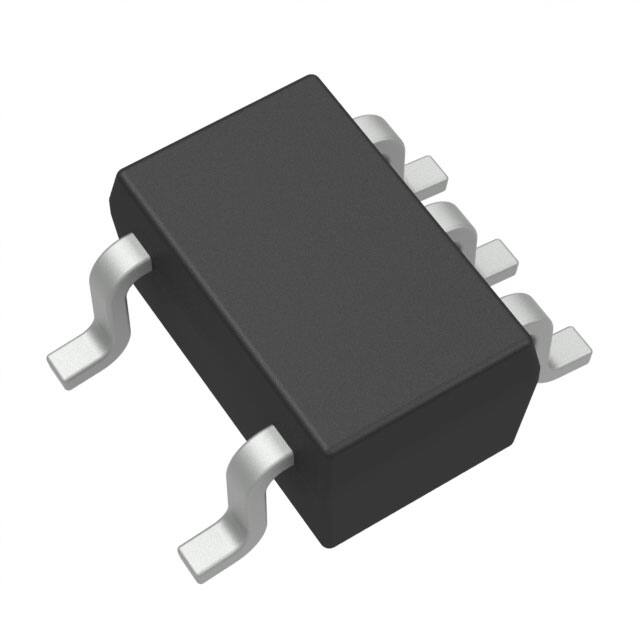
Ultra-Small 5-Pin SC70 Package
Extended Temperature Range (–40°C to 85°C)
Ultra-Low Quiescent Current (1 µA Typical)
This part uses a precision on-chip voltage reference
and a comparator to measure the input voltage. Builtin hysteresis helps to prevent erratic operation in the
presence of noise. The UVD is available in the ultraminiature 5-pin SC70 package.
2 Applications
•
•
•
•
•
•
•
Low Battery Voltage Detectors
Power Fail Indicators
Processor Reset Generators
Battery Backup Controls
Battery-Operated Equipment
Hand-Held Instruments
Undervoltage Detectors
Device Information(1)
PART NUMBER
LMS33460
PACKAGE
SC70 (5)
BODY SIZE (NOM)
2.00 mm × 1.25 mm
(1) For all available packages, see the orderable addendum at
the end of the data sheet.
Typical Application
SC70 Package
VDD
R
470 k:
VIN
VOUT
LMS33460
GND
VDD
RESET
CPU
GND
Copyright © 2016, Texas Instruments Incorporated
1
An IMPORTANT NOTICE at the end of this data sheet addresses availability, warranty, changes, use in safety-critical applications,
intellectual property matters and other important disclaimers. PRODUCTION DATA.
�LMS33460
SNVS158E – MARCH 2001 – REVISED DECEMBER 2016
www.ti.com
Table of Contents
1
2
3
4
5
6
7
Features ..................................................................
Applications ...........................................................
Description .............................................................
Revision History.....................................................
Pin Configuration and Functions .........................
Specifications.........................................................
1
1
1
2
3
3
6.1
6.2
6.3
6.4
6.5
6.6
3
3
3
4
4
5
Absolute Maximum Ratings ......................................
ESD Ratings..............................................................
Recommended Operating Conditions.......................
Thermal Information ..................................................
Electrical Characteristics...........................................
Typical Characteristics ..............................................
Detailed Description .............................................. 6
7.1 Overview ................................................................... 6
7.2 Functional Block Diagram ......................................... 7
7.3 Feature Description................................................... 7
7.4 Device Functional Modes.......................................... 7
8
Application and Implementation .......................... 8
8.1 Application Information.............................................. 8
8.2 Typical Application .................................................... 8
9 Power Supply Recommendations........................ 9
10 Layout..................................................................... 9
10.1 Layout Guidelines ................................................... 9
10.2 Layout Example ...................................................... 9
11 Device and Documentation Support ................. 10
11.1
11.2
11.3
11.4
11.5
Receiving Notification of Documentation Updates
Community Resources..........................................
Trademarks ...........................................................
Electrostatic Discharge Caution ............................
Glossary ................................................................
10
10
10
10
10
12 Mechanical, Packaging, and Orderable
Information ........................................................... 10
4 Revision History
NOTE: Page numbers for previous revisions may differ from page numbers in the current version.
Changes from Revision D (April 2013) to Revision E
Page
•
Added ESD Ratings table, Feature Description section, Device Functional Modes, Application and Implementation
section, Power Supply Recommendations section, Layout section, Device and Documentation Support section, and
Mechanical, Packaging, and Orderable Information section. ................................................................................................. 1
•
Deleted Ordering Information table; see POA at the end of the data sheet........................................................................... 1
•
Added Thermal Information table ........................................................................................................................................... 4
•
Changed RθJA value From: 478 To: 275.5 .............................................................................................................................. 4
Changes from Revision C (April 2013) to Revision D
•
2
Page
Changed layout of National Semiconductor Data Sheet to TI format .................................................................................... 1
Submit Documentation Feedback
Copyright © 2001–2016, Texas Instruments Incorporated
Product Folder Links: LMS33460
�LMS33460
www.ti.com
SNVS158E – MARCH 2001 – REVISED DECEMBER 2016
5 Pin Configuration and Functions
DCK Package
5-Pin SC70
Top View
NC
1
GND
2
GND
3
5
VIN
4
VOUT
Not to scale
Pin Functions
PIN
NAME
NO.
I/O
DESCRIPTION
GND
2
—
Internally connected to ground. Can be left floating or connected to GND (pin 3).
GND
3
—
Ground
NC
1
—
No connection
VIN
5
I
Input supply
VOUT
4
O
Voltage output
6 Specifications
6.1 Absolute Maximum Ratings
over operating free-air temperature range (unless otherwise noted) (1)
MAX
UNIT
Input voltage to GND
MIN
8
V
Output voltage to GND
8
V
Output continuous output current
30
mA
Vapor phase IR convection reflow
240
°C
Junction temperature, TJ
150
°C
150
°C
Storage temperature, Tstg
(1)
–65
Stresses beyond those listed under Absolute Maximum Ratings may cause permanent damage to the device. These are stress ratings
only, which do not imply functional operation of the device at these or any other conditions beyond those indicated under Recommended
Operating Conditions. Exposure to absolute-maximum-rated conditions for extended periods may affect device reliability.
6.2 ESD Ratings
VALUE
V(ESD)
(1)
Electrostatic discharge
Human-body model (HBM), per ANSI/ESDA/JEDEC JS-001 (1)
±2500
Machine model
±200
UNIT
V
JEDEC document JEP155 states that 500-V HBM allows safe manufacturing with a standard ESD control process.
6.3 Recommended Operating Conditions
TJ
Operating junction temperature
MIN
MAX
–40
85
Submit Documentation Feedback
Copyright © 2001–2016, Texas Instruments Incorporated
Product Folder Links: LMS33460
UNIT
°C
3
�LMS33460
SNVS158E – MARCH 2001 – REVISED DECEMBER 2016
www.ti.com
6.4 Thermal Information
LMS33460
THERMAL METRIC (1)
DCK (SC70)
UNIT
5 PINS
RθJA
Junction-to-ambient thermal resistance
275.5
°C/W
RθJC(top)
Junction-to-case (top) thermal resistance
102.5
°C/W
RθJB
Junction-to-board thermal resistance
54
°C/W
ψJT
Junction-to-top characterization parameter
2.7
°C/W
ψJB
Junction-to-board characterization parameter
53.3
°C/W
(1)
For more information about traditional and new thermal metrics, see the Semiconductor and IC Package Thermal Metrics application
report.
6.5 Electrical Characteristics
TJ = 25°C (unless otherwise noted)
MIN
TYP
MAX
UNIT
VDET
Detector threshold
PARAMETER
VIN falling
TEST CONDITIONS
2.85
3
3.15
V
VHYS
Detector voltage hysteresis
VIN rising
0.095
0.155
0.215
V
IIN
Input supply current
VIN = 2.87 V
VIN(MAX)
1
2.2
µA
VIN = 4.7 V
1.2
3.6
µA
VIN = 7 V (1)
25
200
µA
7
V
0.7
1.1
1
1.3
Maximum operating voltage
VIN(MIN)
Minimum operating voltage
IOUT(LOW)
Output current low
tPDHL
Output delay time (output transition high to low )
CL = 10 pF, RL = 470 kΩ
ΔVDET/ΔT
Detect voltage temperature coefficient
TJ = –40°C to 85°C
(1)
4
TJ = –40°C to 85°C
VOUT = 0.05 V, VIN = 1.1 V
VOUT = 0.5 V, VIN = 1.5 V
0.01
0.6
2
11
130
±120
V
mA
200
µs
PPM/°C
Quiescent current increases substantially above 5.5 V, but is very low in the normal range below 5.5 V.
Submit Documentation Feedback
Copyright © 2001–2016, Texas Instruments Incorporated
Product Folder Links: LMS33460
�LMS33460
www.ti.com
SNVS158E – MARCH 2001 – REVISED DECEMBER 2016
6.6 Typical Characteristics
TA = 25°C, RL = 470 kΩ, and CL = 10 pF (unless otherwise noted)
100
3.30
(VIN RISING)
SUPPLY CURRENT (µA)
DETECTOR THRESHOLD (V)
3.25
3.20
3.15
VHYS
3.10
10
1
VDET (VIN FALLING)
3.05
0.1
3.00
-50
-25
0
25
50
75
100
0
2
4
6
8
10
INPUT VOLTAGE VIN (V)
TEMPERATURE (°C)
Figure 2. Supply Current vs Input Voltage
Figure 1. Detector Threshold vs Temperature
300
300
VIN
250
tPDHL
OUTPUT DELAY TIME (µs)
OUTPUT DELAY TIME (µs)
250
VOUT
200
150
100
tPDHL
50
tPDLH
200
VOUT
150
tPDLH
100
50
0
-40
VIN
0
-15
10
35
60
85
-40
110
-15
10
35
60
85
110
TEMPERATURE (°C)
TEMPERATURE (°C)
Figure 3. Propagation Delay Time (tPDHL) vs Temperature
Figure 4. Propagation Delay Time (tPDLH) vs Temperature
Figure 5. VOUT(LOW) vs VIN
Submit Documentation Feedback
Copyright © 2001–2016, Texas Instruments Incorporated
Product Folder Links: LMS33460
5
�LMS33460
SNVS158E – MARCH 2001 – REVISED DECEMBER 2016
www.ti.com
7 Detailed Description
7.1 Overview
The LMS33460 is a micropower undervoltage-sensing circuit with an open-drain output configuration, which
requires a pull resistor.
The LMS33460 features a voltage reference, a comparator with precise thresholds and built-in hysteresis to
prevent erratic reset operation.
INPUT VOLTAGE
5.0V
VHYS
VIN Rising
Threshold
VIN Falling
Threshold
VDET
VIN(MIN)
0V
TIME
OUTPUT VOLTAGE
5.0V
tPDHL
2.5V
tPDLH
0.5V
0V
TIME
Figure 6. Propagation Delay Timing Diagram
+5.0 V
RL
470 k:
LMS33640
VIN
VOUT
GND
CL
10 pF
Copyright © 2016, Texas Instruments Incorporated
Figure 7. Propagation Delay Test Circuit
6
Submit Documentation Feedback
Copyright © 2001–2016, Texas Instruments Incorporated
Product Folder Links: LMS33460
�LMS33460
www.ti.com
SNVS158E – MARCH 2001 – REVISED DECEMBER 2016
7.2 Functional Block Diagram
VIN
LMS33460
VOUT
VREF
+
-
GND
Copyright © 2016, Texas Instruments Incorporated
7.3 Feature Description
The input supply (VIN) is the voltage that is being monitored and as it decreases past 3 V, the active-low output
(VOUT) transitions to a logic low state. When VIN rises above 3 V plus the built-in hysterisis, VOUT returns to its
original state of logic high. The LMS33460 has built-in hysteresis when the input supply is coming back up to
help prevent erratic output operation when the input voltage crosses the threshold.
The LMS33460 is useful in a variety of applications that require low voltage detection and is suited for batterypowered systems where low quiescent current and small package size is required. It can also be used as a
precision reset circuit for microcontroller applications.
7.4 Device Functional Modes
7.4.1 Start Up
As the input voltage (VIN) ramps up, the output (VOUT) remains logic low until VIN reaches 3.15 V due to the builtin hysteresis (nominally 150 mV). After VIN crosses that threshold, VOUT remains logic high until VIN drops below
the 3-V threshold. The hysteresis only applies to the VIN rising threshold.
Submit Documentation Feedback
Copyright © 2001–2016, Texas Instruments Incorporated
Product Folder Links: LMS33460
7
�LMS33460
SNVS158E – MARCH 2001 – REVISED DECEMBER 2016
www.ti.com
8 Application and Implementation
NOTE
Information in the following applications sections is not part of the TI component
specification, and TI does not warrant its accuracy or completeness. TI’s customers are
responsible for determining suitability of components for their purposes. Customers should
validate and test their design implementation to confirm system functionality.
8.1 Application Information
This device is ideal to use in battery-powered or microprocessor based systems and can be used as a low
voltage indicator or reset circuit.
8.2 Typical Application
VDD
R
470 k:
VIN
VDD
RESET
VOUT
CPU
LMS33460
GND
GND
Copyright © 2016, Texas Instruments Incorporated
Figure 8. Typical Application Schematic
8.2.1 Design Requirements
For this design example, use the parameters listed in Table 1 as the input parameters.
Table 1. Design Parameters
PARAMETER
EXAMPLE VALUE
Input supply voltage maximum
7V
VOUT maximum
7V
VOUT minimum
0V
Pullup resistor
470 kΩ
8.2.2 Detailed Design Procedure
The LMS33460 is a very easy to use low voltage detector. All that required is the input supply voltage and a
pullup resistor at the output. TI recommends 470 kΩ for the pullup resistor.
8
Submit Documentation Feedback
Copyright © 2001–2016, Texas Instruments Incorporated
Product Folder Links: LMS33460
�LMS33460
www.ti.com
SNVS158E – MARCH 2001 – REVISED DECEMBER 2016
8.2.3 Application Curve
RL = 475 kΩ
* See Figure 4 for tPDLH values
** See Figure 3 for tPDHL values
Figure 9. LMS33460 Turnon
9 Power Supply Recommendations
The input of the LMS33460 is designed to handle up to the recommended supply voltage of 7 V and remain in
the recommended input voltage range during operation. No input capacitor is required.
10 Layout
10.1 Layout Guidelines
Place the output pullup resistor, and delay capacitor if used, as close as possible to the IC. Keep traces short
between the IC and the components used at the output to ensure the timing delay is as accurate as possible.
10.2 Layout Example
VIN
R1
VOUT
GND
Figure 10. Layout Example Diagram
Submit Documentation Feedback
Copyright © 2001–2016, Texas Instruments Incorporated
Product Folder Links: LMS33460
9
�LMS33460
SNVS158E – MARCH 2001 – REVISED DECEMBER 2016
www.ti.com
11 Device and Documentation Support
11.1 Receiving Notification of Documentation Updates
To receive notification of documentation updates, navigate to the device product folder on ti.com. In the upper
right corner, click on Alert me to register and receive a weekly digest of any product information that has
changed. For change details, review the revision history included in any revised document.
11.2 Community Resources
The following links connect to TI community resources. Linked contents are provided "AS IS" by the respective
contributors. They do not constitute TI specifications and do not necessarily reflect TI's views; see TI's Terms of
Use.
TI E2E™ Online Community TI's Engineer-to-Engineer (E2E) Community. Created to foster collaboration
among engineers. At e2e.ti.com, you can ask questions, share knowledge, explore ideas and help
solve problems with fellow engineers.
Design Support TI's Design Support Quickly find helpful E2E forums along with design support tools and
contact information for technical support.
11.3 Trademarks
E2E is a trademark of Texas Instruments.
All other trademarks are the property of their respective owners.
11.4 Electrostatic Discharge Caution
This integrated circuit can be damaged by ESD. Texas Instruments recommends that all integrated circuits be handled with
appropriate precautions. Failure to observe proper handling and installation procedures can cause damage.
ESD damage can range from subtle performance degradation to complete device failure. Precision integrated circuits may be more
susceptible to damage because very small parametric changes could cause the device not to meet its published specifications.
11.5 Glossary
SLYZ022 — TI Glossary.
This glossary lists and explains terms, acronyms, and definitions.
12 Mechanical, Packaging, and Orderable Information
The following pages include mechanical, packaging, and orderable information. This information is the most
current data available for the designated devices. This data is subject to change without notice and revision of
this document. For browser-based versions of this data sheet, refer to the left-hand navigation.
10
Submit Documentation Feedback
Copyright © 2001–2016, Texas Instruments Incorporated
Product Folder Links: LMS33460
�PACKAGE OPTION ADDENDUM
www.ti.com
30-Sep-2021
PACKAGING INFORMATION
Orderable Device
Status
(1)
Package Type Package Pins Package
Drawing
Qty
Eco Plan
(2)
Lead finish/
Ball material
MSL Peak Temp
Op Temp (°C)
Device Marking
(3)
(4/5)
(6)
LMS33460MG
NRND
SC70
DCK
5
1000
Non-RoHS
& Green
Call TI
Level-1-260C-UNLIM
-40 to 85
C33
LMS33460MG/NOPB
ACTIVE
SC70
DCK
5
1000
RoHS & Green
SN
Level-1-260C-UNLIM
-40 to 85
C33
(1)
The marketing status values are defined as follows:
ACTIVE: Product device recommended for new designs.
LIFEBUY: TI has announced that the device will be discontinued, and a lifetime-buy period is in effect.
NRND: Not recommended for new designs. Device is in production to support existing customers, but TI does not recommend using this part in a new design.
PREVIEW: Device has been announced but is not in production. Samples may or may not be available.
OBSOLETE: TI has discontinued the production of the device.
(2)
RoHS: TI defines "RoHS" to mean semiconductor products that are compliant with the current EU RoHS requirements for all 10 RoHS substances, including the requirement that RoHS substance
do not exceed 0.1% by weight in homogeneous materials. Where designed to be soldered at high temperatures, "RoHS" products are suitable for use in specified lead-free processes. TI may
reference these types of products as "Pb-Free".
RoHS Exempt: TI defines "RoHS Exempt" to mean products that contain lead but are compliant with EU RoHS pursuant to a specific EU RoHS exemption.
Green: TI defines "Green" to mean the content of Chlorine (Cl) and Bromine (Br) based flame retardants meet JS709B low halogen requirements of