LMV321A-Q1, LMV324A-Q1, LMV358A-Q1
ZHCSKP5D – JUNE 2020 – REVISED APRIL 2023
LMV321A-Q1、LMV358A-Q1、LMV324A-Q1 汽车类、低电压、轨至轨输出运算放
大器
1 特性
3 说明
• 符合面向汽车应用的 AEC-Q100 标准
– 温度等级 1:–40°C 至 +125°C,TA
– 器件 HBM ESD 分类等级 2
– 器件 CDM ESD 分类等级 C6
• 低输入失调电压:±1mV
• 轨至轨输出
• 单位带宽增益积:1MHz
• 低宽带噪声:30nV/√Hz
• 低输入偏置电流:10pA
• 低静态电流:70µA/通道
• 单位增益稳定
• 内置 RFI 和 EMI 滤波器
• 可在电源电压低至 2.5V 的情况下运行
• 由于具有电阻式开环输出阻抗,因此可在更高的容
性负载下更轻松地实现稳定
• 工作温度范围:–40°C 至 125°C
LMV3xxA-Q1 系列包括单通道 (LMV321A-Q1)、双通
道 (LMV358A-Q1) 和 四 通 道 (LMV324A-Q1) 低 压
(2.5V 至 5.5V)汽车类运算放大器,具有轨至轨输出
摆幅功能。这些运算放大器为空间受限、需要低压运行
和高容性负载驱动的应用(例如信息娱乐系统和照明)
提供了一种具有成本效益的方法。LMV3xxA-Q1 系列
的容性负载驱动具有 500pF 的电容,而电阻式开环输
出阻抗使其易于在更高的容性负载下保持稳定。这些运
算放大器专为低工作电压(2.5V 至 5.5V)而设计,性
能规格类似于 LMV3xx-Q1 器件。
LMV3xxA-Q1 系列的稳健设计可简化电路设计。这些
运算放大器具有单位增益稳定性,集成了 RFI 和 EMI
抑制滤波器,并且在过驱情况下不会出现相位反转。
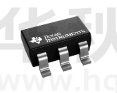
LMV3xxA-Q1 可 采 用 SOIC 、 MSOP 、 SOT-23 和
TSSOP 等业界通用的封装。
封装信息(1)
2 应用
•
•
•
•
•
•
•
•
•
器件型号
针对 AEC-Q100 1 级应用进行了优化
信息娱乐系统与仪表组
被动安全
车身电子装置和照明
混合动力汽车/电动汽车逆变器和电机控制
车载充电器 (OBC) 和无线充电器
动力总成电流传感器
高级驾驶辅助系统 (ADAS)
单电源、低侧、单向电流感应电路
封装
LMV321A-Q1
LMV358A-Q1
1.60mm × 2.90mm
DCK(SC70,5)
1.25mm × 2.00mm
D(SOIC,8)
3.91mm × 4.90mm
DGK(VSSOP,8) 3.00mm × 3.00mm
D(SOIC,14)
DYY(SOT-23,
14)
RG
8.65mm × 3.91mm
PW(TSSOP,14) 4.40mm × 5.00mm
LMV324A-Q1
(1)
封装尺寸(标称值)
DBV(SOT-23,5)
4.20mm × 1.90mm
如需了解所有可用封装,请参阅数据表末尾的可订购产品附
录。
RF
R1
VOUT
VIN
C1
f-3 dB =
(
RF
VOUT
= 1+
RG
VIN
((
1
1 + sR1C1
1
2pR1C1
(
单极低通滤波器
本文档旨在为方便起见,提供有关 TI 产品中文版本的信息,以确认产品的概要。有关适用的官方英文版本的最新信息,请访问
www.ti.com,其内容始终优先。TI 不保证翻译的准确性和有效性。在实际设计之前,请务必参考最新版本的英文版本。
English Data Sheet: SLOSE67
�LMV321A-Q1, LMV324A-Q1, LMV358A-Q1
www.ti.com.cn
ZHCSKP5D – JUNE 2020 – REVISED APRIL 2023
Table of Contents
1 特性................................................................................... 1
2 应用................................................................................... 1
3 说明................................................................................... 1
4 Revision History.............................................................. 2
5 Pin Configuration and Functions...................................3
6 Specifications.................................................................. 5
6.1 Absolute Maximum Ratings........................................ 5
6.2 ESD Ratings............................................................... 5
6.3 Recommended Operating Conditions.........................5
6.4 Thermal Information: LMV321A-Q1............................ 6
6.5 Thermal Information: LMV358A-Q1............................ 6
6.6 Thermal Information: LMV324A-Q1............................ 6
6.7 Electrical Characteristics.............................................7
6.8 Typical Characteristics................................................ 8
7 Detailed Description......................................................14
7.1 Overview................................................................... 14
7.2 Functional Block Diagram......................................... 14
7.3 Feature Description...................................................15
7.4 Device Functional Modes..........................................15
8 Application and Implementation.................................. 16
8.1 Application Information............................................. 16
8.2 Typical Application.................................................... 16
9 Power Supply Recommendations................................21
9.1 Input and ESD Protection......................................... 21
10 Layout...........................................................................22
10.1 Layout Guidelines................................................... 22
10.2 Layout Example...................................................... 22
11 Device and Documentation Support..........................23
11.1 Documentation Support.......................................... 23
11.2 Receiving Notification of Documentation Updates.. 23
11.3 支持资源..................................................................23
11.4 Trademarks............................................................. 23
11.5 静电放电警告...........................................................23
11.6 术语表..................................................................... 23
12 Mechanical, Packaging, and Orderable
Information.................................................................... 23
4 Revision History
注:以前版本的页码可能与当前版本的页码不同
Changes from Revision C (January 2023) to Revision D (April 2023)
Page
• 将 DBV 封装状态从预发布 更改为正在供货 ...................................................................................................... 1
Changes from Revision B (October 2021) to Revision C (January 2023)
Page
• 删除了器件信息 表中 SC70 (5) 封装的预发布说明.............................................................................................1
• Changed the formatting of the Pin Configuration and Functions section............................................................3
• Changed values in Thermal Information: LMV321A-Q1 table............................................................................ 6
Changes from Revision A (April 2021) to Revision B (October 2021)
Page
在数据表添加了 LMV321A-Q1 GPN...................................................................................................................1
在器件信息 表中添加了 SOT-23 (5) 和 SC70 (5) 封装....................................................................................... 1
删除了器件信息 表中 SOT-23 (14) 和 TSSOP (14) 封装的预发布说明.............................................................. 1
Added LMV321A-Q1 SOT-23 (5), SC70 (5), and LMV321AU-Q1 SOT-23 (5) Packages, to Pin Configuration
and Functions section.........................................................................................................................................3
• Added Thermal Information: LMV321A-Q1 table................................................................................................6
•
•
•
•
Changes from Revision * (June 2020) to Revision A (April 2021)
•
•
•
•
•
•
•
2
Page
更新了整个文档中的表格、图和交叉参考的编号格式.........................................................................................1
删除了器件信息 表中 VSSOP (8) 封装的预览说明............................................................................................. 1
删除了器件信息 表中的 SOT-23 (8)、TSSOP (8)、SOT-23 (5) 和 SC70 (5) 封装.............................................1
Deleted TSSOP (8) Package, from Pin Configuration and Functions section.................................................... 3
Added note (4) to differential input voltage in Absolute Maximum Ratings table................................................5
Added thermal information for DGK package..................................................................................................... 6
Added thermal information for DYY package..................................................................................................... 6
Submit Document Feedback
Copyright © 2023 Texas Instruments Incorporated
Product Folder Links: LMV321A-Q1 LMV324A-Q1 LMV358A-Q1
English Data Sheet: SLOSE67
�LMV321A-Q1, LMV324A-Q1, LMV358A-Q1
www.ti.com.cn
ZHCSKP5D – JUNE 2020 – REVISED APRIL 2023
5 Pin Configuration and Functions
OUT
1
V-
2
+IN
3
5
4
V+
-IN
图 5-1. LMV321A-Q1 DBV Package,
5-Pin SOT-23
(Top View)
+IN
1
V-
2
-IN
3
5
V+
4
OUT
图 5-2. LMV321A-Q1 DCK, LMV321AU-Q1 DBV
Package,
5-Pin SC70, SOT-23
(Top View)
表 5-1. Pin Functions: LMV321A-Q1
PIN
NAME
TYPE
DBV
DCK, DBV (U)
–IN
4
3
+IN
3
OUT
1
V–
V+
(1)
DESCRIPTION
(1)
I
Inverting input
1
I
Non-inverting input
4
O
Output
2
2
—
Negative (lowest) supply or ground (for single-supply operation)
5
5
—
Positive (highest) supply
I = input, O = output
OUT A
1
8
V+
-IN A
2
7
OUT B
+IN A
3
6
-IN B
V-
4
5
+IN B
图 5-3. LMV358A-Q1 D and DGK Packages,
8-Pin SOIC and VSSOP
(Top View)
表 5-2. Pin Functions: LMV358A-Q1
PIN
TYPE(1)
DESCRIPTION
NAME
NO.
–IN A
2
I
Inverting input, channel A
+IN A
3
I
Non-inverting input, channel A
–IN B
6
I
Inverting input, channel B
+IN B
5
I
Non-inverting input, channel B
OUT A
1
O
Output, channel A
OUT B
7
O
Output, channel B
V–
4
—
Negative (lowest) supply or ground (for single-supply operation)
V+
8
—
Positive (highest) supply
(1)
I = input, O = output
Copyright © 2023 Texas Instruments Incorporated
Submit Document Feedback
3
Product Folder Links: LMV321A-Q1 LMV324A-Q1 LMV358A-Q1
English Data Sheet: SLOSE67
�LMV321A-Q1, LMV324A-Q1, LMV358A-Q1
www.ti.com.cn
ZHCSKP5D – JUNE 2020 – REVISED APRIL 2023
14
OUT D
13
-IN D
3
12
+IN D
V+
4
11
V-
+IN B
5
10
+IN C
-IN B
6
9
-IN C
OUT B
7
8
OUT C
OUT A
1
-IN A
2
+IN A
A
B
D
C
图 5-4. LMV324A-Q1 D, PW, and DYY Packages,
14-Pin SOIC, TSSOP, and SOT-23
(Top View)
表 5-3. Pin Functions: LMV324A-Q1
PIN
DESCRIPTION
NO.
–IN A
2
I
Inverting input, channel A
+IN A
3
I
Non-inverting input, channel A
–IN B
6
I
Inverting input, channel B
+IN B
5
I
Non-inverting input, channel B
–IN C
9
I
Inverting input, channel C
+IN C
10
I
Non-inverting input, channel C
–IN D
13
I
Inverting input, channel D
+IN D
12
I
Non-inverting input, channel D
OUT A
1
O
Output, channel A
OUT B
7
O
Output, channel B
OUT C
8
O
Output, channel C
OUT D
14
O
Output, channel D
V–
11
—
Negative (lowest) supply or ground (for single-supply operation)
V+
4
—
Positive (highest) supply
(1)
4
TYPE(1)
NAME
I = input, O = output
Submit Document Feedback
Copyright © 2023 Texas Instruments Incorporated
Product Folder Links: LMV321A-Q1 LMV324A-Q1 LMV358A-Q1
English Data Sheet: SLOSE67
�LMV321A-Q1, LMV324A-Q1, LMV358A-Q1
www.ti.com.cn
ZHCSKP5D – JUNE 2020 – REVISED APRIL 2023
6 Specifications
6.1 Absolute Maximum Ratings
over operating temperature range (unless otherwise noted)(1)
Supply voltage, ([V+] – [V–])
Voltage(2)
Signal input pins
Common-mode
MIN
MAX
UNIT
0
6
V
(V–) – 0.5
(V+) + 0.5
V
Differential(4)
Current(2)
(V+) – (V–) + 0.2
V
10
mA
–10
Output short-circuit(3)
Continuous
Operating, TA
–55
Operating junction temperature, TJ
Storage temperature, Tstg
(1)
(2)
(3)
(4)
–65
150
°C
150
°C
150
°C
Stresses beyond those listed under Absolute Maximum Ratings may cause permanent damage to the device. These are stress ratings
only, and functional operation of the device at these or any other conditions beyond those indicated under Recommended Operating
Conditions is not implied. Exposure to absolute-maximum-rated conditions for extended periods may affect device reliability.
Input pins are diode-clamped to the power-supply rails. Input signals that may swing more than 0.5 V beyond the supply rails must be
current limited to 10 mA or less.
Short-circuit to ground, one amplifier per package.
Differential input voltages greater than 0.5 V applied continuously can result in a shift to the input offset voltage and quiescent current
above the maximum specifications of these parameters. The magnitude of this effect increases as the ambient operating temperature
rises.
6.2 ESD Ratings
VALUE
V(ESD)
(1)
Electrostatic discharge
Human-body model (HBM), per AEC Q100-002 HBM ESD Classification
Level 2(1)
±2000
Charged-device model (CDM), per AEC Q100-011 CDM ESD
Classification Level C5
±1000
UNIT
V
AEC Q100-002 indicates that HBM stressing shall be in accordance with ANSI/ESDA/JEDEC JS-001 Specification
6.3 Recommended Operating Conditions
over operating temperature range (unless otherwise noted)
MIN
VS
Supply voltage
TA
Specified temperature
Copyright © 2023 Texas Instruments Incorporated
MAX
UNIT
2.5
5.5
V
–40
125
°C
Submit Document Feedback
5
Product Folder Links: LMV321A-Q1 LMV324A-Q1 LMV358A-Q1
English Data Sheet: SLOSE67
�LMV321A-Q1, LMV324A-Q1, LMV358A-Q1
www.ti.com.cn
ZHCSKP5D – JUNE 2020 – REVISED APRIL 2023
6.4 Thermal Information: LMV321A-Q1
LMV321A-Q1
THERMAL
METRIC(1)
DBV (SOT-23)
DCK (SC70)
5 PINS
5 PINS
UNIT
RθJA
Junction-to-ambient thermal resistance
232.5
246.6
°C/W
RθJC(top)
Junction-to-case (top) thermal resistance
131.0
157.5
°C/W
RθJB
Junction-to-board thermal resistance
99.6
95.4
°C/W
ψJT
Junction-to-top characterization parameter
66.5
68.8
°C/W
ψJB
Junction-to-board characterization parameter
99.1
95.0
°C/W
(1)
For more information about traditional and new thermal metrics, see Semiconductor and IC Package Thermal Metrics.
6.5 Thermal Information: LMV358A-Q1
LMV358A-Q1
THERMAL METRIC(1)
D (SOIC)
DGK (VSSOP)
UNIT
8 PINS
8 PINS
RθJA
Junction-to-ambient thermal resistance
151.9
196.6
°C/W
RθJC(top)
Junction-to-case (top) thermal resistance
92.0
86.2
°C/W
RθJB
Junction-to-board thermal resistance
95.4
118.3
°C/W
ψJT
Junction-to-top characterization parameter
40.2
23.2
°C/W
ψJB
Junction-to-board characterization parameter
94.7
116.7
°C/W
(1)
For more information about traditional and new thermal metrics, see Semiconductor and IC Package Thermal Metrics.
6.6 Thermal Information: LMV324A-Q1
LMV324A-Q1
THERMAL METRIC(1)
D (SOIC)
PW (TSSOP)
DYY (SOT-23)
14 PINS
14 PINS
14 PINS
115.1
135.3
154.3
°C/W
RθJC(top) Junction-to-case (top) thermal resistance
71.2
63.5
86.8
°C/W
RθJB
Junction-to-board thermal resistance
71.1
78.4
67.9
°C/W
ψJT
Junction-to-top characterization parameter
29.6
13.6
10.1
°C/W
77.9
67.5
°C/W
RθJA
ψJB
6
Junction-to-ambient thermal resistance
Junction-to-board characterization parameter
Submit Document Feedback
70.7
UNIT
Copyright © 2023 Texas Instruments Incorporated
Product Folder Links: LMV321A-Q1 LMV324A-Q1 LMV358A-Q1
English Data Sheet: SLOSE67
�LMV321A-Q1, LMV324A-Q1, LMV358A-Q1
www.ti.com.cn
ZHCSKP5D – JUNE 2020 – REVISED APRIL 2023
6.7 Electrical Characteristics
For VS = (V+) – (V–) = 2.5 V to 5.5 V (±0.9 V to ±2.75 V), TA = 25°C, RL = 10 kΩ connected to VS / 2, and VCM = VOUT =
VS / 2 (unless otherwise noted)
PARAMETER
TEST CONDITIONS
MIN
TYP
MAX
±1
±4
UNIT
OFFSET VOLTAGE
Vs = 5 V
VOS
Input offset voltage
dVOS/dT
VOS vs temperature
TA = –40°C to 125°C
PSRR
Power-supply rejection ratio
VS = 2.5 to 5.5 V, VCM = (V–)
±5
Vs = 5 V, TA = –40°C to 125°C
78
mV
±1
µV/°C
100
dB
INPUT VOLTAGE RANGE
VCM
CMRR
Common-mode
voltage range
Common-mode
rejection ratio
No phase reversal, rail-to-rail input
(V–) – 0.1
(V+) – 1
VS = 2.5 V, (V–) – 0.1 V < VCM < (V+) – 1.4 V
TA = –40°C to 125°C
86
VS = 5.5 V, (V–) – 0.1 V < VCM < (V+) – 1.4 V
TA = –40°C to 125°C
95
V
dB
VS = 5.5 V, (V–) – 0.1 V < VCM < (V+) + 0.1 V
TA = –40°C to 125°C
63
VS = 2.5 V, (V–) – 0.1 V < VCM < (V+) + 0.1 V
TA = –40°C to 125°C
77
68
INPUT BIAS CURRENT
IB
Input bias current
IOS
Input offset current
Vs = 5 V
±10
pA
±3
pA
ƒ = 0.1 Hz to 10 Hz, Vs = 5 V
5.1
µVPP
ƒ = 1 kHz, Vs = 5 V
33
ƒ = 10 kHz, Vs = 5 V
30
ƒ = 1 kHz, Vs = 5 V
25
fA/√ Hz
1.5
pF
5
pF
NOISE
En
Input voltage noise
(peak-to-peak)
en
Input voltage noise density
in
Input current noise density
nV/√ Hz
INPUT CAPACITANCE
CID
Differential
CIC
Common-mode
OPEN-LOOP GAIN
100
VS = 5.5 V, (V–) + 0.05 V < VO < (V+) – 0.05 V, RL = 10 kΩ
AOL
Open-loop voltage gain
115
98
VS = 2.5 V, (V–) + 0.04 V < VO < (V+) – 0.04 V, RL = 10 kΩ
VS = 2.5 V, (V–) + 0.1 V < VO < (V+) – 0.1 V, RL = 2 kΩ
112
VS = 5.5 V, (V–) + 0.15 V < VO < (V+) – 0.15 V, RL = 2 kΩ
128
dB
FREQUENCY RESPONSE
GBW
Gain-bandwidth product
Vs = 5 V
φm
Phase margin
VS = 5.5 V, G = 1
76
1
°
SR
Slew rate
Vs = 5 V
1.7
V/µs
tS
Settling time
tOR
Overload recovery time
VS = 5 V, VIN × gain > VS
THD+N
Total harmonic distortion
+ noise
VS = 5.5 V, VCM = 2.5 V, VO = 1 VRMS, G = +1, f = 1 kHz,
80-kHz measurement BW
VO
Voltage output swing
from supply rails
VS = 5.5 V, RL = 10 kΩ
20
50
VS = 5.5 V, RL = 2 kΩ
40
75
ISC
Short-circuit current
Vs = 5.5 V
ZO
Open-loop output impedance
Vs = 5 V, f = 1 MHz
To 0.1%, VS = 5 V, 2-V step , G = +1, CL = 100 pF
3
To 0.01%, VS = 5 V, 2-V step , G = +1, CL = 100 pF
4
MHz
µs
0.9
µs
0.005%
OUTPUT
mV
±40
mA
1200
Ω
POWER SUPPLY
VS
IQ
Specified voltage range
Quiescent current per amplifier
Power-on time
2.5 (±1.25)
IO = 0 mA, VS = 5.5 V
5.5 (±2.75)
70
150
IO = 0 mA, VS = 5.5 V, TA = –40°C to 125°C
VS = 0 V to 5 V, to 90% IQ level
Copyright © 2023 Texas Instruments Incorporated
125
50
V
µA
µs
Submit Document Feedback
7
Product Folder Links: LMV321A-Q1 LMV324A-Q1 LMV358A-Q1
English Data Sheet: SLOSE67
�LMV321A-Q1, LMV324A-Q1, LMV358A-Q1
www.ti.com.cn
ZHCSKP5D – JUNE 2020 – REVISED APRIL 2023
6.8 Typical Characteristics
at TA = 25°C, V+ = 2.75 V, V– = –2.75 V, RL = 10 kΩ connected to VS / 2, VCM = VS / 2, and VOUT = VS / 2 (unless
otherwise noted)
6
3.5
IB
I B+
IOS
4
IB+
IOS
2
IB and IOS (pA)
2
IB and IOS (pA)
IB
3
2.5
0
-2
-4
1.5
1
0.5
0
-0.5
-1
-6
-1.5
-8
-10
-40
-2
-2.5
-20
0
20
40
60
80
Temperature (qC)
100
120
-3
140
-2
-1
0
1
Common-Mode Voltage (V)
D006
2
3
D007
图 6-2. IB and IOS vs Common-Mode Voltage
图 6-1. IB and IOS vs Temperature
160
140
100
120
80
100
60
80
40
60
20
40
80
60
40
0
20
0
-40
VS = 5.5 V
VS = 2.5 V
-20
0
20
40
60
80
Temperature (qC)
100
120
-20
1k
20
Gain
Phase
0
10k
140
100k
Frequency (Hz)
1M
D009
CL = 10 pF
D008
图 6-3. Open-Loop Gain vs Temperature
图 6-4. Open-Loop Gain and Phase vs Frequency
80
160
Gain = 1
Gain = 1
Gain = 10
Gain = 100
Gain = 1000
70
140
60
120
50
100
40
Gain (dB)
Open-Loop Voltage Gain (dB)
Phase (q)
100
Gain (dB)
Gain (dB)
120
80
60
30
20
10
40
0
20
0
-3
-10
-2
-1
0
1
Output Voltage (V)
2
3
D010
-20
100
1k
10k
100k
Frequency (Hz)
1M
D011
CL = 10 pF
图 6-5. Open-Loop Gain vs Output Voltage
图 6-6. Closed-Loop Gain vs Frequency
8
Submit Document Feedback
Copyright © 2023 Texas Instruments Incorporated
Product Folder Links: LMV321A-Q1 LMV324A-Q1 LMV358A-Q1
English Data Sheet: SLOSE67
�LMV321A-Q1, LMV324A-Q1, LMV358A-Q1
www.ti.com.cn
ZHCSKP5D – JUNE 2020 – REVISED APRIL 2023
6.8 Typical Characteristics (continued)
at TA = 25°C, V+ = 2.75 V, V– = –2.75 V, RL = 10 kΩ connected to VS / 2, VCM = VS / 2, and VOUT = VS / 2 (unless
otherwise noted)
120
3
Power Supply Rejection Ratio (dB)
2.5
2
Output Voltage (V)
1.5
125°C
85°C
1
25°C
-40°C
0.5
0
-0.5
-1
85°C
-1.5
25°C
-40°C
125°C
-2
-2.5
0
5
10
15
20
25
30
35
Output Current (mA)
40
45
80
60
40
20
0
100
-3
50
10k
Frequency (Hz)
100k
1M
D013
图 6-8. PSRR vs Frequency
120
120
Common-Mode Rejection Ratio (dB)
Power Supply Rejection Ratio (dB)
1k
D012
图 6-7. Output Voltage vs Output Current (Claw)
100
80
60
40
20
0
-40
PSRR+
PSRR
100
-20
0
20
40
60
80
Temperature (qC)
100
120
100
80
60
40
20
0
100
140
D014
VS = 1.8 V to 5.5 V
1k
10k
Frequency (Hz)
100k
1M
D015
图 6-10. CMRR vs Frequency
Amplitude (1 PV/div)
图 6-9. DC PSRR vs Temperature
2.5 V
Time (1 s/div)
D017
图 6-12. 0.1 Hz to 10 Hz Integrated Voltage Noise
VCM = (V–) – 0.1 V to (V+) – 1.4
V
图 6-11. DC CMRR vs Temperature
Copyright © 2023 Texas Instruments Incorporated
Submit Document Feedback
9
Product Folder Links: LMV321A-Q1 LMV324A-Q1 LMV358A-Q1
English Data Sheet: SLOSE67
�LMV321A-Q1, LMV324A-Q1, LMV358A-Q1
www.ti.com.cn
ZHCSKP5D – JUNE 2020 – REVISED APRIL 2023
6.8 Typical Characteristics (continued)
-50
120
100
-60
80
THD + N (dB)
Input Voltage Noise Spectral Density (nV/—Hz)
at TA = 25°C, V+ = 2.75 V, V– = –2.75 V, RL = 10 kΩ connected to VS / 2, VCM = VS / 2, and VOUT = VS / 2 (unless
otherwise noted)
60
40
-70
-80
-90
20
RL = 2K
RL = 10K
0
10
100
1k
Frequency (Hz)
10k
-100
100
100k
1k
Frequency (Hz)
D018
图 6-13. Input Voltage Noise Spectral Density
10k
D019
VS = 5.5 V, VCM = 2.5 V, G = 1, BW = 80 kHz, VOUT = 0.5
VRMS
图 6-14. THD + N vs Frequency
70
0
G = +1, RL = 2 k:
G = +1, RL = 10 k:
G = 1, RL = 2 k:
G = 1, RL = 10 k:
60
Quiescent Current (PA)
THD + N (dB)
-20
-40
-60
50
40
30
20
-80
10
-100
0.001
0.01
0.1
Amplitude (V RMS)
1
0
1.5
2
2
2.5
D020
VS = 5.5 V, VCM = 2.5 V, f = 1 kHz, G = 1, BW = 80 kHz
3
3.5
4
Voltage Supply (V)
4.5
5
5.5
D021
图 6-16. Quiescent Current vs Supply Voltage
图 6-15. THD + N vs Amplitude
70
Open-Loop Output Impedance (:)
2000
Quiescent Current (PA)
60
50
40
30
20
10
0
-40
-20
0
20
40
60
80
Temperature (qC)
100
120
图 6-17. Quiescent Current vs Temperature
10
Submit Document Feedback
140
D022
1800
1600
1400
1200
1000
800
600
400
200
0
1k
10k
100k
Frequency (Hz)
1M
10M
D023
图 6-18. Open-Loop Output Impedance vs Frequency
Copyright © 2023 Texas Instruments Incorporated
Product Folder Links: LMV321A-Q1 LMV324A-Q1 LMV358A-Q1
English Data Sheet: SLOSE67
�LMV321A-Q1, LMV324A-Q1, LMV358A-Q1
www.ti.com.cn
ZHCSKP5D – JUNE 2020 – REVISED APRIL 2023
6.8 Typical Characteristics (continued)
50
50
45
45
40
40
35
35
Overshoot (%)
Overshoot (%)
at TA = 25°C, V+ = 2.75 V, V– = –2.75 V, RL = 10 kΩ connected to VS / 2, VCM = VS / 2, and VOUT = VS / 2 (unless
otherwise noted)
30
25
20
30
25
20
15
15
10
10
Overshoot (+)
Overshoot (–)
5
Overshoot (+)
Overshoot (–)
5
0
0
0
200
400
600
Capacitance Load (pF)
800
1000
0
200
D024
G = 1, VIN = 100 mVpp
400
600
Capacitance Load (pF)
800
1000
D025
G = –1, VIN = 100 mVpp
图 6-19. Small Signal Overshoot vs Capacitive Load
图 6-20. Small Signal Overshoot vs Capacitive Load
90
VOUT
VIN
80
Amplitude (1 V/div)
Phase Margin (q)
70
60
50
40
30
20
10
0
0
200
400
600
Capacitance Load (pF)
800
Time (100 Ps/div)
1000
D027
D026
G = 1, VIN = 6.5 VPP
图 6-21. Phase Margin vs Capacitive Load
图 6-22. No Phase Reversal
VOUT
VIN
Amplitude (1 V/div)
Voltage (20 mV/div)
VOUT
VIN
Time (20 Ps/div)
Time (10 Ps/div)
D028
G = –10, VIN = 600 mVPP
图 6-23. Overload Recovery
D029
G = 1, VIN = 100 mVPP, CL = 10 pF
图 6-24. Small-Signal Step Response
Copyright © 2023 Texas Instruments Incorporated
Submit Document Feedback
11
Product Folder Links: LMV321A-Q1 LMV324A-Q1 LMV358A-Q1
English Data Sheet: SLOSE67
�LMV321A-Q1, LMV324A-Q1, LMV358A-Q1
www.ti.com.cn
ZHCSKP5D – JUNE 2020 – REVISED APRIL 2023
6.8 Typical Characteristics (continued)
at TA = 25°C, V+ = 2.75 V, V– = –2.75 V, RL = 10 kΩ connected to VS / 2, VCM = VS / 2, and VOUT = VS / 2 (unless
otherwise noted)
Voltage (1 V/div)
Output Voltage (1 mV/div)
VOUT
VIN
Time (10 Ps/div)
Time (1 μs/div)
D030
D031
G = 1, VIN = 4 VPP, CL = 10 pF
G = 1, CL = 100 pF, 2-V step
图 6-25. Large-Signal Step Response
图 6-26. Large-Signal Settling Time (Negative)
80
Short Circuit Current (mA)
Output Voltage (1 mV/div)
60
40
20
0
-20
-40
-60
-80
-40
Time (1 Ps/div)
D032
G = 1, CL = 100 pF, 2-V step
Sinking
Sourcing
-20
0
20
40
60
Temperature (qC)
80
100
120
D033
图 6-28. Short-Circuit Current vs Temperature
图 6-27. Large-Signal Settling Time (Positive)
6
140
120
5
100
4
EMIRR (dB)
Maximum Output Voltage (V)
VS = 5.5 V
3
60
2
40
1
20
0
1
10
100
1k
10k
100k
Frequency (Hz)
1M
10M
100M
图 6-29. Maximum Output Voltage vs Frequency
12
80
Submit Document Feedback
D034
0
10M
100M
1G
Frequency (Hz)
10G
D035
图 6-30. Electromagnetic Interference Rejection Ratio Referred
to Non-inverting Input (EMIRR+) vs Frequency
Copyright © 2023 Texas Instruments Incorporated
Product Folder Links: LMV321A-Q1 LMV324A-Q1 LMV358A-Q1
English Data Sheet: SLOSE67
�LMV321A-Q1, LMV324A-Q1, LMV358A-Q1
www.ti.com.cn
ZHCSKP5D – JUNE 2020 – REVISED APRIL 2023
6.8 Typical Characteristics (continued)
at TA = 25°C, V+ = 2.75 V, V– = –2.75 V, RL = 10 kΩ connected to VS / 2, VCM = VS / 2, and VOUT = VS / 2 (unless
otherwise noted)
0
Channel Separation (dB)
-20
-40
-60
-80
-100
-120
-140
1k
10k
100k
Frequency (Hz)
1M
10M
D036
图 6-31. Channel Separation
Copyright © 2023 Texas Instruments Incorporated
Submit Document Feedback
13
Product Folder Links: LMV321A-Q1 LMV324A-Q1 LMV358A-Q1
English Data Sheet: SLOSE67
�LMV321A-Q1, LMV324A-Q1, LMV358A-Q1
www.ti.com.cn
ZHCSKP5D – JUNE 2020 – REVISED APRIL 2023
7 Detailed Description
7.1 Overview
The LMV3xxA-Q1 is a family of low-power, rail-to-rail output op amps. These devices operate from 2.5 V to 5.5
V, are unity-gain stable, and are designed for a wide range of general-purpose applications. The input commonmode voltage range includes the negative rail and allows the LMV3xxA-Q1 family to be used in many singlesupply applications. Rail-to-rail output swing significantly increases dynamic range, especially in low-supply
applications, and makes the family of devices an excellent choice for driving sampling analog-to-digital
converters (ADCs).
7.2 Functional Block Diagram
V+
Reference
Current
VIN+
VINVBIAS1
Class AB
Control
Circuitry
VO
VBIAS2
V(Ground)
14
Submit Document Feedback
Copyright © 2023 Texas Instruments Incorporated
Product Folder Links: LMV321A-Q1 LMV324A-Q1 LMV358A-Q1
English Data Sheet: SLOSE67
�LMV321A-Q1, LMV324A-Q1, LMV358A-Q1
www.ti.com.cn
ZHCSKP5D – JUNE 2020 – REVISED APRIL 2023
7.3 Feature Description
7.3.1 Operating Voltage
The LMV3xxA-Q1 family of op amps are for operation from 2.5 V to 5.5 V. In addition, many specifications such
as input offset voltage, quiescent current, offset current, and short circuit current apply from –40°C to 125°C.
Parameters that vary significantly with operating voltages or temperature are shown in the Typical
Characteristics section.
7.3.2 Input Common Mode Range
The input common-mode voltage range of the LMV3xxA-Q1 family extends 100 mV beyond the negative supply
rail and within 1 V below the positive rail for the full supply voltage range of 2.5 V to 5.5 V. This performance is
achieved with a P-channel differential pair, as shown in the Functional Block Diagram. Additionally, a
complementary N-channel differential pair has been included in parallel to eliminate issues with phase reversal
that are common with previous generations of op amps. However, the N-channel pair is not optimized for
operation. TI recommends limiting any voltages applied at the inputs to less than VCC – 1 V to make sure that
the op amp conforms to the specifications detailed in the Electrical Characteristics table.
7.3.3 Rail-to-Rail Output
Designed as a low-power, low-voltage operational amplifier, the LMV3xxA-Q1 family delivers a robust output
drive capability. A class-AB output stage with common-source transistors achieves full rail-to-rail output swing
capability. For resistive loads of 10 kΩ, the output swings to within 20 mV of either supply rail, regardless of the
applied power-supply voltage. Different load conditions change the ability of the amplifier to swing close to the
rails.
7.3.4 Overload Recovery
Overload recovery is defined as the time required for the operational amplifier output to recover from a saturated
state to a linear state. The output devices of the operational amplifier enter a saturation region when the output
voltage exceeds the rated operating voltage, because of the high input voltage or the high gain. After the device
enters the saturation region, the charge carriers in the output devices require time to return to the linear state.
After the charge carriers return to the linear state, the device begins to slew at the specified slew rate. Therefore,
the propagation delay (in case of an overload condition) is the sum of the overload recovery time and the slew
time. The overload recovery time for the LMV3xxA-Q1 family is approximately 850 ns.
7.4 Device Functional Modes
The LMV3xxA-Q1 family has a single functional mode. The devices are powered on as long as the power-supply
voltage is between 2.5 V (±1.25 V) and 5.5 V (±2.75 V).
Copyright © 2023 Texas Instruments Incorporated
Submit Document Feedback
15
Product Folder Links: LMV321A-Q1 LMV324A-Q1 LMV358A-Q1
English Data Sheet: SLOSE67
�LMV321A-Q1, LMV324A-Q1, LMV358A-Q1
www.ti.com.cn
ZHCSKP5D – JUNE 2020 – REVISED APRIL 2023
8 Application and Implementation
备注
以下应用部分中的信息不属于 TI 器件规格的范围,TI 不担保其准确性和完整性。TI 的客 户应负责确定
器件是否适用于其应用。客户应验证并测试其设计,以确保系统功能。
8.1 Application Information
The LMV3xxA-Q1 family of low-power, rail-to-rail output operational amplifiers is specifically designed for
portable applications. The devices operate from 2.5 V to 5.5 V, are unity-gain stable, and are designed for for a
wide range of general-purpose applications. The class AB output stage is capable of driving less than or equal to
10‑kΩ loads connected to any point between V+ and V–. The input common-mode voltage range includes the
negative rail, and allows the LMV3xxA-Q1 devices to be used in many single-supply applications.
8.2 Typical Application
8.2.1 LMV3xxA-Q1 Low-Side, Current Sensing Application
图 8-1 shows the LMV3xxA-Q1 configured in a low-side current sensing application.
VBUS
ILOAD
ZLOAD
5V
+
LMV358A-Q1
VSHUNT
�
VOUT
�
+
RSHUNT
0.1 �
RF
57.6 k
RG
1.2 k�
图 8-1. LMV3xxA-Q1 in a Low-Side, Current-Sensing Application
16
Submit Document Feedback
Copyright © 2023 Texas Instruments Incorporated
Product Folder Links: LMV321A-Q1 LMV324A-Q1 LMV358A-Q1
English Data Sheet: SLOSE67
�LMV321A-Q1, LMV324A-Q1, LMV358A-Q1
www.ti.com.cn
ZHCSKP5D – JUNE 2020 – REVISED APRIL 2023
8.2.1.1 Design Requirements
The design requirements for this design are:
• Load current: 0 A to 1 A
• Output voltage: 4.9 V
• Maximum shunt voltage: 100 mV
8.2.1.2 Detailed Design Procedure
The transfer function of the circuit in 图 8-1 is given in 方程式 1.
VOUT = ILOAD × RSHUNT × Gain
(1)
The load current (ILOAD) produces a voltage drop across the shunt resistor (RSHUNT). The load current is set from
0 A to 1 A. To keep the shunt voltage below 100 mV at maximum load current, the largest shunt resistor is
shown using 方程式 2.
V
RSHUNT = ISHUNT_MAX = 100 mV
1 A = 100 mΩ
(2)
LOAD_MAX
Using 方程式 2, RSHUNT is calculated to be 100 mΩ. The voltage drop produced by ILOAD and RSHUNT is
amplified by the LMV3xxA-Q1 to produce an output voltage of approximately 0 V to 4.9 V. The gain needed by
the LMV3xxA-Q1 to produce the necessary output voltage is calculated using 方程式 3.
Gain =
VOUT_MAX − VOUT_MIN
VIN_MAX − VIN_MIN
(3)
Using 方程式 3, the required gain is calculated to be 49 V/V, which is set with resistors RF and RG. 方程式 4
sizes the resistors RF and RG, to set the gain of the LMV3xxA-Q1 to 49 V/V.
Gain = 1 +
RF
RG
(4)
Selecting RF as 57.6 kΩ and RG as 1.2 kΩ provides a combination that equals 49 V/V. 图 8-2 shows the
measured transfer function of the circuit shown in 图 8-1. Notice that the gain is only a function of the feedback
and gain resistors. This gain is adjusted by varying the ratio of the resistors and the actual resistors values are
determined by the impedance levels that the designer wants to establish. The impedance level determines the
current drain, the effect that stray capacitance has, and a few other behaviors. There is no best impedance
selection that works for every system, choose an impedance that is an excellent choice for the system
parameters.
8.2.1.3 Application Curve
5
Output (V)
4
3
2
1
0
0
0.2
0.4
0.6
ILOAD (A)
0.8
1
C219
图 8-2. Low-Side, Current-Sense Transfer Function
Copyright © 2023 Texas Instruments Incorporated
Submit Document Feedback
17
Product Folder Links: LMV321A-Q1 LMV324A-Q1 LMV358A-Q1
English Data Sheet: SLOSE67
�LMV321A-Q1, LMV324A-Q1, LMV358A-Q1
www.ti.com.cn
ZHCSKP5D – JUNE 2020 – REVISED APRIL 2023
8.2.2 Single-Supply Photodiode Amplifier
Photodiodes are used in many applications to convert light signals to electrical signals. The current through the
photodiode is proportional to the photon energy absorbed, and is commonly in the range of a few hundred
picoamps to a few tens of microamps. An amplifier in a transimpedance configuration is typically used to convert
the low-level photodiode current to a voltage signal for processing in an MCU. The circuit shown in 图 8-3 is an
example of a single-supply photodiode amplifier circuit using the LMV358A-Q1.
+3.3 V
R1
11.5 k�
CF
10 pF
VREF
R2
357
RF
309 k�
+3.3 V
–
VOUT
LMV358A-Q1
VREF
IIN
0-10 µA
CPD
47 pF
+
RL
10 k�
图 8-3. Single-Supply Photodiode Amplifier Circuit
18
Submit Document Feedback
Copyright © 2023 Texas Instruments Incorporated
Product Folder Links: LMV321A-Q1 LMV324A-Q1 LMV358A-Q1
English Data Sheet: SLOSE67
�LMV321A-Q1, LMV324A-Q1, LMV358A-Q1
www.ti.com.cn
ZHCSKP5D – JUNE 2020 – REVISED APRIL 2023
8.2.2.1 Design Requirements
The design requirements for this design are:
•
•
•
•
Supply voltage: 3.3 V
Input: 0 µA to 10 µA
Output: 0.1 V to 3.2 V
Bandwidth: 50 kHz
8.2.2.2 Detailed Design Procedure
The transfer function between the output voltage (VOUT), the input current, (IIN) and the reference voltage (VREF)
is defined in 方程式 5.
Where:
VOUT = IIN + RF + VREF
(5)
R × R
VREF = V+ × R1 + R2
1
2
(6)
Set VREF to 100 mV to meet the minimum output voltage level by setting R1 and R2 to meet the required ratio
calculated in 方程式 7.
VREF
0.1 V
V+ = 3.3 V = 0.0303
(7)
The closest resistor ratio to meet this ratio sets R1 to 11.5 kΩ and R2 to 357 Ω.
The required feedback resistance can be calculated based on the input current and desired output voltage.
V
− VREF
− 0.1 V
RF = OUTI
= 3.2 V
= 310 kV
10 μA
A ≈ 309 kΩ
IN
(8)
Calculate the value for the feedback capacitor based on RF and the desired –3-dB bandwidth, (f–3dB) using 方
程式 9.
CF = 2 × π × R1 × f
F
−3 dB
1
= 2 × π × 309 kΩ
× 50 kHz = 10.3 pF ≈ 10 pF
(9)
The minimum op amp bandwidth required for this application is based on the value of RF, CF, and the
capacitance on the INx – pin of the LMV358A-Q1 which is equal to the sum of the photodiode shunt
capacitance, (CPD) the common-mode input capacitance, (CCM) and the differential input capacitance (CD) as
方程式 10 shows.
CIN = CPD + CCM + CD = 47 pF + 5 pf + 1 pF = 53 pF
(10)
The minimum op amp bandwidth is calculated in 方程式 11.
C
+ C
F
F = BGW ≥ 2 × π IN
× RF × CF2 ≥ 324 kHz
(11)
The 1-MHz bandwidth of the LMV3xxA-Q1 meets the minimum bandwidth requirement and remains stable in this
application configuration.
Copyright © 2023 Texas Instruments Incorporated
Submit Document Feedback
19
Product Folder Links: LMV321A-Q1 LMV324A-Q1 LMV358A-Q1
English Data Sheet: SLOSE67
�LMV321A-Q1, LMV324A-Q1, LMV358A-Q1
www.ti.com.cn
ZHCSKP5D – JUNE 2020 – REVISED APRIL 2023
8.2.2.3 Application Curves
The measured current-to-voltage transfer function for the photodiode amplifier circuit is shown in 图 8-4. The
measured performance of the photodiode amplifier circuit is shown in 图 8-5.
3
120
2.5
Output Voltage (V)
Gain (dB)
100
80
2
1.5
1
60
0.5
40
10
0
100
1k
10k
Frequency (Hz)
100k
1M
D001
图 8-4. Photodiode Amplifier Circuit AC Gain
Results
20
Submit Document Feedback
0
2E-6
4E-6
6E-6
Input Current (A)
8E-6
1E-5
D002
图 8-5. Photodiode Amplifier Circuit DC Results
Copyright © 2023 Texas Instruments Incorporated
Product Folder Links: LMV321A-Q1 LMV324A-Q1 LMV358A-Q1
English Data Sheet: SLOSE67
�LMV321A-Q1, LMV324A-Q1, LMV358A-Q1
www.ti.com.cn
ZHCSKP5D – JUNE 2020 – REVISED APRIL 2023
9 Power Supply Recommendations
The LMV3xxA-Q1 family is specified for operation from 2.5 V to 5.5 V (±1.25 V to ±2.75 V); many specifications
apply from –40°C to 125°C. The Typical Characteristics section presents parameters that may exhibit significant
variance with regard to operating voltage or temperature.
CAUTION
Supply voltages larger than 6 V may permanently damage the device; see the Absolute Maximum
Ratings table.
Place 0.1-µF bypass capacitors close to the power-supply pins to reduce coupling errors from noisy or highimpedance power supplies. For more detailed information on bypass capacitor placement, see the Layout
Guidelines section.
9.1 Input and ESD Protection
The LMV3xxA-Q1 family incorporates internal ESD protection circuits on all pins. For input and output pins, this
protection primarily consists of current-steering diodes connected between the input and power-supply pins.
These ESD protection diodes provide in-circuit, input overdrive protection, as long as the current is limited to
10 mA. 图 9-1 shows how a series input resistor can be added to the driven input to limit the input current. The
added resistor contributes thermal noise at the amplifier input and the value must be kept to a minimum in noisesensitive applications.
V+
IOVERLOAD
10-mA maximum
Device
VOUT
VIN
5 kW
图 9-1. Input Current Protection
Copyright © 2023 Texas Instruments Incorporated
Submit Document Feedback
21
Product Folder Links: LMV321A-Q1 LMV324A-Q1 LMV358A-Q1
English Data Sheet: SLOSE67
�LMV321A-Q1, LMV324A-Q1, LMV358A-Q1
www.ti.com.cn
ZHCSKP5D – JUNE 2020 – REVISED APRIL 2023
10 Layout
10.1 Layout Guidelines
For best operational performance of the device, use good printed circuit board (PCB) layout practices, including:
• Noise can propagate into analog circuitry through the power connections of the board and propagate to the
power pins of the op amp itself. Bypass capacitors are used to reduce the coupled noise by providing a lowimpedance path to ground.
– Connect low-ESR, 0.1-µF ceramic bypass capacitors between each supply pin and ground, placed as
close to the device as possible. A single bypass capacitor from V+ to ground is adequate for single-supply
applications.
• Separate grounding for analog and digital portions of circuitry is one of the simplest and most effective
methods of noise suppression. One or more layers on multilayer PCBs are usually devoted to ground planes.
A ground plane helps distribute heat and reduces electromagnetic interference (EMI) noise pickup. Take care
to physically separate digital and analog grounds, paying attention to the flow of the ground current.
• To reduce parasitic coupling, run the input traces as far away from the supply or output traces as possible. If
these traces cannot be kept separate, crossing the sensitive trace at a 90 degree angle is much better as
opposed to running the traces in parallel with the noisy trace.
• Place the external components as close to the device as possible, as shown in 图 10-2. Keeping RF and RG
close to the inverting input minimizes parasitic capacitance.
• Keep the length of input traces as short as possible. Remember that the input traces are the most sensitive
part of the circuit.
• Consider a driven, low-impedance guard ring around the critical traces. A guard ring may significantly reduce
leakage currents from nearby traces that are at different potentials.
• Cleaning the PCB following board assembly is recommended for best performance.
• Any precision integrated circuit can experience performance shifts resulting from moisture ingress into the
plastic package. Following any aqueous PCB cleaning process, baking the PCB assembly is recommended
to remove moisture introduced into the device packaging during the cleaning process. A low-temperature,
post-cleaning bake at 85°C for 30 minutes is sufficient for most circumstances.
10.2 Layout Example
+
VIN 1
+
VIN 2
VOUT 1
RG
VOUT 2
RG
RF
RF
图 10-1. Schematic Representation for Figure 10-2
Place components
close to device and to
each other to reduce
parasitic errors .
OUT 1
VS+
OUT1
Use low-ESR,
ceramic bypass
capacitor . Place as
close to the device
as possible .
GND
V+
RF
OUT 2
GND
IN1 ±
OUT2
IN1 +
IN2 ±
RF
RG
VIN 1
GND
RG
V±
Use low-ESR,
ceramic bypass
capacitor . Place as
close to the device
as possible .
GND
VS±
IN2 +
VIN 2
Keep input traces short
and run the input traces
as far away from
the supply lines
as possible .
Ground (GND) plane on another layer
图 10-2. Layout Example
22
Submit Document Feedback
Copyright © 2023 Texas Instruments Incorporated
Product Folder Links: LMV321A-Q1 LMV324A-Q1 LMV358A-Q1
English Data Sheet: SLOSE67
�LMV321A-Q1, LMV324A-Q1, LMV358A-Q1
www.ti.com.cn
ZHCSKP5D – JUNE 2020 – REVISED APRIL 2023
11 Device and Documentation Support
11.1 Documentation Support
11.1.1 Related Documentation
For related documentation, see the following:
• Texas Instruments, EMI Rejection Ratio of Operational Amplifiers
11.2 Receiving Notification of Documentation Updates
To receive notification of documentation updates, navigate to the device product folder on ti.com. In the upper
right corner, click on Alert me to register and receive a weekly digest of any product information that has
changed. For change details, review the revision history included in any revised document.
11.3 支持资源
TI E2E™ 支持论坛是工程师的重要参考资料,可直接从专家获得快速、经过验证的解答和设计帮助。搜索现有解
答或提出自己的问题可获得所需的快速设计帮助。
链接的内容由各个贡献者“按原样”提供。这些内容并不构成 TI 技术规范,并且不一定反映 TI 的观点;请参阅
TI 的《使用条款》。
11.4 Trademarks
TI E2E™ is a trademark of Texas Instruments.
所有商标均为其各自所有者的财产。
11.5 静电放电警告
静电放电 (ESD) 会损坏这个集成电路。德州仪器 (TI) 建议通过适当的预防措施处理所有集成电路。如果不遵守正确的处理
和安装程序,可能会损坏集成电路。
ESD 的损坏小至导致微小的性能降级,大至整个器件故障。精密的集成电路可能更容易受到损坏,这是因为非常细微的参
数更改都可能会导致器件与其发布的规格不相符。
11.6 术语表
TI 术语表
本术语表列出并解释了术语、首字母缩略词和定义。
12 Mechanical, Packaging, and Orderable Information
The following pages include mechanical, packaging, and orderable information. This information is the mostcurrent data available for the designated devices. This data is subject to change without notice and without
revision of this document. For browser-based versions of this data sheet, see the left-hand navigation pane.
Copyright © 2023 Texas Instruments Incorporated
Submit Document Feedback
23
Product Folder Links: LMV321A-Q1 LMV324A-Q1 LMV358A-Q1
English Data Sheet: SLOSE67
�PACKAGE OPTION ADDENDUM
www.ti.com
17-Jun-2023
PACKAGING INFORMATION
Orderable Device
Status
(1)
Package Type Package Pins Package
Drawing
Qty
Eco Plan
(2)
Lead finish/
Ball material
MSL Peak Temp
Op Temp (°C)
Device Marking
(3)
Samples
(4/5)
(6)
LMV321AQDBVRQ1
ACTIVE
SOT-23
DBV
5
3000
RoHS & Green
SN
Level-1-260C-UNLIM
-40 to 125
2S3F
Samples
LMV321AQDCKRQ1
ACTIVE
SC70
DCK
5
3000
RoHS & Green
NIPDAU
Level-1-260C-UNLIM
-40 to 125
1N1
Samples
LMV321AUQDBVRQ1
ACTIVE
SOT-23
DBV
5
3000
RoHS & Green
SN
Level-1-260C-UNLIM
-40 to 125
2T7H
Samples
LMV324AQDRQ1
ACTIVE
SOIC
D
14
2500
RoHS & Green
NIPDAU
Level-2-260C-1 YEAR
-40 to 125
LM324Q
Samples
LMV324AQDYYRQ1
ACTIVE
SOT-23-THIN
DYY
14
3000
RoHS & Green
NIPDAU
Level-1-260C-UNLIM
-40 to 125
LM324Q
Samples
LMV324AQPWRQ1
ACTIVE
TSSOP
PW
14
3000
RoHS & Green
NIPDAU
Level-1-260C-UNLIM
-40 to 125
LM324A
Samples
LMV358AQDGKRQ1
ACTIVE
VSSOP
DGK
8
2500
RoHS & Green
NIPDAU
Level-1-260C-UNLIM
-40 to 125
27FT
Samples
LMV358AQDRQ1
ACTIVE
SOIC
D
8
2500
RoHS & Green
NIPDAU
Level-1-260C-UNLIM
-40 to 125
L358AQ
Samples
(1)
The marketing status values are defined as follows:
ACTIVE: Product device recommended for new designs.
LIFEBUY: TI has announced that the device will be discontinued, and a lifetime-buy period is in effect.
NRND: Not recommended for new designs. Device is in production to support existing customers, but TI does not recommend using this part in a new design.
PREVIEW: Device has been announced but is not in production. Samples may or may not be available.
OBSOLETE: TI has discontinued the production of the device.
(2)
RoHS: TI defines "RoHS" to mean semiconductor products that are compliant with the current EU RoHS requirements for all 10 RoHS substances, including the requirement that RoHS substance
do not exceed 0.1% by weight in homogeneous materials. Where designed to be soldered at high temperatures, "RoHS" products are suitable for use in specified lead-free processes. TI may
reference these types of products as "Pb-Free".
RoHS Exempt: TI defines "RoHS Exempt" to mean products that contain lead but are compliant with EU RoHS pursuant to a specific EU RoHS exemption.
Green: TI defines "Green" to mean the content of Chlorine (Cl) and Bromine (Br) based flame retardants meet JS709B low halogen requirements of








 工商网监
湘ICP备2023018690号
工商网监
湘ICP备2023018690号