October 25, 2011
LMV921/LMV922/LMV924
Single, Dual and Quad 1.8V, 1MHz, Low Power Operational
Amplifiers with Rail-To-Rail Input and Output
General Description
Features
The LMV921 Single/LMV922 Dual/LMV924 Quad are guaranteed to operate from +1.8V to +5.0V supply voltages and
have rail-to-rail input and output. This rail-to-rail operation enables the user to make full use of the entire supply voltage
range. The input common mode voltage range extends
300mV beyond the supplies and the output can swing rail-torail unloaded and within 100mV from the rail with 600Ω load
at 1.8V supply. The LMV921/LMV922/LMV924 are optimized
to work at 1.8V which make them ideal for portable two-cell
battery-powered systems and single cell Li-Ion systems.
The LMV921/LMV922/LMV924 exhibit excellent speed-power ratio, achieving 1MHz gain bandwidth product at 1.8V
supply voltage with very low supply current. The LMV921/
LMV922/LMV924 are capable of driving 600Ω load and up to
1000pF capacitive load with minimal ringing. The LMV921/
LMV922/LMV924's high DC gain of 100dB makes them suitable for low frequency applications.
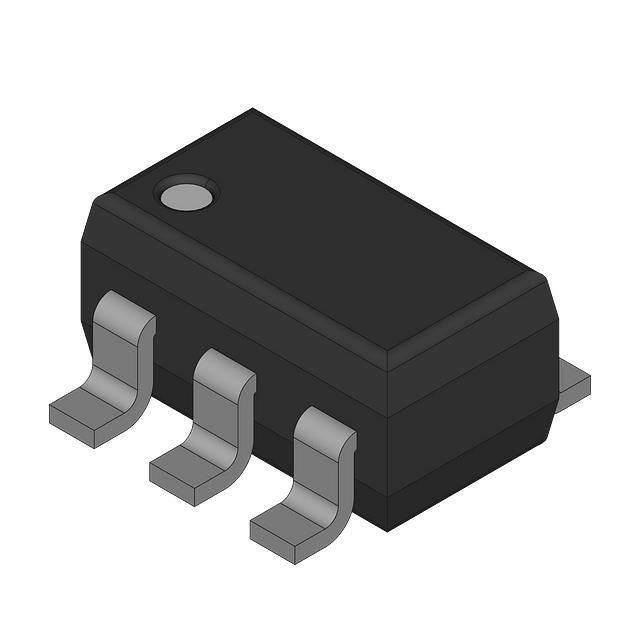
The LMV921 (Single) is offered in a space saving SC70–5
and SOT23–5 packages. The SC70–5 package is only
2.0X2.1X1.0mm. These small packages are ideal solutions
for area constrained PC boards and portable electronics such
as cellphones and PDAs.
(Typical 1.8V Supply Values; Unless Otherwise Noted)
■ Guaranteed 1.8V, 2.7V and 5V specifications
■ Rail-to-Rail input & output swing
100 mV from rail
— w/600Ω load
30 mV from rail
— w/2kΩ load
300mV beyond rails
■ VCM
145µA/amplifier
■ Supply current
1MHz
■ Gain bandwidth product
6mV
■ LMV921 Maximum VOS
90dB
gain
w/600Ω
load
■
■ LMV921 available in Ultra Tiny, SC70-5 package
■ LMV922 available in MSOP-8 package
■ LMV924 available in TSSOP-14 package
Supply Current vs.
Supply Voltage (LMV921)
■
■
■
■
■
■
■
Cordless/cellular phones
Laptops
PDAs
PCMCIA
Portable/battery-powered electronic Equipment
Supply current Monitoring
Battery monitoring
Output Voltage Swing vs.
Supply Voltage
100979a1
© 2011 Texas Instruments Incorporated
Applications
Gain and Phase Margin
vs. Frequency
100979a3
100979
100979 Version 11 Revision 3
100979a7
www.ti.com
Print Date/Time: 2011/10/25 10:47:26
LMV921/LMV922/LMV924 Single, Dual and Quad 1.8V, 1MHz, Low Power Operational Amplifiers
with Rail-To-Rail Input and Output
OBSOLETE
�LMV921/LMV922/LMV924
Absolute Maximum Ratings (Note 1)
Operating Ratings
If Military/Aerospace specified devices are required,
please contact the National Semiconductor Sales Office/
Distributors for availability and specifications.
ESD Tolerance (Note 2)
Machine Model
Human Body Model
Differential Input Voltage
Supply Voltage (V+–V −)
Output Short Circuit to V+ (Note 3)
Output Short Circuit to V− (Note 3)
Storage Temperature Range
Junction Temperature (Note 4)
Mounting Temp.
Infrared or Convection (20 sec)
(Note 1)
Supply Voltage
Temperature Range
1.5V to 5.0V
−40°C ≤ TJ ≤ 85°C
Thermal Resistance (θJA)
Ultra Tiny SC70-5 Package
Surface Mount
Tiny SOT23-5 Package
5-Pin Surface Mount
MSOP Package
8-Pin Surface Mount
TSSOP Package
14-Pin Surface Mount
SOIC Package
8-Pin Surface Mount
14-Pin Surface Mount
100V
2000V
± Supply Voltage
5.5V
−65°C to 150°C
150°C
235°C
5-Pin
440 °C/W
265 °C/W
235°C/W
155°C/W
175°C/W
127°C/W
1.8V DC Electrical Characteristics
Unless otherwise specified, all limits guaranteed for TJ = 25°C. V+ = 1.8V, V − = 0V, VCM = V+/2, VO = V+/2 and
RL > 1 MΩ. Boldface limits apply at the temperature extremes.
Symbol
VOS
Parameter
Typ
(Note 5)
Limits
(Note 6)
Units
LMV921 (Single)
−1.8
6
8
mV
max
LMV922 (Dual)
LMV924 (Quad)
−1.8
8
9.5
mV
max
Condition
Input Offset Voltage
TCVOS
Input Offset Voltage Average Drift
1
IB
Input Bias Current
12
35
50
nA
max
IOS
Input Offset Current
2
25
40
nA
max
IS
Supply Current
LMV921 (Single)
145
185
205
LMV922 (Dual)
330
400
550
LMV924 (Quad)
560
700
850
0 ≤ VCM ≤ 0.6V
82
62
60
−0.2V ≤ VCM ≤ 0V
74
50
dB
min
78
67
62
dB
min
-0.3
-0.2
0
V
min
2.15
2.0
1.8
V
max
CMRR
Common Mode Rejection Ratio
µV/°C
µA
max
1.8V ≤ VCM ≤ 2.0V
PSRR
Power Supply Rejection Ratio
1.8V ≤ V+ ≤ 5V,
VCM = 0.5V
VCM
Input Common-Mode Voltage
Range
For CMRR ≥ 50dB
www.ti.com
2
100979 Version 11 Revision 3
Print Date/Time: 2011/10/25 10:47:26
�Limits
(Note 6)
AV
RL = 600Ω to 0.9V,
VO = 0.2V to 1.6V, VCM = 0.5V
91
77
73
RL = 2kΩ to 0.9V,
VO = 0.2V to 1.6V, VCM = 0.5V
95
80
75
Large Signal Voltage Gain
LMV922 (Dual)
LMV924 (Quad)
RL = 600Ω to 0.9V,
VO = 0.2V to 1.6V, VCM = 0.5V
79
65
61
RL = 2kΩ to 0.9V,
VO = 0.2V to 1.6V, VCM = 0.5V
83
68
63
VO
Output Swing
RL = 600Ω to 0.9V
VIN = ± 100mV
1.7
1.65
1.63
V
min
0.075
0.090
0.105
V
max
1.77
1.75
1.74
V
min
0.025
0.035
0.040
V
max
Sourcing, VO = 0V
VIN = 100mV
6
4
3.3
mA
min
Sinking, VO = 1.8V
VIN = −100mV
10
7
5
mA
min
Parameter
Condition
Large Signal Voltage Gain
LMV921 (Single)
RL = 2kΩ to 0.9V
VIN = ± 100mV
IO
Output Short Circuit Current
Units
dB
min
dB
min
1.8V AC Electrical Characteristics
Unless otherwise specified, all limits guaranteed for TJ = 25°C. V+ = 1.8V, V − = 0V, VCM = V+/2, VO = V+/2 and RL > 1 MΩ.
Boldface limits apply at the temperature extremes.
Symbol
Parameter
Typ
(Note 5)
Conditions
(Note 7)
Units
SR
Slew Rate
0.39
V/µs
GBW
Gain-Bandwidth Product
1
MHz
Φm
Phase Margin
60
Deg
Gm
Gain Margin
10
dB
en
Input-Referred Voltage Noise
f = 1 kHz, VCM = 0.5V
45
in
Input-Referred Current Noise
f = 1 kHz
0.1
THD
Total Harmonic Distortion
f = 1kHz, AV = +1
RL = 600kΩ, VIN = 1 VPP
Amp-to-Amp Isolation
(Note 8)
0.089
%
140
dB
2.7V DC Electrical Characteristics
Unless otherwise specified, all limits guaranteed for TJ = 25°C. V+ = 2.7V, V − = 0V, VCM = V+/2, VO = V+/2 and
RL > 1 MΩ. Boldface limits apply at the temperature extremes.
Symbol
VOS
Parameter
Typ
(Note 5)
Limits
(Note 6)
Units
LMV921 (Single)
−1.6
6
8
mV
max
LMV922 (Dual)
LMV924 (Quad)
−1.6
8
9.5
mV
max
Condition
Input Offset Voltage
TCVOS
Input Offset Voltage Average Drift
1
IB
Input Bias Current
12
3
100979 Version 11 Revision 3
Print Date/Time: 2011/10/25 10:47:26
µV/°C
35
50
nA
max
www.ti.com
LMV921/LMV922/LMV924
Typ
(Note 5)
Symbol
�LMV921/LMV922/LMV924
Symbol
Typ
(Note 5)
Limits
(Note 6)
Units
2
25
40
nA
max
LMV921 (Single)
147
190
210
LMV922 (Dual)
380
450
600
LMV924 (Quad)
580
750
900
0V ≤ VCM ≤ 1.5V
84
62
60
−0.2V ≤ VCM ≤ 0V
73
50
dB
min
78
67
62
dB
min
-0.3
-0.2
0
V
min
3.050
2.9
2.7
V
max
RL = 600Ω to 1.35V,
VO = 0.2V to 2.5V
98
80
75
RL = 2kΩ to 1.35V,
VO = 0.2V to 2.5V
103
83
77
Large Signal Voltage Gain
LMV922 (Dual)
LMV924 (Quad)
RL = 600Ω to 1.35V,
VO = 0.2V to 2.5V
86
68
63
RL = 2kΩ to 1.35V,
VO = 0.2V to 2.5V
91
71
65
Output Swing
RL = 600Ω to 1.35V
VIN = ± 100mV
2.62
2.550
2.530
V
min
0.075
0.095
0.115
V
max
2.675
2.650
2.640
V
min
0.025
0.040
0.045
V
max
Sourcing, VO = 0V
VIN = 100mV
27
20
15
mA
min
Sinking, VO = 2.7V
VIN = −100mV
28
22
16
mA
min
Parameter
IOS
Input Offset Current
IS
Supply Current
CMRR
Condition
Common Mode Rejection Ratio
uA
max
2.7V ≤ VCM < 2.9V
PSRR
Power Supply Rejection Ratio
1.8V ≤ V+ ≤ 5V,
VCM = 0.5V
VCM
Input Common-Mode Voltage
Range
For CMRR ≥ 50dB
AV
VO
Large Signal Voltage Gain
LMV921 (Single)
RL = 2kΩ to 1.35V
VIN = ± 100mV
IO
Output Short Circuit Current
dB
min
dB
min
2.7V AC Electrical Characteristics
Unless otherwise specified, all limits guaranteed for TJ = 25°C. V+ = 2.7V, V − = 0V, VCM = 1.0V, VO = 1.35V and RL > 1 MΩ.
Boldface limits apply at the temperature extremes.
Symbol
Parameter
Conditions
(Note 7)
Typ
(Note 5)
Units
SR
Slew Rate
0.41
V/µs
GBW
Gain-Bandwidth Product
1
MHz
Φm
Phase Margin
65
Deg.
Gm
Gain Margin
10
dB
en
Input-Referred Voltage Noise
f = 1 kHz, VCM = 0.5V
www.ti.com
4
100979 Version 11 Revision 3
Print Date/Time: 2011/10/25 10:47:26
45
�Parameter
Typ
(Note 5)
Conditions
in
Input-Referred Current Noise
f = 1 kHz
THD
Total Harmonic Distortion
f = 1 kHz, AV = +1
0.1
RL = 600kΩ, VIN = 1 VPP
Amp-to-Amp Isolation
Units
(Note 8)
0.077
%
140
dB
5V DC Electrical Characteristics
Unless otherwise specified, all limits guaranteed for TJ = 25°C. V+ = 5V, V − = 0V, VCM = V+/2, VO = V+/2 and
RL > 1 MΩ.Boldface limits apply at the temperature extremes.
Symbol
VOS
Parameter
Typ
(Note 5)
Limits
(Note 6)
Units
LMV921 (Single)
−1.5
6
8
mV
max
LMV922 (Dual)
LMV924 (Quad)
−1.5
8
9.5
mV
max
Condition
Input Offset Voltage
TCVOS
Input Offset Voltage Average Drift
1
IB
Input Bias Current
12
35
50
nA
max
IOS
Input Offset Current
2
25
40
nA
max
IS
Supply Current
LMV921 (Single)
160
210
230
LMV922 (Dual)
400
500
700
LMV924 (Quad)
750
850
980
0V ≤ VCM ≤ 3.8V
86
62
61
−0.2V ≤ VCM ≤ 0V
72
50
dB
min
78
67
62
dB
min
-0.3
-0.2
0
V
min
5.350
5.2
5.0
V
max
RL = 600Ω to 2.5V
VO = 0.2V to 4.8V
104
86
82
RL = 2kΩ to 2.5V
VO = 0.2V to 4.8V
108
89
85
RL = 600Ω to 2.5V
VO = 0.2V to 4.8V
90
72
68
RL = 2kΩ to 2.5V
VO = 0.2V to 4.8V
96
77
73
CMRR
Common Mode Rejection Ratio
µV/°C
µA
max
5.0V ≤ VCM ≤ 5.2V
PSRR
Power Supply Rejection Ratio
1.8V ≤ V+ ≤ 5V
VCM = 0.5V
VCM
Input Common-Mode Voltage
Range
For CMRR ≥ 50dB
AV
Voltage Gain
LMV921 (Single)
Voltage Gain
LMV922 (Dual)
LMV924 (Quad)
5
100979 Version 11 Revision 3
Print Date/Time: 2011/10/25 10:47:26
dB
min
dB
min
www.ti.com
LMV921/LMV922/LMV924
Symbol
�LMV921/LMV922/LMV924
Symbol
VO
Typ
(Note 5)
Limits
(Note 6)
Units
4.895
4.865
4.840
V
min
0.1
0.135
0.160
V
max
4.965
4.945
4.935
V
min
0.035
0.065
0.075
V
max
LMV921 Sourcing, VO = 0V
VIN = 100mV
98
85
68
LMV922, LMV924 Sourcing, VO = 0V
VIN = 100mV
60
35
mA
min
Sinking, VO = 5V
VIN = −100mV
75
65
45
mA
min
Parameter
Condition
RL = 600Ω to 2.5V
VIN = ± 100mV
Output Swing
RL = 2kΩ to 2.5V
VIN = ± 100mV
IO
Output Short Circuit Current
5V AC Electrical Characteristics
Unless otherwise specified, all limits guaranteed for TJ = 25°C. V+ = 5V, V − = 0V, VCM = V+/2, VO = 2.5V and R L > 1 MΩ.
Boldface limits apply at the temperature extremes.
Symbol
Parameter
Conditions
(Note 7)
Typ
(Note 5)
Units
SR
Slew Rate
0.45
V/µs
GBW
Gain-Bandwidth Product
1
MHz
Φm
Phase Margin
70
Deg
Gm
Gain Margin
15
dB
en
Input-Referred Voltage Noise
f = 1 kHz, VCM = 1V
45
in
Input-Referred Current Noise
f = 1 kHz
0.1
THD
Total Harmonic Distortion
f = 1 kHz, AV = +1
0.069
%
140
dB
RL = 600Ω, VO = 1 V PP
Amp-to-Amp Isolation
(Note 8)
Note 1: Absolute Maximum Ratings indicate limits beyond which damage to the device may occur. Operating Ratings indicate conditions for which the device is
intended to be functional, but specific performance is not guaranteed. For guaranteed specifications and the test conditions, see the Electrical Characteristics.
Note 2: Human body model, 1.5 kΩ in series with 100pF. Machine model, 200Ω in series with 100 pF.
Note 3: Applies to both single-supply and split-supply operation. Continuous short circuit operation at elevated ambient temperature can result in exceeding the
maximum allowed junction temperature of 150°C. Output currents in excess of 45mA over long term may adversely affect reliability.
Note 4: The maximum power dissipation is a function of TJ(max) , θJA, and TA. The maximum allowable power dissipation at any ambient temperature is
PD = (TJ(max)–T A)/θJA. All numbers apply for packages soldered directly into a PC board.
Note 5: Typical Values represent the most likely parametric norm.
Note 6: All limits are guaranteed by testing or statistical analysis.
Note 7: V+ = 5V. Connected as voltage follower with 5V step input. Number specified is the slower of the positive and negative slew rates.
Note 8: Input referred, V+ = 5V and RL = 100kΩ connected to 2.5V. Each amp excited in turn with 1kHz to produce VO = 3VPP.
www.ti.com
6
100979 Version 11 Revision 3
Print Date/Time: 2011/10/25 10:47:26
�Unless otherwise specified, VS = +5V, single supply, TA = 25°C.
Supply Current vs. Supply Voltage (LMV921)
Input Bias Current vs. VCM
100979d5
100979a1
Sourcing Current vs. Output Voltage
Sourcing Current vs. Output Voltage
100979b3
100979b8
Sourcing Current vs. Output Voltage
Sinking Current vs. Output Voltage
100979b2
100979b4
7
100979 Version 11 Revision 3
Print Date/Time: 2011/10/25 10:47:26
www.ti.com
LMV921/LMV922/LMV924
Typical Performance Characteristics
�LMV921/LMV922/LMV924
Sinking Current vs. Output Voltage
Sinking Current vs. Output Voltage
100979b7
100979b1
Offset Voltage vs. Common Mode Voltage
Offset Voltage vs. Common Mode Voltage
100979d1
100979c9
Offset Voltage vs. Common Mode Voltage
Output Voltage Swing vs. Supply Voltage
100979c8
100979a2
www.ti.com
8
100979 Version 11 Revision 3
Print Date/Time: 2011/10/25 10:47:26
�Gain and Phase Margin vs. Frequency
100979a6
100979a3
Gain and Phase Margin vs. Frequency
Gain and Phase Margin vs. Frequency
100979a5
100979a4
Gain and Phase Margin vs. Frequency
Gain and Phase Margin vs. Frequency
100979a8
100979a7
9
100979 Version 11 Revision 3
LMV921/LMV922/LMV924
Output Voltage Swing vs. Supply Voltage
Print Date/Time: 2011/10/25 10:47:26
www.ti.com
�LMV921/LMV922/LMV924
CMRR vs. Frequency
PSRR vs. Frequency
100979c7
100979c6
Input Voltage Noise vs. Frequency
Input Current Noise vs. Frequency
100979f5
100979f4
THD vs. Frequency
THD vs. Frequency
100979d4
www.ti.com
100979d3
10
100979 Version 11 Revision 3
Print Date/Time: 2011/10/25 10:47:26
�LMV921/LMV922/LMV924
Slew Rate vs. Supply Voltage
Small Signal Non-Inverting Response
100979e3
10097999
Small Signal Non-Inverting Response
Small Signal Non-Inverting Response
100979e2
100979e4
Small Signal Inverting Response
Small Signal Inverting Response
100979e0
100979d9
Small Signal Inverting Response
Small Signal Non-Inverting Response
100979d8
100979e6
11
100979 Version 11 Revision 3
Print Date/Time: 2011/10/25 10:47:26
www.ti.com
�LMV921/LMV922/LMV924
Small Signal Non-Inverting Response
Small Signal Non-Inverting Response
100979e7
100979e5
Small Signal Inverting Response
Small Signal Inverting Response
100979g3
100979g2
Small Signal Inverting Response
*Large Signal Non-Inverting Response
100979g1
100979f0
*Large Signal Non-Inverting Response
*Large Signal Non-Inverting Response
100979e9
www.ti.com
100979g0
12
100979 Version 11 Revision 3
Print Date/Time: 2011/10/25 10:47:26
�LMV921/LMV922/LMV924
*Large Signal Inverting Response
*Large Signal Inverting Response
100979f9
100979f8
*Large Signal
Inverting Response
*Large Signal Non-Inverting Response
100979f1
100979f7
*Large Signal Non-Inverting Response
*Large Signal Inverting Response
100979f2
100979f6
*Large Signal Inverting Response
*Large Signal Inverting Response
100979d6
100979e1
13
100979 Version 11 Revision 3
Print Date/Time: 2011/10/25 10:47:26
www.ti.com
�LMV921/LMV922/LMV924
*Large Signal Inverting Response
Short Circuit Current vs. Temperature (sinking)
100979d7
100979b5
Short Circuit Current vs. Temperature (sourcing)
100979b6
*For large signal pulse response in the unity gain follower configuration, the input is 5mV below the positive rail and 5mV above
the negative rail at 25°C and 85°C. At −40°C, input is 10mV below the positive rail and 10mV above the negative rail.
www.ti.com
14
100979 Version 11 Revision 3
Print Date/Time: 2011/10/25 10:47:26
�LMV921/LMV922/LMV924
Application Note
1.0 Unity Gain Pulse Response Considerations
The unity-gain follower is the most sensitive configuration to
capacitive loading. The LMV921/LMV922/LMV924 family can
directly drive 1nF in a unity-gain with minimal ringing. Direct
capacitive loading reduces the phase margin of the amplifier.
The combination of the amplifier's output impedance and the
capacitive load induces phase lag. This results in either an
underdamped pulse response or oscillation. The pulse response can be improved by adding a pull up resistor as shown
in Figure 1
10097941
FIGURE 1. Using a Pull-Up Resistor at the Output for
Stabilizing Capacitive Loads
10097959
Higher capacitances can be driven by decreasing the value
of the pull-up resistor, but its value shouldn't be reduced beyond the sinking capability of the part. An alternate approach
is to use an isolation resistor as illustrated in Figure 2.
FIGURE 3. Canceling the Voltage Offset Effect of Input
Bias Current
3.0 Operating Supply Voltage
The LMV921/LMV922/LMV924 family is guaranteed to operate from 1.8V to 5.0V. They will begin to function at power
voltages as low as 1.2V at room temperature when unloaded.
Start up voltage increases to 1.5V when the amplifier is fully
loaded (600Ω to mid-supply). Below 1.2V the output voltage
is not guaranteed to follow the input. Figure 4 below shows
the output voltage vs. supply voltage with the LMV921/
LMV922/LMV924 configured as a voltage follower at room
temperature.
10097943
FIGURE 2. Using an Isolation Resistor to Drive Heavy
Capacitive Loads
2.0 Input Bias Current Consideration
The LMV921/LMV922/LMV924 family has a bipolar input
stage. The typical input bias current (IB) is 12nA. The input
bias current can develop a significant offset voltage. This offset is primarily due to IB flowing through the negative feedback
resistor, RF. For example, if IB is 50nA (max room) and RF is
100kΩ, then an offset voltage of 5mV will develop (VOS = IBX
RF). Using a compensation resistor (RC), as shown in Figure
3, cancels this affect. But the input offset current (IOS) will still
contribute to an offset voltage in the same manner.
100979d2
FIGURE 4.
15
100979 Version 11 Revision 3
Print Date/Time: 2011/10/25 10:47:26
www.ti.com
�LMV921/LMV922/LMV924
4.0 Input and Output Stage
The rail-to-rail input stage of this family provides more flexibility for the designer. The LMV921/LMV922/LMV924 use a
complimentary PNP and NPN input stage in which the PNP
stage senses common mode voltage near V− and the NPN
stage senses common mode voltage near V+. The transition
from the PNP stage to NPN stage occurs 1V below V+. Since
both input stages have their own offset voltage, the offset of
the amplifier becomes a function of the input common mode
voltage and has a crossover point at 1V below V+ as shown
in the VOS vs. VCM curves.
This VOS crossover point can create problems for both DC and
AC coupled signals if proper care is not taken. For large input
signals that include the VOS crossover point in their dynamic
range, this will cause distortion in the output signal. One way
to avoid such distortion is to keep the signal away from the
crossover. For example, in a unity gain buffer configuration
and with VS = 5V, a 5V peak-to-peak signal will contain inputcrossover distortion while a 3V peak-to-peak signal centered
at 1.5V will not contain input-crossover distortion as it avoids
the crossover point. Another way to avoid large signal distortion is to use a gain of −1 circuit which avoids any voltage
excursions at the input terminals of the amplifier. In that circuit, the common mode DC voltage can be set at a level away
from the VOS cross-over point.
For small signals, this transition in VOS shows up as a VCM
dependent spurious signal in series with the input signal and
can effectively degrade small signal parameters such as gain
and common mode rejection ratio. To resolve this problem,
the small signal should be placed such that it avoids the
VOS crossover point.
In addition to the rail-to-rail performance, the output stage can
provide enough output current to drive 600Ω loads. Because
of the high current capability, care should be taken not to exceed the 150°C maximum junction temperature specification.
5.0 Power-Supply Considerations
The LMV921/LMV922/LMV924 are ideally suited for use with
most battery-powered systems. The LMV921/LMV922/
LMV924 operate from a single +1.8V to +5.0V supply and
consumes about 145µA of supply current per Amplifier. A high
power supply rejection ratio of 78dB allows the amplifier to be
powered directly off a decaying battery voltage extending battery life.
Table 1 lists a variety of typical battery types. Batteries have
different voltage ratings; operating voltage is the battery voltage under nominal load. End-of-Life voltage is defined as the
voltage at which 100% of the usable power of the battery is
consumed. Table 1 also shows the typical operating time of
the LMV921.
6.0 Distortion
The two main contributors of distortion in LMV921/LMV922/
LMV924 family is:
1. Output crossover distortion occurs as the output transitions
from sourcing current to sinking current.
2. Input crossover distortion occurs as the input switches from
NPN to PNP transistor at the input stage.
To decrease crossover distortion:
1. Increase the load resistance. This lowers the output
crossover distortion but has no effect on the input crossover
distortion.
2. Operate from a single supply with the output always sourcing current.
3. Limit the input voltage swing for large signals between
ground and one volt below the positive supply.
4. Operate in inverting configuration to eliminate common
mode induced distortion.
5. Avoid small input signal around the input crossover region.
The discontinuity in the offset voltage will effect the gain, CMRR and PSRR.
TABLE 1. LMV921 Characteristics with Typical Battery Systems.
Battery Type
Operating
Voltage (V)
End-of-Life
Voltage (V)
Capacity AA
Size (mA - h)
LMV921
Operating
time (Hours)
Alkaline
1.5
0.9
1000
6802
Lithium
2.7
2.0
1000
6802
Ni - Cad
1.2
0.9
375
2551
NMH
1.2
1.0
500
3401
www.ti.com
16
100979 Version 11 Revision 3
Print Date/Time: 2011/10/25 10:47:26
�1.0 Half-wave Rectifier with Rail-To-Ground Output
Swing
Since the LMV921 input common mode range includes both
positive and negative supply rails and the output can also
swing to either supply, achieving half-wave rectifier functions
in either direction is an easy task. All that is needed are two
external resistors; there is no need for diodes or matched resistors. The half wave rectifier can have either positive or
negative going outputs, depending on the way the circuit is
arranged.
100979c4
100979c3
100979c2
FIGURE 5. Half-Wave Rectifier with Rail-To-Ground Output Swing Referenced to Ground
100979c1
100979c0
100979b9
FIGURE 6. Half-Wave Rectifier with Negative-Going Output Referenced to VCC
17
100979 Version 11 Revision 3
Print Date/Time: 2011/10/25 10:47:26
www.ti.com
LMV921/LMV922/LMV924
In Figure 5 the circuit is referenced to ground, while in Figure
6 the circuit is biased to the positive supply. These configurations implement the half wave rectifier since the LMV921
can not respond to one-half of the incoming waveform. It can
not respond to one-half of the incoming because the amplifier
can not swing the output beyond either rail therefore the output disengages during this half cycle. During the other half
cycle, however, the amplifier achieves a half wave that can
have a peak equal to the total supply voltage. RI should be
large enough not to load the LMV921.
Typical Applications
�LMV921/LMV922/LMV924
impedance is very high and require no precision matched resistors in the input stage. They also assure that the difference
amp is driven from a voltage source. This is necessary to
maintain the CMRR set by the matching R1-R2 with R3-R4.
The gain is set by the ratio of R2/R1 and R3 should equal R1
and R4 equal R2.
With both rail-to-rail input and output ranges, the input and
output are only limited by the supply voltages. Remember that
even with rail-to-rail outputs, the output can not swing past the
supplies so the combined common mode voltages plus the
signal should not be greater that the supplies or limiting will
occur. For additional applications, see National Semiconductor application notes AN–29, AN–31, AN–71, and AN–127.
2.0 Instrumentation Amplifier with Rail-To-Rail Input and
Output
Using three of the LMV924 Amplifiers, an instrumentation
amplifier with rail-to-rail inputs and outputs can be made.
Some manufacturers use a precision voltage divider array of
5 resistors to divide the common mode voltage to get a railto-rail input range. The problem with this method is that it also
divides the signal, so in order to get unity gain, the amplifier
must be run at high loop gains. This raises the noise and drift
by the internal gain factor and lowers the input impedance.
Any mismatch in these precision resistors reduces the CMRR
as well. Using the LMV924 eliminates all of these problems.
In this example, amplifiers A and B act as buffers to the differential stage. These buffers assure that the input
100979g4
FIGURE 7. Rail-to-rail instrumentation amplifier
Simplified Schematic
100979a9
www.ti.com
18
100979 Version 11 Revision 3
Print Date/Time: 2011/10/25 10:47:26
�LMV921/LMV922/LMV924
Connection Diagrams
5-Pin SC70-5/SOT23-5
8-Pin MSOP/SOIC
14-Pin TSSOP/SOIC
10097984
Top View
10097902
Top View
10097901
Top View
Ordering Information
Package
Temperature Range
Industrial
−40°C to +85°C
Package Marking
Transport Media
NSC Drawing
5-Pin SC70-5
LMV921M7
A21
1k Units Tape and Reel
MAA05A
LMV921M7X
A21
3k Units Tape and Reel
LMV921M5
A29A
1k Units Tape and Reel
LMV921M5X
A29A
3k Units Tape and Reel
5-Pin SOT-23
8-Pin MSOP
14-Pin TSSOP
8-Pin SOIC
14-Pin SOIC
LMV922MM
LMV922
1k Units Tape and Reel
LMV922MMX
LMV922
3.5k Units Tape and Reel
LMV924MT
LMV924
Rails
LMV924MTX
LMV924
2.5k Units Tape and Reel
LMV922M
LMV922M
Rails
LMV922MX
LMV922M
2.5k Units Tape and Reel
LMV924M
LMV924M
Rails
LMV924MX
LMV924M
2.5k Units Tape and Reel
19
100979 Version 11 Revision 3
Print Date/Time: 2011/10/25 10:47:26
MF05A
MUA08A
MTC14
M08A
M14A
www.ti.com
�LMV921/LMV922/LMV924
SC70–5 Tape Dimensions
10097996
SOT23–5 and SC70–5 Tape Format
Tape Format
Tape Section
# Cavities
Cavity Status
Cover Tape Status
Leader
0 (min)
Empty
Sealed
(Start End)
75 (min)
Empty
Sealed
Carrier
3000
Filled
Sealed
250
Filled
Sealed
Trailer
125 (min)
Empty
Sealed
(Hub End)
0 (min)
Empty
Sealed
www.ti.com
20
100979 Version 11 Revision 3
Print Date/Time: 2011/10/25 10:47:26
�LMV921/LMV922/LMV924
SOT23–5 Tape Dimensions
10097997
8 mm
0.130
(3.3)
0.124
(3.15)
0.130
(3.3)
0.126
(3.2)
0.138 ±0.002
(3.5 ±0.05)
0.055 ±0.004
(1.4 ±0.11)
0.157
(4)
0.315 ±0.012
(8 ±0.3)
Tape Size
DIM A
DIM Ao
DIM B
DIM Bo
DIM F
DIM Ko
DIM P1
DIM W
21
100979 Version 11 Revision 3
Print Date/Time: 2011/10/25 10:47:26
www.ti.com
�LMV921/LMV922/LMV924
SOT23–5 and SC70–5 Reel
Dimensions
10097998
8 mm
Tape Size
7.00 0.059 0.512 0.795 2.165
330.00 1.50 13.00 20.20 55.00
A
B
C
D
N
www.ti.com
0.331 + 0.059/−0.000
8.40 + 1.50/−0.00
0.567
14.40
W1+ 0.078/−0.039
W1 + 2.00/−1.00
W1
W2
W3
22
100979 Version 11 Revision 3
Print Date/Time: 2011/10/25 10:47:26
�LMV921/LMV922/LMV924
Physical Dimensions inches (millimeters) unless otherwise noted
SC70-5
NS Package Number MAA05A
5-Pin SOT-23
NS Package Number MF05A
23
100979 Version 11 Revision 3
Print Date/Time: 2011/10/25 10:47:26
www.ti.com
�LMV921/LMV922/LMV924
8-Pin MSOP
NS Package Number MUA08A
14-Pin TSSOP
NS Package Number MTC14
www.ti.com
24
100979 Version 11 Revision 3
Print Date/Time: 2011/10/25 10:47:26
�LMV921/LMV922/LMV924
8-Pin SOIC
NS Package Number M08A
14-Pin SOIC
NS Package Number MA14
25
100979 Version 11 Revision 3
Print Date/Time: 2011/10/25 10:47:26
www.ti.com
�LMV921/LMV922/LMV924 Single, Dual and Quad 1.8V, 1MHz, Low Power Operational Amplifiers
with Rail-To-Rail Input and Output
Notes
TI/NATIONAL INTERIM IMPORTANT NOTICE
Texas Instruments has purchased National Semiconductor. As of Monday, September 26th, and until further notice, products sold or
advertised under the National Semiconductor name or logo, and information, support and interactions concerning such products, remain
subject to the preexisting National Semiconductor standard terms and conditions of sale, terms of use of website, and Notices (and/or
terms previously agreed in writing with National Semiconductor, where applicable) and are not subject to any differing terms and notices
applicable to other TI components, sales or websites. To the extent information on official TI and National websites and business social
networking media, etc., pertains to both TI and National-branded products, both companies' instructions, warnings and limitations in the
above-referenced terms of use apply.
Following are URLs where you can obtain information on other Texas Instruments products and application solutions:
Products
Applications
Audio
www.ti.com/audio
Communications and Telecom
www.ti.com/communications
Amplifiers
amplifier.ti.com
Computers and Peripherals
www.ti.com/computers
Data Converters
dataconverter.ti.com
Consumer Electronics
www.ti.com/consumer-apps
DLP® Products
www.dlp.com
Energy and Lighting
www.ti.com/energy
DSP
dsp.ti.com
Industrial
www.ti.com/industrial
Clocks and Timers
www.ti.com/clocks
Medical
www.ti.com/medical
Interface
interface.ti.com
Security
www.ti.com/security
Logic
logic.ti.com
Space, Avionics and Defense
www.ti.com/space-avionicsdefense
Power Mgmt
power.ti.com
Transportation and Automotive
www.ti.com/automotive
Microcontrollers
microcontroller.ti.com Video and Imaging
www.ti.com/video
RFID
www.ti-rfid.com
www.ti.com/wireless-apps
RF/IF and ZigBee® Solutions www.ti.com/lprf
Wireless
TI E2E Community Home Page e2e.ti.com
Mailing Address: Texas Instruments, Post Office Box 655303, Dallas, Texas 75265
www.ti.com
Copyright© 2011 Texas Instruments Incorporated
100979 Version 11 Revision 3
Print Date/Time: 2011/10/25 10:47:26
�