LP8553
www.ti.com
SNVS701B – SEPTEMBER 2011 – REVISED JANUARY 2014
LP8553 High-Efficiency LED Backlight Driver for Notebooks
Check for Samples: LP8553
FEATURES
APPLICATIONS
•
•
1
2
•
•
•
•
•
•
•
•
•
•
High-Voltage DC/DC Boost Converter with
Integrated FET with Four Switching Frequency
Options: 156/312/625/1250 kHz
2.7V to 22V Input Voltage Range to Support
1x…5x Cell Li-Ion Batteries
Programmable PWM Resolution
– 8 to 13 True Bit (Steady State)
– Additional 1 to 3 Bits Using Dithering
During Brightness Changes
I2C and PWM Brightness Control
Automatic PWM & Current Dimming for
Improved Efficiency
PWM Output Frequency and LED Current Set
Through Resistors
Optional Synchronization to Display VSYNC
Signal
4 LED Outputs with LED Fault (Short/Open)
Detection
Low Input Voltage, Over-Temperature, OverCurrent Detection and Shutdown
Minimum Number of External Components
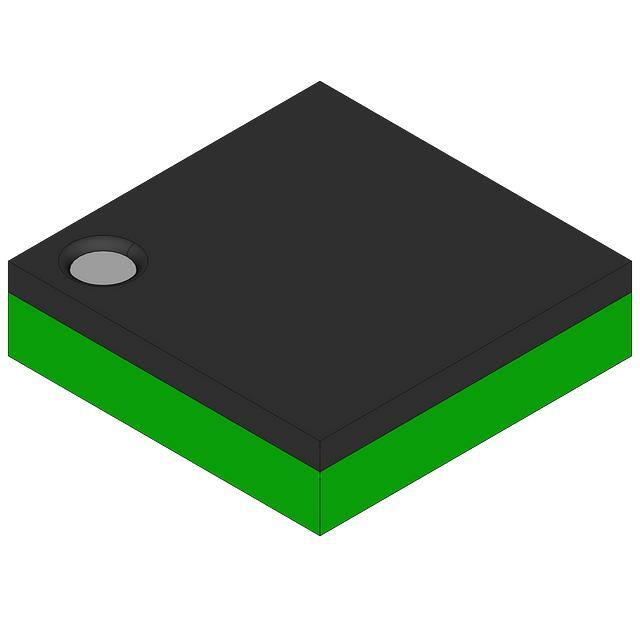
DSBGA 25-Bump Package, 2.466 x 2.466 x
0.6 mm
•
Notebook and Netbook LCD Display LED
Backlight
LED Lighting
DESCRIPTION
The LP8553 is a white LED driver with integrated
boost converter. It has four adjustable current sinks
which can be controlled by PWM input or with I2Ccompatible serial interface.
The boost converter has adaptive output-voltage
control based on the LED driver voltages. This
feature minimizes the power consumption by
adjusting the voltage to lowest sufficient level in all
conditions.
LED outputs have 8-bit current resolution and up to
13-bit PWM resolution with additional 1-3 bit dithering
to achieve smooth and precise brightness control.
Proprietary Phase Shift PWM control is used for LED
outputs to reduce peak current from the boost
converter, thus making the boost capacitors smaller.
The Phase Shifting scheme also eliminates audible
noise.
Typical Application (1)
VBATT
L1
5.5V ± 22V
CVLDO
D1
CIN 15 éH
5V
10V ± 40V
210 mA ± 400 mA
39 pF
10 éF
COUT
4.7 éF
1 éF
VDDIO reference voltage
VSYNC signal
100 nF
VDDIO
VLDO
SW
VIN
FB
VSYNC
FILTER
1 éF 120 k5
RISET
OUT1
ISET
RFSET
LP8553
OUT2
OUT3
FSET
OUT4
SCLK
SDA
MCU
PWM
EN
Can be left floating
if not used
FAULT
GNDs
1
2
Please be aware that an important notice concerning availability, standard warranty, and use in critical applications of
Texas Instruments semiconductor products and disclaimers thereto appears at the end of this data sheet.
All trademarks are the property of their respective owners.
PRODUCTION DATA information is current as of publication date.
Products conform to specifications per the terms of the Texas
Instruments standard warranty. Production processing does not
necessarily include testing of all parameters.
Copyright © 2011–2014, Texas Instruments Incorporated
�LP8553
SNVS701B – SEPTEMBER 2011 – REVISED JANUARY 2014
www.ti.com
DESCRIPTION (CONTINUED)
Automatic PWM dimming at lower brightness values and current dimming at higher brightness values can be
used to improve the optical efficiency.
Internal EEPROM is used for storing the configuration data. This makes it possible to have minimum external
component count and make the solution very small.
LP8553 has safety features which make it possible to detect LED outputs with open or short fault. Low input
voltage and boost over-current conditions are also monitored, and the chip is turned off when these events occur.
Thermal de-rating function prevents overheating of the device by reducing backlight brightness when set
temperature has been reached.
LP8553 is available in TI's DSBGA 25-bump package.
Typical Application for Low Input Voltage (2)
2.7V ± 22V
VBATT 5.5V ± 22V
L1
D1
CIN 15 éH
+5V input rail
39 pF
10 éF
1 éF
VDDIO reference voltage
VSYNC signal
100 nF
VLDO
SW
VIN
COUT
4.7 éF
CVLDO
VDDIO
10 ± 25V, 180 mA
10 ± 40V, 180 ± 400 mA
FB
VSYNC
FILTER
1 éF 120 k5
RISET
OUT1
ISET
LP8553
RFSET
OUT2
OUT3
FSET
OUT4
SCLK
SDA
MCU
PWM
EN
Can be left floating
if not used
FAULT
GNDs
Note: Separate 5V rail to VLDO can be also used to improve efficiency for applications with higher battery voltage. No
power sequencing requirements between VIN/VLDO and VBATT.
2
Submit Documentation Feedback
Copyright © 2011–2014, Texas Instruments Incorporated
Product Folder Links: LP8553
�LP8553
www.ti.com
SNVS701B – SEPTEMBER 2011 – REVISED JANUARY 2014
Connection Diagrams
1
2
3
4
5
A
GND
SW
GND
SW
EN
PWM
FB
B
SW
SW
ISET
FSET
GND_S
C
VIN
FILTER
FAULT
VDDIO
OUT3
D
VLDO
VSYNC
SCLK
SDA
OUT2
E
NC
NC
OUT4
GND_L
OUT1
Figure 1. Package Number YZR002511A
Top View
5
4
3
2
1
FB
PWM
EN
GND
SW
GND
SW
A
GND_S
FSET
ISET
SW
SW
B
OUT3
VDDIO
FAULT
FILTER
VIN
C
OUT2
SDA
SCLK
VSYNC
VLDO
D
OUT1
GND_L
OUT4
NC
NC
E
Figure 2. Package Number YZR002511A
Bottom View
Submit Documentation Feedback
Copyright © 2011–2014, Texas Instruments Incorporated
Product Folder Links: LP8553
3
�LP8553
SNVS701B – SEPTEMBER 2011 – REVISED JANUARY 2014
www.ti.com
PIN DESCRIPTIONS (1)
(1)
Pin #
Name
Type
Description
A1
GND_SW
G
Boost switch ground
A2
GND_SW
G
Boost switch ground
A3
EN
I
Enable input pin
A4
PWM
A
PWM dimming input. This pin must be connected to GND if not used.
A5
FB
A
Boost feedback input
B1
SW
A
Boost switch
B2
SW
A
Boost switch
B3
ISET
A
Set resistor for LED current. This pin can be left floating if not used.
B4
FSET
A
PWM frequency set resistor. This pin can be left floating if not used.
B5
GND_S
G
Signal ground
C1
VIN
P
Input power supply up to 22V. If 2.7V ≤ VBATT < 5.5V (Typical Application for Low
Input Voltage (2)) then external 5V rail must be used for VLDO and VIN.
C2
FILTER
A
Low pass filter for PLL. This pin can be left floating if not used.
C3
FAULT
OD
C4
VDDIO
P
Digital IO reference voltage (1.65V...5V) for I2C interface and PWM input.
C5
OUT3
A
Current sink output
D1
VLDO
P
LDO output voltage. External 5V rail can be connected to this pin in low voltage
application.
D2
VSYNC
I
VSYNC input. This pin must be connected to GND if not used.
D3
SCLK
I
Serial clock. This pin must be connected to GND if not used.
D4
SDA
I/O
Serial data. This pin must be connected to GND if not used.
D5
OUT2
A
Current sink output
E1
NC
-
Not connected
E2
NC
-
Not connected
Fault indication output. If not used, can be left floating.
E3
OUT4
A
Current sink output
E4
GND_L
G
LED ground
E5
OUT1
A
Current sink output
A: Analog Pin, G: Ground Pin, P: Power Pin, I: Input Pin, I/O: Input/Output Pin, O: Output Pin, OD: Open Drain Pin
This integrated circuit can be damaged by ESD. Texas Instruments recommends that all integrated circuits be handled with
appropriate precautions. Failure to observe proper handling and installation procedures can cause damage.
ESD damage can range from subtle performance degradation to complete device failure. Precision integrated circuits may be more
susceptible to damage because very small parametric changes could cause the device not to meet its published specifications.
4
Submit Documentation Feedback
Copyright © 2011–2014, Texas Instruments Incorporated
Product Folder Links: LP8553
�LP8553
www.ti.com
SNVS701B – SEPTEMBER 2011 – REVISED JANUARY 2014
Absolute Maximum Ratings
(1) (2) (3)
−0.3V to +24.0V
VIN
−0.3V to +6.0V
VLDO
−0.3V to +6.0V
Voltage on Logic Pins (VSYNC, PWM, EN, SCLK, SDA)
−0.3V to VDDIO + 0.3V
Voltage on Logic Pin (FAULT)
−0.3V to +6.0V
Voltage on Analog Pins (FILTER, VDDIO, ISET, FSET)
−0.3V to +44.0V
V (OUT1...OUT4, SW, FB)
Continuous Power Dissipation
(4)
Internally Limited
Junction Temperature (TJ-MAX)
125°C
−65°C to +150°C
Storage Temperature Range
(5)
Maximum Lead Temperature (Soldering)
(6)
ESD Rating
Human Body Model:
Machine Model:
Charged Device Model:
(1)
(2)
(3)
(4)
(5)
(6)
2 kV
200V
1 kV
Absolute Maximum Ratings indicate limits beyond which damage to the component may occur. Operating Ratings are conditions under
which operation of the device is ensured. Operating Ratings do not imply ensured performance limits. For ensured performance limits
and associated test conditions, see the Electrical Characteristics tables.
If Military/Aerospace specified devices are required, please contact the TI Sales Office/ Distributors for availability and specifications.
All voltages are with respect to the potential at the GND pins.
Internal thermal shutdown circuitry protects the device from permanent damage. Thermal shutdown engages at TJ = 150°C (typ.) and
disengages at TJ = 130°C (typ.).
For detailed soldering specifications and information, please refer to Texas Instrument AN1112: DSBGA Wafer Level Chip Scale
Package.
Human Body Model, applicable standard JESD22-A114C. Machine Model, applicable standard JESD22- A115-A. Charged Device
Model, applicable standard JESD22A-C101.
Operating Ratings
(1) (2)
Input Voltage Range (VIN)
typ. app. (1)
5.5V to 22V
Input Voltage Range (VIN + VLDO) typ. app. (2)
4.5V to 5.5V
VDDIO
1.65V to 5V
V(OUT1...OUT4, SW, FB)
0V to 40V
−30°C to +125°C
Junction Temperature (TJ) Range
Ambient Temperature (TA) Range
(1)
(2)
(3)
(3)
−30°C to +85°C
Absolute Maximum Ratings indicate limits beyond which damage to the component may occur. Operating Ratings are conditions under
which operation of the device is ensured. Operating Ratings do not imply ensured performance limits. For ensured performance limits
and associated test conditions, see the Electrical Characteristics tables.
All voltages are with respect to the potential at the GND pins.
In applications where high power dissipation and/or poor package thermal resistance is present, the maximum ambient temperature may
have to be derated. Maximum ambient temperature (TA-MAX) is dependent on the maximum operating junction temperature (TJ-MAX-OP =
125°C), the maximum power dissipation of the device in the application (PD-MAX), and the junction-to ambient thermal resistance of the
part/package in the application (θJA), as given by the following equation: TA-MAX = TJ-MAX-OP – (θJA × PD-MAX).
Thermal Properties
Junction-to-Ambient Thermal Resistance (θJA), YZR Package
(1)
(1)
40 to 73°C/W
Junction-to-ambient thermal resistance is highly application and board-layout dependent. In applications where high maximum power
dissipation exists, special care must be paid to thermal dissipation issues in board design.
Submit Documentation Feedback
Copyright © 2011–2014, Texas Instruments Incorporated
Product Folder Links: LP8553
5
�LP8553
SNVS701B – SEPTEMBER 2011 – REVISED JANUARY 2014
Electrical Characteristics
www.ti.com
(1) (2)
Limits in standard typeface are for TA = 25°C. Limits in boldface type apply over the full operating junction temperature range
(−30 °C ≤ TA ≤ +85°C). Unless otherwise specified: VIN = 12.0V, VDDIO = 2.8V, CVLDO = 1 μF, L1 = 15 μH, CIN = 10 μF, COUT =
10 μF. RISET = 16 kΩ (3)
Symbol
Parameter
Standby Supply Current
IIN
Normal Mode Supply Current
Condition
Min
Typ
Internal LDO disabled
EN=L and PWM=L
LDO enabled, boost enabled, no current
going through LED outputs
5 MHz PLL Clock
3.0
10 MHz PLL Clock
3.7
20 MHz PLL Clock
4.7
40 MHz PLL Clock
Internal Oscillator Frequency
Accuracy
−4
−7
VLDO
Internal LDO Voltage
4.5
ILDO
Internal LDO External Loading
(3)
Units
1
μA
mA
6.7
fOSC
(1)
(2)
Max
+4
+7
5.0
%
5.5
V
5.0
mA
All voltages are with respect to the potential at the GND pins.
Min and Max limits are ensured by design, test, or statistical analysis. Typical numbers are not ensured, but do represent the most likely
norm.
Low-ESR Surface-Mount Ceramic Capacitors (MLCCs) used in setting electrical characteristics.
Boost Converter Electrical Characteristics
Symbol
Parameter
RDSON
Switch ON Resistance
VMAX
Boost Maximum Output Voltage
Condition
Typ
Max
Units
0.12
Ω
40
V
9.0V ≤ VBATT, VOUT = 35V
450
6.0V ≤ VBATT, VOUT = 35V
300
3.0V ≤ VBATT, VOUT = 25V
180
ILOAD
Maximum Continuous Load
Current
VOUT/VIN
Conversion Ratio
fSW = 1.25 MHz
fSW
Switching Frequency
BOOST_FREQ
BOOST_FREQ
BOOST_FREQ
BOOST_FREQ
VOV
Over-voltage Protection Voltage
tPULSE
Switch Pulse Minimum Width
tSTARTUP
Startup Time
IMAX
SW Pin Current Limit
(1)
Min
ISW = 0.5A
mA
10
= 00
= 01
= 10
= 11
156
312
625
1250
kHz
VBOOST + 1.6V
V
no load
(1)
BOOST_IMAX = 0
BOOST_IMAX = 1
50
ns
6
ms
1.4
2.5
A
Startup time is measured from the moment boost is activated until the VOUT crosses 90% of its target value.
LED Driver Electrical Characteristics
Symbol
ILEAKAGE
IMAX
Max
Units
Outputs OUT1...OUT4, VOUT = 40V
0.1
1
μA
Maximum Source Current
OUT1...OUT4
EN_I_RES = 0, CURRENT[7:0] = FFh
30
EN_I_RES = 1, CURRENT[7:0] = FFh
50
(1)
IMATCH
6
Parameter
Output Current Accuracy
IOUT
(1)
Typ
Leakage Current
Matching
(1)
Condition
Min
Output current set to 23 mA, EN_I_RES = 1
Output current set to 23 mA, EN_I_RES = 1
−3
−4
mA
+3
+4
0.5
%
%
Output Current Accuracy is the difference between the actual value of the output current and programmed value of this current.
Matching is the maximum difference from the average. For the constant current sinks on the part (OUT1 to OUT4), the following are
determined: the maximum output current (MAX), the minimum output current (MIN), and the average output current of all outputs (AVG).
Two matching numbers are calculated: (MAX-AVG)/AVG and (AVG-MIN/AVG). The largest number of the two (worst case) is
considered the matching figure. The typical specification provided is the most likely norm of the matching figure for all parts. Note that
some manufacturers have different definitions in use.
Submit Documentation Feedback
Copyright © 2011–2014, Texas Instruments Incorporated
Product Folder Links: LP8553
�LP8553
www.ti.com
SNVS701B – SEPTEMBER 2011 – REVISED JANUARY 2014
LED Driver Electrical Characteristics (continued)
Symbol
PWMRES
PWM Output Resolution
(2)
LED Switching Frequency
fLED
(2)
VSAT
(2)
(3)
Parameter
Saturation Voltage
(3)
Condition
Min
Typ
Max
fLED = 5 kHz, fPLL = 5 MHz
10
fLED = 10 kHz, fPLL = 5 MHz
9
fLED = 20 kHz, fPLL = 5 MHz
8
fLED = 5 kHz, fPLL = 40 MHz
13
fLED = 10 kHz, fPLL = 40 MHz
12
fLED = 20 kHz, fPLL = 40 MHz
11
PWM_FREQ[4:0] = 00000b
PLL clock 5 MHz
600
PWM_FREQ[4:0] = 11111b
PLL clock 5 MHz
19.2k
Output current set to 20 mA
105
220
Output current set to 30 mA
160
290
Units
bits
Hz
mV
PWM output resolution and frequency depend on the PLL settings. Please see PWM Frequency Setting for full description
Saturation voltage is defined as the voltage when the LED current has dropped 10% from the value measured at 1V.
PWM Interface Characteristics
Symbol
Parameter
Condition
Min
Typ
0.1
Max
Units
25
kHz
fPWM
PWM Frequency Range
tMIN_ON
Minimum Pulse ON time
1
tMIN_OFF
Minimum Pulse OFF time
1
tSTARTUP
Turn on delay from standby to
backlight on
PWM input active, EN pin rise from low to
high
6
ms
TSTBY
Turn Off Delay
PWM input low time for turn off, slope
disabled
50
ms
PWMRES
PWM Input Resolution
fIN
fIN
fIN
fIN
10
11
12
13
bits
< 9.0 kHz
< 4.5 kHz
< 2.2 kHz
< 1.1 kHz
μs
Under-Voltage Protection
Symbol
Parameter
Condition
Min
UVLO[1:0] = 00
VUVLO
VIN UVLO Threshold Voltage
Typ
Max
Units
Disabled
UVLO[1:0] = 01, falling
2.55
2.70
2.94
UVLO[1:0] = 01, rising
2.62
2.76
3.00
UVLO[1:0] = 10, falling
5.11
5.40
5.68
UVLO[1:0] = 10, rising
5.38
5.70
5.98
UVLO[1:0] = 11, falling
7.75
8.10
8.45
UVLO[1:0] = 11, rising
8.36
8.73
9.20
V
Logic Interface Characteristics
Symbol
Parameter
Condition
Min
Typ
Max
Units
0.4
V
Logic Input EN
VIL
Input Low Level
VIH
Input High Level
1.2
II
Input Current
−1.0
V
1.0
μA
0.4
V
1.0
μA
55000
Hz
Logic Input VSYNC
VIL
Input Low Level
VIH
Input High Level
2.2
II
Input Current
−1.0
fVSYNC
Frequency Range
58
V
60
Submit Documentation Feedback
Copyright © 2011–2014, Texas Instruments Incorporated
Product Folder Links: LP8553
7
�LP8553
SNVS701B – SEPTEMBER 2011 – REVISED JANUARY 2014
www.ti.com
Logic Interface Characteristics (continued)
Symbol
Parameter
Condition
Min
Typ
Max
Units
0.2xVDDIO
V
Logic Input PWM
VIL
Input Low Level
VIH
Input High Level
II
Input Current
0.8xVDDIO
V
−1.0
1.0
μA
0.2xVDDIO
V
1.0
μA
Logic Inputs SCL, SDA
VIL
Input Low Level
VIH
Input High Level
II
Input Current
0.8xVDDIO
V
−1.0
Logic Outputs SDA, FAULT
VOL
Output Low Level
IOUT = 3 mA (pull-up current)
IL
Output Leakage Current
VOUT = 2.8V
I2C Serial Bus Timing Parameters (SDA, SCLK)
Symbol
0.3
−1.0
V
1.0
μA
(1)
Limit
Parameter
0.5
Min
Max
fSCLK
Clock Frequency
1
Hold Time (repeated) START Condition
0.6
μs
2
Clock Low Time
1.3
μs
3
Clock High Time
600
ns
4
Setup Time for a Repeated START Condition
600
ns
5
Data Hold Time
50
ns
6
Data Setup Time
100
ns
7
Rise Time of SDA and SCL
20+0.1Cb
300
ns
8
Fall Time of SDA and SCL
15+0.1Cb
300
ns
9
Set-up Time for STOP condition
600
ns
10
Bus Free Time between a STOP and a START
Condition
1.3
μs
Cb
(1)
8
400
Units
Capacitive Load Parameter for Each Bus Line
Load of 1 pF corresponds to 1 ns.
10
200
kHz
ns
Ensured by design. VDDIO = 1.65V to 5.5V.
Submit Documentation Feedback
Copyright © 2011–2014, Texas Instruments Incorporated
Product Folder Links: LP8553
�LP8553
www.ti.com
SNVS701B – SEPTEMBER 2011 – REVISED JANUARY 2014
Typical Performance Characteristics
Unless otherwise specified: VBATT = 12.0V, CVLDO = 1 μF, L1 = 33 μH, CIN = 10 μF, COUT = 10 μF
LED Drive Efficiency, fLED = 9.6 kHz
LED Drive Efficiency, fLED = 9.6 kHz, L1 = 15 μH
100
100
95
VIN = 12V
90
85
EFFICIENCY (%)
EFFICIENCY (%)
95
VIN = 9V
80
75
85
VIN = 12V
80
75
70
70
65
65
60
VIN = 9V
90
60
0
10 20 30 40 50 60 70 80 90 100
0 10 20 30 40 50 60 70 80 90 100
DUTY CYCLE (%)
DUTY CYCLE (%)
Figure 3.
Figure 4.
Boost Converter Efficiency
Battery Current
100
1,200
98
1,000
VBOOST = 35V
94
92
IBATT (mA)
EFFICIENCY (%)
96
VBOOST = 40V
90
88
800
VBOOST = 40V
VBOOST = 35V
600
400
86
VBOOST = 30V
84
200
82
VBOOST = 30V
80
LOAD = 150 mA
0
0
50
100
150
200
250
300
IOUT (mA)
6
8
10
12
14
16
18
20
VBATT (V)
Figure 5.
Figure 6.
ILED
vs.
RISET
Typical Waveforms, fLED = 9.6 kHz
50
ILED (mA)
40
30
CURRENT[7:0] = FFh
20
10
0
CURRENT[7:0] = 7Fh
0 10 20 30 40 50 60 70 80 90 100
RISET (k
)
Figure 7.
Figure 8.
Submit Documentation Feedback
Copyright © 2011–2014, Texas Instruments Incorporated
Product Folder Links: LP8553
9
�LP8553
SNVS701B – SEPTEMBER 2011 – REVISED JANUARY 2014
www.ti.com
Typical Performance Characteristics (continued)
Unless otherwise specified: VBATT = 12.0V, CVLDO = 1 μF, L1 = 33 μH, CIN = 10 μF, COUT = 10 μF
Typical Waveforms, fLED = 9.6 kHz
Boost Line Transient Response
Figure 9.
Figure 10.
Optical Efficiency with 15" panel
Input Power
vs.
Luminance
6
130
120
5
PWM AND CURR 50% MODE
110
100
90
80
15 inch panel, 23 mA current
PWM AND CURR 25% MODE
INPUT POWER (W)
OPTICAL EFFICIENCY (Nits/W)
140
PWM
3
PWM
2
1
70
60
4
PWM AND CURRENT 50% MODE
15 inch panel, 23 mA current
PWM AND CURRENT 25% MODE
0
0 10 20 30 40 50 60 70 80 90 100
0
PWM INPUT (%)
100
200
Luminance
vs.
PWM Input
Power saved with PWM & current mode compared to PWM
mode
35
PWM AND CURR 50% MODE
300
PWM
200
POWER SAVED (%)
LUMINANCE (Nits)
500
Figure 12.
30
100
25% MODE
25
20
15
50% MODE
10
5
0
PWM AND CURR 25% MODE
0
-5
0 10 20 30 40 50 60 70 80 90 100
0 10 20 30 40 50 60 70 80 90 100
PWM INPUT (%)
PWM INPUT (%)
Figure 13.
10
400
Figure 11.
500
400
300
LUMINANCE (Nits)
Figure 14.
Submit Documentation Feedback
Copyright © 2011–2014, Texas Instruments Incorporated
Product Folder Links: LP8553
�LP8553
www.ti.com
SNVS701B – SEPTEMBER 2011 – REVISED JANUARY 2014
MODES OF OPERATION
RESET
EN = H (pin)
VLDO ok
EN = L (VLDO low)
or POR = H
STANDBY
EN = H (pin) and BL_CTL = 1
or PWM = H (pin)
BL_CTL = 0 and
PWM = L
INTERNAL
STARTUP
SEQUENCE
TSD = H
VREF = 95% OK*
~2 ms Delay
EN_BOOST = 1*
EN_BOOST = 0*
BOOST STARTUP
EN_BOOST
rising edge*
~4 ms Delay
NORMAL MODE
*) TSD = L
RESET: In the RESET mode all the internal registers are reset to the default values. Reset is entered always
when VLDO voltage is low. EN pin is enable for the internal LDO. Power On Reset (POR) will activate
during the chip startup or when the supply voltage VLDO fall below POR level. Once VLDO rises above
POR level, POR will inactivate and the chip will continue to the STANDBY mode.
STANDBY: The STANDBY mode is entered if the register bit BL_CTL is LOW and external PWM input is not
active and POR is not active. This is the low power consumption mode, when only internal 5V LDO is
enabled. Registers can be written in this mode and the control bits are effective immediately after start up.
STARTUP: When BL_CTL bit is written high or PWM signal is high, the INTERNAL STARTUP SEQUENCE
powers up all the needed internal blocks (VREF, Bias, Oscillator etc.). Internal EPROM and EEPROM are
read in this mode. To ensure the correct oscillator initialization etc, a 2 ms delay is generated by the
internal state-machine. If the chip temperature rises too high, the Thermal Shutdown (TSD) disables the
chip operation and STARTUP mode is entered until no thermal shutdown event is present.
BOOST STARTUP: Soft start for boost output is generated in the BOOST STARTUP mode. The boost output is
raised in low current PWM mode during the 4 ms delay generated by the state-machine. All LED outputs
are off during the 4 ms delay to ensure smooth startup. The Boost startup is entered from Internal Startup
Sequence if EN_BOOST is HIGH.
NORMAL: During NORMAL mode the user controls the chip using the external PWM input or with Control
Registers through I2C. The registers can be written in any sequence and any number of bits can be
altered in a register in one write.
Functional Overview
LP8553 is a high-voltage LED driver for medium sized LCD backlight applications. It includes high-voltage boost
converter. Boost voltage automatically sets to the correct level needed to drive the LED strings. This is done by
monitoring LED output voltage drop in real time.
Submit Documentation Feedback
Copyright © 2011–2014, Texas Instruments Incorporated
Product Folder Links: LP8553
11
�LP8553
SNVS701B – SEPTEMBER 2011 – REVISED JANUARY 2014
www.ti.com
Four LED outputs are driven either with constant current sinks with PWM control or by controlling both PWM and
current. Constant current value is set with EEPROM bits and with RISET resistor. Brightness (PWM) is controlled
either with I2C register or with PWM input. PWM frequencies are set with EEPROM bits and with RFSET resistor.
Special Phase-Shift PWM mode can be used to reduce boost output current peak, thus reducing output ripple,
capacitor size and audible noise.
With LP8553 it is possible to synchronize the PWM output frequency to VSYNC signal received from video
processor. Internal PLL ensures that the PWM output clock is always synchronized to the VSYNC signal.
Special dithering mode makes it possible to increase output resolution during fading between two brightness
values and by this making the transition look very smooth with virtually no stepping. Transition slope time can be
adjusted with EEPROM bits.
Safety features include LED fault detection with open and short detection. LED fault detection will prevent system
overheating in case of open in some of the LED strings. Chip internal temperature is constantly monitored and
based on this LP8553 can reduce the brightness of the backlight to reduce thermal loading once certain trip point
is reached. Threshold is programmable in EEPROM. If chip internal temperature reaches too high, the boost
converter and LED outputs are completely turned off until the internal temperature has reached acceptable level.
Boost converter is protected against too high load current and over-voltage. LP8553 notifies the system about
the fault through I2C register and with FAULT pin.
EEPROM programmable functions include:
• PWM frequencies
• Phase shift PWM mode
• LED constant current
• Boost output frequency
• Temperature thresholds
• Slope for brightness changes
• Dithering options
• PWM output resolution
• Boost control bits
External components RISET and RFSET can also be used for selecting the output current and PWM frequencies.
Block Diagram
VIN
VLDO
VIN
SW
LDO
OSC
TSD
VSYNC
TEMP
SENSOR
FB
BOOST
GND_SW
OUT1
VSYNC
FILTER
PLL
OUT2
OUT3
VDDIO
PWM
OUT4
LED
DRIVERS
PWM
DETECTOR
ISET
MCU
SCLK
SDA
RISET
LOGIC
2
I C/
INTERFACE
FSET
GND_LED
FAULT
RFSET
EN
EEPROM
GND
12
Submit Documentation Feedback
Copyright © 2011–2014, Texas Instruments Incorporated
Product Folder Links: LP8553
�LP8553
www.ti.com
SNVS701B – SEPTEMBER 2011 – REVISED JANUARY 2014
Clock Generation
LP8553 has an internal 5 MHz oscillator which is used for clocking the boost converter, state machine, PWM
input duty cycle measurement, internal timings such as slope time for output brightness changes.
An internal clock can be used for generating the PWM output frequency. In this case the 5 MHz clock can be
multiplied with the internal PLL to achieve higher resolution. The higher the clock frequency for PWM generation
block, the higher the resolution but the tradeoff is higher IQ of the part. Clock multiplication is set with
EEPROM Bits.
The PLL can also be used for generating the required PWM generation clock from the VSYNC signal. This makes
sure that the LED output PWM is always synchronized to the VSYNC signal and there is no clock variation
between LCD display video update and the LED backlight output frequency. Also HSYNC signal up to 55 kHz can
be used.
PLL has internal counter which has 13-bit control to achieve correct output clock frequency based
on the VSYNC frequency.
For the PLL it can take couple of seconds to synchronize to 60 Hz VSYNC signal in startup and before this correct
PWM clock frequency is generated from internal oscillator. FILTER pin component selection affects the time it
takes from the PLL to lock to VSYNC signal.
Special logic is implemented for allowing steady clock frequency even if there are missing VSYNC pulses. In case
pulses are randomly left out, the LP8553 can generate the pulses internally while keeping the same PWM output
frequency. When VSYNC pulses are available again, the internal logic will automatically switch to the external
VSYNC clock without glitch.
PWM_FREQ[4:0]
or External
VSYNC
60 Hz EN_VSYNC
VBOOST
set resistor RFSET PSPWM 0/1
PLL
Phase
Detector
5MHz internal
oscillator
5 MHz...40 MHz
Filter
VCO
PWM generation
LED Drivers 1-4
PLL[12:0]
BOOST_FREQ
N = 4, 8, 16, 32
Divider
1/N
Counter
1/N
State machine,
PWM input, internal
timings, Slope etc.
Boost
PWM_RESOLUTION[1:0]
Figure 15. Principle of the Clock Generation
Brightness Control Methods
LP8553 controls the brightness of the backlight with PWM. PWM control is received either from PWM input pin or
from I2C register bits. The PWM source selection is done with bits as follows:
BRT_MODE[1]
BRT_MODE[0]
PWM source
0
0
PWM input pin duty cycle control. Default.
0
1
PWM input pin duty cycle control.
1
0
Brightness register
1
1
PWM direct control (PWM in = PWM out)
PWM Input Duty Cycle
With PWM input pin duty-cycle control the output PWM is controlled by PWM input duty cycle. PWM detector
block measures the duty cycle in the PWM pin and uses this 13-bit value to generate the output PWM. Output
PWM can have different frequency than input in this mode and also phase shift PWM mode can be used. Slope
and dither are effective in this mode. PWM input resolution is defined by the input PWM clock frequency.
Submit Documentation Feedback
Copyright © 2011–2014, Texas Instruments Incorporated
Product Folder Links: LP8553
13
�LP8553
SNVS701B – SEPTEMBER 2011 – REVISED JANUARY 2014
www.ti.com
Brightness Register Control
With brightness register control the output PWM is controlled with 8-bit resolution register bits. Phase
shift scheme can be used with this and the output PWM frequency can be freely selected. Slope and dither are
effective in this mode.
PWM Direct Control
With PWM direct control the output PWM will directly follow the input PWM. Due to the internal logic structure the
input is anyway clocked with the 5 MHz clock or the PLL clock. PSPWM mode is not possible in this mode. Slope
and dither are not effective in this mode.
PWM Calculation Data Flow
Below is flow chart of the PWM calculation data flow. In PWM direct control mode most of the blocks are
bypassed and this flow chart does not apply.
HYSTERESIS 5 MHz
[1:0]
clock
PWM input
signal
PWM
detector
BRT_MODE
[1:0]
13-bit
Temperature
sensor
Brightness
register
Brightness
control
PWM_FREQ[4:0]
13-bit
Resolution
selector
SLOPE[3:0]
8...13-bit
12-bit
I_SLOPE[1:0]
16-bit
Sloper
PWM &
Current
Control
DITHER[1:0]
8...16-bit
16-bit
Dither
13-bit
EN_PWM_&_I_CTRL
PWM_RESOLUTION
[1:0]
0/1
...
LED Drivers
1-4
PWM
Counter
MODE_25/50%_SEL
8-bit
PWM
comparator
PLL clock 5...40 MHz
Figure 16. PWM Calculation Data Flow
PWM Detector
The PWM detector block measures the duty cycle of the input PWM signal. Resolution depends on the input
signal frequency. Hysteresis selection sets the minimum allowable change to the input. If smaller change is
detected, it is ignored. With hysteresis the constant changing between two brightness values is avoided if there is
small jitter in the input signal.
Brightness Control
Brightness control block gets 13-bit value from the PWM detector, 12-bit value from the temperature sensor and
also 8-bit value from the brightness register. selects whether to use PWM input duty cycle
value or the brightness register value as described earlier. Based on the temperature sensor value the duty cycle
is reduced if the temperature has reached the temperature limit set to the EEPROM bits.
Resolution Selector
Resolution selector takes the necessary MSB bits from the input data to match the output resolution. For
example if 11-bit resolution is used for output, then 11 MSB bits are selected from the input. Dither bits are not
taken into account for the output resolution. This is to make sure that in steady state condition, there is no
dithering used for the output.
Sloper
Sloper makes the smooth transition from one brightness value to another. Slope time can be adjusted from 0 to
500 ms with EEPROM bits. The sloper output is 16-bit value.
PWM & Current Control
Automatic PWM & current control improves the optical efficiency of the LEDs by using PWM control with small
brightness values and current control with bigger values. EEPROM bit selects whether
the PWM & current control is used instead of PWM control or not. PWM to current dimming switch point can be
set to 25% or 50% of the brightness range with EEPROM bit. Current slope can be
adjusted by using the EEPROM bits.
14
Submit Documentation Feedback
Copyright © 2011–2014, Texas Instruments Incorporated
Product Folder Links: LP8553
�LP8553
www.ti.com
SNVS701B – SEPTEMBER 2011 – REVISED JANUARY 2014
Dither
With dithering the output resolution can be “artificially” increased during sloping from one brightness value to
another. This way the brightness change steps are not visible to eye. Dithering can be from 0 to 3 bits, and is
selected with EEPROM bits.
PWM Comparator
The PWM counter clocks the PWM comparator based on the duty cycle value received from Dither block. Output
of the PWM comparator controls directly the LED drivers. If PSPWM mode is used, then the signal to each LED
output is delayed certain amount.
Current Setting
Maximum current of the LED outputs is controlled with CURRENT[7:0] EEPROM register bits linearly from 0 to
30 mA. If = 1 the maximum LED output current can be scaled also with external resistor, RISET.
RISET controls the LED current as follows:
•
Default value for CURRENT[7:0] = 7Fh (127d).
(1)
Therefore the output current can be calculated as follows:
Note: formula is only approximation for the actual current.
•
E.g. If 16 kΩ RISET resistor is used, then the LED maximum current is 23 mA.
(2)
PWM Frequency Setting
PWM frequency is selected with PWM_FREQ[4:0] EEPROM register. If PLL clock frequency multiplication is
used, it will affect the output PWM frequency as well. EEPROM bits will select the
PLL output frequency and hence the PWM frequency and resolution. Below are listed PWM frequencies with
= 0. PWM resolution setting affects the PLL clock frequency (5 MHz…40 MHz). Highlighted
frequencies with boldface can be selected also with external resistor RFSET. To activate RFSET frequency selection
the EEPROM bit must be 1.
PWM_RES[1:0]
00
01
10
11
PWM_FREQ[4:0]
5 MHz
10 MHz
20 MHz
40 MHz
Resolution (bits)
11111
19232
-
-
-
8
11110
16828
-
-
-
8
11101
14424
-
-
-
8
11100
12020
-
-
-
8
11011
9616
19232
-
-
9
11010
7963
15927
-
-
9
11001
6386
12771
-
-
9
11000
4808
9616
19232
-
10
10111
4658
9316
18631
-
10
10110
4508
9015
18030
-
10
10101
4357
8715
17429
-
10
10100
4207
8414
16828
-
10
10011
4057
8114
16227
-
10
10010
3907
7813
15626
-
10
10001
3756
7513
15025
-
10
10000
3606
7212
14424
-
10
01111
3456
6912
13823
-
10
01110
3306
6611
13222
-
10
Submit Documentation Feedback
Copyright © 2011–2014, Texas Instruments Incorporated
Product Folder Links: LP8553
15
�LP8553
SNVS701B – SEPTEMBER 2011 – REVISED JANUARY 2014
www.ti.com
PWM_RES[1:0]
00
01
10
11
PWM_FREQ[4:0]
5 MHz
10 MHz
20 MHz
40 MHz
Resolution (bits)
01101
3155
6311
12621
-
10
01100
3005
6010
12020
-
10
01011
2855
5710
11419
-
10
01010
2705
5409
10818
-
10
01001
2554
5109
10217
-
10
01000
2404
4808
9616
19232
11
00111
2179
4357
8715
17429
11
00110
1953
3907
7813
15626
11
00101
1728
3456
6912
13823
11
00100
1503
3005
6010
12020
11
00011
1202
2404
4808
9616
12
00010
1052
2104
4207
8414
12
00001
826
1653
3306
6611
12
00000
601
1202
2404
4808
13
RFSET resistance values with corresponding PWM frequencies:
PWM_RES[1
:0]
00
01
10
11
RFSET (kΩ)
5 MHz Clock
Resolution
10 MHz
Clock
Resolution
20 MHz
Clock
Resolution
40 MHz
Clock
Resolution
10...15
19232
8
19232
9
19232
10
19232
11
26...29
16828
8
15927
9
16227
10
17429
11
36...41
14424
8
12771
9
14424
10
15626
11
50...60
12020
8
9616
10
12020
10
12020
11
85...100
9616
9
8715
10
9616
11
9616
12
135...150
7963
9
7813
10
7813
11
8414
12
200...300
6386
9
6311
10
6010
11
6811
12
450...
4808
10
4808
11
4808
12
4808
13
Phase Shift PWM Scheme
Phase shift PWM scheme allows delaying the time when each LED output is active. When the LED output are
not activated simultaneously, the peak load current from the boost output is greatly decreased. This reduces the
ripple seen on the boost output and allows smaller output capacitors. Reduced ripple also reduces the output
ceramic capacitor audible ringing. PSPWM scheme also increases the load frequency seen on boost output by
x4 and therefore transfers the possible audible noise to so high frequency that human ear cannot hear it.
Description of the PSPWM mode is seen on the following diagram. PSPWM mode is enabled by setting
EEPROM bit to 1. Shift time is the delay between outputs and it is defined as 1 / (fPWM x 4). If the
bit is 0, then the delay is 0 and all outputs are active simultaneously.
16
Submit Documentation Feedback
Copyright © 2011–2014, Texas Instruments Incorporated
Product Folder Links: LP8553
�LP8553
www.ti.com
SNVS701B – SEPTEMBER 2011 – REVISED JANUARY 2014
Shift time
tSHIFT = 1/(FPWM x 4)
Cycle time
1/(FPWM)
OUT1
OUT2
OUT3
OUT4
Figure 17. Phase Shift PWM Mode
Slope and Dithering
During transition between two brightness (PWM) values special dithering scheme is used if the slope is enabled.
It allows increased resolution and smaller average steps size. Dithering is not used in steady state condition.
Slope time can be programmed with EEPROM bits from 0 to 500 ms. Same slope time is used for
sloping up and down. Advanced slope makes brightness changes smooth for the eye. Dithering can be
programmed with EEPROM bits from 0 to 3 bits. Example below is for 1-bit dithering, e.g., for 3bit dithering, every 8th pulse is made 1 LSB longer to increase the average value by 1/8 of LSB.
Brightness (PWM)
Sloper Input
Brightness (PWM)
PWM Output
Time
Steady state without dithering
Normal slope
If dither is enabled it will
be used during transition
to enable smooth effect
Advanced slope
Time
Slope Time
Figure 18. Sloper Operation
PWM value 510 (10-bit)
+1 LSB
PWM value 510 1/2 (10-bit)
PWM value 511 (10-bit)
Figure 19. Example of the Dithering,
1-bit dither, 10-bit resolution
Submit Documentation Feedback
Copyright © 2011–2014, Texas Instruments Incorporated
Product Folder Links: LP8553
17
�LP8553
SNVS701B – SEPTEMBER 2011 – REVISED JANUARY 2014
www.ti.com
Driver Headroom Control
Driver headroom can be controlled with EEPROM bits. Driver headroom control sets the
minimum threshold for the voltage over the LED output which has the smallest driver headroom and controls the
boost output voltage accordingly. Boost output voltage step size is 125 mV. The LED output which has the
smallest forward voltage is the one which has highest VF across the LEDs. The strings with highest forward
voltage is detected automatically. To achieve best possible efficiency smallest possible headroom voltage should
be selected. If there is high variation between LED strings, the headroom can be raised slightly to prevent any
visual artifacts.
EEPROM
EEPROM memory stores various parameters for chip control. The 64-bit EEPROM memory is organized as 8 x 8
bits. The EEPROM structure consists of a register front-end and the non-volatile memory (NVM). Register data
can be read and written through the serial interface, and data will be effective immediately. To read and program
NVM, separate commands need to be sent. Erase and program voltages are generated on-chip charge pump, no
other voltages than normal input voltage are required. A complete EEPROM memory map is shown in the
chapter LP8553 Table 3.
NOTE
EEPROM NVM can be programmed or read by customer for bench validation.
Programming for production devices should be done in TI production test, where
appropriate checks will be performed to confirm EEPROM validity. Writing to EEPROM
Control register of production devices (for burning or reading EEPROM) is not
recommended. If special EEPROM configuration is required, please contact the TI Sales
Office for availability.
EE_PROG = 1
EEPROM
NVM
EEPROM
REGISTERS
Address A0h...A7h
2
I C
8 x 8 bits
Startup or
EE_READ=1
User
Device Control
REGISTERS
ADDRESS 00h...72h
Device Control
Boost Converter
Operation
The LP8553 boost DC/DC converter generates a 10…40V supply voltage for the LEDs from 2.7…22V input
voltage. The output voltage can be controlled either with EEPROM register bits or automatic
adaptive voltage control can be used. The converter is a magnetic switching PWM mode DC/DC converter with a
current limit. The topology of the magnetic boost converter is called CPM (current programmed mode) control,
where the inductor current is measured and controlled with the feedback. Switching frequency is selectable
between 156 kHz and 1.25 MHz with EEPROM bit . When EEPROM
register bit is set to 1, then boost will activate automatically when backlight is enabled.
In adaptive mode the boost output voltage is adjusted automatically based on LED driver headroom voltage.
Boost output voltage control step size is in this case 125 mV to ensure as small as possible driver headroom and
high efficiency. Enabling the adaptive mode is done with EEPROM bit. If boost is started with
adaptive mode enabled, then the initial boost output voltage value is defined with the EEPROM
register bits in order to eliminate long output voltage iteration time when boost is started for the first time. The
following figure shows the boost topology with the protection circuitry:
18
Submit Documentation Feedback
Copyright © 2011–2014, Texas Instruments Incorporated
Product Folder Links: LP8553
�LP8553
www.ti.com
SNVS701B – SEPTEMBER 2011 – REVISED JANUARY 2014
FB
SW
Startup
VREF
Light
Load
OVP
R
R
+
gm
-
+
R
S
Boost output
voltage
adjustment
Osc/
ramp
R
Switch
Driver
OCP
6
Active Load
+
-
Protection
Three different protection schemes are implemented:
1. Over-voltage protection, limits the maximum output voltage.
– Over-voltage protection limit changes dynamically based on output voltage setting.
– Keeps the output below breakdown voltage.
– Prevents boost operation if battery voltage is much higher than desired output.
2. Over-current protection, limits the maximum inductor current.
3. Duty cycle limiting.
Manual Output Voltage Control
User can control the boost output voltage with EEPROM register bits when adaptive mode is
disabled.
VBOOST[4:0]
Voltage (typical)
Bin
Dec
Volts
00000
0
10
00001
1
11
00010
2
12
00011
3
13
00100
4
14
...
...
...
11101
29
39
11110
30
40
11111
31
40
Adaptive Boost Control
Adaptive boost control function adjusts the boost output voltage to the minimum sufficient voltage for proper LED
driver operation. The output with highest VF LED string is detected and boost output voltage adjusted
accordingly. Driver headroom can be adjusted with EEPROM bits from ~300 mV to
1200 mV. Boost adaptive control voltage step size is 125 mV. Boost adaptive control operates similarly with and
without PSPWM.
Submit Documentation Feedback
Copyright © 2011–2014, Texas Instruments Incorporated
Product Folder Links: LP8553
19
�LP8553
SNVS701B – SEPTEMBER 2011 – REVISED JANUARY 2014
www.ti.com
VBOOST
Driver
headroom
OUT1 string VF
OUT4 string VF
OUT3 string VF
OUT2 string VF
OUT1 string VF
VBOOST
Time
Figure 20. Boost Adaptive Control Principle with PSPWM
Fault Detection
LP8553 has fault detection for LED fault, low-battery voltage, over-current and thermal shutdown. The open drain
output pin (FAULT) can be used to indicate occurred fault. The cause for the fault can be read from status
register. Reading the fault register will also reset the fault. Setting the EN pin low will also reset the faults, even if
an external 5V line is used to power VLDO pin.
LED Fault Detection
With LED fault detection, the voltages across the LED drivers are constantly monitored. Shorted or open LED
string is detected.
If LED fault is detected:
• The corresponding LED string is taken out of boost adaptive control loop;
• Fault bits are set in the fault register to identify whether the fault has been open/short and how many strings
are faulty; and
• Fault open-drain pin is pulled down.
LED fault sensitivity can be adjusted with EEPROM bit which sets the allowable variation
between LED output voltage to 3.3V or 5.3V. Depending on application and how much variation there can be in
normal operation between LED string forward voltages this setting can be adjusted.
Fault is cleared by setting EN pin low or by reading the fault register.
By default the LED fault detection is active only in automatic PWM & current dimming mode. If LED fault
detection is needed in PWM dimming mode, please contact TI representative for guidance.
Under-Voltage Detection
LP8553 has detection for too-low VIN voltage. Threshold level for the voltage is set with EEPROM register bits
as seen in the following table:
UVLO[1:0]
Threshold (V)
00
OFF
01
2.7V
10
5.4V
11
8.1V
When under voltage is detected the LED outputs and boost will shutdown, FAULT pin is pulled down and
corresponding fault bit is set in fault register. LEDs and boost will start again when the voltage has increased
above the threshold level. Hysteresis is implemented to threshold level to avoid continuous triggering of fault
when threshold is reached.
Fault is cleared by setting EN pin low or by reading the fault register.
20
Submit Documentation Feedback
Copyright © 2011–2014, Texas Instruments Incorporated
Product Folder Links: LP8553
�LP8553
www.ti.com
SNVS701B – SEPTEMBER 2011 – REVISED JANUARY 2014
Over-Current Protection
LP8553 has detection for too-high loading on the boost converter. When over-current fault is detected, the
LP8553 will shut down.
Fault is cleared by setting EN pin low or by reading the fault register.
Device Thermal Regulation
LP8553 has an internal temperature sensor which can be used to measure the junction temperature of the
device and protect the device from overheating. During thermal regulation, LED PWM is reduced by 2% of full
scale per °C whenever the temperature threshold is reached. Temperature regulation is enabled automatically
when chip is enabled. 11-bit temperature value can be read from Temp MSB and Temp LSB registers, MSB
should be read first. Temperature limit can be programmed in EEPROM as shown in the following table.
Thermal regulation function does not generate fault signal.
TEMP_LIM[1:0]
Over-Temp Limit (°C)
00
OFF
01
110
10
120
11
130
Thermal Shutdown
If the LP8553 reaches thermal shutdown temperature (150°C ) the LED outputs and boost will shut down to
protect it from damage. Also the fault pin will be pulled down to indicate the fault state. Device will activate again
when temperature drops below 130°C degrees.
Fault is cleared by setting EN pin low or by reading the fault register.
I2C-Compatible Serial Bus Interface
Interface Bus Overview
The I2C-compatible synchronous serial interface provides access to the programmable functions and registers on
the device. This protocol uses a two-wire interface for bidirectional communications between the IC's connected
to the bus. The two interface lines are the Serial Data Line (SDA) and the Serial Clock Line (SCLK). These lines
should be connected to a positive supply, via a pull-up resistor and remain HIGH even when the bus is idle.
Every device on the bus is assigned a unique address and acts as either a Master or a Slave depending on
whether it generates or receives the SCLK. The LP8553 is always a slave device.
Data Transactions
One data bit is transferred during each clock pulse. Data is sampled during the high state of the serial clock
SCLK. Consequently, throughout the clock’s high period, the data should remain stable. Any changes on the
SDA line during the high state of the SCLK and in the middle of a transaction, aborts the current transaction.
New data should be sent during the low SCLK state. This protocol permits a single data line to transfer both
command/control information and data using the synchronous serial clock.
Submit Documentation Feedback
Copyright © 2011–2014, Texas Instruments Incorporated
Product Folder Links: LP8553
21
�LP8553
SNVS701B – SEPTEMBER 2011 – REVISED JANUARY 2014
www.ti.com
SDA
SCL
Data Line
Stable:
Data Valid
Change
of Data
Allowed
Figure 21. Bit Transfer
Each data transaction is composed of a Start Condition, a number of byte transfers (set by the software) and a
Stop Condition to terminate the transaction. Every byte written to the SDA bus must be 8 bits long and is
transferred with the most significant bit first. After each byte, an Acknowledge signal must follow. The following
sections provide further details of this process.
Data Output
by
Transmitter
Transmitter Stays Off the
Bus During the
Acknowledgment Clock
Data Output
by
Receiver
Acknowledgment
Signal From Receiver
SCL
1
2
3-6
7
8
9
S
Start
Condition
Figure 22. Start and Stop
The Master device on the bus always generates the Start and Stop Conditions (control codes). After a Start
Condition is generated, the bus is considered busy and it retains this status until a certain time after a Stop
Condition is generated. A high-to-low transition of the data line (SDA) while the clock (SCLK) is high indicates a
Start Condition. A low-to-high transition of the SDA line while the SCLK is high indicates a Stop Condition.
SDA
SCL
S
P
Start
Condition
Stop
Condition
Figure 23. Start and Stop Conditions
In addition to the first Start Condition, a repeated Start Condition can be generated in the middle of a transaction.
This allows another device to be accessed, or a register read cycle.
Acknowledge Cycle
The Acknowledge Cycle consists of two signals: the acknowledge clock pulse the master sends with each byte
transferred, and the acknowledge signal sent by the receiving device.
22
Submit Documentation Feedback
Copyright © 2011–2014, Texas Instruments Incorporated
Product Folder Links: LP8553
�LP8553
www.ti.com
SNVS701B – SEPTEMBER 2011 – REVISED JANUARY 2014
The master generates the acknowledge clock pulse on the ninth clock pulse of the byte transfer. The transmitter
releases the SDA line (permits it to go high) to allow the receiver to send the acknowledge signal. The receiver
must pull down the SDA line during the acknowledge clock pulse and ensure that SDA remains low during the
high period of the clock pulse, thus signaling the correct reception of the last data byte and its readiness to
receive the next byte.
“Acknowledge After Every Byte” Rule
The master generates an acknowledge clock pulse after each byte transfer. The receiver sends an acknowledge
signal after every byte received.
There is one exception to the “acknowledge after every byte” rule. When the master is the receiver, it must
indicate to the transmitter an end of data by not-acknowledging (“negative acknowledge”) the last byte clocked
out of the slave. This “negative acknowledge” still includes the acknowledge clock pulse (generated by the
master), but the SDA line is not pulled down.
Addressing Transfer Formats
Each device on the bus has a unique slave address. The LP8553 operates as a slave device with 7-bit address
combined with data direction bit. Slave address is 2Ch as 7-bit or 58h for write and 59h for read in 8-bit format.
Before any data is transmitted, the master transmits the address of the slave being addressed. The slave device
should send an acknowledge signal on the SDA line, once it recognizes its address.
The slave address is the first seven bits after a Start Condition. The direction of the data transfer (R/W) depends
on the bit sent after the slave address — the eighth bit.
When the slave address is sent, each device in the system compares this slave address with its own. If there is a
match, the device considers itself addressed and sends an acknowledge signal. Depending upon the state of the
R/W bit (1:read, 0:write), the device acts as a transmitter or a receiver.
MSB
LSB
ADR6
Bit7
ADR5
bit6
ADR4
bit5
ADR3
bit4
ADR2
bit3
ADR1
bit2
ADR0
bit1
x
x
x
x
x
x
x
R/W
bit0
2
I C SLAVE address (chip address)
Figure 24. I2C Chip Address
Control Register Write Cycle
• Master device generates start condition.
• Master device sends slave address (7 bits) and the data direction bit (r/w = 0).
• Slave device sends acknowledge signal if the slave address is correct.
• Master sends control register address (8 bits).
• Slave sends acknowledge signal.
• Master sends data byte to be written to the addressed register.
• Slave sends acknowledge signal.
• If master will send further data bytes the control register address will be incremented by one after
acknowledge signal.
• Write cycle ends when the master creates stop condition.
Control Register Read Cycle
• Master device generates a start condition.
• Master device sends slave address (7 bits) and the data direction bit (r/w = 0).
• Slave device sends acknowledge signal if the slave address is correct.
• Master sends control register address (8 bits).
• Slave sends acknowledge signal.
• Master device generates repeated start condition.
Submit Documentation Feedback
Copyright © 2011–2014, Texas Instruments Incorporated
Product Folder Links: LP8553
23
�LP8553
SNVS701B – SEPTEMBER 2011 – REVISED JANUARY 2014
•
•
•
•
•
www.ti.com
Master sends the slave address (7 bits) and the data direction bit (r/w = 1).
Slave sends acknowledge signal if the slave address is correct.
Slave sends data byte from addressed register.
If the master device sends acknowledge signal, the control register address will be incremented by one. Slave
device sends data byte from addressed register.
Read cycle ends when the master does not generate acknowledge signal after data byte and generates stop
condition.
Table 1. Data Read and Write Cycles
Address Mode
Data Read
[Ack]
[Ack]
[Ack]
[Register Data]
… additional reads from subsequent register address possible
Data Write
[Ack]
[Ack]
[Ack]
… additional writes to subsequent register address possible
Data from master [ ] Data from slave
Register Read and Write Detail
S
Slave Address
(7 bits)
'0' A
Control Register Add.
A
(8 bits)
Register Data
(8 bits)
A P
Data transfered,
byte + Ack
R/W
From Slave to Master
A - ACKNOWLEDGE (SDA Low)
S - START CONDITION
From Master to Slave
P - STOP CONDITION
Register Write Format
S
Slave Address
(7 bits)
'0' A
Control Register Add.
A Sr
(8 bits)
Slave Address
(7 bits)
R/W
'1' A
Data- Data
(8 bits)
A/
P
NA
Data transfered, byte +
Ack/NAck
R/W
Direction of the transfer
will change at this point
From Slave to Master
From Master to Slave
A - ACKNOWLEDGE (SDA Low)
NA - ACKNOWLEDGE (SDA High)
S - START CONDITION
Sr - REPEATED START CONDITION
P - STOP CONDITION
Register Read Format
24
Submit Documentation Feedback
Copyright © 2011–2014, Texas Instruments Incorporated
Product Folder Links: LP8553
�LP8553
www.ti.com
SNVS701B – SEPTEMBER 2011 – REVISED JANUARY 2014
Recommended External Components
Inductor Selection
There are two main considerations when choosing an inductor; the inductor should not saturate, and the inductor
current ripple should be small enough to achieve the desired output voltage ripple. Different saturation current
rating specifications are followed by different manufacturers so attention must be given to details. Saturation
current ratings are typically specified at 25°C. However, ratings at the maximum ambient temperature of
application should be requested from the manufacturer. Shielded inductors radiate less noise and should be
preferred.
The saturation current should be greater than the sum of the maximum load current and the worst case average
to peak inductor current.
The equation below shows the worst case conditions.
ISAT >
IOUTMAX
'
Where IRIPPLE =
Where D =
•
•
•
•
•
•
•
+ IRIPPLE
(VOUT ± VIN)
(2 x L x f)
(VOUT ± VIN)
(VOUT)
x
VIN
VOUT
DQG�'¶�= (1 - D)
IRIPPLE: Average to peak inductor current
IOUTMAX: Maximum load current
VIN: Maximum input voltage in application
L: Min inductor value including worst case tolerances
f: Minimum switching frequency
D: Duty cycle for CCM Operation
VOUT: Output voltage
(3)
Example using above equations:
• VIN = 12V
• VOUT = 38V
• IOUT = 400 mA
• L = 15 μH − 20% = 12 μH
• f = 1.25 MHz
• ISAT = 1.6A
As a result the inductor should be selected according to the ISAT. A more conservative and recommended
approach is to choose an inductor that has a saturation current rating greater than the maximum current limit of
2.5A. A 15 μH inductor with a saturation current rating of 2.5A is recommended for most applications. The
inductor’s resistance should be less than 300 mΩ for good efficiency. For high efficiency choose an inductor with
high frequency core material such as ferrite to reduce core losses. To minimize radiated noise, use shielded core
inductor. Inductor should be placed as close to the SW pin and the IC as possible. Special care should be used
when designing the PCB layout to minimize radiated noise and to get good performance from the boost
converter. For more information on the PCB layout recommendations, please refer to LP8553 PCB layout guide.
Output Capacitor
A ceramic capacitor with 50V voltage rating or higher is recommended for the output capacitor. The DC-bias
effect can reduce the effective capacitance by up to 80%, which needs to be considered in capacitance value
selection. For light loads a 4.7 μF capacitor is sufficient. Effectively the capacitance should be 4 μF for < 150 mA
loads. For maximum output voltage/current 10 μF capacitor (or two 4.7 μF capacitors) is recommended to
minimize the output ripple.
LDO Capacitor
A 1μF ceramic capacitor with 10V voltage rating is recommended for the LDO capacitor.
Submit Documentation Feedback
Copyright © 2011–2014, Texas Instruments Incorporated
Product Folder Links: LP8553
25
�LP8553
SNVS701B – SEPTEMBER 2011 – REVISED JANUARY 2014
www.ti.com
Output Diode
A Schottky diode should be used for the output diode. Peak repetitive current should be greater than inductor
peak current (2.5A) to ensure reliable operation. Average current rating should be greater than the maximum
output current. Schottky diodes with a low forward drop and fast switching speeds are ideal for increasing
efficiency in portable applications. Choose a reverse breakdown voltage of the Schottky diode significantly larger
(~60V) than the output voltage. Do not use ordinary rectifier diodes, since slow switching speeds and long
recovery times cause the efficiency and the load regulation to suffer.
Resistors for Setting the LED Current and PWM Frequency
See Table 3 on how to select values for these resistors
Filter Component Values
Optimal components for 60 Hz VSYNC frequency and 4 Hz cut-off frequency of the low-pass filter are shown in the
Typical Application diagrams and in the figure below. If 2 Hz cut-off frequency i.e. slower response time is
desired, filter components are: C1 = 1 μF, C2 = 10 μF and R = 47 kΩ. If different VSYNC frequency or response
time is desired, please contact TI representative for guidance.
Table 2. Register Map
ADDR
REGISTER
00H
Brightness
Control
01H
Device Control
02H
Fault
OPEN
03H
ID
PANEL
04H
Direct Control
05H
Temp MSB
06H
D7
D6
D4
D3
D2
D1
D0
BRT[7:0]
2_CHANN 1_CHANN
ELS
EL
DEFAULT
0000 0000
BRT_MODE[1:0]
SHORT
BL_FAULT
OCP
MFG[3:0]
TSD
BL_CTL
0000 0000
UVLO
0000 0000
REV[2:0]
1111 1100
OUT[4:1]
0000 0000
TEMP[10:3]
Temp LSB
72H
D5
0000 0000
TEMP[2:0]
0000 0000
EEPROM_con EE_READ
trol
Y
EE_INIT
EE_PROG
EE_READ 0000 0000
Table 3. EEPROM Memory Map
26
ADDR
REGISTER
D7
D6
D5
A0H
eeprom addr 0
A1H
eeprom addr 1
A2H
eeprom addr 2
A3H
eeprom addr 3
UVLO[1:0]
EN_PSP
WM
A4H
eeprom addr 4
PWM_RESOLUTION[1:
0]
EN_I_RE
S
A5H
eeprom addr 5
EN_VSY
NC
A6H
eeprom addr 6
A7H
eeprom addr 7
D4
D3
D2
D1
D0
CURRENT[7:0]
BOOST_FREQ[1:0]
EN_PWM
_&_I_CTR
L
ADAPTIVE_SPEED[1:0] ADV_SLO
PE
TEMP_LIM[1:0]
MODE_25/
50%_SEL
SLOPE[2:0]
EN_ADAPT
EN_BOOS
T
BOOST_IM
AX
I_SLOPE[
1]
PWM_FREQ[4:0]
LED_FAUL
T_THR
I_SLOPE[0]
DITHER[1:0]
DRV_HEADR[2:0]
VBOOST[4:0]
PLL[12:5]
PLL[4:0]
Submit Documentation Feedback
EN_F_RES
HYSTERESIS[1:0]
Copyright © 2011–2014, Texas Instruments Incorporated
Product Folder Links: LP8553
�LP8553
www.ti.com
SNVS701B – SEPTEMBER 2011 – REVISED JANUARY 2014
Register Bit Explanations
Brightness Control
Address 00h
Reset value 0000 0000b
Brightness Control register
7
6
5
4
3
2
1
0
2
1
0
BRT[7:0]
Name
Bit
Access
BRT
7:0
R/W
Description
Backlight PWM 8-bit linear control.
Device Control
Address 01h
Reset value 0000 0000b
Device Control register
7
6
5
Name
Bit
Access
BRT_MODE
2:1
R/W
4
3
BRT_MODE[1:0]
BL_CTL
Description
PWM source mode
00b = PWM input pin duty cycle control (default)
01b = PWM input pin duty cycle control
10b = Brightness register
11b = Direct PWM control from PWM input pin
BL_CTL
0
R/W
Enable backlight
0 = Backlight disabled and chip turned off if BRT_MODE[1:0] = 10. In external PWM
pin control the state of the chip is defined with the PWM pin and this bit has no
effect.
1 = Backlight enabled and chip turned on if BRT_MODE[1:0] = 10. In external PWM
pin control the state of the chip is defined with the PWM pin and this bit has no
effect.
Fault
Address 02h
Reset value 0000 0000b
Fault register
7
6
5
4
3
2
1
0
OPEN
SHORT
2_CHANNELS
1_CHANNEL
BL_FAULT
OCP
TSD
UVLO
Name
Bit
Access
OPEN
7
R
Description
LED open fault detection
0 = No fault
1 = LED open fault detected. Fault pin is pulled to GND. Fault is cleared by reading
the register 02h or setting EN pin low.
SHORT
6
R
LED short fault detection
0 = No fault
1 = LED short fault detected. Fault pin is pulled to GND. Fault is cleared by reading
the register 02h or setting EN pin low.
Submit Documentation Feedback
Copyright © 2011–2014, Texas Instruments Incorporated
Product Folder Links: LP8553
27
�LP8553
SNVS701B – SEPTEMBER 2011 – REVISED JANUARY 2014
www.ti.com
Fault register
2_CHANNELS
5
R
LED fault detection
0 = No fault
1 = 2 or more channels have generated either short or open fault. Fault pin is pulled
to GND. Fault is cleared by reading the register 02h or setting EN pin low.
1_CHANNEL
4
R
LED fault detection
0 = No fault
1 = 1 channel has generated either short or open fault. Fault pin is pulled to GND.
Fault is cleared by reading the register 02h or setting EN pin low.
BL_FAULT
3
R
LED fault detection
0 = No fault
1 = LED fault detected. Generated with OR function of all LED faults. Fault pin is
pulled to GND. Fault is cleared by reading the register 02h or setting EN pin low.
OCP
2
R
Over current protection
0 = No fault
1 = Over current detected in boost output. OCP detection block monitors the boost
output and if the boost output has been too low for more than 50 ms it will generate
OCP fault and disable the boost. Fault pin is pulled to GND. Fault is cleared by
reading the register 02h or setting EN pin low. After clearing the fault boost will
startup again.
TSD
1
R
Thermal shutdown
0 = No fault
1 = Thermal fault generated, 150°C reached. Boost converted and LED outputs will
be disabled until the temperature has dropped down to 130°C. Fault pin is pulled to
GND. Fault is cleared by reading the register 02h or setting EN pin low.
UVLO
0
R
Under voltage detection
0 = No fault
1 = Under voltage detected in VIN pin. Boost converted and LED outputs will be
disabled until VIN voltage is above the threshold voltage. Threshold voltage is set with
EEPROM bits from 3V...9V. Fault pin is pulled to GND. Fault is cleared by reading the
register 02h or setting EN pin low.
Identification
Address 03h
Reset value 1111 1100b
Identification register
7
6
5
PANEL
4
3
2
1
MFG[3:0]
0
REV[2:0]
Name
Bit
Access
PANEL
7
R
Description
Panel ID code
MFG
6:3
R
Manufacturer ID code
REV
2:0
R
Revision ID code
5
4
Direct Control
Address 04h
Reset value 0000 0000b
Direct Control register
7
6
3
2
1
0
OUT[4:1]
Name
28
Bit
Access
Description
Submit Documentation Feedback
Copyright © 2011–2014, Texas Instruments Incorporated
Product Folder Links: LP8553
�LP8553
www.ti.com
SNVS701B – SEPTEMBER 2011 – REVISED JANUARY 2014
Direct Control register
OUT
5:0
R/W
Direct control of the LED outputs
0 = Normal operation. LED output are controlled with PWM.
1 = LED output is forced to 100% PWM.
Temp MSB
Address 05h
Reset value 0000 0000b
Temp MSB register
7
6
5
4
Name
Bit
Access
TEMP
7:0
R
3
2
1
0
TEMP[10:3]
Description
Device internal temperature sensor reading first 8 MSB. MSB must be read before LSB,
because reading of MSB register latches the data.
Temp LSB
Address 06h
Reset value 0000 0000b
Temp LSB register
7
6
5
4
3
2
1
0
TEMP[2:0]
Name
Bit
Access
TEMP
7:5
R
Description
Device internal temperature sensor reading last 3 LSB. MSB must be read before LSB,
because reading of MSB register latches the data.
EEPROM Control
Address 72h
Reset value 0000 0000b
EEPROM Control register
7
6
5
4
3
EE_READY
Name
Bit
Access
EE_READY
7
R
2
1
0
EE_INIT
EE_PROG
EE_READ
Description
EEPROM ready
0 = EEPROM programming or read in progress
1 = EEPROM ready, not busy
EE_INIT
2
R/W
EEPROM initialization bit. This bit must be written 1 before EEPROM read or
programming.
EE_PROG
1
R/W
EEPROM programming.
0 = Normal operation
1 = Start the EEPROM programming sequence. EE_INIT must be written 1 before
EEPROM programming can be started. Programs data currently in the EEPROM
registers to non volatile memory (NVM). Programming sequence takes about 200
ms. Programming voltage is generated inside the chip.
EE_READ
0
R/W
EEPROM read
0 = Normal operation
1 = Reads the data from NVM to the EEPROM registers. Can be used to restore
default values if EEPROM registers are changed during testing.
Submit Documentation Feedback
Copyright © 2011–2014, Texas Instruments Incorporated
Product Folder Links: LP8553
29
�LP8553
SNVS701B – SEPTEMBER 2011 – REVISED JANUARY 2014
www.ti.com
Programming sequence (program data permanently from registers to NVM):
1. Turn on the chip by writing BL_CTL bit to 1 and BRT_MODE[1:0] to 10b (05h to address 01h)
2. Write data to EEPROM registers (address A0h…A7h).
3. Write EE_INIT to 1 in address 72h. (04h to address 72h).
4. Write EE_PROG to 1 and EE_INIT to 0 in address 72h. (02h to address 72h).
5. Wait 200 ms.
6. Write EE_PROG to 0 in address 72h. (00h to address 72h).
Read sequence (load data from NVM to registers):
1. Turn on the chip by writing BL_CTL bit to 1 and BRT_MODE[1:0] to 10b (05h to address 01h).
2. Write EE_INIT to 1 in address 72h. (04h to address 72h).
3. Write EE_READ to 1 and EE_INIT to 0 in address 72h. (01h to address 72h).
4. Wait 200 ms.
5. Write EE_READ to 0 in address 72h. (00h to address 72h).
Note: Data written to EEPROM registers is effective immediately even if the EEPROM programming sequence
has not been done. When power is turned off, the device will however lose the data if it is not programmed to the
NVM. During startup device automatically loads the data from NVM to registers.
NOTE
EEPROM NVM can be programmed or read by customer for bench validation.
Programming for production devices should be done in TI production test, where
appropriate checks will be performed to confirm EEPROM validity. Writing to EEPROM
Control register of production devices (for burning or reading EEPROM) is not
recommended. If special EEPROM configuration is required, please contact the TI Sales
Office for availability.
EEPROM Bit Explanations
EEPROM Default Values
30
ADDR
Default value
A0h
0111 1111
A1h
1111 0101
A2h
1011 1111
A3h
0111 1011
A4h
0010 1000
A5h
0100 1111
A6h
0110 0100
A7h
0010 1101
Submit Documentation Feedback
Copyright © 2011–2014, Texas Instruments Incorporated
Product Folder Links: LP8553
�LP8553
www.ti.com
SNVS701B – SEPTEMBER 2011 – REVISED JANUARY 2014
EEPROM Address 0
Address A0h
EEPROM ADDRESS 0 register
7
6
5
4
3
2
1
0
CURRENT[7:0]
Name
Bit
Access
CURRENT
7:0
R/W
Description
Backlight current adjustment. If EN_I_RES = 0 the maximum backlight current is
defined only with these bits as described below. If EN_I_RES = 1, then the external
resistor connected to ISET pin also scales the LED current. With 16 kΩ resistor and
CURRENT set to 7Fh the output current is then 23 mA.
EN_I_RES = 0
EN_I_RES = 1
0000 0000
0 mA
0 mA
0000 0001
0.12 mA
(1/255) x 600 x 1.23V/RISET
0000 0010
0.24 mA
(2/255) x 600 x 1.23V/RISET
...
...
...
0111 1111 (default)
15.00 mA
(127/255) x 600 x 1.23V/RISET
...
...
...
1111 1101
29.76 mA
(253/255) x 600 x 1.23V/RISET
1111 1110
29.88 mA
(254/255) x 600 x 1.23V/RISET
1111 1111
30.00 mA
(255/255) x 600 x 1.23V/RISET
EEPROM Address 1
Address A1h
EEPROM ADDRESS 1 register
7
6
BOOST_FREQ[1:0]
5
4
EN_PWM_&_I_CTRL
Name
Bit
Access
BOOST_FREQ
7:6
R/W
3
2
1
TEMP_LIM[1:0]
0
SLOPE[2:0]
Description
Boost Converter Switch Frequency
00 = 156 kHz
01 = 312 kHz
10 = 625 kHz
11 = 1250 kHz
EN_PWM_&_I_CTRL
5
R/W
Enable PWM & current control
0 = PWM control used with constant current
1 = Automatic PWM & current control enabled
TEMP_LIM
4:3
R/W
Thermal deration function temperature threshold
00 = thermal deration function disabled
01 = 110°C
10 = 120°C
11 = 130°C
SLOPE
2:0
R/W
Slope time for brightness change
000 = Slope function disabled, immediate brightness change
001 = 50 ms
010 = 75 ms
011 = 100 ms
100 = 150 ms
101 = 200 ms
110 = 300 ms
111 = 500 ms
Submit Documentation Feedback
Copyright © 2011–2014, Texas Instruments Incorporated
Product Folder Links: LP8553
31
�LP8553
SNVS701B – SEPTEMBER 2011 – REVISED JANUARY 2014
www.ti.com
EEPROM Address 2
Address A2h
EEPROM ADDRESS 2 register
7
6
ADAPTIVE_SPEED[1:0]
5
4
3
2
1
0
ADV_SLOPE
MODE_25/50_S
EL
EN_ADAPT
EN_BOOST
BOOST_IMAX
I_SLOPE[1]
Name
Bit
Access
ADAPTIVE
SPEED[1]
7
R/W
Description
Boost converter adaptive control speed adjustment
0 = Normal mode
1 = Adaptive mode optimized for light loads. Activating this helps the voltage droop with
light loads during boost / backlight startup.
ADAPTIVE
SPEED[0]
6
ADV_SLOPE
5
R/W
Boost converter adaptive control speed adjustment
0 = Adjust boost once for each phase shift cycle or normal PWM cycle
1 = Adjust boost every 16th phase shift cycle or normal PWM cycle
R/W
Advanced slope
0 = Advanced slope is disabled
1 = Use advanced slope for brightness change to make brightness changes smooth for
eye
MODE_25/50_SEL
4
R/W
25% or 50% mode selection for PWM & current control
0 = 50% mode selected
1 = 25% mode selected
EN_ADAPT
3
R/W
Enable boost converter adaptive mode
0 = adaptive mode disabled, boost converter output voltage is set with VBOOST
EEPROM register bits
1 = adaptive mode enabled. Boost converter startup voltage is set with VBOOST
EEPROM register bits, and after startup voltage is reached the boost converter will
adapt to the highest LED string VF. LED driver output headroom is set with
DRV_HEADR EEPROM control bits.
EN_BOOST
2
R/W
Enable boost converter
0 = boost is disabled
1 = boost is enabled and will turn on automatically when backlight is enabled
BOOST_IMAX
1
R/W
Boost converter inductor maximum current
0 = 1.4A
1 = 2.5A (recommended)
I_SLOPE[1]
0
R/W
Current slope I_SLOPE[1:0] trim bits adjust the constant current level of the PWM
control range in the PWM & current control mode
I_SLOPE[1:0]
25% MODE
50% MODE
00
−2.5%
−1.25%
01
−5.0%
−2.50%
10
−7.5%
−3.75%
11
−10.0%
−5.00%
EEPROM Address 3
Address A3h
EEPROM ADDRESS 3 register
7
6
UVLO[1:0]
Name
32
5
4
EN_PSPWM
Bit
Access
3
2
1
0
PWM_FREQ[4:0]
Description
Submit Documentation Feedback
Copyright © 2011–2014, Texas Instruments Incorporated
Product Folder Links: LP8553
�LP8553
www.ti.com
SNVS701B – SEPTEMBER 2011 – REVISED JANUARY 2014
EEPROM ADDRESS 3 register
UVLO
7:6
R/W
00 = Disabled
01 = 2.7V
10 = 5.4V
11 = 8.1V
EN_PSPWM
5
R/W
Enable phase shift PWM scheme
0 = phase shift PWM disabled, normal PWM mode used
1 = phase shift PWM enabled
PWM_FREQ
4:0
R/W
PWM output frequency setting. See table in PWM Frequency Setting for full
description of selectable PWM frequencies.
EEPROM Address 4
Address A4h
EEPROM ADDRESS 4 register
7
6
PWM_RESOLUTION[1:0]
5
4
3
EN_I_RES
LED_FAULT_THR
I_SLOPE[0]
Name
Bit
Access
PWM
RESOLUTION
7:6
R/W
2
1
0
DRV_HEADR[2:0]
Description
PWM output resolution selection. Actual resolution depends also on the output
frequency. See PWM Frequency Setting for full description.
00 = 8...10 bits (19.2 kHz...4.8 kHz)
01 = 9...11 bits (19.2 kHz... 4.8 kHz)
10 = 10...12 bits (19.2 kHz...4.8 kHz)
11 = 11...13 bits (19.2 kHz...4.8 kHz)
EN_I_RES
5
R/W
Enable LED current set resistor
0 = Resistor is disabled and current is set only with CURRENT EEPROM register bits
1 = Enable LED current set resistor. LED current is defined by the RISET resistor and the
CURRENT EEPROM register bits.
LED_FAULT_T
HR
4
R/W
LED fault detector thresholds. VSAT is the saturation voltage of the driver, typically 200
mV.
0 = 3.3V
1 = 5.3V
I_SLOPE[0]
3
R/W
Current slope I_SLOPE[1:0] trim bits adjust the constant current level of PWM control
range in the PWM & current control mode. See I_SLOPE[1] bit description in EEPROM
Address 2 table.
DRV_HEADR
2:0
R/W
LED output driver headroom control. VSAT is the saturation voltage of the driver, typically
200 mV.
000 = VSAT + 125 mV
001 = VSAT + 250 mV
010 = VSAT + 375 mV
011 = VSAT + 500 mV
100 = VSAT + 625 mV
101 = VSAT + 750 mV
110 = VSAT + 875 mV
111 = VSAT + 1000 mV
EEPROM Address 5
Address A5h
EEPROM ADDRESS 5 register
7
EN_VSYNC
6
5
4
3
DITHER[1:0]
2
1
0
VBOOST[4:0]
Submit Documentation Feedback
Copyright © 2011–2014, Texas Instruments Incorporated
Product Folder Links: LP8553
33
�LP8553
SNVS701B – SEPTEMBER 2011 – REVISED JANUARY 2014
www.ti.com
EEPROM ADDRESS 5 register
Name
Bit
Access
EN_VSYNC
7
R/W
Description
Enable VSYNC function
0 = VSYNC input disabled
1 = VSYNC input enabled. VSYNC signal is used by the internal PLL to generate
PWM output and boost frequency.
DITHER
6:5
R/W
Dither function controls
00 = Dither function disabled
01 = 1-bit dither used for output PWM transitions
10 = 2-bit dither used for output PWM transitions
11 = 3-bit dither used for output PWM transitions
VBOOST
4:0
R/W
Boost voltage control from 10V to 40V with 1V step. If adaptive boost control is
enabled, this sets the initial start voltage for the boost converter. If adaptive mode
is disabled, this will directly set the output voltage of the boost converter.
0 0000 = 10V
0 0001 = 11V
0 0010 = 12V
...
1 1101 = 39V
1 1110 = 40V
1 1111 = 40V
EEPROM Address 6
Address A6h
EEPROM ADDRESS 6 register
7
6
5
4
3
2
1
0
PLL[12:5]
Name
Bit
Access
PLL
7:0
R/W
Description
13-bit counter value for PLL, 8 MSB bits. PLL[12:0] bits are used when en_vsync =
1. See table below for PLL value calculation.
EEPROM Address 7
Address A7h
EEPROM ADDRESS 7 register
7
6
5
4
3
PLL[4:0]
2
EN_F_RES
1
0
HYSTERESIS[1:0]
Name
Bit
Access
Description
PLL
7:3
R/W
13-bit counter value for PLL, 5 LSB bits. PLL[12:0] bits are used when en_vsync = 1. See
table below for PLL value calculation.
EN_F_RES
2
R/W
Enable PWM output frequency set resistor
0 = Resistor is disabled and PWM output frequency is set with PWM_FREQ EEPROM
register bits
1 = PWM frequency set resistor is enabled. RFSET defines the output PWM frequency. See
table in PWM Frequency Setting for full description of the PWM frequencies.
HYSTERESIS
1:0
R/W
PWM input hysteresis function. Will define how small changes in the PWM input are
ignored to remove constant switching between two values.
00 = OFF
01 = 1-bit hysteresis with 11-bit resolution
10 = 1-bit hysteresis with 10-bit resolution
11 = 1-bit hysteresis with 8-bit resolution
34
Submit Documentation Feedback
Copyright © 2011–2014, Texas Instruments Incorporated
Product Folder Links: LP8553
�LP8553
www.ti.com
SNVS701B – SEPTEMBER 2011 – REVISED JANUARY 2014
Table 4. PLL Value Calculation
en_vsync
PLL frequency [MHz]
PLL[12:0]
0
5, 10, 20, 40
not used
1
5
5 MHz / (26 x fVSYNC)
10
10 MHz / (50 x fVSYNC)
20
20 MHz / (98 x fVSYNC)
40
40 MHz / (196 x fVSYNC)
PLL frequency is set by PWM_RESOLUTION[1:0] bits.
For Example:
If fPLL = 5 MHz and fVSYNC = 60 Hz, then PLL[12:0] = 5000000 Hz / (26 * 60 Hz) = 3205d = C85h.
If fPLL = 10 MHz and fVSYNC = 75 Hz, then PLL[12:0] = 10000000 Hz / (50 * 75 Hz) = 2667d = A6Bh.
Submit Documentation Feedback
Copyright © 2011–2014, Texas Instruments Incorporated
Product Folder Links: LP8553
35
�LP8553
SNVS701B – SEPTEMBER 2011 – REVISED JANUARY 2014
www.ti.com
REVISION HISTORY
Changes from Original (May 2013) to Revision B
Page
•
Added note re: EEPROM configuration .............................................................................................................................. 18
•
Added note re: EEPROM configuration .............................................................................................................................. 30
36
Submit Documentation Feedback
Copyright © 2011–2014, Texas Instruments Incorporated
Product Folder Links: LP8553
�PACKAGE OPTION ADDENDUM
www.ti.com
10-Dec-2020
PACKAGING INFORMATION
Orderable Device
Status
(1)
Package Type Package Pins Package
Drawing
Qty
Eco Plan
(2)
Lead finish/
Ball material
MSL Peak Temp
Op Temp (°C)
Device Marking
(3)
(4/5)
(6)
LP8553TLE/NOPB
ACTIVE
DSBGA
YZR
25
250
RoHS & Green
SNAGCU
Level-1-260C-UNLIM
-30 to 85
8553
LP8553TLX/NOPB
ACTIVE
DSBGA
YZR
25
3000
RoHS & Green
SNAGCU
Level-1-260C-UNLIM
-30 to 85
8553
(1)
The marketing status values are defined as follows:
ACTIVE: Product device recommended for new designs.
LIFEBUY: TI has announced that the device will be discontinued, and a lifetime-buy period is in effect.
NRND: Not recommended for new designs. Device is in production to support existing customers, but TI does not recommend using this part in a new design.
PREVIEW: Device has been announced but is not in production. Samples may or may not be available.
OBSOLETE: TI has discontinued the production of the device.
(2)
RoHS: TI defines "RoHS" to mean semiconductor products that are compliant with the current EU RoHS requirements for all 10 RoHS substances, including the requirement that RoHS substance
do not exceed 0.1% by weight in homogeneous materials. Where designed to be soldered at high temperatures, "RoHS" products are suitable for use in specified lead-free processes. TI may
reference these types of products as "Pb-Free".
RoHS Exempt: TI defines "RoHS Exempt" to mean products that contain lead but are compliant with EU RoHS pursuant to a specific EU RoHS exemption.
Green: TI defines "Green" to mean the content of Chlorine (Cl) and Bromine (Br) based flame retardants meet JS709B low halogen requirements of