Sample &
Buy
Product
Folder
Support &
Community
Tools &
Software
Technical
Documents
MC33063A-Q1
SLLS654C – APRIL 2005 – REVISED DECEMBER 2014
MC33063A-Q1 1.5-A Peak Boost, Buck, Inverting Switching Regulator
1 Features
3 Description
•
The MC33063A-Q1 device is an easy-to-use IC
containing all the primary circuitry needed for building
simple DC-DC converters. The device primarily
consists of an internal temperature-compensated
reference, a comparator, an oscillator, a PWM
controller with active current limiting, a driver, and a
high-current output switch. Thus, the device requires
minimal external components to build converters in
the boost, buck, and inverting topologies.
1
•
•
•
•
•
•
•
AEC-Q100 Qualified With the Following Results:
– Device HBM ESD Classification Level 2
– Device CDM ESD Classification Level C4B
Wide Input Voltage Range: 3 V to 40 V
High Output Switch Current: Up to 1.5 A
Adjustable Output Voltage
Oscillator Frequency: Up to 100 kHz
Precision Internal Reference: 2%
Short-Circuit Current Limiting
Low Standby Current
The MC33063A-Q1 device is characterized for
operation from –40°C to 125°C.
Device Information(1)
PART NUMBER
2 Applications
Automotive:
Topologies
Buck,
Boost,
and
MC33063A-Q1
Inverting
PACKAGE
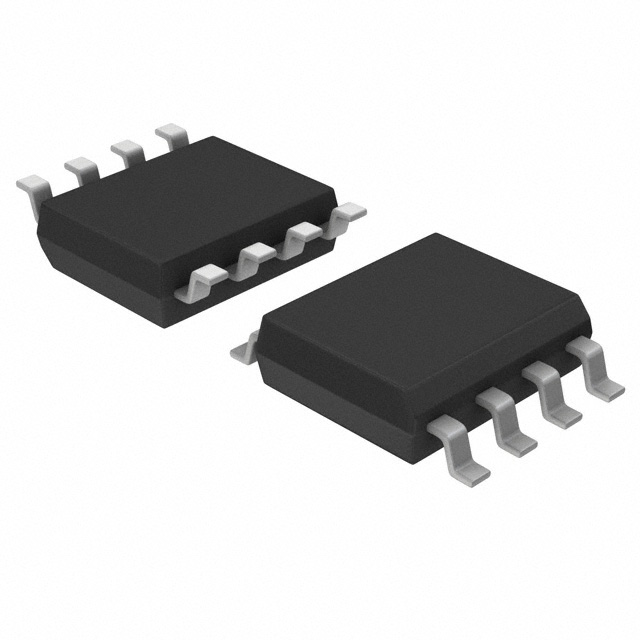
SOIC (8)
BODY SIZE (NOM)
4.90 mm × 3.91 mm
(1) For all available packages, see the orderable addendum at
the end of the datasheet.
Simplified Schematic
Drive
Collector
8
1
Switch
Collector
2
Switch
Emitter
3
Timing
Capacitor
Q2
S Q
Q1
R
100 W
Ipk
Sense
7
Ipk
Oscillator
CT
6
VCC
+
−
Comparator
Inverting Input
5
1.25-V
Reference
Regulator
4
GND
1
An IMPORTANT NOTICE at the end of this data sheet addresses availability, warranty, changes, use in safety-critical applications,
intellectual property matters and other important disclaimers. PRODUCTION DATA.
�MC33063A-Q1
SLLS654C – APRIL 2005 – REVISED DECEMBER 2014
www.ti.com
Table of Contents
1
2
3
4
5
6
7
Features ..................................................................
Applications ...........................................................
Description .............................................................
Revision History.....................................................
Pin Configuration and Functions .........................
Specifications.........................................................
1
1
1
2
3
4
6.1
6.2
6.3
6.4
6.5
6.6
6.7
6.8
6.9
4
4
4
4
5
5
5
5
6
Absolute Maximum Ratings ......................................
ESD Ratings..............................................................
Recommended Operating Conditions.......................
Thermal Information ..................................................
Oscillator Characteristics ..........................................
Output Switch Characteristics...................................
Comparator Characteristics ......................................
Total Device Characteristics .....................................
Typical Characteristics ..............................................
Detailed Description .............................................. 7
7.1
7.2
7.3
7.4
8
Overview ...................................................................
Functional Block Diagram .........................................
Feature Description...................................................
Device Functional Modes..........................................
7
7
7
9
Application and Implementation ........................ 10
8.1 Application Information .......................................... 10
8.2 Typical Applications ............................................... 10
9 Power Supply Recommendations...................... 18
10 Layout................................................................... 19
10.1 Layout Guidelines ................................................. 19
10.2 Layout Example .................................................... 19
11 Device and Documentation Support ................. 22
11.1 Trademarks ........................................................... 22
11.2 Electrostatic Discharge Caution ............................ 22
11.3 Glossary ................................................................ 22
12 Mechanical, Packaging, and Orderable
Information ........................................................... 22
4 Revision History
Changes from Revision B (September 2008) to Revision C
•
2
Page
Added the ESD Ratings table, Feature Description section, Device Functional Modes section, Application and
Implementation section, Power Supply Recommendations section, Layout section, Device and Documentation
Support section, and Mechanical, Packaging, and Orderable Information section ............................................................... 1
Submit Documentation Feedback
Copyright © 2005–2014, Texas Instruments Incorporated
Product Folder Links: MC33063A-Q1
�MC33063A-Q1
www.ti.com
SLLS654C – APRIL 2005 – REVISED DECEMBER 2014
5 Pin Configuration and Functions
D Package
8-Pin SOIC
Top View
Switch Collector
1
8
Driver Collector
Switch Emitter
2
7
Ipk
Timing Capacitor
3
6
VCC
GND
4
5
Comparator Inverting Input
Pin Functions
PIN
NO.
NAME
I/O
DESCRIPTION
1
Switch
Collector
—
Switch Collector
2
Switch
Emitter
—
Switch Emitter
3
Timing
Capacitor
—
Timing Capacitor
4
GND
—
Ground
5
Comparator
Inverting
Input
I
Comparator Inverting Input
6
VCC
I
Supply
7
IPK
I
Peak Current
8
Driver
Collector
—
Driver Collector
Submit Documentation Feedback
Copyright © 2005–2014, Texas Instruments Incorporated
Product Folder Links: MC33063A-Q1
3
�MC33063A-Q1
SLLS654C – APRIL 2005 – REVISED DECEMBER 2014
www.ti.com
6 Specifications
6.1 Absolute Maximum Ratings (1)
over operating free-air temperature range (unless otherwise noted)
MIN
MAX
UNIT
40
V
40
V
40
V
40
V
Switch Collector to Switch Emitter voltage, VCE(switch)
40
V
Driver Collector voltage, VC(driver)
40
V
Driver Collector current, IC(driver)
100
mA
Supply voltage, VCC
Comparator Inverting Input voltage range, VIR
–0.3
Switch Collector voltage, VC(switch)
Switch Emitter voltage, VE(switch)
VPIN1 = 40 V
Switch current, ISW
1.5
A
Operating virtual junction temperature, TJ
150
°C
150
°C
Storage temperature, Tstg
(1)
–65
Stresses beyond those listed under absolute maximum ratings may cause permanent damage to the device. These are stress ratings
only, and functional operation of the device at these or any other conditions beyond those indicated under "recommended operating
conditions" is not implied. Exposure to absolute-maximum-rated conditions for extended periods may affect device reliability.
6.2 ESD Ratings
VALUE
Human body model (HBM), per AEC Q100-002 (1)
V(ESD)
(1)
Electrostatic discharge
Charged device model (CDM), per
AEC Q100-011
UNIT
±2000
Corner pins (1, 4, 5, and 8)
±750
Other pins
±500
V
AEC Q100-002 indicates HBM stressing is done in accordance with the ANSI/ESDA/JEDEC JS-001 specification.
6.3 Recommended Operating Conditions
VCC
Supply voltage
TA
Operating free-air temperature
MIN
NOM MAX
3
40
UNIT
V
–40
125
°C
6.4 Thermal Information
MC33063A-Q1
THERMAL METRIC
(1)
D
UNIT
8 PINS
RθJA
Junction-to-ambient thermal resistance (2) (3)
121.9
RθJC(top)
Junction-to-case (top) thermal resistance
68.1
RθJB
Junction-to-board thermal resistance
62.3
ψJT
Junction-to-top characterization parameter
19.9
ψJB
Junction-to-board characterization parameter
61.8
RθJC(bot)
Junction-to-case (bottom) thermal resistance
N/A
(1)
(2)
(3)
4
°C/W
For more information about traditional and new thermal metrics, see the IC Package Thermal Metrics application report, SPRA953.
Maximum power dissipation is a function of TJ(max), RθJA, and TA. The maximum allowable power dissipation at any allowable ambient
temperature is PD = (TJ(max) – TA) / RθJA. Operating at the absolute maximum TJ of 150°C can affect reliability.
The package thermal impedance is calculated in accordance with JESD 51-7.
Submit Documentation Feedback
Copyright © 2005–2014, Texas Instruments Incorporated
Product Folder Links: MC33063A-Q1
�MC33063A-Q1
www.ti.com
SLLS654C – APRIL 2005 – REVISED DECEMBER 2014
6.5 Oscillator Characteristics
VCC = 5 V, TA = full operating range (unless otherwise noted) (see block diagram)
PARAMETER
TEST CONDITIONS
TA
MIN
TYP
MAX
UNIT
fosc
Oscillator frequency
VPIN5 = 0 V, CT = 1 nF
25°C
24
33
42
kHz
Ichg
Charge current
VCC = 5 V to 40 V
25°C
24
35
42
μA
Idischg
Discharge current
VCC = 5 V to 40 V
25°C
140
220
260
μA
Idischg/Ichg
Discharge-to-charge current ratio
VPIN7 = VCC
25°C
5.2
6.5
7.5
VIpk
Current-limit sense voltage
Idischg = Ichg
25°C
250
300
350
mV
MIN
TYP
MAX
UNIT
6.6 Output Switch Characteristics (1)
VCC = 5 V, TA = full operating range (unless otherwise noted). See the Functional Block Diagram.
PARAMETER
TEST CONDITIONS
TA
VCE(sat)
Saturation voltage –
Darlington connection
ISW = 1 A, pins 1 and 8 connected
Full range
1
1.3
V
VCE(sat)
Saturation voltage –
non-Darlington connection (2)
ISW = 1 A, RPIN8 = 82 Ω to VCC,
Forced β ~ 20
Full range
0.45
0.7
V
hFE
DC current gain
ISW = 1 A, VCE = 5 V
IC(off)
Collector off-state current
VCE = 40 V
100
μA
(1)
(2)
25°C
50
Full range
75
0.01
Low duty-cycle pulse testing is used to maintain junction temperature as close to ambient temperature as possible.
In the non-Darlington configuration, if the output switch is driven into hard saturation at low switch currents (≤300 mA) and high driver
currents (≥30 mA), it may take up to 2 μs for the switch to come out of saturation. This condition effectively shortens the off time at
frequencies ≥30 kHz, becoming magnified as temperature increases. The following output drive condition is recommended in the nonDarlington configuration:
Forced β of output switch = IC,SW / (IC,driver – 7 mA) ≥ 10, where ∼7 mA is required by the 100-Ω resistor in the emitter of the driver to
forward bias the Vbe of the switch.
6.7 Comparator Characteristics
VCC = 5 V, TA = full operating range (unless otherwise noted). See the Functional Block Diagram.
PARAMETER
TEST CONDITIONS
TA
MIN
TYP
MAX
25°C
1.225
1.25
1.275
Full range
1.21
UNIT
Vth
Threshold voltage
ΔVth
Threshold-voltage line regulation
VCC = 5 V to 40 V
Full range
1.4
5
mV
IIB
Input bias current
VIN = 0 V
Full range
–20
–400
nA
MIN
MAX
UNIT
1.29
V
6.8 Total Device Characteristics
VCC = 5 V, TA = full operating range (unless otherwise noted). See the Functional Block Diagram.
PARAMETER
ICC
Supply current
TEST CONDITIONS
VCC = 5 V to 40 V, CT = 1 nF,
VPIN7 = VCC, VPIN5 > Vth,
VPIN2 = GND, All other pins open
TA
Full range
4
Submit Documentation Feedback
Copyright © 2005–2014, Texas Instruments Incorporated
Product Folder Links: MC33063A-Q1
mA
5
�MC33063A-Q1
SLLS654C – APRIL 2005 – REVISED DECEMBER 2014
www.ti.com
6.9 Typical Characteristics
100
1.8
VCC = 5 V
Pin 7 = VCC
Pin 5 = GND
TA = 25°C
VCE(SAT), Output Switch
Saturation Voltage (V)
tON-OFF, Output Switch
On-Off Time (µs)
1000
tON
tOFF
10
1
0.01
1.6
1.5
1.4
1.3
1.2
1.1
1.0
1
0
0.0
0.1
1
CT, Oscillator Timing Capacitor (nF)
1.4
0.2
10
0.4
0.6
380
340
VIPK, Current Limit
Sense Voltage (mV)
1.0
Force Beta = 20
0.8
0.6
0.0
0
0
0.0
VCC = 5 V
Pin 7 = VCC
Pin 2, 3, 5 = GND
TA = 25°C
0.2
1
0.4 0.6 0.8 1.0
1.2
IC, Collector Current (A)
1.4
1.2
1.4
1.6
VCC = 5 V
ICHG = IDISCHG
360
1.2
0.2
1
1.0
Figure 2. Output Switch Saturation Voltage vs
Emitter Current (Emitter-Follower Configuration)
Darlington Connection
0.4
0.8
IE, Emitter Current (A)
Figure 1. Output Switch On-Off Time vs
Oscillator Timing Capacitor
VCE(SAT), Output Switch
Saturation Voltage (V)
VCC = 5 V
Pin 1, 7, 8 = VCC
Pin 3, 5 = GND
TA = 25°C
1.7
1.6
Figure 3. Output Switch Saturation Voltage vs
Collector Current (Common-Emitter Configuration)
320
300
280
260
240
220
200
−50
−25
0
25
50
75
100
TA, Ambient Temperature (°C)
125
Figure 4. Current-Limit Sense Voltage vs Temperature
ICC, Supply Current (mA)
3.6
3.2
2.8
2.4
2.0
1.6
CT = 1 nF
Pin 7 = VCC
Pin 2 = GND
TA = 25°C
1.2
0.8
0.4
0.0
0
5
10
15
20
25
30
VCC, Supply Voltage (V)
35
40
Figure 5. Standby Supply Current vs Supply Voltage
6
Submit Documentation Feedback
Copyright © 2005–2014, Texas Instruments Incorporated
Product Folder Links: MC33063A-Q1
�MC33063A-Q1
www.ti.com
SLLS654C – APRIL 2005 – REVISED DECEMBER 2014
7 Detailed Description
7.1 Overview
The MC33063A-Q1 device primarily consists of an internal temperature-compensated reference, a comparator,
an oscillator, a PWM controller with active current limiting, a driver, and a high-current output switch. The
MC33063A-Q1 device requires minimal external components to build converters in the boost, buck, and inverting
topologies.
7.2 Functional Block Diagram
Drive
Collector
8
1
Switch
Collector
2
Switch
Emitter
3
Timing
Capacitor
Q2
S Q
Q1
R
100 W
Ipk
Sense
7
Ipk
Oscillator
CT
6
VCC
+
−
Comparator
Inverting Input
1.25-V
Reference
Regulator
4
5
GND
7.3 Feature Description
The device includes the following components:
• Temperature-compensated reference voltage
• Oscillator
• Active peak-current limit
• Output switch
• Output voltage-sense comparator
7.3.1 Reference Voltage
The reference voltage is set at 1.25 V and is used to set the output voltage of the converter.
Submit Documentation Feedback
Copyright © 2005–2014, Texas Instruments Incorporated
Product Folder Links: MC33063A-Q1
7
�MC33063A-Q1
SLLS654C – APRIL 2005 – REVISED DECEMBER 2014
www.ti.com
Feature Description (continued)
Comparator
Inverting Input
Output
R2
R1
Vout = 1.25(R2/R1 + 1)
Figure 6. Reference Voltage Circuit
7.3.2 Current Limit
Current limit is accomplished by monitoring the voltage drop across an external sense resistor located in series
with VCC and the output switch. The voltage drop developed across the sense resistor is monitored by the
current-sense pin, Ipk. When the voltage drop across the sense resistor becomes greater than the preset value
of 330 mV, the current-limit circuitry provides an additional current path to charge the timing capacitor (CT)
rapidly, to reach the upper oscillator threshold and, thus, limiting the amount of energy stored in the inductor. The
minimum sense resistor is 0.2 W. Figure 7 shows the timing capacitor charge current versus current-limit sense
voltage. To set the peak current, Ipk = 330 mV/Rsense.
Ichg – Charging Current – mA
30
TA = 25°C
10
VCC = 40 V
VCC = 5 V
3
1
0.3
Ichg = Idischg
0.1
0.03
0
0.2
0.4
0.6
0.8
VCLS – Current-Limit Sense Voltage – V
1
Figure 7. Timing Capacitor Charge Current vs Current-Limit Sense Voltage
7.3.3 Current Limit of Typical Operation Waveforms
The output switch is an NPN Darlington transistor. The collector of the output transistor is tied to pin 1, and the
emitter is tied to pin 2. This allows the designer to use the MC33063 device in buck, boost, or inverter
configurations. The maximum collector-emitter saturation voltage at 1.5 A (peak) is 1.3 V, and the maximum
peak current of the output switch is 1.5 A. For higher peak output current, an external transistor can be used.
Figure 8 shows the typical operation waveforms.
8
Submit Documentation Feedback
Copyright © 2005–2014, Texas Instruments Incorporated
Product Folder Links: MC33063A-Q1
�MC33063A-Q1
www.ti.com
SLLS654C – APRIL 2005 – REVISED DECEMBER 2014
Feature Description (continued)
Comparator Output
1
0
Timing Capacitor, CT
On
Output Switch
Off
Nominal Output Voltage
Output Voltage
Startup
Quiescent Operation
Figure 8. Typical Operation Waveforms
7.4 Device Functional Modes
The oscillator is composed of a current source and a current sink that charge and discharge the external timing
capacitor (CT) between an upper and lower preset threshold. The typical charge current is 35 mA, and the typical
discharge current is 200 mA, yielding approximately a 6:1 ratio. Thus, the ramp-up period is six times longer than
that of the ramp-down period (see Figure 9). The upper threshold is 1.25 V, which is same as the internal
reference voltage, and the lower threshold is 0.75 V. The oscillator runs constantly, at a pace controlled by the
value of CT.
V
Upper Threshold (1.25 V Typical)
Lower Threshold (0.75 V Typical)
Time
t
6t
Discharge
Charge
Figure 9. Oscillator Voltage Thresholds
Submit Documentation Feedback
Copyright © 2005–2014, Texas Instruments Incorporated
Product Folder Links: MC33063A-Q1
9
�MC33063A-Q1
SLLS654C – APRIL 2005 – REVISED DECEMBER 2014
www.ti.com
8 Application and Implementation
NOTE
Information in the following applications sections is not part of the TI component
specification, and TI does not warrant its accuracy or completeness. TI’s customers are
responsible for determining suitability of components for their purposes. Customers should
validate and test their design implementation to confirm system functionality.
8.1 Application Information
The MC33063A-Q1 device requires minimal external components to build converters in the boost, buck, and
inverting topologies.
8.2 Typical Applications
8.2.1 Step-Up Converter
170 mH
L
1
8
180 W
S Q
Q2
2
7
Ipk
RSC
0.22 W
VIN
12 V
3
CT
6
1N5819
Q1
R
VCC
+
+
_ Comparator
100 mF
1.25-V
Reference
Regulator
CT
1500 pF
4
5
1.0 mH
R2
R1
2.2 kW
47 kW
CO
330 mF
+
VOUT
28 V/175 mA
VOUT
100 mF
1.25 (1
R2)
R1
+
Optional Filter
Figure 10. Step-Up Converter
10
Submit Documentation Feedback
Copyright © 2005–2014, Texas Instruments Incorporated
Product Folder Links: MC33063A-Q1
�MC33063A-Q1
www.ti.com
SLLS654C – APRIL 2005 – REVISED DECEMBER 2014
Typical Applications (continued)
R*
8
1
7
8
VOUT
7
2
VOUT
2
RSC
RSC
6
VIN
1
6
VIN
*R
a) EXTERNAL npn SWITCH
0 for constant Vin
b) EXTERNAL pnp SATURATED SWITCH (see Note A)
Figure 11. External Switches
8.2.1.1 Design Requirements
Table 1. Step-Up Converter
TEST
CONDITIONS
RESULTS
Line regulation
VIN = 8 V to 16 V, IO = 175 mA
30 mV ± 0.05%
Load regulation
VIN = 12 V, IO = 75 mA to 175 mA
10 mV ± 0.017%
Output ripple
VIN = 12 V, IO = 175 mA
400 mVPP
Efficiency
VIN = 12 V, IO = 175 mA
87.7%
Output ripple with optional filter
VIN = 12 V, IO = 175 mA
40 mVPP
8.2.1.2 Detailed Design Procedure
CALCULATION
ton/toff
STEP UP
Vout
VF
+
Vin(min)
STEP DOWN
Vin(min)
Vout
Vin(min)
Vsat
–
–
1
f
(ton + toff)
ton
+
(ton
ton
ton
toff
–
(ton
toff
4 × 10 – 5 ton
CT
2Iout(max)
Ipk(switch)
(tt
((
Vin(min)
–
on +
off
Vsat)
Ipk(switch)
Vout + VF
Vin – Vsat
Vout
–
)
1
f
toff
+
+
ton
+
t on
+
t off
1
toff)
–
(ton
toff
4 × 10 – 5 ton
)
((
Vin(min)
–
Vsat
Ipk(switch)
–
1
toff)
+
2Iout(max)
0.3
Ipk(switch)
t on(max)
toff
–
toff
4 × 10 – 5 ton
2Iout(max)
1
0.3
Ipk(switch)
RSC
+
Vsat
t on
+
t off
1
toff)
+
VOLTAGE INVERTING
VF
1
f
t on
+
t off
toff
L(min)
–
(tt
on +
off
)
1
0.3
Ipk(switch)
)
Vout)
t on(max)
((
Vin(min)
–
Vsat)
Ipk(switch)
)
t on(max)
Submit Documentation Feedback
Copyright © 2005–2014, Texas Instruments Incorporated
Product Folder Links: MC33063A-Q1
11
�MC33063A-Q1
SLLS654C – APRIL 2005 – REVISED DECEMBER 2014
CALCULATION
STEP UP
CO
I ton
9 out
Vripple(pp)
www.ti.com
STEP DOWN
Ipk(switch)(t on
+
VOLTAGE INVERTING
t off)
9
8Vripple(pp)
I outton
Vripple(pp)
8.2.1.3 Application Curve
Voltage Across
Switch Q1
VCE
Vout + VF
Diode D1
Voltage
VKA
Vout – Vsat
Switch Q1
Current
Vin
Vsat
0
0
VF
Ipk
0
Diode D1
Current
Inductor
Current
Ipk
Iout
0
Ipk
Iin = IL(AVG)
0
Capacitor Cout
Current
Ipk – Iout
½(I pk – I out)
Q+
0
–Iout
Capacitor Cout
Ripple Voltage
Vout + Vpk
toff
t1
Q–
ton
Vout
Vripple(p-p)
Figure 12. Boost Switching Regulator Waveforms
12
Submit Documentation Feedback
Copyright © 2005–2014, Texas Instruments Incorporated
Product Folder Links: MC33063A-Q1
�MC33063A-Q1
www.ti.com
SLLS654C – APRIL 2005 – REVISED DECEMBER 2014
8.2.2 Step-Down Converter
1
8
S Q
R
Q2
Q1
2
7
1N5819
Ipk
RSC
0.33 W
Oscillator
VIN
25 V
6
CT
3
VCC
+
+
_ Comparator
100 mF
L
220 mH
CT
470 pF
1.25-V
Reference
Regulator
4
5
1.0 mH
R2
R1
1.2 kW
VOUT
5 V/500 mA
3.8 kW
CO
470 mF
VOUT
+
100 mF
1.25 (1
R2)
R1
+
Optional Filter
Figure 13. Step-Down Converter
1
1
8
8
7
VOUT
RSC
VIN
7
2
VOUT
2
RSC
6
VIN
a) EXTERNAL npn SWITCH
6
b) EXTERNAL pnp SATURATED SWITCH
Figure 14. External Current-Boost Connections for IC Peak Greater Than 1.5 A
Submit Documentation Feedback
Copyright © 2005–2014, Texas Instruments Incorporated
Product Folder Links: MC33063A-Q1
13
�MC33063A-Q1
SLLS654C – APRIL 2005 – REVISED DECEMBER 2014
www.ti.com
8.2.2.1 Design Requirements
Table 2. Step-Down Converter
TEST
CONDITIONS
RESULTS
Line regulation
VIN = 15 V to 25 V, IO = 500 mA
12 mV ± 0.12%
Load regulation
VIN = 25 V, IO = 50 mA to 500 mA
3 mV ± 0.03%
120 mVPP
Output ripple
VIN = 25 V, IO = 500 mA
Short-circuit current
VIN = 25 V, RL = 0.1 Ω
1.1 A
Efficiency
VIN = 25 V, IO = 500 mA
83.7%
Output ripple with optional filter
VIN = 25 V, IO = 500 mA
40 mVPP
8.2.2.2 Detailed Design Procedure
See Detailed Design Procedure.
8.2.2.3 Application Curves
Vin + VF
Vin
Voltage Across
Switch Q1
VCE
Vsat
0
Vin
Vin – Vsat
Diode D1
Voltage
VKA
0
VF
Ipk
Switch Q1
Current
Iin = IC(AVG)
0
Ipk
Diode D1
Current
ID(AVG)
0
Inductor
Current
Ipk
Iout = Ipk/2 = IC(AVG) + ID(AVG)
0
+Ipk/2
Capacitor Cout
Current
0
Q+
½I p/2
Q–
–Ipk/2
ton/2 toff/2
Vout + Vpk
Capacitor Cout
Ripple Voltage
Vout
Vripple(p-p)
Vout – Vpk
t0 t1
t2
Figure 15. Buck Switching Regulator Waveforms
14
Submit Documentation Feedback
Copyright © 2005–2014, Texas Instruments Incorporated
Product Folder Links: MC33063A-Q1
�MC33063A-Q1
www.ti.com
SLLS654C – APRIL 2005 – REVISED DECEMBER 2014
8.2.3 Voltage Inverter Converter
1
8
S Q
R
Q2
Q1
2
7
Oscillator
6
VIN
4.5 V to 6.0 V
L
88 mH
Ipk
RSC
0.24 W
CT
3
VCC
+
+
_ Comparator
100 mF
1N5819
1.25-V
Reference
Regulator
+
1500 pF
4
5
1.0 mH
R1
R2
8.2 kW
VOUT
−12 V/100 mA
953 W
CO
1000 mF
VOUT
100 mF
+
1.25 (1
R2)
R1
+
Optional Filter
Figure 16. Voltage-Inverting Converter
1
1
8
8
7
VOUT
RSC
VIN
7
2
VOUT
2
RSC
6
VIN
a) EXTERNAL npn SWITCH
6
b) EXTERNAL pnp SATURATED SWITCH
Figure 17. External Current-Boost Connections for Voltage Inverter Converter
Submit Documentation Feedback
Copyright © 2005–2014, Texas Instruments Incorporated
Product Folder Links: MC33063A-Q1
15
�MC33063A-Q1
SLLS654C – APRIL 2005 – REVISED DECEMBER 2014
www.ti.com
8.2.3.1 Design Requirements
TEST
CONDITIONS
RESULTS
Line regulation
VIN = 4.5 V to 6 V, IO = 100 mA
3 mV ± 0.12%
Load regulation
VIN = 5 V, IO = 10 mA to 100 mA
0.022 V ± 0.09%
Output ripple
VIN = 5 V, IO = 100 mA
500 mVPP
Short-circuit current
VIN = 5 V, RL = 0.1 Ω
910 mA
Efficiency
VIN = 5 V, IO = 100 mA
62.2%
Output ripple with optional filter
VIN = 5 V, IO = 100 mA
70 mVPP
8.2.3.2 Detailed Design Procedure
See Detailed Design Procedure.
8.2.3.3 Application Curves
Voltage Across
Switch Q1
VCE
Vin
Vin – Vsat
0
Vin – (–Vout + VF)
Diode D1
Voltage
VKA
Switch Q1
Current
Vin – Vsat
0
VF
Ipk
Iin = IC(AVG)
0
Diode D1
Current
Ipk
Iout
0
Inductor
Current
Ipk
0
Capacitor Cout
Current
Ipk – Iout
½(I pk – I out)
Q+
0
–Iout
Capacitor Cout
Ripple Voltage
–Vout + Vpk
toff
t1
Q–
ton
Vripple(p-p)
Vout
–Vout – Vpk
Figure 18. Inverter Switching Regulator Waveforms
16
Submit Documentation Feedback
Copyright © 2005–2014, Texas Instruments Incorporated
Product Folder Links: MC33063A-Q1
�MC33063A-Q1
www.ti.com
SLLS654C – APRIL 2005 – REVISED DECEMBER 2014
8.2.4 12 V Battery Based Automotive Supply
Figure 19. 12 V Battery Based Automotive Supply Schematic
8.2.4.1 Design Requirements
Input Supply Voltage: 7 to 40 V
Output Supply Voltage: 5 V at 0.25 A
An additional supply rail of 3.3 at 0.2 A along with a power supply supervisor is required for this application.
8.2.4.2 Detailed Design Procedure
See Detailed Design Procedure.
Submit Documentation Feedback
Copyright © 2005–2014, Texas Instruments Incorporated
Product Folder Links: MC33063A-Q1
17
�MC33063A-Q1
SLLS654C – APRIL 2005 – REVISED DECEMBER 2014
www.ti.com
8.2.4.3 Application Curve
Figure 20. Application Example 4 Efficiency
9 Power Supply Recommendations
The input decoupling capacitors must be located as close as possible to the MC33063-Q1. In addition, the
voltage set-point resistor divider components must also be kept close to the IC to eliminate any noise pick-up into
the feedback loop.
18
Submit Documentation Feedback
Copyright © 2005–2014, Texas Instruments Incorporated
Product Folder Links: MC33063A-Q1
�MC33063A-Q1
www.ti.com
SLLS654C – APRIL 2005 – REVISED DECEMBER 2014
10 Layout
10.1 Layout Guidelines
Layout is a critical portion of good power supply design. There are several signals paths that conduct fast
changing currents or voltages that can interact with stray inductance or parasitic capacitance to generate noise
or degrade the power supplies performance. To help eliminate these problems, the input voltage pin should be
bypassed to ground with a low ESR ceramic bypass capacitor with X5R or X7R dielectric. Care should be taken
to minimize the loop area formed by the bypass capacitor connections, the input pin, and the anode of the catch
diode.
10.2 Layout Example
Supply Decoupling Capacitor
Placed Nearby
Switching components (D2, C2, C3, L1)
Minimize this loop area to reduce ringing
Feedback components away from the power
path and close to the IC
(to avoid noise coupling)
Figure 21. MC33063A-Q1 Layout Top Layer Example
Submit Documentation Feedback
Copyright © 2005–2014, Texas Instruments Incorporated
Product Folder Links: MC33063A-Q1
19
�MC33063A-Q1
SLLS654C – APRIL 2005 – REVISED DECEMBER 2014
www.ti.com
Layout Example (continued)
Figure 22. MC33063A-Q1 Layout Middle Layer Example
20
Submit Documentation Feedback
Copyright © 2005–2014, Texas Instruments Incorporated
Product Folder Links: MC33063A-Q1
�MC33063A-Q1
www.ti.com
SLLS654C – APRIL 2005 – REVISED DECEMBER 2014
Layout Example (continued)
Multiple vias connect the input and output to the ground plane
Large ground plane to reduce noise and
ground-loop errors
Figure 23. MC33063A-Q1 Layout Bottom Layer Example
Submit Documentation Feedback
Copyright © 2005–2014, Texas Instruments Incorporated
Product Folder Links: MC33063A-Q1
21
�MC33063A-Q1
SLLS654C – APRIL 2005 – REVISED DECEMBER 2014
www.ti.com
11 Device and Documentation Support
11.1 Trademarks
All trademarks are the property of their respective owners.
11.2 Electrostatic Discharge Caution
These devices have limited built-in ESD protection. The leads should be shorted together or the device placed in conductive foam
during storage or handling to prevent electrostatic damage to the MOS gates.
11.3 Glossary
SLYZ022 — TI Glossary.
This glossary lists and explains terms, acronyms, and definitions.
12 Mechanical, Packaging, and Orderable Information
The following pages include mechanical, packaging, and orderable information. This information is the most
current data available for the designated devices. This data is subject to change without notice and revision of
this document. For browser-based versions of this data sheet, refer to the left-hand navigation.
22
Submit Documentation Feedback
Copyright © 2005–2014, Texas Instruments Incorporated
Product Folder Links: MC33063A-Q1
�PACKAGE OPTION ADDENDUM
www.ti.com
10-Dec-2020
PACKAGING INFORMATION
Orderable Device
Status
(1)
Package Type Package Pins Package
Drawing
Qty
Eco Plan
(2)
Lead finish/
Ball material
MSL Peak Temp
Op Temp (°C)
Device Marking
(3)
(4/5)
(6)
MC33063AQDRQ1
ACTIVE
SOIC
D
8
2500
RoHS & Green
NIPDAU
Level-1-260C-UNLIM
-40 to 125
33063AQ
(1)
The marketing status values are defined as follows:
ACTIVE: Product device recommended for new designs.
LIFEBUY: TI has announced that the device will be discontinued, and a lifetime-buy period is in effect.
NRND: Not recommended for new designs. Device is in production to support existing customers, but TI does not recommend using this part in a new design.
PREVIEW: Device has been announced but is not in production. Samples may or may not be available.
OBSOLETE: TI has discontinued the production of the device.
(2)
RoHS: TI defines "RoHS" to mean semiconductor products that are compliant with the current EU RoHS requirements for all 10 RoHS substances, including the requirement that RoHS substance
do not exceed 0.1% by weight in homogeneous materials. Where designed to be soldered at high temperatures, "RoHS" products are suitable for use in specified lead-free processes. TI may
reference these types of products as "Pb-Free".
RoHS Exempt: TI defines "RoHS Exempt" to mean products that contain lead but are compliant with EU RoHS pursuant to a specific EU RoHS exemption.
Green: TI defines "Green" to mean the content of Chlorine (Cl) and Bromine (Br) based flame retardants meet JS709B low halogen requirements of








 工商网监
湘ICP备2023018690号
工商网监
湘ICP备2023018690号