®
PCM
PCM3006
300
6
16-Bit, Single-Ended Analog Input/Output
STEREO AUDIO CODEC
TM
FEATURES
DESCRIPTION
● MONOLITHIC 16-BIT ∆Σ ADC AND DAC
The PCM3006 is a low cost single chip stereo audio
CODEC (analog-to-digital and digital-to-analog converters) with single-ended analog voltage input and
output.
● STEREO ADC:
Single-Ended Voltage Input
64 X Oversampling
High Performance
THD+N: –84dB
SNR: 89dB
Dynamic Range: 89dB
Digital High Pass Filter
● STEREO DAC:
Single-Ended Voltage Output
Analog Low Pass Filter
8X Oversampling Digital Filter
High Performance
THD+N: –85dB
SNR: 93dB
Dynamic Range: 93dB
● SPECIAL FEATURES
Digital De-emphasis
Power Down: ADC/DAC Independent
● SAMPLING RATE: Up to 48kHz
Both ADCs and DACs employ delta-sigma modulation with 64X oversampling. The ADCs include a
digital decimation filter, and the DACs include an 8X
oversampling digital interpolation filter. The DACs
also include a de-emphasis function. PCM3006 operates with 16-bit, left-justified for ADC, right-justified
for DAC data formats.
PCM3006 provides a Power-Down Mode that operates on the ADCs and DACs independently.
Fabricated on a highly advanced 0.6µs CMOS process, PCM3006 is suitable for a wide variety of
cost-sensitive consumer applications where good
performance is required. Applications include sampling keyboards, digital mixers, effects processors,
hard-disk recorders, data recorders and digital video
cameras.
● SYSTEM CLOCK: 256fS, 384fS, 512fS
● SINGLE +3V POWER SUPPLY
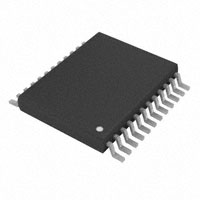
● SMALL PACKAGE: 24-Lead TSSOP
Lch In
Analog Front-End
Rch In
Lch Out
Rch Out
Low Pass Filter
and
Output Buffer
Delta-Sigma
Modulator
Multi-Level
Delta-Sigma
Modulator
Digital Out
Decimation
Digital Filter
Oversampling
Interpolation
Digital Filter
Serial Interface
and
Mode Control
Digital In
Parallel Mode Control
System Clock
International Airport Industrial Park • Mailing Address: PO Box 11400, Tucson, AZ 85734 • Street Address: 6730 S. Tucson Blvd., Tucson, AZ 85706 • Tel: (520) 746-1111 • Twx: 910-952-1111
Internet: http://www.burr-brown.com/ • FAXLine: (800) 548-6133 (US/Canada Only) • Cable: BBRCORP • Telex: 066-6491 • FAX: (520) 889-1510 • Immediate Product Info: (800) 548-6132
®
© 1998 Burr-Brown Corporation
SBAS089
PDS-1436A
1
PCM3006
Printed in U.S.A. February, 1998
�SPECIFICATIONS
All specifications at +25°C, VDD = VCC = 3.0V, fS = 44.1kHz, SYSCLK = 384f S, and 16-bit data, unless otherwise noted.
PCM3006T
PARAMETER
CONDITIONS
MIN
DIGITAL INPUT/OUTPUT
Input Logic
Input Logic Level: VIH(1)
VIL(1)
Input Logic Current: IIN(2)
Input Logic Current: IIN(3)
Output Logic
Output Logic Level: VOH(4)
VOL(4)
CLOCK FREQUENCY
Sampling Frequency (fS)
System Clock Frequency
TYP
MAX
UNITS
0.3 x VDD
±1
100
VDC
VDC
µA
µA
0.3
VDC
VDC
48
12.2880
18.4320
24.5760
kHz
MHz
MHz
MHz
0.7 x VDD
IOUT = –1mA
IOUT = +1mA
VDD –0.3
32
8.1920
12.2880
16.3840
256fS
384fS
512fS
44.1
11.2896
16.9344
22.5792
ADC CHARACTERISTICS
RESOLUTION
16
DC ACCURACY
Gain Mismatch Channel-to-Channel
Gain Error
Gain Drift
Bipolar Zero Error
Bipolar Zero Drift
DYNAMIC PERFORMANCE(5)
THD+N: VIN = –0.5dB
VIN = –60dB
Dynamic Range
Signal-to-Noise Ratio
Channel Separation
DIGITAL FILTER PERFORMANCE
Passband
Stopband
Passband Ripple
Stopband Attenuation
Delay Time
HPF Frequency Response
ANALOG INPUT
Voltage Range
Center Voltage
Input Impedance
Anti-Aliasing Filter Frequency Response
High-Pass Filter Disabled(6)
High-Pass Filter Disabled(6)
A-Weighted
A-Weighted
84
84
82
Bits
±1.0
±2.0
±20
±1.7
±20
±3.0
±5.0
% of FSR
% of FSR
ppm of FSR/°C
% of FSR
ppm of FSR/°C
–84
–26
89
89
86
–77
dB
dB
dB
dB
dB
0.454fS
–3dB
17.4/fS
0.019fS
Hz
Hz
dB
dB
sec
mHz
–3dB
0.60 VCC
0.50 VCC
30
150
Vp-p
V
kΩ
kHz
16
Bits
0.583fS
±0.05
–65
DAC CHARACTERISTICS
RESOLUTION
DC ACCURACY
Gain Mismatch Channel-to-Channel
Gain Error
Gain Drift
Bipolar Zero Error
Bipolar Zero Drift
±1.0
±1.0
±20
±2.5
±20
±3
±5
% of FSR
% of FSR
ppm of FSR/°C
% of FSR
ppm of FSR/°C
DYNAMIC PERFORMANCE(6)
THD+N: VOUT = 0dB (Full Scale)
VOUT = –60dB
Dynamic Range
Signal-to-Noise Ratio
Channel Separation
–85
–30
93
93
90
–77
dB
dB
dB
dB
dB
EIAJ, A-Weighted
EIAJ, A-Weighted
86
86
84
The information provided herein is believed to be reliable; however, BURR-BROWN assumes no responsibility for inaccuracies or omissions. BURR-BROWN assumes no
responsibility for the use of this information, and all use of such information shall be entirely at the user’s own risk. Prices and specifications are subject to change without notice.
No patent rights or licenses to any of the circuits described herein are implied or granted to any third party. BURR-BROWN does not authorize or warrant any BURR-BROWN
product for use in life support devices and/or systems.
®
PCM3006
2
�SPECIFICATIONS (CONT)
All specifications at +25°C, VDD = VCC = 3.0V, fS = 44.1kHz, SYSCLK = 384fS, CLKIO Input, 16-bit data, unless otherwise noted.
PCM3006T
PARAMETER
CONDITIONS
MIN
TYP
MAX
UNITS
0.445fS
Hz
Hz
dB
dB
sec
DAC CHARACTERISTICS (CONT)
DIGITAL FILTER PERFORMANCE
Passband
Stopband
Passband Ripple
Stopband Attenuation
Delay Time
ANALOG OUTPUT
Voltage Range
Center Voltage
Load Impedance
LPF Frequency Response
POWER SUPPLY REQUIREMENTS
Voltage Range: VCC, VDD
Supply Current: ADC/DAC Operation
ADC Operation
DAC Operation
ADC/DAC Power-Down(8)
Power Dissipation: ADC/DAC Operation
ADC Operation
DAC Operation
ADC/DAC Power-Down(8)
0.555fS
±0.17
–35
11.1/fS
0.6 x V CC
0.5 x V CC
AC-Coupling
f = 20kHz
10
–25°C to +85°C
0° C to +70°C(7)
VCC = VDD = 3.0V
VCC = VDD = 3.0V
VCC = VDD = 3.0V
VCC = VDD = 3.0V
VCC = VDD = 3.0V
VCC = VDD = 3.0V
VCC = VDD = 3.0V
VCC = VDD = 3.0V
2.7
2.4
Vp-p
VDC
kΩ
dB
–0.16
TEMPERATURE RANGE
Operation
Storage
Thermal Resistance, ΘJA
3.0
3.0
18
12
7
50
54
36
21
150
–25
–55
3.6
3.6
24
16
10
72
48
30
+85
+125
100
VDC
VDC
mA
mA
mA
µA
mW
mW
mW
µW
°C
°C
°C/W
NOTES: (1) Pins 7, 8, 9, 10, 11, 15, 17, 18: PDAD, PDDA, SYSCLK, LRCIN, BCKIN, DIN, DEM1, DEM0 (Schmitt-Trigger input with 100kΩ typical internal pulldown resistor). (2) Pins 9, 10, 11, 15: SYSCLK, LRCIN, BCKIN, DIN (Schmitt-Trigger input). (3) Pins 7, 8, 17, 18: PDAD, PDDA, DEM1, DEM0 (Schmitt-Trigger
input, 100kΩ typical internal pull-down resistor). (4) Pin 12: DOUT. (5) fIN = 1kHz, using Audio Precision System II, rms mode with 20kHz LPF, 400Hz HPF used
for performance calculation. (6) fOUT = 1kHz, using Audio Precision System II, rms mode with 20kHz LPF, 400Hz HPF used for performance calculation. (7) Applies
for voltages between 2.4V to 2.7V for 0°C to +70°C and 256fS /512fS operation (384fS not available). (8) SYSCLK, BCKIN, and LRCIN are stopped.
®
3
PCM3006
�PIN ASSIGNMENTS
PIN CONFIGURATION
Top View
TSSOP
PIN
PCM3006
1
VCC2 24
VCC1
2
VCC1
NC 23
3
VINR
AGND 22
4
NAME
I/O
DESCRIPTION
1
VCC1
—
ADC Analog Power Supply
2
VCC1
—
ADC Analog Power Supply
3
VINR
IN
ADC Analog Input, Rch
4
VREF1
—
ADC Reference, 1
5
VREF2
—
ADC Reference, 2
6
VINL
IN
ADC Analog Input, Lch
7
PDAD
IN
ADC Power Down, Active LOW(1, 2)
8
PDDA
IN
DAC Power Down, Active LOW(1, 2)
9
SYSCLK
IN
System Clock Input(2)
IN
Sample Rate Clock Input (fS)(2)
Bit Clock Input(2)
VREF1
VCOM 21
5
VREF2
VOUTR 20
10
LRCIN
6
VINL
VOUTL 19
11
BCKIN
IN
12
DOUT
OUT
7
PDAD
DEM0 18
13
DGND
—
8
PDDA
DEM1 17
14
VDD
—
Digital Power Supply
15
DIN
IN
Data Input
9
SYSCLK
NC 16
10
LRCIN
DIN 15
11
BCKIN
VDD 14
12
DOUT
DGND 13
NC = No Connection
Data Output
Digital Ground
16
NC
IN
No Connection
17
DEM1
IN
De-emphasis Control(1, 2)
18
DEM0
IN
De-emphasis Control 0(1, 2)
19
VOUTL
OUT
DAC Analog Output, Lch
20
VOUTR
OUT
DAC Analog Output, Rch
21
VCOM
—
22
AGND
—
Analog Ground
23
NC
—
No Connection
24
VCC2
—
DAC Analog Power Supply
ADC/DAC Common
NOTES: (1) With 100kΩ typical internal pull-down resistor. (2) Schmitt-Trigger
input.
ABSOLUTE MAXIMUM RATINGS
Supply Voltage
+VDD, +VCC1, +VCC2 ...................................................................... +6.5V
Supply Voltage Differences ............................................................... ±0.1V
GND Voltage Differences .................................................................. ±0.1V
Digital Input Voltage ...................................................... –0.3 to VDD + 0.3V
Analog Input Voltage ......................................... –0.3 to VCC1, VCC2 + 0.3V
Power Dissipation .......................................................................... 300mW
Input Current ................................................................................... ±10mA
Operating Temperature Range ......................................... –25°C to +85°C
Storage Temperature ...................................................... –55°C to +125°C
Lead Temperature (soldering, 5s) .................................................. +260°C
(reflow, 10s) ..................................................... +235°C
ELECTROSTATIC
DISCHARGE SENSITIVITY
This integrated circuit can be damaged by ESD. Burr-Brown
recommends that all integrated circuits be handled with
appropriate precautions. Failure to observe proper handling
and installation procedures can cause damage.
ESD damage can range from subtle performance degradation to complete device failure. Precision integrated circuits
may be more susceptible to damage because very small
parametric changes could cause the device not to meet its
published specifications.
PACKAGE INFORMATION
PRODUCT
PACKAGE
PACKAGE DRAWING
NUMBER(1)
PCM3006T
24-Lead TSSOP
350
NOTE: (1) For detailed drawing and dimension table, please see end of data
sheet, or Appendix C of Burr-Brown IC Data Book.
®
PCM3006
4
�TYPICAL PERFORMANCE CURVES
ADC SECTION
At TA = +25°C, VCC = VDD = 3.0V, fS = 44.1kHz, fSYSCLK = 384fS, and fSIGNAL = 1kHz, unless otherwise noted.
DYNAMIC RANGE and SNR vs TEMPERATURE
THD+N vs TEMPERATURE
0.010
6.0
92
5.0
90
92
4.0
0.004
3.0
50
75
85
86
86
100
84
0
25
THD+N vs SUPPLY VOLTAGE
6.0
92
0.008
5.0
90
0.006
4.0
Dynamic Range
0.002
Dynamic Range (dB)
3.0
THD+N at –60dB (%)
THD+N at –0.5dB (%)
–0.5dB
2.0
3.0
3.3
90
88
86
86
84
3.6
84
2.4
2.7
THD+N vs SAMPLING FREQUENCY
3.3
3.6
92
4.0
90
3.0
–0.5dB
0.004
2.0
0.002
1.0
Dynamic Range (dB)
0.006
DYNAMIC RANGE and SNR vs SAMPLING FREQUENCY
5.0
THD+N at –60dB (%)
THD+N at –0.5dB (%)
–60dB
44.1
3.0
Supply Voltage (V)
0.010
32
88
SNR
Supply Voltage (V)
0.008
100
92
–60dB
2.7
85
DYNAMIC RANGE and SNR vs SUPPLY VOLTAGE
0.010
2.4
75
Temperature (°C)
Temperature (°C)
0.004
50
SNR (dB)
25
88
84
–25
2.0
0
SNR
88
92
90
Dynamic Range
88
88
SNR
86
86
84
48
84
32
fS (kHz)
SNR (dB)
0.002
–25
90
SNR (dB)
0.5dB
0.006
Dynamic Range (dB)
Dynamic Range
THD+N at –60dB (%)
THD+N at –0.5dB (%)
–60dB
0.008
44.1
48
fS (kHz)
®
5
PCM3006
�TYPICAL PERFORMANCE CURVES
DAC SECTION
At TA = +25°C, VCC = VDD = 3.0V, fS = 44.1kHz, fSYSCLK = 384fS, and fSIGNAL = 1kHz, unless otherwise noted.
THD+N vs TEMPERATURE
DYNAMIC RANGE and SNR vs TEMPERATURE
0.010
4.0
96
3.0
94
96
–60dB
0.004
1.0
0.002
–25
0
0
25
50
75
85
92
92
SNR
90
88
–25
100
94
SNR (dB)
2.0
FS
Dynamic Range (dB)
0.006
THD+N at –60dB (%)
THD+N at FS (%)
Dynamic Range
0.008
90
88
0
25
Temperature (°C)
50
75
85
100
Temperature (°C)
THD+N vs SUPPLY VOLTAGE
DYNAMIC RANGE and SNR vs SUPPLY VOLTAGE
0.010
4.0
96
3.0
94
96
2.0
FS
0.004
1.0
0.002
0
2.4
2.7
3.0
3.3
Dynamic Range
92
94
92
SNR
90
90
88
3.6
88
2.4
2.7
3.0
3.3
3.6
Supply Voltage (V)
Supply Voltage (V)
THD+N vs SAMPLING FREQUENCY
and SYSTEM CLOCK
DYNAMIC RANGE and SNR
vs SAMPLING FREQUENCY and SYSTEM CLOCK
0.010
96
4.0
SNR (dB)
0.006
Dynamic Range (dB)
0.008
THD+N at –60dB (%)
THD+N at FS (%)
–60dB
96
3.0
384fS
256fS, 512fS
2.0
0.004
1.0
0.002
0
32
44.1
SNR
94
92
Dynamic
Range
92
384fS
90
90
88
48
88
32
fS (kHz)
44.1
fS (kHz)
®
PCM3006
94
6
48
SNR (dB)
FS
0.006
384fS
256fS, 512fS
Dynamic Range (dB)
THD+N at FS (%)
–60dB
0.008
THD+N at –60dB (%)
256fS, 512fS
�TYPICAL PERFORMANCE CURVES
At TA = +25°C, VCC = VDD = 3.0V, fS = 44.1kHz, and fSYSCLK = 384fS, unless otherwise noted.
ADC DIGITAL FILTER
OVERALL CHARACTERISTICS
STOPBAND ATTENUATION CHARACTERISTICS
0
0
–10
–20
–30
Amplitude (dB)
Amplitude (dB)
–50
–100
–40
–50
–60
–70
–150
–80
–90
–200
–100
0
8
16
24
32
0
Normalized Frequency (x fS Hz)
0.2
0.4
0.6
0.8
1.0
Normalized Frequency (x fS Hz)
TRANSIENT BAND CHARACTERISTICS
PASSBAND RIPPLE CHARACTERISTICS
0.2
0
–1
–2
–0.2
Amplitude (dB)
Amplitude (dB)
0.0
–0.4
–0.6
–4.13dB at 0.5 x fS
–3
–4
–5
–6
–7
–8
–0.8
–9
–1.0
–10
0
0.1
0.2
0.3
0.4
0.5
0.45 0.46 0.47 0.48 0.49 0.50 0.51 0.52 0.53 0.54 0.55
Normalized Frequency (x fS Hz)
Normalized Frequency (x fS Hz)
HIGH PASS FILTER RESPONSE
HIGH PASS FILTER RESPONSE
0
0.2
–10
0.0
–30
Amplitude (dB)
Amplitude (dB)
–20
–40
–50
–60
–70
–80
–0.2
–0.4
–0.6
–0.8
–90
–1.0
–100
0
0.1
0.2
0.3
0.4
0.5
0
Normalized Frequency (x fS /1000 Hz)
1
2
3
4
Normalized Frequency (x fS /1000 Hz)
®
7
PCM3006
�TYPICAL PERFORMANCE CURVES
At TA = +25°C, VCC = VDD = 3.0V, fS = 44.1kHz, and fSYSCLK = 384fS, unless otherwise noted.
ANTI-ALIASING FILTER
ANTI-ALIASING FILTER PASSBAND
FREQUENCY RESPONSE
ANTI-ALIASING FILTER OVERALL
FREQUENCY RESPONSE
0.2
0
0.0
Amplitude (dB)
Amplitude (dB)
–10
–20
–30
–40
–0.2
–0.4
–0.6
–0.8
–1.0
–50
0
10
100
1k
10k
100k
1M
0
10M
®
PCM3006
10
100
1k
Frequency (Hz)
Frequency (Hz)
8
10k
100k
�TYPICAL PERFORMANCE CURVES
At TA = +25°C, VCC = VDD = 3.0V, fS = 44.1kHz, and fSYSCLK = 384fS, unless otherwise noted.
DAC DIGITAL FILTER
PASSBAND RIPPLE CHARACTERISTICS (fS = 44.1kHz)
0
0
–20
–0.2
Level (dB)
Level (dB)
OVERALL FREQUENCY CHARACTERISTICS
(fS = 44.1kHz)
–40
–60
–0.4
–0.6
–80
–0.8
–100
–1.0
0
50k
100k
Frequency (Hz)
150k
0
5k
5k
10k
15k
20k
25k
0
3628
15k
20k
25k
0
4999.8375
19999.35
20k
0.6
0.4
0.2
0
–0.2
–0.4
–0.6
0
25k
5442
10884
16326
21768
Frequency (Hz)
Frequency (Hz)
INTERNAL ANALOG FILTER FREQUENCY RESPONSE
(10Hz~10MHz)
INTERNAL ANALOG FILTER FREQUENCY RESPONSE
(1Hz~20kHz)
20
0.15
0
0.10
–20
0.05
Level (dB)
Level (dB)
15k
14999.5125
DE-EMPHASIS ERROR (48kHz)
Error (dB)
Level (dB)
DE-EMPHASIS FREQUENCY RESPONSE (48kHz)
10k
9999.675
Frequency (Hz)
0
–2
–4
–6
–8
–10
–12
5k
14512
0.6
0.4
0.2
0
–0.2
–0.4
–0.6
Frequency (Hz)
0
10884
DE-EMPHASIS ERROR (44.1kHz)
Error (dB)
Level (dB)
DE-EMPHASIS FREQUENCY RESPONSE (44.1kHz)
10k
7256
Frequency (Hz)
0
–2
–4
–6
–8
–10
–12
5k
20k
0.6
0.4
0.2
0
–0.2
–0.4
–0.6
Frequency (Hz)
0
15k
DE-EMPHASIS ERROR (32kHz)
Error (dB)
Level (dB)
DE-EMPHASIS FREQUENCY RESPONSE (32kHz)
0
–2
–4
–6
–8
–10
–12
0
10k
Frequency (Hz)
–40
0
–60
–0.05
–80
–0.10
–100
–0.15
10
100
1k
10k
100k
1M
10M
1
10
100
1k
10k
100k
Frequency (Hz)
Frequency (Hz)
®
9
PCM3006
�BLOCK DIAGRAM
(+)
Analog
Front-End
Circuit
VINL
Decimation
and
High Pass Filter
Delta-Sigma
Modulator
(–)
LRCIN
BCKIN
VREF1
ADC
Reference
VCOM
VREF2
Serial Data
Interface
DIN
(–)
Analog
Front-End
Circuit
VINR
Decimation
and
High Pass Filter
Multi-Level
Delta-Sigma
Modulator
Interpolation
Filter
8X Oversampling
(+)
Analog
Low-Pass
Filter
VOUTL
Delta-Sigma
Modulator
DOUT
Mode
Control
Interface
DAC
Analog
Low-Pass
Filter
VOUTR
Multi-Level
Delta-Sigma
Modulator
Power Supply
1.0µF
VINR
+
AGND
VCC1
Clock
DGND
VDD
SYSCLK
30kΩ
1
(+)
(–)
VCOM
VREF1
+
4.7µF
+
VREF2
21
4
5
4.7µF
VREF
+
4.7µF
FIGURE 1. Analog Front-End (Single-Channel).
®
PCM3006
DEM1
Interpolation
Filter
8X Oversampling
Reset and
Power Down
VCC2
DEM0
10
Delta-Sigma
Modulator
PDAD
PDDA
�PCM AUDIO INTERFACE
The four-wire digital audio interface for PCM3006 is comprised of: LRCIN (pin 10), BCKIN (pin 11), DIN (pin 15),
and DOUT (pin 12). PCM3006 accepts 16-bit Most Significant Bit (MSB) First. Figures 2 and 3 illustrate audio data
input/output format and timing.
PCM3006 can accept 32-, 48-, or 64-bit clocks (BCKIN) in
one clock of LRCIN.
FORMAT 0: PCM3006
DAC: 16-Bit, MSB-First, Right-Justified
L–ch
LRCIN
R–ch
BCKIN
DIN
16
1
2
3
14 15 16
MSB
1
LSB
2
3
14 15 16
MSB
LSB
ADC: 16-Bit, MSB-First, Left-Justified
LRCIN
L–ch
R–ch
BCKIN
DOUT
1
2
3
14 15 16
MSB
1
LSB
2
3
14 15 16
MSB
1
LSB
FIGURE 2. Audio Data Input/Output Format.
tLRP
0.5VDD
LRCIN
tBL
tBCH
tLB
tBCL
0.5VDD
BCKIN
tBCY
tDIS
tDIH
0.5VDD
DIN
tLDO
tBDO
DOUT
0.5VDD
BCKIN Pulse Cycle Time
tBCY
300ns (min)
BCKIN Pulse Width High
tBCH
120ns (min)
BCKIN Pulse Width Low
tBCL
120ns (min)
BCKIN Rising Edge to LRCIN Edge
tBL
40ns (min)
LRCIN Edge to BCKIN Rising Edge
tLB
40ns (min)
LRCIN Pulse Width
tLRP
tBCY (min)
DIN Set-up Time
tDIS
40ns (min)
DIN Hold Time
tDIH
40ns (min)
DOUT Delay Time to BCKIN Falling Edge
tBDO
40ns (max)
DOUT Delay Time to LRCIN Edge
tLDO
40ns (max)
Rising Time of All Signals
tRISE
20ns (max)
Falling Time of All Signals
tFALL
20ns (max)
FIGURE 3. Audio Data Input/Output Timing.
®
11
PCM3006
�SYSTEM CLOCK
SAMPLING RATE FREQUENCY
(kHz)
The system clock for PCM3006 must be either 256fS, 384fS
or 512fS, where fS is the audio sampling frequency. The
system clock should be provided to SYSCLK (pin 9).
32
PCM3006 also has a system clock detection circuit which
automatically senses if the system clock is operating at 256fS,
384fS, or 512fS. When 384fS or 512fS system clock is used,
the clock is divded into 256fS automatically. The 256fS clock
is used to operate the digital filter and the delta-sigma
modulator.
0.3VDD
tSCKL
1/256fS,1/384fS,or 1/512fS
System Clock Pulse Width High
tSCKH
12ns(min)
System Clock Pulse Width Low
tSCKL
12ns(min)
512fS
16.3840
44.1
11.2896
16.9340
22.5792
48
12.2880
18.4320
24.5760
PCM3006 has an internal Power-On Reset circuit, as well
as an external forced reset. The internal Power-On Reset
initializes (resets) when the supply voltage VDD >2.0V
(typ). External forced reset occurs when PDAD = LOW or
PDDA = LOW. Figure 5 shows the internal Power-On
reset timing and Figure 6 shows the external forced reset
timing by PDAD or PDDA. During external forced reset,
the outputs of the DAC are forced to GND (see Figure 7).
The analog outputs are then forced to 0.5VCC during
tDACDLY1 (16384/fS) after reset removal. The outputs of
ADC are also invalid, digital outputs are forced to all zero
during tADCDLY1 (18432/fS) after reset removal.
0.7VDD
"L"
384fS
12.2880
RESET
tSCKH
"H"
256fS
8.1920
TABLE I. System Clock Frequencies.
Table I lists the relationship of typical sampling frequencies
and system clock frequencies and Figure 4 illustrates the
system clock timing.
SYSCLK
SYSTEM CLOCK FREQUENCY
(MHz)
FIGURE 4. System Clock Timing.
VDD
2.4V
2.2V
2.0V
Reset
Reset Removal
Internal Reset
1024 System Clock Periods
System Clock
FIGURE 5. Internal Power-On Reset Timing.
PDAD = LOW and PDDA = LOW Pulse Width
tRST = 40ns minimum
PDAD and PDDA
tRST
Reset
Reset Removal
Internal Reset
1024 System Clock Periods
System Clock
FIGURE 6. External Forced Reset Timing.
®
PCM3006
12
�SYNCHRONIZATION WITH THE DIGITAL AUDIO
SYSTEM
by tDACDLY2 delay time. Internal operation of the ADC will
also stop within 1/fS, and the digital output codes will be set
to bipolar zero until re-synchronization occurs followed by
tADCDLY2 delay time. If LRCIN is synchronized with 5 or less
bit clocks to the system clock, operation will be normal.
Figures 7 and 8 illustrate the effects on the output when
synchronization is lost. Before the outputs are forced to
bipolar zero (10kΩ, depending on requirement of
system performance.
FIGURE 9. Typical Connection Diagram for PCM3006.
Analog In
X(z) +
–
–
1st SW-CAP
Integrator
+
–
2nd SW-CAP
Integrator
3rd SW-CAP
Integrator
+
+
4th SW-CAP
Integrator
+
Qn(z)
+
+
+
5th SW-CAP
Integrator
+
+
+
Digital Out
Y(z)
H(z)
Comparator
1-Bit
DAC
Y(z) = STF(z) • X(z) + NTF(z) • Qn(z)
Signal Transfer Function
Noise Transfer Function
STF(z) = H(z) / [1 + H(z)]
NTF(z) = 1/ [1 + H(z)]
FIGURE 10. Simplified 5-Level Delta-Sigma Modulator.
®
15
PCM3006
�An internal reference circuit with three external capacitors
provides all reference voltages which are required by the
ADC, which defines the full-scale range for the converter.
The internal single-to-differential voltage converter saves
the design, space and extra parts needed for external circuitry required by many delta-sigma converters. The internal
full-differential signal processing architecture provides a
wide dynamic range and excellent power supply rejection
performance. The input signal is sampled at 64X
oversampling rate, eliminating the need for a sample-andhold circuit, and simplifying anti-alias filtering requirements. The 5-level delta-sigma noise shaper consists of five
integrators which use a switched-capacitor topology, a comparator and a feedback loop consisting of a one-bit DAC.
The delta-sigma modulator shapes the quantization noise,
shifting it out of the audio band in the frequency domain.
The high order of the modulator enables it to randomize the
modulator outputs, reducing idle tone levels.
THEORY OF OPERATION
DAC SECTION
The delta-sigma DAC section of PCM3006 is based on a 5level amplitude quantizer and a 3rd-order noise shaper. This
section converts the oversampled input data to 5-level deltasigma format. A block diagram of the 5-level delta-sigma
modulator is shown in Figure 11. This 5-level delta-sigma
modulator has the advantage of stability and clock jitter
sensitivity over the typical one-bit (2 level) delta-sigma
modulator. The combined oversampling rate of the deltasigma modulator and the internal 8X interpolation filter is
64fS for a 256fS system clock. The theoretical quantization
noise performance of the 5-level delta-sigma modulator is
shown in Figure 12.
The 64fS one-bit data stream from the modulator is converted
to 1fS 16-bit data words by the decimation filter, which also
acts as a low pass filter to remove the shaped quantization
noise. The DC components are removed by a high pass filter
function contained within the decimation filter.
+
+
In
8fS
16-Bit
+
+
+
Z–1
–
+
Z–1
–
+
+
+
5-level Quantizer
4
3
Out
2
1
64fS (256fS)
0
FIGURE 11. 5-Level ∆Σ Modulator Block Diagram.
Gain (–dB)
5-LEVEL ∆Σ MODULATOR
0
–10
–20
–30
–40
–50
–60
–70
–80
–90
–100
–110
–120
–130
–140
–150
0
5
10
15
Frequency (kHz)
FIGURE 12. Quantization Noise Spectrum.
®
PCM3006
16
20
25
30
Z–1
�PACKAGE OPTION ADDENDUM
www.ti.com
3-Oct-2003
PACKAGING INFORMATION
ORDERABLE DEVICE
STATUS(1)
PACKAGE TYPE
PACKAGE DRAWING
PINS
PACKAGE QTY
PCM3006T
ACTIVE
SSOP
DCV
24
128
PCM3006T/2K
ACTIVE
SSOP
DCV
24
2000
(1) The marketing status values are defined as follows:
ACTIVE: Product device recommended for new designs.
LIFEBUY: TI has announced that the device will be discontinued, and a lifetime-buy period is in effect.
NRND: Not recommended for new designs. Device is in production to support existing customers, but TI does not recommend using this part in
a new design.
PREVIEW: Device has been announced but is not in production. Samples may or may not be available.
OBSOLETE: TI has discontinued the production of the device.
�IMPORTANT NOTICE
Texas Instruments Incorporated and its subsidiaries (TI) reserve the right to make corrections, modifications,
enhancements, improvements, and other changes to its products and services at any time and to discontinue
any product or service without notice. Customers should obtain the latest relevant information before placing
orders and should verify that such information is current and complete. All products are sold subject to TI’s terms
and conditions of sale supplied at the time of order acknowledgment.
TI warrants performance of its hardware products to the specifications applicable at the time of sale in
accordance with TI’s standard warranty. Testing and other quality control techniques are used to the extent TI
deems necessary to support this warranty. Except where mandated by government requirements, testing of all
parameters of each product is not necessarily performed.
TI assumes no liability for applications assistance or customer product design. Customers are responsible for
their products and applications using TI components. To minimize the risks associated with customer products
and applications, customers should provide adequate design and operating safeguards.
TI does not warrant or represent that any license, either express or implied, is granted under any TI patent right,
copyright, mask work right, or other TI intellectual property right relating to any combination, machine, or process
in which TI products or services are used. Information published by TI regarding third-party products or services
does not constitute a license from TI to use such products or services or a warranty or endorsement thereof.
Use of such information may require a license from a third party under the patents or other intellectual property
of the third party, or a license from TI under the patents or other intellectual property of TI.
Reproduction of information in TI data books or data sheets is permissible only if reproduction is without
alteration and is accompanied by all associated warranties, conditions, limitations, and notices. Reproduction
of this information with alteration is an unfair and deceptive business practice. TI is not responsible or liable for
such altered documentation.
Resale of TI products or services with statements different from or beyond the parameters stated by TI for that
product or service voids all express and any implied warranties for the associated TI product or service and
is an unfair and deceptive business practice. TI is not responsible or liable for any such statements.
Following are URLs where you can obtain information on other Texas Instruments products and application
solutions:
Products
Amplifiers
Applications
amplifier.ti.com
Audio
www.ti.com/audio
Data Converters
dataconverter.ti.com
Automotive
www.ti.com/automotive
DSP
dsp.ti.com
Broadband
www.ti.com/broadband
Interface
interface.ti.com
Digital Control
www.ti.com/digitalcontrol
Logic
logic.ti.com
Military
www.ti.com/military
Power Mgmt
power.ti.com
Optical Networking
www.ti.com/opticalnetwork
Microcontrollers
microcontroller.ti.com
Security
www.ti.com/security
Telephony
www.ti.com/telephony
Video & Imaging
www.ti.com/video
Wireless
www.ti.com/wireless
Mailing Address:
Texas Instruments
Post Office Box 655303 Dallas, Texas 75265
Copyright 2003, Texas Instruments Incorporated
�