SN65LVDS122EVM
User’s Guide
March 2003
High-Performance Linear/Interface Products
SLLU056A
�IMPORTANT NOTICE
Texas Instruments Incorporated and its subsidiaries (TI) reserve the right to make corrections, modifications,
enhancements, improvements, and other changes to its products and services at any time and to discontinue
any product or service without notice. Customers should obtain the latest relevant information before placing
orders and should verify that such information is current and complete. All products are sold subject to TI’s terms
and conditions of sale supplied at the time of order acknowledgment.
TI warrants performance of its hardware products to the specifications applicable at the time of sale in
accordance with TI’s standard warranty. Testing and other quality control techniques are used to the extent TI
deems necessary to support this warranty. Except where mandated by government requirements, testing of all
parameters of each product is not necessarily performed.
TI assumes no liability for applications assistance or customer product design. Customers are responsible for
their products and applications using TI components. To minimize the risks associated with customer products
and applications, customers should provide adequate design and operating safeguards.
TI does not warrant or represent that any license, either express or implied, is granted under any TI patent right,
copyright, mask work right, or other TI intellectual property right relating to any combination, machine, or process
in which TI products or services are used. Information published by TI regarding third–party products or services
does not constitute a license from TI to use such products or services or a warranty or endorsement thereof.
Use of such information may require a license from a third party under the patents or other intellectual property
of the third party, or a license from TI under the patents or other intellectual property of TI.
Reproduction of information in TI data books or data sheets is permissible only if reproduction is without
alteration and is accompanied by all associated warranties, conditions, limitations, and notices. Reproduction
of this information with alteration is an unfair and deceptive business practice. TI is not responsible or liable for
such altered documentation.
Resale of TI products or services with statements different from or beyond the parameters stated by TI for that
product or service voids all express and any implied warranties for the associated TI product or service and
is an unfair and deceptive business practice. TI is not responsible or liable for any such statements.
Mailing Address:
Texas Instruments
Post Office Box 655303
Dallas, Texas 75265
Copyright 2003, Texas Instruments Incorporated
�EVM IMPORTANT NOTICE
Texas Instruments (TI) provides the enclosed product(s) under the following conditions:
This evaluation kit being sold by TI is intended for use for ENGINEERING DEVELOPMENT OR EVALUATION
PURPOSES ONLY and is not considered by TI to be fit for commercial use. As such, the goods being provided
may not be complete in terms of required design-, marketing-, and/or manufacturing-related protective
considerations, including product safety measures typically found in the end product incorporating the goods.
As a prototype, this product does not fall within the scope of the European Union directive on electromagnetic
compatibility and therefore may not meet the technical requirements of the directive.
Should this evaluation kit not meet the specifications indicated in the EVM User’s Guide, the kit may be returned
within 30 days from the date of delivery for a full refund. THE FOREGOING WARRANTY IS THE EXCLUSIVE
WARRANTY MADE BY SELLER TO BUYER AND IS IN LIEU OF ALL OTHER WARRANTIES, EXPRESSED,
IMPLIED, OR STATUTORY, INCLUDING ANY WARRANTY OF MERCHANTABILITY OR FITNESS FOR ANY
PARTICULAR PURPOSE.
The user assumes all responsibility and liability for proper and safe handling of the goods. Further, the user
indemnifies TI from all claims arising from the handling or use of the goods. Please be aware that the products
received may not be regulatory compliant or agency certified (FCC, UL, CE, etc.). Due to the open construction
of the product, it is the user’s responsibility to take any and all appropriate precautions with regard to electrostatic
discharge.
EXCEPT TO THE EXTENT OF THE INDEMNITY SET FORTH ABOVE, NEITHER PARTY SHALL BE LIABLE
TO THE OTHER FOR ANY INDIRECT, SPECIAL, INCIDENTAL, OR CONSEQUENTIAL DAMAGES.
TI currently deals with a variety of customers for products, and therefore our arrangement with the user is not
exclusive.
TI assumes no liability for applications assistance, customer product design, software performance, or
infringement of patents or services described herein.
Please read the EVM User’s Guide and, specifically, the EVM Warnings and Restrictions notice in the EVM
User’s Guide prior to handling the product. This notice contains important safety information about temperatures
and voltages. For further safety concerns, please contact the TI application engineer.
Persons handling the product must have electronics training and observe good laboratory practice standards.
No license is granted under any patent right or other intellectual property right of TI covering or relating to any
machine, process, or combination in which such TI products or services might be or are used.
Mailing Address:
Texas Instruments
Post Office Box 655303
Dallas, Texas 75265
Copyright 2003, Texas Instruments Incorporated
�EVM WARNINGS AND RESTRICTIONS
It is important to operate this EVM within the input voltage range of 3 V to 3.6 V specified in
this User’s Guide.
Exceeding the specified input range may cause unexpected operation and/or irreversible
damage to the EVM. If there are questions concerning the input range, please contact a TI
field representative prior to connecting the input power.
Applying loads outside of the specified output range may result in unintended operation and/or
possible permanent damage to the EVM. Please consult the EVM User’s Guide prior to
connecting any load to the EVM output. If there is uncertainty as to the load specification,
please contact a TI field representative.
During normal operation, some circuit components may have case temperatures greater than
70°C. The EVM is designed to operate properly with certain components above 70°C as long
as the input and output ranges are maintained. These components include but are not limited
to linear regulators, switching transistors, pass transistors, and current sense resistors. These
types of devices can be identified using the EVM schematic located in the EVM User’s Guide.
When placing measurement probes near these devices during operation, please be aware
that these devices may be very warm to the touch.
Mailing Address:
Texas Instruments
Post Office Box 655303
Dallas, Texas 75265
Copyright 2003, Texas Instruments Incorporated
�Contents
��������
1
Introduction . . . . . . . . . . . . . . . . . . . . . . . . . . . . . . . . . . . . . . . . . . . . . . . . . . . . . . . . . . . . . . . . . . . . . 1-1
1.1
Overview . . . . . . . . . . . . . . . . . . . . . . . . . . . . . . . . . . . . . . . . . . . . . . . . . . . . . . . . . . . . . . . . . . 1-2
1.2
Signal Paths . . . . . . . . . . . . . . . . . . . . . . . . . . . . . . . . . . . . . . . . . . . . . . . . . . . . . . . . . . . . . . . 1-3
2
Setup and Equipment Required . . . . . . . . . . . . . . . . . . . . . . . . . . . . . . . . . . . . . . . . . . . . . . . . . . .
2.1
Overview . . . . . . . . . . . . . . . . . . . . . . . . . . . . . . . . . . . . . . . . . . . . . . . . . . . . . . . . . . . . . . . . . .
2.2
Applying an Input . . . . . . . . . . . . . . . . . . . . . . . . . . . . . . . . . . . . . . . . . . . . . . . . . . . . . . . . . . .
2.3
Observing an Output . . . . . . . . . . . . . . . . . . . . . . . . . . . . . . . . . . . . . . . . . . . . . . . . . . . . . . . .
2.4
Typical Test Results . . . . . . . . . . . . . . . . . . . . . . . . . . . . . . . . . . . . . . . . . . . . . . . . . . . . . . . . .
2-1
2-2
2-3
2-4
2-5
3
EVM Construction . . . . . . . . . . . . . . . . . . . . . . . . . . . . . . . . . . . . . . . . . . . . . . . . . . . . . . . . . . . . . . .
3.1
Schematic . . . . . . . . . . . . . . . . . . . . . . . . . . . . . . . . . . . . . . . . . . . . . . . . . . . . . . . . . . . . . . . . .
3.2
Board Layout Patterns . . . . . . . . . . . . . . . . . . . . . . . . . . . . . . . . . . . . . . . . . . . . . . . . . . . . . .
3.3
Bill of Materials . . . . . . . . . . . . . . . . . . . . . . . . . . . . . . . . . . . . . . . . . . . . . . . . . . . . . . . . . . . . .
3-1
3-2
3-3
3-5
��
���
1–1
1–2
2–1
2–2
2–3
2–4
3–1
3–2
3–3
3–4
3–5
3–6
3–7
Functional Configurations of the SN65LVDS122 . . . . . . . . . . . . . . . . . . . . . . . . . . . . . . . . . . .
SN65LVDS122 EVM . . . . . . . . . . . . . . . . . . . . . . . . . . . . . . . . . . . . . . . . . . . . . . . . . . . . . . . . . . .
EVM Power Connections for SN65LVDS122 Evaluation . . . . . . . . . . . . . . . . . . . . . . . . . . . .
External Termination for Interfaceing CML or LVPECL Drivers . . . . . . . . . . . . . . . . . . . . . . .
100-Ω Parallel Termination Using Solder Pads From R4 and R5 . . . . . . . . . . . . . . . . . . . . .
Typical Test Results With the SN65LVDS122EVM . . . . . . . . . . . . . . . . . . . . . . . . . . . . . . . . .
SN65LVDS122EVM Schematic . . . . . . . . . . . . . . . . . . . . . . . . . . . . . . . . . . . . . . . . . . . . . . . . .
SN65LVDS122EVM Silk Screen . . . . . . . . . . . . . . . . . . . . . . . . . . . . . . . . . . . . . . . . . . . . . . . .
Signal Layer and GND Fill . . . . . . . . . . . . . . . . . . . . . . . . . . . . . . . . . . . . . . . . . . . . . . . . . . . . . .
Layer 2 GND Plane . . . . . . . . . . . . . . . . . . . . . . . . . . . . . . . . . . . . . . . . . . . . . . . . . . . . . . . . . . .
Layer 3 Split VCC amd VEE . . . . . . . . . . . . . . . . . . . . . . . . . . . . . . . . . . . . . . . . . . . . . . . . . . . .
Layer 4 GND Plane . . . . . . . . . . . . . . . . . . . . . . . . . . . . . . . . . . . . . . . . . . . . . . . . . . . . . . . . . . .
PCB Fabrication Notes and Stackup . . . . . . . . . . . . . . . . . . . . . . . . . . . . . . . . . . . . . . . . . . . . .
1-2
1-2
2-2
2-3
2-4
2-5
3-2
3-3
3-3
3-3
3-4
3-4
3-4
�
����
3–1
Bill of Materials for SN65LVDS122EVM—Rev A.PCB . . . . . . . . . . . . . . . . . . . . . . . . . . . . . . 3-5
v
�vi
�Chapter 1
������
�����
This chapter gives a brief overview of the SN65LVDS122EVM and highlights
the high-speed performance and functionality of the SN65LVDS122, 2x2
cross-point switch.
Topic
Page
1.1
Overview . . . . . . . . . . . . . . . . . . . . . . . . . . . . . . . . . . . . . . . . . . . . . . . . . . . . . 1-2
1.2
Signal Paths . . . . . . . . . . . . . . . . . . . . . . . . . . . . . . . . . . . . . . . . . . . . . . . . . . 1-3
Introduction
1-1
�Overview
1.1 Overview
The SN65LVDS122 is a 1.5-Gbps 2x2 cross-point switch. The four different
functions that the SN65LVDS122 provides are shown in Figure 1–1. The
function of the SN65LVDS122 is selected via pins S0 and S1. Control pins 1DE
and 2DE enable or disable the outputs. The output levels of this device are
LVDS, while the receiver has a wide input common-mode voltage range with
an ability to accept LVPECL and CML signaling levels in addition to LVDS.
Figure 1–1. Functional Configurations of the SN65LVDS122
1A
1Y
1A
1Y
1B
1Z
1B
2A
2Y
2A
1Z
(1 or 2)
2Y
2B
2Z
2B
2Z
2×2 Crosspoint
A
(1 or 2)
B
Dual Repeater
1Y
1A
1Z
1B
Y
MUX
1:2 Splitter
2Y
2A
2Z
2B
Z
2:1 MUX
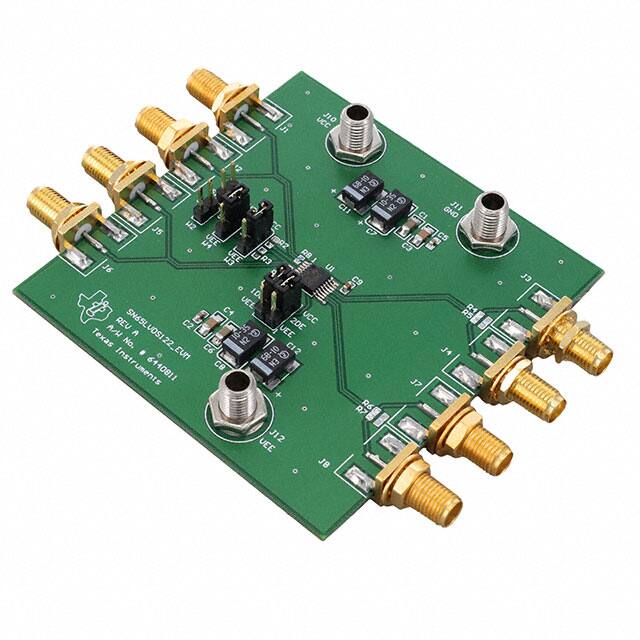
Figure 1–2 is a picture of the SN65LVDS122PW and EVM. The EVM
part number is SN65LVDS122EVM. The EVM comes with the
SN65LVDS122PW (TSSOP) installed. A copy of the data sheet is
shipped with the EVM. The lastest version of the data sheet is available
from www.ti.com.
Figure 1–2. SN65LVDS122 EVM
1-2
�Signal Paths
1.2 Signal Paths
The signal paths on this EVM include eight edge-launch SMA connectors
(J1–J8) for high-speed data transmission, two jumpers (W1, W2) for active
switch logic control, two jumpers (W3, W4) for static switch logic control, one
jumper (J9) for enabling and disabling the outputs, and three banana jacks
(J10, J11, J12) for power and ground connections.
Introduction
1-3
�1-4
�Chapter 2
���
�
�� ��
������ ���
����
This chapter describes the equipment, setup, and operation of the
SN65LVDS122EVM.
Topic
Page
2.1
Overview . . . . . . . . . . . . . . . . . . . . . . . . . . . . . . . . . . . . . . . . . . . . . . . . . . . . . 2-2
2.2
Applying an Input . . . . . . . . . . . . . . . . . . . . . . . . . . . . . . . . . . . . . . . . . . . . . 2-3
2.3
Observing an Output . . . . . . . . . . . . . . . . . . . . . . . . . . . . . . . . . . . . . . . . . . 2-4
2.4
Typical Test Results . . . . . . . . . . . . . . . . . . . . . . . . . . . . . . . . . . . . . . . . . . . 2-5
Setup and Equipment Required
2-1
�Overview
2.1 Overview
TIA/EIA–644 specifies the LVDS driver output characteristics such that it
maintains at least 247 mV across a 100-Ω differential load. This requirement
includes the effects of up to 32 standard receivers with their ground reference
up to 1 V different from that of the driver. This common-mode loading limitation
of LVDS drivers affects how they are observed and much of the test set up that
follows. By using three power jacks (J10, J11, and J12), different methods of
termination or probing the output characteristics can be observed without
exceeding the common-mode drive capability. Figure 2–1 shows the typical
setup for the SN65LVDS122EVM.
Figure 2–1. EVM Power Connections for SN65LVDS122 Evaluation
+
Power Supply #1 3.3 V
–
+
Power Supply #2 1.2 V
–
Pattern Generator
OUTPUT1
/OUTPUT1
J12
J1
J2
J11
VEE
GND
(DUT GND) (EVM GND)
R8
100 Ω
J10
VCC
J3
J4
CH1
50 Ω
CH2
50 Ω
OUTPUT2
J5
J6
R10
100 Ω
/OUTPUT2
SN65LVDS122 EVM
J7
CH3
J8
CH4
50 Ω
50 Ω
Oscilloscope
2-2
�Applying an Input
2.2 Applying an Input
When using a general-purpose signal generator with 50-Ω output impedance,
make sure that the signal levels are between 0 V and 4 V with respect to J12,
device under test ground (DUT GND), designated as VEE.
Inputs should be applied to the SMA connectors J1, J2, J5, and J6. Matched
cable lengths must be used when connecting the signal generator to the EVM
to avoid inducing skew between the noninverting and inverting inputs. The
EVM comes with 100-Ω resistors installed across the differential inputs for
LVDS termination. The simple 100-Ω terminations do not provide the
necessary termination for LVPECL or CML[1] output structures. In order to
interface the SN65LVDS122 EVM with CML or LVPECL drivers, external
terminations are required. Figure 2–2 shows an example termination for
LVPECL and CML output structures. Remove resistors R8 and R10 when
using the external terminations.
Figure 2–2. External Termination for Interfaceing CML or LVPECL Drivers
VT for LVPECL
VCC for CML
50 Ω
LVPECL or CML
Driver
A
EVM (INPUT 1 or 2)
B
50 Ω
VT for LVPECL
VCC for CML
The use of external resistors creates a significant stub between the
termination and the actual device receivers. The user needs to verify that the
transition time of the input signal, coupled with the stub length, does not lead
to reflection problems. In normal applications, the termination would be placed
as close as possible to the device inputs to minimize reflections.
The control lines S0 and S1 can be stimulated by an external 50-Ω source, via
jumpers W1 and W2. These control signals are LVTTL compatible inputs and
therefore the external source should provide LVTTL inputs relative to J12. If
S0 and S1 are controlled by an external source, then remove the jumpers from
W3 and W4 and install 50-Ω resistors R2 and R3.
[1]CML is not a standardized physical layer and therefore the output structures and required termination differ from vendor to
vendor.
Setup and Equipment Required
2-3
�Observing an Output
2.3 Observing an Output
When the SN65LVDS122 EVM is connected directly to an oscilloscope with
50–Ω internal terminations to ground; resistors R4, R5, R6, and R7 are not
needed (the EVM is shipped without R4–R7 installed). All external cabling
needs to be matched in length to prevent skew between inverting and
noninverting signals and between channels.
The three power jacks (J10, J11, and J12) are used to provide power and a
ground reference for the EVM. The power connections to the EVM determine
the common-mode load the device outputs must drive. LVDS devices have
limited common-mode driver capability and when using 50-Ω termination on
each line of the signal pair, they should be connected to a 1.2-V termination
voltage with respect to the driver ground. When connecting the EVM outputs
directly to oscilloscope inputs, the oscilloscope ground becomes termination
voltage and the objective of the three power jacks (split power plane) is to
offset the SN65LVDS122, so that the termination appears as 50 Ω to 1.2 V.
Returning to Figure 2–1, power supply #1 provides 3.3 V to the EVM and
power supply #2 provides the offset voltage. This offset is used to set the DUT
ground potential with respect to EVM GND. The ground returns in the SMA
connectors connects EVM GND to the oscilloscope ground. Optimum device
setup can be confirmed by adjusting the voltage on the offset power supply
until its current is minimized. It is important to note that use of the dual supplies
and offsetting the EVM relative to the DUT ground are steps needed for the
test and evaluation of devices. Actual designs would include high-impedance
receivers, which would not require offsetting the load.
If the EVM outputs are to be evaluated with a high-impedance probe, direct
probing on the EVM is supported via installation of a 100-Ω resistor across the
solder pads for R4 and R5 (see Figure 2–3) and another 100-Ω resistor across
the solder pads for R6 and R7. The advantage of using a high-impedance
probe is that the power supply #2 of Figure 2–1 can be omitted with J12 and
J11 connected together. In order to successfully offset the EVM, power supply
#2 must be able to sink current. The disadvantage is the possible bandwidth
limitations of the probe and measurement quality.
Figure 2–3. 100-
Parallel Termination Using Solder Pads From R4 and R5
To J3
R4
From U1
R5
100 Ω
Resistor
To J4
2-4
�Typical Test Results
2.4 Typical Test Results
Figure 2–4 is a typical result obtained with the EVM setup shown in
Figure 2–1. The upper waveform is the difference voltage between channels
1 and 2 of the oscilloscope and the lower trace is the difference voltage
between channels 3 and 4. The DUT was configured to send the 1B/1A inputs
to the outputs 2Z/2Y and inputs 2A/2B to outputs 1Y/1Z by setting 1DE and
2DE to a high level and by setting W3 and W4 to VCC. The stimuli were a 223–1
PRBS to J1 and J2 at 1.5 Gbps, and a 750 MHz clock to J5 and J6. The input
levels for both clock and data were a differential voltage of 400 mV with a
common-mode voltage of 0 V (referenced to the ground of the pattern
generator).
Figure 2–4. Typical Test Results With the SN65LVDS122EVM
Setup and Equipment Required
2-5
�2-6
�Chapter 3
��� ������
�����
This chapter provides the SN65LVDS122EVM schematic, board layers, and
bill of materials.
Topic
Page
3.1
Schematic . . . . . . . . . . . . . . . . . . . . . . . . . . . . . . . . . . . . . . . . . . . . . . . . . . . . 3-2
3.2
Board Layout Patterns . . . . . . . . . . . . . . . . . . . . . . . . . . . . . . . . . . . . . . . . 3-3
3.3
Bill of Materials . . . . . . . . . . . . . . . . . . . . . . . . . . . . . . . . . . . . . . . . . . . . . . . 3-5
EVM Construction
3-1
�Schematic
3.1 Schematic
Figure 3–1. SN65LVDS122EVM Schematic
J10
VCC
C1
C5
C3
C7
C11
J11
J3
J1
1B
J2
1A
VCC
U1
J3
R4*
VCC
R8
W1
R2*
VCC
S0
S1
VEE
S1
R3*
2DE
R10
VEE
VEE
J5
R6*
SN65LVDS122
2A
J6
J4
R5*
W3
VEE
W2
S0
1DE
VEE
W4
1Z
Cross–Point
VCC
S0
S1
1Y
C9
2B
VCC
2DE
R7*
2DE
J8
VEE
VEE
R2, R3, R4, R5, R6,
and R7 are uninstalled
2Y
VCC
VCC
1DE 1DE
J7
2Z
J9
C2
C4
C6
C8
C12
J12
VEE
3-2
�Board Layout Patterns
3.2 Board Layout Patterns
Figure 3–2. SN65LVDS122EVM Silk Screen
Figure 3–3. Signal Layer and GND Fill
Figure 3–4. Layer 2 GND Plane
EVM Construction
3-3
�Board Layout Patterns
Figure 3–5. Layer 3 Split VCC amd VEE
Figure 3–6. Layer 4 GND Plane
Figure 3–7. PCB Fabrication Notes and Stackup
Notes:
1) PWB to be fabricated to meet or exceed IPC-6012, Class 3 standards and workmanship conform to IPC-A-600,
Class 3 current revisions
2) Board material and construction to be UL approved and marked on the finished board.
3) Laminate materal: Copper-clad NELCO N4000-13 (DO NOT USE—13SI)
4) Copper weight: 1 oz finished
5) Finished thickness: 0.62” ±0.10”
6) Minimum plating thickness in through holes: 0.001”
7) SMOBC/HASL
8) LPI soldermask both sides using appropriate layer
artwork: color = green
Stackup
Single: Layer 1
0.006”
GND: Layer 2
9) LPI silkscreen as required: color = white
10)LPI soldermask both sides using appropriate layer
artwork: color = green
11) Minimum copper conductor width is: 0.010”
Minimum conductor spacing is: 0.009”
12)Number of finished layers: 4
13)Top layer 10 mil traces to be 50-Ω impedance
14)Spacing between layers 3 and 4 should be 0.006”
3-4
0.042”
Split Power: Layer 3
0.006”
GND: Layer 4
�Bill of Materials
3.3 Bill of Materials
Table 3–1. Bill of Materials for SN65LVDS122EVM—Rev A.PCB
Comment
Pattern
Qty.
Components
0.001 µF, 25 V, 5%
603
1
C9
0.01 µF, 50 V, ±10%
603
1
C2, C5
0.1 µF, 50 V, 5%
1206
2
C3, C4
100 Ω, 1/4 Watt, 1%
402
2
R8, R10
10 µF, 35 V, 10%
7343
2
C7, C8
1 µF, 25 V +80 –20%
1206
1
C6, C1
2-position jumper
2pos_jump
2
W1, W2
3-position jumper
3pos_jump
2
W3, W4
3×2×0.1
2×3×0.1
1
J9
49.9 Ω, 1/4 Watt, 1% (not installed)
603
6
R2, R3, R4, R5, R6, R7
68 µF, 10 V, 20%, Low ESR
CAP_592D_R
2
C11, C12
Banana jack
Banana jack
3
J10, J11, J12
SMA_PCB_MT_MOD
SMA_END_50–Ω
8
J1, J2, J3, J4, J5, J6, J7, J8
SN65LVDS122
16-TSSOP(PW)
1
U1
EVM Construction
3-5
�3-6
�