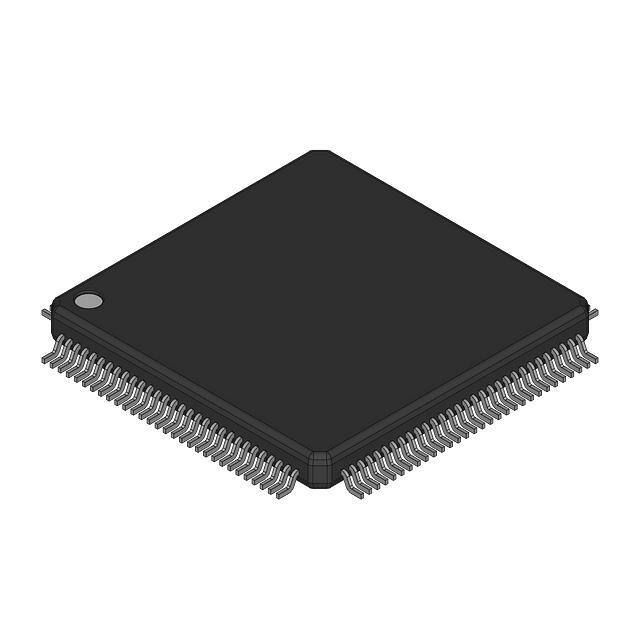
SN74ABT3613
64 × 36 CLOCKED FIRST-IN, FIRST-OUT MEMORY
WITH BUS MATCHING AND BYTE SWAPPING
SCBS128F – JULY 1992 – REVISED APRIL 1998
D
D
D
D
D
D
D
Low-Power Advanced BiCMOS Technology
Free-Running CLKA and CLKB Can Be
Asynchronous or Coincident
64 × 36 FIFO Buffering Data From Port A to
Port B
Mailbox-Bypass Registers in Each
Direction
Dynamic Port-B Bus Sizing of 36 Bits (Long
Word), 18 Bits (Word), and 9 Bits (Byte)
Selection of Big- or Little-Endian Format for
Word and Byte Bus Sizes
Three Modes of Byte-Order Swapping on
Port B
D
D
D
D
D
D
D
D
D
Programmable Almost-Full and
Almost-Empty Flags
Microprocessor Interface Control Logic
FF and AF Flags Synchronized by CLKA
EF and AE Flags Synchronized by CLKB
Passive Parity Checking on Each Port
Parity Generation Can Be Selected for Each
Port
Supports Clock Frequencies up to 67 MHz
Fast Access Times of 10 ns
Package Options Include 120-Pin Thin
Quad Flat (PCB) and 132-Pin Quad Flat
(PQ) Packages
description
The SN74ABT3613 is a high-speed, low-power BiCMOS clocked FIFO memory. It supports clock frequencies
up to 67 MHz and has read-access times as fast as 10 ns. A 64 × 36 dual-port SRAM FIFO in this device buffers
data from port A to port B. The FIFO has flags to indicate empty and full conditions and two programmable flags
(almost full and almost empty) to indicate when a selected number of words is stored in memory. FIFO data on
port B can be output in 36-bit, 18-bit, and 9-bit formats, with a choice of big- or little-endian configurations. Three
modes of byte-order swapping are possible with any bus-size selection. Communication between each port can
bypass the FIFO via two 36-bit mailbox registers. Each mailbox register has a flag to signal when new mail has
been stored. Parity is checked passively on each port and can be ignored if not desired. Parity generation can
be selected for data read from each port.
The SN74ABT3613 is a clocked FIFO, which means each port employs a synchronous interface. All data
transfers through a port are gated to the low-to-high transition of a continuous (free-running) port clock by enable
signals. The continuous clocks for each port are independent of one another and can be asynchronous or
coincident. The enables for each port are arranged to provide a simple interface between microprocessors
and/or buses controlled by a synchronous interface.
The full flag (FF) and almost-full (AF) flag of a FIFO are two-stage synchronized to the port clock that writes data
to its array. The empty flag (EF) and almost-empty (AE) flag of a FIFO are two-stage synchronized to the port
clock that reads data from its array.
The SN74ABT3613 is characterized for operation from 0°C to 70°C.
For more information on this device family, see the following application reports:
D
D
D
D
D
FIFO Mailbox-Bypass Registers: Using Bypass Registers to Initialize DMA Control
(literature number SCAA007)
Advanced Bus-Matching/Byte-Swapping Features for Internetworking FIFO Applications
(literature number SCAA014)
Parity-Generate and Parity-Check Features for High-Bandwidth-Computing FIFO Applications
(literature number SCAA015)
Internetworking the SN74ABT3614 (literature number SCAA018)
Metastability Performance of Clocked FIFOs (literature number SCZA004)
Please be aware that an important notice concerning availability, standard warranty, and use in critical applications of
Texas Instruments semiconductor products and disclaimers thereto appears at the end of this data sheet.
Copyright 1998, Texas Instruments Incorporated
PRODUCTION DATA information is current as of publication date.
Products conform to specifications per the terms of Texas Instruments
standard warranty. Production processing does not necessarily include
testing of all parameters.
POST OFFICE BOX 655303
• DALLAS, TEXAS 75265
1
�SN74ABT3613
64 × 36 CLOCKED FIRST-IN, FIRST-OUT MEMORY
WITH BUS MATCHING AND BYTE SWAPPING
SCBS128F – JULY 1992 – REVISED APRIL 1998
1
2
3
4
5
6
7
8
9
10
11
12
13
14
15
16
17
18
19
20
21
22
23
24
25
26
27
28
29
30
90
89
88
87
86
85
84
83
82
81
80
79
78
77
76
75
74
73
72
71
70
69
68
67
66
65
64
63
62
61
AF
FF
CSA
ENA
CLKA
W/RA
VCC
PGA
PEFA
MBF2
MBA
FS1
FS0
ODD/EVEN
RST
GND
BE
SW1
SW0
SIZ1
SIZ0
MBF1
PEFB
PGB
VCC
W/RB
CLKB
ENB
CSB
NC
31
32
33
34
35
36
37
38
39
40
41
42
43
44
45
46
47
48
49
50
51
52
53
54
55
56
57
58
59
60
A23
A22
A21
GND
A20
A19
A18
A17
A16
A15
A14
A13
A12
A11
A10
GND
A9
A8
A7
VCC
A6
A5
A4
A3
GND
A2
A1
A0
NC
NC
120
119
118
117
116
115
114
113
112
111
110
109
108
107
106
105
104
103
102
101
100
99
98
97
96
95
94
93
92
91
A24
A25
A26
VCC
A27
A28
A29
GND
A30
A31
A32
A33
A34
A35
GND
B35
B34
B33
B32
B31
B30
GND
B29
B28
B27
VCC
B26
B25
B24
B23
PCB PACKAGE
(TOP VIEW)
NC – No internal connection
2
POST OFFICE BOX 655303
• DALLAS, TEXAS 75265
B22
B21
GND
B20
B19
B18
B17
B16
B15
B14
B13
B12
B11
B10
GND
B9
B8
B7
VCC
B6
B5
B4
B3
GND
B2
B1
B0
EF
AE
NC
�SN74ABT3613
64 × 36 CLOCKED FIRST-IN, FIRST-OUT MEMORY
WITH BUS MATCHING AND BYTE SWAPPING
SCBS128F – JULY 1992 – REVISED APRIL 1998
AF
FF
CSA
ENA
CLKA
W/RA
VCC
PGA
PEFA
GND
MBF2
MBA
FS1
FS0
ODD/EVEN
RST
GND
BE
SW1
SW0
SIZ1
SIZ0
MBF1
GND
PEFB
PGB
VCC
W/RB
CLKB
ENB
CSB
NC
NC
PQ PACKAGE†
(TOP VIEW)
GND
NC
NC
A0
A1
A2
GND
A3
A4
A5
A6
VCC
A7
A8
A9
GND
A10
A11
VCC
A12
A13
A14
GND
A15
A16
A17
A18
A19
A20
GND
A21
A22
A23
18
19
20
21
22
23
24
25
26
27
28
29
30
31
32
33
34
35
36
37
38
39
40
41
42
43
44
45
46
47
48
49
50
17 16 15 14 13 12 11 10 9 8 7 6 5 4 3 2 1 132 130 128 126 124 122 120 118
131 129 127 125 123 121 119 117
116
115
114
113
112
111
110
109
108
107
106
105
104
103
102
101
100
99
98
97
96
95
94
93
92
91
90
89
88
87
86
85
84
GND
AE
EF
B0
B1
B2
GND
B3
B4
B5
B6
VCC
B7
B8
B9
GND
B10
B11
VCC
B12
B13
B14
GND
B15
B16
B17
B18
B19
B20
GND
B21
B22
B23
VCC
A24
A25
A26
GND
A27
A28
A29
VCC
A30
A31
A32
GND
A33
A34
A35
GND
B35
B34
B33
GND
B32
B31
B30
VCC
B29
B28
B27
GND
B26
B25
B24
VCC
51 52 53 54 55 56 57 58 59 60 61 62 63 64 65 66 67 68 69 70 71 72 73 74 75 76 77 78 79 80 81 82 83
NC – No internal connection
† Uses Yamaichi socket IC51-1324-828
POST OFFICE BOX 655303
• DALLAS, TEXAS 75265
3
�SN74ABT3613
64 × 36 CLOCKED FIRST-IN, FIRST-OUT MEMORY
WITH BUS MATCHING AND BYTE SWAPPING
SCBS128F – JULY 1992 – REVISED APRIL 1998
functional block diagram
CLKA
CSA
W/RA
ENA
MBA
Port-A
Control
Logic
MBF1
ODD/
EVEN
36
FF
AF
Write
Pointer
Output Register
Device
Control
Bus Matching and
Byte Swapping
RST
PGB
Parity
Generation
Input Register
Mail1
Register
64 × 36
SRAM
PEFB
Parity
Gen/Check
36
Read
Pointer
Status-Flag
Logic
EF
AE
FIFO
FS0
FS1
A0–A35
Programmable-Flag
Offset Register
B0–B35
PGA
PEFA
Parity
Gen/Check
Mail2
Register
MBF2
Port-B
Control
Logic
4
POST OFFICE BOX 655303
• DALLAS, TEXAS 75265
CLKB
CSB
W/RB
ENB
BE
SIZ0
SIZ1
SW0
SW1
�SN74ABT3613
64 × 36 CLOCKED FIRST-IN, FIRST-OUT MEMORY
WITH BUS MATCHING AND BYTE SWAPPING
SCBS128F – JULY 1992 – REVISED APRIL 1998
Terminal Functions
TERMINAL
NAME
I/O
A0–A35
I/O
DESCRIPTION
Port-A data. The 36-bit bidirectional data port for side A.
AE
O
(port B)
Almost-empty flag. Programmable almost-empty flag synchronized to CLKB. AE is low when the number of 36-bit
words in the FIFO is less than or equal to the value in offset register X.
AF
O
(port A)
Almost-full flag. Programmable almost-full flag synchronized to CLKA. AF is low when the number of 36-bit empty
locations in the FIFO is less than or equal to the value in offset register X.
B0–B35
I/O
Port-B data. The 36-bit bidirectional data port for side B.
BE
I
Big-endian select. Selects the bytes on port B used during byte or word FIFO reads. A low on BE selects the
most-significant bytes on B0–B35 for use, and a high selects the least-significant bytes.
CLKA
I
Port-A clock. CLKA is a continuous clock that synchronizes all data transfers through port A and can be
asynchronous or coincident to CLKB. FF and AF are synchronized to the low-to-high transition of CLKA.
CLKB
I
Port-B clock. CLKB is a continuous clock that synchronizes all data transfers through port B and can be
asynchronous or coincident to CLKA. Port-B byte swapping and data-port-sizing operations are also synchronous
to the low-to-high transition of CLKB. EF and AE are synchronized to the low-to-high transition of CLKB.
CSA
I
Port-A chip select. CSA must be low to enable a low-to-high transition of CLKA to read or write data on port A. The
A0–A35 outputs are in the high-impedance state when CSA is high.
CSB
I
Port-B chip select. CSB must be low to enable a low-to-high transition of CLKB to read or write data on port B. The
B0–B35 outputs are in the high-impedance state when CSB is high.
O
(port B)
Empty flag. EF is synchronized to the low-to-high transition of CLKB. When EF is low, the FIFO is empty and reads
from its memory are disabled. Data can be read from the FIFO to the output register when EF is high. EF is forced
low when the device is reset and is set high by the second low-to-high transition of CLKB after data is loaded into
empty FIFO memory.
EF
ENA
I
Port-A enable. ENA must be high to enable a low-to-high transition of CLKA to read or write data on port A.
ENB
I
Port-B enable. ENB must be high to enable a low-to-high transition of CLKB to read or write data on port B.
O
(port A)
Full flag. FF is synchronized to the low-to-high transition of CLKA. When FF is low, the FIFO is full and writes to its
memory are disabled. FF is forced low when the device is reset and is set high by the second low-to-high transition
of CLKA after reset.
FS1
FS0
I
Flag offset selects. The low-to-high transition of RST latches the values of FS0 and FS1, which selects one of four
preset values for the AE flag and AF flag offset.
MBA
I
Port-A mailbox select. A high level on MBA chooses a mailbox register for a port-A read or write operation. When
the A0–A35 outputs are active, mail2 register data is output.
MBF1
O
Mail1 register flag. MBF1 is set low by the low-to-high transition of CLKA that writes data to the mail1 register. Writes
to the mail1 register are inhibited while MBF1 is low. MBF1 is set high by a low-to-high transition of CLKB when a
port-B read is selected and both SIZ1 and SIZ0 are high. MBF1 is set high when the device is reset.
MBF2
O
Mail2 register flag. MBF2 is set low by the low-to-high transition of CLKB that writes data to the mail2 register. Writes
to the mail2 register are inhibited while MBF2 is low. MBF2 is set high by a low-to-high transition of CLKA when a
port-A read is selected and MBA is high. MBF2 is set high when the device is reset.
ODD/EVEN
I
Odd/even parity select. Odd parity is checked on each port when ODD/EVEN is high and even parity is checked when
ODD/EVEN is low. ODD/EVEN also selects the type of parity generated for each port if parity generation is enabled
for a read operation.
FF
PEFA
O
(port A)
Port-A parity error flag. When any byte applied to terminals A0–A35 fails parity, PEFA is low. Bytes are organized
as A0–A8, A9–A17, A18–A26, and A27–A35, with the most-significant bit of each byte serving as the parity bit. The
type of parity checked is determined by the state of ODD/EVEN.
The parity trees used to check the A0–A35 inputs are shared by the mail2 register to generate parity if parity
generation is selected by PGA; therefore, if a mail2 read with parity generation is set up by having CSA low, ENA
high, W/RA low, MBA high, and PGA high, the PEFA flag is forced high, regardless of the state of the A0–A35 inputs.
POST OFFICE BOX 655303
• DALLAS, TEXAS 75265
5
�SN74ABT3613
64 × 36 CLOCKED FIRST-IN, FIRST-OUT MEMORY
WITH BUS MATCHING AND BYTE SWAPPING
SCBS128F – JULY 1992 – REVISED APRIL 1998
Terminal Functions (Continued)
TERMINAL
NAME
I/O
DESCRIPTION
Port-B parity error flag. When any valid byte applied to terminals B0–B35 fails parity, PEFB is low. Bytes are
organized as B0–B8, B9–B17, B18–B26, and B27–B35 with the most-significant bit of each byte serving as the parity
bit. A byte is valid when it is used by the bus size selected for port B. The type of parity checked is determined by
the state of ODD/EVEN.
PEFB
O
(port B)
PGA
I
Port-A parity generation. Parity is generated for data reads from the mail2 register when PGA is high. The type of
parity generated is selected by the state of ODD/EVEN. Bytes are organized as A0–A8, A9–A17, A18–A26, and
A27–A35. The generated parity bits are output in the most-significant bit of each byte.
PGB
I
Port-B parity generation. Parity is generated for data reads from port B when PGB is high. The type of parity
generated is selected by the state of ODD/EVEN. Bytes are organized as B0–B8, B9–B17, B18–B26, and B27–B35.
The generated parity bits are output in the most-significant bit of each byte.
RST
I
Reset. To reset the device, four low-to-high transitions of CLKA and four low-to-high transitions of CLKB must occur
while RST is low. This sets the AF, MBF1, and MBF2 flags high and the EF, AE, and FF flags low. The low-to-high
transition of RST latches the status of the FS1 and FS0 inputs to select AF flag and AE flag offset.
SIZ0
SIZ1
I
(port B)
Port-B bus size selects. The low-to-high transition of CLKB latches the states of SIZ0, SIZ1, and BE, and the following
low-to-high transition of CLKB implements the latched states as a port-B bus size. Port-B bus sizes can be long word,
word, or byte. A high on both SIZ0 and SIZ1 accesses the mailbox registers for a port-B 36-bit write or read.
SW0
SW1
I
(port B)
Port-B byte swap selects. At the beginning of each long-word FIFO read, one of four modes of byte-order swapping
is selected by SW0 and SW1. The four modes are no swap, byte swap, word swap, and byte-word swap. Byte-order
swapping is possible with any bus-size selection.
W/RA
I
Port-A write/read select. W/RA high selects a write operation and a low selects a read operation on port A for a
low-to-high transition of CLKA. The A0–A35 outputs are in the high-impedance state when W/RA is high.
W/RB
I
Port-B write/read select. W/RB high selects a write operation and a low selects a read operation on port B for a
low-to-high transition of CLKB. The B0–B35 outputs are in the high-impedance state when W/RB is high.
The parity trees used to check the B0–B35 inputs are shared by the mail1 register to generate parity if parity
generation is selected by PGB; therefore, if a mail1 read with parity generation is set up by having CSB low, ENB
high, W/RB low, SIZ1 and SIZ0 high, and PGB high, the PEFB flag is forced high, regardless of the state of the
B0–B35 inputs.
detailed description
reset
The SN74ABT3613 is reset by taking the reset (RST) input low for at least four port-A clock (CLKA) and four
port-B clock (CLKB) low-to-high transitions. The reset input can switch asynchronously to the clocks. A device
reset initializes the internal read and write pointers of each FIFO and forces FF low, EF low, AE low, and the
AF high. A reset also forces the mailbox flags (MBF1, MBF2) high. After a reset, FF is set high after two
low-to-high transitions of CLKA. The device must be reset after power up before data is written to its memory.
A low-to-high transition on the RST input loads the AF and AE offset register (X) with the value selected by the
flag-select (FS0, FS1) inputs. The values that can be loaded into the register are shown in Table 1.
Table 1. Flag Programming
6
FS1
FS0
RST
AF/AE FLAG
OFFSET REGISTER (X)
H
H
↑
16
H
L
↑
12
L
H
↑
8
L
L
↑
4
POST OFFICE BOX 655303
• DALLAS, TEXAS 75265
�SN74ABT3613
64 × 36 CLOCKED FIRST-IN, FIRST-OUT MEMORY
WITH BUS MATCHING AND BYTE SWAPPING
SCBS128F – JULY 1992 – REVISED APRIL 1998
FIFO write/read operation
The state of the port-A data (A0–A35) outputs is controlled by the port-A chip select (CSA) and the port-A
write/read select (W/RA). The A0–A35 outputs are in the high-impedance state when either CSA or W/RA is
high. The A0–A35 outputs are active when both CSA and W/RA are low. Data is loaded into the FIFO from the
A0–A35 inputs on a low-to-high transition of CLKA when CSA is low, W/RA is high, ENA is high, MBA is low,
and FFA is high (see Table 2).
Table 2. Port-A Enable Function Table
CSA
W/RA
ENA
MBA
CLKA
A0–A35 OUTPUTS
PORT FUNCTION
H
X
X
X
X
In high-impedance state
None
L
H
L
X
X
In high-impedance state
None
L
H
H
L
↑
In high-impedance state
FIFO write
L
H
H
H
↑
In high-impedance state
Mail1 write
L
L
L
L
X
Active, mail2 register
None
L
L
H
L
↑
Active, mail2 register
None
L
L
L
H
X
Active, mail2 register
None
L
L
H
H
↑
Active, mail2 register
Mail2 read (set MBF2 high)
The state of the port-B data (B0–B35) outputs is controlled by the port-B chip select (CSB) and the port-B
write/read select (W/RB). The B0–B35 outputs are in the high-impedance state when either CSB or W/RB is
high. The B0–B35 outputs are active when both CSB and W/RB are low. Data is read from the FIFO to the
B0–B35 outputs by a low-to-high transition of CLKB when CSB is low, W/RB is low, ENB is high, EFB is high,
and either SIZ0 or SIZ1 is low (see Table 3).
Table 3. Port-B Enable Function Table
CSB
W/RB
ENB
SIZ1, SIZ0
CLKB
B0–B35 OUTPUTS
PORT FUNCTION
H
X
X
X
X
In high-impedance state
None
L
H
L
X
X
In high-impedance state
None
L
H
H
One, both low
↑
In high-impedance state
None
L
H
H
Both high
↑
In high-impedance state
Mail2 write
L
L
L
One, both low
X
Active, FIFO output register
None
L
L
H
One, both low
↑
Active, FIFO output register
FIFO read
L
L
L
Both high
X
Active, mail1 register
None
L
L
H
Both high
↑
Active, mail1 register
Mail1 read (set MBF1 high)
The setup- and hold-time constraints to the port clocks for the port-chip selects (CSA, CSB) and write/read
selects (W/RA, W/RB) are only for enabling write and read operations and are not related to high-impedance
control of the data outputs. If a port enable is low during a clock cycle, the port chip select and write/read select
can change states during the setup- and hold-time window of the cycle.
POST OFFICE BOX 655303
• DALLAS, TEXAS 75265
7
�SN74ABT3613
64 × 36 CLOCKED FIRST-IN, FIRST-OUT MEMORY
WITH BUS MATCHING AND BYTE SWAPPING
SCBS128F – JULY 1992 – REVISED APRIL 1998
synchronized FIFO flags
Each FIFO flag is synchronized to its port clock through two flip-flop stages. This is done to improve flag reliability
by reducing the probability of metastable events on the output when CLKA and CLKB operate asynchronously
to one another. FF and AF are synchronized to CLKA. EF and AE are synchronized to CLKB. Table 4 shows
the relationship of each port flag to the level of FIFO fill.
Table 4. FIFO Flag Operation
NUMBER OF 36-BIT
WORDS IN THE FIFO†
SYNCHRONIZED
TO CLKB
SYNCHRONIZED
TO CLKA
EF
AE
AF
FF
0
L
L
H
H
1 to X
H
L
H
H
(X + 1) to [64 – (X + 1)]
H
H
H
H
(64 – X) to 63
H
H
L
H
64
H
H
L
† X is the value in the AE flag and AF flag offset register.
L
empty flag (EF)
The FIFO EF is synchronized to the port clock that reads data from its array (CLKB). When the empty flag is
high, new data can be read to the FIFO output register. When the empty flag is low, the FIFO is empty and
attempted FIFO reads are ignored. When reading the FIFO with a byte or word size on port B, EF is set low when
the fourth byte or second word of the last long word is read.
The FIFO read pointer is incremented each time a new word is clocked to the output register. A word written
to the FIFO can be read to the FIFO output register in a minimum of three port-B clock (CLKB) cycles. An EF
is low if a word in memory is the next data to be sent to the FIFO output register and two cycles of the port clock
that reads data from the FIFO have not elapsed since the time the word was written. The FIFO EF is set high
by the second low-to-high transition of CLKB and the new data word can be read to the FIFO output register
in the following cycle.
A low-to-high transition on CLKB begins the first synchronization cycle of a write if the clock transition occurs
at time tsk1, or greater, after the write. Otherwise, the subsequent clock cycle can be the first synchronization
cycle (see Figure 9).
full flag (FF)
The FIFO FF is synchronized to the port clock that writes data to its array (CLKA). When FF is high, a memory
location is free in the SRAM to receive new data. No memory locations are free when FF is low and attempted
writes to the FIFO are ignored.
Each time a word is written to the FIFO, the write pointer is incremented. From the time a word is read from the
FIFO, the previous memory location is ready to be written in a minimum of three CLKA cycles. FF is low if fewer
than two CLKA cycles have elapsed since the next memory-write location has been read. The second
low-to-high transition on the FF synchronizing clock after the read sets the FF high and data can be written in
the following clock cycle.
A low-to-high transition on CLKA begins the first synchronization cycle of a read if the clock transition occurs
at time tsk1, or greater, after the read. Otherwise, the subsequent clock cycle can be the first synchronization
cycle (see Figure 10).
8
POST OFFICE BOX 655303
• DALLAS, TEXAS 75265
�SN74ABT3613
64 × 36 CLOCKED FIRST-IN, FIRST-OUT MEMORY
WITH BUS MATCHING AND BYTE SWAPPING
SCBS128F – JULY 1992 – REVISED APRIL 1998
almost-empty flag (AE)
The FIFO AE flag is synchronized to the port clock that reads data from its array (CLKB). The almost-empty state
is defined by the value of the AF and AE offset register (X). This register is loaded with one of four preset values
during a device reset (see reset). An AE flag is low when the FIFO contains X or fewer long words in memory
and is high when the FIFO contains (X + 1) or more long words.
Two low-to-high transitions of CLKB are required after a FIFO write for the AE flag to reflect the new level of
fill; therefore, the AE flag of a FIFO containing (X + 1) or more long words remains low if two CLKB cycles have
not elapsed since the write that filled the memory to the (X + 1) level. An AE flag is set high by the second
low-to-high transition of CLKB after the FIFO write that fills memory to the (X + 1) level. A low-to-high transition
of CLKB begins the first synchronization cycle if it occurs at time tsk2, or greater, after the write that fills the FIFO
to (X + 1) long words. Otherwise, the subsequent CLKB cycle can be the first synchronization cycle
(see Figure 11).
almost-full flag (AF)
The FIFO AF flag is synchronized to the port clock that writes data to its array (CLKA). The almost-full state is
defined by the value of the AF and AE offset register (X). This register is loaded with one of four preset values
during a device reset (see reset). An AF flag is low when the FIFO contains (64 – X) or more long words in
memory and is high when the FIFO contains [64 – (X + 1)] or less long words.
Two low-to-high transitions of CLKA are required after a FIFO read for the AF flag to reflect the new level of fill;
therefore, the AF flag of a FIFO containing [64 – (X + 1)] or fewer words remains low if two CLKA cycles have
not elapsed since the read that reduced the number of long words in memory to [64 – (X + 1)]. An AF flag is
set high by the second low-to-high transition of CLKA after the FIFO read that reduces the number of long words
in memory to [64 – (X + 1)]. A low-to-high transition of CLKA begins the first synchronization cycle if it occurs
at time tsk2, or greater, after the read that reduces the number of long words in memory to [64 – (X + 1)].
Otherwise, the subsequent CLKA cycle can be the first synchronization cycle (see Figure 12).
mailbox registers
Two 36-bit bypass registers (mail1, mail2) are on board the SN74ABT3613 to pass command and control
information between port A and port B without putting it in queue. A low-to-high transition on CLKA writes
A0–A35 data to the mail1 register when a port-A write is selected by CSA, W/RA, and ENA, and MBA is high.
A low-to-high transition on CLKB writes B0–B35 data to the mail2 register when a port-B write is selected by
(CSB, W/RB, and ENB) and both SIZ0 and SIZ1 are high. Writing data to a mail register sets the corresponding
flag (MBF1 or MBF2) low. Attempted writes to a mail register are ignored while the mail flag is low.
When the port-B data outputs (B0–B35) are active, the data on the bus comes from the FIFO output register
when either one or both SIZ1 and SIZ0 are low and from the mail1 register when both SIZ1 and SIZ0 are high.
The mail1 register flag (MBF1) is set high by a rising CLKB edge when a port-B read is selected by CSB, W/RB,
and ENB, and both SIZ1 and SIZ0 are high. The mail2 register flag (MBF2) is set high by a rising CLKA edge
when a port-A read is selected by CSA, W/RA, and ENA and MBA is high. The data in the mail register remains
intact after it is read and changes only when new data is written to the register.
POST OFFICE BOX 655303
• DALLAS, TEXAS 75265
9
�SN74ABT3613
64 × 36 CLOCKED FIRST-IN, FIRST-OUT MEMORY
WITH BUS MATCHING AND BYTE SWAPPING
SCBS128F – JULY 1992 – REVISED APRIL 1998
dynamic bus sizing
The port-B bus can be configured in a 36-bit long word, 18-bit word, or 9-bit byte format for data read from the
FIFO. Word- and byte-size bus selections can utilize the most-significant bytes of the bus (big endian) or
least-significant bytes of the bus (little endian). Port-B bus size can be changed dynamically and synchronous
to CLKB to communicate with peripherals of various bus widths.
The levels applied to the port-B bus-size select (SIZ0, SIZ1) inputs and the big-endian select (BE) input are
stored on each CLKB low-to-high transition. The stored port-B bus-size selection is implemented by the next
rising edge on CLKB according to Figure 1.
Only 36-bit long-word data is written to or read from the FIFO memory on the SN74ABT3613. Bus-matching
operations are done after data is read from the FIFO RAM. Port-B bus sizing does not apply to mail-register
operations.
A35
BYTE ORDER ON PORT A:
A27 A26
A
B35
BE
SIZ1
SIZ0
X
L
L
A18
A17
B
B27 B26
A
A9
A8
C
B18
B17
B
A0
Write to FIFO
D
B9
B8
C
B0
Read From FIFO
D
(a) LONG-WORD SIZE
B35
BE
SIZ1
SIZ0
L
L
H
B27 B26
A
B35
B18
B
B27 B26
C
B18
D
ÎÎÎÎÎÎ
ÎÎÎÎÎÎ
ÎÎÎ
ÎÎÎ
ÎÎÎÎÎÎ
ÎÎÎÎÎÎ
ÎÎÎÎÎÎ
B17
B9
B17
B9
B8
B0
B8
1st: Read From FIFO
B0
2nd: Read From FIFO
(b) WORD SIZE – BIG ENDIAN
ÎÎÎÎÎÎ
ÎÎÎÎÎÎ
ÎÎÎ
ÎÎÎ
ÎÎÎÎÎÎ
ÎÎÎÎÎÎ
ÎÎÎÎÎÎ
B35
BE
SIZ1
SIZ0
H
L
H
B35
B27 B26
B27 B26
B18
B18
B17
B9
C
B17
B9
A
Figure 1. Dynamic Bus Sizing
POST OFFICE BOX 655303
• DALLAS, TEXAS 75265
B0
1st: Read From FIFO
D
(c) WORD SIZE – LITTLE ENDIAN
10
B8
B8
B0
B
2nd: Read From FIFO
�SN74ABT3613
64 × 36 CLOCKED FIRST-IN, FIRST-OUT MEMORY
WITH BUS MATCHING AND BYTE SWAPPING
ÎÎÎÎÎÎ
ÎÎÎÎÎÎ
ÎÎÎ
ÎÎÎ
ÎÎÎÎÎÎ
ÎÎÎÎÎÎ
ÎÎÎ
ÎÎÎÎÎÎ
ÎÎÎ
ÎÎÎÎÎÎ
ÎÎÎ
ÎÎÎ
ÎÎÎÎÎÎ
ÎÎÎÎÎÎ
ÎÎÎÎÎÎ
ÎÎÎÎÎÎÎÎÎ
ÎÎÎÎÎÎÎÎÎ
ÎÎÎ
ÎÎÎ
ÎÎÎ
ÎÎÎÎÎÎÎÎÎ
ÎÎÎÎÎÎÎÎÎ
ÎÎÎ
ÎÎÎ
ÎÎÎ
ÎÎÎÎÎÎÎÎÎ
ÎÎÎÎÎÎÎÎÎ
ÎÎÎ
ÎÎÎ
ÎÎÎ
ÎÎÎÎÎÎÎÎÎ
ÎÎÎÎÎÎÎÎÎ
ÎÎÎÎÎÎÎÎÎ
B35
BE
SIZ1
SIZ0
L
H
L
B27 B26
B18
B17
B9
A
B35
B27 B26
B18
B17
B9
B
B35
B27 B26
B18
B17
B9
C
B35
B27 B26
B18
B17
B9
D
(d) BYTE SIZE – BIG ENDIAN
B35
BE
SIZ1
SIZ0
H
H
L
B35
B35
B35
B27 B26
B27 B26
B27 B26
B27 B26
B18
B18
B18
B18
B17
B17
B17
B17
B9
B9
B9
B9
SCBS128F – JULY 1992 – REVISED APRIL 1998
ÎÎÎ
ÎÎÎ
ÎÎÎ
ÎÎÎ
ÎÎÎ
ÎÎÎ
ÎÎÎ
ÎÎÎ
ÎÎÎ
ÎÎÎ
ÎÎÎ
ÎÎÎ
B8
B0
1st: Read From FIFO
B8
B0
2nd: Read From FIFO
B8
B0
3rd: Read From FIFO
B8
B0
4th: Read From FIFO
B8
B0
1st: Read From FIFO
D
B8
B0
2nd: Read From FIFO
C
B8
B0
3rd: Read From FIFO
B
B8
B0
A
4th: Read From FIFO
(e) BYTE SIZE – LITTLE ENDIAN
Figure 1. Dynamic Bus Sizing (Continued)
bus-matching FIFO reads
Data is read from the FIFO RAM in 36-bit long-word increments. If a long-word bus size is implemented, the
entire long word immediately shifts to the FIFO output register upon a read. If byte or word size is implemented
on port B, only the first one or two bytes appear on the selected portion of the FIFO output register with the rest
of the long word stored in auxiliary registers. In this case, subsequent FIFO reads with the same bus-size
implementation output the rest of the long word to the FIFO output register in the order shown by Figure 1.
Each FIFO read with a new bus-size implementation automatically unloads data from the FIFO RAM to its output
register and auxiliary registers. Implementing a new port-B bus size and performing a FIFO read before all bytes
or words stored in the auxiliary registers have been read results in a loss of the unread data in these registers.
When reading data from FIFO in byte or word format, the unused B0–B35 outputs remain inactive but static,
with the unused FIFO output register bits holding the last data value to decrease power consumption.
POST OFFICE BOX 655303
• DALLAS, TEXAS 75265
11
�SN74ABT3613
64 × 36 CLOCKED FIRST-IN, FIRST-OUT MEMORY
WITH BUS MATCHING AND BYTE SWAPPING
SCBS128F – JULY 1992 – REVISED APRIL 1998
port-B mail-register access
In addition to selecting port-B bus sizes for FIFO reads, the port-B bus-size select (SIZ0, SIZ1) inputs also
access the mail registers. When both SIZ0 and SIZ1 are high, the mail1 register is accessed for a port-B
long-word read and the mail2 register is accessed for a port-B long-word write. The mail register is accessed
immediately. Any bus-sizing operation that is underway is unaffected by the mail-register access. After the
mail-register access is complete, the previous FIFO access can resume in the next CLKB cycle. The logic
diagram in Figure 2 shows the previous bus-size selection is preserved when the mail registers are accessed
from port B. A port-B bus size is implemented on each rising CLKB edge according to the states of SIZ0_Q,
SIZ1_Q, and BE_Q.
CLKB
MUX
G1
1
SIZ0_Q
D
Q
SIZ0
SIZ1
SIZ1_Q
BE_Q
1
BE
Figure 2. Logic Diagram for SIZ0, SIZ1, and BE Register
byte swapping
The byte-order arrangement of data read from the FIFO can be changed synchronous to the rising edge of
CLKB. Byte-order swapping is not available for mail-register data. Four modes of byte-order swapping
(including no swap) can be done with any data-port-size selection. The order of the bytes is rearranged within
the long word, but the bit order within the bytes remains constant.
Byte arrangement is chosen by the port-B swap-select (SW0, SW1) inputs on a CLKB rising edge that reads
a new long word from the FIFO. The byte order chosen on the first byte or first word of a new long-word read
from the FIFO is maintained until the entire long word is transferred, regardless of the SW0 and SW1 states
during subsequent reads. Figure 3 is an example of the byte-order swapping available for long-word reads.
Performing a byte swap and bus size simultaneously for a FIFO read rearranges the bytes as shown in Figure 3,
then outputs the bytes as shown in Figure 1.
12
POST OFFICE BOX 655303
• DALLAS, TEXAS 75265
�SN74ABT3613
64 × 36 CLOCKED FIRST-IN, FIRST-OUT MEMORY
WITH BUS MATCHING AND BYTE SWAPPING
SCBS128F – JULY 1992 – REVISED APRIL 1998
A35
SW1
SW0
L
L
A27 A26
A18
A17
A9
A8
A0
A
B
C
D
A
B
C
D
B35
B27 B26
B18
B17
B9
B8
B0
A18
A17
A9
A8
A0
(a) NO SWAP
A35
SW1
SW0
L
H
A27 A26
A
B
C
D
D
C
B
A
B35
B27 B26
B18
B17
B9
B8
B0
A17
A9
A8
A0
(b) BYTE SWAP
A35
SW1
SW0
H
L
A27 A26
A18
A
B
C
D
C
D
A
B
B35
B27 B26
B18
B17
B9
B8
B0
A17
A9
A8
A0
(c) WORD SWAP
A35
SW1
SW0
H
H
B35
A27 A26
A18
A
B
C
D
B
A
D
C
B27 B26
B18
B17
B9
B8
B0
(d) BYTE-WORD SWAP
Figure 3. Byte Swapping for FIFO Reads (Long-Word Size Example)
POST OFFICE BOX 655303
• DALLAS, TEXAS 75265
13
�SN74ABT3613
64 × 36 CLOCKED FIRST-IN, FIRST-OUT MEMORY
WITH BUS MATCHING AND BYTE SWAPPING
SCBS128F – JULY 1992 – REVISED APRIL 1998
parity checking
The port-A data inputs (A0–A35) and port-B data inputs (B0–B35) each have four parity trees to check the parity
of incoming (or outgoing) data. A parity failure on one or more bytes of the port-A data bus is reported by a low
level on the port-A parity error flag (PEFA). A parity failure on one or more bytes of the port-B data inputs that
are valid for the bus-size implementation is reported by a low level on the port-B parity-error flag (PEFB). Odd
or even parity checking can be selected and the parity-error flags can be ignored if this feature is not desired.
Parity status is checked on each input bus according to the level of the odd/even parity (ODD/EVEN) select
input. A parity error on one or more valid bytes of a port is reported by a low level on the corresponding port
parity-error flag (PEFA, PEFB) output. Port-A bytes are arranged as A0–A8, A9–A17, A18–A26, and A27–A35.
Port-B bytes are arranged as B0–B8, B9–B17, B18–B26, and B27–B35, and its valid bytes are those used in
a port-B bus-size implementation. When odd/even parity is selected, a port parity-error flag (PEFA, PEFB) is
low if any valid byte on the port has an odd/even number of low levels applied to the bits.
The four parity trees used to check the A0–A35 inputs are shared by the mail2 register when parity generation
is selected for port-A reads (PGA = high). When a port-A read from the mail2 register with parity generation is
selected with CSA low, ENA high, W/RA low, MBA high, and PGA high, PEFA is held high, regardless of the
levels applied to the A0–A35 inputs. Likewise, the parity trees used to check the B0–B35 inputs are shared by
the mail1 register when parity generation is selected for port-B reads (PGB = high). When a port-B read from
the mail1 register with parity generation is selected with CSB low, ENB high, W/RB low, both SIZ0 and SIZ1 high,
and PGB high, PEFB is held high, regardless of the levels applied to the B0–B35 inputs.
parity generation
A high level on the port-A parity-generate select (PGA) or port-B parity-generate select (PGB) enables the
SN74ABT3613 to generate parity bits for port reads from a FIFO or mailbox register. Port-A bytes are arranged
as A0–A8, A9–A17, A18–A26, and A27–A35, with the most-significant bit of each byte used as the parity bit.
Port-B bytes are arranged as B0–B8, B9–B17, B18–B26, and B27–B35 with the most-significant bit of each byte
used as the parity bit. A write to a FIFO or mail register stores the levels applied to all nine inputs of a byte,
regardless of the state of the parity-generate select (PGA, PGB) inputs. When data is read from a port with parity
generation selected, the lower eight bits of each byte are used to generate a parity bit according to the level on
the ODD/EVEN select. The generated parity bits are substituted for the levels originally written to the
most-significant bits of each byte as the word is read to the data outputs.
Parity bits for FIFO data are generated after the data is read from SRAM and before the data is written to the
output register. The port-A parity-generate select (PGA) and odd/even parity select (ODD/EVEN) have setupand hold-time constraints to the port-A clock (CLKA) and the port-B parity-generate select (PGB) and
ODD/EVEN select have setup- and hold-time constraints to the port-B clock (CLKB). These timing constraints
apply only for a rising clock edge used to read a new long word to the FIFO output register.
The circuit used to generate parity for the mail1 data is shared by the port-B bus (B0–B35) to check parity. The
circuit used to generate parity for the mail2 data is shared by the port-A bus (A0–A35) to check parity. The shared
parity trees of a port are used to generate parity bits for the data in a mail register when the port-chip select (CSA,
CSB) is low, enable (ENA, ENB) is high, and write/read select (W/RA, W/RB) input is low, the mail register is
selected (MBA is high for port A; both SIZ0 and SIZ1 are high for port B), and port parity-generate select (PGA,
PGB) is high. Generating parity for mail-register data does not change the contents of the register.
14
POST OFFICE BOX 655303
• DALLAS, TEXAS 75265
�SN74ABT3613
64 × 36 CLOCKED FIRST-IN, FIRST-OUT MEMORY
WITH BUS MATCHING AND BYTE SWAPPING
SCBS128F – JULY 1992 – REVISED APRIL 1998
CLKA
th(RS)
CLKB
tsu(RS)
RST
FS1, FS0
th(FS)
tsu(FS)
ÌÌÌÌÌÌÌÌÌÌÌÌÌÌÌÌÌ ÌÌÌÌÌÌÌÌÌÌÌÌ
ÌÌÌÌÌÌÌÌÌÌÌÌÌÌÌÌÌ
ÌÌÌÌÌÌÌÌÌÌÌÌ
ÏÏÏÏÏÏÏÏÏÏÏ
ÏÏÏÏÏÏÏÏÏÏÏ
ÏÏÏÏÏÏÏÏÏÏÏÏ
ÏÏÏÏÏÏÏÏÏÏÏÏ
ÎÎÎÎÎÎÎÎÎÎÎ
ÎÎÎÎÎÎÎÎÎÎÎ
ÎÎÎÎÎÎÎ
ÎÎÎÎÎÎÎ
0,1
tpd(C-FF)
FF
tpd(C-FF)
tpd(C-EF)
EF
tpd(C-AE)
AE
tpd(C-AF)
AF
MBF1,
MBF2
tpd(R-F)
Figure 4. Device Reset Loading the X Register With the Value of Eight
tc
tw(CLKH)
tw(CLKL)
CLKA
FFA
CSA
W/RA
MBA
ENA
ÌÌÌ
ÌÌÌ
ÎÎÎÎÎÎÎ ÌÌÌ
ÏÏÏÏÏÏ
ÎÎÎÎÎÎÎ
ÌÌÌ
ÏÏÏÏÏÏ
ÏÏÏÏÏÏÏ ÌÌÌ
ÎÎÎÎÎÎ
ÏÏÏÏÏÏÏ
ÌÌÌ
ÎÎÎÎÎÎ
ÎÎÎÎÎÎÎ ÌÌÌÌÌÌÌ ÏÏÏÏÏÏ ÎÎÎÎÎÎ
ÎÎÎÎÎÎÎ
ÌÌÌÌÌÌÌ
ÏÏÏÏÏÏ
ÎÎÎÎÎÎ
ÌÌÌÌÌÌÌ ÌÌÌÌÌÌ ÌÌÌÌÌÌÌÌÌÌÌÌÌÌ
ÌÌÌÌÌÌÌ
ÌÌÌÌÌÌ
ÌÌÌÌÌÌÌÌÌÌÌÌÌÌ
ÌÌ
ÌÌ
ÌÌ
ÌÌ
ÌÌÌÌÌÌÌÌ ÌÌÌÌÌÌ ÌÌÌÌÌÌÌÌÌÌÌÌÌ
ÌÌÌÌÌÌÌÌ ÌÌÌÌÌÌ ÌÌÌÌÌÌÌÌÌÌÌÌÌ
High
tsu(EN)
th(EN)
tsu(EN)
th(EN)
tsu(EN)
th(EN)
tsu(EN)
th(EN)
tsu(D)
A0–A35
ODD/
EVEN
th(EN)
tsu(EN)
th(D)
W1†
W2†
tpd(D-PE)
PEFA
th(EN)
tsu(EN)
No Operation
tpd(D-PE)
Valid
Valid
† Written to the FIFO
Figure 5. FIFO Write Cycle
POST OFFICE BOX 655303
• DALLAS, TEXAS 75265
15
�SN74ABT3613
64 × 36 CLOCKED FIRST-IN, FIRST-OUT MEMORY
WITH BUS MATCHING AND BYTE SWAPPING
SCBS128F – JULY 1992 – REVISED APRIL 1998
CLKB
EF
High
ÏÏÏÏÏÏÏÏ
ÏÏÏÏÏÏÏÏ
ÎÎÎÎÎÎÎÎÎÎ
ÌÌÌÌÌÌÌÌÌÌ
ÌÌ ÌÌÌÌÌÌ
ÌÌ
ÌÌ
ÌÌÌÌÌÌÌÌÌÌ
ÌÌÌÌÌÌÌÌÌÌ
CSB
W/RB
tsu(EN)
ENB
tsu(SW)
SW1,
SW0
tsu(SZ)
th(SZ)
BE
tsu(SZ)
SIZ1,
SIZ0
th(SZ)
(0, 0)
Not (1, 1)†
th(EN)
tsu(EN)
ten
B0–B35
th(EN)
No Operation
th(SW)
Not (1, 1)†
(0, 0)
tsu(PG)
PGB,
ODD/
EVEN
ÎÎÎÎÎ
ÎÎÎÎÎ
ÌÌÌÌÌÌ ÏÏÏÏÏÏ ÎÎÎÎÎ
ÌÌÌÌÌÌ ÌÌÌÌÌÌÌÌÌÌÌÌ
ÌÌÌÌÌÌÌÌÌÌÌÌÌÌÌÌÌÌÌÌ
ÌÌÌÌÌ
ÌÌÌÌÌ
ÌÌÌÌÌÌ ÌÌÌÌÌÌÌÌÌÌÌÌ
ÌÌÌÌÌÌ ÌÌÌÌÌÌÌÌÌÌÌÌ
th(PG)
ta
Previous Data
tdis
W2‡
ta
W1‡
† SIZ0 = H and SIZ1 = H selects the mail1 register for output on B0–B35.
‡ Data read from the FIFO
DATA SWAP FOR FIFO LONG-WORD READS
FIFO-DATA WRITE
SWAP MODE
FIFO-DATA READ
A35–A27
A26–A18
A17–A9
A8–A0
SW1
SW0
B35–B27
B26–B18
B17–B9
B8–B0
A
B
C
D
L
L
A
B
C
D
A
B
C
D
L
H
D
C
B
A
A
B
C
D
H
L
C
D
A
B
A
B
C
D
H
H
B
A
D
C
Figure 6. FIFO Long-Word Read Cycle
16
POST OFFICE BOX 655303
• DALLAS, TEXAS 75265
�SN74ABT3613
64 × 36 CLOCKED FIRST-IN, FIRST-OUT MEMORY
WITH BUS MATCHING AND BYTE SWAPPING
SCBS128F – JULY 1992 – REVISED APRIL 1998
CLKB
EF
High
ÏÏÏÏÏÏÏÏ
ÏÏÏÏÏÏÏÏ
ÎÎÎÎÎÎÎÎÎÎÎ
ÌÌÌÌÌÌÌÌÌÌ
ÌÌÌ ÌÌÌÌÌÌ
ÌÌÌ
ÌÌÌ
ÌÌÌÌÌÌÌÌÌÌ
ÌÌÌÌÌÌÌÌÌÌ
CSB
W/RB
tsu(EN)
th(EN)
ENB
tsu(SW)
SW1,
SW0
tsu(SZ)
BE
th(SZ)
Not (1, 1)†
(0, 1)
(0, 1)
ten
Little
Endian‡
B0–B17
Not (1, 1)†
th(PG)
tsu(PG)
PGB,
ODD/
EVEN
No Operation
th(SW)
th(SZ)
tsu(SZ)
SIZ1,
SIZ0
ÎÎÎÎ
ÎÎÎÎ
ÌÌÌÌÌ ÏÏÏÏÏ ÎÎÎÎÎ
ÌÌÌÌÌÌÌÌÌÌÌÌÌÌÌÌÌÌÌ
ÌÌÌÌÌÌÌÌÌÌÌÌÌÌÌÌÌÌÌ
ÌÌÌ
ÌÌÌ
ÌÌÌÌÌÌÌÌÌÌÌÌÌÌÌÌÌÌÌ
ÌÌÌÌÌÌÌÌÌÌÌÌÌÌÌÌÌÌÌ
ta
ta
Previous Data
Read 1
ta
Big
Endian‡
B18–B35
tdis
Read 2
ta
Previous Data
tdis
Read 1
Read 2
† SIZ0 = H and SIZ1 = H selects the mail1 register for output on B0–B35.
‡ Unused word B0–B17 or B18–B35 holds last FIFO output-register data for word-size reads.
DATA SWAP FOR FIFO-WORD READS
FIFO DATA WRITE
FIFO-DATA
A35–A27
A26–A18
A17–A9
SWAP MODE
A8–A0
SW1
SW0
A
B
C
D
L
L
A
B
C
D
L
H
A
B
C
D
H
L
A
B
C
D
H
FIFO-DATA READ
READ
NO.
NO
H
BIG ENDIAN
LITTLE ENDIAN
B35–B27
B26–B18
B17–B9
B8–B0
1
A
B
C
D
2
C
D
A
B
1
D
C
B
A
2
B
A
D
C
1
C
D
A
B
2
A
B
C
D
1
B
A
D
C
2
D
C
B
A
Figure 7. FIFO-Word Read Cycle
POST OFFICE BOX 655303
• DALLAS, TEXAS 75265
17
�SN74ABT3613
64 × 36 CLOCKED FIRST-IN, FIRST-OUT MEMORY
WITH BUS MATCHING AND BYTE SWAPPING
SCBS128F – JULY 1992 – REVISED APRIL 1998
CLKB
EF
High
CSB
ÏÏÏÏÏÏ
ÏÏÏÏÏÏ
ÎÎÎÎÎÎÎ
ÎÎÎÎÎÎÎ
ÌÌÌÌÌÌÌ
ÌÌÌ ÌÌÌ
ÌÌÌ
ÌÌÌ
ÌÌÌ
ÌÌÌ
ÌÌÌÌÌÌÌ
ÌÌÌÌÌÌÌ
W/RB
tsu(EN)
ENB
tsu(SW)
SW1, SW0
tsu(SZ)
th(SZ)
BE
tsu(SZ)
SIZ1, SIZ0
th(SZ)
(1, 0)
ÎÎÎÎÎ
ÎÎÎÎÎ
ÌÌÌÌÌÌÌÌÌÌÌÌ ÏÏÏ ÎÎÎÎÎ
ÌÌÌÌÌÌÌÌÌÌÌÌ ÏÏÏ ÎÎÎÎÎ
ÌÌÌÌÌÌÌÌÌÌÌÌÌÌÌÌÌÌÌÌÌÌ
ÌÌÌÌÌÌÌÌ ÌÌÌÌÌÌÌÌÌÌÌÌÌ
ÌÌÌÌÌÌÌÌ ÌÌÌÌÌÌÌÌÌÌÌÌÌ
ÌÌÌÌ
ÌÌÌÌ
ÌÌÌÌÌÌÌÌÌÌÌÌÌÌÌÌÌÌÌÌÌÌ
ÌÌÌÌÌÌÌÌÌÌÌÌÌÌÌÌÌÌÌÌÌÌ
th(EN)
(1, 0)
Not (1, 1)†
tsu(PG)
PGB,
ODD/EVEN
ten
No Operation
th(SW)
(1, 0)
Not (1, 1)†
th(PG)
Not (1, 1)†
ta
B0–B8
ta
Read 1
Previous Data
ta
B27–B35
Not (1, 1)†
(1, 0)
ta
Read 2
ta
Read 1
ta
Read 2
Previous Data
† SIZ0 = H and SIZ1 = H selects the mail1 register for output on B0–B35.
NOTE A: Unused bytes hold the last FIFO output-register data for byte-size reads.
Figure 8. FIFO-Byte Read Cycle
18
POST OFFICE BOX 655303
• DALLAS, TEXAS 75265
ta
Read 3
ta
Read 3
tdis
Read 4
tdis
Read 4
�SN74ABT3613
64 × 36 CLOCKED FIRST-IN, FIRST-OUT MEMORY
WITH BUS MATCHING AND BYTE SWAPPING
SCBS128F – JULY 1992 – REVISED APRIL 1998
DATA SWAP FOR FIFO-BYTE READS
FIFO-DATA READ
FIFO-DATA WRITE
A35–A27
A
A
A
A
A26–A18
B
B
B
B
A17–A9
C
C
C
C
SWAP MODE
A8–A0
D
D
D
D
SW1
L
L
H
H
READ
NO.
BIG
ENDIAN
LITTLE
ENDIAN
B35–B27
B8–B0
1
A
D
2
B
C
3
C
B
4
D
A
1
D
A
2
C
B
3
B
C
4
A
D
1
C
B
2
D
A
3
A
D
4
B
C
1
B
C
2
A
D
3
D
A
4
C
B
SW0
L
h
L
H
Figure 8. FIFO-Byte Read Cycle (Continued)
POST OFFICE BOX 655303
• DALLAS, TEXAS 75265
19
�SN74ABT3613
64 × 36 CLOCKED FIRST-IN, FIRST-OUT MEMORY
WITH BUS MATCHING AND BYTE SWAPPING
SCBS128F – JULY 1992 – REVISED APRIL 1998
tc
tw(CLKH)
tw(CLKL)
CLKA
CSA
W/RA
MBA
Low
High
tsu(EN)
ÏÏÏÏÏÎÎÎÎÎÎÎÎÎÎÎÎÎÎÎÎÎÎÎÎÎÎÎÎÎ
ÏÏÏÏÏ
ÎÎÎÎÎÎÎÎÎÎÎÎÎÎÎÎÎÎÎÎÎÎÎÎÎ
ÎÎÎÎÎÏÏÏÏ
ÌÌÌÌ ÌÌÌÌÌÌÌÌÌÌÌÌÌÌÌÌÌÌÌÌÌÌÌÌÌ
ÌÌÌÌ ÌÌÌÌÌÌÌÌÌÌÌÌÌÌÌÌÌÌÌÌÌÌÌÌÌ
th(EN)
tsu(EN)
ENA
FF
th(EN)
High
tsu(D)
A0–A35
th(D)
W1
tsk1†
tc
tw(CLKH)
tw(CLKL)
1
CLKB
2
tpd(C-EF)
tpd(C-EF)
FIFO Empty
EF
CSB
Low
W/RB
Low
SIZ1, SIZ0
Low
th(EN)
ÎÎÎÎÎÎÎÎÎÎÎÎÎÎÎÎ
ÏÏÏÏÏÏÏÏÏÏÏÏÏ
ÌÌÌÌÌÌÌÌÌÌÌÌÌÌÌÌÌÌÌÌ
ÌÌÌÌÌÌÌÌÌÌÌÌÌÌÌÌÌÌÌÌ
tsu(EN)
ENB
ta
B0–B35
W1
† tsk1 is the minimum time between a rising CLKA edge and a rising CLKB edge for EF to transition high in the next CLKB cycle. If the time between
the rising CLKA edge and rising CLKB edge is less than tsk1, the transition of EF high may occur one CLKB cycle later than shown.
NOTE A: Port-B size of long word is selected for the FIFO read by SIZ1 = L, SIZ0 = L. If port-B size is word or byte, EF is set low by the last
word or byte read from the FIFO, respectively.
Figure 9. EF-Flag Timing and First Data Read When the FIFO Is Empty
20
POST OFFICE BOX 655303
• DALLAS, TEXAS 75265
�SN74ABT3613
64 × 36 CLOCKED FIRST-IN, FIRST-OUT MEMORY
WITH BUS MATCHING AND BYTE SWAPPING
SCBS128F – JULY 1992 – REVISED APRIL 1998
tc
tw(CLKH)
tw(CLKL)
CLKB
CSB
Low
W/RB
Low
SIZ1, SIZ0
Low
tsu(EN)
th(EN)
ENB
EF
High
ta
B0–B35
Previous Word in the FIFO Output Register
Next Word From the FIFO
tsk1†
tc
tw(CLKH)
tw(CLKL)
1
CLKA
2
tpd(C-FF)
tpd(C-FF)
FIFO Full
FF
CSA
Low
W/RA
High
ÏÏÏÏÏÏÏÏÏÏÏÏÏÏÏÏÏÏÏÏÏ
ÏÏÏÏÏÏÏÏÏÏÏÏÏÏÏÏÏÏÏÏÏ
ÎÎÎÎÎÎÎÎÎÎÎÎÎÎÎÎÎÎÎÎÎ
ÎÎÎÎÎÎÎÎÎÎÎÎÎÎÎÎÎÎÎÎÎ
ÌÌÌÌÌÌÌÌÌÌÌÌÌÌÌÌÌÌÌÌÌ
ÌÌÌÌÌÌÌÌÌÌÌÌÌÌÌÌÌÌÌÌÌ
tsu(EN)
MBA
tsu(EN)
ENA
tsu(D)
A0–A35
ÎÎÎÎÎÎÎÎ
ÎÎÎÎÎÎÎÎ
ÏÏÏÏÏÏÏÏ
ÏÏÏÏÏÏÏÏ
ÌÌÌÌÌÌÌÌ
ÌÌÌÌÌÌÌÌ
th(EN)
th(EN)
th(D)
To FIFO
† tsk1 is the minimum time between a rising CLKB edge and a rising CLKA edge for FF to transition high in the next CLKA cycle. If the time between
the rising CLKB edge and rising CLKA edge is less than tsk1, FF may transition high one CLKA cycle later than shown.
NOTE A: Port-B size of long word is selected for the FIFO read by SIZ1 = L, SIZ0 = L. If port-B size is word or byte, tsk1 is referenced from the
rising CLKB edge that reads the first word or byte of the long word, respectively.
Figure 10. FF-Flag Timing and First Available Write When the FIFO Is Full
POST OFFICE BOX 655303
• DALLAS, TEXAS 75265
21
�SN74ABT3613
64 × 36 CLOCKED FIRST-IN, FIRST-OUT MEMORY
WITH BUS MATCHING AND BYTE SWAPPING
SCBS128F – JULY 1992 – REVISED APRIL 1998
CLKA
ÎÎÎÎÎÏÏÏÏÏ
ÎÎÎÎÎÏÏÏÏÏ
th(EN)
tsu(EN)
ENA
tsk2†
CLKB
2
1
tpd(C-AE)
AE
tpd(C-AE)
X Long Words in the FIFO
(X + 1) Long Words in the FIFO
th(EN)
ÎÎÎÎÎÏÏÏÏÏ
tsu(EN)
ENB
† tsk2 is the minimum time between a rising CLKA edge and a rising CLKB edge for AE to transition high in the next CLKB cycle. If the time between
the rising CLKA edge and rising CLKB edge is less than tsk2, AE may transition high one CLKB cycle later than shown.
NOTES: A. FIFO write (CSA = L, W/RA = H, MBA = L), FIFO read (CSB = L, W/RB = L, MBB = L)
B. Port-B size of long word is selected for FIFO read by SIZ1 = L, SIZ0 = L. If port-B size is word or byte, tsk2 is referenced to the
first word or byte read of the long word, respectively.
Figure 11. AE When the FIFO Is Almost Empty
tsk2‡
CLKA
1
ÎÎÎÎÎÏÏÏÏÏ
ÎÎÎÎÎÏÏÏÏÏ
tsu(EN)
ENA
2
th(EN)
tpd(C-AF)
AF [64 – (X + 1)] Long Words in the FIFO
tpd(C-AF)
(64 – X) Long Words in the FIFO
CLKB
ÎÎÎÎ ÏÏÏÏÏ
ÎÎÎÎ ÏÏÏÏÏ
tsu(EN)
ENB
th(EN)
‡ tsk2 is the minimum time between a rising CLKA edge and a rising CLKB edge for AF to transition high in the next CLKA cycle. If the time between
the rising CLKA edge and rising CLKB edge is less than tsk2, AF may transition high one CLKB cycle later than shown.
NOTES: A. FIFO write (CSA = L, W/RA = H, MBA = L), FIFO read (CSB = L, W/RB = L, MBB = L)
B. Port-B size of long word is selected for FIFO read by SIZ1 = L, SIZ0 = L. If port-B size is word or byte, tsk2 is referenced from the
first word or byte read of the long word, respectively.
Figure 12. AF When the FIFO Is Almost Full
22
POST OFFICE BOX 655303
• DALLAS, TEXAS 75265
�SN74ABT3613
64 × 36 CLOCKED FIRST-IN, FIRST-OUT MEMORY
WITH BUS MATCHING AND BYTE SWAPPING
SCBS128F – JULY 1992 – REVISED APRIL 1998
CLKA
th(EN)
tsu(EN)
CSA
ÎÎÎÎÎÎÎ
ÎÎÎÎÎÎÎ
ÎÎÎÎÎÎÎ
ÎÎÎÎÎÎÎ
ÌÌÌÌÌÌÌ
W/RA
MBA
ENA
th(D)
tsu(D)
A0–A35
ÌÌÌ
ÌÌÌ
ÌÌÌ
ÌÌÌ
ÌÌÌÌÌÌÌÌÌÌÌÌÌÌÌÌÌÌÌÌÌ
W1
CLKB
tpd(C-MF)
tpd(C-MF)
MBF1
CSB
ÏÏÏÏÏ
ÎÎÎÎÎÎÎÎÎ
ÎÎÎÎÎÎÎÎÎ
ÎÎÎÎÎÎ
W/RB
SIZ1, SIZ0
ENB
tpd(M-DV)
ten
th(EN)
ÎÎÎÎ ÏÏÏ
ÎÎÎÎ
ÏÏÏ
ÌÌÌ
ÌÌÌ
tsu(EN)
tpd(C-MR)
tdis
W1 (remains valid in mail1 register after read)
B0–B35
FIFO Output Register
NOTE A: Port-B parity generation off (PGB = L)
Figure 13. Mail1 Register and MBF1 Flag
POST OFFICE BOX 655303
• DALLAS, TEXAS 75265
23
�SN74ABT3613
64 × 36 CLOCKED FIRST-IN, FIRST-OUT MEMORY
WITH BUS MATCHING AND BYTE SWAPPING
SCBS128F – JULY 1992 – REVISED APRIL 1998
CLKB
th(EN)
tsu(EN)
CSB
ÎÎÎÎÎÎÎÎ
ÎÎÎÎÎÎÎÎ
ÎÎÎÎÎÎÎÎ
ÎÎÎÎÎÎÎÎ
ÎÎÎÎÎÎÎÎ
ÌÌÌÌÌÌÌÌ
W/RB
SIZ1, SIZ0
ENB
th(D)
tsu(D)
B0–B35
ÌÌÌ
ÌÌÌ
ÌÌÌ
ÌÌÌ
ÌÌÌ
ÌÌÌÌÌÌÌÌÌÌÌÌÌÌÌÌÌÌÌÌÌÌ
th(SZ)
tsu(SZ)
W1
CLKA
tpd(C-MF)
tpd(C-MF)
MBF2
CSA
ÎÎÎÎÎ
ÎÎÎÎÎ
W/RA
MBA
ÏÏÏÏÏÏ
ÏÏÏÏÏÏ
ÎÎÎÎ ÏÏÏÏ
ÎÎÎÎ
ÏÏÏÏ
ÌÌÌÌÌÌÌÌÌ
ÌÌÌÌÌÌÌÌÌ
tsu(EN)
ENA
ten
A0–A35
tpd(C-MR)
tdis
W1 (remains valid in mail2 register after read)
NOTE A: Port-A parity generation off (PGA = L)
Figure 14. Mail2 Register and MBF2 Flag
24
th(EN)
POST OFFICE BOX 655303
• DALLAS, TEXAS 75265
�SN74ABT3613
64 × 36 CLOCKED FIRST-IN, FIRST-OUT MEMORY
WITH BUS MATCHING AND BYTE SWAPPING
SCBS128F – JULY 1992 – REVISED APRIL 1998
ODD/EVEN
W/RA
MBA
PGA
ÎÎÎÎÎÎÎÎÎÎÎÎÎÎÎÎÎÎÎ
ÎÎÎÎÎÎÎÎÎÎÎÎÎÎÎÎÎÎÎ
tpd(O-PE)
PEFA
tpd(O-PE)
Valid
Valid
tpd(E-PE)
ÏÏÏÏÏÏÏ
ÏÏÏÏÏÏÏ
tpd(E-PE)
Valid
Valid
NOTE A: CSA = L and ENA = H
Figure 15. ODD/EVEN, W/RA, MBA, and PGA to PEFA
ODD/EVEN
W/RB
SIZ1,
SIZ0
PGB
ÎÎÎÎÎÎÎÎÎÎÎÎÎÎÎÎÎÎÎ
ÎÎÎÎÎÎÎÎÎÎÎÎÎÎÎÎÎÎÎ
ÎÎÎÎÎÎÎÎÎÎÎÎÎÎÎÎÎÎÎ
ÎÎÎÎÎÎÎÎÎÎÎÎÎÎÎÎÎÎÎ
tpd(O-PE)
PEFB
Valid
tpd(O-PE)
tpd(E-PE)
Valid
Valid
ÏÏÏÏÏÏÏ
ÏÏÏÏÏÏÏ
ÏÏÏÏÏÏÏ
ÏÏÏÏÏÏÏ
tpd(E-PE)
Valid
NOTE A: CSB = L and ENB = H
Figure 16. ODD/EVEN, W/RB, SIZ1, SIZ0, and PGB to PEFB
POST OFFICE BOX 655303
• DALLAS, TEXAS 75265
25
�SN74ABT3613
64 × 36 CLOCKED FIRST-IN, FIRST-OUT MEMORY
WITH BUS MATCHING AND BYTE SWAPPING
SCBS128F – JULY 1992 – REVISED APRIL 1998
ODD/EVEN
CSA Low
W/RA
MBA
ÎÎÎÎÎÎ
PGA
A8, A17,
A26, A35
ten
tpd(E-PB)
Mail2 Data
tpd(O-PB)
Generated Parity
tpd(E-PB)
Generated Parity
Mail2 Data
NOTE A: ENA = H
Figure 17. Parity Generation When Reading From the Mail2 Register
ODD/EVEN
CSB Low
W/RB
ÎÎÎÎÎÎÎ
ÎÎÎÎÎÎÎ
ÎÎÎÎÎÎÎ
ÎÎÎÎÎÎÎ
ÌÌÌÌÌÌÌ
ÌÌÌÌÌÌÌ
SIZ1,
SIZ0
PGB
B8, B17,
B26, B35
NOTE A: ENB = H
ten
tpd(E-PB)
tpd(M-DV)
tpd(O-PB)
Generated Parity
tpd(E-PB)
Generated Parity
Mail1
Data
Figure 18. Parity Generation When Reading From the Mail1 Register
26
POST OFFICE BOX 655303
• DALLAS, TEXAS 75265
Mail1 Data
�SN74ABT3613
64 × 36 CLOCKED FIRST-IN, FIRST-OUT MEMORY
WITH BUS MATCHING AND BYTE SWAPPING
SCBS128F – JULY 1992 – REVISED APRIL 1998
absolute maximum ratings over operating free-air temperature range (unless otherwise noted)†
Supply voltage range, VCC . . . . . . . . . . . . . . . . . . . . . . . . . . . . . . . . . . . . . . . . . . . . . . . . . . . . . . . . . . –0.5 V to 7 V
Input voltage range, VI (see Note 1) . . . . . . . . . . . . . . . . . . . . . . . . . . . . . . . . . . . . . . . . . . . –0.5 V to VCC + 0.5 V
Output voltage range, VO (see Note 1) . . . . . . . . . . . . . . . . . . . . . . . . . . . . . . . . . . . . . . . . . –0.5 V to VCC + 0.5 V
Input clamp current, IIK (VI < 0 or VI > VCC) . . . . . . . . . . . . . . . . . . . . . . . . . . . . . . . . . . . . . . . . . . . . . . . . ±20 mA
Output clamp current, IOK (VO < 0 or VO > VCC) . . . . . . . . . . . . . . . . . . . . . . . . . . . . . . . . . . . . . . . . . . . . ±50 mA
Continuous output current, IO (VO = 0 to VCC) . . . . . . . . . . . . . . . . . . . . . . . . . . . . . . . . . . . . . . . . . . . . . . ±50 mA
Continuous current through VCC or GND . . . . . . . . . . . . . . . . . . . . . . . . . . . . . . . . . . . . . . . . . . . . . . . . . ±500 mA
Package thermal impedance, θJA (see Note 2): PCB package . . . . . . . . . . . . . . . . . . . . . . . . . . . . . . . . 28°C/W
PQ package . . . . . . . . . . . . . . . . . . . . . . . . . . . . . . . . . 46°C/W
Storage temperature range, Tstg . . . . . . . . . . . . . . . . . . . . . . . . . . . . . . . . . . . . . . . . . . . . . . . . . . . –65°C to 150°C
† Stresses beyond those listed under “absolute maximum ratings” may cause permanent damage to the device. These are stress ratings only, and
functional operation of the device at these or any other conditions beyond those indicated under “recommended operating conditions” is not
implied. Exposure to absolute-maximum-rated conditions for extended periods may affect device reliability.
NOTES: 1. The input and output voltage ratings may be exceeded provided the input and output current ratings are observed.
2. The package thermal impedance is calculated in accordance with JESD 51.
recommended operating conditions
MIN
MAX
4.5
5.5
UNIT
VCC
VIH
Supply voltage
VIL
IOH
Low-level input voltage
0.8
V
High-level output current
–4
mA
IOL
TA
Low-level output current
8
mA
70
°C
High-level input voltage
2
Operating free-air temperature
0
V
V
electrical characteristics over recommended operating free-air temperature range (unless
otherwise noted)
PARAMETER
TEST CONDITIONS
VOH
VOL
VCC = 4.5 V,
VCC = 4.5 V,
IOH = –4 mA
IOL = 8 mA
II
IOZ
VCC = 5.5 V,
VCC = 5.5 V,
VI = VCC or 0
VO = VCC or 0
ICC
VCC = 5.5 V,
IO = 0 mA,
MIN
TYP‡
2.4
VI = VCC or GND
VI = 0,
VO = 0,
UNIT
V
0.5
V
±50
µA
±50
µA
Outputs high
60
Outputs low
130
Outputs disabled
Ci
MAX
mA
60
f = 1 MHz
4
pF
Co
f = 1 MHz
‡ All typical values are at VCC = 5 V, TA = 25°C.
8
pF
POST OFFICE BOX 655303
• DALLAS, TEXAS 75265
27
�SN74ABT3613
64 × 36 CLOCKED FIRST-IN, FIRST-OUT MEMORY
WITH BUS MATCHING AND BYTE SWAPPING
SCBS128F – JULY 1992 – REVISED APRIL 1998
timing requirements over recommended ranges of supply voltage and operating free-air
temperature (see Figures 4 through 19)
’ABT3613-15
MIN
fclock
tc
Clock frequency, CLKA or CLKB
tw(CLKH)
tw(CLKL)
tsu(D)
tsu(EN)
MAX
’ABT3613-20
MIN
66.7
’ABT3613-30
MIN
50
MAX
33.4
UNIT
MHz
15
20
30
ns
Pulse duration, CLKA and CLKB high
6
8
12
ns
Pulse duration, CLKA and CLKB low
6
8
12
ns
Setup time, A0–A35 before CLKA↑ and B0–B35 before CLKB↑
4
5
6
ns
Setup time, CSA, W/RA, ENA, and MBA before CLKA↑;
CSB, W/RB, and ENB before CLKB↑
5
5
6
ns
tsu(SZ)
tsu(SW)
Setup time, SIZ0, SIZ1, and BE before CLKB↑
4
5
6
ns
Setup time, SW0 and SW1 before CLKB↑
5
7
8
ns
tsu(PG)
tsu(RS)
Setup time, ODD/EVEN and PGB before CLKB↑†
Setup time, RST low before CLKA↑ or CLKB↑‡
4
5
6
ns
5
6
7
ns
tsu(FS)
th(D)
Setup time, FS0 and FS1 before RST high
5
6
7
ns
Hold time, A0–A35 after CLKA↑ and B0–B35 after CLKB↑
1
1
1
ns
Hold time, CSA, W/RA, ENA, and MBA after CLKA↑;
CSB, W/RB, and ENB after CLKB↑
1
1
1
ns
th(SZ)
th(SW)
Hold time, SIZ0, SIZ1, and BE after CLKB↑
2
2
2
ns
Hold time, SW0 and SW1 after CLKB↑
0
0
0
ns
th(PG)
th(RS)
Hold time, ODD/EVEN and PGB after CLKB↑†
Hold time, RST low after CLKA↑ or CLKB↑‡
0
0
0
ns
5
6
7
ns
th(FS)
tsk1§
Hold time, FS0 and FS1 after RST high
4
4
4
ns
Skew time between CLKA↑ and CLKB↑ for EF and FF
8
8
10
ns
th(EN)
Clock cycle time, CLKA or CLKB
MAX
tsk2§
Skew time between CLKA↑ and CLKB↑ for AE and AF
9
16
20
ns
† Applies only for a clock edge that does a FIFO read
‡ Requirement to count the clock edge as one of at least four needed to reset a FIFO
§ Skew time is not a timing constraint for proper device operation and is included only to illustrate the timing relationship between CLKA cycle and
CLKB cycle.
28
POST OFFICE BOX 655303
• DALLAS, TEXAS 75265
�SN74ABT3613
64 × 36 CLOCKED FIRST-IN, FIRST-OUT MEMORY
WITH BUS MATCHING AND BYTE SWAPPING
SCBS128F – JULY 1992 – REVISED APRIL 1998
switching characteristics over recommended ranges of supply voltage and operating free-air
temperature, CL = 30 pF (see Figures 4 through 19)
’ABT3613-15
PARAMETER
fmax
ta
MIN
MAX
66.7
’ABT3613-20
MIN
MAX
50
’ABT3613-30
MIN
MAX
33.4
UNIT
MHz
Access time, CLKA↑ to A0–A35 and CLKB↑ to B0–B35
2
10
2
12
2
15
ns
tpd(C-FF)
tpd(C-EF)
Propagation delay time, CLKA↑ to FF
2
10
2
12
2
15
ns
Propagation delay time, CLKB↑ to EF
2
10
2
12
2
15
ns
tpd(C-AE)
tpd(C-AF)
Propagation delay time, CLKB↑ to AE
2
10
2
12
2
15
ns
Propagation delay time, CLKA↑ to AF
2
10
2
12
2
15
ns
tpd(C-MF)
Propagation delay time, CLKA↑ to MBF1 low or MBF2 high and
CLKB↑ to MBF2 low or MBF1 high
1
9
1
12
1
15
ns
tpd(C-MR)
Propagation delay time,
CLKA↑ to B0–B35† and CLKB↑ to A0–A35‡
3
11
3
12
3
15
ns
Propagation delay time, CLKB↑ to PEFB
2
11
2
12
2
13
ns
Propagation delay time, SIZ1, SIZ0 to B0–B35 valid
1
11
1
11.5
1
12
ns
tpd(D-PE)
Propagation delay time,
A0-A35 valid to PEFA valid; B0–B35 valid to PEFB valid
3
10
3
11
3
13
ns
tpd(O-PE)
Propagation delay time, ODD/EVEN to PEFA and PEFB
3
11
3
12
3
14
ns
tpd(O-PB)¶
Propagation delay time, ODD/EVEN to parity bits
(A8, A17, A26, A35) and (B8, B17, B26, B35)
2
12
2
13
2
15
ns
tpd(E-PE)
Propagation delay time, CSA, ENA, W/RA, MBA, or
PGA to PEFA; CSB, ENB, W/RB, SIZ1, SIZ0, or PGB to PEFB
1
11
1
12
1
14
ns
tpd(E-PB)¶
Propagation delay time, CSA, ENA, W/RA, MBA, or
PGA to parity bits (A8, A17, A26, A35); CSB, ENB, W/RB,
SIZ1, SIZ0, or PGB to parity bits (B8, B17, B26, B35)
3
12
3
13
3
14
ns
tpd(R-F)
Propagation delay time,
RST to AE, EF low and AF, MBF1, MBF2 high
1
15
1
20
1
25
ns
ten
Enable time, CSA and W/RA low to A0–A35 active and
CSB low and W/RB high to B0–B35 active
2
10
2
12
2
14
ns
tdis
Disable time, CSA or W/RA high to A0–A35 at high impedance
and CSB high or W/RB low to B0–B35 at high impedance
1
8
1
9
1
11
ns
tpd(C-PE)§
tpd(M-DV)
† Writing data to the mail1 register when the B0–B35 outputs are active and SIZ1 and SIZ0 are high
‡ Writing data to the mail2 register when the A0–A35 outputs are active and MBA is high
§ Applies only when a new port-B bus size is implemented by the rising CLKB edge
¶ Applies only when reading data from a mail register
POST OFFICE BOX 655303
• DALLAS, TEXAS 75265
29
�SN74ABT3613
64 × 36 CLOCKED FIRST-IN, FIRST-OUT MEMORY
WITH BUS MATCHING AND BYTE SWAPPING
SCBS128F – JULY 1992 – REVISED APRIL 1998
PARAMETER MEASUREMENT INFORMATION
5V
1.1 kΩ
From Output
Under Test
680 Ω
30 pF
(see Note A)
LOAD CIRCUIT
3V
High-Level
Input
3V
Timing
Input
1.5 V
1.5 V
GND
GND
Data,
Enable
Input
tw
th
tsu
3V
3V
1.5 V
Low-Level
Input
1.5 V
GND
1.5 V
1.5 V
GND
VOLTAGE WAVEFORMS
SETUP AND HOLD TIMES
Output
Enable
1.5 V
VOLTAGE WAVEFORMS
PULSE DURATIONS
3V
1.5 V
1.5 V
GND
tPLZ
tPZL
Low-Level
Output
≈3V
3V
1.5 V
VOL
1.5 V
Input
1.5 V
GND
tPZH
VOH
High-Level
Output
1.5 V
≈0V
tPHZ
VOH
In-Phase
Output
VOLTAGE WAVEFORMS
ENABLE AND DISABLE TIMES
1.5 V
VOLTAGE WAVEFORMS
PROPAGATION DELAY TIMES
Figure 19. Load Circuit and Voltage Waveforms
POST OFFICE BOX 655303
1.5 V
VOL
NOTES: A. Includes probe and jig capacitance
B. tPZL and tPZH are the same as ten
C. tPLZ and tPHZ are the same as tdis
30
tpd
tpd
• DALLAS, TEXAS 75265
�SN74ABT3613
64 × 36 CLOCKED FIRST-IN, FIRST-OUT MEMORY
WITH BUS MATCHING AND BYTE SWAPPING
SCBS128F – JULY 1992 – REVISED APRIL 1998
TYPICAL CHARACTERISTICS
SUPPLY CURRENT
vs
CLOCK FREQUENCY
400
fdata = 1/2 fclock
TA = 25°C
CL = 0 pF
I CC(f) – Supply Current – mA
350
300
VCC = 5.5 V
VCC = 5 V
250
200
VCC = 4.5 V
150
100
50
0
0
10
20
30
40
50
60
70
80
fclock – Clock Frequency – MHz
Figure 20
POST OFFICE BOX 655303
• DALLAS, TEXAS 75265
31
�PACKAGE OPTION ADDENDUM
www.ti.com
19-Sep-2005
PACKAGING INFORMATION
Orderable Device
Status (1)
Package
Type
Package
Drawing
Pins Package Eco Plan (2)
Qty
SN74ABT3613-15PCB
OBSOLETE
HLQFP
PCB
120
TBD
Call TI
Call TI
SN74ABT3613-15PQ
OBSOLETE
BQFP
PQ
132
TBD
Call TI
Call TI
SN74ABT3613-20PCB
OBSOLETE
HLQFP
PCB
120
TBD
Call TI
Call TI
SN74ABT3613-20PQ
OBSOLETE
BQFP
PQ
132
TBD
Call TI
Call TI
SN74ABT3613-30PCB
OBSOLETE
HLQFP
PCB
120
TBD
Call TI
Call TI
SN74ABT3613-30PQ
OBSOLETE
BQFP
PQ
132
TBD
Call TI
Call TI
Lead/Ball Finish
MSL Peak Temp (3)
(1)
The marketing status values are defined as follows:
ACTIVE: Product device recommended for new designs.
LIFEBUY: TI has announced that the device will be discontinued, and a lifetime-buy period is in effect.
NRND: Not recommended for new designs. Device is in production to support existing customers, but TI does not recommend using this part in
a new design.
PREVIEW: Device has been announced but is not in production. Samples may or may not be available.
OBSOLETE: TI has discontinued the production of the device.
(2)
Eco Plan - The planned eco-friendly classification: Pb-Free (RoHS) or Green (RoHS & no Sb/Br) - please check
http://www.ti.com/productcontent for the latest availability information and additional product content details.
TBD: The Pb-Free/Green conversion plan has not been defined.
Pb-Free (RoHS): TI's terms "Lead-Free" or "Pb-Free" mean semiconductor products that are compatible with the current RoHS requirements
for all 6 substances, including the requirement that lead not exceed 0.1% by weight in homogeneous materials. Where designed to be soldered
at high temperatures, TI Pb-Free products are suitable for use in specified lead-free processes.
Green (RoHS & no Sb/Br): TI defines "Green" to mean Pb-Free (RoHS compatible), and free of Bromine (Br) and Antimony (Sb) based flame
retardants (Br or Sb do not exceed 0.1% by weight in homogeneous material)
(3)
MSL, Peak Temp. -- The Moisture Sensitivity Level rating according to the JEDEC industry standard classifications, and peak solder
temperature.
Important Information and Disclaimer:The information provided on this page represents TI's knowledge and belief as of the date that it is
provided. TI bases its knowledge and belief on information provided by third parties, and makes no representation or warranty as to the
accuracy of such information. Efforts are underway to better integrate information from third parties. TI has taken and continues to take
reasonable steps to provide representative and accurate information but may not have conducted destructive testing or chemical analysis on
incoming materials and chemicals. TI and TI suppliers consider certain information to be proprietary, and thus CAS numbers and other limited
information may not be available for release.
In no event shall TI's liability arising out of such information exceed the total purchase price of the TI part(s) at issue in this document sold by TI
to Customer on an annual basis.
Addendum-Page 1
�MECHANICAL DATA
MBQF001A – NOVEMBER 1995
PQ (S-PQFP-G***)
PLASTIC QUAD FLATPACK
100 LEAD SHOWN
13
89
1 100
14
88
0.012 (0,30)
0.008 (0,20)
0.006 (0,15) M
”D3” SQ
0.025 (0,635)
0.006 (0,16) NOM
64
38
0.150 (3,81)
0.130 (3,30)
39
63
Gage Plane
”D1” SQ
”D” SQ
0.010 (0,25)
0.020 (0,51) MIN
”D2” SQ
0°– 8°
0.046 (1,17)
0.036 (0,91)
Seating Plane
0.004 (0,10)
0.180 (4,57) MAX
LEADS ***
100
132
MAX
0.890 (22,61)
1.090 (27,69)
MIN
0.870 (22,10)
1.070 (27,18)
MAX
0.766 (19,46)
0.966 (24,54)
MIN
0.734 (18,64)
0.934 (23,72)
MAX
0.912 (23,16)
1.112 (28,25)
MIN
0.888 (22,56)
1.088 (27,64)
NOM
0.600 (15,24)
0.800 (20,32)
DIM
”D”
”D1”
”D2”
”D3”
4040045 / C 11/95
NOTES: A. All linear dimensions are in inches (millimeters).
B. This drawing is subject to change without notice.
C. Falls within JEDEC MO-069
POST OFFICE BOX 655303
• DALLAS, TEXAS 75265
�MECHANICAL DATA
MHTQ004A – JANUARY 1995 – REVISED JANUARY 1998
PCB (S-PQFP-G120)
PLASTIC QUAD FLATPACK (DIE DOWN)
0,23
0,13
0,40
90
0,07 M
61
Heat Slug
91
60
120
31
0,13 NOM
1
30
11,60 TYP
Gage Plane
14,20
SQ
13,80
16,20
SQ
15,80
0,05 MIN
1,45
1,35
0,25
0°– 7°
0,75
0,45
Seating Plane
0,08
1,60 MAX
4040202 / C 12/96
NOTES: A.
B.
C.
D.
All linear dimensions are in millimeters.
This drawing is subject to change without notice.
Thermally enhanced molded plastic package with a heat slug (HSL)
Falls within JEDEC MS-026
POST OFFICE BOX 655303
• DALLAS, TEXAS 75265
�IMPORTANT NOTICE
Texas Instruments Incorporated and its subsidiaries (TI) reserve the right to make corrections, modifications,
enhancements, improvements, and other changes to its products and services at any time and to discontinue
any product or service without notice. Customers should obtain the latest relevant information before placing
orders and should verify that such information is current and complete. All products are sold subject to TI’s terms
and conditions of sale supplied at the time of order acknowledgment.
TI warrants performance of its hardware products to the specifications applicable at the time of sale in
accordance with TI’s standard warranty. Testing and other quality control techniques are used to the extent TI
deems necessary to support this warranty. Except where mandated by government requirements, testing of all
parameters of each product is not necessarily performed.
TI assumes no liability for applications assistance or customer product design. Customers are responsible for
their products and applications using TI components. To minimize the risks associated with customer products
and applications, customers should provide adequate design and operating safeguards.
TI does not warrant or represent that any license, either express or implied, is granted under any TI patent right,
copyright, mask work right, or other TI intellectual property right relating to any combination, machine, or process
in which TI products or services are used. Information published by TI regarding third-party products or services
does not constitute a license from TI to use such products or services or a warranty or endorsement thereof.
Use of such information may require a license from a third party under the patents or other intellectual property
of the third party, or a license from TI under the patents or other intellectual property of TI.
Reproduction of information in TI data books or data sheets is permissible only if reproduction is without
alteration and is accompanied by all associated warranties, conditions, limitations, and notices. Reproduction
of this information with alteration is an unfair and deceptive business practice. TI is not responsible or liable for
such altered documentation.
Resale of TI products or services with statements different from or beyond the parameters stated by TI for that
product or service voids all express and any implied warranties for the associated TI product or service and
is an unfair and deceptive business practice. TI is not responsible or liable for any such statements.
Following are URLs where you can obtain information on other Texas Instruments products and application
solutions:
Products
Applications
Amplifiers
amplifier.ti.com
Audio
www.ti.com/audio
Data Converters
dataconverter.ti.com
Automotive
www.ti.com/automotive
DSP
dsp.ti.com
Broadband
www.ti.com/broadband
Interface
interface.ti.com
Digital Control
www.ti.com/digitalcontrol
Logic
logic.ti.com
Military
www.ti.com/military
Power Mgmt
power.ti.com
Optical Networking
www.ti.com/opticalnetwork
Microcontrollers
microcontroller.ti.com
Security
www.ti.com/security
Telephony
www.ti.com/telephony
Video & Imaging
www.ti.com/video
Wireless
www.ti.com/wireless
Mailing Address:
Texas Instruments
Post Office Box 655303 Dallas, Texas 75265
Copyright 2005, Texas Instruments Incorporated
�