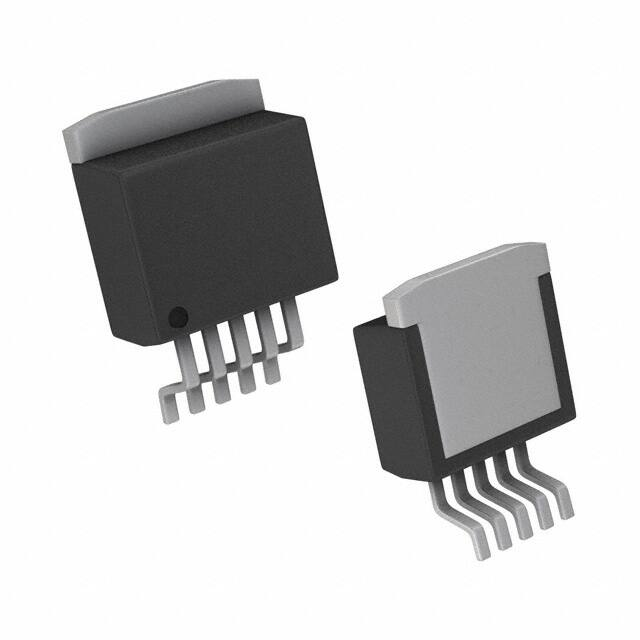
TL750Mxx-Q1, TL751Mxx-Q1
SGLS312J – SEPTEMBER 2005 – REVISED JUNE 2011
www.ti.com
AUTOMOTIVE LOW-DROPOUT VOLTAGE REGULATORS
Check for Samples: TL750Mxx-Q1, TL751Mxx-Q1
FEATURES
1
•
•
Qualified for Automotive Applications
Low Dropout Voltage, Less Than 0.6 V at
750 mA
Low Quiescent Current
TTL- and CMOS-Compatible Enable on
TL751M Series
•
•
•
•
•
•
Load-Dump Protection
Overvoltage Protection
Internal Thermal Overload Protection
Internal Overcurrent-Limiting Circuitry
DESCRIPTION
The TL750M and TL751M series are low-dropout positive voltage regulators specifically designed for automotive
applications. The TL750M and TL751M series incorporate onboard overvoltage and current-limiting protection
circuitry to protect the devices and the regulated system. Both series are fully protected against load-dump and
reverse-battery conditions. Load-dump protection is up to a maximum of 60 V at the input of the device. Low
quiescent current, even during full-load conditions, makes the TL750M and TL751M series ideal for use in
applications that are permanently connected to the vehicle battery.
The TL750M and TL751M series offers 5-V, 8-V, and 12-V options. The TL751M series has the addition of an
enable (ENABLE) input. The ENABLE input gives complete control over power up, allowing sequential power up
or shutdown. When ENABLE is high, the regulator output is placed in the high-impedance state. The ENABLE
input is TTL and CMOS compatible.
The TL750Mxx and TL751Mxx are characterized for operation over the virtual junction temperature range –40°C
to 125°C.
AVAILABLE OPTIONS (1)
TJ
VO
NOM (V)
5V
8V
12 V
–40°C to 125°C
5V
8V
12 V
(1)
(2)
PACKAGE (2)
ORDERABLE PART NUMBER
TOP-SIDE MARKING
TO-263-3 – KTT
Reel of 500
TL750M05QKTTRQ1
TL750M05Q1
TO-252-3 – KVU
Reel of 2500
TL750M05QKVURQ1
750M05Q
TO-263-3 – KTT
Reel of 500
TL750M08QKTTRQ1
TL750M08Q1
TO-252-3 – KVU
Reel of 2500
TL750M08QKVURQ1
750M08Q
TO-263-3 – KTT
Reel of 500
TL750M12QKTTRQ1
TL750M12Q1
TO-252-3 – KVU
Reel of 2500
TL750M12QKVURQ1
750M12Q
TO-263-5 – KTT
Reel of 500
TL751M05QKTTRQ1
TL751M05Q1
TO-252-5 – KVU
Reel of 2500
TL751M05QKVURQ1
751M05Q
TO-263-5 – KTT
Reel of 500
TL751M08QKTTRQ1
TL751M08Q1
TO-252-5 – KVU
Reel of 2500
TL751M08QKVURQ1
751M08Q
TO-263-5 – KTT
Reel of 500
TL751M12QKTTRQ1
TL751M12Q1
TO-252-5 – KVU
Reel of 2500
TL751M12QKVURQ1
751M12Q
For the most current package and ordering information, see the Package Option Addendum at the end of this document, or see the TI
web site at www.ti.com.
Package drawings, thermal data, and symbolization are available at www.ti.com/packaging.
1
Please be aware that an important notice concerning availability, standard warranty, and use in critical applications of Texas
Instruments semiconductor products and disclaimers thereto appears at the end of this data sheet.
PRODUCTION DATA information is current as of publication date.
Products conform to specifications per the terms of the Texas
Instruments standard warranty. Production processing does not
necessarily include testing of all parameters.
Copyright © 2005–2011, Texas Instruments Incorporated
�TL750Mxx-Q1, TL751Mxx-Q1
SGLS312J – SEPTEMBER 2005 – REVISED JUNE 2011
www.ti.com
TL750M
KTT (TO-263-3) PACKAGE
(TOP VIEW)
TL751M
KTT (TO-263-5) PACKAGE
(TOP VIEW)
NC
OUTPUT
COMMOM
INPUT
ENABLE
COMMON
COMMON
OUTPUT
COMMON
INPUT
TL750M
KVU (TO-252-3) PACKAGE
(TOP VIEW)
COMMOM
COMMOM
OUTPUT
COMMON
INPUT
TL751M
KVU (TO-252-5) PACKAGE
(TOP VIEW)
NC
OUTPUT
COMMON
INPUT
ENABLE
NOTE: The COMMON terminal is in electrical contact with the mounting base.
NC – No internal connection
TL751Mxx FUNCTIONAL BLOCK DIAGRAM
INPUT
ENABLE
Enable
Current
Limiting
28 V
_
+
Bandgap
OUTPUT
Overvoltage/
Thermal
Shutdown
COMMON
2
Copyright © 2005–2011, Texas Instruments Incorporated
�TL750Mxx-Q1, TL751Mxx-Q1
SGLS312J – SEPTEMBER 2005 – REVISED JUNE 2011
www.ti.com
ABSOLUTE MAXIMUM RATINGS
over operating free-air temperature range (unless otherwise noted) (1)
Continuous input voltage
26 V
Transient input voltage (see Figure 4)
60 V
Continuous reverse input voltage
–15 V
Transient reverse input voltage
Package thermal impedance (2)
θJA
–50 V
t = 100 ms
(3)
KTT package (3 pin)
26.9°C/W
KTT package (5 pin)
26.5°C/W
KVU package
38.6°C/W
TJ
Virtual junction temperature range
–40°C to 150°C
Tstg
Storage temperature range
–65°C to 150°C
(1)
(2)
(3)
Stresses beyond those listed under absolute maximum ratings may cause permanent damage to the device. These are stress ratings
only, and functional operation of the device at these or any other conditions beyond those indicated under recommended operating
conditions is not implied. Exposure to absolute-maximum-rated conditions for extended periods may affect device reliability.
Maximum power dissipation is a function of TJ(max), θJA, and TA. The maximum allowable power dissipation at any allowable ambient
temperature is PD = (TJ(max) – TA)/θJA. Operating at the absolute maximum TJ of 150°C can impact reliability. Due to variation in
individual device electrical characteristics and thermal resistance, the built-in thermal overload protection may be activated at power
levels slightly above or below the rated dissipation.
The package thermal impedance is calculated in accordance with JESD 51.
THERMAL INFORMATION
TL750M05
THERMAL METRIC (1)
KTT
UNITS
3 PINS
Junction-to-ambient thermal resistance (2)
θJA
27.5
(3)
θJCtop
Junction-to-case (top) thermal resistance
θJB
Junction-to-board thermal resistance (4)
17.3
ψJT
Junction-to-top characterization parameter (5)
2.8
ψJB
Junction-to-board characterization parameter (6)
9.3
θJCbot
Junction-to-case (bottom) thermal resistance (7)
0.3
(1)
(2)
(3)
(4)
(5)
(6)
(7)
43.2
°C/W
For more information about traditional and new thermal metrics, see the IC Package Thermal Metrics application report, SPRA953.
The junction-to-ambient thermal resistance under natural convection is obtained in a simulation on a JEDEC-standard, high-K board, as
specified in JESD51-7, in an environment described in JESD51-2a.
The junction-to-case (top) thermal resistance is obtained by simulating a cold plate test on the package top. No specific
JEDEC-standard test exists, but a close description can be found in the ANSI SEMI standard G30-88.
The junction-to-board thermal resistance is obtained by simulating in an environment with a ring cold plate fixture to control the PCB
temperature, as described in JESD51-8.
The junction-to-top characterization parameter, ψJT, estimates the junction temperature of a device in a real system and is extracted
from the simulation data for obtaining θJA, using a procedure described in JESD51-2a (sections 6 and 7).
The junction-to-board characterization parameter, ψJB, estimates the junction temperature of a device in a real system and is extracted
from the simulation data for obtaining θJA , using a procedure described in JESD51-2a (sections 6 and 7).
The junction-to-case (bottom) thermal resistance is obtained by simulating a cold plate test on the exposed (power) pad. No specific
JEDEC standard test exists, but a close description can be found in the ANSI SEMI standard G30-88.
RECOMMENDED OPERATING CONDITIONS
MIN
MAX
6
26
TL75xM08
9
26
TL75xM12
13
26
15
TL75xM05
VI
Input voltage
VIH
High-level ENABLE input voltage
TL751Mxx
2
VIL
Low-level ENABLE input voltage
TL751Mxx
0
IO
Output current
TL75xMxx
TJ
Operating virtual junction temperature
TL75xMxx
Copyright © 2005–2011, Texas Instruments Incorporated
–40
UNIT
V
V
0.8
V
750
mA
125
°C
3
�TL750Mxx-Q1, TL751Mxx-Q1
SGLS312J – SEPTEMBER 2005 – REVISED JUNE 2011
www.ti.com
TL751Mxx ELECTRICAL CHARACTERISTICS
VI = 14 V, IO = 300 mA, TJ = 25°C
TL751Mxx
PARAMETER
UNIT
TYP
Response time, ENABLE to output (start-up)
µs
50
TL750M05/TL751M05 ELECTRICAL CHARACTERISTICS
VI = 14 V, IO = 300 mA, ENABLE at 0 V for TL751M05, TJ = –40°C to 125°C (unless otherwise noted) (1)
PARAMETER
Output voltage
TL750M05
TL751M05
TEST CONDITIONS
VI = 6 V to 26 V
UNIT
MIN
TYP
MAX
4.85
5
5.15
VI = 9 V to 16 V,
IO = 250 mA
10
25
VI = 6 V to 26 V,
IO = 250 mA
12
50
Power-supply ripple rejection
VI = 8 V to 18 V,
f = 120 Hz
55
Load regulation
IO = 5 mA to 750 mA
Line regulation
Dropout voltage (2)
0.5
IO = 750 mA, TJ = 25°C
0.65
IO = 750 mA
Shutdown current (TL751M05 only)
ENABLE VIH ≥ 2 V
(2)
60
IO = 10 mA
mV
dB
50
IO = 500 mA, TJ = 25°C
Current consumption
Iq = II – IO
(1)
20
V
75
5
200
mV
V
mA
µA
Pulse-testing techniques maintain the junction temperature as close to the ambient temperature as possible. Thermal effects must be
taken into account separately. All characteristics are measured with a 0.1-µF capacitor across the input and a 10-µF tantalum capacitor
on the output, with equivalent series resistance within the guidelines shown in Figure 4.
Measured when the output voltage, VO, has dropped 100 mV from the nominal value obtained at VI = 14 V.
TL750M08/TL751M08 ELECTRICAL CHARACTERISTICS
VI = 14 V, IO = 300 mA, ENABLE at 0 V for TL751M08, TJ = –40°C to 125°C (unless otherwise noted) (1)
PARAMETER
Output voltage
TL750M08
TL751M08
TEST CONDITIONS
VI = 6 V to 26 V
UNIT
MIN
TYP
MAX
7.76
8
8.24
VI = 10 V to 17 V,
IO = 250 mA
12
40
VI = 9 V to 26 V,
IO = 250 mA
15
68
Power-supply ripple rejection
VI = 11 V to 21 V,
f = 120 Hz
55
Load regulation
IO = 5 mA to 750 mA
Line regulation
Dropout voltage (2)
IO = 750 mA, TJ = 25°C
0.65
Shutdown current (TL751M08 only)
ENABLE VIH ≥ 2 V
(2)
4
80
0.5
IO = 750 mA, TJ = 25°C
IO = 10 mA
60
mV
dB
IO = 500 mA, TJ = 25°C
Current consumption
Iq = II – IO
(1)
24
V
75
5
200
mV
V
mA
µA
Pulse-testing techniques maintain the junction temperature as close to the ambient temperature as possible. Thermal effects must be
taken into account separately. All characteristics are measured with a 0.1-µF capacitor across the input and a 10-µF tantalum capacitor
on the output, with equivalent series resistance within the guidelines shown in Figure 4.
Measured when the output voltage, VO, has dropped 100 mV from the nominal value obtained at VI = 14 V.
Copyright © 2005–2011, Texas Instruments Incorporated
�TL750Mxx-Q1, TL751Mxx-Q1
SGLS312J – SEPTEMBER 2005 – REVISED JUNE 2011
www.ti.com
TL750M12/TL751M12 ELECTRICAL CHARACTERISTICS
VI = 14 V, IO = 300 mA, ENABLE at 0 V for TL751M12, TJ = –40°C to 125°C (unless otherwise noted) (1)
PARAMETER
Output voltage
TEST CONDITIONS
UNIT
MIN
TYP
MAX
11.76
12
12.24
VI = 14 V to 19 V,
IO = 250 mA
15
43
VI = 13 V to 26 V,
IO = 250 mA
20
78
Power-supply ripple rejection
VI = 13 V to 23 V,
f = 120 Hz
Load regulation
IO = 5 mA to 750 mA
Line regulation
Dropout voltage (2)
VI = 13 V to 26 V
TL750M12
TL751M12
30
0.5
0.6
Shutdown current (TL751M12 only)
ENABLE VIH ≥ 2 V
IO = 10 mA
60
mV
dB
120
IO = 750 mA, TJ = 25°C
IO = 750 mA, TJ = 25°C
(2)
55
IO = 500 mA, TJ = 25°C
Current consumption
Iq = II – IO
(1)
50
V
75
5
200
mV
V
mA
µA
Pulse-testing techniques maintain the junction temperature as close to the ambient temperature as possible. Thermal effects must be
taken into account separately. All characteristics are measured with a 0.1-µF capacitor across the input and a 10-µF tantalum capacitor
on the output, with equivalent series resistance within the guidelines shown in Figure 4.
Measured when the output voltage, VO, has dropped 100 mV from the nominal value obtained at VI = 14 V.
Copyright © 2005–2011, Texas Instruments Incorporated
5
�TL750Mxx-Q1, TL751Mxx-Q1
SGLS312J – SEPTEMBER 2005 – REVISED JUNE 2011
www.ti.com
PARAMETER MEASUREMENT INFORMATION
The TL750Mxx and TL751Mxx are low-dropout regulators. The output capacitor value and the parasitic
equivalent series resistance (ESR) affect the bandwidth and stability of the control loop for these devices. For
this reason, the capacitor and ESR must be carefully selected for a given operating temperature and load range.
Figure 2 and Figure 3 can be used to establish the appropriate capacitance value and ESR for the best regulator
transient response.
Figure 2 shows the recommended range of ESR for a given load with a 10-µF capacitor on the output. Figure 2
also shows a maximum ESR limit of 2 Ω and a load-dependent minimum ESR limit.
For applications with varying loads, the lightest load condition should be chosen because it is the worst case.
Figure 3 shows the relationship of the reciprocal of ESR to the square root of the capacitance, with a minimum
capacitance limit of 10 µF and a maximum ESR limit of 2 Ω. This figure establishes the amount that the minimum
ESR limit shown in Figure 2 can be adjusted for different capacitor values. For example, where the minimum
load needed is 200 mA, Figure 2 suggests an ESR range of 0.8 Ω to 2 Ω for 10 µF. Figure 3 shows that
changing the capacitor from 10 µF to 400 µF can change the ESR minimum by greater than 3/0.5 (or 6).
Therefore, the new minimum ESR value is 0.8/6 (or 0.13 Ω). This allows an ESR range of 0.13 Ω to 2 Ω,
achieving an expanded ESR range by using a larger capacitor at the output. For better stability in low-current
applications, a small resistance placed in series with the capacitor (see Table 1) is recommended, so that ESRs
better approximate those shown in Figure 2 and Figure 3.
Table 1. Compensation for Increased Stability at Low Currents
MANUFACTURER
CAPACITANCE
ESR TYP
AVX
15 µF
0.9 Ω
TAJB156M010S
1Ω
KEMET
33 µF
0.6 Ω
T491D336M010AS
0.5 Ω
Applied Load
Current
PART NUMBER
ADDITIONAL RESISTANCE
∆IL
Load
Voltage
∆VL
∆VL = ∆IL × ESR
Figure 1.
6
Copyright © 2005–2011, Texas Instruments Incorporated
�TL750Mxx-Q1, TL751Mxx-Q1
SGLS312J – SEPTEMBER 2005 – REVISED JUNE 2011
www.ti.com
OUTPUT CAPACITOR EQUIVALENT
SERIES RESISTANCE (ESR)
vs
LOAD CURRENT RANGE
STABILITY
vs
EQUIVALENT SERIES RESISTANCE (ESR)
This Region Not
Recommended for
Operation
0.03
CL
2.5
Max ESR Boundary
0.5
0.4
Region of Best Stability
0.3
ÎÎ
ÎÎÎÎÎÎÎÎÎÎÎÎ
ÏÏÏ
ÎÎ
ÎÎÎÎÎÎÎÎÎÎÎÎ
ÏÏÏ
ÎÎ
ÎÎÎÎÎÎÎÎÎÎÎÎ
ÏÏÏ
ÎÎÎÎÎÎÎÎÎÎÎÎ
ÏÏÏ
ÎÎÎÎÎÎÎÎÎÎÎÎ
ÏÏÏ
ÏÏÏ
ÎÎÎÎÎÎÎÎÎÎÎÎ
ÏÏÏ
ÏÏÏ
ÎÎÎÎÎÎÎÎÎÎÎÎ
ÏÏÏ
ÏÏÏ
ÎÎÎÎÎÎÎÎÎÎÎÎ
ÏÏÏ
ÏÏÏ
ÎÎÎÎÎÎÎÎÎÎÎÎ
ÏÏÏ
ÎÎÎÎÎÎÎÎÎÎÎÎ
ÏÏÏ
ÏÏÏ
ÏÏÏ
ÎÎÎÎÎÎÎÎÎÎÎÎ
ÏÏÏ
ÏÏÏ
ÎÎÎÎÎÎÎÎÎÎÎÎ
ÏÏÏ
Not Recommended
Recommended Min ESR
Potential Instability
0.035
Stability −
Equivalent Series Resistance (ESR) - &
0.04
CL = 10 µF
CI = 0.1 µF
f = 120 Hz
1000 µF
Region of
Best Stability
0.025
400 µF
0.02
200 µF
0.015
100 µF
0.2
Min ESR
Boundary
0.1
0.01
0.005
Potential Instability Region
0
0
0.1
0.2
0.3
0.4
IL - Load Current Rang e - A
Figure 2.
Copyright © 2005–2011, Texas Instruments Incorporated
0.5
0
0
22 µF
10 µF
0.5
1
1.5
2
2.5
3
3.5
4
4.5
5
1/ESR
Figure 3.
7
�TL750Mxx-Q1, TL751Mxx-Q1
SGLS312J – SEPTEMBER 2005 – REVISED JUNE 2011
www.ti.com
TYPICAL CHARACTERISTICS
Table 2. Table of Graphs
FIGURE
Transient input voltage
vs Time
4
Output voltage
vs Input voltage
5
Input current
vs Input voltage
Dropout voltage
vs Output current
8
Quiescent current
vs Output current
9
IO = 10 mA
6
IO = 100 mA
7
Load transient response
10
Line transient response
11
TRANSIENT INPUT VOLTAGE
vs
TIME
OUTPUT VOLTAGE
vs
INPUT VOLTAGE
14
TJ = 25°C
VI = 14 V + 46e(−t/0.230)
for t ≥ 5 ms
50
40
30
tr = 1 ms
20
10
10
8
TL75xM08
6
TL75xM05
4
2
0
0
8
IO = 10 mA
TJ = 25°C
12
VO − Output Voltage − V
V I − Transient Input Voltage − V
60
100
200
300
400
500
600
0
0
2
4
6
8
10
t − Time − ms
VI − Input Voltage − V
Figure 4.
Figure 5.
12
14
Copyright © 2005–2011, Texas Instruments Incorporated
�TL750Mxx-Q1, TL751Mxx-Q1
SGLS312J – SEPTEMBER 2005 – REVISED JUNE 2011
www.ti.com
INPUT CURRENT
vs
INPUT VOLTAGE
INPUT CURRENT
vs
INPUT VOLTAGE
200
350
IO = 10 mA
TJ = 25°C
180
IO = 100 mA
TJ = 25°C
300
100
60
40
TL75_M08
80
200
150
TL75_M08
120
250
TL75_M05
I I − Input Current − mA
140
TL75_M05
I I − Input Current − mA
160
100
50
20
0
0
2
4
6
8
10
12
0
14
0
2
4
VI − Input Voltage − V
6
8
10
12
14
250
350
VI − Input Voltage − V
Figure 6.
Figure 7.
DROPOUT VOLTAGE
vs
OUTPUT CURRENT
QUIESCENT CURRENT
vs
OUTPUT CURRENT
250
12
TJ = 25°C
TJ = 25°C
VI = 14 V
225
IQ − Quiescent Current − mA
Dropout Voltage − mV
10
200
175
150
125
100
8
6
4
2
75
50
0
50
100
150
200
IO − Output Current − mA
Figure 8.
Copyright © 2005–2011, Texas Instruments Incorporated
250
300
0
0
20
40
60
80
100
150
IO − Output Current − mA
Figure 9.
9
�TL750Mxx-Q1, TL751Mxx-Q1
SGLS312J – SEPTEMBER 2005 – REVISED JUNE 2011
www.ti.com
VO − Output Voltage − mV
20 mV/DIV
200
100
0
− 100
− 200
150
VI(NOM) = VO + 1 V
ESR = 2
CL = 10 µF
TJ = 25°C
100
50
0
0
50
100 150 200
t − Time − µs
Figure 10.
10
LINE TRANSIENT RESPONSE
VI(NOM) = VO + 1 V
ESR = 2
IL = 20 mA
CL = 10 µF
TJ = 25°C
VIN − Input Voltage − V
1 V/DIV
IO − Output Current − mA
VO − Output Voltage − mV
LOAD TRANSIENT RESPONSE
250
300
350
0
20
40
60
80
100
150
250
350
t − Time − µs
Figure 11.
Copyright © 2005–2011, Texas Instruments Incorporated
�PACKAGE OPTION ADDENDUM
www.ti.com
10-Dec-2020
PACKAGING INFORMATION
Orderable Device
Status
(1)
Package Type Package Pins Package
Drawing
Qty
Eco Plan
(2)
Lead finish/
Ball material
MSL Peak Temp
Op Temp (°C)
Device Marking
(3)
(4/5)
(6)
TL750M05QKTTRQ1
ACTIVE
DDPAK/
TO-263
KTT
3
500
RoHS & Green
SN
Level-3-245C-168 HR
-40 to 125
TL750M05Q1
TL750M05QKVURQ1
ACTIVE
TO-252
KVU
3
2500
RoHS & Green
SN
Level-3-260C-168 HR
-40 to 125
750M05Q
TL750M08QKVURQ1
ACTIVE
TO-252
KVU
3
2500
RoHS & Green
SN
Level-3-260C-168 HR
-40 to 125
750M08Q
TL750M12QKTTRQ1
ACTIVE
DDPAK/
TO-263
KTT
3
500
RoHS & Green
SN
Level-3-245C-168 HR
-40 to 125
TL750M12Q1
TL750M12QKVURQ1
ACTIVE
TO-252
KVU
3
2500
RoHS & Green
SN
Level-3-260C-168 HR
-40 to 125
750M12Q
TL751M05QKVURQ1
ACTIVE
TO-252
KVU
5
2500
RoHS & Green
SN
Level-3-260C-168 HR
-40 to 125
751M05Q
TL751M08QKTTRQ1
ACTIVE
DDPAK/
TO-263
KTT
5
500
RoHS & Green
SN
Level-3-245C-168 HR
-40 to 125
TL751M08Q1
TL751M08QKVURQ1
ACTIVE
TO-252
KVU
5
2500
RoHS & Green
SN
Level-3-260C-168 HR
-40 to 125
751M08Q
TL751M12QKTTRQ1
ACTIVE
DDPAK/
TO-263
KTT
5
500
RoHS & Green
SN
Level-3-245C-168 HR
-40 to 125
TL751M12Q1
TL751M12QKVURQ1
ACTIVE
TO-252
KVU
5
2500
RoHS & Green
SN
Level-3-260C-168 HR
-40 to 125
751M12Q
(1)
The marketing status values are defined as follows:
ACTIVE: Product device recommended for new designs.
LIFEBUY: TI has announced that the device will be discontinued, and a lifetime-buy period is in effect.
NRND: Not recommended for new designs. Device is in production to support existing customers, but TI does not recommend using this part in a new design.
PREVIEW: Device has been announced but is not in production. Samples may or may not be available.
OBSOLETE: TI has discontinued the production of the device.
(2)
RoHS: TI defines "RoHS" to mean semiconductor products that are compliant with the current EU RoHS requirements for all 10 RoHS substances, including the requirement that RoHS substance
do not exceed 0.1% by weight in homogeneous materials. Where designed to be soldered at high temperatures, "RoHS" products are suitable for use in specified lead-free processes. TI may
reference these types of products as "Pb-Free".
RoHS Exempt: TI defines "RoHS Exempt" to mean products that contain lead but are compliant with EU RoHS pursuant to a specific EU RoHS exemption.
Green: TI defines "Green" to mean the content of Chlorine (Cl) and Bromine (Br) based flame retardants meet JS709B low halogen requirements of