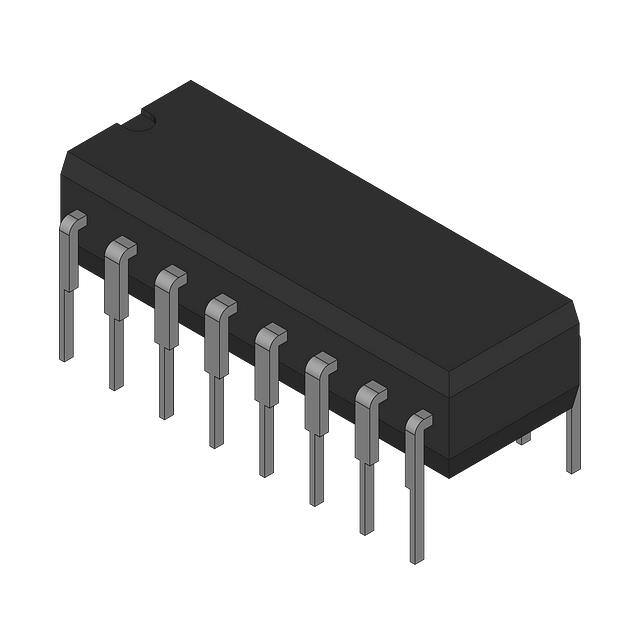
TLE2301
EXCALIBUR 3-STATE-OUTPUT WIDE-BANDWIDTH
POWER OPERATIONAL AMPLIFIER
SLOS131 – DECEMBER 1993
D
D
D
D
D
D
D
D
NE PACKAGE
(TOP VIEW)
High Output Drive Capability . . . 1 A Min
3-State Outputs
High Gain-Bandwidth Product
8 MHz Typ
Low Total Harmonic Distortion
< 0.08% Typ
High Slew Rate . . . 12 V/µs Typ
Class AB Output Stage
Thermal Shutdown
Mains-Line Driver Circuit Application
Included
COMP2
VCC +
OUT1
VCC –
VCC –
OUT2
VCC +
TRS2
1
16
2
15
3
14
4
13
5
12
6
11
7
10
8
9
COMP1
VCC –
1N +
VCC –
VCC –
IN –
VCC –
TRS1
Terminals 4, 5, 12 and 13 are
connected to the lead frame.
description
MAXIMUM PEAK-TO-PEAK OUTPUT VOLTAGE
vs
FREQUENCY
VO(PP) – Maximum Peak-to-Peak Output Voltage – V
The TLE2301 is a power operational amplifier that
can deliver an output current of 1 A at high
frequencies with very low total harmonic
distortion. The device has an integral 3-state
mode to drive the output stage into a
high-impedance state and also to reduce the
supply current to less than 3.5 mA.
The combination of high output current and
3-state outputs makes the TLE2301 ideal for
implementing the signalling transformer driver in
mains-based telemetering modems. This
combination of features also makes the device
well suited for other high-current applications
(e.g., motor drivers and audio circuits).
Using the Texas Instruments established
Excalibur process, the TLE2301 is able to achieve
slew rates in excess of 12 V/µs and a gainbandwidth product of 8 MHz. The TLE2301 uses
a 16-pin NE power package to provide better
power handling capabilities than standard dual-inline packages.
8
VCC ± = ± 5 V
TA = 25°C
7
6
RL = 4.3 Ω
RL = 8.1 Ω
RL = 20 Ω
5
4
3
2
1
0
100
1k
10 k
100 k
f – Frequency – Hz
1M
10 M
Figure 1
The TLE2301 is characterized for operation over
the industrial temperature range of – 40°C to
85°C.
AVAILABLE OPTION
PACKAGE
TA
VIOmax AT 25°C
THERMALLY-ENHANCED
PLASTIC DIP
(NE)
– 40°C to 85°C
10 mV
TLE2301INE
Copyright 1993, Texas Instruments Incorporated
PRODUCTION DATA information is current as of publication date.
Products conform to specifications per the terms of Texas Instruments
standard warranty. Production processing does not necessarily include
testing of all parameters.
POST OFFICE BOX 655303
• DALLAS, TEXAS 75265
1
�TLE2301
EXCALIBUR 3-STATE-OUTPUT WIDE-BANDWIDTH
POWER OPERATIONAL AMPLIFIER
SLOS131 – DECEMBER 1993
equivalent schematic (entire device)
COMP1
COMP2
VCC +
OUT1
+
_
TRS1
OUT2
TRS2
VCC –
IN +
IN –
equivalent schematic (TRS1 and TRS2 inputs)
VCC +
TRS1
TRS2
VCC –
2
POST OFFICE BOX 655303
• DALLAS, TEXAS 75265
�TLE2301
EXCALIBUR 3-STATE-OUTPUT WIDE-BANDWIDTH
POWER OPERATIONAL AMPLIFIER
SLOS131 – DECEMBER 1993
Terminal Functions
TERMINAL
DESCRIPTION
NAME
NO.
COMP1
COMP2
16
1
COMP1 and COMP2 are compensation network terminals
IN +
14
Noninverting input
IN –
11
Inverting input
OUT1
OUT2
3
6
Two low-distortion class-AB output stages.
g
Each is capable of sourcing
g more than 500 mA. OUT1 and OUT2 should be
connected together for all applications.
TRS1
TRS2
9
8
TRS1 and TRS2 are 3-state input terminals. TRS2 should be connected to the ground of the circuit generating the 3-state
command ((normally
µP g
ground).
yµ
) The TLE2301 is brought
g into 3-state mode by
y raising
g TRS1 2 V above TRS2. Placing
g the
TLE2301 in a 3-state mode reduces the supply current to below 2.2 mA (typ). Normal operation resumes by bringing TRS1
to within 0.8 V of TRS2. The 3-state function can be disabled by connecting both TRS1 and TRS2 to VCC – .
VCC –
10, 15
High-impedance VCC – input terminals. Although these do not carry any of the device’s supply current, they increase the
stability of the device and should be connected to the negative supply terminal (VCC –).
VCC –
4, 5,
12, 13
Negative supply terminals and substrate. As with all NE packages, the substrate is directly connected to the lead frame.
The result is that the junction-to-ambient thermal impedance (ZθJA) is greatly reduced by soldering the negative supply
terminals to the copper area of the printed-circuit board (PCB).
VCC +
2, 7
Positive supply terminals. Both terminals should be connected to the positive voltage supply.
POST OFFICE BOX 655303
• DALLAS, TEXAS 75265
3
�TLE2301
EXCALIBUR 3-STATE-OUTPUT WIDE-BANDWIDTH
POWER OPERATIONAL AMPLIFIER
SLOS131 – DECEMBER 1993
absolute maximum ratings over operating free-air temperature range (unless otherwise noted)†
Supply voltage, VCC + (see Note 1) . . . . . . . . . . . . . . . . . . . . . . . . . . . . . . . . . . . . . . . . . . . . . . . . . . . . . . . . . . . 22 V
Supply voltage, VCC – (see Note 1) . . . . . . . . . . . . . . . . . . . . . . . . . . . . . . . . . . . . . . . . . . . . . . . . . . . . . . . . . . – 22 V
Differential input voltage, VID (see Note 2) . . . . . . . . . . . . . . . . . . . . . . . . . . . . . . . . . . . . . . . . . . . . . . . . . . . ± 44 V
Duration of short-circuit current at (or below) 25°C (see Note 3) . . . . . . . . . . . . . . . . . . . . . . . . . . . . . . unlimited
Continuous total dissipation at (or below) 25°C free-air temperature (see Notes 4 and 5) . . . . . . . 2075 mW
Continuous total dissipation at 85°C case temperature (see Note 5) . . . . . . . . . . . . . . . . . . . . . . . . . 4640 mW
Operating free-air temperature range, TA . . . . . . . . . . . . . . . . . . . . . . . . . . . . . . . . . . . . . . . . . . . . – 40°C to 85°C
Operating case or virtual junction temperature range . . . . . . . . . . . . . . . . . . . . . . . . . . . . . . . . . – 40°C to 150°C
Storage temperature range . . . . . . . . . . . . . . . . . . . . . . . . . . . . . . . . . . . . . . . . . . . . . . . . . . . . . . . . – 65°C to 150°C
† Stresses beyond those listed under “absolute maximum ratings” may cause permanent damage to the device. These are stress ratings only, and
functional operation of the device at these or any other conditions beyond those indicated under “recommended operating conditions” is not
implied. Exposure to absolute-maximum-rated conditions for extended periods may affect device reliability.
NOTES: 1. All voltage values, except differential voltages, are with respect to the midpoint between VCC + and VCC – .
2. Differential voltages are at IN+ with respect to IN –.
3. The outputs when connected together may be shorted to either supply. Temperature and/or supply voltages must be limited to ensure
that the maximum dissipation rating is not exceeded.
4. For operation above 25°C free-air temperature, derate linearly at the rate of 16.56 mW/°C.
5. For operation above 25°C case temperature, derate linearly at the rate of 71.4 mW/°C. To avoid exceeding the design maximum
virtual junction temperature, these ratings should not be exceeded. Due to variations in individual device electrical characteristics
and thermal resistance, the built-in thermal overload protection may be activated at power levels slightly above or below the rated
dissipation.
FREE-AIR TEMPERATURE
DISSIPATION DERATING CURVE
CASE TEMPERATURE
DISSIPATION DERATING CURVE
10
Derating Factor = 16.56 mW/°C
ZθJC = 60.4°C/ W
PD – Total Continuous Power Dissipation – W
PD – Total Continuous Power Dissipation – W
2.5
2
1.5
1
0.5
0
6
4
2
Derating Factor = 71.4 mW/°C
ZθJC = 14°C/ W
0
25
4
8
40
55
70
TA – Free-Air Temperature – °C
85
POST OFFICE BOX 655303
0
• DALLAS, TEXAS 75265
25
50
75
TC – Case Temperature – °C
100
�TLE2301
EXCALIBUR 3-STATE-OUTPUT WIDE-BANDWIDTH
POWER OPERATIONAL AMPLIFIER
SLOS131 – DECEMBER 1993
recommended operating conditions
Supply voltage, VCC ±
VCC± = ± 5 V
VCC± = ± 15 V
Common mode input voltage,
voltage VIC
Common-mode
High-level 3-state enable voltage, VIH
MIN
MAX
UNIT
± 4.5
± 20
V
–4
1.6
V
–14
11.8
V
2
Low-level 3-state enable voltage, VIL
Continuous output current
Operating free-air temperature, TA
– 40
V
0.8
V
1
A
85
°C
electrical characteristics at specified free-air temperature, VCC ± = ±5 V, CC = 15 pF (unless
otherwise noted) (see Figure 5)
PARAMETER
TEST CONDITIONS
VIO
Input offset voltage
VO = 0,,
RS = 50 Ω
VIC = 0,,
IIB
Input bias current
VO = 0,,
RS = 50 Ω
VIC = 0,,
VICR
Common-mode input voltage
g range
g
RS = 50 Ω
VOM +
Maximum positive peak output voltage swing
RL = 20 Ω
Ω,
See Note 6
VOM –
Maximum negative peak output voltage swing
RL = 20 Ω
Ω,
See Note 6
AVD
Large signal differential voltage amplification
Large-signal
VO = ± 2 V,,
RL = 20 Ω
VIC = 0,,
ri
Differential input resistance
ro
Output resistance (see Note 7)
CMRR
TA†
25°C
MIN
TYP
MAX
0.4
7
Full range
10
25°C
283
Full range
500
Full range
g
–4
to
1.6
25°C
3.3
Full range
3.2
25°C
– 3.2
Full range
– 3.1
25°C
65
Full range
60
25°C
TRS1 = 0.8 V
450
mV
nA
V
3.5
V
– 3.4
V
87
dB
1
25°C
UNIT
MΩ
1
Ω
100
kΩ
TRS1 = 2 V,
3-state mode
Common mode rejection ratio
Common-mode
VIC = VICRmin,,
RS = 50 Ω
VO = 0,,
25°C
65
88
dB
kSVR
Supply voltage rejection ratio (∆VCC ± /∆VIO)
Supply-voltage
VCC ± = ± 4.5 V to ± 20 V,,
VIC = 0,
No load
25°C
70
100
dB
IIH
Enable input current
current, high
VI = 2 V
V,
IIL
current low
Enable input current,
8V
VI = 0
0.8
IOS
Short-circuit output current (see Note 8)
VO = 0,
ICC
3 state mode
3-state
25°C
0.01
Full range
0.5
25°C
0.01
Full range
tp ≤ 50 µs
VO = 0
0,
No load
VO = 0,
3-state mode
No load,
Supply current
25°C
25°C
0.5
0.5
1
1.8
µA
µA
A
10
21
1.73
2.7
Full range
25°C
0.5
25
mA
Full range
3.5
† Full range is – 40°C to 85°C.
NOTES: 6. OUT1 and OUT2 are connected together for all tests.
7. TRS1 voltage is measured with respect to TRS2 potential.
8. Pulse testing techniques are used to maintain the junction temperature as close to the ambient temperature as possible. Thermal
effects must be taken into account separately (tp = pulse duration time) .
POST OFFICE BOX 655303
• DALLAS, TEXAS 75265
5
�TLE2301
EXCALIBUR 3-STATE-OUTPUT WIDE-BANDWIDTH
POWER OPERATIONAL AMPLIFIER
SLOS131 – DECEMBER 1993
electrical characteristics at specified free-air temperature, VCC ± = ±15 V, CC = 15 pF (unless
otherwise noted) (see Figure 5)
PARAMETER
TEST CONDITIONS
VIO
Input offset voltage
VO = 0,,
RS = 50 Ω
VIC = 0,,
IIB
Input bias current
VO = 0,,
RS = 50 Ω
VIC = 0,,
VICR
Common-mode input voltage
g range
g
RS = 50 Ω
VOM +
Maximum positive peak output voltage swing
RL = 20 Ω
Ω,
See Note 6
VOM –
Maximum negative peak output voltage swing
RL = 20 Ω
Ω,
See Note 6
AVD
Large signal differential voltage amplification
Large-signal
VO = ± 6 V,,
RL = 20 Ω
VIC = 0,,
ri
Differential input resistance
ro
Output resistance (see Note 7)
CMRR
MIN
TYP
MAX
0.3
10
Full range
15
25°C
260
Full range
Full range
g
TRS1 = 0.8 V
3-state mode
Common-mode rejection ratio
VIC = VICRmin,
RS = 50 Ω
VO = 0,
kSVR
Supply voltage rejection ratio (∆VCC ± /∆VIO)
Supply-voltage
VCC ± = ± 4.5 V to ± 20 V,,
VIC = 0,
No load
IIH
Enable input current
current, high
VI = 2 V
V,
IIL
Enable input current,
current low
VI = 0
0.8
8V
IOS
Short-circuit output current (see Note 8)
VO = 0,
tp ≤ 50 µs
VO = 0
0,
No load
VO = 0,
3-state mode
No load,
3 state mode
3-state
– 14
to
11.8
25°C
13
Full range
13
25°C
– 12.6
Full range
– 12.5
25°C
70
Full range
65
13.5
mV
nA
V
– 13
V
102
dB
1
25°C
UNIT
V
MΩ
1
Ω
100
kΩ
25°C
70
97
dB
25°C
70
100
dB
25°C
0.01
Full range
25°C
25°C
25°C
0.01
0.5
0.5
1
3
11
Full range
25°C
0.5
0.5
Full range
Supply current
450
500
25°C
TRS1 = 2 V,
ICC
TA†
25°C
µA
A
25
30
2.2
µA
3.5
mA
Full range
5
† Full range is – 40°C to 85°C.
NOTES: 6. OUT1 and OUT2 are connected together for all tests.
7. TRS1 voltage is measured with respect to TRS2 potential.
8. Pulse testing techniques are used to maintain the junction temperature as close to the ambient temperature as possible. Thermal
effects must be taken into account separately (tp = pulse duration time) .
6
POST OFFICE BOX 655303
• DALLAS, TEXAS 75265
�TLE2301
EXCALIBUR 3-STATE-OUTPUT WIDE-BANDWIDTH
POWER OPERATIONAL AMPLIFIER
SLOS131 – DECEMBER 1993
operating characteristics at specified free-air temperature, VCC± = ±5 V, CC = 15 pF, TA = 25°C
(unless otherwise noted) (see Figure 5)
PARAMETER
TEST CONDITIONS
RL = 20 Ω,
MIN
TYP
MAX
9
12
V/µs
UNIT
SR
Slew rate at unity gain (see Figure 1)
VO = ± 1.5 V,
CL = 100 pF
ts
Settling time (see Figure 1)
RL = 20 Ω,,
CL = 100 pF,,
3-V step to 30 mV (1%)
07
0.7
µs
Vn
Equivalent input noise voltage (see Figure 2)
RS = 50 Ω,
f = 1 kHz
44
nV/√Hz
THD
Total harmonic distortion
VO = 1 Vrms,
RL = 20 Ω,
f = 50 kHz,
CL = 100 pF
0.04%
B1
φm
Unity-gain bandwidth (see Figure 3)
RL = 20 Ω,
CL = 100 pF
8
Phase margin at unity gain (see Figure 3)
RL = 20 Ω,
CL = 100 pF
30°
MHz
operating characteristics at specified free-air temperature, VCC± = ±15 V, CC = 15 pF, TA = 25°C
(unless otherwise noted) (see Figure 5)
PARAMETER
TEST CONDITIONS
TYP
MAX
9
14
V/µs
UNIT
SR
Slew rate at unity gain (see Figure 1)
VO = ± 10 V,
CL = 100 pF
ts
Settling time (see Figure 1)
RL = 20 Ω,,
CL = 100 pF,,
20-V step to 200 mV (1%)
18
1.8
µs
Vn
Equivalent input noise voltage (see Figure 2)
RS = 50 Ω,
f = 1 kHz
44
nV/√Hz
THD
Total harmonic distortion
VO = 2 Vrms,
RL = 20 Ω,
f = 50 kHz,
CL = 100 pF
B1
φm
Unity-gain bandwidth (see Figure 3)
RL = 20 Ω,
CL = 100 pF
8
Phase margin at unity gain (see Figure 3)
RL = 20 Ω,
CL = 100 pF
35°
POST OFFICE BOX 655303
RL = 20 Ω,
MIN
• DALLAS, TEXAS 75265
0.08%
MHz
7
�TLE2301
EXCALIBUR 3-STATE-OUTPUT WIDE-BANDWIDTH
POWER OPERATIONAL AMPLIFIER
SLOS131 – DECEMBER 1993
PARAMETER MEASUREMENT INFORMATION
5 kΩ
VCC +
_
VI
VO
+
VCC –
CL
(see Note A)
VCC +
_
VO
+
RL
VCC –
50 Ω
50 Ω
NOTE A: CL includes the fixture capacitance.
Figure 2. Slew-Rate Test Circuit
Figure 3. Noise-Voltage Test Circuit
R2
10 kΩ
VI
VCC +
_
+
VCC –
CL
(see Note A)
VI –
R1
VCC +
_
VO
VO
VI +
+
R3
RL
COMP1
COMP1
Cc
15 pF
NOTE A: CL includes the fixture capacitance.
Figure 4. Gain-Bandwidth and
Phase-Margin Test Circuit
VCC –
Figure 5. Compensation Configuration
typical values
Typical values presented in this data sheet represent the median (50% point) of the device parametric
performance.
8
POST OFFICE BOX 655303
• DALLAS, TEXAS 75265
�TLE2301
EXCALIBUR 3-STATE-OUTPUT WIDE-BANDWIDTH
POWER OPERATIONAL AMPLIFIER
SLOS131 – DECEMBER 1993
TYPICAL CHARACTERISTICS
Table of Graphs
FIGURE
IIB
IIO
Input bias current
vs Free-air temperature
6, 7
Input offset current
vs Free-air temperature
6, 7
vs Frequency
AVD
Differential voltage amplification
VO(PP)
Maximum peak-to-peak output voltage
VOM
Maximum peak output voltage
ZθJA
Transient junction-to-ambient thermal impedance
ICC
Supply current
vs Free-air temperature
INPUT BIAS CURRENT AND
INPUT OFFSET CURRENT
vs
FREE-AIR TEMPERATURE
1000
VCC ± = ± 15 V
VIC = 0
100
IIB
10
1
– 50
IIO
– 25
0
25
50
75
TA – Free-Air Temperature – °C
100
I IO – Input Bias and Input Offset Currents – nA
IIIB
IB and IIO
I IO – Input Bias and Input Offset Currents – nA
IIIB
IB and IIO
Output impedance
9
vs Frequency
10, 11
vs Output current
12, 13
vs Supply voltage
14
vs Time
15
vs Supply voltage
16
vs Free-air temperature
Pulse response
zo
8
17
Small signal
18, 19
Large signal
20, 21
vs Frequency
22, 23
INPUT BIAS CURRENT AND
INPUT OFFSET CURRENT
vs
FREE-AIR TEMPERATURE
1000
VCC ± = ± 5 V
VIC = 0
IIB
100
10
1
0.1
– 50
IIO
– 25
0
25
50
75
TA – Free-Air Temperature – °C
Figure 6
100
Figure 7
POST OFFICE BOX 655303
• DALLAS, TEXAS 75265
9
�TLE2301
EXCALIBUR 3-STATE-OUTPUT WIDE-BANDWIDTH
POWER OPERATIONAL AMPLIFIER
SLOS131 – DECEMBER 1993
TYPICAL CHARACTERISTICS
DIFFERENTIAL VOLTAGE AMPLIFICATION
vs
FREQUENCY
ÁÁ
ÁÁ
20°
VCC ± = ± 15 V
RL = 20 Ω
CC = 100 pF
TA = 25°C
100
110
40°
80
60°
60
80°
40
100°
20
120°
0
140°
– 20
10
100
1k
10 k
100 k
1M
AVD – Differential Voltage Amplification – dB
AVD – Differential Voltage Amplification – dB
120
DIFFERENTIAL VOLTAGE AMPLIFICATION
vs
FREE-AIR TEMPERATURE
ÁÁ
ÁÁ
160°
10 M
RL = 20 Ω
100
90
VCC± = ± 5 V
80
70
60
– 50
f – Frequency – Hz
– 25
0
25
50
75
TA – Free-Air Temperature – °C
Figure 8
MAXIMUM PEAK-TO-PEAK OUTPUT VOLTAGE
vs
FREQUENCY
25
RL = 8.1 Ω
20
15
10
5
0
100
1k
10 k
100 k
f – Frequency – Hz
1M
10 M
VO(PP) – Maximum Peak-to-Peak Output Voltage – V
VO(PP) – Maximum Peak-to-Peak Output Voltage – V
VCC ± = ± 15 V
TA = 25°C
RL = 20 Ω
8
VCC ± = ± 5 V
TA = 25°C
7
6
RL = 4.3 Ω
RL = 8.1 Ω
RL = 20 Ω
5
4
3
2
1
0
100
Figure 10
10
100
Figure 9
MAXIMUM PEAK-TO-PEAK OUTPUT VOLTAGE
vs
FREQUENCY
30
VCC ± = ± 15 V
1k
10 k
100 k
f – Frequency – Hz
Figure 11
POST OFFICE BOX 655303
• DALLAS, TEXAS 75265
1M
10 M
�TLE2301
EXCALIBUR 3-STATE-OUTPUT WIDE-BANDWIDTH
POWER OPERATIONAL AMPLIFIER
SLOS131 – DECEMBER 1993
TYPICAL CHARACTERISTICS
MAXIMUM NEGATIVE PEAK OUTPUT VOLTAGE
vs
OUTPUT CURRENT
VOM – – Maximum Negative Peak Output Voltage – V
VOM + – Maximum Positive Peak Output Voltage – V
MAXIMUM POSITIVE PEAK OUTPUT VOLTAGE
vs
OUTPUT CURRENT
15
TA = 25°C
12.5
VCC ± = ± 15 V
7.5
VCC ± = ± 5 V
2.5
0
0
200
800
400
600
IO – Output Current – mA
TA = 25°C
– 12.5
10
5
– 15
1000
VCC ± = ± 15 V
– 10
– 7.5
–5
ÁÁÁ
ÁÁÁ
ÁÁÁ
VCC ± = ± 5 V
– 2.5
0
0
200
TRANSIENT JUNCTION-TO-AMBIENT
THERMAL IMPEDANCE†
vs
ON TIME
MAXIMUM PEAK OUTPUT VOLTAGE
vs
SUPPLY VOLTAGE
Z θ JA – Transient Junction-to-Ambient
Thermal Impedance – °C/mW
VOM – Maximum Peak Output Voltage – V
100
RL = 20 Ω
TA = 25°C
15
VOM +
10
5
0
–5
– 10
VOM –
– 15
– 20
0
2
4
1000
Figure 13
Figure 12
20
400
600
800
IO – Output Current – mA
6
8
10 12 14 16
VCC ± – Supply Voltage – V
18
20
d = 50%
10
d = 20%
d = 10%
d = 5%
d = 2%
1
Single Pulse
0.1
0.001
0.01
Figure 14
0.1
1
10
t – On Time – s
100
1000
Figure 15
† d = duty cycle
POST OFFICE BOX 655303
• DALLAS, TEXAS 75265
11
�TLE2301
EXCALIBUR 3-STATE-OUTPUT WIDE-BANDWIDTH
POWER OPERATIONAL AMPLIFIER
SLOS131 – DECEMBER 1993
TYPICAL CHARACTERISTICS
SUPPLY CURRENT
vs
SUPPLY VOLTAGE
SUPPLY CURRENT
vs
FREE-AIR TEMPERATURE
10.8
10.7
VO = 0
No Load
10.6
10.6
I CC – Supply Current – mA
I CC – Supply Current – mA
10.8
VO = 0
No Load
TA = 25°C
10.5
10.4
10.3
10.2
10.1
VCC ± = ± 15 V
10.4
10.2
10
VCC ± = ± 5 V
9.8
9.6
10
9.9
0
2
4
6
8
10
12
14
16
18
9.4
– 50
20
– 25
VCC ± – Supply Voltage – V
Figure 16
150
10
100
VO – Output Voltage – mV
VO – Output Voltage – V
VOLTAGE FOLLOWER
SMALL-SIGNAL
PULSE RESPONSE
15
5
0
–5
VCC ± = ± 15 V
RL = 20 Ω
CL = 100 pF
TA = 25°C
0
2
4
6
8
t – Time – µs
50
0
– 50
VCC ± = ± 5 V
RL = 20 Ω
CL = 100 pF
TA = 25°C
– 100
– 15
–2
10
12
14
– 150
– 0.5
0
0.5
1
t – Time – µs
Figure 18
12
100
Figure 17
VOLTAGE FOLLOWER
SMALL-SIGNAL
PULSE RESPONSE
– 10
0
25
50
75
TA – Free-Air Temperature – °C
Figure 19
POST OFFICE BOX 655303
• DALLAS, TEXAS 75265
1.5
2
2.5
�TLE2301
EXCALIBUR 3-STATE-OUTPUT WIDE-BANDWIDTH
POWER OPERATIONAL AMPLIFIER
SLOS131 – DECEMBER 1993
TYPICAL CHARACTERISTICS
VOLTAGE FOLLOWER
LARGE-SIGNAL
PULSE RESPONSE
VOLTAGE FOLLOWER
LARGE-SIGNAL
PULSE RESPONSE
3
150
VCC ± = ± 15 V
RL = 20 Ω
CL = 100 pF
TA = 25°C
2
VO – Output Voltage – V
VO – Output Voltage – mV
100
50
0
– 50
– 100
1
0
–1
VCC ± = ± 5 V
RL = 20 Ω
CL = 100 pF
TA = 25°C
–2
– 150
– 0.5
0
0.5
1
1.5
t – Time – µs
2
–3
–2
2.5
0
2
4
6
8
t – Time – µs
Figure 20
4
VCC ± = ± 15 V
TA = 25°C
3.5
AVD = 100
3
2.5
2
AVD = 10
1.5
1
VCC ± = ± 5 V
TA = 25°C
3
AVD = 100
2.5
2
1.5
AVD = 10
1
AVD = 1
AVD = 1
0.5
0.5
0
1k
14
OUTPUT IMPEDANCE
vs
FREQUENCY
z o – Output Impedance – Ω
z o – Output Impedance – Ω
3.5
12
Figure 21
OUTPUT IMPEDANCE
vs
FREQUENCY
4
10
10 k
0
1k
f – Frequency – Hz
100 k
1M
f – Frequency – Hz
Figure 22
Figure 23
100 k
1M
10 M
POST OFFICE BOX 655303
• DALLAS, TEXAS 75265
10 k
10 M
13
�TLE2301
EXCALIBUR 3-STATE-OUTPUT WIDE-BANDWIDTH
POWER OPERATIONAL AMPLIFIER
SLOS131 – DECEMBER 1993
APPLICATION INFORMATION
circuit for mains-line driver over 40-kHz-to-90-kHz utility band
The following application is a circuit for a mains-line driver over 40-kHz-to-90-kHz utility band and is based
around the European standard (EN56065 –1) describing utility and consumer applications. This example shows
a possible implementation for differential transmission on the mains line. This applications circuit is designed
around the requirements of a domestic electricity meter operating over a utility band of 40 kHz to 90 kHz. A
dual-rail power supply of ± 5 V is used for this design example to limit device power dissipation. The same design
principles, however, can be applied to other applications.
frequency band
The frequency band for utility applications extends over an enormous range from 3 kHz to 95 kHz. In order to
have a coupling network that is economical and implemented with readily available components, this circuit is
designed for a subband from 40 kHz to 90 kHz.
This subband is sufficiently wide to support multichannel operation; i.e., 10 channels of 5 kHz width or more if
the channel widths are smaller. To avoid transmission spillover into the next band, a guard band of 5 kHz is
allowed. The upper frequency of this circuit is set to 90 kHz, and the lower frequency is chosen for an economical
coupling network and still has sufficient bandwidth to support multichannel operation.
output drive
The impedance of the mains network at these signalling frequencies is relatively low (