User's Guide
SLAU219A – August 2007 – Revised January 2014
TLV320AIC3101EVM and TLV320AIC3101EVM-PDK
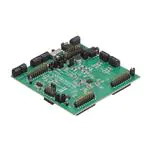
This User's Guide describes the characteristics, operation, and use of the TLV320AIC3101EVM, both by
itself and as part of the TLV320AIC3101EVM-PDK. This evaluation module (EVM) is a complete stereo
audio codec with several inputs and outputs, extensive audio routing, mixing, and effects capabilities. A
complete circuit description, schematic diagram, and bill of materials are included.
The following related documents are available through the Texas Instruments web site at www.ti.com.
Table 1. EVM-Compatible Device Data Sheets
Device
Literature Number
TLV320AIC3101
SLAS520
TAS1020B
SLES025
REG1117-3.3
SBVS001
TPS767D318
SLVS209
SN74LVC125A
SCAS290
SN74LVC1G125
SCES223
SN74LVC1G07
SCES296
Contents
1
EVM Overview ............................................................................................................... 3
2
EVM Description and Basics .............................................................................................. 3
3
TLV320AIC3101EVM-PDK Setup and Installation ..................................................................... 8
4
TLV320AIC3101EVM Software .......................................................................................... 10
Appendix A
EVM Connector Descriptions ................................................................................... 34
Appendix B
TLV320AIC3101EVM Schematic ............................................................................... 38
Appendix C TLV320AIC3101EVM Layout Views ........................................................................... 40
Appendix D TLV320AIC3101EVM Bill of Materials ......................................................................... 43
Appendix E
USB-MODEVM Schematic ...................................................................................... 44
Appendix F
USB-MODEVM Layout Views .................................................................................. 46
Appendix G USB-MODEVM Bill of Materials ................................................................................ 48
Appendix H USB-MODEVM Protocol ......................................................................................... 50
List of Figures
.............................................................................
..................................................................................................
Device Selection Window ................................................................................................
Default Configuration Tab ................................................................................................
Audio Input/ADC Tab .....................................................................................................
Bypass Paths ..............................................................................................................
Audio Interface Tab ......................................................................................................
Clocks Tab .................................................................................................................
AGC Tab ...................................................................................................................
Left AGC Settings .........................................................................................................
1
TLV320AIC3101EVM-PDK Block Diagram
4
2
Default Software Screen
9
3
4
5
6
7
8
9
10
10
12
13
14
15
16
18
19
Microsoft, Windows are registered trademarks of Microsoft Corporation.
SPI is a trademark of Motorola, Inc.
VISA, LabVIEW are trademarks of National Instruments Corporation.
SLAU219A – August 2007 – Revised January 2014
Submit Documentation Feedback
TLV320AIC3101EVM and TLV320AIC3101EVM-PDK
Copyright © 2007–2014, Texas Instruments Incorporated
1
�www.ti.com
11
Advanced ...................................................................................................................
19
12
Filters Tab
.................................................................................................................
...................................................................................................
ADC High-Pass Filter Settings ..........................................................................................
DAC Filters .................................................................................................................
De-emphasis Filters .......................................................................................................
Enabling Filters ...........................................................................................................
Shelf Filters ................................................................................................................
EQ Filters ..................................................................................................................
Analog Simulation Filters ................................................................................................
Preset Filters ..............................................................................................................
User Filters ................................................................................................................
3-D Effect Settings ........................................................................................................
Output Stage Configuration Tab ........................................................................................
DAC/Line Outputs Tab ...................................................................................................
High-Power Outputs Tab ................................................................................................
Command Line Interface Tab ...........................................................................................
File Menu ..................................................................................................................
TLV320AIC3101EVM Schematic ........................................................................................
TLV320AIC3101EVM Schematic Interface ............................................................................
TLV320AIC3101EVM Assembly Layer .................................................................................
TLV320AIC3101EVM Top Layer ........................................................................................
TLV320AIC3101EVM Layer 3 ...........................................................................................
TLV320AIC3101EVM Layer 4 ...........................................................................................
TLV320AIC3101EVM Silk Screen .......................................................................................
TLV320AIC3101EVM Bottom Layer ....................................................................................
USB-MODEVM Interface Board Schematic (1 of 2) ..................................................................
USB-MODEVM Interface Board Schematic (2 of 2) ..................................................................
USB-MODEVM Assembly Layer ........................................................................................
USB-MODEVM Top Layer ...............................................................................................
USB-MODEVM Bottom Layer ...........................................................................................
20
13
ADC High-Pass Filters
21
14
15
16
17
18
19
20
21
22
23
24
25
26
27
28
29
30
31
32
33
34
35
36
37
38
39
40
41
21
22
22
23
23
24
24
25
25
26
27
29
31
32
33
38
39
40
40
41
41
42
42
44
45
46
46
47
List of Tables
1
EVM-Compatible Device Data Sheets ...................................................................................
1
2
USB-MODEVM SW2 Settings .............................................................................................
5
3
USB-MODEVM Jumpers ...................................................................................................
5
4
List of Jumpers ..............................................................................................................
6
5
Analog Interface Pinout ...................................................................................................
34
6
Alternate Analog Connectors
............................................................................................
35
7
Digital Interface Pinout ....................................................................................................
36
8
Power Supply Pinout ......................................................................................................
37
9
TLV320AIC3101EVM Bill of Materials ..................................................................................
43
10
USB-MODEVM Bill of Materials .........................................................................................
48
11
USB Control Endpoint HIDSETREPORT Request ....................................................................
50
12
Data Packet Configuration
...............................................................................................
GPIO Pin Assignments ...................................................................................................
53
13
2
TLV320AIC3101EVM and TLV320AIC3101EVM-PDK
50
SLAU219A – August 2007 – Revised January 2014
Submit Documentation Feedback
Copyright © 2007–2014, Texas Instruments Incorporated
�EVM Overview
www.ti.com
1
EVM Overview
1.1
Features
The features of the TLV320AIC3101EVM include:
• Full-featured evaluation board for the TLV320AIC3101 stereo audio codec.
• Modular design for use with a variety of digital signal processor (DSP) and microcontroller interface
boards.
• USB connection to PC provides power, control, and streaming audio data for easy evaluation.
• An onboard microphone for ADC evaluation.
• Connection points for external control and digital audio signals for quick connection to other
circuits/input devices.
The TLV320AIC3101EVM-PDK is a complete evaluation kit, which includes a universal serial bus (USB)based motherboard and evaluation software for use with a personal computer running the Microsoft®
Windows® operating system (Windows 2000 or Windows XP).
1.2
Introduction
The TLV320AIC3101EVM uses the Texas Instruments modular EVM form factor, which allows direct
evaluation of the device performance and operating characteristics, and eases software development and
system prototyping. This EVM is compatible with the 5-6K Interface Board (SLAU104) and the HPA-MCU
Interface Board (SLAU106) from Texas Instruments and additional third-party boards which support TI's
modular EVM format.
The TLV320AIC3101EVM-PDK is a complete evaluation/demonstration kit, which includes a USB-based
motherboard called the USB-MODEVM Interface Board and evaluation software for use with a personal
computer (PC) running the Microsoft Windows operating systems.
The TLV320AIC3101EVM-PDK operates with one USB cable connecting to a PC. The USB connection
provides power, control, and streaming audio data to the EVM for reduced setup and configuration. The
EVM also allow external control signals, audio data, and power for advanced operation, which permits
prototyping and connecting to the rest of the development or system evaluation.
2
EVM Description and Basics
This section provides information on the analog input and output, digital control, power, and general
connection of the TLV320AIC3101EVM.
2.1
TLV320AIC3101EVM-PDK Block Diagram
The TLV320AIC3101EVM-PDK consists of two separate circuit boards, the USB-MODEVM and the
TLV320AIC3101EVM. The USB-MODEVM is built around a TAS1020B streaming audio USB controller
with an 8051-based core. The motherboard features two positions for modular EVMs, or one double-wide
serial modular EVM can be installed. The TLV320AIC3101EVM is one of the double-wide modular EVMs
that is designed to work with the USB-MODEVM.
The simple diagram of Figure 1 shows how the TLV320AIC3101EVM is connected to the USB-MODEVM.
The USB-MODEVM Interface Board is intended to be used in USB mode, where control of the installed
EVM is accomplished using the onboard USB controller device. Provision is made, however, for driving all
the data buses (I2C, SPI™, I2S/AC97) externally. The source of these signals is controlled by SW2 on the
USB-MODEVM. See Table 2 for details on the switch settings.
The USB-MODEVM has two EVM positions that allow for the connection of two small evaluation modules
or one larger evaluation module. The TLV320AIC3101EVM is designed to fit over both of the smaller
evaluation module slots as shown in Figure 1.
SLAU219A – August 2007 – Revised January 2014
Submit Documentation Feedback
TLV320AIC3101EVM and TLV320AIC3101EVM-PDK
Copyright © 2007–2014, Texas Instruments Incorporated
3
�EVM Description and Basics
2.1.1
www.ti.com
USB-MODEVM Interface Board
The simple diagram in Figure 1 shows only the basic features of the USB-MODEVM Interface Board.
Because the TLV320AIC3101EVM is a double-wide modular EVM, it is installed with connections to both
EVM positions, which connects the TLV320AIC3101 digital control interface to the I2C port, realized by
using the TAS1020B, as well as the TAS1020B digital audio interface.
In the factory configuration, the board is ready to use with the TLV320AIC3101EVM. To view all the
functions and configuration options available on the USB-MODEVM board, see the USB-MODEVM
Interface Board schematic in Appendix E.
TLV320AIC310xEVM
TLV320AIC310x
USB-MODEVM
EVM Position 1
Control Interface
2
SPI, I C
TAS1020B
USB 8051
Microcontroller
EVM Position 2
USB
2
I S, AC97
Audio Interface
Figure 1. TLV320AIC3101EVM-PDK Block Diagram
4
TLV320AIC3101EVM and TLV320AIC3101EVM-PDK
SLAU219A – August 2007 – Revised January 2014
Submit Documentation Feedback
Copyright © 2007–2014, Texas Instruments Incorporated
�EVM Description and Basics
www.ti.com
2.2
2.2.1
Default Configuration and Connections
USB-MODEVM
Table 2 provides a list of the SW2 settings on the USB-MODEVM. For use with the TLV320AIC3101EVM,
SW-2 positions 1 through 7 should be set to ON, whereas SW-2.8 should be set to OFF.
Table 2. USB-MODEVM SW2 Settings
SW-2 Switch
Number
Label
Switch Description
1
A0
USB-MODEVM EEPROM I2C address A0
ON: A0 = 0
OFF: A0 = 1
2
A1
USB-MODEVM EEPROM I2C address A1
ON: A1 = 0
OFF: A1 = 1
3
A2
USB-MODEVM EEPROM I2C address A2
ON: A2 = 0
OFF: A2 = 1
4
USB I2S
I2S bus source selection
ON: I2S bus connects to TAS1020
OFF: I2S bus connects to USB-MODEVM J14
5
USB MCK
I2S bus MCLK source selection
ON: MCLK connects to TAS1020
OFF: MCLK connects to USB-MODEVM J14
6
USB SPI
SPI bus source selection
ON: SPI bus connects to TAS1020
OFF: SPI bus connects to USB-MODEVM J15
7
USB RST
RST source selection
ON: EVM reset signal comes from TAS1020
OFF: EVM reset signal comes from USB-MODEVM J15
8
EXT MCK
External MCLK selection
ON: MCLK signal is provided from USB-MODEVM J10
OFF: MCLK signal comes from either selection of SW2-5
Table 3 provides a list of USB-MODEVM jumpers found on the EVM.
Table 3. USB-MODEVM Jumpers
Jumper
Default Position
Jumper Description
JMP1
Installed
Connects analog and digital +5 V supplies
JMP2
Open
Connects analog and digital grounds
JMP3
Open
Connects I2C SDA pull-up to IOVDD
JMP4
Open
Connects I2C SCL pull-up to IOVDD
JMP5
2-3
When connecting 2-3, SS comes from FSX; when connecting 1-2, SS
comes from CNTL
JMP6
1-2
When connecting 1-2, +5 VD comes from USB; when connecting 2-3, +5
VD comes from U2
JMP7
1-2
When connecting 1-2, MCLKI comes from USB; when connecting 2-3,
MCLKI comes from AVSS/DVSS
JMP8
Open
Connects resistor across EXT MCLK
Windows 7 Instructions
For use of the MODEVM motherboard on Windows 7 machines, the most up-to-date version of National
Instrument’s VISA™ drivers must be installed (ni.com). After this is installed, the USB-MODEVM Windows
XP/Windows Vista/Windows 7 driver must also be installed (SLAC521).
SLAU219A – August 2007 – Revised January 2014
Submit Documentation Feedback
TLV320AIC3101EVM and TLV320AIC3101EVM-PDK
Copyright © 2007–2014, Texas Instruments Incorporated
5
�EVM Description and Basics
2.2.2
www.ti.com
TLV320AIC3101 Jumper Locations
Table 4 provides a list of jumpers found on the EVM and their factory default conditions. After this is
installed, the USB-MODEVM Windows XP/Windows Vista/Windows 7 driver must also be installed
(SLAC521).
Table 4. List of Jumpers
2.3
2.3.1
Jumper
Default Position
Jumper Description
JMP1
Installed
Connects analog and digital grounds
JMP2
Open
Selects onboard EEPROM as firmware source
JMP3
Installed
Connects onboard Mic to IN2L
JMP4
Installed
Connects onboard Mic to IN2R
JMP5
Installed
Provides a means of measuring IOVDD current
JMP6
Installed
Provides a means of measuring DVDD current
JMP7
Installed
Provides a means of measuring DVRDD current
JMP8
Installed
Provides a means of measuring AVDD_DAC current
JMP9
Open
When installed, allows the USB-MODEVM to hardware reset
the device under user control
JMP10
2-3
When connecting 2-3, mic bias comes from the MICBIAS pin
on the device; when connecting 1-2, mic bias is supplied from
the power supply through a resistor, which the user must
install
JMP11
Installed
When installed, shorts across the output capacitor on
HPLOUT; remove this jumper if using AC-coupled output drive
JMP12
Installed
When installed, shorts HPLCOM and HPRCOM. Use only if
these signals are set to constant VCM
JMP13
Installed
When installed, shorts across the output capacitor on
HPLCOM; remove this jumper if using AC-coupled output drive
JMP14
Installed
When installed, shorts across the output capacitor on
HPROUT; remove this jumper if using AC-coupled output drive
JMP15
Installed
When installed, shorts across the output capacitor on
HPRCOM; remove this jumper if using AC-coupled output
drive
JMP16
2-3
When connecting 2-3, IOVDD is set to +3.3 VD; when
connecting 1-2, IOVDD and DVDD are shorted at +1.8 VD
Analog Signal Connections
Analog Inputs
The analog inputs to the EVM can be connected through two different methods. The analog input sources
can be applied directly to J1 (top or bottom side) or through the analog headers (J6-8 and J14) around the
edge of the board. The connection details of each header/connector can be found in Appendix A.
2.3.2
Analog Output
The analog outputs to the EVM can be connected through two different methods. The analog outputs are
available from the J1 and J2 (top or bottom) or they may be accessed through J9, J10, J11, J12, and J13
at the edges of the board. The connection details can be found in Appendix A.
6
TLV320AIC3101EVM and TLV320AIC3101EVM-PDK
SLAU219A – August 2007 – Revised January 2014
Submit Documentation Feedback
Copyright © 2007–2014, Texas Instruments Incorporated
�EVM Description and Basics
www.ti.com
2.4
2.4.1
Digital Signal Connections
Digital Inputs and Outputs
The digital inputs and outputs of the EVM can be monitored through J4 and J5. If external signals need to
be connected to the EVM, digital inputs should be connected via J14 and J15 on the USB-MODEVM and
the SW2 switch should be changed accordingly (see Section 2.2.1). The connector details are available in
Section A.2.
2.4.2
Digital Controls
The digital control signals can be applied directly to J4 and J5 (top or bottom side). The modular
TLV320AIC3101EVM also can be connected directly to a DSP interface board, such as the 5-6K Interface
Board or the HPA-MCU Interface Board, or to the USB-MODEVM Interface Board if purchased as part of
the TLV320AIC3101EVM-PDK. See the product folders on the TI Web site for these evaluation modules
or the TLV320AIC3101 for a current list of compatible interface and/or accessory boards.
2.5
Power Connections
The TLV320AIC3101EVM can be powered independently when being used in stand-alone operation or by
the USB-MODEVM when it is plugged onto the motherboard.
2.5.1
Stand-Alone Operation
When used as a stand-alone EVM, power is applied to J3 directly; ensure that the supplies are referenced
to the appropriate grounds on that connector.
CAUTION
Verify that all power supplies are within the safe operating limits shown in the
TLV320AIC3101 data sheet (SLAS520) before applying power to the EVM.
J3 provides connection to the common power bus for the TLV320AIC3101EVM. Power is supplied on the
pins listed in Table 8.
The TLV320AIC3101EVM-PDK motherboard (the USB-MODEVM Interface board) supplies power to J3 of
the TLV320AIC3101EVM. Power for the motherboard is supplied either through its USB connection or via
terminal blocks on that board.
SLAU219A – August 2007 – Revised January 2014
Submit Documentation Feedback
TLV320AIC3101EVM and TLV320AIC3101EVM-PDK
Copyright © 2007–2014, Texas Instruments Incorporated
7
�TLV320AIC3101EVM-PDK Setup and Installation
2.5.2
www.ti.com
USB-MODEVM Operation
The USB-MODEVM Interface Board can be powered from several different sources:
• USB
• 6-Vdc to 10-Vdc ac/dc external wall supply (not included)
• Laboratory power supply
When powered from the USB connection, JMP6 should have a shunt from pins 1–2 (this is the default
factory configuration). When powered from 6 Vdc to 10 Vdc, either through the J8 terminal block or J9
barrel jack, JMP6 should have a shunt installed on pins 2–3. If power is applied in any of these ways,
onboard regulators generate the required supply voltages and no further power supplies are necessary.
If laboratory supplies are used to provide the individual voltages required by the USB-MODEVM Interface
Board, JMP6 should have no shunt installed. Voltages then are applied to J2 (+5 VA), J3 (+5 VD), J4
(+1.8 VD), and J5 (+3.3 VD). The +1.8 VD and +3.3 VD can also be generated on the board by the
onboard regulators from the +5-VD supply; to enable this configuration, the switches on SW1 need to be
set to enable the regulators by placing them in the ON position (lower position, looking at the board with
text reading right-side up). If +1.8 VD and +3.3 VD are supplied externally, disable the onboard regulators
by placing SW1 switches in the OFF position.
Each power supply voltage has an LED (D1-D7) that lights when the power supplies are active.
3
TLV320AIC3101EVM-PDK Setup and Installation
The following section provides information on using the TLV320AIC3101EVM-PDK, including setup,
program installation, and program usage.
NOTE: If using the EVM in stand-alone mode, the software should be installed per the following
procedure, but the hardware configuration may be different.
3.1
Software Installation
1. Locate the installation file on the CD-ROM included with the EVM or download the latest version of the
software located on the AIC3101 product page. If downloading the software from the TI Web site, an
option is available to allow the user to be notified when the software is updated.
2. Unzip the installation file by clicking on the self-extracting zip file.
3. Install the EVM software by double-clicking the Setup executable file and follow the directions. Users
may be prompted to restart their computers.
This should install all the TLV320AIC310x software and required drivers onto the PC.
3.2
EVM Connections
1. Ensure that the TLV320AIC3101EVM is installed on the USB-MODEVM Interface Board, aligning J1,
J2, J3, J4, and J5 with the corresponding connectors on the USB-MODEVM Interface Board.
2. Verify that the jumpers and switches are in their default conditions.
3. Attach a USB cable from the PC to the USB-MODEVM Interface Board. The default configuration
provides power, control signals, and streaming audio via the USB interface from the PC. On the USBMODEVM Interface Board, LEDs D3–6 should light to indicate that the power is being supplied from
the USB.
4. For the first connection, the PC should recognize new hardware and begin an initialization process.
The user may be prompted to identify the location of the drivers or allow the PC to automatically
search for them. Allow the automatic detection option.
5. Once the PC confirms that the hardware is operational, D2 on the USB-MODEVM Interface Board
should light to indicate that the firmware has been loaded and the EVM is ready for use. If the LED is
not lit, verify that the drivers were installed, unplug the USB cable, and restart the procedure at Step 3.
8
TLV320AIC3101EVM and TLV320AIC3101EVM-PDK
SLAU219A – August 2007 – Revised January 2014
Submit Documentation Feedback
Copyright © 2007–2014, Texas Instruments Incorporated
�TLV320AIC3101EVM-PDK Setup and Installation
www.ti.com
After the TLV320AIC3101EVM-PDK software installation is complete, evaluation and development with
the TLV320AIC3101 can begin.
The TLV320AIC310xEVM software can now be launched. The user should see an initial screen that looks
similar to Figure 2.
Figure 2. Default Software Screen
SLAU219A – August 2007 – Revised January 2014
Submit Documentation Feedback
TLV320AIC3101EVM and TLV320AIC3101EVM-PDK
Copyright © 2007–2014, Texas Instruments Incorporated
9
�TLV320AIC3101EVM Software
4
www.ti.com
TLV320AIC3101EVM Software
The following section discusses the details and operation of the EVM software.
NOTE: For configuration of the codec, the TLV320AIC3101 block diagram located in the
TLV320AIC3101 data sheet (SLAS520) is a good reference to help determine the signal
routing.
4.1
Device Selection for Operation With AIC3101EVM
The software that is installed provides operation for several devices. An initial window should appear that
looks like Figure 3. For operation with the TLV320AIC3101EVM, the user should select AIC3101 from the
pull-down menu and click Accept. The software will take a few seconds to configure the software for
operation before proceeding. A progress bar should appear and show the status of the configuration.
Figure 3. Device Selection Window
10
TLV320AIC3101EVM and TLV320AIC3101EVM-PDK
SLAU219A – August 2007 – Revised January 2014
Submit Documentation Feedback
Copyright © 2007–2014, Texas Instruments Incorporated
�TLV320AIC3101EVM Software
www.ti.com
4.2
Front Page Indicators and Functions
Figure 2 illustrates the main screen of the EVM software. The indicators and buttons located above the
tabbed section of the front page are visible regardless of which tab is currently being selected.
At the top left of the screen is an Interface indicator. This indicator shows which interface is selected for
controlling the TLV320AIC3101, either I2C or SPI.
To the right of the Interface indicator is a group box called Firmware. This box indicates where the
firmware being used is operating from—in this release, the firmware is on the USB-MODEVM, so the user
should see USB-MODEVM in the box labeled Located On:. The version of the firmware appears in the
Version box below this.
To the right, the next group box contains controls for resetting the TLV320AIC3101. A software reset can
be done by writing to a register in the TLV320AIC3101, and this is accomplished by pushing the button
labeled Software Reset. The TLV320AIC3101 also may be reset by toggling a pin on the
TLV320AIC3101, which is done by pushing the Hardware Reset button.
CAUTION
In order to perform a hardware reset, the RESET jumper (JMP19) must be
installed, and SW2–7 on the USB-MODEVM Interface Board must be turned
OFF. Failure to do either of these steps results in not generating a hardware
reset or causing unstable operation of the EVM, which may require cycling
power to the USB-MODEVM Interface Board.
Below the Firmware box, the Device Connected LED should be green when the EVM is connected. If the
indicator is red, the EVM is not properly connected to the PC. Disconnect the EVM and verify that the
drivers were correctly installed; then reconnect and try restarting the software.
On the upper right portion of the screen, several indicators are located which provide the status of various
portions of the TLV320AIC3101. These indicators are activated by pressing the Indicator Updates button
below the Device Connected LED. These indicators, as well as the other indicators on this panel, are
updated only when the software's front panel is inactive, once every 20 ms.
The ADC Overflow and DAC Overflow indicators light when the overflow flags are set in the
TLV320AIC3101. Below these indicators are the AGC Noise Threshold Exceeded indicators that show
when the AGC noise threshold is exceeded. To the far right of the screen, the Short Circuit Detect
indicators show when a short-circuit condition is detected, if this feature has been enabled. Below the
short-circuit indicators, the AGC Gain Applied indicators use a bar graph to show the amount of gain
which has been applied by the AGC, and indicators that light when the AGC is saturated.
SLAU219A – August 2007 – Revised January 2014
Submit Documentation Feedback
TLV320AIC3101EVM and TLV320AIC3101EVM-PDK
Copyright © 2007–2014, Texas Instruments Incorporated
11
�TLV320AIC3101EVM Software
4.3
www.ti.com
Preset Configuration Tab
The Preset Configuration tab (Figure 4) provides several different preset configurations of the codec. The
Preset Configurations buttons allow the user to choose from the provided defaults. When the selection is
made, the Preset Configuration Description shows a summary of the codec setup associated with the
choice made. If the choice is acceptable, the Load button can be pressed, and the preset configuration is
loaded into the codec. The user can select the Command Line Interface tab (see Figure 27) to view the
actual settings that were programmed into the codec.
Figure 4. Default Configuration Tab
12
TLV320AIC3101EVM and TLV320AIC3101EVM-PDK
SLAU219A – August 2007 – Revised January 2014
Submit Documentation Feedback
Copyright © 2007–2014, Texas Instruments Incorporated
�TLV320AIC3101EVM Software
www.ti.com
4.4
Audio Input/ADC Tab
The Audio Input/ADC tab allows control of the analog input mixer and the ADC. The controls are
displayed to look similar to an audio mixing console (see Figure 5).
Figure 5. Audio Input/ADC Tab
Each analog input channel has a vertical strip that corresponds to that channel. By default, all inputs are
muted when the TLV320AIC3101 is powered up.
To route an analog input to the ADC:
1. Select the Input Mode button to correctly show if the input signal is single-ended (SE) or fullydifferential (Diff). Inputs that are single-ended should be made to the positive signal terminal.
2. Click on the button of the analog input channel that corresponds to the correct ADC. The caption of the
button should change to Active. Note that the user can connect some channels to both ADCs, whereas
others can only connect to one ADC.
3. Adjust the Level control to the desired attenuation for the connected channel. This level adjustment
can be done independently for each connection.
The TLV320AIC3101 offers a programmable microphone bias that can either be powered down or set to
2.0 V, 2.5 V, or the power supply voltage of the ADC (AVDD_ADC). Control of the microphone bias (mic
bias) voltage is accomplished by using the Mic Bias pull-down menu button above the last two channel
strips. To use the onboard microphone, JMP2 and JMP3 must be installed and nothing should be plugged
into J6. In order for the mic bias settings in the software to take effect, JMP1 should be set to connect
positions 2 and 3, so that mic bias is controlled by the TLV320AIC3101.
In the upper right portion of this tab are controls for Weak Common Mode Bias. Enabling these controls
results in unselected inputs to the ADC channels to be weakly biased to the ADC common mode voltage.
Below these controls are the controls for the ADC PGA, including the master volume controls for the ADC
inputs. Each channel of the ADC can be powered up or down, as needed, using the Powered Up buttons.
PGA soft-stepping for each channel is selected using the pull-down menu control. The two large knobs set
the actual ADC PGA Gain and allow adjustment of the PGA gains from 0 dB to 59.5 dB in 0.5-dB steps
(excluding Mute). At the extreme counterclockwise rotation, the channel is muted. Rotating the knob
clockwise increases the PGA gain, which is displayed in the box directly above the volume control.
SLAU219A – August 2007 – Revised January 2014
Submit Documentation Feedback
TLV320AIC3101EVM and TLV320AIC3101EVM-PDK
Copyright © 2007–2014, Texas Instruments Incorporated
13
�TLV320AIC3101EVM Software
4.5
www.ti.com
Bypass Paths Tab
The Bypass Paths tab (Figure 6)shows the active and passive bypass paths available for control.
Figure 6. Bypass Paths
The passive analog bypass paths allow the inputs to be routed straight through the device to the outputs
without turning on any of the internal circuitry. This provides a signal path through the device with minimal
power consumption.
The active bypass paths allow the inputs to bypass the ADC and DAC functional blocks and be routed to
the analog output mixers to be summed into the output amplifiers.
14
TLV320AIC3101EVM and TLV320AIC3101EVM-PDK
SLAU219A – August 2007 – Revised January 2014
Submit Documentation Feedback
Copyright © 2007–2014, Texas Instruments Incorporated
�TLV320AIC3101EVM Software
www.ti.com
4.6
Audio Interface Tab
The Audio Interface tab (Figure 7) allows configuration of the audio digital data interface to the
TLV320AIC3101.
Figure 7. Audio Interface Tab
The interface mode can be selected using the Transfer Mode control—selecting either I2S mode, DSP
mode, or Right- or Left-Justified modes. Word length can be selected using the Word Length control, and
the bit clock rate also can be selected using the Bit Clock rate control. The Data Word Offset, used in
TDM mode (see the TLV320AIC3101 data sheet, SLAS520) also can be selected on this tab.
Along the bottom of this tab are controls for choosing the BCLK and WCLK as either inputs or outputs.
With the codec configured in Slave mode, both the BCLK and WCLK are set to inputs. If the codec is in
Master mode, then BCLK and WCLK are configured as outputs. Additionally, two buttons provide the
options for placing the DOUT line in a 3-state output mode when there is no valid data and transmitting
BCLK and WCLK when the codec is powered down.
Re-synchronization (labeled ReSync on the tab) of the audio bus is enabled using the controls in the
lower right corner of this screen. Re-synchronization is done if the group delay changes by more than
±FS/4 for the ADC or DAC sample rates (see the TLV320AIC3101 data sheet). The channels can be softmuted when doing re-synchronization if the Soft Mute button is enabled.
In the upper right corner of this tab is the Digital Mic Functionality control. The TLV320AIC3101 can
accept a data stream from a digital microphone, which would have its clock pin connected to the
TLV320AIC3101 GPIO1 pin, and the mic data connected to the GPIO2 pin. Once the digital microphone
functionality is enabled, the Digital Mic/ADC Selection selection allows the user to choose if one or two
digital microphones are connected to the codec. If only one digital microphone is connected, then the
SLAU219A – August 2007 – Revised January 2014
Submit Documentation Feedback
TLV320AIC3101EVM and TLV320AIC3101EVM-PDK
Copyright © 2007–2014, Texas Instruments Incorporated
15
�TLV320AIC3101EVM Software
www.ti.com
remaining ADC can be used with an analog input signal from the analog input pins. Refer to Section H.2
for a discussion of setting the GPI pin options. The TLV320AIC3101 can provide a modulator clock to the
digital microphone with over sampling ratios (OR) of 128, 64, or 32. For a detailed discussion of how to
connect a digital microphone on this platform, see the application report Using the Digital Microphone
Function on TLV320AIC3101 with AIC33EVM/USB-MODEVM System (SLAA275).
The default mode for the EVM is configured as 44.1 kHz, 16-bit, I2C words, and the codec is a slave
(BCLK and WCLK are supplied to the codec externally). For use with the PC software and the USBMODEVM Interface Board, the default settings should be used; no change to the software is required.
4.7
Clocks Tab
The TLV320AIC3101 provides a phase-locked loop (PLL) that allows flexibility in the clock generation for
the ADC and DAC sample rates. The Clocks tab contains the controls that can be used to configure the
TLV320AIC3101 for operation with a wide range of master clocks. See the Audio Clock Generation
Processing illustration in the TLV320AIC3101 data sheet (SLAS520) for further details on selecting the
correct clock settings.
For use with the PC software and the USB-MODEVM Interface Board, the clock settings must be set a
certain way. If the settings are changed from the default settings which allow operation from the USBMODEVM clock reference, the EVM settings can be restored automatically by pushing the Load EVM
Clock Settings button at the bottom of this tab. Note that changing any of the clock settings from the
values loaded when this button is pushed may result in the EVM not working properly with the PC
software or USB interface. If an external audio bus is used (audio not driven over the USB bus), then
settings can be changed to any valid combination. See Figure 8.
Figure 8. Clocks Tab
16
TLV320AIC3101EVM and TLV320AIC3101EVM-PDK
SLAU219A – August 2007 – Revised January 2014
Submit Documentation Feedback
Copyright © 2007–2014, Texas Instruments Incorporated
�TLV320AIC3101EVM Software
www.ti.com
4.7.1
Configuring Codec Clocks and Fsref Calculation
The codec clock source is chosen by the CODEC_CLK Source control. When this control is set to
CLKDIV_OUT, the PLL is not used; when set to PLLDIV_OUT, the PLL is used to generate the clocks.
NOTE: Per the TLV320AIC3101 data sheet (SLAS520), the codec should be configured to allow the
value of Fsref to fall between 39 kHz and 53 kHz.
4.7.1.1
Use Without PLL
Setting up the TLV320AIC3101 for clocking without using the PLL permits the lowest power consumption
by the codec. The CLKDIV_IN source can be selected as either MCLK, GPIO2, or BCLK; the default is
MCLK. The CLKDIV_IN frequency then is entered into the CLKDIV_IN box, in megahertz (MHz). The
default value shown, 11.2896 MHz, is the frequency used on the USB-MODEVM board. This value is
divided by the value of Q, which can be set from 2 to 17; the resulting CLKDIV_OUT frequency is shown
in the indicator next to the Q control. The resultant frequency is shown as the Actual Fsref.
4.7.1.2
Use With PLL
When PLLDIV_OUT is selected as the codec clock source, the PLL is used. The PLL clock source is
chosen using the PLLCLK_IN control, and may be set to either MCLK, GPIO2, or BCLK. The PLLCLK_IN
frequency then is entered into the PLLCLK_IN Source box.
The PLL_OUT and PLLDIV_OUT indicators show the resulting PLL output frequencies with the values set
for the P, K, and R parameters of the PLL See the TLV320AIC3101 data sheet (SLAS520) for an
explanation of these parameters. The parameters can be set by clicking on the up/down arrows of the P,
K, and R combo boxes, or they can be typed into these boxes.
The values also can be calculated by the PC software. To use the PC software to find the ideal values of
P, K, and R for a given PLL input frequency and desired Fsref:
1. Verify that the correct reference frequency is entered into the PLLCLK_IN Source box in megahertz
(MHz).
2. The desired Fsref should be set using the Fsref switch.
3. Push the Search for Ideal Settings button. The software starts searching for ideal combinations of P,
K, and R which achieve the desired Fsref. The possible settings for these parameters are displayed in
the spreadsheet-like table labeled Possible Settings.
4. Click on a row in this table to select the P, K, and R values located in that row. Notice that when this is
done, the software updates the P, K, R, PLL_OUT, and PLLDIV_OUT readings, as well as the Actual
Fsref and Error displays. The values show the calculations based on the values that were selected.
This process does not actually load the values into the TLV320AIC3101; however, it only updates the
displays in the software. If more than one row exists, the user can choose the other rows to see which
of the possible settings comes closest to the ideal settings.
When a suitable combination of P, K, and R have been chosen, pressing the Load Settings into Device?
button downloads these values into the appropriate registers on the TLV320AIC3101.
4.7.1.3
Setting ADC and DAC Sampling Rates
The Fsref frequency that determines either enabling or bypassing the PLL (see Section 4.7.1.1 or
Section 4.7.1.2) is used to determine the actual ADC and DAC sampling rates. Using the NADC and
NDAC factors, the sampling rates are derived from the Fsref. If dual-rate mode is desired, this option can
be enabled for either the ADC or DAC by pressing the corresponding Dual Rate Mode button. The ADC
and DAC sampling rates are shown in the box to the right of each control.
SLAU219A – August 2007 – Revised January 2014
Submit Documentation Feedback
TLV320AIC3101EVM and TLV320AIC3101EVM-PDK
Copyright © 2007–2014, Texas Instruments Incorporated
17
�TLV320AIC3101EVM Software
4.8
www.ti.com
AGC Tab
The AGC tab (see Figure 9) consists of two identical sets of controls, one for the left channel and the
other for the right channel. The AGC function is described in the TLV320AIC3101 data sheet (SLAS520).
Figure 9. AGC Tab
The AGC can be enabled for each channel using the Enable AGC button. Target gain, Attack time in
milliseconds, Decay time in milliseconds, and the Maximum PGA Gain Allowed can all be set,
respectively, using the four corresponding knobs in each channel.
18
TLV320AIC3101EVM and TLV320AIC3101EVM-PDK
SLAU219A – August 2007 – Revised January 2014
Submit Documentation Feedback
Copyright © 2007–2014, Texas Instruments Incorporated
�TLV320AIC3101EVM Software
www.ti.com
The TLV320AIC3101 allows for the Attack and Decay times of the AGC to be set up in two different
modes: standard and advanced. The Left/Right AGC Settings button determines the mode selection.
The Standard mode provides several preset times that can be selected by adjustments made to the
Attack and Decay knobs. If finer control over the times is required, then the Advanced mode is selected
to change the settings. When the Advanced mode is enabled, two tabs should appear that allow separate,
advanced control of the Attack and Delay times of the AGC (see Figure 10 and Figure 11). These options
allow selection of the base time as well as a multiplier to achieve the actual times shown in the
corresponding text box. The Use advanced settings? button should be enabled to program the registers
with the correct values selected via the pull-down options for base time and multiplier.
Figure 10. Left AGC Settings
Figure 11. Advanced
Noise gate functions, such as Hysteresis, Enable Clip stepping, Threshold (dB), Signal Detect
Debounce (ms), and Noise Detect Debounce (ms) are set using the corresponding controls in the
Noise Gate group box for each channel.
SLAU219A – August 2007 – Revised January 2014
Submit Documentation Feedback
TLV320AIC3101EVM and TLV320AIC3101EVM-PDK
Copyright © 2007–2014, Texas Instruments Incorporated
19
�TLV320AIC3101EVM Software
4.9
www.ti.com
Filters Tab
The TLV320AIC3101 has an advanced feature set for applying digital filtering to audio signals. This tab
controls all of the filter features of the TLV320AIC3101. In order to use this tab and have plotting of filter
responses correct, the DAC sample rate must be set correctly. Therefore, the clocks must be set up
correctly in the software following the discussion in Section 4.7. See Figure 12.
Figure 12. Filters Tab
The AIC3101 digital filtering is available to both the ADC and DAC. The ADC has optional high-pass
filtering and allows the digital output from the ADC through digital effects filtering before exiting the codec
through the PCM interface. Likewise, the digital audio data can be routed through the digital effects
filtering before passing through the optional de-emphasis filter before the DAC. The digital effects filtering
can only be connected to either the ADC or DAC, not both at the same time.
The Filter tab (Figure 12) is divided into several areas. The left side of the tab is used to select between
the DAC or ADC filters and assist in the selection and calculation of the desired filter coefficients. The right
side of the tab shows a frequency response plot of the digital effects filter selected and the coefficients
that are programmed into the device. The plots show the magnitude and phase response of each biquad
section, plus the combined responses of the two biquad filters. Note that the plot shows only the
responses of the effect filters, not the combined response of those filters along with the de-emphasis and
ADC high-pass filters.
20
TLV320AIC3101EVM and TLV320AIC3101EVM-PDK
SLAU219A – August 2007 – Revised January 2014
Submit Documentation Feedback
Copyright © 2007–2014, Texas Instruments Incorporated
�TLV320AIC3101EVM Software
www.ti.com
4.9.1
ADC Filters
4.9.1.1
High-Pass Filter
The TLV320AIC3101 ADC provides the option of enabling a high-pass filter, which helps to reduce the
effects of DC offsets in the system. The tab in Figure 13 shows the options for programming various filters
associated with the ADC. The high-pass filter has two modes: standard and programmable.
Figure 13. ADC High-Pass Filters
The standard high-pass filter option (Figure 14) allows for the selection of the high-pass filter frequency
from several preset options that can be chosen with the Left ADC HP Filter and Right ADC HP Filter
controls. The four options for this setting are disabled, or three different corner frequencies which are
based on the ADC sample rate.
Figure 14. ADC High-Pass Filter Settings
For custom filter requirements, the programmable function allows custom coefficients to achieve a
different filter than provided by the preset filters. The controls for the programmable high-pass filter are
located under the Programmable Filters heading. The process is described in the following steps:
1. Enter the filter coefficients in the HP Filter controls near the bottom of the tab.
2. Press the Download Coefficients button to download the coefficients to the codec registers.
3. Enable the Programmable High-Pass Filters by selecting the Left ADC and Right ADC buttons.
The programmable high-pass filter should now be correctly programmed and enabled. The ADC can be
enabled with the high-pass filter.
4.9.1.2
Digital Effects Filter - ADC
The ADC digital outputs stream can be routed through the digital effects filter in the codec to allow custom
audio performance. The digital effects filter cannot operate on both the ADC or DAC at the same time.
The digital effects filter operation is discussed in Section 4.9.3.
SLAU219A – August 2007 – Revised January 2014
Submit Documentation Feedback
TLV320AIC3101EVM and TLV320AIC3101EVM-PDK
Copyright © 2007–2014, Texas Instruments Incorporated
21
�TLV320AIC3101EVM Software
4.9.2
www.ti.com
DAC Filters
The DAC Filters tab is illustrated in Figure 15.
Figure 15. DAC Filters
4.9.2.1
De-emphasis Filters
The de-emphasis filters used in the TLV320AIC3101 can be programmed as described in the
TLV320AIC3101 data sheet (SLAS520), using the tab shown in Figure 16. Enter the coefficients for the
de-emphasis filter response desired. While on this tab, the de-emphasis response is shown on the Effect
Filter Response graph; however, note that this response is not included in graphs of other effect
responses when on the other filter design tabs.
Figure 16. De-emphasis Filters
4.9.2.2
DAC Digital Effects Filter
The digital audio input stream can be routed through the digital effects filter in the codec before routing to
the DAC to allow custom audio performance. The digital effects filter cannot operate on both the ADC or
DAC at the same time. The digital effects filter operation is discussed in Section 4.9.3.
22
TLV320AIC3101EVM and TLV320AIC3101EVM-PDK
SLAU219A – August 2007 – Revised January 2014
Submit Documentation Feedback
Copyright © 2007–2014, Texas Instruments Incorporated
�TLV320AIC3101EVM Software
www.ti.com
4.9.3
Digital Effects Filters
The digital effect filters (the biquad filters) of the TLV320AIC3101 are selected using the check boxes
shown in Figure 17. The De-emphasis filters are described in the TLV320AIC3101 data sheet (SLAS520),
and their coefficients can be changed (see Figure 15).
Figure 17. Enabling Filters
When designing filters for use with TLV320AIC3101, the software allows for several different filter types to
be used. These options are shown on a tab control in the lower left corner of the screen. When a filter
type is selected and suitable input parameters defined, the response is shown in the Effect Filter
Response graph. Regardless of the setting for enabling the Effect Filter, the filter coefficients are not
loaded into the TLV320AIC3101 until the Download Coefficients button is pressed. To avoid noise during
the update of coefficients, it is recommended that the user uncheck the Effect Filter enable check boxes
before downloading coefficients. Once the desired coefficients are in the TLV320AIC3101, enable the
Effect Filters by checking the boxes again.
4.9.3.1
Shelf Filters
A shelf filter is a simple filter that applies a gain (positive or negative) to frequencies above or below a
certain corner frequency. As shown in Figure 18, in Bass mode a shelf filter applies a gain to frequencies
below the corner frequency; in Treble mode the gain is applied to frequencies above the corner frequency.
Figure 18. Shelf Filters
To use these filters, enter the gain desired and the corner frequency. Choose the mode to use (Bass or
Treble); the responses are plotted on the Effect Filter Response graph.
SLAU219A – August 2007 – Revised January 2014
Submit Documentation Feedback
TLV320AIC3101EVM and TLV320AIC3101EVM-PDK
Copyright © 2007–2014, Texas Instruments Incorporated
23
�TLV320AIC3101EVM Software
4.9.3.2
www.ti.com
EQ Filters
EQ, or parametric, filters can be designed on this tab (see Figure 19). Enter a gain, bandwidth, and a
center frequency (Fc). Either bandpass (positive gain) or band-reject (negative gain) filters can be created
Figure 19. EQ Filters
4.9.3.3
Analog Simulation Filters
Biquads are good at simulating analog filter designs. For each biquad section on this tab, enter the
desired analog filter type to simulate (Butterworth, Chebyshev, Inverse Chebyshev, Elliptic, or Bessel).
Parameter entry boxes appropriate to the filter type are shown (ripple, for example, with Chebyshev filters,
and so forth). Enter the desired design parameters and the response is shown. (See Figure 20.)
Figure 20. Analog Simulation Filters
24
TLV320AIC3101EVM and TLV320AIC3101EVM-PDK
SLAU219A – August 2007 – Revised January 2014
Submit Documentation Feedback
Copyright © 2007–2014, Texas Instruments Incorporated
�TLV320AIC3101EVM Software
www.ti.com
4.9.3.4
Preset Filters
Many applications are designed to provide preset filters common for certain types of program material.
The tab in Figure 21 allows selection of one of four preset filter responses - Rock, Jazz, Classical, or Pop.
Figure 21. Preset Filters
4.9.3.5
User Filters
If filter coefficients are known, they can be entered directly on the tab shown in Figure 22 for both biquads
for both left and right channels. The filter response does not show on the Effect Filter Response graph for
user filters.
Figure 22. User Filters
SLAU219A – August 2007 – Revised January 2014
Submit Documentation Feedback
TLV320AIC3101EVM and TLV320AIC3101EVM-PDK
Copyright © 2007–2014, Texas Instruments Incorporated
25
�TLV320AIC3101EVM Software
4.9.3.6
www.ti.com
3-D Effect
The 3-D effect is described in the TLV320AIC3101 data sheet (SLAS520). It uses the two biquad sections
differently than most other effect filter settings. To use this effect properly, ensure that the appropriate
coefficients are already loaded into the two biquad sections. The User Filters tab may be used to load the
coefficients. See Figure 23.
Figure 23. 3-D Effect Settings
To enable the 3-D effect, check the 3-D Effect On box. The Depth knob controls the value of the 3-D
Attenuation Coefficient.
26
TLV320AIC3101EVM and TLV320AIC3101EVM-PDK
SLAU219A – August 2007 – Revised January 2014
Submit Documentation Feedback
Copyright © 2007–2014, Texas Instruments Incorporated
�TLV320AIC3101EVM Software
www.ti.com
4.10 Output Stage Configuration Tab
The Output Stage Configuration tab (Figure 24) allows for setting various features of the output drivers.
Figure 24. Output Stage Configuration Tab
The Configuration control may be set as either Fully Differential or Pseudo-Differential. This control
determines if the output stage is being used to drive a fully differential output load or a output load where
one of the outputs is referenced to a common-mode voltage (pseudo-differential).
The output Coupling control can be chosen as either Capless or AC-coupled. This setting should
correspond to the setting of the hardware switch (SW1) on the TLV320AIC3101EVM.
The common-mode voltage of the outputs can be set to 1.35 V, 1.5 V, 1.65 V, or 1.8 V using the
Common Mode Voltage control.
The TLV320AIC3101 offers several options to help reduce the turnon/off pop of the output amplifiers. The
Power-On Delay of the output drivers can be set using the corresponding control from 0 μs up to 4 s.
Ramp-Up Step Timing also can be adjusted from 0 ms to 4 ms. The outputs can be set to soft-step their
volume changes, using the Output Volume Soft Stepping control, and set to step once per Fs period,
once per two Fs periods, or soft-stepping can be disabled altogether.
The high-power outputs of the TLV320AIC3101 can be configured to go to a weak common-mode voltage
when powered down. The source of this weak common-mode voltage can be set on this tab with the
Weak Output CM Voltage Source drop-down. Choices for the source are either a resistor divider off the
AVDD_DAC supply, or a bandgap reference. See the TLV320AIC3101 data sheet for more details on this
option.
SLAU219A – August 2007 – Revised January 2014
Submit Documentation Feedback
TLV320AIC3101EVM and TLV320AIC3101EVM-PDK
Copyright © 2007–2014, Texas Instruments Incorporated
27
�TLV320AIC3101EVM Software
www.ti.com
Headset detection features are enabled using the Enable button in the Headset Detection group box.
When enabled, the indicators in the HS/Button Detect group box light when either a button press or
headset is detected. When a headset is detected, the type of headset is displayed in the Detection Type
indicator. Debounce times for detection are set using the Jack Detect Debounce and Button Press
Debounce controls, which offer debounce times in varying numbers of milliseconds. See the
TLV320AIC3101 data sheet (SLAS520) for a discussion of headset detection.
Output short-circuit protection can be enabled in the Short Circuit Protection group box. The short-circuit
protection function can use a current-limit mode, where the drivers limit current output if a short-circuit
condition is detected, or in a mode where the drivers power down when such a condition exists.
The I2C Bus Error Detection button allows the user to enable circuitry which sets a register bit (register
107, D0) if an I2C bus error is detected.
28
TLV320AIC3101EVM and TLV320AIC3101EVM-PDK
SLAU219A – August 2007 – Revised January 2014
Submit Documentation Feedback
Copyright © 2007–2014, Texas Instruments Incorporated
�TLV320AIC3101EVM Software
www.ti.com
4.11 DAC/Line Outputs Tab
The DAC/Line Outputs tab controls the DAC power and volume, as well as the routing of digital data to
the DACs and the analog line output from the DACs. (See Figure 25.)
Figure 25. DAC/Line Outputs Tab
4.11.1
DAC Controls
On the left side of this tab are controls for the left and right DACs.
Similar to the ADC controls, the DAC controls are set up to allow powering of each DAC individually and
setting the output level. Each channel's level can be set independently using the corresponding Volume
knob. Alternately, by checking the Slave to Right box, the left-channel Volume can be made to track the
right-channel Volume knob setting; checking the Slave to Left box causes the right-channel Volume knob
to track the left-channel Volume knob setting.
Data going to the DACs is selected using the drop-down boxes under the Left and Right DAC Datapath.
Each DAC channel can be selected to be off, use left-channel data, use right-channel data, or use a mono
mix of the left and right data.
Analog audio coming from the DACs is routed to outputs using the Output Path controls in each DAC
control panel. The DAC output can be mixed with the analog inputs (LINE2L, LINE2R, PGA_L, PGA_R)
and routed to the Line or High Power outputs using the mixer controls for these outputs on this tab (for the
line outputs) or on the High Power Outputs tab (for the high-power outputs). If the DAC is to be routed
directly to either the Line or HP outputs, these can be selected as choices in the Output Path control.
Note that if the Line or HP outputs are selected as the Output Path, the mixer controls on this tab and the
High Power Outputs tab have no effect.
SLAU219A – August 2007 – Revised January 2014
Submit Documentation Feedback
TLV320AIC3101EVM and TLV320AIC3101EVM-PDK
Copyright © 2007–2014, Texas Instruments Incorporated
29
�TLV320AIC3101EVM Software
4.11.2
www.ti.com
Line Output Mixers
On the right side of this tab are horizontal panels where the analog output mixing functions for the line
outputs are located.
Each line output master volume is controlled by the knob at the far right of these panels, below the line
output labels. The output amplifier gain can be muted or set at a value between 0 dB and 9 dB in 1-dB
steps. Power/Enabled status for the line output also can be controlled using the button below this master
output knob (Powered Up).
If the DAC Output Path control is set to Mix with Analog Inputs, the six knobs in each panel can be used
to set the individual level of signals routed and mixed to the line output. LINE2L, LINE2R, PGA_L, PGA_R,
DAC_L, and DAC_R levels can each be set to create a custom mix of signals presented to that particular
line output. Note: if the DAC Output Path control is set to anything other than Mix with Analog Inputs,
these controls have no effect.
30
TLV320AIC3101EVM and TLV320AIC3101EVM-PDK
SLAU219A – August 2007 – Revised January 2014
Submit Documentation Feedback
Copyright © 2007–2014, Texas Instruments Incorporated
�TLV320AIC3101EVM Software
www.ti.com
4.12 High Power Outputs Tab
The tab shown in Figure 26, contains four horizontal groupings of controls, one for each of the high-power
outputs. Each output has a mixer to mix the LINE2L, LINE2R, PGA_L, PGA_R, DAC_L, and DAC_R
signals, assuming that the DACs are not routed directly to the high-power outputs (see Section 4.11).
Figure 26. High-Power Outputs Tab
At the left of each output strip is a Powered Up button that controls whether or not the corresponding
output is powered up. The When Powered Down button allows the outputs to be placed in a 3-state
output mode or driven weakly to the output common-mode voltage.
The HPxCOM outputs (HPLCOM and HPRCOM) can be used as independent output channels or can be
used as complementary signals to the HPLOUT and HPROUT outputs. In these complementary
configurations, the HPxCOM outputs can be selected as Differential of HPxOUT signals to the
corresponding outputs or may be set to be a common-mode voltage (Constant VCM Out). When used in
these configurations, the Powered Up button for the HPxCOM output is disabled, as the power mode for
that output tracks the power status of the HPL or HPR output that the COM output is tracking.
The HPRCOM Config selector allows a couple of additional options compared to the HPLCOM Config
selector. Differential of HPLCOM allows the HPRCOM to be the complementary signal of HPLCOM for
driving a differential load between the HPxCOM outputs. The selector also allows Ext.
Feedback/HPLCOM constant VCM as an option. This option is used when the high-power outputs are
configured for Capless output drive, where HPLCOM is configured as Constant VCM Out. The feedback
option provides feedback to the output and lowers the output impedance of HPLCOM.
At the right side of the output strip is a master volume knob for that output, which allows the output
amplifier gain to be muted or set from 0 dB to 9 dB in 1-dB steps.
SLAU219A – August 2007 – Revised January 2014
Submit Documentation Feedback
TLV320AIC3101EVM and TLV320AIC3101EVM-PDK
Copyright © 2007–2014, Texas Instruments Incorporated
31
�TLV320AIC3101EVM Software
www.ti.com
4.13 Command Line Interface Tab
A simple scripting language controls the TAS1020 on the USB-MODEVM Interface Board from the
LabVIEW™ based PC software. The main program controls, described previously, simply write a script
which is handed off to an interpreter that sends the appropriate data to the correct USB endpoint. Because
this system is script-based, provision is made in this tab for the user to view the scripting commands
created as the controls are manipulated, as well as load and execute other scripts that have been written
and saved (see Figure 27). This design allows the software to be used as a quick test tool or to help
provide troubleshooting information in the rare event that the user encounters a problem with this EVM.
Figure 27. Command Line Interface Tab
A script is loaded into the command buffer, either by operating the controls on the other tabs or by loading
a script file. When executed, the return packets of data which result from each command are displayed in
the Read Data array control. When executing several commands, the Read Data control shows only the
results of the last command. To see the results after every executed command, use the logging function
that appears in the File menu.
The File menu (Figure 28) provides some options for working with scripts. The first option, Open
Command File..., loads a command file script into the command buffer. This script then can be executed
by pressing the Execute Command Buffer button.
The second option is Log Script and Results..., which opens a file save dialog box. Choose a location for a
log file to be written using this file save dialog. When the Execute Command Buffer button is pressed,
the script runs and the script, along with resulting data read back during the script, is saved to the file
specified. The log file is a standard text file that can be opened with any text editor and looks much like
the source script file, but with the additional information of the result of each script command executed.
32
TLV320AIC3101EVM and TLV320AIC3101EVM-PDK
SLAU219A – August 2007 – Revised January 2014
Submit Documentation Feedback
Copyright © 2007–2014, Texas Instruments Incorporated
�TLV320AIC3101EVM Software
www.ti.com
The third menu item is a submenu of Recently Opened Files. This is simply a list of script files that have
previously been opened, allowing fast access to commonly used script files. The final menu item is Exit,
which terminates the TLV320AIC3101EVM software.
Figure 28. File Menu
Under the Help menu is an About... menu item which displays information about the TLV320AIC3101EVM
software.
The actual USB protocol used as well as instructions on writing scripts are detailed in the following
subsections. Although it is unnecessary to understand or use either the protocol or the scripts directly,
understanding them can be helpful to some users.
SLAU219A – August 2007 – Revised January 2014
Submit Documentation Feedback
TLV320AIC3101EVM and TLV320AIC3101EVM-PDK
Copyright © 2007–2014, Texas Instruments Incorporated
33
�www.ti.com
Appendix A EVM Connector Descriptions
This appendix contains the connection details for each of the main header connectors on the EVMs.
A.1
Analog Interface Connectors
A.1.1
Analog Dual-Row Header Details (J13 and J14)
For maximum flexibility, the TLV320AIC3101EVM is designed for easy interfacing to multiple analog
sources. Samtec part numbers SSW-110-22-F-D-VS-K and TSM-110-01-T-DV-P provide a convenient 10pin, dual-row header/socket combination at J13 and J14. These headers/sockets provide access to the
analog input and output pins of the device. Consult Samtec at www.samtec.com or call 1-800-SAMTEC-9
for a variety of mating connector options. Table 5 summarizes the analog interface pinout for the
TLV320AIC3101EVM.
Table 5. Analog Interface Pinout
34
PIN NUMBER
SIGNAL
DESCRIPTION
J1.1
HPLCOM
High-power output driver (left minus or multifunctional)
J1.2
HPLOUT
High-power output driver (left plus)
J1.3
HPRCOM
High-power output driver (right minus or multifunctional)
J1.4
HPROUT
High-power output driver (right plus)
J1.5
LINE1LM
MIC1 or LINE1 analog input (left minus or multifunctional)
J1.6
LINE1LP
MIC1 or LINE1 analog input (left plus or multifunctional)
J1.7
LINE1RM
MIC1 or LINE1 analog input (right minus or multifunctional)
J1.8
LINE1RP
MIC1 or LINE1 analog input (right plus or multifunctional)
J1.9
AGND
Analog ground
J1.10
MIC3L
MIC3 input (left or multifunctional)
J1.11
AGND
Analog ground
J1.12
MIC3R
MIC3 input (right or multifunctional)
J1.13
AGND
Analog ground
J1.14
MICBIAS
Microphone bias voltage output
J1.15
NC
Not connected
J1.16
MICDET
Microphone detect
J1.17
AGND
Analog ground
J1.18
NC
Not connected
J1.19
AGND
Analog ground
J1.20
NC
Not connected
J2.1
LINE2RM
MIC2 or LINE2 analog input (right minus or multifunctional)
J2.2
LINE2RP
MIC2 or LINE2 analog input (right plus or multifunctional)
J2.3
LINE2LM
MIC2 or LINE2 analog input (left minus or multifunctional)
J2.4
LINE2RP
MIC2 or LINE2 analog input (left plus or multifunctional)
J2.5
NC
Not connected
J2.6
NC
Not connected
J2.7
LEFT_LOP
Left line output (plus)
J2.8
LEFT_LOM
Left line output (minus)
J2.9
AGND
Analog ground
J2.10
RIGHT_LOP
Right line output (plus)
J2.11
AGND
Analog ground
J2.12
RIGHT_LOM
Right line output (minus)
J2.13
AGND
Analog ground
J2.14
NC
Not connected
J2.15
NC
Not connected
J2.16
NC
Not connected
J2.17
AGND
Analog ground
EVM Connector Descriptions
SLAU219A – August 2007 – Revised January 2014
Submit Documentation Feedback
Copyright © 2007–2014, Texas Instruments Incorporated
�Analog Interface Connectors
www.ti.com
Table 5. Analog Interface Pinout (continued)
A.1.2
PIN NUMBER
SIGNAL
DESCRIPTION
J2.18
NC
Not connected
J2.19
AGND
Analog ground
J2.20
NC
Not connected
Analog Screw Terminal Details (J1-5 and J8-12)
In addition to the analog headers, the analog inputs and outputs also can be accessed through alternate
connectors, either screw terminals or audio jacks. The stereo microphone input also is tied to J8 and the
stereo headphone output (the HP set of outputs) is available at J9.
Table 6 summarizes the screw terminals available on the TLV320AIC3101EVM.
Table 6. Alternate Analog Connectors
DESIGNATOR
PIN 1
PIN 2
PIN 3
J6
IN1LP
IN1LM
AGND
J14
IN1RP
IN1RM
J7
AGND
IN2R
J10
LEFT OUT +
LEFT OUT –
J11
RIGHT OUT +
RIGHT OUT –
J12
AGND
(–) HPLCOM
(+) HPLOUT
J13
AGND
(–) HPRCOM
(+) HPROUT
IN2L
SLAU219A – August 2007 – Revised January 2014
Submit Documentation Feedback
Copyright © 2007–2014, Texas Instruments Incorporated
EVM Connector Descriptions
35
�Digital Interface Connectors (J4 and J5)
A.2
www.ti.com
Digital Interface Connectors (J4 and J5)
The TLV320AIC3101EVM is designed to easily interface with multiple control platforms. Samtec part
numbers SSW-110-22-F-D-VS-K and TSM-110-01-T-DV-P provide a convenient 10-pin, dual-row
header/socket combination at J4 and J5. These headers/sockets provide access to the digital control and
serial data pins of the device. Consult Samtec at www.samtec.com or call 1-800- SAMTEC-9 for a variety
of mating connector options. Table 7 summarizes the digital interface pinout for the TLV320AIC3101EVM.
Table 7. Digital Interface Pinout
36
PIN NUMBER
SIGNAL
DESCRIPTION
J4.1
NC
Not connected
J4.2
GPIO1
General-purpose input/output No. 1
J4.3
SCLK
SPI serial clock
J4.4
DGND
Digital ground
J4.5
NC
Not connected
J4.6
GPIO2
General-purpose input/output No. 2
J4.7
SS
SPI chip select
J4.8
RESET INPUT
Reset signal input to AIC33EVM
J4.9
NC
Not connected
J4.10
DGND
Digital ground
J4.11
MOSI
SPI MOSI slave serial data input
J4.12
SPI SELECT
Select pin (SPI vs I2C control mode)
J4.13
MISO
SPI MISO slave serial data output
J4.14
AIC33 RESET
Reset
J4.15
NC
Not connected
J4.16
SCL
I2C serial clock
J4.17
NC
Not connected
J4.18
DGND
Digital ground
J4.19
NC
Not connected
J4.20
SDA
I2C serial data input/output
J5.1
NC
Not connected
J5.2
NC
Not connected
J5.3
BCLK
Audio serial data bus bit clock (input/output)
J5.4
DGND
Digital ground
J5.5
NC
Not connected
J5.6
NC
Not connected
J5.7
WCLK
Audio serial data bus word clock (input/output)
J5.8
NC
Not connected
J5.9
NC
Not connected
J5.10
DGND
Digital ground
J5.11
DIN
Audio serial data bus data input (input)
J5.12
NC
Not connected
J5.13
DOUT
Audio serial data bus data output (output)
J5.14
NC
Not connected
J5.15
NC
Not connected
J5.16
SCL
I2C serial clock
J5.17
MCLK
Master clock input
J5.18
DGND
Digital ground
J5.19
NC
Not connected
J5.20
SDA
I2C serial data input/output
EVM Connector Descriptions
SLAU219A – August 2007 – Revised January 2014
Submit Documentation Feedback
Copyright © 2007–2014, Texas Instruments Incorporated
�Power Supply Connector Pin Header, J3
www.ti.com
Note that J5 comprises the signals needed for an I2S serial digital audio interface; the control interface (I2C
and RESET) signals are routed to J4. I2C is actually routed to both connectors; however, the device is
connected only to J4.
A.3
Power Supply Connector Pin Header, J3
J3 provides connection to the common power bus for the TLV320AIC3101EVM. Power is supplied on the
pins listed in Table 8.
Table 8. Power Supply Pinout
SIGNAL
PIN NUMBER
SIGNAL
NC J3.1
J3.2 NC
+5VA J3.3
J3.4 NC
DGND J3.5
J3.6 AGND
DVDD (1.8V) J3.7
J3.8 NC
IOVDD (3.3V) J3.9
J3.10 NC
The TLV320AIC3101EVM-PDK motherboard (the USB-MODEVM Interface Board) supplies power to J3 of
the TLV320AIC3101EVM. Power for the motherboard is supplied either through its USB connection or via
terminal blocks on that board.
SLAU219A – August 2007 – Revised January 2014
Submit Documentation Feedback
Copyright © 2007–2014, Texas Instruments Incorporated
EVM Connector Descriptions
37
�www.ti.com
Appendix B TLV320AIC3101EVM Schematic
The schematic diagrams for the modular TLV320AIC3101EVM are illustrated in Figure 29 and Figure 30.
1
2
3
4
5
6
Revision History
REV
JMP5
1
TP10
DIN
IOVDD
TP19
HPROUT
2
DVDD
J9
SW1
JMP6
TP11
WCLK
C9
1
WCLK
0.1uF
TP12
BCLK
BCLK
C10
C20
0.1uF
10uF
C14
10uF
TP20
C22
HPLOUT
47uF
SJ1-3515-SMT
HEADSET OUTPUT
ESW_EG4208
MCLK
JMP7
TP3
IN1LP
3 IN1L
IN1LP
1
TP13
MCLK
DRVDD
2
JMP11
1
C11
TP25
HPLCOM
C3
10uF
C8
IN1LM
1
0.1uF
1
18
24
25
32
7
1
2
3
4
5
IN1RM
DRVDD
DRVDD
AVDD_DAC
IN1LP
IN1LM
DVDD
10
11
IOVDD
0.1uF
C28
2 IN2R
0.1uF
1
TP29
IN1RM
IN1R
+3.3VA
MIC BIAS SEL
MICBIAS
NI
26
21
6
31
9
8
17
TP14
AVSS
R7
0
R8
0
SJ1-3515-SMT
TP7
TP8
IN2L
IN2R
HPLOUT
HPLCOM
HPROUT
HPRCOM
TP26
HPRCOM
19
20
23
22
C16
0.1uF
C19
NI
C17
0.1uF
RESET
TP17
SDA
2
JMP4
47nF
FLC
C15, C16, and C17
are not installed, but
can be used to filter
noise.
3
HPL OUT
HPLCOM
TP32
C
HPROUT
J13
PLUS
1
47nF
C26
MINUS
2
FRP
R13
100
2
HPRCOM
C32
TP33
47nF
FRC
3
HPR OUT
HPRCOM
R14
LEFT_LOP
J10
100
TP22
C33
47nF
PLUS
1
MINUS
2
LEFTR15
100
TP21
TP23
DRVSS
RIGHT+
C34
47nF
LEFT OUT
LEFT_LOM
RIGHT_LOP
J11
PLUS
1
MINUS
2
B
100
RESET
IOVDD
C35
47nF
TP24
RIGHT-
RIGHT OUT
R17
SCL
RIGHT_LOM
100
R2
C36
47nF
2.7K
R3
2.7K
SDA
1
1
2
IN2R
JMP3
2
R12
100
LEFT+
100K
NI
MINUS
47uF
TP27
27
28
29
30
R9
TP16
SCL
J12
1
2
47uF
JMP15
TP15
C18
IN2L
EXT MIC IN
TP31
R16
R6
2.2K
J8
C30
C31
B
R5
2.2K
FLP
HPROUT
C25
TLV320AIC3101IRHB
C15
IN2
1
2
3
HPLCOM
JMP14
10uF
AVSS_DAC
TP5
MICBIAS
3
DRVSS
IN2R
IN2L
IN2R
MICBIAS
DVSS
14
16
15
RESET
10uF
IN2L
47nF
PLUS
R11
100
2
1
LEFT_LOP
LEFT_LOM
RIGHT_LOP
RIGHT_LOM
SDA
SCL
2
C13
1
1
AVSS_ADC
1
2
HPCOM
IN1RP
IN1RM
J7
R4
NI
JMP10
12
13
TP30
47uF
JMP13
JMP12
U3
C27
MCLK
BCLK
WCLK
DIN
DOUT
IN1RP
2
0.1uF
C4
J14
3 IN2L
C24
1
TP28
IN1RP
C
AVDD_DAC
C12
TP4
IN1LM
HPLOUT
R10
100
C29
47uF
JMP8
IN1L
2
HPLOUT
C23
0.1uF
C7
0.1uF
2 IN1R
D
C21 47uF
2
DIN
J6
Approved
TP9
DOUT
DOUT
D
ECN Number
MK1
A
A
MD9745APZ-F
DATA ACQUISITION PRODUCTS
MICROPHONE
HIGH PERFORMANCE ANALOG DIVISION
SEMICONDUCTOR GROUP
6730 SOUTH TUCSON BLVD., TUCSON, AZ 85706 USA
TITLE
ENGINEER RICK DOWNS
TLV320AIC3101EVM
DRAWN BY BOB BENJAMIN
DOCUMENT CONTROL NO. 6487259
SHEET
1
2
3
4
5
1
OF
2
SIZE A
REV A
DATE 29-Nov-2006
FILE
6
Figure 29. TLV320AIC3101EVM Schematic
38
TLV320AIC3101EVM Schematic
SLAU219A – August 2007 – Revised January 2014
Submit Documentation Feedback
Copyright © 2007–2014, Texas Instruments Incorporated
�Appendix B
www.ti.com
1
2
3
4
5
6
REVISION HISTORY
REV
ENGINEERING CHANGE NUMBER
APPROVED
D
D
J1
HPLCOM
1
3
5
7
9
11
13
15
17
19
HPRCOM
IN1LP
IN1RP
A0(-)
A1(-)
A2(-)
A3(-)
AGND
AGND
AGND
VCOM
AGND
AGND
J4
HPLOUT
2
4
6
8
10
12
14
16
18
20
A0(+)
A1(+)
A2(+)
A3(+)
A4
A5
A6
A7
REFREF+
1
3
5
7
9
11
13
15
17
19
HPROUT
IN1LM
IN1RM
IN2L
IN2R
MICBIAS
CNTL
CLKX
CLKR
FSX
FSR
DX
DR
INT
TOUT
GPIO5
GPIO0
DGND
GPIO1
GPIO2
DGND
GPIO3
GPIO4
SCL
DGND
SDA
2
4
6
8
10
12
14
16
18
20
JMP9
1
2
RESET
DAUGHTER-SERIAL
DAUGHTER-ANALOG
J1A (TOP) = SAM_TSM-110-01-L-DV-P
J1B (BOTTOM) = SAM_SSW-110-22-F-D-VS-K
J4A (TOP) = SAM_TSM-110-01-L-DV-P
J4B (BOTTOM) = SAM_SSW-110-22-F-D-VS-K
TP6 TP18
TP1
AGND
C
TP2
DGND
C
JMP1
1
+3.3VA
+5VA
3
VIN
C5
0.1uF
AVDD_DAC
DRVDD
2
VOUT
SCL
C2
10uF
SDA
1
C1
10uF
GND
U1
REG1117-3.3
RESET
2
DOUT
DIN
WCLK
BCLK
J2
J5
1
3
5
7
9
11
13
15
17
19
LEFT_LOM
RIGHT_LOP
RIGHT_LOM
+5VA
MCLK
J5A (TOP) = SAM_TSM-110-01-L-DV-P
J5B (BOTTOM) = SAM_SSW-110-22-F-D-VS-K
U2
IOVDD
8
R1
2.7K
DAUGHTER-POWER
C6
0.1uF
4
J3A (TOP) = SAM_TSM-105-01-L-DV-P
J3B (BOTTOM) = SAM_SSW-105-22-F-D-VS-K
VCC
SCL
2
4
6
8
10
5
-VA
-5VA
AGND
VD1
+5VD
VSS
24AA64I/SN
1
2
3
IOVDD
B
WP
DVDD
+VA
+5VA
DGND
+1.8VD
+3.3VD
2
4
6
8
10
12
14
16
18
20
DAUGHTER-SERIAL
J3
1
3
5
7
9
GPIO0
DGND
GPIO1
GPIO2
DGND
GPIO3
GPIO4
SCL
DGND
SDA
6
DAUGHTER-ANALOG
J2A (TOP) = SAM_TSM-110-01-L-DV-P
J2B (BOTTOM) = SAM_SSW-110-22-F-D-VS-K
CNTL
CLKX
CLKR
FSX
FSR
DX
DR
INT
TOUT
GPIO5
SDA
2
4
6
8
10
12
14
16
18
20
A0(+)
A1(+)
A2(+)
A3(+)
A4
A5
A6
A7
REFREF+
A0
A1
A2
A0(-)
A1(-)
A2(-)
A3(-)
AGND
AGND
AGND
VCOM
AGND
AGND
7
LEFT_LOP
1
3
5
7
9
11
13
15
17
19
1
2
3
B
2
JMP16
IOVDD
JMP2
A
A
1
DATA ACQUISITION PRODUCTS
HIGH-PERFORMANCE ANALOG DIVISION
SEMICONDUCTOR GROUP
6730 SOUTH TUCSON BLVD., TUCSON, AZ 85706 USA
TITLE
ENGINEER
RICK DOWNS
DRAWN BY
BOB BENJAMIN
TLV320AIC3101EVM INTERFACE
DOCUMENT CONTROL NO. 6487259
SHEET
1
2
3
4
5
2
OF
2
SIZE B
DATE 29-Nov-2006
REV A
FILE
6
Figure 30. TLV320AIC3101EVM Schematic Interface
SLAU219A – August 2007 – Revised January 2014
Submit Documentation Feedback
TLV320AIC3101EVM Schematic
Copyright © 2007–2014, Texas Instruments Incorporated
39
�www.ti.com
Appendix C TLV320AIC3101EVM Layout Views
The board layouts for the modular TLV320AIC3101EVM are illustrated in Figure 31 through Figure 36.
Figure 31. TLV320AIC3101EVM Assembly Layer
Figure 32. TLV320AIC3101EVM Top Layer
40
TLV320AIC3101EVM Layout Views
SLAU219A – August 2007 – Revised January 2014
Submit Documentation Feedback
Copyright © 2007–2014, Texas Instruments Incorporated
�Appendix C
www.ti.com
Figure 33. TLV320AIC3101EVM Layer 3
Figure 34. TLV320AIC3101EVM Layer 4
SLAU219A – August 2007 – Revised January 2014
Submit Documentation Feedback
Copyright © 2007–2014, Texas Instruments Incorporated
TLV320AIC3101EVM Layout Views
41
�Appendix C
www.ti.com
Figure 35. TLV320AIC3101EVM Silk Screen
Figure 36. TLV320AIC3101EVM Bottom Layer
42
TLV320AIC3101EVM Layout Views
SLAU219A – August 2007 – Revised January 2014
Submit Documentation Feedback
Copyright © 2007–2014, Texas Instruments Incorporated
�www.ti.com
Appendix D TLV320AIC3101EVM Bill of Materials
The complete bill of materials for the modular TLV320AIC3101EVM is provided in Table 9.
Table 9. TLV320AIC3101EVM Bill of Materials
Qty
Value
Ref Des
Description
Mfg
Mfg Part No.
2
0
R7, R8
1/4W 5% Chip Resistor
Panasonic
ERJ-8GEY0R00V
8
100
R10-R17
1/10W 1% Chip Resistor
Panasonic
ERJ-3EKF1000V
2
2.2K
R5, R6
1/4W 5% Chip Resistor
Panasonic
ERJ-8GEYJ222V
3
2.7K
R1, R2, R3
1/10W 5% Chip Resistor
Panasonic
ERJ-3GEYJ272V
1
100K
R9
1/10W 5% Chip Resistor
Panasonic
ERJ-3GEYJ104V
1
NI
R4
Chip Resistor
8
47nF
C29-C36
50V Ceramic Chip Capacitor, ±10%, X7R
TDK
C1608X7R1H473K
6
0.1μF
C5, C6, C9-C12
16V Ceramic Chip Capacitor, ±10%, X7R
TDK
C1608X7R1C104K
6
0.1μF
C7-C8, C18-C19,
C27-C28
100V Ceramic Chip Capacitor, ±10%, X7R
TDK
C3216X7R2A104K
7
10μF
C1-C4, C13, C14, C20
6.3V Ceramic Chip Capacitor, ±10%, X5R
TDK
C3216X5R0J106K
6
47μF
C21-C26
6.3V Ceramic Chip Capacitor, ±20%, X5R
TDK
C3225X5R0J476M
2
NI
C16, C17
Ceramic Chip Capacitor
1
NI
C15
Ceramic Chip Capacitor
1
U3
Audio Codec
Texas Instruments
TLV320AIC3101IRHB
1
U1
3.3V LDO Voltage Regulator
Texas Instruments
REG1117-3.3
1
U2
64K I2C EEPROM
MicroChip
24AA64-I/SN
2
J10, J11
Screw Terminal Block, 2 Position
On Shore Technology
ED555/2DS
5
J6-J7, J12-J14
Screw Terminal Block, 3 Position
On Shore Technology
ED555/3DS
2
J8, J9
3,5 mm Audio Jack, T-R-S, SMD
CUI Inc.
SJ1-3515-SMT
4
J1A, J2A, J4A, J5A
20 Pin SMT Plug
Samtec
TSM-110-01-L-DV-P
4
J1B, J2B, J4B, J5B
20 pin SMT Socket
Samtec
SSW-110-22-F-D-VS-K
1
J3A
10 Pin SMT Plug
Samtec
TSM-105-01-L-DV-P
1
J3B
10 pin SMT Socket
Samtec
SSW-105-22-F-D-VS-K
1
N/A
TLV320AIC3101EVM PWB
Texas Instruments
6487258
10
JMP1-JMP4, JMP9,
JMP11-JMP15
2 Position Jumper , 0.1" spacing
Samtec
TSW-102-07-L-S
4
JMP5-JMP8
Bus Wire (18-22 Gauge)
2
JMP10, JMP16
3 Position Jumper , 0.1" spacing
Samtec
TSW-103-07-L-S
1
MK1
Omnidirectional Microphone Cartridge
Knowles Acoustics
MD9745APZ-F
1
SW1
4PDT Right Angle Switch
E-Switch
EG4208
31
TP3-TP33
Miniature Test Point Terminal
Keystone Electronics
5000
2
TP1, TP2
Multipurpose Test Point Terminal
Keystone Electronics
5011
12
N/A
Header Shorting Block
Samtec
SNT-100-BK-T
ATTENTION: All components should RoHS-compliant. Some part number may be either leaded or RoHS. Verify purchased components are RoHS compliant.
SLAU219A – August 2007 – Revised January 2014
Submit Documentation Feedback
TLV320AIC3101EVM Bill of Materials
Copyright © 2007–2014, Texas Instruments Incorporated
43
�www.ti.com
Appendix E USB-MODEVM Schematic
The schematic diagrams for the USB-MODEVM interface board (included only in the TLV320AIC3101EVM-PDK) are illustrated in Figure 37 and
Figure 38.
1
2
3
4
5
6
REVISION HISTORY
REV
+3.3VD
EXTERNAL I2C
0.1uF
U3
1
2
3
4
5
6
7
8
0.1uF
USB I2S
16
15
14
13
12
11
10
9
VCCB
OE1
OE2
1B1
1B2
2B1
2B2
GND
VCCA
DIR1
DIR2
1A1
1A2
2A1
2A2
GND
TP10
+3.3VD
4
SCL
X1
C19
6.00 MHZ
C
C20
J7 USB SLAVE CONN
46
47
48
1
3
5
6
7
4
16
28
45
0.1uF
U5
100pF
GND
D+
DVCC
4
3
2
1
C21
R9
1.5K
R12
3.09K
.001uF
R10
27.4
897-30-004-90-000000
R11
C14
47pF
1
2
3
C13
47pF
27.4
1
3
5
7
9
11
1
3
2
VCCA
A
GND
PWR_DWN
6
4
IOVDD 5
31
30
29
27
26
25
24
23
8
21
33
2
C
VCCB
B
DIR
0.1uF
MOSI
+3.3VD
SN74AVC1T45DBV
C43
C27
U4
P1.1
16
15
14
13
12
11
10
9
P1.0
+3.3VD
C11
0.1uF
C12
0.1uF
VCCB
OE1
OE2
1B1
1B2
2B1
2B2
GND
J15
1
2
3
4
5
6
7
8
VCCA
DIR1
DIR2
1A1
1A2
2A1
2A2
GND
0.1uF
1
3
5
7
9
11
2
4
6
8
10
12
EXTERNAL SPI
SN74AVC4T245PW
INT
USB SPI
P3.5
D2
P3.4
SML-LX0603YW-TR
YELLOW
P3.1-P3.2
R17
+3.3VD
100K
C36 IOVDD
C44
1uF
0.1uF
1
2
3
EXT PWR IN
JMP6
PWR SELECT
6VDC-10VDC IN
CUI-STACK PJ102-BH
2.5 MM
D3
5
6
4
GREEN
VIN
GND
3
C16
0.33uF
1IN
1IN
1EN
3
9
U2
REG1117-5
D1
C15 DL4001
0.1uF
1GND
2GND
2
VOUT
R15
10K
C6
10uF
SW1
1
2
4
3
VCCA
A
GND
6
4
5
VCCB
B
DIR
10
11
12
R16
10K
2EN
2IN
2IN
1RESET
1OUT
1OUT
2RESET
2OUT
2OUT
TPS767D318PWP
3.3VD ENABLE
1.8VD ENABLE
22
+3.3VD
18
17
R4
10
IOVDD
SN74LVC1G06DBV
IOVDD
10uF
0.1uF
U16
D8
4
SML-LX0603GW-TR
TP6
R25
R26
22.1k
137k
R27
R28
25.5k
76.8k
R29
R30
28k
56.2k
R31
R32
32.4k
48.7k
R33
R34
39.2k
36.5k
R35
R36
46.4k
30.9k
R37
R18
52.3k
30.1k
1
3
2
RED
C37
0.1uF
IN
OUT
EN
GND
FB
TPS73201DBV
R19
220
C8
10uF
IOVDD
R38
10M
5
SW3
4 1.2V 9
1.4V 10
1.6V 11
1.8V 12
2.0V 13
2.5V 14
3.0V 15
3.3V 16
8
7
6
5
4
3
2
1
A
DATA ACQUISITION PRODUCTS
HIGH PERFORMANCE ANALOG DIVISION
SEMICONDUCTOR GROUP
IOVDD SELECT
6730 SOUTH TUCSON BLVD., TUCSON, AZ 85706 USA
GREEN
TITLE
ENGINEER RICK DOWNS
REGULATOR ENABLE
USB-MODEVM INTERFACE
DRAWN BY ROBERT BENJAMIN
DOCUMENT CONTROL NO. 6463996
SHEET
1
2
3
B
U14
D5
D4
SML-LX0603GW-TR
C17
0.33uF
R24
220
GREEN
10uF
24
23
+3.3VD C39
0.1uF
SN74AVC1T45DBV
C7
28
C38
2
C25
U9
1
J9
1
3
2
+1.8VD
SML-LX0603IW-TR
SML-LX0603GW-TR
+5VD
R14
390
+3.3VD
U13
5
+3.3VD
P3.3
3
649
ED555/2DS
U17
SN74AUP1G125DBV
2
4
IOVDD
0.1uF
USB ACTIVE
R13
J8
0.1uF
RESET
P1.2
C10
0.1uF
C40 IOVDD
SS
SCLK
P1.3
C24
0.1uF
USB RST
MISO
1
3
2
VCCA
A
GND
MRESET
+3.3VD
A
SW DIP-8
IOVDD C26
U7
TP11
B
1
2
3
4
5
6
7
8
0.1uF
9
10
11
12
13
14
15
17
18
19
20
22
JMP7
JPR-1X3
16
15
14
13
12
11
10
9
2
4
6
8
10
12
EXTERNAL AUDIO DATA
+3.3VD C42
U8
TAS1020BPFB
P1.7
P1.6
P1.5
P1.4
P1.3
P1.2
P1.1
P1.0
DVDD
DVDD
DVDD
AVDD
J14
I2SDOUT
SN74AVC1T45DBV
XTALO
XTALI
PLLFILI
PLLFILO
MCLKI
PUR
DP
DM
DVSS
DVSS
DVSS
AVSS
75
BCLK
0.1uF
33pF
MA-505 6.000M-C0
SW2
A0
A1
A2
USB I2S
USB MCK
USB SPI
USB RST
EXT MCK
R20
LRCLK
IOVDD
44
43
42
41
40
39
37
38
36
35
34
32
33pF
SCL
SDA
VREN
RESET
MCLKO2
MCLKO1
CSCLK
CDATO
CDATI
CSYNC
CRESET
CSCHNE
C18
JMP8
JPR-2X1
I2SDIN
C23
VCCB
B
DIR
RA1
10K
2
MCLK
C35
6
4
IOVDD 5
MRESET
TEST
EXTEN
RSTO
P3.0
P3.1
P3.2/XINT
P3.3
P3.4
P3.5
NC
NC
SDA
WP
VSS
24LC64I/SN
7
C9
0.1uF
4
A0
A1
A2
VCC
D
IOVDD
J10
EXT MCLK
SN74LVC1G125DBV
U1
8
+3.3VD
SN74LVC1G126DBV
U10
SN74AVC4T245PW
+3.3VD
SCL
4
3
USB MCK
SN74AVC4T245PW
PCA9306DCT
0.1uF
U15
2
1
SDA1
SCL1
GND
0.1uF
C28 +3.3VD
5
1
3
7
8
5
6
1
2
3
2
4
VREF2
EN
SDA2
SCL2
5
VREF1
4
3
1
16
15
14
13
12
11
10
9
6
2
J6
R5
2.7K
VCCB
OE1
OE2
1B1
1B2
2B1
2B2
GND
C22 IOVDD
3
R3
2.7K
TP9
C31
U11
VCCA
DIR1
DIR2
1A1
1A2
2A1
2A2
GND
C34
2
EXT MCK
R23
200k
0.1uF
SDA
+3.3VD
1
1
2
3
4
5
6
7
8
C30
0.1uF
1
0.1uF
U12
+3.3VD
5
+3.3VD
3
IOVDD
APPROVED
C41
0.1uF
1
C33 +3.3VD
5
IOVDD C32
D
ENGINEERING CHANGE NUMBER
4
5
1
OF
2
FILE
SIZE B
REV D
DATE 3-Apr-2007
C:\Work\USB-MODEVM\USB Motherboard - ModEvm.ddb - Documents\SCH\USB Interface
6
Figure 37. USB-MODEVM Interface Board Schematic (1 of 2)
44
USB-MODEVM Schematic
SLAU219A – August 2007 – Revised January 2014
Submit Documentation Feedback
Copyright © 2007–2014, Texas Instruments Incorporated
�Appendix E
www.ti.com
1
2
3
4
5
6
REVISION HISTORY
REV
ENGINEERING CHANGE NUMBER
APPROVED
D
1
2
3
D
J11
J12
A0(-)
A1(-)
A2(-)
A3(-)
AGND
AGND
AGND
VCOM
AGND
AGND
2
4
6
8
10
12
14
16
18
20
A0(+)
A1(+)
A2(+)
A3(+)
A4
A5
A6
A7
REFREF+
1
3
5
7
9
11
13
15
17
19
+5VA
DAUGHTER-ANALOG
1
3
5
7
9
+5VD
JMP1
1
-VA
-5VA
AGND
VD1
+5VD
SCLK
TP2
J12A (TOP) = SAM_TSM-110-01-L-DV-P
J12B (BOTTOM) = SAM_SSW-110-22-F-D-VS-K
IOVDD
+5VD
RESET
IOVDD
C3
TP3
PWR_DWN
2
+5VD
C2
JMP3
IOVDD
10uF
J1
-5VA
J2
+5VA
D7
SML-LX0603GW-TR
GREEN
GREEN
J3
+5VD
GATE
B1
B2
B3
B4
B5
B6
B7
B8
B9
B10
B11
P3.3
P3.4
P3.5
P1.0
C
P1.1
P1.2
P1.3
P3.1-P3.2
R7
200k
INT
+3.3VD
R8
R1
2.7K
24
23
22
21
20
19
18
17
16
15
14
13
SN74TVC3010PW
MOSI
1
+3.3VD
R22
390
D6
SML-LX0603GW-TR
GND
A1
A2
A3
A4
A5
A6
A7
A8
A9
A10
A11
MISO
1
10uF
R6
U6
1
2
3
4
5
6
7
8
9
10
11
12
JMP4
TP4
10uF
R21
390
IOVDD
SS
2
+5VA
C1
0.1uF
-5VA
2
4
6
8
10
DAUGHTER-POWER
TP7
TP8
AGND
DGND
1
-5VA
C29 +3.3VD
RA2
10k
DAUGHTER-SERIAL
JMP2
TP1
IOVDD
200k
+VA
+5VA
DGND
+1.8VD
+3.3VD
2
JPR-2X1
C
JMP5
2
4
6
8
10
12
14
16
18
20
GPIO0
DGND
GPIO1
GPIO2
DGND
GPIO3
GPIO4
SCL
DGND
SDA
J13
J11A (TOP) = SAM_TSM-110-01-L-DV-P
J11B (BOTTOM) = SAM_SSW-110-22-F-D-VS-K
+5VA
J13A (TOP) = SAM_TSM-105-01-L-DV-P
J13B (BOTTOM) = SAM_SSW-105-22-F-D-VS-K
CNTL
CLKX
CLKR
FSX
FSR
DX
DR
INT
TOUT
GPIO5
2
1
3
5
7
9
11
13
15
17
19
SCL
200k
R2
TP5
+1.8VD
C4
C5
10uF
10uF
2.7K
SDA
MCLK
I2SDOUT
J4
+1.8VD
J5
+3.3VD
I2SDIN
LRCLK
BCLK
J16
1
3
5
7
9
11
13
15
17
19
B
A0(-)
A1(-)
A2(-)
A3(-)
AGND
AGND
AGND
VCOM
AGND
AGND
J17
2
4
6
8
10
12
14
16
18
20
A0(+)
A1(+)
A2(+)
A3(+)
A4
A5
A6
A7
REFREF+
1
3
5
7
9
11
13
15
17
19
+5VA
CNTL
CLKX
CLKR
FSX
FSR
DX
DR
INT
TOUT
GPIO5
GPIO0
DGND
GPIO1
GPIO2
DGND
GPIO3
GPIO4
SCL
DGND
SDA
2
4
6
8
10
12
14
16
18
20
B
DAUGHTER-SERIAL
DAUGHTER-ANALOG
J18
J16A (TOP) = SAM_TSM-110-01-L-DV-P
J16B (BOTTOM) = SAM_SSW-110-22-F-D-VS-K
1
3
5
7
9
+1.8VD
+VA
+5VA
DGND
+1.8VD
+3.3VD
-VA
-5VA
AGND
VD1
+5VD
2
4
6
8
10
-5VA
J17A (TOP) = SAM_TSM-110-01-L-DV-P
J17B (BOTTOM) = SAM_SSW-110-22-F-D-VS-K
DAUGHTER-POWER
+3.3VD
+5VD
IOVDD
J18A (TOP) = SAM_TSM-105-01-L-DV-P
J18B (BOTTOM) = SAM_SSW-105-22-F-D-VS-K
A
A
DATA ACQUISITION PRODUCTS
HIGH-PERFORMANCE ANALOG DIVISION
SEMICONDUCTOR GROUP
6730 SOUTH TUCSON BLVD., TUCSON, AZ 85706 USA
TITLE
ENGINEER
RICK DOWNS
DRAWN BY
ROBERT BENJAMIN
USB-MODEVM INTERFACE
DOCUMENT CONTROL NO. 6463996
SHEET
1
2
3
4
5
2
OF
2
FILE
SIZE B
DATE 3-Apr-2007
REV D
C:\Work\USB-MODEVM\USB Motherboard - ModEvm.ddb - Documents\SCH\Daughtercard Interface
6
Figure 38. USB-MODEVM Interface Board Schematic (2 of 2)
SLAU219A – August 2007 – Revised January 2014
Submit Documentation Feedback
USB-MODEVM Schematic
Copyright © 2007–2014, Texas Instruments Incorporated
45
�www.ti.com
Appendix F USB-MODEVM Layout Views
The USB-MODEVM interface board layouts (included only in the TLV320AIC3101EVM-PDK) are
illustrated in Figure 39 through Figure 41.
Figure 39. USB-MODEVM Assembly Layer
Figure 40. USB-MODEVM Top Layer
46
USB-MODEVM Layout Views
SLAU219A – August 2007 – Revised January 2014
Submit Documentation Feedback
Copyright © 2007–2014, Texas Instruments Incorporated
�Appendix F
www.ti.com
Figure 41. USB-MODEVM Bottom Layer
SLAU219A – August 2007 – Revised January 2014
Submit Documentation Feedback
Copyright © 2007–2014, Texas Instruments Incorporated
USB-MODEVM Layout Views
47
�www.ti.com
Appendix G USB-MODEVM Bill of Materials
The complete bill of materials for the USB-MODEVM interface board (included only in the
TLV320AIC3101EVM-PDK) is shown in Table 10.
Table 10. USB-MODEVM Bill of Materials
Designators
Description
Manufacturer
Mfg. Part Number
R4
10Ω 1/10W 5% Chip Resistor
Panasonic
ERJ-3GEYJ1300V
R10, R11
27.4Ω 1/16W 1% Chip Resistor
Panasonic
ERJ-3EKF27R4V
R20
75Ω 1/4W 1% Chip Resistor
Panasonic
ERJ-14NF75R0U
R19
220Ω 1/10W 5% Chip Resistor
Panasonic
ERJ-3GEYJ221V
R14, R21, R22
390Ω 1/10W 5% Chip Resistor
Panasonic
ERJ-3GEYJ391V
R13
649Ω 1/16W 1% Chip Resistor
Panasonic
ERJ-3EKF6490V
R9
1.5KΩ 1/10W 5% Chip Resistor
Panasonic
ERJ-3GEYJ1352V
R1–R3, R5–R8
2.7KΩ 1/10W 5% Chip Resistor
Panasonic
ERJ-3GEYJ272V
R12
3.09KΩ 1/16W 1% Chip Resistor
Panasonic
ERJ-3EKF3091V
R15, R16
10KΩ 1/10W 5% Chip Resistor
Panasonic
ERJ-3GEYJ1303V
R17, R18
100kΩ 1/10W 5%Chip Resistor
Panasonic
ERJ-3GEYJ1304V
RA1
10KΩ 1/8W Octal Isolated Resistor Array
CTS Corporation
742C163103JTR
C18, C19
33pF 50V Ceramic Chip Capacitor, ±5%, NPO
TDK
C1608C0G1H330J
C13, C14
47pF 50V Ceramic Chip Capacitor, ±5%, NPO
TDK
C1608C0G1H470J
C20
100pF 50V Ceramic Chip Capacitor, ±5%, NPO
TDK
C1608C0G1H101J
C21
1000pF 50V Ceramic Chip Capacitor, ±5%, NPO
TDK
C1608C0G1H102J
C15
0.1μF 16V Ceramic Chip Capacitor, ±10%, X7R
TDK
C1608X7R1C104K
C16, C17
0.33μF 16V Ceramic Chip Capacitor, ±20%, Y5V
TDK
C1608X5R1C334K
C9–C12, C22–C28
1μF 6.3V Ceramic Chip Capacitor, ±10%, X5R
TDK
C1608X5R0J1305K
C1–C8
10μF 6.3V Ceramic Chip Capacitor, ±10%, X5R
TDK
C3216X5R0J1306K
D1
50V, 1A, Diode MELF SMD
Micro Commercial
Components
DL4001
D2
Yellow Light Emitting Diode
Lumex
SML-LX0603YW-TR
D3– D7
Green Light Emitting Diode
Lumex
SML-LX0603GW-TR
D5
Red Light Emitting Diode
Lumex
SML-LX0603IW-TR
Q1, Q2
N-Channel MOSFET
Zetex
ZXMN6A07F
X1
6MHz Crystal SMD
Epson
MA-505 6.000M-C0
U8
USB Streaming Controller
Texas Instruments
TAS1020BPFB
U2
5V LDO Regulator
Texas Instruments
REG1117-5
U9
3.3V/1.8V Dual Output LDO Regulator
Texas Instruments
TPS767D318PWP
U3, U4
Quad, 3-State Buffers
Texas Instruments
SN74LVC125APW
U5–U7
Single IC Buffer Driver with Open Drain o/p
Texas Instruments
SN74LVC1G07DBVR
U10
Single 3-State Buffer
Texas Instruments
SN74LVC1G125DBVR
U1
64K 2-Wire Serial EEPROM I2C
Microchip
24LC64I/SN
USB-MODEVM PCB
Texas Instruments
6463995
TP1–TP6, TP9–TP11
Miniature test point terminal
Keystone Electronics
5000
TP7, TP8
Multipurpose test point terminal
Keystone Electronics
5011
J7
USB Type B Slave Connector Thru-Hole
Mill-Max
897-30-004-90-000000
J1, J2–J5, J8
2-position terminal block
On Shore Technology
ED555/2DS
J9
2.5mm power connector
CUI Stack
PJ-102B
J130
BNC connector, female, PC mount
AMP/Tyco
414305-1
J131A, J132A, J21A, J22A
20-pin SMT plug
Samtec
TSM-110-01-L-DV-P
J131B, J132B, J21B, J22B
20-pin SMT socket
Samtec
SSW-110-22-F-D-VS-K
J133A, J23A
10-pin SMT plug
Samtec
TSM-105-01-L-DV-P
J133B, J23B
10-pin SMT socket
Samtec
SSW-105-22-F-D-VS-K
J6
4-pin double row header (2x2) 0.1"
Samtec
TSW-102-07-L-D
48
USB-MODEVM Bill of Materials
SLAU219A – August 2007 – Revised January 2014
Submit Documentation Feedback
Copyright © 2007–2014, Texas Instruments Incorporated
�Appendix G
www.ti.com
Table 10. USB-MODEVM Bill of Materials (continued)
Designators
Description
Manufacturer
Mfg. Part Number
J134, J135
12-pin double row header (2x6) 0.1"
Samtec
TSW-106-07-L-D
JMP1–JMP4
2-position jumper, 0.1" spacing
Samtec
TSW-102-07-L-S
JMP8–JMP14
2-position jumper, 0.1" spacing
Samtec
TSW-102-07-L-S
JMP5, JMP6
3-position jumper, 0.1" spacing
Samtec
TSW-103-07-L-S
JMP7
3-position dual row jumper, 0.1" spacing
Samtec
TSW-103-07-L-D
SW1
SMT, half-pitch 2-position switch
C&K Division, ITT
TDA02H0SK1
SW2
SMT, half-pitch 8-position switch
C&K Division, ITT
TDA08H0SK1
Jumper plug
Samtec
SNT-100-BK-T
SLAU219A – August 2007 – Revised January 2014
Submit Documentation Feedback
Copyright © 2007–2014, Texas Instruments Incorporated
USB-MODEVM Bill of Materials
49
�www.ti.com
Appendix H USB-MODEVM Protocol
H.1
USB-MODEVM Protocol
The USB-MODEVM is defined to be a vendor-specific class and is identified on the PC system as an NIVISA device. Because the TAS1020 has several routines in its ROM which are designed for use with HIDclass devices, HID-like structures are used, even though the USB-MODEVM is not an HID-class device.
Data is passed from the PC to the TAS1020 using the control endpoint.
Data is sent in an HIDSETREPORT (see Table 11):
Table 11. USB Control Endpoint
HIDSETREPORT Request
Part
Value
Description
bmRequestType
0x21
00100001
bRequest
0x09
SET_REPORT
wValue
0x00
don't care
wIndex
0x03
HID interface is index 3
wLength
calculated by host
Data
Data packet as described below
The data packet consists of the following bytes, shown in Table 12:
Table 12. Data Packet Configuration
BYTE NUMBER
0
TYPE
DESCRIPTION
Interface
Specifies serial interface and operation. The two values are logically ORed.
Operation:
READ
WRITE
0x00
0x10
GPIO
SPI_16
I2C_FAST
I2C_STD
SPI_8
0x08
0x04
0x02
0x01
0x00
Interface:
1
I2C Slave Address Slave address of I2C device or MSB of 16-bit reg addr for SPI
2
Length
Length of data to write/read (number of bytes)
3
Register address
Address of register for I2C or 8-bit SPI; LSB of 16-bit address for SPI
Data
Up to 60 data bytes could be written at a time. EP0 maximum length is 64. The return
packet is limited to 42 bytes, so advise only sending 32 bytes at any one time.
4..64
Example usage:
Write two bytes (AA, 55) to device starting at register 5 of an I2C device with address A0:
[0]
[1]
[2]
[3]
[4]
[5]
50
0x11
0xA0
0x02
0x05
0xAA
0x55
USB-MODEVM Protocol
SLAU219A – August 2007 – Revised January 2014
Submit Documentation Feedback
Copyright © 2007–2014, Texas Instruments Incorporated
�USB-MODEVM Protocol
www.ti.com
Do the same with a fast mode I2C device:
[0]
[1]
[2]
[3]
[4]
[5]
0x12
0xA0
0x02
0x05
0xAA
0x55
Now with an SPI device which uses an 8-bit register address:
[0]
[1]
[2]
[3]
[4]
[5]
0x10
0xA0
0x02
0x05
0xAA
0x55
Now let's do a 16-bit register address, as found on parts like the TSC2101. Assume the register address
(command word) is 0x10E0:
[0]
[1]
[2]
[3]
[4]
[5]
0x14
0x10 --> Note: the I2C address now serves as MSB of reg addr.
0x02
0xE0
0xAA
0x55
In each case, the TAS1020 will return, in an HID interrupt packet, the following:
[0]
interface byte | status
status:
REQ_ERROR 0x80
INTF_ERROR 0x40
REQ_DONE 0x20
[1]
[2]
[3]
[4..60]
for I2C interfaces, the I2C address as sent
for SPI interfaces, the read back data from SPI line for transmission of the corresponding byte
length as sent
for I2C interfaces, the reg address as sent
for SPI interfaces, the read back data from SPI line for transmission of the corresponding byte
echo of data packet sent
SLAU219A – August 2007 – Revised January 2014
Submit Documentation Feedback
Copyright © 2007–2014, Texas Instruments Incorporated
USB-MODEVM Protocol
51
�USB-MODEVM Protocol
www.ti.com
If the command is sent with no problem, the returning byte [0] should be the same as the sent one
logically ORed with 0x20 - in our first example above, the returning packet should be:
[0]
[1]
[2]
[3]
[4]
[5]
0x31
0xA0
0x02
0x05
0xAA
0x55
If for some reason the interface fails (for example, the I2C device does not acknowledge), it would come
back as:
[0]
[1]
[2]
[3]
[4]
[5]
0x51 --> interface | INTF_ERROR
0xA0
0x02
0x05
0xAA
0x55
If the request is malformed, that is, the interface byte (byte [0]) takes on a value which is not described
above, the return packet would be:
[0]
[1]
[2]
[3]
[4]
[5]
0x93 --> the user sent 0x13, which is not valid, so 0x93 returned
0xA0
0x02
0x05
0xAA
0x55
Examples above used writes. Reading is similar:
Read two bytes from device starting at register 5 of an I2C device with address A0:
[0]
[1]
[2]
[3]
0x01
0xA0
0x02
0x05
The return packet should be
[0]
[1]
[2]
[3]
[4]
[5]
0x21
0xA0
0x02
0x05
0xAA
0x55
assuming that the values we wrote above starting at Register 5 were actually written to the device.
52
USB-MODEVM Protocol
SLAU219A – August 2007 – Revised January 2014
Submit Documentation Feedback
Copyright © 2007–2014, Texas Instruments Incorporated
�GPIO Capability
www.ti.com
H.2
GPIO Capability
The USB-MODEVM has seven GPIO lines. Access them by specifying the interface to be 0x08, and then
using the standard format for packets—but addresses are unnecessary. The GPIO lines are mapped into
one byte (see Table 13):
Table 13. GPIO Pin Assignments
Bit 7
6
5
4
3
2
1
0
x
P3.5
P3.4
P3.3
P1.3
P1.2
P1.1
P1.0
Example: write P3.5 to a 1, set all others to 0:
[0]
[1]
[2]
[3]
[4]
0x18
0x00
0x01
0x00
0x40
-->
-->
-->
-->
-->
write, GPIO
this value is ignored
length - ALWAYS a 1
this value is ignored
01000000
The user may also read back from the GPIO to see the state of the pins. Let's say we just wrote the
previous example to the port pins.
Example: read the GPIO
[0]
[1]
[2]
[3]
0x08
0x00
0x01
0x00
-->
-->
-->
-->
read, GPIO
this value is ignored
length - ALWAYS a 1
this value is ignored
The return packet should be:
[0]
[1]
[2]
[3]
[4]
H.3
0x28
0x00
0x01
0x00
0x40
Writing Scripts
A script is simply a text file that contains data to send to the serial control buses. The scripting language is
quite simple, as is the parser for the language. Therefore, the program is not forgiving about mistakes
made in the source script file, but the formatting of the file is simple. Consequently, mistakes should be
rare.
SLAU219A – August 2007 – Revised January 2014
Submit Documentation Feedback
Copyright © 2007–2014, Texas Instruments Incorporated
USB-MODEVM Protocol
53
�Writing Scripts
www.ti.com
Each line in a script file is one command. There is no provision for extending lines beyond one line. A line
is terminated by a carriage return.
The first character of a line is the command. The commands are:
I Set interface bus to use
r Read from the serial control bus
w Write to the serial control bus
# Comment
b Break
d Delay
The first command, I, sets the interface to use the commands that follow. This command must be followed
by one of the following parameters:
i2cstd
i2cfast
spi8
spi16
gpio
Standard mode I2C bus
Fast mode I2C bus
SPI bus with 8-bit register addressing
SPI bus with 16-bit register addressing
Use the USB-MODEVM GPIO capability
For example, if a fast mode I2C bus is to be used, the script begins with:
I i2cfast
No data follows the break command. Anything following a comment command is ignored by the parser,
provided that it is on the same line. The delay command allows the user to specify a time, in milliseconds,
that the script pauses before proceeding.
NOTE: Unlike all other numbers used in the script commands, the delay time is entered in decimal
format. Also, note that because of latency in the USB bus as well as the time it takes the
processor on the USB-MODEVM to handle requests, the delay time may not be precise.
A series of byte values follows either a read or write command. Each byte value is expressed in
hexadecimal, and each byte must be separated by a space. Commands are interpreted and sent to the
TAS1020 by the program using the protocol described in Section H.1.
The first byte following a read or write command is the I2C slave address of the device (if I2C is used) or
the first data byte to write (if SPI is used—note that SPI interfaces are not standardized on protocols, so
the meaning of this byte varies with the device being addressed on the SPI bus). The second byte is the
starting register address that data is written to (again, with I2C; SPI varies—see Section H.1 for additional
information about what variations may be necessary for a particular SPI mode). Following these two bytes
are data, if writing. If reading, the third byte value is the number of bytes to read, (expressed in
hexadecimal).
For example, to write the values 0xAA 0x55 to an I2C device with a slave address of 0x90, starting at a
register address of 0x03, the user writes:
#example script
I i2cfast
w 90 03 AA 55
r 90 03 2
This script begins with a comment, specifies that a fast I2C bus is used, then writes 0xAA 0x55 to the I2C
slave device at address 0x90, writing the values into registers 0x03 and 0x04. The script then reads back
two bytes from the same device starting at register address 0x03. Note that the slave device value does
not change. It is unnecessary to set the R/W bit for I2C devices in the script; the read or write command
does that.
54
USB-MODEVM Protocol
SLAU219A – August 2007 – Revised January 2014
Submit Documentation Feedback
Copyright © 2007–2014, Texas Instruments Incorporated
�Writing Scripts
www.ti.com
The following is an example of using an SPI device that requires 16-bit register addresses:
# setup TSC2101 for input and output
# uses SPI16 interface
# this script sets up DAC and ADC at full volume,
input from onboard mic
#
# Page 2: Audio control registers
w 10 00 00 00 80 00 00 00 45 31 44 FD 40 00 31
C4
w 13 60 11 20 00 00 00 80 7F 00 C5 FE 31 40 7C 00 02
00 C4 00 00 00 23 10 FE 00 FE 00
Note that blank lines are allowed. However, ensure that the script does not end with a blank line. Although
ending with a blank line does not cause the script to fail, the program does execute that line, and
therefore, may prevent the user from seeing data that was written or read on the previous command.
In this example, the first two bytes of each command are the command word to send to the TSC2101
(0x1000, 0x1360). These are followed by data to write to the device starting at the address specified in the
command word. The second line may wrap in the viewer being used to look like more than one line;
careful examination shows, however, that only one carriage return is on that line, following the last 00.
Any text editor can be used to write these scripts; Jedit is an editor that is highly recommended for general
usage. For more information, go to: http://www.jedit.org.
Once the script is written, it can be used in the command window by running the program and then
selecting Open Command File... from the File menu. Locate the script, and open it. The script then is
displayed in the command buffer. The user may also edit the script once it is in the buffer, but saving of
the command buffer is not possible at this time. (This feature may be added at a later date.)
Once the script is in the command buffer, it can be executed by pressing the Execute Command Buffer
button. If breakpoints are in the script, the script executes to that point, and the user is presented with a
dialog box with a button to press to continue executing the script. When ready to proceed, the user
pushes that button, and the script continues.
The following is an example of a (partial) script with breakpoints:
#
#
I
#
setup AIC33 for input and output
uses I2C interface
i2cfast
reg 07 - codec datapath
w 30 07 8A
r 30 07 1
d 1000
# regs 15/16 - ADC volume, unmute and set to
0dB
w 30 0F 00 00
r 30 0F 2
b
This script writes the value 8A at register 7, then reads it back to verify that the write was good. A delay of
1000 ms (one second) is placed after the read to pause the script operation. When the script continues,
the values 00 00 are written, starting at register 0F. This output is verified by reading two bytes and
pausing the script again, this time with a break. The script does not continue until the user allows it to by
pressing OK in the dialog box that is displayed due to the break.
SLAU219A – August 2007 – Revised January 2014
Submit Documentation Feedback
Copyright © 2007–2014, Texas Instruments Incorporated
USB-MODEVM Protocol
55
�Revision History
www.ti.com
Revision History
Changes from Original (August 2007) to A Revision ..................................................................................................... Page
•
•
•
•
•
Added table describing the USB-MODEVM jumpers. ............................................................................... 5
Added instructions concerning Windows 7 driver installation ....................................................................... 5
Changed contents of the List of Jumpers. ............................................................................................ 6
Changed USB-MODEVM schematics to revision D. ............................................................................... 44
Added USB-MODEVM revision D board layout views. ............................................................................ 46
NOTE: Page numbers for previous revisions may differ from page numbers in the current version.
56
Revision History
SLAU219A – August 2007 – Revised January 2014
Submit Documentation Feedback
Copyright © 2007–2014, Texas Instruments Incorporated
�EVALUATION BOARD/KIT/MODULE (EVM) ADDITIONAL TERMS
Texas Instruments (TI) provides the enclosed Evaluation Board/Kit/Module (EVM) under the following conditions:
The user assumes all responsibility and liability for proper and safe handling of the goods. Further, the user indemnifies TI from all claims
arising from the handling or use of the goods.
Should this evaluation board/kit not meet the specifications indicated in the User’s Guide, the board/kit may be returned within 30 days from
the date of delivery for a full refund. THE FOREGOING LIMITED WARRANTY IS THE EXCLUSIVE WARRANTY MADE BY SELLER TO
BUYER AND IS IN LIEU OF ALL OTHER WARRANTIES, EXPRESSED, IMPLIED, OR STATUTORY, INCLUDING ANY WARRANTY OF
MERCHANTABILITY OR FITNESS FOR ANY PARTICULAR PURPOSE. EXCEPT TO THE EXTENT OF THE INDEMNITY SET FORTH
ABOVE, NEITHER PARTY SHALL BE LIABLE TO THE OTHER FOR ANY INDIRECT, SPECIAL, INCIDENTAL, OR CONSEQUENTIAL
DAMAGES.
Please read the User's Guide and, specifically, the Warnings and Restrictions notice in the User's Guide prior to handling the product. This
notice contains important safety information about temperatures and voltages. For additional information on TI's environmental and/or safety
programs, please visit www.ti.com/esh or contact TI.
No license is granted under any patent right or other intellectual property right of TI covering or relating to any machine, process, or
combination in which such TI products or services might be or are used. TI currently deals with a variety of customers for products, and
therefore our arrangement with the user is not exclusive. TI assumes no liability for applications assistance, customer product design,
software performance, or infringement of patents or services described herein.
REGULATORY COMPLIANCE INFORMATION
As noted in the EVM User’s Guide and/or EVM itself, this EVM and/or accompanying hardware may or may not be subject to the Federal
Communications Commission (FCC) and Industry Canada (IC) rules.
For EVMs not subject to the above rules, this evaluation board/kit/module is intended for use for ENGINEERING DEVELOPMENT,
DEMONSTRATION OR EVALUATION PURPOSES ONLY and is not considered by TI to be a finished end product fit for general consumer
use. It generates, uses, and can radiate radio frequency energy and has not been tested for compliance with the limits of computing
devices pursuant to part 15 of FCC or ICES-003 rules, which are designed to provide reasonable protection against radio frequency
interference. Operation of the equipment may cause interference with radio communications, in which case the user at his own expense will
be required to take whatever measures may be required to correct this interference.
General Statement for EVMs including a radio
User Power/Frequency Use Obligations: This radio is intended for development/professional use only in legally allocated frequency and
power limits. Any use of radio frequencies and/or power availability of this EVM and its development application(s) must comply with local
laws governing radio spectrum allocation and power limits for this evaluation module. It is the user’s sole responsibility to only operate this
radio in legally acceptable frequency space and within legally mandated power limitations. Any exceptions to this are strictly prohibited and
unauthorized by Texas Instruments unless user has obtained appropriate experimental/development licenses from local regulatory
authorities, which is responsibility of user including its acceptable authorization.
For EVMs annotated as FCC – FEDERAL COMMUNICATIONS COMMISSION Part 15 Compliant
Caution
This device complies with part 15 of the FCC Rules. Operation is subject to the following two conditions: (1) This device may not cause
harmful interference, and (2) this device must accept any interference received, including interference that may cause undesired operation.
Changes or modifications not expressly approved by the party responsible for compliance could void the user's authority to operate the
equipment.
FCC Interference Statement for Class A EVM devices
This equipment has been tested and found to comply with the limits for a Class A digital device, pursuant to part 15 of the FCC Rules.
These limits are designed to provide reasonable protection against harmful interference when the equipment is operated in a commercial
environment. This equipment generates, uses, and can radiate radio frequency energy and, if not installed and used in accordance with the
instruction manual, may cause harmful interference to radio communications. Operation of this equipment in a residential area is likely to
cause harmful interference in which case the user will be required to correct the interference at his own expense.
�FCC Interference Statement for Class B EVM devices
This equipment has been tested and found to comply with the limits for a Class B digital device, pursuant to part 15 of the FCC Rules.
These limits are designed to provide reasonable protection against harmful interference in a residential installation. This equipment
generates, uses and can radiate radio frequency energy and, if not installed and used in accordance with the instructions, may cause
harmful interference to radio communications. However, there is no guarantee that interference will not occur in a particular installation. If
this equipment does cause harmful interference to radio or television reception, which can be determined by turning the equipment off and
on, the user is encouraged to try to correct the interference by one or more of the following measures:
• Reorient or relocate the receiving antenna.
• Increase the separation between the equipment and receiver.
• Connect the equipment into an outlet on a circuit different from that to which the receiver is connected.
• Consult the dealer or an experienced radio/TV technician for help.
For EVMs annotated as IC – INDUSTRY CANADA Compliant
This Class A or B digital apparatus complies with Canadian ICES-003.
Changes or modifications not expressly approved by the party responsible for compliance could void the user’s authority to operate the
equipment.
Concerning EVMs including radio transmitters
This device complies with Industry Canada licence-exempt RSS standard(s). Operation is subject to the following two conditions: (1) this
device may not cause interference, and (2) this device must accept any interference, including interference that may cause undesired
operation of the device.
Concerning EVMs including detachable antennas
Under Industry Canada regulations, this radio transmitter may only operate using an antenna of a type and maximum (or lesser) gain
approved for the transmitter by Industry Canada. To reduce potential radio interference to other users, the antenna type and its gain should
be so chosen that the equivalent isotropically radiated power (e.i.r.p.) is not more than that necessary for successful communication.
This radio transmitter has been approved by Industry Canada to operate with the antenna types listed in the user guide with the maximum
permissible gain and required antenna impedance for each antenna type indicated. Antenna types not included in this list, having a gain
greater than the maximum gain indicated for that type, are strictly prohibited for use with this device.
Cet appareil numérique de la classe A ou B est conforme à la norme NMB-003 du Canada.
Les changements ou les modifications pas expressément approuvés par la partie responsable de la conformité ont pu vider l’autorité de
l'utilisateur pour actionner l'équipement.
Concernant les EVMs avec appareils radio
Le présent appareil est conforme aux CNR d'Industrie Canada applicables aux appareils radio exempts de licence. L'exploitation est
autorisée aux deux conditions suivantes : (1) l'appareil ne doit pas produire de brouillage, et (2) l'utilisateur de l'appareil doit accepter tout
brouillage radioélectrique subi, même si le brouillage est susceptible d'en compromettre le fonctionnement.
Concernant les EVMs avec antennes détachables
Conformément à la réglementation d'Industrie Canada, le présent émetteur radio peut fonctionner avec une antenne d'un type et d'un gain
maximal (ou inférieur) approuvé pour l'émetteur par Industrie Canada. Dans le but de réduire les risques de brouillage radioélectrique à
l'intention des autres utilisateurs, il faut choisir le type d'antenne et son gain de sorte que la puissance isotrope rayonnée équivalente
(p.i.r.e.) ne dépasse pas l'intensité nécessaire à l'établissement d'une communication satisfaisante.
Le présent émetteur radio a été approuvé par Industrie Canada pour fonctionner avec les types d'antenne énumérés dans le manuel
d’usage et ayant un gain admissible maximal et l'impédance requise pour chaque type d'antenne. Les types d'antenne non inclus dans
cette liste, ou dont le gain est supérieur au gain maximal indiqué, sont strictement interdits pour l'exploitation de l'émetteur.
SPACER
SPACER
SPACER
SPACER
SPACER
SPACER
SPACER
SPACER
�【Important Notice for Users of EVMs for RF Products in Japan】
】
This development kit is NOT certified as Confirming to Technical Regulations of Radio Law of Japan
If you use this product in Japan, you are required by Radio Law of Japan to follow the instructions below with respect to this product:
1.
2.
3.
Use this product in a shielded room or any other test facility as defined in the notification #173 issued by Ministry of Internal Affairs and
Communications on March 28, 2006, based on Sub-section 1.1 of Article 6 of the Ministry’s Rule for Enforcement of Radio Law of
Japan,
Use this product only after you obtained the license of Test Radio Station as provided in Radio Law of Japan with respect to this
product, or
Use of this product only after you obtained the Technical Regulations Conformity Certification as provided in Radio Law of Japan with
respect to this product. Also, please do not transfer this product, unless you give the same notice above to the transferee. Please note
that if you could not follow the instructions above, you will be subject to penalties of Radio Law of Japan.
Texas Instruments Japan Limited
(address) 24-1, Nishi-Shinjuku 6 chome, Shinjuku-ku, Tokyo, Japan
http://www.tij.co.jp
【無線電波を送信する製品の開発キットをお使いになる際の注意事項】
本開発キットは技術基準適合証明を受けておりません。
本製品のご使用に際しては、電波法遵守のため、以下のいずれかの措置を取っていただく必要がありますのでご注意ください。
1.
2.
3.
電波法施行規則第6条第1項第1号に基づく平成18年3月28日総務省告示第173号で定められた電波暗室等の試験設備でご使用いただく。
実験局の免許を取得後ご使用いただく。
技術基準適合証明を取得後ご使用いただく。
なお、本製品は、上記の「ご使用にあたっての注意」を譲渡先、移転先に通知しない限り、譲渡、移転できないものとします。
上記を遵守頂けない場合は、電波法の罰則が適用される可能性があることをご留意ください。
日本テキサス・インスツルメンツ株式会社
東京都新宿区西新宿6丁目24番1号
西新宿三井ビル
http://www.tij.co.jp
SPACER
SPACER
SPACER
SPACER
SPACER
SPACER
SPACER
SPACER
SPACER
SPACER
SPACER
SPACER
SPACER
SPACER
SPACER
SPACER
SPACER
�EVALUATION BOARD/KIT/MODULE (EVM)
WARNINGS, RESTRICTIONS AND DISCLAIMERS
For Feasibility Evaluation Only, in Laboratory/Development Environments. Unless otherwise indicated, this EVM is not a finished
electrical equipment and not intended for consumer use. It is intended solely for use for preliminary feasibility evaluation in
laboratory/development environments by technically qualified electronics experts who are familiar with the dangers and application risks
associated with handling electrical mechanical components, systems and subsystems. It should not be used as all or part of a finished end
product.
Your Sole Responsibility and Risk. You acknowledge, represent and agree that:
1.
2.
3.
4.
You have unique knowledge concerning Federal, State and local regulatory requirements (including but not limited to Food and Drug
Administration regulations, if applicable) which relate to your products and which relate to your use (and/or that of your employees,
affiliates, contractors or designees) of the EVM for evaluation, testing and other purposes.
You have full and exclusive responsibility to assure the safety and compliance of your products with all such laws and other applicable
regulatory requirements, and also to assure the safety of any activities to be conducted by you and/or your employees, affiliates,
contractors or designees, using the EVM. Further, you are responsible to assure that any interfaces (electronic and/or mechanical)
between the EVM and any human body are designed with suitable isolation and means to safely limit accessible leakage currents to
minimize the risk of electrical shock hazard.
Since the EVM is not a completed product, it may not meet all applicable regulatory and safety compliance standards (such as UL,
CSA, VDE, CE, RoHS and WEEE) which may normally be associated with similar items. You assume full responsibility to determine
and/or assure compliance with any such standards and related certifications as may be applicable. You will employ reasonable
safeguards to ensure that your use of the EVM will not result in any property damage, injury or death, even if the EVM should fail to
perform as described or expected.
You will take care of proper disposal and recycling of the EVM’s electronic components and packing materials.
Certain Instructions. It is important to operate this EVM within TI’s recommended specifications and environmental considerations per the
user guidelines. Exceeding the specified EVM ratings (including but not limited to input and output voltage, current, power, and
environmental ranges) may cause property damage, personal injury or death. If there are questions concerning these ratings please contact
a TI field representative prior to connecting interface electronics including input power and intended loads. Any loads applied outside of the
specified output range may result in unintended and/or inaccurate operation and/or possible permanent damage to the EVM and/or
interface electronics. Please consult the EVM User's Guide prior to connecting any load to the EVM output. If there is uncertainty as to the
load specification, please contact a TI field representative. During normal operation, some circuit components may have case temperatures
greater than 60°C as long as the input and output are maintained at a normal ambient operating temperature. These components include
but are not limited to linear regulators, switching transistors, pass transistors, and current sense resistors which can be identified using the
EVM schematic located in the EVM User's Guide. When placing measurement probes near these devices during normal operation, please
be aware that these devices may be very warm to the touch. As with all electronic evaluation tools, only qualified personnel knowledgeable
in electronic measurement and diagnostics normally found in development environments should use these EVMs.
Agreement to Defend, Indemnify and Hold Harmless. You agree to defend, indemnify and hold TI, its licensors and their representatives
harmless from and against any and all claims, damages, losses, expenses, costs and liabilities (collectively, "Claims") arising out of or in
connection with any use of the EVM that is not in accordance with the terms of the agreement. This obligation shall apply whether Claims
arise under law of tort or contract or any other legal theory, and even if the EVM fails to perform as described or expected.
Safety-Critical or Life-Critical Applications. If you intend to evaluate the components for possible use in safety critical applications (such
as life support) where a failure of the TI product would reasonably be expected to cause severe personal injury or death, such as devices
which are classified as FDA Class III or similar classification, then you must specifically notify TI of such intent and enter into a separate
Assurance and Indemnity Agreement.
Mailing Address: Texas Instruments, Post Office Box 655303, Dallas, Texas 75265
Copyright © 2014, Texas Instruments Incorporated
�IMPORTANT NOTICE
Texas Instruments Incorporated and its subsidiaries (TI) reserve the right to make corrections, enhancements, improvements and other
changes to its semiconductor products and services per JESD46, latest issue, and to discontinue any product or service per JESD48, latest
issue. Buyers should obtain the latest relevant information before placing orders and should verify that such information is current and
complete. All semiconductor products (also referred to herein as “components”) are sold subject to TI’s terms and conditions of sale
supplied at the time of order acknowledgment.
TI warrants performance of its components to the specifications applicable at the time of sale, in accordance with the warranty in TI’s terms
and conditions of sale of semiconductor products. Testing and other quality control techniques are used to the extent TI deems necessary
to support this warranty. Except where mandated by applicable law, testing of all parameters of each component is not necessarily
performed.
TI assumes no liability for applications assistance or the design of Buyers’ products. Buyers are responsible for their products and
applications using TI components. To minimize the risks associated with Buyers’ products and applications, Buyers should provide
adequate design and operating safeguards.
TI does not warrant or represent that any license, either express or implied, is granted under any patent right, copyright, mask work right, or
other intellectual property right relating to any combination, machine, or process in which TI components or services are used. Information
published by TI regarding third-party products or services does not constitute a license to use such products or services or a warranty or
endorsement thereof. Use of such information may require a license from a third party under the patents or other intellectual property of the
third party, or a license from TI under the patents or other intellectual property of TI.
Reproduction of significant portions of TI information in TI data books or data sheets is permissible only if reproduction is without alteration
and is accompanied by all associated warranties, conditions, limitations, and notices. TI is not responsible or liable for such altered
documentation. Information of third parties may be subject to additional restrictions.
Resale of TI components or services with statements different from or beyond the parameters stated by TI for that component or service
voids all express and any implied warranties for the associated TI component or service and is an unfair and deceptive business practice.
TI is not responsible or liable for any such statements.
Buyer acknowledges and agrees that it is solely responsible for compliance with all legal, regulatory and safety-related requirements
concerning its products, and any use of TI components in its applications, notwithstanding any applications-related information or support
that may be provided by TI. Buyer represents and agrees that it has all the necessary expertise to create and implement safeguards which
anticipate dangerous consequences of failures, monitor failures and their consequences, lessen the likelihood of failures that might cause
harm and take appropriate remedial actions. Buyer will fully indemnify TI and its representatives against any damages arising out of the use
of any TI components in safety-critical applications.
In some cases, TI components may be promoted specifically to facilitate safety-related applications. With such components, TI’s goal is to
help enable customers to design and create their own end-product solutions that meet applicable functional safety standards and
requirements. Nonetheless, such components are subject to these terms.
No TI components are authorized for use in FDA Class III (or similar life-critical medical equipment) unless authorized officers of the parties
have executed a special agreement specifically governing such use.
Only those TI components which TI has specifically designated as military grade or “enhanced plastic” are designed and intended for use in
military/aerospace applications or environments. Buyer acknowledges and agrees that any military or aerospace use of TI components
which have not been so designated is solely at the Buyer's risk, and that Buyer is solely responsible for compliance with all legal and
regulatory requirements in connection with such use.
TI has specifically designated certain components as meeting ISO/TS16949 requirements, mainly for automotive use. In any case of use of
non-designated products, TI will not be responsible for any failure to meet ISO/TS16949.
Products
Applications
Audio
www.ti.com/audio
Automotive and Transportation
www.ti.com/automotive
Amplifiers
amplifier.ti.com
Communications and Telecom
www.ti.com/communications
Data Converters
dataconverter.ti.com
Computers and Peripherals
www.ti.com/computers
DLP® Products
www.dlp.com
Consumer Electronics
www.ti.com/consumer-apps
DSP
dsp.ti.com
Energy and Lighting
www.ti.com/energy
Clocks and Timers
www.ti.com/clocks
Industrial
www.ti.com/industrial
Interface
interface.ti.com
Medical
www.ti.com/medical
Logic
logic.ti.com
Security
www.ti.com/security
Power Mgmt
power.ti.com
Space, Avionics and Defense
www.ti.com/space-avionics-defense
Microcontrollers
microcontroller.ti.com
Video and Imaging
www.ti.com/video
RFID
www.ti-rfid.com
OMAP Applications Processors
www.ti.com/omap
TI E2E Community
e2e.ti.com
Wireless Connectivity
www.ti.com/wirelessconnectivity
Mailing Address: Texas Instruments, Post Office Box 655303, Dallas, Texas 75265
Copyright © 2014, Texas Instruments Incorporated
�