Sample &
Buy
Product
Folder
Support &
Community
Tools &
Software
Technical
Documents
TLV3501A-Q1
SBOS533B – SEPTEMBER 2010 – REVISED OCTOBER 2015
TLV3501A-Q1 4.5-ns Rail-to-Rail, High-Speed Comparator
in Microsize Packages
1 Features
3 Description
•
•
The TLV3501A-Q1 push-pull output comparator
features a fast 4.5-ns propagation delay and
operation from 2.7 V to 5.5 V. The input voltage
supports a common-mode range that goes beyond
the rails which makes the device an ideal choice for
low-voltage applications. The rail-to-rail output directly
drives either CMOS or TTL logic. The fast delay and
wide common-mode range also makes TLV3501A-Q1
device ideal for EMI reduction through frequency
dithering by lowering the EMI peaks. These
parameters allow the device to be ideal for both DCDC converter and inverter applications in HEV/EV
and powertrain.
1
•
•
•
•
•
•
•
•
Qualified for Automotive Applications
AEC-Q100 Qualified With the Following Results:
– Device Temperature Grade 1: –40°C to
+125°C Ambient Operating Temperature
Range
– Device HBM Classification Level 2
– Device CDM Classification Level C4B
High Speed: 4.5 ns
Rail-To-Rail I/O
Supply Voltage: 2.7 V to 5.5 V
Push-Pull CMOS Output Stage
Shutdown
Micro Package: SOT23-6
Low Supply Current: 3.2 mA
Z-Suffix Offers Improved Delamination
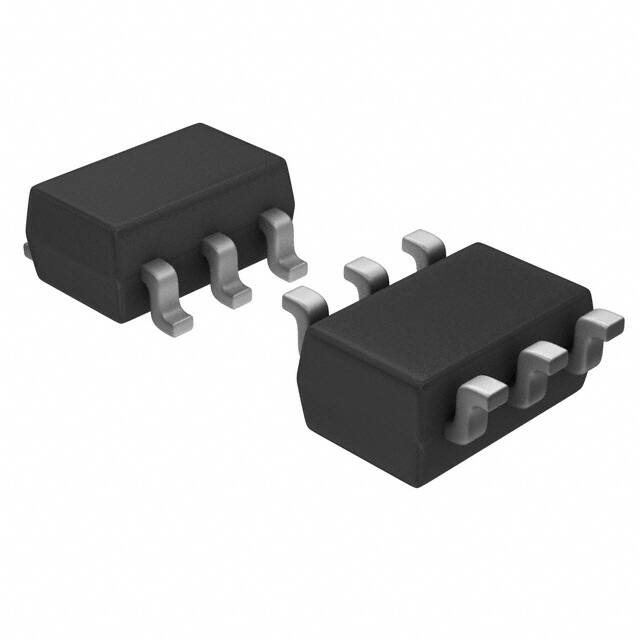
The SOT23-6 microsized package provides options
for portable and space-restricted applications. The Zsuffix offers reduced delamination compared to the
standard device.
Device Information(1)
PART NUMBER
2 Applications
•
•
•
•
•
•
•
•
•
TLV3501A-Q1
HEV/EV and Powertrain Applications
DC-DC Converter
Inverter
Fuel Sensing
Hybrid Power Control Unit
Automatic Test Equipment
Threshold Detector
Zero-Crossing Detector
Window Comparator
PACKAGE
SOT-23 (6)
BODY SIZE (NOM)
2.90 mm × 1.60 mm
(1) For all available packages, see the orderable addendum at
the end of the datasheet.
Propagation Delay vs Overdrive Voltage
9
VCM = 1 V
VS = 5 V
CLOAD = 17 pF
Propagation Delay (ns)
8
Rise
7
6
Fall
5
4
3
0
20
40
60
80
100
Overdrive Voltage (mV)
1
An IMPORTANT NOTICE at the end of this data sheet addresses availability, warranty, changes, use in safety-critical applications,
intellectual property matters and other important disclaimers. PRODUCTION DATA.
�TLV3501A-Q1
SBOS533B – SEPTEMBER 2010 – REVISED OCTOBER 2015
www.ti.com
Table of Contents
1
2
3
4
5
6
7
8
Features ..................................................................
Applications ...........................................................
Description .............................................................
Revision History.....................................................
Related Products ...................................................
Pin Configuration and Functions .........................
Specifications.........................................................
1
1
1
2
3
3
4
7.1
7.2
7.3
7.4
7.5
7.6
7.7
4
4
4
4
5
6
6
Absolute Maximum Ratings ......................................
ESD Ratings..............................................................
Recommended Operating Conditions.......................
Thermal Information ..................................................
Electrical Characteristics...........................................
Switching Characteristics ..........................................
Typical Characteristics ..............................................
Detailed Description .............................................. 9
8.1 Overview ................................................................... 9
8.2 Functional Block Diagram ......................................... 9
8.3 Feature Description................................................... 9
8.4 Device Functional Modes........................................ 10
9
Application and Implementation ........................ 11
9.1 Application Information............................................ 11
9.2 Typical Application ................................................. 11
10 Power Supply Recommendations ..................... 13
11 Layout................................................................... 13
11.1 Layout Guidelines ................................................. 13
11.2 Layout Example .................................................... 14
12 Device and Documentation Support ................. 15
12.1
12.2
12.3
12.4
12.5
Documentation Support ........................................
Community Resource............................................
Trademarks ...........................................................
Electrostatic Discharge Caution ............................
Glossary ................................................................
15
15
15
15
15
13 Mechanical, Packaging, and Orderable
Information ........................................................... 15
4 Revision History
NOTE: Page numbers for previous revisions may differ from page numbers in the current version.
Changes from Revision A (September 2010) to Revision B
Page
•
Added z-suffix for improved delamination ............................................................................................................................. 1
•
Added Pin Configuration and Functions section, ESD Ratings table, Feature Description section, Device Functional
Modes, Application and Implementation section, Power Supply Recommendations section, Layout section, Device
and Documentation Support section, and Mechanical, Packaging, and Orderable Information section ............................... 1
•
Deleted the Ordering Information table ................................................................................................................................. 3
Changes from Original (September, 2010) to Revision A
•
2
Page
Added new feature bullet regarding automotive application qualification............................................................................... 1
Submit Documentation Feedback
Copyright © 2010–2015, Texas Instruments Incorporated
Product Folder Links: TLV3501A-Q1
�TLV3501A-Q1
www.ti.com
SBOS533B – SEPTEMBER 2010 – REVISED OCTOBER 2015
5 Related Products
PART NUMBER
FEATURES
TLV3701-Q1
TLV3702-Q1
Automotive Nanopower, 560-nA ICC, push-pull comparators
TLC3702-Q1
TLC3704-Q1
Automotive micropower, 100-µW, LinCMOS™ voltage, push-pull comparators
TLV3012-Q1
Automotive nanopower, 1.8-V, SOT23 push-pull comparator with voltage reference
TLC393-Q1
Automotive dual-micropower LinCMOS voltage comparator
6 Pin Configuration and Functions
DBV Package
6-Pin SOT-23
Top View
NXA
6
SHDN
2
5
OUT
3
4
V+
-IN
1
V+IN
Pin 1 is determined by orienting the package marking as indicated on the diagram.
Pin Functions
PIN
NO.
NAME
I/O (1)
DESCRIPTION
1
–IN
I
Inverting input
2
V–
I
Negative (lowest) power supply
3
+IN
I
Noninverting input
4
V+
I
Positive (highest) power supply
5
OUT
O
Output
6
SHDN
—
Shutdown (the device is idle when this pin is not in use)
(1)
I = input, O = output
Submit Documentation Feedback
Copyright © 2010–2015, Texas Instruments Incorporated
Product Folder Links: TLV3501A-Q1
3
�TLV3501A-Q1
SBOS533B – SEPTEMBER 2010 – REVISED OCTOBER 2015
www.ti.com
7 Specifications
7.1 Absolute Maximum Ratings
over operating free-air temperature range (unless otherwise noted) (1)
MIN
MAX
UNIT
5.5
V
Supply voltage
Signal input terminal voltage
(2)
(V−) − 0.3
(V+) + 0.3
V
Signal input terminal current (2)
10
mA
Output short-circuit current (3)
74
mA
200
°C/W
125
°C
150
°C
150
°C
Thermal impedance, junction to free air
Operating temperature
–40
Junction temperature
Storage temperature
(1)
(2)
(3)
–65
Stresses beyond those listed under Absolute Maximum Ratings may cause permanent damage to the device. These are stress ratings
only, which do not imply functional operation of the device at these or any other conditions beyond those indicated under Recommended
Operating Conditions. Exposure to absolute-maximum-rated conditions for extended periods may affect device reliability.
Input terminals are diode-clamped to the power-supply rails. Input signals that can swing more than 0.3 V beyond the supply rails should
be current limited to 10 mA or less.
Short circuit to ground, one comparator per package.
7.2 ESD Ratings
VALUE
Human-body model (HBM), per AEC Q100-002 (1)
Electrostatic
discharge
V(ESD)
(1)
Charged-device model (CDM), per AEC Q100-011
UNIT
±2000
All pins
±500
Corner pins (1, 3, 4, and 6)
±750
V
AEC Q100-002 indicates that HBM stressing shall be in accordance with the ANSI/ESDA/JEDEC JS-001 specification.
7.3 Recommended Operating Conditions
over operating free-air temperature range (unless otherwise noted)
VS
Supply voltage
VIL
Low-level input voltage, SHDN (comparator is enabled) (1)
VIH
High-level input voltage, SHDN (comparator is disabled)
TA
Operating temperature
(1)
(1)
MIN
NOM
MAX
2.2
2.7
5.5
UNIT
V
(V+) – 1.7
V
125
°C
(V+) – 0.9
V
–40
When the SHDN pin is within 0.9 V of the most positive supply, the part is disabled. When it is more than 1.7 V below the most positive
supply, the part is enabled.
7.4 Thermal Information
TLV3501A-Q1
THERMAL METRIC
(1)
DBV (SOT-23)
UNIT
6 PINS
RθJA
Junction-to-ambient thermal resistance
192.2
°C/W
RθJC(top)
Junction-to-case (top) thermal resistance
134.8
°C/W
RθJB
Junction-to-board thermal resistance
37.1
°C/W
ψJT
Junction-to-top characterization parameter
28.3
°C/W
ψJB
Junction-to-board characterization parameter
36.7
°C/W
RθJC(bot)
Junction-to-case (bottom) thermal resistance
—
°C/W
(1)
4
For more information about traditional and new thermal metrics, see the Semiconductor and IC Package Thermal Metrics application
report, SPRA953.
Submit Documentation Feedback
Copyright © 2010–2015, Texas Instruments Incorporated
Product Folder Links: TLV3501A-Q1
�TLV3501A-Q1
www.ti.com
SBOS533B – SEPTEMBER 2010 – REVISED OCTOBER 2015
7.5 Electrical Characteristics
TA = 25°C and VS = 2.7 V to 5.5 V (unless otherwise noted).
PARAMETER
TEST CONDITIONS
MIN
TYP
MAX
±6.5
UNIT
OFFSET VOLTAGE
VOS
Input offset voltage (1)
VCM = 0 V, IO = 0 mA
±1
dVOS/dT
Input offset voltage (1) vs temperature
TA = −40°C to +125°C
±5
PSRR
Input offset voltage (1) vs power supply
100
Input hysteresis
mV
μV/°C
400
μV/V
6
mV
INPUT BIAS CURRENT
IB
Input bias current (2)
VCM = VCC / 2, ΔVIN= ±5.5 V
±2
±10
pA
IOS
Input offset current (2) (3)
VCM = VCC / 2ΔVIN= ±5.5 V
±2
±10
pA
(V+) +
0.2 V
V
INPUT VOLTAGE RANGE
VCM
Common-mode voltage range
CMRR
Common-mode rejection
(V–) –
0.2 V
VCM = −0.2 V to (V+) + 0.2 V
TA = 25°C
57
TA = −40°C to +125°C
55
70
dB
dB
INPUT IMPEDANCE
Common-mode
1013 || 2
Ω || pF
Differential
1013 || 4
Ω || pF
OUTPUT
VOH, VOL
Voltage output swing from rail
IOUT = ±1 mA
30
50
mV
SHUTDOWN
tOFF
Shutdown turnoff time
30
ns
tON
Shutdown turnon time
100
ns
VH
SHDN high threshold
Comparator is enabled (4)
VL
SHDN low threshold
Comparator is disabled (4)
IQSD
(V+) −
1.7
V
(V+) −
0.9
V
Input bias current of the SHDN pin
2
pA
Quiescent current in shutdown
2
μA
POWER SUPPLY
VS
Specified voltage
2.7
Operating voltage range
IQ
Quiescent current
5.5
V
2.2 to
5.5
VS = 5 V, VO = High
3.2
V
5
mA
TEMPERATURE RANGE
RθJA
(1)
(2)
(3)
(4)
Specified temperature
–40
125
°C
Operating temperature
–40
125
°C
Storage temperature
–65
150
Thermal resistance, SOT23-6 package
200
°C
°C/W
VOS is defined as the average of the positive and the negative switching thresholds.
Not production tested.
The difference between IB+ and IB−.
When the shutdown pin is within 0.9 V of the most positive supply, the part is disabled. When it is more than 1.7 V below the most
positive supply, the part is enabled.
Submit Documentation Feedback
Copyright © 2010–2015, Texas Instruments Incorporated
Product Folder Links: TLV3501A-Q1
5
�TLV3501A-Q1
SBOS533B – SEPTEMBER 2010 – REVISED OCTOBER 2015
www.ti.com
7.6 Switching Characteristics
TA = 25°C and VS = 2.7 V to 5.5 V (unless otherwise noted).
PARAMETER
TEST CONDITIONS
ΔVIN = 100 mV, Overdrive = 20 mV
Propagation delay time (1) (2)
T(pd)
ΔVIN = 100 mV, Overdrive = 5 mV
MIN
TA = 25°C
TYP
MAX
4.5
6.4
ns
7
ns
10
ns
12
ns
TA = −40°C to +125°C
TA = 25°C
7.5
TA = −40°C to +125°C
UNIT
Δt(SKEW)
Propagation delay skew (3)
ΔVIN = 100 mV, Overdrive = 20 mV
0.5
ns
fMAX
Maximum toggle frequency
Overdrive = 50 mV, VS = 5 V
80
MHz
tR
Rise time (4)
1.5
ns
tF
Fall time (4)
1.5
ns
(1)
(2)
(3)
(4)
Not production tested.
Propagation delay cannot be accurately measured with low overdrive on automatic test equipment. This parameter is ensured by
characterization at 100-mV overdrive.
The difference between the propagation delay going high and the propagation delay going low.
Measured between 10% of VS and 90% of VS.
7.7 Typical Characteristics
0
VIN (V)
VIN (V)
At TA = 25°C, VS = 5 V, and input overdrive = 100 mV (unless otherwise noted).
Input
Input
0
5
3
VOD = 50 mV
VOD = 100 mV
4
VOD = 20 mV
2
VOD = 5 mV
1
3
VOD = 100 mV
VOD = 20 mV
VOD = 5 mV
2
1
0
0
-1
-1
-10
6
VOD = 50 mV
5
VOUT (V)
VOUT (V)
4
0
10
20
30
40
-10
0
10
20
30
40
Time (ns)
Time (ns)
Figure 1. Output Response for Various Overdrive Voltages
(Rising)
Figure 2. Output Response For Various Overdrive Voltages
(Falling)
Submit Documentation Feedback
Copyright © 2010–2015, Texas Instruments Incorporated
Product Folder Links: TLV3501A-Q1
�TLV3501A-Q1
www.ti.com
SBOS533B – SEPTEMBER 2010 – REVISED OCTOBER 2015
Typical Characteristics (continued)
At TA = 25°C, VS = 5 V, and input overdrive = 100 mV (unless otherwise noted).
5.0
5.0
Propagation Delay (ns)
Propagation Delay (ns)
Fall
4.5
Rise
4.0
3.5
4.5
4.0
Fall
3.5
Rise
3.0
-40 -25
0
25
50
75
100
3.0
-40 -25
125
0
25
Temperature (°C)
VOD = 20 mV
75
100
125
VOD = 50 mV
Figure 3. Propagation Delay vs Temperature
Figure 4. Propagation Delay vs Temperature
9
9
8
8
Propagation Delay (ns)
Propagation Delay (ns)
50
Temperature (°C)
7
6
Fall
5
Rise
7
6
5
Fall
4
4
3
3
Rise
20
0
40
60
80
100
20
0
40
Capacitive Load (pF)
60
80
100
Capacitive Load (pF)
VOD = 20 mV
VOD = 50 mV
Figure 5. Propagation Delay vs Capacitive Load
Figure 6. Propagation Delay vs Capacitive Load
9
110
Wake-Up Delay (ns)
Propagation Delay (ns)
8
7
6
5
90
70
Fall
4
Rise
3
2
3
4
5
6
50
-40 -25
Supply Voltage (V)
VCM = 1 V
0
25
50
75
100
125
Temperature (°C)
VOD = 20 mV
Figure 7. Propagation Delay vs Supply Voltage
Figure 8. Wake-Up Delay vs Temperature
Submit Documentation Feedback
Copyright © 2010–2015, Texas Instruments Incorporated
Product Folder Links: TLV3501A-Q1
7
�TLV3501A-Q1
SBOS533B – SEPTEMBER 2010 – REVISED OCTOBER 2015
www.ti.com
Typical Characteristics (continued)
10
VIN (mV)
VIN (mV)
At TA = 25°C, VS = 5 V, and input overdrive = 100 mV (unless otherwise noted).
0
0
5
-500
4
2
3
1
VOUT (V)
VOUT (V)
-10
500
2
1
0
0
-1
-1
-2
0
20
40
60
80
100
0
2
4
6
8
VDD = 5 V
VIN = 20 mVPP
4.0
3.8
3.8
3.6
3.6
Quiescent Current (mA)
Quiescent Current (mA)
14
16
18
20
Figure 10. Response to 100-MHz Sine Wave
4.0
3.4
3.2
3.0
2.8
2.6
2.4
2.2
3.4
3.2
3.0
2.8
2.6
2.4
2.2
2.0
2.0
2
3
4
5
6
0
-40 -25
Supply Voltage (V)
25
50
75
100
125
Temperature (°C)
Figure 11. Quiescent Current vs Supply Voltage
Figure 12. Quiescent Current vs Temperature
3.5
25
CLOAD = 50 pF
Quiescent Current (mA)
3.0
Quiescent Current (mA)
12
±2.5-V Dual Supply into 50-Ω Oscilloscope Input
Figure 9. Response to 50-MHz Sine Wave
2.5
2.0
5V
(from off to on)
2.7 V
(from off to on)
1.5
5V
(from on to off)
1.0
2.7 V
(from on to off)
0.5
20
CLOAD = 20 pF
15
10
CLOAD = 10 pF
5
CLOAD = 0.5 pF
0
0
0
1
2
3
4
5
0
20
Shutdown Voltage (V)
40
60
80
100
Frequency (MHz)
Figure 13. Quiescent Current vs Shutdown Voltage
8
10
Time (ns)
Time (ns)
Figure 14. Quiescent Current vs Frequency
Submit Documentation Feedback
Copyright © 2010–2015, Texas Instruments Incorporated
Product Folder Links: TLV3501A-Q1
�TLV3501A-Q1
www.ti.com
SBOS533B – SEPTEMBER 2010 – REVISED OCTOBER 2015
8 Detailed Description
8.1 Overview
The TLV3501A-Q1 device features high-speed response and includes 6 mV of internal hysteresis for improved
noise immunity with an input common-mode range that extends 0.2 V beyond the power-supply rails.
8.2 Functional Block Diagram
V+
+IN
+
OUT
±IN
±
V±
8.3 Feature Description
8.3.1 Operating Voltage
The TLV3501A-Q1 comparators are specified for use on a single supply from 2.7 V to 5.5 V (or a dual supply
from ±1.35 V to ±2.75 V) over a temperature range of −40°C to +125°C. The device continues to function below
this range, but performance is not specified.
8.3.2 Input Overvoltage Protection
The device inputs are protected by electrostatic discharge (ESD) diodes that conduct if the input voltages exceed
the power supplies by more than approximately 300 mV. Momentary voltages greater than 300 mV beyond the
power supply can be tolerated if the input current is limited to 10 mA. This limiting is easily accomplished with a
small input resistor in series with the comparator, as shown in Figure 15.
VS
0.1 mF
2.2 mF
VIN
TLV3501-Q1
VOUT
VREF
Figure 15. Input Current Protection for Voltages Exceeding the Supply Voltage
Submit Documentation Feedback
Copyright © 2010–2015, Texas Instruments Incorporated
Product Folder Links: TLV3501A-Q1
9
�TLV3501A-Q1
SBOS533B – SEPTEMBER 2010 – REVISED OCTOBER 2015
www.ti.com
8.4 Device Functional Modes
8.4.1 Shutdown
A shutdown pin (SHDN) allows the device to go idle when the SHDN pin is not in use. When the SHDN pin is
high, the device draws about 2 μA and the output goes to high impedance. When the shutdown pin is low, the
TLV3501A-Q1 device is active. When the TLV3501A-Q1 shutdown feature is not used, connect the shutdown pin
to the most negative supply, as shown in Figure 16. Exiting shutdown mode takes about 100 ns.
VS
0.1 mF
2.2 mF
VIN
TLV3501-Q1
VOUT
VREF
Figure 16. Basic Connections for the TLV3501A-Q1
10
Submit Documentation Feedback
Copyright © 2010–2015, Texas Instruments Incorporated
Product Folder Links: TLV3501A-Q1
�TLV3501A-Q1
www.ti.com
SBOS533B – SEPTEMBER 2010 – REVISED OCTOBER 2015
9 Application and Implementation
NOTE
Information in the following applications sections is not part of the TI component
specification, and TI does not warrant its accuracy or completeness. TI’s customers are
responsible for determining suitability of components for their purposes. Customers should
validate and test their design implementation to confirm system functionality.
9.1 Application Information
9.1.1 Adding External Hysteresis
The TLV3501A-Q1 device has a robust performance when used with a good layout. However, the comparator
inputs have little noise immunity within the range of specified offset voltage (±5 mV). For slow moving or noisy
input signals, the comparator output can cause an undesirable switch state as input signals move through the
switching threshold. In such applications, the 6 mV of internal hysteresis of the TLV3501A-Q1 device might not
be sufficient. In cases where greater noise immunity is desired, external hysteresis can be added by connecting
a small amount of feedback to the positive. Figure 17 shows a typical topology used to introduce 25 mV of
additional hysteresis, for a total of 31-mV hysteresis when operating from a single 5-V supply. Use Equation 1 to
calculate the approximate total hysteresis.
(V + ) ´ R1
+ 6 mV
VHYST =
(1)
R1 + R2
The total hysteresis, VHYST, sets the value of the transition voltage required to switch the comparator output by
enlarging the threshold region, thereby reducing sensitivity to noise.
VS = 5 V
0.1 mF
2.2 mF
VIN
TLV3501-Q1
R1 = 51 W
VOUT
R2 = 10 kW
VREF
Figure 17. Adding Hysteresis to the TLV3501A-Q1
9.2 Typical Application
9.2.1 Relaxation Oscillator
The TLV3501A-Q1 device can easily be configured as a simple and inexpensive relaxation oscillator. In
Figure 18, the R2 network sets the trip threshold at 1/3 and 2/3 of the supply. Because this circuit is a high-speed
circuit, the resistor values are rather low to minimize the effect of parasitic capacitance. The positive input
alternates between 1/3 of V+ and 2/3 of V+ depending on whether the output is low or high. The time to charge
(or discharge) is 0.69 × R1C. Therefore, the period is 1.38 × R1C. For 62 pF and 1 kΩ as shown in Figure 18, the
output is calculated to be 10.9 MHz. An implementation of this circuit oscillated at 9.6 MHz. Parasitic capacitance
and component tolerances explain the difference between theory and actual performance.
Submit Documentation Feedback
Copyright © 2010–2015, Texas Instruments Incorporated
Product Folder Links: TLV3501A-Q1
11
�TLV3501A-Q1
SBOS533B – SEPTEMBER 2010 – REVISED OCTOBER 2015
www.ti.com
Typical Application (continued)
VC
2/3 (V+)
t
1/3 (V+)
VS =
5V
C
62 pF
V+
1.38R1C
R1
1 kW
VOUT
R2
5 kW
R2
5 kW
t
f = 10MHz
V+
R2
5 kW
Figure 18. Relaxation Oscillator
9.2.1.1 Design Requirements
For hysteresis of 1/3 of V+ and threshold levels between 1/3 of V+ and 2/3 of V+, the resistors connected to
comparator positive input should be equal in value. The resistor value should be kept low enough so it does not
create additional time constant because of the input capacitor and board parasitic capacitor. The value of the
charging resistor, R1, should be relatively low for high frequency switching without drawing high current and
effecting the output high and low level. The value of the charging capacitor should be high enough to avoid errors
cause by parasitic capacitance.
9.2.1.2 Detailed Design Procedure
For the positive input, +IN = 1/3 VOUT + 1/3 V+ = 1/3 V+ if VOUT is low and assuming VOL is very close to GND.
Or, +IN = 1/3 VOUT + 1/3 V+ = 1/3 V+ = 2/3 V+ if VOUT is high and assuming VOH is very close to V+.
For the negative input, the capacitor charges to 2/3 V+ and discharges to 1/3 V+ exponentially at the same rate
with a time constant of R1C.
9.2.1.3 Application Curve
Input
Output
Figure 19. TLV3501A-Q1 Device With Upper and Lower Threshold With 1-V Hysteresis
12
Submit Documentation Feedback
Copyright © 2010–2015, Texas Instruments Incorporated
Product Folder Links: TLV3501A-Q1
�TLV3501A-Q1
www.ti.com
SBOS533B – SEPTEMBER 2010 – REVISED OCTOBER 2015
Typical Application (continued)
9.2.2 High-Speed Window Comparator
A window comparator circuit is used to determine when a signal is between two voltages. The TLV3501A-Q1
device can readily be used to create a high-speed window comparator. The VHI value is the upper voltage
threshold, and the VLO value is the lower voltage threshold. When VIN is between these two thresholds, the
output in Figure 20 is high. Figure 21 shows a simple means of obtaining an active low output. Note that the
reference levels are connected differently between Figure 20 and Figure 21. The operating voltage range of
either circuit is 2.7 V to 5.5 V.
VLO
VHI
TLV3501-Q1a
TLV3501-Q1a
VIN
VIN
VOUT
VOUT
SN74AHC00
SN74LVC1G02
TLV3501-Q1b
TLV3501-Q1b
VHI
VLO
V
V
VOUT
VOUT
VIN
VIN
VHI
VHI
VLO
VLO
Time
Time
Figure 20. Window Comparator: Active High
Figure 21. Window Comparator: Active Low
10 Power Supply Recommendations
The TLV3501A-Q1 comparator is specified for use on a single supply from 2.7 V to 5.5 V (or a dual supply from
±1.35 V to ±2.75 V) over a temperature range of −40°C to +125°C. The device continues to function below this
range, but performance is not specified.
Place bypass capacitors close to the power supply pins to reduce noise coupling in from noisy or highimpedance power supplies. For more detailed information on bypass capacitor placement, see the Layout
Guidelines section.
11 Layout
11.1 Layout Guidelines
For any high-speed comparator or amplifier, proper design and printed circuit board (PCB) layout are necessary
for optimal performance. Excess stray capacitance on the active input, or improper grounding, can limit the
maximum performance of high-speed circuitry.
Submit Documentation Feedback
Copyright © 2010–2015, Texas Instruments Incorporated
Product Folder Links: TLV3501A-Q1
13
�TLV3501A-Q1
SBOS533B – SEPTEMBER 2010 – REVISED OCTOBER 2015
www.ti.com
Layout Guidelines (continued)
Minimizing resistance from the signal source to the comparator input is necessary to minimize the propagation
delay of the complete circuit. The source resistance along with input and stray capacitance creates an RC filter
that delays voltage transitions at the input, and reduces the amplitude of high-frequency signals. The input
capacitance of the TLV3501A-Q1 along with stray capacitance from an input pin to ground results in several
picofarads of capacitance.
The location and type of capacitors used for power-supply bypassing are critical to high-speed comparators. The
suggested 2.2-μF tantalum capacitor does not need to be as close to the device as the 0.1-μF capacitor, and can
be shared with other devices. The 2.2-μF capacitor buffers the power-supply line against ripple, and the 0.1-μF
capacitor provides a charge for the comparator during high-frequency switching.
In a high-speed circuit, fast rising and falling switching transients create voltage differences across lines that
would be at the same potential at DC. To reduce this effect, a ground plane is often used to reduce difference in
voltage potential within the circuit board. A ground plane has the advantage of minimizing the effect of stray
capacitances on the circuit board by providing a more desirable path for the current to flow. With a signal trace
over a ground plane, at high-frequency the return current (in the ground plane) tends to flow directly under the
signal trace. Breaks in the ground plane (as simple as through-hole leads and vias) increase the inductance of
the plane, making it less effective at higher frequencies. Breaks in the ground plane for necessary vias should be
spaced randomly.
Figure 22 shows a schematic of this circuit.
+VS
-VIN
C1
100 nF
RT2
50 W
C2
2.2 mF
VOUT
TLV3501-Q1
+VIN
RT1
50 W
Shutdown
Figure 22. Schematic for Figure 23
Figure 23 shows an evaluation layout for the TLV3501A-Q1 SOT23-6 package which is shown with SMA
connectors bringing signals on and off the board. The RT1 and RT2 resistors are termination resistors for +VIN
and −VIN, respectively. The C1 and C2 capacitors are power-supply bypass capacitors. Place the 0.1-μF
capacitor closest to the comparator. The ground plane is not shown, but the pads connected the resistors and
capacitors are shown.
11.2 Layout Example
–VIN
SD
VOUT
RT2
RT1
DUT
C1 C2
+VIN
GND
+VS
Figure 23. TLV3501A-Q1 (SOT23) Sample Layout
14
Submit Documentation Feedback
Copyright © 2010–2015, Texas Instruments Incorporated
Product Folder Links: TLV3501A-Q1
�TLV3501A-Q1
www.ti.com
SBOS533B – SEPTEMBER 2010 – REVISED OCTOBER 2015
12 Device and Documentation Support
12.1 Documentation Support
12.1.1 Related Documentation
For related documentation see the following:
• TLV370x-Q1 Family of Nanopower Push-Pull Output Comparators, SGLS154
• TLC3702-Q1 Dual Micropower LinCMOS™ Voltage Comparators, SGLS156
• TLC3704-Q1 Quad Micropower LinCMOS™ Voltage Comparators, SGLS191
• TLV301x-Q1 Nanopower 1.8-V Comparator With Voltage Reference, SBOS551
• TLC393-Q1 Dual Micropower LinCMOS™ Voltage Comparator, SGLS198
12.2 Community Resource
The following links connect to TI community resources. Linked contents are provided "AS IS" by the respective
contributors. They do not constitute TI specifications and do not necessarily reflect TI's views; see TI's Terms of
Use.
TI E2E™ Online Community TI's Engineer-to-Engineer (E2E) Community. Created to foster collaboration
among engineers. At e2e.ti.com, you can ask questions, share knowledge, explore ideas and help
solve problems with fellow engineers.
Design Support TI's Design Support Quickly find helpful E2E forums along with design support tools and
contact information for technical support.
12.3 Trademarks
LinCMOS, E2E are trademarks of Texas Instruments.
All other trademarks are the property of their respective owners.
12.4 Electrostatic Discharge Caution
These devices have limited built-in ESD protection. The leads should be shorted together or the device placed in conductive foam
during storage or handling to prevent electrostatic damage to the MOS gates.
12.5 Glossary
SLYZ022 — TI Glossary.
This glossary lists and explains terms, acronyms, and definitions.
13 Mechanical, Packaging, and Orderable Information
The following pages include mechanical, packaging, and orderable information. This information is the most
current data available for the designated devices. This data is subject to change without notice and revision of
this document. For browser-based versions of this data sheet, refer to the left-hand navigation.
Submit Documentation Feedback
Copyright © 2010–2015, Texas Instruments Incorporated
Product Folder Links: TLV3501A-Q1
15
�PACKAGE OPTION ADDENDUM
www.ti.com
10-Dec-2020
PACKAGING INFORMATION
Orderable Device
Status
(1)
Package Type Package Pins Package
Drawing
Qty
Eco Plan
(2)
Lead finish/
Ball material
MSL Peak Temp
Op Temp (°C)
Device Marking
(3)
(4/5)
(6)
TLV3501AQDBVRQ1
ACTIVE
SOT-23
DBV
6
3000
RoHS & Green
NIPDAU
Level-2-260C-1 YEAR
-40 to 125
VCBQ
TLV3501AZQDBVRQ1
ACTIVE
SOT-23
DBV
6
3000
RoHS & Green
SN
Level-3-260C-168 HR
-40 to 125
11Q2
(1)
The marketing status values are defined as follows:
ACTIVE: Product device recommended for new designs.
LIFEBUY: TI has announced that the device will be discontinued, and a lifetime-buy period is in effect.
NRND: Not recommended for new designs. Device is in production to support existing customers, but TI does not recommend using this part in a new design.
PREVIEW: Device has been announced but is not in production. Samples may or may not be available.
OBSOLETE: TI has discontinued the production of the device.
(2)
RoHS: TI defines "RoHS" to mean semiconductor products that are compliant with the current EU RoHS requirements for all 10 RoHS substances, including the requirement that RoHS substance
do not exceed 0.1% by weight in homogeneous materials. Where designed to be soldered at high temperatures, "RoHS" products are suitable for use in specified lead-free processes. TI may
reference these types of products as "Pb-Free".
RoHS Exempt: TI defines "RoHS Exempt" to mean products that contain lead but are compliant with EU RoHS pursuant to a specific EU RoHS exemption.
Green: TI defines "Green" to mean the content of Chlorine (Cl) and Bromine (Br) based flame retardants meet JS709B low halogen requirements of