Sample &
Buy
Product
Folder
Support &
Community
Tools &
Software
Technical
Documents
TPS22951
SLVS788D – FEBRUARY 2009 – REVISED NOVEMBER 2016
TPS22951 Current-Limited 1-Ω Smart-Load Switch
1 Features
3 Description
•
•
•
•
•
•
•
•
•
The TPS22951 smart-load switch is intended for
applications where heavy capacitive loads and short
circuits are likely to be encountered. This device
incorporates a 1-Ω P-channel MOSFET power switch
for power distribution. The switch is controlled by a
logic enable (EN) input and an accessory detect
(DET) pin. The switch is active when EN is high and
DET is low. The switch is disabled if EN is low or
DET is high. A low power state is achieved by driving
EN low.
1
1-Ω P-Channel MOSFET
300-mA Continuous Source Current
Thermal and Short-Circuit Protection
600-mA Current Limit
Operating Range: VCC = 2.8 V to 5.3 V
41-μs Typical Rise Time
10-μA Maximum Standby Supply Current
Ambient Temperature Range: –40°C to +85°C
ESD Performance Tested Per JESD 22
– 4000-V Human-Body Model (HBM)
– 400-V Machine Model (MM)
– 1000-V Charged-Device Model (CDM)
2 Applications
•
•
•
•
Smart Phones
Notebooks
Digital Cameras
Peripheral Ports
When the output load exceeds the current-limit
threshold or a short is present, the device limits the
output current to a safe level by increasing the on
resistance of the power switch. When continuous
heavy overloads and short circuits increase the power
dissipation in the switch, causing the junction
temperature to rise, a thermal-protection circuit shuts
off the switch to prevent damage. The device
recovers from a thermal shutdown once the device
has cooled sufficiently, but the switch remains OFF
until EN is toggled. This smart-load switch is
designed to set current limit at 600 mA maximum.
Device Information(1)
PART NUMBER
TPS22951
PACKAGE
BODY SIZE (NOM)
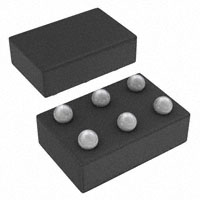
DSBGA (6)
1.20 mm x 0.80 mm
(1) For all available packages, see the orderable addendum at
the end of the data sheet.
Simplified Schematic
Power
Supply
VCC
PWR
CIN
CLOAD
RLOAD
ON
GND
EN
OFF
VDD
PG
DET
Accessory Detection
1
An IMPORTANT NOTICE at the end of this data sheet addresses availability, warranty, changes, use in safety-critical applications,
intellectual property matters and other important disclaimers. PRODUCTION DATA.
�TPS22951
SLVS788D – FEBRUARY 2009 – REVISED NOVEMBER 2016
www.ti.com
Table of Contents
1
2
3
4
5
6
7
8
Features ..................................................................
Applications ...........................................................
Description .............................................................
Revision History.....................................................
Pin Configurations and Functions .......................
Specifications.........................................................
1
1
1
2
3
4
6.1
6.2
6.3
6.4
6.5
6.6
6.7
6.8
4
4
4
4
5
5
5
6
Absolute Maximum Ratings .....................................
ESD Ratings..............................................................
Recommended Operating Conditions.......................
Thermal Information ..................................................
Electrical Characteristics...........................................
Timing Requirements ................................................
Switching Characteristics ..........................................
Typical Characteristics ..............................................
Parameter Measurement Information .................. 8
Detailed Description .............................................. 9
8.1 Overview ................................................................... 9
8.2 Functional Block Diagram ......................................... 9
8.3 Feature Description................................................. 10
8.4 Device Functional Modes........................................ 10
9
Application and Implementation ........................ 11
9.1 Application Information............................................ 11
9.2 Typical Application ................................................. 11
10 Power Supply Recommendations ..................... 12
11 Layout................................................................... 13
11.1 Layout Guidelines ................................................. 13
11.2 Layout Example .................................................... 13
11.3 Thermal Considerations ........................................ 13
12 Device and Documentation Support ................. 15
12.1
12.2
12.3
12.4
12.5
12.6
Documentation Support ........................................
Receiving Notification of Documentation Updates
Community Resources..........................................
Trademarks ...........................................................
Electrostatic Discharge Caution ............................
Glossary ................................................................
15
15
15
15
15
15
13 Mechanical, Packaging, and Orderable
Information ........................................................... 15
4 Revision History
NOTE: Page numbers for previous revisions may differ from page numbers in the current version.
Changes from Revision C (March 2015) to Revision D
•
Changed all instances of "POK" to "PG" in the data sheet .................................................................................................... 1
Changes from Revision B (November 2012) to Revision C
•
2
Page
Added Pin Configuration and Functions section, ESD Ratings table, Feature Description section, Device Functional
Modes, Application and Implementation section, Power Supply Recommendations section, Layout section, Device
and Documentation Support section, and Mechanical, Packaging, and Orderable Information section ............................... 1
Changes from Revision A (March 2009) to Revision B
•
Page
Page
Updated Top-Side Marking in the Ordering Information table................................................................................................ 3
Submit Documentation Feedback
Copyright © 2009–2016, Texas Instruments Incorporated
Product Folder Links: TPS22951
�TPS22951
www.ti.com
SLVS788D – FEBRUARY 2009 – REVISED NOVEMBER 2016
5 Pin Configurations and Functions
YFP Package
6-Pin DSBGA
Top-Through View
A
VCC
PWR
B
GND
EN
YFP Package
6-Pin DSBGA
Top View
Ball A1
Index Area
C
PG
DET
1
2
Pin Functions
Pin
NO.
NAME
A1
VCC
A2
B1
B2
I/O
DESCRIPTION
I
Supply voltage
PWR
O
Power switch output
GND
—
Ground
EN
I
Enable input
C1
PG
O
Power Good switch status open-drain output, active low
C2
DET
I
Accessory detect, active low
(1)
(1)
DET must be low for a minimum of 2 μs before EN is pulled high (see the Timing Requirements section).
Submit Documentation Feedback
Copyright © 2009–2016, Texas Instruments Incorporated
Product Folder Links: TPS22951
3
�TPS22951
SLVS788D – FEBRUARY 2009 – REVISED NOVEMBER 2016
www.ti.com
6 Specifications
6.1 Absolute Maximum Ratings
over operating free-air temperature range (unless otherwise noted)
(2)
VCC
VO(PWR)
(2)
(1)
MIN
MAX
UNIT
Supply voltage
–0.3
6
V
Output voltage
–0.3
VCC + 0.3
V
VI(EN), VI(DET)
Input voltage
–0.3
6
V
VO(PG)
Voltage
–0.3
6
V
IO(PWR)
Continuous output current
Internally limited
Continuous total power dissipation
See the Thermal
Information section
Lead temperature soldering 1,6 mm (1/16 in) from case for 10 s
–0.3
6
V
TJ
Operating virtual junction temperature
–40
85
°C
Tstg
Storage temperature
–65
150
°C
(1)
(2)
Stresses beyond those listed under Absolute Maximum Ratings may cause permanent damage to the device. These are stress ratings
only, which do not imply functional operation of the device at these or any other conditions beyond those indicated under Recommended
Operating Conditions. Exposure to absolute-maximum-rated conditions for extended periods may affect device reliability.
All voltages are with respect to GND.
6.2 ESD Ratings
VALUE
Human body model (HBM), per ANSI/ESDA/JEDEC JS-001
V(ESD)
Electrostatic discharge
(1)
Charged-device model (CDM), per JEDEC specification JESD22-C101
1000
(2)
Machine model (MM)
(1)
(2)
UNIT
4000
V
400
JEDEC document JEP155 states that 500-V HBM allows safe manufacturing with a standard ESD control process.
JEDEC document JEP157 states that 250-V CDM allows safe manufacturing with a standard ESD control process.
6.3 Recommended Operating Conditions
MIN MAX
VCC
Supply voltage
VI(EN), VI(DET)
Input voltage
IO(PWR)
Continuous output current
TJ
Operating virtual junction temperature
UNIT
2.2
5.3
V
0
VCC
V
0 –600
–40
mA
85
°C
6.4 Thermal Information
TPS22951
THERMAL METRIC
(1)
YFP (DSBGA)
UNIT
6 PINS
RθJA
Junction-to-ambient thermal resistance
125.1
°C/W
RθJC(top)
Junction-to-case (top) thermal resistance
1.4
°C/W
RθJB
Junction-to-board thermal resistance
26
°C/W
ψJT
Junction-to-top characterization parameter
0.3
°C/W
ψJB
Junction-to-board characterization parameter
26
°C/W
RθJC(bot)
Junction-to-case (bottom) thermal resistance
N/A
°C/W
(1)
4
For more information about traditional and new thermal metrics, see the Semiconductor and IC Package Thermal Metrics application
report.
Submit Documentation Feedback
Copyright © 2009–2016, Texas Instruments Incorporated
Product Folder Links: TPS22951
�TPS22951
www.ti.com
SLVS788D – FEBRUARY 2009 – REVISED NOVEMBER 2016
6.5 Electrical Characteristics
over operating –40°C ≤ TJ ≤ +85°C range (unless otherwise noted)
PARAMETER
TEST CONDITIONS
(1)
MIN
TYP
MAX
UNIT
POWER SWITCH
Static drain-source ON-state
resistance, 3-V operation
VCC = 3 V, IO = 0.3 A
Leakage current
PWR connected to GND, VI(EN) = 0 V
VIH
High-level input voltage
2.8 V ≤ VCC ≤ 5.3 V
VIL
Low-level input voltage
2.8 V ≤ VCC ≤ 5.3 V
II
Input current
VI(EN) or VI(DET) = 0 V or 5.3 V
rDS(on)
Ω
1
1
μA
EN AND DET
1.35
V
0.45
V
1
μA
–0.6
A
CURRENT LIMIT
IOS
VCC = 2.8 V or 5.3 V, PWR connected to GND,
Device enabled into short circuit
Short-circuit output current
–0.3
SUPPLY CURRENT
Supply current, enabled
No load on PWR, VCC = 5.3 V, VI(EN) = VCC,
VI(DET) = VCC or 0 V
100
μA
Supply current, disabled
No load on PWR, VCC = 5.3 V, VI(EN) = 0 V,
VI(DET) = VCC or 0 V
10
μA
Power Good output low voltage
I(PG) = 1 mA
0.4
V
OFF-state current
V(PG) = 5.3 V
1
μA
PG
VOL(PG)
THERMAL SHUTDOWN
Thermal shutdown threshold
(2)
Recovery from thermal shutdown
(2)
Hysteresis
(1)
135
°C
125
°C
(2)
25
°C
Pulse-testing techniques maintain junction temperature close to ambient temperature; thermal effects must be taken into account
separately.
Not tested in production, specified by design
(2)
6.6 Timing Requirements
over operating free-air temperature range (unless otherwise noted)
MIN
tsu
Setup time, DET low before EN high
MAX
UNIT
2
μs
6.7 Switching Characteristics
over operating free-air temperature range (unless otherwise noted)
PARAMETER
TEST CONDITIONS
MIN
TYP
MAX
UNIT
POWER SWITCH
tr
(1)
tf
(1)
Rise time, output
Fall time, output
VCC = 5.3 V
VCC = 2.8 V
VCC = 5.3 V
VCC = 2.8 V
CL = 1 μF,
RL = 20 Ω
TJ = 25°C
CL = 1 μF,
RL = 20 Ω
TJ = 25°C
41
6
43
43
μs
μs
EN AND DET
ton
(1)
toff
(1)
(1)
Turnon time (EN to PWR)
Turnon time (EN to PG)
Turnoff time (EN to PWR)
Turnoff time (EN to PG)
VCC = 5.3 V
VCC = 5.3 V
CL = 1 μF, RL = 20 Ω
42
CP = 15 pF, RP = 10 kΩ
9.5
CL = 1 μF, RL = 20 Ω
48
CP = 15 pF, RP = 10 kΩ
47
μs
μs
Not tested in production, specified by design
Submit Documentation Feedback
Copyright © 2009–2016, Texas Instruments Incorporated
Product Folder Links: TPS22951
5
�TPS22951
SLVS788D – FEBRUARY 2009 – REVISED NOVEMBER 2016
www.ti.com
6.8 Typical Characteristics
800
16
750
14
700
12
650
DET = HIGH
TA = 85°C
TA = 25°C
10
TA = –40°C
ICC (A)
rON (W)
600
550
8
6
500
4
450
DET = LOW
TA = 85°C
2
400
TA = 25°C
TA = –40°C
0
350
300
2.5
–2
3.0
3.5
4.0
VCC (V)
4.5
5.5
5.0
0
Figure 1. ON-State Resistance vs VCC
1
2
3
VCC (V)
5
4
6
Figure 2. ICC vs VCC, EN = VCC
50
6
DET = LOW
TA = 85°C
trise
TA = 25°C
5
TA = –40°C
40
3
trise/tfall (ms)
ICC (A)
4
DET = HIGH
TA = 85°C
TA = 25°C
30
tfall
20
TA = –40°C
2
EN = 2 V
CL =1 mF
10
RL = 20 W
1
0
0
0
1
3
VCC (V)
2
4
5
–50
6
Figure 3. ICC vs VCC, EN = GND
–25
0
25
50
Temperature, TA (°C)
75
100
Figure 4. trise/tfall vs Temperature, VCC = 5.3 V
3.0
6
60
VON
tOFF
VIN = 5.3 V
5
50
2.5
RL = 0 W
CL = 3 m F
4
2.0
tON
3
1.5
2
1.0
IOUT
20
EN = 2 V
CL =1 mF
10
RL = 20 W
–40
25
Temperature, TA (°C)
1
0.5
0
0.0
–1
0.0002
0
85
Figure 5. tON/tOFF vs Temperature, VCC = 5.3 V
6
Current (A)
30
Voltage (V)
tON/tOFF (ms)
40
0.0003
0.0004
0.0005
Time (s)
0.0006
0.0007
–0.5
0.0008
Figure 6. Device Enabled into Short-Circuit
Submit Documentation Feedback
Copyright © 2009–2016, Texas Instruments Incorporated
Product Folder Links: TPS22951
�TPS22951
www.ti.com
SLVS788D – FEBRUARY 2009 – REVISED NOVEMBER 2016
Typical Characteristics (continued)
1.8
6
VIN = 5.3 V
5
CL = 3 m F
3.5
1.4
4
4
1.2
0.8
2
0.6
IOUT
CL = 3 mF
3
2.5
1.5
1.0
1
IOUT
VOUT
0.2
0
0.5
0
0.0
–1
0.0000
3.0
2.0
2
0.4
1
VIN = 5.3 V
RL = 20 W to 0 W
Voltage (V)
1.0
3
Current (A)
Voltage (V)
4.0
1.6
RL = 20 W to 0 W
5
4.5
6
Current (A)
VOUT
0.0002
0.0004
0.0006
Time (s)
0.0008
0.0
–1
0.0000
–0.2
0.0012
0.0010
Figure 7. Full-Load to Short-Circuit Transient Response
0.0002
0.0004
0.0006
Time (s)
0.0008
0.0010
–0.5
0.0012
Figure 8. Short-Circuit to Full-Load Recovery Response
6
1.2
VOUT
5
1.0
IOUT
0.8
3
0.6
2
0.4
1
Current (A)
Voltage (V)
4
0.2
VIN = 5.3 V
RL = open to 0 W
0
CL = 3 m F
0.0
08
07
00
00
0.
0.
00
06
0.
4
00
05
00
0.
0.
0
03
02
00
0.
00
0.
00
01
–0.2
0.
0.
00
00
–1
Time (s)
Figure 9. No-Load to Short-Circuit Transient Response
Submit Documentation Feedback
Copyright © 2009–2016, Texas Instruments Incorporated
Product Folder Links: TPS22951
7
�TPS22951
SLVS788D – FEBRUARY 2009 – REVISED NOVEMBER 2016
www.ti.com
7 Parameter Measurement Information
VO(PWR)
RL
CL
tr
tr
VO(PWR)
TEST CIRCUIT
90%
90%
10%
VI(DET)
50%
VI(EN)
50%
ton
toff
VO(PWR)
50%
50%
toff
ton
VO(PWR)
90%
10%
90%
10%
10%
VOLTAGE WAVEFORMS
Figure 10. Test Circuit and Voltage Waveforms
EN
VM = VCC/2
VM = VCC/2
t ON
t OFF
RP
VO(PG)
VM = VCC/2
CP
VM = VCC/2
PG
Figure 11. EN to PG Test Point
8
Submit Documentation Feedback
Copyright © 2009–2016, Texas Instruments Incorporated
Product Folder Links: TPS22951
�TPS22951
www.ti.com
SLVS788D – FEBRUARY 2009 – REVISED NOVEMBER 2016
8 Detailed Description
8.1 Overview
The TPS22951 smart-load switch is intended for applications where heavy capacitive loads and short circuits are
likely to be encountered. This device incorporates a 1-Ω P-channel MOSFET power switch for power distribution.
The switch is controlled by a logic enable (EN) input and an accessory detect (DET) pin. The switch is active
when EN is high and DET is low. The switch is disabled if EN is low or DET is high. A low power state is
achieved by driving EN low.
When the output load exceeds the current-limit threshold or a short is present, the device limits the output current
to a safe level by increasing the on resistance of the power switch. When continuous heavy overloads and short
circuits increase the power dissipation in the switch, causing the junction temperature to rise, a thermalprotection circuit shuts off the switch to prevent damage. The device recovers from a thermal shutdown once the
device has cooled sufficiently, but the switch remains OFF until EN is toggled. This smart-load switch is designed
to set current limit at 600 mA maximum.
8.2 Functional Block Diagram
VCC
Die temp
Detect
Current
limit
H
D
Q
CP
Delay
Reset
PWR
EN
PG
DET
GND
Submit Documentation Feedback
Copyright © 2009–2016, Texas Instruments Incorporated
Product Folder Links: TPS22951
9
�TPS22951
SLVS788D – FEBRUARY 2009 – REVISED NOVEMBER 2016
www.ti.com
8.3 Feature Description
8.3.1 Current Limit
The TPS22951 includes a current-limiting feature. The current limit can help protect the system from high
currents in the case of large capacitive loads and short circuits. When the load current exceeds the current limit
threshold, the device limits the output current by increasing the on-resistance of the switch.
8.3.2 Power Good Indication
The TPS22951 includes an open-drain Power Good indication. This signal can be used to provide an indication
to another component in the system. The signal behaves according to Table 1.
To use the signal, the PG pin must be connected to a pullup resistor. The PG pin has an absolute maximum
rating of 6 V and must not be pulled up to any voltage beyond 6 V. The pullp resistor must be in the range of 10
kΩ to limit the current flowing into the PG pin when the switch is on and the PG signal is low.
8.3.3 EN and DET inputs
The switch is controlled by the EN and DET pins. To enable the switch, the EN pin must be high and the DET pin
must be low.
8.3.4 Thermal Shutdown
The TPS22951 includes a thermal shutdown circuit. If the device reaches the thermal shutdown threshold, the
switch is automatically be disabled. The switch retrys after the device temperature has decreased and the EN pin
is toggled from H to L to H.
8.4 Device Functional Modes
Table 1 lists the functional modes of the TPS22951.
Table 1. Function Table
(1)
10
EN
DET
CURRENT
LIMIT
THERMAL
LIMIT
POWER SWITCH
(VCC TO PWR)
PG
(OPEN-DRAIN)
0
X
Not exceeded
Not exceeded
OFF
Z
X
1
Not exceeded
Not exceeded
OFF
Z
1
0
Not exceeded
Not exceeded
ON
L
1
0
Exceeded
Not exceeded
ON – current-limited
L
X
X
X
OFF
Z
Exceeded
(1)
To recover from a thermal event, the die temperature must first drop below the specified limit. EN must then be toggled to latch in the
proper state of the flip-flop.
Submit Documentation Feedback
Copyright © 2009–2016, Texas Instruments Incorporated
Product Folder Links: TPS22951
�TPS22951
www.ti.com
SLVS788D – FEBRUARY 2009 – REVISED NOVEMBER 2016
9 Application and Implementation
NOTE
Information in the following applications sections is not part of the TI component
specification, and TI does not warrant its accuracy or completeness. TI’s customers are
responsible for determining suitability of components for their purposes. Customers should
validate and test their design implementation to confirm system functionality.
9.1 Application Information
The input to output voltage drop in the device is determined by the RON of the device and the load current. The
RON of the device depends upon the VCC condition of the device. Refer to Figure 1 rON vs VCC to determine the
rON of the device based upon the VCC condition. Use Equation 1 to calculate the input to output voltage drop:
DV = ILOAD ´ RON
where
•
•
•
ΔV = voltage drop from VCC to PWR
ILOAD = load current
RON = ON-Resistance of the device for a specific VCC
(1)
9.2 Typical Application
This application demonstrates how the TPS22951 can be used to protect against a short-circuit event. In this
application, the PWR node is accidentally shorted to ground.
Load #1
Power
Supply
VCC
CIN
Load #2
PWR
ON
GND
EN
VDD
OFF
PG
DET
Figure 12. Typical Application Circuit
9.2.1 Design Requirements
For this design example, use the input parameters given in Table 2:
Table 2. Design Parameters
DESIGN PARAMTER
EXAMPLE VALUE
Power Supply Maximum DC Output Current
2A
Load 1 Current Consumption
1A
Submit Documentation Feedback
Copyright © 2009–2016, Texas Instruments Incorporated
Product Folder Links: TPS22951
11
�TPS22951
SLVS788D – FEBRUARY 2009 – REVISED NOVEMBER 2016
www.ti.com
9.2.2 Detailed Design Procedure
The power supply provides power to multiple loads. In the event that Load 2 is shorted to ground, the power
supply must continue providing power to Load 1. The power supply can provide 2-A continuous current. Load 1
consumes 1-A continuous current. The TPS22951 is used to ensure that Load 2 consumes less than 1-A
continuous current. This ensures that the power supply can provide power to Load 1 even in the case that Load
2 is shorted to ground.
9.2.3 Application Curve
3.0
6
VON
5
VIN = 5.3 V
2.5
RL = 0 W
CL = 3 m F
2.0
3
1.5
2
1.0
Current (A)
Voltage (V)
4
IOUT
1
0.5
0
0.0
–1
0.0002
0.0003
0.0004
0.0005
Time (s)
0.0006
0.0007
–0.5
0.0008
Figure 13. Device Enabled into Short-Circuit
10 Power Supply Recommendations
The device is designed to operate from a VCC range of 2.8 to 5.3 V. The VCC power supply must be well
regulated and placed as close to the VCC terminal as possible. The power supply must be able to withstand all
transient load current steps. In most situations, using a small input capacitor is sufficient to prevent the supply
voltage from dipping when the switch is turned on. In cases where the power supply is slow to respond to a large
transient current or large load current step, additional bulk capacitance may be required on the input.
12
Submit Documentation Feedback
Copyright © 2009–2016, Texas Instruments Incorporated
Product Folder Links: TPS22951
�TPS22951
www.ti.com
SLVS788D – FEBRUARY 2009 – REVISED NOVEMBER 2016
11 Layout
11.1 Layout Guidelines
•
•
•
The VCC and PWR traces must be wide enough to carry the necessary load current (up to 600 mA).
To handle transient load currents, a capacitor may be placed close to the VCC pin.
To make use of the PG signal, it must be connected to a pullup resistor. The pullup source may be the VCC
node. It is also possible to use a different source for the pullup resistor.
11.2 Layout Example
VCC
PWR
GND
EN
PG
DET
Via to GND Plane
Figure 14. Layout Example
11.3 Thermal Considerations
The maximum IC junction temperature must be restricted to 85°C under normal operating conditions. To
calculate the maximum allowable dissipation, PD(max) for a given ambient temperature, use Equation 2 and
Equation 3.
PD(MAX) =
TJ(MAX) - TA
RθJA
where
•
•
PD(max) = maximum allowable power dissipation
TJ(max) = maximum allowable junction temperature (85°C for the TPS22951)
Submit Documentation Feedback
Copyright © 2009–2016, Texas Instruments Incorporated
Product Folder Links: TPS22951
13
�TPS22951
SLVS788D – FEBRUARY 2009 – REVISED NOVEMBER 2016
www.ti.com
Thermal Considerations (continued)
•
•
TA = ambient temperature of the device
RθJA = junction to air thermal impedance. See thermal metrics table. This parameter is highly dependent upon
board layout.
(2)
PD = I2 × R
(3)
14
Submit Documentation Feedback
Copyright © 2009–2016, Texas Instruments Incorporated
Product Folder Links: TPS22951
�TPS22951
www.ti.com
SLVS788D – FEBRUARY 2009 – REVISED NOVEMBER 2016
12 Device and Documentation Support
12.1 Documentation Support
12.1.1 Related Documentation
For related documentation see the following:
• Basics of Load Switches
• Load Switch Thermal Considerations
12.2 Receiving Notification of Documentation Updates
To receive notification of documentation updates, navigate to the device product folder on ti.com. In the upper
right corner, click on Alert me to register and receive a weekly digest of any product information that has
changed. For change details, review the revision history included in any revised document.
12.3 Community Resources
The following links connect to TI community resources. Linked contents are provided "AS IS" by the respective
contributors. They do not constitute TI specifications and do not necessarily reflect TI's views; see TI's Terms of
Use.
TI E2E™ Online Community TI's Engineer-to-Engineer (E2E) Community. Created to foster collaboration
among engineers. At e2e.ti.com, you can ask questions, share knowledge, explore ideas and help
solve problems with fellow engineers.
Design Support TI's Design Support Quickly find helpful E2E forums along with design support tools and
contact information for technical support.
12.4 Trademarks
E2E is a trademark of Texas Instruments.
All other trademarks are the property of their respective owners.
12.5 Electrostatic Discharge Caution
This integrated circuit can be damaged by ESD. Texas Instruments recommends that all integrated circuits be handled with
appropriate precautions. Failure to observe proper handling and installation procedures can cause damage.
ESD damage can range from subtle performance degradation to complete device failure. Precision integrated circuits may be more
susceptible to damage because very small parametric changes could cause the device not to meet its published specifications.
12.6 Glossary
SLYZ022 — TI Glossary.
This glossary lists and explains terms, acronyms, and definitions.
13 Mechanical, Packaging, and Orderable Information
The following pages include mechanical, packaging, and orderable information. This information is the most
current data available for the designated devices. This data is subject to change without notice and revision of
this document. For browser-based versions of this data sheet, refer to the left-hand navigation.
Submit Documentation Feedback
Copyright © 2009–2016, Texas Instruments Incorporated
Product Folder Links: TPS22951
15
�PACKAGE OPTION ADDENDUM
www.ti.com
10-Dec-2020
PACKAGING INFORMATION
Orderable Device
Status
(1)
Package Type Package Pins Package
Drawing
Qty
Eco Plan
(2)
Lead finish/
Ball material
MSL Peak Temp
Op Temp (°C)
Device Marking
(3)
(4/5)
(6)
TPS22951YFPR
ACTIVE
DSBGA
YFP
6
3000
RoHS & Green
SNAGCU
Level-1-260C-UNLIM
-40 to 85
(2W, 2W7)
(1)
The marketing status values are defined as follows:
ACTIVE: Product device recommended for new designs.
LIFEBUY: TI has announced that the device will be discontinued, and a lifetime-buy period is in effect.
NRND: Not recommended for new designs. Device is in production to support existing customers, but TI does not recommend using this part in a new design.
PREVIEW: Device has been announced but is not in production. Samples may or may not be available.
OBSOLETE: TI has discontinued the production of the device.
(2)
RoHS: TI defines "RoHS" to mean semiconductor products that are compliant with the current EU RoHS requirements for all 10 RoHS substances, including the requirement that RoHS substance
do not exceed 0.1% by weight in homogeneous materials. Where designed to be soldered at high temperatures, "RoHS" products are suitable for use in specified lead-free processes. TI may
reference these types of products as "Pb-Free".
RoHS Exempt: TI defines "RoHS Exempt" to mean products that contain lead but are compliant with EU RoHS pursuant to a specific EU RoHS exemption.
Green: TI defines "Green" to mean the content of Chlorine (Cl) and Bromine (Br) based flame retardants meet JS709B low halogen requirements of