Order
Now
Product
Folder
Technical
Documents
Support &
Community
Tools &
Software
TPS22990
SLVSDK1C – MAY 2016 – REVISED SEPTEMBER 2017
TPS22990 5.5-V, 10-A, 3.9-mΩ On-Resistance Load Switch
1 Features
3 Description
•
•
•
•
The TPS22990 product family consists of two
devices: TPS22990 and TPS22990N. Each device is
a 3.9-mΩ, single-channel load switch with a
controlled and adjustable turn on and integrated PG
indicator.
1
•
•
•
•
•
•
•
•
Integrated Single Channel Load Switch
VBIAS Voltage Range: 2.5 V to 5.5 V
VIN Voltage Range: 0.6 V to VBIAS
On-Resistance
– RON = 3.9 mΩ (typical) at VIN = 5 V
(VBIAS = 5 V)
– RON = 3.9 mΩ (typical) at VIN = 3.3 V
(VBIAS = 3.3 V)
10-A Maximum Continuous Switch Current
Quiescent Current
– IQ,VBIAS = 63 µA at VBIAS = 5 V
Shutdown Current
– ISD,VBIAS = 5.5 µA at VBIAS = 5 V
– ISD,VIN = 4 nA at VBIAS = 5 V, VIN = 5 V
Controlled and Adjustable Slew Rate through CT
Power Good (PG) Indicator
Quick Output Discharge (QOD) (TPS22990 Only)
3-mm × 2-mm SON 10-pin Package with Thermal
Pad
ESD Performance Tested per JESD 22
– 2-kV HBM and 1-kV CDM
2 Applications
•
•
•
•
•
The devices contain an N-channel MOSFET that can
operate over an input voltage range of 0.6 V to 5.5 V
and can support a maximum continuous current of
10 A. The wide input voltage range and high current
capability enable the devices to be used across
multiple designs and end equipments. 3.9-mΩ Onresistance minimizes the voltage drop across the load
switch and power loss from the load switch.
The controlled rise time for the device greatly reduces
inrush current caused by large bulk load
capacitances, thereby reducing or eliminating power
supply droop. The adjustable slew rate through CT
provides the design flexibility to trade off inrush
current and power up timing requirements. Integrated
PG indicator notifies the system about the status of
the load switch to facilitate seamless power
sequencing.
The TPS22990 has an optional 218-Ω On-chip
resistor for quick discharge of the output when switch
is disabled to avoid any unknown state caused by
floating supply to the downstream load.
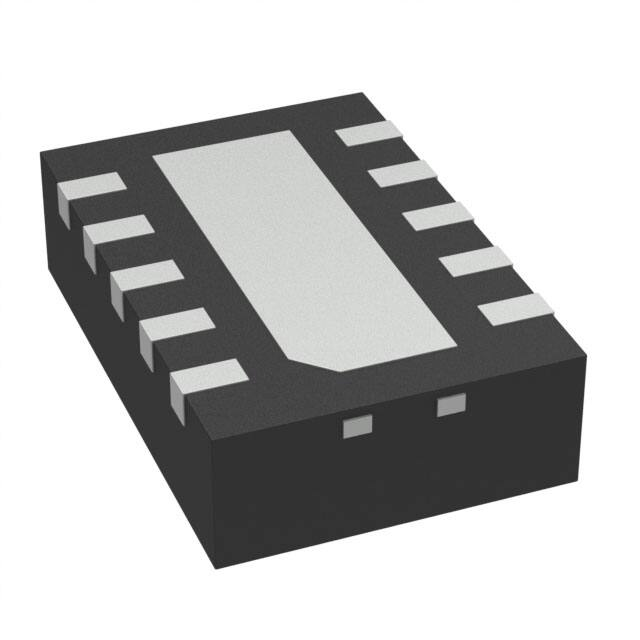
The TPS22990 is available in a small, space-saving
3-mm × 2-mm 10-SON package with integrated
thermal pad allowing for high power dissipation. The
device is characterized for operation over the free-air
temperature range of –40°C to +105°C.
Notebooks, Chromebooks and Tablets
Desktop PC and Industrial PC
Solid State Drives (SSDs)
Servers
Telecom systems
Device Information(1)
PART NUMBER
PACKAGE
TPS22990
TPS22990N
WSON (10)
BODY SIZE (NOM)
3.00 mm × 2.00 mm
(1) For all available packages, see the orderable addendum at
the end of the data sheet.
On-Resistance vs Input Voltage
Typical Application
5.5
VOUT
CT
VOUT
NC
VOUT
5.25
CT
VIN
CIN
VOUT
VBIAS
RPU
RL
PG
ON
ON
OFF
GND
TPS22990
On-Resistance (m:)
Power Supply
5
CL
-40°C
25°C
85°C
105°C
4.75
4.5
4.25
4
3.75
3.5
Copyright © 2016, Texas Instruments Incorporated
3.25
3
0.5
1
1.5
2
2.5
3
3.5
Input Voltage (V)
4
4.5
5
D008
VBIAS = 5 V, IOUT = –200 mA
1
An IMPORTANT NOTICE at the end of this data sheet addresses availability, warranty, changes, use in safety-critical applications,
intellectual property matters and other important disclaimers. PRODUCTION DATA.
�TPS22990
SLVSDK1C – MAY 2016 – REVISED SEPTEMBER 2017
www.ti.com
Table of Contents
1
2
3
4
5
6
7
8
9
Features ..................................................................
Applications ...........................................................
Description .............................................................
Revision History.....................................................
Device Comparison Table.....................................
Pin Configuration and Functions .........................
Specifications.........................................................
1
1
1
2
3
3
4
7.1
7.2
7.3
7.4
7.5
7.6
7.7
7.8
4
4
4
5
5
6
7
9
Absolute Maximum Ratings ......................................
ESD Ratings..............................................................
Recommended Operating Conditions.......................
Thermal Information ..................................................
Electrical Characteristics—VBIAS = 5 V .....................
Electrical Characteristics—VBIAS = 3.3 V ..................
Switching Characteristics ..........................................
Typical Characteristics ..............................................
Parameter Measurement Information ................ 15
Detailed Description ............................................ 16
9.1 Overview ................................................................. 16
9.2 Functional Block Diagram ....................................... 16
9.3 Feature Description................................................. 16
9.4 Device Functional Modes........................................ 18
10 Application and Implementation........................ 19
10.1 Application Information.......................................... 19
10.2 Typical Application ............................................... 22
11 Power Supply Recommendations ..................... 25
12 Layout................................................................... 25
12.1 Layout Guidelines ................................................. 25
12.2 Layout Example .................................................... 25
13 Device and Documentation Support ................. 26
13.1
13.2
13.3
13.4
13.5
13.6
Documentation Support ........................................
Receiving Notification of Documentation Updates
Community Resources..........................................
Trademarks ...........................................................
Electrostatic Discharge Caution ............................
Glossary ................................................................
26
26
26
26
26
26
14 Mechanical, Packaging, and Orderable
Information ........................................................... 26
4 Revision History
Changes from Revision B (September 2016) to Revision C
•
Page
Updated VIH in Recommended Operating Conditions ............................................................................................................ 4
Changes from Revision A (July 2016) to Revision B
Page
•
Removed the status column from Device Comparison Table ................................................................................................ 3
•
Added the comment “(TPS22990 Only)” to the “RPD” cell in both Electrical Characteristics tables ...................................... 7
Changes from Original (May 2016) to Revision A
•
2
Page
Changed device status from Product Preview to Production Data ........................................................................................ 1
Submit Documentation Feedback
Copyright © 2016–2017, Texas Instruments Incorporated
Product Folder Links: TPS22990
�TPS22990
www.ti.com
SLVSDK1C – MAY 2016 – REVISED SEPTEMBER 2017
5 Device Comparison Table
DEVICE
RON at VBIAS = 5 V
QOD
IMAX
ENABLE
TPS22990
3.9 mΩ
Yes
10 A
Active high
TPS22990N
3.9 mΩ
No
10 A
Active high
6 Pin Configuration and Functions
DML Package
10-Pin WSON
Top View
CT
1
NC
2
DML Package
10-Pin WSON
Bottom View
10
VOUT
VOUT 10
9
VOUT
VOUT
VIN
(thermal pad)
8
VOUT
4
7
PG
5
6
GND
VIN
3
VBIAS
ON
9
VIN
(thermal pad)
1
CT
2
NC
3
VIN
VOUT
8
PG
7
4
VBIAS
GND
6
5
ON
Pin Functions
PIN
NO.
1
NAME
TYPE
DESCRIPTION
CT
O
VOUT slew rate control
2
NC
—
Not internally connected
3
VIN
I
Switch input. Bypass this input with a ceramic capacitor to GND
4
VBIAS
P
Bias voltage. Power supply to the device
Active high switch control input. Do not leave floating
5
ON
I
6
GND
GND
7
PG
O
Power good. Active high, open drain output. Tie to GND if not used
VOUT
O
Switch output
VIN (Thermal Pad)
I
Switch input. VIN and thermal pad (exposed center pad) to alleviate thermal stress. See
the Layout section for layout guidelines
Device ground
8
9
10
—
Submit Documentation Feedback
Copyright © 2016–2017, Texas Instruments Incorporated
Product Folder Links: TPS22990
3
�TPS22990
SLVSDK1C – MAY 2016 – REVISED SEPTEMBER 2017
www.ti.com
7 Specifications
7.1 Absolute Maximum Ratings
over operating free-air temperature range (unless otherwise noted) (1)
MIN
MAX
UNIT
VIN
Input voltage
–0.3
6
V
VBIAS
Bias voltage
–0.3
6
V
VOUT
Output voltage
–0.3
6
V
VON
ON voltage
–0.3
6
V
VPG
PG voltage
–0.3
6
V
VCT
CT voltage
–0.3
15
V
IMAX
Maximum continuous switch current at TJ = 125°C
10
A
IPLS
Maximum pulsed switch current, pulse < 300 µs, 2% duty cycle
12
A
TJ
Maximum junction temperature
125
°C
TLEAD
Maximum lead temperature (10-s soldering time)
300
°C
Tstg
Storage temperature
150
°C
(1)
–65
Stresses beyond those listed under Absolute Maximum Ratings may cause permanent damage to the device. These are stress ratings
only, which do not imply functional operation of the device at these or any other conditions beyond those indicated under Recommended
Operating Conditions. Exposure to absolute-maximum-rated conditions for extended periods may affect device reliability.
7.2 ESD Ratings
VALUE
V(ESD)
(1)
(2)
Electrostatic
discharge
Human-body model (HBM), per ANSI/ESDA/JEDEC JS-001 (1)
±2000
Charged-device model (CDM), per JEDEC specification JESD22-C101 (2)
±1000
UNIT
V
JEDEC document JEP155 states that 500-V HBM allows safe manufacturing with a standard ESD control process.
JEDEC document JEP157 states that 250-V CDM allows safe manufacturing with a standard ESD control process.
7.3 Recommended Operating Conditions
over operating free-air temperature range (unless otherwise noted)
MIN
MAX
UNIT
VIN
Input voltage
0.6
VBIAS
V
VBIAS
Bias voltage
2.5
5.5
V
VOUT
Output voltage
VIN
V
VON
ON voltage
0
5.5
V
VPG
PG voltage
0
5.5
V
1.05
5.5
1.2
5.5
0
0.5
VIH,
ON
High-level input voltage, ON
VIL, ON
Low-level input voltage, ON
VBIAS = 2.5 V to 5 V, TA< 85°C
VBIAS = 2.5 V to 5.5 V, TA< 105°C
(1)
CIN
Input capacitor
1
TA
Operating free-air temperature
–40
(1)
See the Application Information section.
4
Submit Documentation Feedback
V
V
µF
105
°C
Copyright © 2016–2017, Texas Instruments Incorporated
Product Folder Links: TPS22990
�TPS22990
www.ti.com
SLVSDK1C – MAY 2016 – REVISED SEPTEMBER 2017
7.4 Thermal Information
TPS22990
THERMAL METRIC (1)
DML (WSON)
UNIT
10 PINS
RθJA
Junction-to-ambient thermal resistance
51.4
°C/W
RθJC(top)
RθJB
Junction-to-case (top) thermal resistance
65
°C/W
Junction-to-board thermal resistance
17
°C/W
ψJT
Junction-to-top characterization parameter
2.1
°C/W
ψJB
Junction-to-board characterization parameter
17
°C/W
RθJC(bot)
Junction-to-case (bottom) thermal resistance
3.7
°C/W
(1)
For more information about traditional and new thermal metrics, see the Semiconductor and IC Package Thermal Metrics application
report.
7.5 Electrical Characteristics—VBIAS = 5 V
Unless otherwise noted, the specification in the following table applies over the operating ambient temp –40°C ≤ TA ≤ +105°C
(full) and VBIAS = 5 V. Typical values are for TA = 25°C (unless otherwise noted).
PARAMETER
TEST CONDITIONS
TA
MIN
TYP
MAX
63
76
UNIT
POWER SUPPLIES AND CURRENTS
IQ,
VBIAS
ISD,
VBIAS
–40°C to +85°C
VBIAS quiescent current
IOUT = 0 A,
VIN = VON = 5 V
VBIAS shutdown current
VON = 0 V, VOUT = 0 V
–40°C to +105°C
–40°C to +85°C
VIN = 3.3 V
VIN = 2.5 V
VIN
VIN shutdown current
5.5
–40°C to +105°C
VIN = 5 V
ISD,
77
VON = 0 V,
VOUT = 0 V
VIN = 1.8 V
VIN = 1.05 V
VIN = 0.6 V
–40°C to +85°C
7
0.004
–40°C to +105°C
–40°C to +85°C
0.003
2
2
µA
4
0.001
–40°C to +105°C
–40°C to +85°C
3
5
0.002
–40°C to +105°C
–40°C to +85°C
4
7
0.002
–40°C to +105°C
–40°C to +85°C
µA
10
–40°C to +105°C
–40°C to +85°C
7
µA
1
3
0.001
1
–40°C to +105°C
2
–40°C to +105°C
0.1
ION
ON pin input leakage
current
VON = 5.5 V
VHYS,ON
ON pin hysteresis
VIN = 5 V
IPG,
Leakage current into PG pin VPG = 5 V
–40°C to +105°C
0.5
µA
PG output low voltage
–40°C to +105°C
0.2
V
LKG
VPG,OL
25°C
VON = 0 V, IPG = 1 mA
123
µA
mV
RESISTANCE CHARACTERISTICS
Submit Documentation Feedback
Copyright © 2016–2017, Texas Instruments Incorporated
Product Folder Links: TPS22990
5
�TPS22990
SLVSDK1C – MAY 2016 – REVISED SEPTEMBER 2017
www.ti.com
Electrical Characteristics—VBIAS = 5 V (continued)
Unless otherwise noted, the specification in the following table applies over the operating ambient temp –40°C ≤ TA ≤ +105°C
(full) and VBIAS = 5 V. Typical values are for TA = 25°C (unless otherwise noted).
PARAMETER
TEST CONDITIONS
TA
MIN
25°C
VIN = 5 V
TYP
MAX
3.9
4.8
–40°C to +85°C
5.7
–40°C to +105°C
6
25°C
VIN = 3.3 V
3.9
–40°C to +85°C
6
25°C
RON
On-state resistance
3.9
–40°C to +85°C
6
25°C
VIN = 1.8 V
3.9
–40°C to +85°C
3.9
–40°C to +85°C
6
25°C
RPD
4.8
5.7
–40°C to +105°C
Output pull-down resistance VIN = VOUT = 5 V,
(TPS22990 Only)
VON = 0 V
mΩ
6
25°C
VIN = 0.6 V
4.8
5.7
–40°C to +105°C
VIN = 1.05 V
4.8
5.7
–40°C to +105°C
IOUT = –200 mA,
VON = 5 V
4.8
5.7
–40°C to +105°C
VIN = 2.5 V
UNIT
3.9
4.8
–40°C to +85°C
5.7
–40°C to +105°C
6
–40°C to +105°C
218
253
Ω
7.6 Electrical Characteristics—VBIAS = 3.3 V
Unless otherwise noted, the specification in the following table applies over the operating ambient temp –40°C ≤ TA ≤ +105°C
(full) and VBIAS = 3.3 V. Typical values are for TA = 25°C (unless otherwise noted).
PARAMETER
TEST CONDITIONS
TA
MIN
TYP
MAX
48
58
UNIT
POWER SUPPLIES AND CURRENTS
IQ,
VBIAS
ISD,
VBIAS
–40°C to +85°C
VBIAS quiescent current
IOUT = 0 A,
VIN = VON = 3.3 V
VBIAS shutdown current
VON = 0 V, VOUT = 0 V
–40°C to +105°C
–40°C to +85°C
VIN = 2.5 V
VIN
VIN shutdown current
VON = 0 V,
VOUT = 0 V
4.5
–40°C to +105°C
VIN = 3.3 V
ISD,
59
VIN = 1.8 V
VIN = 1.05 V
VIN = 0.6 V
–40°C to +85°C
7
0.003
–40°C to +105°C
–40°C to +85°C
2
2
4
0.001
–40°C to +105°C
–40°C to +85°C
3
5
0.002
–40°C to +105°C
–40°C to +85°C
µA
7
0.002
–40°C to +105°C
–40°C to +85°C
6
µA
µA
1
3
0.001
1
–40°C to +105°C
2
–40°C to +105°C
0.1
ON pin input leakage
current
VON = 5.5 V
VHYS,ON
ON pin hysteresis
VIN = 3.3 V
IPG,
Leakage current into PG pin VPG = 5 V
–40°C to +105°C
0.5
µA
PG output low voltage
–40°C to +105°C
0.2
V
ION
LKG
VPG,OL
25°C
VON = 0 V, IPG = 1 mA
100
µA
mV
RESISTANCE CHARACTERISTICS
6
Submit Documentation Feedback
Copyright © 2016–2017, Texas Instruments Incorporated
Product Folder Links: TPS22990
�TPS22990
www.ti.com
SLVSDK1C – MAY 2016 – REVISED SEPTEMBER 2017
Electrical Characteristics—VBIAS = 3.3 V (continued)
Unless otherwise noted, the specification in the following table applies over the operating ambient temp –40°C ≤ TA ≤ +105°C
(full) and VBIAS = 3.3 V. Typical values are for TA = 25°C (unless otherwise noted).
PARAMETER
TEST CONDITIONS
TA
MIN
25°C
VIN = 3.3 V
TYP
MAX
3.9
4.8
–40°C to +85°C
5.7
–40°C to +105°C
6
25°C
VIN = 2.5 V
3.9
–40°C to +85°C
4.8
5.7
–40°C to +105°C
6
25°C
RON
On-state resistance
IOUT = –200 mA,
VON = 5 V
VIN = 1.8 V
3.9
4.8
–40°C to +85°C
5.7
–40°C to +105°C
6
25°C
VIN = 1.05 V
3.9
–40°C to +85°C
5.7
6
25°C
Output pull-down resistance VIN = VOUT = 3.3 V,
(TPS22990 Only)
VON = 0 V
RPD
mΩ
4.8
–40°C to +105°C
VIN = 0.6 V
UNIT
3.9
4.8
–40°C to +85°C
5.7
–40°C to +105°C
6
–40°C to +105°C
219
256
Ω
7.7 Switching Characteristics
over operating free-air temperature range (unless otherwise noted)
PARAMETER (1)
TEST CONDITIONS
MIN
TYP
MAX
UNIT
VIN = 5 V, VON = VBIAS = 5 V, TA = 25ºC (unless otherwise noted)
tON
Turnon time
RL = 10 Ω, CL = 0.1 µF, CT = 0 pF, RPU = 10 kΩ, CIN= 1 µF
34
tOFF
Turnoff time
RL = 10 Ω, CL = 0.1 µF, CT = 0 pF, RPU = 10 kΩ, CIN= 1 µF
5.4
tR
VOUT rise time
RL = 10 Ω, CL = 0.1 µF, CT = 0 pF, RPU = 10 kΩ, CIN= 1 µF
31
tF
VOUT fall time
RL = 10 Ω, CL = 0.1 µF, CT = 0 pF, RPU = 10 kΩ, CIN= 1 µF
2.3
tD
ON delay time
RL = 10 Ω, CL = 0.1 µF, CT = 0 pF, RPU = 10 kΩ, CIN= 1 µF
21
tPG,ON
PG turnon time
RL = 10 Ω, CL = 0.1 µF, CT = 0 pF, RPU = 10 kΩ, CIN= 1 µF
152
tPG,OFF
PG turnoff time
RL = 10 Ω, CL = 0.1 µF, CT = 0 pF, RPU = 10 kΩ, CIN= 1 µF
1.3
µs
VIN = 1.05 V, VON = VBIAS = 5 V, TA = 25ºC (unless otherwise noted)
tON
Turnon time
RL = 10 Ω, CL = 0.1 µF, CT = 0 pF, RPU = 10 kΩ, CIN= 1 µF
30
tOFF
Turnoff time
RL = 10 Ω, CL = 0.1 µF, CT = 0 pF, RPU = 10 kΩ, CIN= 1 µF
8
tR
VOUT rise time
RL = 10 Ω, CL = 0.1 µF, CT = 0 pF, RPU = 10 kΩ, CIN= 1 µF
13
tF
VOUT fall time
RL = 10 Ω, CL = 0.1 µF, CT = 0 pF, RPU = 10 kΩ, CIN= 1 µF
2.2
tD
ON delay time
RL = 10 Ω, CL = 0.1 µF, CT = 0 pF, RPU = 10 kΩ, CIN= 1 µF
24
tPG,ON
PG turnon time
RL = 10 Ω, CL = 0.1 µF, CT = 0 pF, RPU = 10 kΩ, CIN= 1 µF
134
tPG,OFF
PG turnoff time
RL = 10 Ω, CL = 0.1 µF, CT = 0 pF, RPU = 10 kΩ, CIN= 1 µF
1.3
µs
VIN = 0.6 V, VON = VBIAS = 5 V, TA = 25ºC (unless otherwise noted)
tON
Turnon time
RL = 10 Ω, CL = 0.1 µF, CT = 0 pF, RPU = 10 kΩ, CIN= 1 µF
29
tOFF
Turnoff time
RL = 10 Ω, CL = 0.1 µF, CT = 0 pF, RPU = 10 kΩ, CIN= 1 µF
8.8
tR
VOUT rise time
RL = 10 Ω, CL = 0.1 µF, CT = 0 pF, RPU = 10 kΩ, CIN= 1 µF
10
tF
VOUT fall time
RL = 10 Ω, CL = 0.1 µF, CT = 0 pF, RPU = 10 kΩ, CIN= 1 µF
2.2
tD
ON delay time
RL = 10 Ω, CL = 0.1 µF, CT = 0 pF, RPU = 10 kΩ, CIN= 1 µF
24
tPG,ON
PG turnon time
RL = 10 Ω, CL = 0.1 µF, CT = 0 pF, RPU = 10 kΩ, CIN= 1 µF
131
tPG,OFF
PG turnoff time
RL = 10 Ω, CL = 0.1 µF, CT = 0 pF, RPU = 10 kΩ, CIN= 1 µF
1.3
(1)
µs
Turnoff time and fall time are dependent on the time constant at the load. For TPS22990N, there is no QOD. The time constant is
RL×CL. For TPS22990, internal pull down RPD is enabled when the switch is disabled. The time constant is (RPD//RL)×CL.
Submit Documentation Feedback
Copyright © 2016–2017, Texas Instruments Incorporated
Product Folder Links: TPS22990
7
�TPS22990
SLVSDK1C – MAY 2016 – REVISED SEPTEMBER 2017
www.ti.com
Switching Characteristics (continued)
over operating free-air temperature range (unless otherwise noted)
PARAMETER (1)
TEST CONDITIONS
MIN
TYP
MAX
UNIT
VIN = 3.3 V, VON = 5 V, VBIAS = 3.3 V, TA = 25ºC (unless otherwise noted)
tON
Turnon time
RL = 10 Ω, CL = 0.1 µF, CT = 0 pF, RPU = 10 kΩ, CIN= 1 µF
33
tOFF
Turnoff time
RL = 10 Ω, CL = 0.1 µF, CT = 0 pF, RPU = 10 kΩ, CIN= 1 µF
6.2
tR
VOUT rise time
RL = 10 Ω, CL = 0.1 µF, CT = 0 pF, RPU = 10 kΩ, CIN= 1 µF
24
tF
VOUT fall time
RL = 10 Ω, CL = 0.1 µF, CT = 0 pF, RPU = 10 kΩ, CIN= 1 µF
2.4
tD
ON delay time
RL = 10 Ω, CL = 0.1 µF, CT = 0 pF, RPU = 10 kΩ, CIN= 1 µF
22
tPG,ON
PG turnon time
RL = 10 Ω, CL = 0.1 µF, CT = 0 pF, RPU = 10 kΩ, CIN= 1 µF
132
tPG,OFF
PG turnoff time
RL = 10 Ω, CL = 0.1 µF, CT = 0 pF, RPU = 10 kΩ, CIN= 1 µF
1.5
µs
VIN = 1.05 V, VON = 5 V, VBIAS = 3.3 V, TA = 25ºC (unless otherwise noted)
tON
Turnon time
RL = 10 Ω, CL = 0.1 µF, CT = 0 pF, RPU = 10 kΩ, CIN= 1 µF
30
tOFF
Turnoff time
RL = 10 Ω, CL = 0.1 µF, CT = 0 pF, RPU = 10 kΩ, CIN= 1 µF
8.7
tR
VOUT rise time
RL = 10 Ω, CL = 0.1 µF, CT = 0 pF, RPU = 10 kΩ, CIN= 1 µF
12
tF
VOUT fall time
RL = 10 Ω, CL = 0.1 µF, CT = 0 pF, RPU = 10 kΩ, CIN= 1 µF
2.3
tD
ON delay time
RL = 10 Ω, CL = 0.1 µF, CT = 0 pF, RPU = 10 kΩ, CIN= 1 µF
24
tPG,ON
PG turnon time
RL = 10 Ω, CL = 0.1 µF, CT = 0 pF, RPU = 10 kΩ, CIN= 1 µF
122
tPG,OFF
PG turnoff time
RL = 10 Ω, CL = 0.1 µF, CT = 0 pF, RPU = 10 kΩ, CIN= 1 µF
1.5
µs
VIN = 0.6 V, VON = 5 V, VBIAS = 3.3 V, TA = 25ºC (unless otherwise noted)
tON
Turnon time
RL = 10 Ω, CL = 0.1 µF, CT = 0 pF, RPU = 10 kΩ, CIN= 1 µF
30
tOFF
Turnoff time
RL = 10 Ω, CL = 0.1 µF, CT = 0 pF, RPU = 10 kΩ, CIN= 1 µF
9.4
tR
VOUT rise time
RL = 10 Ω, CL = 0.1 µF, CT = 0 pF, RPU = 10 kΩ, CIN= 1 µF
9
tF
VOUT fall time
RL = 10 Ω, CL = 0.1 µF, CT = 0 pF, RPU = 10 kΩ, CIN= 1 µF
2.3
tD
ON delay time
RL = 10 Ω, CL = 0.1 µF, CT = 0 pF, RPU = 10 kΩ, CIN= 1 µF
25
tPG,ON
PG turnon time
RL = 10 Ω, CL = 0.1 µF, CT = 0 pF, RPU = 10 kΩ, CIN= 1 µF
119
tPG,OFF
PG turnoff time
RL = 10 Ω, CL = 0.1 µF, CT = 0 pF, RPU = 10 kΩ, CIN= 1 µF
1.5
8
Submit Documentation Feedback
µs
Copyright © 2016–2017, Texas Instruments Incorporated
Product Folder Links: TPS22990
�TPS22990
www.ti.com
SLVSDK1C – MAY 2016 – REVISED SEPTEMBER 2017
7.8 Typical Characteristics
6.75
69
-40°C
25°C
85°C
105°C
Quiescent Current (PA)
63
60
57
54
51
48
45
42
39
6.25
6
5.75
5.5
5.25
5
4.75
4.5
4.25
4
36
2.4
2.7
3
3.3
VON = 5 V
3.6 3.9 4.2 4.5
Bias Voltage (V)
4.8
IOUT = 0 A
5.1
5.4
3.75
2.4
5.7
VIN = VBIAS
3
3.3
VON = 0 V
Figure 1. Quiescent Current vs Bias Voltage
3.6 3.9 4.2 4.5
Bias Voltage (V)
VOUT = 0 V
4.8
5.1
5.4
5.7
D051
VIN = VBIAS
Figure 2. Bias Shutdown Current vs Bias Voltage
0.35
-40 qC
25 qC
85 qC
105 qC
0.25
-40 qC
25 qC
85 qC
105 qC
0.3
Input Shutdown Current (PA)
0.3
Input Shutdown Current (PA)
2.7
D001
0.35
0.2
0.15
0.1
0.05
0.25
0.2
0.15
0.1
0.05
0
0
-0.05
0.6
0.9
VON = 0 V
1.2
1.5
1.8
2.1
2.4
Input Voltage (V)
VBIAS = 3.3 V
2.7
3
-0.05
0.5
3.3
1
1.5
2
D052
VON = 0 V
VOUT = 0 V
2.5
3
3.5
Input Voltage (V)
VBIAS = 5 V
4
4.5
5
D053
VOUT = 0 V
Figure 4. Input Shutdown Current vs Input Voltage
Figure 3. Input Shutdown Current vs Input Voltage
4.75
4.75
VIN = 3.3 V
VIN = 1.8 V
VIN = 1.2 V
VIN = 1.05 V
VIN = 0.8 V
VIN = 0.6 V
4.25
VIN = 5 V
VIN = 3.3 V
VIN = 2.5 V
VIN = 1.8 V
VIN = 1.05 V
VIN = 0.6 V
4.5
On-Resistance (m:)
4.5
On-Resistance (m:)
-40 qC
25 qC
85 qC
105 qC
6.5
Bias Shutdown Current (PA)
66
4
3.75
3.5
4.25
4
3.75
3.5
3.25
3.25
3
-40
VON = 5 V
-20
0
20
40
60
Ambient Temperature (qC)
VBIAS = 3.3 V
80
3
-40
100
D001
IOUT = –200mA
Figure 5. On-Resistance vs Ambient Temperature
VON = 5 V
-20
0
20
40
60
Ambient Temperature (qC)
VBIAS = 5 V
80
100
D001
IOUT = –200mA
Figure 6. On-Resistance vs Ambient Temperature
Submit Documentation Feedback
Copyright © 2016–2017, Texas Instruments Incorporated
Product Folder Links: TPS22990
9
�TPS22990
SLVSDK1C – MAY 2016 – REVISED SEPTEMBER 2017
www.ti.com
Typical Characteristics (continued)
5.5
5.5
-40 qC
25 qC
85 qC
105 qC
On-Resistance (m:)
5
5
4.75
4.5
4.25
4
4.75
4.5
4.25
4
3.75
3.75
3.5
3.5
3.25
3.25
0.6
0.9
1.2
VON = 5 V
-40°C
25°C
85°C
105°C
5.25
On-Resistance (m:)
5.25
1.5
1.8
2.1
2.4
Input Voltage (V)
VBIAS = 3.3 V
2.7
3
3
0.5
3.3
1
IOUT = –200mA
VON = 5 V
2.5
3
3.5
Input Voltage (V)
4
4.5
5
D008
IOUT = –200mA
Figure 8. On-Resistance vs Input Voltage
1.05
-40°C
25°C
85°C
105°C
225
224
-40°C
25°C
85°C
105°C
1.025
High-Level Input Voltage (V)
Output Pull-Down Resistance (:)
2
VBIAS = 5 V
Figure 7. On-Resistance vs Input Voltage
226
223
222
221
220
219
218
1
0.975
0.95
0.925
0.9
0.875
0.85
0.825
0.8
217
2.4
2.7
3
VON = 0 V
3.3
3.6 3.9 4.2 4.5
Bias Voltage (V)
4.8
5.1
5.4
0.775
2.4
5.7
VOUT = VIN = 1.05 V
3
3.3
3.6 3.9 4.2 4.5
Bias Voltage (V)
4.8
5.1
5.4
5.7
D001
IOUT = 0 A
Figure 9. Output Pull-Down Resistance vs Bias Voltage
Figure 10. High-Level Input Voltage vs Bias Voltage
150
-40 qC
25 qC
85 qC
105 qC
-40 qC
25 qC
85 qC
105 qC
140
130
Hysteresis (mV)
0.85
2.7
D001
0.9
Low-Level Input Voltage (V)
1.5
D007
0.8
0.75
120
110
100
90
80
0.7
70
0.65
2.4
2.7
3
3.3
3.6 3.9 4.2 4.5
Bias Voltage (V)
4.8
5.1
5.4
5.7
60
2.4
2.7
D061
IOUT = 0 A
3.3
3.6 3.9 4.2 4.5
Bias Voltage (V)
4.8
5.1
5.4
5.7
D062
IOUT = 0 A
Figure 11. Low-Level Input Voltage vs Bias Voltage
10
3
Submit Documentation Feedback
Figure 12. Hysteresis vs Bias Voltage
Copyright © 2016–2017, Texas Instruments Incorporated
Product Folder Links: TPS22990
�TPS22990
www.ti.com
SLVSDK1C – MAY 2016 – REVISED SEPTEMBER 2017
Typical Characteristics (continued)
42.5
40
-40 qC
25 qC
85 qC
105 qC
38
37.5
Turnon Time (Ps)
Turnon Time (us)
36
40
34
32
30
28
35
32.5
30
27.5
26
25
24
22.5
22
0.6
0.9
1.2
VBIAS = 3.3 V
CIN = 1 µF
1.5
1.8
2.1
2.4
Input Voltage (V)
VON = 5 V
CL = 0.1 µF
2.7
3
20
0.5
3.3
CT = 0 pF
RL = 10 Ω
2
2.5
3
3.5
Input Voltage (V)
VON = 5 V
CL = 0.1 µF
4
4.5
5
D062
CT = 0 pF
RL = 10 Ω
Figure 14. Turnon Time vs Input Voltage
9.5
-40 qC
25 qC
85 qC
105 qC
9.5
-40 qC
25 qC
85 qC
105 qC
9
8.5
Turnoff Time (Ps)
9
Turnoff Time (Ps)
1.5
VBIAS = 5 V
CIN = 1 µF
Figure 13. Turnon Time vs Input Voltage
8.5
8
7.5
7
6.5
8
7.5
7
6.5
6
5.5
6
5
5.5
0.6
4.5
0.5
0.9
1.2
VBIAS = 3.3 V
CIN = 1 µF
1.5
1.8
2.1
2.4
Input Voltage (V)
VON = 5 V
CL = 0.1 µF
2.7
3
3.3
1
1.5
2
D020
CT = 0 pF
RL = 10 Ω
VBIAS = 5 V
CIN = 1 µF
Figure 15. Turnoff Time vs Input Voltage
2.5
3
3.5
Input Voltage (V)
VON = 5 V
CL = 0.1 µF
4
4.5
5
D021
CT = 0 pF
RL = 10 Ω
Figure 16. Turnoff Time vs Input Voltage
37.5
31
-40 qC
25 qC
85 qC
105 qC
29
27
35
32.5
30
Rise Time (Ps)
25
Rise Time (Ps)
1
D062
10
23
21
19
17
-40 qC
25 qC
85 qC
105 qC
27.5
25
22.5
20
17.5
15
13
15
11
12.5
9
0.6
-40 qC
25 qC
85 qC
105 qC
0.9
VBIAS = 3.3 V
CIN = 1 µF
1.2
1.5
1.8
2.1
2.4
Input Voltage (V)
VON = 5 V
CL = 0.1 µF
2.7
3
3.3
10
0.5
D024
CT = 0 pF
RL = 10 Ω
VBIAS = 5 V
CIN = 1 µF
Figure 17. Rise Time vs Input Voltage
1
1.5
2
2.5
3
3.5
Input Voltage (V)
VON = 5 V
CL = 0.1 µF
4
4.5
D025
CT = 0 pF
RL = 10 Ω
Figure 18. Rise Time vs Input Voltage
Submit Documentation Feedback
Copyright © 2016–2017, Texas Instruments Incorporated
Product Folder Links: TPS22990
5
11
�TPS22990
SLVSDK1C – MAY 2016 – REVISED SEPTEMBER 2017
www.ti.com
Typical Characteristics (continued)
4
4
-40°C
25°C
85°C
105°C
3
Fall Time (Ps)
Fall Time (Ps)
-40°C
25°C
85°C
105°C
2
1
0.6
0.9
1.2
VBIAS = 3.3 V
CIN = 1 µF
1.5
1.8
2.1
2.4
Input Voltage (V)
VON = 5 V
CL = 0.1 µF
2.7
3
3
2
1
0.5
3.3
1
1.5
CT = 0 pF
RL = 10 Ω
VBIAS = 5 V
CIN = 1 µF
4
4.5
5
D021
CT = 0 pF
RL = 10 Ω
Figure 20. Fall Time vs Input Voltage
165
-40°C
25°C
85°C
105°C
140
159
137.5
135
132.5
130
127.5
156
153
150
147
144
141
125
138
122.5
135
120
0.6
0.9
1.2
VBIAS = 3.3 V
RPU = 10 kΩ
1.5
1.8
2.1
2.4
Input Voltage (V)
VON = 5 V
CL = 0.1 µF
2.7
3
132
0.5
3.3
CT = 0 pF
RL = 10 Ω
1.5
VBIAS = 5 V
RPU = 10 kΩ
2
2.5
3
3.5
Input Voltage (V)
VON = 5 V
CL = 0.1 µF
4
4.5
5
D027
CT = 0 pF
RL = 10 Ω
Figure 22. PG Turnon Time vs Input Voltage
2
2.4
-40 qC
25 qC
85 qC
105 qC
-40°C
25°C
85°C
105°C
1.8
PG Turnoff Time (Ps)
2
1
D026
Figure 21. PG Turnon Time vs Input Voltage
2.2
-40°C
25°C
85°C
105°C
162
PG Turnon Time (Ps)
142.5
PG Turnon Time (Ps)
2.5
3
3.5
Input Voltage (V)
VON = 5 V
CL = 0.1 µF
Figure 19. Fall Time vs Input Voltage
145
Turnoff Time (Ps)
2
D020
1.8
1.6
1.4
1.6
1.4
1.2
1.2
1
0.6
VBIAS = 3.3 V
RPU = 10 kΩ
0.9
1.2
1.5
1.8
2.1
2.4
Input Voltage (V)
VON = 5 V
CL = 0.1 µF
2.7
3
1
0.5
1
D028
D027
CT = 0 pF
RL = 10 Ω
Figure 23. PG Turnoff vs Input Voltage
12
3.3
VBIAS = 5 V
RPU = 10 kΩ
1.5
2
2.5
3
3.5
Input Voltage (V)
VON = 5 V
CL = 0.1 µF
4
4.5
5
D025
CT = 0 pF
RL = 10 Ω
Figure 24. PG Turnoff Time vs Input Voltage
Submit Documentation Feedback
Copyright © 2016–2017, Texas Instruments Incorporated
Product Folder Links: TPS22990
�TPS22990
www.ti.com
SLVSDK1C – MAY 2016 – REVISED SEPTEMBER 2017
Typical Characteristics (continued)
37.5
35
32.5
Rise Time (Ps)
30
VBIAS = 2.5 V
VBIAS = 3.3 V
VBIAS = 5 V
VBIAS = 5.5 V
27.5
25
22.5
20
17.5
15
12.5
10
0.5
TA= 25°C
CIN = 1 µF
1
1.5
2
2.5
3
3.5
Input Voltage (V)
CL = 0.1 µF
4
4.5
5
5.5
D030
VBIAS = 5 V
CIN = 1 µF
CT = 0 pF
RL = 10 Ω
VIN = 1.05 V
CL = 0.1 µF
CT = 0 pF
RL = 10 Ω
Figure 26. Turnon Response
Figure 25. Rise Time vs Input Voltage
VBIAS = 5 V
CIN = 1 µF
VIN = 5 V
CL = 0.1 µF
CT = 0 pF
RL = 10 Ω
VBIAS = 3.3 V
CIN = 1 µF
Figure 27. Turnon Response
VBIAS = 3.3 V
CIN = 1 µF
VIN = 3.3 V
CL = 0.1 µF
VIN = 1.05 V
CL = 0.1 µF
CT = 0 pF
RL = 10 Ω
Figure 28. Turnon Response
CT = 0 pF
RL = 10 Ω
VBIAS = 5 V
CIN = 1 µF
Figure 29. Turnon Response
VIN = 1.05 V
CL = 0.1 µF
CT = 0 pF
RL = 10 Ω
Figure 30. Turnon Response
Submit Documentation Feedback
Copyright © 2016–2017, Texas Instruments Incorporated
Product Folder Links: TPS22990
13
�TPS22990
SLVSDK1C – MAY 2016 – REVISED SEPTEMBER 2017
www.ti.com
Typical Characteristics (continued)
VBIAS = 5 V
CIN = 1 µF
VIN = 5 V
CL = 0.1 µF
CT = 0 pF
RL = 10 Ω
VBIAS = 3.3 V
CIN = 1 µF
Figure 31. Turnoff Response
VBIAS = 3.3 V
CIN = 1 µF
VIN = 1.05 V
CL = 0.1 µF
CT = 0 pF
RL = 10 Ω
Figure 32. Turnoff Response
VIN = 3.3 V
CL = 0.1 µF
CT = 0 pF
RL = 10 Ω
Figure 33. Turnoff Response
14
Submit Documentation Feedback
Copyright © 2016–2017, Texas Instruments Incorporated
Product Folder Links: TPS22990
�TPS22990
www.ti.com
SLVSDK1C – MAY 2016 – REVISED SEPTEMBER 2017
8 Parameter Measurement Information
CT
VOUT
NC
VOUT
VIN
VOUT
CT
Power
Supply
CIN
Power
Supply
VBIAS
CL
RL
RPU
PG
ON
ON
OFF
GND
TPS22990
Copyright © 2016, Texas Instruments Incorporated
Figure 34. Timing Test Circuit
VON
50%
50%
tOFF
tON
90%
90%
50%
VOUT
50%
10%
10%
tF
tD
tR
tPG,OFF
tPG,ON
50%
50%
VPG
Rise and fall times of the control signals is 100 ns.
Figure 35. Timing Waveforms
Submit Documentation Feedback
Copyright © 2016–2017, Texas Instruments Incorporated
Product Folder Links: TPS22990
15
�TPS22990
SLVSDK1C – MAY 2016 – REVISED SEPTEMBER 2017
www.ti.com
9 Detailed Description
9.1 Overview
The TPS22990 device is a single channel load switch with a controlled adjustable turnon and integrated PG
indicator. The device contains an N-channel MOSFET that can operate over an input voltage range of 0.6 V to
5.5 V and can support a maximum continuous current of 10 A. The wide input voltage range and high current
capability enable the devices to be used across multiple designs and end equipment. 3.9-mΩ On-resistance
minimizes the voltage drop across the load switch and power loss from the load switch.
The controlled rise time for the device greatly reduces inrush current caused by large bulk load capacitances,
thereby reducing or eliminating power supply droop. The adjustable slew rate through CT provides the design
flexibility to trade off the inrush current and power up timing requirements. Integrated PG indicator notifies the
system about the status of the load switch to facilitate seamless power sequencing.
During shutdown, the device has very low leakage current, thereby reducing unnecessary leakages for
downstream modules during standby. The TPS22990 has an optional 218-Ω On-chip resistor for quick discharge
of the output when switch is disabled.
9.2 Functional Block Diagram
PG
VIN
Charge
Pump
VBIAS
ON
Control
Logic
Driver
CT
VOUT
TPS22990 Only
GND
Copyright © 2016, Texas Instruments Incorporated
9.3 Feature Description
9.3.1 On and Off Control
The ON pin controls the state of the load switch. Asserting the pin high enables the switch. The minimum voltage
that guarantees logic high is 1.2 V. This pin cannot be left floating and must be tied either high or low for proper
functionality.
16
Submit Documentation Feedback
Copyright © 2016–2017, Texas Instruments Incorporated
Product Folder Links: TPS22990
�TPS22990
www.ti.com
SLVSDK1C – MAY 2016 – REVISED SEPTEMBER 2017
Feature Description (continued)
9.3.2 Adjustable Rise Time
The TPS22990 has controlled rise time for inrush current control. A capacitor to GND on the CT pin adjusts the
rise time. Without any capacitor on the CT, the rise time is at its minimum for fastest timing. The voltage on the
CT pin can be as high as 15 V; therefore the minimum voltage rating for the CT capacitor must be 25 V for
optimal performance. An approximate equation for the relationship between CT, VIN and rise time when VBIAS is
set to 5 V is shown in Equation 1. As shown in Figure 35, rise time is defined as from 10% to 90% measurement
on VOUT.
tR
0.011u VIN 0.002 u CT 4.7 u VIN 7.8
where
•
•
•
tR is the rise time (in µs)
VIN is the input voltage (in V)
CT is the capacitance value on the CT pin (in pF)
(1)
Table 1 contains rise time values measured on a typical device. Rise times shown below are only valid for the
power-up sequence where VIN and VBIAS are already in steady state condition before the ON pin is asserted
high.
Table 1. Rise Time vs CT Capacitor
Rise Time (µs) at 25°C
CL = 0.1 uF, CIN = 1 uF, RL = 10 Ω, VBIAS = 5 V
CT (pF)
VIN = 5 V
VIN = 3.3 V
VIN = 1.8 V
VIN = 1.05 V
VIN = 0.6 V
0
30.5
24.8
17.5
12.6
9.5
220
44.6
34
22.7
15.8
11.4
470
56.6
42.2
27.1
18.8
13.2
1000
85
61.1
38.9
25.2
17.9
2200
154.6
107
64.7
40.9
27.7
4700
284.6
193.5
114.4
72.8
48.1
10000
598.5
404.8
233.2
146.9
98.6
9.3.3 Power Good (PG)
The TPS22990 has a power good (PG) output signal to indicate the gate of the pass FET is driven high and the
switch is on with the On-resistance close to its final value (full load ready). The signal is an active high and open
drain output which can be connected to a voltage source through an external pull up resistor, RPU. This voltage
source can be VOUT from the TPS22990 or another external voltage. VBIAS is required for PG to have a valid
output. Equation 2 below shows the approximate equation for the relationship between CT, VIN and PG turnon
time (tPG,ON) when VBIAS is set to 5 V.
tPG, ON
(0.013 * VIN
0.04) * CT
4.7 * VIN 129
where
•
•
•
tPG,ON is the PG turnon time (in µs)
VIN is the input voltage (in V)
CT is the capacitance value on the CT pin (in pF)
(2)
Table 2 contains PG turnon time values measured on a typical device.
Submit Documentation Feedback
Copyright © 2016–2017, Texas Instruments Incorporated
Product Folder Links: TPS22990
17
�TPS22990
SLVSDK1C – MAY 2016 – REVISED SEPTEMBER 2017
www.ti.com
Table 2. PG Turnon Time vs CT Capacitor
Typical PG turnon time (us) at 25°C
CL = 0.1 uF, CIN = 1 uF, RL = 10 Ω, VBIAS = 5 V, RPU = 10 kΩ
CT (pF)
VIN = 5 V
VIN = 3.3 V
VIN = 1.8 V
VIN = 1.05 V
VIN = 0.6 V
0
151.9
144.4
137.5
133.9
131.3
220
177.7
164.6
153.3
147.1
143.5
470
200.9
183.2
167.4
159.2
154.4
1000
257.2
227.8
202.5
189.5
181.3
2200
390.6
332.3
282.4
257.1
241.6
4700
636.4
525.6
429.8
382.7
353.3
10000
1239
999.8
792.4
689.4
627.4
9.3.4 Quick Output Discharge (QOD) (TPS22990 Only)
The TPS22990 family includes an optional QOD feature. When the switch is disabled, a discharge resistor is
connected between VOUT and GND. This resistor has a typical value of 218 Ω and prevents the output from
floating while the switch is disabled.
9.4 Device Functional Modes
Table 3 shows the function table for TPS22990.
Table 3. Function Table
(1)
18
ON
VIN to VOUT
OUTPUT DISCHARGE
L
OFF
ENABLED
H
ON
DISABLED
(1)
This feature is in the TPS22990 only (not in TPS22990N).
Submit Documentation Feedback
Copyright © 2016–2017, Texas Instruments Incorporated
Product Folder Links: TPS22990
�TPS22990
www.ti.com
SLVSDK1C – MAY 2016 – REVISED SEPTEMBER 2017
10 Application and Implementation
NOTE
Information in the following applications sections is not part of the TI component
specification, and TI does not warrant its accuracy or completeness. TI’s customers are
responsible for determining suitability of components for their purposes. Customers should
validate and test their design implementation to confirm system functionality.
10.1 Application Information
10.1.1 Input to Output Voltage Drop
The input to output voltage drop in the device is determined by the RON of the device and the load current. The
RON of the device depends upon the VIN and VBIAS condition of the device. See the RON specification in the
Electrical Characteristics—VBIAS = 5 V table of this datasheet. Once the RON of the device is determined based
upon the VIN and VBIAS conditions, use Equation 3 to calculate the input to output voltage drop.
'V
ILOAD u RON
where
•
•
•
•
ΔV is the voltage drop from VIN to VOUT
ILOAD is the load current
RON is the on-resistance of the device for a specific VIN and VBIAS
An appropriate ILOAD must be chosen such that the IMAX specification of the device is not violated
(3)
10.1.2 Input Capacitor
It is recommended to use a capacitor between VIN and GND close to the device pins. This helps limit the voltage
drop on the input supply caused by transient inrush currents when the switch is turned on into a discharged
capacitor at the load. A 1-μF ceramic capacitor, CIN, is usually sufficient. Higher values of CIN can be used to
further reduce the voltage drop. A CIN to CL ratio of 10 to 1 is recommended for minimizing VIN dip caused by
inrush currents during startup, where CL is the load capacitance.
10.1.3 Thermal Consideration
The maximum junction temperature should be limited to below 125°C. Use Equation 4 to calculate the maximum
allowable dissipation, PD(max) for a given output load current and ambient temperature. RθJA is highly dependent
upon board layout.
TJ max TA
PD max
R -$
where
•
•
•
•
PD(max) is the maximum allowable power dissipation
TJ(max) is the maximum allowable junction temperature
TA is the ambient temperature
RθJA is the junction-to-air thermal impedance
(4)
10.1.4 PG Pull Up Resistor
The PG output is an open drain signal which connects to a voltage source through a pull up resistor RPU. The PG
signal can be used to drive the enable pins of downstream devices, EN. PG is active high, and its voltage is
given by Equation 5.
Submit Documentation Feedback
Copyright © 2016–2017, Texas Instruments Incorporated
Product Folder Links: TPS22990
19
�TPS22990
SLVSDK1C – MAY 2016 – REVISED SEPTEMBER 2017
www.ti.com
Application Information (continued)
VPG
VOUT
IPG,LK
IEN,LK u RPU
where
•
•
•
•
VOUT is the voltage where PG is tied to
IPG,LK is the leakage current into PG pin
IEN,LK is the leakage current into the EN pin driven by PG
RPU is the pull up resistance
VPG needs to be higher than VIH,
by Equation 6.
RPU , MAX
MIN
(5)
of the EN pin to be treated as logic high. The maximum RPU is determined
VOUT VIH , MIN
IPG, LK IEN, LK
(6)
When PG is disabled, with 1 mA current into PG pin (IPG = 1 mA), VPG,OL is less than 0.2 V and treated as logic
low as long as VIL,MAX of the EN pin is greater than 0.2 V. The minimum RPU is determined by Equation 7.
VOUT
RPU ,MIN
IPG IEN,LK
(7)
RPU can be chosen within the range defined by RPU,MIN and RPU,MAX. RPU = 10 kΩ is used for characterization.
10.1.5 Power Sequencing
The TPS22990 has an integrated power good indicator which can be used for power sequencing. As shown in
Figure 36, the switch to the second load is controlled by the PG signal from the first switch. This ensures that the
power to load 2 is only enabled after the power to load 1 is enabled and the first switch is full load ready.
20
Submit Documentation Feedback
Copyright © 2016–2017, Texas Instruments Incorporated
Product Folder Links: TPS22990
�TPS22990
www.ti.com
SLVSDK1C – MAY 2016 – REVISED SEPTEMBER 2017
Application Information (continued)
CT
VOUT
NC
VOUT
VIN
VOUT
Load 1
CT
Power
Supply 1
CIN
Power
Supply
VBIAS
RPU
PG
GPIO
ON
MCU
GND
TPS22990
CT
VOUT
NC
VOUT
VIN
VOUT
Load 2
CT
Power
Supply 2
CIN
VBIAS
RPU
PG
ON
GND
TPS22990
Copyright © 2016, Texas Instruments Incorporated
Figure 36. Power Sequencing
10.1.6 Standby Power Reduction
Any end equipment that is being powered from a battery has a need to reduce current consumption in order to
maintain the battery charge for a longer time. The TPS22990 devices help to accomplish this reduction by turning
off the supply to the downstream modules that are in standby state and significantly reduce the leakage current
overhead of the standby modules as shown in Figure 37.
Submit Documentation Feedback
Copyright © 2016–2017, Texas Instruments Incorporated
Product Folder Links: TPS22990
21
�TPS22990
SLVSDK1C – MAY 2016 – REVISED SEPTEMBER 2017
www.ti.com
Application Information (continued)
Always ON
Module
CT
VOUT
NC
VOUT
VIN
VOUT
Standby
Module
CT
Power
Supply
Power
Supply
CIN
VBIAS
PG
GPIO
ON
MCU
GND
TPS22990
Copyright © 2016, Texas Instruments Incorporated
Figure 37. Standby Power Reduction
10.2 Typical Application
Figure 38 demonstrates how to use TPS22990 to limit inrush current to output capacitance.
CT
VOUT
NC
VOUT
VIN
VOUT
CT
Power
Supply
CIN
Power
Supply
VBIAS
CL
RL
RPU
PG
ON
ON
OFF
GND
TPS22990
Copyright © 2016, Texas Instruments Incorporated
Figure 38. Powering a Downstream Module
22
Submit Documentation Feedback
Copyright © 2016–2017, Texas Instruments Incorporated
Product Folder Links: TPS22990
�TPS22990
www.ti.com
SLVSDK1C – MAY 2016 – REVISED SEPTEMBER 2017
Typical Application (continued)
10.2.1 Design Requirements
For this design example, use the input parameters shown in Table 4.
Table 4. Design Parameters
DESIGN PARAMETER
EXAMPLE VALUE
VBIAS
3.3 V
VIN
1.05 V
CL
10 μF
RL
None
Maximum acceptable inrush current
100 mA
10.2.2 Detailed Design Procedure
10.2.2.1 Managing Inrush Current
When the switch is enabled, the output capacitors must be charged up from 0 V to VIN. This charge arrives in the
form of inrush current. Inrush current can be calculated using Equation 8.
0.8 uVIN
dV
| CL u
IINRUSH CL u
dt
tR
where
•
•
•
•
•
IINRUSH is the Inrush current
CL is the Load capacitance
dV/dt is the Output slew rate
VIN is the Input voltage
tR is the rise time
(8)
Minimum acceptable rise time can be calculated using the design requirements and the inrush current equation.
See Equation 9.
0.8 u VIN u CL
84 V
tR =
IINRUSH
(9)
The TPS22990 has very fast timing without a CT capacitor (CT). The typical rise time is 12 μs at VBIAS = 3.3 V,
VIN = 1.05 V, RL = 10 Ω, and CL = 0.1 µF. As shown in Figure 39, the rise time is much smaller than 84 µs and
the inrush current is 460 mA without CT. The CT for the required rise time must be calculated using Equation 1.
For 84 µs, the calculated CT = 5259 pF. Figure 40 shows the inrush current is less than 100 mA with CT = 6800
pF.
Submit Documentation Feedback
Copyright © 2016–2017, Texas Instruments Incorporated
Product Folder Links: TPS22990
23
�TPS22990
SLVSDK1C – MAY 2016 – REVISED SEPTEMBER 2017
www.ti.com
10.2.3 Application Curves
Figure 39. . Inrush Current with CT = 0 pF
24
Figure 40. Inrush Current with CT = 6800 pF
Submit Documentation Feedback
Copyright © 2016–2017, Texas Instruments Incorporated
Product Folder Links: TPS22990
�TPS22990
www.ti.com
SLVSDK1C – MAY 2016 – REVISED SEPTEMBER 2017
11 Power Supply Recommendations
The device is designed to operate with a VBIAS range of 2.5 V to 5.5 V, and a VIN range of 0.6 V to VBIAS. The
supply must be well regulated and placed as close to the device terminal as possible with the recommended 1μF bypass capacitor. If the supply is located more than a few inches from the device terminals, additional bulk
capacitance may be required in addition to the ceramic bypass capacitors. In the case where the power supply is
slow to respond to a large load current step, additional bulk may also be required. If additional bulk capacitance
is required, an electrolytic, tantalum, or ceramic capacitor of 10 μF may be sufficient.
12 Layout
12.1 Layout Guidelines
For best performance, all traces must be as short as possible. To be most effective, the input and output
capacitors must be placed close to the device to minimize the effects that parasitic trace inductances may have
on normal operation. Using wide traces for VIN, VOUT, and GND helps minimize the parasitic electrical effects.
The CT trace must be as short as possible to reduce parasitic capacitance.
12.2 Layout Example
VIA to Power Ground Plane
VIA to VIN Plane
10
VOUT
9
VOUT
8
VOUT
CT
1
NC
2
VIN
3
VBIAS
4
7
PG
ON
5
6
GND
CT
Capacitor
VBIAS
Bypass
Capacitor
VIN
(thermal pad)
RPU
VOUT
Bypass
Capacitor
To GPIO
control
VIN
Bypass
Capacitor
Copyright © 2016, Texas Instruments Incorporated
Figure 41. Layout Example
Submit Documentation Feedback
Copyright © 2016–2017, Texas Instruments Incorporated
Product Folder Links: TPS22990
25
�TPS22990
SLVSDK1C – MAY 2016 – REVISED SEPTEMBER 2017
www.ti.com
13 Device and Documentation Support
13.1 Documentation Support
13.1.1 Related Documentation
For related documentation see the following:
• TPS22990 Load Switch Evaluation Module, SLVUAS2
• Fundamentals of On-Resistance in Load Switches, SLVA771
13.2 Receiving Notification of Documentation Updates
To receive notification of documentation updates, navigate to the device product folder on ti.com. In the upper
right corner, click on Alert me to register and receive a weekly digest of any product information that has
changed. For change details, review the revision history included in any revised document.
13.3 Community Resources
The following links connect to TI community resources. Linked contents are provided "AS IS" by the respective
contributors. They do not constitute TI specifications and do not necessarily reflect TI's views; see TI's Terms of
Use.
TI E2E™ Online Community TI's Engineer-to-Engineer (E2E) Community. Created to foster collaboration
among engineers. At e2e.ti.com, you can ask questions, share knowledge, explore ideas and help
solve problems with fellow engineers.
Design Support TI's Design Support Quickly find helpful E2E forums along with design support tools and
contact information for technical support.
13.4 Trademarks
E2E is a trademark of Texas Instruments.
All other trademarks are the property of their respective owners.
13.5 Electrostatic Discharge Caution
This integrated circuit can be damaged by ESD. Texas Instruments recommends that all integrated circuits be handled with
appropriate precautions. Failure to observe proper handling and installation procedures can cause damage.
ESD damage can range from subtle performance degradation to complete device failure. Precision integrated circuits may be more
susceptible to damage because very small parametric changes could cause the device not to meet its published specifications.
13.6 Glossary
SLYZ022 — TI Glossary.
This glossary lists and explains terms, acronyms, and definitions.
14 Mechanical, Packaging, and Orderable Information
The following pages include mechanical, packaging, and orderable information. This information is the most
current data available for the designated devices. This data is subject to change without notice and revision of
this document. For browser-based versions of this data sheet, refer to the left-hand navigation.
26
Submit Documentation Feedback
Copyright © 2016–2017, Texas Instruments Incorporated
Product Folder Links: TPS22990
�PACKAGE OPTION ADDENDUM
www.ti.com
10-Dec-2020
PACKAGING INFORMATION
Orderable Device
Status
(1)
Package Type Package Pins Package
Drawing
Qty
Eco Plan
(2)
Lead finish/
Ball material
MSL Peak Temp
Op Temp (°C)
Device Marking
(3)
(4/5)
(6)
TPS22990DMLR
ACTIVE
WSON
DML
10
3000
RoHS & Green NIPDAU | NIPDAUAG
Level-2-260C-1 YEAR
-40 to 105
RB990
TPS22990DMLT
ACTIVE
WSON
DML
10
250
RoHS & Green NIPDAU | NIPDAUAG
Level-2-260C-1 YEAR
-40 to 105
RB990
TPS22990NDMLR
ACTIVE
WSON
DML
10
3000
RoHS & Green
NIPDAUAG
Level-2-260C-1 YEAR
-40 to 105
RB990N
TPS22990NDMLT
ACTIVE
WSON
DML
10
250
RoHS & Green
NIPDAUAG
Level-2-260C-1 YEAR
-40 to 105
RB990N
(1)
The marketing status values are defined as follows:
ACTIVE: Product device recommended for new designs.
LIFEBUY: TI has announced that the device will be discontinued, and a lifetime-buy period is in effect.
NRND: Not recommended for new designs. Device is in production to support existing customers, but TI does not recommend using this part in a new design.
PREVIEW: Device has been announced but is not in production. Samples may or may not be available.
OBSOLETE: TI has discontinued the production of the device.
(2)
RoHS: TI defines "RoHS" to mean semiconductor products that are compliant with the current EU RoHS requirements for all 10 RoHS substances, including the requirement that RoHS substance
do not exceed 0.1% by weight in homogeneous materials. Where designed to be soldered at high temperatures, "RoHS" products are suitable for use in specified lead-free processes. TI may
reference these types of products as "Pb-Free".
RoHS Exempt: TI defines "RoHS Exempt" to mean products that contain lead but are compliant with EU RoHS pursuant to a specific EU RoHS exemption.
Green: TI defines "Green" to mean the content of Chlorine (Cl) and Bromine (Br) based flame retardants meet JS709B low halogen requirements of