Sample &
Buy
Product
Folder
Support &
Community
Tools &
Software
Technical
Documents
Reference
Design
TPS386596
SLVSA75A – JULY 2010 – REVISED AUGUST 2015
TPS386596 Quad Reset Supervisor With Manual Reset Input
1 Features
3 Description
•
•
•
•
•
•
•
•
•
The TPS386596 device monitors four power rails and
asserts the RESET signal when any of the SENSE
inputs drop below the respective thresholds. SVS-1
can be used to monitor a 3.3-V nominal power supply
with no external components required. SVS-2, SVS-3,
and SVS-4 are adjustable using external resistors
and can be used to monitor any power-supply voltage
higher than 0.4 V. All SENSE inputs have a threshold
accuracy of 0.25% (typical). The TPS386596L33 also
has an active-low manual reset (MR) that can assert
the RESET signal as desired by the application. The
open-drain, active-low RESET output deasserts after
a fixed 50-ms delay.
1
Four Channel Voltage Detector
Threshold Accuracy: 0.25% (typ)
Fixed 50-ms RESET Delay Time
Active-Low Manual Reset Input
Very Low Quiescent Current: 7 µA (Typical)
SVS-1: Fixed Threshold for Monitoring 3.3 V
SVS-2/3/4: Adjustable Threshold Down to 0.4 V
Open-Drain RESET Output
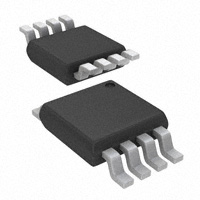
Space-Saving, 8-pin MSOP Package
2 Applications
•
•
•
•
•
•
The TPS386596 has a low quiescent current of 7 µA
(typical) and is available in a space-saving, 8-pin
MSOP package.
Notebook/Desktop Computers
Industrial Equipment
Telecom, Networking Infrastructure
Server, Storage Equipment
DSP and Microcontroller Applications
FPGA/ASIC Applications
Device Information(1)
PART NUMBER
TPS386596
PACKAGE
BODY SIZE (NOM)
VSSOP (8)
5.00 mm × 3.00 mm
(1) For all available packages, see the orderable addendum at
the end of the data sheet.
TPS386596 Typical Application Circuit
VIN
DC-DC
LDO
VMON(2)
VMON(3)
VMON(4)
VMON(1)
DC-DC
LDO
Sub CPU
MSP430
DC-DC
LDO
__
RSH4
RSH3
RSH2
VDD
VCC
RP
MR
DC-DC
LDO
3.3V
SENSE2
VCC1
____
____
TPS386596
TPS386596 RESET
RESET
SENSE1
SENSE3
VCC2
VCC3
VCC4
DSP
CPU
FPGA
SENSE4
GND
RSL4
RSL3
RSL2
1
An IMPORTANT NOTICE at the end of this data sheet addresses availability, warranty, changes, use in safety-critical applications,
intellectual property matters and other important disclaimers. PRODUCTION DATA.
�TPS386596
SLVSA75A – JULY 2010 – REVISED AUGUST 2015
www.ti.com
Table of Contents
1
2
3
4
5
6
7
8
Features ..................................................................
Applications ...........................................................
Description .............................................................
Revision History.....................................................
Pin Configuration and Functions .........................
Specifications.........................................................
1
1
1
2
3
4
6.1
6.2
6.3
6.4
6.5
6.6
6.7
6.8
4
4
4
4
5
6
6
7
Absolute Maximum Ratings ......................................
ESD Ratings..............................................................
Recommended Operating Conditions.......................
Thermal Information ..................................................
Electrical Characteristics...........................................
Timing Requirements ................................................
Switching Characteristics ..........................................
Typical Characteristics ..............................................
Parameter Measurement Information .................. 9
Detailed Description ............................................ 10
8.1 Overview ................................................................. 10
8.2 Functional Block Diagram ....................................... 10
8.3 Feature Description................................................. 11
8.4 Device Functional Modes........................................ 11
9
Application and Implementation ........................ 12
9.1 Application Information............................................ 12
9.2 Typical Application .................................................. 12
10 Power Supply Recommendations ..................... 15
11 Layout................................................................... 15
11.1 Layout Guidelines ................................................. 15
11.2 Layout Example .................................................... 15
12 Device and Documentation Support ................. 16
12.1
12.2
12.3
12.4
12.5
Device Support ....................................................
Community Resources..........................................
Trademarks ...........................................................
Electrostatic Discharge Caution ............................
Glossary ................................................................
16
16
16
16
16
13 Mechanical, Packaging, and Orderable
Information ........................................................... 16
4 Revision History
Changes from Original (July 2010) to Revision A
Page
•
Changed references to TPS386596L33 to TPS386596 throughout document...................................................................... 1
•
Changed Pin Configuration and Functions section; updated table format and pin drawing ................................................. 3
•
Changed "free-air temperature" to "junction temperature" in Absolute Maximum Ratings condition statement .................... 4
•
Changed Absolute Maximum Ratings table; moved ESD ratings to separate table ............................................................. 4
•
Added ESD Ratings table, Feature Description section, Device Functional Modes, Application and Implementation
section, Power Supply Recommendations section, Layout section, Device and Documentation Support section, and
Mechanical, Packaging, and Orderable Information section ................................................................................................. 4
•
Changed Thermal Information table; updated thermal resistance values .............................................................................. 4
•
Changed Electrical Characteristics table; moved timing and switching parameters (tW, tD) to separate tables..................... 5
•
Changed input voltage range notation from VVCC to VDD throughout Electrical Characteristics table .................................... 5
•
Changed supply current notation from IVCC to IDD in Electrical Characteristics table ............................................................. 5
•
Changed VCC notation in Functional Block Diagram to VDD ............................................................................................. 10
•
Deleted Immunity to SENSE Pin Voltage Transients section; rewrote content and added to Voltage Monitoring
section ................................................................................................................................................................................. 11
•
Changed Sense Inputs section title to Undervoltage Detection .......................................................................................... 12
•
Changed title and graphic for Figure 14 .............................................................................................................................. 12
2
Submit Documentation Feedback
Copyright © 2010–2015, Texas Instruments Incorporated
Product Folder Links: TPS386596
�TPS386596
www.ti.com
SLVSA75A – JULY 2010 – REVISED AUGUST 2015
5 Pin Configuration and Functions
DGK Package
8-Pin VSSOP
Top View
SENSE4
1
8
VDD
SENSE3
2
7
MR
SENSE2
3
6
RESET
SENSE1
4
5
GND
Pin Functions
PIN
NAME
NO.
I/O
DESCRIPTION
GND
5
—
Ground
MR
7
I
Manual reset input with internal 100-kΩ pullup to VDD and 50-ns deglitch. Logic low level of this
pin asserts RESET.
RESET
6
O
RESET is an open-drain output pin. When RESET is asserted, this pin remains in a lowimpedance state. When RESET is deasserted, this pin goes to a high-impedance state after
50 ms. A pullup resistor to VDD or another voltage source is required.
SENSE1
4
I
Monitor voltage input
for Supply 1
When the voltage at this terminal drops the threshold voltage (VIT1= 2.9
V), RESET is asserted.
SENSE2
3
I
Monitor voltage input
for Supply 2
When the voltage at this terminal drops the threshold voltage (VIT2= 0.4
V), RESET is asserted.
SENSE3
2
I
Monitor voltage input
for Supply 3
When the voltage at this terminal drops the threshold voltage (VIT3= 0.4
V), RESET is asserted.
SENSE4
1
I
Monitor voltage input
for Supply 4
When the voltage at this terminal drops the threshold voltage (VIT4= 0.4
V), RESET is asserted.
VDD
8
I
Supply voltage. Connecting a 0.1-µF ceramic capacitor close to this pin is recommended.
Submit Documentation Feedback
Copyright © 2010–2015, Texas Instruments Incorporated
Product Folder Links: TPS386596
3
�TPS386596
SLVSA75A – JULY 2010 – REVISED AUGUST 2015
www.ti.com
6 Specifications
6.1 Absolute Maximum Ratings
over operating junction temperature range (unless otherwise noted). (1)
Voltage
MIN
MAX
UNIT
Input, VDD
–0.3
7
V
V MR , VSENSE1, VSENSE2, VSENSE3, VSENSE4, V RESET
–0.3
7
V
5
mA
Current
RESET pin
Power dissipation
Continuous total
Temperature
(1)
(2)
(2)
See Thermal Information
Operating virtual junction, TJ
–40
150
Operating ambient, TA
–40
125
Storage, Tstg
–65
150
°C
Stresses beyond those listed under Absolute Maximum Ratings may cause permanent damage to the device. These are stress ratings
only, which do not imply functional operation of the device at these or any other conditions beyond those indicated under Recommended
Operating Conditions. Exposure to absolute-maximum-rated conditions for extended periods may affect device reliability.
As a result of the low dissipated power in this device, it is assumed that TJ = TA.
6.2 ESD Ratings
VALUE
Human body model (HBM), per ANSI/ESDA/JEDEC JS-001
V(ESD)
(1)
(2)
Electrostatic discharge
(1)
UNIT
±2000
Charged-device model (CDM), per JEDEC specification JESD22C101 (2)
±500
V
JEDEC document JEP155 states that 500-V HBM allows safe manufacturing with a standard ESD control process.
JEDEC document JEP157 states that 250-V CDM allows safe manufacturing with a standard ESD control process.
6.3 Recommended Operating Conditions
Over operating junction temperature range (unless otherwise noted).
MIN
VDD
(1)
VSENSE
NOM
MAX
UNIT
1.8
6.5
V
0
VDD
V
VMR
0
VDD
V
V RESET
0
6.5
V
RPULL-UP
6.5
100
10,000
kΩ
TJ
–40
25
125
°C
(1)
All sense inputs.
6.4 Thermal Information
TPS386596
THERMAL METRIC (1)
DGK (VSSOP)
UNIT
8 PINS
RθJA
Junction-to-ambient thermal resistance
174
°C/W
RθJC(top)
Junction-to-case (top) thermal resistance
45.5
°C/W
RθJB
Junction-to-board thermal resistance
94
°C/W
ψJT
Junction-to-top characterization parameter
1.9
°C/W
ψJB
Junction-to-board characterization parameter
92.7
°C/W
RθJC(bot)
Junction-to-case (bottom) thermal resistance
N/A
°C/W
(1)
4
For more information about traditional and new thermal metrics, see the Semiconductor and IC Package Thermal Metrics application
report, SPRA953.
Submit Documentation Feedback
Copyright © 2010–2015, Texas Instruments Incorporated
Product Folder Links: TPS386596
�TPS386596
www.ti.com
SLVSA75A – JULY 2010 – REVISED AUGUST 2015
6.5 Electrical Characteristics
Over the operating temperature range of TJ = –40°C to 125°C. 1.8 V < VDD < 6.5 V, R RESET = 100 kΩ to VDD, C RESET = 50 pF
to GND, unless otherwise noted. Typical values are at TJ = 25°C.
PARAMETER
TEST CONDITIONS
VDD
Input supply
IDD
Supply current (current into VDD pin)
Power-on reset voltage (1)
TYP
MAX
1.8
(2)
Negative-going input threshold
accuracy
VITn
MIN
V
VCC = 3.3 V, RESET not asserted
7
19
µA
VCC = 6.5 V, RESET not asserted
7.5
22
µA
0.9
V
VOL(max) = 0.2 V, I RESET = 15 µA
SENSE1
2.87
2.90
2.93
V
SENSE2, SENSE3, SENSE4
396
400
404
mV
SENSE1
25
72
mV
SENSE2, SENSE3, SENSE4
3.5
10
mV
2.75
3.3
µA
25
nA
70
ms
VHYS
Hysteresis (positive-going) on VITn
ISENSE1
Input current at SENSE1
VSENSE1 = 3.3 V
2.2
ISENSEn
Input current at SENSEn pin,
n = 2, 3, 4
VSENSEn = 0.42 V
–25
td
RESETdelay time
30
VIL
MR logic low input
0
VIH
MR logic high input
RMR_Pullup
Internal pullup resistor on MR pin to
VDD
IOL = 1 mA
0.4
VOL
Low-level RESET output voltage
SENSEn = 0 V, 1.3 V < VDD < 1.8 V,
IOL = 0.4 mA (1)
0.3
ILKG
RESET leakage current
V RESET = 6.5 V, RESET not asserted
CIN
Input pin capacitance
(1)
(2)
UNIT
6.5
50
0.3VDD
0.7VDD
V
V
100
–300
kΩ
300
5
V
nA
pF
These specifications are out of recommended VDD range and only define RESET output performance during VDD ramp up.
The lowest supply voltage (VDD) at which RESET becomes active. tRISE(VDD) ≥ 15 µs/V.
Submit Documentation Feedback
Copyright © 2010–2015, Texas Instruments Incorporated
Product Folder Links: TPS386596
5
�TPS386596
SLVSA75A – JULY 2010 – REVISED AUGUST 2015
www.ti.com
6.6 Timing Requirements
Over the operating temperature range of TJ = –40°C to 125°C. 1.8 V < VDD < 6.5 V, R RESET = 100 kΩ to VDD, C RESET = 50 pF
to GND, unless otherwise noted. Typical values are at TJ = 25°C.
MIN
tW
Input pulse width to
SENSEn and MR pins
SENSEm: 1.05 VIT ≥ 0.95 VIT
MR: 0.7 VDD ≥ 0.3 VDD
NOM
MAX
UNIT
4
μs
50
ns
6.7 Switching Characteristics
Over the operating temperature range of TJ = –40°C to 125°C. 1.8 V < VDD < 6.5 V, R RESET = 100 kΩ to VDD, C RESET = 50 pF
to GND, unless otherwise noted. Typical values are at TJ = 25°C.
tD
RESET delay time
MIN
TYP
MAX
30
50
70
UNIT
ms
VDD
0.9 V
t
SENSE1
VHYS
VIT
t
MR
t
RESET
tD
tD
t
Figure 1. Timing Diagram
6
Submit Documentation Feedback
Copyright © 2010–2015, Texas Instruments Incorporated
Product Folder Links: TPS386596
�TPS386596
www.ti.com
SLVSA75A – JULY 2010 – REVISED AUGUST 2015
6.8 Typical Characteristics
At TA = 25°C, and VDD = 3.3 V, unless otherwise noted.
15
49.6
49.4
49.2
Reset Delay (ms)
Input Current (PA)
12
9
6
TJ = -40q
TJ = 0q
TJ = 25q
TJ = 85q
TJ = 105q
TJ = 125q
3
1.5
3
4.5
Input Voltage (V)
6
48.8
48.6
48.4
48.2
48
47.8
-40
0
0
49
7.5
-20
Figure 2. Supply Current vs Supply Voltage
40
60
80
Temperature (qC)
100
120
140
Figure 3. Reset Delay vs Temperature
SENSE1
SENSE2
SENSE3
SENSE4
30
20
2.96
SENSE Threshold (V)
SENSEn Pulse Width (Ps)
20
2.98
100
70
50
10
7
5
3
2
VITN, VDD = 1.8V
VITN + HYS, VDD = 1.8V
VITN, VDD = 6.5V
VITN + HYS, VDD = 6.5V
2.94
2.92
2.9
1
0.7
0.5
0.1
0.2 0.3 0.50.7 1
2 3 4 5 6 78 10
Overdrive (%)
20 30
2.88
-40
50
Figure 4. SENSEn Minimum Pulse Width vs SENSEn
Threshold Overdrive Voltage
0.406
0.405
0.4025
0.4
0.3975
-40
40
80
Temperature (qC)
120
160
0.408
VITN, VDD = 1.8V
VITN + HYS, VDD = 1.8V
VITN, VDD = 6.5V
VITN + HYS, VDD = 6.5V
SENSE Threshold (V)
0.4075
0
Figure 5. SENSE1 Threshold and Hysteresis vs Temperature
0.41
SENSE Threshold (V)
0
VITN, VDD = 1.8V
VITN + HYS, VDD = 1.8V
VITN, VDD = 6.5V
VITN + HYS, VDD = 6.5V
0.404
0.402
0.4
0
40
80
Temperature (qC)
120
160
Figure 6. SENSE2 Threshold and Hysteresis vs Temperature
0.398
-40
0
40
80
Temperature (qC)
120
160
Figure 7. SENSE3 Threshold and Hysteresis vs Temperature
Submit Documentation Feedback
Copyright © 2010–2015, Texas Instruments Incorporated
Product Folder Links: TPS386596
7
�TPS386596
SLVSA75A – JULY 2010 – REVISED AUGUST 2015
www.ti.com
Typical Characteristics (continued)
At TA = 25°C, and VDD = 3.3 V, unless otherwise noted.
0.16
0.408
SENSE Threshold (V)
0.406
VITN, VDD = 1.8V
VITN + HYS, VDD = 1.8V
VITN, VDD = 6.5V
VITN + HYS, VDD = 6.5V
0.12
VOL (V)
0.404
0.402
0.08
0.04
0
0.4
0.398
-50
-0.04
0
50
Temperature (qC)
100
150
0
Figure 8. SENSE4 Threshold and Hysteresis vs Temperature
0.5
0.75
Output Sink Current (mA)
1
6
Manual Reset Voltage (V)
VDD = 1.8V
VDD = 3.3V
VDD = 6.5V
0.16
VOL (V)
0.25
Figure 9. Output Voltage Low vs Output Current
0.2
0.12
0.08
0.04
-50
VDD = 1.8V
VDD = 3.3V
VDD = 6.5V
0
50
Temperature (qC)
100
150
Figure 10. Output Voltage Low at 1 mA vs Temperature
VITN, VDD = 1.8V
VITN + HYS, VDD = 1.8V
VITN, VDD = 6.5V
VITN + HYS, VDD = 6.5V
4.5
3
1.5
0
-50
0
50
Temperature (qC)
100
150
Figure 11. MR Threshold vs Temperature
Manual Reset Pulse Width (Ps)
1
0.7
0.5
0.4
0.3
0.2
0.1
0.07
0.05
0.1
0.2 0.3 0.50.7 1
2 3 4 5 6 78 10
Overdrive (%)
20 30
50
Figure 12. MR Minimum Pulse Width vs MR Threshold Overdrive Voltage
8
Submit Documentation Feedback
Copyright © 2010–2015, Texas Instruments Incorporated
Product Folder Links: TPS386596
�TPS386596
www.ti.com
SLVSA75A – JULY 2010 – REVISED AUGUST 2015
SENSE2, 3, 4 Voltage (V)
7 Parameter Measurement Information
X1 = (Z1/0.4) * 100(%)
X2 = (Z2/0.4) * 100(%)
Y1
Z1
Y2
Z2
X1 = X2 are overdrive (%) values calculated
from actual SENSE2, 3, 4 voltage amplitudes
measured as Z1 and Z2.
YN is the minimum pulse width that gives
RESET transition. Greater ZN produces shorter
YN .
Time
Figure 13. Overdrive Measurement Method: Measurement Technique for Immunity to SENSE Pin Voltage
Transient
Submit Documentation Feedback
Copyright © 2010–2015, Texas Instruments Incorporated
Product Folder Links: TPS386596
9
�TPS386596
SLVSA75A – JULY 2010 – REVISED AUGUST 2015
www.ti.com
8 Detailed Description
8.1 Overview
The TPS386596L33 multi-channel reset supervisor provides a complete single reset function for a four power
supply system. The design of the SVS is based on the TPS386000 quad supervisor device series. The
TPS386596 is designed to assert the RESET signal following the logic in Table 1. The RESET output remains
asserted for a 50-ms delay time (td) after the event of reset release. The SENSE1 input has a fixed voltage
threshold designed to monitor a 3.3-V nominal supply. The trip point, VIT1, for SENSE1 is 2.90 V (typical). Each
of the remaining SENSEn inputs (n = 2, 3, 4) can be set to any voltage threshold greater than 0.4 V using an
external resistor divider. An active-low manual reset (MR) input is also provided for asserting the RESET signal
as desired by the system, regardless of the voltage on any of the SENSE pins.
8.2 Functional Block Diagram
VDD
VCC
RESET
MR
Delay
50ms
3.3V
SENSE1
+
_
400mV
SENSE2
+
_
400mV
SENSE3
+
_
400mV
SENSE4
+
_
400mV
GND
10
Submit Documentation Feedback
Copyright © 2010–2015, Texas Instruments Incorporated
Product Folder Links: TPS386596
�TPS386596
www.ti.com
SLVSA75A – JULY 2010 – REVISED AUGUST 2015
8.3 Feature Description
8.3.1 Voltage Monitoring
Each SENSEn (n = 2, 3, 4) pin can be set to monitor any voltage threshold greater than 0.4 V using an external
resistor divider. The SENSE1 pin is designed to monitor a 3.3-V supply with a 2.9-V threshold. A broad range of
voltage thresholds can be supported, allowing these devices to be used in a wide array of applications.
The TPS386596 is relatively immune to short negative transients on the SENSEn pin. Sensitivity to transients
depends on threshold overdrive, as shown in the typical performance graph TPS386596 SENSEn Minimum
Pulse Width vs SENSEn Threshold Overdrive Voltage (Figure 4).
8.3.2 Manual Reset
The manual reset MR input allows external logic signal from processors, other logic circuits, and/or discrete
sensors to initiate a reset. The typical application of a TPS386596 has its RESET output connected to processor.
A logic low at MR causes RESET to assert. After MR returns to a logic high and SENSEn are above the
respective voltage thresholds, RESET is released after a fixed 50-ms reset delay time. An internal 100-kΩ pullup
to VDD is integrated on the MR input. There is also an internal 50-ns (typical) deglitch circuit.
8.3.3 Reset Output
In a typical application of the TPS386596, the RESET output is connected to the reset input of a processor (DSP,
MCU, CPU, FPGA, ASIC, and so forth) or connected to the enable input of voltage regulators (DC-DC, LDO, and
so forth).
The TPS386596 provides an open-drain reset output. Pullup resistors must be used to hold this line high when
RESET is not asserted. By connecting a pullup resistor to the proper voltage rail (up to 6.5 V), the RESET output
can be connected to other devices at the proper interface voltage level. The pullup resistor should be no smaller
than 10 kΩ due to the finite impedance of the output transistor.
The RESET output is defined for VDD > 0.9 V. To ensure that the target processor is properly reset, the VDD
supply input should be fed by the power rail and be available as early as possible in the application.
Table 1 shows a truth table of how the RESET output is asserted or released. Figure 1 provides a timing diagram
that shows how RESET is asserted and deasserted in relation to MR and the SENSEn inputs. Once the
conditions are met, the transitions from the asserted state to the release state are performed after a fixed 50-ms
delay time.
8.4 Device Functional Modes
Table 1 shows the device functional modes.
Table 1. RESET Truth Table
CONDITION
OUTPUT
MR = L
SENSEn < VITn
RESET = L
Reset asserted
MR = L
SENSEn > VITn
RESET = L
Reset asserted
MR = H
SENSE1 <
SENSE2 <
SENSE3 <
SENSE4 <
VIT1 OR
VIT2 OR
VIT3 OR
VIT4
RESET = L
Reset asserted
MR = H
SENSE1 >
SENSE2 >
SENSE3 >
SENSE4 >
VIT1 AND
VIT2 AND
VIT3 AND
VIT4
RESET = H
Reset released
Submit Documentation Feedback
Copyright © 2010–2015, Texas Instruments Incorporated
Product Folder Links: TPS386596
11
�TPS386596
SLVSA75A – JULY 2010 – REVISED AUGUST 2015
www.ti.com
9 Application and Implementation
NOTE
Information in the following applications sections is not part of the TI component
specification, and TI does not warrant its accuracy or completeness. TI’s customers are
responsible for determining suitability of components for their purposes. Customers should
validate and test their design implementation to confirm system functionality.
9.1 Application Information
9.1.1 Undervoltage Detection
The SENSEn inputs provide terminals at which the system voltages can be monitored. If the voltage at any one
of the SENSEn pins drops the respective VITn, then the RESET output is asserted. The comparators have a builtin hysteresis to ensure smooth RESET transitions.
It is good analog design practice to use a 1-nF to 10-nF bypass capacitor at the SENSEn input to ground, to
reduce sensitivity to transients, layout parasitics, and interference between power rails monitored by this device.
A typical connection of resistor dividers is show in Figure 14. SENSE1 is used to monitor a 3.3-V nominal powersupply voltage with a trip point equal to 2.90 V, and the remaining SENSEn (n = 2, 3, 4) inputs can be used to
monitor voltage rails down to 0.4 V. Threshold voltages can be calculated using the following equations.
VMON(2) = (1 + RS2H/RS2L) × 0.4 (V)
VMON(3) = (1 + RS3H/RS3L) × 0.4 (V)
VMON(4) = (1 + RS4H/RS4L) × 0.4 (V)
(1)
(2)
(3)
9.2 Typical Application
Figure 14 shows a typical application for the TPS386956.
VIN
DC-DC
LDO
VMON(2)
VMON(3)
VMON(4)
VMON(1)
DC-DC
LDO
Sub CPU
MSP430
DC-DC
LDO
__
RSH4
RSH3
RSH2
VDD
VCC
RP
MR
DC-DC
LDO
3.3V
SENSE2
VCC1
____
____
TPS386596
TPS386596 RESET
RESET
SENSE1
SENSE3
VCC2
VCC3
VCC4
DSP
CPU
FPGA
SENSE4
GND
RSL4
RSL3
RSL2
Figure 14. Typical Application Circuit
12
Submit Documentation Feedback
Copyright © 2010–2015, Texas Instruments Incorporated
Product Folder Links: TPS386596
�TPS386596
www.ti.com
SLVSA75A – JULY 2010 – REVISED AUGUST 2015
Typical Application (continued)
9.2.1 Design Requirements
This design is intended to monitor the voltage rails for an FPGA. Table 2 summarizes the design requirements.
Table 2. Design Requirements
PARAMETER
DESIGN REQUIREMENT
VDD
5V
VMON(1)
3.3 V –10%
VMON(2)
1.5 V –5%
VMON(3)
1.2 V –5%
VMON(4)
1 V –5%
9.2.2 Detailed Design Procedure
Select the pullup resistors to be 100 kΩ to ensure that VOL ≤ 0.4 V.
Select RSnL = 10 kΩ for all channels to ensure DC accuracy.
Use Equation 1 through Equation 3 to determine the values of RSnH and RS4M. Using standard 1% resistors,
Table 3 shows the results:
Table 3. Design Results
RESISTOR
VALUE (kΩ)
RS1H
32.4
RS2H
25.5
RS3H
18.7
RS4H
14.3
RS4M
1
9.2.3 Application Curves
15
Input Current (PA)
12
9
6
TJ = -40q
TJ = 0q
TJ = 25q
TJ = 85q
TJ = 105q
TJ = 125q
3
0
0
1.5
3
4.5
Input Voltage (V)
6
Figure 15. Supply Current vs Supply Voltage
7.5
SENSEn Pulse Width (Ps)
100
70
50
SENSE1
SENSE2
SENSE3
SENSE4
30
20
10
7
5
3
2
1
0.7
0.5
0.1
0.2 0.3 0.50.7 1
2 3 4 5 6 78 10
Overdrive (%)
20 30
50
Figure 16. SENSEn Minimum Pulse Width vs SENSEn
Threshold Overdrive Voltage
Submit Documentation Feedback
Copyright © 2010–2015, Texas Instruments Incorporated
Product Folder Links: TPS386596
13
�TPS386596
SLVSA75A – JULY 2010 – REVISED AUGUST 2015
www.ti.com
0.41
2.98
VITN, VDD = 1.8V
VITN + HYS, VDD = 1.8V
VITN, VDD = 6.5V
VITN + HYS, VDD = 6.5V
0.4075
SENSE Threshold (V)
SENSE Threshold (V)
2.96
2.94
2.92
VITN, VDD = 1.8V
VITN + HYS, VDD = 1.8V
VITN, VDD = 6.5V
VITN + HYS, VDD = 6.5V
0.405
0.4025
0.4
2.9
2.88
-40
0
40
80
Temperature (qC)
120
0.3975
-40
160
Figure 17. SENSE1 Threshold and Hysteresis vs
Temperature
0
40
80
Temperature (qC)
120
160
Figure 18. SENSE2 Threshold and Hysteresis vs
Temperature
0.408
SENSE Threshold (V)
0.406
VITN, VDD = 1.8V
VITN + HYS, VDD = 1.8V
VITN, VDD = 6.5V
VITN + HYS, VDD = 6.5V
0.404
0.402
0.4
0.398
-40
0
40
80
Temperature (qC)
120
160
Figure 19. SENSE3 Threshold and Hysteresis vs Temperature
14
Submit Documentation Feedback
Copyright © 2010–2015, Texas Instruments Incorporated
Product Folder Links: TPS386596
�TPS386596
www.ti.com
SLVSA75A – JULY 2010 – REVISED AUGUST 2015
10 Power Supply Recommendations
The TPS386596 can operate from a 1.8-V to a 6.5-V input supply. A 0.1-µF capacitor placed next to the VDD pin
to the GND node is highly recommended. This power supply should not be less than 1.8 V in normal operation to
ensure that the internal UVLO circuit does not assert reset.
11 Layout
11.1 Layout Guidelines
Follow these guidelines to lay out the printed-circuit-board (PCB) that is used for the TPS386596.
• Avoid long traces from the SENSE pin to the resistor divider. Instead, run the long traces from the RSnH to
VMON(n).
• Place the VDD decoupling capacitor (CVDD) close to the device.
• Avoid using long traces for the VDD supply node. The VDD capacitor (CVDD), along with parasitic inductance
from the supply to the capacitor, can form an LC tank and create ringing with peak voltages above the
maximum VDD voltage.
11.2 Layout Example
SENSE4
1
SENSE3
2
8
VDD
7
MR
TPS386596
SENSE2
3
6
RESET
SENSE1
4
5
GND
Denotes vias for application-specific purposes
Figure 20. Example Layout (DGK Package)
Submit Documentation Feedback
Copyright © 2010–2015, Texas Instruments Incorporated
Product Folder Links: TPS386596
15
�TPS386596
SLVSA75A – JULY 2010 – REVISED AUGUST 2015
www.ti.com
12 Device and Documentation Support
12.1 Device Support
12.1.1 Development Support
12.1.1.1 Spice Models
Computer simulation of circuit performance using SPICE is often useful when analyzing the performance of
analog circuits and systems. A SPICE model for the TPS386596 is available through the device product folders
under Simulation Models.
12.1.2 Device Nomenclature
Table 4. Device Nomenclature (1)
PRODUCT
DESCRIPTION
TPS386596xxx yyy z
(1)
xxx is device voltage option (for example, L33 = 3.3 V option)
yyy is package designator
z is package quantity
For the most current package and ordering information see the Package Option Addendum at the end of this document, or see the TI
website at www.ti.com.
12.2 Community Resources
The following links connect to TI community resources. Linked contents are provided "AS IS" by the respective
contributors. They do not constitute TI specifications and do not necessarily reflect TI's views; see TI's Terms of
Use.
TI E2E™ Online Community TI's Engineer-to-Engineer (E2E) Community. Created to foster collaboration
among engineers. At e2e.ti.com, you can ask questions, share knowledge, explore ideas and help
solve problems with fellow engineers.
Design Support TI's Design Support Quickly find helpful E2E forums along with design support tools and
contact information for technical support.
12.3 Trademarks
E2E is a trademark of Texas Instruments.
All other trademarks are the property of their respective owners.
12.4 Electrostatic Discharge Caution
These devices have limited built-in ESD protection. The leads should be shorted together or the device placed in conductive foam
during storage or handling to prevent electrostatic damage to the MOS gates.
12.5 Glossary
SLYZ022 — TI Glossary.
This glossary lists and explains terms, acronyms, and definitions.
13 Mechanical, Packaging, and Orderable Information
The following pages include mechanical, packaging, and orderable information. This information is the most
current data available for the designated devices. This data is subject to change without notice and revision of
this document. For browser-based versions of this data sheet, refer to the left-hand navigation.
16
Submit Documentation Feedback
Copyright © 2010–2015, Texas Instruments Incorporated
Product Folder Links: TPS386596
�PACKAGE OPTION ADDENDUM
www.ti.com
10-Dec-2020
PACKAGING INFORMATION
Orderable Device
Status
(1)
Package Type Package Pins Package
Drawing
Qty
Eco Plan
(2)
Lead finish/
Ball material
MSL Peak Temp
Op Temp (°C)
Device Marking
(3)
(4/5)
(6)
TPS386596L33DGKR
ACTIVE
VSSOP
DGK
8
2500
RoHS & Green
NIPDAU
Level-2-260C-1 YEAR
-40 to 125
PMXQ
TPS386596L33DGKT
ACTIVE
VSSOP
DGK
8
250
RoHS & Green
NIPDAU
Level-2-260C-1 YEAR
-40 to 125
PMXQ
(1)
The marketing status values are defined as follows:
ACTIVE: Product device recommended for new designs.
LIFEBUY: TI has announced that the device will be discontinued, and a lifetime-buy period is in effect.
NRND: Not recommended for new designs. Device is in production to support existing customers, but TI does not recommend using this part in a new design.
PREVIEW: Device has been announced but is not in production. Samples may or may not be available.
OBSOLETE: TI has discontinued the production of the device.
(2)
RoHS: TI defines "RoHS" to mean semiconductor products that are compliant with the current EU RoHS requirements for all 10 RoHS substances, including the requirement that RoHS substance
do not exceed 0.1% by weight in homogeneous materials. Where designed to be soldered at high temperatures, "RoHS" products are suitable for use in specified lead-free processes. TI may
reference these types of products as "Pb-Free".
RoHS Exempt: TI defines "RoHS Exempt" to mean products that contain lead but are compliant with EU RoHS pursuant to a specific EU RoHS exemption.
Green: TI defines "Green" to mean the content of Chlorine (Cl) and Bromine (Br) based flame retardants meet JS709B low halogen requirements of







 工商网监
湘ICP备2023018690号
工商网监
湘ICP备2023018690号