TPS3899
SLVSFM0B – SEPTEMBER 2020 – REVISED JANUARY 2022
TPS3899 Nano-Power, Precision Voltage Supervisor, Push-Button Monitor with
Programmable Sense and Reset Delay
1 Features
3 Description
•
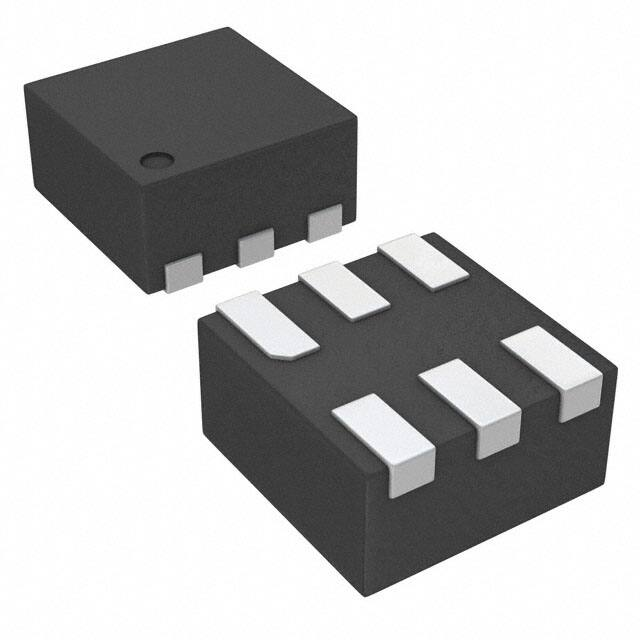
The TPS3899 is a nano power, precision voltage
supervisor with ±0.5% threshold accuracy and
programmable sense and reset time delay in a 6-pin
space saving 1.5 mm x 1.5 mm WSON package.
The TPS3899 is a feature-rich voltage supervisor that
offers the smallest total solution size in its class. Builtin hysteresis along with programmable delay prevent
false reset signals when monitoring a voltage rail or
push button signals.
•
•
•
•
•
•
•
•
•
•
•
•
Functional Safety-Capable
– Documentation available to aid functional safety
system design
Precision voltage and push-button monitor
VDD range: 0.85 V to 6 V ( DL and PL outputs)
VDD range: 1 V to 6 V ( PH output)
Programmable sense and reset delay
Nano quiescent current: 125 nA (typ)
High threshold accuracy: ±0.5% (typ)
Precision hysteresis: 5% (typ)
Adjustable threshold voltage: 0.505 V (typ)
Fixed threshold voltage: 0.8 V to 5.4 V
– Fixed threshold level available in 100 mV steps
Multiple output topologies
– DL: open-drain active-low
– PL: push-pull active-low
– PH: push-pull active-high
Temperature range: –40°C to +125°C
Package: 1.5-mm × 1.5-mm WSON
2 Applications
•
•
•
•
•
•
•
•
•
Electricity meters
Building automation
Body Control Module (BCM)
Data center and enterprise computing
Notebooks, desktop computers, servers
Smartphones, hand-held products
Portable, battery-powered equipment
Solid-state drives
STB & DVR
The separate VDD and SENSE pins allow for
the redundancy sought by high-reliability systems.
SENSE is decoupled from VDD and can monitor rail
voltages other than VDD. Optional use of external
resistors are supported by the high impedance input
of the SENSE pin. Both CTS and CTR provide delay
adjustability on the rising and falling edges of the
RESET signals. CTS also functions as a debouncer
by ignoring voltage glitches on the monitored voltage
rails and operates as a "manual reset" that can be
used to force a system reset.
The precision performance, best in-class features
in a compact form factor, makes the TPS3899
an ideal solution for wide ranging industrial and
battery-powered applications such as Factory/Building
Automation, Motor Drives, and consumer products.
The device is fully specified over a temperature range
of –40°C to +125°C (TA).
Device Information
PART NUMBER
PACKAGE (1)
BODY SIZE (NOM)
TPS3899
WSON (6) DSE
1.5 mm × 1.5 mm
1. For all available packages, see the orderable
addendum at the end of the data sheet
0.85 V to 6.0 V
*Rpull-up
VDD
SENSE
Push-button
input
RESET
TPS3899
CTS
CTR
GND
*Rpull-up is required for open-drain variants only
Typical Application Circuit
An IMPORTANT NOTICE at the end of this data sheet addresses availability, warranty, changes, use in safety-critical applications,
intellectual property matters and other important disclaimers. PRODUCTION DATA.
�TPS3899
www.ti.com
SLVSFM0B – SEPTEMBER 2020 – REVISED JANUARY 2022
Table of Contents
1 Features............................................................................1
2 Applications..................................................................... 1
3 Description.......................................................................1
4 Revision History.............................................................. 2
5 Device Comparison......................................................... 3
6 Pin Configuration and Functions...................................4
Pin Functions.................................................................... 4
7 Specifications.................................................................. 5
7.1 Absolute Maximum Ratings ....................................... 5
7.2 ESD Ratings .............................................................. 5
7.3 Recommended Operating Conditions ........................5
7.4 Thermal Information ...................................................6
7.5 Electrical Characteristics ............................................7
7.6 Timing Requirements ................................................. 8
7.7 Timing Diagrams......................................................... 9
7.8 Typical Characteristics.............................................. 10
8 Detailed Description......................................................13
8.1 Overview................................................................... 13
8.2 Functional Block Diagram......................................... 13
8.3 Feature Description...................................................13
8.4 Device Functional Modes..........................................17
9 Application and Implementation.................................. 18
9.1 Application Information............................................. 18
9.2 Typical Application.................................................... 18
10 Power Supply Recommendations..............................21
11 Layout........................................................................... 22
11.1 Layout Guidelines................................................... 22
11.2 Layout Example...................................................... 22
12 Device and Documentation Support..........................23
12.1 Device Support ...................................................... 23
12.2 Receiving Notification of Documentation Updates..24
12.3 Support Resources................................................. 24
12.4 Trademarks............................................................. 24
12.5 Electrostatic Discharge Caution..............................24
12.6 Glossary..................................................................24
13 Mechanical, Packaging, and Orderable
Information.................................................................... 25
4 Revision History
NOTE: Page numbers for previous revisions may differ from page numbers in the current version.
Changes from Revision A (December 2020) to Revision B (January 2022)
Page
• Added Functional Safety-Capable...................................................................................................................... 1
• Changed IDD from 1.2μA to 1μA........................................................................................................................5
Changes from Revision * (September 2020) to Revision A (November 2020)
Page
• APL to RTM release............................................................................................................................................1
2
Submit Document Feedback
Copyright © 2022 Texas Instruments Incorporated
Product Folder Links: TPS3899
�TPS3899
www.ti.com
SLVSFM0B – SEPTEMBER 2020 – REVISED JANUARY 2022
5 Device Comparison
Figure 5-1 shows the device naming nomenclature of the TPS3899. For all possible output types and
threshold voltages options, see Device Naming Convention for a more detailed explanation. Contact TI sales
representatives or on TI's E2E forum for detail and availability of other options; minimum order quantities apply.
TPS3899 XX XX XXX
Output Type
DL: Open-Drain Ac�ve-Low
PL: Push-Pull Ac ve-Low
PH: Push-Pull Ac�ve-High
Threshold Voltage
01: 0.505 V (adjustable)
08: 0.8 V
...
54: 5.4 V
Package
DSE: WSON
Figure 5-1. Device Naming Nomenclature
Submit Document Feedback
Copyright © 2022 Texas Instruments Incorporated
Product Folder Links: TPS3899
3
�TPS3899
www.ti.com
SLVSFM0B – SEPTEMBER 2020 – REVISED JANUARY 2022
6 Pin Configuration and Functions
CTR
CTS
GND
1
6
2
5
3
4
RESET /RESET
SENSE
VDD
Figure 6-1. DSE Package,
6-Pin ,
TPS3899 Top View
Pin Functions
PIN
NO.
4
NAME
I/O
DESCRIPTION
1
CTR
—
Capacitor programmable reset delay: The CTR pin offers a user-adjustable delay time when returning from
reset condition. Connecting this pin to a ground-referenced capacitor sets the RESET/RESET delay time to
deassert.
2
CTS
—
Capacitor programmable sense delay: The CTS pin offers a user-adjustable delay time when asserting
reset condition. Connecting this pin to a ground-referenced capacitor sets the RESET/RESET delay time to
assert.
3
GND
—
Ground
4
VDD
I
Supply voltage pin: Good analog design practice is to place a 0.1-µF ceramic capacitor close to this pin.
5
SENSE
I
This pin is connected to the voltage that will be monitored for fixed variants or to a resistor divider for
the adjustable variant. When the voltage on the SENSE pin transistions below the negative threshold
voltage VIT-, RESET/RESET asserts to active logic after the sense delay set by CTS. When the voltage on
the SENSE pin transistions above the positive threshold voltage VIT- + VHYS, RESET/RESET releases to
inactive logic (deasserts) after the reset delay set by CTR. For noisy applications, placing a 10 nF to
100 nF ceramic capacitor close to this pin may be needed for optimum performance.
6
RESET
O
RESET active-low output that asserts to a logic low state after CTS delay when the monitored voltage on
the SENSE pin is lower than the negative threshold voltage VIT-. RESET remains logic low (asserted) until
the SENSE input rises above VIT- + VHYS and the CTR reset delay expires.
6
RESET
O
RESET active-high output that asserts to a logic high state after CTS delay when the monitored voltage on
the SENSE pin is lower than the negative threshold voltage VIT-. RESET remains logic high (asserted) until
the SENSE input rises above VIT- + VHYS and the CTR reset delay expires.
Submit Document Feedback
Copyright © 2022 Texas Instruments Incorporated
Product Folder Links: TPS3899
�TPS3899
www.ti.com
SLVSFM0B – SEPTEMBER 2020 – REVISED JANUARY 2022
7 Specifications
7.1 Absolute Maximum Ratings
over operating free-air temperature range, unless otherwise noted(1)
MIN
MAX
UNIT
Voltage
VDD, SENSE
–0.3
6.5
V
Voltage
CTR, CTS
–0.3
VDD+0.3 (3)
V
RESET (TPS389DL)
–0.3
6.5
RESET (TPS3899PL), RESET (TPS3899PH)
-0.3
VDD+0.3 (3)
Voltage
Current
RESET pin and RESET pin
Temperature(2)
Operating ambient temperature, TA
–40
125
Temperature(2)
Storage, Tstg
–65
150
(1)
(2)
(3)
V
±20
mA
°C
Stresses beyond those listed under Absolute Maximum Rating may cause permanent damage to the device. These are stress
ratings only, which do not imply functional operation of the device at these or any other conditions beyond those indicated
under Recommended Operating Condition. Exposure to absolute-maximum-rated conditions for extended periods may affect device
reliability.
As a result of the low dissipated power in this device, it is assumed that TJ = TA.
The absolute maximum rating is (VDD + 0.3) V or 6.5 V, whichever is smaller
7.2 ESD Ratings
VALUE
V(ESD)
(1)
(2)
Electrostatic discharge
Human body model (HBM), per ANSI/ESDA/JEDEC
JS-001(1)
± 2000
Charged device model (CDM), per JEDEC specification
JESD22-C101(2)
± 750
UNIT
V
JEDEC document JEP155 states that 500-V HBM allows safe manufacturing with a standard ESD control process.
JEDEC document JEP157 states that 250-V CDM allows safe manufacturing with a standard ESD control process.
7.3 Recommended Operating Conditions
over operating free-air temperature range (unless otherwise noted)
MIN
NOM
MAX
UNIT
Voltage
VDD, SENSE
0
6
V
Voltage
CTR, CTS
0
VDD
V
RESET (TPS3899DL)
0
6
RESET (TPS3899PL), RESET (TPS3899PH)
0
VDD
Voltage
Current
RESET pin and RESET pin current
TA
Operating free air temperature
CCTR
CCTS
V
0
±5
mA
–40
125
°C
CTR pin capacitor range
0
10
µF
CTS pin capacitor range
0
10
µF
Submit Document Feedback
Copyright © 2022 Texas Instruments Incorporated
Product Folder Links: TPS3899
5
�TPS3899
www.ti.com
SLVSFM0B – SEPTEMBER 2020 – REVISED JANUARY 2022
7.4 Thermal Information
TPS3899
THERMAL
METRIC(1)
DSE
UNIT
6 PINS
RθJA
Junction-to-ambient thermal resistance
214.9
°C/W
RθJC(top)
Junction-to-case (top) thermal resistance
153.7
°C/W
RθJB
Junction-to-board thermal resistance
112.3
°C/W
ψJT
Junction-to-top characterization parameter
25.5
°C/W
ψJB
Junction-to-board characterization parameter
111.8
°C/W
RθJC(bot)
Junction-to-case (bottom) thermal resistance
N/A
°C/W
(1)
6
For more information about traditional and new thermal metrics, see the Semiconductor and IC Package Thermal Metrics application
report.
Submit Document Feedback
Copyright © 2022 Texas Instruments Incorporated
Product Folder Links: TPS3899
�TPS3899
www.ti.com
SLVSFM0B – SEPTEMBER 2020 – REVISED JANUARY 2022
7.5 Electrical Characteristics
CTR = CTS = Open, RESET pull-up resistor (Rpull-up) = 100 kΩ to VDD, output reset load (CLOAD) = 10 pF and over the
operating free-air temperature range –40℃ to 125℃, unless otherwise noted. VDD ramp rate ≤ 1 V/µs. Typical values are at
TA = 25℃
PARAMETER
TEST CONDITIONS
MIN
TYP
MAX
UNIT
COMMON PARAMETERS
Input supply voltage (Open Drain Low
and Push Pull Low)
VDD
VDD
VIT–
Input supply voltage (Push Pull High)
(1)
VADJ-VIT–
Negative-going input threshold range
for all output configs
0.85
6
V
1
6
V
0.8
5.4
V
Negative-going input threshold for
adjustable sense threshold version
VIT–
Negative-going input threshold accuracy
accuracy
0.505
VIT– = 0.505 V (ADJ version) or 0.8 V to
1.7 V (Fixed threshold)
V
–2.5
±0.5
2.5
–2
±0.5
2
VIT– = 0.505 V and 0.8 V
3
5
8
%
VIT– = 0.9 V to 5.4 V
3
5
7
%
VIT– = 1.8 V to 5.4 V (Fixed threshold)
%
VHYS
Hysteresis on VIT–
ISENSE
Current into Sense pin, fixed threshold
version
VDD = VSENSE = 6 V
0.025
0.1
µA
Current into Sense pin, ADJ version
VDD = VSENSE = 6 V
0.025
0.05
µA
IDD
Supply current into VDD pin when sense
pin is separate
VDD = VSENSE = 6 V
VIT– = 0.505 V and 0.8 V to 5.4 V
0.125
1
µA
VTH_CTS
Voltage threshold to stop CTS capacitor
charge and assert RESET
0.73 *
VDD
V
VTH_CTR
Voltage threshold to stop CTR capacitor
charge and deassert RESET
0.73 *
VDD
V
RCTS
CTS pin internal pull up resistance
500
kΩ
RCTR
CTR pin internal pull up resistance
500
kΩ
TPS3899DL (Open-drain active-low)
VPOR
VOL
Ilkg(OD)
Power on reset voltage (2)
Low level output voltage
Open-Drain output leakage current
VOL(max) = 300 mV
IRESET(Sink) = 15 µA
700
mV
VDD = 0.85 V
IRESET(Sink) = 15 µA
300
mV
VDD = 3.3 V
IRESET(Sink) = 2 mA
300
mV
VDD = VPULLUP = 6 V, TA = –40℃ to 85℃
10
100
nA
VDD = VPULLUP = 6 V
10
350
nA
VOL(max) = 300 mV
IRESET(Sink) = 15 µA
700
mV
VDD = 0.85 V
IRESET(Sink) = 15 µA
300
mV
VDD = 3.3 V
IRESET(Sink) = 2 mA
300
mV
TPS3899PL (Push-pull active-low)
VPOR
VOL
VOH
Power on reset voltage (2)
Low level output voltage
High level output voltage
VDD = 1.8 V
IRESET(Source) = 500 µA
0.8VDD
V
VDD = 3.3 V
IRESET(Source) = 500 µA
0.8VDD
V
VDD = 6 V
IRESET(Source) = 2 mA
0.8VDD
V
Submit Document Feedback
Copyright © 2022 Texas Instruments Incorporated
Product Folder Links: TPS3899
7
�TPS3899
www.ti.com
SLVSFM0B – SEPTEMBER 2020 – REVISED JANUARY 2022
7.5 Electrical Characteristics (continued)
CTR = CTS = Open, RESET pull-up resistor (Rpull-up) = 100 kΩ to VDD, output reset load (CLOAD) = 10 pF and over the
operating free-air temperature range –40℃ to 125℃, unless otherwise noted. VDD ramp rate ≤ 1 V/µs. Typical values are at
TA = 25℃
PARAMETER
TEST CONDITIONS
MIN
TYP
MAX
UNIT
VOH(min) = 0.8VDD
IRESET (Source) = 15 uA
900
mV
VDD = 3.3 V
IRESET(Sink) = 500 µA
300
mV
VDD = 6 V
IRESET(Sink) = 2 mA
300
mV
TPS3899PH (Push-pull active-high)
Power on reset voltage(2)
VPOR
Low level output voltage
VOL
High level output voltage
VOH
(1)
(2)
VDD = 1V
IRESET(Sink) = 15 µA
0.8VDD
V
VDD = 1.5 V
IRESET(Sink) = 500 µA
0.8VDD
V
VDD = 3.3 V
IRESET(Sink) = 2 mA
0.8VDD
V
VIT- threshold voltage range from 0.8 V to 5.4 V (for DL, PL) and 1 to 5.4 V (for PH) in 100 mV steps, for released versions see Device
Voltage Thresholds table.
Minimum VDD voltage level for a controlled output state. Below VPOR, the output cannot be determined.
7.6 Timing Requirements
At 0.85 V ≤ VDD ≤ 6 V, CTR = CTS = Open, RESET pull-up resistor (Rpull-up) = 100 kΩ to VDD, output reset load
(CLOAD) = 10 pF and over the operating free-air temperature range –40°C to 125°C, unless otherwise noted.
VDD ramp rate ≤ 1 V / µs. Typical values are at TA = 25°C
PARAMETER
tSTRT
Startup
Delay(1)
TEST CONDITIONS
Detect time delay
VDD = (VIT+ + 10%) to (VIT- – 10%)(2)
CTS pin = 10 nF
CTS pin = 1 µF
CTR pin = Open or NC
tD
Reset time delay
CTR pin = 10 nF
(3)
CTR pin = 1 µF (3)
tGI_VIT(1)
(2)
(3)
(4)
8
Glitch immunity VIT-
TYP
CTR pin = Open or NC
CTS pin = Open or NC
tD-SENSE
MIN
5% VIT-
overdrive(4)
30
MAX
UNIT
300
µs
50
µs
6.2
ms
619
ms
40
80
µs
6.2
ms
619
ms
10
µs
When VDD starts from less than VPOR and then exceeds the specified minimum VDD, reset is asserted till startup delay (tSTRT) + tD
delay based on capacitor on CTR pin. After this time, the device controls the RESET pin based on the SENSE pin voltage.
tD_SENSE measured from threhold trip point (VIT-) to VOL for active low variants and VOH for active high variants.
Ideal capacitor
Overdrive % = [(VDD/ VIT-) - 1] × 100%
Submit Document Feedback
Copyright © 2022 Texas Instruments Incorporated
Product Folder Links: TPS3899
�TPS3899
www.ti.com
SLVSFM0B – SEPTEMBER 2020 – REVISED JANUARY 2022
7.7 Timing Diagrams
VDD
VDD(MIN)
VPOR
SENSE VIT- + VHYS
VIT-
tSTRT + tD
tD-SENSE
tD
RESET
Unde�ned
(tD-SENSE) is controlled by CTS
(tD) is controlled by CTR
(1) tD (no cap) is included in tSTRT time delay. If tD delay is programmed by an external capacitor connected to the CTR pin then tD programmed time will be
added to the startup time.
Figure 7-1. TPS3899DL01 and TPS3899PL01 Timing Diagram
VDD
VDD(MIN)
VPOR
SENSE
VIT- + VHYS
VIT-
tSTRT + tD
tD-SENSE
tD
RESET
Unde�ned
(tD-SENSE) is controlled by CTS
(tD) is controlled by CTR
(2) tD (no cap) is included in tSTRT time delay. If tD delay is programmed by an external capacitor connected to the CTR pin then tD programmed time will be
added to the startup time.
Figure 7-2. TPS3899PH01 Timing Diagram
Submit Document Feedback
Copyright © 2022 Texas Instruments Incorporated
Product Folder Links: TPS3899
9
�TPS3899
www.ti.com
SLVSFM0B – SEPTEMBER 2020 – REVISED JANUARY 2022
7.8 Typical Characteristics
Typical characteristics show the typical performance of the TPS3899 device. Test conditions are TA = 25°C,
VDD = 3.3 V, and Rpull-up = 100 kΩ, unless otherwise noted.
10
Figure 7-3. Supply Current vs Supply Voltage
Figure 7-4. SENSE Current vs VSENSE
Figure 7-5. VIT- Accuracy vs Temperature
Figure 7-6. VHYS vs Temperature
Figure 7-7. SENSE Glitch Immunity (VIT-) vs Overdrive
Figure 7-8. Startup Delay vs Temperature
Submit Document Feedback
Copyright © 2022 Texas Instruments Incorporated
Product Folder Links: TPS3899
�TPS3899
www.ti.com
SLVSFM0B – SEPTEMBER 2020 – REVISED JANUARY 2022
7.8 Typical Characteristics (continued)
Typical characteristics show the typical performance of the TPS3899 device. Test conditions are TA = 25°C,
VDD = 3.3 V, and Rpull-up = 100 kΩ, unless otherwise noted.
VDD falling below VIT-
CTR = OPEN
Figure 7-9. Propagation Delay vs Temperature
Figure 7-10. Reset Time Delay vs Temperature
Figure 7-11. RESET Delay vs CTR Capacitance
CTS = OPEN
Figure 7-12. SENSE Delay vs Temperature
Figure 7-13. SENSE Delay vs CTS Capacitance
Figure 7-14. VOL vs IOL
Submit Document Feedback
Copyright © 2022 Texas Instruments Incorporated
Product Folder Links: TPS3899
11
�TPS3899
www.ti.com
SLVSFM0B – SEPTEMBER 2020 – REVISED JANUARY 2022
7.8 Typical Characteristics (continued)
Typical characteristics show the typical performance of the TPS3899 device. Test conditions are TA = 25°C,
VDD = 3.3 V, and Rpull-up = 100 kΩ, unless otherwise noted.
Figure 7-15. VOL vs Temperature
12
Submit Document Feedback
Copyright © 2022 Texas Instruments Incorporated
Product Folder Links: TPS3899
�TPS3899
www.ti.com
SLVSFM0B – SEPTEMBER 2020 – REVISED JANUARY 2022
8 Detailed Description
8.1 Overview
The TPS3899 voltage supervisor with push-button monitor asserts a RESET/RESET signal when the SENSE
pin voltage drops below VIT- for the duration of the sense delay set by CTS. If the SENSE pin voltage rises
above VIT- + VHYS before the sense delay expires, the RESET/RESET pin does not assert. When asserted, the
RESET/RESET output remains asserted until SENSE voltage returns above VIT- + VHYS for the duration of the
reset delay set by CTR. If the SENSE pin voltage falls below VIT- before the reset delay expires while RESET is
asserted, RESET/RESET will remain asserted.
Like most voltage supervisors, the TPS3899 includes a reset delay tD to provide time for the power and clocks to
settle before letting the processor out of reset. At power up, the circuits inside the TPS3899 need additional time
to start the reset delay timer after its power supply VDD has reached minimum VDD(MIN) for these circuits to start
operating properly. This additional time is specified with the parameter start-up delay tSTRT. Figure 7-1 shows the
timing diagram indicating this additional delay. After VDD is stable and above VDD(MIN) subsequent changes of
the sense voltage across the threshold voltage will trigger reset after only the reset delay. The reset time delay tD
is set by a capacitor on the CTR pin. The start-up delay has a max spec limit of 300 μs for a ramp rate of
VDD ≤ 1 V / μS.
8.2 Functional Block Diagram
Push-pull variants only
VDD
VDD
RESET
LOGIC
TIMER
Cap ladder
Fixed
RESET (active-low variants: DL, PL)
RESET (active-high variants: PH)
ADJ
SENSE
+
Reference
±
GND
VDD
VDD
RCTS
RCTR
GND
CTR
CTS
8.3 Feature Description
The combination of user-adjustable sense delay time via CTS and reset delay time via CTR with a broad range
of threshold voltages allow these devices to be used in a wide array of applications. Fixed negative threshold
voltages VIT- can be factory set from 0.8 V to 5.4 V in steps of 100 mV [1.1 V to 5.4 V for the -PH (push-pull
active high) variants]. CTS and CTR pins allow the sense delay and reset delay to be set to typical values of
30 μs and 40 μs, respectively, by leaving these pins floating. External capacitors can be placed on the CTS and
CTR pins to program the sense and reset delays independently.
8.3.1 VDD Hysteresis
The internal comparator has built-in hysteresis to avoid erroneous output reset release. If the voltage at the VDD
pin falls below VIT- the output reset is asserted. When the voltage at the VDD pin goes above VIT- plus hysteresis
(VHYS) the output reset is deasserted after tD delay.
Submit Document Feedback
Copyright © 2022 Texas Instruments Incorporated
Product Folder Links: TPS3899
13
�TPS3899
www.ti.com
SLVSFM0B – SEPTEMBER 2020 – REVISED JANUARY 2022
Hystersis Width
Hystersis Width
RESET
RESET
VIT-
VIT-
VIT+
VIT+
VDD
VDD
Figure 8-1. Hysteresis Diagram
8.3.2 User-Programmable Sense and Reset Time Delay
The sense delay corresponds to the configuration of CTS and the reset delay corresponds to the configuration of
CTR. The sense and reset time delay can be set to a minimum value of 50 µs and 80 µs by leaving the CTS and
CTR pins floating respectively, or a maximum value of approximately 6.2 seconds by connecting 10 µF delay
capacitor.
The relationship between external capacitor (CCT_EXT) in Farads at CTS or CTR pins and the time delay in
seconds is given by Equation 1.
tD = -ln (0.29) x RCT x CCT_EXT + tD (CTS or CTR = OPEN)
(1)
Equation 1 is simplified to Equation 2 and Equation 3 by plugging RCT and tD (CTS or CTR = OPEN) given in
Section 7.5 and Section 7.6 section:
tD-SENSE = 618937 x CCTS_EXT + 50 µs
(2)
tD = 618937 x CCTR_EXT + 80 µs
(3)
Equation 4 and Equation 5 solves for both external capacitor values (CCTS_EXT) and (CCTR_EXT) in units of
Farads where tD-SENSE and tD are in units of seconds
CCTS_EXT = (tD-SENSE - 50 µs) ÷ 618937
(4)
CCTR_EXT = (tD - 80 µs) ÷ 618937
(5)
The recommended maximum sense and reset delay capacitors for the TPS3899 is limited to 10 µF as this
ensures there is enough time for either capacitors to fully discharge when a voltage fault occurs. When a voltage
fault occurs, the previously charged up capacitor discharges and if the monitored voltage returns from the fault
condition before either delay capacitors discharges completely, both delays will be shorter than expected. The
capacitors will begin charging from a voltage above zero and resulting in shorter than expected time delays.
Larger delay capacitors can be used so long as the capacitors have enough time to fully discharge during the
duration of the voltage fault. To ensure the capacitors are fully discharged, the time period or duration of the
voltage fault needs to be greater than 10% of the programmed reset time delay.
14
Submit Document Feedback
Copyright © 2022 Texas Instruments Incorporated
Product Folder Links: TPS3899
�TPS3899
www.ti.com
SLVSFM0B – SEPTEMBER 2020 – REVISED JANUARY 2022
Figure 8-2 shows the charge and discharge behavior on CTS and CTR that defines the sense and reset delays
respectively. When SENSE transitions below VIT-, the capacitor connected to CTS begins to charge. Once the
CTS capacitor charges to an internal threshold shown as VTH_CTS, RESET transistions to active-low logic state
and the CTS capacitor then begins to discharge immediately. When SENSE transistions above VIT- + VHYS, the
capacitor connected to CTR begins to charge. Once the CTR capacitor charges to the internal threhold VTH_CTR,
RESET releases back to inactive logic high state and the CTR capacitor beginds to discharge immediately.
Please note that for active-high variants, RESET follows the inverse behavior of RESET.
SENSE
VIT-
*tdischarge-CTR
CTR
VTH_CTR
*tdischarge-CTS
CTS
VTH_CTS
tD-SENSE
tD
RESET
(-DL Op�on)
* tdischarge-CTS and tdischarge-CTR: To ensure the capacitors are fully discharged, the me period or
dura�on of the voltage fault needs to be greater than 10% of the programmed reset �me delay.
Figure 8-2. CTS and CTR Charge and Discharge Behavior Relative to SENSE and RESET
Submit Document Feedback
Copyright © 2022 Texas Instruments Incorporated
Product Folder Links: TPS3899
15
�TPS3899
www.ti.com
SLVSFM0B – SEPTEMBER 2020 – REVISED JANUARY 2022
Figure 8-3 shows the charge and discharge behavior on CTS and CTR where the monitored voltage is VDD.
Similar to Figure 8-2, Figure 8-3 illustrates a SENSE signal that is transitioning below VIT- before the CTR
capacitor reaches to an internal threshold voltage VTH_CTR and t < tD. The result of the CTR capacitor not
reaching the internal threshold voltage VTH_CTR is RESET will become deasserted. Once RESET is deasserted,
charging beings for the CTS capacitor. When the CTS voltage reaches the internal threshold VTH_CTS, RESET
will become asserted. This phenomenon is caused by the SENSE falling edge triggering the discharging of the
CTR capacitor and producing a deassert signal on the RESET output.
VDD = SENSE
VIT-
tdischarge-CTR
VTH_CTR
CTR
tdischarge-CTS
tdischarge-CTS
VTH_CTS
CTS
tD-SENSE
RESET
(-DL Op�on)
tD-SENSE
t < tD
* tdischarge-CTS and tdischarge-CTR: To ensure the capacitors are fully discharged, the me period or
dura�on of the voltage fault needs to be greater than 10% of the programmed reset �me delay.
Figure 8-3. CTS and CTR Charge and Discharge Behavior Relative to VDD, SENSE and RESET
8.3.3 RESET/RESET Output
Upon power up, RESET/RESET begins asserted and remains asserted until the SENSE pin voltage rises above
the positive voltage threshold VIT- + VHYS for the duration of the reset delay set by CTR. After the SENSE pin
voltage is above VIT- + VHYS for the reset delay, RESET/RESET deasserts. RESET/RESET remains deasserted
long as the SENSE pin voltage is above the positive threshold. If the SENSE pin voltage falls below the negative
threshold (VIT-) for the duration of the sense delay set by CTS, then RESET/RESET is asserted.
An external pull-up resistor is required for the open-drain variants. Connect the external pull-up resistor to the
proper voltage rail to enable the outputs to be connected to other devices at the correct interface voltage level.
RESET/RESET can be pulled up to any voltage up to 6.0 V, independent of the device supply voltage.
8.3.4 SENSE Input
The SENSE input can vary from 0 V to 6.0 V, regardless of the device supply voltage used. The SENSE
pin is used to monitor a critical voltage rail or push-button input. If the voltage on this pin drops below VIT-,
then RESET/RESET is asserted after the sense delay time set by CTS. When the voltage on the SENSE pin
rises above the positive threshold voltage VIT- + VHYS, RESET/RESET deasserts after the reset delay time set
by CTR. The internal comparator has built-in hysteresis to ensure well-defined RESET/RESET assertions and
deassertions even when there are small changes on the voltage rail being monitored.
The TPS3899 device is relatively immune to short transients on the SENSE pin. Glitch immunity (tGI_VIT-SENSE),
found in Section 7.6, is dependent on threshold overdrive, as illustrated in Figure 7-7. Although not required in
16
Submit Document Feedback
Copyright © 2022 Texas Instruments Incorporated
Product Folder Links: TPS3899
�TPS3899
www.ti.com
SLVSFM0B – SEPTEMBER 2020 – REVISED JANUARY 2022
most cases, for noisy applications, good analog design practice is to place a 10-nF to 100-nF bypass capacitor
at the SENSE input to reduce sensitivity to transient voltages on the monitored signal.
8.3.4.1 Immunity to SENSE Pin Voltage Transients
The TPS3899 is immune to short voltage transient spikes on the input pins. To further improve the noise
immunity on the SENSE pin, placing a 10-nF to 100-nF capacitor between the SENSE pin and GND can reduce
the sensitivity to transient voltages on the monitored signal.
Sensitivity to transients depends on both transient duration and overdrive (amplitude) of the transient. Overdrive
is defined by how much VSENSE exceeds the specified threshold, and is important to know because the smaller
the overdrive, the slower the response of the outputs. Threshold overdrive is calculated as a percent of the
threshold in question, as shown in Equation 6.
Overdrive = | ((VSENSE / VIT-) – 1) × 100% |
VSENSE
(6)
VIT- + VHYS
VITOverdrive
Pulse
Duration
Figure 8-4. Overdrive vs Pulse Duration
8.4 Device Functional Modes
Table 8-1 summarizes the various functional modes of the device.
Table 8-1. Truth Table
(1)
(2)
VDD
SENSE(1)
RESET
RESET
VDD < VPOR
—
Undefined
Undefined
VPOR < VDD < VDD(MIN) (2)
—
L
H
VDD ≥ VDD(MIN)
VSENSE < VIT-
L
H
VDD ≥ VDD(MIN)
VSENSE > VIT- + VHYS
H
L
SENSE pin voltage must be less than VIT- for the sense delay set by CTS or greater than VIT- + VHYS for the reset delay set by CTR
before RESET transistions
When VDD falls below VDD(MIN), undervoltage-lockout (UVLO) takes effect and RESET is held logic low (RESET is held logic high) until
VDD falls below VPOR at which the RESET/RESET output is undefined.
8.4.1 Normal Operation (VDD > VDD(min))
When VDD is greater than VDD(min), the RESET/RESET pin is determined by the voltage on the SENSE pin and
the sense delay and reset delay set by CTS and CTR respecively.
8.4.2 Above Power-On-Reset But Less Than VDD(min) (VPOR < VDD < VDD(min))
When the voltage on VDD is less than the VDD(min) voltage, and greater than the power-on-reset voltage VPOR,
the RESET/RESET signal is asserted regardless of the voltage on the SENSE pin.
8.4.3 Below Power-On-Reset (VDD < VPOR)
When the voltage on VDD is lower than VPOR, the device does not have enough voltage to internally pull the
asserted RESET output low and RESET is undefined. RESET is also undefined and may pull up to VDD or to the
pull-up voltage. Neither output should be relied upon for proper device function.
Submit Document Feedback
Copyright © 2022 Texas Instruments Incorporated
Product Folder Links: TPS3899
17
�TPS3899
www.ti.com
SLVSFM0B – SEPTEMBER 2020 – REVISED JANUARY 2022
9 Application and Implementation
Note
Information in the following applications sections is not part of the TI component specification, and
TI does not warrant its accuracy or completeness. TI’s customers are responsible for determining
suitability of components for their purposes. Customers should validate and test their design
implementation to confirm system functionality.
9.1 Application Information
The following sections describe in detail how to properly use this device, depending on the requirements of the
final application.
9.2 Typical Application
Design 1: Adjustable Voltage Supervisor with Push-Button Functionality
A typical application for the TPS3899 is voltage rail monitoring with push-button functionality and specific timing
requirements.
In this design application, the TPS3899DL01 is being used to monitor a 3.3 V power rail and will trigger a reset
when the voltage drops below 2.9 V or when the push-button is pressed. The reset output connects to an MCU
for system resetting or servicing the push-button.
3.3V
0.1 µF
R1
47.5 k�
Rpull-up
10 k�
VDD
SENSE
Push-button
input
RESET
TPS3899DL01
R2
10k
0.1µF
0.1µF
CTS
CTR
GND
0.1 µF
Figure 9-1. Design 1 - Adjustable Voltage Supervisor with Push-Button Functionality Circuit
9.2.1 Design Requirements
The design requirements, described in Table 9-1, for this design has a defined reset threshold voltage of 2.9 V, a
sense delay of 60 ms, a reset delay of 60 ms, and an output current no larger than 500 µA.
Table 9-1. Design Requirements
PARAMETER
DESIGN REQUIREMENTS
DESIGN RESULTS
Reset Asserting
Reset needs to assert when under the reset
condition of a button press or VDD ≤ 2.9 V.
Reset asserts when under the reset condition
of a button press or VDD ≤ 2.93 V.
Reset Asserting Timing
Reset output needs to assert when the reset
conditions are met for 60 ms, and needs to
de-assert after 60 ms of no reset conditions.
Reset output asserts when the reset
conditions are met for 62 ms and will
deassert after 62 ms of no reset conditions.
Output Current
The output current must not exceed 500 µA.
The output current is 300 µA under the reset
condition.
18
Submit Document Feedback
Copyright © 2022 Texas Instruments Incorporated
Product Folder Links: TPS3899
�TPS3899
www.ti.com
SLVSFM0B – SEPTEMBER 2020 – REVISED JANUARY 2022
9.2.2 Detailed Design Procedure
The TPS3899DL01 can monitor any voltage above 0.505 V using an external voltage divider. This device has
a negative going input threshold voltage of 0.505 V; however, the design needs to assert a reset when VDD
drops below 2.9 V. By using a resistor divider (R1 = 47.5 kΩ, R2 = 10 kΩ) the negative going threshold voltage
becomes 2.93 V. The device's positive going voltage threshold is VIT- + VHYS. The typical VHYS is 25.5 mV. This
in combination with the resistor divider makes the design's positive going threshold voltage equal to 3.08 V. If
VDD falls below 2.93 V for the duration of sense delay (tD-SENSE), the reset will assert. If VDD rises above 3.08
V for the duration of reset delay (tD), the reset will deassert. See Figure 9-2 for a timing diagram detailing the
voltage levels and reset assertion/deassertion conditions.
3.3 V
VIT- + VHYS = 3.08V
VIT- = 2.93V
Push-bu�on
input
SENSE
tD-SENSE
tD
tD-SENSE
tD
RESET
Figure 9-2. Design 1 Timing Diagram
This design will also enter a reset condition when the push-button (PB) is asserted. The push-button is tied to
ground and when pressed will drop the SENSE voltage to 0 V, making the device assert a reset. As a good
analog practice, a 0.1 µF capacitor was also placed on VDD.
The desired reset timing conditions are sense delay time of 60 ms (how long it takes to trigger a reset) and
a reset delay time of 60 ms (how long it takes to recover from a reset). Using Equation 4 and Equation 5,
respectively, to solve for CTS and CTR capacitor values, CTS = 0.1 µF and CTR = 0.1 µF. These capacitor
values give a nominal sense delay time of 62 ms and nominal reset delay time of 62 ms. Figure 9-3 and
Figure 9-4 are the results of the described application where the measured sense and reset delay time are
shown respectively.
For the requirement of a maximum output current, an external pull-up resistor needs to be selected so that the
current through the external pull-up resistor exceeds no more than 500 µA. When the reset output is low, the
voltage drop across the external pull-up resistor is equal to VDD. Ohm’s law is used to calculate the minimum
resistor value. The resistor needs to be greater than 6 kΩ in order to pull less than 500 µA in the reset asserted
low condition. A resistor value of 10 kΩ was selected to accomplish this.
Note that this design does not account for tolerances.
Submit Document Feedback
Copyright © 2022 Texas Instruments Incorporated
Product Folder Links: TPS3899
19
�TPS3899
www.ti.com
SLVSFM0B – SEPTEMBER 2020 – REVISED JANUARY 2022
9.2.3 Application Curves
Figure 9-3. Sense Delay
20
Figure 9-4. Reset Delay
Submit Document Feedback
Copyright © 2022 Texas Instruments Incorporated
Product Folder Links: TPS3899
�TPS3899
www.ti.com
SLVSFM0B – SEPTEMBER 2020 – REVISED JANUARY 2022
10 Power Supply Recommendations
The TPS3899 is designed to operate from an input supply with a voltage range between 0.85 V and 6 V. An
input supply capacitor is not required for this device; however, if the input supply is noisy, then good analog
practice is to place a 0.1-µF capacitor between the VDD pin and the GND pin. Also, placing a 10-nF to 100-nF
capacitor between the SENSE pin and GND can reduce the sensitivity to transient voltages on the monitored
signal. This device has a 6.5 V absolute maximum rating on the VDD pin. If the voltage supply providing power
to VDD is susceptible to any large voltage transient that can exceed 6.5 V, additional precautions must be taken.
Submit Document Feedback
Copyright © 2022 Texas Instruments Incorporated
Product Folder Links: TPS3899
21
�TPS3899
www.ti.com
SLVSFM0B – SEPTEMBER 2020 – REVISED JANUARY 2022
11 Layout
11.1 Layout Guidelines
Make sure that the connection to the VDD pin is low impedance. Good analog design practice is to place
a 0.1-µF ceramic capacitor near the VDD pin. If a capacitor is not connected to the CTS or CTS pins, then
minimize parasitic capacitance on this pin so the sense delay or reset delay times are not adversely affected.
For fixed voltage threshold devices, good analog design practice is to place a 0.1-µF ceramic capacitor near the
SENSE pin.
11.2 Layout Example
The layout example in Figure 11-1 shows how the TPS3899 is laid out on a printed circuit board (PCB) with a
user-defined sense delay and reset delay.
Rpull-up
CTR
RESET
CTS
SENSE
CCTR
CCTS
CSENSE
GND
VDD
CIN
GND
Vias used to connect pins for application-specific connections
Figure 11-1. Recommended Layout
22
Submit Document Feedback
Copyright © 2022 Texas Instruments Incorporated
Product Folder Links: TPS3899
�TPS3899
www.ti.com
SLVSFM0B – SEPTEMBER 2020 – REVISED JANUARY 2022
12 Device and Documentation Support
12.1 Device Support
12.1.1 Device Nomenclature
Figure 5-1 in Device Comparison shows how to decode the function of the device based on its part number
shown in Table 12-1.
Table 12-1. Device Naming Convention
ORDERABLE DEVICE NAME
THRESHOLD VOLTAGE (V)
-DL (OPEN-DRAIN ACTIVE-LOW)
-PL (PUSH-PULL ACTIVE-LOW)
-PH (PUSH-PULL ACTIVE-HIGH)
TPS3899DL01DSE
TPS3899PL01DSE
TPS3899PH01DSE
0.505
TPS3899DL08DSE
TPS3899PL08DSE
N/A
0.80
TPS3899DL09DSE
TPS3899PL09DSE
N/A
0.90
TPS3899DL10DSE
TPS3899PL10DSE
N/A
1.00
TPS3899DL11DSE
TPS3899PL11DSE
TPS3899PH11DSE
1.10
TPS3899DL12DSE
TPS3899PL12DSE
TPS3899PH12DSE
1.20
TPS3899DL13DSE
TPS3899PL13DSE
TPS3899PH13DSE
1.30
TPS3899DL14DSE
TPS3899PL14DSE
TPS3899PH14DSE
1.40
TPS3899DL15DSE
TPS3899PL15DSE
TPS3899PH15DSE
1.50
TPS3899DL16DSE
TPS3899PL16DSE
TPS3899PH16DSE
1.60
TPS3899DL17DSE
TPS3899PL17DSE
TPS3899PH17DSE
1.70
TPS3899DL18DSE
TPS3899PL18DSE
TPS3899PH18DSE
1.80
TPS3899DL19DSE
TPS3899PL19DSE
TPS3899PH19DSE
1.90
TPS3899DL20DSE
TPS3899PL20DSE
TPS3899PH20DSE
2.00
TPS3899DL21DSE
TPS3899PL21DSE
TPS3899PH21DSE
2.10
TPS3899DL22DSE
TPS3899PL22DSE
TPS3899PH22DSE
2.20
TPS3899DL23DSE
TPS3899PL23DSE
TPS3899PH23DSE
2.30
TPS3899DL24DSE
TPS3899PL24DSE
TPS3899PH24DSE
2.40
TPS3899DL25DSE
TPS3899PL25DSE
TPS3899PH25DSE
2.50
TPS3899DL26DSE
TPS3899PL26DSE
TPS3899PH26DSE
2.60
TPS3899DL27DSE
TPS3899PL27DSE
TPS3899PH27DSE
2.70
TPS3899DL28DSE
TPS3899PL28DSE
TPS3899PH28DSE
2.80
TPS3899DL29DSE
TPS3899PL29DSE
TPS3899PH29DSE
2.90
TPS3899DL30DSE
TPS3899PL30DSE
TPS3899PH30DSE
3.00
TPS3899DL31DSE
TPS3899PL31DSE
TPS3899PH31DSE
3.10
TPS3899DL32DSE
TPS3899PL32DSE
TPS3899PH32DSE
3.20
TPS3899DL33DSE
TPS3899PL33DSE
TPS3899PH33DSE
3.30
TPS3899DL34DSE
TPS3899PL34DSE
TPS3899PH34DSE
3.40
TPS3899DL35DSE
TPS3899PL35DSE
TPS3899PH35DSE
3.50
TPS3899DL36DSE
TPS3899PL36DSE
TPS3899PH36DSE
3.60
TPS3899DL37DSE
TPS3899PL37DSE
TPS3899PH37DSE
3.70
TPS3899DL38DSE
TPS3899PL38DSE
TPS3899PH38DSE
3.80
Submit Document Feedback
Copyright © 2022 Texas Instruments Incorporated
Product Folder Links: TPS3899
23
�TPS3899
www.ti.com
SLVSFM0B – SEPTEMBER 2020 – REVISED JANUARY 2022
Table 12-1. Device Naming Convention (continued)
ORDERABLE DEVICE NAME
THRESHOLD VOLTAGE (V)
-DL (OPEN-DRAIN ACTIVE-LOW)
-PL (PUSH-PULL ACTIVE-LOW)
-PH (PUSH-PULL ACTIVE-HIGH)
TPS3899DL39DSE
TPS3899PL39DSE
TPS3899PH39DSE
3.90
TPS3899DL40DSE
TPS3899PL40DSE
TPS3899PH40DSE
4.00
TPS3899DL41DSE
TPS3899PL41DSE
TPS3899PH41DSE
4.10
TPS3899DL42DSE
TPS3899PL42DSE
TPS3899PH42DSE
4.20
TPS3899DL43DSE
TPS3899PL43DSE
TPS3899PH43DSE
4.30
TPS3899DL44DSE
TPS3899PL44DSE
TPS3899PH44DSE
4.40
TPS3899DL45DSE
TPS3899PL45DSE
TPS3899PH45DSE
4.50
TPS3899DL46DSE
TPS3899PL46DSE
TPS3899PH46DSE
4.60
TPS3899DL47DSE
TPS3899PL47DSE
TPS3899PH47DSE
4.70
TPS3899DL48DSE
TPS3899PL48DSE
TPS3899PH48DSE
4.80
TPS3899DL49DSE
TPS3899PL49DSE
TPS3899PH49DSE
4.90
TPS3899DL50DSE
TPS3899PL50DSE
TPS3899PH50DSE
5.00
TPS3899DL51DSE
TPS3899PL51DSE
TPS3899PH51DSE
5.10
TPS3899DL52DSE
TPS3899PL52DSE
TPS3899PH52DSE
5.20
TPS3899DL53DSE
TPS3899PL53DSE
TPS3899PH53DSE
5.30
TPS3899DL54DSE
TPS3899PL54DSE
TPS3899PH54DSE
5.40
12.2 Receiving Notification of Documentation Updates
To receive notification of documentation updates, navigate to the device product folder on ti.com. In the upper
right corner, click on Alert me to register and receive a weekly digest of any product information that has
changed. For change details, review the revision history included in any revised document.
12.3 Support Resources
TI E2E™ support forums are an engineer's go-to source for fast, verified answers and design help — straight
from the experts. Search existing answers or ask your own question to get the quick design help you need.
Linked content is provided "AS IS" by the respective contributors. They do not constitute TI specifications and do
not necessarily reflect TI's views; see TI's Terms of Use.
12.4 Trademarks
TI E2E™ is a trademark of Texas Instruments.
All trademarks are the property of their respective owners.
12.5 Electrostatic Discharge Caution
This integrated circuit can be damaged by ESD. Texas Instruments recommends that all integrated circuits be handled
with appropriate precautions. Failure to observe proper handling and installation procedures can cause damage.
ESD damage can range from subtle performance degradation to complete device failure. Precision integrated circuits may
be more susceptible to damage because very small parametric changes could cause the device not to meet its published
specifications.
12.6 Glossary
TI Glossary
24
This glossary lists and explains terms, acronyms, and definitions.
Submit Document Feedback
Copyright © 2022 Texas Instruments Incorporated
Product Folder Links: TPS3899
�TPS3899
www.ti.com
SLVSFM0B – SEPTEMBER 2020 – REVISED JANUARY 2022
13 Mechanical, Packaging, and Orderable Information
The following pages include mechanical, packaging, and orderable information. This information is the most
current data available for the designated devices. This data is subject to change without notice and revision of
this document. For browser-based versions of this data sheet, refer to the left-hand navigation.
Submit Document Feedback
Copyright © 2022 Texas Instruments Incorporated
Product Folder Links: TPS3899
25
�PACKAGE OPTION ADDENDUM
www.ti.com
29-Mar-2022
PACKAGING INFORMATION
Orderable Device
Status
(1)
Package Type Package Pins Package
Drawing
Qty
Eco Plan
(2)
Lead finish/
Ball material
MSL Peak Temp
Op Temp (°C)
Device Marking
(3)
(4/5)
(6)
TPS3899DL01DSER
ACTIVE
WSON
DSE
6
3000
RoHS & Green NIPDAU | NIPDAUAG
Level-1-260C-UNLIM
-40 to 125
KH
TPS3899DL08DSER
ACTIVE
WSON
DSE
6
3000
RoHS & Green
NIPDAU
Level-1-260C-UNLIM
-40 to 125
LJ
TPS3899DL09DSER
ACTIVE
WSON
DSE
6
3000
RoHS & Green
NIPDAU
Level-1-260C-UNLIM
-40 to 125
M3
TPS3899DL10DSER
ACTIVE
WSON
DSE
6
3000
RoHS & Green
NIPDAU
Level-1-260C-UNLIM
-40 to 125
LS
TPS3899DL11DSER
ACTIVE
WSON
DSE
6
3000
RoHS & Green
NIPDAU
Level-1-260C-UNLIM
-40 to 125
LZ
TPS3899DL13DSER
ACTIVE
WSON
DSE
6
3000
RoHS & Green
NIPDAU
Level-1-260C-UNLIM
-40 to 125
LX
TPS3899DL14DSER
ACTIVE
WSON
DSE
6
3000
RoHS & Green
NIPDAU
Level-1-260C-UNLIM
-40 to 125
LN
TPS3899DL15DSER
ACTIVE
WSON
DSE
6
3000
RoHS & Green
NIPDAU
Level-1-260C-UNLIM
-40 to 125
LL
TPS3899DL20DSER
ACTIVE
WSON
DSE
6
3000
RoHS & Green
NIPDAU
Level-1-260C-UNLIM
-40 to 125
M1
TPS3899DL22DSER
ACTIVE
WSON
DSE
6
3000
RoHS & Green
NIPDAU
Level-1-260C-UNLIM
-40 to 125
LP
TPS3899DL26DSER
ACTIVE
WSON
DSE
6
3000
RoHS & Green
NIPDAU
Level-1-260C-UNLIM
-40 to 125
LV
TPS3899DL28DSER
ACTIVE
WSON
DSE
6
3000
RoHS & Green
NIPDAU
Level-1-260C-UNLIM
-40 to 125
LI
TPS3899DL29DSER
ACTIVE
WSON
DSE
6
3000
RoHS & Green
NIPDAU
Level-1-260C-UNLIM
-40 to 125
LK
TPS3899DL30DSER
ACTIVE
WSON
DSE
6
3000
RoHS & Green
NIPDAU
Level-1-260C-UNLIM
-40 to 125
LM
TPS3899DL31DSER
ACTIVE
WSON
DSE
6
3000
RoHS & Green
NIPDAU
Level-1-260C-UNLIM
-40 to 125
M6
TPS3899DL35DSER
ACTIVE
WSON
DSE
6
3000
RoHS & Green
NIPDAU
Level-1-260C-UNLIM
-40 to 125
LT
TPS3899DL41DSER
ACTIVE
WSON
DSE
6
3000
RoHS & Green
NIPDAU
Level-1-260C-UNLIM
-40 to 125
LU
TPS3899DL43DSER
ACTIVE
WSON
DSE
6
3000
RoHS & Green
NIPDAU
Level-1-260C-UNLIM
-40 to 125
M2
TPS3899PL31DSER
ACTIVE
WSON
DSE
6
3000
RoHS & Green
NIPDAU
Level-1-260C-UNLIM
-40 to 125
LH
TPS3899PL42DSER
ACTIVE
WSON
DSE
6
3000
RoHS & Green
NIPDAU
Level-1-260C-UNLIM
-40 to 125
LG
Addendum-Page 1
Samples
�PACKAGE OPTION ADDENDUM
www.ti.com
29-Mar-2022
(1)
The marketing status values are defined as follows:
ACTIVE: Product device recommended for new designs.
LIFEBUY: TI has announced that the device will be discontinued, and a lifetime-buy period is in effect.
NRND: Not recommended for new designs. Device is in production to support existing customers, but TI does not recommend using this part in a new design.
PREVIEW: Device has been announced but is not in production. Samples may or may not be available.
OBSOLETE: TI has discontinued the production of the device.
(2)
RoHS: TI defines "RoHS" to mean semiconductor products that are compliant with the current EU RoHS requirements for all 10 RoHS substances, including the requirement that RoHS substance
do not exceed 0.1% by weight in homogeneous materials. Where designed to be soldered at high temperatures, "RoHS" products are suitable for use in specified lead-free processes. TI may
reference these types of products as "Pb-Free".
RoHS Exempt: TI defines "RoHS Exempt" to mean products that contain lead but are compliant with EU RoHS pursuant to a specific EU RoHS exemption.
Green: TI defines "Green" to mean the content of Chlorine (Cl) and Bromine (Br) based flame retardants meet JS709B low halogen requirements of