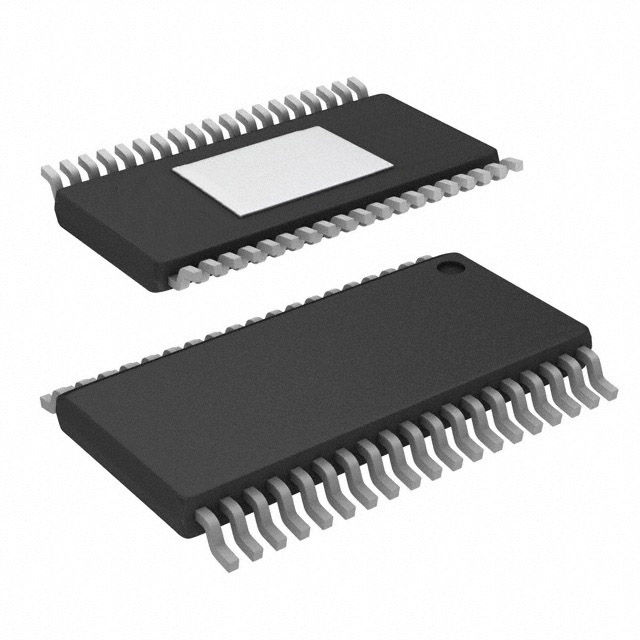
Product
Folder
Sample &
Buy
Technical
Documents
Support &
Community
Tools &
Software
TPS43333-Q1
SLVSB48C – AUGUST 2012 – REVISED JULY 2016
TPS43333-Q1 Low IQ, Single Boost, Dual Synchronous Buck Controller
1 Features
2 Applications
•
•
•
1
•
•
•
•
•
•
•
•
•
•
•
•
•
•
Qualified for Automotive Applications
AEC-Q100 Test Guidance With the Following
Results:
– Device Temperature Grade 1: –40°C to 125°C
Ambient Operating Temperature
– Device HBM ESD Classification Level H2
– Device CDM ESD Classification Level C2
Two Synchronous Buck Controllers
One Pre-Boost Controller
Input Range up to 40 V (Transients up to 60 V),
Operation Down to 2 V When Boost is Enabled
Low-Power-Mode IQ: 30 µA (One Buck On), 35 µA
(Two Bucks On)
Low-Shutdown Current Ish < 4 µA
Buck Output Range 0.9 V to 11 V
Boost Output Selectable: 7 V, 10 V, or 11 V
Programmable Frequency and External
Synchronization Range: 150 kHz to 600 kHz
Separate Enable Inputs (ENA, ENB)
Selectable Forced-Continuous Mode or Automatic
Low-Power Mode at Light Loads
Sense Resistor or Inductor DCR Sensing
Out-of-Phase Switching Between Buck Channels
Peak Gate-Drive Current: 1.5 A
Thermally Enhanced 38-Pin HTSSOP (DAP)
PowerPAD™ Package
•
Automotive Start-Stop, Infotainment, Navigation
Instrument Cluster Systems
Industrial and Automotive Multi-Rail DC Power
Distribution Systems and Electronic Control Units
3 Description
The TPS43333-Q1 includes two current-mode
synchronous buck controllers and a voltage-mode
boost controller. The device is ideal for use as a preregulator stage with low Iq requirements and for
applications that must survive supply drops due to
cranking events. The integrated boost controller
allows the device to operate down to 2 V at the input
without seeing a drop on the buck-regulator output
stages. At light loads, one can enable the buck
controllers to operate automatically in low-power
mode, consuming just 30 µA of quiescent current.
The buck controllers have independent soft-start
capability and power-good indicators. Current
foldback in the buck controllers and cycle-by-cycle
current limitation in the boost controller provide
external MOSFET protection. The switching
frequency is programmable over 150 kHz to 600 kHz
or can synchronize to an external clock in the same
range.
Table 1. Device Information(1)
PART NUMBER
TPS43333-Q1
PACKAGE
BODY SIZE (NOM)
HTSSOP (38)
12.50 mm × 6.20 mm
(1) For all available packages, see the orderable addendum at
the end of the data sheet.
Figure 1. Typical Application Diagram
VVBAT
VBUCKA
VBuckA
2V
VBuckB
VBUCKB
VVBAT
TPS43333-Q1
Copyright © 2016, Texas Instruments Incorporated
1
An IMPORTANT NOTICE at the end of this data sheet addresses availability, warranty, changes, use in safety-critical applications,
intellectual property matters and other important disclaimers. PRODUCTION DATA.
�TPS43333-Q1
SLVSB48C – AUGUST 2012 – REVISED JULY 2016
www.ti.com
Table of Contents
1
2
3
4
5
6
Features ..................................................................
Applications ...........................................................
Description .............................................................
Revision History.....................................................
Pin Configuration and Functions .........................
Specifications.........................................................
6.1
6.2
6.3
6.4
6.5
6.6
7
1
1
1
2
3
6
Absolute Maximum Ratings ...................................... 6
ESD Ratings ............................................................ 6
Recommended Operating Conditions....................... 7
Thermal Information .................................................. 7
Electrical Characteristics........................................... 7
Typical Characteristics ............................................ 11
Detailed Description ............................................ 14
7.1
7.2
7.3
7.4
Overview .................................................................
Functional Block Diagram .......................................
Feature Description.................................................
Device Functional Modes........................................
14
15
16
23
8
Application and Implementation ........................ 24
8.1 Application Information............................................ 24
8.2 Typical Applications ................................................ 24
9 Power Supply Recommendations...................... 36
10 Layout................................................................... 37
10.1 Layout Guidelines ................................................. 37
10.2 Layout Example .................................................... 38
10.3 Power Dissipation Derating Profile, 38-Pin HTTSOP
PowerPAD Package ................................................ 39
11 Device and Documentation Support ................. 40
11.1
11.2
11.3
11.4
11.5
Receiving Notification of Documentation Updates
Community Resources..........................................
Trademarks ...........................................................
Electrostatic Discharge Caution ............................
Glossary ................................................................
40
40
40
40
40
12 Mechanical, Packaging, and Orderable
Information ........................................................... 40
4 Revision History
NOTE: Page numbers for previous revisions may differ from page numbers in the current version.
Changes from Revision B (April 2013) to Revision C
Page
•
Added Pin Configuration and Functions section, ESD Ratings table, Feature Description section, Device Functional
Modes, Application and Implementation section, Power Supply Recommendations section, Layout section, Device
and Documentation Support section, and Mechanical, Packaging, and Orderable Information section ............................... 1
•
Deleted Ordering Information table; see POA at the end of the data sheet........................................................................... 1
•
Changed Inductor value from 4 µH to 3.9 µH ...................................................................................................................... 25
•
Deleted Application Example 2; Renamed Application Example 3 ...................................................................................... 35
2
Submit Documentation Feedback
Copyright © 2012–2016, Texas Instruments Incorporated
Product Folder Links: TPS43333-Q1
�TPS43333-Q1
www.ti.com
SLVSB48C – AUGUST 2012 – REVISED JULY 2016
5 Pin Configuration and Functions
DAP Package
38-Pin HTSSOP
Top View
VBAT
1
38
VIN
DS
2
37
EXTSUP
GC1
3
36
DIV
GC2
4
35
VREG
CBA
5
34
CBB
GA1
6
33
GB1
PHA
7
32
PHB
GA2
8
31
GB2
PGNDA
9
30
PGNDB
SA1
10
29
SB1
SA2
11
28
SB2
FBA
12
27
FBB
COMPA
13
26
COMPB
SSA
14
25
SSB
PGA
15
24
PGB
ENA
16
23
AGND
ENB
17
22
RT
COMPC
18
21
DLYAB
ENC
19
20
SYNC
Pin Functions
PIN
NAME
NO.
AGND
23
CBA
5
TYPE (1)
DESCRIPTION
O
Analog ground reference
I
A capacitor on this pin acts as the voltage supply for the high-side N-channel MOSFET gate-drive circuitry
in buck controller BuckA. When the buck is in a dropout condition, the device automatically reduces the
duty cycle of the high-side MOSFET to approximately 95% on every fourth cycle to allow the capacitor to
recharge.
CBB
34
I
A capacitor on this pin acts as the voltage supply for the high-side N-channel MOSFET gate-drive circuitry
in buck controller BuckB. When the buck is in a dropout condition, the device automatically reduces the
duty cycle of the high-side MOSFET to approximately 95% on every fourth cycle to allow the capacitor to
recharge.
COMPA
13
O
Error amplifier output of BuckA and compensation node for voltage-loop stability. The voltage at this node
sets the target for the peak current through the inductor of BuckA. Clamping his voltage on the upper and
lower ends provides current-limit protection for the external MOSFETs.
(1)
GND = Ground, I = Input, O = Output, PWR = Power
Submit Documentation Feedback
Copyright © 2012–2016, Texas Instruments Incorporated
Product Folder Links: TPS43333-Q1
3
�TPS43333-Q1
SLVSB48C – AUGUST 2012 – REVISED JULY 2016
www.ti.com
Pin Functions (continued)
PIN
NAME
NO.
TYPE (1)
DESCRIPTION
COMPB
26
O
Error amplifier output of BuckB and compensation node for voltage-loop stability. The voltage at this node
sets the target for the peak current through the inductor of BuckB. Clamping his voltage on the upper and
lower ends provides current-limit protection for the external MOSFETs.
COMPC
18
O
Error-amplifier output and loop-compensation node of the boost regulator
DIV
36
I
The status of this pin defines the output voltage of the boost regulator. A high input regulates the boost
converter at 11 V, a low input sets the value at 7 V, and a floating pin sets 10 V. (2)
DLYAB
21
O
The capacitor at the DLYAB pin sets the power-good delay interval used to de-glitch the outputs of the
power-good comparators. Leaving this pin open sets the power-good delay to an internal default value of
20 µs typical.
DS
2
I
This input monitors the voltage on the external boost-converter low-side MOSFET for overcurrent
protection. An alternative connection for better noise immunity is to a sense resistor between the source of
the low-side MOSFET and ground via a filter network.
ENA
16
I
Enable input for BuckA (active-high with an internal pullup current source). An input voltage higher than 1.5
V enables the controller, whereas an input voltage lower than 0.7 V disables the controller. When both
ENA and ENB are low, the device shuts down and consumes less than 4 µA of current. (2)
ENB
17
I
Enable input for BuckB (active-high with an internal pullup current source). An input voltage higher than 1.5
V enables the controller, whereas an input voltage lower than 0.7 V disables the controller. When both
ENA and ENB are low, the device shuts down and consumes less than 4 µA of current. (2)
ENC
19
I
This input enables and disables the boost regulator. An input voltage higher than 1.5 V enables the
controller. Voltages lower than 0.7 V disable the controller. Because this pin provides an internal pulldown
resistor (500 kΩ), enabling the boost function requires pulling it high. When enabled, the controller starts
switching as soon as VBAT falls below the boost threshold, depending upon the programmed output
voltage.
EXTSUP
37
I
One can use EXTSUP to supply the VREG regulator from one of the TPS43333-Q1 buck regulator rails to
reduce power dissipation in cases where there is an expectation of high VIN. If EXTSUP is unused, leave
the pin open without a capacitor installed.
FBA
12
I
Feedback voltage pin for BuckA. The buck controller regulates the feedback voltage to the internal
reference of 0.8 V. A suitable resistor divider network between the buck output and the feedback pin sets
the desired output voltage.
FBB
27
I
Feedback voltage pin for BuckB. The buck controller regulates the feedback voltage to the internal
reference of 0.8 V. A suitable resistor-divider network between the buck output and the feedback pin sets
the desired output voltage.
GA1
6
O
This output can drive the external high-side N-channel MOSFET for buck regulator BuckA. The output
provides high peak currents to drive capacitive loads. The gate drive reference is to a floating ground
provided by PHA that has a voltage swing provided by CBA.
GA2
8
O
This output can drive the external low-side N-channel MOSFET for buck regulator BuckA. The output
provides high peak currents to drive capacitive loads. VREG provides the voltage swing on this pin.
GB1
33
O
This output can drive the external high-side N-channel MOSFET for buck regulator BuckB. The output
provides high peak currents to drive capacitive loads. The gate drive reference is to a floating ground
provided by PHB that has a voltage swing provided by CBB.
GB2
31
O
This output can drive the external low-side N-channel MOSFET for buck regulator BuckB. The output
provides high peak currents to drive capacitive loads. VREG provides the voltage swing on this pin.
GC1
3
O
This output can drive an external low-side N-channel MOSFET for the boost regulator. This output provides
high peak currents to drive capacitive loads. VREG provides the voltage swing on this pin.
GC2
4
O
This pin makes a floating output drive available to control the external P-channel MOSFET. This MOSFET
can bypass the boost rectifier diode or a reverse protection diode when the boost is not switching or if
boost is disabled, and thus reduce power losses.
PGA
15
O
Open-drain power-good indicator pin for BuckA. An internal power-good comparator monitors the voltage at
the feedback pin and pulls this output low when the output voltage falls below 93% of the set value, or if
either VIN or VBAT drops below its respective undervoltage threshold.
PGB
24
O
Open-drain power-good indicator pin for BuckB. An internal power-good comparator monitors the voltage at
the feedback pin and pulls this output low when the output voltage falls below 93% of the set value, or if
either VIN or VBAT drops below its respective undervoltage threshold.
PGNDA
9
GND
Power ground connection to the source of the low-side N-channel MOSFETs of BuckA
PGNDB
30
GND
Power ground connection to the source of the low-side N-channel MOSFETs of BuckB
(2)
4
DIV = high and ENC = high inhibits low-power mode on the bucks.
Submit Documentation Feedback
Copyright © 2012–2016, Texas Instruments Incorporated
Product Folder Links: TPS43333-Q1
�TPS43333-Q1
www.ti.com
SLVSB48C – AUGUST 2012 – REVISED JULY 2016
Pin Functions (continued)
PIN
NAME
NO.
TYPE (1)
DESCRIPTION
PHA
7
O
Switching terminal of buck regulator BuckA, providing a floating ground reference for the high-side
MOSFET gate-driver circuitry and used to sense current reversal in the inductor when discontinuous-mode
operation is desired.
PHB
32
O
Switching terminal of buck regulator BuckB, providing a floating ground reference for the high-side
MOSFET gate-driver circuitry and used to sense current reversal in the inductor when discontinuous-mode
operation is desired.
RT
22
O
Connecting a resistor to ground on this pin sets the operational switching frequency of the buck and boost
controllers. A short circuit to ground on this pin defaults operation to 400 kHz for the buck controllers and
200 kHz for the boost controller.
SA1
10
I
SA2
11
I
SB1
29
I
SB2
28
I
SSA
SSB
14
25
High-impedance differential-voltage inputs from the current-sense element (sense resistor or inductor DCR)
for BuckA. Choose the current-sense element to set the maximum current through the inductor based on
the current-limit threshold (subject to tolerances) and considering the typical characteristics across duty
cycle and VIN. (SA1 positive node, SA2 negative node).
High-impedance differential voltage inputs from the current-sense element (sense resistor or inductor DCR)
for BuckB. Choose the current-sense element to set the maximum current through the inductor based on
the current-limit threshold (subject to tolerances) and considering the typical characteristics across duty
cycle and VIN. (SB1 positive node, SB2 negative node).
O
Soft-start or tracking input for buck controller BuckA. The buck controller regulates the FBA voltage to the
lower of 0.8 V or the SSA pin voltage. An internal pullup current source of 1 µA is present at the pin, and
an appropriate capacitor connected here sets the soft-start ramp interval. Alternatively, a resistor divider
connected to another supply can provide a tracking input to this pin.
O
Soft-start or tracking input for buck controller BuckB. The buck controller regulates the FBB voltage to the
lower of 0.8 V or the SSB pin voltage. An internal pullup current source of 1 µA is present at the pin, and
an appropriate capacitor connected here sets the soft-start ramp interval. Alternatively, a resistor divider
connected to another supply can provide a tracking input to this pin.
SYNC
20
I
If an external clock is present on this pin, the device detects it and the internal PLL locks onto the external
clock, this overriding the internal oscillator frequency. The device can synchronize to frequencies from 150
kHz to 600 kHz. A high logic level on this pin ensures forced continuous-mode operation of the buck
controllers and inhibits transition to low-power mode. An open or low allows discontinuous-mode operation
and entry into low-power mode at light loads.
VBAT
1
PWR
Battery input sense for the boost controller. If, with the boost controller enabled, the voltage at VBAT falls
below the boost threshold, the device activates the boost controller and regulates the voltage at VIN to the
programmed boost output voltage.
VIN
38
PWR
Main Input pin. This is the buck controller input pin as well as the output of the boost regulator. Additionally,
VIN powers the internal control circuits of the device.
VREG
35
O
The device requires an external capacitor on this pin to provide a regulated supply for the gate drivers of
the buck and boost controllers. TI recommends capacitance on the order of 4.7 µF. The regulator obtain its
power from either VIN or EXTSUP. This pin has current-limit protection; do not use it to drive any other
loads.
Submit Documentation Feedback
Copyright © 2012–2016, Texas Instruments Incorporated
Product Folder Links: TPS43333-Q1
5
�TPS43333-Q1
SLVSB48C – AUGUST 2012 – REVISED JULY 2016
www.ti.com
6 Specifications
6.1 Absolute Maximum Ratings
All voltage values are with respect to AGND (unless otherwise noted) (1)
Voltage
MIN
MAX
UNIT
Input voltage: VIN, VBAT
–0.3
60
V
Ground: PGNDA–AGND, PGNDB–AGND
–0.3
0.3
Enable inputs: ENA, ENB
–0.3
60
Bootstrap inputs: CBA, CBB
–0.3
68
Bootstrap inputs: CBA–PHA, CBB–PHB
–0.3
8.8
Phase inputs: PHA, PHB
–0.7
60
–1
60
Feedback inputs: FBA, FBB
–0.3
13
Error amplifier outputs: COMPA, COMPB
–0.3
13
High-side MOSFET driver: GA1–PHA, GB1–PHB
–0.3
8.8
Low-side MOSFET drivers: GA2–PGNDA, GB2–PGNDB
–0.3
8.8
Current-sense voltage: SA1, SA2, SB1, SB2
–0.3
13
Soft start: SSA, SSB
–0.3
13
Power-good output: PGA, PGB
–0.3
13
Power-good delay: DLYAB
–0.3
13
Switching-frequency timing resistor: RT
–0.3
13
SYNC, EXTSUP
–0.3
13
Low-side MOSFET driver: GC1–PGNDA
–0.3
8.8
Error-amplifier output: COMPC
–0.3
13
Enable input: ENC
–0.3
13
Current-limit sense: DS
–0.3
60
Output-voltage select: DIV
–0.3
8.8
P-channel MOSFET driver: GC2
–0.3
60
P-channel MOSFET driver: VIN-GC2
–0.3
8.8
Gate-driver supply: VREG
–0.3
8.8
Junction temperature: TJ
–40
150
Operating temperature: TA
–40
125
Storage temperature: Tstg
–55
165
Phase inputs: PHA, PHB (for 150 ns)
Voltage
(buck function:
BuckA and BuckB)
Voltage
(boost function)
Voltage
(PMOS driver)
Voltage
(gate-driver supply)
Temperature
(1)
V
V
V
V
°C
Stresses beyond those listed under Absolute Maximum Ratings may cause permanent damage to the device. These are stress ratings
only, which do not imply functional operation of the device at these or any other conditions beyond those indicated under Recommended
Operating Conditions. Exposure to absolute-maximum-rated conditions for extended periods may affect device reliability.
6.2 ESD Ratings
VALUE
Human-body model (HBM), per AEC Q100-002 (1)
V(ESD)
Electrostatic discharge
Charged-device model (CDM), per AEC
Q100-011
Machine model (MM)
(1)
6
UNIT
±2000
All other pins
±500
Pins FBA, FBB, RT, and
DLYAB
±400
Corner pins (VBAT, ENC,
SYNC, and VIN)
±750
PGA, PGB
±150
All other pins
±200
V
AEC Q100-002 indicates that HBM stressing shall be in accordance with the ANSI/ESDA/JEDEC JS-001 specification.
Submit Documentation Feedback
Copyright © 2012–2016, Texas Instruments Incorporated
Product Folder Links: TPS43333-Q1
�TPS43333-Q1
www.ti.com
SLVSB48C – AUGUST 2012 – REVISED JULY 2016
6.3 Recommended Operating Conditions
MIN
Buck function:
BuckA and BuckB
voltage
Boost function
MAX
4
40
Enable inputs: ENA, ENB
0
40
Boot inputs: CBA, CBB
4
48
Phase inputs: PHA, PHB
–0.6
40
Current-sense voltage: SA1, SA2, SB1, SB2
0
11
Power-good output: PGA, PGB
0
11
SYNC, EXTSUP
0
9
Enable input: ENC
0
UNIT
V
9
Voltage sense: DS
40
DIV
Temperature
NOM
Input voltage: VIN, VBAT
Operating temperature: TA
0
VREG
–40
125
V
°C
6.4 Thermal Information
TPS43333-Q1
THERMAL METRIC (1)
DAP (HTSSOP)
UNIT
38 PINS
RθJA
Junction-to-ambient thermal resistance
27.3
°C/W
RθJC(top)
Junction-to-case (top) thermal resistance
19.6
°C/W
RθJB
Junction-to-board thermal resistance
15.9
°C/W
ψJT
Junction-to-top characterization parameter
0.24
°C/W
ψJB
Junction-to-board characterization parameter
6.6
°C/W
RθJC(bot)
Junction-to-case (bottom) thermal resistance
1.2
°C/W
(1)
For more information about traditional and new thermal metrics, see the Semiconductor and IC Package Thermal Metrics application
report.
6.5 Electrical Characteristics
VIN = 8 V to 18 V, TJ = –40°C to 150°C (unless otherwise noted)
PARAMETER
TEST CONDITIONS
MIN
TYP
MAX
UNIT
INPUT SUPPLY
VBat
Supply voltage
Input voltage required for device on
initial start-up
VIN
VIN
Boost controller enabled, after satisfying initial start-up
condition
Iq_LPM_
Iq_LPM
Buck undervoltage lockout
LPM quiescent current (2)
LPM quiescent current (2)
VIN falling. After a reset, initial start-up conditions may
apply. (1)
Quiescent current:
normal (PWM) mode (2)
40
4
40
3.8
VIN rising. After a reset, initial start-up conditions may
apply. (1)
3.8
4
VIN = 13 V, BuckA: LPM, BuckB: off, TA = 25°C
30
40
VIN = 13 V, BuckB: LPM, BuckA: off, TA = 25°C
30
40
VIN = 13 V, BuckA, B: LPM, TA = 25°C
35
45
VIN = 13 V, BuckA: LPM, BuckB: off, TA = 125°C
40
50
VIN = 13 V, BuckB: LPM, BuckA: off, TA = 125°C
40
50
3.5
V
V
45
55
SYNC = 5 V, TA = 25°C
4.85
5.3
VIN = 13 V, BuckA: CCM, BuckB: off, TA = 25°C
4.85
5.3
VIN = 13 V, BuckB: CCM, BuckA: off, TA = 25°C
4.85
5.3
7
7.6
VIN = 13 V, BuckA, B: CCM, TA = 25°C
(1)
(2)
6.5
3.6
VIN = 13 V, BuckA, B: LPM, TA = 125°C
Iq_NRM
40
V
Buck regulator operating range after
initial start-up
UV
2
µA
µA
µA
µA
mA
If VBAT and VREG remain adequate, the buck can continue to operate if VIN is > 3.8 V.
Quiescent current specification is non-switching current consumption without including the current in the external-feedback resistor
divider.
Submit Documentation Feedback
Copyright © 2012–2016, Texas Instruments Incorporated
Product Folder Links: TPS43333-Q1
7
�TPS43333-Q1
SLVSB48C – AUGUST 2012 – REVISED JULY 2016
www.ti.com
Electrical Characteristics (continued)
VIN = 8 V to 18 V, TJ = –40°C to 150°C (unless otherwise noted)
PARAMETER
TYP
MAX
SYNC = 5 V, TA = 125°C
TEST CONDITIONS
MIN
5
5.5
VIN = 13 V, BuckA: CCM, BuckB: off, TA = 125°C
5
5.5
VIN = 13 V, BuckB: CCM, BuckA: off, TA = 125°C
5
5.5
UNIT
Iq_NRM
Quiescent current:
normal (PWM) mode (2)
VIN = 13 V, BuckA, B: CCM, TA = 125°C
7.5
8
Ibat_sh
Shutdown current
BuckA, B: off, VBAT = 13 V , TA = 25°C
2.5
4
µA
Ibat_sh
Shutdown current
BuckA, B: off, VBAT = 13 V, TA = 125°C
3
5
µA
mA
INPUT VOLTAGE VBAT - UNDERVOLTAGE LOCKOUT
VBATUV
Boost-input undervoltage
UVLOHys
Hysteresis
UVLOfilter
Filter time
VBAT falling. After a reset, initial start-up conditions may
apply. (1)
1.8
1.9
2
VBAT rising. After a reset, initial start-up conditions may
apply. (1)
2.4
2.5
2.6
500
600
700
V
5
mV
µs
INPUT VOLTAGE VIN - OVERVOLTAGE LOCKOUT
VOVLO
Overvoltage shutdown
OVLOHys
Hysteresis
OVLOfilter
Filter time
VIN rising
45
46
47
VIN falling
43
44
45
1
2
3
5
V
V
µs
BOOST CONTROLLER
Vboost7-VIN
Vboost7-th
Vboost10-VIN
Vboost10-th
Vboost11-VIN
Vboost11-th
Boost VOUT = 7 V
DIV = low, VBAT = 2 V to 7 V
6.8
7
7.3
Boost-enable threshold
Boost VOUT = 7 V, VBAT falling
7.5
8
8.5
Boost-disable threshold
Boost VOUT = 7 V, VBAT rising
Boost hysteresis
Boost VOUT = 7 V, VBAT rising or falling
Boost VOUT = 10 V
Boost-enable threshold
Boost-disable threshold
Boost hysteresis
Boost VOUT = 11 V
Boost-enable threshold
8
8.5
9
0.4
0.5
0.6
DIV = open, VBAT = 2 V to 10 V
9.7
10
10.4
Boost VOUT = 10 V, VBAT falling
10.5
11
11.5
Boost VOUT = 10 V, VBAT rising
11
11.5
12
Boost VOUT = 10 V, VBAT rising or falling
0.4
0.5
0.6
DIV = VREG, VBAT = 2 V to 11 V
10.7
11
11.4
Boost VOUT = 11 V, VBAT falling
11.5
12
12.5
Boost-disable threshold
Boost VOUT = 11 V, VBAT rising
12
12.5
13
Boost hysteresis
Boost VOUT = 11 V, VBAT rising or falling
0.4
0.5
0.6
0.2
0.225
V
V
V
V
V
V
BOOST-SWITCH CURRENT LIMIT
VDS
Current-limit sensing
tDS
Leading-edge blanking
DS input with respect to PGNDA
0.175
200
V
ns
GATE DRIVER FOR BOOST CONTROLLER
IGC1
Gate-driver peak current
Peak
rDS(on)
Source and sink driver
1.5
VREG = 5.8 V, IGC1 current = 200 mA
A
2
Ω
GATE DRIVER FOR PMOS
rDS(on)
PMOS OFF
IPMOS_ON
Gate current
VIN = 13.5 V, VGS = –5 V
10
tdelay_ON
Turnon delay
C = 10 nF
20
10
Ω
mA
5
10
µs
BOOST-CONTROLLER SWITCHING FREQUENCY
fsw-Boost
Boost switching frequency
DBoost
Boost duty cycle
fSW_Buck / 2
kHz
90%
ERROR AMPLIFIER (OTA) FOR BOOST CONVERTERS
GmBOOST
Forward transconductance
VBAT = 12 V
0.8
1.35
VBAT = 5 V
0.35
0.65
mS
BUCK CONTROLLERS
VBuckA/B
Vref,
8
NRM
Adjustable output-voltage range
Internal reference voltage and
tolerance in normal mode
0.9
Measure FBX pin
0.792
–1%
Submit Documentation Feedback
0.800
11
V
0.808
V
1%
Copyright © 2012–2016, Texas Instruments Incorporated
Product Folder Links: TPS43333-Q1
�TPS43333-Q1
www.ti.com
SLVSB48C – AUGUST 2012 – REVISED JULY 2016
Electrical Characteristics (continued)
VIN = 8 V to 18 V, TJ = –40°C to 150°C (unless otherwise noted)
PARAMETER
Vref,
LPM
Internal reference voltage and
tolerance in low-power mode
TEST CONDITIONS
Measure FBX pin
TYP
MAX
UNIT
0.800
0.816
V
–2%
V sense for forward-current limit in
CCM
FBx = 0.75 V (low duty cycle)
V sense for reverse-current limit in
CCM
VI-Foldback
V sense for output short
tdead
Shoot-through delay, blanking time
Vsense
MIN
0.784
60
75
90
mV
FBx = 1 V
–65
–37.5
–23
mV
FBx = 0 V
17
32.5
48
mV
High-side minimum on-time
DCNRM
Maximum duty cycle (digitally
controlled)
DCLPM
Duty cycle, LPM
ILPM_Entry
LPM entry-threshold load current as
fraction of maximum set load current
ILPM_Exit
LPM exit-threshold load current as
fraction of maximum set load current
2%
20
ns
100
ns
98.75%
80%
1%
See (3)
See (3)
10%
HIGH-SIDE EXTERNAL NMOS GATE DRIVERS FOR BUCK CONTROLLER
IGX1_peak
Gate-driver peak current
rDS(on)
Source and sink driver
1.5
VREG = 5.8 V, IGX1 current = 200 mA
A
2
Ω
2
Ω
LOW-SIDE NMOS GATE DRIVERS FOR BUCK CONTROLLER
IGX2_peak
Gate driver peak current
RDS
Source and sink driver
ON
1.5
VREG = 5.8 V, IGX2 current = 200 mA
A
ERROR AMPLIFIER (OTA) FOR BUCK CONVERTERS
GmBUCK
Transconductance
COMPA, COMPB = 0.8 V,
source/sink = 5 µA, test in feedback loop
IPULLUP_FBx
Pullup current at FBx pins
0.72
1
1.35
mS
FBx = 0 V
50
100
200
nA
1.7
DIGITAL INPUTS: ENA, ENB, ENC, SYNC
VIH
Higher threshold
VIN = 13 V
VIL
Lower threshold
VIN = 13 V
V
RIH_SYNC
Pulldown resistance on SYNC
VSYNC = 5 V
500
RIL_ENC
Pulldown resistance on ENC
VENC = 5 V
500
IIL_ENx
Pullup current source on ENA, ENB
VENx = 0 V,
0.5
0.7
V
kΩ
kΩ
2
µA
BOOST OUTPUT VOLTAGE: DIV
VIH_DIV
Higher threshold
VIL_DIV
Lower threshold
Voz_DIV
Voltage on DIV if unconnected
VREG = 5.8 V
VREG – 0.2
V
0.2
Voltage on DIV if unconnected
VREG / 2
V
V
SWITCHING PARAMETER – BUCK DC-DC CONTROLLERS
fSW_Buck
Buck switching frequency
RT pin: GND
360
400
440
kHz
fSW_Buck
Buck switching frequency
RT pin: 60-kΩ external resistor
360
400
440
kHz
fSW_adj
Buck adjustable range with external
resistor
RT pin: external resistor
150
600
kHz
fSYNC
Buck synchronization range
External clock input
150
600
kHz
Internal regulated supply
VIN = 8 V to 18 V, EXTSUP = 0 V, SYNC = high
5.5
5.8
6.1
V
Load regulation
IVREG = 0 mA to 100 mA, EXTSUP = 0 V,
SYNC = high
0.2%
1%
Internal regulated supply
EXTSUP = 8.5 V
7.5
7.8
Load regulation
IEXTSUP = 0 mA to 125 mA, SYNC = High
EXTSUP = 8.5 V to 13 V
0.2%
1%
VEXTSUP-th
EXTSUP switch-over voltage
threshold
IVREG = 0 mA to 100 mA,
EXTSUP ramping positive
4.6
4.8
V
VEXTSUP-Hys
EXTSUP switch-over hysteresis
250
mV
INTERNAL GATE-DRIVER SUPPLY
VREG
VREG(EXTSUP)
(3)
7.2
4.4
150
V
The exit threshold specification is to be always higher than the entry threshold.
Submit Documentation Feedback
Copyright © 2012–2016, Texas Instruments Incorporated
Product Folder Links: TPS43333-Q1
9
�TPS43333-Q1
SLVSB48C – AUGUST 2012 – REVISED JULY 2016
www.ti.com
Electrical Characteristics (continued)
VIN = 8 V to 18 V, TJ = –40°C to 150°C (unless otherwise noted)
MAX
UNIT
IREG-Limit
Current limit on VREG
PARAMETER
EXTSUP = 0 V, normal mode as well as LPM
TEST CONDITIONS
MIN
100
TYP
400
mA
IREG_EXTSUP-Limit
Current limit on VREG when using
EXTSUP
IVREG = 0 mA to 100 mA,
EXTSUP = 8.5 V, SYNC = High
125
400
mA
Soft-start source current
SSA and SSB = 0 V
0.75
1.25
µA
SOFT START
ISSx
1
OSCILLATOR (RT)
VRT
Oscillator reference voltage
1.2
V
50
kΩ
POWER GOOD / DELAY
PGpullup
Pullup for A and B to Sx2
PGth1
Power-good threshold
PGhys
Hysteresis
PGdrop
Voltage drop
PGleak
Power-good leakage
tdeglitch
Power-good deglitch time
FBx falling
–5%
–7%
–9%
2%
IPGA = 5 mA
450
mV
IPGA = 1 mA
100
mV
1
µA
16
µs
VSx2 = VPGx = 13 V
2
tdelay
Reset delay
External capacitor = 1 nF
VBUCKX < PGth1
tdelay_fix
Fixed reset delay
No external capacitor, pin open
IOH
Activate current source (current to
charge external capacitor)
IIL
Activate current sink (current to
discharge external capacitor)
1
ms
20
50
µs
30
40
50
µA
30
40
50
µA
150
165
°C
15
°C
OVERTEMPERATURE PROTECTION
Tshutdown
Junction-temperature shutdown
threshold
Thys
Junction-temperature hysteresis
10
Submit Documentation Feedback
Copyright © 2012–2016, Texas Instruments Incorporated
Product Folder Links: TPS43333-Q1
�TPS43333-Q1
www.ti.com
SLVSB48C – AUGUST 2012 – REVISED JULY 2016
6.6 Typical Characteristics
90
10000
EFFICIENCY,
SYNC = LOW
FORCED CONTINUOUS MODE (SYNC = 1), 200-mA LOAD
1000
EFFICIENCY (%)
80
70
POWER LOSS,
SYNC = HIGH
60
100
50
40 POWER LOSS,
SYNC = LOW
30
10
1 A/DIV
POWER LOSS (mW)
100
1
20
EFFICIENCY,
SYNC = HIGH
10
0
0.0001
DISCONTINUOUS MODE (SYNC = 0), 200-mA LOAD
1 A/DIV
1 A/DIV
LOW-POWER MODE (SYNC = 0), 20-mA LOAD
0.1
0.001
0.01
0.1
1
OUTPUT CURRENT (A)
VIN = 12 V
VOUT = 5 V
L = 4.7 µH
RSENSE = 10 mΩ
10
2 µs/DIV
fSW = 400 kHz
VIN = 12 V
L = 4.7 µH
VOUT = 5 V
RSENSE = 10 mΩ
fSW = 400 kHz
Figure 3. Inductor Currents (Buck)
Figure 2. Efficiency Across Output Currents (Bucks)
VOUT AC-COUPLED
100 mV/DIV
VOUT BuckA, 1V / DIV
VOUT BuckB, 0.5 V / DIV
2 A/DIV
IIND
VIN = 12 V
L = 4.7 µH
50 µs/DIV
VOUT = 5 V
RSENSE = 10 mΩ
fSW = 400 kHz
5 ms / DIV
Figure 5. Soft-Start Outputs (Buck)
Figure 4. Buck Load Step: Forced Continuous Mode,
0 to 4 A At 2.5 A/µs
100 mV/DIV
100 mV/DIV
VOUT AC-COUPLED
VOUT AC-COUPLED
2 A/DIV
IIND
2 A/DIV
IIND
VIN = 12 V
L = 4.7 µH
50 µs/DIV
VOUT = 5 V
RSENSE = 10 mΩ
fSW = 400 kHz
Figure 6. Buck Load Step: Low-Power-Mode Entry,
4 A to 90 mA at 2.5 A/µs
VIN = 12 V
L = 4.7 µH
50 µs/DIV
VOUT = 5 V
RSENSE = 10 mΩ
fSW = 400 kHz
Figure 7. Buck Load Step: Low-Power-Mode Exit,
90 mA to 4 A at 2.5 A/µs
Submit Documentation Feedback
Copyright © 2012–2016, Texas Instruments Incorporated
Product Folder Links: TPS43333-Q1
11
�TPS43333-Q1
SLVSB48C – AUGUST 2012 – REVISED JULY 2016
www.ti.com
Typical Characteristics (continued)
100
1 V/div
90
VBAT = 8 V
Efficiency (%)
80
1 V/div
70
VBAT = 5 V
60
VBAT = 3 V
50
40
30
20
10
5 A/div
0
0.01
VIN = 10 V
L = 1 µH
10
1
Output Current (A)
5 A/div
VBAT = 5 V,
VIN = 10 V
RSENSE = 10 mΩ
fSW = 200 kHz
RSENSE = 7.5 mΩ
VBAT (BOOST INPUT)
0V
200 mV/DIV
10 A/DIV
CIN = 440 µF
COUT = 660 µF
VBAT (BOOST INPUT)
5 V/DIV
0V
200 mV/DIV
L = 680 nH
Figure 9. Load Step Response (Boost)
(0 A to 5 A at 10 A/µs)
Figure 8. Efficiency Across Temperature
5 V/DIV
5 ms/div
fSW = 200 kHz
VOUT BuckA AC-COUPLED
VIN (BOOST OUTPUT)
5 V/DIV
VOUT BuckB AC-COUPLED
0V
10 A/DIV
IIND
0A
IIND
0A
20 ms/DIV
20 ms/DIV
VIN = 10 V
fSW = 200 kHz
BuckA 5 V
at 1.5 A
L = µH,
RSENSE = 7.5 mΩ
BuckB = 3.3 V
at 3.5 A
CIN = 440 µF,
COUT = 660 µF
VIN = 10 V
fSW = 200 kHz
BuckA = 5 V
at 1.5 A
L = 1 µH,
RSENSE = 7.5 mΩ
BuckB = 3.3 V
at 3.5 A
CIN = 440 µF,
COUT = 660 µF
Figure 11. Cranking-Pulse Boost Response (12 V to 4 V
in 1 ms at Boost Direct Output 25 W)
Figure 10. Cranking-Pulse Boost Response (12 V to 3 V
in 1 ms at Buck Outputs 7.5 W and 11.5 W)
60
Quiescent Current (µA)
3-A LOAD
5 A/DIV
100-mA LOAD
5 A/DIV
50
40
BOTH BUCKS ON
30
ONE BUCK ON
20
10
NEITHER BUCK ON
VBAT = 5 V,
VIN = 10 V
RSENSE = 7.5 mΩ
2 µs/DIV
fSW = 200 kHz
L = 1 µH
CIN = 440 µF
COUT = 660 µF
Figure 12. Inductor Currents (Boost)
12
0
-40
-15
10
85
35
60
Temperature (°C)
110
135
160
Figure 13. No-Load Quiescent Current Across Temperature
Submit Documentation Feedback
Copyright © 2012–2016, Texas Instruments Incorporated
Product Folder Links: TPS43333-Q1
�TPS43333-Q1
www.ti.com
SLVSB48C – AUGUST 2012 – REVISED JULY 2016
Typical Characteristics (continued)
0.9
0.8
0.7
0.6
0.5
0.4
0.3
0.2
0.1
0
–0.1
–0.2
–0.3
62.5
50
Sense Current (µA)
Peak Current Sense Voltage (mV)
75
37.5
25
12.5 SYNC = LOW
0
–12.5
–25
SYNC = HIGH
–37.5
0.65
0.8
0.95
1.1
1.25
1.55
1.4
25°C
0
COMPx Voltage (V)
Figure 14. BUCKx Peak Current Limit vs COMPx
1
2
3
4
5
6
7
8
9
10 11 12
Output Voltage (V)
Figure 15. Current-Sense Pins Input Current (Buck)
80
805
70
804
Regulated FBx Voltage (mV)
Peak Current Sense Voltage (mV)
150°C
60
50
40
30
20
10
803
802
801
800
799
798
797
796
0
795
0
0.2
0.4
0.8
0.6
–40
FBx Voltage (V)
Figure 16. Foldback Current Limit (Buck)
–15
10
35
60
85
110
135
160
Temperature (°C)
Figure 17. Regulated FBx Voltage vs Temperature
Peak Current Sense Voltage (mV)
80
70
60
VIN = 8 V
50
40
VIN = 12 V
30
20
10
0
0
10
20
30
40
50
60
70
80
90 100
Duty Cycle (%)
Figure 18. Peak Current Sense Voltage vs Duty Cycle
Submit Documentation Feedback
Copyright © 2012–2016, Texas Instruments Incorporated
Product Folder Links: TPS43333-Q1
13
�TPS43333-Q1
SLVSB48C – AUGUST 2012 – REVISED JULY 2016
www.ti.com
7 Detailed Description
7.1 Overview
The TPS43333-Q1 includes two current-mode synchronous-buck controllers and a voltage-mode boost
controller. The device is ideally suited as a preregulator stage with low IQ requirements and for applications that
must operate during supply drops due to cranking events. The integrated boost controller allows the device to
operate down to 2 V at the input without seeing a drop on the buck regulator output stages. At light loads, the
buck controllers enable to operate automatically in low-power mode, consuming just 30 μA of quiescent current.
The buck controllers have independent soft-start capability and power-good indicators. Current foldback in the
buck controllers and cycle-by-cycle current limitation in the boost controller provide external MOSFET protection.
The switching frequency is programable over 150 kHz to 600 kHz or is synchronized to an external clock in the
same range.
14
Submit Documentation Feedback
Copyright © 2012–2016, Texas Instruments Incorporated
Product Folder Links: TPS43333-Q1
�TPS43333-Q1
www.ti.com
SLVSB48C – AUGUST 2012 – REVISED JULY 2016
7.2 Functional Block Diagram
VIN
EXTSUP
VREG
SYNC
Gate Driver
Supply
37
PWM
Logic
5
CBA
6
GA1
7
PHA
8
GA2
9
PGNDA
10
SA1
11
SA2
12
FBA
13
COMPA
15
PGA
21
DLYAB
34
CBB
33
GB1
32
PHB
31
GB2
30
PGNDB
29
SB1
28
SB2
27
FBB
26
COMPB
24
PGB
VREG
35
Internal
Oscillator
22
180 deg
RT
Duplicate for second
Buck controller channel
Internal ref
(Band gap)
38
Slope
Comp
PWM
comp
SYNC and
LPM
20
Current sense
Amp
OTA
GC2
Gm 0.8 V
Source
and
Sink
Logic
4
SSA
FBA
SA2
ENC
1 µA
SSA
14
ENA
16
ENA
25
ENB
17
DS
2
Filter timer
500 nA
40 µA
VIN
1 µA
SSB
VIN
40 µA
ENB
500 nA
OCP
VIN
VboostxV
0.2 V
COMPC
18
DIV
36
Gm
Second
Buck
Controller
Channel
Ramp
Vboost7V-th
VBAT
OTA
1
MUX
Vboost10V-th
Vboost11V-th
GC1
3
ENC
19
AGND
23
VREG
PWM
comp
PWM
Logic
PGNDA
Copyright © 2016, Texas Instruments Incorporated
Submit Documentation Feedback
Copyright © 2012–2016, Texas Instruments Incorporated
Product Folder Links: TPS43333-Q1
15
�TPS43333-Q1
SLVSB48C – AUGUST 2012 – REVISED JULY 2016
www.ti.com
7.3 Feature Description
7.3.1 Buck Controllers: Normal Mode PWM Operation
7.3.1.1 Frequency Selection and External Synchronization
The buck controllers operate using constant-frequency peak-current-mode control for optimal transient behavior
and ease of component choices. The switching frequency is programmable between 150 kHz and 600 kHz,
depending upon the resistor value at the RT pin. A short circuit to ground at this pin sets the default switching
frequency to 400 kHz. Using a resistor at RT, one can set another frequency according to Equation 1.
X
fSW =
(X = 24 kW ´ MHz)
RT
fSW = 24 ´
109
RT
(1)
For example,
600 kHz requires 40 kΩ
150 kHz requires 160 kΩ
It is also possible to synchronize to an external clock at the SYNC pin in the same frequency range of 150 kHz to
600 kHz. The device detects clock pulses at this pin, and an internal PLL locks on to the external clock within the
specified range. The device can also detect a loss of clock at this pin, and when this condition is detected, the
device sets the switching frequency to the internal oscillator. The two buck controllers operate at identical
switching frequencies, 180° out-of-phase.
7.3.1.2 Enable Inputs
Independent enable inputs from the ENA and ENB pins enable the buck controllers. These are high-voltage pins,
with a threshold of 1.5 V for the high level, and with direct connection to the battery permissible for self-bias. The
low threshold is 0.7 V. Both these pins have internal pullup currents of 0.5 µA (typical). As a result, an open
circuit on these pins enables the respective buck controllers. When both buck controllers are disabled, the device
shuts down and consumes a current of less than 4 µA.
7.3.1.3 Feedback Inputs
The right resistor feedback divider network connected to the FBx (feedback) pins sets the output voltage. Choose
this network such that the regulated voltage at the FBx pin equals 0.8 V. The FBx pins have a 100-nA pullup
current source as a protection feature in case the pins open up as a result of physical damage.
7.3.1.4 Soft-Start Inputs
In order to avoid large inrush currents, each buck controller has an independent programmable soft-start timer.
The voltage at the SSx pin acts as the soft-start reference voltage. The 1-µA pullup current available at the SSx
pins, in combination with a suitably chosen capacitor, generates a ramp of the desired soft-start speed. After
start-up, the pullup current ensures that SSx is higher than the internal reference of 0.8 V; 0.8 V then becomes
the reference for the buck controllers. Equation 2 calculates the soft-start ramp time.
I SS ´ Dt
CSS =
(Farads)
DV
where
•
•
•
ISS = 1 µA (typical)
∆V = 0.8 V
CSS is the required capacitor for ∆t, the desired soft-start time.
(2)
An alternative use of the soft-start pins is as tracking inputs. In this case, connect them to the supply to be
tracked through a suitable resistor-divider network.
16
Submit Documentation Feedback
Copyright © 2012–2016, Texas Instruments Incorporated
Product Folder Links: TPS43333-Q1
�TPS43333-Q1
www.ti.com
SLVSB48C – AUGUST 2012 – REVISED JULY 2016
Feature Description (continued)
7.3.1.5 Current-Mode Operation
Peak-current-mode control regulates the peak current through the inductor to maintain the output voltage at its
set value. The error between the feedback voltage at FBx and the internal reference produces a signal at the
output of the error amplifier (COMPx) which serves as the target for the peak inductor current. The device
senses the current through the inductor as a differential voltage at Sx1–Sx2 and compares voltage with this
target during each cycle. A fall or rise in load current produces a rise or fall in voltage at FBx, causing COMPx to
fall or rise respectively, thus increasing or decreasing the current through the inductor until the average current
matches the load. This process maintains the output voltage in regulation.
The top N-channel MOSFET turns on at the beginning of each clock cycle and stays on until the inductor current
reaches its peak value. Once this MOSFET turns off, and after a small delay (shoot-through delay) the lower Nchannel MOSFET turns on until the start of the next clock cycle. In dropout operation, the high-side MOSFET
stays on continuously. In every fourth clock cycle, there is a limit on the duty cycle of 95% in order to charge the
bootstrap capacitor at CBx. This allows a maximum duty cycle of 98.75% for the buck regulators. During dropout,
the buck regulator switches at one-fourth of its normal frequency.
7.3.1.6 Current Sensing and Current Limit With Foldback
Clamping of the maximum value of COMPx is such as to limit the maximum current through the inductor to a
specified value. When the output of the buck regulator (and hence the feedback value at FBx) falls to a low value
due to a short circuit or overcurrent condition, the clamped voltage at the COMPx successively decreases, thus
providing current foldback protection, which protects the high-side external MOSFET from excess current
(forward-direction current limit).
Similarly, if a fault condition shorts the output to a high voltage and the low-side MOSFET turns fully on, the
COMPx node drops low. A clamp is on its lower end as well, in order to limit the maximum current in the low-side
MOSFET (reverse-direction current limit).
An external resistor senses the current through the inductor. Choose the sense resistor such that the maximum
forward peak current in the inductor generates a voltage of 75 mV across the sense pins. This specified value is
for low duty cycles only. At typical duty-cycle conditions around 40% (assuming 5-V output and 12-V input),
50 mV is a more reasonable value, considering tolerances and mismatches. The typical characteristics provide a
guide for using the correct current-limit sense voltage.
The current-sense pins Sx1 and Sx2 are high-impedance pins with low leakage across the entire output range,
thus allowing DCR current sensing using the dc resistance of the inductor for higher efficiency. Figure 19 shows
DCR sensing. Here, the series resistance (DCR) of the inductor is the sense element. Place the filter
components close to the device for noise immunity. Remember that while the DCR sensing gives high efficiency,
it is inaccurate due to the temperature sensitivity and a wide variation of the parasitic inductor series resistance.
Hence, it may often be advantageous to use the more-accurate sense resistor for current sensing.
Inductor L
TPS43333-Q1
VBUCK X
DCR
R1
C1
Sx2
VC
Sx1
Figure 19. DCR Sensing Configuration
Submit Documentation Feedback
Copyright © 2012–2016, Texas Instruments Incorporated
Product Folder Links: TPS43333-Q1
17
�TPS43333-Q1
SLVSB48C – AUGUST 2012 – REVISED JULY 2016
www.ti.com
Feature Description (continued)
7.3.1.7 Slope Compensation
Optimal slope compensation, which is adaptive to changes in input voltage and duty cycle, allows stable
operation under all conditions. For optimal performance of this circuit, choose the inductor and sense resistor
according to the Equation 3.
L ´ f SW
= 200
RS
where
•
•
•
L is the buck regulator inductor in henry
RS is the sense resistor in ohms
fsw is the buck-regulator switching frequency in hertz
(3)
7.3.1.8 Power-Good Outputs and Filter Delays
Each buck controller has an independent power-good comparator monitoring the feedback voltage at the FBx
pins and indicating whether the output voltage has fallen below a specified power-good threshold. This threshold
has a typical value of 93% of the regulated output voltage. The power-good indicator is available as an opendrain output at the PGx pins. An internal 50-kΩ pullup resistor to Sx2 is available, or use of an external resistor is
possible. Shutdown of a buck controller causes an internal pulldown of the power-good indicator. Connecting the
pullup resistor to a rail other than the output of that particular buck channel causes a constant current flow
through the resistor when the buck controller is powered down.
In order to avoid triggering the power-good indicators due to noise or fast transients on the output voltage, the
device uses an internal delay circuit for de-glitching. Similarly, when the output voltage returns to its set value
after a long negative transient, assertion of the power-good indicator (release of the open-drain pin) occurs after
the same delay. Use of this delay pauses the delay of reset. Program the duration of the delay of by using a
suitable capacitor at the DLYAB pin according to Equation 4.
tDELAY
1 msec
=
CDLYAB
1 nF
(4)
When the DLYAB pin is open, the delay setting is for a default value of 20 µs typical. The power-good delay
timing is common to both the buck rails, but the power-good comparators and indicators function independently.
7.3.1.9 Light-Load PFM Mode
An external clock or a high level on the SYNC pin results in forced continuous-mode operation of the bucks. An
open or low on the SYNC pin allows the buck controllers to operate in discontinuous mode at light loads by
turning off the low-side MOSFET on detection of a zero-crossing in the inductor current.
In discontinuous mode, as the load decreases, the duration when both the high-side and low-side MOSFETs turn
off increases (deep discontinuous mode). In case the duration exceeds 60% of the clock period and VBAT > 8 V,
the buck controller switches to a low-power operation mode. The design ensures that this typically occurs at 1%
of the set full-load current if the choice of the inductor and sense resistor is as recommended in the slope
compensation section.
In low-power PFM mode, the buck monitors the FBx voltage and compares it with the 0.8-V internal reference.
Whenever the FBx value falls below the reference, the high-side MOSFET turns on for a pulse duration inversely
proportional to the difference VIN – Sx2. At the end of this on-time, the high-side MOSFET turns off and the
current in the inductor decays until it becomes zero. The low-side MOSFET does not turn on. The next pulse
occurs the next time FBx falls below the reference value. This results in a constant volt-second ton hysteretic
operation with a total device quiescent current consumption of 30 µA when a single buck channel is active and
35 µA when both channels are active.
As the load increases, the pulses become more and more frequent and move closer to each other until the
current in the inductor becomes continuous. At this point, the buck controller returns to normal fixed-frequency
current-mode control. Another criterion to exit the low-power mode is when VIN falls low enough to require higher
than 80% duty cycle of the high-side MOSFET.
18
Submit Documentation Feedback
Copyright © 2012–2016, Texas Instruments Incorporated
Product Folder Links: TPS43333-Q1
�TPS43333-Q1
www.ti.com
SLVSB48C – AUGUST 2012 – REVISED JULY 2016
Feature Description (continued)
The TPS43333-Q1 can support the full-current load during low-power mode until the transition to normal mode
takes place. The design ensures that exit of the low-power mode occurs at 10% (typical) of full-load current if the
selection of inductor and sense resistor is as recommended. Moreover, there is always a hysteresis between the
entry and exit thresholds to avoid oscillating between the two modes.
In the event that both buck controllers are active, low-power mode is only possible when both buck controllers
have light loads that are low enough for low-power mode entry. With the boost controller enabled, low-power
mode is possible only if VBAT is high enough to prevent the boost from switching and if DIV is open or set to
GND. A high (VREG) level on DIV inhibits low-power mode, unless ENC is set to low.
7.3.2 Boost Controller
The boost controller has a fixed-frequency voltage-mode architecture and includes cycle-by-cycle current-limit
protection for the external N-channel MOSFET. The boost-controller switching-frequency setting is one-half of the
buck-controller switching frequency. Table 2 lists the program settings of an internal resistor-divider network. The
device does not recognize a change of the DIV setting while the in the low-power mode.
Table 2. Setting the Boost Controller at the VIN Pin
DIV SETTING
OUTPUT VOLTAGE
Low
7V
Open
10 V
High
11 V
The active-high ENC pin enables the boost controller, which is active when the input voltage at the VBAT pin has
reached 6.5-V Boost unlock threshold VBOOST_UNLOCK at least once to allow sufficient supply of internal circuitry. A
single high-to-low transition of VBAT below the boost-enable threshold (Vboost(x)-th) arms the boost controller,
which starts switching as soon as VIN falls below the value set by the DIV pin, regulating the VIN voltage. Thus,
the boost regulator maintains a stable input voltage for the buck regulators during transient events such as
cranking pulse at VBAT.
The voltage at the DS pin exceeding 200 mV pulls the GC1 pin low, turning off the boost external MOSFET.
Connecting the DS pin to the drain of the MOSFET or to a sense resistor between the MOSFET source and
ground achieves cycle-by-cycle overcurrent protection for the MOSFET. Choose the on-resistance of the
MOSFET or the value of the sense resistor in such a way that the on-state voltage at the DS does not exceed
200 mV at the maximum-load and minimum-input-voltage conditions. When using a sense resistor, TI
recommends connecting a filter network between the DS pin and the sense resistor for better noise immunity.
One can use the boost output (VIN) to supply other circuits in the system. However, they should be high-voltage
tolerant. The device regulates the boost output to the programmed value only when VBAT is low, and so VIN can
reach battery levels.
VBAT
VIN
TPS43333-Q1 DS
GC1
Figure 20. External Drain-Source Voltage Sensing
Submit Documentation Feedback
Copyright © 2012–2016, Texas Instruments Incorporated
Product Folder Links: TPS43333-Q1
19
�TPS43333-Q1
SLVSB48C – AUGUST 2012 – REVISED JULY 2016
www.ti.com
VBAT
VIN
TPS43333-Q1
GC1
DS
RIFLT
CIFLT
RISEN
Figure 21. External Current Shunt Resistor
7.3.3 SYNC Pin
Table 3 lists the functions of the SYNC pin.
Table 3. SYNC-Pin Function
SYNC
TERMINAL
COMMENTS
External clock
Device in forced continuous mode, internal PLL locks into external clock between
150 kHz and 600 kHz.
Low or open
Device can enter discontinuous mode. Automatic LPM entry and exit, depending on
load conditions
High
Device in forced continuous mode
7.3.4 Gate-Driver Supply (VREG, EXTSUP)
The gate-driver supplies of the buck and boost controllers are from an internal linear regulator whose output
(5.8 V typical) is on the VREG pin and requires decoupling with a ceramic capacitor in the range of 3.3 µF to
10 µF. This pin has internal current-limit protection; do not use it to power any other circuits.
NOTE
VREG is not powered if no regulator is enabled, therefore it is not suitable to enable the
regulators.
VIN powers the VREG linear regulator by default when the EXTSUP voltage is lower than 4.6 V (typical). In case
VIN expected to go to high levels, there can be excessive power dissipation in this regulator, especially at high
switching frequencies and when using large external MOSFETs. In this case, it is advantageous to power this
regulator from the EXTSUP pin, which can have a connection to a supply lower than VIN but high enough to
provide the gate drive. When the voltage on EXTSUP is greater than 4.6 V, the linear regulator automatically
switches to EXTSUP as its input to provide this advantage. Efficiency improvements are possible when using
one of the switching regulator rails from the TPS43333-Q1 or any other voltage available in the system to power
EXTSUP. The maximum voltage for application to EXTSUP is 9 V.
20
Submit Documentation Feedback
Copyright © 2012–2016, Texas Instruments Incorporated
Product Folder Links: TPS43333-Q1
�TPS43333-Q1
www.ti.com
SLVSB48C – AUGUST 2012 – REVISED JULY 2016
VIN
5.8 V
(typical)
LDO
VIN
EXTSUP
7.5 V
(typical)
LDO
EXTSUP
4.6 V (typical)
VREG
Figure 22. Internal Gate-Driver Supply
Using a voltage above 5.8 V (sourced by VIN) for EXTSUP is advantageous, as it provides a large gate drive
and hence better on-resistance of the external MOSFETs.
When using EXTSUP, always keep the buck rail supplying EXTSUP enabled. Alternatively, if it is necessary to
switch off the buck rail supplying EXTSUP, place a diode between the buck rail and EXTSUP.
During low-power mode, the EXTSUP functionality is not available. The internal regulator operates as a shunt
regulator powered from VIN and has a typical value of 7.5 V. Current-limit protection for VREG is available in
low-power mode as well. If EXTSUP is unused, leave the pin open without a capacitor installed.
7.3.5 External P-Channel Drive (GC2) and Reverse-Battery Protection
The TPS43333-Q1 includes a gate driver for an external P-channel MOSFET which can connect across the
rectifier diode of the boost regulator. Such connection is useful to reduce power losses when the boost controller
is not switching. The gate driver provides a swing of 6 V typical below the VIN voltage in order to drive a Pchannel MOSFET. When VBAT falls below the boost-enable threshold, the gate driver turns off the P-channel
MOSFET, eliminating the diode bypass.
Another use for the gate driver is to bypass any additional protection diodes connected in series, as shown in
Figure 23.
The bypass-design must be chosen with the following considerations in mind:
• The FETs need to have a current-rating to support the maximum output power at minimum voltage (before
Boost gets activated, typically 1 V above the set boost-voltage). The FETs Drain-Source-Voltage also needs
to support the worst case transients on VBAT, potentially causing a reverse voltage due to capacitors on the
Source.
• The Zener-Diode protects the FET against a too high Gate-Source-voltage. Typically a rating of approximately
7.5 V is suitable.
• The resistor limits the current to the FET and over the diode. Considering the deep boost mode and a high
boost-output voltage, up to 9 V may be present between GC2 and VBAT, reduced by the Zener-voltage. As
GC2 has a drive capability of 10 mA, the current needs to be limited by a series resistance of about 1 kΩ
(depending on VBAT(min), V(boost) and Zener-voltage).
Submit Documentation Feedback
Copyright © 2012–2016, Texas Instruments Incorporated
Product Folder Links: TPS43333-Q1
21
�TPS43333-Q1
SLVSB48C – AUGUST 2012 – REVISED JULY 2016
www.ti.com
R10
GC2
Q7
Q6
D3
TPS43333-Q1
VVBAT
Fuse (S1)
L3
VIN
C16
D2
C17
D1
C15
C14
DS
GC1
COMPC
C13
R9
VBAT
Copyright © 2016, Texas Instruments Incorporated
Figure 23. Reverse Battery Protection Option 1 for Buck Boost Configuration
Figure 24 also shows a different scheme of reverse battery protection, which may require only a smaller-sized
diode to protect the N-channel MOSFET, as the diode conducts only for a part of the switching cycle. Because
the diode is not always in the series path, the system efficiency can be improved. Note that VBAT-pin is not
protected against reverse polarity in this configuration.
GC2
VVBAT
VIN
Fuse
TPS43333-Q1
DS
GC1
COMPC
VBAT
Copyright © 2016, Texas Instruments Incorporated
Figure 24. Reverse Battery Protection Option 2 for Buck Boost Configuration
7.3.6 Undervoltage Lockout and Overvoltage Protection
The TPS43333-Q1 starts up at a VIN voltage of 6.5 V (minimum), required for the internal supply (VREG). Once it
has started up, the device operates down to a VIN voltage of 3.6 V; below this voltage level, the undervoltage
lockout disables the device. A voltage of 46 V at VIN triggers the overvoltage comparator, which shuts down the
device. In order to prevent transient spikes from shutting down the device, the under- and overvoltage protection
have filter times of 5 µs (typical).
22
Submit Documentation Feedback
Copyright © 2012–2016, Texas Instruments Incorporated
Product Folder Links: TPS43333-Q1
�TPS43333-Q1
www.ti.com
SLVSB48C – AUGUST 2012 – REVISED JULY 2016
NOTE
If VIN drops, VREG drops as well; hence, the gate-drive voltage is reduced, whereas the
digital logic is fully functional. Even if ENC is high, there is a requirement to exceed the
boost-unlock voltage of typically 6.5 V once, before boost activation takes place (see
Boost Controller).
When the voltages return to the normal operating region, the enabled switching regulators start including a new
soft-start ramp for the buck regulators.
With the boost controller enabled, a voltage less than 1.9 V (typical) on VBAT triggers an undervoltage lockout
and pulls the boost gate driver (GC1) low (this action has a filter delay of 5 µs, typical). As a result, VIN falls at a
rate dependent on its capacitor and load, eventually triggering VIN undervoltage. A short falling transient at
VBAT even lower than 2 V can thus be survived, if VBAT returns above 2.5 V before VIN is discharged to the
undervoltage threshold.
7.3.7 Thermal Protection
The TPS43333-Q1 protects itself from overheating using an internal thermal shutdown circuit. If the die
temperature exceeds the thermal shutdown threshold of 165ºC due to excessive power dissipation (for example,
due to fault conditions such as a short circuit at the gate drivers or VREG), the controllers turn off and then
restart when the temperature has fallen by 15ºC.
7.4 Device Functional Modes
Table 4 lists the modes of operation for the device.
Table 4. Mode of Operation
ENABLE AND INHIBIT PINS
ENA
ENB
ENC
Low
Low
Low
Low
High
High
Low
Low
Low
SYNC
X
Low
High
Low
High
Low
High
High
Low
High
Low
Low
Low
Low
High
High
X
Low
DRIVER STATUS
BUCK CONTROLLERS
Shutdown
BuckB running
BuckA running
Low
High
Low
High
High
High
High
Disabled
Disabled
QUIESCENT CURRENT
Shutdown
Approximately 4 µA
BuckB: LPM enabled
Approximately 30 µA (light loads)
BuckB: LPM inhibited
mA range
BuckA: LPM enabled
Approximately 30 µA (light loads)
BuckA: LPM inhibited
mA range
BuckA and BuckB: LPM
enabled
Approximately 35 µA (light loads)
BuckA and BuckB: LPM
inhibited
mA range
Disabled
Shutdown
Disabled
Shutdown
Approximately 4 µA
BuckB running
Boost running for VIN < set
boost output
BuckB: LPM enabled
Approximately 50 µA (no boost,
light loads)
BuckB: LPM inhibited
mA range
Boost running for VIN < set
boost output
BuckA: LPM enabled
Approximately 50 µA (no boost,
light loads)
BuckA: LPM inhibited
mA range
BuckA and BuckB: LPM
enabled
Approximately 60 µA (no boost,
light loads)
BuckA and BuckB: LPM
inhibited
mA range
BuckA running
High
Low
Disabled
DEVICE STATUS
BuckA and BuckB
running
High
High
BOOST CONTROLLER
BuckA and BuckB
running
Boost running for VIN < set
boost output
Submit Documentation Feedback
Copyright © 2012–2016, Texas Instruments Incorporated
Product Folder Links: TPS43333-Q1
23
�TPS43333-Q1
SLVSB48C – AUGUST 2012 – REVISED JULY 2016
www.ti.com
8 Application and Implementation
NOTE
Information in the following applications sections is not part of the TI component
specification, and TI does not warrant its accuracy or completeness. TI’s customers are
responsible for determining suitability of components for their purposes. Customers should
validate and test their design implementation to confirm system functionality.
8.1 Application Information
The TPS43333-Q1 is ideally suited as a pre-regulator stage with low Iq requirements and for applications that
must survive supply drops due to cranking events. The integrated boost controller allows the devices to operate
down to 2 V at the input without seeing a drop on the buck regulator output stages. Below component values and
calculations are a good starting point and theoretical representation of the values for use in the application;
improving the performance of the device may require further optimization of the derived components.
8.2 Typical Applications
8.2.1 Application Example 1
2.5V to 40V
L1
VVBAT
D1
BOOST 10V, 25W
3.9µH
10µF
CIN
220µF
680µF
COUT1
TOP-SW3
1kΩ
VBAT
VIN
EXTSUP
DS
BOT-SW3
1.5kΩ
0.02Ω
1nF
TOP-SW1
VBUCKA - 5V, 15W
0.015Ω
DIV
GC2
VREG
CBA
CBB
GA1
GB1
4.7µF
TOP-SW2
L3
0.1µF
0.1µF
L2
8.2µH
100µF
COUTA
GC1
PHA
VBUCKB – 3.3V, 6.6W
0.03Ω
15µH
PHB
100µF
COUTB
BOT-SW2
BOT-SW1
GA2
GB2
PGNDA
84kΩ
SA1
PGNDB
TPS43333-Q1
50kΩ
SB1
SA2
SB2
FBA
FBB
16kΩ
16kΩ
33pF
1.5nF 24kΩ
10nF
COMPA
COMPB
SSA
SSB
PGA
PGB
ENA
AGND
ENB
RT
27pF
30kΩ 1.1nF
10nF
5kΩ
220pF
5kΩ
22nF 7.2kΩ
COMPC
ENC
DLYAB
1nF
SYNC
Copyright © 2016, Texas Instruments Incorporated
Figure 25. Simplified Application Schematic, Example 1
24
Submit Documentation Feedback
Copyright © 2012–2016, Texas Instruments Incorporated
Product Folder Links: TPS43333-Q1
�TPS43333-Q1
www.ti.com
SLVSB48C – AUGUST 2012 – REVISED JULY 2016
Typical Applications (continued)
8.2.1.1 Design Requirements
Table 5 lists the design-goal parameters.
Table 5. Design Parameters
PARAMETER
Input voltage
VBUCK A
VBUCK B
BOOST
VIN = 6 V to 30 V
12 V (typical)
VIN = 6 V to 30 V
12 V (typical)
VBAT = 5 V (cranking
pulse input) to 30 V
5V
3.3 V
10 V
Output voltage, VO
Maximum output current, IO
Load step output tolerance, ∆VO
Current output load step, ∆IO
Converter switching frequency, fSW
3A
2A
2.5 A
±0.2 V
±0.12 V
±0.5 V
0.1 A to 3 A
0.1 A to 2 A
0.1 A to 2.5 A
400 kHz
400 kHz
200 kHz
8.2.1.2 Detailed Design Procedure
The following sections list the design process and component selection for the TPS43333-Q1.
This is a starting point and theoretical representation of the values for use in the application; improving the
performance of the device may require further optimization of the derived components.
Table 6. Application Example 1 – Component Proposals
NAME
COMPONENT PROPOSAL
VALUE
L1
MSS1278T-392NL (Coilcraft)
3.9 µH
L2
MSS1278T-822ML (Coilcraft)
8.2 µH
L3
MSS1278T-153ML (Coilcraft)
15 µH
D1
SK103 (Micro Commercial Components)
TOP_SW3
IRF7416 (International Rectifier)
TOP_SW1, TOP_SW2
Si4840DY-T1-E3 (Vishay)
BOT_SW1, BOT_SW2
Si4840DY-T1-E3 (Vishay)
BOT_SW3
IRFR3504ZTRPBF (International Rectifier)
COUT1
EEVFK1J681M (Panasonic)
680 µF
COUTA, COUTB
ECASD91A107M010K00 (Murata)
100 µF
CIN
EEEFK1V331P (Panasonic)
220 µF
8.2.1.2.1 Boost Component Selection
A boost converter operating in continuous-conduction mode (CCM) has a right-half-plane (RHP) zero in its
transfer function. The RHP zero relates inversely to the load current and inductor value and directly to the input
voltage. The RHP zero limits the maximum bandwidth achievable for the boost regulator. If the bandwidth is too
close to the RHP zero frequency, the regulator may become unstable.
Thus, for high-power systems with low input voltages, choose a low inductor value. A low value increases the
amplitude of the ripple currents in the N-channel MOSFET, the inductor, and the capacitors for the boost
regulator. Select these components with the ripple-to-RHP zero tradeoff in mind and considering the power
dissipation effects in the components due to parasitic series resistance.
A boost converter that operates always in the discontinuous mode does not contain the RHP zero in its transfer
function. However, designing for the discontinuous mode demands an even lower inductor value that has high
ripple currents. Also, ensure that the regulator never enters the continuous-conduction mode; otherwise, it may
become unstable.
Submit Documentation Feedback
Copyright © 2012–2016, Texas Instruments Incorporated
Product Folder Links: TPS43333-Q1
25
�TPS43333-Q1
SLVSB48C – AUGUST 2012 – REVISED JULY 2016
www.ti.com
VIN
CO
7V
OTA-gmEA
COMPx
RESR
10 V
+
C1
VREF
12 V
C2
R3
Figure 26. Boost Compensation Components
8.2.1.2.2 Boost Maximum Input Current IIN_MAX
The maximum input current flows at the minimum input voltage and maximum load in Equation 5. The efficiency
for VBAT = 5 V at 2.5 A is 80%, based on the Typical Characteristics.
POUT
25 W
PINmax =
=
= 31.3 W
Efficiency
0.8
(5)
Hence the values in Equation 6.
31.3 W
IINmax (at VBAT = 5 V) =
= 6.3 A
5V
(6)
8.2.1.2.3 Boost Inductor Selection, L
Allow input ripple current of 40% of IIN max at VBAT = 5 V as seen in Equation 7.
L=
VBAT ´ t ON
IINripple max
=
VBAT
5V
=
= 4.9 mH
IINripple max ´ 2 ´ fSW 2.52 A ´ 2 ´ 200 kHz
(7)
Choose a lower value of 4 µH in order to ensure a high RHP-zero frequency while making a compromise that
expects a high current ripple. This inductor selection also makes the boost converter operate in discontinuous
conduction mode, where it is easier to compensate.
The inductor saturation current must be higher than the peak inductor current and some percentage (typically
20% to 30%) higher than the maximum current-limit value set by the external resistive sensing element.
Determine the saturation rating at the minimum input voltage, maximum output current, and maximum core
temperature for the application.
8.2.1.2.4 Inductor Ripple Current, IRIPPLE
Based on an inductor value of 4 µH, the ripple current is approximately 3.1 A.
8.2.1.2.5 Peak Current in Low-Side FET, IPEAK
I PEAK = IINmax +
I RIPPLE
3.1 A
= 6.3 A +
= 7.85 A
2
2
(8)
Based on this peak current value in Equation 8, calculate the external current-sense resistor RSENSE with
Equation 9.
26
Submit Documentation Feedback
Copyright © 2012–2016, Texas Instruments Incorporated
Product Folder Links: TPS43333-Q1
�TPS43333-Q1
www.ti.com
SLVSB48C – AUGUST 2012 – REVISED JULY 2016
RSENSE =
0.2 V
= 25 mW
7.85 A
(9)
Select 20 mΩ, allowing for tolerance.
The filter component values RIFLT and CIFLT for current sense are 1.5 kΩ and 1 nF, respectively, which allows for
good noise immunity.
8.2.1.2.6 Right Half-Plane Zero RHP Frequency, fRHP
fRHP =
VBAT min
= 32 kHz
2p ´ IINmax ´ L
(10)
8.2.1.2.7 Output Capacitor, CO
To ensure stability, choose output capacitor CO such that Equation 11.
fRHP
fLC £
10
10
2p ´ L ´ COUTx
£
V BAT min
2p ´ IINmax ´ L
æ 10 ´ IINmax
³ç
ç VBAT min
è
COUTx
2
2
ö
æ 10 ´ 6.3 A ö
÷ ´L = ç
÷ ´ 4 mH
÷
5V
è
ø
ø
COUTx min ³ 635 mF
(11)
Select CO = 680 µF.
This capacitor is usually aluminum electrolytic with ESR in the tens of milliohms. ESR in this range is good for
loop stability, because it provides a phase boost. The output filter components, L and C, create a double pole
(180-degree phase shift) at a frequency fLC and the ESR of the output capacitor RESR creates a zero for the
modulator at frequency fESR. These frequencies can be determined by Equation 12 (potentially use parallel
configuration of smaller values to achieve this RESR or recalculate with correct value).
f ESR =
f ESR =
f LC =
1
2p ´ COUTx ´ RESR
Hz, assume RESR = 40 mW
1
= 6 kHz
2p ´ 660 mF ´ 0.04 W
1
2p ´ L ´ COUTx
=
1
2p ´ 4 mH ´ 660 mF
= 3.1 kHz
(12)
This satisfies fLC ≤ 0.1 fRHP.
Potentially use a parallel configuration of smaller values to achieve this RESR or recalculate with the correct value.
Submit Documentation Feedback
Copyright © 2012–2016, Texas Instruments Incorporated
Product Folder Links: TPS43333-Q1
27
�TPS43333-Q1
SLVSB48C – AUGUST 2012 – REVISED JULY 2016
www.ti.com
8.2.1.2.8 Bandwidth of Boost Converter, fC
Use the following guidelines to set the frequency poles, zeroes, and crossover values for the trade-off between
stability and transient response:
fLC < fESR< fC< fRHP Zero
fC < fRHP Zero / 3
fC < fSW / 6
fLC < fC / 3
8.2.1.2.9 Output Ripple Voltage Due to Load Transients, ∆VO
Assume a bandwidth of fC = 10 kHz in Equation 13.
DVOUTx = R ESR ´ DI OUTx +
= 0.04 W ´ 2.5 A +
DI OUTx
4 ´ COUTx ´ f C
2.5 A
= 0.19 V
4 ´ 660 mF ´ 10 kHz
(13)
Because the boost converter is active only during brief events such as a cranking pulse, and the buck converters
are high-voltage tolerant, a higher excursion on the boost output may be tolerable in some cases. In such cases,
one can choose smaller components for the boost output.
8.2.1.2.10 Selection of Components for Type II Compensation
The required loop gain for unity-gain bandwidth (UGB) is Equation 14.
æ fC ö
æ fC ö
G = 40 log ç
÷ - 20 log ç
÷÷
çf
ç fLC ÷
è ESR ø
è
ø
æ 10 kHz ö
æ 10 kHz ö
÷ - 20 log ç
÷ = 15.9 dB
è 3.1 kHz ø
è 6 kHz ø
G = 40 log ç
(14)
The boost-converter error amplifier (OTA) has a Gm that is proportional to the VBAT voltage. This allows a
constant loop response across the input-voltage range and makes it easier to compensate by removing the
dependency on VBAT with Equation 15.
R3 =
C1 =
C2 =
28
10G/20
85 ´ 10-6 A / V 2 ´ VOUTx
= 7.2 kW
10
10
=
= 22 nF
2p ´ f C ´ R3 2p ´ 10 kHz ´ 7.2 kW
C1
æf
2p ´ R3 ´ C1´ ç SW
è 2
ö
÷ -1
ø
=
22 nF
æ 200 kHz ö
2p ´ 7.2 kW ´ 22 nF ´ ç
÷ -1
2
è
ø
Submit Documentation Feedback
= 223 pF
(15)
Copyright © 2012–2016, Texas Instruments Incorporated
Product Folder Links: TPS43333-Q1
�TPS43333-Q1
www.ti.com
SLVSB48C – AUGUST 2012 – REVISED JULY 2016
8.2.1.2.11 Input Capacitor, CIN
The input ripple required is lower than 50 mV in Equation 16.
IRIPPLE
DVC1 =
= 10 mV
8 ´ fSW ´ CIN
CIN =
IRIPPLE
8 ´ fSW ´ DVC1
= 194-μF
DVESR = IRIPPLE ´ R ESR = 40 mV
(16)
Therefore, TI recommends 220 µF with 10-mΩ ESR or a parallel configuration of several capacitors to achieve
such ESR-levels.
8.2.1.2.12 Output Schottky Diode D1 Selection
Maximizing efficiency requires a Schottky diode with low forward-conducting voltage VF over temperature and
fast switching characteristics. The reverse breakdown voltage should be higher than the maximum input voltage,
and the component should have low reverse leakage current. Additionally, the peak forward current should be
higher than the peak inductor current. The power dissipation in the Schottky diode is given by Equation 17.
PD = ID(PEAK) ´ VF ´ (1 - D)
D = 1-
VINMIN
VOUT + VF
= 1-
5V
= 0.53
10 V + 0.6 V
PD = 7.85 A ´ 0.6 V ´ (1 - 0.53) = 2.2 W
(17)
8.2.1.2.13 Low-Side MOSFET (BOT_SW3)
æ VI ´ IPk
PBOOSTFET = (IPk )2 ´ rDS(on) (1 + TC) ´ D + ç
ç 2
è
ö
÷÷ ´ (tr + t f ) ´ fSW
ø
æ VI ´ IPk ö
PBOOSTFET = (7.85 A)2 ´ 0.02 W ´ (1 + 0.4) ´ 0.53 + ç
÷ ´ (20 ns + 20 ns) ´ 200 kHz = 1.07 W
è 2 ø
(18)
The times tr and tf denote the rising and falling times of the switching node in Equation 18 and relate to the gatedriver strength of the TPS43333-Q1 and gate Miller capacitance of the MOSFET. The first term denotes the
conduction losses, which the low on-resistance of the MOSFET minimizes. The second term denotes the
transition losses which arise due to the full application of the input voltage across the drain-source of the
MOSFET as it turns on or off. Transition losses are higher at high output currents and low input voltages (due to
the large input peak current) and when the switching time is low.
NOTE
The on-resistance, rDS(on), has a positive temperature coefficient, which produces the
(TC = d × ΔT) term that signifies the temperature dependence. (Temperature coefficient d
is available as a normalized value from MOSFET data sheets and can have an assumed
starting value of 0.005 / °C).
Submit Documentation Feedback
Copyright © 2012–2016, Texas Instruments Incorporated
Product Folder Links: TPS43333-Q1
29
�TPS43333-Q1
SLVSB48C – AUGUST 2012 – REVISED JULY 2016
www.ti.com
8.2.1.2.14 BuckA Component Selection
8.2.1.2.14.1 Minimum On-Time, tON min
t ON min =
VOUTB
3.3 V
=
= 275 ns
VIN max ´ f SW 30 V ´ 400 kHz
(19)
tON min is higher than the minimum duty cycle specified (100 ns typical) in Equation 19. Hence, the minimum duty
cycle is achievable at this frequency.
8.2.1.2.14.2 Current-Sense Resistor RSENSE
Based on the typical characteristics for the VSENSE limit with VIN versus duty cycle, the sense limit is
approximately 65 mV (at VIN = 12 V and duty cycle of 5 V / 12 V = 0.416). Allowing for tolerances and ripple
currents, choose a VSENSE maximum of 50 mV with Equation 20.
50 mV
RSENSE =
= 17 mW
3A
(20)
Select 15 mΩ.
8.2.1.2.15 Inductor Selection L
As explained in the description of the buck controllers, for optimal slope compensation and loop response,
choose the inductor such that Equation 21.
R SENSE
15 mW
L = K FLR ´
= 200 ´
= 7.5 mH
f SW
400 kHz
where
•
KFLR = coil-selection constant = 200
(21)
Choose a standard value of 8.2 µH. For the buck converter, choose the inductor saturation currents and core to
sustain the maximum currents.
8.2.1.2.16 Inductor Ripple Current IRIPPLE
At the nominal input voltage of 12 V, this inductor value causes a ripple current of 30% of IO max ≈ 1 A.
8.2.1.2.17 Output Capacitor COUT
Select an output capacitance COUT of 100 µF with low ESR in the range of 10 mΩ, giving ∆VO(Ripple) ≈ 15 mV and
a ∆V drop of ≈ 180 mV during a load step, which does not trigger the power-good comparator and is within the
required limits.
2 ´ DI OUTA
2 ´ 2.9 A
COUTA »
=
= 72.5 mF
f SW ´ DVOUTA 400 kHz ´ 0.2 V
(22)
VOUTA(Ripple) =
DVOUTA =
I OUTA(Ripple)
8 ´ f SW ´ COUTA
DI OUTA
4 ´ f C ´ COUTA
+ I OUTA(Ripple) ´ ESR =
+ DI OUTA ´ ESR =
1A
+ 1 A ´ 10 mW = 13.1mV
8 ´ 400 kHz ´ 100 mF
2.9 A
+ 2.9 A ´ 10 mW = 174 mV
4 ´ 50 kHz ´ 100 mF
(23)
(24)
8.2.1.2.18 Bandwidth of Buck Converter fC
Use the following guidelines to set frequency poles, zeroes, and crossover values for the tradeoff between
stability and transient response.
• Crossover frequency fC between fSW / 6 and fSW / 10. Assume fC = 50 kHz.
• Select the zero fz ≈ fC / 10
• Make the second pole fP2 ≈ fSW / 2
30
Submit Documentation Feedback
Copyright © 2012–2016, Texas Instruments Incorporated
Product Folder Links: TPS43333-Q1
�TPS43333-Q1
www.ti.com
SLVSB48C – AUGUST 2012 – REVISED JULY 2016
8.2.1.2.19 Selection of Components for Type II Compensation
VOUT
RESR
RL
R1
VSENSE
GmBUCK
COUT
R2
COMP
VREF
Type 2A
R3
R0
C2
C1
Figure 27. Buck Compensation Components
2p ´ f C ´ VOUT ´ COUTx
R3 =
=
2p ´ 50 kHz ´ 5 V ´ 100μF
GmBUCK ´ K CFB ´ VREF
GmBUCK ´ K CFB ´ VREF
= 23.57 kW
where
•
•
•
•
•
VO = 5 V
CO = 100 µF
GmBUCK = 1 mS
VREF = 0.8 V
KCFB = 0.125 / RSENSE = 8.33 S (0.125 is an internal constant)
(25)
Use the standard value of R3 = 24 kΩ in Equation 26.
C1 =
10
2p ´ R3 ´ fC
=
10
= 1.33 nF
2p ´ 24 kW ´ 50 kHz
(26)
Use the standard value of 1.5 nF in Equation 27.
C1
1.5 nF
=
= 33 pF
C2 =
æ fSW ö
æ 400 kHz ö
2p ´ R3 ´ C1ç
÷ -1
÷ - 1 2p ´ 24kW ´ 1.5 nF ç
2
è
ø
è 2 ø
(27)
The resulting bandwidth of buck converter fC is Equation 28.
fC =
GmBUCK ´ R3 ´ K CFB VREF
´
2p ´ COUTx
VOUT
fC =
1mS ´ 24 kW ´ 8.33 S ´ 0.8 V
= 50.9 kHz
2p ´ 100 μF ´ 5 V
(28)
fC is close to the target bandwidth of 50 kHz.
The resulting zero frequency fZ1 is Equation 29.
1
1
fZ1 =
=
= 4.42 kHz
2p ´ R3 ´ C1 2p ´ 24 kW ´ 1.5 nF
(29)
fZ1 is close to the fC / 10 guideline of 5 kHz.
The second pole frequency fP2 is Equation 30.
1
1
fP2 =
=
= 201kHz
2p ´ R3 ´ C2 2p ´ 24 kW ´ 33 pF
(30)
fP2 is close to the fSW / 2 guideline of 200 kHz. Hence, the design satisfies all requirements for a good loop.
Submit Documentation Feedback
Copyright © 2012–2016, Texas Instruments Incorporated
Product Folder Links: TPS43333-Q1
31
�TPS43333-Q1
SLVSB48C – AUGUST 2012 – REVISED JULY 2016
www.ti.com
8.2.1.2.20 Resistor Divider Selection for Setting VOUTA Voltage
b=
VREF
0.8 V
=
= 0.16
VOUTA
5V
(31)
Choose the divider current through R1 and R2 to be 50 µA. Then use Equation 32 and Equation 33.
R1 + R2 =
R2
R1 + R2
5V
50 mA
= 100 kW
(32)
= 0.16
(33)
Therefore, R2 = 16 kΩ and R1 = 84 kΩ.
8.2.1.2.21 BuckB Component Selection
Using the same method as for VBUCKA produces the following parameters and components in Equation 34.
VOUTB
3.3 V
t ON min =
=
= 275 ns
VIN max ´ f SW 30 V ´ 400 kHz
(34)
This is higher than the minimum duty cycle specified (100 ns typical) in Equation 35.
60 mV
RSENSE =
= 30 mW
2A
L = 200 ´
30 mW
= 15 mH
400 kHz
(35)
∆Iripple current ≈ 0.4 A (approximately 20% of IO max)
Select an output capacitance CO of 100 µF with low ESR in the range of 10 mΩ. This gives ∆VO (ripple) ≈ 7.5 mV
and ∆V drop of ≈ 120 mV during a load step.
Assume fC = 50 kHz in Equation 36.
R3 =
=
2p ´ f C ´ VOUTB ´ COUTB
GmBUCK ´ K CFB ´ VREF
2p ´ 50 kHz ´ 3.3 V ´ 100 mF
1mS ´ 4.16 S ´ 0.8 V
= 31kW
(36)
Use the standard value of R3 = 30 kΩ in Equation 37 through Equation 39.
C1 =
10
2p ´ R3 ´ fC
C2 =
10
=
32
(37)
C1
æ fSW
è 2
2p ´ R3 ´ C1´ ç
=
= 1.1nF
2p ´ 30 kW ´ 50 kHz
ö
÷ -1
ø
1.1nF
æ 400 kHz ö
2p ´ 30 kW ´ 1.1nF ´ ç
÷ -1
2
è
ø
= 27 pF
Submit Documentation Feedback
(38)
Copyright © 2012–2016, Texas Instruments Incorporated
Product Folder Links: TPS43333-Q1
�TPS43333-Q1
www.ti.com
SLVSB48C – AUGUST 2012 – REVISED JULY 2016
GmBUCK ´ R3 ´ K CFB
fC =
´
2p ´ COUTB
=
VREF
VOUTB
1mS ´ 30 kW ´ 4.16 S ´ 0.8 V
2p ´ 100 μF ´ 3.3 V
= 48 kHz
(39)
fC is close to the target bandwidth of 50 kHz.
The resulting zero frequency fZ1 is Equation 40.
fZ1 =
1
1
=
2p ´ R3 ´ C1
= 4.8 kHz
2p ´ 30 kW ´ 1.1nF
(40)
fZ1 is close to the fC guideline of 5 kHz.
The second pole frequency fP2 is Equation 41.
fP2 =
1
1
=
2p ´ R3 ´ C2
2p ´ 30 kW ´ 27 pF
= 196 kHz
(41)
fP2 is close to the fSW / 2 guideline of 200 kHz.
Hence, the design satisfies all requirements for a good loop.
8.2.1.2.22 Resistor Divider Selection for Setting VO Voltage
b=
VREF
VOUT
=
0.8 V
3.3 V
= 0.242
(42)
Choose the divider current through R1 and R2 to be 50 µA in Equation 42. Then use Equation 43 and
Equation 44.
R1 + R2 =
R2
R1 + R2
3.3 V
50 mA
= 66 kW
(43)
= 0.242
(44)
Therefore, R2 = 16 kΩ and R1 = 50 kΩ.
8.2.1.2.23 BuckX High-Side and Low-Side N-Channel MOSFETs
An internal supply, which is 5.8 V typical under normal operating conditions, provides the gate-drive supply for
these MOSFETs. The output is a totem pole, allowing full-voltage drive of VREG to the gate with peak output
current of 1.2 A. The reference for the high-side MOSFET is a floating node at the phase terminal (PHx), and the
reference for the low-side MOSFET is the power-ground (PGNDx) terminal. For a particular application, select
these MOSFETs with consideration for the following parameters: rDS(on), gate charge Qg, drain-to-source
breakdown voltage BVDSS, maximum dc current IDC(max), and thermal resistance for the package.
The times tr and tf denote the rising and falling times of the switching node and have a relationship to the gatedriver strength of the TPS43333-Q1 and to the gate Miller capacitance of the MOSFET. The first term denotes
the conduction losses, which are minimimal when the on-resistance of the MOSFET is low. The second term
denotes the transition losses, which arise due to the full application of the input voltage across the drain-source
of the MOSFET as it turns on or off. Transition losses are lower at low currents and when the switching time is
low as seen in Equation 45 and Equation 46.
æ V ´I
ö
PBuckTOPFET = (IOUT )2 ´ rDS(on) (1 + TC) ´ D + ç IN OUT ÷ ´ (tr + t f ) ´ f SW
2
è
ø
2
PBuckLOWERFET = (IOUT ) ´ rDS(on) (1 + TC) ´ (1 - D) + VF ´ IOUT ´ (2 ´ t d ) ´ fSW
Submit Documentation Feedback
Copyright © 2012–2016, Texas Instruments Incorporated
Product Folder Links: TPS43333-Q1
(45)
(46)
33
�TPS43333-Q1
SLVSB48C – AUGUST 2012 – REVISED JULY 2016
www.ti.com
In addition, during the dead time td when both the MOSFETs are off, the body diode of the low-side MOSFET
conducts, increasing the losses. The second term in the preceding equation denotes this. Using external
Schottky diodes in parallel with the low-side MOSFETs of the buck converters helps to reduce this loss.
NOTE
rDS(on) has a positive temperature coefficient, and TC term for rDS(on) accounts for that fact.
TC = d × ΔT[°C]. The temperature coefficient d is available as a normalized value from
MOSFET data sheets and can have an assumed starting value of 0.005 / ºC.
8.2.1.3 Application Curves
Figure 28. Boost Cranking Pulse Response
with 2 A Load on Boost
Figure 29. Buck Load-Step Response:
BuckA 5 V, 200 mA to 2.4 A to 200 mA
Figure 30. Buck Load-Step Response:
BuckB 3.3 V, 400 mA to 1.8 A to 400 mA
34
Submit Documentation Feedback
Copyright © 2012–2016, Texas Instruments Incorporated
Product Folder Links: TPS43333-Q1
�TPS43333-Q1
www.ti.com
SLVSB48C – AUGUST 2012 – REVISED JULY 2016
8.2.2 Application Example 2
Figure 31 shows an application with lower output voltage and reduced load on BuckB (2.5 V, 1 A).
5V to 30V
L1
VVBAT
D1
BOOST 10V, 25W
3.9µH
10µF
CIN
330µF
470µF
COUT1
TOP-SW3
1kΩ
VIN
VBAT
EXTSUP
DS
BOT-SW3
1.5kΩ
0.03Ω
470pF
TOP-SW1
VBUCKA - 5V, 15W
0.015Ω
DIV
GC2
VREG
CBA
CBB
GA1
GB1
4.7µF
TOP-SW2
L3
0.045Ω
0.1µF
0.1µF
L2
10µH
150µF
COUTA
GC1
PHA
PHB
GA2
GB2
VBUCKB – 2.5V, 2.5W
22µH
100µF
COUTB
BOT-SW2
BOT-SW1
PGNDB
PGNDA
84kΩ
SA1
TPS43333-Q1
34kΩ
SB1
SA2
SB2
FBA
FBB
16kΩ
16kΩ
20pF
1nF
COMPA
COMPB
36kΩ
39kΩ
10nF
SSA
SSB
PGA
PGB
ENA
AGND
ENB
RT
47pF
1nF
10nF
5kΩ
220pF
5kΩ
18nF 8.2kΩ
COMPC
ENC
DLYAB
1nF
SYNC
Figure 31. Simplified Application Schematic, Example 2
8.2.2.1 Design Requirements
For this design example, use the parameters listed in Table 7 as the input parameters.
Table 7. Design Parameters
PARAMETER
Input voltage
Output voltage, VO
Maximum output current, IO
Load-step output tolerance, ∆VO
Current output load step, ∆IO
Converter switching frequency, fSW
VBUCK A
VBUCK B
BOOST
VIN = 5 V to 30 V
12 V (typical)
VIN = 6 V to 30 V
12 V (typical)
VBAT = 5 V (cranking
pulse input) to 30 V
5V
2.5 V
10 V
3A
1A
2A
±0.2 V
±0.12 V
±0.5 V
0.1 A to 3 A
0.1 A to 1 A
0.1 A to 2 A
400 kHz
400 kHz
200 kHz
Submit Documentation Feedback
Copyright © 2012–2016, Texas Instruments Incorporated
Product Folder Links: TPS43333-Q1
35
�TPS43333-Q1
SLVSB48C – AUGUST 2012 – REVISED JULY 2016
www.ti.com
8.2.2.2 Detailed Design Procedure
8.2.2.2.1 Component Proposals
Table 8 lists the component proposals for this application example.
Table 8. Application Example 2 – Component Proposals
NAME
COMPONENT PROPOSAL
VALUE
L1
MSS1278T-392NL (Coilcraft)
3.9 µH
L2
MSS1278T-822ML (Coilcraft)
8.2 µH
L3
MSS1278T-223ML (Coilcraft)
22 µH
D1
SK103 (Micro Commercial Components)
TOP_SW3
IRF7416 (International Rectifier)
TOP_SW1, TOP_SW2
Si4840DY-T1-E3 (Vishay)
BOT_SW1, BOT_SW2
Si4840DY-T1-E3 (Vishay)
BOT_SW3
IRFR3504ZTRPBF (International Rectifier)
COUT1
EEVFK1V471Q (Panasonic)
470 µF
COUTA
ECASD91A157M010K00 (Murata)
150 µF
COUTB
ECASD40J107M015K00 (Murata)
100 µF
CIN
EEEFK1V331P (Panasonic)
330 µF
9 Power Supply Recommendations
The TPS43333-Q1 is designed to operate from an input voltage up to 40 V. Ensure that the input supply is well
regulated. Furthermore, if the supply voltage in the application is likely to reach negative voltage (for example,
reverse battery) a forward diode must be placed at the input of the supply. For the VIN pin, a good quality X7R
ceramic capacitor is recommended. Capacitance derating for aging, temperature, and DC bias must be taken
into account while determining the capacitor value. Connect a local decoupling capacitor close to the VREG for
proper filtering. The PowerPAD™ package, which offers an exposed thermal pad to enhance thermal
performance, must be soldered to the copper landing on the PCB for optimal performance.
36
Submit Documentation Feedback
Copyright © 2012–2016, Texas Instruments Incorporated
Product Folder Links: TPS43333-Q1
�TPS43333-Q1
www.ti.com
SLVSB48C – AUGUST 2012 – REVISED JULY 2016
10 Layout
10.1 Layout Guidelines
This section lists the grounding and PCB circuit layout considerations.
10.1.1 Boost Converter
1. The path formed from the input capacitor to the inductor and BOT_SW3 with the low-side current-sense
resistor should have short leads and PC trace lengths. The same applies for the trace from the inductor to
Schottky diode D1 to the COUT1 capacitor. Connect the negative terminal of the input capacitor and the
negative terminal of the sense resistor together with short trace lengths.
2. The overcurrent-sensing shunt resistor may require noise filtering, and the filter capacitor should be close to
the IC pin.
10.1.2 Buck Converter
1. Connect the drain of TOP_SW1 and TOP_SW2 together with the positive terminal of input capacitor COUT1.
The trace length between these terminals should be short.
2. Connect a local decoupling capacitor between the drain of TOP_SWx and the source of BOT_SWx.
3. The Kelvin-current sensing for the shunt resistor should have traces with minimum spacing, routed in parallel
with each other. Place any filtering capacitors for noise near the IC pins.
4. The resistor divider for sensing the output voltage connects between the positive terminal of its respective
output capacitor and COUTA or COUTB and the IC signal ground. Do not locate these components and their
traces near any switching nodes or high-current traces.
10.1.3 Other Considerations
1. Short PGNDx and AGND to the thermal pad. Use a star ground configuration if connecting to a non-ground
plane system. Use tie-ins for the EXTSUP capacitor, compensation-network ground, and voltage-sense
feedback ground networks to this star ground.
2. Connect a compensation network between the compensation pins and IC signal ground. Connect the
oscillator resistor (frequency setting) between the RT pin and IC signal ground. Do not locate these sensitive
circuits near the dV/dt nodes; these include the gate-drive outputs, phase pins, and boost circuits (bootstrap).
3. Reduce the surface area of the high-current-carrying loops to a minimum by ensuring optimal component
placement. Locate the bypass capacitors as close as possible to their respective power and ground pins.
Submit Documentation Feedback
Copyright © 2012–2016, Texas Instruments Incorporated
Product Folder Links: TPS43333-Q1
37
�TPS43333-Q1
SLVSB48C – AUGUST 2012 – REVISED JULY 2016
www.ti.com
10.2 Layout Example
POWER
INPUT
Power Lines
Connection to GND Plane of PCB through vias
Connection to top/bottom of PCB through vias
Voltage Rail Outputs
VBOOST
VBUCKA
Microcontroller
Exposed Pad
connected to
GND Plane
VIN
EXTSUP
DIV
VREG
CBB
GB1
PHB
GB2
PGNDB
SB1
SB2
FBB
COMPB
SSB
PGB
AGND
RT
DLYAB
SYNC
VBUCKB
VBAT
DS
GC1
GC2
CBA
GA1
PHA
GA2
PGNDA
SA1
SA2
FBA
COMPA
SSA
PGA
ENA
ENB
COMPC
ENC
Figure 32. Layout Guidelines Highlighting Critical Paths
Supply Decoupling Capacitors
Place nearby
Boost Switching Components
Minimize this loop area to reduce ringing
Buck1 and Buck2 Switching Components
Minimize this loop area to reduce ringing
Figure 33. Layout Example and Recommendations
38
Submit Documentation Feedback
Copyright © 2012–2016, Texas Instruments Incorporated
Product Folder Links: TPS43333-Q1
�TPS43333-Q1
www.ti.com
SLVSB48C – AUGUST 2012 – REVISED JULY 2016
10.3 Power Dissipation Derating Profile, 38-Pin HTTSOP PowerPAD Package
Figure 34. Derating Profile for Power Dissipation Based on High-K JEDEC PCB
Submit Documentation Feedback
Copyright © 2012–2016, Texas Instruments Incorporated
Product Folder Links: TPS43333-Q1
39
�TPS43333-Q1
SLVSB48C – AUGUST 2012 – REVISED JULY 2016
www.ti.com
11 Device and Documentation Support
11.1 Receiving Notification of Documentation Updates
To receive notification of documentation updates, navigate to the device product folder on ti.com. In the upper
right corner, click on Alert me to register and receive a weekly digest of any product information that has
changed. For change details, review the revision history included in any revised document.
11.2 Community Resources
The following links connect to TI community resources. Linked contents are provided "AS IS" by the respective
contributors. They do not constitute TI specifications and do not necessarily reflect TI's views; see TI's Terms of
Use.
TI E2E™ Online Community TI's Engineer-to-Engineer (E2E) Community. Created to foster collaboration
among engineers. At e2e.ti.com, you can ask questions, share knowledge, explore ideas and help
solve problems with fellow engineers.
Design Support TI's Design Support Quickly find helpful E2E forums along with design support tools and
contact information for technical support.
11.3 Trademarks
PowerPAD, E2E are trademarks of Texas Instruments.
All other trademarks are the property of their respective owners.
11.4 Electrostatic Discharge Caution
These devices have limited built-in ESD protection. The leads should be shorted together or the device placed in conductive foam
during storage or handling to prevent electrostatic damage to the MOS gates.
11.5 Glossary
SLYZ022 — TI Glossary.
This glossary lists and explains terms, acronyms, and definitions.
12 Mechanical, Packaging, and Orderable Information
The following pages include mechanical, packaging, and orderable information. This information is the most
current data available for the designated devices. This data is subject to change without notice and revision of
this document. For browser-based versions of this data sheet, refer to the left-hand navigation.
40
Submit Documentation Feedback
Copyright © 2012–2016, Texas Instruments Incorporated
Product Folder Links: TPS43333-Q1
�PACKAGE OPTION ADDENDUM
www.ti.com
10-Dec-2020
PACKAGING INFORMATION
Orderable Device
Status
(1)
Package Type Package Pins Package
Drawing
Qty
Eco Plan
(2)
Lead finish/
Ball material
MSL Peak Temp
Op Temp (°C)
(3)
Device Marking
(4/5)
(6)
TPS43333QDAPRQ1
ACTIVE
HTSSOP
DAP
38
2000
RoHS & Green
NIPDAU
Level-3-260C-168 HR
-40 to 125
TPS43333Q1
(1)
The marketing status values are defined as follows:
ACTIVE: Product device recommended for new designs.
LIFEBUY: TI has announced that the device will be discontinued, and a lifetime-buy period is in effect.
NRND: Not recommended for new designs. Device is in production to support existing customers, but TI does not recommend using this part in a new design.
PREVIEW: Device has been announced but is not in production. Samples may or may not be available.
OBSOLETE: TI has discontinued the production of the device.
(2)
RoHS: TI defines "RoHS" to mean semiconductor products that are compliant with the current EU RoHS requirements for all 10 RoHS substances, including the requirement that RoHS substance
do not exceed 0.1% by weight in homogeneous materials. Where designed to be soldered at high temperatures, "RoHS" products are suitable for use in specified lead-free processes. TI may
reference these types of products as "Pb-Free".
RoHS Exempt: TI defines "RoHS Exempt" to mean products that contain lead but are compliant with EU RoHS pursuant to a specific EU RoHS exemption.
Green: TI defines "Green" to mean the content of Chlorine (Cl) and Bromine (Br) based flame retardants meet JS709B low halogen requirements of