www.ti.com
Table of Contents
User’s Guide
TPS53353 Step-Down Converter Evaluation Module User's
Guide
ABSTRACT
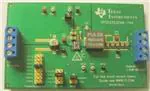
The TPS53353EVM-744 evaluation module (EVM) demonstrates the TPS53353. The TPS53353 is a D-CAP™
mode, 20-A, synchronous buck converter with integrated MOSFETs. It provides a fixed 1.5-V output at up to 20
A from a 12-V input bus.
Table of Contents
1 Description.............................................................................................................................................................................. 2
1.1 Typical Application............................................................................................................................................................. 2
1.2 Features............................................................................................................................................................................. 2
2 Electrical Performance Specifications................................................................................................................................. 2
3 Schematic................................................................................................................................................................................3
4 Test Setup................................................................................................................................................................................3
4.1 Test Equipment.................................................................................................................................................................. 3
4.2 Recommended Test Setup.................................................................................................................................................5
5 Configurations........................................................................................................................................................................ 6
5.1 Switching Frequency Selection.......................................................................................................................................... 6
5.2 Soft-Start Selection............................................................................................................................................................ 6
5.3 Mode Selection.................................................................................................................................................................. 6
5.4 Enable Selection................................................................................................................................................................ 6
6 Test Procedure........................................................................................................................................................................ 7
6.1 Line and Load Regulation and Efficiency Measurement Procedure.................................................................................. 7
6.2 Control Loop Gain and Phase Measurement Procedure................................................................................................... 7
6.3 Test Point List.....................................................................................................................................................................7
6.4 Equipment Shutdown......................................................................................................................................................... 7
7 Performance Data and Typical Characteristic Curves........................................................................................................ 8
7.1 Efficiency............................................................................................................................................................................8
7.2 Load Regulation................................................................................................................................................................. 8
7.3 Load Regulation................................................................................................................................................................. 8
7.4 Enable Turn-On/ Turn-Off...................................................................................................................................................9
7.5 Output Ripple..................................................................................................................................................................... 9
7.6 Switching Node.................................................................................................................................................................. 9
7.7 Output Transient With Auto-Skip Mode............................................................................................................................10
7.8 Output Transient With FCCM Mode................................................................................................................................. 10
7.9 Output 0.75-V Prebias Turn-On....................................................................................................................................... 10
7.10 Output Overcurrent and Short-Circuit Protection............................................................................................................11
7.11 Bode Plot........................................................................................................................................................................ 11
7.12 Thermal Image............................................................................................................................................................... 12
8 EVM Assembly Drawing and PCB Layout.......................................................................................................................... 13
9 Bill of Materials..................................................................................................................................................................... 17
10 Revision History................................................................................................................................................................. 17
Trademarks
D-CAP™ is a trademark of Texas Instruments.
All trademarks are the property of their respective owners.
SLUU521A – AUGUST 2011 – REVISED NOVEMBER 2021
TPS53353 Step-Down Converter Evaluation Module User's Guide
Submit Document Feedback
Copyright © 2021 Texas Instruments Incorporated
1
�Description
www.ti.com
1 Description
The TPS53353EVM-744 is designed to use a regulated 12-V bus to produce a regulated 1.5-V output at up to
20 A of load current. The TPS53353EVM-744 is designed to demonstrate the TPS53353 in a typical low-voltage
application while providing a number of test points to evaluate the performance of the TPS53353.
1.1 Typical Application
•
•
•
Server/storage
Workstations and desktops
Telecommunication infrastructure
1.2 Features
The TPS53353EVM-744 features:
• 20-Adc, steady-state output current
• Support prebias output voltage start-up
• J5 for selectable switching frequency setting
• J4 for selectable soft-start time
• J2 for enable function
• J6 for auto-skip and forced CCM selection
• Convenient test points for probing critical waveforms
2 Electrical Performance Specifications
Table 2-1. TPS53353EVM-744 Electrical Performance Specifications
PARAMETER
TEST CONDITIONS
MIN
TYP
MAX
8
12
14
UNITS
Input Characteristics
Voltage range
VIN
Maximum input current
VIN = 8 V, IO = 20 A
No-load input current
VIN = 14 V, IO = 0 A with auto-skip mode
4.1
V
A
1
mA
Output Characteristics
Output voltage VOUT
Output voltage regulation
Output voltage ripple
1.5
Line regulation (VIN = 8 V – 14 V)
V
0.1
Load regulation (VIN = 12 V, IO = 0 A – 20 A)
%
1
VIN = 12 V, IO = 20 A
20
Output load current
0
Output overcurrent
mVpp
20
A
26
A
500
kHz
Systems Characteristics
Switching frequency
Peak efficiency
VIN = 12 V, 1.5 V/10 A
91.87
Full-load efficiency
VIN = 12 V, 1.5 V/20 A
91.38
%
25
°C
Operating temperature
%
Note
Jumpers are set at the factory to default locations; for details, see Section 5 of this user’s guide.
2
TPS53353 Step-Down Converter Evaluation Module User's Guide
SLUU521A – AUGUST 2011 – REVISED NOVEMBER 2021
Submit Document Feedback
Copyright © 2021 Texas Instruments Incorporated
�www.ti.com
Schematic
3 Schematic
Figure 3-1. TPS53353EVM-744 Schematic
4 Test Setup
4.1 Test Equipment
Voltage Source: The input voltage source VIN must be a 0-V to 14-V variable DC source capable of supplying
10 ADC. Connect VIN to J1 as shown in Figure 4-2.
SLUU521A – AUGUST 2011 – REVISED NOVEMBER 2021
TPS53353 Step-Down Converter Evaluation Module User's Guide
Submit Document Feedback
Copyright © 2021 Texas Instruments Incorporated
3
�Test Setup
www.ti.com
Multimeters:
• V1: VIN at TP1 (VIN) and TP2 (GND)
• V2: VOUT at TP5 (VOUT) and TP7 (GND)
• A1: VIN input current
Output Load: The output load should be an electronic constant resistance mode load capable of 0 ADC–30 ADC
at 1.5 V.
Oscilloscope: A digital or analog oscilloscope can be used to measure the output ripple. The oscilloscope must
be set for the following:
•
•
•
•
•
1-MΩ impedance
20-MHz bandwidth
AC coupling
2-µs/division horizontal resolution
50-mV/division vertical resolution
Test points TP5 and TP7 can be used to measure the output ripple voltage by placing the oscilloscope probe tip
through TP5 and holding the ground barrel on TP7 as shown in Figure 4-1. Using a leaded ground connection
may induce additional noise due to the large ground loop.
Figure 4-1. Tip and Barrel Measurement for VOUT Ripple
Fan: Some of the components in this EVM can approach temperatures of 60°C during operation. A small fan
capable of 200–400 LFM is recommended to reduce component temperatures while the EVM is operating. The
EVM must not be probed while the fan is not running.
Recommended Wire Gauge:
1. VIN to J1 (12-V input):
The recommended wire size is 1× AWG 14 per input connection, with the total length of wire less than four
feet (2-foot input, 2-foot return).
2. J3 to LOAD:
The minimum recommended wire size is 2× AWG 14, with the total length of wire less than four feet (2-foot
input, 2-foot return).
4
TPS53353 Step-Down Converter Evaluation Module User's Guide
SLUU521A – AUGUST 2011 – REVISED NOVEMBER 2021
Submit Document Feedback
Copyright © 2021 Texas Instruments Incorporated
�www.ti.com
Test Setup
4.2 Recommended Test Setup
Figure 4-2. TPS53353EVM-744 Recommended Test Setup
Figure 4-2 is the recommended test setup to evaluate the TPS53353EVM-744. Working at an ESD workstation,
make sure that any wrist straps, bootstraps or mats are connected referencing the user to earth ground before
power is applied to the EVM.
Input Connections:
1. Before connecting the DC input source VIN, it is advisable to limit the source current from VIN to 10-A
maximum. Ensure that VIN is initially set to 0 V and connected as shown in Figure 4-2.
2. Connect a voltmeter V1 at TP1 (VIN) and TP2 (GND) to measure the input voltage.
3. Connect a current meter A1 to measure the input current.
Output Connections:
1. Connect the load to J3, and set the load to constant resistance mode to sink 0 A before VIN is applied.
2. Connect a voltmeter V2 at TP5 (VOUT) and TP7 (GND) to measure the output voltage.
Other Connections:
Place a fan as shown in Figure 4-2, and turn it on, ensuring that air is flowing across the EVM.
SLUU521A – AUGUST 2011 – REVISED NOVEMBER 2021
TPS53353 Step-Down Converter Evaluation Module User's Guide
Submit Document Feedback
Copyright © 2021 Texas Instruments Incorporated
5
�Configurations
www.ti.com
5 Configurations
All jumper selections must be made prior to applying power to the EVM. Users can configure this EVM per the
following configurations.
5.1 Switching Frequency Selection
Use J5 to set the switching frequency.
Default setting: 500 kHz
Table 5-1. Switching Frequency Selection
RESISTOR (RF) CONNECTIONS (kΩ)
SWITCHING
FREQUENCY
(kHz)
Top (1–2 pin shorted)
0
250
Second (3–4 pin shorted)
187
300
JUMPER SET TO
Third (5–6 pin shorted)
619
400
Fourth (7–8 pin shorted)
Open
500
Fifth (9–10 pin shorted)
866
650
Sixth (11–12 pin shorted)
309
750
Seventh (13–14 pin shorted)
124
850
Bottom (15–16 pin shorted)
0
970
5.2 Soft-Start Selection
Use J4 to set the soft-start time.
Default setting: 1.4 ms
Table 5-2. Soft-Start Time Selection
JUMPER SET TO
RMODE CONNECTIONS (kΩ)
SOFT-START
TIME (ms)
Top (1–2 pin shorted)
39.2
0.7
Second (3–4 pin shorted)
100
1.4
Third (5–6 pin shorted)
200
2.8
Fourth (7–8 pin shorted)
475
5.6
5.3 Mode Selection
Use J6 to set the MODE pin.
Default setting: Auto Skip
Table 5-3. MODE Selection
JUMPER SET TO
RMODE CONNECTIONS (Ω)
Top (1–2 pin shorted)
Auto Skip
Second (3–4 pin shorted)
Forced CCM
5.4 Enable Selection
Use J2 to enable and disable the controller.
Default setting: Jumper shorts on J2 to disable the controller
Table 5-4. Enable Selection
6
JUMPER SET TO
ENABLE SELECTION
Jumper shorts on J2
Disable the controller
No Jumper shorts on J2
Enable the controller
TPS53353 Step-Down Converter Evaluation Module User's Guide
SLUU521A – AUGUST 2011 – REVISED NOVEMBER 2021
Submit Document Feedback
Copyright © 2021 Texas Instruments Incorporated
�www.ti.com
Test Procedure
6 Test Procedure
6.1 Line and Load Regulation and Efficiency Measurement Procedure
1.
2.
3.
4.
5.
6.
7.
8.
9.
10.
11.
12.
Set up the EVM as described in Section 4 and Figure 4-2.
Ensure that the load is set to constant resistance mode and to sink 0 ADC.
Ensure that all jumpers configuration settings are per Section 5.
Ensure that the jumper provided in the EVM shorts on J2 before VIN is applied.
Increase VIN from 0 V to 12 V, using V1 to measure input voltage.
Remove the jumper on J2 to enable the controller.
Use V2 to measure VOUT voltage.
Vary the load from 0 ADC to 20 ADC; VOUT must remain in load regulation.
Vary VIN from 8 V to 14 V; VOUT must remain in line regulation.
Put the jumper on J2 to disable the controller.
Decrease the load to 0 A.
Decrease VIN to 0 V.
6.2 Control Loop Gain and Phase Measurement Procedure
The TPS53353EVM-744 contains a 10-Ω series resistor in the feedback loop for loop response analysis.
1. Set up EVM as described in Section 4 and Figure 4-2.
2. Connect a isolation transformer to test points marked TP10 and TP11.
3. Connect input signal amplitude measurement probe (channel A) to TP10. Connect a output signal amplitude
measurement probe (channel B) to TP11.
4. Connect ground lead of channel A and channel B to TP12.
5. Inject approximately 40 mV or less signal through the isolation transformer.
6. Sweep the frequency from 100 Hz to 1 MHz with a 10-Hz or lower post filter. The control loop gain and
phase margin can be measured.
7. Disconnect isolation transformer from bode plot test points before making other measurements (signal
injection into feedback can interfere with accuracy of other measurements).
6.3 Test Point List
Table 6-1. Test Point Functions
TEST POINTS
NAME
DESCRIPTION
TP1
VIN
Controller input
TP2
GND
Ground
TP3
GND
Ground
TP4
EN
Enable
TP5
VOUT
Output voltage
TP6
LL
Switching node
TP7
GND
Ground
TP8
PGOOD
Power Good
TP9
VREG
5-V LDO output
TP10
CHA
Input A for loop injection
TP11
CHB
Input B for loop injection
TP12
GND
GND
6.4 Equipment Shutdown
1. Shut down the load.
2. Shut down VIN.
3. Shut down the fan.
SLUU521A – AUGUST 2011 – REVISED NOVEMBER 2021
TPS53353 Step-Down Converter Evaluation Module User's Guide
Submit Document Feedback
Copyright © 2021 Texas Instruments Incorporated
7
�Performance Data and Typical Characteristic Curves
www.ti.com
7 Performance Data and Typical Characteristic Curves
Figure 7-1 through Figure 7-15 present typical performance curves for TPS53353EVM-744.
7.1 Efficiency
100
f = 500 kHz
VOUT = 1.5 V
90
Efficiency (%)
80
70
60
50
VIN = 8 V, Auto Skip
VIN = 12 V, Auto Skip
VIN = 14 V, Auto Skip
VIN = 8 V, FCCM
VIN = 12 V, FCCM
VIN = 14 V, FCCM
40
30
20
10
0
0.001
0.01
0.1
1
Output Current (A)
10
100
G001
Figure 7-1. Efficiency
7.2 Load Regulation
1.53
VIN = 8 V, Auto Skip
VIN = 12 V, Auto Skip
VIN = 14 V, Auto Skip
VIN = 8 V, FCCM
VIN = 12 V, FCCM
VIN = 14 V, FCCM
Output Voltage (V)
1.52
1.51
1.50
1.49
1.48
f = 500 kHz
1.47
0
5
10
Output Current (A)
15
20
G002
Figure 7-2. Load Regulation
7.3 Load Regulation
1.53
f = 500 kHz
Output Voltage (V)
1.52
1.51
1.50
1.49
IOUT = 0 A, Auto Skip
IOUT = 0 A, FCCM
IOUT = 20 A
1.48
1.47
8
9
10
11
12
Input Voltage (V)
13
14
G003
Figure 7-3. Line Regulation
8
TPS53353 Step-Down Converter Evaluation Module User's Guide
SLUU521A – AUGUST 2011 – REVISED NOVEMBER 2021
Submit Document Feedback
Copyright © 2021 Texas Instruments Incorporated
�www.ti.com
Performance Data and Typical Characteristic Curves
7.4 Enable Turn-On/ Turn-Off
Figure 7-5. Enable Turn-Off
Figure 7-4. Enable Turn-On
7.5 Output Ripple
Figure 7-6. Output Ripple
7.6 Switching Node
Figure 7-7. Switching Node
SLUU521A – AUGUST 2011 – REVISED NOVEMBER 2021
TPS53353 Step-Down Converter Evaluation Module User's Guide
Submit Document Feedback
Copyright © 2021 Texas Instruments Incorporated
9
�Performance Data and Typical Characteristic Curves
www.ti.com
7.7 Output Transient With Auto-Skip Mode
Figure 7-8. Output Transient From DCM to CCM
Figure 7-9. Output Transient From CCM to DCM
7.8 Output Transient With FCCM Mode
Figure 7-10. Output Transient With FCCM Mode
7.9 Output 0.75-V Prebias Turn-On
Figure 7-11. Output 0.75-V Prebias Turn-On
10
TPS53353 Step-Down Converter Evaluation Module User's Guide
SLUU521A – AUGUST 2011 – REVISED NOVEMBER 2021
Submit Document Feedback
Copyright © 2021 Texas Instruments Incorporated
�www.ti.com
Performance Data and Typical Characteristic Curves
7.10 Output Overcurrent and Short-Circuit Protection
TPS53355EVM
Over Current Protection
Test Condition: 12 Vin OCP
TPS53355EVM
Over Current Protection
Test Condition: 12 Vin,
1.5 V Short Circuit
Ch1: 1.5 Vout
Ch1: 1.5 Vout
Ch2: LL
Ch2: LL
Ch3: PGOOD
Ch3: PGOOD
Figure 7-12. Output Overcurrent Protection
Figure 7-13. Output Short Circuit
7.11 Bode Plot
Figure 7-14. Bode Plot at 12 VIN, 1.5 V/20 A
SLUU521A – AUGUST 2011 – REVISED NOVEMBER 2021
TPS53353 Step-Down Converter Evaluation Module User's Guide
Submit Document Feedback
Copyright © 2021 Texas Instruments Incorporated
11
�Performance Data and Typical Characteristic Curves
www.ti.com
7.12 Thermal Image
Figure 7-15. Top Board at 12 VIN, 1.5 V/20 A, 25°C Ambient Temperature Without Airflow
12
TPS53353 Step-Down Converter Evaluation Module User's Guide
SLUU521A – AUGUST 2011 – REVISED NOVEMBER 2021
Submit Document Feedback
Copyright © 2021 Texas Instruments Incorporated
�www.ti.com
EVM Assembly Drawing and PCB Layout
8 EVM Assembly Drawing and PCB Layout
The following figures (Figure 8-1 through Figure 8-8) show the design of the TPS53353EVM-744 printed-circuit
board (PCB). The EVM was designed using a 6-layer, 2-oz copper, PCB.
Figure 8-1. TPS53353EVM-744 Top Layer Assembly Drawing
Figure 8-2. TPS53353EVM-744 Bottom Assembly Drawing
SLUU521A – AUGUST 2011 – REVISED NOVEMBER 2021
TPS53353 Step-Down Converter Evaluation Module User's Guide
Submit Document Feedback
Copyright © 2021 Texas Instruments Incorporated
13
�EVM Assembly Drawing and PCB Layout
www.ti.com
Figure 8-3. TPS53353EVM-744 Top Copper
Figure 8-4. TPS53353EVM-744 Layer-2 Copper
14
TPS53353 Step-Down Converter Evaluation Module User's Guide
SLUU521A – AUGUST 2011 – REVISED NOVEMBER 2021
Submit Document Feedback
Copyright © 2021 Texas Instruments Incorporated
�www.ti.com
EVM Assembly Drawing and PCB Layout
Figure 8-5. TPS53353EVM-744 Layer-3 Copper
Figure 8-6. TPS53353EVM-744 Layer-4 Copper
SLUU521A – AUGUST 2011 – REVISED NOVEMBER 2021
TPS53353 Step-Down Converter Evaluation Module User's Guide
Submit Document Feedback
Copyright © 2021 Texas Instruments Incorporated
15
�EVM Assembly Drawing and PCB Layout
www.ti.com
Figure 8-7. TPS53353EVM-744 Layer-5 Copper
Figure 8-8. TPS53353EVM-744 Bottom Layer Copper
16
TPS53353 Step-Down Converter Evaluation Module User's Guide
SLUU521A – AUGUST 2011 – REVISED NOVEMBER 2021
Submit Document Feedback
Copyright © 2021 Texas Instruments Incorporated
�www.ti.com
Bill of Materials
9 Bill of Materials
Table 9-1. TPS53353EVM-744 Bill of Materials
QTY
REFDES
DESCRIPTION
MFR PART
NUMBER
4
C1–C4
Capacitor, Ceramic, 22 μF, 16 V, X5R, 20%, 1210
MURATA
GRM32ER61C226KE20L
5
C12–C16
Capacitor, Ceramic, 100 μF, 6.3 V, X5R, 20%, 1210
MURATA
GRM32ER60J107ME20L
1
C10
Capacitor, Ceramic, 2.2 nF, 50 V, X7R, 20%, 0603
STD
STD
1
C11
Capacitor, Ceramic, 0.022 μF, 50V, X7R, 20%, 0603
STD
STD
1
C19
Capacitor, Ceramic, 1000 pF, 50 V, X7R, 20%, 0603
STD
STD
2
C5, C9
Capacitor, Ceramic, 0.1 μF, 50 V, X7R, 20%, 0603
STD
STD
1
C6
Capacitor, Aluminum, 100 μF, 16 VDC, 20%, Code D8
Panasonic
EEEFP1C101AP
1
C7
Capacitor, Ceramic, 4.7 μF, 25 V, X5R, 20%, 0805
STD
STD
1
C8
Capacitor, Ceramic, 1 μF, 50 V, X7R, 20%, 0603
STD
STD
1
L1
Inductor, SMT, 0.44 μH, 30 A, 0.0032 Ω, 0.53” x 0.510”
Pulse
PA0513-441NLT
1
R1
Resistor, Chip, 110 k, 1/16W, 1%, 0603
STD
STD
1
R11
Resistor, Chip, 10, 1/16W, 1%, 0603
STD
STD
1
R12
Resistor, Chip, 10.0 k, 1/16W, 1%, 0603
STD
STD
1
R13
Resistor, Chip, 39.2 k, 1/16W, 1%, 0603
STD
STD
1
R14
Resistor, Chip, 187 k, 1/16W, 1%, 0603
STD
STD
1
R16
Resistor, Chip, 619 k, 1/16W, 1%, 0603
STD
STD
1
R19
Resistor, Chip, 475 k, 1/16W, 1%, 0603
STD
STD
1
R2
Resistor, Chip, 0, 1/16W, 1%, 0603
STD
STD
1
R20
Resistor, Chip, 866 k, 1/16W, 1%, 0603
STD
STD
1
R21
Resistor, Chip, 309 k, 1/16W, 1%, 0603
STD
STD
1
R22
Resistor, Chip, 124 k, 1/16W, 1%, 0603
STD
STD
2
R3, R17
Resistor, Chip, 200 k, 1/16W, 1%, 0603
STD
STD
3
R5, R9, R15
Resistor, Chip, 100 k, 1/16W, 5%, 0603
STD
STD
1
R4
Resistor, Chip, 1.00 k, 1/16W, 1%, 0603
STD
STD
1
R6
Resistor, Chip, 2.05, 1/16W, 1%, 0603
STD
STD
2
R7, R10
Resistor, Chip, 14.7 k, 1/16W, 1%, 0603
STD
STD
1
R8
Resistor, Chip, 3.01, 1/16W, 1%, 0805
STD
STD
1
U1
IC, 20-A synchronous buck converter with integrated
MOSFETs, DQP-22
TI
TPS53353DQP
10 Revision History
NOTE: Page numbers for previous revisions may differ from page numbers in the current version.
Changes from Revision * (August 2011) to Revision A (November 2021)
Page
• Updated the numbering format for tables, figures, and cross-references throughout the document. ................2
• Updated the user's guide title............................................................................................................................. 2
• Edited user's guide for clarity..............................................................................................................................2
SLUU521A – AUGUST 2011 – REVISED NOVEMBER 2021
TPS53353 Step-Down Converter Evaluation Module User's Guide
Submit Document Feedback
Copyright © 2021 Texas Instruments Incorporated
17
�IMPORTANT NOTICE AND DISCLAIMER
TI PROVIDES TECHNICAL AND RELIABILITY DATA (INCLUDING DATA SHEETS), DESIGN RESOURCES (INCLUDING REFERENCE
DESIGNS), APPLICATION OR OTHER DESIGN ADVICE, WEB TOOLS, SAFETY INFORMATION, AND OTHER RESOURCES “AS IS”
AND WITH ALL FAULTS, AND DISCLAIMS ALL WARRANTIES, EXPRESS AND IMPLIED, INCLUDING WITHOUT LIMITATION ANY
IMPLIED WARRANTIES OF MERCHANTABILITY, FITNESS FOR A PARTICULAR PURPOSE OR NON-INFRINGEMENT OF THIRD
PARTY INTELLECTUAL PROPERTY RIGHTS.
These resources are intended for skilled developers designing with TI products. You are solely responsible for (1) selecting the appropriate
TI products for your application, (2) designing, validating and testing your application, and (3) ensuring your application meets applicable
standards, and any other safety, security, regulatory or other requirements.
These resources are subject to change without notice. TI grants you permission to use these resources only for development of an
application that uses the TI products described in the resource. Other reproduction and display of these resources is prohibited. No license
is granted to any other TI intellectual property right or to any third party intellectual property right. TI disclaims responsibility for, and you
will fully indemnify TI and its representatives against, any claims, damages, costs, losses, and liabilities arising out of your use of these
resources.
TI’s products are provided subject to TI’s Terms of Sale or other applicable terms available either on ti.com or provided in conjunction with
such TI products. TI’s provision of these resources does not expand or otherwise alter TI’s applicable warranties or warranty disclaimers for
TI products.
TI objects to and rejects any additional or different terms you may have proposed. IMPORTANT NOTICE
Mailing Address: Texas Instruments, Post Office Box 655303, Dallas, Texas 75265
Copyright © 2022, Texas Instruments Incorporated
�