Product
Folder
Sample &
Buy
Support &
Community
Tools &
Software
Technical
Documents
TPS54427
SLVSB43C – NOVEMBER 2011 – REVISED FEBRUARY 2016
TPS54427 4.5-V to 18-V Input, 4-A Output Single Synchronous Step-Down Switcher With
Integrated FET
1 Features
3 Description
•
The TPS54427 is an adaptive on-time D-CAP2™
mode synchronous buck converter. The TPS54427
enables system designers to complete the suite of
various end equipment’s power bus regulators with a
cost effective, low component count, low standby
current solution.
1
•
•
•
•
•
•
•
•
•
•
D-CAP2™ Mode Enables Fast Transient
Response
Low Output Ripple and Allows Ceramic Output
Capacitor
Wide VIN Input Voltage Range: 4.5 V to 18 V
Output Voltage Range: 0.76 V to 7.0 V
Highly Efficient Integrated FETs Optimized
for Lower Duty Cycle Applications
– 70 mΩ (High Side) and 53 mΩ (Low Side)
High Efficiency, Less Than 10 μA at Shutdown
High Initial Bandgap Reference Accuracy
Adjustable Soft Start
Pre-Biased Soft Start
650-kHz Switching Frequency (fSW)
Cycle by Cycle Over Current Limit
2 Applications
•
The main control loop for the TPS54427 uses the DCAP2™ mode control which provides a fast transient
response
with
no
external
compensation
components.
The TPS54427 also has a proprietary circuit that
enables the device to adopt to both low equivalent
series resistance (ESR) output capacitors, such as
POSCAP or SP-CAP, and ultra-low ESR ceramic
capacitors.
The device operates from 4.5-V to 18-V VIN input.
The output voltage can be programmed between
0.76 V and 7 V.
The device also features an adjustable soft start time.
Wide Range of Applications for Low Voltage
System
– Digital TV Power Supply
– High Definition Blu-ray Disc™ Players
– Networking Home Terminal
– Digital Set Top Box (STB)
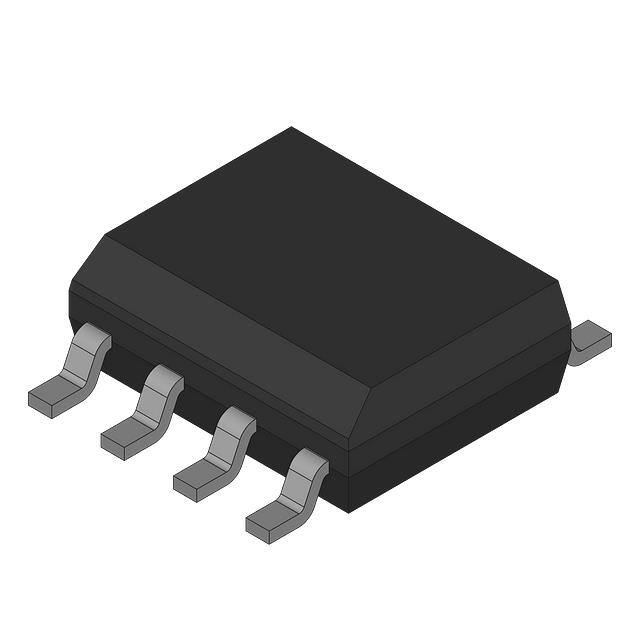
The TPS54427 is available in the 8-pin DDA package
and 10-pin DRC, and is designed to operate from
–40°C to 85°C.
Device Information(1)
PART NUMBER
TPS54427
PACKAGE
BODY SIZE (NOM)
SO PowerPAD™ (8) 4.89 mm × 3.90 mm
VSON (10)
3.00 mm × 3.00 mm
(1) For all available packages, see the orderable addendum at
the end of the data sheet.
Simplified Schematic
TPS54427 Transient Response
TPA54427DDA
Vout (50 mV/div)
Iout (2 A/div)
100 µs/div
1
An IMPORTANT NOTICE at the end of this data sheet addresses availability, warranty, changes, use in safety-critical applications,
intellectual property matters and other important disclaimers. PRODUCTION DATA.
�TPS54427
SLVSB43C – NOVEMBER 2011 – REVISED FEBRUARY 2016
www.ti.com
Table of Contents
1
2
3
4
5
6
7
Features ..................................................................
Applications ...........................................................
Description .............................................................
Revision History.....................................................
Pin Configuration and Functions .........................
Specifications.........................................................
1
1
1
2
3
4
6.1
6.2
6.3
6.4
6.5
6.6
4
4
4
5
5
6
Absolute Maximum Ratings ......................................
ESD Ratings..............................................................
Recommended Operating Conditions.......................
Thermal Information ..................................................
Electrical Characteristics...........................................
Typical Characteristics ..............................................
Detailed Description .............................................. 8
7.1
7.2
7.3
7.4
Overview ................................................................... 8
Functional Block Diagram ......................................... 8
Feature Description................................................... 8
Device Functional Modes........................................ 10
8
Application and Implementation ........................ 11
8.1 Application Information............................................ 11
8.2 Typical Application ................................................. 11
9 Power Supply Recommendations...................... 15
10 Layout................................................................... 15
10.1 Layout Guidelines ................................................. 15
10.2 Layout Examples................................................... 16
10.3 Thermal Considerations ........................................ 17
11 Device and Documentation Support ................. 19
11.1
11.2
11.3
11.4
11.5
11.6
Device Support......................................................
Documentation Support .......................................
Community Resources..........................................
Trademarks ...........................................................
Electrostatic Discharge Caution ............................
Glossary ................................................................
19
19
19
19
19
19
12 Mechanical, Packaging, and Orderable
Information ........................................................... 19
4 Revision History
NOTE: Page numbers for previous revisions may differ from page numbers in the current version.
Changes from Revision B (October 2015) to Revision C
•
Page
Deleted (SWIFT™) from the data sheet title ......................................................................................................................... 1
Changes from Revision A (June 2013) to Revision B
Page
•
Added ESD Ratings table, Feature Description section, Device Functional Modes, Application and Implementation
section, Power Supply Recommendations section, Layout section, Device and Documentation Support section, and
Mechanical, Packaging, and Orderable Information section .................................................................................................. 1
•
Added the DRC-10 Pin package pin out ................................................................................................................................ 3
Changes from Original (November 2011) to Revision A
Page
•
Added "and 10-pin DRC" to the DESCRIPTION .................................................................................................................... 1
•
Added the DRC-10 pin Package to the ORDERING INFORMATION table........................................................................... 1
•
Changed the VBST(vs SW) MAX value From: 5.7V to 6V in the ROC table......................................................................... 4
•
Changed VFB input current MAX value From: ±0.15 µA To: ±0.1 µA ..................................................................................... 5
•
Added High side switch resistance (DRC) ............................................................................................................................. 5
•
Changed Figure 9................................................................................................................................................................... 7
•
Added Figure 9 ....................................................................................................................................................................... 7
•
Added Figure 23 ................................................................................................................................................................... 17
2
Submit Documentation Feedback
Copyright © 2011–2016, Texas Instruments Incorporated
Product Folder Links: TPS54427
�TPS54427
www.ti.com
SLVSB43C – NOVEMBER 2011 – REVISED FEBRUARY 2016
5 Pin Configuration and Functions
DDA Package
8-Pin SO PowerPAD
Top View
1
DRC Package
10-Pin VSON
Top View
VIN
EN
8
10 VIN
EN 1
2
POWER
PAD
VFB
VFB 2
VBST
VREG5 3
TPS54427
3
DDA
VREG5
Exposed
Thermal
Die PAD
on
Underside
PGND
7
SS 4
SW
6
GND
5
GND 5
9 VIN
8 VBST
7 SW
6 SW
HSOP8
4
SS
Pin Functions
PIN
NAME
DESCRIPTION
DDA
DRC
EN
1
1
Enable input control. Active high and must be pulled up to enable the device.
VFB
2
2
Converter feedback input. Connect to output voltage with feedback resistor divider.
VREG5
3
3
5.5 V power supply output. A capacitor (typical 1 µF) should be connected to GND. VREG5 is not active
when EN is low.
SS
4
4
Soft-start control. An external capacitor should be connected to GND.
GND
5
5
Ground pin. Power ground return for switching circuit. Connect sensitive SS and VFB returns to GND at a
single point.
SW
6
6, 7
VBST
7
8
VIN
8
9, 10
Exposed
Thermal
Pad
Back
side
Switch node connection between high-side NFET and low-side NFET.
Supply input for the high-side FET gate drive circuit. Connect 0.1µF capacitor between VBST and SW
pins. An internal diode is connected between VREG5 and VBST.
Input voltage supply pin.
Thermal pad of the package. Must be soldered to achieve appropriate dissipation. Must be connected to
GND.
Back
side
Thermal pad of the package. PGND power ground return of internal low-side FET. Must be soldered to
achieve appropriate dissipation.
Submit Documentation Feedback
Copyright © 2011–2016, Texas Instruments Incorporated
Product Folder Links: TPS54427
3
�TPS54427
SLVSB43C – NOVEMBER 2011 – REVISED FEBRUARY 2016
www.ti.com
6 Specifications
6.1 Absolute Maximum Ratings
over operating free-air temperature range (unless otherwise noted) (1)
Input voltage
MIN
MAX
UNIT
VIN, EN
–0.3
20
V
VBST
–0.3
26
V
VBST (10 ns transient)
–0.3
28
V
VBST (vs SW)
–0.3
6.5
V
VFB, SS
–0.3
6.5
V
SW
–2
20
V
SW (10 ns transient)
–3
22
V
VREG5
–0.3
6.5
V
GND
–0.3
0.3
V
Voltage from GND to thermal pad, Vdiff
–0.2
0.2
V
Operating junction temperature, TJ
–40
150
°C
Storage temperature, Tstg
–55
150
°C
Output voltage
(1)
Stresses beyond those listed under absolute maximum ratings may cause permanent damage to the device. These are stress ratings
only, and functional operation of the device at these or any other conditions beyond those indicated under recommended operating
conditions is not implied. Exposure to absolute-maximum-rated conditions for extended periods may affect device reliability.
6.2 ESD Ratings
VALUE
Human body model (HBM), per ANSI/ESDA/JEDEC JS-001
V(ESD)
(1)
(2)
Electrostatic discharge
(1)
UNIT
±2000
Charged device model (CDM), per JEDEC specification JESD22C101 (2)
V
±500
JEDEC document JEP155 states that 500-V HBM allows safe manufacturing with a standard ESD control process.
JEDEC document JEP157 states that 250-V CDM allows safe manufacturing with a standard ESD control process.
6.3 Recommended Operating Conditions
over operating free-air temperature range (unless otherwise noted)
VIN
VI
Supply input voltage
Input voltage
MIN
MAX
4.5
18
VBST
–0.1
24
VBST (10 ns transient)
-0.1
27
VBST(vs SW)
–0.1
6
SS
–0.1
5.7
EN
–0.1
18
VFB
–0.1
5.5
SW
–1.8
18
SW (10 ns transient)
UNIT
V
V
–3
21
GND
–0.1
0.1
–0.1
5.7
V
0
10
mA
VO
Output voltage
VREG5
IO
Output current
IVREG5
TA
Operating free-air temperature
–40
85
°C
TJ
Operating junction temperature
–40
150
°C
4
Submit Documentation Feedback
Copyright © 2011–2016, Texas Instruments Incorporated
Product Folder Links: TPS54427
�TPS54427
www.ti.com
SLVSB43C – NOVEMBER 2011 – REVISED FEBRUARY 2016
6.4 Thermal Information
TPS54427
THERMAL METRIC (1)
DDA [SO PowerPAD]
DRC [VSON]
8 PINS
10 PINS
UNIT
RθJA
Junction-to-ambient thermal resistance
42.1
43.2
°C/W
RθJC(top)
Junction-to-case (top) thermal resistance
50.9
53.8
°C/W
RθJB
Junction-to-board thermal resistance
31.8
18.2
°C/W
ψJT
Junction-to-top characterization parameter
5
0.6
°C/W
ψJB
Junction-to-board characterization parameter
13.5
18.3
°C/W
RθJC(bot)
Junction-to-case (bottom) thermal resistance
7.1
4.7
°C/W
(1)
For more information about traditional and new thermal metrics, see the Semiconductor and IC Package Thermal Metrics application
report (SPRA953).
6.5 Electrical Characteristics
over operating free-air temperature range, VIN = 12 V (unless otherwise noted)
PARAMETER
TEST CONDITIONS
MIN
TYP
MAX
UNIT
SUPPLY CURRENT
IVIN
Operating - non-switching supply current
VIN current, TA = 25°C, EN = 5 V,
VFB = 0.8 V
950
1400
μA
IVINSDN
Shutdown supply current
VIN current, TA = 25°C, EN = 0 V
3.0
10
μA
LOGIC THRESHOLD
VENH
EN high-level input voltage
EN
VENL
EN low-level input voltage
EN
1.6
REN
EN pin resistance to GND
VEN = 12 V
225
TA = 25°C, VO = 1.05 V, continuous mode
mode
TA = –40°C to 85°C, VO = 1.05 V,
continuous mode mode (1)
V
0.6
V
450
900
kΩ
757
765
773
751
765
779
0
±0.1
μA
5.5
5.7
V
25
mV
100
mV
VFB VOLTAGE AND DISCHARGE RESISTANCE
VFBTH
IVFB
VFB threshold voltage
VFB input current
mV
VFB = 0.8 V, TA = 25°C
VREG5 OUTPUT
VVREG5
VREG5 output voltage
TA = 25°C, 6.0 V < VIN < 18 V,
0 < IVREG5 < 5 mA
VLN5
Line regulation
6 V < VIN < 18 V, IVREG5 = 5 mA
VLD5
Load regulation
0 mA < IVREG5 < 5 mA
IVREG5
Output current
VIN = 6 V, VREG5 = 4.0 V, TA = 25°C
5.2
60
mA
MOSFET
RDS(on)h
RDS(on)l
High side switch resistance (DDA)
High side switch resistance (DRC)
Low side switch resistance
70
25°C, VBST - SW = 5.5 V
mΩ
74
25°C
53
mΩ
CURRENT LIMIT
Iocl
(1)
Current limit
L out = 1.5 µH
(1)
4.6
5.3
6.8
A
Not production tested.
Submit Documentation Feedback
Copyright © 2011–2016, Texas Instruments Incorporated
Product Folder Links: TPS54427
5
�TPS54427
SLVSB43C – NOVEMBER 2011 – REVISED FEBRUARY 2016
www.ti.com
Electrical Characteristics (continued)
over operating free-air temperature range, VIN = 12 V (unless otherwise noted)
PARAMETER
TEST CONDITIONS
MIN
TYP
MAX
UNIT
THERMAL SHUTDOWN
TSDN
Thermal shutdown threshold
Shutdown temperature (1)
170
Hysteresis (1)
°C
35
ON-TIME TIMER CONTROL
tON
On time
VIN = 12 V, VO = 1.05 V
150
tOFF(MIN)
Minimum off time
TA = 25°C, VFB = 0.7 V
260
310
ns
7.8
ns
SOFT START
ISSC
SS charge current
VSS = 1 V
4.2
6.0
ISSD
SS discharge current
VSS = 0.5 V
0.1
0.2
Wake up VREG5 voltage
3.45
3.75
4.05
Hysteresis VREG5 voltage
0.19
0.32
0.45
μA
mA
UVLO
UVLO
UVLO threshold
V
6.6 Typical Characteristics
VIN = 12 V, TA = 25°C (unless otherwise noted)
6
Figure 1. VIN Current vs Junction Temperature
Figure 2. VIN Shutdown Current vs Junction Temperature
Figure 3. EN Current vs EN Voltage
Figure 4. 1.05-V Output Voltage vs Output Current
Submit Documentation Feedback
Copyright © 2011–2016, Texas Instruments Incorporated
Product Folder Links: TPS54427
�TPS54427
www.ti.com
SLVSB43C – NOVEMBER 2011 – REVISED FEBRUARY 2016
Typical Characteristics (continued)
VIN = 12 V, TA = 25°C (unless otherwise noted)
Figure 5. 1.05-V Output Voltage vs Vin Voltage
Figure 6. Efficiency vs Output Current
Figure 7. Switching Frequency vs Input Voltage
Figure 8. Switching Frequency vs Output Current
0.780
0.775
0.770
0.765
0.760
0.755
0.750
-50
0
50
100
Figure 9. VFB Voltage vs Junction Temperature
Submit Documentation Feedback
Copyright © 2011–2016, Texas Instruments Incorporated
Product Folder Links: TPS54427
7
�TPS54427
SLVSB43C – NOVEMBER 2011 – REVISED FEBRUARY 2016
www.ti.com
7 Detailed Description
7.1 Overview
The TPS54427 is a 4-A synchronous step-down (buck) converter with two integrated N-channel MOSFETs. It
operates using D-CAP2™ mode control. The fast transient response of D-CAP2™ control reduces the output
capacitance required to meet a specific level of performance. Proprietary internal circuitry allows the use of low
ESR output capacitors including ceramic and special polymer types.
7.2 Functional Block Diagram
EN
VIN
EN
Logic
1
8
VIN
VREG5
Control Logic
7
VBST
Ref
SS
1 shot
SW
VO
6
2
VFB
XCON
VREG5
VREG5
SGND
Ceramic
Capacitor
3
SS
5
4
GND
Softstart
PGND
SS
SW
SGND
PGND
VIN
UVLO
VREG5
UVLO
REF
TSD
Protection
Logic
Ref
7.3 Feature Description
7.3.1 PWM Operation
The main control loop of the TPS54427 is an adaptive on-time pulse width modulation (PWM) controller that
supports a proprietary D-CAP2™ mode control. D-CAP2™ mode control combines constant on-time control with
an internal compensation circuit for pseudo-fixed frequency and low external component count configuration with
both low ESR and ceramic output capacitors. It is stable even with virtually no ripple at the output.
At the beginning of each cycle, the high-side MOSFET is turned on. This MOSFET is turned off after internal one
shot timer expires. This one shot is set by the converter input voltage, VIN, and the output voltage, VO, to
maintain a pseudo-fixed frequency over the input voltage range, hence it is called adaptive on-time control. The
one-shot timer is reset and the high-side MOSFET is turned on again when the feedback voltage falls below the
reference voltage. An internal ramp is added to reference voltage to simulate output ripple, eliminating the need
for ESR induced output ripple from D-CAP2™ mode control.
8
Submit Documentation Feedback
Copyright © 2011–2016, Texas Instruments Incorporated
Product Folder Links: TPS54427
�TPS54427
www.ti.com
SLVSB43C – NOVEMBER 2011 – REVISED FEBRUARY 2016
Feature Description (continued)
7.3.2 PWM Frequency and Adaptive On-Time Control
TPS54427 uses an adaptive on-time control scheme and does not have a dedicated on board oscillator. The
TPS54427 runs with a pseudo-constant frequency of 650 kHz by using the input voltage and output voltage to
set the on-time one-shot timer. The on-time is inversely proportional to the input voltage and proportional to the
output voltage, therefore, when the duty ratio is VOUT/VIN, the frequency is constant.
7.3.3 Soft Start and Pre-Biased Soft Start
The soft start function is adjustable. When the EN pin becomes high, 6-uA current begins charging the capacitor
which is connected from the SS pin to GND. Smooth control of the output voltage is maintained during start up.
The equation for the slow start time is shown in Equation 1. VFB voltage is 0.765 V and SS pin source current is
6-µA.
C6(nF) ´ Vf b ´ 1.1 C6(nF) ´ 0.765 ´ 1.1
Tss(ms) =
=
6
Iss(m A)
(1)
The TPS54427 contains a unique circuit to prevent current from being pulled from the output during startup if the
output is pre-biased. When the soft-start commands a voltage higher than the pre-bias level (internal soft start
becomes greater than feedback voltage VFB), the controller slowly activates synchronous rectification by starting
the first low side FET gate driver pulses with a narrow on-time. It then increments that on-time on a cycle-bycycle basis until it coincides with the time dictated by (1-D), where D is the duty cycle of the converter. This
scheme prevents the initial sinking of the pre-bias output, and ensure that the out voltage (VO) starts and ramps
up smoothly into regulation and the control loop is given time to transition from pre-biased start-up to normal
mode operation.
7.3.4 Current Protection
The output overcurrent protection (OCP) is implemented using a cycle-by-cycle valley detect control circuit. The
switch current is monitored by measuring the low-side FET switch voltage between the SW pin and GND. This
voltage is proportional to the switch current. To improve accuracy, the voltage sensing is temperature
compensated.
During the on time of the high-side FET switch, the switch current increases at a linear rate determined by Vin,
Vout, the on-time and the output inductor value. During the on time of the low-side FET switch, this current
decreases linearly. The average value of the switch current is the load current IOUT. The TPS54427 constantly
monitors the low-side FET switch voltage, which is proportional to the switch current, during the low-side on-time.
If the measured voltage is above the voltage proportional to the current limit, an internal counter is incremented
per each SW cycle and the converter maintains the low-side switch on until the measured voltage is below the
voltage corresponding to the current limit at which time the switching cycle is terminated and a new switching
cycle begins. In subsequent switching cycles, the on-time is set to a fixed value and the current is monitored in
the same manner. If the over current condition exists for 7 consecutive switching cycles, the internal OCL
threshold is set to a lower level, reducing the available output current. When a switching cycle occurs where the
switch current is not above the lower OCL threshold, the counter is reset and the OCL limit is returned to the
higher value.
There are some important considerations for this type of over-current protection. The load current one half of the
peak-to-peak inductor current higher than the over-current threshold. Also when the current is being limited, the
output voltage tends to fall as the demanded load current may be higher than the current available from the
converter. This may cause the output voltage to fall. When the over current condition is removed, the output
voltage will return to the regulated value. This protection is non-latching.
7.3.5 UVLO Protection
Undervoltage lock out protection (UVLO) monitors the voltage of the VREG5 pin. When the VREG5 voltage is
lower than UVLO threshold voltage, the TPS54427 is shut off. This protection is non-latching.
7.3.6 Thermal Shutdown
TPS54427 monitors the temperature of itself. If the temperature exceeds the threshold value (typically 170°C),
the device is shut off. This is non-latch protection.
Submit Documentation Feedback
Copyright © 2011–2016, Texas Instruments Incorporated
Product Folder Links: TPS54427
9
�TPS54427
SLVSB43C – NOVEMBER 2011 – REVISED FEBRUARY 2016
www.ti.com
7.4 Device Functional Modes
7.4.1 Normal Operation
When the input voltage is above the UVLO threshold and the EN voltage is above the enable threshold, the
TPS54427 operates in normal switching mode. Normal continuous conduction mode(CCM) occurs when the
minimum switch current is above 0 A. In CM the TPS54427 operates at a quasi-fixed frequency of 650 kHz.
7.4.2 Forced CCM Operation
When the TPS54427 is in normal CCM operating mode and switch current falls below 0 A, the device begins
operating in forced CCM.
10
Submit Documentation Feedback
Copyright © 2011–2016, Texas Instruments Incorporated
Product Folder Links: TPS54427
�TPS54427
www.ti.com
SLVSB43C – NOVEMBER 2011 – REVISED FEBRUARY 2016
8 Application and Implementation
NOTE
Information in the following applications sections is not part of the TI component
specification, and TI does not warrant its accuracy or completeness. TI’s customers are
responsible for determining suitability of components for their purposes. Customers should
validate and test their design implementation to confirm system functionality.
8.1 Application Information
The TPS54427 is used as a step converter that convert an voltage of 4.5 V to 18 V to a lower voltage.
WEBENCH® software is available to aid in the design and analysis of circuits.
8.2 Typical Application
VIN
4.5 to 18V
VIN
C2
10uF
C1
10uF
C3
0.1uF
1
2
U1
TPS54427DDA
R3
10.0k
1
EN
VIN
EN
2
VOUT
VBST
VFB
R1
8.25k
3
C4
4
C5
1uF
1
SW
VREG5
R2
22.1k
GND
SS
C6
8200pF
8
7
C7
0.1uF
6
5
VOUT
1.05V 4A
L1
VOUT
1.5uH
C8
C9
22uF
22uF
PwPd
9
1
Not Installed
Figure 10. Typical Application Schematic
8.2.1 Design Requirements
Table 1 shows the input and output connections.
Table 1. TPS54427 Performance Specifications Summary
SPECIFICATIONS
TEST CONDITIONS
Input voltage range, VIN
MIN
TYP
MAX
4.5
12
18
Output voltage, VOUT
Operating frequency
1.05
VIN = 12 V, IO = 4 A
Output current range
Output ripple voltage
VIN = 12 V, IO = 4 A
kHz
4
15
Submit Documentation Feedback
Copyright © 2011–2016, Texas Instruments Incorporated
Product Folder Links: TPS54427
V
V
650
0
UNIT
A
mVPP
11
�TPS54427
SLVSB43C – NOVEMBER 2011 – REVISED FEBRUARY 2016
www.ti.com
8.2.2 Detailed Design Procedure
To
•
•
•
•
•
begin the design process, you must know a few application parameters:
Input voltage range
Output voltage
Output current
Output voltage ripple
Input voltage ripple
8.2.2.1 Output Voltage Resistors Selection
The output voltage is set with a resistor divider from the output node to the VFB pin. It is recommended to use
1% tolerance or better divider resistors. Start by using Equation 2 to calculate VOUT.
To improve efficiency at very light loads consider using larger value resistors, too high of resistance will be more
susceptible to noise and voltage errors from the VFB input current will be more noticeable.
æ R1 ö
VOUT = 0.765 ´ ç 1+
÷
è R2 ø
(2)
8.2.2.2 Output Filter Selection
The output filter used with the TPS54427 is an LC circuit. This LC filter has double pole at:
1
FP =
2p LOUT ´ COUT
(3)
At low frequencies, the overall loop gain is set by the output set-point resistor divider network and the internal
gain of the TPS54427. The low frequency phase is 180 degrees. At the output filter pole frequency, the gain rolls
off at a –40 dB per decade rate and the phase drops rapidly. D-CAP2™ introduces a high frequency zero that
reduces the gain roll off to –20 dB per decade and increases the phase to 90 degrees one decade above the
zero frequency. The inductor and capacitor selected for the output filter must be selected so that the double pole
of Equation 3 is located below the high frequency zero but close enough that the phase boost provided be the
high frequency zero provides adequate phase margin for a stable circuit. To meet this requirement use the
values recommended in Table 2.
Table 2. Recommended Component Values
(1)
C4 (pF) (1)
OUTPUT VOLTAGE (V)
R1 (kΩ)
R2 (kΩ)
L1 (µH)
C8 + C9 (µF)
1
6.81
22.1
1.5
22 - 68
1.05
8.25
22.1
1.5
22 - 68
1.2
12.7
22.1
1.5
22 - 68
1.5
21.5
22.1
1.5
22 - 68
1.8
30.1
22.1
5 - 22
2.2
22 - 68
2.5
49.9
22.1
5 - 22
2.2
22 - 68
3.3
73.2
22.1
5 - 22
2.2
22 - 68
5
124
22.1
5 - 22
3.3
22 - 68
6.5
165
22.1
5 - 22
3.3
22 - 68
Optional
For higher output voltages at or above 1.8 V, additional phase boost can be achieved by adding a feed forward
capacitor (C4) in parallel with R1.
The inductor peak-to-peak ripple current, peak current and RMS current are calculated using Equation 4,
Equation 5 and Equation 6. The inductor saturation current rating must be greater than the calculated peak
current and the RMS or heating current rating must be greater than the calculated RMS current. Use 650 kHz for
fSW.
Use 650 kHz for fSW. Make sure the chosen inductor is rated for the peak current of Equation 5 and the RMS
current of Equation 6.
12
Submit Documentation Feedback
Copyright © 2011–2016, Texas Instruments Incorporated
Product Folder Links: TPS54427
�TPS54427
www.ti.com
SLVSB43C – NOVEMBER 2011 – REVISED FEBRUARY 2016
I lP-P =
VIN(MAX) - VO UT
VO UT
´
VIN(MA X)
LO ´ f SW
IlPEA K = IO +
IL O(RMS) =
(4)
IlP-P
2
IO2 +
(5)
1
IlP -P 2
12
(6)
For this design example, the calculated peak current is 4.51 A and the calculated RMS current is 4.01 A. The
inductor used is a TDK SPM6530-1R5M100 with a peak current rating of 11.5 A and an RMS current rating
of 11 A.
The capacitor value and ESR determines the amount of output voltage ripple. The TPS54427 is intended for use
with ceramic or other low ESR capacitors. Recommended values range from 22µF to 68µF. Use Equation 7 to
determine the required RMS current rating for the output capacitor.
VOUT ´ (VIN - VOUT )
ICO(RMS) =
12 ´ VIN ´ L O ´ f SW
(7)
For this design two TDK C3216X5R0J226M 22µF output capacitors are used. The typical ESR is 2 mΩ each.
The calculated RMS current is 0.286A and each output capacitor is rated for 4A.
8.2.2.3 Input Capacitor Selection
The TPS54427 requires an input decoupling capacitor and a bulk capacitor is needed depending on the
application. A ceramic capacitor over 10 µF is recommended for the decoupling capacitor. An additional 0.1 µF
capacitor (C3) from pin 8 to ground is optional to provide additional high frequency filtering. The capacitor voltage
rating needs to be greater than the maximum input voltage.
8.2.2.4 Bootstrap Capacitor Selection
A 0.1-µF ceramic capacitor must be connected between the VBST to SW pin for proper operation. It is
recommended to use a ceramic capacitor.
8.2.2.5 VREG5 Capacitor Selection
A 1-µF ceramic capacitor must be connected between the VREG5 to GND pin for proper operation. It is
recommended to use a ceramic capacitor.
100
100
90
90
80
80
70
70
Efficiency (%)
Efficiency (%)
8.2.3 Application Curves
60
50
40
30
50
40
30
20
20
VIN = 12 V
VIN = 5.0 V
10
0
60
0
500
1000
1500
2000
2500
Output Current (mA)
3000
3500
VIN = 12 V
VIN = 5.0 V
10
4000
0
1
10
100
Output Current (mA)
1000
G000
Figure 11. TPS54427 Efficiency
4000
G000
Figure 12. TPS54427 Light-Load Efficiency
Submit Documentation Feedback
Copyright © 2011–2016, Texas Instruments Incorporated
Product Folder Links: TPS54427
13
�TPS54427
www.ti.com
0.5
0.5
0.4
0.4
0.3
0.3
Output Voltage, OUTP (%)
Output Voltage, OUTP (%)
SLVSB43C – NOVEMBER 2011 – REVISED FEBRUARY 2016
0.2
0.1
0
−0.1
−0.2
−0.3
0.2
0.1
0
−0.1
−0.2
−0.3
VIN =12 V
VIN = 5.0 V
−0.4
−0.5
IOUT = 0 A
IOUT = 1 A
IOUT = 2 A
IOUT = 4 A
0
500
−0.4
1000
1500
2000
2500
Output Current (mA)
3000
3500
4000
−0.5
6
8
10
12
Input Voltage (V)
14
16
G000
18
G000
Figure 13. TPS54427 Load Regulation, VIN = 5 V and VIN =
12 V.
Figure 14. TPS54427 Line Regulation
VSW 10 V/div
VOUT 100 mV/div (-0.85V offset)
VOUT 20 mV/div (-1.05V offset)
IOUT 1 A/div
Load Step: 1 A to 3 A
Slew Rate: 1 A/µs
IL 2 A/div
VIN = 12 V
Time 100 µs/div
Time 1 µs/div
Figure 15. TPS54427 Load Transient Response
Figure 16. TPS54427 Output Voltage Ripple
VIN 50 mV/div (AC coupled)
VIN 2 V/div
VOUT 50 mV/div (-1.05V offset)
VREG5 2 V/div
VOUT 500 mV/div
VSW 5 V/div
IIN 200 mA/div
Time 1 µs/div
Figure 17. TPS54427 Input Voltage Ripple
14
Time 2 ms/div
Figure 18. TPS54427 Start-Up Relative to VIN
Submit Documentation Feedback
Copyright © 2011–2016, Texas Instruments Incorporated
Product Folder Links: TPS54427
�TPS54427
www.ti.com
SLVSB43C – NOVEMBER 2011 – REVISED FEBRUARY 2016
EN 2 V/div
VIN 2 V/div
VREG5 2 V/div
VREG5 2 V/div
VOUT 500 mV/div
VOUT 500 mV/div
IIN 200 mA/div
IIN 200 mA/div
Time 2 ms/div
Figure 19. TPS54427 Shut-down Relative to VIN
Time 0.5 ms/div
Figure 20. TPS54427 Start-Up Relative to EN
EN 2 V/div
VREG5 2 V/div
VOUT 500 mV/div
IIN 500 mA/div
Time 0.5 s/div
Figure 21. TPS54427 Shut-down Relative to EN
9 Power Supply Recommendations
The TPS54427 is designed to operate from input supply voltage in the range of 4.5 V to 18 V. Buck converters
require the input voltage to be higher than the output voltage. in this case the maximum recommended operating
duty cycle is 65%. Using that criteria, the minimum recommended input voltage is Vo/0.65.
10 Layout
10.1 Layout Guidelines
1. The TPS54427 can supply relatively large current up to 4A. So heat dissipation may be a concern. The top
side area adjacent to the TPS54427 should be filled with ground as much as possible to dissipate heat.
2. The bottom side area directly below the IC should a dedicated ground area. It should be directed connected
to the thermal pad of the using vias as shown. The ground area should be as large as practical. Additional
internal layers can be dedicated as ground planes and connected to vias as well.
3. Keep the input switching current loop as small as possible.
4. Keep the SW node as physically small and short as possible to minimize parasitic capacitance and
inductance and to minimize radiated emissions. Kelvin connections should be brought from the output to the
feedback pin of the device.
Submit Documentation Feedback
Copyright © 2011–2016, Texas Instruments Incorporated
Product Folder Links: TPS54427
15
�TPS54427
SLVSB43C – NOVEMBER 2011 – REVISED FEBRUARY 2016
www.ti.com
Layout Guidelines (continued)
5. Keep analog and non-switching components away from switching components.
6. Make a single point connection from the signal ground to power ground.
7. Do not allow switching current to flow under the device.
8. Keep the pattern lines for VIN and PGND broad.
9. Exposed pad of device must be connected to PGND with solder.
10. VREG5 capacitor should be placed near the device, and connected PGND.
11. Output capacitor should be connected to a broad pattern of the PGND.
12. Voltage feedback loop should be as short as possible, and preferably with ground shield.
13. Lower resistor of the voltage divider which is connected to the VFB pin should be tied to SGND.
14. Providing sufficient via is preferable for VIN, SW and PGND connection.
15. PCB pattern for VIN, SW, and PGND should be as broad as possible.
16. VIN Capacitor should be placed as near as possible to the device.
10.2 Layout Examples
Additional
Thermal
Vias
TO ENABLE
CONTROL
FEEDBACK
RESISTORS
VIN INPUT
BYPASS
CAPACITOR
VIN INPUT
BYPASS
CAPACITOR
VIN
EN
VIN
VFB
VBST
VREG5
SW
BOOST
CAPACITOR
VOUT
Connection to
POWER GROUND
on internal or
bottom layer
BIAS
CAP
SS
SOFT
START
CAP
ANALOG
GROUND
TRACE
EXPOSED
POWERPAD
AREA
PGND
Additional
Thermal
Vias
OUTPUT
INDUCTOR
OUTPUT
FILTER
CAPACITOR
POWER GROUND
Figure 22. TPS54427 Layout
16
Submit Documentation Feedback
Copyright © 2011–2016, Texas Instruments Incorporated
Product Folder Links: TPS54427
�TPS54427
www.ti.com
SLVSB43C – NOVEMBER 2011 – REVISED FEBRUARY 2016
Layout Examples (continued)
VIN
FEEDBACK
RESISTORS
TO ENABLE
CONTROL
EN
VIN
HIGH FREQUENCY
BYPASS
VIN CAPACITOR
VFB
VIN
VREG5
BIAS
CAP
SLOW
START
CAP
ANALOG
GROUND
TRACE
VIN
INPUT
BYPASS
CAPACITOR
VBST
SS
SW
GND
SW
BOOST
CAPACITOR
OUTPUT
INDUCTOR
EXPOSED
THERMAL PAD
AREA
Connection to
POWER GROUND
on internal or
bottom layer
VOUT
OUTPUT
FILTER
CAPACITOR
POWER GROUND
VIA to Ground Plane
Figure 23. PCB Layout for the DRC Package
10.3 Thermal Considerations
This 8-pin DDA package incorporates an exposed thermal pad that is designed to be directly to an external
heatsink. The thermal pad must be soldered directly to the printed board (PCB). After soldering, the PCB can be
used as a heatsink. In addition, through the use of thermal vias, the thermal pad can be attached directly to the
appropriate copper plane shown in the electrical schematic for the device, or alternatively, can be attached to a
special heatsink structure designed into the PCB. This design optimizes the heat transfer from the integrated
circuit (IC).
For additional information on the exposed thermal pad and how to use the advantage of its heat dissipating
abilities, refer to Technical Brief, PowerPAD™ Thermally Enhanced Package, SLMA002 and Application Brief,
PowerPAD™ Made Easy, SLMA004.
The exposed thermal pad dimensions for this package are shown in the following illustration.
Submit Documentation Feedback
Copyright © 2011–2016, Texas Instruments Incorporated
Product Folder Links: TPS54427
17
�TPS54427
SLVSB43C – NOVEMBER 2011 – REVISED FEBRUARY 2016
www.ti.com
Thermal Considerations (continued)
8
5
Exposed Thermal Pad
2,40
1,65
1
3,10
2,65
4
Figure 24. Thermal Pad Dimensions
18
Submit Documentation Feedback
Copyright © 2011–2016, Texas Instruments Incorporated
Product Folder Links: TPS54427
�TPS54427
www.ti.com
SLVSB43C – NOVEMBER 2011 – REVISED FEBRUARY 2016
11 Device and Documentation Support
11.1 Device Support
11.1.1 Third-Party Products Disclaimer
TI'S PUBLICATION OF INFORMATION REGARDING THIRD-PARTY PRODUCTS OR SERVICES DOES NOT
CONSTITUTE AN ENDORSEMENT REGARDING THE SUITABILITY OF SUCH PRODUCTS OR SERVICES
OR A WARRANTY, REPRESENTATION OR ENDORSEMENT OF SUCH PRODUCTS OR SERVICES, EITHER
ALONE OR IN COMBINATION WITH ANY TI PRODUCT OR SERVICE.
11.1.2 Design Support
WEBENCH™ software uses an iterative design procedure and accesses comprehensive databases of
components. For more details, go to www.ti.com/webench.
11.2 Documentation Support
11.2.1 Related Documentation
For related documentation see the following:
• PowerPAD™ Thermally Enhanced Package, SLMA002
• PowerPAD™ Made Easy, SLMA004
11.3 Community Resources
The following links connect to TI community resources. Linked contents are provided "AS IS" by the respective
contributors. They do not constitute TI specifications and do not necessarily reflect TI's views; see TI's Terms of
Use.
TI E2E™ Online Community TI's Engineer-to-Engineer (E2E) Community. Created to foster collaboration
among engineers. At e2e.ti.com, you can ask questions, share knowledge, explore ideas and help
solve problems with fellow engineers.
Design Support TI's Design Support Quickly find helpful E2E forums along with design support tools and
contact information for technical support.
11.4 Trademarks
D-CAP2, PowerPAD, E2E are trademarks of Texas Instruments.
WEBENCH is a registered trademark of Texas Instruments.
Blu-ray Disc is a trademark of Blu-ray Disc Association.
All other trademarks are the property of their respective owners.
11.5 Electrostatic Discharge Caution
These devices have limited built-in ESD protection. The leads should be shorted together or the device placed in conductive foam
during storage or handling to prevent electrostatic damage to the MOS gates.
11.6 Glossary
SLYZ022 — TI Glossary.
This glossary lists and explains terms, acronyms, and definitions.
12 Mechanical, Packaging, and Orderable Information
The following pages include mechanical, packaging, and orderable information. This information is the most
current data available for the designated devices. This data is subject to change without notice and revision of
this document. For browser-based versions of this data sheet, refer to the left-hand navigation.
Submit Documentation Feedback
Copyright © 2011–2016, Texas Instruments Incorporated
Product Folder Links: TPS54427
19
�PACKAGE OPTION ADDENDUM
www.ti.com
10-Dec-2020
PACKAGING INFORMATION
Orderable Device
Status
(1)
Package Type Package Pins Package
Drawing
Qty
Eco Plan
(2)
Lead finish/
Ball material
MSL Peak Temp
Op Temp (°C)
Device Marking
(3)
(4/5)
(6)
TPS54427DDA
ACTIVE SO PowerPAD
DDA
8
75
RoHS & Green
NIPDAU | SN
Level-2-260C-1 YEAR
-40 to 85
54427
TPS54427DDAR
ACTIVE SO PowerPAD
DDA
8
2500
RoHS & Green
NIPDAU | SN
Level-2-260C-1 YEAR
-40 to 85
54427
TPS54427DRCR
ACTIVE
VSON
DRC
10
3000
RoHS & Green
NIPDAU
Level-2-260C-1 YEAR
-40 to 85
54427
TPS54427DRCT
ACTIVE
VSON
DRC
10
250
RoHS & Green
NIPDAU
Level-2-260C-1 YEAR
-40 to 85
54427
(1)
The marketing status values are defined as follows:
ACTIVE: Product device recommended for new designs.
LIFEBUY: TI has announced that the device will be discontinued, and a lifetime-buy period is in effect.
NRND: Not recommended for new designs. Device is in production to support existing customers, but TI does not recommend using this part in a new design.
PREVIEW: Device has been announced but is not in production. Samples may or may not be available.
OBSOLETE: TI has discontinued the production of the device.
(2)
RoHS: TI defines "RoHS" to mean semiconductor products that are compliant with the current EU RoHS requirements for all 10 RoHS substances, including the requirement that RoHS substance
do not exceed 0.1% by weight in homogeneous materials. Where designed to be soldered at high temperatures, "RoHS" products are suitable for use in specified lead-free processes. TI may
reference these types of products as "Pb-Free".
RoHS Exempt: TI defines "RoHS Exempt" to mean products that contain lead but are compliant with EU RoHS pursuant to a specific EU RoHS exemption.
Green: TI defines "Green" to mean the content of Chlorine (Cl) and Bromine (Br) based flame retardants meet JS709B low halogen requirements of