Sample &
Buy
Product
Folder
Support &
Community
Tools &
Software
Technical
Documents
TPS54531
SLVSBI5A – MAY 2013 – REVISED OCTOBER 2014
TPS54531 5-A, 28-V Input, Step-Down SWIFT™ DC-DC Converter With Eco-mode™
1 Features
3 Description
•
•
•
The TPS54531 device is a 28-V, 5-A nonsynchronous buck converter that integrates a low
RDS(on) high-side MOSFET. To increase efficiency at
light loads, a pulse skipping Eco-mode feature is
automatically activated. Furthermore, the 1-μA
shutdown supply current allows the device to be used
in battery powered applications. Current mode control
with internal slope compensation simplifies the
external compensation calculations and reduces
component count while allowing the use of ceramic
output capacitors. A resistor divider programs the
hysteresis of the input under-voltage lockout. An
overvoltage transient protection circuit limits voltage
overshoots during startup and transient conditions. A
cycle-by-cycle current-limit scheme, frequency fold
back, and thermal shutdown protect the device and
the load in the event of an overload condition. The
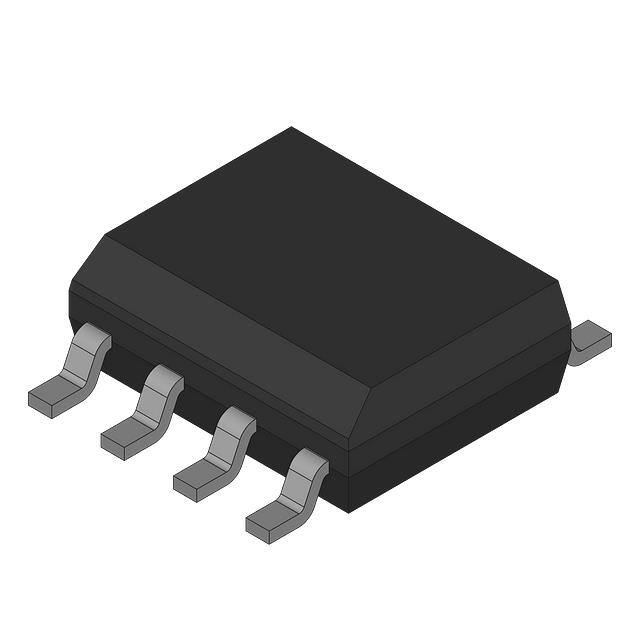
TPS54531 device is available in 8-pin SO
PowerPADTM package that has been internally
optimized to improve thermal performance.
1
•
•
•
•
•
•
•
•
3.5 to 28-V Input Voltage Range
Adjustable Output Voltage Down to 0.8 V
Integrated 80-mΩ High-Side MOSFET Supports
up to 5-A Continuous Output Current
High Efficiency at Light Loads with a Pulse
Skipping Eco-mode™
Fixed 570kHz Switching Frequency
Typical 1μA Shutdown Quiescent Current
Adjustable Slow Start Limits Inrush Currents
Programmable UVLO Threshold
Overvoltage Transient Protection
Cycle-by-Cycle Current-Limit, Frequency Fold
Back, and Thermal Shutdown Protection
Available in Easy-to-Use Thermally Enhanced
8-Pin SO PowerPADTM Package
2 Applications
•
•
•
Consumer Applications such as Set-Top Boxes,
CPE Equipment, LCD Displays, Peripherals, and
Battery Chargers
Industrial and Car Audio Power Supplies
5-V, 12-V and 24-V Distributed Power Systems
Device Information(1)
PART NUMBER
TPS54531
PACKAGE
BODY SIZE (NOM)
SO PowerPAD (8)
4.90 mm × 3.90 mm
(1) For all available packages, see the orderable addendum at
the end of the datasheet.
4 Simplified Schematic
Ren1
EN
VIN
Ren2
TPS54531 Efficiency
VIN
CI
100
TPS54531
90
CBOOT
BOOT
80
LO
VOUT
COMP
D1
CO
RO1
C1
CSS
C2
R3
VSENSE
GND
70
Efficiency - %
PH
SS
VIN = 12 V
VIN = 24 V
60
50
40
30
RO2
20
10
0
0.0
0.5
1.0
1.5
2.0
2.5
3.0
Output Current - A
3.5
4.0
4.5
5.0
C007
1
An IMPORTANT NOTICE at the end of this data sheet addresses availability, warranty, changes, use in safety-critical applications,
intellectual property matters and other important disclaimers. PRODUCTION DATA.
�TPS54531
SLVSBI5A – MAY 2013 – REVISED OCTOBER 2014
www.ti.com
Table of Contents
1
2
3
4
5
6
7
8
Features ..................................................................
Applications ...........................................................
Description .............................................................
Simplified Schematic.............................................
Revision History.....................................................
Pin Configuration and Functions .........................
Specifications.........................................................
1
1
1
1
2
3
4
7.1
7.2
7.3
7.4
7.5
7.6
4
4
4
5
5
6
Absolute Maximum Ratings ......................................
Handling Ratings.......................................................
Recommended Operating Conditions.......................
Thermal Information ..................................................
Electrical Characteristics...........................................
Typical Characteristics ..............................................
Detailed Description .............................................. 8
8.1 Overview ................................................................... 8
8.2 Functional Block Diagram ......................................... 9
8.3 Feature Description................................................... 9
8.4 Device Functional Modes........................................ 12
9
Application and Implementation ........................ 13
9.1 Application Information............................................ 13
9.2 Typical Application .................................................. 13
10 Power Supply Recommendations ..................... 22
11 Layout................................................................... 22
11.1 Layout Guidelines ................................................. 22
11.2 Layout Example .................................................... 23
11.3 Electromagnetic Interference (EMI)
Considerations ......................................................... 23
12 Device and Documentation Support ................. 24
12.1
12.2
12.3
12.4
Device Support......................................................
Trademarks ...........................................................
Electrostatic Discharge Caution ............................
Glossary ................................................................
24
24
24
24
13 Mechanical, Packaging, and Orderable
Information ........................................................... 24
5 Revision History
Changes from Original (May 2013) to Revision A
Page
•
Added the Handling Ratings table, Feature Description section, Device Functional Modes section, Application and
Implementation section, Power Supply Recommendations section, Layout section, Device and Documentation
Support section, and Mechanical, Packaging, and Orderable Information section ............................................................... 1
•
Added equation for Iripple in the Inductor Selection section ................................................................................................... 15
2
Submit Documentation Feedback
Copyright © 2013–2014, Texas Instruments Incorporated
Product Folder Links: TPS54531
�TPS54531
www.ti.com
SLVSBI5A – MAY 2013 – REVISED OCTOBER 2014
6 Pin Configuration and Functions
DDA Package
8-Pin SO With PowerPAD™
Top View
8
PH
7
GND
3
6
COMP
4
5
VSENSE
BOOT
1
VIN
2
EN
SS
PowerPAD
(Pin 9)
TM
Pin Functions
PIN
I/O
NO.
NAME
1
BOOT
2
VIN
3
EN
DESCRIPTION
O
A 0.1-μF bootstrap capacitor is required between the BOOT and PH pins. If the voltage on this
capacitor falls below the minimum requirement, the high-side MOSFET is forced to switch off until the
capacitor is refreshed.
I
This pin is the 3.5- to 28-V input supply voltage.
I
This pin is the enable pin. To disable, pull below 1.25 V. Float this pin to enable. Programming the
input undervoltage lockout with two resistors is recommended.
4
SS
I
This pin is slow-start pin. An external capacitor connected to this pin sets the output rise time.
5
VSENSE
I
This pin is the inverting node of the transconductance (gm) error amplifier.
6
COMP
O
This pin is the error-amplifier output and the input to the PWM comparator. Connect frequency
compensation components to this pin.
7
GND
—
Ground pin
8
PH
O
The PH pin is the source of the internal high-side power MOSFET.
9
PowerPAD™
—
For proper operation, the GND pin must be connected to the exposed pad.
Submit Documentation Feedback
Copyright © 2013–2014, Texas Instruments Incorporated
Product Folder Links: TPS54531
3
�TPS54531
SLVSBI5A – MAY 2013 – REVISED OCTOBER 2014
www.ti.com
7 Specifications
7.1 Absolute Maximum Ratings (1)
over operating free-air temperature range (unless otherwise noted)
Input Voltage
MIN
MAX
VIN
–0.3
30
EN
–0.3
6
BOOT
38
VSENSE
–0.3
3
COMP
–0.3
3
SS
–0.3
3
BOOT-PH
Output Voltage
Source Current
Sink Current
V
8
PH
–0.6
30
V
PH (10 ns transient from ground to negative peak)
–5
EN
100
μA
BOOT
100
mA
10
μA
VSENSE
PH
Current Limit
A
VIN
Current Limit
A
COMP
100
SS
200
Operating Junction Temperature
(1)
UNIT
–40
150
μA
°C
Stresses beyond those listed under absolute maximum ratings may cause permanent damage to the device. These are stress ratings
only, and functional operation of the device at these or any other conditions beyond those indicated under recommended operating
conditions is not implied. Exposure to absolute-maximum-rated conditions for extended periods may affect device reliability.
7.2 Handling Ratings
Tstg
Storage temperature range
V(ESD)
Electrostatic discharge
(1)
(2)
MIN
MAX
UNIT
–65
150
°C
Human body model (HBM), per ANSI/ESDA/JEDEC JS-001,
all pins (1)
–2
2
Charged device model (CDM), per JEDEC specification
JESD22-C101, all pins (2)
–1
1
kV
JEDEC document JEP155 states that 500-V HBM allows safe manufacturing with a standard ESD control process.
JEDEC document JEP157 states that 250-V CDM allows safe manufacturing with a standard ESD control process.
7.3 Recommended Operating Conditions
over operating free-air temperature range (unless otherwise noted)
MIN
TJ
4
MAX
UNIT
Operating Input Voltage on the VIN pin
3.5
28
V
Operating junction temperature
–40
150
°C
Submit Documentation Feedback
Copyright © 2013–2014, Texas Instruments Incorporated
Product Folder Links: TPS54531
�TPS54531
www.ti.com
SLVSBI5A – MAY 2013 – REVISED OCTOBER 2014
7.4 Thermal Information
THERMAL METRIC (1)
DDA
RθJA
Junction-to-ambient thermal resistance
RθJC(top)
Junction-to-case (top) thermal resistance
63.2
RθJB
Junction-to-board thermal resistance
31.5
ψJT
Junction-to-top characterization parameter
14.9
ψJB
Junction-to-board characterization parameter
31.4
RθJC(bot)
Junction-to-case (bottom) thermal resistance
8.3
(1)
UNIT
8 PINS
55
°C/W
For more information about traditional and new thermal metrics, see the IC Package Thermal Metrics application report, SPRA953.
7.5 Electrical Characteristics
TJ = –40°C to 150°C, VIN = 3.5V to 28V (unless otherwise noted)
PARAMETER
TEST CONDITIONS
MIN
TYP
MAX
UNIT
SUPPLY VOLTAGE (VIN PIN)
Internal undervoltage lockout threshold Rising and falling
3.5
V
1
4
μA
VSENSE = 0.85 V
110
190
μA
Enable threshold
Rising and falling
1.25
1.35
Input current
Enable threshold – 50 mV
–1
μA
Input current
Enable threshold + 50 mV
–4
μA
Shutdown supply current
EN = 0V, VIN = 12V, –40°C to 85°C
Operating – non-switching supply
current
ENABLE AND UVLO (EN PIN)
V
VOLTAGE REFERENCE
Voltage reference
0.772
0.8
0.828
BOOT-PH = 3 V, VIN = 3.5 V
115
200
BOOT-PH = 6 V, VIN = 12 V
80
150
–2 μA < I(COMP) < 2 μA, V(COMP) = 1 V
92
V
HIGH-SIDE MOSFET
On resistance
mΩ
ERROR AMPLIFIER
Error amplifier transconductance (gm)
Error amplifier DC gain
(1)
μmhos
VSENSE = 0.8 V
800
V/V
Error amplifier unity gain bandwidth (1)
5 pF capacitance from COMP to GND pins
2.7
MHz
Error amplifier source/sink current
V(COMP) = 1 V, 100-mV overdrive
±7
μA
Switch current to COMP
transconductance (1)
VIN = 12 V
20
A/V
SWITCHING FREQUENCY
Switching Frequency
VIN = 12V, 25°C
Minimum controllable on time
VIN = 12V, 25°C
Maximum controllable duty ratio (1)
BOOT-PH = 6 V
456
570
684
kHz
105
130
ns
90%
93%
PULSE SKIPPING Eco-mode™
Pulse skipping Eco-mode switch
current threshold
160
mA
10.5
A
165
°C
2
μA
CURRENT LIMIT
Current-limit threshold
VIN = 12 V
6.3
THERMAL SHUTDOWN
Thermal Shutdown
SLOW START (SS PIN)
Charge current
(1)
V(SS) = 0.4 V
Specified by design
Submit Documentation Feedback
Copyright © 2013–2014, Texas Instruments Incorporated
Product Folder Links: TPS54531
5
�TPS54531
SLVSBI5A – MAY 2013 – REVISED OCTOBER 2014
www.ti.com
7.6 Typical Characteristics
4
110
ISD - Shutdown Current - µA
Rdson - On Resistance - mΩ
120
100
90
80
VIN = 12 V
EN = 0V
3
TJ = 150°C
2
TJ = 40°C
TJ = 25°C
1
70
60
–50
0
–25
0
25
50
75
100
125
3
150
8
13
VIN = 12 V
VIN = 12 V
0.818
Vref - Voltage Reference - V
FSW - Oscillator Frequency - kHz
28
0.824
590
580
570
560
0.812
0.806
0.800
0.794
0.788
0.782
550
–50
–25
0
25
50
75
100
125
150
0.776
–50
–25
0
Figure 3. Switching Frequency vs Junction Temperature
130
120
110
VIN = 12 V
–25
0
25
50
75
50
75
100
125
150
100
125
Figure 4. Voltage Reference vs Junction Temperature
Dmin - Minimum Controllable Duty Ratio - %
140
100
–50
25
TJ - Junction Temperature - °C
TJ - Junction Temperature - °C
Tminon - Minimum Controllable On Time - ns
23
Figure 2. Shutdown Quiescent Current vs Input Voltage
Figure 1. ON Resistance vs Junction Temperature
150
7.5
7.0
6.5
6.0
5.5
VIN = 12 V
5.0
–50
–25
0
25
50
75
100
125
150
TJ - Junction Temperature - °C
TJ - Junction Temperature - °C
Figure 5. Minimum Controllable ON Time vs Junction
Temperature
6
18
VIN - Input Voltage - V
TJ - Junction Temperature - °C
Figure 6. Minimum Controllable Duty Ratio vs Junction
Temperature
Submit Documentation Feedback
Copyright © 2013–2014, Texas Instruments Incorporated
Product Folder Links: TPS54531
�TPS54531
www.ti.com
SLVSBI5A – MAY 2013 – REVISED OCTOBER 2014
Typical Characteristics (continued)
12
2.1
Current Limit Threshold (A)
ISS - SS Charge Current - µA
VIN = 12 V
2
11
10
9
8
7
TJ = ±40C
TJ = 25C
TJ = 150C
6
1.9
–50
–25
0
25
50
75
100
125
150
5
3
TJ - Junction Temperature - °C
8
13
18
Input Voltage (V)
Figure 7. SS Charge Current vs Junction Temperature
23
28
C014
Figure 8. Current-Limit Threshold vs Input Voltage
Submit Documentation Feedback
Copyright © 2013–2014, Texas Instruments Incorporated
Product Folder Links: TPS54531
7
�TPS54531
SLVSBI5A – MAY 2013 – REVISED OCTOBER 2014
www.ti.com
8 Detailed Description
8.1 Overview
The TPS54531 device is a 28-V, 5-A, step-down (buck) converter with an integrated high-side n-channel
MOSFET. To improve performance during line and load transients, the device implements a constant-frequency,
current mode control which reduces output capacitance and simplifies external frequency compensation design.
The TPS54531 device has a preset switching frequency of 570 kHz.
The TPS54531 device requires a minimum input voltage of 3.5 V for normal operation. The EN pin has an
internal pullup current source that can be used to adjust the input-voltage undervoltage lockout (UVLO) with two
external resistors. In addition, the pullup current provides a default condition when the EN pin is floating for the
device to operate. The operating current is 110 μA (typical) when not switching and under no load. When the
device is disabled, the supply current is 1 μA (typical).
The integrated 80-mΩ high-side MOSFET allows for high-efficiency power-supply designs with continuous output
currents up to 5 A.
The TPS54531 device reduces the external component count by integrating the boot recharge diode. The bias
voltage for the integrated high-side MOSFET is supplied by an external capacitor on the BOOT to PH pin. The
boot capacitor voltage is monitored by an UVLO circuit and turns the high-side MOSFET off when the voltage
falls below a preset threshold of 2.1 V (typical). The output voltage can be stepped down to as low as the
reference voltage.
By adding an external capacitor, the slow-start time of the TPS54531 device can be adjustable which enables
flexible output filter selection.
To improve the efficiency at light load conditions, the TPS54531 device enters a special pulse skipping Ecomode when the peak inductor current drops below 160 mA (typical).
The frequency foldback reduces the switching frequency during startup and overcurrent conditions to help control
the inductor current. The thermal shut down provides the additional protection under fault conditions.
8
Submit Documentation Feedback
Copyright © 2013–2014, Texas Instruments Incorporated
Product Folder Links: TPS54531
�TPS54531
www.ti.com
SLVSBI5A – MAY 2013 – REVISED OCTOBER 2014
8.2 Functional Block Diagram
EN
VIN
165°C
Thermal
Shutdown
1 mA
3 mA
Shutdown
Shutdown
Logic
1.25 V
Enable
Threshold
Enable
Comparator
Boot
Charge
™
ECO-MODE
Minimum Clamp
Boot
UVLO
2.1V
Error
Amplifier
VSENSE
2 mA
PWM
Comparator
Voltage
Reference
SS
2 kW
0.8 V
PWM
Latch
Gate
Drive
Logic
gm = 92 mA/V
DC gain = 800 V/V
BW = 2.7 MHz
S
Shutdown
BOOT
Current
Sense
R
Q
80 mW
S
Slope
Compensation
PH
Discharge
Logic
VSENSE
Frequency
Shift
Oscillator
GND
COMP
Maximum
Clamp
TPS54531
8.3 Feature Description
8.3.1 Fixed-Frequency PWM Control
The TPS54531 device uses a fixed-frequency, peak-current mode control. The internal switching frequency of
the TPS54531 device is fixed at 570 kHz.
8.3.2 Voltage Reference (Vref)
The voltage reference system produces a ±2% initial accuracy voltage reference (±3.5% over temperature) by
scaling the output of a temperature stable bandgap circuit. The typical voltage reference is designed at 0.8 V.
8.3.3 Bootstrap Voltage (BOOT)
The TPS54531 device has an integrated boot regulator and requires a 0.1-μF ceramic capacitor between the
BOOT and PH pins to provide the gate-drive voltage for the high-side MOSFET. A ceramic capacitor with an
X7R- or X5R-grade dielectric is recommended because of the stable characteristics over temperature and
voltage. To improve drop out, the TPS54531 device is designed to operate at 100% duty cycle as long as the
BOOT-to-PH pin voltage is greater than 2.1 V (typical).
8.3.4 Enable and Adjustable Input Undervoltage Lockout (VIN UVLO)
The EN pin has an internal pullup current-source that provides the default condition of the TPS54531 device
while operating when the EN pin floats.
Submit Documentation Feedback
Copyright © 2013–2014, Texas Instruments Incorporated
Product Folder Links: TPS54531
9
�TPS54531
SLVSBI5A – MAY 2013 – REVISED OCTOBER 2014
www.ti.com
Feature Description (continued)
The TPS54531 device is disabled when the VIN pin voltage falls below the internal VIN UVLO threshold. Using
an external VIN UVLO to add at least 500-mV hysteresis is recommended unless the VIN voltage is greater than
(VOUT + 2 V). To adjust the VIN UVLO with hysteresis, use the external circuitry connected to the EN pin as
shown in Figure 9. When the EN pin voltage exceeds 1.25 V, an additional 3 μA of hysteresis is added. Use
Equation 1 and Equation 2 to calculate the resistor values required for the desired VIN UVLO threshold voltages.
The VSTOP should always be greater than 3.5 V.
TPS54531
VIN
Ren1
1 mA
3 mA
+
EN
Ren2
1.25 V
–
Figure 9. Adjustable Input Undervoltage Lockout
Ren1 =
VSTART - VSTOP
3 mA
where
•
•
VSTART is the input start threshold voltage
VSTOP is the input stop threshold voltage
(1)
VEN
Ren2 =
VSTART - VEN
+ 1 mA
Ren1
where
•
VEN is the enable threshold voltage of 1.25 V
(2)
The external start and stop voltages are approximate. The actual start and stop voltages may vary.
8.3.5 Programmable Slow Start Using SS Pin
Programming the slow-start time externally is highly recommended because no slow-start time is implemented
internally. The TPS54531 device effectively uses the lower voltage of the internal voltage reference or the SS pin
voltage as the reference voltage of the power supply that is fed into the error amplifier and regulates the output
accordingly. A capacitor (CSS) on the SS pin to ground implements a slow-start time. The TPS54531 device has
an internal pullup current source of 2 μA that charges the external slow-start capacitor. Use Equation 3 to
calculate the slow-start time (10% to 90%).
CSS (nF ) ´ Vref (V )
TSS (ms ) =
ISS (mA )
where
•
•
Vref = 0.8 V
ISS = 2 μA
(3)
The slow-start time should be set between 1 ms to 10 ms to ensure good startup behavior. The value slow-start
capacitor should not exceed 27 nF.
During normal operation, the TPS54531 device stops switching if the input voltage drops below the VIN UVLO
threshold, the EN pin is pulled below 1.25 V, or a thermal shutdown event occurs.
10
Submit Documentation Feedback
Copyright © 2013–2014, Texas Instruments Incorporated
Product Folder Links: TPS54531
�TPS54531
www.ti.com
SLVSBI5A – MAY 2013 – REVISED OCTOBER 2014
Feature Description (continued)
8.3.6 Error Amplifier
The TPS54531 device has a transconductance amplifier for the error amplifier. The error amplifier compares the
VSENSE voltage to the internal effective voltage reference presented at the input of the error amplifier. The
transconductance of the error amplifier is 92 μA/V during normal operation. Frequency compensation
components are connected between the COMP pin and ground.
8.3.7 Slope Compensation
In order to prevent the sub-harmonic oscillations when operating the device at duty cycles greater than 50%, the
TPS54531 device adds a built-in slope compensation which is a compensating ramp to the switch-current signal.
8.3.8 Current-Mode Compensation Design
The device is able to work with various types of output capacitors with appropriate compensation designs. For
designs using ceramic output capacitors, proper derating of ceramic output capacitance is recommended when
performing the stability analysis because the actual ceramic capacitance drops considerably from the nominal
value when the applied voltage increases. For the detailed guidelines, see the Detailed Design Procedure
section.
8.3.9 Overcurrent Protection and Frequency Shift
The TPS54531 device implements current mode control that uses the COMP pin voltage to turn off the high-side
MOSFET on a cycle-by-cycle basis. During each cycle the switch current and the COMP pin voltage are
compared. When the peak inductor current intersects the COMP pin voltage, the high-side switch is turned off.
During overcurrent conditions that pull the output voltage low, the error amplifier responds by driving the COMP
pin high, causing the switch current to increase. The COMP pin has a maximum clamp internally, which limits the
output current.
The TPS54531 device provides robust protection during short circuits. Overcurrent runaway is possible in the
output inductor during a short circuit at the output. The TPS54531 device solves this issue by increasing the off
time during short-circuit conditions by lowering the switching frequency. The switching frequency is divided by 1,
2, 4, and 8 as the voltage ramps from 0 V to 0.8 V on VSENSE pin. The relationship between the switching
frequency and the VSENSE pin voltage is listed in Table 1.
Table 1. Switching Frequency Conditions
SWITCHING FREQUENCY
VSENSE PIN VOLTAGE
570 kHz
VSENSE ≥ 0.6 V
570 kHz / 2
0.6 V > VSENSE ≥ 0.4 V
570 kHz / 4
0.4 V > VSENSE ≥ 0.2 V
570 kHz / 8
0.2 V > VSENSE
8.3.10 Overvoltage Transient Protection
The TPS54531 device incorporates an overvoltage transient-protection (OVTP) circuit to minimize output voltage
overshoot when recovering from output fault conditions or strong unload transients. The OVTP circuit includes an
overvoltage comparator to compare the VSENSE pin voltage and internal thresholds. When the VSENSE pin
voltage goes above 109% × Vref, the high-side MOSFET is forced off. When the VSENSE pin voltage falls below
107% × Vref, the high-side MOSFET is enabled again.
8.3.11 Thermal Shutdown
The device implements an internal thermal shutdown to protect the device if the junction temperature exceeds
165°C. The thermal shutdown forces the device to stop switching when the junction temperature exceeds the
thermal trip threshold. When the die temperature decreases below 165°C, the device reinitiates the power-up
sequence.
Submit Documentation Feedback
Copyright © 2013–2014, Texas Instruments Incorporated
Product Folder Links: TPS54531
11
�TPS54531
SLVSBI5A – MAY 2013 – REVISED OCTOBER 2014
www.ti.com
8.4 Device Functional Modes
8.4.1 Eco-mode™
The TPS54531 is designed to operate in pulse skipping Eco-mode at light load currents to boost light load
efficiency. When the peak inductor current is lower than 160 mA (typical), the COMP pin voltage falls to 0.5 V
(typical) and the device enters Eco-mode . When the device is in Eco-mode, the COMP pin voltage is clamped at
0.5-V internally which prevents the high-side integrated MOSFET from switching. The peak inductor current must
rise above 160 mA for the COMP pin voltage to rise above 0.5 V and exit Eco-mode. Because the integrated
current comparator catches the peak inductor current only, the average load current entering Eco-mode varies
with the applications and external output filters.
8.4.2 Operation With VIN < 3.5 V
The device is recommended to operate with input voltages above 3.5 V. The typical VIN UVLO threshold is not
specified and the device can operate at input voltages down to the UVLO voltage. At input voltages below the
actual UVLO voltage, the device does not switch. If the EN pin is externally pulled up or left floating, the device
becomes active when the VIN pin passes the UVLO threshold. Switching begins when the slow-start sequence is
initiated.
8.4.3 Operation With EN Control
The enable threshold voltage is 1.25 V (typical). With the EN pin is held below that voltage the device is disabled
and switching is inhibited even if the VIN pin is above the UVLO threshold. The IC quiescent current is reduced
in this state. If the EN voltage increases above the threshold while the VIN pin is above the UVLO threshold, the
device becomes active. Switching is enabled, and the slow-start sequence is initiated.
12
Submit Documentation Feedback
Copyright © 2013–2014, Texas Instruments Incorporated
Product Folder Links: TPS54531
�TPS54531
www.ti.com
SLVSBI5A – MAY 2013 – REVISED OCTOBER 2014
9 Application and Implementation
NOTE
Information in the following applications sections is not part of the TI component
specification, and TI does not warrant its accuracy or completeness. TI’s customers are
responsible for determining suitability of components for their purposes. Customers should
validate and test their design implementation to confirm system functionality.
9.1 Application Information
The TPS54531 device is typically used as a step-down converter, which converts a voltage from 3.5 V to 28 V to
a lower voltage. WEBENCH® software is available to aid in the design and analysis of circuits.
For additional design needs, see the following devices:
TPS54231
TPS54232
TPS54233
TPS54531
I(max)
2A
2A
2A
5A
TPS54332
3.5 A
Input voltage range
3.5 to 28 V
3.5 to 28 V
3.5 to 28 V
3.5 to 28 V
3.5 to 28 V
Switching frequency (typ)
570 kHz
1000 kHz
285 kHz
570 kHz
1000 kHz
Switch current limit (min)
2.3 A
2.3 A
2.3 A
5.5 A
4.2 A
Pin and package
8SOIC
8SOIC
8SOIC
8SO PowerPAD™
8SO PowerPAD™
9.2 Typical Application
L1
VOUT 5V, 5A
4.7 uH
VOUT
C4
0.1µF
U1
TPS54531
1
VIN 8-28VOLTS
2
VIN
C1
C2
C3
4.7µF
4.7µF
0.01µF
R1
3
665k
4
BOOT
PH
VIN
GND
EN
COMP
SS
VSNS
8
D1
CDBC540-G
0.55V
130k
0.01µF
C9
C10
47µF
open
R4
51.1
7
6
5
C6
R5
C11
2200pF
10.2K
open
C7
9 PWR PAD
C5
R2
C8
47µF
R3
22pF
37.4k
R6
1.96k
Figure 10. Typical Application Schematic
9.2.1 Design Requirements
For this design example, use the values listed in Table 2 as the input parameters
Table 2. Design Parameters
DESIGN PARAMETER
EXAMPLE VALUE
Input voltage range
8 to 28 V
Output voltage
5V
Transient response, 2.5-A load step
ΔVOUT = ±5%
Input ripple voltage
400 mV
Output ripple voltage
30 mV
Output current rating
5A
Operating Frequency
570 kHz
Submit Documentation Feedback
Copyright © 2013–2014, Texas Instruments Incorporated
Product Folder Links: TPS54531
13
�TPS54531
SLVSBI5A – MAY 2013 – REVISED OCTOBER 2014
www.ti.com
9.2.2 Detailed Design Procedure
The following design procedure can be used to select component values for the TPS54531 device. Alternately,
the WEBENCH software can be used to generate a complete design. The WEBENCH software uses an iterative
design procedure and accesses a comprehensive database of components when generating a design. This
section presents a simplified discussion of the design process.
9.2.2.1 Switching Frequency
The switching frequency for the TPS54531 is fixed at 570 kHz.
9.2.2.2 Output Voltage Set Point
The output voltage of the TPS54531 device is externally adjustable using a resistor divider network. As shown in
Figure 10, this divider network is comprised of R5 and R6. The relationship of the output voltage to the resistor
divider is given by Equation 4 and Equation 5:
R5 ´ Vref
R6 =
VOUT - Vref
(4)
é R5 ù
VOUT = Vref ´ ê
+1ú
ë R6 û
(5)
Select a value of R5 to be approximately 10 kΩ. Slightly increasing or decreasing the value of R5 can result in
closer output-voltage matching when using standard value resistors. In this design, R5 = 10.2 kΩ and R6 = 1.96
kΩ, resulting in a 4.96 V output voltage. The 51.1-Ω resistor, R4, is provided as a convenient location to break
the control loop for stability testing.
9.2.2.3 Undervoltage Lockout Set Point
The undervoltage lockout (UVLO) can be adjusted using the external voltage divider network of R1 and R2. R1 is
connected between the VIN and EN pins of the TPS54531 device and R2 is connected between the EN and
GND pins. The UVLO has two thresholds, one for power up when the input voltage is rising and one for power
down or brown outs when the input voltage is falling. For the design example, the minimum input voltage is 8 V.
Therefore the start voltage threshold is set to 7 V with 2-V hysteresis. Use Equation 1 and Equation 2 to
calculate the values for the upper and lower resistor values of R1 and R2.
9.2.2.4 Input Capacitors
The TPS54531 device requires an input decoupling capacitor and, depending on the application, a bulk input
capacitor. The typical recommended value for the decoupling capacitor is 10 μF. A high-quality ceramic type X5R
or X7R is recommended. The voltage rating should be greater than the maximum input voltage. A smaller value
can be used as long as all other requirements are met; however 10 μF has been shown to work well in a wide
variety of circuits. Additionally, some bulk capacitance may be required, especially if the TPS54531 circuit is not
located within about 2 inches from the input voltage source. The value for this capacitor is not critical but should
be rated to handle the maximum input voltage including ripple voltage, and should filter the output so that input
ripple voltage is acceptable. For this design two 4.7-μF capacitors are used for the input decoupling capacitor.
The capacitors are X7R dielectric rated for 50 V. The equivalent series resistance (ESR) is approximately 2 mΩ
and the current rating is 3 A. Additionally, a small 0.01 μF capacitor is included for high frequency filtering.
Use Equation 6 to calculate the input ripple voltage.
IO(MAX) ´ 0.25
DVIN =
+ IO(MAX) ´ ESRMAX
CBULK ´ ƒSW
(
)
where
•
•
•
•
14
IO(MAX) is the maximum load current
CBULK is the bulk capacitor value
ƒSW is the switching frequency
ESRMAX is the maximum series resistance of the bulk capacitor
Submit Documentation Feedback
(6)
Copyright © 2013–2014, Texas Instruments Incorporated
Product Folder Links: TPS54531
�TPS54531
www.ti.com
SLVSBI5A – MAY 2013 – REVISED OCTOBER 2014
The maximum RMS ripple current must also be checked. For worst case conditions, use Equation 7 to calculate
the maximum-RMS input ripple current, ICIN(RMS).
IO(MAX)
ICIN(RMS) =
(7)
2
In this case, the input ripple voltage is 243 mV and the RMS ripple current is 2.5 A.
NOTE
The actual input voltage ripple is greatly affected by parasitics associated with the layout
and the output impedance of the voltage source.
The actual input voltage ripple for this circuit is listed in Table 2 and is larger than the calculated value. This
measured value is still below the specified input limit of 300 mV. The maximum voltage across the input
capacitors would be VIN(MAX) + ΔVIN / 2. The selected bulk and bypass capacitors are each rated for 50 V and the
ripple current capacity is greater than 3 A, both providing ample margin. The maximum ratings for voltage and
current must not be exceeded under any circumstance.
9.2.2.5 Output Filter Components
Two components must be selected for the output filter, LOUT and COUT. Because the TPS54531 is an externally
compensated device, a wide range of filter component types and values can be supported.
9.2.2.5.1 Inductor Selection
To calculate the minimum value of the output inductor, use Equation 8
LMIN =
VOUT ´
(VIN(MAX) - VOUT )
VIN(MAX) ´ KIND ´ IOUT ´ ƒSW
where
•
KIND is a coefficient that represents the amount of inductor ripple current relative to the maximum output
current
(8)
In general, this value is at the discretion of the designer; however, the following guidelines may be used. For
designs using low-ESR output capacitors such as ceramics, a value as high as KIND = 0.3 may be used. When
using higher ESR output capacitors, KIND = 0.2 yields better results.
For this design example, use KIND = 0.3 and the minimum inductor value is calculated as 4.8 μH. For this design,
a close, standard value was chosen: 4.7 μH.
For the output filter inductor, do not exceed the RMS current and saturation current ratings. Use Equation 9 to
calculate the inductor ripple current (Iripple).
Iripple =
(
VOUT × VIN(MAX)
-
VOUT
)
VIN(MAX) × LOUT ´ ƒSW ´ 0.8
(9)
Use Equation 10 to calculate the RMS inductor current.
IL(RMS) =
2
IO(MAX)
(
)
æ VOUT ´ VIN(MAX) - VOUT ö
1
÷
´ ç
+
ç VIN(MAX) ´ LOUT ´ ƒSW ´ 0.8 ÷
12
è
ø
2
(10)
Use Equation 11 to calculate the peak inductor current.
IL(PK) = IO(MAX) +
VOUT ´
(VIN(MAX)
- VOUT
)
1.6 ´ VIN(MAX) ´ LOUT ´ ƒSW
(11)
Submit Documentation Feedback
Copyright © 2013–2014, Texas Instruments Incorporated
Product Folder Links: TPS54531
15
�TPS54531
SLVSBI5A – MAY 2013 – REVISED OCTOBER 2014
www.ti.com
For this design, the RMS inductor current is 5.03 A and the peak inductor current is 5.96 A. The selected
inductor is a Wurth 4.7 μH. This inductor has a saturation current rating of 19 A and an RMS current rating of 7
A, which meets these requirements. Smaller or larger inductor values can be used depending on the amount of
ripple current the designer wants to allow, so long as the other design requirements are met. Larger value
inductors have lower AC current and result in lower output voltage ripple, while smaller inductor values will
increase AC current and output voltage ripple. In general, inductor values for use with the TPS54531 device are
in the range of 1 μH to 47 μH.
9.2.2.5.2 Capacitor Selection
Selecting the value of the output capacitor is based on three primary considerations. The output capacitor
determines the modulator pole, the output voltage ripple, and how the regulator responds to a large change in
load current. The output capacitance must be selected based on the more stringent of these three criteria.
The desired response to a large change in the load current is the first criteria. The output capacitor must supply
the load with current when the regulator can not. This situation occurs if desired hold-up times occur for the
regulator where the output capacitor must hold the output voltage above a certain level for a specified amount of
time after the input power is removed. The regulator is also temporarily not able to supply sufficient output
current if a large, fast increase occurs in the current needs of the load, such as a transition from no load to full
load. The regulator usually requires two or more clock cycles for the control loop to respond to the change in
load current and output voltage and adjust the duty cycle to react to the change. The output capacitor must be
sized to supply the extra current to the load until the control loop responds to the load change. The output
capacitance must be large enough to supply the difference in current for 2 clock cycles while only allowing a
tolerable amount of drop in the output voltage. Use Equation 12 to calculate minimum output capacitance (CO)
required in this case.
2 ´ DIOUT
CO >
ƒSW ´ DVOUT
where
•
•
•
ΔIOUT is the change in output current
ƒSW is the switching frequency of the regulator
ΔVOUT is the allowable change in the output voltage
(12)
For this example, the transient load response is specified as a 5% change in VOUT for a load step of 2.5 A. For
this example, ΔIOUT = 2.5 A and ΔVOUT = 0.05 x 5 = 0.25 V. Using these values results in a minimum capacitance
of 35 μF. This value does not consider the ESR of the output capacitor in the output voltage change. For ceramic
capacitors, the ESR is usually small enough to ignore in this calculation.
Use Equation 13 to calculate the minimum output capacitance needed to meet the output voltage ripple
specification. In this case, the maximum output voltage ripple is 30 mV. Under this requirement Equation 13,
yields 14 µF.
1
1
CO >
´
8 ´ ƒSW VOUTripple
Iripple
where
•
•
•
ƒSW is the switching frequency
VOUTripple is the maximum allowable output voltage ripple
Iripple is the inductor ripple current
(13)
Use Equation 14 to calculate the maximum ESR an output capacitor can have to meet the output-voltage ripple
specification. Equation 14 indicates the ESR should be less than 15.6 mΩ. In this case, the ESR of the ceramic
capacitor is much smaller than 15.6 mΩ.
VOUTripple
RESR <
Iripple
(14)
16
Submit Documentation Feedback
Copyright © 2013–2014, Texas Instruments Incorporated
Product Folder Links: TPS54531
�TPS54531
www.ti.com
SLVSBI5A – MAY 2013 – REVISED OCTOBER 2014
Additional capacitance deratings for aging, temperature, and DC bias should be considered which increases this
minimum value. For this example, two 47-μF 10-V X5R ceramic capacitors with 3 mΩ of ESR are used.
Capacitors generally have limits to the amount of ripple current they can handle without failing or producing
excess heat. An output capacitor that can support the inductor ripple current must be specified. Some capacitor
data sheets specify the RMS (root mean square) value of the maximum ripple current. Use Equation 15 to
calculate the RMS ripple current that the output capacitor must support. For this application, Equation 15 yields
554 mA.
æ VOUT × VIN(MAX) - VOUT ö
1
÷
ICOUT(RMS) =
× ç
ç VIN(MAX) × LOUT × ƒSW × NC ÷
12
è
ø
(15)
(
)
9.2.2.6 Compensation Components
Several possible methods exist to design closed loop compensation for DC-DC converters. For the ideal current
mode control, the design equations can be easily simplified. The power stage gain is constant at low frequencies,
and rolls off at –20 dB/decade above the modulator pole frequency. The power stage phase is 0 degrees at low
frequencies and begins to fall one decade below the modulator pole frequency reaching a minimum of –90
degrees one decade above the modulator pole frequency. Use Equation 16 to calculate the modulator pole
frequency.
IO(MAX)
ƒp_mod =
2p ´ VOUT ´ COUT
(16)
For the TPS54531 device, most circuits have relatively high amounts of slope compensation. As more slope
compensation is applied, the power stage characteristics deviate from the ideal approximations. The phase loss
of the power stage will now approach –180 degrees, making compensation more difficult. The power stage
transfer function can be solved but it requires a tedious calculation. Use the PSpice model to accurately model
the power-stage gain and phase so that a reliable compensation circuit can be designed. Alternately, a direct
measurement of the power stage characteristics can be used. That is the technique used in this design
procedure. For this design, the calculate values are as follows:
L1 = 4.7 µH
C8 and C9 = 47 µF (each)
ESR = 3 mΩ
Figure 11 shows the power stage characteristics.
60
180
Gain
Gain - dB
120
20
60
0
0
-20
-60
Phase - Degrees
Power Stage
Gain = 5.1 dB
@ 20 kHz
40
Phase
-40
-120
-60
10
100
1000
10000
100000
Frequency - Hz
-180
1000000
C011
Figure 11. Power Stage Gain and Phase Characteristics
For this design, the intended crossover frequency is 20 kHz. From the power stage gain and phase plots, the
gain at 20 kHz is 5.1 dB and the phase is about –100 degrees. For 60 degrees of phase margin, additional
phase boost from a feed-forward capacitor in parallel with the upper resistor of the voltage set point divider is not
needed. R3 sets the gain of the compensated error amplifier to be equal and opposite the power stage gain at
crossover. Use Equation 17 to calculate the required value of R3.
Submit Documentation Feedback
Copyright © 2013–2014, Texas Instruments Incorporated
Product Folder Links: TPS54531
17
�TPS54531
SLVSBI5A – MAY 2013 – REVISED OCTOBER 2014
R3 =
10
-GPWRSTG
20
gmea
´
www.ti.com
VOUT
Vref
(17)
To maximize phase gain, the compensator zero is placed one decade below the crossover frequency of 20 kHz.
Use Equation 18 to calculate the required value for C6.
1
C6 =
F
2 × p × R3 × CO
10
(18)
To maximize phase gain the high frequency pole is placed one decade above the crossover frequency of 20 kHz.
The pole can also be useful to offset the ESR of aluminum electrolytic output capacitors. Use Equation 19 to
calculate the value for C7.
1
C7 =
2 × p × R3 × 10 × FCO
(19)
For this design, the calculated values are as follows:
R3 = 37.4 kΩ
C6 = 2200 pF
C7 = 22 pF
9.2.2.7 Bootstrap Capacitor
Every TPS54531 design requires a bootstrap capacitor, C4. The bootstrap capacitor value must be 0.1 μF. The
bootstrap capacitor is located between the PH and BOOT pins. The bootstrap capacitor should be a high-quality
ceramic type with X7R or X5R grade dielectric for temperature stability.
9.2.2.8 Catch Diode
The TPS54531 device sis designed to operate using an external catch diode between the PH and GND pins.
The selected diode must meet the absolute maximum ratings for the application. The reverse voltage must be
higher than the maximum voltage at the PH pin, which is VIN(MAX) + 0.5 V. Peak current must be greater than
IO(MAX) plus on half the peak-to-peak inductor current. The forward-voltage drop should be small for higher
efficiencies. The catch diode conduction time is (typically) longer than the high-side FET on time, so attention
paid to diode parameters can make a marked improvement in overall efficiency. Additionally, check that the
selected device is capable of dissipating the power losses. For this design, a CDBC540-G was selected, with a
reverse voltage of 40 V, forward current of 5 A, and a forward-voltage drop of 0.55 V.
9.2.2.9 Slow-Start Capacitor
The slow-start capacitor determines the minimum amount of time required for the output voltage to reach the
nominal programmed value during power up which is useful if a load requires a controlled voltage slew rate. The
slow-start capacitor is also used if the output capacitance is very large and requires large amounts of current to
quickly charge the capacitor to the output voltage level. The large currents necessary to charge the capacitor
may make the TPS54531 device reach the current limit. Excessive current draw from the input power supply may
cause the input voltage rail to sag. Limiting the output voltage slew rate solves both of these problems. Use
Equation 3 to calculate the value of the slow-start capacitor. For the example circuit, the slow-start time is not too
critical because the output capacitor value is 2 × 47 μF which does not require much current to charge to 5 V.
The example circuit has the slow-start time set to an arbitrary value of 4 ms which requires a 10-nF capacitor.
For the TPS54531 device, ISS is 2 µA and Vref is 0.8 V.
18
Submit Documentation Feedback
Copyright © 2013–2014, Texas Instruments Incorporated
Product Folder Links: TPS54531
�TPS54531
www.ti.com
SLVSBI5A – MAY 2013 – REVISED OCTOBER 2014
9.2.2.10 Output Voltage Limitations
Because of the internal design of the TPS54531 device, any give voltage has both upper and lower output
voltage limits for any given input voltage. The upper limit of the output-voltage set point is constrained by the
maximum duty cycle of 91% and is calculated with Equation 20. The equation assumes the maximum ON
resistance for the internal high-side FET.
VO(MAX) = 0.91 ×
((V
IN(MIN)
)
- IO(MAX) × RDS(on)max + VD
) - (I
O(MAX)
× RL
) - VD
where
•
•
•
•
VIN(MIN) = Minimum input voltage
IO(MAX) = Maximum load current
VD = Catch diode forward voltage
RL = Output inductor series resistance
(20)
The lower limit is constrained by the minimum controllable on time which may be as high as 130 ns. The
approximate minimum output voltage for a given input voltage and minimum load current is given by Equation 21.
VO(MIN) = 0.089 ×
((V
IN(MAX)
)
- IO(MIN) × RDS(on)min + VD
) - (I
O(MIN)
× RL
) - VD
where
•
•
•
•
VIN(MAX) = Maximum input voltage
IO(MIN) = Minimum load current
VD = Catch diode forward voltage
RL = Output inductor series resistance
(21)
This equation assumes nominal on-resistance for the high-side FET and accounts for worst case variation of
operating frequency set point. Any design operating near the operational limits of the device should be carefully
checked to ensure proper functionality.
9.2.2.11 Power Dissipation Estimate
The following formulas show how to estimate the device power dissipation under continuous-conduction mode
(CCM) operations. These formulas should not be used if the device is working in the discontinuous-conduction
mode (DCM) or pulse-skipping Eco-modeTM.
The device power dissipation includes:
1. Conduction loss:
Pcon = IOUT2 × RDS(on) × VOUT / VIN
where
•
•
•
•
IOUT is the output current (A)
RDS(on) is the on-resistance of the high-side MOSFET (Ω)
VOUT is the output voltage (V)
VIN is the input voltage (V)
2. Switching loss:
Psw = 0.5 × 10⁻⁹ × VIN2 × IOUT × ƒSW
where
•
ƒSW is the switching frequency (Hz)
3. Gate charge loss:
Pgc = 22.8 × 10⁻⁹ × ƒSW
4. Quiescent current loss:
Pq = 0.11 × 10⁻³ × VIN
Therefore:
Ptot = Pcon + Psw + Pgc + Pq
where
•
Ptot is the total device power dissipation (W)
Submit Documentation Feedback
Copyright © 2013–2014, Texas Instruments Incorporated
Product Folder Links: TPS54531
19
�TPS54531
SLVSBI5A – MAY 2013 – REVISED OCTOBER 2014
www.ti.com
For given TA:
TJ = TA + Rth × Ptot
where
•
•
•
TJ is the junction temperature (°C)
TA is the ambient temperature (°C)
Rth is the thermal resistance of the package (°C/W)
For given TJMAX = 150°C:
TAMAX = TJMAX– Rth × Ptot
where
•
•
TJMAX is maximum junction temperature (°C)
TAMAX is maximum ambient temperature (°C)
9.2.3 Application Curves
100
100
90
90
80
80
VIN = 12 V
70
VIN = 24 V
Efficiency - %
70
Efficiency - %
VIN = 12 V
60
50
40
60
50
30
30
20
20
10
10
0
0.0
0.5
1.0
1.5
2.0
2.5
3.0
3.5
4.0
4.5
Output Current - A
VIN = 24 V
40
0
0.001
5.0
0.01
0.20
0.1
0.15
0.08
0.05
0.00
-0.05
VIN = 24 V
C008
0.04
IOUT = 2.5 A
0.02
0
-0.02
-0.04
-0.06
-0.15
-0.08
-0.20
-0.1
0.0
0.5
1.0
1.5
2.0
2.5
3.0
3.5
Output Current - A
4.0
4.5
5.0
8
C009
Figure 14. Load Regulation
20
10
0.06
VIN = 12 V
-0.10
1
Figure 13. Low-Current Efficiency
Line Regulation - %
Load Regulation - %
Figure 12. Efficiency
0.10
0.1
Output Current - A
C007
10
12
14
16
18
20
22
Input Voltage - V
24
26
28
C010
Figure 15. Line Regulation
Submit Documentation Feedback
Copyright © 2013–2014, Texas Instruments Incorporated
Product Folder Links: TPS54531
�TPS54531
www.ti.com
SLVSBI5A – MAY 2013 – REVISED OCTOBER 2014
60
180
40
VOUT = 200 mV/div (ac coupled)
120
IOUT = 1 A/div
20
60
0
0
-20
-60
Gain
-40
1.25 A to 3.75 A load step,
slew rate = 500 mA / µsec
Phase - Degrees
Gain - dB
Phase
-120
-60
10
100
1000
10000
100000
-180
1000000
Frequency - Hz
C011
Time = 200 µs/div
Figure 17. Loop Response
Figure 16. Transient Response
VOUT = 20 mV/div (ac coupled)
VOUT = 20 mV/div (ac coupled)
PH = 5 V/div
PH = 5 V/div
Time = 1 µs/div
Time = 500 µs/div
Figure 18. Full-Load Output Ripple
Figure 19. Eco-mode Output Ripple
VIN = 200 mV/div (ac coupled)
VIN = 10 V/div
EN = 2 V/div
PH = 5 V/div
SS = 2 V/div
VOUT = 2 V/div
Time = 1 µs/div
Time = 2 ms/div
Figure 20. Full-Load Input Ripple
Figure 21. Startup Relative to VIN
Submit Documentation Feedback
Copyright © 2013–2014, Texas Instruments Incorporated
Product Folder Links: TPS54531
21
�TPS54531
SLVSBI5A – MAY 2013 – REVISED OCTOBER 2014
www.ti.com
VIN = 10 V/div
VIN = 10 V/div
EN = 2 V/div
EN = 2 V/div
SS = 2 V/div
SS = 2 V/div
VOUT = 2 V/div
VOUT = 2 V/div
Time = 5 ms/div
Time = 2 ms/div
Figure 22. Startup Relative to Enable
Figure 23. Shut Down Relative to VIN
VIN = 10 V/div
EN = 2 V/div
SS = 2 V/div
VOUT = 2 V/div
Time = 5 ms/div
Figure 24. Shut Down Relative to EN
10 Power Supply Recommendations
The device is designed to operate from an input-voltage supply range between 3.5 V and 28 V. This input supply
should be well regulated. If the input supply is located more than a few inches from the converter additional bulk
capacitance may be required in addition to the ceramic bypass capacitors. An electrolytic capacitor with a value
of 100 μF is a typical choice.
11 Layout
11.1 Layout Guidelines
The VIN pin should be bypassed to ground with a low-ESR ceramic bypass capacitor. Care should be taken to
minimize the loop area formed by the bypass capacitor connections, the VIN pin, and the anode of the catch
diode. The typical recommended bypass capacitance is 10-μF ceramic with a X5R or X7R dielectric and the
optimum placement is closest to the VIN pins and the source of the anode of the catch diode. Figure 25 shows a
PCB layout example. The GND pin should be tied to the PCB ground plane at the pin of the device. The PH pin
should be routed to the cathode of the catch diode and to the output inductor. Because the PH connection is the
switching node, the catch diode and output inductor should be located very close to the PH pins, and the area of
the PCB conductor minimized to prevent excessive capacitive coupling. For operation at full rated load, the
exposed thermal pad should be soldered directly to the top-side ground area under the device. Use thermal vias
22
Submit Documentation Feedback
Copyright © 2013–2014, Texas Instruments Incorporated
Product Folder Links: TPS54531
�TPS54531
www.ti.com
SLVSBI5A – MAY 2013 – REVISED OCTOBER 2014
Layout Guidelines (continued)
to connect the top-side ground area to an internal or bottom-layer ground plane. The total copper area must
provide adequate heat dissipation. Additional vias adjacent to the device can be used to improve heat transfer to
the internal or bottom-layer ground plane . The additional external components can be placed approximately as
shown. Obtaining acceptable performance with alternate layout schemes may be possible, however this layout
has been shown to produce good results and is intended as a guideline.
11.2 Layout Example
Vout
OUTPUT
FILTER
CAPACITOR
TOPSIDE
GROUND
AREA
Route BOOT CAPACITOR
trace on other layer to provide
wide path for topside ground
Feedback Trace
CATCH
DIODE
OUTPUT
INDUCTOR
PH
INPUT
BYPASS
CAPACITOR
Vin
UVLO
RESISTOR
DIVIDER
BOOT
PH
VIN
GND
EN
COMP
SS
VSENSE
SLOW START
CAPACITOR
BOOT
CAPACITOR
COMPENSATION
NETWORK
RESISTOR
DIVIDER
EXPOSED
THERMAL PAD
Thermal VIA
Signal VIA
Figure 25. TPS54531DDA Board Layout
11.3 Electromagnetic Interference (EMI) Considerations
As EMI becomes a rising concern in more and more applications, the internal design of the TPS54531 device
includes features to reduce the EMI. The high-side MOSFET gate drive is designed to reduce the PH pin voltage
ringing. The internal IC rails are isolated to decrease the noise sensitivity. A package bond wire scheme is used
to lower the parasitics effects.
To achieve the best EMI performance, external component selection and board layout are equally important.
Follow the steps listed in the Detailed Design Procedure section to prevent potential EMI issues.
Submit Documentation Feedback
Copyright © 2013–2014, Texas Instruments Incorporated
Product Folder Links: TPS54531
23
�TPS54531
SLVSBI5A – MAY 2013 – REVISED OCTOBER 2014
www.ti.com
12 Device and Documentation Support
12.1 Device Support
12.1.1 Development Support
For the WEBENCH Software Tool, go to www.TI.com/WEBENCH.
12.2 Trademarks
Eco-mode, PowerPAD are trademarks of Texas Instruments.
WEBENCH is a registered trademark of Texas Instruments.
All other trademarks are the property of their respective owners.
12.3 Electrostatic Discharge Caution
These devices have limited built-in ESD protection. The leads should be shorted together or the device placed in conductive foam
during storage or handling to prevent electrostatic damage to the MOS gates.
12.4 Glossary
SLYZ022 — TI Glossary.
This glossary lists and explains terms, acronyms, and definitions.
13 Mechanical, Packaging, and Orderable Information
The following pages include mechanical, packaging, and orderable information. This information is the most
current data available for the designated devices. This data is subject to change without notice and revision of
this document. For browser-based versions of this data sheet, refer to the left-hand navigation.
24
Submit Documentation Feedback
Copyright © 2013–2014, Texas Instruments Incorporated
Product Folder Links: TPS54531
�PACKAGE OPTION ADDENDUM
www.ti.com
10-Dec-2020
PACKAGING INFORMATION
Orderable Device
Status
(1)
Package Type Package Pins Package
Drawing
Qty
Eco Plan
(2)
Lead finish/
Ball material
MSL Peak Temp
Op Temp (°C)
Device Marking
(3)
(4/5)
(6)
TPS54531DDA
ACTIVE SO PowerPAD
DDA
8
75
RoHS & Green
NIPDAUAG
Level-2-260C-1 YEAR
-40 to 85
54531
TPS54531DDAR
ACTIVE SO PowerPAD
DDA
8
2500
RoHS & Green
NIPDAUAG
Level-2-260C-1 YEAR
-40 to 85
54531
(1)
The marketing status values are defined as follows:
ACTIVE: Product device recommended for new designs.
LIFEBUY: TI has announced that the device will be discontinued, and a lifetime-buy period is in effect.
NRND: Not recommended for new designs. Device is in production to support existing customers, but TI does not recommend using this part in a new design.
PREVIEW: Device has been announced but is not in production. Samples may or may not be available.
OBSOLETE: TI has discontinued the production of the device.
(2)
RoHS: TI defines "RoHS" to mean semiconductor products that are compliant with the current EU RoHS requirements for all 10 RoHS substances, including the requirement that RoHS substance
do not exceed 0.1% by weight in homogeneous materials. Where designed to be soldered at high temperatures, "RoHS" products are suitable for use in specified lead-free processes. TI may
reference these types of products as "Pb-Free".
RoHS Exempt: TI defines "RoHS Exempt" to mean products that contain lead but are compliant with EU RoHS pursuant to a specific EU RoHS exemption.
Green: TI defines "Green" to mean the content of Chlorine (Cl) and Bromine (Br) based flame retardants meet JS709B low halogen requirements of