Order
Now
Product
Folder
Support &
Community
Tools &
Software
Technical
Documents
Reference
Design
TPS61197
SLVSC25B – JULY 2013 – REVISED JUNE 2017
TPS61197 Single-String White-LED Driver for LCD TV
1 Features
3 Description
•
•
The TPS61197 provides highly integrated solutions
for LCD TV backlighting. This device is a currentmode boost controller driving one WLED string with
multiple LEDs in series. The TPS61197 adjusts the
output voltage of the boost controller automatically to
provide only the minimum voltage required by the
LED string to generate the setting LED current,
thereby optimizing the efficiency of the driver.
1
•
•
•
•
•
•
•
•
8-V to 30-V Input Voltage
50-kHz to 800-kHz Programmable Switching
Frequency
Adaptive Boost Output to White-LED Voltage
High-Precision PWM Dimming Resolution up to
5000:1
Programmable Overvoltage Protection Threshold
at Output
Programmable Undervoltage Threshold at Input
with Adjustable Hysteresis
Adjustable Soft-Start Time Independent of
Dimming Duty Cycle
Built-in LED Open and IFB Short Protections
Built-in Schottky Diode Open/Short Protection
Thermal Shutdown
The device supports direct PWM brightness dimming
method. During the pulse-width modulation (PWM)
dimming, the white LED current is turned on and off
at the duty cycle and frequency, which are
determined by an external PWM signal. The PWM
dimming frequency ranges from 90 Hz to 22 kHz.
The TPS61197 integrates overcurrent protection,
output short-circuit protection, Schottky diode open
and short protection, LED open protection, LED-string
short protection, and overtemperature shutdown
circuit. The device also provides programmable input
undervoltage lockout (UVLO) threshold and output
overvoltage protection (OVP) threshold. The device is
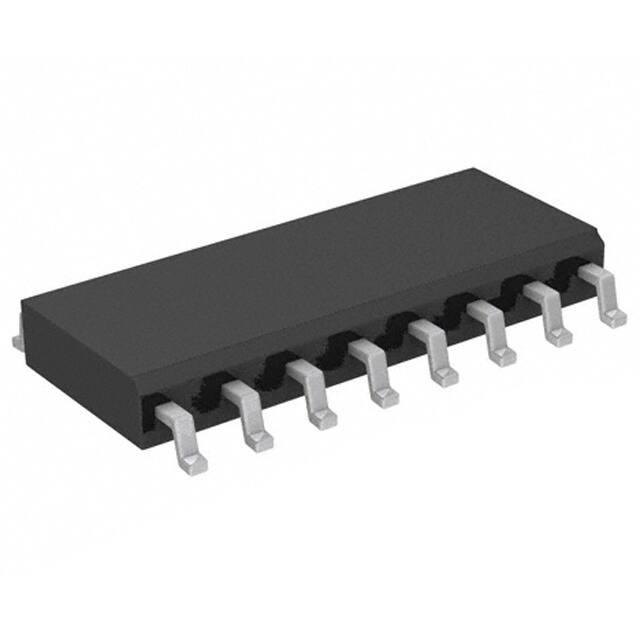
available in a 16-pin SOIC package, which is ideal for
a single-layer PCB board.
2 Applications
•
•
•
LCD TV Backlight
Large LCD TV Displays
Monitors
Device Information(1)
PART NUMBER
TPS61197
PACKAGE
SOIC (16)
BODY SIZE (NOM)
17.90 mm × 7.50 mm
(1) For all available packages, see the orderable addendum at
the end of the data sheet.
Simplified Schematic
L1
68 µH
VIN = 24 V
R11
100 Ÿ
EC2
22 µF
EC1
470 µF
VIN
GDRV
R1
0
R3
1 0Ÿ
Q1
3Ÿ
C2
2.2 µF
ISNS
R1
383 NŸ
R6
300 Ÿ
UVLO
R2
24.9 NŸ
D1
C1
10 nF
PGND
TPS61197
VDD
C3
1 µF
C4
1 nF
R5
0.1 Ÿ
R4
20 NŸ
C5
220 pF
OVP
COMP
FSW
REF
C7
2.2 µF
EN
FAULT
PWM
AGND
R7
300 NŸ
R8
50 NŸ
C6
22 nF
IDRV
Q2
R12
IFB
C8
1 nF
1 NŸ
R9
1Ÿ
Copyright © 2016, Texas Instruments Incorporated
1
An IMPORTANT NOTICE at the end of this data sheet addresses availability, warranty, changes, use in safety-critical applications,
intellectual property matters and other important disclaimers. PRODUCTION DATA.
�TPS61197
SLVSC25B – JULY 2013 – REVISED JUNE 2017
www.ti.com
Table of Contents
1
2
3
4
5
6
7
Features ..................................................................
Applications ...........................................................
Description .............................................................
Revision History.....................................................
Pin Configuration and Functions .........................
Specifications.........................................................
1
1
1
2
3
4
6.1
6.2
6.3
6.4
6.5
6.6
6.7
4
4
4
5
5
6
7
Absolute Maximum Ratings ......................................
ESD Ratings..............................................................
Recommended Operating Conditions.......................
Thermal Information ..................................................
Electrical Characteristics...........................................
Switching Characteristics ..........................................
Typical Characteristics ..............................................
Detailed Description ............................................ 10
7.1 Overview ................................................................. 10
7.2 Functional Block Diagram ....................................... 10
7.3 Feature Description................................................. 10
7.4 Device Functional Modes........................................ 14
8
Application and Implementation ........................ 17
8.1 Application Information............................................ 17
8.2 Typical Applications ............................................... 17
9 Power Supply Recommendations...................... 22
10 Layout................................................................... 23
10.1 Layout Guidelines ................................................. 23
10.2 Layout Example .................................................... 23
11 Device and Documentation Support ................. 24
11.1
11.2
11.3
11.4
11.5
Receiving Notification of Documentation Updates
Community Resources..........................................
Trademarks ...........................................................
Electrostatic Discharge Caution ............................
Glossary ................................................................
24
24
24
24
24
12 Mechanical, Packaging, and Orderable
Information ........................................................... 24
4 Revision History
NOTE: Page numbers for previous revisions may differ from page numbers in the current version.
Changes from Revision A (August 2016) to Revision B
Page
•
Changed R5 value from 0.1 kohm to 0.1 ohm and R6 value from 300 kohm to 300 ohm in Figure 21 .............................. 21
•
Changed R5 value from 0.05 kohm to 0.05 ohm in Figure 22 ............................................................................................. 22
Changes from Original (July 2013) to Revision A
•
2
Page
Added Device Information and Pin Configuration and Functions sections, ESD Ratings table, Feature Description,
Device Functional Modes, Application and Implementation, Power Supply Recommendations, Device and
Documentation Support, and Mechanical, Packaging, and Orderable Information sections ................................................. 1
Submit Documentation Feedback
Copyright © 2013–2017, Texas Instruments Incorporated
Product Folder Links: TPS61197
�TPS61197
www.ti.com
SLVSC25B – JULY 2013 – REVISED JUNE 2017
5 Pin Configuration and Functions
D Package
16-Pin SOIC
Top View
UVLO
1
16
VIN
EN
2
15
FAULT
PWM
3
14
FSW
AGND
4
13
VDD
REF
5
12
GDRV
COMP
6
11
PGND
IFB
7
10
OVP
IDRV
8
9
ISNS
Pin Functions
PIN
TYPE
DESCRIPTION
NO.
NAME
1
UVLO
I
Low input undervoltage lockout. Use a resister divider from VIN to this pin to set the UVLO threshold.
2
EN
I
Device enable and disable control input. EN pin high voltage enables the device. EN pin low voltage disables
the device.
3
PWM
I
PWM dimming signal input. The frequency of the PWM signal is in the range of 90 Hz to 22 kHz.
4
AGND
G
Analog ground
5
REF
O
Internal reference voltage for the boost converter. Use a capacitor at this pin to adjust the soft-start time.
6
COMP
O
Loop compensation for the boost converter. Connect a RC network to make loop stable
7
IFB
I
Regulated current sink input pin. A resistor on this pin is used to set a desired string current.
8
IDRV
O
PWM dimming output control pin to drive the external MOSFET or bipolar transistor
9
ISNS
I
External switch MOSFET current sense positive input
10
OVP
I
Overvoltage protection detection input. Connect a resistor divider from output to this pin to program the OVP
threshold. In addition, this pin is also the feedback of the output voltage of the boost converter.
11
PGND
G
External MOSFET current sense ground input
12
GDRV
O
Gate driver output for the external switch MOSFET
13
VDD
O
Internal regulator output for device power supply. Connect a ceramic capacitor of more than 1 µF to this pin.
14
FSW
O
Boost switching frequency setting pin. Use a resistor to set the frequency from 50 kHz to 800 kHz.
15
FAULT
O
Fault indicator. Open-drain output. Output high impedance when fault conditions happen.
16
VIN
I
Power supply input pin
Submit Documentation Feedback
Copyright © 2013–2017, Texas Instruments Incorporated
Product Folder Links: TPS61197
3
�TPS61197
SLVSC25B – JULY 2013 – REVISED JUNE 2017
www.ti.com
6 Specifications
6.1 Absolute Maximum Ratings
over operating free-air temperature range (unless otherwise noted) (1)
Voltage range (2)
MIN
MAX
Pin VIN
–0.3
33
Pin FAULT
–0.3
VIN
Pin ISNS, IFB
–0.3
3.3
Pin EN, PWM, VDD, GDRV, IDRV
–0.3
20
–2
20
–0.3
7
Pin GDRV 10-ns transient
All other pins
Continuous power dissipation
UNIT
V
See Thermal Information
Operating junction temperature range
–40
150
°C
Storage temperature, Tstg
–65
150
°C
(1)
(2)
Stresses beyond those listed under Absolute Maximum Ratings may cause permanent damage to the device. These are stress ratings
only, which do not imply functional operation of the device at these or any other conditions beyond those indicated under Recommended
Operating Conditions. Exposure to absolute-maximum-rated conditions for extended periods may affect device reliability.
All voltage values are with respect to network ground terminal.
6.2 ESD Ratings
VALUE
V(ESD)
Electrostatic discharge
Human-body model (HBM), per ANSI/ESDA/JEDEC JS-001 (1)
±2000
Charged-device model (CDM), per JEDEC specification JESD22-C101 (2)
±1000
Machine model
(1)
(2)
UNIT
V
200
JEDEC document JEP155 states that 500-V HBM allows safe manufacturing with a standard ESD control process.
JEDEC document JEP157 states that 250-V CDM allows safe manufacturing with a standard ESD control process.
6.3 Recommended Operating Conditions
over operating free-air temperature range (unless otherwise noted) (1)
MIN
MAX
8
30
V
Output voltage range
VIN
300
V
L1
Inductor
4.7
470
µH
CIN
Input capacitor
10
COUT
Output capacitor
fSW
Boost regulator switching frequency
fDIM
PWM dimming frequency
TA
Operating ambient temperature
TJ
Operating junction temperature
VIN
Input voltage range
VOUT
(1)
4
UNIT
µF
1
220
µF
50
800
kHz
0.09
22
kHz
–40
85
°C
–40
125
°C
Customers need to verify the component value in their application if the values are different from the recommended values.
Submit Documentation Feedback
Copyright © 2013–2017, Texas Instruments Incorporated
Product Folder Links: TPS61197
�TPS61197
www.ti.com
SLVSC25B – JULY 2013 – REVISED JUNE 2017
6.4 Thermal Information
TPS61197
THERMAL METRIC (1)
D (SOIC)
UNITS
16 PINS
RθJA
Junction-to-ambient thermal resistance
85.8
°C/W
RθJCtop
Junction-to-case (top) thermal resistance
44.5
°C/W
RθJB
Junction-to-board thermal resistance
43.3
°C/W
RψJT
Junction-to-top characterization parameter
13.5
°C/W
RψJB
Junction-to-board characterization parameter
42.9
°C/W
(1)
For more information about traditional and new thermal metrics, see Semiconductor and IC Package Thermal Metrics.
6.5 Electrical Characteristics
VIN = 24 V, TA = –40°C to 85°C, typical values are at TA = 25°C, EC1 = 470 μF, EC2 = 22 μF (unless otherwise noted)
PARAMETER
TEST CONDITIONS
MIN
TYP
MAX
UNIT
POWER SUPPLY
VIN
Input voltage range
VVIN_UVLO
Undervoltage lockout threshold
8
VVIN_HYS
VIN UVLO hysteresis
IQ_VIN
Operating quiescent current into VIN
Device enabled, no switching, VIN = 30 V
ISD
Shutdown current
VIN = 12 V
VIN = 30 V
VDD
Regulation voltage for internal circuit
0 mA < IDD < 15 mA
6.6
1.6
VIN falling
6.5
30
V
7
V
300
7
mV
2
mA
25
50
µA
7.4
V
EN and PWM
VH
Logic high input on EN, PWM
VIN = 8 V to 30 V
VL
Logic low input on EN, PWM
VIN = 8 V to 30 V
RPD
Pulldown resistance on EN, PWM
V
0.75
V
400
800
1600
kΩ
1.204
1.229
1.253
V
UVLO
VUVLOTH
IUVLO
Threshold voltage at UVLO pin
UVLO input bias current
VUVLO = VUVLOTH – 50 mV
–0.1
VUVLO = VUVLOTH + 50 mV
–4.4
0.1
-3.9
–3.3
µA
SOFT START
ISS
Soft start charging current
PWM dimming on, VREF< 2 V
200
µA
CURRENT REGULATION
VIFB_REG
IFB pin regulation voltage
VIFB_SCP
IFB short to ground protection
threshold
VIFB_OVP
IFB over voltage protection threshold
IIFB_LEAK
IFB pin leakage current
TJ = 25°C to 85°C
293
300
307
200
1
VIFB = 300 mV
–100
1.1
mV
1.2
V
100
nA
Submit Documentation Feedback
Copyright © 2013–2017, Texas Instruments Incorporated
Product Folder Links: TPS61197
mV
5
�TPS61197
SLVSC25B – JULY 2013 – REVISED JUNE 2017
www.ti.com
Electrical Characteristics (continued)
VIN = 24 V, TA = –40°C to 85°C, typical values are at TA = 25°C, EC1 = 470 μF, EC2 = 22 μF (unless otherwise noted)
PARAMETER
TEST CONDITIONS
MIN
TYP
MAX
UNIT
BOOST REFERENCE VOLTAGE
VREF
Reference voltage range for boost
controller
IREF_LEAK
Leakage current at REF
TJ = –40°C to 85°C
0
3.5
V
–25
25
nA
OSCILLATOR
VFSW
FSW pin reference voltage
1.8
V
µA
ERROR AMPLIFIER
ISINK
Comp pin sink current
VOVP = VREF + 200 mV, VCOMP = 1V
20
ISOURCE
Comp pin source current
VOVP = VREF – 200 mV, VCOMP = 1V
20
GmEA
Error amplifier transconductance
REA
Error amplifier output resistance
90
120
µA
150
20
µS
MΩ
GATE DRIVER
RGDRV_SRC
Gate driver impedance when
sourcing
VGDRV = 7 V, IGDRV = –20 mA
5
10
2
5
Ω
RGDRV_SNK Gate driver impedance when sinking
VDD = 7 V, IGDRV = 20 mA
IGDRV_SRC
Gate driver source current
VDD = 7 V, VGDRV = 5 V
200
mA
IGDRV_SNK
Gate driver sink current
VDD = 7 V, VGDRV = 2 V
400
mA
VPWM_OCP
Overcurrent detection threshold
during PWM
VIN = 8 V to 30 V, TJ = 25°C to 125°C
376
VPFM_OCP
Overcurrent detection threshold
during PFM
400
424
180
Ω
mV
mV
OVP
VOVPTH
Overvoltage protection threshold
2.98
3.04
3.1
V
IOVP_LEAK
Leakage current at OVP pin
–100
0
100
nA
FAULT INDICATOR
IFLT_H
Leakage current at high impedance
VFLT = 24 V
IFLT_L
Sink current at low output
VFLT = 1 V
2
1
nA
5
mA
THERMAL SHUTDOWN
TSTDN
Thermal shutdown threshold
150
°C
THYS
Thermal shutdown threshold
hysteresis
15
°C
6.6 Switching Characteristics
over operating free-air temperature range (unless otherwise noted)
PARAMETER
TEST CONDITIONS
ƒSW
Switching frequency
R = 200 kΩ
D(max)
Maximum duty cycle
fSW = 200 kHz
ton(min)
Minimum pulse width
ƒEA
Error amplifier crossover frequency
6
Submit Documentation Feedback
MIN
TYP
MAX
UNIT
187
200
213
kHz
90%
94%
98%
300
ns
1000
kHz
Copyright © 2013–2017, Texas Instruments Incorporated
Product Folder Links: TPS61197
�TPS61197
www.ti.com
SLVSC25B – JULY 2013 – REVISED JUNE 2017
6.7 Typical Characteristics
Table 1. Table Of Graphs
See Figure 18
TITLE
TEST CONDITIONS
FIGURE
Dimming Linearity
24 LEDs (VOUT = 80 V), VIN = 24 V
Figure 1
Dimming Linearity at Small Dimming Duty
Cycle
24 LEDs (VOUT = 80 V), VIN = 24 V
Figure 2
DC Load Efficiency
fSW = 130 kHz
Figure 3
Switching Frequency Setting
VIN = 24 V
Figure 4
Boost Switching Waveform
VIN = 24 V, VOUT = 80 V, IOUT = 300 mA
Figure 5
Dimming Waveform (2% Dimming)
VIN = 24 V, VOUT = 80 V, IOUT = 300 mA, 100-Hz dimming frequency
Figure 6
Startup Waveform (1% Dimming)
100-Hz dimming frequency, 1% dimming duty cycle
Figure 7
Startup Waveform (100% Dimming)
100-Hz dimming frequency, 100% dimming duty cycle
Figure 8
Shutdown Waveform (1% Dimming)
100-Hz dimming frequency, 1% dimming duty cycle
Figure 9
Shutdown Waveform (100% Dimming)
100-Hz dimming frequenc, 100% dimming duty cycle
Figure 10
LED Open Protection (1% Dimming)
100-Hz dimming frequenc, 1% dimming duty cycle
Figure 11
LED Open Protection (100% Dimming)
100-Hz dimming frequenc, 100% Dimming Duty Cycle
Figure 12
LED String Short Protection (1% Dimming)
100-Hz dimming frequency, 1% dimming duty cycle
Figure 13
LED String Short Protection (100% Dimming) 100-Hz dimming frequency, 1% dimming duty cycle
Figure 14
10
9
300
1kHz Dimming
LED Average Current (mA)
Total LED Average Current (mA)
350
250
200
150
100
100Hz Dimming
50
8
7
1kHz Dimming
6
5
4
3
100Hz Dimming
2
1
0
0
0
10
20
30
40
50
60
70
80
90
100
0
0.5
PWM Dimming Duty Cycle (%)
1
1.5
2
2.5
3
PWM Dimming Duty Cycle (%)
Figure 1. Dimming Linearity
Figure 2. Dimming Linearity at Low Dimming Duty Cycle
900
100
800
700
80
Frequency (kHz)
Efficiency (%)
90
24V Input
12V Input
70
500
400
300
200
24 LEDs (VOUT = 80V)
60
600
100
0
50
0
0.1
0.2
0.3
0.4
0.5
0.6
0.7
0.8
0.9
1
1.1
0
Output Current (A)
100
200
300
400
500
600
700
800
900
Resistance (k:)
Figure 3. DC Load Efficiency
Figure 4. Switching Frequency Setting
Submit Documentation Feedback
Copyright © 2013–2017, Texas Instruments Incorporated
Product Folder Links: TPS61197
7
�TPS61197
SLVSC25B – JULY 2013 – REVISED JUNE 2017
www.ti.com
PWM
5V/div
SW
50V/div
SW
50V/div
Vout (AC)
200mV/div
VOUT (AC)
500mV/div
Inductor
Current
500mA/div
LED Current
200mA/div
40ms/div
4ms/div
Figure 5. Boost Switching Waveform
Figure 6. Dimming Waveform (1% Dimming)
EN
5V/div
EN
5V/div
Input Current
500mA/div
Input Current
500mA/div
VOUT
20V/div
VOUT
20V/div
LED Current
200mA/div
LED Current
200mA/div
40ms/div
40ms/div
Figure 7. Start-up Waveform (1% Dimming)
Figure 8. Start-up Waveform (100% Dimming)
EN
5V/div
EN
5V/div
SW
50V/div
SW
50V/div
VOUT
20V/div
VOUT
20V/div
LED Current
200mA/div
LED Current
200mA/div
1s/div
1s/div
Figure 9. Shutdown Waveform (1% Dimming)
8
Figure 10. Shutdown Waveform (100% Dimming)
Submit Documentation Feedback
Copyright © 2013–2017, Texas Instruments Incorporated
Product Folder Links: TPS61197
�TPS61197
www.ti.com
SLVSC25B – JULY 2013 – REVISED JUNE 2017
FAULT
20V/div
FAULT
20V/div
SW
50V/div
SW
50V/div
VOUT
20V/div
VOUT
20V/div
LED Current
200mA/div
LED Current
200mA/div
20ms/div
20ms/div
Figure 11. LED Open Protection (1% Dimming)
Figure 12. LED Open Protection (100% Dimming)
FAULT
20V/div
FAULT
20V/div
SW
50V/div
SW
50V/div
IFB
2V/div
IFB
2V/div
Short Current
2A/div
Short Current
2A/div
10ms/div
10ms/div
Figure 13. LED String Short Protection (1% Dimming)
Figure 14. LED String Short Protection (100% Dimming)
Submit Documentation Feedback
Copyright © 2013–2017, Texas Instruments Incorporated
Product Folder Links: TPS61197
9
�TPS61197
SLVSC25B – JULY 2013 – REVISED JUNE 2017
www.ti.com
7 Detailed Description
7.1 Overview
The TPS61197 provides a highly integrated solution for LCD TV backlight with high precision pulse width
modulation (PWM) dimming resolution up to 5000:1. This device is a current-mode boost controller driving one
WLED string with multiple LEDs in series. The input voltage range for the device is from 8 V to 30 V.
7.2 Functional Block Diagram
D1
L1
IN
OUT
EC1
EC2
VIN
FAULT
VDD
C2
C3
Power
Supply
EN
Protection
Logic
R1
VDD
UVLO
R2
PWM
Logic
GDRV
Driver
C1
FSW
R7
ISNS
Oscillator
and
Slope
Compensation
Q1
R6
R5
C5
COMP
PGND
OC Protection
R8
400 mV
VDD
C6
EA
OVP
Protection
3V
R3
OVP
Iss
REF
C4
R4
VD
D
C7
PWM
Driver
IDRV
IFB
EA
300 mV
AGND
R9
Copyright © 2016, Texas Instruments Incorporated
7.3 Feature Description
7.3.1 Supply Voltage
The TPS61197 has a built-in linear regulator to supply the device analog and logic circuits. The VDD pin (output
of the regulator) must be connected to a bypass capacitor with more than 1-µF capacitance. VDD only has a
current sourcing capability of 15 mA. VDD voltage is ready after the EN pin is pulled high.
7.3.2 Boost Controller
The TPS61197 regulates the output voltage with peak current mode PWM control. The control circuitry turns on
an external switch FET at the beginning of each switching cycle. The input voltage is applied across the inductor
and stores the energy as the inductor current ramps up. During this portion of the switching cycle, the load
current is provided by the output capacitor. When the inductor current rises to the threshold set by the error
amplifier (EA) output, the switch FET is turned off and the external Schottky diode is forward biased. The
inductor transfers stored energy to replenish the output capacitor and supply the load current. This operation
repeats each switching cycle. The switching frequency is programmed by an external resistor.
10
Submit Documentation Feedback
Copyright © 2013–2017, Texas Instruments Incorporated
Product Folder Links: TPS61197
�TPS61197
www.ti.com
SLVSC25B – JULY 2013 – REVISED JUNE 2017
Feature Description (continued)
A ramp signal from the oscillator is added to the current ramp to provide slope compensation, shown in the
Functional Block Diagram. The duty cycle of the converter is then determined by the PWM logic block which
compares the EA output and the slope compensated current ramp. The feedback loop regulates the OVP pin to
a reference voltage generated by the current regulation control circuit which senses the LED current at the IFB
pin. The output of the EA is connected to the COMP pin. An external RC compensation network must be
connected to the COMP pin to optimize the feedback loop for stability and transient response.
The TPS61197 consistently adjusts the boost output voltage to account for any changes in LED forward
voltages. In the event that the boost controller is not able to regulate the output voltage due to the minimum
pulse width (ton(min), in the Electrical Characteristics table), the TPS61197 enters pulse skip mode. In this mode,
the device keeps the power switch off for several switching cycles to prevent the output voltage from rising above
the regulated voltage. This operation typically occurs in light load condition or when the input voltage is higher
than the output voltage.
7.3.3 Switching Frequency
The switching frequency is programmed from 50 kHz to 800 kHz by an external resistor (R7 in Figure 18). To
determine the resistance by a given frequency, use the curve in Figure 4 or calculate the resistance value by
Equation 1. Table 2 shows the recommended resistance values for some switching frequencies.
40000
fSW
kHz
R7 (k:)
(1)
Table 2. Recommended Resistance Values For
Switching Frequencies
R7 (kΩ)
fSW (kHz)
800
50
400
100
200
200
100
400
80
500
7.3.4 Enable and Undervoltage Lockout
The TPS61197 is enabled with soft start-up when the EN pin voltage is higher than 1.6 V. A voltage of less than
0.75 V disables the TPS61197. An undervoltage lockout (UVLO) protection feature is provided in the TPS61197.
When the voltage at the VIN pin is less than 6.5 V, the TPS61197 is powered off. The TPS61197 resumes the
operation once the voltage at the VIN pin recovers above the hysteresis (VVIN_HYS ) more than the UVLO falling
threshold of input voltage. If a higher UVLO voltage is required, use the UVLO pin as shown in Figure 15 to
adjust the input UVLO threshold by using an external resistor divider. Once the voltage at the UVLO pin exceeds
the 1.229-V threshold, the TPS61197 is powered on and a hysteresis current source of 3.9 µA is added. When
the voltage at the UVLO pin drops lower than 1.229 V, the current source is removed and the TPS61197 is
powered off. The resistors of R1, R2 can be calculated by Equation 2 from required turnon voltage (VSTART) and
turn-off voltage (VSTOP). To avoid noise coupling, the resistor divider R1 and R2 must be close to the UVLO pin.
Placing a filter capacitor of more than 10nF as shown in Figure 15 can eliminate the impact of the switching
ripple of the input voltage and improve the noise immunity.
If the UVLO function is not used, pull up the UVLO pin to the VDD pin.
Submit Documentation Feedback
Copyright © 2013–2017, Texas Instruments Incorporated
Product Folder Links: TPS61197
11
�TPS61197
SLVSC25B – JULY 2013 – REVISED JUNE 2017
www.ti.com
IHYS
VIN
R1
UVLO
R2
Enable
C1
UVLO
Comparator
1.229 V
Copyright © 2016, Texas Instruments Incorporated
Figure 15. UVLO Circuit
R1 =
VSTART - VSTOP
IHYS
where
•
R2 = R1
IHYS is 3.9 µA sourcing current from the UVLO pin
(2)
1.229V
VSTART - 1.229V
(3)
When the UVLO condition happens, the FAULT pin outputs high impedance. As long as the UVLO condition is
removed, the FAULT pin outputs low impedance.
7.3.5 Power-Up Sequencing and Soft Start-up
The input voltage, UVLO pin voltage, EN input signal, and the input dimming PWM signal control the power up of
the TPS61197. After the input voltage is above the required minimal input voltage of 7.5 V, the internal circuit is
ready to be powered up. After the UVLO pin voltage is above the threshold of 1.229 V and the EN signal is high,
the internal LDO and logic circuit are activated. When the PWM dimming signal is high, the soft start-up begins.
12
Submit Documentation Feedback
Copyright © 2013–2017, Texas Instruments Incorporated
Product Folder Links: TPS61197
�TPS61197
www.ti.com
SLVSC25B – JULY 2013 – REVISED JUNE 2017
VIN
Rising Threshold
Falling Threshold
UVLO
EN
40 s
VDD
PWM
FAULT
REF Voltage = OVP Voltage
REF
VOUT
Switching
IFB
Figure 16. Power-Up Sequencing
The TPS61197 has integrated the soft-start circuitry working with an external capacitor at the REF pin to avoid
inrush current during start-up. During the start-up period, the capacitor at the REF pin is charged with a soft-start
current source. When the REF pin voltage is higher than the output feedback voltage at the OVP pin, the boost
controller starts switching, and the output voltage starts to ramp up. At the same time, the LED current regulation
circuit starts to drive the LED string. At the beginning of the soft start, the charge current is 200 µA. Once the
voltage of the REF pin exceeds 2 V, the charge current stops. The output voltage continues to ramp up until the
IFB voltage is in regulation of 300 mV. The total soft-start time is determined by the external capacitance at the
REF pin. The capacitance must be within 470 nF to 4.7 µF for different start-up time.
UVLO
VIN
EN
PWM
Dimming
200uA
Charging
Current
VREF=2V
Dimming Off
(VOUT = VIN ± VD)
IFB voltage
ramps to 300mV
VOUT
Figure 17. Soft-Start Waveforms
Submit Documentation Feedback
Copyright © 2013–2017, Texas Instruments Incorporated
Product Folder Links: TPS61197
13
�TPS61197
SLVSC25B – JULY 2013 – REVISED JUNE 2017
www.ti.com
7.3.6 Current Regulation
The TPS61197 regulates the IFB voltage to 300 mV. Applying a current sense resistor (R9 in the Figure 18) at
the IFB pin to set the required LED current.
VIFB _ REG
ILED =
R9
where
•
VIFB_REG is the IFB pin regulation voltage of 300 mV
(4)
7.3.7 PWM Dimming
LED brightness dimming is set by applying an external PWM signal of 90 Hz to 22 kHz to the PWM pin. Varying
the PWM duty cycle from 0% to 100% adjusts the LED from minimum to maximum brightness, respectively. The
recommended minimum on-time of the LED string is 10 µs. Thus, the TPS61197 has a minimum dimming ratio of
5000:1 at 200 Hz.
When the PWM voltage is pulled low during dimming off, the TPS61197 turns off the LED string and keeps the
boost converter running in pulse frequency modulation (PFM) mode. In PFM mode, the output voltage is kept at
a level which is a little bit lower than that when the PWM voltage is high. Thus, the TPS61197 limits the output
ripple due to the load transient that occurs during PWM dimming.
When the PWM voltages are pulled low for more than 20 ms, to avoid the REF pin voltage dropping due to the
leakage current, the voltage of the REF pin is held by an internal reference voltage, which is a little bit lower than
the REF pin voltage in normal dimming operation. Thus, the output voltage is kept unchanged during the long
dimming off time.
Because the output voltage in long-time dimming off status is almost the same as the normal voltage for turning
the LED on, the TPS61197 turns on the LED very fast without any flicker when recovering from long-time
dimming off to normal dimming operation.
7.3.8 Indication for Fault Conditions
The TPS61197 has an open-drain fault indicator pin to indicate abnormal conditions. When the TPS61197 is
operating normally, the voltage at the FAULT pin is low. When any fault condition happens, the FAULT pin is in
high impedance, which can be pulled up to a high voltage level through an external resistor.
7.4 Device Functional Modes
7.4.1 Protections
The TPS61197 has full set of protections making the system safe to any abnormal conditions. Some protections
latch the TPS61197 in off state until its power supply is recycled or it is disabled and then enabled again. In the
latch-off state, the REF pin voltage is discharged to 0 V.
7.4.1.1 Switch Current Limit Protection Using the ISNS Pin
The TPS61197 monitors the inductor current through the voltage across a sense resistor (R5 in Figure 18) in
order to provide current-limit protection. During the switch FET on period, when the voltage at the ISNS pin rises
above the overcurrent protection threshold (VPWM_OCP or VPFM_OCP in Electrical Characteristics), the device turns
off the FET immediately and does not turn it back on until the next switching cycle. The switch current limit is
equal to VPWM_OCP / R5 (or VPFM_OCP / R5). The current limit is different for PWM mode and PFM mode. In the
PWM mode, the current limit threshold voltage is 400 mV typically. In the PFM mode, it is 180 mV typically.
7.4.1.2 LED Open Protection
When the LED string is open, the IFB pin voltage drops to zero volt during dimming on-time. The TPS61197
keeps increasing the output voltage until it touches the output over-voltage protection threshold. The TPS61197
is then latched off.
14
Submit Documentation Feedback
Copyright © 2013–2017, Texas Instruments Incorporated
Product Folder Links: TPS61197
�TPS61197
www.ti.com
SLVSC25B – JULY 2013 – REVISED JUNE 2017
Device Functional Modes (continued)
7.4.1.3 Schottky Diode Open Protection
When the TPS61197 is enabled, it checks the topology connection first. The TPS61197 detects the voltage at
the OVP pin to check if the Schottky diode is not connected or the boost output is hard-shorted to ground. If the
voltage at the OVP pin is lower than 70 mV for 80 ms, the TPS61197 is locked in off state until the input power is
recycled or the TPS61197 is enabled again.
7.4.1.4 Schottky Diode Short Protection
If the rectifier Schottky diode is shorted, the reverse current from output capacitor to ground is very large when
the switch MOSFET is turned on. The TPS61197 uses a secondary current limit threshold of 800 mV across the
current sense resistor to permanently disable the switching if the threshold is touched.
7.4.1.5 IFB Overvoltage Protection
When the IFB pin reaches the threshold (VIFB_OVP in the Electrical Characteristics table) of 1.1V during startup or
normal operation, the device stops switching and stays in the latch-off state immediately to protect from damage.
This function protects the external dimming MOSFET from damage when the LED string is shorted from the
anode (connecting to output of the boost converter) to its cathode.
7.4.1.6 Output Overvoltage Protection Using the OVP Pin
Use a resistor divider to program the maximum output voltage of the boost converter. To ensure the LED string
can be turned on with setting current, the maximum output voltage must be higher than the forward voltage drop
of the LED string. The maximum required voltage can be calculated by multiplying the maximum LED forward
voltage (VFWD(max) ) and number (n) of series LEDs , and adding extra 2 V to account for regulation and resistor
tolerances and load transients.
The recommended bottom feedback resistor of the resistor divider (R4 in Figure 18) is 20 kΩ. Calculate the top
feedback resistor (R3 in the Figure 18) using Equation 5, where VOUT_OVP is the output overvoltage protection
threshold of the boost converter.
æ VOUT _ OVP
ö
R3 = çç
- 1÷÷ ´ R4
3.04
è
ø
(5)
When the device detects that the OVP pin voltage exceeds the overvoltage protection threshold of 3.04 V,
indicating that the output voltage has exceeded the over-voltage proteciton threshold, the TPS61197 clamps the
output voltage to prevent it going up any more. If the OVP pin voltage does not drop below the OVP threshold for
more than 640 ms, the TPS61197 is latched off until the input power or the EN pin is re-cycled.
7.4.1.7 IFB Short-to-Ground Protection
The TPS61197 monitors the IFB pin voltage when the device is enabled. If the IFB pin voltage is less than 200
mV, the TPS61197 keeps increasing the output voltage until the over-voltage protection or the switch overcurrent
protection happens. If the IFB pin voltage is still under 200 mV for 60 ms in these protection conditions, the
TPS61197 is latched off.
Submit Documentation Feedback
Copyright © 2013–2017, Texas Instruments Incorporated
Product Folder Links: TPS61197
15
�TPS61197
SLVSC25B – JULY 2013 – REVISED JUNE 2017
www.ti.com
Device Functional Modes (continued)
7.4.1.8 Thermal Shutdown
When the internal junction temperature of the TPS61197 is over 150°C, the thermal protection circuit is triggered
and shuts down the device immediately. The device automatically restarts when the junction temperature falls
back to less than 150°C, with approximate 15°C hysteresis.
Table 3. Protection List
FAULT
RESULT
Diode open
PROTECTION ITEM
VOVP < 70 mV for more than 80 ms
Y
Latch off
Diode short
VISNS > 800 mV for three switching cycles
Y
Latch off
Output overvoltage
VOVP > 3.04 V for more than 640 ms
Y
Latch off
LED string open
(VIFB < 200 mV and VOVP > 3.04 V) for more than 60 ms
Y
Latch off
LED string short
VIFB > 1.1 V
Y
Latch off
IFB short to ground
(VIFB < 200 mV and VOVP > 3.04 V) or (VIFB < 200 mV and VISNS > 400 mV) for more
than 60 ms
Y
Latch off
Input voltage under
UVLO threshold
VUVLO < 1.229 V
Y
Retry
Thermal shutdown
TJ > 150°C
Y
Retry
16
FAULT CONDITIONS
Submit Documentation Feedback
Copyright © 2013–2017, Texas Instruments Incorporated
Product Folder Links: TPS61197
�TPS61197
www.ti.com
SLVSC25B – JULY 2013 – REVISED JUNE 2017
8 Application and Implementation
NOTE
Information in the following applications sections is not part of the TI component
specification, and TI does not warrant its accuracy or completeness. TI’s customers are
responsible for determining suitability of components for their purposes. Customers should
validate and test their design implementation to confirm system functionality.
8.1 Application Information
The TPS61197 is designed for LCD TV backlighting. It is a current-mode boost controller driving one white-LED
string with multiple LEDs in series. The input voltage range for the device is from 8 V to 30 V. Its switching
frequency is programmed by an external resistor from 50 kHz to 800 kHz.
The TPS61197 has a built-in linear regulator, which steps down the input voltage to the VDD voltage for
powering the internal circuitry. An internal soft start circuit is implemented to work with an external capacitor to
adjust the soft start-up time to minimize the in-rush current during boost converter start-up.
8.2 Typical Applications
8.2.1 Simple Boost Converter
The TPS61197 is configured as a simple boost converter to drive the single string with the LEDs when the boost
ratio of the output voltage to the input voltage is less than 6.
L1
68 µH
VIN = 24 V
R11
100 Ÿ
EC2
22 µF
EC1
470 µF
VIN
GDRV
R1
0
R3
1 0Ÿ
Q1
3Ÿ
C2
2.2 µF
ISNS
R1
383 NŸ
R6
300 Ÿ
UVLO
R2
24.9 NŸ
D1
C1
10 nF
PGND
TPS61197
VDD
C3
1 µF
C4
1 nF
R5
0.1 Ÿ
R4
20 NŸ
C5
220 pF
OVP
COMP
FSW
REF
C7
2.2 µF
EN
FAULT
PWM
AGND
R7
300 NŸ
R8
50 NŸ
C6
22 nF
IDRV
Q2
R12
IFB
C8
1 nF
1 NŸ
R9
1Ÿ
Copyright © 2016, Texas Instruments Incorporated
Figure 18. TPS61197 Simple Boost-Converter Application
Submit Documentation Feedback
Copyright © 2013–2017, Texas Instruments Incorporated
Product Folder Links: TPS61197
17
�TPS61197
SLVSC25B – JULY 2013 – REVISED JUNE 2017
www.ti.com
Typical Applications (continued)
8.2.1.1 Design Requirements
For LED-driver applications, use the parameters listed in Table 4.
Table 4. Design Parameters
DESIGN PARAMETER
EXAMPLE VALUE
Input voltage
8 V to 30 V
Output voltage
VIN to 300 V
Output current
300 mA (maximum)
Programmable switching frequency
50 kHz to 800 kHz
8.2.1.2 Detailed Design Procedure
8.2.1.2.1 Inductor Selection
The inductor is the most important component in switching power regulator design because it affects power
supply steady state operation, transient behavior, and loop stability. The inductor value, DC resistance and
saturation current are important specifications to be considered for better performance. Although the boost power
stage can be designed to operate in discontinuous conduction mode (DCM) at maximum load, where the
inductor current ramps down to zero during each switching cycle, most applications are more efficient if the
power stage operates in continuous conduction mode (CCM), where a DC current flows through the inductor.
Therefore, the Equation 7 and Equation 8 are for CCM operation only. The TPS61197 device is designed to work
with inductor values from 4.7 µH and 470 µH, depending on the switching frequency. Running the controller at
higher switching frequencies allows the use of smaller and/or lower profile inductors in the 4.7-µH range.
Running the controller at slower switching frequencies requires the use of larger inductors, near 470 µH, to
maintain the same inductor current ripple but may improve overall efficiency due to smaller switching losses.
Inductor values can have ±20% tolerance with no current bias. When the inductor current approaches saturation
level, its inductance can decrease 20% to 35% from the value measured at near 0 A, depending on how the
inductor vendor defines saturation.
In a boost regulator, the inductor DC current can be calculated with Equation 6.
V
´I
IL(DC) = OUT OUT
VIN ´ h
where
•
•
•
•
VOUT = boost output voltage
IOUT = boost output current
VIN = boost input voltage
η = power conversion efficiency, use 95% for TPS61197 applications
(6)
The inductor peak-to-peak ripple current can be calculated with Equation 7.
DIL(P -P) =
VIN ´ (VOUT - VIN )
L ´ fSW ´ VOUT
where
•
•
•
•
•
ΔIL(P-P) = inductor ripple current
L = inductor value
fSW = switching frequency
VOUT = boost output voltage
VIN = boost input voltage
(7)
Therefore, the inductor peak current is calculated with Equation 8.
DIL(P - P )
IL(P) = IL(DC) +
2
18
Submit Documentation Feedback
(8)
Copyright © 2013–2017, Texas Instruments Incorporated
Product Folder Links: TPS61197
�TPS61197
www.ti.com
SLVSC25B – JULY 2013 – REVISED JUNE 2017
Select an inductor, which saturation current is higher than calculated peak current. To calculate the worst case
inductor peak current, use the minimum input voltage, maximum output voltage and maximum load current.
Regulator efficiency is dependent on the resistance of its high current path and switching losses associated with
the switch FET and power diode. Besides the external switch FET, the overall efficiency is also affected by the
inductor DC resistance (DCR). Usually the lower DC resistance shows higher efficiency. However, there is a
tradeoff between DCR and inductor footprint; furthermore, shielded inductors typically have higher DCR than
unshielded ones.
8.2.1.2.2 Output Capacitor
The output capacitor is mainly selected to meet the requirements for output ripple and loop stability of the whole
system. This ripple voltage is related to the capacitance of the capacitor and its equivalent series resistance
(ESR). Assuming a capacitor with zero ESR, the minimum capacitance needed for a given ripple can be
calculated by:
I
´ DMAX
VRIPPLE(C) = OUT
fSW ´ COUT
where
•
•
VRIPPLE is the peak-to-peak output voltage ripple
DMAX is the maximum duty cycle of the boost converter in the application
(9)
DMAX is approximately equal to (VOUT(MAX) – VIN(MIN) / VOUT(MAX)) in applications. Care must be taken when
evaluating a capacitor’s derating under DC voltage. The DC bias voltage can also significantly reduce
capacitance. Ceramic capacitors can loss as much as 50% of its capacitance at its rated voltage. Therefore,
leave the margin on the voltage rating to ensure adequate capacitance.
The ESR impact on the output ripple must be considered as well if tantalum or aluminum electrolytic capacitors
are used. Assuming there is enough capacitance such that the ripple due to the capacitance can be ignored, the
ESR needed to limit the VRIPPLE is:
VRIPPLE(ESR ) = IL(P) ´ ESR
(10)
Ripple current flowing through a capacitor’s ESR causes power dissipation in the capacitor. This power
dissipation causes temperature increase internally to the capacitor. Excessive temperature can seriously shorten
the expected life of a capacitor. Capacitors have ripple current ratings that are dependent on ambient
temperature and must not be exceeded. Therefore, high ripple current type electrolytic capacitor with small ESR
is used in the typical application as shown in Figure 18.
In the typical application, the output requires a capacitor in the range of 1 µF to 100 µF. The output capacitor
affects the small signal control loop stability of the boost converter. If the output capacitor is below the range, the
boost regulator may potentially become unstable.
8.2.1.2.3 Schottky Diode
The TPS61197 demands a high-speed rectification for optimum efficiency. Ensure that the average and peak
current rating of the diode exceed the output LED current and inductor peak current. In addition, the reverse
breakdown voltage of the diode must exceed the application output voltage.
8.2.1.2.4 Switch MOSFET and Gate Driver Resistor
The TPS61197 demands a power N-MOSFET (see Q1 in Figure 18) as a switch. The voltage and current rating
of the MOSFET must be higher than the application output voltage and the inductor peak current. The
applications benefit from the addition of a resistor (see R10 in Figure 18) connected between the GDRV pin and
the gate of the switch MOSFET. With this resistor, the gate driving current is limited and the EMI performance is
improved. TI recommends 3-Ω resistor value. The TPS61197 exhibits lower efficiency when the resistor value is
above 3 Ω due to the more switching loss of the external MOSFET.
Submit Documentation Feedback
Copyright © 2013–2017, Texas Instruments Incorporated
Product Folder Links: TPS61197
19
�TPS61197
SLVSC25B – JULY 2013 – REVISED JUNE 2017
www.ti.com
8.2.1.2.5 Current Sense and Current Sense Filtering
R5 determines the correct overcurrent limit protection. To choose the right value of R5, start with the total system
power needed POUT, and calculate the input current IIN by Equation 6. Efficiency can be estimated from
Figure 20. The second step is to calculate the inductor peak current based on the inductor value L using
Equation 7 and Equation 8. The maximum R5 can now be calculated as R5(maximum) = VISNS_OC / IL(P). TI
recommends adding 20% or more margins to account for component variations. A small filter placed on the ISNS
pin improves performance of the converter (see R6 and C5 in Figure 18). The time constant of this filter must be
approximately 100 ns. The range of R6 must be from about 300 Ω to 1 kΩ for best results. Locate C5 as close as
possible to the ISNS pin to provide noise immunity.
8.2.1.2.6 Loop Consideration
The COMP pin on the TPS61197 is used for external compensation, allowing the loop response to be optimized
for each application. The COMP pin is the output of the internal trans-conductance amplifier. The external
resistor R8, along with ceramic capacitors C6 (see Figure 18), are connected to the COMP pin to provide poles
and zero. The pole and zero, along with the inherent pole and zero in a peak current mode control boost
converter, determine the closed loop frequency response. This is important to converter stability and transient
response.
The first step is to calculate the pole and the right half plane zero of the peak current mode boost converter by
Equation 11 and Equation 12.
2IOUT
fP =
2pVOUT ´ COUT
(11)
2
fZRHP =
VOUT ´ (1 - D )
2pL ´ IOUT
(12)
To make the loop stable, the loop must have sufficient phase margin at the crossover frequency where the loop
gain is 1. To avoid the effect of the right half plane zero on the loop stability, choose the crossover frequency fCO
less than 1/5 of the fZRHP. Then calculate the compensation components by Equation 13 and Equation 14.
R5 ´ 2pfCO ´ COUT VOUT _ OVP
´
R8 =
VOVPTH
(1 - D )´ GmEA
where
•
•
•
•
VOVPTH = 3.04 V, which is the overvoltage protection threshold at the OVP pin
VOUT_OVP is the setting output over-voltage protection threshold
GmEA is the trans-conductance of the error amplifier (the typical value of the GmEA is 120 μs)
fCO is the crossover frequency, which normally is less than 1/5 of the fZRHP
(13)
1
2pfP ´ R8
C6 =
where
•
fP is the pole’s frequency of the power stage calculated by Equation 11
(14)
If the output capacitor is the electrolytic capacitor which may have large ESR, a capacitor is required at the
COMP pin or at the OVP pin to cancel the inherent zero of the output capacitor.
20
Submit Documentation Feedback
Copyright © 2013–2017, Texas Instruments Incorporated
Product Folder Links: TPS61197
�TPS61197
www.ti.com
SLVSC25B – JULY 2013 – REVISED JUNE 2017
100
100
90
90
80
Efficiency (%)
Efficiency (%)
8.2.1.3 Application Curves
24 LEDS (VOUT = 80V)
100Hz Dimming Frequency
70
60
38 LEDs (VOUT = 130V)
100Hz Dimming Frequency
80
70
60
VIN = 12V
VIN = 48V
VIN = 24V
VIN = 24V
50
50
0
10
20
30
40
50
60
70
80
90
100
0
10
20
PWM Dimming Duty Cycle (%)
30
40
50
60
70
80
90
100
PWM Dimming Duty Cycle (%)
Figure 19. Efficiency (24 LEDs)
Figure 20. Efficiency (38 LED)
8.2.2 PWM Dimming Controlled by Boost Converter
The TPS61197 also supports the PWM dimming by turning on and off the boost converter to save cost of the
dimming MOSFET. Figure 21 is the application circuit. This application requires small output capacitance so as
to discharge the output voltage fast during dimming off period. The minimum dimming on time must be longer
than 200 µs to ramp up the output voltage to achieve the setting LED current during dimming on period.
L1
68 µH
VIN = 24 V
R11
100 NŸ
EC2
22 µF
EC1
470 µF
R10
VIN
GDRV
R3
1 0Ÿ
Q1
3Ÿ
C2
2.2 µF
ISNS
R1
383 NŸ
R6
300 Ÿ
UVLO
R2
24.9 NŸ
D1
C1
10 nF
PGND
TPS61197
VDD
C4
1 nF
R5
0.1 Ÿ
R4
20 NŸ
C5
220 pF
OVP
COMP
C3
1 µF
FSW
REF
R7
300 NŸ
C7
2.2 µF
EN
R8
50 NŸ
C6
22 nF
VDD
FAULT
PWM
AGND
IDRV
R12
IFB
C8
1 nF
1 NŸ
R9
1Ÿ
Copyright © 2016, Texas Instruments Incorporated
Figure 21. PWM Dimming By Turning On and Off the Boost Converter
Submit Documentation Feedback
Copyright © 2013–2017, Texas Instruments Incorporated
Product Folder Links: TPS61197
21
�TPS61197
SLVSC25B – JULY 2013 – REVISED JUNE 2017
www.ti.com
8.2.3 High Boost Ratio Application
When the boost ratio is higher than 6, a transformer is required to replace the inductor to make the switching
duty cycle near 50% and lower the voltage rating of the switch FET. Figure 22 is the application circuit.
D1
VIN = 12 V
EC2
22 µF
EC1
470 µF
R11
100 NŸ
R10
VIN
GDRV
C2
2.2 µF
ISNS
R1
383 NŸ
R2
49.9 NŸ
C1
10 nF
PGND
TPS61197
VDD
C4
1 nF
R5
0.05 Ÿ
R6
300 Ÿ
UVLO
R3
1 0Ÿ
Q1
3Ÿ
R4
20 NŸ
C5
220 pF
OVP
COMP
C3
1 µF
FSW
REF
C7
2.2 µF
EN
FAULT
R7
300 NŸ
R8
50 NŸ
C6
22 nF
IDRV
Q2
R12
PWM
IFB
C8 1 NŸ
1 nF
AGND
R9
1Ÿ
Copyright © 2016, Texas Instruments Incorporated
Figure 22. TPS61197 High Boost Ratio Application
9 Power Supply Recommendations
The TPS61197 requires a single-supply input voltage. This voltage can range from 8 V to 30 V and be able to
supply enough current for a given application.
22
Submit Documentation Feedback
Copyright © 2013–2017, Texas Instruments Incorporated
Product Folder Links: TPS61197
�TPS61197
www.ti.com
SLVSC25B – JULY 2013 – REVISED JUNE 2017
10 Layout
10.1 Layout Guidelines
As for all switching power supplies, especially those providing high current and using high switching frequencies,
layout is an important design step. If layout is not carefully done, the regulator could show instability as well as
EMI problems. Therefore, use wide and short traces for high current paths. The VDD capacitor, C3 (see
Figure 18) is the filter and noise decoupling capacitor for the internal linear regulator powering the internal
circuitries. It must be placed as close as possible between the VDD and PGND pin to prevent any noise insertion
to internal circuitry. The switch node at the drain of Q1 carries high current with fast rising and falling edges.
Therefore, the connection between this node to the inductor and the Schottky diode must be kept as short and
wide as possible. The ground of output capacitor EC2 must be kept close to input power ground or through a
large ground plane because of the large ripple current returning to the input ground. When laying out signal
grounds, TI recommends using short traces separate from power ground traces and connecting them together at
a single point. Resistors R3, R4, and R7 (see Figure 18) are setting resistors for switching frequency and output
overvoltage protection. To avoid unexpected noise coupling into the pins and affecting the accuracy, these
resistors must be close to the pins with short and wide traces to AGND pin.
10.2 Layout Example
GND
16
VIN
2
15
FAULT
3
14
FSW
AGND
4
13
VDD
12
GDRV
11
PGND
10
OVP
9
ISNS
REF
5
COMP
6
IFB
7
IDRV
8
TPS61197
1
EN
PWM
UVLO
VIN
VOUT
VLED-
VLED+
Figure 23. TPS61197 Layout
Submit Documentation Feedback
Copyright © 2013–2017, Texas Instruments Incorporated
Product Folder Links: TPS61197
23
�TPS61197
SLVSC25B – JULY 2013 – REVISED JUNE 2017
www.ti.com
11 Device and Documentation Support
11.1 Receiving Notification of Documentation Updates
To receive notification of documentation updates, navigate to the device product folder on ti.com. In the upper
right corner, click on Alert me to register and receive a weekly digest of any product information that has
changed. For change details, review the revision history included in any revised document.
11.2 Community Resources
The following links connect to TI community resources. Linked contents are provided "AS IS" by the respective
contributors. They do not constitute TI specifications and do not necessarily reflect TI's views; see TI's Terms of
Use.
TI E2E™ Online Community TI's Engineer-to-Engineer (E2E) Community. Created to foster collaboration
among engineers. At e2e.ti.com, you can ask questions, share knowledge, explore ideas and help
solve problems with fellow engineers.
Design Support TI's Design Support Quickly find helpful E2E forums along with design support tools and
contact information for technical support.
11.3 Trademarks
E2E is a trademark of Texas Instruments.
All other trademarks are the property of their respective owners.
11.4 Electrostatic Discharge Caution
These devices have limited built-in ESD protection. The leads should be shorted together or the device placed in conductive foam
during storage or handling to prevent electrostatic damage to the MOS gates.
11.5 Glossary
SLYZ022 — TI Glossary.
This glossary lists and explains terms, acronyms, and definitions.
12 Mechanical, Packaging, and Orderable Information
The following pages include mechanical, packaging, and orderable information. This information is the most
current data available for the designated devices. This data is subject to change without notice and revision of
this document. For browser-based versions of this data sheet, refer to the left-hand navigation.
24
Submit Documentation Feedback
Copyright © 2013–2017, Texas Instruments Incorporated
Product Folder Links: TPS61197
�PACKAGE OPTION ADDENDUM
www.ti.com
10-Dec-2020
PACKAGING INFORMATION
Orderable Device
Status
(1)
Package Type Package Pins Package
Drawing
Qty
Eco Plan
(2)
Lead finish/
Ball material
MSL Peak Temp
Op Temp (°C)
Device Marking
(3)
(4/5)
(6)
TPS61197DR
NRND
SOIC
D
16
2500
RoHS & Green
SN
Level-1-260C-UNLIM
-40 to 85
TPS61197
(1)
The marketing status values are defined as follows:
ACTIVE: Product device recommended for new designs.
LIFEBUY: TI has announced that the device will be discontinued, and a lifetime-buy period is in effect.
NRND: Not recommended for new designs. Device is in production to support existing customers, but TI does not recommend using this part in a new design.
PREVIEW: Device has been announced but is not in production. Samples may or may not be available.
OBSOLETE: TI has discontinued the production of the device.
(2)
RoHS: TI defines "RoHS" to mean semiconductor products that are compliant with the current EU RoHS requirements for all 10 RoHS substances, including the requirement that RoHS substance
do not exceed 0.1% by weight in homogeneous materials. Where designed to be soldered at high temperatures, "RoHS" products are suitable for use in specified lead-free processes. TI may
reference these types of products as "Pb-Free".
RoHS Exempt: TI defines "RoHS Exempt" to mean products that contain lead but are compliant with EU RoHS pursuant to a specific EU RoHS exemption.
Green: TI defines "Green" to mean the content of Chlorine (Cl) and Bromine (Br) based flame retardants meet JS709B low halogen requirements of