Product
Folder
Sample &
Buy
Support &
Community
Tools &
Software
Technical
Documents
Reference
Design
TPS7A4501, TPS7A4515, TPS7A4518, TPS7A4525, TPS7A4533
SLVS720F – JUNE 2008 – REVISED NOVEMBER 2015
TPS7A45xx Low-Noise Fast-Transient-Response 1.5-A Low-Dropout Voltage Regulators
1 Features
3 Description
•
•
•
•
•
•
•
•
•
•
•
The TPS7A45xx devices are low-dropout (LDO)
regulators optimized for fast transient response. The
device can supply 1.5 A of output current with a
dropout voltage of 300 mV. Operating quiescent
current is 1 mA, dropping to less than 1 μA in
shutdown. Quiescent current is well controlled; it does
not rise in dropout as with many other regulators. In
addition to fast transient response, the TPS7A45xx
regulators have very-low output noise, which makes
them ideal for sensitive RF supply applications.
1
•
•
•
•
Optimized for Fast Transient Response
Output Current: 1.5 A
High Output Voltage Accuracy: 1% at 25°C
Dropout Voltage: 300 mV
Low Noise: 35 μVRMS (10 Hz to 100 kHz)
High Ripple Rejection: 68 dB at 1 kHz
1-mA Quiescent Current
No Protection Diodes Needed
Controlled Quiescent Current in Dropout
Fixed Output Voltages: 1.5 V, 1.8 V, 2.5 V, 3.3 V
Adjustable Output from 1.21 V to 20 V
(TPS7A4501 Only)
Less Than 1-μA Quiescent Current in Shutdown
Stable With 10-μF Ceramic Output Capacitor
Reverse-Battery Protection
Reverse Current Protection
Output voltage range is from 1.21 to 20 V. The
TPS7A45xx regulators are stable with output
capacitance as low as 10 μF. Small ceramic
capacitors can be used without the necessary
addition of ESR as is common with other regulators.
Internal protection circuitry includes reverse-battery
protection, current limiting, thermal limiting, and
reverse-current protection. The devices are available
in fixed output voltages of 1.5 V, 1.8 V, 2.5 V, 3.3 V,
and as an adjustable device with a 1.21-V reference
voltage.
2 Applications
•
•
•
Industrial
Wireless Infrastructure
Radio-Frequency Systems
Device Information(1)
PART NUMBER
TPS7A45xx
PACKAGE
BODY SIZE (NOM)
SOT-223 (6)
6.50 mm × 7.06 mm
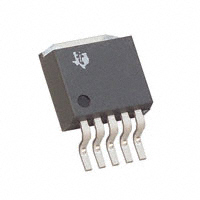
TO-263 (5)
10.16 mm × 15.24 mm
(1) For all available packages, see the orderable addendum at
the end of the data sheet.
Simplified Schematic
Dropout Voltage vs Output Current
500
450
Dropout Voltage – mV
400
350
TA = 125°C
300
250
200
TA = 25°C
150
100
50
0
0
0.2
0.4
0.6
0.8
1
1.2
1.4
1.6
Output Current – A
1
An IMPORTANT NOTICE at the end of this data sheet addresses availability, warranty, changes, use in safety-critical applications,
intellectual property matters and other important disclaimers. PRODUCTION DATA.
�TPS7A4501, TPS7A4515, TPS7A4518, TPS7A4525, TPS7A4533
SLVS720F – JUNE 2008 – REVISED NOVEMBER 2015
www.ti.com
Table of Contents
1
2
3
4
5
6
7
8
Features ..................................................................
Applications ...........................................................
Description .............................................................
Revision History.....................................................
Device Comparison Table.....................................
Pin Configuration and Functions .........................
Specifications.........................................................
1
1
1
2
3
3
4
7.1
7.2
7.3
7.4
7.5
7.6
4
4
4
5
5
8
Absolute Maximum Ratings .....................................
ESD Ratings..............................................................
Recommended Operating Conditions.......................
Thermal Information ..................................................
Electrical Characteristics...........................................
Typical Characteristics ..............................................
Detailed Description ............................................ 13
8.1 Overview ................................................................. 13
8.2 Functional Block Diagram ....................................... 13
8.3 Feature Description................................................. 13
8.4 Device Functional Modes........................................ 16
9
Application and Implementation ........................ 17
9.1 Application Information............................................ 17
9.2 Typical Applications ................................................ 18
10 Power Supply Recommendations ..................... 22
11 Layout................................................................... 22
11.1 Layout Guidelines ................................................. 22
11.2 Layout Example .................................................... 23
11.3 Thermal Considerations ........................................ 24
12 Device and Documentation Support ................. 26
12.1
12.2
12.3
12.4
12.5
Related Links ........................................................
Community Resources..........................................
Trademarks ...........................................................
Electrostatic Discharge Caution ............................
Glossary ................................................................
26
26
26
26
26
13 Mechanical, Packaging, and Orderable
Information ........................................................... 26
4 Revision History
NOTE: Page numbers for previous revisions may differ from page numbers in the current version.
Changes from Revision E (August 2014) to Revision F
Page
•
Corrected the body sizes listed for the packages ................................................................................................................. 1
•
Moved Tstg to Absolute Maximum Ratings table and changed Handling Ratings to ESD Ratings table ............................... 4
•
Relocated Thermal Considerations and Calculating Junction Temperature to Layout ........................................................ 24
•
Added Community Resources ............................................................................................................................................. 26
Changes from Revision D (August 2011) to Revision E
•
Page
Added Handling Rating table, Feature Description section, Device Functional Modes, Application and
Implementation section, Power Supply Recommendations section, Layout section, Device and Documentation
Support section, and Mechanical, Packaging, and Orderable Information section ............................................................... 1
Changes from Revision C (December 2010) to Revision D
•
2
Page
Replaced the Dissipation Ratings table with the Thermal Information table .......................................................................... 5
Submit Documentation Feedback
Copyright © 2008–2015, Texas Instruments Incorporated
Product Folder Links: TPS7A4501 TPS7A4515 TPS7A4518 TPS7A4525 TPS7A4533
�TPS7A4501, TPS7A4515, TPS7A4518, TPS7A4525, TPS7A4533
www.ti.com
SLVS720F – JUNE 2008 – REVISED NOVEMBER 2015
5 Device Comparison Table
DEVICE
OUTPUT VOLTAGE
TPS7A4501
Adjustable
PIN 5
ADJ
TPS7A4515
1.5 V
SENSE
TPS7A4518
1.8 V
SENSE
TPS7A4525
2.5 V
SENSE
TPS7A4533
3.3 V
SENSE
6 Pin Configuration and Functions
GND
DCQ Package
6-Pin SOT-223
Top View
6
5
4
3
2
1
KTT Package
6-Pin TO-263
Top View
SENSE/ADJ
OUT
GND
IN
SHDN
5
4
3
2
1
SENSE/ADJ
OUT
GND
IN
SHDN
Pin Functions
PIN
NO.
1
DESCRIPTION
NAME
SHDN
Shutdown. SHDN is used to put the TPS7A45xx regulators into a low-power shutdown state. The output is off
when SHDN is pulled low. SHDN can be driven by 5-V logic, 3-V logic or open-collector logic with a pullup
resistor. The pullup resistor is required to supply the pullup current of the open-collector gate, normally several
microamperes, and SHDN current, typically 3 μA. If unused, SHDN must be connected to VIN. The device is in
the low-power shutdown state if SHDN is not connected.
2
IN
Input. Power is supplied to the device through IN. A bypass capacitor is required on this pin if the device is more
than six inches away from the main input filter capacitor. In general, the output impedance of a battery rises with
frequency, so it is advisable to include a bypass capacitor in battery-powered circuits. A bypass capacitor
(ceramic) in the range of 1 μF to 10 μF is sufficient. The TPS7A45xx regulators are designed to withstand
reverse voltages on IN with respect to ground and on OUT. In the case of a reverse input, which can happen if a
battery is plugged in backwards, the device acts as if there is a diode in series with its input. There is no reverse
current flow into the regulator, and no reverse voltage appears at the load. The device protects both itself and
the load.
3
GND
Ground.
For the KTT package, the exposed thermal pad is connected to GND and must be soldered to the PCB for rated
thermal performance.
4
OUT
Output. The output supplies power to the load. A minimum output capacitor (ceramic) of 10 μF is required to
prevent oscillations. Larger output capacitors are required for applications with large transient loads to limit peak
voltage transients.
5
ADJ
Adjust. For the adjustable version only (TPS7A4501), this is the input to the error amplifier. ADJ is internally
clamped to ±7 V. It has a bias current of 3 μA that flows into the pin. ADJ voltage is 1.21 V referenced to ground,
and the output voltage range is 1.21 V to 20 V.
5
SENSE
Sense. For fixed-voltage versions (TPS7A4515, TPS7A4518, TPS7A4525, and TPS7A4533), SENSE is the
input to the error amplifier. Optimum regulation is obtained at the point where SENSE is connected to the OUT
pin of the regulator. In critical applications, small voltage drops are caused by the resistance (RP) of PCB traces
between the regulator and the load. These may be eliminated by connecting SENSE to the output at the load as
shown in Figure 32. Note that the voltage drop across the external PCB traces adds to the dropout voltage of the
regulator. SENSE bias current is 600 μA at the rated output voltage. SENSE can be pulled below ground (as in a
dual supply system in which the regulator load is returned to a negative supply) and still allow the device to start
and operate.
6
GND
Ground. DCQ package only.
Copyright © 2008–2015, Texas Instruments Incorporated
Submit Documentation Feedback
Product Folder Links: TPS7A4501 TPS7A4515 TPS7A4518 TPS7A4525 TPS7A4533
3
�TPS7A4501, TPS7A4515, TPS7A4518, TPS7A4525, TPS7A4533
SLVS720F – JUNE 2008 – REVISED NOVEMBER 2015
www.ti.com
7 Specifications
7.1 Absolute Maximum Ratings
over operating virtual-junction temperature range (unless otherwise noted)
(1)
IN
OUT
Input-to-output differential
Input voltage, VIN
(2)
SENSE
MIN
MAX
–20
20
–20
20
–20
20
–20
20
ADJ
–7
7
SHDN
–20
20
Output short-circuit duration, tshort
UNIT
V
Indefinite
Maximum lead temperature (10-s soldering time), Tlead
300
°C
Maximum junction temperature, TJMAX
150
°C
150
°C
Storage temperature, Tstg
(1)
(2)
–65
Stresses beyond those listed under Absolute Maximum Ratings may cause permanent damage to the device. These are stress ratings
only, and functional operation of the device at these or any other conditions beyond those indicated under Recommended Operating
Conditions is not implied. Exposure to conditions beyond the recommended operating maximum for extended periods may affect device
reliability.
Absolute maximum input-to-output differential voltage cannot be achieved with all combinations of rated IN pin and OUT pin voltages.
With the IN pin at 20 V, the OUT pin may not be pulled below 0 V. The total measured voltage from IN to OUT can not exceed ±20 V.
7.2 ESD Ratings
VALUE
V(ESD)
(1)
(2)
Human body model (HBM), per ANSI/ESDA/JEDEC JS-001, all pins
Electrostatic
discharge
(1)
±2000
Charged device model (CDM), per JEDEC specification JESD22-C101, all pins
(2)
±1000
UNIT
V
JEDEC document JEP155 states that 500-V HBM allows safe manufacturing with a standard ESD control process. Pins listed as 2000 V
may actually have higher performance.
JEDEC document JEP157 states that 250-V CDM allows safe manufacturing with a standard ESD control process. Pins listed as 1000 V
may actually have higher performance.
7.3 Recommended Operating Conditions
over operating free-air temperature range (unless otherwise noted)
VIN
Input voltage range (1)
VIH
SHDN high-level input voltage
VIL
SHDN low-level input voltage
TJ
Recommended operating junction temperature range
(1)
4
MIN
MAX
VOUT + VDO
20
V
2
20
V
–40
UNIT
0.25
V
125
°C
TPS7A4501, TPS7A4515, and TPS7A4518 may require a higher minimum input voltage under some output voltage/load conditions as
indicated under Electrical Characteristics.
Submit Documentation Feedback
Copyright © 2008–2015, Texas Instruments Incorporated
Product Folder Links: TPS7A4501 TPS7A4515 TPS7A4518 TPS7A4525 TPS7A4533
�TPS7A4501, TPS7A4515, TPS7A4518, TPS7A4525, TPS7A4533
www.ti.com
SLVS720F – JUNE 2008 – REVISED NOVEMBER 2015
7.4 Thermal Information
TPS7A45xx
THERMAL METRIC
(1) (2)
KTT (TO-263)
DCQ (SOT-223)
5 PINS
6 PINS
UNIT
RθJA
Junction-to-ambient thermal resistance
28.0
50.5
°C/W
RθJC(top)
Junction-to-case (top) thermal resistance
43.0
31.1
°C/W
RθJB
Junction-to-board thermal resistance
17.4
5.1
°C/W
ψJT
Junction-to-top characterization parameter
3.9
1.0
°C/W
ψJB
Junction-to-board characterization parameter
9.4
5.0
°C/W
RθJC(bot)
Junction-to-case (bottom) thermal resistance
0.3
—
°C/W
(1)
(2)
For more information about traditional and new thermal metrics, see the Semiconductor and IC Package Thermal Metrics application
report, SPRA953.
For thermal estimates of this device based on PCB copper area, see the TI PCB Thermal Calculator.
7.5 Electrical Characteristics
Over recommended operating temperature range TJ = –40 to 125°C (unless otherwise noted)
PARAMETER
VIN
Minimum input voltage
TEST CONDITIONS
(3) (4)
1.9
2.1
2.5
VIN = 2.5 V to 20 V,
ILOAD = 1 mA to 1.5 A
VIN = 2.8 V to 20 V,
ILOAD = 1 mA to 1.5 A
(5)
VIN = 3 V, ILOAD = 1 mA
TPS7A4525
VIN = 3.5 V to 20 V,
ILOAD = 1 mA to 1.5 A
VIN = 3.8 V, ILOAD = 1 mA
TPS7A4533
VIN = 4.3 V to 20 V,
ILOAD = 1 mA to 1.5 A
VIN = 2.21 V, ILOAD = 1 mA
Line regulation
(3) (5)
(2)
(3)
(4)
(5)
25°C
1.485
1.5
1.515
Full range
1.447
1.5
1.545
25°C
1.782
1.8
1.818
Full range
1.737
1.8
1.854
25°C
2.475
2.5
2.525
Full range
2.412
2.5
2.575
25°C
3.266
3.3
3.333
3.2
3.3
3.4
Full range
25°C
1.197
1.21
1.222
VIN = 2.5 V to 20 V,
ILOAD = 1 mA to 1.5 A
Full range
1.174
1.21
1.246
TPS7A4515
ΔVIN = 2.21 V to 20 V,
ILOAD = 1 mA
Full range
2
6
TPS7A4518
ΔVIN = 2.3 V to 20 V,
ILOAD = 1 mA
Full range
2.5
7
TPS7A4525
ΔVIN = 3 V to 20 V,
ILOAD = 1 mA
Full range
3
10
TPS7A4533
ΔVIN = 3.8 V to 20 V,
ILOAD = 1 mA
Full range
3.5
10
ΔVIN = 2.21 V to 20 V,
ILOAD = 1 mA
Full range
1.5
3
TPS7A4501
TPS7A4501
(1)
MAX
25°C
VIN = 2.3 V, ILOAD = 1 mA
ADJ pin voltage
(2)
Full range
TPS7A4518
VADJ
TYP
ILOAD = 1.5 A
VIN = 2.21 V, ILOAD = 1 mA
Regulated output voltage
MIN
ILOAD = 0.5 A
TPS7A4515
VOUT
TJ
(1)
(3)
UNIT
V
V
V
mV
The TPS7A45xx regulators are tested and specified under pulse load conditions such that TJ ≉ TA. They are fully tested at TA = 25°C.
Performance at –40 and 125°C is specified by design, characterization, and correlation with statistical process controls.
Typical values represent the likely parametric nominal values determined at the time of characterization. Typical values depend on the
application and configuration and may vary over time. Typical values are not ensured on production material.
The TPS7A4501 is tested and specified for these conditions with the ADJ pin connected to the OUT pin.
For the TPS7A4501, TPS7A4515 and TPS7A4518, dropout voltages are limited by the minimum input voltage specification under some
output voltage/load conditions.
Operating conditions are limited by maximum junction temperature. The regulated output voltage specification does not apply for all
possible combinations of input voltage and output current. When operating at maximum input voltage, the output current range must be
limited. When operating at maximum output current, the input voltage range must be limited.
Copyright © 2008–2015, Texas Instruments Incorporated
Submit Documentation Feedback
Product Folder Links: TPS7A4501 TPS7A4515 TPS7A4518 TPS7A4525 TPS7A4533
5
�TPS7A4501, TPS7A4515, TPS7A4518, TPS7A4525, TPS7A4533
SLVS720F – JUNE 2008 – REVISED NOVEMBER 2015
www.ti.com
Electrical Characteristics (continued)
Over recommended operating temperature range TJ = –40 to 125°C (unless otherwise noted) (1)
PARAMETER
TEST CONDITIONS
TPS7A4515
VIN = 2.5 V,
ΔILOAD = 1 mA to 1.5 A
TPS7A4518
VIN = 2.8 V,
ΔILOAD = 1 mA to 1.5 A
TPS7A4525
VIN = 3.5 V,
ΔILOAD = 1 mA to 1.5 A
TJ
MIN
25°C
VIN = 4.3 V,
ΔILOAD = 1 mA to 1.5 A
TPS7A4533
2
TPS7A4501
VIN = 2.5 V,
ΔILOAD = 1 mA to 1.5 A
ILOAD = 1 mA
(4) (6) (7)
ILOAD = 100 mA
Dropout voltage
VIN = VOUT(NOMINAL)
VDO
ILOAD = 500 mA
ILOAD = 1.5 A
IGND
eN
GND pin current (7) (8)
VIN = VOUT(NOMINAL) + 1
25°C
2
Full range
IADJ
ADJ pin bias current
Shutdown threshold
I SHDN
20
25°C
2.5
Full range
30
3
-40 to +85
°C
30
Full range
70
6
8
Full range
18
25°C
0.02
Full range
0.05
0.06
25°C
0.085
0.10
0.17
0.180
Full range
0.13
25°C
Full range
25°C
0.300
0.350
0.450
1
1.5
ILOAD = 1 mA
Full range
1.1
1.6
ILOAD = 100 mA
Full range
3.3
3.5
ILOAD = 500 mA
Full range
15
17
ILOAD = 1.5 A
Full range
80
90
25°C
35
25°C
Full range
VOUT = ON to OFF
Full range
0.25
3
7
0.9
2
0.75
1
3
20
Quiescent current in shutdown
VIN = 6 V, V SHDN = 0 V
25°C
0.01
1
Ripple rejection
VIN – VOUT = 1.5 V (avg), VRIPPLE = 0.5 VP-P,
fRIPPLE = 120 Hz, ILOAD = 0.75 A
25°C
68
25°C
VIN = VOUT(NOMINAL) + 1
Full range
VIN = –20 V, VOUT = 0 V
Full range
mA
μVRMS
0.01
VIN = 7 V, VOUT = 0 V
V
0.250
Full range
VOUT = OFF to ON
mV
8
25°C
Input reverse leakage current
(9)
2
-40 to +85
°C
25°C
IIL
(8)
20
V SHDN = 20 V
Current limit
(7)
15
V SHDN = 0 V
SHDN pin current
ILIMIT
(6)
10
Full range
(3) (9)
UNIT
9
ILOAD = 0 mA
COUT = 10 μF, ILOAD = 1.5 A,
BW = 10 Hz to 100 kHz
Output voltage noise
MAX
18
25°C
(3)
(2)
Full range
25°C
Load regulation
TYP
μA
V
μA
μA
dB
2
A
1.6
300
μA
Dropout voltage is the minimum input to output voltage differential needed to maintain regulation at a specified output current. In
dropout, the output voltage is equal to: VIN – VDROPOUT.
To satisfy requirements for minimum input voltage, the TPS7A4501 is tested and specified for these conditions with an external resistor
divider (two 4.12-kΩ resistors) for an output voltage of 2.4 V. The external resistor divider adds a 300-µA DC load on the output.
GND pin current is tested with VIN = (VOUT(NOMINAL) + 1 V) and a current source load. The GND pin current decreases at higher input
voltages.
ADJ pin bias current flows into the ADJ pin.
Submit Documentation Feedback
Copyright © 2008–2015, Texas Instruments Incorporated
Product Folder Links: TPS7A4501 TPS7A4515 TPS7A4518 TPS7A4525 TPS7A4533
�TPS7A4501, TPS7A4515, TPS7A4518, TPS7A4525, TPS7A4533
www.ti.com
SLVS720F – JUNE 2008 – REVISED NOVEMBER 2015
Electrical Characteristics (continued)
Over recommended operating temperature range TJ = –40 to 125°C (unless otherwise noted) (1)
PARAMETER
IRO
Reverse output current
TEST CONDITIONS
(10)
TJ
MIN
TYP
(2)
MAX
TPS7A4515
VOUT = 1.5 V, VIN < 1.5 V
25°C
600
1000
TPS7A4518
VOUT = 1.8 V, VIN < 1.8 V
25°C
600
1000
TPS7A4525
VOUT = 2.5 V, VIN < 2.5 V
25°C
600
1000
TPS7A4533
VOUT = 3.3 V, VIN < 3.3 V
25°C
600
1000
TPS7A4501
VOUT = 1.21 V, VIN < 1.21 V
25°C
300
500
UNIT
μA
(10) Reverse output current is tested with the IN pin grounded and the OUT pin forced to the rated output voltage. This current flows into the
OUT pin and out the GND pin.
Copyright © 2008–2015, Texas Instruments Incorporated
Submit Documentation Feedback
Product Folder Links: TPS7A4501 TPS7A4515 TPS7A4518 TPS7A4525 TPS7A4533
7
�TPS7A4501, TPS7A4515, TPS7A4518, TPS7A4525, TPS7A4533
SLVS720F – JUNE 2008 – REVISED NOVEMBER 2015
www.ti.com
7.6 Typical Characteristics
Typical characteristics apply to all TPS7A45xx devices unless otherwise noted.
480
500
450
IOUT = 1.5 A
400
Dropout Voltage – mV
Dropout Voltage – mV
360
350
TA = 125°C
300
250
200
TA = 25°C
150
240
IOUT = 0.5 A
IOUT = 100 mA
120
100
50
IOUT = 1 mA
0
0
0.2
0.4
0.6
0.8
1
1.2
1.4
0
-50
1.6
Figure 1. Dropout Voltage vs Output Current
VIN = 6 V
IOUT = 0 A
VSHDN = VIN
Figure 3. Quiescent Current vs Temperature
IOUT = 1 mA
TPS7A4525
Figure 5. TPS7A4525 Output Voltage vs Temperature
8
Submit Documentation Feedback
-25
0
25
50
75
100
125
TA – Free-Air Temperature – °C
Output Current – A
Figure 2. Dropout Voltage vs Temperature
IOUT = 1 mA
TPS7A4518
Figure 4. TPS7A4518 Output Voltage vs Temperature
IOUT = 1 mA
TPS7A4533
Figure 6. TPS7A4533 Output Voltage vs Temperature
Copyright © 2008–2015, Texas Instruments Incorporated
Product Folder Links: TPS7A4501 TPS7A4515 TPS7A4518 TPS7A4525 TPS7A4533
�TPS7A4501, TPS7A4515, TPS7A4518, TPS7A4525, TPS7A4533
www.ti.com
SLVS720F – JUNE 2008 – REVISED NOVEMBER 2015
Typical Characteristics (continued)
Typical characteristics apply to all TPS7A45xx devices unless otherwise noted.
1.2
1.23
1.225
Quiescent Current (mA)
1
Output Voltage (V)
1.22
1.215
1.21
1.205
1.2
0.8
0.6
0.4
0.2
1.195
0
1.19
-50
0
-25
0
25
50
75
Free-Air Temperature (qC)
IOUT = 1 mA
100
2
125
TJ = 25°C
D020
VIN = 6 V
Figure 7. TPS7A4501 Output Voltage vs Temperature
4
6
8
10
12
Input Voltage (V)
14
16
18
20
D021
ROUT = 4.3 kΩ
VSHDN = VIN
Figure 8. Quiescent Current vs Input Voltage
10
IOUT = 10 mA
IOUT = 100 mA
IOUT = 300 mA
9
Ground Current (mA)
8
7
6
5
4
3
2
1
0
0
1
2
TJ = 25°C
3
4
5
6
Input Voltage (V)
7
8
9
10
D022
VOUT = 1.21 V
VSHDN = VIN
Figure 9. TPS7A4501 Ground Current vs Input Voltage
TJ = 25°C
VSHDN = VIN
Figure 11. TPS7A4533 Ground Current vs Input Voltage
Copyright © 2008–2015, Texas Instruments Incorporated
TJ = 25°C
VOUT = 1.21 V
VSHDN = VIN
Figure 10. TPS7A4501 Ground Current vs Input Voltage
TJ = 25°C
VSHDN = VIN
Figure 12. TPS7A4533 Ground Current vs Input Voltage
Submit Documentation Feedback
Product Folder Links: TPS7A4501 TPS7A4515 TPS7A4518 TPS7A4525 TPS7A4533
9
�TPS7A4501, TPS7A4515, TPS7A4518, TPS7A4525, TPS7A4533
SLVS720F – JUNE 2008 – REVISED NOVEMBER 2015
www.ti.com
Typical Characteristics (continued)
Typical characteristics apply to all TPS7A45xx devices unless otherwise noted.
VSHDN = 0 V
VIN = VOUT(nom) + 1
Figure 13. Ground Current vs Output Current
Figure 14. Quiescent Current in Shutdown vs Input Voltage
2.5
2.25
SHDN Input Current – µA
2
1.75
1.5
1.25
1
0.75
0.5
0.25
0
0
2
4
6
8
10
12
14
16
18
20
SHDN Input Voltage – V
VSHON = 0 V
Figure 15. SHDN Pin Current (ISHDN) vs Temperature
IOUT = 1 mA
IOUT = 1 mA
Figure 17. SHDN Threshold (OFF to ON) vs Temperature
10
Figure 16. SHDN Pin Current (ISHDN) vs SHDN Input Voltage
Submit Documentation Feedback
Figure 18. SHDN Threshold (ON to OFF) vs Temperature
Copyright © 2008–2015, Texas Instruments Incorporated
Product Folder Links: TPS7A4501 TPS7A4515 TPS7A4518 TPS7A4525 TPS7A4533
�TPS7A4501, TPS7A4515, TPS7A4518, TPS7A4525, TPS7A4533
www.ti.com
SLVS720F – JUNE 2008 – REVISED NOVEMBER 2015
Typical Characteristics (continued)
Typical characteristics apply to all TPS7A45xx devices unless otherwise noted.
5
4.5
ADJ Bias Current – µA
4
3.5
3
2.5
2
1.5
1
0.5
0
-50
-25
0
25
50
75
100
125
TA – Free-Air Temperature – °C
ΔVOUT = 100 mV
Figure 19. ADJ Bias Current vs Temperature
VIN = 7 V
VOUT = 0 V
Figure 21. Current Limit vs Temperature
Figure 20. Current Limit vs Input-to-Output Differential
Voltage
TJ = 25°C
VIN = 0 V
Current flows into OUT pin
Figure 22. Reverse Output Current vs Output Voltage
VRIPPLE = 0.05 VPP
VIN = 2.7 V
VIN = 0 V
Figure 23. Reverse Output Current vs Temperature
Copyright © 2008–2015, Texas Instruments Incorporated
CIN = 0
TA = 25°C
COUT = 10 µF (ceramic)
Figure 24. Ripple Rejection vs Frequency
Submit Documentation Feedback
Product Folder Links: TPS7A4501 TPS7A4515 TPS7A4518 TPS7A4525 TPS7A4533
11
�TPS7A4501, TPS7A4515, TPS7A4518, TPS7A4525, TPS7A4533
SLVS720F – JUNE 2008 – REVISED NOVEMBER 2015
www.ti.com
Typical Characteristics (continued)
Typical characteristics apply to all TPS7A45xx devices unless otherwise noted.
IOUT = 1.5 A
COUT = 10 µF
(ceramic)
Figure 25. Load Regulation vs Temperature
VIN = 4.3 V
CIN = 10 µF
COUT = 10 µF (ceramic)
Figure 26. Output Noise Voltage vs Frequency
VIN = 4.3 V
CIN = 10 µF
COUT = 10 µF (ceramic)
Figure 27. Load Transient Response
IOUT = 1.5 A
IOUT = 1.5 A
Figure 28. Load Transient Response
CIN = 10 µF
COUT = 10 µF (ceramic)
Figure 29. Line Transient Response
12
Submit Documentation Feedback
Copyright © 2008–2015, Texas Instruments Incorporated
Product Folder Links: TPS7A4501 TPS7A4515 TPS7A4518 TPS7A4525 TPS7A4533
�TPS7A4501, TPS7A4515, TPS7A4518, TPS7A4525, TPS7A4533
www.ti.com
SLVS720F – JUNE 2008 – REVISED NOVEMBER 2015
8 Detailed Description
8.1 Overview
The TPS7A45xx series are 1.5-A low-dropout regulators optimized for fast transient response. The devices are
capable of supplying 1.5 A at a dropout voltage of 300 mV. The low operating quiescent current (1 mA) drops to
less than 1 μA in shutdown. In addition to the low quiescent current, the TPS7A45xx regulators incorporate
several protection features that make them ideal for use in battery-powered systems. The devices are protected
against both reverse input and reverse output voltages. In battery-backup applications where the output can be
held up by a backup battery when the input is pulled to ground, the TPS7A45xx acts as if it has a diode in series
with its output and prevents reverse current flow. Additionally, in dual-supply applications where the regulator
load is returned to a negative supply, the output can be pulled below ground by as much as (20 V – VIN) and still
allow the device to start and operate.
8.2 Functional Block Diagram
IN
Reverse
Current
Protection
Pass
Element
SHDN
Current
Limit
OUT
Error Amplifier
+
Thermal
Overload
SENSE/ADJ
+
Voltage Reference
Reverse
Voltage
Protection
GND
8.3 Feature Description
8.3.1 Adjustable Operation
The TPS7A4501 has an adjustable output voltage range of 1.21 V to 20 V. The output voltage is set by the ratio
of two external resistors as shown in Figure 30. The device maintains the voltage at the ADJ pin at 1.21 V
referenced to ground. The current in R1 is then equal to (1.21 V/R1), and the current in R2 is the current in R1
plus the ADJ pin bias current. The ADJ pin bias current, 3 μA at 25°C, flows through R2 into the ADJ pin. The
output voltage can be calculated using the formula shown in Equation 1. The value of R1 should be less than
4.17 kΩ to minimize errors in the output voltage caused by the ADJ pin bias current. Note that in shutdown the
output is turned off, and the divider current is zero.
Copyright © 2008–2015, Texas Instruments Incorporated
Submit Documentation Feedback
Product Folder Links: TPS7A4501 TPS7A4515 TPS7A4518 TPS7A4525 TPS7A4533
13
�TPS7A4501, TPS7A4515, TPS7A4518, TPS7A4525, TPS7A4533
SLVS720F – JUNE 2008 – REVISED NOVEMBER 2015
www.ti.com
Figure 30. Adjustable Operation
The output voltage can be set using the following equations:
R2
VOUT = 1.21V(1 +
) + IADJ ´ R2
R1
(1)
(2)
(3)
(4)
VADJ = 1.21 V
IADJ = 3 µA at 25°C
Output Range = 1.21 to 20 V
8.3.2 Fixed Operation
The TPS7A45xx can be used in a fixed voltage configuration. The SENSE/ADJ pin should be connected to OUT
for proper operation. An example of this is shown in Figure 31. The TPS7A4501 can also be used in this
configuration for a fixed output voltage of 1.21 V.
IN
10 µF
(ceramic)
VIN > 3 V
2.5 V at 1.5 A
OUT
10 µF
(ceramic)
TPS7A4525
SENSE
SHDN
GND
Figure 31. 3.3 to 2.5 V Regulator
During fixed voltage operation, the SENSE/ADJ pin can be used for a Kelvin connection if routed separately to
the load. This allows the regulator to compensate for voltage drop across parasitic resistances (RP) between the
output and the load. This becomes more crucial with higher load currents.
RP
IN
OUT
TPS7A4501
VIN
SHDN
SENSE
Load
GND
RP
Figure 32. Kelvin Sense Connection
14
Submit Documentation Feedback
Copyright © 2008–2015, Texas Instruments Incorporated
Product Folder Links: TPS7A4501 TPS7A4515 TPS7A4518 TPS7A4525 TPS7A4533
�TPS7A4501, TPS7A4515, TPS7A4518, TPS7A4525, TPS7A4533
www.ti.com
SLVS720F – JUNE 2008 – REVISED NOVEMBER 2015
8.3.3 Overload Recovery
Like many IC power regulators, the TPS7A45xx has safe operating area protection. The safe area protection
decreases the current limit as input-to-output voltage increases and keeps the power transistor inside a safe
operating region for all values of input-to-output voltage. The protection is designed to provide some output
current at all values of input-to-output voltage up to the device breakdown.
When power is first turned on, as the input voltage rises, the output follows the input, allowing the regulator to
start up into very heavy loads. During start up, as the input voltage is rising, the input-to-output voltage
differential is small, allowing the regulator to supply large output currents. With a high input voltage, a problem
can occur wherein removal of an output short does not allow the output voltage to recover. Other regulators also
exhibit this phenomenon, so it is not unique to the TPS7A45xx.
The problem occurs with a heavy output load when the input voltage is high and the output voltage is low.
Common situations occur immediately after the removal of a short circuit or when the shutdown pin is pulled high
after the input voltage has already been turned on. The load line for such a load may intersect the output current
curve at two points. If this happens, there are two stable output operating points for the regulator. With this
double intersection, the input power supply may need to be cycled down to zero and brought up again to make
the output recover.
8.3.4 Output Voltage Noise
The TPS7A45xx regulators have been designed to provide low output voltage noise over the 10-Hz to 100-kHz
bandwidth while operating at full load. Output voltage noise is typically 35 nV/√Hz over this frequency bandwidth
for the TPS7A4501 (adjustable version). For higher output voltages (generated by using a resistor divider), the
output voltage noise is gained up accordingly. This results in RMS noise over the 10-Hz to 100-kHz bandwidth of
14 μVRMS for the TPS7A4501, increasing to 38 μVRMS for the TPS7A4533.
Higher values of output voltage noise may be measured when care is not exercised with regard to circuit layout
and testing. Crosstalk from nearby traces can induce unwanted noise onto the output of the TPS7A45xx. Powersupply ripple rejection must also be considered; the TPS7A45xx regulators do not have unlimited power-supply
rejection and pass a small portion of the input noise through to the output.
8.3.5 Protection Features
The TPS7A45xx regulators incorporate several protection features which make them ideal for use in batterypowered circuits. In addition to the normal protection features associated with monolithic regulators, such as
current limiting and thermal limiting, the devices are protected against reverse input voltages, reverse output
voltages and reverse voltages from output to input.
Current limit protection and thermal overload protection are intended to protect the device against current
overload conditions at the output of the device. For normal operation, the junction temperature should not exceed
125°C.
The input of the device withstands reverse voltages of 20 V. Current flow into the device is limited to less than
1 mA (typically less than 100 μA), and no negative voltage appears at the output. The device protects both itself
and the load. This provides protection against batteries that can be plugged in backward.
The output of the TPS7A45xx can be pulled below ground without damaging the device. If the input is left open
circuit or grounded, the output can be pulled below ground by 20 V. For fixed voltage versions, the output acts
like a large resistor, typically 5 kΩ or higher, limiting current flow to typically less than 600 μA. For adjustable
versions, the output acts like an open circuit; no current flows out of the pin. If the input is powered by a voltage
source, the output sources the short-circuit current of the device and protects itself by thermal limiting. In this
case, grounding the SHDN pin turns off the device and stops the output from sourcing the short-circuit current.
The ADJ pin of the adjustable device can be pulled above or below ground by as much as 7 V without damaging
the device. If the input is left open circuit or grounded, the ADJ pin acts like an open circuit when pulled below
ground and like a large resistor (typically 5 kΩ) in series with a diode when pulled above ground.
In situations where the ADJ pin is connected to a resistor divider that would pull the ADJ pin above its 7-V clamp
voltage if the output is pulled high, the ADJ pin input current must be limited to less than 5 mA. For example, a
resistor divider is used to provide a regulated 1.5-V output from the 1.21-V reference when the output is forced to
20 V. The top resistor of the resistor divider must be chosen to limit the current into the ADJ pin to less than
5 mA when the ADJ pin is at 7 V. The 13-V difference between OUT and ADJ divided by the 5-mA maximum
current into the ADJ pin yields a minimum top resistor value of 2.6 kΩ.
Copyright © 2008–2015, Texas Instruments Incorporated
Submit Documentation Feedback
Product Folder Links: TPS7A4501 TPS7A4515 TPS7A4518 TPS7A4525 TPS7A4533
15
�TPS7A4501, TPS7A4515, TPS7A4518, TPS7A4525, TPS7A4533
SLVS720F – JUNE 2008 – REVISED NOVEMBER 2015
www.ti.com
In circuits where a backup battery is required, several different input/output conditions can occur. The output
voltage may be held up while the input is either pulled to ground, pulled to some intermediate voltage, or is left
open circuit.
When the IN pin of the TPS7A45xx is forced below the OUT pin or the OUT pin is pulled above the IN pin, input
current typically drops to less than 2 μA. This can happen if the input of the device is connected to a discharged
(low voltage) battery and the output is held up by either a backup battery or a second regulator circuit. The state
of the SHDN pin has no effect on the reverse output current when the output is pulled above the input.
8.4 Device Functional Modes
Table 1 shows the functional modes for the TPS7A45xx.
Table 1. Device Modes
16
Submit Documentation Feedback
SHDN
DEVICE STATE
H
Regulated voltage
L
Shutdown
Copyright © 2008–2015, Texas Instruments Incorporated
Product Folder Links: TPS7A4501 TPS7A4515 TPS7A4518 TPS7A4525 TPS7A4533
�TPS7A4501, TPS7A4515, TPS7A4518, TPS7A4525, TPS7A4533
www.ti.com
SLVS720F – JUNE 2008 – REVISED NOVEMBER 2015
9 Application and Implementation
NOTE
Information in the following applications sections is not part of the TI component
specification, and TI does not warrant its accuracy or completeness. TI’s customers are
responsible for determining suitability of components for their purposes. Customers should
validate and test their design implementation to confirm system functionality.
9.1 Application Information
This section highlights some design considerations for implementing this device in various applications.
9.1.1 Output Capacitance and Transient Response
The TPS7A45xx regulators are designed to be stable with a wide range of output capacitors. The ESR of the
output capacitor affects stability, most notably with small capacitors. A minimum output capacitor of 10 μF with
an ESR of 3 Ω or less is recommended to prevent oscillations. Larger values of output capacitance can decrease
the peak deviations and provide improved transient response for larger load current changes. Bypass capacitors,
used to decouple individual components powered by the TPS7A45xx, increase the effective output capacitor
value.
Extra consideration must be given to the use of ceramic capacitors. Ceramic capacitors are manufactured with a
variety of dielectrics, each with different behavior over temperature and applied voltage. The most common
dielectrics used are Z5U, Y5V, X5R and X7R. The Z5U and Y5V dielectrics are good for providing high
capacitances in a small package, but exhibit strong voltage and temperature coefficients. When used with a 5-V
regulator, a 10-μF Y5V capacitor can exhibit an effective value as low as 1 μF to 2 μF over the operating
temperature range. The X5R and X7R dielectrics result in more stable characteristics and are more suitable for
use as the output capacitor. The X7R type has better stability across temperature, while the X5R is less
expensive and is available in higher values.
Voltage and temperature coefficients are not the only sources of problems. Some ceramic capacitors have a
piezoelectric response. A piezoelectric device generates voltage across its terminals due to mechanical stress,
similar to the way a piezoelectric accelerometer or microphone works. For a ceramic capacitor, the stress can be
induced by vibrations in the system or thermal transients.
Copyright © 2008–2015, Texas Instruments Incorporated
Submit Documentation Feedback
Product Folder Links: TPS7A4501 TPS7A4515 TPS7A4518 TPS7A4525 TPS7A4533
17
�TPS7A4501, TPS7A4515, TPS7A4518, TPS7A4525, TPS7A4533
SLVS720F – JUNE 2008 – REVISED NOVEMBER 2015
www.ti.com
9.2 Typical Applications
9.2.1 Adjustable Output Operation
IN
VIN = 5 V
+
C1
10 PF
2.5 V at 1 A
OUT
R2
4.22 k
TPS7A4501
C2
10 PF
ADJ
SHDN
R1
4k
GND
NOTE: All capacitors are ceramic.
Figure 33. Adjustable Output Voltage Operation
9.2.1.1 Design Requirements
Table 2 shows the design requirements.
Table 2. Design Parameters
DESIGN PARAMETER
EXAMPLE VALUE
Input voltage (VIN)
5.0 V
Output voltage (VOUT)
2.5 V
Output current (IOUT)
0 to 1 A
Load regulation
1%
9.2.1.2 Detailed Design Procedure
The TPS7A4501 has an adjustable output voltage range of 1.21 to 20 V. The output voltage is set by the ratio of
two external resistors R1 and R2 as shown in Figure 33. The device maintains the voltage at the ADJ pin at 1.21
V referenced to ground. The current in R1 is then equal to (1.21 V/R1), and the current in R2 is the current in R1
plus the ADJ pin bias current. The ADJ pin bias current, 3 µA at 25°C, flows through R2 into the ADJ pin. The
output voltage can be calculated using Equation 5.
R2
VOUT = 1.21V(1 +
) + IADJ ´ R2
(5)
R1
The value of R1 should be less than 4.17 kΩ to minimize errors in the output voltage caused by the ADJ pin bias
current. Note that in shutdown the output is turned off, and the divider current is zero. For an output voltage of
2.50 V, R1 will be set to 4.0 kΩ. R2 is then found to be 4.22 kΩ using the equation above.
4.22kW
VOUT = 1.21V(1 +
) + 3µA ´ 4.22kW
4.0kW
(6)
VOUT = 2.50 V
(7)
The adjustable device is tested and specified with the ADJ pin tied to the OUT pin for an output voltage of 1.21
V. Specifications for output voltages greater than 1.21 V are proportional to the ratio of the desired output voltage
to 1.21 V: VOUT/1.21 V. For example, load regulation for an output current change of 1 mA to 1.5 A is –2 mV (typ)
at VOUT = 1.21 V. At VOUT = 2.50 V, the typical load regulation is:
(2.50 V/1.21 V)(–2 mV) = –4.13 mV
(8)
Figure 34 shows the actual change in output is about 3 mV for a 1-A load step. The maximum load regulation at
25°C is –8 mV. At VOUT = 2.50 V, the maximum load regulation is:
(2.50 V/1.21 V)(–8 mV) = –16.53 mV
(9)
Because 16.53 mV is only 0.7% of the 2.5 V output voltage, the load regulation will meet the design
requirements.
18
Submit Documentation Feedback
Copyright © 2008–2015, Texas Instruments Incorporated
Product Folder Links: TPS7A4501 TPS7A4515 TPS7A4518 TPS7A4525 TPS7A4533
�TPS7A4501, TPS7A4515, TPS7A4518, TPS7A4525, TPS7A4533
www.ti.com
SLVS720F – JUNE 2008 – REVISED NOVEMBER 2015
9.2.1.3 Application Curve
Figure 34. 1-A Load Transient Response
Copyright © 2008–2015, Texas Instruments Incorporated
Submit Documentation Feedback
Product Folder Links: TPS7A4501 TPS7A4515 TPS7A4518 TPS7A4525 TPS7A4533
19
�TPS7A4501, TPS7A4515, TPS7A4518, TPS7A4525, TPS7A4533
SLVS720F – JUNE 2008 – REVISED NOVEMBER 2015
www.ti.com
9.2.2 Paralleling Regulators for Higher Output Current
NOTE: All capacitors are ceramic.
Figure 35. Paralleling Regulators for Higher Output Current
9.2.2.1 Design Requirements
Table 3 shows the design requirements.
Table 3. Design Requirements
DESIGN PARAMETER
EXAMPLE VALUE
Input voltage (VIN)
6.0 V
Output voltage (VOUT)
3.3 V
Output current (IOUT)
3.0 A
9.2.2.2 Detailed Design Procedure
In an application requiring higher output current, an adjustable output regular can be placed in parallel with a
fixed output regulator to increase the current capacity. Two sense resistors and a comparator can be used to
control the feedback loop of the adjustable regulator in order to balance the current between the two regulators.
In Figure 35 resistors R1 and R2 are used to sense the current flowing into each regulator and should have a
very low resistance to avoid unnecessary power loss. R1 and R2 should have the same value and a tolerance of
1% or better so the current is shared equally between the regulators. For this example, a value of 0.01 Ω will be
used.
20
Submit Documentation Feedback
Copyright © 2008–2015, Texas Instruments Incorporated
Product Folder Links: TPS7A4501 TPS7A4515 TPS7A4518 TPS7A4525 TPS7A4533
�TPS7A4501, TPS7A4515, TPS7A4518, TPS7A4525, TPS7A4533
www.ti.com
SLVS720F – JUNE 2008 – REVISED NOVEMBER 2015
The TLV3691 rail-to-rail nanopower comparator output will alternate between VIN and GND depending on the
currents flowing into each of the two regulators. To design this control circuit, begin by looking at the case where
the two output currents are approximately equal and the comparator output is low. In this case, the output of the
TPS7A4501 should be set the same as the fixed voltage regulator. The TPS7A4533 has a 3.3 V fixed output, so
this will be the set point for the adjustable regulator. Begin by selecting a R7 value less than 4.17 kΩ. In this
example, 3.3 kΩ will be used. R5 will need to have a high resistance to satisfy Equation 14, for this example 100
kΩ was chosen. Then find the parallel resistance of R5 and R7 since they are both connected from the ADJ pin
to GND using Equation 10.
R5 ´ R7
= 3.19kΩ
(R5 | |R7) =
R5 + R7
(10)
Once the R5 and R7 parallel resistance in calculated, the value for R6 can be found using Equation 11.
V
R6 = OUT (R5 | |R7) - (R5 || R7)
1.22V
3.3V
R6 =
(3.19kW ) - (3.19kW )
1.22V
R6 = 5.45 kΩ
(11)
(12)
(13)
In the case where the TPS7A4533 is sourcing more current than TPS7A4501, the comparator output will go high.
This will lower the voltage at the ADJ pin causing the TPS7A4501 to try and raise the output voltage by sourcing
more current. The TPS7A4533 will then react by sourcing less current to try and keep the output from rising.
When the current through the TPS7A4533 becomes less than the TPS7A4501, the comparator output will return
to GND. In order for this to happen, Equation 14 must be satisfied:
æ R7 ö
æ R6 ö
VIN ç
÷ + (VIN - VOUT )ç R5 + R6 ÷ < Vref
R5
R7
+
è
ø
è
ø
(14)
3.3kW
5.45kW
æ
ö
æ
ö
6V ç
÷ + (2.7V) ç 100kW + 5.45kW ÷ < 1.21V
è 100kW + 3.3kW ø
è
ø
(15)
(16)
(17)
0.19 V + 0.14 V < 1.21 V
0.33 V < 1.21 V
9.2.2.3 Application Curve
Figure 36. Parallel Regulators Sharing Load Current
Copyright © 2008–2015, Texas Instruments Incorporated
Submit Documentation Feedback
Product Folder Links: TPS7A4501 TPS7A4515 TPS7A4518 TPS7A4525 TPS7A4533
21
�TPS7A4501, TPS7A4515, TPS7A4518, TPS7A4525, TPS7A4533
SLVS720F – JUNE 2008 – REVISED NOVEMBER 2015
www.ti.com
10 Power Supply Recommendations
The device is designed to operate with an input voltage supply up to 20 V. The minimum input voltage should
provide adequate headroom greater than the dropout voltage in order for the device to have a regulated output. If
the input supply is noisy, additional input capacitors with low ESR can help improve the output noise
performance.
11 Layout
11.1 Layout Guidelines
1. For best performance, all traces should be as short as possible.
2. Use wide traces for IN, OUT, and GND to minimize the parasitic electrical effects.
3. A minimum output capacitor of 10 μF with an ESR of 3 Ω or less is recommended to prevent oscillations.
X5R and X7R dielectrics are preferred.
4. Place the Output Capacitor as close as possible to the OUT pin of the device.
5. The tab of the DCQ package should be connected to ground.
6. The exposed thermal pad of the KTT package should be connected to a wide ground plane for effective heat
dissipation.
22
Submit Documentation Feedback
Copyright © 2008–2015, Texas Instruments Incorporated
Product Folder Links: TPS7A4501 TPS7A4515 TPS7A4518 TPS7A4525 TPS7A4533
�TPS7A4501, TPS7A4515, TPS7A4518, TPS7A4525, TPS7A4533
www.ti.com
SLVS720F – JUNE 2008 – REVISED NOVEMBER 2015
11.2 Layout Example
Figure 37. TO-263 Layout Example (KTT)
Copyright © 2008–2015, Texas Instruments Incorporated
Submit Documentation Feedback
Product Folder Links: TPS7A4501 TPS7A4515 TPS7A4518 TPS7A4525 TPS7A4533
23
�TPS7A4501, TPS7A4515, TPS7A4518, TPS7A4525, TPS7A4533
SLVS720F – JUNE 2008 – REVISED NOVEMBER 2015
www.ti.com
Layout Example (continued)
Figure 38. SOT-223 Layout Example (DCQ)
11.3 Thermal Considerations
The power handling capability of the device is limited by the recommended maximum operating junction
temperature (125°C). The power dissipated by the device is made up of two components:
1. Output current multiplied by the input/output voltage differential: IOUT (VIN – VOUT)
2. GND pin current multiplied by the input voltage: IGNDVIN
The GND pin current can be found using the GND pin current graphs in Typical Characteristics. Power
dissipation is equal to the sum of the two components listed above.
The TPS7A45xx series regulators have internal thermal limiting designed to protect the device during overload
conditions. For continuous normal conditions, the recommended maximum operating junction temperature is
125°C. It is important to give careful consideration to all sources of thermal resistance from junction to ambient.
Additional heat sources mounted nearby must also be considered.
For surface-mount devices, heat sinking is accomplished by using the heat-spreading capabilities of the PCB and
its copper traces. Copper board stiffeners and plated through-holes can also be used to spread the heat
generated by power devices.
24
Submit Documentation Feedback
Copyright © 2008–2015, Texas Instruments Incorporated
Product Folder Links: TPS7A4501 TPS7A4515 TPS7A4518 TPS7A4525 TPS7A4533
�TPS7A4501, TPS7A4515, TPS7A4518, TPS7A4525, TPS7A4533
www.ti.com
SLVS720F – JUNE 2008 – REVISED NOVEMBER 2015
Thermal Considerations (continued)
Table 4 lists thermal resistance for several different board sizes and copper areas. All measurements were taken
in still air on 1/16-inch FR-4 board with 1-oz copper.
Table 4. Thermal Data (KTT Package, 5-Pin TO-263)
COPPER AREA
(1)
TOPSIDE
(1)
BACKSIDE
BOARD AREA
THERMAL RESISTANCE
(JUNCTION TO AMBIENT)
2500 mm2
2500 mm2
2500 mm2
23°C/W
2
1000 mm
2
2500 mm
2500 mm2
25°C/W
125 mm2
2500 mm2
2500 mm2
33°C/W
Device is mounted on topside.
11.3.1 Calculating Junction Temperature
Example: Given an output voltage of 3.3 V, an input voltage range of 4 to 6 V, an output current range of 0 to
500 mA, and a maximum ambient temperature of 50°C, what is the operating junction temperature?
The power dissipated by the device is equal to:
IOUT(MAX)(VIN(MAX) – VOUT) + IGND(VIN(MAX))
where
•
•
•
IOUT(MAX) = 500 mA
VIN(MAX) = 6 V
IGND at (IOUT = 500 mA, VIN = 6 V) = 10 mA
(18)
So,
P = 500 mA × (6 V – 3.3 V) + 10 mA × 6 V = 1.41 W
(19)
Using a KTT package, the thermal resistance is in the range of 23°C/W to 33°C/W, depending on the copper
area. So the junction temperature rise above ambient is approximately equal to:
1.41 W × 28°C/W = 39.5 °C
(20)
The junction temperature rise can then be added to the maximum ambient temperature to find the operating
junction temperature (TJ):
TJ = 50°C + 39.5°C = 89.5°C
Copyright © 2008–2015, Texas Instruments Incorporated
(21)
Submit Documentation Feedback
Product Folder Links: TPS7A4501 TPS7A4515 TPS7A4518 TPS7A4525 TPS7A4533
25
�TPS7A4501, TPS7A4515, TPS7A4518, TPS7A4525, TPS7A4533
SLVS720F – JUNE 2008 – REVISED NOVEMBER 2015
www.ti.com
12 Device and Documentation Support
12.1 Related Links
The table below lists quick access links. Categories include technical documents, support and community
resources, tools and software, and quick access to sample or buy.
Table 5. Related Links
PARTS
PRODUCT FOLDER
SAMPLE & BUY
TECHNICAL
DOCUMENTS
TOOLS &
SOFTWARE
SUPPORT &
COMMUNITY
TPS7A4501
Click here
Click here
Click here
Click here
Click here
TPS7A4515
Click here
Click here
Click here
Click here
Click here
TPS7A4518
Click here
Click here
Click here
Click here
Click here
TPS7A4525
Click here
Click here
Click here
Click here
Click here
TPS7A4533
Click here
Click here
Click here
Click here
Click here
12.2 Community Resources
The following links connect to TI community resources. Linked contents are provided "AS IS" by the respective
contributors. They do not constitute TI specifications and do not necessarily reflect TI's views; see TI's Terms of
Use.
TI E2E™ Online Community TI's Engineer-to-Engineer (E2E) Community. Created to foster collaboration
among engineers. At e2e.ti.com, you can ask questions, share knowledge, explore ideas and help
solve problems with fellow engineers.
Design Support TI's Design Support Quickly find helpful E2E forums along with design support tools and
contact information for technical support.
12.3 Trademarks
E2E is a trademark of Texas Instruments.
All other trademarks are the property of their respective owners.
12.4 Electrostatic Discharge Caution
These devices have limited built-in ESD protection. The leads should be shorted together or the device placed in conductive foam
during storage or handling to prevent electrostatic damage to the MOS gates.
12.5 Glossary
SLYZ022 — TI Glossary.
This glossary lists and explains terms, acronyms, and definitions.
13 Mechanical, Packaging, and Orderable Information
The following pages include mechanical, packaging, and orderable information. This information is the most
current data available for the designated devices. This data is subject to change without notice and revision of
this document. For browser-based versions of this data sheet, refer to the left-hand navigation.
26
Submit Documentation Feedback
Copyright © 2008–2015, Texas Instruments Incorporated
Product Folder Links: TPS7A4501 TPS7A4515 TPS7A4518 TPS7A4525 TPS7A4533
�PACKAGE OPTION ADDENDUM
www.ti.com
23-May-2025
PACKAGING INFORMATION
Orderable part number
Status
Material type
(1)
(2)
Package | Pins
Package qty | Carrier
RoHS
(3)
Lead finish/
Ball material
MSL rating/
Peak reflow
(4)
(5)
Op temp (°C)
Part marking
(6)
TPS7A4501DCQR
Active
Production
SOT-223 (DCQ) | 6
2500 | LARGE T&R
Yes
NIPDAU
Level-2-260C-1 YEAR
-40 to 125
PS7A4501
TPS7A4501DCQR.A
Active
Production
SOT-223 (DCQ) | 6
2500 | LARGE T&R
Yes
NIPDAU
Level-2-260C-1 YEAR
-40 to 125
PS7A4501
TPS7A4501DCQRG4
Active
Production
SOT-223 (DCQ) | 6
2500 | LARGE T&R
Yes
NIPDAU
Level-2-260C-1 YEAR
-40 to 125
PS7A4501
TPS7A4501DCQRG4.A
Active
Production
SOT-223 (DCQ) | 6
2500 | LARGE T&R
Yes
NIPDAU
Level-2-260C-1 YEAR
-40 to 125
PS7A4501
TPS7A4501DCQT
Active
Production
SOT-223 (DCQ) | 6
250 | SMALL T&R
Yes
NIPDAU
Level-2-260C-1 YEAR
-40 to 125
PS7A4501
TPS7A4501DCQT.A
Active
Production
SOT-223 (DCQ) | 6
250 | SMALL T&R
Yes
NIPDAU
Level-2-260C-1 YEAR
-40 to 125
PS7A4501
TPS7A4501DCQTG4
Active
Production
SOT-223 (DCQ) | 6
250 | SMALL T&R
Yes
NIPDAU
Level-2-260C-1 YEAR
-40 to 125
PS7A4501
TPS7A4501DCQTG4.A
Active
Production
SOT-223 (DCQ) | 6
250 | SMALL T&R
Yes
NIPDAU
Level-2-260C-1 YEAR
-40 to 125
PS7A4501
TPS7A4501KTTR
Active
Production
DDPAK/
TO-263 (KTT) | 5
500 | LARGE T&R
Yes
SN
Level-3-245C-168 HR
-40 to 125
TPS7A4501
TPS7A4501KTTR.A
Active
Production
DDPAK/
TO-263 (KTT) | 5
500 | LARGE T&R
Yes
SN
Level-3-245C-168 HR
-40 to 125
TPS7A4501
TPS7A4515DCQR
Active
Production
SOT-223 (DCQ) | 6
2500 | LARGE T&R
Yes
NIPDAU
Level-2-260C-1 YEAR
-40 to 125
PS7A4515
TPS7A4515DCQR.A
Active
Production
SOT-223 (DCQ) | 6
2500 | LARGE T&R
Yes
NIPDAU
Level-2-260C-1 YEAR
-40 to 125
PS7A4515
TPS7A4515DCQT
Active
Production
SOT-223 (DCQ) | 6
250 | SMALL T&R
Yes
NIPDAU
Level-2-260C-1 YEAR
-
PS7A4515
TPS7A4515DCQT.A
Active
Production
SOT-223 (DCQ) | 6
250 | SMALL T&R
Yes
NIPDAU
Level-2-260C-1 YEAR
-40 to 125
PS7A4515
TPS7A4515KTTR
Active
Production
DDPAK/
TO-263 (KTT) | 5
500 | LARGE T&R
Yes
SN
Level-3-245C-168 HR
-40 to 125
TPS7A4515
TPS7A4515KTTR.A
Active
Production
DDPAK/
TO-263 (KTT) | 5
500 | LARGE T&R
Yes
SN
Level-3-245C-168 HR
-40 to 125
TPS7A4515
TPS7A4518DCQR
Active
Production
SOT-223 (DCQ) | 6
2500 | LARGE T&R
Yes
NIPDAU
Level-2-260C-1 YEAR
-40 to 125
PS7A4518
TPS7A4518DCQR.A
Active
Production
SOT-223 (DCQ) | 6
2500 | LARGE T&R
Yes
NIPDAU
Level-2-260C-1 YEAR
-40 to 125
PS7A4518
TPS7A4518DCQT
Active
Production
SOT-223 (DCQ) | 6
250 | SMALL T&R
Yes
NIPDAU
Level-2-260C-1 YEAR
-
PS7A4518
TPS7A4518DCQT.A
Active
Production
SOT-223 (DCQ) | 6
250 | SMALL T&R
Yes
NIPDAU
Level-2-260C-1 YEAR
-40 to 125
PS7A4518
TPS7A4518KTTR
Active
Production
DDPAK/
TO-263 (KTT) | 5
500 | LARGE T&R
Yes
SN
Level-3-245C-168 HR
-40 to 125
TPS7A4518
TPS7A4518KTTR.A
Active
Production
DDPAK/
TO-263 (KTT) | 5
500 | LARGE T&R
Yes
SN
Level-3-245C-168 HR
-40 to 125
TPS7A4518
TPS7A4518KTTRG3
Active
Production
DDPAK/
TO-263 (KTT) | 5
500 | LARGE T&R
Yes
SN
Level-3-245C-168 HR
-40 to 125
TPS7A4518
TPS7A4525DCQR
Active
Production
SOT-223 (DCQ) | 6
2500 | LARGE T&R
Yes
NIPDAU
Level-2-260C-1 YEAR
-40 to 125
PS7A4525
Addendum-Page 1
�PACKAGE OPTION ADDENDUM
www.ti.com
Orderable part number
(1)
23-May-2025
Status
Material type
(1)
(2)
Package | Pins
Package qty | Carrier
RoHS
(3)
Lead finish/
Ball material
MSL rating/
Peak reflow
(4)
(5)
TPS7A4525DCQR.A
Active
Production
SOT-223 (DCQ) | 6
2500 | LARGE T&R
Yes
NIPDAU
Level-2-260C-1 YEAR
Op temp (°C)
Part marking
(6)
-40 to 125
PS7A4525
PS7A4525
TPS7A4525DCQT
Active
Production
SOT-223 (DCQ) | 6
250 | SMALL T&R
Yes
NIPDAU
Level-2-260C-1 YEAR
-
TPS7A4525DCQT.A
Active
Production
SOT-223 (DCQ) | 6
250 | SMALL T&R
Yes
NIPDAU
Level-2-260C-1 YEAR
-40 to 125
PS7A4525
TPS7A4525KTTR
Active
Production
DDPAK/
TO-263 (KTT) | 5
500 | LARGE T&R
Yes
SN
Level-3-245C-168 HR
-40 to 125
TPS7A4525
TPS7A4525KTTR.A
Active
Production
DDPAK/
TO-263 (KTT) | 5
500 | LARGE T&R
Yes
SN
Level-3-245C-168 HR
-40 to 125
TPS7A4525
TPS7A4533DCQR
Active
Production
SOT-223 (DCQ) | 6
2500 | LARGE T&R
Yes
NIPDAU
Level-2-260C-1 YEAR
-40 to 125
PS7A4533
TPS7A4533DCQR.A
Active
Production
SOT-223 (DCQ) | 6
2500 | LARGE T&R
Yes
NIPDAU
Level-2-260C-1 YEAR
-40 to 125
PS7A4533
TPS7A4533DCQT
Active
Production
SOT-223 (DCQ) | 6
250 | SMALL T&R
Yes
NIPDAU
Level-2-260C-1 YEAR
-40 to 125
PS7A4533
TPS7A4533DCQT.A
Active
Production
SOT-223 (DCQ) | 6
250 | SMALL T&R
Yes
NIPDAU
Level-2-260C-1 YEAR
-40 to 125
PS7A4533
PS7A4533
TPS7A4533DCQTG4
Active
Production
SOT-223 (DCQ) | 6
250 | SMALL T&R
Yes
NIPDAU
Level-2-260C-1 YEAR
-40 to 125
TPS7A4533DCQTG4.A
Active
Production
SOT-223 (DCQ) | 6
250 | SMALL T&R
Yes
NIPDAU
Level-2-260C-1 YEAR
-40 to 125
PS7A4533
TPS7A4533KTTR
Active
Production
DDPAK/
TO-263 (KTT) | 5
500 | LARGE T&R
Yes
SN
Level-3-245C-168 HR
-40 to 125
TPS7A4533
TPS7A4533KTTR.A
Active
Production
DDPAK/
TO-263 (KTT) | 5
500 | LARGE T&R
Yes
SN
Level-3-245C-168 HR
-40 to 125
TPS7A4533
Status: For more details on status, see our product life cycle.
(2)
Material type: When designated, preproduction parts are prototypes/experimental devices, and are not yet approved or released for full production. Testing and final process, including without limitation quality assurance,
reliability performance testing, and/or process qualification, may not yet be complete, and this item is subject to further changes or possible discontinuation. If available for ordering, purchases will be subject to an additional
waiver at checkout, and are intended for early internal evaluation purposes only. These items are sold without warranties of any kind.
(3)
RoHS values: Yes, No, RoHS Exempt. See the TI RoHS Statement for additional information and value definition.
(4)
Lead finish/Ball material: Parts may have multiple material finish options. Finish options are separated by a vertical ruled line. Lead finish/Ball material values may wrap to two lines if the finish value exceeds the maximum
column width.
(5)
MSL rating/Peak reflow: The moisture sensitivity level ratings and peak solder (reflow) temperatures. In the event that a part has multiple moisture sensitivity ratings, only the lowest level per JEDEC standards is shown.
Refer to the shipping label for the actual reflow temperature that will be used to mount the part to the printed circuit board.
(6)
Part marking: There may be an additional marking, which relates to the logo, the lot trace code information, or the environmental category of the part.
Addendum-Page 2
�PACKAGE OPTION ADDENDUM
www.ti.com
23-May-2025
Multiple part markings will be inside parentheses. Only one part marking contained in parentheses and separated by a "~" will appear on a part. If a line is indented then it is a continuation of the previous line and the two
combined represent the entire part marking for that device.
Important Information and Disclaimer:The information provided on this page represents TI's knowledge and belief as of the date that it is provided. TI bases its knowledge and belief on information provided by third parties, and
makes no representation or warranty as to the accuracy of such information. Efforts are underway to better integrate information from third parties. TI has taken and continues to take reasonable steps to provide representative
and accurate information but may not have conducted destructive testing or chemical analysis on incoming materials and chemicals. TI and TI suppliers consider certain information to be proprietary, and thus CAS numbers
and other limited information may not be available for release.
In no event shall TI's liability arising out of such information exceed the total purchase price of the TI part(s) at issue in this document sold by TI to Customer on an annual basis.
Addendum-Page 3
�PACKAGE MATERIALS INFORMATION
www.ti.com
27-Oct-2024
TAPE AND REEL INFORMATION
REEL DIMENSIONS
TAPE DIMENSIONS
K0
P1
B0 W
Reel
Diameter
Cavity
A0
B0
K0
W
P1
A0
Dimension designed to accommodate the component width
Dimension designed to accommodate the component length
Dimension designed to accommodate the component thickness
Overall width of the carrier tape
Pitch between successive cavity centers
Reel Width (W1)
QUADRANT ASSIGNMENTS FOR PIN 1 ORIENTATION IN TAPE
Sprocket Holes
Q1
Q2
Q1
Q2
Q3
Q4
Q3
Q4
User Direction of Feed
Pocket Quadrants
*All dimensions are nominal
Device
Package Package Pins
Type Drawing
SPQ
Reel
Reel
A0
Diameter Width (mm)
(mm) W1 (mm)
B0
(mm)
K0
(mm)
P1
(mm)
TPS7A4501DCQR
SOT-223
DCQ
6
2500
330.0
12.4
TPS7A4501DCQRG4
SOT-223
DCQ
6
2500
330.0
TPS7A4501DCQT
SOT-223
DCQ
6
250
177.8
TPS7A4501DCQTG4
SOT-223
DCQ
6
250
177.8
TPS7A4501KTTR
DDPAK/
TO-263
KTT
5
500
330.0
TPS7A4515DCQR
SOT-223
DCQ
6
2500
TPS7A4515DCQT
SOT-223
DCQ
6
250
TPS7A4515KTTR
DDPAK/
TO-263
KTT
5
TPS7A4518DCQR
SOT-223
DCQ
TPS7A4518DCQT
SOT-223
TPS7A4518KTTR
DDPAK/
TO-263
TPS7A4525DCQR
TPS7A4525DCQT
7.1
7.45
1.88
8.0
12.0
Q3
12.4
7.1
7.45
1.88
8.0
12.0
Q3
12.4
7.1
7.45
1.88
8.0
12.0
Q3
12.4
7.1
7.45
1.88
8.0
12.0
Q3
24.4
10.8
16.3
5.11
16.0
24.0
Q2
330.0
12.4
7.1
7.45
1.88
8.0
12.0
Q3
177.8
12.4
7.1
7.45
1.88
8.0
12.0
Q3
500
330.0
24.4
10.8
16.3
5.11
16.0
24.0
Q2
6
2500
330.0
12.4
7.1
7.45
1.88
8.0
12.0
Q3
DCQ
6
250
177.8
12.4
7.1
7.45
1.88
8.0
12.0
Q3
KTT
5
500
330.0
24.4
10.8
16.3
5.11
16.0
24.0
Q2
SOT-223
DCQ
6
2500
330.0
12.4
7.1
7.45
1.88
8.0
12.0
Q3
SOT-223
DCQ
6
250
177.8
12.4
7.1
7.45
1.88
8.0
12.0
Q3
Pack Materials-Page 1
W
Pin1
(mm) Quadrant
�PACKAGE MATERIALS INFORMATION
www.ti.com
27-Oct-2024
Device
Package Package Pins
Type Drawing
SPQ
Reel
Reel
A0
Diameter Width (mm)
(mm) W1 (mm)
B0
(mm)
K0
(mm)
P1
(mm)
W
Pin1
(mm) Quadrant
TPS7A4525KTTR
DDPAK/
TO-263
KTT
5
500
330.0
24.4
10.8
16.3
5.11
16.0
24.0
Q2
TPS7A4533DCQR
SOT-223
DCQ
6
2500
330.0
TPS7A4533DCQT
SOT-223
DCQ
6
250
177.8
12.4
7.1
7.45
1.88
8.0
12.0
Q3
12.4
7.1
7.45
1.88
8.0
12.0
TPS7A4533DCQTG4
SOT-223
DCQ
6
250
Q3
177.8
12.4
7.1
7.45
1.88
8.0
12.0
Q3
TPS7A4533KTTR
DDPAK/
TO-263
KTT
5
500
330.0
24.4
10.8
16.3
5.11
16.0
24.0
Q2
Pack Materials-Page 2
�PACKAGE MATERIALS INFORMATION
www.ti.com
27-Oct-2024
TAPE AND REEL BOX DIMENSIONS
Width (mm)
W
L
H
*All dimensions are nominal
Device
Package Type
Package Drawing
Pins
SPQ
Length (mm)
Width (mm)
Height (mm)
TPS7A4501DCQR
SOT-223
DCQ
6
2500
346.0
346.0
29.0
TPS7A4501DCQRG4
SOT-223
DCQ
6
2500
346.0
346.0
29.0
TPS7A4501DCQT
SOT-223
DCQ
6
250
223.0
270.0
35.0
TPS7A4501DCQTG4
SOT-223
DCQ
6
250
223.0
270.0
35.0
TPS7A4501KTTR
DDPAK/TO-263
KTT
5
500
340.0
340.0
38.0
TPS7A4515DCQR
SOT-223
DCQ
6
2500
346.0
346.0
29.0
TPS7A4515DCQT
SOT-223
DCQ
6
250
180.0
180.0
85.0
TPS7A4515KTTR
DDPAK/TO-263
KTT
5
500
340.0
340.0
38.0
TPS7A4518DCQR
SOT-223
DCQ
6
2500
346.0
346.0
41.0
TPS7A4518DCQT
SOT-223
DCQ
6
250
223.0
270.0
35.0
TPS7A4518KTTR
DDPAK/TO-263
KTT
5
500
340.0
340.0
38.0
TPS7A4525DCQR
SOT-223
DCQ
6
2500
346.0
346.0
41.0
TPS7A4525DCQT
SOT-223
DCQ
6
250
180.0
180.0
85.0
TPS7A4525KTTR
DDPAK/TO-263
KTT
5
500
340.0
340.0
38.0
TPS7A4533DCQR
SOT-223
DCQ
6
2500
346.0
346.0
29.0
TPS7A4533DCQT
SOT-223
DCQ
6
250
180.0
180.0
85.0
TPS7A4533DCQTG4
SOT-223
DCQ
6
250
180.0
180.0
85.0
TPS7A4533KTTR
DDPAK/TO-263
KTT
5
500
340.0
340.0
38.0
Pack Materials-Page 3
�PACKAGE OUTLINE
DCQ0006A
SOT - 1.8 mm max height
SCALE 2.000
PLASTIC SMALL OUTLINE
7.26
6.86
3.6
3.4
NOTE 3
0.08
PIN 1
INDEX AREA
B
A
1
1.27
TYP
6.6
6.4
NOTE 3
5.08
6
0.1
0.10
0.02
(1.6)
0.51
0.41
C A B
5X
0.1
3.05
2.95
C A B
5
1.8 MAX
0.32
0.24
0.25
GAGE PLANE
C
0 -8
TYP
1.14
0.91
SEATING PLANE
4214845/C 11/2021
NOTES:
1. All linear dimensions are in millimeters. Any dimensions in parenthesis are for reference only. Dimensioning and tolerancing
per ASME Y14.5M.
2. This drawing is subject to change without notice.
3. This dimension does not include mold flash, protrusions, or gate burrs. Mold flash, protrusions, or gate burrs shall not
exceed 0.15 mm per side.
www.ti.com
�EXAMPLE BOARD LAYOUT
DCQ0006A
SOT - 1.8 mm max height
PLASTIC SMALL OUTLINE
(6)
1
0.2 TYP
4X (1.27)
(1.35)
SYMM
6
(3.2)
(R0.05) TYP
(0.775) TYP
5X (0.65)
5
PKG
5X (2.05)
(2.05)
LAND PATTERN EXAMPLE
EXPOSED METAL SHOWN
SCALE: 10X
SOLDER MASK
OPENING
METAL
METAL UNDER
SOLDER MASK
SOLDER MASK
OPENING
EXPOSED METAL
0.07 MAX
ALL AROUND
0.07 MIN
ALL AROUND
EXPOSED METAL
SOLDER MASK DETAILS
4214845/C 11/2021
NOTES: (continued)
4. Publication IPC-7351 may have alternate designs.
5. Solder mask tolerances between and around signal pads can vary based on board fabrication site.
6. Vias are optional depending on application, refer to device data sheet. If any vias are implemented, refer to their locations shown
on this view. It is recommended that vias under paste be filled, plugged or tented.
www.ti.com
�EXAMPLE STENCIL DESIGN
DCQ0006A
SOT - 1.8 mm max height
PLASTIC SMALL OUTLINE
(6)
1
(0.56) TYP
(1.27) TYP
(0.755)
SYMM
6
4X (1.31)
(R0.05) TYP
4X (0.92)
5X (0.65)
5
5X (2.05)
SYMM
SOLDER PASTE EXAMPLE
BASED ON 0.125 mm THICK STENCIL
SCALE: 10X
4214845/C 11/2021
NOTES: (continued)
7. Laser cutting apertures with trapezoidal walls and rounded corners may offer better paste release. IPC-7525 may have alternate
design recommendations.
8. Board assembly site may have different recommendations for stencil design.
www.ti.com
���IMPORTANT NOTICE AND DISCLAIMER
TI PROVIDES TECHNICAL AND RELIABILITY DATA (INCLUDING DATA SHEETS), DESIGN RESOURCES (INCLUDING REFERENCE
DESIGNS), APPLICATION OR OTHER DESIGN ADVICE, WEB TOOLS, SAFETY INFORMATION, AND OTHER RESOURCES “AS IS”
AND WITH ALL FAULTS, AND DISCLAIMS ALL WARRANTIES, EXPRESS AND IMPLIED, INCLUDING WITHOUT LIMITATION ANY
IMPLIED WARRANTIES OF MERCHANTABILITY, FITNESS FOR A PARTICULAR PURPOSE OR NON-INFRINGEMENT OF THIRD
PARTY INTELLECTUAL PROPERTY RIGHTS.
These resources are intended for skilled developers designing with TI products. You are solely responsible for (1) selecting the appropriate
TI products for your application, (2) designing, validating and testing your application, and (3) ensuring your application meets applicable
standards, and any other safety, security, regulatory or other requirements.
These resources are subject to change without notice. TI grants you permission to use these resources only for development of an
application that uses the TI products described in the resource. Other reproduction and display of these resources is prohibited. No license
is granted to any other TI intellectual property right or to any third party intellectual property right. TI disclaims responsibility for, and you
will fully indemnify TI and its representatives against, any claims, damages, costs, losses, and liabilities arising out of your use of these
resources.
TI’s products are provided subject to TI’s Terms of Sale or other applicable terms available either on ti.com or provided in conjunction with
such TI products. TI’s provision of these resources does not expand or otherwise alter TI’s applicable warranties or warranty disclaimers for
TI products.
TI objects to and rejects any additional or different terms you may have proposed. IMPORTANT NOTICE
Mailing Address: Texas Instruments, Post Office Box 655303, Dallas, Texas 75265
Copyright © 2025, Texas Instruments Incorporated
�