Product
Folder
Order
Now
Technical
Documents
Support &
Community
Tools &
Software
TUSB1310A
SLLSE32G – NOVEMBER 2010 – REVISED NOVEMBER 2017
TUSB1310A USB 3.0 Transceiver
Not Recommended for New Designs
1 Device Overview
1.1
Features
• Universal Serial Bus (USB)
– Single Port 5.0-Gbps USB 3.0 Physical Layer
Transceiver
– One 5.0-Gbps SuperSpeed Connection
– One 480-Mbps HS/FS/LS Connection
– Fully Compliant With USB 3.0 Specification,
Revision 1.0
– Supports 3+ Meters USB 3.0 Cable Length
– Fully Adaptive Equalizer to Optimize Receiver
Sensitivity
– PIPE to Link-Layer Controller
– Supports 16-Bit SDR Mode at 250 MHz
– Compliant With PHY Interface for the USB
Architectures (PIPE), Version 3.0
1
1.2
•
•
•
•
•
Applications
Surveillance Cameras
Digital Still Cameras
Multimedia Handsets
Phones and Smartphones
Portable Media Players
1.3
– ULPI to Link-Layer Controller
– Supports 8-Bit SDR Mode at 60 MHz
– Supports Synchronous Mode and Low-Power
Mode
– Compliant With UTMI+ Low Pin Interface
(ULPI) Specification, Revision 1.1
• General Features
– IEEE 1149.1 JTAG Support
– IEEE 1149.6 JTAG support for the SuperSpeed
Port
– Operates on One Reference Clock of 40 MHz
– 3.3-, 1.8-, and 1.1-V Supply Voltages
– 1.8-V PIPE and ULPI I/O
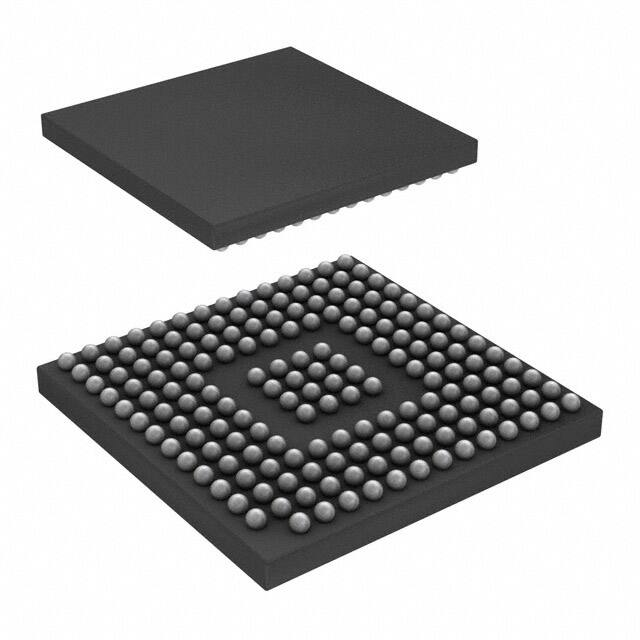
– Available in Lead-Free 175-Ball 12- × 12-nF
NFBGA Package (ZAY)
•
•
•
•
Personal Navigation Devices
Audio Docks
Video- and Wireless-IP Phones
Software Defined Radios
Description
The TUSB1310A device is one port, 5.0-Gbps USB 3.0 physical layer transceiver that operates off of one
reference clock, which is provided by either a crystal or an external reference clock. The reference clock
frequencies are selectable from 20, 25, 30, and 40 MHz. The TUSB1310A device provides the clock to the
USB controller. The use of one reference clock allows the TUSB1310A device to provide a cost-effective
USB 3.0 solution with few external components and a low implementation cost.
The USB controller interfaces to the TUSB1310A device through a PIPE (SuperSpeed) and a ULPI (USB
2.0) interface. The 16-bit PIPE operates off of a 250-MHz interface clock. The ULPI supports 8-bit
operations with a 60-MHz interface clock.
USB 3.0 reduces active and idle power consumption with improved power-management features. The lowpower states of the TUSB1310A device are controlled by the USB controller through the PIPE interface.
SuperSpeed USB uses existing USB software infrastructure by keeping the existing software interfaces
and software drivers intact. In addition, SuperSpeed USB retains backward compatibility with USB 2.0
based products by using the same form-factor Type-A connector and cables. Existing USB 2.0 devices
work with new USB 3.0 hosts and new USB 3.0 devices with work with legacy USB 2.0 hosts.
Device Information (1)
PART NUMBER
TUSB1310A
(1)
PACKAGE
NFBGA (175)
BODY SIZE (NOM)
12.00 mm × 12.00 mm
For all available packages, see the orderable addendum at the end of the data sheet.
1
An IMPORTANT NOTICE at the end of this data sheet addresses availability, warranty, changes, use in safety-critical applications,
intellectual property matters and other important disclaimers. PRODUCTION DATA.
�Not Recommended for New Designs
TUSB1310A
SLLSE32G – NOVEMBER 2010 – REVISED NOVEMBER 2017
1.4
www.ti.com
Functional Block Diagram
PIPE Interface
REFERENCE
CLOCK
ULPI Interface
CLKOUT
Crystal
Oscillator
PIPE Interface
ULPI Interface
x8
x8
8b, 10b
encoding
8b, 10b
decoding
x10
x10
SSCG
and PLL
ULPI
Registers
Clock
Generator
Loopback,
BIST
Elastic
Buffer
Disconnect
Detect
x10
Parallel
to Serial
Serial to
Parallel
K28.5
Detection
Receiver
x1
Data
Recovery
Circuit
x1
Transmitter
Transmitter
Differential
Driver
Differential
Receiver and
Equalization
JTAG
Boundary
Scan
CDR
Differential Driver
and Receiver
5
SSTXP
SSTXN SSRXP SSRXN
JTAG
DP
DM
Figure 1-1. Functional Block Diagram
2
Device Overview
Copyright © 2010–2017, Texas Instruments Incorporated
Submit Documentation Feedback
Product Folder Links: TUSB1310A
�Not Recommended for New Designs
TUSB1310A
www.ti.com
SLLSE32G – NOVEMBER 2010 – REVISED NOVEMBER 2017
Table of Contents
1
2
3
4
Device Overview ......................................... 1
4.8
Typical Characteristics .............................. 19
1.1
Features .............................................. 1
1.2
Applications ........................................... 1
5.1
Overview
1.3
Description ............................................ 1
5.2
Functional Block Diagram ........................... 20
1.4
Functional Block Diagram ............................ 2
.................................
...........................
5.5
Register Maps .......................................
Application, Implementation, and Layout .........
6.1
Application Information ..............................
6.2
Typical Application ..................................
6.3
Power Supply Recommendations ...................
Device and Documentation Support ...............
7.1
Documentation Support .............................
7.2
Trademarks..........................................
7.3
Electrostatic Discharge Caution .....................
7.4
Glossary .............................................
5
Revision History ......................................... 3
Pin Configuration and Functions ..................... 4
3.1
Pin Attributes ......................................... 5
3.2
Configuration Pins .................................... 5
3.3
Signal Descriptions ................................... 5
6
Specifications ........................................... 13
4.1
Absolute Maximum Ratings ......................... 13
4.2
ESD Ratings
4.3
Recommended Operating Conditions ............... 13
4.4
Device Power-Consumption Summary
4.5
4.6
4.7
........................................
.............
DC Characteristics for 1.8-V Digital I/O .............
Thermal Characteristics .............................
Timing Characteristics...............................
7
13
13
14
15
15
8
Detailed Description ................................... 20
............................................
20
5.3
Feature Description
21
5.4
Device Functional Modes
26
27
31
31
31
38
39
39
39
39
39
Mechanical, Packaging, and Orderable
Information .............................................. 39
2 Revision History
NOTE: Page numbers for previous revisions may differ from page numbers in the current version.
Changes from Revision F (August 2015) to Revision G
•
•
Page
Changed the device to Not Recommended for New Designs ................................................................. 1
Changed sentence From: "The SuperSpeed USB contains SSTXP/SSTXN and SSRXP/SSRXP..." To: "The
SuperSpeed USB contains SSTXP/SSTXN and SSRXP/SSRXN..." in the Overview section ........................... 20
Changes from Revision E (July 2012) to Revision F
•
•
Page
Added Pin Configuration and Functions section, storage temperature to the Absolute Maximum Ratings table,
ESD Ratings table, Thermal Information table, Feature Description section, Device Functional Modes,
Application and Implementation section, Power Supply Recommendations section, Layout section, Device and
Documentation Support section, and Mechanical, Packaging, and Orderable Information section ....................... 1
Added parameter names to the DC Characteristics for 1.8-V Digital I/O table ............................................. 14
Revision History
Copyright © 2010–2017, Texas Instruments Incorporated
Submit Documentation Feedback
Product Folder Links: TUSB1310A
3
�Not Recommended for New Designs
TUSB1310A
SLLSE32G – NOVEMBER 2010 – REVISED NOVEMBER 2017
www.ti.com
3 Pin Configuration and Functions
Figure 3-1 shows the 175-pin ZAY plastic ball grid array (NFBGA) pin assignments.
1
A
B
C
D
E
F
G
H
J
K
L
M
N
P
2
3
4
5
6
7
8
9
10
11
12
13
14
RX_DATA6
RX_DATA7
RX_DATA9
VDD1P1
PCLK
RX_DATAK0
RX_DATA13
RX_DATA14
VDD1P1
XO
XI
VDDA1P8
RSVD
RX_DATA5
VDD1P8
RX_DATA8
RX_DATA10
RX_DATA11
VDD1P1
RX_DATAK1
RX_DATA12
RX_DATA15
VDD1P1
VSS
VSSOSC
VSSA
VSSA
RX_DATA3
RX_DATA4
VDD1P8
VDD1P1
RX_STATUS0
RX_STATUS1
RX_STATUS2
RX_POLARITY
ELAS_BUF_MODE
VDDA1P8
VDDA1P1
VDDA1P1
RSVD
RSVD
RX_DATA2
RX_DATA1
RX_TERMINATION
VDD1P8
RSVD
RSVD
VDD1P8
VDD1P8
VDD1P8
CLKOUT
JTAG_TMS
VSSA
VDD1P1
VDDA1P1
VDD1P1
RX_DATA0
PHY_STATUS
VDD1P8
JTAG_TDI
JTAG_TRSTN
VSSA
SSRXP
RX_VALID
VDD1P1
RX_ELECIDLE
VDD1P8
VSS
VSS
VSS
VSS
JTAG_TDO
VSS
VSSA
SSRXM
TX_DATAK1
TX_DATA15
POWER_DOWN1
VDD1P8
VSS
VSS
VSS
VSS
JTAG_TCK
VSSA
VDDA1P1
VDDA1P1
TX_DATA13
TX_DATA14
POWER_DOWN0
VDD1P8
VSS
VSS
VSS
VSS
PWRPRESENT
PHY_MODE1
VSSA
SSTXP
TX_DATAK0
TX_DATA12
PHY_RESETN
RSVD
VSS
VSS
VSS
VSS
RESETN
PHY_MODE0
VSSA
SSTXM
TX_CLK
VDD1P1
TX_ELECIDLE
RSVD
TX_DEEMPH1
VSSA
VDD1P1
VDDA1P1
VDD1P1
TX_DATA10
TX_DATA11
VDD1P8
VDD1P8
RATE
VDD1P8
VDD1P8
VDD1P8
OUT_ENABLE
TX_DEEMPH0
VSSA
R1EXTRTN
R1EXT
TX_DATA8
TX_DATA9
VDD1P8
TX_ONESZEROS
TX_SWING
TX_DETRX_LPBK
ULPI_DIR
ULPI_STP
TX_MARGIN0
TX_MARGIN1
TX_MARGIN2
VSSA
VSSA
VDDA1P1
TX_DATA7
TX_DATA5
TX_DATA3
TX_DATA1
VDD1P1
ULPI_DATA7
ULPI_DATA5
ULPI_DATA3
ULPI_DATA0
VDD1P1
ULPI_NXT
VBUS
VSSA
VDDA1P8
TX_DATA6
TX_DATA4
TX_DATA2
VDD1P1
TX_DATA0
ULPI_DATA6
ULPI_DATA4
ULPI_DATA2
ULPI_DATA1
VDD1P1
ULPI_CLK
VDDA3P3
DM
DP
Figure 3-1. 175-Pin ZAY NFBGA (Top View)
4
Pin Configuration and Functions
Copyright © 2010–2017, Texas Instruments Incorporated
Submit Documentation Feedback
Product Folder Links: TUSB1310A
�Not Recommended for New Designs
TUSB1310A
www.ti.com
3.1
SLLSE32G – NOVEMBER 2010 – REVISED NOVEMBER 2017
Pin Attributes
Table 3-1. Pin Types
TYPE
3.2
DESCRIPTION
I
Input
O
Output
I/O
Input/output
PD,
PU
Internal pullup, internal
pulldown
S
Strapping pin
P
Power supply
G
Ground
Configuration Pins
The configuration pins are not latched by RESETN.
Table 3-2. Configuration Pins
SIGNAL NAME
TYPE
PIN NO.
MODE NAME
PHY_MODE1
I, PD
H12
USB
Must be set to 0. Operates as USB 3.0 transceiver.
PHY_MODE0
I, PU
J12
USB
Must be set to 1. Operates as USB 3.0 transceiver.
3.3
DESCRIPTION
Signal Descriptions
3.3.1
PIPE
The TUSB1310A supports 16-bit SDR mode with a 250-MHz clock.
Table 3-3. PIPE Signal Descriptions
SIGNAL NAME
TX_CLK
TYPE
I
BALL NO.
DESCRIPTION
K1
TX_DATA and TX_DATAK clock for source synchronous PIPE. This clock frequency is
the same as PCLK frequency. The rising edge of the clock is the reference for all signals.
TX_DATA15
G2
TX_DATA14
H2
TX_DATA13
H1
TX_DATA12
J2
TX_DATA11
L3
TX_DATA10
L2
TX_DATA9
M2
TX_DATA8
TX_DATA7
I
M1
N1
TX_DATA6
P1
TX_DATA5
N2
TX_DATA4
P2
TX_DATA3
N3
TX_DATA2
P3
TX_DATA1
N4
TX_DATA0
P5
TX_DATAK1
TX_DATAK0
I
G1
J1
Parallel USB SuperSpeed data input bus.
The 16 bits represent 2 symbols of transmit data where TX_DATA7-0 is the first symbol to
be transmitted, and TX_DATA15-8 is the second symbol.
Data/Control for the symbols of transmit data. TX_DATAK0 corresponds to the low-byte of
TX_DATA, TX_DATAK1 to the upper byte.
Pin Configuration and Functions
Copyright © 2010–2017, Texas Instruments Incorporated
Submit Documentation Feedback
Product Folder Links: TUSB1310A
5
�Not Recommended for New Designs
TUSB1310A
SLLSE32G – NOVEMBER 2010 – REVISED NOVEMBER 2017
www.ti.com
Table 3-3. PIPE Signal Descriptions (continued)
SIGNAL NAME
PCLK
TYPE
BALL NO.
DESCRIPTION
A6
Parallel interface data clock. All data movement across the parallel PIPE is synchronous
to this clock. This clock operates at 250 MHz. The rising edge of the clock is the reference
for all signals.
O
RX_DATA15
B9
RX_DATA14
A9
RX_DATA13
A8
RX_DATA12
B8
RX_DATA11
B5
RX_DATA10
B4
RX_DATA9
A4
RX_DATA8
RX_DATA7
O
B3
A3
RX_DATA6
A2
RX_DATA5
B1
RX_DATA4
C2
RX_DATA3
C1
RX_DATA2
D1
RX_DATA1
D2
RX_DATA0
E2
RX_DATAK1
RX_DATAK0
RX_VALID
6
B7
O
O
Parallel USB SuperSpeed data output bus.
The 16 bits represent 2 symbols of receive data where RX_DATA7-0 is the first symbol
received, and RX_DATA15-8 is the second.
A7
Data/Control for the symbols of receive data. RX_DATAK0 corresponds to the low-byte of
RX_DATA, RX_DATAK1 to the upper byte. A value of zero indicates a data byte; a value
of 1 indicates a control byte.
F1
Active High. Indicates symbol lock and valid data on RX_DATA and RX_DATAK.
Pin Configuration and Functions
Copyright © 2010–2017, Texas Instruments Incorporated
Submit Documentation Feedback
Product Folder Links: TUSB1310A
�Not Recommended for New Designs
TUSB1310A
www.ti.com
SLLSE32G – NOVEMBER 2010 – REVISED NOVEMBER 2017
Table 3-3. PIPE Signal Descriptions (continued)
SIGNAL NAME
TYPE
BALL NO.
DESCRIPTION
CONTROL AND STATUS SIGNALS
PHY_RESETN
I, PU
J3
Active Low. Resets the transmitter and receiver. This signal is asynchronous.
TX_DETRX_LPBK
I, PD
M6
Active High. Used to tell the PHY to begin a receiver detection operation or to begin
loopback.
TX_ELECIDLE
I
K3
Active High. Forces TX output to electrical idle depending on the power state.
RX_ELECIDLE
S, I/O,
PD
F3
Active High. While deasserted with the PHY in P0, P1, P2, or P3, indicates detection of
LFPS.
C7
Encodes receiver status and error codes for the received data stream when receiving
data.
RX_STATUS2
RX_STATUS1
O
RX_STATUS0
POWER_DOWN1
POWER_DOWN0
I
C6
BIT 2
BIT 1
BIT 0
C5
0
0
0
Received data OK
0
0
1
1 SKP ordered set added
0
1
0
1 SKP ordered set removed
0
1
1
Receiver detected
1
0
0
8B/10B decode error
1
0
1
Elastic buffer overflow
1
1
0
Elastic buffer underflow.
This error code is not used if the elasticity buffer is
operating in the nominal buffer empty mode.
1
1
1
Receive disparity error
G3
H3
DESCRIPTION
Power up and down the transceiver power states.
BIT 1
BIT 0
DESCRIPTION
0
0
P0, normal operation
0
1
P1, low recovery time latency, power saving state
1
0
P2, longer recovery time latency, low-power state
1
1
P3, lowest power state
When transitioning from P3 to P0, the signaling is asynchronous.
PHY_STATUS
S, I/O,
PD
E3
PWRPRESENT
O
H11
Active High. Used to communicate completion of several PHY functions including power
management state transitions, rate change, and receiver detection. When this signal
transitions during entry and exit from P3 and PCLK is not running, then the signaling is
asynchronous.
Indicates the presence of VBUS
Pin Configuration and Functions
Copyright © 2010–2017, Texas Instruments Incorporated
Submit Documentation Feedback
Product Folder Links: TUSB1310A
7
�Not Recommended for New Designs
TUSB1310A
SLLSE32G – NOVEMBER 2010 – REVISED NOVEMBER 2017
www.ti.com
Table 3-3. PIPE Signal Descriptions (continued)
SIGNAL NAME
TYPE
BALL NO.
DESCRIPTION
I, PD
M4
Active High. Used only when transmitting USB compliance pat-terns CP7 or CP8. Causes
the transmitter to transmit an alternating sequence of 50 to 250 ones and 50 to 250
zeros—regardless of the state of the TX_DATA interface.
K11
Selects transmitter de-emphasis. When the MAC changes, the TUSB1310A starts to
transmit with the new setting within 128 ns.
CONFIGURATION PINS
TX_ONESZEROS
TX_DEEMPH1
I, PD, PU
TX_DEEMPH0
L11
TX_MARGIN2
M11
TX_MARGIN1
M10
I, PD
TX_MARGIN0
M9
BIT 1
BIT 0
0
0
–6-dB de-emphasis
0
1
–3.5-dB de-emphasis
1
0
No de-emphasis
1
1
Reserved
Selects transmitter voltage levels
BIT 2
BIT 0
TX_SWING
DESCRIPTION
0
0
0
0
0
0
0
1
Normal operating range
400 mV to 700 mV
0
0
1
0
800 mV to 1200 mV
1
400 mV to 700 mV
0
700 mV to 900 mV
1
300 mV to 500 mV
0
400 mV to 600 mV
1
200 mV to 400 mV
0
200 mV to 400 mV
1
100 mV to 200 mV
0
1
1
I, PD
BIT 1
Normal operating range
800 mV to 1200 mV
0
TX_SWING
DESCRIPTION
1
1
0
1
Don't care
M5
Controls transmitter voltage swing level
0: Full swing
1: Half swing
RX_POLARITY
I, PD
C8
Active High. Tells PHY to do a polarity inversion on the received data. Inverted data show
up on RX_DATA15-0 within 20 PCLK clocks after RX_POLARITY is asserted.
0: PHY does no polarity inversion
1: PHY does polarity inversion
RX_TERMINATION
I, PD
D3
Controls presence of receiver terminations
0: Terminations removed
1: Terminations present
RATE
I, PU
L6
Controls the link signaling rate
The RATE is always 1
ELAS_BUF_MODE
I, PD
C9
Selects elasticity buffer operating mode
0: Nominal half full buffer mode
1: Nominal empty buffer mode
8
Pin Configuration and Functions
Copyright © 2010–2017, Texas Instruments Incorporated
Submit Documentation Feedback
Product Folder Links: TUSB1310A
�Not Recommended for New Designs
TUSB1310A
www.ti.com
3.3.2
SLLSE32G – NOVEMBER 2010 – REVISED NOVEMBER 2017
ULPI
The ULPI (ultra low pin count interface) is a low pin count USB PHY to a Link-Layer Controller interface.
The ULPI consists of the interface and the ULPI registers. The TUSB1310A device is always the master of
the ULPI bus.
Table 3-4. ULPI Signal Descriptions
SIGNAL NAME
TYPE
ULPI_CLK
BALL NO.
O
P11
ULPI_DATA7
N6
ULPI_DATA6
P6
ULPI_DATA5
N7
ULPI_DATA4
ULPI_DATA3
DESCRIPTION
60-MHz interface clock. All ULPI signals are synchronous to ULPI_CLK. The ULPI_CLK is
always a 60-MHz output of the TUSB1310A device. In low-power mode, the ULPI_CLK is not
driven.
P7
S, I/O, PD
N8
ULPI_DATA2
Data bus. Driven to 00h by the Link when the ULPI bus is idle.
8-bit data timed on rising edge of ULPI_CLK
P8
ULPI_DATA1
P9
ULPI_DATA0
N9
ULPI_DIR
O
M7
Controls the direction of the ULPI_DATA bus
0: ULPI_DATA lines are inputs
1: ULPI_DATA lines are outputs
ULPI_STP
S, I, PU
M8
Active High. The Link must assert ULPI_STP to signal the end of a USB transmit packet or a
register write operation. The ULPI_STP signal must be asserted in the cycle after the last data
byte is presented on the bus. The ULPI_STP has an internal weak pullup to safeguard against
false commands on the ULPI_DATA lines.
ULPI_NXT
O
N11
Active High. The PHY asserts ULPI_NXT to throttle all data types, except register read data
and the RX CMD. The PHY also asserts ULPI_NXT and ULPI_DIR simultaneously to indicate
USB receive activity, if ULPI_DIR was previously low. The PHY is not allowed to assert
ULPI_NXT during the first cycle of the TX CMD driven by the Link.
3.3.3
Clocking
Table 3-5. Clock Signal Name Descriptions
SIGNAL NAME
TYPE
BALL NO.
XI
I
A12
Crystal Input. This pin is the clock reference input for the TUSB1310A. The
TUSB1310A device supports either a crystal unit, or a 1.8-V clock input. Frequencies
supported are 20, 25, 30, or 40 MHz.
XO
O
A11
Crystal output. If a 1.8-V clock input is connected to XI, XO must be left open.
CLKOUT
O
D10
OOBCLK is driven in U3 mode.
3.3.4
DESCRIPTION
JTAG Interface
The JTAG Interface is used for board-level boundary scan. All digital IO support IEEE1149.1 boundary
scan and SuperSpeed differential pairs support IEEE1149.6 boundary scan.
Table 3-6. JTAG Signal Name Descriptions
TYPE
BALL NO.
JTAG_TCK
SIGNAL NAME
I, PU
G11
JTAG test clock
JTAG_TMS
I, PU
D11
JTAG test mode select
JTAG_TDI
I, PU
E11
JTAG test data input
JTAG_TRSTN
I, PD
E12
JTAG test asynchronous reset. Active Low. An external pulldown is required for normal
operation.
O
F11
JTAG test data output
JTAG_TDO
DESCRIPTION
Pin Configuration and Functions
Copyright © 2010–2017, Texas Instruments Incorporated
Submit Documentation Feedback
Product Folder Links: TUSB1310A
9
�Not Recommended for New Designs
TUSB1310A
SLLSE32G – NOVEMBER 2010 – REVISED NOVEMBER 2017
3.3.5
www.ti.com
Reset and Output Control Interface
Table 3-7. Reset and Output Control Signal Descriptions
SIGNAL NAME
TYPE
BALL NO.
I
J11
Active Low. Resets the transmitter and receiver. This signal is asynchronous.
L10
Active High. This can be connected to a 1.8-V power-on-reset signal on the PCB to
avoid static current and signal contention during power up.
0: Disable all driver outputs while I/O powers are supplied, but internal control circuit
powers are not present during power up.
1: Enable all driver outputs during normal operation.
RESETN
OUT_ENABLE
3.3.6
I
DESCRIPTION
Strap Options
Strapping pins are latched by reset deassertion in the TUSB1310A device.
Table 3-8. Strapping Options (1)
SIGNAL NAME
TYPE
BALL NO.
DESCRIPTION
XTAL_DIS
(RX_ELECIDLE)
S, I/O, PD
F3
Selects an input clock source
0: Crystal Input
1: Clock Input
SSC_DIS
(TX_MARGIN0)
S, I, PD
M9
Spread spectrum clocking disable
0: SSC enable
1: SSC disable
PIPE_16BIT
(PHY_STATUS)
S, I/O, PD
E3
Selects PIPE
0: 16-bit PIPE SDR mode
Must be 0 at reset.
ISO_START
(ULPI_DATA7)
S, I/O, PD
N6
Active High. Puts PIPE into isolate mode. When in the isolate mode, TUSB1310A device
does not respond to packet data present at TX_DATA15-0, TXDATAK1-0 inputs and
presents a high impedance on the PCLK, RX_DATA15-0, RX_DATAK1-0, RX_VALID
outputs. When in the isolate mode, the TUSB1310A device continues to respond to
ULPI. When the isolate mode bit in ULPI register is cleared, the USB interfaces starts
transmitting packet data on TX_DATA15-0 and driving PCLK, RX_DATA15-0,
RX_DATA1-0, and RX_VALID.
ULPI_8BIT
(ULPI_DATA6)
S, I/O, PD
P6
Selects ULPI data bus bit width
0: 8-bit ULPI SDR mode
Must be set to 0.
N7
P7
Select input reference clock frequency for on-chip oscillator
00: 20 MHz on XI
01: 25 MHz on XI
10: 30 MHz on XI
11: 40 MHz on XI
REFCLKSEL1,
REFCLKSEL0
(ULPI_DATA5,
ULPI_DATA4)
(1)
S, I/O, PD
Signals in green have double function just before reset and after reset.
3.3.7
USB Interfaces
Table 3-9. USB Interface Signal Name Descriptions
SIGNAL NAME
SSTXP
SSTXM
SSRXP
SSRXM
DP
DM
VBUS
10
TYPE
O
I
I/O
I
BALL NO.
H14
J14
E14
F14
P14
P13
N12
DESCRIPTION
USB SuperSpeed transmitter differential pair
USB SuperSpeed receiver differential pair
USB non-SuperSpeed differential pair
USB VBUS pin
Connected through an external voltage divider
Pin Configuration and Functions
Copyright © 2010–2017, Texas Instruments Incorporated
Submit Documentation Feedback
Product Folder Links: TUSB1310A
�Not Recommended for New Designs
TUSB1310A
www.ti.com
3.3.8
SLLSE32G – NOVEMBER 2010 – REVISED NOVEMBER 2017
Special Connect
Table 3-10. Special Connect Signal Descriptions
SIGNAL NAME
R1EXT
TYPE
BALL NO.
DESCRIPTION
O
L14
High precision external resistor used for calibration. The R1 value shall be 10 kΩ ±1%
accuracy.
R1EXTRTN
I
L13
R1 ground reference. This pin is not connected to board ground.
VDDA1P1
P
M14
Needs a 1-µF bypass capacitor
D6
D5
C13
RSVD
I/O
C14
Must be left open.
K4
J4
A14
3.3.9
Power and Ground
Table 3-11. Power and Ground Signal Descriptions
TYPE
BALL NO.
VDDA3P3
SIGNAL NAME
P
P12
VDDA1P8
P
DESCRIPTION
Analog 3.3-V power supply
N14
A13
Analog 1.8-V power supply
C10
C12
K14
VDDA1P1
G13
P
Analog 1.1-V power supply
G14
D14
C11
VDD1P8
VDD1P1
P
P
B2
C3
D4
D7
D8
D9
E4
F4
G4
H4
L5
L4
M3
L7
L8
L9
A5
A10
B6
B10
E1
F2
K2
L1
N5
P4
N10
P10
K13
D13
Digital IO 1.8-V power supply
Digital 1.1-V power supply
C4
Pin Configuration and Functions
Copyright © 2010–2017, Texas Instruments Incorporated
Submit Documentation Feedback
Product Folder Links: TUSB1310A
11
�Not Recommended for New Designs
TUSB1310A
SLLSE32G – NOVEMBER 2010 – REVISED NOVEMBER 2017
www.ti.com
Table 3-11. Power and Ground Signal Descriptions (continued)
SIGNAL NAME
VSSA
TYPE
G
BALL NO.
B14
B13
J13
H13
F13
E13
K12
L12
G12
DESCRIPTION
Analog ground
D12
N13
M12
M13
VSSOSC
VSS
12
G
G
Oscillator ground
If using a crystal, this must not be connected to PCB ground plane.
See Section 6.2.2 for guidelines.
If using an oscillator, this must be connected to PCB ground.
B12
F6
F7
F8
F9
G6
G7
G8
G9
J6
J7
H6
H7
H8
H9
J8
J9
B11
F12
Digital ground
Pin Configuration and Functions
Copyright © 2010–2017, Texas Instruments Incorporated
Submit Documentation Feedback
Product Folder Links: TUSB1310A
�Not Recommended for New Designs
TUSB1310A
www.ti.com
SLLSE32G – NOVEMBER 2010 – REVISED NOVEMBER 2017
4 Specifications
4.1
Absolute Maximum Ratings
over operating free-air temperature range (unless otherwise noted)
MIN
MAX
UNIT
VDD1P1 steady-state supply voltage
–0.3
1.4
V
VDD1P8 steady-state supply voltage
–0.3
2.45
V
VDDA1P1 steady-state supply voltage
–0.3
1.4
V
VDDA1P8 steady-state supply voltage
–0.3
2.45
V
VDDA3P3 steady-state supply voltage
–0.3
3.8
V
Storage temperature
–55
150
°C
4.2
ESD Ratings
VALUE
Human body model (HBM), per ANSI/ESDA/JEDEC JS-001
V(ESD)
(1)
(2)
Electrostatic discharge
(1)
UNIT
±2000
Charged-device model (CDM), per JEDEC specification JESD22C101 (2)
V
±500
JEDEC document JEP155 states that 500-V HBM allows safe manufacturing with a standard ESD control process.
JEDEC document JEP157 states that 250-V CDM allows safe manufacturing with a standard ESD control process.
4.3
Recommended Operating Conditions
over operating free-air temperature range (unless otherwise noted)
MIN
NOM
MAX
UNIT
VDDA3P3
Analog 3.3-supply voltage
2.97
3.3
3.63
V
VDDA1P8
Analog 1.8-supply voltage
1.71
1.8
1.98
V
VDDA1P1
Analog 1.1-supply voltage
1.045
1.1
1.155
V
VDD1P8
Digital IO 1.8-supply voltage
1.62
1.8
1.98
V
VDD1P1
Digital 1.1-supply voltage
1.045
1.1
1.155
V
VBUS
Voltage at VBUS PAD
0
1.155
V
TA
Operating free-air temperature
–40
85
°C
TJ
Operating junction temperature
–40
105
°C
4.4
Device Power-Consumption Summary
over operating free-air temperature range (unless otherwise noted) (1)
PARAMETER
MIN
TYP
MAX
UNIT
VDDA3P3 power consumption
13
mW
VDDA1P8 power consumption
77
mW
VDDA1P1 power consumption
118
mW
VDD1P1 power consumption
98
mW
VDD1P8 power consumption
128
mW
(1)
Power-consumption condition is transmitting and/or receiving (in U0) at 25°C and nominal voltages.
Specifications
Copyright © 2010–2017, Texas Instruments Incorporated
Submit Documentation Feedback
Product Folder Links: TUSB1310A
13
�Not Recommended for New Designs
TUSB1310A
SLLSE32G – NOVEMBER 2010 – REVISED NOVEMBER 2017
4.5
www.ti.com
DC Characteristics for 1.8-V Digital I/O
over operating free-air temperature range (unless otherwise noted)
PARAMETER
VIH
High-level input voltage
VIL
Low-level input voltage
VOH
TEST CONDITIONS
Low-level output voltage
Vhys
IO = –2 mA,
VDDS = 1.62 V to 1.98 V,
driver enabled, pullup or pulldown
disabled
VDDS – 0.45
IO = –2 mA,
VDDS = 1.4 V to 1.6 V,
driver enabled, pullup or pulldown
disabled
0.75 VDDS
IOZ
Off-state output current
IZ
Total leakage current (1)
VTX_DIFF_SS
SSTXP, SSTXN differential p-p TX
voltage swing
RTX_DIFF_DC
DC differential impedance
VTX_RCV_DET
The amount of voltage change
allowed during receiver detection
CAC_COUPLING
AC coupling capacitor
RRX_DC
Receiver DC common-mode
impedance
RRX_DIFF_DC
DC differential impedance
VRX_LFPS_DET
LFPS detect threshold
VCM_AC_LFPS
V
V
0.45
IO = 2 mA,
VDDS = 1.4 V to 1.6 V,
driver enabled, pullup or pulldown
disabled
0.25 VDDS
V
100
Input current with pullup enabled
UNIT
V
270
Any receiver, including those with
a pullup or pulldown. The pullup or
pulldown must be disabled.
Input current
II(PUon)
MAX
IO = 2 mA,
VDDS = 1.62 V to 1.98 V,
driver enabled, pullup or pulldown
disabled
Input hysteresis
II
TYP
0.35 VDDS
High-level output voltage
VOL
MIN
0.65 VDDS
mV
±1
Receiver pullup only, pullup
enabled (not inhibited),
VPAD = 0 V
–47 to –169
Receiver pullup only, pullup
enabled (not inhibited)
–100
µA
µA
±20
µA
±20
µA
0.8
1.2
V
72
120
Ω
0.6
V
75
200
nF
18
30
Ω
72
120
Ω
100
300
mV
LFPS common-mode voltage
100
mV
VCM_LFPS_active
LFPS common-mode voltage
active
10
mV
VTX_DIFF_PP_LFPS
LFPS differential voltage
1200
mV
(1)
14
Driver only, driver disabled
800
IZ is the total leakage current through the PAD connection of a driver/receiver combination that may include a pullup or pulldown. The
driver output is disabled and the pullup or pulldown is inhibited.
Specifications
Copyright © 2010–2017, Texas Instruments Incorporated
Submit Documentation Feedback
Product Folder Links: TUSB1310A
�Not Recommended for New Designs
TUSB1310A
www.ti.com
4.6
SLLSE32G – NOVEMBER 2010 – REVISED NOVEMBER 2017
Thermal Characteristics
TUSB1310A
THERMAL METRIC (1)
ZAY (NFBGA)
UNIT
175 PINS
RθJA
Junction-to-ambient thermal resistance
RθJC(top)
Junction-to-case (top) thermal resistance
RθJB
ψJT
ψJB
(1)
34.4
°C/W
21
°C/W
Junction-to-board thermal resistance
18.4
°C/W
Junction-to-top characterization parameter
0.5
°C/W
Junction-to-board characterization parameter
17.5
°C/W
For more information about traditional and new thermal metrics, see the Semiconductor and IC Package Thermal Metrics application
report.
4.7
4.7.1
Timing Characteristics
Power-Up and Reset Timing
The TUSB1310A device does not drive signals on any strapping pins before they are latched internally.
VDD1P8 and
Analog Power Supplies
XI
OUT_ENABLE
ULPI_DIR
VDD1P1
Tcfgin1
RESETN
Latch-In of Hardware
Strapping Pins
Tcfgin2
Drive Output
Strapping pins
Figure 4-1. Power-Up and Reset Timing
Table 4-1. Power-Up and Reset Timing
MIN
NOM
MAX
UNIT
Tcfgin1
Hardware configuration latch-in time from RESETN
0
ns
Tcfgin2
Time from RESETN to driver outputs on strapping pins
0
ns
RESETN pulse width
1
µs
RESETN to PHY_STATUS deassertion
300
µs
Specifications
Copyright © 2010–2017, Texas Instruments Incorporated
Submit Documentation Feedback
Product Folder Links: TUSB1310A
15
�Not Recommended for New Designs
TUSB1310A
SLLSE32G – NOVEMBER 2010 – REVISED NOVEMBER 2017
4.7.2
www.ti.com
PIPE Transmit
Tcyc2
TX_CLK
Tsu2
TX_DATA15-0
TX_DATAK1-0
Thd2
Valid Data
Figure 4-2. PIPE Transmit Timing
Table 4-2. PIPE Transmit Timing
MIN
NOM
MAX
Tcyc2
TX_CLK period
Tdty2
TX_CLK duty cycle
Tsu2
Data setup to TX_CLK rise and TX_CLK fall (1)
1
ns
Thd2
Data hold to TX_CLK rise and TX_CLK fall (1)
0
ns
(1)
4
UNIT
ns
50%
This includes TX_DATA15-0, TX_DATAK1-0, TX_ONESZEROS, RATE, TX_DEEMPTH, TX_DETRX_LPBK, TX_ELECIDLE,
TX_MARGIN, TX_SWING, RX_POLARITY, POWER_DOWN1-0.
4.7.3
PIPE Receive
Tcyc3
PCLK
Tdly3
RX_DATA15-0
RX_DATAK1-0
RX_VALID
RX_STATUS2-0
PHY_STATUS
Valid Data
Figure 4-3. PIPE Receive Timing
Table 4-3. PIPE Receive Timing
MIN
Tcyc3
PCLK Period
Tdty3
PCLK Duty Cycle
Tdly3
PCLK rise and fall to RX_DATA15-0, RX_DATAK1-0, RX_VALID,
RX_STATUS2-0, PHY_STATUS Delay (1) (2)
(1)
(2)
16
NOM
MAX
4
UNIT
ns
50%
1
2
ns
Output Load max = 10 pF, min = 5 pF
Timing is relative to the 50% transition point, not VIH or VIL.
Specifications
Copyright © 2010–2017, Texas Instruments Incorporated
Submit Documentation Feedback
Product Folder Links: TUSB1310A
�Not Recommended for New Designs
TUSB1310A
www.ti.com
4.7.4
SLLSE32G – NOVEMBER 2010 – REVISED NOVEMBER 2017
ULPI Parameters
Table 4-4. ULPI Parameters
DESCRIPTION
NOTES
HS
FS
LS
UNIT
RX CMD delay
2 to 4
2 to 4
2 to 4
clocks
TX start delay
1 to 2
1 to 10
1 to 10
clocks
TX end delay
PHY pipeline delays
RX start delay
RX end delay
Transmit-Transmit (host only)
Receive-Transmit (host or peripheral)
4.7.5
Link decision times
2 to 5
clocks
3 to 8
clocks
3 to 8
17 to 18
122 to 123
clocks
15 to 24
7 to 18
77 to 247
clocks
1 to 14
7 to 18
77 to 247
clocks
ULPI Clock
Table 4-5. ULPI Clock Parameters
MIN
NOM
MAX
UNIT
54
60
66
MHz
59.97
60
60.03
MHz
40%
50%
60%
49.975%
50%
50.025%
Fstart_8bit
Frequency (first transition) ±10%
Fsteady
Frequency (steady state) ±500 ppm
Dstart_8bit
Duty cycle (first transition) ±10%
Dsteady
Duty cycle (steady state) ±500 ppm
Tsteady
Time to reach steady state frequency and duty cycle after first
transition
1.4
ms
Tstart_dev
Clock startup time after deassertion of SuspemdM – Peripheral
5.6
ms
Tstart_host
Clock startup time after deassertion of SuspemdM – Hold
ms
Tprep
PHY preparation time after first transition of input clock
µs
Tjitter
Jitter
ps
Trise, Tfall
Rise and fall time
ns
4.7.6
ULPI Transmit
ULPI_CLK
Tsc8
Thc8
Tsd8
Thd8
ULPI_STP
Valid Data
ULPI_DATA7-0 In
(8-bit)
Tsdd8 Thdd8
Tsdd8 Thdd8
Figure 4-4. ULPI Transmit Timing
Table 4-6. ULPI Transmit Timing
MIN
Tsc8, Tsd8
ULPI_STP set-up time
Thc8, Thd8
ULPI_STP hold time
NOM
MAX
UNIT
6
0
ns
Specifications
Copyright © 2010–2017, Texas Instruments Incorporated
Submit Documentation Feedback
Product Folder Links: TUSB1310A
ns
17
�Not Recommended for New Designs
TUSB1310A
SLLSE32G – NOVEMBER 2010 – REVISED NOVEMBER 2017
4.7.7
www.ti.com
ULPI Receive Timing
ULPI_CLK
Tdc9
Tdc9
ULPI_DIR
ULPI_NXT
Tdd9
ULPI_DATA7-0 Out
Valid Data
(8-bit)
Tddd9
Tddd9
Figure 4-5. ULPI Receive Timing
Table 4-7. ULPI Receive Timing
MIN
Tdc9, Tdd9
(1)
18
ULPI_DIR/ULPI_NXT/ULPI_DATA7-0 (1)
NOM
MAX
9
UNIT
ns
Output Load MAX = 10 pF, MIN = 5 pF
Specifications
Copyright © 2010–2017, Texas Instruments Incorporated
Submit Documentation Feedback
Product Folder Links: TUSB1310A
�Not Recommended for New Designs
TUSB1310A
www.ti.com
4.8
SLLSE32G – NOVEMBER 2010 – REVISED NOVEMBER 2017
Typical Characteristics
0
TXN
1.0
CM setting - raised CM by 5%
±2
TXP
0.9
0.8
±4
Voltage (V)
TX_Deemph (db)
1.1
CM setting - normal CM
±6
±8
0.7
0.6
0.5
0.4
0.3
0.2
±10
0.1
0.0
±0.018 ±0.016 ±0.014 ±0.012 ±0.010 ±0.008 ±0.006 ±0.004 ±0.002
±12
±12
±10
±8
±6
±4
0
±2
Deemp Setting (db)
Current (A)
C001
Figure 4-6. TX De-emphasis
1.3
C002
Figure 4-7. TX Termination I-V
CM setting - normal CM
1.2
CM setting - raised CM by 5%
1.1
TX_Diff_PP (V)
1.0
0.9
0.8
0.7
0.6
0.5
0.4
0.3
0.2
100
250
400
550
700
850
1000
1150
Swing Setting
1300
C003
Figure 4-8. Diff TX Swing versus Swing Settings
Specifications
Copyright © 2010–2017, Texas Instruments Incorporated
Submit Documentation Feedback
Product Folder Links: TUSB1310A
19
�Not Recommended for New Designs
TUSB1310A
SLLSE32G – NOVEMBER 2010 – REVISED NOVEMBER 2017
www.ti.com
5 Detailed Description
5.1
Overview
The USB physical layer handles the low-level USB protocol and signaling, which includes data
serialization and deserialization, 8b/10b encoding, analog buffers, elastic buffers, and receiver detection. It
shifts the clock domain of the data from the USB rate to one that is compatible with the link-layer
controller.
The SuperSpeed USB contains SSTXP/SSTXN and SSRXP/SSRXN differential pairs and uses the PIPE
to communicate with the link-layer controller. The Non-SuperSpeed USB has a DP/DM differential pair and
communicates with the Link-Layer Controller through the ULPI. The reference clock of the TUSB1310A
device is connected to an internal crystal oscillator, spread spectrum clock, and with a PLL, which
provides clocks to all functional blocks and to the CLKOUT pin for the Link-Layer Controller.
A JTAG interface is used for IEEE1149.1 and IEEE1149.6 boundary scan.
5.2
Functional Block Diagram
PIPE Interface
REFERENCE
CLOCK
ULPI Interface
CLKOUT
Crystal
Oscillator
PIPE Interface
ULPI Interface
x8
x8
8b, 10b
encoding
8b, 10b
decoding
x10
x10
SSCG
and PLL
ULPI
Registers
Clock
Generator
Loopback,
BIST
Elastic
Buffer
Disconnect
Detect
x10
Parallel
to Serial
Serial to
Parallel
K28.5
Detection
Receiver
x1
Data
Recovery
Circuit
x1
Transmitter
Transmitter
Differential
Driver
Differential
Receiver and
Equalization
JTAG
Boundary
Scan
CDR
Differential Driver
and Receiver
5
SSTXP
20
SSTXN SSRXP SSRXN
JTAG
Detailed Description
DP
DM
Copyright © 2010–2017, Texas Instruments Incorporated
Submit Documentation Feedback
Product Folder Links: TUSB1310A
�Not Recommended for New Designs
TUSB1310A
www.ti.com
5.3
SLLSE32G – NOVEMBER 2010 – REVISED NOVEMBER 2017
Feature Description
5.3.1
Power On and Reset
The TUSB1310A device has two hardware reset pins, a chip reset RESETN and a logic reset
PHY_RESETN. The RESETN is used only at Power On. The PHY_RESETN can be used as a functional
reset. The ULPI register also has a software reset.
Until all power sources are supplied, the OUT_ENABLE pin can control the output driver enable. After all
power sources are supplied, the chip reset RESETN and a ULPI soft reset is asserted by the Link Layer.
The power-up sequence is described in Section 5.3.1.4.
5.3.1.1
RESETN and PHY_RESETN: Hardware Reset
The RESETN sets all internal states to initial values. The Link Layer must hold the PHY in reset through
the RESETN until all power sources and the reference clock to the TUSB1310A device are stable. All pins
used for strapping options must be set before RESETN deassertion as they are latched by reset
deassertion. All strapping option pins have internal pullup or pulldown to set default values, but if any nondefault values are desired, they need to be controlled externally by the Link-Layer Controller.
Table 5-1. Pin States in Chip Reset
PIPE CONTROL PIN NAME
5.3.1.2
STATE
VALUE
TX_DETRX_LPBK
Inactive
0
TX_ELECIDLE
Active
1
TX_ONESZEROS
Inactive
0
RX_POLARITY
Inactive
POWER_DOWN
U2
10b
TX_MARGIN2-0
Normal operating range
000b
TX_DEEMP
–3.5 dB
1
RATE
5.0 Gbps
1
TX_SWING
Full swing or half swing
0 or 1
RX_TERMINATION
Appropriate state
0 or 1
0
ULPI Reset: Software Reset
After power-up, the Link-Layer Controller must set the reset bit in ULPI register. It resets the core but does
not reset the ULPI interface or the ULPI registers.
During the ULPI reset, the ULPI_DIR is deasserted. After the reset, the ULPI_DIR is asserted again and
the TUSB1310A device sends an RX CMD update to the Link Layer. During the reset, the link must ignore
signals on the ULPI_DATA7-0 and must not access the TUSB1310A.
Detailed Description
Copyright © 2010–2017, Texas Instruments Incorporated
Submit Documentation Feedback
Product Folder Links: TUSB1310A
21
�Not Recommended for New Designs
TUSB1310A
SLLSE32G – NOVEMBER 2010 – REVISED NOVEMBER 2017
5.3.1.3
www.ti.com
OUT_ENABLE: Output Enable
Digital IO buffers use two power supplies, core VDD1P1 and IO VDD1P8. During power up,
OUT_ENABLE must be asserted low for proper operation.
5.3.1.4
Power-Up Sequence
Figure 5-1 shows the power-up sequence.
Power Supplies
XI
RESETN
Internal latched
strapping pin states
Latched data
Internal resetn/
PLL_EN/SUSPENDM
PCLK
ULPI_CLK
PHY_STATUS/
ULPI_DIR
300 µs
Figure 5-1. Power-Up Sequence
After proper power-supply sequencing, the reference clock on XI starts to operate. On the RESETN
deassertion, REFCLKSEL1-0 is determined depending on the PHY_MODE pins, PLL is locked and the
valid ULPI_CLK and the valid PCLK are driven.
After all stable clocks are provided, the TUSB1310A device allows the Link-Layer Controller to access by
deasserting the ULPI_DIR. The Link-Layer Controller sets the Reset bit in the ULPI register. At the PIPE
interface, the PHY_STATUS changes from high to low, which indicates that the TUSB1310A device is in
the power state specified by the POWER_DOWN signal. After the PHY_STATUS change, the
TUSB1310A device is ready for PIPE transactions.
5.3.2
Clocks
5.3.2.1
Clock Distribution
A source clock must be provided through XI or XO from an external crystal or from a square wave clock.
The USB 3.0 PLL provides a clock to the PIPE that drives 250 MHz. The USB 2.0 PLL provides a 60-MHz
clock to the ULPI.
5.3.2.2
Output Clock
The CLKOUT is used by the Link-Layer Controller or the MAC in low-power mode. A 120-MHz clock is
available on the CLKOUT pin only in the USB U3 power state.
22
Detailed Description
Copyright © 2010–2017, Texas Instruments Incorporated
Submit Documentation Feedback
Product Folder Links: TUSB1310A
�Not Recommended for New Designs
TUSB1310A
www.ti.com
5.3.3
SLLSE32G – NOVEMBER 2010 – REVISED NOVEMBER 2017
Power State Transition Time
The P1 to P0 transition time is the amount of time for the TUSB1310A device to return to P0 state, after
having been in the P1 state. This time is measured from when the MAC sets the POWER_DOWN signals
to P0 until the TUSB1310A device asserts PHY_STATUS. The TUSB1310A device asserts PHY_STATUS
when it is ready to begin data transmission and reception.
The P2 to P0 transition time is the amount of time for the TUSB1310A device to return to the P0 state,
after having been in the P2 state. This time is measured from when the MAC sets the POWER_DOWN
signals to P0 until the TUSB1310A device asserts PHY_STATUS. The TUSB1310A device asserts
PHY_STATUS when it is ready to begin data transmission and reception.
The P3 to P0 transition time is the amount of time for the TUSB1310A device to go to P0 state, after
having been in the P3 state. Time is measured from when the MAC sets the POWER_DOWN signals to
P0 until the TUSB1310A device deasserts PHY_STATUS. The TUSB1310A device asserts PHY_STATUS
when it is ready to begin data transmission and reception.
5.3.4
Power Management
The SuperSpeed USB power state transition is controlled by the PIPE POWER_DOWN[1-0] and the NonSuperSpeed USB power state is transitioned by setting suspendM bit in the ULPI Function control register
through the ULPI or by asserting the ULPI_STP.
5.3.4.1
USB Power Management
The USB 3.0 specification improves power consumption by defining four power states, U0, U1, U2, and
U3 while the PIPE specification defines P0, P1, P2 and P3. The POWER_DOWN pin states are mapped
to LTSSM states as described in Table 5-2. For all power state transitions, the Link-Layer Controller must
not begin any operational sequences or further power state transitions until the TUSB1310A device has
indicated that the internal state transition is completed.
Table 5-2. Power States
PIPE
POWER
STATE
USB POWER STATE
PCLK
PLL
TRANSMITTING
RECEIVING
PHY_STATUS
P0
U0, all other LTSSM
states
On
On
Active or Idle or LFPS
Active or Idle
One cycle assertion
P1
U1
On
On
Idle or LFPS
Idle
One cycle assertion
P2
U2, RxDetect,
SS.Inactive
On
On
Idle or LFPS or
RxDetect
Idle
One cycle assertion
U3, SS.disabled
Off. The PIPE is in
an asynchronous
mode.
Idle
PHY_STATUS is
asserted before PCLK is
turned off and
deasserted when PCLK
is fully off.
P3
Off
LFPS or RxDetect
When the Link-Layer Controller must transmit LFPS in P1, P2, or P3 state, it must deassert
TX_ELECIDLE. The TUSB1310A device generates valid LFPS until the TX_ELECIDLE is asserted. The
Link-Layer Controller must assert TX_ELECIDLE before transitioning to P0.
When RX_ELECIDLE is deasserted in P0, P1, P2, or P3, the TUSB1310A device receiver monitors for
LFPS except during reset or when RX_TERMINATION is removed for electrical idle.
When the TUSB1310A device is in P0 and is actively transmitting; only RX_POLARITY can be asserted.
Detailed Description
Copyright © 2010–2017, Texas Instruments Incorporated
Submit Documentation Feedback
Product Folder Links: TUSB1310A
23
�Not Recommended for New Designs
TUSB1310A
SLLSE32G – NOVEMBER 2010 – REVISED NOVEMBER 2017
www.ti.com
Table 5-3. PIPE Control Pin Matrix
POWER STATE
TX_DETRX_LPBK
TX_ELECIDLE
DESCRIPTION
0
0
Transmitting data on TX_DATA
0
1
Not transmitting and is in electrical idle
1
0
Goes into loopback mode
1
1
Transmits LFPS signaling
P0
P1
Transmits LFPS signaling
1
Not transmitting and is in electrical idle
Don’t care
0
Transmits LFPS signaling
0
1
Idle
1
1
Does a receiver detection operation
Don’t care
P2
P3
5.3.5
0
Don’t care
0
Transmits LFPS signaling
1
Does a receiver detection operation
Receiver Status
The TUSB1310A device has an elastic buffer for clock tolerance compensation, the Link Partner detection,
and some received data error detections. The receive data status from SSRXP/SSRXN differential pair
presents on RX_STATUS2-0. If an error occurs during a SKP ordered-set (a set of symbols transmitted as
a group), the error signaling has precedence. If more than one error occurs on a received byte, the errors
have the following priority:
1. 8B/10B decode error
2. Elastic buffer overflow
3. Elastic buffer underflow (cannot occur in nominal empty buffer model)
4. Disparity error
5.3.5.1
Clock Tolerance Compensation
The receiver contains an elastic buffer used to compensate for differences in frequencies between bit
rates at the two ends of a Link. The elastic buffer must be capable of holding enough symbols to handle
worst case differences in frequency and worst case intervals between SKP ordered-sets. A SKP order-set
is a set of symbols transmitted as a group. The SKP ordered-sets allows the receiver to adjust the data
stream being received prevent the elastic buffer from either overflowing or under-flowing due to any clock
tolerance differences.
The TUSB1310A device supports two models, nominal half-full buffer model and nominal empty-buffer
mode. For the nominal half-full buffer model, the TUSB1310A device monitors the receive data stream.
When a SKP ordered-set is received, the TUSB1310A device adds or removes one SKP order set from
each SKP to manage its elastic buffer to keep the buffer as close to half full as possible. Only full SKP
ordered sets are added or removed. When a SKP order set is added, the TUSB1310A device asserts an
Add SKP code (001b) on the RX_STATUS for one clock cycle. When a SKP order set is removed, the
RX_STATUS has a Remove SKP code (010b).
For the nominal empty-buffer model, the TUSB1310A device tries to keep the elasticity buffer as close to
empty as possible. When no SKP ordered sets have been received, the TUSB1310A device is required to
insert SKP ordered sets into the received data stream.
Table 5-4. RX_STATUS: SKP
24
RX_STATUS2-0
SKP ADDITION OR REMOVAL
001b
1 SKP Ordered Set added
010b
1 SKP Ordered Set removed
Detailed Description
LENGTH
One clock cycle
Copyright © 2010–2017, Texas Instruments Incorporated
Submit Documentation Feedback
Product Folder Links: TUSB1310A
�Not Recommended for New Designs
TUSB1310A
www.ti.com
5.3.5.2
SLLSE32G – NOVEMBER 2010 – REVISED NOVEMBER 2017
Receiver Detection
TX_DETRX_LPBK starts a receiver detection operation to determine if there is a receiver at the other end
of the link. When the receiver detect sequence completes, the PHY_STATUS is asserted for one clock
and drives the RX_STATUS signals to the appropriate code. When the TX_DETRX_LPBK signal is
asserted, the Link-Layer Controller must leave the signal asserted until the PHY_STATUS pulse. When
receiver detection is performed in P3, the PHY_STATUS shows the appropriate receiver detect value until
the TX_DETRX_LPBK is deasserted.
Table 5-5. RX_STATUS: Receiver Detection
5.3.5.3
RX_STATUS2-0
DETECTED CONDITION
000b
Receiver not present
011b
Receiver present
LENGTH
One clock cycle
8b/10b Decode Errors
When the TUSB1310A device detects an 8b/10b decode error, it asserts a SUB symbol in the data on the
RX_DATA where the bad byte occurred. In the same clock cycle that the SUB symbol is asserted on the
RX_DATA, the 8b/10b decode error code (100b) is asserted on the RX_STATUS. An 8b/10b decoding
error has priority over all other receiver error codes and could mask out a disparity error occurring on the
other byte of data being clocked onto the RX_DATA with the SUB symbol.
Table 5-6. 8b/10b Decode Errors
RX_STATUS2-0
100b
5.3.5.4
DETECTED ERROR
LENGTH
8B/10B Decode Error
Clock cycles during the effected byte is transferred on
RX_DATA15-0
Elastic Buffer Errors
When the elastic buffer overflows, data is lost during the reception of the data. The elastic buffer overflow
error code (101b) is asserted on the RX_STATUS on the PCLK cycle the omitted data would have been
asserted. The data asserted on the RX_DATA is still valid data, the elastic buffer overflow error code on
the RX_STATUS just marks a discontinuity point in the data stream being received.
When the elastic buffer underflows, SUB symbols are inserted into the data stream on the RX_DATA to fill
the holes created by the gaps between valid data. For every PCLK cycle a SUB symbol is asserted on the
RX_DATA, an elastic buffer underflow error code (111b) is asserted on the RX_STATUS. In nominal
empty-buffer mode, SKP ordered sets are transferred on RX_DATA and the underflow is not signaled.
Table 5-7. Elastic Buffer Errors
5.3.5.5
RX_STATUS2-0
DETECTED ERROR
LENGTH
101b
Elastic Buffer overflow
Clock cycles the omitted data would have appeared
110b
Elastic Buffer underflow
Clock cycles during the SUB symbol presence on
RX_DATA15-0
Disparity Errors
When the TUSB1310A device detects a disparity error, it asserts a disparity error code (111b) on the
RX_STATUS in the same PCLK cycle it asserts the erroneous data on the RX_DATA. The disparity code
does not discern which byte on the RX_DATA is the erroneous data.
Table 5-8. Disparity Errors
RX_STATUS2-0
111b
DETECTED ERROR
LENGTH
Disparity Error
Clock cycles during the effected byte is transferred
on RX_DATA15-0
Detailed Description
Copyright © 2010–2017, Texas Instruments Incorporated
Submit Documentation Feedback
Product Folder Links: TUSB1310A
25
�Not Recommended for New Designs
TUSB1310A
SLLSE32G – NOVEMBER 2010 – REVISED NOVEMBER 2017
5.3.6
www.ti.com
Loopback
The TUSB1310A device begins an internal-loopback operation from SSRXP/SSRXN differential pairs to
SSTXP/SSTXN differential pairs when the TX_DETRX_LPBK is asserted while holding TX_ELECIDLE
deasserted. The TUSB1310A device stops transmitting data to the SSTXP/SSTXN signaling pair from the
TX_DATA and begins transmitting on the SSTXP/SSTXN signaling pair the data received at the
SSRXP/SSRXN signaling pair. This data is not routed through the 8b/10b coding/encoding paths. While in
the loopback operation, the received data is still sent to the RX_DATA. The data sent to the RX_DATA is
routed through the 10b/8b decoder.
The TX_DETRX_LPBK deassertion terminates the loopback operation and returns to transmitting
TX_DATA over the SSTXP/SSTXN signaling pair. The TUSB1310A device only transitions out of loopback
on detection of LFPS signaling by transitioning to P2 state and starting the LFPS handshake.
5.3.7
Adaptive Equalizer
The adaptive equalizer dynamically adjusts the forward gain and peaking of the analog equalizer to
minimize the jitter at the cross over point of the eye diagram, which allows for greater jitter tolerance in the
RX.
5.4
Device Functional Modes
USB 3.0 is a physical SuperSpeed bus combined in parallel with a physical USB 2.0, according to the
USB 3.0 Specification. Each PHY operates independently on a separate data bus. Following this
specification, the USB architecture of the TUSB1310A device achieves different working modes.
Simultaneous operation of USB 3.0 and USB 2.0 modes is not allowed for peripheral devices.
5.4.1
USB 3.0 Mode
At an electrical level, each SuperSpeed differential link is initialized by enabling its receiver termination.
The transmitter is responsible for detecting the far end receiver termination as an indication of a bus
connection and informing the link layer so the connect status can be factored into link operation and
management. The SuperSpeed link is disabled, for example, when the low impedance receiver
termination of a port is removed.
5.4.2
USB 2.0 Mode
When the TUSB1310A is connected to an electrical environment that only supports high-speed, full-speed,
or low-speed connections, the SuperSpeed USB 3.0 connectivity is disabled. In this case, the USB 2.0
capabilities are compliant with the USB 2.0 specification.
5.4.3
ULPI Modes
The TUSB1310A device supports synchronous mode and low-power mode. The default mode is
synchronous mode.
The synchronous mode is a normal operation mode. The ULPI_DATA are synchronous to ULPI_CLK. The
low-power mode is used during power down and no ULPI_CLK. The TUSB1310A device sets ULPI_DIR
to output and drives LineState signals and interrupts.
Table 5-9. ULPI Synchronous and Low-Power Mode Functions
SYNCHRONOUS
LOW POWER
ULPI_CLK(OUT)
ULPI_DATA7(I/O)
ULPI_DATA6(I/O)
ULPI_DATA5(I/O)
ULPI_DATA4(I/O)
26
Detailed Description
Copyright © 2010–2017, Texas Instruments Incorporated
Submit Documentation Feedback
Product Folder Links: TUSB1310A
�Not Recommended for New Designs
TUSB1310A
www.ti.com
SLLSE32G – NOVEMBER 2010 – REVISED NOVEMBER 2017
Table 5-9. ULPI Synchronous and Low-Power Mode Functions (continued)
SYNCHRONOUS
LOW POWER
ULPI_DATA3(I/O)
ULPI_INT (OUT)
ULPI_DATA2(I/O)
ULPI_DATA1(I/O)
ULPI_LINESTATE1(OUT)
ULPI_DATA0(I/O)
ULPI_LINE_STATE0 (OUT)
ULPI_DIR(OUT)
ULPI_STP(IN)
ULPI_NXT(OUT)
5.5
Register Maps
Table 5-10. Register Definitions
ACCESS CODE
EXPANDED NAME
DESCRIPTION
Rd
Read
Register can be read. Read-only if this is the only mode given.
Wr
Write
Pattern on the data bus is written over all bits of the register.
S
Set
C
Clear
Pattern on the data bus is OR'd with and written into the register.
Pattern on the data bus is a mask. If a bit in the mask is set, then the
corresponding register bit is set to zero (cleared).
The TUSB1310A device contains the ULPI registers consisting of an immediate register set and an
extended register set.
Table 5-11. Register Map
ADDRESS (6 BITS)
REGISTER NAME
Rd
Wr
Set
Clr
04h
05h
06h
IMMEDIATE REGISTER SET
Vendor ID Low
00h
Vendor ID High
01h
Product ID Low
02h
Product ID High
03h
Function Control
04h–06h
Interface Control
07h–09h
07h
08h
09h
OTG Control
0Ah–0Ch
0Ah
0Bh
0Ch
USB Interrupt Enable Rising
0Dh–0Fh
0Dh
0Eh
0Fh
USB Interrupt Enable Falling
11h
12h
17h
18h
10h–12h
10h
USB Interrupt Status
13h
13h
USB Interrupt Latch
14h
14h
Debug
15h
Scratch Register
16h–18h
Reserved
19h–2Eh
5.5.1
16h
Vendor ID and Product ID (00h-03h)
Table 5-12. Vendor ID and Product ID
ADDRESS
BITS
NAME
ACCESS
RESET
00h
7:00
Vendor ID Low
Rd
51h
Lower byte of vendor ID supplied by USB-IF
DESCRIPTION
01h
7:00
Vendor ID High
Rd
04h
Upper byte of vendor ID supplied by USB-IF
02h
7:00
Product ID Low
Rd
10h
Lower byte of vendor ID supplied by vendor
03h
7:00
Product ID High
Rd
13h
Upper byte of vendor ID supplied by vendor
Detailed Description
Copyright © 2010–2017, Texas Instruments Incorporated
Submit Documentation Feedback
Product Folder Links: TUSB1310A
27
�Not Recommended for New Designs
TUSB1310A
SLLSE32G – NOVEMBER 2010 – REVISED NOVEMBER 2017
5.5.2
www.ti.com
Function Control (04h-06h)
Address: 04h-06h (Read), 04h (Write), 05h (Set), 06h (Clear)
Table 5-13. Function Control
BITS
1:0
2
4:3
5
28
NAME
XcvrSelect
TermSelect
OpMode
Reset
ACCESS
Rd, Wr, S, C
Rd, Wr, S, C
Rd, Wr, S, C
Rd, Wr, S, C
RESET
DESCRIPTION
1h
Selects the required transceiver speed 00b : Enable HS
transceiver
01b: Enable FS transceiver
10b: Enable LS transceiver
11b: Enable FS transceiver for LS packets
(FS preamble is automatically prepended)
0
Controls the internal 1.5-kΩ pullup resister and 45-Ω HS
terminations. Control over bus resistors changes depending
on XcvrSelect, OpMode, DpPulldown and DmPulldown.
Because low speed peripherals never support full speed or
hi-speed, providing the 1.5 kΩ on DM for low speed is
optional.
00
Selects the required bit encoding style during transmit
00 : Normal operation
01: Nondriving
10: Disable bit-stuff and NRZI encoding
11: Do not automatically add SYNC and EOP when
transmitting. Must be used only for HS packets.
0
Active High transceiver reset. After the Link sets this bit, the
TUSB1310A device must assert the ULPI_DIR and reset the
ULPI. When the reset is completed, the PHY deasserts the
ULPI_DIR and automatically clears this bit. After deasserting
the ULPI_DIR, the PHY must re-assert the ULPI_DIR and
send an RX CMD update on the Link-Layer Controller. The
Link-Layer Controller must wait for the ULPI_DIR to deassert
before using the ULPI bus. Does not reset the ULPI or ULPI
register set.
6
SuspendM
Rd, Wr, S, C
1h
Active low PHY suspend. Put the TUSB1310A device into
low-power mode. The PHY can power down all blocks except
the full speed receiver, OTG com-parators, and the ULPI
pins. The PHY must automatically set this bit to 1 when lowpower mode is exited.
0: Low-power mode
1: Powered
7
Reserved
Rd
0
Reserved
Detailed Description
Copyright © 2010–2017, Texas Instruments Incorporated
Submit Documentation Feedback
Product Folder Links: TUSB1310A
�Not Recommended for New Designs
TUSB1310A
www.ti.com
5.5.3
SLLSE32G – NOVEMBER 2010 – REVISED NOVEMBER 2017
Interface Control (07h-09h)
Address: 07-09h (Read), 07h (Write), 08h (Set), 09h (Clear)
Table 5-14. Interface Control
BITS
NAME
ACCESS
RESET
0
Reserved
Rd
0b
Reserved, only write a 0 to this bit
DESCRIPTION
1
Reserved
Rd
0b
Reserved, only write a 0 to this bit
2
Reserved
Rd
0h
Reserved
3
ClockSuspendM
Rd, Wr, S, C
0b
Active low clock suspend. Valid only in serial mode. Powers
down the internal clock circuitry only. Valid only when
SuspendM = 1. The TUSB1310A device must ignore
ClockSuspend when SuspendM = 0. By default, the clock is
not be powered in serial mode.
0 : Clock is not powered in serial mode
1 : Clock is powered in serial mode
6:4
Reserved
Rd
0h
Reserved
7
Interface
Protect Disable
0
Controls internal pull-ups and pull-downs on both the
ULPI_STP and the ULPI_DATA for protecting the ULPI when
the Link-Layer Controller puts the signals to tri-state value.
0 Enables the pullup and pulldown
1 Disables the pullup and pulldown
5.5.4
Rd, Wr, S, C
OTG Control
Address: 0Ah-0Ch (Read), 0Ah (Write), 0Bh (Set), 0Ch (Clear). Controls UTMI+ OTG functions of the
PHY.
Table 5-15. OTG Control Register
BITS
NAME
ACCESS
RESET
0
Reserved
Rd
0b
This bit is not implemented and returns a 0b when read
1
DpPulldown
Rd, Wr, S, C
1b
Enables the 15-kΩ pulldown resistor on D+
0 Pulldown resistor not connected to D+
1 Pulldown resistor connected to D+
2
DmPulldown
Rd, Wr, S, C
1h
Enables the 15-kΩ pulldown resistor on D–
0 Pulldown resistor not connected to D–
1 Pulldown resistor connected to D–
7:3
Reserved
Rd
0h
These bits are not implemented and return zeros when read
5.5.5
DESCRIPTION
USB Interrupt Enable Rising (0Dh-0Fh)
Address: 0D-0Fh (Read), 0Dh (Write), 0Eh (Set), 0Fh (Clear)
Table 5-16. USB Interrupt Enable Rising
BITS
NAME
ACCESS
RESET
0
Hostdisconnect Rise
Rd, Wr, S, C
1b
DESCRIPTION
Generate an interrupt event notification when Hostdisconnect
changes from low to high. Applicable only in host mode
(DpPulldown and DmPulldown both set to 1b).
Detailed Description
Copyright © 2010–2017, Texas Instruments Incorporated
Submit Documentation Feedback
Product Folder Links: TUSB1310A
29
�Not Recommended for New Designs
TUSB1310A
SLLSE32G – NOVEMBER 2010 – REVISED NOVEMBER 2017
5.5.6
www.ti.com
USB Interrupt Enable Falling (10h-12h)
Address: 10-12h (Read), 10h (Write), 11h (Set), 12h (Clear)
Table 5-17. USB Interrupt Enable Falling
BITS
0
NAME
Hostdisconnect Fall
5.5.7
ACCESS
Rd, Wr, S, C
RESET
DESCRIPTION
1b
Generate an interrupt event notification when Hostdisconnect changes from high to low. Applicable only in host.
USB Interrupt Status (13h)
Address: 13h (Read-only)
Table 5-18. USB Interrupt Status
BITS
NAME
ACCESS
RESET
DESCRIPTION
0
Hostdisconnect Fall
Rd, Wr, S, C
1b
Generate an interrupt event notification when Hostdisconnect changes from high to low. Applicable only in host.
5.5.8
USB Interrupt Latch (14h)
Address: 14h (Read-only with auto-clear)
Table 5-19. USB Interrupt Latch
BITS
0
NAME
Hostdisconnect Fall
5.5.9
ACCESS
Rd, Wr, S, C
RESET
1b
DESCRIPTION
Set to 1b by the PHY when an unmasked event occurs on
Host-disconnect. Cleared when this register is read.
Applicable only in host mode.
Debug (15h)
Address: 15h (Read-only)
Table 5-20. Debug
BITS
NAME
ACCESS
RESET
0
LineState0
Rd
0
Contains the current value of LineState0
DESCRIPTION
1
LineState1
Rd
0
Contains the current value of LineState1
7:2
Reserved
Rd
0
Reserved
5.5.10 Scratch Register (16-18h)
Address: 16-18h (Read), 16h (Write), 17h (Set), 18h (Clear)
Table 5-21. Scratch Register
BITS
7:0
30
NAME
Scratch
ACCESS
Rd, Wr, S, C
RESET
00
DESCRIPTION
Empty register byte for testing purposes. Software can read,
write, set, and clear this register and the TUSB1310A device
functionality is not be affected.
Detailed Description
Copyright © 2010–2017, Texas Instruments Incorporated
Submit Documentation Feedback
Product Folder Links: TUSB1310A
�Not Recommended for New Designs
TUSB1310A
www.ti.com
SLLSE32G – NOVEMBER 2010 – REVISED NOVEMBER 2017
6 Application, Implementation, and Layout
NOTE
Information in the following applications sections is not part of the TI component
specification, and TI does not warrant its accuracy or completeness. TI’s customers are
responsible for determining suitability of components for their purposes. Customers should
validate and test their design implementation to confirm system functionality.
6.1
Application Information
Texas Instruments’ TUSB1310A device is a single port, 5.0-Gbps USB 3.0 physical layer transceiver that
is available in a lead-free, 175-ball, 12-mm × 12-mm NFBGA package (ZAY). The link controller interfaces
to the TUSB1310A device are through a PIPE (16-bit wide operating at 250 MHz) and a ULPI (8-bit wide
operating at 60 MHz) interface. The USB connector interfaces to the TUSB1310A device through a USB
3.0 SuperSpeed USB differential pair (TX and RX) and USB 2.0 differential pair (DP/DM).
6.2
Typical Application
Figure 6-1 represents a typical implementation of the TUSB1310A USB 3.0 physical layer transceiver that
operates off of a single crystal or an external reference clock. The reference frequencies are selectable
from 20, 25, 30, and 40 MHz. The TUSB1310A device provides a clock to the USB link layer controllers.
The single reference clock allows the TUSB1310A device to provide a cost effective USB 3.0 solution with
few external components and a minimum implementation cost.
MCU/CPU
Link Controller
Crystal
PIPE
(16 bit 250 MHz)
TUSB1310A
SSTX P/N
SSRX P/N
5.0 Gbps
ULPI
DP/DM
(8 bit 60 MHz)
CLKOUT
Figure 6-1. Typical Application Schematic
Application, Implementation, and Layout
Copyright © 2010–2017, Texas Instruments Incorporated
Submit Documentation Feedback
Product Folder Links: TUSB1310A
31
�Not Recommended for New Designs
TUSB1310A
SLLSE32G – NOVEMBER 2010 – REVISED NOVEMBER 2017
6.2.1
www.ti.com
Design Requirements
6.2.1.1
Clock Source Requirements
6.2.1.1.1 Clock Source Selection Guide
Reference clock jitter is an important parameter. Jitter on the reference clock degrades both the transmit
eye and receiver jitter tolerance, no matter how clean the rest of the PLL is, thereby impairing system
performance. Additionally, a particularly jittery reference clock may interfere with PLL lock detection
mechanism, forcing the lock detector to issue an unlock signal. A good quality, low jitter reference clock is
required to achieve compliance with supported USB 3.0 standards. For example, USB 3.0 specification
requires the random jitter (RJ) component of either RX or TX to be 2.42 ps (random phase jitter calculated
after applying jitter transfer function [JTF]). As the PLL typically has a number of additional jitter
components, the reference clock jitter must be considerably below the overall jitter budget.
6.2.1.1.2 Oscillator
If an external clock source is used, XI must be tied to the clock source and XO must be left floating.
Table 6-1. Oscillator Specification
MAX
UNIT
Frequency tolerance
PARAMETER
Operational temperature
TEST CONDITIONS
MIN
TYP
±50
ppm
Frequency stability
1 year aging
±50
ppm
Rise and Fall time
20% to 80%
6
nsec
Reference clock RJ with JTF (1 sigma) (1) (2)
0.8
psec
Reference clock TJ with JTF (total p-p) (2) (3)
25
psec
50
psec
Reference clock jitter (absolute p-p)
(1)
(2)
(3)
(4)
(4)
Sigma value assuming Gaussian distribution
After application of JTF
Calculated as 14.1 × RJ + DJ
Absolute phase jitter (p-p)
6.2.1.1.3 Crystal
Either a 20-MHz, 25-MHz, 30-MHz, or 40-MHz crystal can be selected. A parallel, 20-pF load crystal must
be used if a crystal source is used.
Table 6-2. Crystal Specification
PARAMETER
TEST CONDITIONS
Frequency tolerance
Operational temperature
Frequency stability
1 year aging
Load capacitance
32
MIN
12
Application, Implementation, and Layout
TYP
20
MAX
UNIT
±50
ppm
±50
ppm
24
pF
Copyright © 2010–2017, Texas Instruments Incorporated
Submit Documentation Feedback
Product Folder Links: TUSB1310A
�Not Recommended for New Designs
TUSB1310A
www.ti.com
6.2.2
SLLSE32G – NOVEMBER 2010 – REVISED NOVEMBER 2017
Detailed Design Procedure
6.2.2.1
Chip Connection on PCB
Components must be placed close to the TUSB1310A device to reduce the trace length of the interface
between the components and the TUSB1310A. If external capacitors cannot accommodate a close
placement, shielding to ground is recommended.
SSTXN
SSTXP
SSRXN
SSRXP
USB Connector
DP
DM
VBUS
90.9KW ± 1%
10KW ± 1%
R1EXT
JTAG
JTAG
10KW ± 1%
R1 EXTRTN
XI
Crystal
Connection
VSSOSC
XO
PIPE RX
ULPI
PIPE TX
Link Controller
Figure 6-2. Analog Pin Connections
Application, Implementation, and Layout
Copyright © 2010–2017, Texas Instruments Incorporated
Submit Documentation Feedback
Product Folder Links: TUSB1310A
33
�Not Recommended for New Designs
TUSB1310A
SLLSE32G – NOVEMBER 2010 – REVISED NOVEMBER 2017
www.ti.com
6.2.2.1.1 USB Connector Pins Connection
The following rules apply for differential pair signals (DP/DM, SSTXP/SSTXN, and SSRXP/SSRXN):
• Keep as short as possible
• Must be trace-length matched and parallelism must be maintained
• Minimize vias and corners
• Avoid crossing plane splits and stubs
Figure 6-3 and Figure 6-4 are for visual reference only.
SSRXP
SSRXN
5
4
6
3
7
SSTXP
SSTXN
VBUS
2
8
1
9
DM DP
Pin#
Signal Name
1
VBUS
2
DM
3
DP
4
GND
5
SSRXN
6
SSRXP
7
GND_DRAIN
8
SSTXN
9
SSTXP
90.9 kW ±1%
10 kW ±1%
Figure 6-3. USB Standard-A Connector Pin Connection
SSRXP
SSRXN
8
1
4
2
3
7
VBUS
Pin#
Signal Name
1
VBUS
2
DM
3
DP
SSTXP
6
4
GND
SSTXN
5
5
SSTXN
6
SSTXP
7
GND_DRAIN
8
SSRXN
9
SSRXP
DM DP
90.9 kW ±1%
10 kW ±1%
Figure 6-4. USB Standard-B Connector Pin Connection
34
Application, Implementation, and Layout
Copyright © 2010–2017, Texas Instruments Incorporated
Submit Documentation Feedback
Product Folder Links: TUSB1310A
�Not Recommended for New Designs
TUSB1310A
www.ti.com
SLLSE32G – NOVEMBER 2010 – REVISED NOVEMBER 2017
6.2.2.1.2 Clock Connections
The TUSB1310A device supports an external oscillator source or a crystal unit. If a clock is provided to XI
instead of a crystal, XO is left open. Otherwise, if a crystal is used, the connection must adhere to the
following guidelines.
Because XI and XO are coupled to other leads and supplies on the PCB, it is important to keep them as
short as possible and away from any switching leads. It is also recommended to minimize the capacitance
between XI and XO. This can be accomplished by connecting the VSSOSC lead to the two external
capacitors CL1 and CL2 and shielding them with the clean ground lines. The VSSOSC must not be
connected to PCB ground.
Load capacitance (CLOAD) of the crystal varying with the crystal vendors is the total capacitance value of
the entire oscillation circuit system as seen from the crystal. It includes two external capacitors CL1 and
CL2 in Figure 6-5. The trace length between the decoupling capacitors and the corresponding power pins
on the TUSB1310A device must be minimized. It is also recommended that the trace length from the
capacitor pad to the power or ground plane be minimized.
VDDO1P1
VDD1P1
CL1
·
XI
·
VSSOSC
Crystal
·
XO
CL2
VDD1P8
VDDO1P8
VSSO
Figure 6-5. Typical Crystal Connections
6.2.3
Application Curve
Figure 6-6. Super Speed Eye Diagram
Application, Implementation, and Layout
Copyright © 2010–2017, Texas Instruments Incorporated
Submit Documentation Feedback
Product Folder Links: TUSB1310A
35
�Not Recommended for New Designs
TUSB1310A
SLLSE32G – NOVEMBER 2010 – REVISED NOVEMBER 2017
6.2.4
www.ti.com
Layout
6.2.4.1
Layout Guidelines
6.2.4.1.1 High-Speed Differential Routing
1.
2.
3.
4.
5.
The high-speed differential pair (USB_DM and USB_DP) is connected to a type A USB connecter.
The differential pair traces should be routed with 90 Ω ±15% differential impedance.
The high-speed signal pair should be trace length matched.
Max trace length mismatch between high speed USB signal pairs should be no greater than 150 mils.
Keep total trace length to a minimum, if routing longer than eight inches contact TI to address signal
integrity concerns.
6. Route differential traces first.
7. Route the differential pairs on the top or bottom layers with the minimum amount of vias possible.
8. No termination or coupling caps are required.
9. If a common mode choke is required then place the choke as close as possible to the USB connector
signal pins.
10. Likewise ESD clamps should also be placed as close as possible to the USB connector signal pins
(closer than the choke).
11. For more detailed information, refer to USB 2.0 Board Design and Layout Guidelines (SPRAAR7),
which describes general PCB design and layout guidelines for the USB 2.0 differential pair (DP/DM).
6.2.4.1.2 SuperSpeed Differential Routing
1. SuperSpeed consists of two differential routing pairs: a transmit pair (USB_SSTXM and USB_SSTXP)
and a receive pair (USB_SSRXM and USB_SSRXP).
2. Each differential pair trace must be routed with 90 Ω ±15% differential impedance.
3. The high-speed signal pair must be trace-length matched. Maximum trace length mismatch between
SuperSpeed USB signal pairs must be no greater than 5 mils. The total length for each differential pair
can be no longer than eight inches, which is based on the SuperSpeed USB compliance channel
specification and must be avoided if at all possible. TI recommends that the SuperSpeed differential
pairs be as short as possible.
4. The transmit differential pair does not have to be the same length as the receive differential pair. Keep
total trace length to a minimum. Route differential traces first. Route the differential pairs on the top or
bottom layers with the minimum amount of vias possible.
5. The transmitter differential pair requires 0.1-µF coupling capacitors for proper operation. The package
or case size of these capacitors must be no larger than 0402. C-packs are not allowed. The capacitors
must be placed symmetrically as close as possible to the USB connector signal pins.
6. If a common mode choke is required, place the choke as close as possible to the USB connector
signal pins (closer than the transmitter capacitors).
7. Likewise, ESD clamps must also be placed as close as possible to the USB connector signal pins
(closer than the choke and transmitter capacitors).
36
Application, Implementation, and Layout
Copyright © 2010–2017, Texas Instruments Incorporated
Submit Documentation Feedback
Product Folder Links: TUSB1310A
�Not Recommended for New Designs
TUSB1310A
www.ti.com
SLLSE32G – NOVEMBER 2010 – REVISED NOVEMBER 2017
8. It is permissible to swap the plus and minus on either or both of the SuperSpeed differential pairs,
which may be necessary to prevent the differential traces from crossing over one another. However, it
is not permissible to swap the transmitter differential pair with the receive differential pair.
9. It is recommended to use a 2010 pad for the inside pins, provided no pad is used for adjacent pins.
Instead, use a pad on one of the inside pins for the next pad route the trace between the outer pins to
a via. There is enough space to route a 3.78-mil trace between the outside pads while leaving 5-mil
spacing between the trace and pad; it is then possible to increase the trace width to 4 mils after the
breakout.
10. In Figure 6-7 the red pads are USB_SS_RXP/USB_SS_RXN and the blue pads are
USB_SS_TXP/USB_SS_TXN.
6.2.4.2
Layout Example
Diff. Pair 90 Ω
VIA to SW Cooper Pour
VDD1P1
VDD1P1
VDDO1P8
VDDO1P8
SSRXP
SSRXN
USB
Connector
SSTXP
SSTXN
DP
DM
VSS
Diff. Pair 90 Ω
XI
XO
VSSOSC
GND
Figure 6-7. Layout Example
Application, Implementation, and Layout
Copyright © 2010–2017, Texas Instruments Incorporated
Submit Documentation Feedback
Product Folder Links: TUSB1310A
37
�Not Recommended for New Designs
TUSB1310A
SLLSE32G – NOVEMBER 2010 – REVISED NOVEMBER 2017
6.3
6.3.1
www.ti.com
Power Supply Recommendations
1.1-V and 1.8-V Digital Supply
The TUSB1310A requires 1.1-V and 1.8-V digital power sources. Both VDD1P1 and VDD1P8 supplies
must have 0.1-μF bypass capacitors to VSS (ground) in order for proper operation. The recommendation
is one capacitor for each power terminal. Place the capacitor as close as possible to the terminal on the
device and keep trace length to a minimum. Smaller value capacitors like 0.01-μF are also recommended
on the digital supply terminals. When placing and connecting all bypass capacitors, high-speed board
design rules must be followed.
6.3.2
1.1-V, 1.8-V and 3.3-V Analog Supplies
Because circuit noise on the analog power terminals must be minimized, a Pi-type filter is recommended
for each supply. Analog power terminals must have a 0.1-μF bypass capacitor connected to VSSA
(ground) for proper operation. Place the capacitor as close as possible to the terminal on the device and
keep trace length to a minimum. Smaller value capacitors (0.01-μF) are also recommended on the analog
supply terminals.
6.3.3
Capacitor Selection Recommendations
When selecting bypass capacitors for the TUSB1310A device, X7R-type capacitors are recommended.
The frequency versus impedance curves, quality, stability, and cost of these capacitors make them a
logical choice for most computer systems.
The selection of bulk capacitors with low-ESR specifications is recommended to minimize low frequency
power supply noise. Today, the best low-ESR bulk capacitors are radial leaded aluminum electrolytic
capacitors. These capacitors typically have ESR specifications that are less than 0.01 Ω at 100 kHz. Also,
several manufacturers sell D-size surface mount specialty polymer solid aluminum electrolytic capacitors
with ESR specifications slightly higher than 0.01 Ω at 100 kHz. Both of these bulk capacitor options
significantly reduce low frequency power supply noise and ripple.
38
Application, Implementation, and Layout
Copyright © 2010–2017, Texas Instruments Incorporated
Submit Documentation Feedback
Product Folder Links: TUSB1310A
�Not Recommended for New Designs
TUSB1310A
www.ti.com
SLLSE32G – NOVEMBER 2010 – REVISED NOVEMBER 2017
7 Device and Documentation Support
7.1
7.1.1
Documentation Support
Related Documentation
The following documents describe the TUSB1310A transceiver. Copies of these documents are available
on the Internet at www.ti.com.
(SPRAAR7) High-Speed Interface Layout Guidelines
(SPRAA99) nFBGA Packaging
7.1.2
(SLLU123)
TUSB1310 Implementation Guide
(SLLZ063)
TUSB1310A Errata
Community Resources
The following links connect to TI community resources. Linked contents are provided "AS IS" by the
respective contributors. They do not constitute TI specifications and do not necessarily reflect TI's views;
see TI's Terms of Use.
TI E2E™ Online Community The TI engineer-to-engineer (E2E) community was created to foster
collaboration among engineers. At e2e.ti.com, you can ask questions, share knowledge,
explore ideas and help solve problems with fellow engineers.
Design Support TI's Design Support Quickly find helpful E2E forums along with design support tools
and contact information for technical support.
7.2
Trademarks
E2E is a trademark of Texas Instruments.
All other trademarks are the property of their respective owners.
7.3
Electrostatic Discharge Caution
This integrated circuit can be damaged by ESD. Texas Instruments recommends that all integrated circuits be handled with
appropriate precautions. Failure to observe proper handling and installation procedures can cause damage.
ESD damage can range from subtle performance degradation to complete device failure. Precision integrated circuits may be more
susceptible to damage because very small parametric changes could cause the device not to meet its published specifications.
7.4
Glossary
TI Glossary This glossary lists and explains terms, acronyms, and definitions.
8 Mechanical, Packaging, and Orderable Information
The following pages include mechanical, packaging, and orderable information. This information is the
most current data available for the designated devices. This data is subject to change without notice and
revision of this document. For browser-based versions of this data sheet, refer to the left-hand navigation.
Copyright © 2010–2017, Texas Instruments Incorporated
Mechanical, Packaging, and Orderable Information
Submit Documentation Feedback
Product Folder Links: TUSB1310A
39
�PACKAGE OPTION ADDENDUM
www.ti.com
10-Dec-2020
PACKAGING INFORMATION
Orderable Device
Status
(1)
Package Type Package Pins Package
Drawing
Qty
Eco Plan
(2)
Lead finish/
Ball material
MSL Peak Temp
Op Temp (°C)
Device Marking
(3)
(4/5)
(6)
TUSB1310AZAY
NRND
NFBGA
ZAY
175
160
RoHS & Green
SNAGCU
Level-3-260C-168 HR
-40 to 85
TUSB1310A
TUSB1310AZAYR
NRND
NFBGA
ZAY
175
1000
RoHS & Green
SNAGCU
Level-3-260C-168 HR
-40 to 85
TUSB1310A
(1)
The marketing status values are defined as follows:
ACTIVE: Product device recommended for new designs.
LIFEBUY: TI has announced that the device will be discontinued, and a lifetime-buy period is in effect.
NRND: Not recommended for new designs. Device is in production to support existing customers, but TI does not recommend using this part in a new design.
PREVIEW: Device has been announced but is not in production. Samples may or may not be available.
OBSOLETE: TI has discontinued the production of the device.
(2)
RoHS: TI defines "RoHS" to mean semiconductor products that are compliant with the current EU RoHS requirements for all 10 RoHS substances, including the requirement that RoHS substance
do not exceed 0.1% by weight in homogeneous materials. Where designed to be soldered at high temperatures, "RoHS" products are suitable for use in specified lead-free processes. TI may
reference these types of products as "Pb-Free".
RoHS Exempt: TI defines "RoHS Exempt" to mean products that contain lead but are compliant with EU RoHS pursuant to a specific EU RoHS exemption.
Green: TI defines "Green" to mean the content of Chlorine (Cl) and Bromine (Br) based flame retardants meet JS709B low halogen requirements of