CY28416
Next Generation FTG for Intel® Architecture
Features
• Two 33-MHz PCI Free Running Clocks
• Low Voltage Frequency Select Input
• Supports Intel Pentium®4-Type CPUs
• I2C Support Byte/Word/Block Read/Write Capabilities
• Selectable CPU Frequencies
• Ideal Lexmark Spread Spectrum Profile for Maximum
EMI Reduction
• Two Differential CPU Clock Pairs
• Four 100-MHz Differential SRC Clock Pairs
• One CPU/SRC Selectable Differential Clock Pair
• One 96-MHz Differential Dot Clock Support
• 3.3V Power Supply
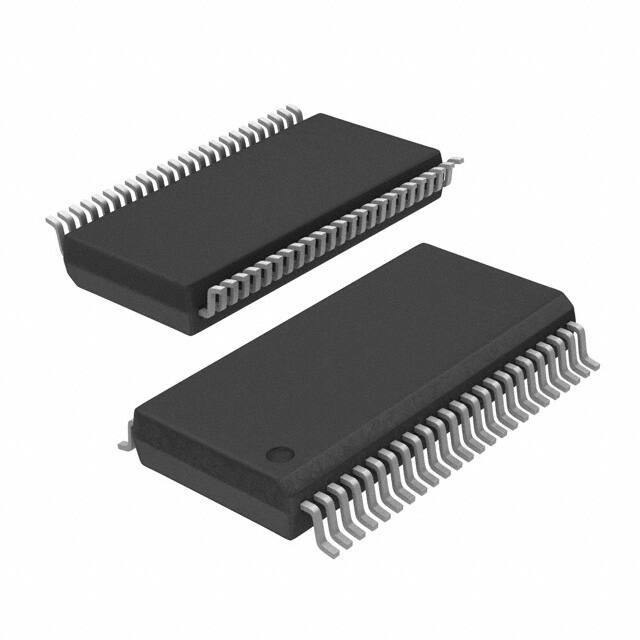
• 48-pin SSOP Package
• Two 48-MHz Clocks
• Four 33-MHz PCI Clocks
Block Diagram
XIN
XOUT
XTAL
OSC
PLL1
CPU
SRC
PCI
DOT
USB
REF
x2 / x3
x4 / x5
x6
x1
x2
x2
Pin Configuration
VDD_REF
REF
PLL Ref Freq
VDD_CPU
CPUT[0:1], CPUC[0:1],
CPU2/SRC4
VDD_SRC
SRCT[0:3], SRCC[0:3]
Divider
Network
FS_[C:A]
VTT_PWRGD#
IREF
PD
VDD_48MHz
DOT96T
DOT96C
PLL2
48MHz0
48MHz1
SDATA
SCLK
I2C
Logic
1
2
3
4
5
6
7
8
9
10
11
12
13
14
15
16
17
18
19
20
21
22
23
24
CY28416
VDD_PCI
PCI[0:3]
VDD_PCIF
PCIF[0:1]
SCLK
SDATA
XOUT
XIN
VSS_REF
REF1/FS_A
REF0/FS_C
VDD_REF
PCI0
PCI1
VDD_PCI
VSS_PCI
PCI2
PCI3
VSS_PCI
VDD_PCI
PCIF0/TESTSEL
PCIF1/ITPEN
VDD_48
48MHz0/FS_B
48MHz1
VSS_48
DOT96T
DOT96C
48
47
46
45
44
43
42
41
40
39
38
37
36
35
34
33
32
31
30
29
28
27
26
25
VSS_CPU
CPUT0
CPUC0
VDD_CPU
CPUT1
CPUC1
IREF
VSSA
VDDA
CPUT2_ITP/SRCT4
CPUC2_ITP/SRCC4
VDD_SRC
VSS_SRC
SRCT3
SRCC3
VDD_SRC
SRCC2_SATA
SRCT2_SATA
SRCC1
SRCT1
VSS_SRC
SRCC0
SRCT0
VTT_PWRGD#/PD
48-PIN SSOP
Cypress Semiconductor Corporation
Document #: 38-07657 Rev. *C
•
3901 North First Street
•
San Jose, CA 95134
•
408-943-2600
Revised July 14, 2005
[+] Feedback
�CY28416
Pin Definition
Pin No.
Name
Type
Description
47,46,44,43
CPUT/C[0:1]
O, DIF Differential CPU clock output.
39,38
CPUT2_ITP/SRCT4
CPUC2_ITP/SRCC4
O, DIF Selectable Differential CPU or SRC clock output.
ITP_EN = 0 @VTT_PWRGD# assertion PIN 39,38 = SRCT4,SRCC4
ITP_EN = 1 @VTT_PWRGD# assertion PIN 39,38 = CPUT2_ITP,CPUC2_ITP
23,24
DOT96T, DOT96C
O, DIF Differential 96-MHz clock output.
6
FS_A/REF1
I/O, SE 3.3V tolerant input for CPU frequency/REF clock
Refer to DC Electrical Specifications table for Vil_FS and Vih_FS specifications.
20
FS_B/48 MHz0
I/O, SE 3.3V tolerant input for CPU frequency/48-MHz clock
Refer to DC Electrical Specifications table for Vil_FS and Vih_FS specifications.
7
FS_C/REF0
I/O, SE 3.3V tolerant input for CPU frequency/REF clock
Refer to DC Electrical Specifications table for Vil_FS and Vih_FS specifications.
42
IREF
18
ITP_EN/PCIF1
I/O, SE Enable SRC4 or CPU2_ITP/PCIF clock.
(sampled on the VTT_PWRGD# assertion). 0 = SRC4, 1 = CPU2_ITP
9,10,13,14
PCI
O, SE 33-MHz clock output.
21
48 MHz1
O, SE 48-MHz clock output. (Uses same control SMBus register as 48 MHz0 to
control enable/disable.)
1
SCLK
I
2
SDATA
I/O
26,27,29,30,
34,35
SRCT/C[0:3]
O, DIF Differential Serial reference clock.
31,32
SRCT2_SATA,
SRCC2_SATA
O, DIF Differential Serial reference clock. Recommended output for SATA
17
TEST_SEL/PCIF0
I/O, SE, LVTTL input for selecting HI-Z or Normal operation/33-MHz Clock
PD 0 = Normal operation, 1 = HI-Z when VTT_PWRGD# is sampled
19
VDD_48
PWR
3.3V power supply for outputs
45
VDD_CPU
PWR
3.3V power supply for outputs
11, 16
VDD_PCI
PWR
3.3V power supply for outputs
8
VDD_REF
PWR
3.3V power supply for outputs
33, 37
VDD_SRC
PWR
3.3V power supply for outputs
40
VDDA
PWR
3.3V power supply for PLL
22
VSS_48
GND
Ground for outputs
48
VSS_CPU
GND
Ground for outputs
12, 15
VSS_PCI
GND
Ground for outputs
5
VSS_REF
GND
Ground for outputs
28, 36
VSS_SRC
GND
Ground for outputs
41
VSSA
GND
Ground for PLL
25
VTT_PWRGD#/PD
I, PD
3.3V LVTTL Input. This pin is a level-sensitive strobe used to latch the FS_A,
FS_B, FS_C/TEST_SEL, and PCIF0/ITP_EN Inputs. After asserting
VTT_PWRGD# (active LOW), this pin becomes a realtime input for asserting
power-down (active HIGH)
4
XIN
I
14.318-MHz Crystal Input
3
XOUT
O
14.318-MHz Crystal Output
Document #: 38-07657 Rev. *C
I
A precision resistor is attached to this pin, which is connected to the internal
current reference.
SMBus compatible SCLOCK.
SMBus compatible SDATA.
Page 2 of 15
[+] Feedback
�CY28416
Frequency Select Pins (FS_A, FS_B, and FS_C)
Host clock frequency selection is achieved by applying the
appropriate logic levels to FS_A, FS_B, FS_C inputs prior to
VTT_PWRGD# assertion (as seen by the clock synthesizer).
Upon VTT_PWRGD# being sampled LOW by the clock chip
(indicating processor VTT voltage is stable), the clock chip
samples the FS_A, FS_B, and FS_C input values. For all logic
levels of FS_A, FS_B, and FS_C VTT_PWRGD# employs a
one-shot functionality in that once a valid LOW on
VTT_PWRGD# has been sampled, all further VTT_PWRGD#,
FS_A, FS_B, and FS_C transitions will be ignored, except in
test mode.
Serial Data Interface
To enhance the flexibility and function of the clock synthesizer,
a two-signal serial interface is provided. Through the Serial
Data Interface, various device functions, such as individual
clock output buffers, can be individually enabled or disabled.
The registers associated with the Serial Data Interface
initialize to their default setting upon power-up, and therefore
use of this interface is optional. Clock device register changes
are normally made upon system initialization, if any are
required. The interface cannot be used during system
operation for power management functions.
Data Protocol
The clock driver serial protocol accepts byte write, byte read,
block write, and block read operations from the controller. For
block write/read operation, the bytes must be accessed in
sequential order from lowest to highest byte (most significant
bit first) with the ability to stop after any complete byte has
been transferred. For byte write and byte read operations, the
system controller can access individually indexed bytes. The
offset of the indexed byte is encoded in the command code,
as described in Table 2.
The block write and block read protocol is outlined in Table 3
while Table 4 outlines the corresponding byte write and byte
read protocol. The slave receiver address is 11010010 (D2h).
Table 1. Frequency Select Table (FS_A FS_B)
FS_C
FS_B
FS_A
CPU
SRC
PCIF/PCI
REF0
DOT96
USB
1
0
1
100 MHz
100 MHz
33 MHz
14.318 MHz
96 MHz
48 MHz
0
0
1
133 MHz
100 MHz
33 MHz
14.318 MHz
96 MHz
48 MHz
0
1
1
166 MHz
100 MHz
33 MHz
14.318 MHz
96 MHz
48 MHz
0
1
0
200 MHz
100 MHz
33 MHz
14.318 MHz
96 MHz
48 MHz
266 MHz
100 MHz
33 MHz
14.318 MHz
96 MHz
48 MHz
0
0
0
1
0
0
1
1
0
1
1
1
RESERVED
T
Table 2. Command Code Definition
Bit
7
(6:0)
Description
0 = Block read or block write operation, 1 = Byte read or byte write operation
Byte offset for byte read or byte write operation. For block read or block write operations, these bits should be '0000000'
Table 3. Block Read and Block Write Protocol
Block Write Protocol
Bit
1
8:2
Description
Start
Slave address – 7 bits
Block Read Protocol
Bit
1
8:2
Description
Start
Slave address – 7 bits
9
Write
9
Write
10
Acknowledge from slave
10
Acknowledge from slave
18:11
Command Code – 8 Bits
18:11
Command Code – 8 Bits
19
Acknowledge from slave
19
Acknowledge from slave
Byte Count – 8 bits
(Skip this step if I2C_EN bit set)
20
Repeat start
27:20
28
36:29
37
45:38
46
Acknowledge from slave
Data byte 1 – 8 bits
Acknowledge from slave
Data byte 2 – 8 bits
Acknowledge from slave
Document #: 38-07657 Rev. *C
27:21
28
29
37:30
38
Slave address – 7 bits
Read = 1
Acknowledge from slave
Byte Count from slave – 8 bits
Acknowledge
Page 3 of 15
[+] Feedback
�CY28416
Table 3. Block Read and Block Write Protocol (continued)
Block Write Protocol
Bit
Description
....
Data Byte /Slave Acknowledges
....
Data Byte N –8 bits
....
Acknowledge from slave
....
Stop
Block Read Protocol
Bit
46:39
47
55:48
Description
Data byte 1 from slave – 8 bits
Acknowledge
Data byte 2 from slave – 8 bits
56
Acknowledge
....
Data bytes from slave / Acknowledge
....
Data Byte N from slave – 8 bits
....
NOT Acknowledge
...
Stop
Table 4. Byte Read and Byte Write Protocol
Byte Write Protocol
Bit
1
8:2
Description
Start
Byte Read Protocol
Bit
1
Slave address – 7 bits
8:2
Description
Start
Slave address – 7 bits
9
Write
9
Write
10
Acknowledge from slave
10
Acknowledge from slave
18:11
Command Code – 8 bits
18:11
Command Code – 8 bits
19
Acknowledge from slave
19
Acknowledge from slave
27:20
Data byte – 8 bits
20
28
Acknowledge from slave
29
Stop
27:21
Repeated start
Slave address – 7 bits
28
Read
29
Acknowledge from slave
37:30
Data from slave – 8 bits
38
NOT Acknowledge
39
Stop
Control Registers
Byte 0: Control Register 0
Bit
@Pup
Name
7
1
CPUT2_ITP/SRCT4
CPUC2_ITP/SRCC4
6
1
RESERVED
5
1
RESERVED
4
1
SRC[T/C]3
3
1
SRC[T/C]2_SATA
2
1
SRC[T/C]1
SRC[T/C]1 Output Enable
0 = Disable (Hi-Z), 1 = Enable
1
1
SRC[T/C]0
SRC[T/C]0 Output Enable
0 = Disable (Hi-Z), 1 = Enable
0
1
RESERVED
Document #: 38-07657 Rev. *C
Description
CPU[T/C]2_ITP/SRC[T/C]4 Output Enable
0 = Disable (Hi-Z), 1 = Enable
RESERVED, Set = 1
RESERVED, Set = 1
SRC[T/C]3 Output Enable
0 = Disable (Hi-Z), 1 = Enable
SRC[T/C]2_SATA Output Enable
0 = Disable (Hi-Z), 1 = Enable
RESERVED, Set = 1
Page 4 of 15
[+] Feedback
�CY28416
Byte 1: Control Register 1
Bit
@Pup
Name
Description
7
1
Spread Selection
6
1
DOT_96T/C
5
1
48 MHz0, 48 MHz1
48-MHz Output Enable
0 = Disabled, 1 = Enabled
4
1
REF0
REF Output Enable
0 = Disabled, 1 = Enabled
3
1
REF1
REF Output Enable
0 = Disabled, 1 = Enabled
2
1
CPU[T/C]1
CPU[T/C]1 Output Enable
0 = Disable (Hi-Z), 1 = Enabled
1
1
CPU[T/C]0
CPU[T/C]0 Output Enable
0 = Disable (Hi-Z), 1 = Enabled
0
0
CPUT/C
SRCT/C
PCIF
PCI
0=Center Spread, 1= Down Spread (Default)
DOT_96 MHz Output Enable
0 = Disable (Hi-Z), 1 = Enabled
Spread Spectrum Enable
0 = Spread off, 1 = Spread on
Byte 2: Control Register 2
Bit
@Pup
Name
7
1
PCI3
PCI3 Output Enable
0 = Disabled, 1 = Enabled
Description
6
1
PCI2
PCI2 Output Enable
0 = Disabled, 1 = Enabled
5
1
RESERVED
RESERVED, Set = 1
4
1
RESERVED
RESERVED, Set = 1
3
1
PCI1
PCI1 Output Enable
0 = Disabled, 1 = Enabled
2
1
PCI0
PCI0 Output Enable
0 = Disabled, 1 = Enabled
1
1
PCIF1
PCIF2 Output Enable
0 = Disabled, 1 = Enabled
0
1
PCIF0
PCIF1 Output Enable
0 = Disabled, 1 = Enabled
Byte 3: Control Register 3
Bit
@Pup
Name
7
0
SRC[T/C]4
6
0
RESERVED
RESERVED, Set = 0
5
0
RESERVED
RESERVED, Set = 0
4
0
SRC[T/C]3
3
0
SRC2_SATA
2
0
SRC[T/C]1
Allow control of SRC[T/C]1 with assertion of SW PCI_STP#
0 = Free running, 1 = Stopped with PCI_STP#
1
0
SRC[T/C]0
Allow control of SRC[T/C]1 with assertion of SW PCI_STP#
0 = Free running, 1 = Stopped with PCI_STP#
0
0
RESERVED
Document #: 38-07657 Rev. *C
Description
Allow control of SRC[T/C]4 with assertion of SW PCI_STP#
0 = Free running, 1 = Stopped with PCI_STP#
Allow control of SRC[T/C]3 with assertion of SW PCI_STP#
0 = Free running, 1 = Stopped with PCI_STP#
Allow control of SRC2_SATA with assertion of SW PCI_STP#
0 = Free running, 1 = Stopped with PCI_STP#
RESERVED, Set = 0
Page 5 of 15
[+] Feedback
�CY28416
Byte 4: Control Register 4
Bit
@Pup
Name
Description
7
0
RESERVED
RESERVED, Set = 0
6
0
DOT96[T/C]
DOT_PWRDWN Drive Mode
0 = Driven in PWRDWN, 1 = Tri-state
5
0
PCIF1
Allow control of PCIF2 with assertion of SW PCI_STP#
0 = Free running, 1 = Stopped with PCI_STP#
4
0
PCIF0
Allow control of PCIF1 with assertion of SW PCI_STP#
0 = Free running, 1 = Stopped with PCI_STP#
3
0
RESERVED
RESERVED, Set = 0
2
1
RESERVED
RESERVED, Set = 1
1
1
RESERVED
RESERVED, Set = 1
0
1
RESERVED
RESERVED, Set = 1
Byte 5: Control Register 5
Bit
@Pup
Name
7
0
SRC[T/C][4:0]
Description
6
0
RESERVED
RESERVED, Set = 0
5
0
RESERVED
RESERVED, Set = 0
4
0
RESERVED
3
0
SRC[T/C][4:0]
SRC[T/C] PWRDWN Drive Mode
0 = Driven when PD asserted,1 = Tri-state when PD asserted
2
0
CPU[T/C]2_ITP
CPU[T/C]2_ITP PWRDWN Drive Mode
0 = Driven when PD asserted,1 = Tri-state when PD asserted
1
0
CPU[T/C]1
CPU[T/C]1 PWRDWN Drive Mode
0 = Driven when PD asserted,1 = Tri-state when PD asserted
0
0
CPU[T/C]0
CPU[T/C]0 PWRDWN Drive Mode
0 = Driven when PD asserted,1 = Tri-state when PD asserted
SRC[T/C] Stop Drive Mode
0 = Driven when SW PCI_STP# asserted,1 = Tri-state when SW
PCI_STP# asserted
RESERVED, Set = 0
Byte 6: Control Register 6
Bit
@Pup
Name
7
0
RESERVED
6
0
5
1
REF1
REF1 Output Drive Strength
0 = Low, 1 = High
4
1
REF0
REF0 Output Drive Strength
0 = Low, 1 = High
3
1
PCIF, SRC, PCI
2
Externally
selected
FS_C. Reflects the value of the FS_C pin sampled on power-up
0 = FS_C was low during VTT_PWRGD# assertion
1
Externally
selected
FS_B. Reflects the value of the FS_B pin sampled on power-up
0 = FS_B was low during VTT_PWRGD# assertion
0
Externally
selected
FS_A. Reflects the value of the FS_A pin sampled on power-up
0 = FS_A was low during VTT_PWRGD# assertion
Document #: 38-07657 Rev. *C
Description
RESERVED, Set = 0
Test Clock Mode Entry Control
0 = Normal operation, 1 = Hi-Z mode
SW PCI_STP# Function
0=SW PCI_STP assert, 1= SW PCI_STP deassert
When this bit is set to 0, all STOPPABLE PCI, PCIF, and SRC outputs will
be stopped in a synchronous manner with no short pulses.
When this bit is set to 1, all STOPPED PCI, PCIF, and SRC outputs will
resume in a synchronous manner with no short pulses.
Page 6 of 15
[+] Feedback
�CY28416
Byte 7: Vendor ID
Bit
@Pup
Name
Description
7
0
Revision Code Bit 3
Revision Code Bit 3
6
0
Revision Code Bit 2
Revision Code Bit 2
5
0
Revision Code Bit 1
Revision Code Bit 1
4
1
Revision Code Bit 0
Revision Code Bit 0
3
1
Vendor ID Bit 3
Vendor ID Bit 3
2
0
Vendor ID Bit 2
Vendor ID Bit 2
1
0
Vendor ID Bit 1
Vendor ID Bit 1
0
0
Vendor ID Bit 0
Vendor ID Bit 0
Table 5. Crystal Recommendations
Frequency
(Fund)
Cut
Loading Load Cap
Drive
(max.)
Shunt Cap
(max.)
Motional
(max.)
Tolerance
(max.)
Stability
(max.)
Aging
(max.)
14.31818 MHz
AT
Parallel
0.1 mW
5 pF
0.016 pF
50 ppm
50 ppm
5 ppm
20 pF
Crystal Recommendations
The CY28416 requires a Parallel Resonance Crystal.
Substituting a series resonance crystal will cause the
CY28416 to operate at the wrong frequency and violate the
ppm specification. For most applications there is a 300-ppm
frequency shift between series and parallel crystals due to
incorrect loading.
(CL). While the capacitance on each side of the crystal is in
series with the crystal, trim capacitors (Ce1,Ce2) should be
calculated to provide equal capacitive loading on both sides.
Clock Chip
Ci2
Ci1
Crystal Loading
Crystal loading plays a critical role in achieving low ppm performance. To realize low ppm performance, the total capacitance
the crystal will see must be considered to calculate the appropriate capacitive loading (CL).
Pin
3 to 6p
Figure 1 shows a typical crystal configuration using the two
trim capacitors. An important clarification for the following
discussion is that the trim capacitors are in series with the
crystal, not parallel. It’s a common misconception that load
capacitors are in parallel with the crystal and should be
approximately equal to the load capacitance of the crystal.
This is not true.
X2
X1
Cs1
Cs2
Trace
2.8pF
XTAL
Ce1
Ce2
Trim
33pF
Figure 2. Crystal Loading Example
.
Use the following formulas to calculate the trim capacitor
values for Ce1 and Ce2.
Load Capacitance (each side)
Ce = 2 * CL – (Cs + Ci)
Total Capacitance (as seen by the crystal)
CLe
Figure 1. Crystal Capacitive Clarification
Calculating Load Capacitors
In addition to the standard external trim capacitors, trace
capacitance and pin capacitance must also be considered to
correctly calculate crystal loading. As mentioned previously,
the capacitance on each side of the crystal is in series with the
crystal. This means the total capacitance on each side of the
crystal must be twice the specified crystal load capacitance
Document #: 38-07657 Rev. *C
=
1
1
( Ce1 + Cs1
+ Ci1 +
1
Ce2 + Cs2 + Ci2
)
CL ....................................................Crystal load capacitance
CLe ......................................... Actual loading seen by crystal
using standard value trim capacitors
Ce ..................................................... External trim capacitors
Cs ..............................................Stray capacitance (terraced)
Ci .......................................................... Internal capacitance
(lead frame, bond wires etc.)
Page 7 of 15
[+] Feedback
�CY28416
PD (Power-down) Clarification
The VTT_PWRGD# /PD pin is a dual-function pin. During
initial power-up, the pin functions as VTT_PWRGD#. Once
VTT_PWRGD# has been sampled LOW by the clock chip, the
pin assumes PD functionality. The PD pin is an asynchronous
active HIGH input used to shut off all clocks cleanly prior to
shutting off power to the device. This signal needs to be
synchronized internal to the device prior to powering down the
clock synthesizer. PD is also an asynchronous input for
powering up the system. When PD is asserted HIGH, all clocks
need to be driven to a LOW value and held prior to turning off
the VCOs and the crystal oscillator.
PD (Power-down) Assertion
When PD is sampled HIGH by two consecutive rising edges
of CPUC, all single-ended outputs must be held LOW on their
next HIGH-to-LOW transition and differential clocks must held
high or tri-stated (depending on the state of the control register
drive mode bit) on the next diff clock# HIGH-to-LOW transition.
When the SMBus PD drive mode bit corresponding to the
differential (CPU, SRC, and DOT) clock output of interest is
programmed to ‘0’, the clock output must be held with “Diff
clock” pin driven high at 2 x Iref, and “Diff clock#” tri-state. If
the control register PD drive mode bit corresponding to the
output of interest is programmed to “1”, then both the “Diff
clock” and the “Diff clock#” are tri-state. Note the example in
Figure 3 shows CPUT = 133 MHz and PD drive mode = ‘1’ for
all differential outputs. This diagram and description is applicable to valid CPU frequencies 100, 133, 166, 200, 266, 333,
and 400 MHz. In the event that PD mode is desired as the
initial power-on state, PD must be asserted high in less than
10 µs after asserting VTT_PWRGD#.
PD Deassertion
The power-up latency needs to be less than 1.8 ms. This is the
time from the deassertion of the PD pin or the ramping of the
power supply until the time that stable clocks are output from
the clock chip. All differential outputs stopped in a tri-state
condition resulting from power down must be driven high in
less than 300 µs of PD deassertion to a voltage greater than
200 mV. After the clock chip’s internal PLL is powered up and
locked, all outputs are to be enabled within a few clock cycles
of each other. Figure 4 is an example showing the relationship
of clocks coming up. Unfortunately, we can not show all
possible combinations, designers need to insure that from the
first active clock output to the last takes no more than two full
PCI clock cycles.
PD
CPUT, 133MHz
CPUC, 133MHz
SRCT 100MHz
SRCC 100MHz
USB, 48MHz
DOT96T
DOT96C
PCI, 33 MHz
REF
Figure 3. Power-down Assertion Timing Waveform
Document #: 38-07657 Rev. *C
Page 8 of 15
[+] Feedback
�CY28416
Tstable
0.25 m s
V TT_P W RG D # = Low
Sam ple
Inputs straps
V DD _A = 2.0V
W ait for