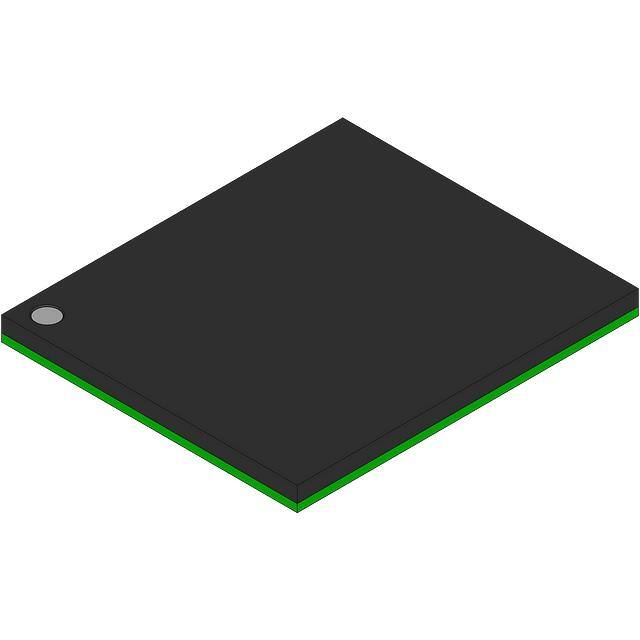
CY7C1365C
9-Mbit (256 K × 32)
Flow-Through Sync SRAM
9-Mbit (256 K × 32) Flow-Through Sync SRAM
Features
Functional Description
■
256 K × 32 common I/O
■
3.3 V core power supply (VDD)
■
2.5 V/3.3 V I/O power supply (VDDQ)
■
Fast clock-to-output times
❐ 6.5 ns (133-MHz version)
■
Provide high-performance 2-1-1-1 access rate
■
User-selectable burst counter supporting Intel Pentium
interleaved or linear burst sequences
■
Separate processor and controller address strobes
■
Synchronous self-timed write
■
Asynchronous output enable
■
Supports 3.3 V I/O level
■
Available in 165-Ball FBGA package
■
“ZZ” Sleep Mode option
■
IEEE 1149.1 JTAG-compatible boundary scan
The CY7C1365C is a 256 K × 32 synchronous cache RAM
designed to interface with high-speed microprocessors with
minimum glue logic. Maximum access delay from clock rise is
6.5 ns (133-MHz version). A 2-bit on-chip counter captures the
first address in a burst and increments the address automatically
for the rest of the burst access. All synchronous inputs are gated
by registers controlled by a positive-edge-triggered Clock Input
(CLK). The synchronous inputs include all addresses, all data
inputs, address-pipelining Chip Enable (CE1), depth-expansion
Chip Enables (CE2 and CE3), Burst Control inputs (ADSC,
ADSP, and ADV), Write Enables (BW[A:D], and BWE), and
Global Write (GW). Asynchronous inputs include the Output
Enable (OE) and the ZZ pin.
The CY7C1365C allows either interleaved or linear burst
sequences, selected by the MODE input pin. A HIGH selects an
interleaved burst sequence, while a LOW selects a linear burst
sequence. Burst accesses can be initiated with the Processor
Address Strobe (ADSP) or the cache Controller Address Strobe
(ADSC) inputs. Address advancement is controlled by the
Address Advancement (ADV) input.
Addresses and Chip Enables are registered at rising edge of
clock when either Address Strobe Processor (ADSP) or Address
Strobe Controller (ADSC) are active. Subsequent burst
addresses can be internally generated as controlled by the
Advance pin (ADV).
The CY7C1365C operates from a +3.3 V core power supply
while all outputs may operate with either a +2.5 or +3.3 V supply.
All
inputs
and
outputs
are
JEDEC-standard
JESD8-5-compatible.
Selection Guide
Description
133 MHz
Unit
Maximum Access Time
6.5
ns
Maximum Operating Current
250
mA
Maximum Standby Current
40
mA
Cypress Semiconductor Corporation
Document Number: 001-74584 Rev. *C
•
198 Champion Court
•
San Jose, CA 95134-1709
•
408-943-2600
Revised October 25, 2012
�CY7C1365C
Logic Block Diagram – CY7C1365C
ADDRESS
REGISTER
A0, A1, A
A[1:0]
MODE
BURST Q1
COUNTER
AND LOGIC
Q0
CLR
ADV
CLK
ADSC
ADSP
DQD
BWD
BYTE
WRITE REGISTER
DQC
BWC
BYTE
WRITE REGISTER
DQD
BYTE
WRITE REGISTER
DQC
BYTE
WRITE REGISTER
DQB
BWB
DQB
BYTE
BYTE
WRITE REGISTER
MEMORY
ARRAY
SENSE
AMPS
OUTPUT
BUFFERS
DQs
WRITE REGISTER
DQA
BWA
BWE
DQA
BYTE
BYTE
WRITE REGISTER
WRITE REGISTER
GW
ENABLE
REGISTER
CE1
CE2
INPUT
REGISTERS
CE3
OE
ZZ
SLEEP
CONTROL
Document Number: 001-74584 Rev. *C
Page 2 of 30
�CY7C1365C
Contents
Pin Configurations ........................................................... 4
Pin Descriptions ............................................................... 5
Functional Overview ........................................................ 7
Single Read Accesses ................................................ 7
Single Write Accesses Initiated by ADSP ................... 7
Single Write Accesses Initiated by ADSC ................... 7
Burst Sequences ......................................................... 7
Sleep Mode ................................................................. 7
Interleaved Burst Address Table
(MODE = Floating or VDD) ................................................. 7
Linear Burst Address Table (MODE = GND) ............... 7
ZZ Mode Electrical Characteristics .............................. 8
Truth Table ........................................................................ 9
Truth Table for Read/Write ............................................ 10
IEEE 1149.1 Serial Boundary Scan (JTAG) .................. 11
Disabling the JTAG Feature ...................................... 11
Test Access Port (TAP) ............................................. 11
PERFORMING A TAP RESET .................................. 11
TAP REGISTERS ...................................................... 11
TAP Instruction Set ................................................... 12
TAP Controller State Diagram ....................................... 13
TAP Controller Block Diagram ...................................... 14
TAP Timing ...................................................................... 14
TAP AC Switching Characteristics ............................... 15
3.3 V TAP AC Test Conditions ....................................... 15
3.3 V TAP AC Output Load Equivalent ......................... 15
2.5 V TAP AC Test Conditions ....................................... 15
2.5 V TAP AC Output Load Equivalent ......................... 15
Document Number: 001-74584 Rev. *C
TAP DC Electrical Characteristics and
Operating Conditions ..................................................... 16
Identification Register Definitions ................................ 16
Scan Register Sizes ....................................................... 16
Instruction Codes ........................................................... 17
Boundary Scan Order .................................................... 18
Maximum Ratings ........................................................... 19
Operating Range ............................................................. 19
Electrical Characteristics ............................................... 19
Capacitance .................................................................... 20
Thermal Resistance ........................................................ 20
AC Test Loads and Waveforms ..................................... 20
Switching Characteristics .............................................. 21
Timing Diagrams ............................................................ 22
Ordering Information ...................................................... 26
Ordering Code Definitions ......................................... 26
Package Diagram ............................................................ 27
Acronyms ........................................................................ 28
Document Conventions ................................................. 28
Units of Measure ....................................................... 28
Document History Page ................................................. 29
Sales, Solutions, and Legal Information ...................... 30
Worldwide Sales and Design Support ....................... 30
Products .................................................................... 30
PSoC Solutions ......................................................... 30
Page 3 of 30
�CY7C1365C
Pin Configurations
Figure 1. 165-ball FBGA pinout
CY7C1365C (256 K × 32)
1
A
B
C
D
E
F
G
H
J
K
L
M
N
P
NC/288M
R
2
3
4
5
6
7
8
9
10
BWE
ADSC
ADV
A
A
11
NC
CE1
BWC
BWB
CE3
NC/144M
A
CE2
BWD
BWA
CLK
NC
DQC
NC
DQC
VDDQ
VSS
VSS
VSS
VSS
GW
VSS
VSS
OE
VSS
VDD
ADSP
VDDQ
VDDQ
VSS
VDD
VDDQ
NC/1G
DQB
NC
DQB
DQC
DQC
VDDQ
VDD
VSS
VSS
VSS
VDD
VDDQ
DQB
DQB
A
NC/576M
DQC
DQC
VDDQ
VDD
VSS
VSS
VSS
VDD
VDDQ
DQB
DQB
DQC
NC
DQD
DQC
VSS
DQD
VDDQ
NC
VDDQ
VDD
VDD
VDD
VSS
VSS
VSS
VSS
VSS
VSS
VSS
VSS
VSS
VDD
VDD
VDD
VDDQ
NC
VDDQ
DQB
NC
DQA
DQB
ZZ
DQA
DQD
DQD
VDDQ
VDD
VSS
VSS
VSS
VDD
VDDQ
DQA
DQA
DQD
DQD
VDDQ
VDD
VSS
VSS
VSS
VDD
VDDQ
DQA
DQA
DQD
NC
DQD
NC
VDDQ
VDDQ
VDD
VSS
VSS
NC
VSS
NC/18M
VSS
NC
VDD
VSS
VDDQ
VDDQ
DQA
NC
DQA
NC
NC
NC/72M
A
A
TDI
A1
TDO
A
A
A
A
MODE
NC/36M
A
A
TMS
TCK
A
A
A
A
Document Number: 001-74584 Rev. *C
A0
Page 4 of 30
�CY7C1365C
Pin Descriptions
Name
A0, A1, A
I/O
Description
InputAddress Inputs used to select one of the 256K address locations. Sampled at the rising edge of the
Synchronous CLK if ADSP or ADSC is active LOW, and CE1, CE2, and CE3 are sampled active. A[1:0] feed the 2-bit
counter.
BWA, BWB,
InputByte Write Select Inputs, active LOW. Qualified with BWE to conduct Byte Writes to the SRAM.
BWC, BWD Synchronous Sampled on the rising edge of CLK.
GW
InputGlobal Write Enable Input, active LOW. When asserted LOW on the rising edge of CLK, a global write
Synchronous is conducted (ALL bytes are written, regardless of the values on BW[A:D] and BWE).
BWE
InputByte Write Enable Input, active LOW. Sampled on the rising edge of CLK. This signal must be asserted
Synchronous LOW to conduct a Byte Write.
CLK
Input-Clock Clock Input. Used to capture all synchronous inputs to the device. Also used to increment the burst
counter when ADV is asserted LOW, during a burst operation.
CE1
InputChip Enable 1 Input, active LOW. Sampled on the rising edge of CLK. Used in conjunction with CE2
Synchronous and CE3 to select/deselect the device. ADSP is ignored if CE1 is HIGH. CE1 is sampled only when a new
external address is loaded.
CE2
InputChip Enable 2 Input, active HIGH. Sampled on the rising edge of CLK. Used in conjunction with CE1
Synchronous and CE3 to select/deselect the device. CE2 is sampled only when a new external address is loaded.
CE3
InputChip Enable 3 Input, active LOW. Sampled on the rising edge of CLK. Used in conjunction with CE1
Synchronous and CE2 to select/deselect the device. CE3 is assumed active throughout this document for BGA. CE3
is sampled only when a new external address is loaded.
OE
InputOutput Enable, asynchronous input, active LOW. Controls the direction of the I/O pins. When LOW,
Asynchronous the I/O pins behave as outputs. When deasserted HIGH, I/O pins are tri-stated, and act as input data
pins. OE is masked during the first clock of a Read cycle when emerging from a deselected state.
ADV
InputAdvance Input signal, sampled on the rising edge of CLK. When asserted, it automatically increments
Synchronous the address in a burst cycle.
ADSP
InputAddress Strobe from Processor, sampled on the rising edge of CLK, active LOW. When asserted
Synchronous LOW, addresses presented to the device are captured in the address registers. A[1:0] are also loaded
into the burst counter. When ADSP and ADSC are both asserted, only ADSP is recognized. ASDP is
ignored when CE1 is deasserted HIGH.
ADSC
InputAddress Strobe from Controller, sampled on the rising edge of CLK, active LOW. When asserted
Synchronous LOW, addresses presented to the device are captured in the address registers. A[1:0] are also loaded
into the burst counter. When ADSP and ADSC are both asserted, only ADSP is recognized.
ZZ
InputZZ “sleep” Input, active HIGH. When asserted HIGH places the device in a non-time-critical “sleep”
Asynchronous condition with data integrity preserved. For normal operation, this pin has to be LOW or left floating. ZZ
pin has an internal pull-down.
DQs
I/OBidirectional Data I/O lines. As inputs, they feed into an on-chip data register that is triggered by the
Synchronous rising edge of CLK. As outputs, they deliver the data contained in the memory location specified by the
addresses presented during the previous clock rise of the read cycle. The direction of the pins is controlled
by OE. When OE is asserted LOW, the pins behave as outputs. When HIGH, DQs are placed in a tri-state
condition.
VDD
Power Supply Power supply inputs to the core of the device.
VSS
Ground
Ground for the core of the device.
VDDQ
I/O Power
Supply
Power supply for the I/O circuitry.
VSSQ
I/O Ground Ground for the I/O circuitry.
TDO
JTAG serial Serial data-out to the JTAG circuit. Delivers data on the negative edge of TCK. If the JTAG feature is
output
not being used, this pin should be left unconnected.
synchronous
Document Number: 001-74584 Rev. *C
Page 5 of 30
�CY7C1365C
Pin Descriptions (continued)
Name
I/O
Description
TDI
JTAG serial Serial data-in to the JTAG circuit. Sampled on the rising edge of TCK. If the JTAG feature is not being
input
used, this pin can be left floating or connected to VDD through a pull up resistor.
synchronous
TMS
JTAG serial Serial data-in to the JTAG circuit. Sampled on the rising edge of TCK. If the JTAG feature is not being
input
used, this pin can be disconnected or connected to VDD.
synchronous
TCK
JTAGclock
Clock input to the JTAG circuitry. If the JTAG feature is not being used, this pin must be connected to
VSS.
MODE
InputStatic
Selects Burst Order. When tied to GND selects linear burst sequence. When tied to VDD or left floating
selects interleaved burst sequence. This is a strap pin and should remain static during device operation.
Mode Pin has an internal pull-up.
NC
–
No Connects. Not Internally connected to the die.
Document Number: 001-74584 Rev. *C
Page 6 of 30
�CY7C1365C
Functional Overview
All synchronous inputs pass through input registers controlled by
the rising edge of the clock. Maximum access delay from the
clock rise (t CDV) is 6.5 ns (133-MHz device).
The CY7C1365C supports secondary cache in systems utilizing
either a linear or interleaved burst sequence. The interleaved
burst order supports Pentium and i486 processors. The linear
burst sequence is suited for processors that utilize a linear burst
sequence. The burst order is user-selectable, and is determined
by sampling the MODE input. Accesses can be initiated with
either the Processor Address Strobe (ADSP) or the Controller
Address Strobe (ADSC). Address advancement through the
burst sequence is controlled by the ADV input. A two-bit on-chip
wraparound burst counter captures the first address in a burst
sequence and automatically increments the address for the rest
of the burst access.
Byte write operations are qualified with the Byte Write Enable
(BWE) and Byte Write Select (BW[A:D]) inputs. A Global Write
Enable (GW) overrides all byte write inputs and writes data to all
four bytes. All writes are simplified with on-chip synchronous
self-timed write circuitry.
Three synchronous Chip Selects (CE1, CE2, CE3) and an
asynchronous Output Enable (OE) provide for easy bank
selection and output tri-state control. ADSP is ignored if CE1 is
HIGH.
Single Read Accesses
A single read access is initiated when the following conditions
are satisfied at clock rise: (1) CE1, CE2, and CE3 are all asserted
active, and (2) ADSP or ADSC is asserted LOW (if the access is
initiated by ADSC, the write inputs must be deasserted during
this first cycle). The address presented to the address inputs is
latched into the address register and the burst counter/control
logic and presented to the memory core. If the OE input is
asserted LOW, the requested data will be available at the data
outputs a maximum to tCDV after clock rise. ADSP is ignored if
CE1 is HIGH.
Single Write Accesses Initiated by ADSP
This access is initiated when the following conditions are
satisfied at clock rise: (1) CE1, CE2, CE3 are all asserted active,
and (2) ADSP is asserted LOW. The addresses presented are
loaded into the address register and the burst inputs (GW, BWE,
and BW[A:D]) are ignored during this first clock cycle. If the write
inputs are asserted active (see Write Cycle Descriptions table for
appropriate states that indicate a write) on the next clock rise, the
appropriate data will be latched and written into the device.Byte
writes are allowed. During byte writes, BWA controls DQA and
BWB controls DQB, BWC controls DQC, and BWD controls
DQD. All I/Os are tri-stated during a byte write.Since this is a
common I/O device, the asynchronous OE input signal must be
deasserted and the I/Os must be tri-stated prior to the
presentation of data to DQs. As a safety precaution, the data
lines are tri-stated once a write cycle is detected, regardless of
the state of OE.
active, (2) ADSC is asserted LOW, (3) ADSP is deasserted
HIGH, and (4) the write input signals (GW, BWE, and BW[A:D])
indicate a write access. ADSC is ignored if ADSP is active LOW.
The addresses presented are loaded into the address register
and the burst counter/control logic and delivered to the memory
core. The information presented to DQ[D:A] will be written into
the specified address location. Byte writes are allowed. During
byte writes, BWA controls DQA, BWB controls DQB, BWC
controls DQC, and BWD controls DQD. All I/Os are tri-stated
when a write is detected, even a byte write. Since this is a
common I/O device, the asynchronous OE input signal must be
deasserted and the I/Os must be tri-stated prior to the
presentation of data to DQs. As a safety precaution, the data
lines are tri-stated once a write cycle is detected, regardless of
the state of OE.
Burst Sequences
The CY7C1365C provides an on-chip two-bit wraparound burst
counter inside the SRAM. The burst counter is fed by A[1:0], and
can follow either a linear or interleaved burst order. The burst
order is determined by the state of the MODE input. A LOW on
MODE will select a linear burst sequence. A HIGH on MODE will
select an interleaved burst order. Leaving MODE unconnected
will cause the device to default to a interleaved burst sequence.
Sleep Mode
The ZZ input pin is an asynchronous input. Asserting ZZ places
the SRAM in a power conservation “sleep” mode. Two clock
cycles are required to enter into or exit from this “sleep” mode.
While in this mode, data integrity is guaranteed. Accesses
pending when entering the “sleep” mode are not considered valid
nor is the completion of the operation guaranteed. The device
must be deselected prior to entering the “sleep” mode. CEs,
ADSP, and ADSC must remain inactive for the duration of tZZREC
after the ZZ input returns LOW.
Interleaved Burst Address Table
(MODE = Floating or VDD)
First
Address
A1:A0
Second
Address
A1:A0
Third
Address
A1:A0
Fourth
Address
A1:A0
00
01
10
11
01
00
11
10
10
11
00
01
11
10
01
00
Linear Burst Address Table (MODE = GND)
First
Address
A1:A0
Second
Address
A1:A0
Third
Address
A1:A0
Fourth
Address
A1:A0
00
01
10
11
01
10
11
00
Single Write Accesses Initiated by ADSC
10
11
00
01
This write access is initiated when the following conditions are
satisfied at clock rise: (1) CE1, CE2, and CE3 are all asserted
11
00
01
10
Document Number: 001-74584 Rev. *C
Page 7 of 30
�CY7C1365C
ZZ Mode Electrical Characteristics
Parameter
Description
Test Conditions
IDDZZ
Sleep mode standby current
ZZ > VDD– 0.2 V
tZZS
Device operation to ZZ
ZZ > VDD – 0.2 V
tZZREC
ZZ recovery time
ZZ < 0.2 V
tZZI
ZZ Active to Sleep current
tRZZI
Min
Max
Unit
–
50
mA
–
2tCYC
ns
2tCYC
–
ns
This parameter is sampled
–
2tCYC
ns
ZZ Inactive to exit Sleep current This parameter is sampled
0
–
ns
Document Number: 001-74584 Rev. *C
Page 8 of 30
�CY7C1365C
Truth Table
The truth table for CY7C1365C follows. [1, 2, 3, 4, 5]
Cycle Description
Address Used CE1 CE3 CE2 ZZ
Deselected Cycle, Power-down
None
H
Deselected Cycle, Power-down
None
L
Deselected Cycle, Power-down
None
L
Deselected Cycle, Power-down
None
L
Deselected Cycle, Power-down
None
X
Sleep Mode, Power-down
None
X
Read Cycle, Begin Burst
External
L
Read Cycle, Begin Burst
External
Write Cycle, Begin Burst
External
Read Cycle, Begin Burst
Read Cycle, Begin Burst
X
ADSP
ADSC ADV WRITE OE CLK
DQ
X
L
X
L
X
X
X
L–H Tri-State
X
L
L
L
X
X
X
X
L–H Tri-State
H
X
L
L
X
X
X
X
L–H Tri-State
X
L
L
H
L
X
X
X
L–H Tri-State
X
X
L
H
L
X
X
X
L–H Tri-State
X
X
H
X
X
X
X
X
X
Tri-State
L
H
L
L
X
X
X
L
L–H
Q
L
L
H
L
L
X
X
X
H
L–H Tri-State
L
L
H
L
H
L
X
L
X
L–H
D
External
L
L
H
L
H
L
X
H
L
L–H
Q
External
L
L
H
L
H
L
X
H
H
L–H Tri-State
Read Cycle, Continue Burst
Next
X
X
X
L
H
H
L
H
L
L–H
Read Cycle, Continue Burst
Next
X
X
X
L
H
H
L
H
H
L–H Tri-State
Read Cycle, Continue Burst
Next
H
X
X
L
X
H
L
H
L
L–H
Read Cycle, Continue Burst
Next
H
X
X
L
X
H
L
H
H
L–H Tri-State
Write Cycle, Continue Burst
Next
X
X
X
L
H
H
L
L
X
L–H
D
Write Cycle, Continue Burst
Next
H
X
X
L
X
H
L
L
X
L–H
D
Read Cycle, Suspend Burst
Current
X
X
X
L
H
H
H
H
L
L–H
Q
Read Cycle, Suspend Burst
Current
X
X
X
L
H
H
H
H
H
L–H Tri-State
Read Cycle, Suspend Burst
Current
H
X
X
L
X
H
H
H
L
L–H
Read Cycle, Suspend Burst
Current
H
X
X
L
X
H
H
H
H
L–H Tri-State
Write Cycle, Suspend Burst
Current
X
X
X
L
H
H
H
L
X
L–H
D
Write Cycle, Suspend Burst
Current
H
X
X
L
X
H
H
L
X
L–H
D
Q
Q
Q
Notes
1. X = “Don't Care.” H = Logic HIGH, L = Logic LOW.
2. WRITE = L when any one or more Byte Write Enable signals (BWA, BWB, BWC, BWD) and BWE = L or GW = L. WRITE = H when all Byte Write Enable signals (BWA,
BWB, BWC, BWD), BWE, GW = H.
3. The DQ pins are controlled by the current cycle and the OE signal. OE is asynchronous and is not sampled with the clock.
4. The SRAM always initiates a Read cycle when ADSP is asserted, regardless of the state of GW, BWE, or BW[A: D]. Writes may occur only on subsequent clocks after
the ADSP or with the assertion of ADSC. As a result, OE must be driven HIGH prior to the start of the write cycle to allow the outputs to tri-state. OE is a don't care
for the remainder of the Write cycle.
5. OE is asynchronous and is not sampled with the clock rise. It is masked internally during Write cycles. During a read cycle all data bits are Tri-State when OE is inactive
or when the device is deselected, and all data bits behave as output when OE is active (LOW).
Document Number: 001-74584 Rev. *C
Page 9 of 30
�CY7C1365C
Truth Table for Read/Write
The Truth Table for Read/Write for CY7C1365C follows. [6, 7]
GW
BWE
BWD
BWC
BWB
BWA
Read
Function
H
H
X
X
X
X
Read
H
L
H
H
H
H
Write Byte (A)
H
L
H
H
H
L
Write Byte (B)
H
L
H
H
L
H
Write Bytes (B, A)
H
L
H
H
L
L
Write Byte (C)
H
L
H
L
H
H
Write Bytes (C, A)
H
L
H
L
H
L
Write Bytes (C, B)
H
L
H
L
L
H
Write Bytes (C, B, A)
H
L
H
L
L
L
Write Byte (D)
H
L
L
H
H
H
Write Bytes (D, A)
H
L
L
H
H
L
Write Bytes (D, B)
H
L
L
H
L
H
Write Bytes (D, B, A)
H
L
L
H
L
L
Write Bytes (D, B)
H
L
L
L
H
H
Write Bytes (D, B, A)
H
L
L
L
H
L
Write Bytes (D, C, A)
H
L
L
L
L
H
Write All Bytes
H
L
L
L
L
L
Write All Bytes
L
X
X
X
X
X
Notes
6. X = “Don't Care.” H = Logic HIGH, L = Logic LOW.
7. WRITE = L when any one or more Byte Write Enable signals (BWA, BWB, BWC, BWD) and BWE = L or GW = L. WRITE = H when all Byte Write Enable signals (BWA,
BWB, BWC, BWD), BWE, GW = H.
Document Number: 001-74584 Rev. *C
Page 10 of 30
�CY7C1365C
IEEE 1149.1 Serial Boundary Scan (JTAG)
The CY7C1365C incorporates a serial boundary scan test
access port (TAP) in the BGA package only. The TQFP package
does not offer this functionality. This part operates in accordance
with IEEE Standard 1149.1-1900, but does not have the set of
functions required for full 1149.1 compliance. These functions
from the IEEE specification are excluded because their inclusion
places an added delay in the critical speed path of the SRAM.
Note that the TAP controller functions in a manner that does not
conflict with the operation of other devices using 1149.1 fully
compliant TAPs. The TAP operates using JEDEC-standard 3.3 V
or 2.5 V I/O logic levels.
Performing a TAP Reset
A RESET is performed by forcing TMS HIGH (VDD) for five rising
edges of TCK. This RESET does not affect the operation of the
SRAM and may be performed while the SRAM is operating.
At power up, the TAP is reset internally to ensure that TDO
comes up in a high Z state.
TAP Registers
The CY7C1365C contains a TAP controller, instruction register,
boundary scan register, bypass register, and ID register.
Registers are connected between the TDI and TDO balls and
allow data to be scanned into and out of the SRAM test circuitry.
Only one register can be selected at a time through the
instruction register. Data is serially loaded into the TDI ball on the
rising edge of TCK. Data is output on the TDO ball on the falling
edge of TCK.
Disabling the JTAG Feature
Instruction Register
It is possible to operate the SRAM without using the JTAG
feature. To disable the TAP controller, TCK must be tied LOW
(VSS) to prevent clocking of the device. TDI and TMS are
internally pulled up and may be unconnected. They may
alternately be connected to VDD through a pull-up resistor. TDO
should be left unconnected. Upon power up, the device comes
up in a reset state which does not interfere with the operation of
the device.
Three-bit instructions can be serially loaded into the instruction
register. This register is loaded when it is placed between the TDI
and TDO balls as shown in the TAP Controller Block Diagram on
page 14. Upon power-up, the instruction register is loaded with
the IDCODE instruction. It is also loaded with the IDCODE
instruction if the controller is placed in a reset state as described
in the previous section.
Test Access Port (TAP)
When the TAP controller is in the Capture-IR state, the two least
significant bits are loaded with a binary ‘01’ pattern to enable fault
isolation of the board-level serial test data path.
Test Clock (TCK)
Bypass Register
The test clock is used only with the TAP controller. All inputs are
captured on the rising edge of TCK. All outputs are driven from
the falling edge of TCK.
To save time when serially shifting data through registers, it is
sometimes advantageous to skip certain chips. The bypass
register is a single-bit register that can be placed between the
TDI and TDO balls. This enables data to be shifted through the
SRAM with minimal delay. The bypass register is set LOW (VSS)
when the BYPASS instruction is executed.
Test Mode Select (TMS)
The TMS input is used to give commands to the TAP controller
and is sampled on the rising edge of TCK. It is allowable to leave
this ball unconnected if the TAP is not used. The ball is pulled up
internally, resulting in a logic HIGH level.
Test Data-In (TDI)
The TDI ball is used to serially input information into the registers
and can be connected to the input of any of the registers. The
register between TDI and TDO is chosen by the instruction that
is loaded into the TAP instruction register. For information about
loading the instruction register, see the TAP Controller State
Diagram on page 13. TDI is internally pulled up and can be
unconnected if the TAP is unused in an application. TDI is
connected to the most significant bit (MSB) of any register.
Test Data-Out (TDO)
The TDO output ball is used to serially clock data-out from the
registers. The output is active depending upon the current state
of the TAP state machine (see Instruction Codes on page 17).
The output changes on the falling edge of TCK. TDO is
connected to the least significant bit (LSB) of any register.
Document Number: 001-74584 Rev. *C
Boundary Scan Register
The boundary scan register is connected to all the input and
bidirectional balls on the SRAM.
The boundary scan register is loaded with the contents of the
RAM I/O ring when the TAP controller is in the Capture-DR state
and is then placed between the TDI and TDO balls when the
controller is moved to the Shift-DR state. The EXTEST,
SAMPLE/PRELOAD, and SAMPLE Z instructions can be used
to capture the contents of the I/O ring.
The Boundary Scan Order on page 18 show the order in which
the bits are connected. Each bit corresponds to one of the bumps
on the SRAM package. The MSB of the register is connected to
TDI and the LSB is connected to TDO.
Identification (ID) Register
The ID register is loaded with a vendor-specific, 32-bit code
during the Capture-DR state when the IDCODE command is
loaded in the instruction register. The IDCODE is hardwired into
the SRAM and can be shifted out when the TAP controller is in
the Shift-DR state. The ID register has a vendor code and other
information described in Identification Register Definitions on
page 16.
Page 11 of 30
�CY7C1365C
TAP Instruction Set
Overview
Eight different instructions are possible with the three-bit
instruction register. All combinations are listed in the Instruction
Codes on page 17. Three of these instructions are listed as
RESERVED and should not be used. The other five instructions
are described in detail in this section.
The TAP controller used in this SRAM is not fully compliant to the
1149.1 convention because some of the mandatory 1149.1
instructions are not fully implemented.
The TAP controller cannot be used to load address data or
control signals into the SRAM and cannot preload the I/O buffers.
The SRAM does not implement the 1149.1 commands EXTEST
or INTEST or the PRELOAD portion of SAMPLE/PRELOAD;
rather, it performs a capture of the I/O ring when these
instructions are executed.
Instructions are loaded into the TAP controller during the Shift-IR
state when the instruction register is placed between TDI and
TDO. During this state, instructions are shifted through the
instruction register through the TDI and TDO balls. To execute
the instruction once it is shifted in, the TAP controller needs to be
moved into the Update-IR state.
EXTEST
EXTEST is a mandatory 1149.1 instruction which is to be
executed whenever the instruction register is loaded with all 0s.
EXTEST is not implemented in this SRAM TAP controller, and
therefore this device is not compliant to 1149.1. The TAP
controller does recognize an all-0 instruction.
When an EXTEST instruction is loaded into the instruction
register, the SRAM responds as if a SAMPLE/PRELOAD
instruction has been loaded. There is one difference between the
two instructions. Unlike the SAMPLE/PRELOAD instruction,
EXTEST places the SRAM outputs in a high Z state.
controller is in a Shift-DR state. It also places all SRAM outputs
into a high Z state.
SAMPLE/PRELOAD
SAMPLE/PRELOAD is a 1149.1-mandatory instruction. When
the SAMPLE/PRELOAD instructions are loaded into the
instruction register and the TAP controller is in the Capture-DR
state, a snapshot of data on the inputs and output pins is
captured in the boundary scan register.
The user must be aware that the TAP controller clock can only
operate at a frequency up to 20 MHz, while the SRAM clock
operates more than an order of magnitude faster. Because there
is a large difference in the clock frequencies, it is possible that
during the Capture-DR state, an input or output undergoes a
transition. The TAP may then try to capture a signal while in
transition (metastable state). This does not harm the device, but
there is no guarantee as to the value that will be captured.
Repeatable results may not be possible.
To guarantee that the boundary scan register captures the
correct value of a signal, the SRAM signal must be stabilized
long enough to meet the TAP controller’s capture setup plus hold
times (tCS and tCH). The SRAM clock input might not be captured
correctly if there is no way in a design to stop (or slow) the clock
during a SAMPLE/PRELOAD instruction. If this is an issue, it is
still possible to capture all other signals and simply ignore the
value of the CK and CK# captured in the boundary scan register.
After the data is captured, it is possible to shift out the data by
putting the TAP into the Shift-DR state. This places the boundary
scan register between the TDI and TDO pins.
PRELOAD enables an initial data pattern to be placed at the
latched parallel outputs of the boundary scan register cells prior
to the selection of another boundary scan test operation.
The shifting of data for the SAMPLE and PRELOAD phases can
occur concurrently when required – that is, while data captured
is shifted out, the preloaded data can be shifted in.
IDCODE
BYPASS
The IDCODE instruction causes a vendor-specific, 32-bit code
to be loaded into the instruction register. It also places the
instruction register between the TDI and TDO balls and enables
the IDCODE to be shifted out of the device when the TAP
controller enters the Shift-DR state.
When the BYPASS instruction is loaded in the instruction register
and the TAP is placed in a Shift-DR state, the bypass register is
placed between the TDI and TDO balls. The advantage of the
BYPASS instruction is that it shortens the boundary scan path
when multiple devices are connected together on a board.
The IDCODE instruction is loaded into the instruction register
upon power-up or whenever the TAP controller is given a test
logic reset state.
SAMPLE Z
Reserved
These instructions are not implemented but are reserved for
future use. Do not use these instructions.
The SAMPLE Z instruction causes the boundary scan register to
be connected between the TDI and TDO balls when the TAP
Document Number: 001-74584 Rev. *C
Page 12 of 30
�CY7C1365C
TAP Controller State Diagram
1
TEST-LOGIC
RESET
0
0
RUN-TEST/
IDLE
1
SELECT
DR-SCA N
1
SELECT
IR-SCAN
0
1
0
1
CAPTURE-DR
CAPTURE-IR
0
0
SHIFT-DR
0
SHIFT-IR
1
1
EXIT1-IR
0
1
0
PAUSE-DR
0
PAUSE-IR
1
0
1
EXIT2-DR
0
EXIT2-IR
1
1
UPDATE-DR
1
0
1
EXIT1-DR
0
1
0
UPDATE-IR
1
0
The 0/1 next to each state represents the value of TMS at the rising edge of TCK.
Document Number: 001-74584 Rev. *C
Page 13 of 30
�CY7C1365C
TAP Controller Block Diagram
0
Bypass Register
2 1 0
Selection
Circuitry
TDI
Selection
Circuitry
Instruction Register
TDO
31 30 29 . . . 2 1 0
Identification Register
x . . . . . 2 1 0
Boundary Scan Register
TCK
TAP CONTROLLER
TM S
TAP Timing
1
2
Test Clock
(TCK )
3
t TH
t TM SS
t TM SH
t TDIS
t TDIH
t
TL
4
5
6
t CY C
Test M ode Select
(TM S)
Test Data-In
(TDI)
t TDOV
t TDOX
Test Data-Out
(TDO)
DON’T CA RE
Document Number: 001-74584 Rev. *C
UNDEFINED
Page 14 of 30
�CY7C1365C
TAP AC Switching Characteristics
Over the Operating Range
Parameter [8, 9]
Parameter
Min
Max
Unit
Clock
tTCYC
TCK clock cycle time
50
–
ns
tTF
TCK clock frequency
–
20
MHz
tTH
TCK clock HIGH time
20
–
ns
tTL
TCK clock LOW time
20
–
ns
tTDOV
TCK clock LOW to TDO valid
–
10
ns
tTDOX
TCK clock LOW to TDO invalid
0
–
ns
Output Times
Set-up Times
tTMSS
TMS setup to TCK clock rise
5
–
ns
tTDIS
TDI setup to TCK clock rise
5
–
ns
tCS
Capture setup to TCK rise
5
–
ns
Hold Times
tTMSH
TMS hold after TCK clock rise
5
–
ns
tTDIH
TDI hold after clock rise
5
–
ns
tCH
Capture hold after clock rise
5
–
ns
2.5 V TAP AC Test Conditions
3.3 V TAP AC Test Conditions
Input pulse levels ...............................................VSS to 3.3 V
Input pulse levels ............................................... VSS to 2.5 V
Input rise and fall times ...................................................1 ns
Input rise and fall time ....................................................1 ns
Input timing reference levels ......................................... 1.5 V
Input timing reference levels ....................................... 1.25 V
Output reference levels ................................................ 1.5 V
Output reference levels .............................................. 1.25 V
Test load termination supply voltage ............................ 1.5 V
Test load termination supply voltage .......................... 1.25 V
3.3 V TAP AC Output Load Equivalent
2.5 V TAP AC Output Load Equivalent
1.5V
1.25V
50Ω
TDO
50Ω
TDO
Z O= 50Ω
20pF
Z O= 50Ω
20pF
Notes
8. tCS and tCH refer to the setup and hold time requirements of latching data from the boundary scan register.
9. Test conditions are specified using the load in TAP AC test conditions. tR/tF = 1 ns.
Document Number: 001-74584 Rev. *C
Page 15 of 30
�CY7C1365C
TAP DC Electrical Characteristics and Operating Conditions
(0 °C < TA < +70 °C; VDD = 3.3 V ± 0.165 V unless otherwise noted)
Parameter [10]
Min
Max
Unit
VOH1
Output HIGH voltage
Description
IOH = –4.0 mA
Test Conditions
VDDQ = 3.3 V
2.4
–
V
IOH = –1.0 mA
VDDQ = 2.5 V
2.0
–
V
VOH2
Output HIGH voltage
IOH = –100 µA
VDDQ = 3.3 V
2.9
–
V
VDDQ = 2.5 V
2.1
–
V
VOL1
Output LOW voltage
IOL = 8.0 mA
VDDQ = 3.3 V
–
0.4
V
IOL = 8.0 mA
VDDQ = 2.5 V
–
0.4
V
VOL2
Output LOW voltage
IOL = 100 µA
VDDQ = 3.3 V
–
0.2
V
VDDQ = 2.5 V
–
0.2
V
VIH
Input HIGH voltage
VDDQ = 3.3 V
2.0
VDD + 0.3
V
VDDQ = 2.5 V
1.7
VDD + 0.3
V
VIL
Input LOW voltage
VDDQ = 3.3 V
–0.5
0.7
V
VDDQ = 2.5 V
–0.3
0.7
V
IX
Input load current
–5
5
µA
GND < VIN < VDDQ
Identification Register Definitions
Instruction Field
CY7C1365C (256 K × 32)
Revision number (31:29)
000
Device depth (28:24) [11]
01011
Description
Describes the version number.
Reserved for Internal Use
Device width (23:18) 165-ball FBGA
000001
Defines memory type and architecture
Cypress device ID (17:12)
011110
Defines width and density
Cypress JEDEC ID Code (11:1)
00000110100
ID register presence indicator (0)
1
Allows unique identification of SRAM vendor.
Indicates the presence of an ID register.
Scan Register Sizes
Register Name
Bit Size (× 32)
Instruction
3
Bypass
1
ID
32
Boundary scan order (165-ball FBGA package)
71
Notes
10. All voltages referenced to VSS (GND).
11. Bit #24 is “1” in the Register Definitions for both 2.5 V and 3.3 V versions of this device.
Document Number: 001-74584 Rev. *C
Page 16 of 30
�CY7C1365C
Instruction Codes
Code
Description
EXTEST
Instruction
000
Captures I/O ring contents. Places the boundary scan register between TDI and TDO. Forces
all SRAM outputs to high Z state.
IDCODE
001
Loads the ID register with the vendor ID code and places the register between TDI and TDO.
This operation does not affect SRAM operations.
SAMPLE Z
010
Captures I/O ring contents. Places the boundary scan register between TDI and TDO. Forces
all SRAM output drivers to a high Z state.
RESERVED
011
Do Not Use: This instruction is reserved for future use.
SAMPLE/PRELOAD
100
Captures I/O ring contents. Places the boundary scan register between TDI and TDO. Does
not affect SRAM operation.
RESERVED
101
Do Not Use: This instruction is reserved for future use.
RESERVED
110
Do Not Use: This instruction is reserved for future use.
BYPASS
111
Places the bypass register between TDI and TDO. This operation does not affect SRAM
operations.
Document Number: 001-74584 Rev. *C
Page 17 of 30
�CY7C1365C
Boundary Scan Order
165-ball FBGA
CY7C1365C (256 K × 32)
Bit #
Ball ID
Signal Name
Bit #
Ball ID
Signal Name
1
B6
CLK
37
R6
A0
2
B7
GW
38
P6
A1
3
A7
BWE
39
R4
A
4
B8
OE
40
P4
A
5
A8
ADSC
41
R3
A
6
B9
ADSP
42
P3
A
7
A9
ADV
43
R1
MODE
8
B10
A
44
N1
NC
9
A10
A
45
L2
DQD
10
C11
NC
46
K2
DQD
11
E10
DQB
47
J2
DQD
12
F10
DQB
48
M2
DQD
13
G10
DQB
49
M1
DQD
14
D10
DQB
50
L1
DQD
15
D11
DQB
51
K1
DQD
16
E11
DQB
52
J1
DQD
17
F11
DQB
53
Internal
Internal
18
G11
DQB
54
G2
DQC
19
H11
ZZ
55
F2
DQC
20
J10
DQA
56
E2
DQC
21
K10
DQA
57
D2
DQC
22
L10
DQA
58
G1
DQC
23
M10
DQA
59
F1
DQC
24
J11
DQA
60
E1
DQC
25
K11
DQA
61
D1
DQC
26
L11
DQA
62
C1
NC
27
M11
DQA
63
B2
A
28
N11
NC
64
A2
A
29
R11
A
65
A3
CE1
30
R10
A
66
B3
CE2
31
P10
A
67
B4
BWD
32
R9
A
68
A4
BWC
33
P9
A
69
A5
BWB
34
R8
A
70
B5
BWA
35
P8
A
71
A6
CE3
36
P11
A
Document Number: 001-74584 Rev. *C
Page 18 of 30
�CY7C1365C
Maximum Ratings
DC Input Voltage ................................ –0.5 V to VDD + 0.5 V
Exceeding maximum ratings may impair the useful life of the
device. User guidelines are not tested.
Storage Temperature ............................... –65 C to +150 C
Ambient Temperature with
Power Applied ......................................... –55 C to +125 C
Current into Outputs (LOW) ........................................ 20 mA
Static Discharge Voltage
(per MIL-STD-883, Method 3015) ........................... >2001 V
Latch-up Current ..................................................... >200 mA
Operating Range
Supply Voltage on VDD Relative to GND .....–0.5 V to +4.6 V
Range
Supply Voltage on VDDQ Relative to GND .... –0.5 V to +VDD
DC Voltage Applied to Outputs
in Tri-State ........................................–0.5 V to VDDQ + 0.5 V
Industrial
Ambient
Temperature
–40 °C to +85 °C
VDD
VDDQ
3.3 V– 5% / 2.5 V – 5% to
+10%
VDD
Electrical Characteristics
Over the Operating Range
Parameter [12, 13]
Description
CY7C1365C
Test Conditions
VDD
Power Supply Voltage
VDDQ
I/O Supply Voltage
VOH
Output HIGH Voltage
VOL
Output LOW Voltage
for 3.3 V I/O, IOL = 8.0 mA
VIH
Input HIGH Voltage
for 3.3 V I/O
VIL
Input LOW Voltage [7]
IX
Input Leakage Current except ZZ GND VI VDDQ
and MODE
Input Current of MODE
Input = VSS
Input = VDD
Input Current of ZZ
Input = VSS
Input = VDD
IOZ
Output Leakage Current
GND VI VDDQ, Output Disabled
IDD
VDD Operating Supply Current
VDD = Max., IOUT = 0 mA,
f = fMAX= 1/tCYC
7.5-ns cycle,
133 MHz
ISB1
Automatic CE Power-Down
Current – TTL Inputs
ISB2
Automatic CE Power-Down
Current – CMOS Inputs
Min
Max
Unit
3.135
3.6
V
for 3.3 V I/O
3.135
3.6
V
for 2.5 V I/O
2.375
2.625
V
for 3.3 V I/O, IOH = –4.0 mA
2.4
–
V
for 2.5 V I/O, IOH = –1.0 mA
2.0
–
V
–
0.4
V
for 2.5 V I/O, IOL = 1.0 mA
–
0.4
V
2.0
VDD + 0.3 V
V
for 2.5 V I/O
1.7
VDD + 0.3 V
V
for 3.3 V I/O
–0.3
0.8
V
for 2.5 V I/O
–0.3
0.7
V
5
5
A
–30
–
A
–
5
A
–5
–
A
–
30
A
–5
5
A
–
250
mA
Max. VDD, Device Deselected, 7.5-ns cycle,
VIN VIH or VIN VIL, f = fMAX, 133 MHz
inputs switching
–
110
mA
Max. VDD, Device Deselected,
7.5-ns cycle,
VIN VDD – 0.3V or VIN 0.3V, 133 MHz
f = 0, inputs static
–
40
mA
Notes
12. Overshoot: VIH(AC) < VDD + 1.5 V (Pulse width less than tCYC/2), undershoot: VIL(AC) > –2 V (Pulse width less than tCYC/2).
13. TPower-up: Assumes a linear ramp from 0 V to VDD(min) within 200 ms. During this time VIH < VDD and VDDQ < VDD.
Document Number: 001-74584 Rev. *C
Page 19 of 30
�CY7C1365C
Electrical Characteristics (continued)
Over the Operating Range
Parameter [12, 13]
Description
CY7C1365C
Test Conditions
Min
Max
Unit
ISB3
Automatic CE Power-Down
Current – CMOS Inputs
7.5-ns cycle,
Max VDD, Device Deselected,
VIN VDDQ – 0.3 V or VIN 0.3 V, 133 MHz
f = fMAX, inputs switching
–
100
mA
ISB4
Automatic CE Power-Down
Current – TTL Inputs
Max. VDD, Device Deselected,
VIN VIH or VIN VIL, f = 0,
inputs static.
–
40
mA
7.5-ns cycle,
133 MHz
Capacitance
Parameter [14]
Description
165-ball FBGA Unit
Max.
Test Conditions
CIN
Input Capacitance
5
pF
CCLK
Clock Input Capacitance
5
pF
CI/O
Input/Output Capacitance
7
pF
TA = 25 °C, f = 1 MHz, VDD = 3.3 V, VDDQ = 2.5 V
Thermal Resistance
Parameter [14]
Description
JA
Thermal resistance
(junction to ambient)
JC
Thermal resistance
(junction to case)
165-ball FBGA Unit
Package
Test Conditions
Test conditions follow standard test methods and
procedures for measuring thermal impedance, per
EIA/JESD51
16.8
C/W
3
C/W
AC Test Loads and Waveforms
Figure 2. AC Test Loads and Waveforms
3.3 V I/O Test Load
R = 317
3.3V
OUTPUT
OUTPUT
RL = 50
Z0 = 50
VT = 1.5V
(a)
INCLUDING
JIG AND
SCOPE
Z0 = 50
VT = 1.25V
(a)
R = 351
10%
(c)
ALL INPUT PULSES
VDDQ
INCLUDING
JIG AND
SCOPE
1 ns
(b)
GND
5 pF
90%
10%
90%
1 ns
R = 1667
2.5V
OUTPUT
RL = 50
GND
5 pF
2.5 V I/O Test Load
OUTPUT
ALL INPUT PULSES
VDDQ
R =1538
(b)
10%
90%
10%
90%
1 ns
1 ns
(c)
Note
14. Tested initially and after any design or process change that may affect these parameters.
Document Number: 001-74584 Rev. *C
Page 20 of 30
�CY7C1365C
Switching Characteristics
Over the Operating Range
Parameter [15, 16]
tPOWER
Description
VDD(typical) to the first access [17]
-133
Unit
Min
Max
1
–
ms
Clock
tCYC
Clock cycle time
7.5
–
ns
tCH
Clock HIGH
3.0
–
ns
tCL
Clock LOW
3.0
–
ns
Output Times
tCDV
Data output valid after CLK rise
–
6.5
ns
tDOH
Data output hold after CLK rise
2.0
–
ns
0
–
ns
–
3.5
ns
–
3.5
ns
0
–
ns
–
3.5
ns
[18, 19, 20]
tCLZ
Clock to low Z
tCHZ
Clock to high Z [18, 19, 20]
tOEV
OE LOW to output valid
tOELZ
tOEHZ
OE LOW to output low Z
[18, 19, 20]
OE HIGH to output high Z
[18, 19, 20]
Set-up Times
tAS
Address set-up before CLK rise
1.5
–
ns
tADS
ADSP, ADSC set-up before CLK rise
1.5
–
ns
tADVS
ADV set-up before CLK rise
1.5
–
ns
tWES
GW, BWE, BW[A:D] set-up before CLK rise
1.5
–
ns
tDS
Data input set-up before CLK rise
1.5
–
ns
tCES
Chip enable set-up
1.5
–
ns
tAH
Address hold after CLK rise
0.5
–
ns
tADH
ADSP, ADSC hold after CLK rise
0.5
–
ns
tWEH
GW, BWE, BW[A:D] hold after CLK rise
0.5
–
ns
tADVH
ADV hold after CLK rise
0.5
–
ns
tDH
Data input hold after CLK rise
0.5
–
ns
tCEH
Chip enable hold after CLK rise
0.5
–
ns
Hold Times
Notes
15. Timing reference level is 1.5 V when VDDQ = 3.3 V and is 1.25 V when VDDQ = 2.5 V.
16. Test conditions shown in (a) of Figure 2 on page 20 unless otherwise noted.
17. This part has a voltage regulator internally; tPOWER is the time that the power needs to be supplied above VDD(minimum) initially before a Read or Write operation can
be initiated.
18. tCHZ, tCLZ,tOELZ, and tOEHZ are specified with AC test conditions shown in part (b) of Figure 2 on page 20. Transition is measured ±200 mV from steady-state voltage.
19. At any given voltage and temperature, tOEHZ is less than tOELZ and tCHZ is less than tCLZ to eliminate bus contention between SRAMs when sharing the same data
bus. These specifications do not imply a bus contention condition, but reflect parameters guaranteed over worst case user conditions. Device is designed to achieve
High Z prior to Low Z under the same system conditions.
20. This parameter is sampled and not 100% tested.
Document Number: 001-74584 Rev. *C
Page 21 of 30
�CY7C1365C
Timing Diagrams
Figure 3. Read Cycle Timing [21]
tCYC
CLK
t
tADS
CH
t CL
tADH
ADSP
tADS
tADH
ADSC
tAS
tAH
A1
ADDRESS
A2
t
t
WES
WEH
GW, BWE,BW
[A:D]
tCES
Deselect Cycle
t CEH
CE
t
ADVS
t
ADVH
ADV
ADV suspends burst.
OE
t OEV
t OEHZ
t CLZ
Data Out (Q)
High-Z
Q(A1)
t OELZ
tCDV
t CHZ
tDOH
Q(A2)
Q(A2 + 1)
Q(A2 + 2)
Q(A2 + 3)
Q(A2)
Q(A2 + 1)
Q(A2 + 2)
t CDV
Single READ
BURST
READ
DON’T CARE
Burst wraps around
to its initial state
UNDEFINED
Note
21. On this diagram, when CE is LOW, CE1 is LOW, CE2 is HIGH and CE3 is LOW. When CE is HIGH, CE1 is HIGH or CE2 is LOW or CE3 is HIGH.
Document Number: 001-74584 Rev. *C
Page 22 of 30
�CY7C1365C
Timing Diagrams (continued)
Figure 4. Write Cycle Timing [22, 23]
t CYC
CLK
t
tADS
t
CH
CL
tADH
ADSP
tADS
ADSC extends burst.
tADH
tADS
tADH
ADSC
tAS
tAH
A1
ADDRESS
A2
A3
Byte write signals are ignored for first cycle when
ADSP initiates burst.
tWES tWEH
BWE,
BW[A:D]
t
t
WES WEH
GW
tCES
tCEH
CE
tADVS tADVH
ADV
ADV suspends burst.
OE
t
Data in (D)
High-Z
t
OEHZ
DS
t
DH
D(A1)
D(A2)
D(A2 + 1)
D(A2 + 1)
D(A2 + 2)
D(A2 + 3)
D(A3)
D(A3 + 1)
D(A3 + 2)
Data Out (Q)
BURST READ
Single WRITE
BURST WRITE
DON’T CARE
Extended BURST WRITE
UNDEFINED
Notes
22. Full width write can be initiated by either GW LOW; or by GW HIGH, BWE LOW and BW[A:D] LOW.
23. The data bus (Q) remains in High Z following a Write cycle unless an ADSP, ADSC, or ADV cycle is performed.
Document Number: 001-74584 Rev. *C
Page 23 of 30
�CY7C1365C
Timing Diagrams (continued)
Figure 5. Read/Write Timing [24, 25, 26]
tCYC
CLK
t
CH
tADS
tADH
tAS
tAH
t
CL
ADSP
ADSC
ADDRESS
A1
A2
A3
A4
A5
A6
D(A5)
D(A6)
t
t
WES WEH
BWE, BW[A:D]
tCES
tCEH
CE
ADV
OE
tDS
Data In (D)
Data Out (Q)
High-Z
t
OEHZ
Q(A1)
tDH
tOELZ
D(A3)
tCDV
Q(A2)
Back-to-Back READs
Q(A4)
Single WRITE
Q(A4+1)
Q(A4+2)
BURST READ
DON’T CARE
Q(A4+3)
Back-to-Back
WRITEs
UNDEFINED
Notes
24. On this diagram, when CE is LOW, CE1 is LOW, CE2 is HIGH and CE3 is LOW. When CE is HIGH, CE1 is HIGH or CE2 is LOW or CE3 is HIGH.
25. The data bus (Q) remains in High Z following a Write cycle unless an ADSP, ADSC, or ADV cycle is performed.
26. GW is HIGH.
Document Number: 001-74584 Rev. *C
Page 24 of 30
�CY7C1365C
Timing Diagrams (continued)
Figure 6. ZZ Mode Timing [27, 28]
CLK
t ZZ
ZZ
I
t ZZREC
t ZZI
SUPPLY
I DDZZ
t RZZI
ALL INPUTS
(except ZZ)
Outputs (Q)
DESELECT or READ Only
High-Z
DON’T CARE
Notes
27. Device must be deselected when entering ZZ mode. See Cycle Descriptions table for all possible signal conditions to deselect the device.
28. DQs are in High Z when exiting ZZ sleep mode.
Document Number: 001-74584 Rev. *C
Page 25 of 30
�CY7C1365C
Ordering Information
Not all of the speed, package and temperature ranges are available. Please contact your local sales representative or visit
www.cypress.com for actual products offered.
Speed
(MHz)
133
Package
Diagram
Ordering Code
Package Type
51-85180 165-ball FBGA (13 × 15 × 1.4 mm)
CY7C1365C-133BZI
Operating
Range
Industrial
Ordering Code Definitions
CY 7
C
1365 C - 133
BZ
X
I
Temperature range:
I = Industrial = –40 °C to +85 °C
X = Pb-free
Package Type:
A = 165-ball FBGA
Speed Grade: 133 MHz
Process Technology: C 90 nm
Part Identifier: 1365 = DCD, 256 K × 32 (9 Mb)
Technology Code: C = CMOS
Marketing Code: 7 = SRAM
Company ID: CY = Cypress
Document Number: 001-74584 Rev. *C
Page 26 of 30
�CY7C1365C
Package Diagram
Figure 7. 165-ball FBGA (13 × 15 × 1.4 mm) BB165D/BW165D (0.5 Ball Diameter) Package Outline, 51-85180
51-85180 *F
Document Number: 001-74584 Rev. *C
Page 27 of 30
�CY7C1365C
Acronyms
Acronym
Document Conventions
Description
Units of Measure
CE
chip enable
CMOS
complementary metal-oxide-semiconductor
°C
degree Celsius
EIA
electronic industries alliance
MHz
megahertz
FBGA
fine-pitch ball grid array
µA
microampere
I/O
input/output
µs
microsecond
JEDEC
joint electron devices engineering council
mA
milliampere
JTAG
joint test action group
mm
millimeter
LSB
least significant bit
ms
millisecond
MSB
most significant bit
mV
millivolt
OE
output enable
ns
nanosecond
SRAM
static random access memory
ohm
TAP
test access port
%
percent
TCK
test clock
pF
picofarad
TDI
test data-in
V
volt
TDO
test data-out
W
watt
TMS
test mode select
TTL
transistor-transistor logic
Document Number: 001-74584 Rev. *C
Symbol
Unit of Measure
Page 28 of 30
�CY7C1365C
Document History Page
Document Title: CY7C1365C, 9-Mbit (256 K × 32) Flow-Through Sync SRAM
Document Number: 001-74584
Rev.
ECN No.
Issue Date
Orig. of
Change
Description of Change
**
3465802
12/15/2011
PRIT
New data sheet.
*A
3478370
01/09/2012
PRIT
Changed status from Preliminary to Final.
*B
3537322
02/28/2012
PRIT
Added JTAG Information (updated the section Pin Descriptions and added the
sections IEEE 1149.1 Serial Boundary Scan (JTAG), TAP Controller State
Diagram, TAP Controller Block Diagram, TAP Timing, TAP AC Switching
Characteristics, 3.3 V TAP AC Test Conditions, 3.3 V TAP AC Output Load
Equivalent, 2.5 V TAP AC Test Conditions, 2.5 V TAP AC Output Load
Equivalent, TAP DC Electrical Characteristics and Operating Conditions,
Identification Register Definitions, Scan Register Sizes, Instruction Codes, and
Boundary Scan Order).
*C
3793968
10/25/2012
PRIT
Updated Package Diagram (spec 51-85180 (Changed revision from *E to *F)).
Document Number: 001-74584 Rev. *C
Page 29 of 30
�CY7C1365C
Sales, Solutions, and Legal Information
Worldwide Sales and Design Support
Cypress maintains a worldwide network of offices, solution centers, manufacturer’s representatives, and distributors. To find the office
closest to you, visit us at Cypress Locations.
Products
Automotive
Clocks & Buffers
Interface
Lighting & Power Control
PSoC Solutions
cypress.com/go/automotive
cypress.com/go/clocks
psoc.cypress.com/solutions
cypress.com/go/interface
PSoC 1 | PSoC 3 | PSoC 5
cypress.com/go/powerpsoc
cypress.com/go/plc
Memory
Optical & Image Sensing
PSoC
Touch Sensing
USB Controllers
Wireless/RF
cypress.com/go/memory
cypress.com/go/image
cypress.com/go/psoc
cypress.com/go/touch
cypress.com/go/USB
cypress.com/go/wireless
© Cypress Semiconductor Corporation, 2011-2012. The information contained herein is subject to change without notice. Cypress Semiconductor Corporation assumes no responsibility for the use of
any circuitry other than circuitry embodied in a Cypress product. Nor does it convey or imply any license under patent or other rights. Cypress products are not warranted nor intended to be used for
medical, life support, life saving, critical control or safety applications, unless pursuant to an express written agreement with Cypress. Furthermore, Cypress does not authorize its products for use as
critical components in life-support systems where a malfunction or failure may reasonably be expected to result in significant injury to the user. The inclusion of Cypress products in life-support systems
application implies that the manufacturer assumes all risk of such use and in doing so indemnifies Cypress against all charges.
Any Source Code (software and/or firmware) is owned by Cypress Semiconductor Corporation (Cypress) and is protected by and subject to worldwide patent protection (United States and foreign),
United States copyright laws and international treaty provisions. Cypress hereby grants to licensee a personal, non-exclusive, non-transferable license to copy, use, modify, create derivative works of,
and compile the Cypress Source Code and derivative works for the sole purpose of creating custom software and or firmware in support of licensee product to be used only in conjunction with a Cypress
integrated circuit as specified in the applicable agreement. Any reproduction, modification, translation, compilation, or representation of this Source Code except as specified above is prohibited without
the express written permission of Cypress.
Disclaimer: CYPRESS MAKES NO WARRANTY OF ANY KIND, EXPRESS OR IMPLIED, WITH REGARD TO THIS MATERIAL, INCLUDING, BUT NOT LIMITED TO, THE IMPLIED WARRANTIES
OF MERCHANTABILITY AND FITNESS FOR A PARTICULAR PURPOSE. Cypress reserves the right to make changes without further notice to the materials described herein. Cypress does not
assume any liability arising out of the application or use of any product or circuit described herein. Cypress does not authorize its products for use as critical components in life-support systems where
a malfunction or failure may reasonably be expected to result in significant injury to the user. The inclusion of Cypress’ product in a life-support systems application implies that the manufacturer
assumes all risk of such use and in doing so indemnifies Cypress against all charges.
Use may be limited by and subject to the applicable Cypress software license agreement.
Document Number: 001-74584 Rev. *C
Revised October 25, 2012
Page 30 of 30
Intel and Pentium are registered trademarks and i486 is a trademark of Intel Corporation. All products and company names mentioned in this document may be the trademarks of their respective holders.
�