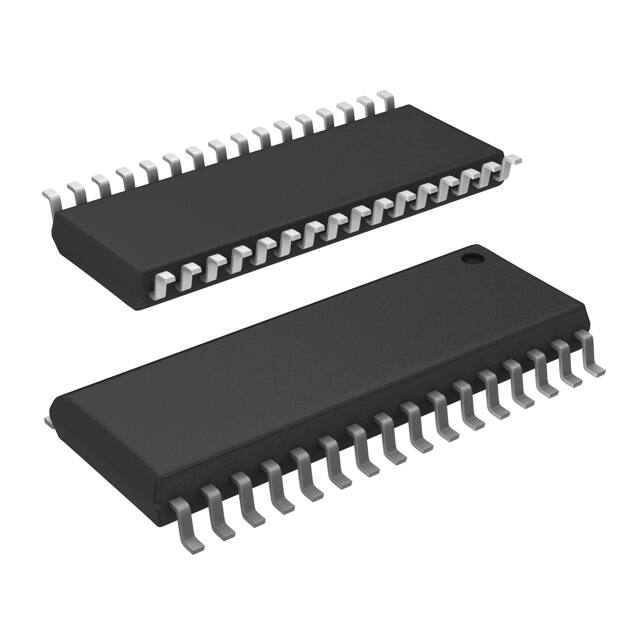
STK14C88-NF35U
32Kx8 AutoStore nvSRAM with extended temperature
FEATURES
DESCRIPTION
• 35 ns Read Access & R/W Cycle Time
The Simtek STK14C88-NF35U is a 256Kb fast static
RAM with a non-volatile Quantum Trap storage element included with each memory cell.
• Unlimited Read/Write Endurance
• Automatic Non-volatile STORE on Power Loss
The SRAM provides the fast access & cycle times,
ease of use and unlimited read & write endurance of
a normal SRAM.
• Non-Volatile STORE Under Hardware or
Software Control
• Automatic RECALL to SRAM on Power Up
Data transfers automatically to the non-volatile storage cells when power loss is detected (the STORE
operation). On power up, data is automatically
restored to the SRAM (the RECALL operation). Both
STORE and RECALL operations are also available
under software control.
• Unlimited RECALL Cycles
• 100k STORE Cycles
• 10-Year Non-volatile Data Retention
• Single 5V +10% Power Supply
• -55°C to 125°C Operating Range
The Simtek nvSRAM is the first monolithic non-volatile memory to offer unlimited writes and reads. It is
the highest performance, most reliable non-volatile
memory available.
• 32-Pin 300 mil SOIC (RoHS-Compliant)
BLOCK DIAGRAM
VCCX
DQ0
DQ1
DQ2
DQ3
DQ4
DQ5
DQ6
DQ7
INPUT BUFFERS
A5
A6
A7
A8
A9
A11
A12
A13
A14
ROW DECODER
Quantum Trap
512 x 512
VCAP
POWER
CONTROL
STORE
STATIC RAM
ARRAY
512 x 512
RECALL
STORE/
RECALL
CONTROL
SOFTWARE
DETECT
COLUMN I/O
HSB
A0 - A13
COLUMN DEC
A0 A1 A2 A3 A4 A10
G
E
W
This product conforms to specifications per the
terms of Simtek standard warranty. The product
has completed Simtek internal qualification testing
and has reached production status.
1
Document Control #ML0066 Rev 2.0
Feb, 2008
�STK14C88-NF35U
PIN CONFIGURATIONS
VCAP
1
32
VCC
A14
2
31
HSB
A12
A7
3
30
4
A6
A5
A4
A3
5
29
28
W
A13
A8
6
27
A9
7
26
A11
8
25
NC
A2
9
24
G
NC
10
23
A10
A1
A0
11
22
12
21
E
DQ7
DQ0
13
20
DQ1
DQ2
VSS
14
19
15
18
16
17
(TOP)
DQ6
DQ5
DQ4
DQ3
32-Pin 300 mil SOIC
PIN DESCRIPTIONS
Pin Name
I/O
Description
A14-A0
Input
Address: The 15 address inputs select one of 32,768 bytes in the nvSRAM array
DQ7-DQ0
I/O
Data: Bi-directional 8-bit data bus for accessing the nvSRAM
E
Input
Chip Enable: The active low E input selects the device
W
Input
Write Enable: The active low W enables data on the DQ pins to be written to the address
location latched by the falling edge of E
G
Input
Output Enable: The active low G input enables the data output buffers during read cycles.
De-asserting G high caused the DQ pins to tri-state.
VCC
Power Supply
Power: 5.0V, +10%
HSB
I/O
Hardware Store Busy: When low this output indicates a Store is in progress. When pulled
low external to the chip, it will initiate a nonvolatile STORE operation. A weak pull up resistor
keeps this pin high if not connected. (Connection Optional).
VCAP
Power Supply
AutoStore Capacitor: Supplies power to nvSRAM during power loss to store data from
SRAM to nonvolatile storage elements.
VSS
Power Supply
Ground
Document Control #ML0066 Rev 2.0
Feb, 2008
2
�STK14C88-NF35U
ABSOLUTE MAXIMUM RATINGSa
Voltage on Input Relative to Ground . . . . . . . . . . . . . –0.5V to 7.0V
Voltage on Input Relative to VSS . . . . . . . . . .–0.6V to (VCC + 0.5V)
Voltage on DQ0-7 or HSB . . . . . . . . . . . . . . . .–0.5V to (VCC + 0.5V)
Temperature under Bias. . . . . . . . . . . . . . . . . . . . . .–55°C to 125°C
Storage Temperature . . . . . . . . . . . . . . . . . . . . . . . .–65°C to 150°C
Power Dissipation . . . . . . . . . . . . . . . . . . . . . . . . . . . . . . . . . . . 1W
DC Output Current (1 output at a time, 1s duration) . . . . . . . 15mA
Note a: Stresses greater than those listed under “Absolute Maximum
Ratings” may cause permanent damage to the device. This is a
stress rating only, and functional operation of the device at conditions above those indicated in the operational sections of this
specification is not implied. Exposure to absolute maximum rating conditions for extended periods may affect reliability.
(VCC = 5.0V ± 10%)e
DC CHARACTERISTICS
STK14C88-NF35U
SYMBOL
PARAMETER
UNITS
MIN
NOTES
MAX
ICC1b
Average VCC Current
90
mA
tAVAV = 35ns
ICC2c
Average VCC Current during STORE
3
mA
All Inputs Don’t Care, VCC = max
ICC3b
Average VCC Current at tAVAV = 200ns
5V, 25°C, Typical
15
mA
W ≥ (V CC – 0.2V)
All Others Cycling, CMOS Levels
ICC4c
Average VCAP Current during AutoStore Cycle
2
mA
All Inputs Don’t Care
ISB1d
Average VCC Current
(Standby, Cycling TTL Input Levels)
30
mA
tAVAV = 35ns, E ≥ VIH
ISB2d
VCC Standby Current
(Standby, Stable CMOS Input Levels)
3
mA
E ≥ (V CC – 0.2V)
All Others VIN ≤ 0.2V or ≥ (VCC – 0.2V)
IILK
Input Leakage Current
±1
μA
VCC = max
VIN = VSS to VCC
IOLK
Off-State Output Leakage Current
±5
μA
VCC = max
VIN = VSS to VCC, E or G ≥ VIH
VIH
Input Logic “1” Voltage
2.2
VCC + .5
V
All Inputs
VIL
Input Logic “0” Voltage
VSS – .5
0.8
V
All Inputs
VOH
Output Logic “1” Voltage
V
IOUT = – 4mA (except HSB)
VOL
Output Logic “0” Voltage
0.4
V
IOUT = 8mA (except HSB)
VBL
Logic “0” Voltage on HSB Output
0.4
V
IOUT = 3mA
TA
Operating Temperature
125
°C
Note b:
Note c:
Note d:
Note e:
2.4
55
ICC1 and ICC3 are dependent on output loading and cycle rate. The specified values are obtained with outputs unloaded.
ICC2 and ICC4 are the average currents required for the duration of the respective STORE cycles (tSTORE ) .
E ≥ VIH will not produce standby current levels until any nonvolatile cycle in progress has timed out.
VCC reference levels throughout this datasheet refer to system VCC if that is where the power supply connection is made, or VCAP if the IC VCC
is connected to ground.
AC TEST CONDITIONS
5.0V
Input Pulse Levels . . . . . . . . . . . . . . . . . . . . . . . . . . . . . . . 0V to 3V
Input Rise and Fall Times. . . . . . . . . . . . . . . . . . . . . . . . . . . . . . . . ≤ 5ns
Input and Output Timing Reference Levels . . . . . . . . . . . . . . . 1.5V
Output Load . . . . . . . . . . . . . . . . . . . . . . . . . . . . . . . . See Figure 1
CAPACITANCEf
SYMBOL
(TA = 25°C, f = 1.0MHz)
PARAMETER
MAX
UNITS
CONDITIONS
CIN
Input Capacitance
5
pF
ΔV = 0 to 3V
COUT
Output Capacitance
7
pF
ΔV = 0 to 3V
Note f:
OUTPUT
255 Ohms
30 pF
INCLUDING
SCOPE AND
FIXTURE
Figure 1: AC Output Loading
These parameters are guaranteed but not tested.
Document Control #ML0066 Rev 2.0
Feb, 2008
480 Ohms
3
�STK14C88-NF35U
(VCC = 5.0V ± 10%)e
SRAM READ CYCLES #1 & #2
SYMBOLS
STK14C88-NF35U
NO.
PARAMETER
#1, #2
UNITS
Alt.
MIN
MAX
1
tELQV
tACS
Chip Enable Access Time
2
tAVAVg, tELEHg
tRC
Read Cycle Time
35
3
tAVQVh
tAA
Address Access Time
35
ns
4
tGLQV
tOE
Output Enable to Data Valid
15
ns
5
tAXQXh
tOH
Output Hold after Address Change
5
6
tELQX
tLZ
Address Change or Chip Enable to Output Active
5
7
tEHQZi
tHZ
Address Change or Chip Disable to Output Inactive
8
tGLQX
tOLZ
Output Enable to Output Active
35
9
tGHQZi
tOHZ
Output Disable to Output Inactive
10
tELICCHf
tPA
Chip Enable to Power Active
11
tEHICCLf
tPS
Chip Disable to Power Standby
ns
ns
13
0
13
ns
35
ns
0
ns
SRAM READ CYCLE #1: Address Controlledg, h
2
tAVAV
ADDRESS
3
tAVQV
DQ (DATA OUT)
DATA VALID
SRAM READ CYCLE #2: E and G Controlledg
ADDR ESS
2
E
27
t E LE H
1
tEL Q V
6
29
t EHAX
11
t EHI CC L
t ELQ X
7
t EHQ Z
3
t AV QV
G
8
tG L Q X
9
t GH Q Z
4
t G L QV
DQ (D ATA OUT)
DAT A VAL ID
10
t ELI CC H
AC T IVE
I CC
ST AND BY
Document Control #ML0066 Rev 2.0
Feb, 2008
4
ns
ns
Note g: W and HSB must be high during SRAM READ cycles.
Note h: I/O state assumes E and G < VIL and W > VIH; device is continuously selected.
Note i: Measured ± 200mV from steady state output voltage.
5
tAXQX
ns
ns
�STK14C88-NF35U
(VCC = 5.0V ± 10%)e
SRAM WRITE CYCLES #1 & #2
SYMBOLS
STK14C88-NF35U
NO.
PARAMETER
#1
#2
Alt.
UNITS
MIN
MAX
12
tAVAV
tAVAV
tWC
Write Cycle Time
35
ns
13
tWLWH
tWLEH
tWP
Write Pulse Width
25
ns
14
tELWH
tELEH
tCW
Chip Enable to End of Write
25
ns
15
tDVWH
tDVEH
tDW
Data Set-up to End of Write
12
ns
16
tWHDX
tEHDX
tDH
Data Hold after End of Write
0
ns
17
tAVWH
tAVEH
tAW
Address Set-up to End of Write
25
ns
18
tAVWL
tAVEL
tAS
Address Set-up to Start of Write
0
ns
19
tWHAX
tEHAX
tWR
Address Hold after End of Write
0
20
t WLQZ i, j
tWZ
Write Enable to Output Disable
21
tWHQX
tOW
Output Active after End of Write
5
Note j: If W is low when E goes low, the outputs remain in the high-impedance state.
Note k: E or W must be ≥ VIH during address transitions.
Note l: HSB must be high during SRAM WRITE cycles.
SRAM WRITE CYCLE #1: W Controlledk, l
12
tAVAV
ADDRESS
19
tWHAX
14
tELWH
E
17
tAVWH
18
tAVWL
13
tWLWH
W
15
tDVWH
DATA IN
DATA OUT
16
tWHDX
DATA VALID
20
tWLQZ
21
tWHQX
HIGH IMPEDANCE
PREVIOUS DATA
SRAM WRITE CYCLE #2: E Controlledk, l
12
tAVAV
ADDRESS
18
tAVEL
14
tELEH
19
tEHAX
E
17
tAVEH
13
tWLEH
W
15
tDVEH
DATA IN
DATA OUT
Document Control #ML0066 Rev 2.0
Feb, 2008
16
tEHDX
DATA VALID
HIGH IMPEDANCE
5
ns
13
ns
ns
�STK14C88-NF35U
HARDWARE MODE SELECTION
E
W
HSB
A13 - A0 (hex)
H
X
H
X
L
H
H
L
L
H
X
X
L
X
MODE
I/O
POWER
Not Selected
Output High Z
Standby
X
Read SRAM
Output Data
Active
X
Write SRAM
Input Data
Active
Nonvolatile STORE
Output High Z
lCC2
NOTES
t
m
Note m: HSB STORE operation occurs only if an SRAM WRITE has been done since the last nonvolatile cycle. After the STORE (if any) completes,
the part will go into standby mode, inhibiting all operations until HSB rises.
(VCC = 5.0V ± 10%)e
HARDWARE STORE CYCLE
SYMBOLS
STK14C88-NF35U
NO.
PARAMETER
Standard
Alternate
UNITS
MIN
22
tSTORE
tHLHZ
STORE Cycle Duration
23
tDELAY
tHLQZ
Time Allowed to Complete SRAM Cycle
24
tRECOVER
tHHQX
Hardware STORE High to Inhibit Off
25
tHLHX
Hardware STORE Pulse Width
26
tHLBL
Hardware STORE Low to STORE Busy
NOTES
MAX
10
ms
μs
1
700
15
ns
n, o
ns
300
ns
Note n: E and G low and W high for output behavior.
Note o: tRECOVER is only applicable after tSTORE is complete.
HARDWARE STORE CYCLE
25
tHLHX
HSB (IN)
24
tRECOVER
22
tSTORE
26
tHLBL
HSB (OUT)
HIGH IMPEDANCE
HIGH IMPEDANCE
23
tDELAY
DQ (DATA OUT)
DATA VALID
DATA VALID
Document Control #ML0066 Rev 2.0
Feb, 2008
6
�STK14C88-NF35U
(VCC = 5.0V ± 10%)e
AutoStore™/POWER-UP RECALL
SYMBOLS
STK14C88-NF35U
NO.
PARAMETER
Standard
27
tRESTORE
28
tSTORE
UNITS
Alternate
tHLHZ
MIN
Power-up RECALL Duration
550
μs
p
STORE Cycle Duration
10
ms
n, q
29
tVSBL
30
tDELAY
31
VSWITCH
Low Voltage Trigger Level
32
VRESET
Low Voltage Reset Level
Low Voltage Trigger (VSWITCH) to HSB Low
tBLQZ
NOTES
MAX
Time Allowed to Complete SRAM Cycle
300
1
4.0
ns
l
μs
n
4.5
V
3.6
V
Note p: tRESTORE starts from the time VCC rises above VSWITCH.
Note q: HSB is asserted low for 1μs when VCAP drops through VSWITCH. If an SRAM WRITE has not taken place since the last nonvolatile cycle, HSB
will be released and no STORE will take place.
AutoStore™/POWER-UP RECALL
VCC
31
VSWITCH
32
VRESET
AutoStore
POWER-UP RECALL
29
tVSBL
27
tRESTORE
28
tSTORE
HSB
30
tDELAY
W
DQ (DATA OUT)
POWER-UP
RECALL
BROWN OUT
NO STORE
(NO SRAM WRITES)
BROWN OUT
AutoStore
BROWN OUT
AutoStore
NO RECALL
(VCC DID NOT GO
BELOW VRESET)
NO RECALL
(VCC DID NOT GO
BELOW VRESET)
RECALL WHEN
VCC RETURNS
ABOVE VSWITCH
Document Control #ML0066 Rev 2.0
Feb, 2008
7
�STK14C88-NF35U
SOFTWARE STORE/RECALL MODE SELECTION
E
L
L
W
A13 - A0 (hex)
MODE
I/O
POWER
NOTES
H
0E38
31C7
03E0
3C1F
303F
Read SRAM
Read SRAM
Read SRAM
Read SRAM
Read SRAM
Output Data
Output Data
Output Data
Output Data
Output Data
Active
n, r, s, t
0FC0
Nonvolatile STORE
Output High Z
lCC2
0E38
31C7
03E0
3C1F
303F
0C63
Read SRAM
Read SRAM
Read SRAM
Read SRAM
Read SRAM
Nonvolatile RECALL
Output Data
Output Data
Output Data
Output Data
Output Data
Output High Z
Active
H
(VCC = 5.0V ± 10%)e
SOFTWARE-CONTROLLED STORE/RECALL CYCLEv
SYMBOLS
STK14C88-NF35U
NO.
PARAMETER
Standard
n, r, s, t
UNITS
Alternate
MIN
NOTES
MAX
33
tAVAV
tRC
STORE/RECALL Initiation Cycle Time
35
ns
n
34
tAVEL
tAS
Address Set-up Time
0
ns
u,v
35
tELEH
tCW
Clock Pulse Width
25
ns
u,v
36
tELAX
Address Hold Time
20
ns
u, v
37
tRECALL
RECALL Duration
20
Note r:
μs
The six consecutive addresses must be in the order listed. W must be high during all six consecutive E or G controlled cycles to enable a nonvolatile cycle.
Note s: While there are 15 addresses on the STK14C88-NF35U, only the lower 14 are used to control software modes.
Note t: I/O state assumes G < VIL. Activation of nonvolatile cycles does not depend on state of G.
Note u: The software sequence is clocked on the falling edge of E controlled READs without involving G (double clocking will abort the sequence). See
application note: MA0002 http://www.simtek.com/attachments/appNote02.pdf.
Note v: The six consecutive addresses must be read in the order listed in the Software STORE/RECALL Mode Selection Table: (0E38, 31C7, 03E0,
3C1F, 303F, 0FC0) for a STORE cycle or (0E38, 31C7, 03E0, 3C1F, 303F, 0C63) for a RECALL cycle. W must be high during all six consecutive cycles.
SOFTWARE STORE/RECALL CYCLE: E CONTROLLEDv
33
33
tAVAV
ADDRESS
tAVAV
ADDRESS #1
34
tAVEL
ADDRESS #6
35
tELEH
E
36
tELAX
28
tSTORE
DQ (DATA
DATA VALID
DATA VALID
Document Control #ML0066 Rev 2.0
Feb, 2008
8
37
/ tRECALL
HIGH IMPEDANCE
�STK14C88-NF35U
nvSRAM OPERATION
The STK14C88-NF35U has two separate modes of
operation: SRAM mode and nonvolatile mode. In
SRAM mode, the memory operates as a standard
fast static RAM. In nonvolatile mode, data is transferred from SRAM to nonvolatile elements (the
STORE operation) or from nonvolatile elements to
SRAM (the RECALL operation). In this mode SRAM
functions are disabled.
NOISE CONSIDERATIONS
The STK14C88-NF35U is a high-speed memory
and so must have a high-frequency bypass capacitor of approximately 0.1μF connected between VCAP
and VSS, using leads and traces that are as short as
possible. As with all high-speed CMOS ICs, normal
careful routing of power, ground and signals will help
prevent noise problems.
SRAM READ
The STK14C88-NF35U performs a READ cycle
whenever E and G are low and W and HSB are
high. The address specified on pins A0-14 determines
which of the 32,768 data bytes will be accessed.
When the READ is initiated by an address transition,
the outputs will be valid after a delay of tAVQV (READ
cycle #1). If the READ is initiated by E or G, the outputs will be valid at tELQV or at tGLQV, whichever is later
(READ cycle #2). The data outputs will repeatedly
respond to address changes within the tAVQV access
time without the need for transitions on any control
input pins, and will remain valid until another address
change or until E or G is brought high, or W or HSB is
brought low.
SRAM WRITE
A WRITE cycle is performed whenever E and W are
low and HSB is high. The address inputs must be
stable prior to entering the WRITE cycle and must
remain stable until either E or W goes high at the
end of the cycle. The data on the common I/O pins
DQ0-7 will be written into the memory if it is valid tDVWH
before the end of a W controlled WRITE or tDVEH
before the end of an E controlled WRITE.
It is recommended that G be kept high during the
entire WRITE cycle to avoid data bus contention on
common I/O lines. If G is left low, internal circuitry
will turn off the output buffers tWLQZ after W goes low.
Document Control #ML0066 Rev 2.0
Feb, 2008
9
POWER-UP RECALL
During power up, or after any low-power condition
(VCAP < VRESET), an internal RECALL request will be
latched. When VCAP once again exceeds the sense
voltage of VSWITCH, a RECALL cycle will automatically
be initiated and will take tRESTORE to complete.
If the STK14C88-NF35U is in a WRITE state at the
end of power-up RECALL, the SRAM data will be corrupted. To help avoid this situation, a 10K Ohm
resistor should be connected either between W and
system VCC or between E and system VCC.
SOFTWARE NONVOLATILE STORE
The STK14C88-NF35U software STORE cycle is initiated by executing sequential E controlled READ
cycles from six specific address locations. During
the STORE cycle an erase of the previous nonvolatile data is first performed, followed by a program of
the nonvolatile elements. The program operation
copies the SRAM data into nonvolatile memory.
Once a STORE cycle is initiated, further input and
output are disabled until the cycle is completed.
Because a sequence of READs from specific
addresses is used for STORE initiation, it is important that no other READ or WRITE accesses intervene in the sequence, or the sequence will be
aborted and no STORE or RECALL will take place.
To initiate the software STORE cycle, the following
READ sequence must be performed:
1.
2.
3.
4.
5.
6.
Read address
Read address
Read address
Read address
Read address
Read address
0E38 (hex)
31C7 (hex)
03E0 (hex)
3C1F (hex)
303F (hex)
0FC0 (hex)
Valid READ
Valid READ
Valid READ
Valid READ
Valid READ
Initiate STORE cycle
The software sequence must be clocked with E controlled READs.
Once the sixth address in the sequence has been
entered, the STORE cycle will commence and the
chip will be disabled. It is important that READ cycles
and not WRITE cycles be used in the sequence,
although it is not necessary that G be low for the
sequence to be valid. After the tSTORE cycle time has
been fulfilled, the SRAM will again be activated for
READ and WRITE operation.
�STK14C88-NF35U
A software RECALL cycle is initiated with a sequence
of READ operations in a manner similar to the software STORE initiation. To initiate the RECALL cycle,
the following sequence of E controlled READ operations must be performed:
Read address
Read address
Read address
Read address
Read address
Read address
0E38 (hex)
31C7 (hex)
03E0 (hex)
3C1F (hex)
303F (hex)
0C63 (hex)
Valid READ
Valid READ
Valid READ
Valid READ
Valid READ
Initiate RECALL cycle
Internally, RECALL is a two-step procedure. First, the
SRAM data is cleared, and second, the nonvolatile
information is transferred into the SRAM cells. After
the tRECALL cycle time the SRAM will once again be
ready for READ and WRITE operations. The RECALL
operation in no way alters the data in the nonvolatile
elements. The nonvolatile data can be recalled an
unlimited number of times.
AutoStore MODE
The STK14C88-NF35U can be powered in one of
three modes.
During normal AutoStore operation, the STK14C88NF35U will draw current from VCC to charge a capacitor connected to the VCAP pin. This stored charge
will be used by the chip to perform a single STORE
operation. After power up, when the voltage on the
VCAP pin drops below VSWITCH, the part will automatically disconnect the VCAP pin from VCC and initiate a
STORE operation.
If the power supply drops faster than 20 μs/volt
before VCC reaches VSWITCH, then a 2.2 ohm resistor
should be inserted between the VCC pin on the IC
and the system supply to avoid momentary excess
of current between Vcc and Vcap.
AutoStore INHIBIT MODE
If an automatic STORE on power loss is not
required, then Vcc can be tied to ground and system
power applied to VCAP (Figure 3). This is the
AutoStore Inhibit mode, in which the AutoStore function is disabled. If the STK14C88-NF35U is operated in this configuration, references to Vcc should
be changed to VCAP throughout this data sheet. In
this mode, STORE operations may be triggered
through software control. It is not permissible to
change between these three options “on the fly.”
1
32
31
31
30
30
0.1μF
Bypass
68μF
6v, ±20%
+
32
10kΩ
10kΩ∗
1
In order to prevent unneeded STORE operations,
automatic STOREs as well as those initiated by
externally driving HSB low will be ignored unless at
least one WRITE operation has taken place since the
most recent STORE or RECALL cycle. Softwareinitiated STORE cycles are performed regardless of
whether a WRITE operation has taken place.
0.1μF
Bypass
Figure 2 shows the proper connection of capacitors
for automatic store operation. A charge storage
In system power mode, both VCC and VCAP are connected to the + 5V power supply without the 68μF
capacitor. In this mode the AutoStore function of the
STK14C88-NF35U will operate on the stored system charge as power goes down. The user must,
however, guarantee that VCC does not drop below
3.6V during the 10ms STORE cycle.
10kΩ∗
1.
2.
3.
4.
5.
6.
capacitor having a capacity of between 68μF and
220μF (± 20%) rated at 6V should be provided.
10kΩ
SOFTWARE NONVOLATILE RECALL
16
17
16
Figure 2: AutoStore Mode
Figure 3: AutoStore Inhibit Mode
*If HSB is not used, it should be left unconnected.
Document Control #ML0066 Rev 2.0
Feb, 2008
17
10
�STK14C88-NF35U
HSB OPERATION
The STK14C88-NF35U provides the HSB pin for
controlling and acknowledging the STORE operations. The HSB pin can be used to request a hardware STORE cycle. When the HSB pin is driven low,
the STK14C88-NF35U will conditionally initiate a
STORE operation after tDELAY; an actual STORE cycle
will only begin if a WRITE to the SRAM took place
since the last STORE or RECALL cycle. The HSB pin
has a very resistive pullup and is internally driven
low to indicate a busy condition while the STORE
(initiated by any means) is in progress. Pull up this
pin with an external 10K ohm resistor to VCAP if HSB
is used as a driver.
SRAM READ and WRITE operations that are in
progress when HSB is driven low by any means are
given time to complete before the STORE operation
is initiated. After HSB goes low, the STK14C88NF35U will continue SRAM operations for tDELAY. During tDELAY, multiple SRAM READ operations may take
place. If a WRITE is in progress when HSB is pulled
low it will be allowed a time, tDELAY, to complete. However, any SRAM WRITE cycles requested after HSB
goes low will be inhibited until HSB returns high.
The VCAP pins from the other STK14C88-NF35U
parts can be tied together and share a single capacitor. The capacitor size must be scaled by the number of devices connected to it. It is essential that all
parts have written to the SRAM for this STORE to
execute properly.
During any STORE operation, regardless of how it
was initiated, the STK14C88-NF35U will continue to
drive the HSB pin low, releasing it only when the
STORE is complete. Upon completion of the STORE
operation the STK14C88-NF35U will remain disabled until the HSB pin returns high.
If HSB is not used, it should be left unconnected.
BEST PRACTICES
nvSRAM products have been used effectively for
over 15 years. While ease-of-use is one of the product’s main system values, experience gained working with hundreds of applications has resulted in the
following suggestions as best practices:
• The non-volatile cells in an nvSRAM are programmed on the test floor during final test and
quality assurance. Incoming inspection routines
at customer or contract manufacturer’s sites will
sometimes reprogram these values. Final NV pat-
Document Control #ML0066 Rev 2.0
Feb, 2008
11
terns are typically repeating patterns of AA, 55,
00, FF, A5, or 5A. End product’s firmware should
not assume an NV array is in a set programmed
state. Routines that check memory content values to determine first time system configuration,
cold or warm boot status, etc. should always program a unique NV pattern (e.g., complex 4-byte
pattern of 46 E6 49 53 hex or more random
bytes) as part of the final system manufacturing
test to ensure these system routines work consistently.
• Power up boot firmware routines should rewrite
the nvSRAM into the desired state (autostore
enabled, etc.). While the nvSRAM is shipped in a
preset state, best practice is to again rewrite the
nvSRAM into the desired state as a safeguard
against events that might flip the bit inadvertently
(program bugs, incoming inspection routines,
etc.).
• The Vcap value specified in this datasheet
includes a minimum and a maximum value size.
Best practice is to meet this requirement and not
exceed the max Vcap value because the nvSRAM
internal algorithm calculates Vcap charge time
based on this max Vcap value. Customers that
want to use a larger Vcap value to make sure
there is extra store charge and store time should
discuss their Vcap size selection with Simtek to
understand any impact on the Vcap voltage level
at the end of a tRECALL period.
�STK14C88-NF35U
PREVENTING STORES
Average Active Current (mA)
100
The STORE function can be disabled on the fly by
holding HSB high with a driver capable of sourcing
30mA at a VOH of at least 2.2V, as it will have to overpower the internal pull-down device that drives HSB
low for 20μs at the onset of a STORE. When the
STK14C88-NF35U is connected for AutoStore operation (system VCC connected to chip VCC and a 68μF
capacitor on VCAP) and VCC crosses VSWITCH on the
way down, the STK14C88-NF35U will attempt to
pull HSB low; if HSB doesn’t actually get below VIL,
the part will stop trying to pull HSB low and abort the
STORE attempt.
60
40
TTL
20
CMOS
0
HARDWARE PROTECT
50
The STK14C88-NF35U offers hardware protection
against inadvertent STORE operation and SRAM
WRITEs during low-voltage conditions. When VCAP <
VSWITCH, all externally initiated STORE operations and
SRAM WRITEs will be inhibited.
LOW AVERAGE ACTIVE POWER
The STK14C88-NF35U draws significantly less current when it is cycled at times longer than 50ns. Figure 4 shows the relationship between ICC and READ
cycle time. Worst-case current consumption is
shown for both CMOS and TTL input levels (commercial temperature range, VCC = 5.5V, 100% duty cycle
on chip enable). Figure 5 shows the same relationship for WRITE cycles. If the chip enable duty cycle
is less than 100%, only standby current is drawn
when the chip is disabled. The overall average current drawn by the STK14C88-NF35U depends on
the following items: 1) CMOS vs. TTL input levels;
2) the duty cycle of chip enable; 3) the overall cycle
rate for accesses; 4) the ratio of READs to WRITEs;
5) the operating temperature; 6) the Vcc level; and
7) I/O loading.
12
100
150
Cycle Time (ns)
200
Figure 4: Icc (max) Reads
100
Average Active Current (mA)
AutoStore can be completely disabled by tying VCC
to ground and applying + 5V to VCAP. This is the
AutoStore Inhibit mode; in this mode STOREs are only
initiated by explicit request using either the software
sequence or the HSB pin.
Document Control #ML0066 Rev 2.0
Feb, 2008
80
80
60
TTL
40
CMOS
20
0
50
100
150
Cycle Time (ns)
Figure 5: Icc (max) Writes
200
�STK14C88-NF35U
Commercial and Industrial Ordering Information
STK14C88 - N F 35 U TR
Packaging Option
Blank = Tube
TR = Tape and Reel
Temperature Range
U = –55°C to 125°C (production testing)
Access Time
35 = 35ns
Lead Finish
F = 100% Sn (Matte Tin)
Package
N = Plastic 32-pin 300 mil SOIC
Ordering Information
Part Number
STK14C88-NF35UTR
Description
5V 32Kx8 AutoStore nvSRAM SOP32-300
Document Control #ML0066 Rev 2.0
Feb, 2008
13
Access Times
35 ns access time
Temperature
-55ºC to 125 ºC
�STK14C88-NF35U
Package Diagrams
32 Lead 300 mil SOIC Gull Wing
0.292 7.42
0.300 7.60
(
)
0.405 10.29
0.419 10.64
(
)
Pin 1
Index
.050 (1.27)
0.810 20.57
0.822 20.88
(
0.026 0.66
0.032 0.81
(
BSC
)
)
0.090 2.29
0.100 2.54
( )
0.086
0.090
0.12
0.22
( )
0.004 0.10
0.010 0.25
( )
0.014 0.36
0.020 0.51
0.006
0.013
0
0.15
( 0.32
)
8
0.021
0.041
DIM = INCHES
DIM = mm
Document Control #ML0066 Rev 2.0
Feb, 2008
14
MIN
MAX
MIN
( MAX
)
0.53
( 1.04
)
o
o
2.18
)
( 2.29
�STK14C88-NF35U
Document Revision History
Revision
2.0
Date
February 2008
Summary
New Document
SIMTEK STK14C88-NF35U Datasheet, February 2008
Copyright 2008, Simtek Corporation. All rights reserved.
This datasheet may only be printed for the expressed use of Simtek Customers. No part of the datasheet may be reproduced in any other
form or means without the express written permission from Simtek Corporation. The information contained in this publication is believed to be
accurate, but changes may be made without notice. Simtek does not assume responsibility for, or grant or imply any warranty, including
MERCHANTABILITY or FITNESS FOR A PARTICULAR PURPOSE regarding this information, the product or its use. Nothing herein constitutes a license, grant or transfer of any rights to any Simtek patent, copyright, trademark, or other proprietary right.
Document Control #ML0066 Rev 2.0
Feb, 2008
15
�