EVALUATION KIT AVAILABLE
MAX11068
LE
AVAILAB
12-Channel, High-Voltage Sensor, Smart
Data-Acquisition Interface
General Description
The MAX11068 is a programmable, highly integrated,
high-voltage, 12-channel, battery-monitoring smart dataacquisition interface. It is optimized for use with batteries used in automotive systems, hybrid electric battery
packs, electric cars, and any system that stacks long
series strings of secondary metal batteries. This highly
integrated battery sensor incorporates a simple state
machine and a high-speed I2C bus for SMBusK-laddered
serial communication.
The MAX11068 analog front-end combines a 12-channel
voltage measurement data-acquisition system with a highvoltage switch bank input. All measurements are done
differentially across each cell. The full-scale measurement
range is from 0 to 5.0V, with full stated accuracy guaranteed from 0.5V to 4.7V. The input mux/switch bank allows
for differential measurement of each cell in a series stack.
A high-speed, 12-bit successive approximation (SAR) A/D
converter is used to digitize the cell voltages. All 12 cells
can be measured in less than 107Fs. The MAX11068 uses
a two-scan approach for collecting cell measurements
and correcting them for errors. The first phase of the scan
is the acquisition phase where the voltages of all 12 cells
are acquired. The second phase is the error-cancellation
phase where the ADC input is chopped to remove errors.
This two-phase approach yields excellent accuracy over
temperature and in the face of extreme noise in the system. The MAX11068 incorporates an internal oscillator that
generates a 6.0MHz system
clock with Q3.0%
accuracy.
Functional
Diagrams
The MAX11068 consumes less than 2.0mA from the power
supply while in data-acquisition modes. This current is
reduced to 75FA in standby mode and less than 1FA in
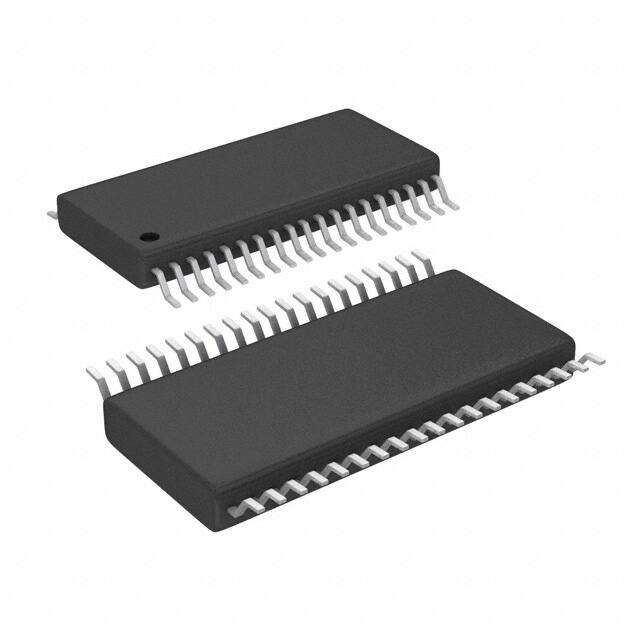
shutdown mode. The device is packaged in a 38-pin,
9.7mm x 4.4mm x 1.0mm TSSOP package that is lead free
and RoHS compliant and is designed to operate over the
AEC-Q100 Grade 2, -40NC to +105NC temperature range.
Applications
High-Voltage, Multicell Series-Stacked-Battery
Systems
Electric and Hybrid Electric Vehicle (HEV)
Battery Packs
Features
S 12-Cell Battery Voltage Measurement with
Temperature Monitoring
Up to 12 Lithium-Ion (Li+), NiMH, or Super-Cap
Cells
Two Auxiliary Analog Inputs for Temperature
Measurement
S High-Accuracy I/Os
Excellent ±0.25% Voltage-Measurement
Accuracy
≤ 5mV Offset Voltage
S Integrated 12-Channel Data-Acquisition System
12-Channel High-Voltage Mux to ADC
Differential Cell-Voltage Measurement
12-Bit Precision, High-Speed SAR ADC
12 Cell Voltages Measured Within 107µs
S Battery-Fault Detection
Overvoltage and Undervoltage Digital Threshold
Detection
Cell Sense Line Open-Circuit Detection
High/Low Temperature Digital Threshold
Detection
S 12 Integrated Cell-Equalization Switches
Support Up to 200mA
S Integrated 6V to 70V Input Linear Regulator
S Integrated 25ppm/NC, 2.5V Precision Reference
S Integrated Level-Shifted, I2C-Compliant SMBus
Ladder Interface
Supports Multiple Devices, Up to 31 SMBus Ladder-Connected ICs
Communications Protocol with Autoaddressing
Fault-Tolerant Hardware Handshake and Data
CRC Checking
S Three General-Purpose Digital I/O Lines
S Ultra-Low Power Dissipation
Standby Mode Quiescent Current Drain 75µA
Shutdown Mode Leakage Current 1µA
S Operating Temperature Range from -40NC to
+105NC (AEC-Q100 Grade 2)
S 38-Pin, Lead-Free/RoHS-Compliant TSSOP
Package (9.7mm x 4.4mm)
Ordering Information
Electric Bikes
High-Power Battery Backup Systems
SuperCap Backup Systems
Pin Configurations appear at end of data sheet.
Power
Tools continued at end of data sheet.
Functional
Diagrams
UCSP
is
a
trademark
of Maxim Integrated Products, Inc.
SMBus is a trademark of Intel Corp.
PART
TEMP RANGE
PIN-PACKAGE
MAX11068GUU+
-40NC to +105NC 38 TSSOP
MAX11068GUU/V+
-40NC to +105NC 38 TSSOP
+Denotes a lead(Pb)-free/RoHS-compliant package.
/V Denotes an automotive qualified part.
For pricing, delivery, and ordering information, please contact Maxim Direct
at 1-888-629-4642, or visit Maxim’s website at www.maximintegrated.com.
19-5192; Rev 0; 6/10
�MAX11068
12-Channel, High-Voltage Sensor, Smart
Data-Acquisition Interface
ABSOLUTE MAXIMUM RATINGS
HV, VDDU, GNDU, DCIN to AGND.......................-0.3V to +80V
HV to C12.................................................................-0.3V to +6V
C1–C12 to AGND.......................................-0.3V to (VHV + 0.3V)
C(N+1) to C(N)......................................................-0.3V to +9.0V
C0 to AGND..........................................................-0.3V to +4.0V
SHDN to AGND......................................................-0.3V to +60V
VAA to AGND........................................................-0.3V to +4.0V
VDDL to GNDL......................................................-0.3V to +4.0V
VDDU to GNDU. ...................................................-0.3V to +6.0V
GNDU to GNDL. ....................................................-0.3V to +80V
AGND to GNDL.....................................................-0.3V to +0.3V
AUXIN1, AUXIN2, THRM to AGND.......................-0.3V to +6.0V
REF to AGND............................................ -0.3V to (VAA + 0.3V)
SCLL, SDAL, ALRML to GNDL................ -0.3V to (VDDL + 0.3V)
SCLU, SDAU, ALRMU to GNDU..............-0.3V to (VDDU + 0.3V)
CP+ to AGND.......................... (GNDU - 1.0V) to (VDDU + 1.0V)
CP- to AGND.......................................... -0.3V to (GNDU + 0.3V)
GPIO0, GPIO1, GPIO2............................ -0.3V to (VDDL + 0.3V)
ESD Rating (HBM, Note 1)...................................................Q2kV
C0–C12, AUXIN1, AUXIN2, REF, VAA, VDDU, GNDU,
VDDL, GNDL, DCIN, SHDN, CP+, CP-, HV, SCLU, SDAU,
ALRMU, SCLL, SDAL, ALRML, GPIO0, GPIO1, GPIO2
Maximum Continuous Current into Any Pin........................20mA
ESD Diode Maximum Average
Power Dissipation for Hot Plug (Note 2).... ..................14.4/√τ W
Continuous Power: Multilayer Board...........................1269.8mW
Continuous Power: Single-Layer Board
(derating 15.9mW/NC above +70NC).......................1095.9mW
Operating Temperature Range........................ .-40NC to +105NC
Storage Temperature Range............................. -55NC to +150NC
Junction Temperature (continuous).................................+150NC
Lead Temperature (soldering, 10s).................................+300NC
Soldering Temperature (reflow).......................................+260NC
Note 1: Human Body Model to Specification MIL-STD-883 Method 3015.7.
Note 2: Maximum average power dissipation for time period τ. Peak current must never exceed 2A. τ is one time constant (in µs) of
hot-plug current waveform through a given diode. For example, if τ is 330µs, the maximum average diode power dissipation
is 0.793W. Actual average power dissipation must be calculated from current waveform for the application circuit.
Stresses beyond those listed under “Absolute Maximum Ratings” may cause permanent damage to the device. These are stress ratings only, and functional
operation of the device at these or any other conditions beyond those indicated in the operational sections of the specifications is not implied. Exposure to absolute
maximum rating conditions for extended periods may affect device reliability.
ELECTRICAL CHARACTERISTICS
(TA = TMIN to TMAX, unless otherwise noted. VGNDU = VDCIN = 18V to +60V, typical values are at TA = +25NC, unless otherwise
specified from -40NC to +105NC per the application circuit in Figure 4.)
PARAMETER
SYMBOL
CONDITIONS
MIN
TYP
MAX
UNITS
V
C0–C12 INPUTS
Differential Cell Input-Voltage
Range
Cell Input Common-Mode Voltage
Range (Note 5)
Input-Leakage Current
ADC Resolution
Channel- Conversion Time
Channel Accuracy
2
VCELLXIN
VCXIN
Any 2 inputs
CN+1 to CN for C12–C0 (Note 2)
0.5
4.7
Input C1 referred to AGND
0.7
7.0
Inputs C2 through C[TOP] referred to
AGND
0.7
V
C[TOP] referred to AGND
ICXIN
ADCBITS
tS
GNDU
C0 referred to AGND
-0.05
ADC off; C(N) to C(N+1) = 5V
-1.0
ADC ON; C(N) to C(N+1) = 3V
LSB size is +1.22mV
+0.05
+1.0
Q10.0
12
FA
Bits
Highest enabled input
11.34
Enabled inputs except highest
7.66
Fs/
Channel
TA = +25NC (Note 4); VCELL = 3.0V
-5
+5
-10NC < TA < +50NC; VCELL = 3.0V
(Note 3)
-10
+10
-40NC < TA < +85NC; VCELL = 3.0V
(Note 3)
-15
+15
-40NC < TA < +105NC; VCELL = 3.0V
-20
+20
mV
Maxim Integrated
�MAX11068
12-Channel, High-Voltage Sensor, Smart
Data-Acquisition Interface
ELECTRICAL CHARACTERISTICS (continued)
(TA = TMIN to TMAX, unless otherwise noted. VGNDU = VDCIN = 18V to +60V, typical values are at TA = +25NC, unless otherwise
specified from -40NC to +105NC per the application circuit in Figure 4.)
PARAMETER
Differential Nonlinearity
SYMBOL
DNL
CONDITIONS
MIN
No missing codes at 12 bits
TYP
MAX
UNITS
LSB
Q1.0
Channel Offset Error
CELLVOS
Cells 1 through 12
-5
+5
mV
Channel Gain Error
CELLAV
Cells 1 through 12
-1.0
+1.0
%
RSWITCH from C(N) to C(N+1) when
enabled
1.5
20
I
Cell-Balancing Switch Resistance
6
AUXIN1, AUXIN2 INPUTS
Absolute Differential Input Range
VAUXINXIN
Common-Mode Input-Voltage
Range
Input-Leakage Current
IAUXIN
AUXIN1, AUXIN2 to AGND; ADC REF =
THRM
0
VTHRM
V
Inputs AUXIN1/2 referred to AGND
0
VTHRM
V
-1.0
+1.0
ADC off; input voltage = 3.3V
ADC Resolution
Conversion Time
12
Accuracy
Differential Nonlinearity
DNL
Fs/
AUX_
Input
10
tS
TA = +25NC
-0.5
+0.5
-40NC < TA < +105NC
-1.0
+1.0
No missing codes at 12 bits
FA
Bits
%
LSB
Q1.0
Offset Error
AUXVOS
AUXIN1, AUXIN2
-8
+8
mV
Gain Error
AUXAV
AUXIN1, AUXIN2
-1.0
+1.0
%
THRM Switch Resistance
RTHRM
THRM to VAA (Note 3)
18
28
I
2.50
2.55
5
VOLTAGE REFERENCE
Output REF Voltage
REFVOUT
TA = +25NC
2.45
V
REF Output Short-Circuit Current
IREF-SC
Q12.5
mA
Temperature Coefficient
DREF/
DTEMP
Q25
ppm/NC
Change after
1000hr burn-in
120
ppm
Initial Drift
LOGIC INPUTS AND OUTPUTS (GPIO AND SHDN)
SHDN Voltage High
1.8
V
0.5
SHDN Voltage Low
SHDN Input Leakage Current
VSHDN = 30V
5.15
18
VSHDN = 56V
12.6
45
GPIO Input Voltage Low
GPIO Input Voltage High
I/O pins programmed to high impedance
GPIO Output Voltage Low
ISINK = 3mA
GPIO Output Voltage High
ISOURCE = 3mA
Maxim Integrated
-1
VDDL 0.5
FA
0.8
V
+6.2
FA
0.4
V
2.4
I/O Leakage Current
V
1
VSHDN = 3.4V
V
+2
V
3
�MAX11068
12-Channel, High-Voltage Sensor, Smart
Data-Acquisition Interface
ELECTRICAL CHARACTERISTICS (continued)
(TA = TMIN to TMAX, unless otherwise noted. VGNDU = VDCIN = 18V to +60V, typical values are at TA = +25NC, unless otherwise
specified from -40NC to +105NC per the application circuit in Figure 4.)
PARAMETER
SYMBOL
CONDITIONS
MIN
TYP
MAX
UNITS
70
V
3.55
V
60
mA
LINEAR REGULATOR +3.4V (VAA)
Input Voltage Range
Output Voltage
VDCIN
0 < ILOAD < 8mA
6.0
VVAA
0 < ILOAD < 8mA;
6V < VDCIN < 70V
3.25
3.4
Short-Circuit Current
VAA = 0V, 6V < VDCIN < 30V
Power-On Reset Threshold
(Note 3)
Falling VAA
2.85
2.95
3.05
Rising VAA
2.9
3.0
3.1
POR threshold hysteresis
0.01
40
80
Thermal Shutdown
Rising temperature
Thermal-Shutdown Hysteresis
V
mV
+145
NC
15
NC
CHARGE PUMP +3.4V
Output Voltage
VVDDU - VGNDU
Charge-Pump Efficiency
Charge-Pump Undervoltage
Threshold
ILOAD = 0 at 0.1FF CP+ to CP-
3.2
3.4
3.55
1mA = ILOAD at 0.1FF CP+ to CP-
3.2
2.5
3.55
IVDDU/IGNDU - IVDDU at 2.7V,
VDDU - GNDU
60
89
99
%
2.0
2.7
3.2
V
VCPUV
V
INTERNAL OSCILLATORS (32.768kHz, 6.0MHz)
Internal 32.768kHz Oscillator
Frequency
fWD-OSC
32.113
32.768
33.423
kHz
Internal 6.0MHz Oscillator
Frequency
fHF-OSC
5.82
6.0
6.18
MHz
0.3 x
VVDDL
V
I2C LOWER PORT SCLL, SDAL, ALRML (Relative to GNDL, VDDL = Nominal 3.4V)
SDAL, SCLL Input Voltage Low
0.7 x
VVDDL
SDAL, SCLL Input Voltage High
SDAL, SCLL Input Hysteresis
0.2
SDAL, ALRML Output Voltage Low
VSDAL = VSCLL = 1.5V
RACTIVE_EDGE Active edge
Managed passive state
SDAL, Managed Resistance
C1_TAU
V
0.4
V
1.0
FA
1
3
35
50
75
1
kI
MI
tONE_SHOT (active edge pulse)
150
250
380
ns
SDAL rises to 70% within active edge
time when loaded with this capacitance
120
280
550
pF
At source = 3mA
VDDL 0.4
ALRML Heartbeat Frequency
OSC = 32.768kHz Q2.0%
16,000
Lower Port Input Capacitance
SCLL, SDAL, ALRML
4
0.5
0.5
Off passive state
tONE_SHOT
ALRML Output High Voltage
0.1 x
VVDDL
At sink = 3mA
SDAL, SCLL Leakage Current
SDAL 1-TAU Capacitance
V
V
16,384
15
16,711
kHz
pF
Maxim Integrated
�MAX11068
12-Channel, High-Voltage Sensor, Smart
Data-Acquisition Interface
ELECTRICAL CHARACTERISTICS (continued)
(TA = TMIN to TMAX, unless otherwise noted. VGNDU = VDCIN = 18V to +60V, typical values are at TA = +25NC, unless otherwise
specified from -40NC to +105NC per the application circuit in Figure 4.)
PARAMETER
I2C
SYMBOL
CONDITIONS
MIN
TYP
MAX
UNITS
0.3 x
VVDDU
V
UPPER PORT SCLU, SDAU, ALRMU (Relative to GNDU, VDDU)
SDAU, ALRMU Input Voltage Low
0.7 x
VVDDU
SDAU, ALRMU Input Voltage High
SDAU, ALRMU Input Hysteresis
0.05
0.1 x
VVDDU
Q1.0
SDAU, SCLU Output Voltage Low
At sink = 3mA
SDAU, SCLU Leakage Current
VSDAU = VSCLU = 1.5V
-1
Active edge
0.5
Managed passive state
30
SDAU, Managed Resistance
Off passive state
tONE_SHOT
SDAU 1-TAU Capacitance
ALRMU Clamp Current
V
0.4
V
+1
FA
1
3
kI
50
75
1
kI
MI
150
250
480
ns
SDAU rises to 70% within active edge
time when loaded with this capacitance,
i.e., choose 100pF to guarantee 3H rising
edge
120
280
550
pF
VALRMU = VDDU + 0.15V
1
VALRMU = GNDU - 0.15V
1
ALRMU Clamp Voltage
GNDU
-0.49
FA
V
VDDU +
0.49
250FA current pulling above VDDU
SCLU, SDAU, ALRMU
8
From SHDN or from POR
3
Port-to-Port Level Delay
V
pF
1
Interface Startup
V
tONE_SHOT (active edge pulse)
250FA current pulling below GNDU
Upper Port Input Capacitance
0.4
Fs
ms
I2C TIMING CHARACTERISTICS
I2C Clock Frequency
fI2C
Bus Timeout Period
tTIMEOUT
Bus Free Time
tBUF
Bus Hold Time
tHD-STA
Bus START Command Setup Time
tSU-STA
Bus STOP Command Setup Time
SDA Data Hold Time
Maxim Integrated
tSU-STOP
10
Timeout for maximum clock low/high time
Master to slave delay from a STOP to the
next START command
Master hold time after a START
command
Repeated START setup time
STOP condition setup time
SLAVE PORT Transmit
tHD-DAT
Receive
MASTER PORT Transmit
tHD-DAT
Receive (Note 7)
200
27.4
kHz
ms
500
Fs
350
Fs
1
Fs
100
ns
500
-30
400
ns
400
5
�MAX11068
12-Channel, High-Voltage Sensor, Smart
Data-Acquisition Interface
ELECTRICAL CHARACTERISTICS (continued)
(TA = TMIN to TMAX, unless otherwise noted. VGNDU = VDCIN = 18V to +60V, typical values are at TA = +25NC otherwise specified
from -40NC to +105NC per the application circuit in Figure 4.)
PARAMETER
SDA Data Setup Time
SYMBOL
CONDITIONS
MIN
SLAVE PORT Transmit (Note 7)
tSU-DAT
Receive
250
MASTER PORT Transmit (Note 7)
tSU-DAT
Receive
250
TYP
MAX
250
UNITS
ns
1000
SCLL Low Time
tLOW
1.25
Fs
SCLL High Time
tHIGH
1.25
Fs
tMCL-MIN
1
us
Remastered Clock Minimum High
Time
LEVEL-SHIFT TIMING
Level Shift Delay (SDAL to SDAU
or SDAU to SDAL)
tLS-DAT
Rising or falling edge at 1.5V threshold;
pin-to-pin delay with 100pF loading
400
1100
ns
Level Shift Delay (SCLL to SCLU)
tLS-CLK
Rising or falling edge at 1.5V threshold;
pin-to-pin delay with 100pF loading
600
800
ns
POWER-SUPPLY REQUIREMENTS DCIN
IDCIN
Acquisition
Mode
High-voltage mux enabled, ADC
converting 12 channels; VDCIN = 30V
IHV Acquisition
Mode
Current Consumption
(Note: IDDQ testing is done in
production test with a coverage
of 71%)
IDCIN
Standy Mode No conversions or cell balancing; LDO,
REF, and OSC running, SHDN = 1
IGNDU
Standby Mode
IGNDU
Shutdown Mode
Note
Note
Note
Note
Note
6
6
mA
4.1
IDCIN
Cell-Balancing
Cell balancing enabled for four switches,
Mode
LDO, REF, and OSC running; VDCIN =
IGNDU
VGNDU = 6V
Cell-Balancing
Mode
IDCIN
Shutdown Mode
3.0
9.6
70
63
55
150
20
130
0.25
2
0.3
2
FA
SHDN = 0
3: Guaranteed by design and not production tested.
4: Differential input voltage range for which channel gain and offset error applies.
5: Common-mode level at each pin required for specified operation of the high-voltage mux.
6: Offset and gain error are calibrated at +25NC and 3.0V per cell at the factory, assuming that VCXIN is met.
7: This is a derived specification. No characterization required. These specifications involve the clock low time and clock high
time used.
Maxim Integrated
�MAX11068
12-Channel, High-Voltage Sensor, Smart
Data-Acquisition Interface
Pin Configuration
TOP VIEW
+
DCIN
1
38
HV
CP+
2
37
C12
CP-
3
36
C11
C10
VDDU
4
35
GNDU
5
34
C9
SCLU
6
33
C8
SDAU
7
32
C7
ALRMU
8
31
C6
N.C.
9
30
C5
GPIO2
10
29
C4
GPIO1
11
28
C3
GPIO0
12
27
C2
C1
MAX11068
VDDL
13
26
GNDL
14
25
CO
SCLL
15
24
VAA
SDAL
16
23
AGND
ALRML
17
22
REF
SHDN
18
21
AUXIN1
AUXIN2
19
20
THRM
TSSOP
9.7mm x 4.4mm
Pin Description
PIN
NAME
FUNCTION
1
DCIN
DC Power-Supply Input. DCIN supplies the internal 3.4V regulator, which provides low-voltage power to the
device. Bypass DCIN to GND with a 1FF capacitor.
2
CP+
Charge-Pump Capacitor Plus Input for the Internal Charge Pump. Connect a 0.1FF high-voltage capacitor
between CP+ and CP-.
3
CP-
Charge-Pump Capacitor Minus Input for the Internal Charge Pump. Connect a 0.1FF high-voltage capacitor
between CP+ and CP-.
4
VDDU
Level-Shifted Upper I2C Port Digital Supply for Use in Communicating with an Upper, Neighboring Battery
Module. This is a regulated output voltage from the internal charge pump that is level shifted above the DCIN
pin voltage level.
5
GNDU
Level-Shifted Upper I2C Port Ground. This pin is the reference level and ground return for VDDU and also the
supply input for the charge pump. It should be tied to the DCIN takeoff point on the battery stack as shown in
the application diagrams.
6
SCLU
Level-Shifted Upper Port I2C Clock Line. SCLU is the I2C clock line communicating with the upper
neighboring battery module. This pin swings between VDDU and GNDU.
7
SDAU
Level-Shifted Upper Port I2C Bidirectional Serial Data Line. SDAU is the I2C data line communicating with the
upper neighboring battery module. This pin swings between VDDU and GNDU.
Maxim Integrated
7
�MAX11068
12-Channel, High-Voltage Sensor, Smart
Data-Acquisition Interface
Pin Description (continued)
PIN
NAME
8
ALRMU
Upper Port Alarm Input. Overvoltage, undervoltage, over/undertemperature, cell mismatch, and
communication fault. The alarm signal is laddered. This signal is referenced to VDDU and GNDU. Connect
this signal to VDDU through a pullup resistor.
9
N.C.
10
GPIO2
General-Purpose I/O 2. This pin swings between VDDL and GNDL.
11
GPIO1
General-Purpose I/O 1. This pin swings between VDDL and GNDL.
12
GPIO0
General-Purpose I/O 0. This pin swings between VDDL and GNDL.
13
VDDL
Lower Port I2C + 3.4V Digital Supply Input. Connect to VAA and decouple to GNDL with a 0.47FF capacitor.
14
GNDL
Lower Port I2C Common or Ground. A star ground connection to AGND is recommended.
15
SCLL
Lower Port I2C Clock. SCLL is the I2C clock line communicating with the lower neighboring battery module.
This pin swings between VDDL and GNDL.
16
SDAL
Lower Port I2C Data I/O. SDAL is the I2C serial data line communicating with the lower neighboring battery
module. This pin swings between VDDL and GNDL.
ALRML
Lower Port Alarm Output. Overvoltage, undervoltage, over/undertemperature, cell mismatch, and
communication faults. The alarm signal is laddered and driven from the highest module down to the lowest.
The alarm output is nominally a clocked heartbeat signal that provides a 16kHz clock when no alarm is
present and is held at logic-high during an alarm. This signal swings between VDDL and GNDL.
SHDN
Active-Low Shutdown/Input. This pin completely shuts down the MAX11068 internal regulators and oscillators
when the pin is less than +0.6V as referenced to AGND. The I2C bus is nonresponsive when shutdown is
asserted. SHDN for the first pack should be driven by the host controller through the recommended interface
circuit. SHDN for laddered modules should be tied to the lower neighboring battery module through the
recommended interface circuit. The shutdown pin is 60V tolerant for connection directly to the top of the
battery stack.
17
18
Not Internally Connected/Test I/O. Leave open; do not connect any external circuit to this pin.
19
AUXIN2
Auxiliary Analog Input 2. A low-voltage analog input pin with a full-scale range of AGND to VAA that can be
used for monitoring an external NTC or general-purpose measurements. This channel uses the VAA voltage
as the reference voltage for the ADC conversion. When used with the THRM pin and a resistor-divider,
ratiometric measurements can be made.
20
THRM
External Thermistor Bias Output. This is a switched connection for supplying a bias voltage from the internal
+3.4V regulator (VAA) to an external NTC device for measuring the temperature of the battery module. This
pin can supply up to 2mA from the VAA regulator.
AUXIN1
Auxiliary Analog Input 1. A low-voltage analog input pin with a full-scale range of AGND to VAA that can be
used for monitoring an external NTC or general-purpose measurements. This channel uses the VAA voltage
as the reference voltage for the ADC conversion. When used with the THRM pin, ratiometric measurements
can be made.
21
8
FUNCTION
22
REF
23
AGND
24
VAA
25
C0
Cell 1 Minus Connection. Bypass to AGND with a 1.0FF capacitor.
26
C1
Cell 2 Minus Connection and Cell 1 Plus Connection
27
C2
Cell 3 Minus Connection and Cell 2 Plus Connection
+2.5V Voltage Reference. Bypass REF to AGND with a 1FF capacitor placed close to the device.
Analog Ground. Should be tied to the negative terminal of cell 1.
+3.4V Analog Supply Output. Connect to VDDL and bypass with a 1.0FF capacitor to AGND.
28
C3
Cell 4 Minus Connection and Cell 3 Plus Connection
29
C4
Cell 5 Minus connection and Cell 4 Plus Connection
Maxim Integrated
�MAX11068
12-Channel, High-Voltage Sensor, Smart
Data-Acquisition Interface
Pin Description (continued)
PIN
NAME
30
C5
FUNCTION
Cell 6 Minus Connection and Cell 5 Plus Connection
31
C6
Cell 7 Minus Connection and Cell 6 Plus Connection
32
C7
Cell 8 Minus Connection and Cell 7 Plus Connection
33
C8
Cell 9 Minus Connection and Cell 8 Plus Connection
34
C9
Cell 10 Minus Connection and Cell 9 Plus Connection
35
C10
Cell 11 Minus Connection and Cell 10 Plus Connection
36
C11
Cell 12 Minus Connection and Cell 11 Plus Connection
37
C12
Cell 12 Plus Connection. Top of battery module stack.
38
HV
High-Voltage Bias Pin. HV is biased through a diode connection to the charge pump. It is used internally to
supply the high-voltage mux. Connect to DCIN through a 3.3FF capacitor.
HV
DCIN
VAA
GNDU VDDU
REF
+6V TO
72V
THRM
+3.4V
LINEAR
REGULATOR
AUXIN2
PRECISION
+2.5V
REFERENCE
ALRMU
I2C
UPPER
PORT
POR
6.0MHz
OSC
AUXIN1
C12
C11
CP+
GNDU
C9
GNDU
C8
C7
C5
SDAU
VDDU
C10
C6
SCLU
CELL
EQUALIZATION
SWITCH
BANK
C4
LEVEL
SHIFT
CP-
COM
C3
+3.4V
C2
AGND
ALRML
32kHz
OSC
C1
C0
AGND
12-BIT
ADC
INSTR
AMP
CONTROL
AND
STATUS
12
27
MAX11068
+3.4V
SW_SEL(26:0)
I2C
SCLL
LOWER
PORT
SDAL
SHDN
DIS_SEL(11:0)
GPIO0 GPIO1 GPIO2
GNDL
VDDL
Figure 1. Functional Diagram
Maxim Integrated
9
�MAX11068
12-Channel, High-Voltage Sensor, Smart
Data-Acquisition Interface
CELLBALANCING
SWITCHES
HIGHVOLTAGE
MUX
C12
C11
C10
C9
C8
REF
THRM
C7
C6
INSTR
AMP
ADC IN +
C5
LV
MUX
C4
C3
12-BIT ADC
ADC IN -
SELFDIAGNOSTIC
REF
C2
C1
C0
AUXIN2
AUXIN1
AGND
Figure 2. Analog Front-End Block Diagram
10
Maxim Integrated
�MAX11068
12-Channel, High-Voltage Sensor, Smart
Data-Acquisition Interface
HV
VDDU
6V
CP+
DCIN
ALRMU/SDAU/SCLU
GNDU
C12
80V
80V
80V
9V
CP-
C11
9V
VAA
C3 TO C10 MATCH
OTHER INPUTS
MAX11068
ESD DIODES
C2
REF/THRM
SHDN
VDDL
9V
AIN0/1
C1
GPIO0/1/2
9V
C0
ALRML/SDAL/SCLL
4V
4V
80V
4V
4V
AGND
GNDL
NOTE: ALL DIODES ARE RATED FOR ESD CLAMPING CONDITIONS. THEY ARE NOT INTENDED TO
ACCURATELY CLAMP DC VOLTAGE. ALL DIODES SHOWN HAVE A PARASITIC PN DIODE FROM
THEIR CATHODE TO AGND THAT IS OMITTED FOR CLARITY. THIS PARASITIC DIODE HAS ITS
ANODE AT AGND.
Figure 3. MAX11068 ESD Diode Diagram
Maxim Integrated
11
�MAX11068
12-Channel, High-Voltage Sensor, Smart
Data-Acquisition Interface
Typical Operating Circuit Diagrams
MODULE N+1
CELL STACK
MODULE-(N+1)
MODULE N+1 GND
REFERENCE
A KELVIN CONNECTION IS OPTIONAL FOR
THE DCIN TAKEOFF IN HIGH-CURRENT
APPLICATIONS. SEE THE NOISE TOLERANCE
SECTION FOR DETAILS.
CHV
3.3µF, 6V
MODULE+ (N)
22I
FUSE
22I
100kI
GNDU
HV
DDCIN
BUS BAR
CDCIN
1.0µF
80V
DCIN
CDD
1.0µF,
6V
VDDU
SMCJ70
BAT46
R3DC
150kI
5.6V
R1DC
150kI
D12
SMBus-LADDERED
TO UPPER MODULES
R13
C12
R12
SCLU
C10
C9
SDAU
C8
GNDU
C8
R8
MAX11068
C7
CELL #7
CP-
C5
VAA
VDDL
C4
RT2
10kI
1%
SCLL
C2
SDAL
C1
ALRML
C0
SHDN
AUXIN2
AUXIN1
CT1
t
100pF
t
LOCAL
GROUND
MODULE N-1 CELL
STACK
CA
1µF
6V
RP2
150kI
RP3
150kI
ISOLATOR
AND
CONTROL
INTERFACE
200kI
THRM
RT1
10kI
1%
BUS BAR
CT2
100pF
100nF
1kI
MODULE-(N)
CT3
100pF
C3
CL
0.47µF
6V
C1
R1
C0
1µ F
5.6V
C2
R2
CELL #1
TO SHDN
S1B
C3
R3
CELL #2
GNDL
C4
R4
CELL #3
CP
0.1µF
100V
150I
GNDU
C5
R5
CELL #4
HV
C6
R6
CELL #5
C6
MODULE
N+1
DHV
GNDU
CP+
C7
R7
CELL #6
SDAL
C9
R9
CELL #8
SCLL
C1DC
3.3nF, 630V
C10
R10
CELL #9
ALRML
C2DC
3.3nF, 630V
C11
R11
CELL #10
C3DC
3.3nF, 630V
ALRMU
C11
CELL #11
GNDU
GNDU
C12
CELL #12
68nF
5.6V
GPIO0
GPIO1
GPIO2
AGND
REF
CREF
1µF
THERMISTORS
10kI AT +25NC
Figure 4. Operating Circuit Diagram for a 12-Cell System
12
Maxim Integrated
�MAX11068
12-Channel, High-Voltage Sensor, Smart
Data-Acquisition Interface
HV
MODULE+ (N)
R9
CELL 8
CELL 7
CELL 6
CELL 5
CELL 4
CELL 3
CELL 2
CELL 1
MODULE-(N)
DCIN
DHV
R8
R7
R6
R5
R4
R3
R2
R1
C12
VDDU
C11
ALRMU
C10
SCLU
C9
SDAU
C8
GNDU
C8
C7
MAX11068
CP+
C7
C6
CP-
C5
VAA
C4
VDDL
C3
SCLL
C2
SDAL
C1
ALRML
C0
SHDN
THRM
GNDL
C6
C5
C4
C3
C2
C1
C0
1µF
AUXIN2
GPIO0
AUXIN1
GPIO1
GPIO2
AGND
REF
Figure 5. Simplified Operating Circuit Diagram for an 8-Cell System
Maxim Integrated
13
�MAX11068
12-Channel, High-Voltage Sensor, Smart
Data-Acquisition Interface
Detailed Description
The MAX11068 has two auxiliary analog inputs that can
be used to measure external resistance temperature
detector (RTD) components. A negative temperature
coefficient (NTC) RTD can be configured with the
AUXIN1 or AUXIN2 analog inputs to accurately monitor
module or battery-cell temperature. An internal temperature monitor on the die is used to detect thermal
overload and disables the MAX11068 cell-balancing
switches and linear regulator should the +145NC thermal
limit be exceeded.
The MAX11068 has 12 built-in cell-balancing/discharge
switches that can support up to 200mA cell discharge
currents. The MAX11068 package can support up to
1.2W of power dissipation, which limits the number of
balancing/discharge switches that can be enabled when
using a 200mA set current to three nonconsecutive cells
at no more than +75NC ambient temperature. With a
110mA cell set current, all 12 internal cell switches can
be enabled at the same time. The balancing switches
can also be used to detect an open circuit on any of the
cell sense wire connections.
The MAX11068 contains a 25ppm/NC precision bandgap reference and an internal regulator that creates the
supply for the analog front end and the interchip, levelshifted, communication bus. The regulator can operate
from a 6.0V to 72V supply input. The external shutdown
pin can be used to reset the MAX11068.
The MAX11068 incorporates an I2C physical interface
for interchip communication and control. The I2C bus
system is designed to allow SMBus laddering of up to
31 devices without the need for any interchip isolation.
14
These bidirectional serial buses can withstand large
differences in interchip grounds and system noise. The
built-in level-shifting and predefined command protocol
provide a low-cost, flexible, and reliable communication
bus. Command-up forwarding relays communication
along the bus from chip to chip for fast response. A
1Fs delay is incurred in relaying command messages,
bounding the maximum delay in response to a command to 1Fs multiplied by the number of chips used in
the stack minus 1. For a 31-chip stack, a maximum 30Fs
delay is incurred before the top module responds. This
means that up to 372 cells can be measured with an
elapsed measurement time from start to finish of 137Fs.
For a 16-chip stack, a 15Fs delay is incurred. This allows
measurement of up to 192 cells with an elapsed measurement time from start to finish of 122Fs.
The MAX11068 incorporates an internal oscillator that
generates a 6.0MHz system clock with Q3.0% accuracy.
Architectural Overview
The MAX11068 is a complete data-acquisition system on
a chip designed for rugged, high-voltage measurement
applications. It can measure up to 12 channels of voltages from batteries or SuperCaps with a high-accuracy,
high-speed SAR ADC. Two auxiliary input channels
may be configured for general-purpose measurements
or as specialized temperature conversion inputs when
used with RTD devices. Simple, yet fast and powerful
digital command and control is implemented through
unique, high-performance, level-shifted I2C communication ports. This allows SMBus laddering the communication and control bus on up to 31 battery modules using
the MAX11068.
Maxim Integrated
�MAX11068
12-Channel, High-Voltage Sensor, Smart
Data-Acquisition Interface
Battery Pack Architectures
Battery packs are designed in a modular fashion to allow
for multiple configurations, and fast and flexible assembly. This reduces cost by streamlining the build or repair
process. The definition of a battery pack is a system
comprising one or more battery modules connected in
either a series or matrix configuration to create a highvoltage power source. Transportation or high-power
battery-backup-system applications typically use many
series-connected battery modules to generate voltages
of up to several hundred volts. This voltage can then be
inverted and transformed to levels suitable for the given
load. A battery module is a series of cells configured as
a subsystem that can be combined with other modules
to build a high-voltage pack. For the MAX11068, the
minimum cell count per module is limited by the 6.0V
input requirement of the regulator, while the maximum
cell count is 12. The 6.0V minimum requirement usually
limits configurations to at least two lithium-ion (Li+), six
NiMH, or six SuperCap cells per module. Figure 6 is the
module system with redundant fault-detection application schematic.
Battery packs used in transportation applications may
be composed of various battery technologies (NiMH,
Li+, SuperCap, or lead acid) and typically include an
electronic battery-management system (BMS), environment control, and several safety features. Figure 7
shows the electric vehicle system (EVS).
Maxim Integrated
In hybrid electric vehicles (HEVs), plug-in hybrid electric
vehicles (PHEVs), electric vehicles (EVs), or fuel-cell
vehicles (FCVs), cell counts can range from 36 cells to
200 cells using Li+ batteries and up to as high as 200 to
500 cells using NiMH batteries. SuperCaps are typically
used in fast-charge holding applications such as regenerative braking energy storage.
There are two fundamental battery-pack management
architectures that can be realized with the MAX11068:
U Distributed module communication
U SMBus-laddered module communication
A distributed module system deploys a point-to-point
connection from each battery module back to a master
microcontroller in the BMS. Because the battery modules operate from the high-voltage battery stack, galvanic isolation must be used when communicating with the
master microcontroller. Figure 8 shows the distributed
communication battery pack.
An SMBus-laddered module system deploys a serial
communication bus that travels through each battery
module and is then accessed at one entry point in the
system by the master microcontroller in the BMS. The
SMBus ladder method reduces cost and requires at
most a single galvanic isolator between the high-voltage
batteries and the main power net. Galvanic isolation may
not be required in certain low-voltage applications. See
Figure 9.
15
�MAX11068
12-Channel, High-Voltage Sensor, Smart
Data-Acquisition Interface
MODULE
MODULE
N+1 CELL N+1 GND
STACK REFERECNCE
MODULE - (N+1)
SHDN
ALRMU
VDDU
GNDU
CP+
3210
OVSEL
CP-
ALRML
210
UVSEL
TOPSEL SHDN
ALRML
HV
11068
CD
ALRML
11068
VAA
MAX11080/MAX11081
DCIN
BUS BAR
C12
C11
C10
C9
C8
C7
C6
AGND
C5
C4
C3
C2
C1
ISOLATOR AND
CONTROL
INTERFACE FOR
FIRST MODULE
SCLL
SDAL
C0
C23
C22
C21
C20
C19
C18
C17
C16
C15
C14
R24
R23
R22
R21
R20
R19
R18
R17
R16
R15
C13
C24
R25
GPIO
R26
MODULE + (N)
HV
R13
R12
C12
CELL 11
R11
C11
CELL 10
R10
C10
CELL 9
R9
C9
CELL 8
R8
C8
CELL 7
R7
C7
CELL 6
R6
C6
CELL 5
R5
C5
CELL 4
R4
C4
CELL 3
R3
C3
CELL 2
R2
C2
CELL 1
R1
C1
CELL 12
BUS BAR
MODULE-(N)
BATTERY
CONNECTOR
C0
LOCAL
GROUND
C12
VDDU
C11
ALRMU
C10
SCLU
C9
SDAU
C8
GNDU
C7
MAX11068
CP+
C6
CP-
C5
VAA
C4
VDDL
C3
SCLL
C2
SDAL
C1
ALRML
C0
SHDN
THRM
GNDL
AUXIN2
GPIO0
GPIO1
GPIO2
REF
AUXIN1
AGND
MODULE N-1
CELL STACK
DCIN
NOTE: REFER TO EACH DEVICE’S APPLICATION REFERENCE CIRCUITS FOR COMPONENTS
AND VALUES NOT SHOWN ON THIS SIMPLIFIED SYSTEM-LEVEL SCHEMATIC.
Figure 6. Battery Module System with Redundant Fault-Detection Application Schematic
16
Maxim Integrated
�MAX11068
12-Channel, High-Voltage Sensor, Smart
Data-Acquisition Interface
BATTERY PACK
MAIN
SWITCH
CONN
MOTOR DRIVE+
VEHICLE
12V PWR
COMM BUS
INVERTER
COMM BUS
VEHICLE
CONTROL
SYSTEM
(VCS)
VEHICLE GND
COMM BUS
BATTERY
MANAGEMENT
SYSTEM
(BMS)
CELL PACK
(Li 40–90 CELLS)
(NiMH 100–300 CELLS)
MOTOR DRIVECONN
Figure 7. Electric Vehicle System
INVERTER+
PACK
SWITCHES
ISOLATOR
BATTERY
MODULE
SLAVE MONITOR
AND CONTROL
TEMP
ISOLATOR
BATTERY
MODULE
SLAVE MONITOR
AND CONTROL
TEMP
ISOLATOR
BATTERY
MODULE
SLAVE MONITOR
AND CONTROL
TEMP
VEHICLE 12V PWR
MASTER
CONTROLLER
VEHICLE GND
ISOLATOR
BATTERY
MODULE
SLAVE MONITOR
AND CONTROL
COMM BUS
FAULT CHECK
TEMP
INVERTER-
PACK
SWITCHES
CURRENT
SENSE
Figure 8. Distributed Communication Battery Pack
Maxim Integrated
17
�MAX11068
12-Channel, High-Voltage Sensor, Smart
Data-Acquisition Interface
INVERTER+
PACK
SWITCHES
BATTERY
MODULE
SLAVE MONITOR
AND CONTROL
STUB
TEMP
BATTERY
MODULE
SLAVE MONITOR
AND CONTROL
TEMP
VEHICLE 12V PWR
MASTER
CONTROLLER
VEHICLE GND
ISO
BATTERY
MODULE
SLAVE MONITOR
AND CONTROL
COMM BUS
RPACK1
FAULT
CHECK
TEMP
RPACK2
PACK V/I
MEASUREMENT
µI
SHUNT
INVERTER-
PACK
SWITCHES
Figure 9. SMBus-Laddered Battery Module Communication
18
Maxim Integrated
�MAX11068
12-Channel, High-Voltage Sensor, Smart
Data-Acquisition Interface
Battery-Management
System (BMS)
The BMS in an electric vehicle monitors cell voltage,
pack current, and temperature. The BMS is composed
of two components. The first is the master controller of
the system that handles all communication with the VCS.
It also handles state of charge, state of health, and faultmanagement features of the battery pack. The second
component is the data-monitoring function, which gathers information on the conditions of the battery cells,
takes voltage/current/temperature measurements, and
signals safety faults.
The slave monitor controller (SLC) is directly connected
to the series stack battery cells. The SLC measures cell
voltages and module temperature, as well as controls
the cell-charge equalization feature that keeps all cells
balanced to equal states of charge. The SLCs are also
designed to report alarm conditions such as cell overvoltage or undervoltage, sense wire-open circuits, and
in the case of Li+ battery chemistries, overtemperature
situations. The SLCs are managed by the master controller. The master controller orchestrates all data acquisition and cell-balancing tasks in the slaves. The master
also measures the pack current coincident to voltage
measurements so that state of health of the battery pack
can be determined. Measurement of the current through
the pack is made across a low-value shunt resistor or
hall sensor.
Cell Inputs C0–C12
The MAX11068 contains 13 analog inputs that are used
for the differential measurement of as many as 12 battery cells. Each differential cell input can withstand up
to 9.0V and can be included in the measurement cycle
through the cell-channel scan-enable bits of the CELLEN
register (address 0x09). Cell inputs are measured differentially and level shifted down to the internal ADC by a
high-voltage mux and ADC preamp. The common-mode
range of the cell inputs from C2 to C12 is 0.5V to VHV 2.9V. Common-mode range for C1 is limited to 7.0V and
for C0 it is limited to voltages within 50mV of AGND for
proper measurements. The absolute maximum differential input between two inputs must always be observed,
which is 9.0V.
The application circuit shows RC filtering for each cell
input. The values of the resistors are chosen in large
part depending on the cell-balancing functionality that is
desired. The capacitor value chosen complements the
Maxim Integrated
resistor values to provide lowpass filtering of the ADC
measurement. Capacitor values should be in the 100nF
to 1FF range.
The first cell position between C1 and C0 must be populated for all applications with a voltage of at least 500mV.
This ensures accurate measurements for all other cell
positions as defined by the ADC specifications. When
implementing a module configuration with fewer than 12
cells, the first cell position should always be used, and
then other cell positions may be used in any configuration. Any unused cell positions should have their inputs
shorted together. Random connection of cells or the
high-voltage supplies during module configuration does
not cause adverse effects.
Measurement Scanning
When a cell is enabled for acquisition by setting the
associated scan-enable bits in the CELLEN register
(address 0x09), the appropriate cell differential input is
scheduled for conversion. The auxiliary input channels
along with the self-diagnostic channel may be similarly
enabled using their enable bits in the ADCCFG register
(address 0x08).
Conversion begins with the setting of the SCAN bit in the
SCANCTRL register. The setting of the SCAN bit may
be accomplished using either the WRITEALL command
or the WRITEDEVICE command, depending on whether
all devices are expected to perform the conversion. If
the ADC is still busy from a previous acquisition scan,
the scan command is ignored. Each module in a system begins the measurement scan cycle as soon as it
receives the scan signal. The measurement order of the
inputs during a cycle is as follows:
1) All enabled cell inputs phase 1, descending order
(12–1)
2) All enabled cell inputs phase 2, descending order
(12–1)
3) Self-diagnostic measurement phase 1, if enabled
4) Self-diagnostic measurement phase 2, if enabled
5) All enabled auxiliary inputs phase 1, ascending order
(AUXIN1, AUXIN2)
The complete acquisition of the cell voltages takes place
in two phases, which is shown in Figure 10. The first
phase is the raw cell-voltage acquisition. In this stage,
the ADC scans through all the enabled cell input channels, starting with the highest cell.
19
�MAX11068
12-Channel, High-Voltage Sensor, Smart
Data-Acquisition Interface
B12+
B12B11+
B11B10+
B10B9+
B8+
B8-
CELL SAMPLE
B7+
B7B6+
B6-
TOP CELL MEASURE - 5.67µs
TOP CELL SETUP - 5µs
B5+
MUX POWERUP - 6.3µs
TOP CELL SAMPLING TIME = 5.67µs
OTHER CELLS SAMPLING TIME = 3.83µs
B9-
B5B4+
B4B3+
B3B2+
B2B1-
B1+
t0 + 16.97µs
t0 - STROBE POINT
t0 + 59.1µs
t0 + 106.9µs
TIME
Figure 10. Cell-Scanning Timing
The second stage in the channel-scanning process
is the correction phase, where the front-end amplifier
chops out any offset and reference-induced errors. This
provides a high-accuracy cell voltage result. In this
stage, the channels are converted in the same highest
to lowest order as the initial measurement. The moduleto-module sampling points differ by the communication
forwarding delay from the I2C command. With the measurements from the two scan phases complete, the ADC
data is then offset corrected, averaged, and updated in
the cell data registers.
After the cell-measurement cycle is complete, the selfdiagnostic channel is acquired when enabled. It is a
two-phase measurement as described for the cell-voltage inputs, with each phase measured one immediately
after the other. Finally, the enabled auxiliary inputs are
measured. They are measured in a single conversion,
with results reported in the AIN1 and AIN2 registers.
The auxiliary channels have a configurable option to
increase settling time that is set in the lower byte of the
ACQCFG register (address 0x0C). The configured extra
settling time is implemented just before the conversion
for each AUXIN channel that is enabled for measure20
ment. So, when both auxiliary channels are measured,
the extra settling time occurs twice. Extra settling time
is not needed by the MAX11068 ADC; it is only for the
benefit of the external application circuit.
Calculating Measurement Time
The first requirement for performing a measurement
conversion is setting the SCAN bit. This can be done
by using the WRITEALL or WRITEDEVICE commands.
The write commands require 5 full bytes of data, plus 5
acknowledge bits and the start and stop bits. This totals
47 bits of data sent by the host, which would require
235Fs at a 200kHz I2C clock rate.
The timing of the cell measurements is shown in Figure
10. At the start of the measurement cycle, there is a
measurement setup time prior to the measurement of the
highest cell totaling 11.3Fs. The highest cell measured
requires a sampling time of 5.67Fs, while the rest of the
inputs are sampled at 3.83Fs per channel. When all 12
channels are enabled, the 12-cell voltages for one phase
are acquired in 47.8Fs, not including the measurement
setup time. The total acquisition time for 12 cells is
106.9Fs
Maxim Integrated
�MAX11068
12-Channel, High-Voltage Sensor, Smart
Data-Acquisition Interface
For every module in the battery pack, a 1Fs communication delay is incurred while the scan command is forwarded up the SMBus ladder. Therefore, the difference
in the scan completion time from the first module to the
last module in a chain is no more than 1Fs x (no. of modules in the chain - 1) as shown in Figure 11.
Thus, from the time the first device receives the scan
command until the last device completes its measurement conversion, 109.9Fs elapse.
The final aspect of the measurement conversion is the
retrieval of data from all devices. A READALL command
is the only way to transfer data from each device. Since
up to 12 cells are measured, the READALL command
must be performed for each cell whose data must be
transferred. For each READALL command, there are 5
total bytes of overhead. These include the broadcast
address byte, the command code byte (register address
to be read), the I2C address byte, the data check byte,
and the packet-error check (PEC) byte. Each of these
bytes has an acknowledge bit associated with it. The
register data from each device consists of 2 more bytes
plus 2 acknowledge bits. Finally, the overall data stream
consists of 3 more bits, start, stop, and repeated start.
Thus, for a read of a single register from all modules, the
total bit count is:
Taking the module conversion time and combining it with
the communication delay, the overall sampling window
of the system can be calculated:
Sampling window = 11.3Fs + (5.67Fs + (no. of cells
enabled per module -1) x 3.83Fs) x 2 phases + ((no. of
modules per pack - 1) x 1Fs per module)
So, for a battery pack that uses 12 cells per module and
a system with four modules (total cell count = 48), the
sampling window would be:
Sampling Window = 11.3 + (5.67 + 11 x 3.83Fs) x 2 +
((4 Modules -1) x 1Fs)
Sampling Window = (106.9Fs) + (3Fs) = 109.9Fs
READALL bit count = 3 + 5 x 8 + 5 + no. of modules x
(2 x 8 + 2) = 120
MODULE N
MODULE 5
COMMAND FORWARDING
DELAY = 1µs
MODULE 4
MODULE 3
MODULE 2
MODULE 1
SCAN AT t0
tALL MODULES
tALL MODULES = (NO. OF MODULES X 1µs) + 107µs
Figure 11. Measurement Scan Timing for a Multimodule System
Maxim Integrated
21
�MAX11068
12-Channel, High-Voltage Sensor, Smart
Data-Acquisition Interface
For the example with four modules and 12 cells per module, the total READALL bit count would be 120 bits per
cell or 1440 bits for all 12 cells. At a 200kHz I2C clock
rate, the total time for this command would be 7.2ms.
The overall time from the host issuing the scan command
to the last data being received by the host includes the
write time for the scan command, the measurement conversion time, and the time for the READALL command.
For this 12-cell, four-module, 200kHz I2C example the
total is:
235Fs + 106.9Fs + 7200Fs = 7.542ms
Effectively, the number of complete 12-cell measurements that can be acquired and transferred back to the
host is no more than 132 per second. If the data from
every measurement is not transferred back to the host,
then significantly more measurements may be taken per
second. Enabling the auxiliary or self-diagnostic channels would decrease the effective sampling rate.
Cell Overvoltage
and Undervoltage
The MAX11068 incorporates cell-voltage monitoring with
alert and alarm capability for diagnosing system status.
After each ADC voltage conversion, cell-voltage data is
stored in the cell-data registers. Only data registers for
cell positions that were enabled for the previous measurement scan are updated. Cells that were not in the
measurement scan retain their previous value. The data
is also analyzed for the minimum, maximum, and total
V
OVERVOLTAGE SET AND CLEAR THRESHOLDS
POR DEFAULT VALUE (+5.0V)
cell-voltage values, as well as for overvoltage and undervoltage conditions.
The maximum and minimum cell voltage readings are
stored in the upper 12 bits of the MAXCELL and MINCELL
registers (addresses 0x11 and 0x12). Also stored in the
lowest 4 bits of those registers is the cell number corresponding to the data reading. Where multiple cells had
the same minimum or maximum reading, the highest cell
position having that reading is reported. The sum total
value of cell data whose measurements were enabled
in the last scan is stored in the TOTAL register (address
0x10) as a 16-bit value. Where a conversion is initiated
with no enabled cell inputs, the MINCELL, MAXCELL,
and TOTAL registers retain their current value.
Cell-voltage data is also compared against programmable cell overvoltage and undervoltage thresholds. These
thresholds are configured through the overvoltage and
undervoltage set and clear threshold registers (addresses 0x18 to 0x1B). Alerts, when enabled, are triggered
as cell voltage data passes through the set threshold
level. Conversely, alerts are cleared when the cell voltage data passes through the clear threshold level. If the
voltage data is equal to a relevant cell threshold limit,
no action occurs. Therefore, if the set threshold level is
placed at full scale for the overvoltage alert or at zero
scale for the undervoltage alert, the alert cannot trigger
and is effectively disabled. The two thresholds, set and
clear, for each condition allow for digital hysteresis to be
configured in the alarm trigger. Figure 12 is a diagram
of the programmable overvoltage and undervoltage
thresholds.
OVERVOLTAGE ALERT
SET
OVERVOLTAGE SET THRESHOLD (OVTHRSET)
OVERVOLTAGE CLEAR THRESHOLD (OVTHRCLR)
CELLN VOLTAGE
OVERVOLTAGE ALERT
CLEARED
UNDERVOLTAGE ALERT
CLEARED
UNDERVOLTAGE CLEAR THRESHOLD (UVTHRCLR)
UNDERVOLTAGE SET THRESHOLD (UVTHRSET)
UNDERVOLTAGE SET AND CLEAR THRESHOLDS
POR DEFAULT VALUE (+0.0V)
UNDERVOLTAGE ALERT
SET
t
Figure 12. Programmable Overvoltage and Undervoltage Thresholds Diagram
22
Maxim Integrated
�MAX11068
12-Channel, High-Voltage Sensor, Smart
Data-Acquisition Interface
Alerts may be enabled on a per-cell basis. Local enable
bits OVEN and UVEN are found in each cell’s data register (addresses 0x20 to 0x2B). These bits are mapped
to the equivalent bits of the OVALRTEN and UVALRTEN
registers (address 0x06 and 0x07). If these bits are
enabled for a given cell, the cell reports its overvoltage or undervoltage alert status to the appropriate alert
status register (addresses 0x04 and 0x05). The alert
status is updated whenever new cell measurement data
is available. If either of these two alerts are active for
a cell, that cell’s corresponding ALRTCELL register bit
(address 0x03) is also set. All voltage alert status register bits are zero when no alert is present and cannot be
manually cleared. To clear an active voltage alert, the
alert condition must be removed and a new measurement must be taken or the alert must be disabled.
The global ALRTOV and ALRTUV bits in the STATUS register (address 0x02) are set when any cell has an active
alert as indicated in the ALRTOVCELL or ALRTUVCELL
registers. All alerts are automatically cleared following
the next conversion cycle when the alert conditions no
longer exist. Using this tiered approach to alert reporting, the system host may quickly establish whether any
voltage alerts are active and, if necessary, determine
exactly which cells and conditions are affected.
The mismatch alert is another status condition flag that
can be enabled to signal when the minimum and maximum cell voltages are mismatched by more than a
programmed amount. The alert is enabled by setting
the ALRMMMTCHEN bit of the ADCCFG register. The
MSMTCH register (address 0x1C) sets the 12-bit threshold for the mismatch alert, ALRTMSMTCH. Whenever
MAXCELL - MINCELL > MSMTCH, the ALRTMSMTCH bit in
the STATUS register is set. The alert bit is cleared when new
conversion data does not violate the threshold condition.
Cell Balancing
The basic cell-balancing circuit for the MAX11068 incorporates the use of internal 6I switches and external
resistors to set an equalization discharge current that is
dependent on cell voltage. Figure 13 shows the basic
circuit used with the internal cell-balancing switches.
Managing Power
The MAX11068 contains 12 independently controlled
switches that have a typical on-resistance (RSW) of
6I with Q50% variation due to process and temperature. The package used for the MAX11068 is a 38-pin
TSSOP package with a maximum power limit (PMAX) of
1.2698W and a junction-to-ambient thermal resistance of
+63NC/W for a multilayer board. These parameters are
the fundamental limits for the package-power dissipation and require careful consideration when using the
internal cell-balancing switches since the switches are
the dominant power consumers in the device. For operating margin, it is recommended targeting a maximum
power level that is 70% of the absolute maximum rating.
The maximum die junction temperature that is allowed
is +150NC. A built-in overtemperature protection circuit
protects the die at a junction temperature of +145NC,
however. When the overtemperature limit is reached, the
internal cell-balancing switches are disabled. The associated cell-balancing switch enable bits in the Balancing
Switch Control register (BALCFG at address 0x0B) are
not directly affected, but the resulting power down of
the linear regulator may cause a power-on reset (POR)
condition, which would reset the BALCFG register and
deassert all switch-enable bits. The maximum number of
cell-balancing switches that can be enabled at any one
time is calculated as shown below:
Maximum number of enabled switches = (0.7 x PMAX)/
((IBALANCE)2 x RSW)
where:
IBALANCE = VCELL/((2 x REQ) + RSW)
PMAX = 1.2698W
RSW = 6I, typical
Table 1 lists example results obtained based on the
formula above.
CELL BALANCING
F1
REQ
F2
REQ
MAX11068
RSW
CF
The following limitations must be taken into account
when using the basic circuit:
U Maximum power dissipation allowed in the package
CN+1
CN
U Measurement during cell balancing
U Current variation due to enabled adjacent cell switches
U Protection from open-circuit faults in the battery stack
destroying the MAX11068
Maxim Integrated
Figure 13. Cell-Balancing Switch Network
23
�MAX11068
12-Channel, High-Voltage Sensor, Smart
Data-Acquisition Interface
Table 1. Cell-Balancing Circuit Parameter Variation
UNITS
HIGH-SIDE
ACCURACY (%)
LOW-SIDE
ACCURACY (%)
CELL NAME
MIN
TYP
MAX
REQ
5.1
5.2
5.3
I
1
-1
CF
9
10
11
FF
10
-10
RSW
3
6
9
I
50
-50
VCELL
4.1
4.1
4.1
V
NA
NA
IBALANCE
308
250
210
mA
16
-23
FILTER3dB
3435
3061
2755
Hz
—
—
tSETTLE at CN+1 (Note 1)
0.6
0.8
1.1
ms
—
—
Max No. of Switches On
(Note 2)
3
2
2
Switches
—
—
Note 1: tSETTLE is five time constants after the cell-balancing switch is disabled.
Note 2: Nonadjacent cell switches.
Based on the calculations, up to two nonadjacent internal cell-balancing enabled switches are supported for
a discharge current of 250mA per cell. At least a 0.5W
rated REQ is required to handle the 250mA nominal current and its worst-case range of 210mA to 308mA.
Measurements During Cell Balancing
When using the internal cell-balancing switches, the
measured voltage on the CN to CN+1 input is reduced
by the external REQ resistors. For accurate cell-voltage
measurements, disabling the internal cell-balancing
switch is required. These switches are not disabled
automatically during a conversion. After the internal cellbalancing switch is disabled, allow the input voltage to
settle for a time period (tSETTLE), which is determined by
external components CF and REQ, before performing a
cell-measurement sequence:
F1
REQ
F2
REQ
C5
CF
VCELL5
VCELL4
RSW
C4
CF
IDIS
RSW
C3
F3
REQ
Figure 14. Discharge Current Path for Adjacent Enabled
Balancing Switches
tSETTLE = 10 x REQ x CF
Current Variation Due to Enabled
Adjacent Cell Switches
If adjacent internal cell-balancing switches are enabled,
the discharge current would be much higher than the
desired value. Figure 14 shows the adjacent enabled balancing switches and the resulting discharge current (IDIS):
IDIS = (VCELL5 + VCELL4)/(2 x REQ + (2 x RSW))
From the IDIS equation, it is apparent that the discharge
current grows with the number of adjacent active internal
cell-balancing switches. This is because the cell voltages
across the active switches and the RSW values are grow-
24
ing proportionally, but REQ remains fixed no matter how
many adjacent switches are active. Consequently, the
numerator of the discharge current equation grows faster
than the denominator with increasing active switch count
and discharge current increases. Unless this is accounted
for by the host controller, the package power-dissipation
limit could be reached unexpectedly and damage to the
device could occur. To avoid this possibility, it is recommended to use an odd or even switch-enable control
scheme for the internal cell-balancing switches.
Maxim Integrated
�MAX11068
12-Channel, High-Voltage Sensor, Smart
Data-Acquisition Interface
Protection from Open-Cell Faults
There are two methods of protecting the MAX11068 from
damage due to an open circuit occurring in a series battery stack:
U An external fuse placed in series with the internal or
external cell-balancing circuit protects against highvoltage damage. If an external MOSFET is used, as in
the circuits described below, the high-value resistors
protect the MAX11068 inputs from damage during an
open-cell condition.
U Detection of any cell dropping below ground or violating the undervoltage condition indicates an opencell condition and that the electric motor is supplying
voltage to the battery pack. To prevent damage, the
switches connecting the battery stack to the load
should be opened immediately after the undervoltage flag asserts.
External Cell-Balancing Circuit
The MAX11068 allows external cell balancing to be
implemented by using the internal switch to control
the bias network of an external transistor. When the
internal switch is closed, the external resistors RBIAS1
and RBIAS2 form the bias network used to turn on the
external bipolar or MOSFET transistor. The discharge
current of the battery is set with resistor REQ. The following sections describe different external cell-balancing
circuits in more detail. Figure 15 is a simplified external
cell-balancing circuit.
External Cell Balancing with
a Bipolar Transistor
When using an external bipolar transistor, it is recommended to select one with current gain (hFE) greater
than 100 and a VCE voltage that is rated to the overall
pack voltage to avoid damage should an open circuit
occur in the cell stack. If a bipolar transistor with a lower
voltage rating is chosen, then series fuses are recom-
mended to protect the circuit. Typical component values
for a 500mA cell discharge current are (see Figure 16):
RBIAS = 80I
REQ = 8I
Bipolar transistor = MJD50 (for high-voltage tolerance) or
MMBTA05 (for low cost and low voltage)
External Cell Balancing with a MOSFET
When using an external MOSFET, it is recommended to
select one with low VGS (typically around 1.2V) and a
VDS voltage that is rated to the overall pack voltage to
avoid damage should an open circuit occur in the cell
stack. If a MOSFET with lower voltage rating is chosen,
series fuses are recommended to protect the circuit. See
Figure 17. Typical component values for a 500mA cell
discharge current are:
RBIAS1 = 10kI
RGATE = 470ω
REQ = 8I
MOSFET = NTK3134N (for low cost, low voltage)
External cell balancing with a MOSFET switch results in
little to no cell-to-cell interaction. The RBIAS resistor value
combined with the input bias current requirements does
add a small measurement error of less than 1mV worst
case for a 10kω RBIAS value.
The recommended NTK3134N FETs have built-in gateprotection diodes. During hot-plug conditions, inrush
current flows through RBIAS and internal ESD diodes to
charge the HV to DCIN capacitor. This current creates a
negative VGS voltage that can turn on the gate-protection diodes and possibly damage the transistor devices.
A series resistor of no less than 470ω should be placed
in series with the transistor gate to make the circuit
robust under cell hot-plug conditions. For other transistors, the negative VGS condition must be controlled so
that it is tolerated by the devices.
F1
REQ
RBIAS1
RBIAS1
REQ
RSW
RGATE
F2
Figure 15. Simplified External Cell-Balancing Circuit
CF
DCLAMP
RBIAS2
Maxim Integrated
CN+1
RBIAS2
CN
Figure 16. External Cell-Balancing Circuit with a Bipolar
Transistor
25
�MAX11068
12-Channel, High-Voltage Sensor, Smart
Data-Acquisition Interface
F1
RBIAS1
CN+1
CBPDIV1 CBPDIV0 BIT 3 BIT 2 BIT 1 BIT 0
REQ
CF
32.768kHz
CBPDIV
RGATE
DCLAMP
F2
RBIAS2
CELLBALANCING
SWITCH [n]
ENABLE
BALCFG [bit n]
CBTIMER
ENABLE
CN
Figure 17. External Cell-Balancing Circuit with a MOSFET
Transistor
Cell-Balancing
Watchdog Timeout
The MAX11068 implements a watchdog-style timeout
feature for the cell-balancing switch enables. A countdown timer is clocked at a rate specified by a predivider.
The full range of possible timeout values is 0 to 240s. In
the event of unexepected communication loss, the cellbalancing switches are safely disabled after the timer
reaches zero. The timeout disables the cell switches with
a signal separate from those of the BALCFG register.
Thus, the BALCFG register value is not affected by the
cell-balancing timeout condition. Figure 18 shows the
timeout circuit block diagram.
The cell-balancing timeout feature consists of a 4-bit
countdown timer and a predivider with 2 control bits
for range selection. Both the timer and predivider are
programmed through the MSB of the ACQCFG register
(address 0x0C). The predivider sets the effective LSB
time period of the timer. The user-selectable choices are
shown in Table 2.
The cell-balancing timer counts down at the rate specified by the predivider, CBPDIV[1:0]. The timer starts
when the CBPDIV control bits are written to one of the
three enabled settings. The CBTIMER[3:0] bits are readable and writeable and return the value of the timer as
sampled during the acknowledge bit time of the register
address bit of the READALL command. The host application should periodically rewrite the ACQCFF register
value to ensure that this value does not unintentionally
go to zero. The timeout can be set to any value within the
timer range specified by the CBPDIV setting by choosing the appropriate value to write to the CBTIMER byte.
If the value of the CBTIMER does reach zero, the cellbalancing switches are disabled until the timer is either
disabled or is refreshed by writing a nonzero value. If
26
CBTIMER
ZERO
FLAG
Figure 18. Cell-Balancing Timer Block Diagram
Table 2. Cell-Balancing Predivider
Settings
CBPDIV[1:0]
SETTING
TIMER LSB
PERIOD (s)
TIMER RANGE
(MIN TO MAX) (s)
00
Timer disabled
Timer disabled
01
1
1 to 15
10
4
4 to 60
11
16
16 to 240
the timer is enabled by writing the CBPDIV bits while the
CBTIMER value is at 00h, the cell-balancing switches
are not disabled. The first transition of CBTIMER to the
00h value when the timer is enabled disables the balancing switches.
Internal Regulator and
Charge Pump
The MAX11068 incorporates a linear regulator for generating the internal supply from DCIN. The regulator
can accept a supply voltage on the DCIN pin from 6.0V
to +70V, which it regulates to 3.3V to run the voltagemeasurement system, control logic, and low-side communication interface. The regulator is designed to supply up to 10mA of current. When the SHDN pin and die
temperature protection are not active and a sufficient
voltage is applied to DCIN, the output of the regulator
becomes active. The regulator is paired with a poweron POR circuit that senses its output voltage and holds
the MAX11068 in a reset state until the internal supply
has reached a sustainable threshold of +3.0V (Q5%).
The internal comparator has built-in hysteresis that can
handle noise on the supply line, as well as slow supply ramps of 1V/s. Since secondary metal batteries are
never fully discharged to 0V, the MAX11068 is designed
Maxim Integrated
�MAX11068
12-Channel, High-Voltage Sensor, Smart
Data-Acquisition Interface
for a hot-swap insertion of the battery cells. Once the
POR threshold is reached, the internal RESET signal
disables. A status bit, RSTSTAT in the STATUS register
(address 0x02), is set when power is restored to the
digital logic following a reset event to denote that a reset
has occurred. It should be checked and cleared by the
system controller so that any future reset condition can
be resolved. Figure 19 is the internal low-dropout regulator block diagram.
The MAX11068 power-up sequence is shown in Figure
20. Starting with no DC power applied, the device waits
for a power source and then waits until the SHDN signal
is deactivated. If the internal die temperature limit is
not exceeded, the regulator is enabled. The regulator
begins to regulate the DCIN input voltage down to 3.3V.
After VAA has reached the rising POR threshold, the
internal POR signal is deasserted and the various sections of the device begin to initialize, starting with the
32kHz oscillator. An additional 280Fs after the oscillator
becomes active, the digital logic becomes active and
the charge pump begins operating. The charge pump
reaches full regulation in approximately 3ms depending
on the external circuit components used, at which time
the MAX11068 is ready for operation. When the charge
pump achieves regulation of 3.4V between VDDU and
DCIN
+6.0V TO +72V
GNDU, it switches to a standby mode until the voltage
drops by 20mV to minimize operation during light loading. The specification accuracies and full operation of
the MAX11068 are not guaranteed until a minimum of
6.0V is applied to the DCIN pin. The regulator has built-in
short-circuit protection in case of a fault condition. Figure
21 shows asynchronous regulator disable events and
Figure 22 shows the POR event sequence.
The regulator incorporates a thermal-shutdown feature.
If the MAX11068 die temperature rises above +145NC,
the device shuts down by disabling the internal regulator. The cell-balancing switches are also independently
disabled in case an external power source maintains
power to the digital logic through VDDL. The settings
of the BALCFG register are not directly altered by the
overtemperature condition, but unless VDDL is supplied
from a source other than VAA, the POR event caused
by the regulator shutting down resets all registers to
their default values. After a thermal shutdown event, the
die temperature must cool 15NC below the shutdown
temperature before the device reenables the regulator.
Figure 23 shows a more detailed view of the charge
pump and the supply and ground references for the
regulator and charge pump. The charge pump is driven
by a 4mA current source, IPUMP.
INTERNAL +3.4V
LINEAR
REGULATOR
VAA
GNDU
REGULATOR
ENABLE
CHARGE
PUMP
SHDN
VDDU
CHARGE-PUMP
ENABLE
20mV
HYSTERESIS
DIE OVERTEMP
DETECT
-
BANDGAP
REFERENCE
+3.4V
TO
GNDU
+
+
POR
THRESHOLD
+3.0V
±5%
-
INTERNAL
POR
POWER-ON RESET
COMPARATOR
Figure 19. Internal Low-Dropout Regulator Block Diagram
Maxim Integrated
27
�MAX11068
12-Channel, High-Voltage Sensor, Smart
Data-Acquisition Interface
REGULATOR
DISABLED
POR CLEARED
32kHz OSCILLATOR
ENABLED
VOLTAGE APPLIED TO
DCIN
280Fs
DELAY
SHDN
ACTIVE
CHECK SHDN
DIE TEMP
> +145°C
CHARGE PUMP AND
DIGITAL LOGIC
ENABLED
CHECK DIE
TEMPERATURE
RSTSTAT BIT
SET
REGULATOR ENABLED
3ms DELAY
VAA <
VPOR_RISING
CHARGE PUMP
SETTLED
CHECK VAA
MAX11068 FULLY
FUNCTIONAL
Figure 20. Power-Up Sequence
DIE TEMP > +145NC
SHDN ACTIVE
REGULATOR
DISABLED
Figure 21. Asynchronous Regulator Disable Events
28
Maxim Integrated
�MAX11068
12-Channel, High-Voltage Sensor, Smart
Data-Acquisition Interface
POR INACTIVE
VAA >
VPOR_RISING
CHECK VAA
VAA <
VPOR_FALLING
POR ACTIVE
OSCILLATOR, CHARGE
PUMP, DIGITAL
LOGIC DISABLED
Figure 22. Power-On-Reset Event Sequence
HV
SCLU
UPPER
I2C
INTERFACE
VDDU
SDAU
ALRMU
CHARGEPUMP
CONTROL
CP+
C12
GNDU
C11
C10
C9
MAX11068
P
C8
HIGH-VOLTAGE MUX
CPDCIN
SHDN
LDO
VAA
VDDL
ALRML
C6
C5
C4
SCLL
SDAL
C7
LOWER
I2C
INTERFACE
C3
N
CONTROL
32kHz
ANALOG
ADC
GNDL
C2
IPUMP
C1
C0
AGND
Figure 23. Detailed View of Supply and Ground Connections
Maxim Integrated
29
�MAX11068
12-Channel, High-Voltage Sensor, Smart
Data-Acquisition Interface
DCIN Pin Application Circuit
The DCIN pin is the input to the linear regulator. For
maximum performance, it should be protected from any
overvoltage conditions and also properly decoupled for
peak transient current demands of the linear regulator.
Figure 24 shows a recommended protection and decoupling circuit.
Since the linear regulator must supply load peaks to the
ADC and other low-voltage circuitry, the DCIN pin must
be properly decoupled to ensure proper performance. A
1FF high-voltage, high-quality ceramic capacitor should
be used at the pin. The series diode, D1, prevents discharge of the DCIN decoupling capacitor during negative transients.
During regenerative braking conditions, a surge voltage
is produced by the electric motor. The MAX11068 is
designed to tolerate an absolute maximum of 80V under
this condition. The MAX11068 should be protected
against higher voltages with an external voltage suppressor such as the SMCJ70A. This protection circuit
also helps to reduce power spikes that can occur during
the insertion of the battery cells.
Precision InternalVoltage Reference
The MAX11068 incorporates a precision, low-temperature coefficient, internal-voltage reference. The reference is used in the MAX11068 to set the full-scale range
of the ADC. The REF pin is not designed to drive any
external loads, and should be configured with an external 1FF capacitor to AGND only. This capacitor should
be mounted as close as possible to the REF pin.
TO GNDU
INPUT
22I
TOP OF
CELL STACK
RLIMIT
100kI
22I
CDCIN
1FF
80V
TO DCIN
INPUT
SMCJ70
NOTE: SEE THE APPLICATION CIRCUIT DIAGRAM
FOR THE PROPER KELVIN-CONNECTION LOCATION.
Figure 24. DCIN Overvoltage Protection and Decoupling
Circuit
30
Auxiliary Analog Inputs and
External Thermistor Supply Pin
The auxiliary analog inputs (1 and 2) can be used to
monitor analog voltages with a full-scale range of 0 to
THRM (3.4V). The full-scale range of the ADC for the
auxiliary channel measurements is the THRM pin voltage
referenced to AGND. The AUXIN1/2 pins are single-ended inputs that are measured against the AGND pin. A
scan of the AUXIN inputs is first configured by enabling
conversion of one or both inputs through the AIN1EN
and AIN2EN bits of the ADCCFG register (address
0x08). After enabling the channels for measurement,
a scan is initiated by setting the SCAN bit of the
SCANCTRL register to 1. Conversions on the enabled
auxiliary channels commence after the conversions for
the cell input channels are complete. Conversion results
are available in the AIN1 and AIN2 registers (addresses
0x40 and 0x41).
The AUXIN1/AUXIN2 pins can also be used in conjunction with the thermal supply pin (THRM) to monitor
external RTD devices. The THRM pin has an internal
switch connected to the internal-voltage regulator of the
MAX11068. The purpose of the switch is to save power
when a measurement of an external temperature-sensing device is not needed. During normal operation, the
THRM pin is disabled. When the AIN1EN or AIN2EN bits
of the ADCCFG register (address 0x08) are enabled and
a measurement scan is initiated, a voltage source taken
from the internal regulator is connected to the THRM pin.
This occurs as soon as the scan signal is received and
before any cell or auxiliary channel measurements have
taken place. The THRM pin biases the RTD network so
that the effect of temperature on the RTD component
can be measured as a voltage by the ADC. Figure 25 is
the external temperature-sensor configuration.
Since the THRM pin is not driving the AIN pin application
circuit at all times, in some cases it may be necessary to
adjust the settling time seen by the AIN pins before the
measurement is started. A customized delay can be programmed through the ACQCFG register (address 0x0C)
AINCFG bits to allow the application circuit extra time to
settle before taking the ADC measurement for the AIN
pins. The AINCFG bits have a resolution of 5.3Fs, which
is also the minimum delay value. The maximum delay
is 339.2Fs. The programmed delay from the ACQCFG
register is implemented just before the measurement is
taken on an AIN channel. If both channels are enabled
for measurement, the delay is implemented twice, once
just before each channel’s measurement.
Maxim Integrated
�MAX11068
12-Channel, High-Voltage Sensor, Smart
Data-Acquisition Interface
Care must be taken when selecting the AINCFG settling
time value if the load on VDDU is more than that specified by the typical application circuit diagrams. During
the entire measurement cycle, the charge pump is disabled and the VDDU voltage is supported only by the
decoupling capacitor stored charge. If an extra load is
placed on VDDU and the AINCFG value is set too high,
the VDDU voltage may decay below levels that support
error-free communication.
The recommended RTD network is a 10kI resistor in
series with a 10kI NTC thermistor. For an NTC thermistor,
the resistance increases as the temperature decreases.
They are typically specified by a resistance at +25NC
(R0) and also by a factor called beta. To first order, the
resistance at a temperature T in Kelvin can be found from:
R = R0e(β(1/T −1/T0 ))
A typical value of beta for an NTC thermistor might be
approximately 3400. By determining the resistance of
the thermistor at the desired temperature thresholds,
the voltage at the auxiliary inputs can be calculated.
This voltage can then be converted to a digital threshold
value using the ADC step size of 0.83mV/LSB, whose
derivation follows below.
Once the ADC power-up delay and any cell measurements
and the self-diagnostic measurement have completed, the
auxiliary channel-acquisition cycle begins. First, AUXIN1
is measured, if enabled, followed by AUXIN2, if enabled.
Each individual voltage reading from the completed acquisition is stored in the appropriate AIN1 (address 0x40) or
AIN2 (address 0x41) register. Since the ADC is 12 bits
with a full-scale voltage of 3.4V, each LSB is approximately 0.83mV. Overall, a conversion on the AUXIN1 and/
or AUXIN2 input completes in 10Fs when only one of the
auxiliary inputs are enabled and in 17Fs when both are
enabled. When the result is stored, it is compared against
the under- and overtemperature thresholds saved in registers 0x1E and 0x1F, respectively.
Separate alert bits ALRTTHOT and ALRTTCOLD in the
STATUS register (address 0x02) may be enabled to indicate when one of these temperature thresholds has been
violated. Individual over- and undertemperature enables
(HOTEN and COLDEN) for each of the two auxiliary analog channels are found in the AIN1 and AIN2 data registers. The alert bits are automatically cleared if the alert
condition is cleared on subsequent conversions.
The overtemperature and undertemperature alarm
enable bits ALRMOTEN and ALRMUTEN found in the
ADCCFG register (address 0x08) determine whether
alerts result in an alarm. When 1 of these bits is enabled,
the respective alert causes an alarm signal to occur on
the ALRML pin.
VAA
CAA
1FF
FROM
REGULATOR
+3.4V
CONVERSIONS
IN PROGRESS
THRM
10kI
1%
AUXIN2
INTERNAL REFERENCE
MUX
ADC
REF
ADC
RT1
10kI
1%
RT2
CT3
100pF
t
CT2
100pF
AUXIN1
t
CT1
100pF
THERMISTOR
10kI AT +25°C
Figure 25. External Temperature-Sensor Configuration
Maxim Integrated
31
�MAX11068
12-Channel, High-Voltage Sensor, Smart
Data-Acquisition Interface
Self-Diagnostics
The MAX11068 incorporates the capability to check
the health of its internal voltage reference and regulator output. The results are stored in the DIAG register.
Conversions are enabled by setting the DIAGEN bit of
the ADCCFG register (address 0x08). They are initiated
immediately following the cell conversions. For the selfdiagnostic measurement, the ADC reference is taken
from the internal THRM pin connection. This makes
the full-scale range of the self-diagnostic measurement
3.4V. The reference voltage is measured differentially
against the internal voltage on C0 through an instrumentation amp, the low-voltage mux, and finally the internal
ADC. The instrumentation amp has a gain of 1/2 that
must be taken into account when calculating the expected diagnostic result. The complete block diagram for the
self-diagnostic measurement is shown in Figure 26.
The expected value of the self-diagnostic measurement
varies depending on the regulator output voltage, the
reference voltage itself, and the accuracy of the ADC.
When discussing the DIAG measurement values, the
least significant nibble of the DIAG register is ignored
since only the three most significant nibbles contain
real data. To first order, the expected value of the selfdiagnostic measurement is:
DIAG = ( (REF − C0 ) × 0.5 VAA ) × 4096
Since the specified regulator voltage can vary by
approximately Q10%, the expected result of the selfdiagnostic varies proportionally. For typical values of
REF = 2.5V and VAA = 3.4V, the nominal DIAG value for
normal operation is 5E1h with a tolerance of Q150 LSBs
(Q0x96). Typical devices may vary from this value due
to trim differences. Table 3 shows typical values and
THRM
INSTR
AMP
G = 1/2
ADC IN +
12-BIT ADC
LV
MUX
ADC IN -
SELF DIAGNOSTIC
REF
C0
Figure 26. Block Diagram of Self-Diagnostic Mode
Connections
ranges for the DIAG value for various fault and no-fault
conditions.
In a typical application, the self-diagnostic measurement
should be performed and stored when the system is
operated for the first time. By periodically performing a
new measurement, the results can be compared against
the original value to verify that the system is operating
at the expected performance level. As shown in Table
2, a change on the order of P 4 LSBs can be expected
across the full temperature range.
The REF pin also has a special failure-mode effects
analysis (FMEA) detector to alert when an open-circuit
may exist. The alert is the ALRTREF bit of the FMEA
register. It detects when the REF pin has an oscillating
voltage condition, which is a symptom of an open circuit
on the pin.
Table 3. DIAG Typical Values and Ranges
FAULT CONDITION
32
DIAG VALUE (TYPICAL)
DIAG VALUE RANGE (TYPICAL)
VARIATION FROM INITIAL
VALUE (LSB)
+4 to -4
None
0x5E1
0x54B to 0x677
C0 is open
0x1DA to 0x1DC
0x1DA to 0x1DC
—
REF is shorted to AGND
0x292 to 0x293
0x292 to 0x293
—
REF pin is open or floating
0x3C1 to 0x7AE
Use ALRTREF in the FMEA register
—
Maxim Integrated
�MAX11068
12-Channel, High-Voltage Sensor, Smart
Data-Acquisition Interface
Noise Tolerance
High-power batteries are often used in noisy environments subject to high dv/dt supply noise and EMI noise.
For example, the supply noise of a power inverter driving
a high-horsepower motor produces a large square wave
at the battery terminals, even though the battery is also a
high-power battery. Typically, the battery dominates the
task of absorbing this noise, since it is impractical to put
hundreds of farads at the inverter. Supply noise between
two modules occurs due to the very large current
transients that are often present in high-power battery
systems. Even very-low-impedance connections of only
a few milliohms between the various battery modules
and the load can produce substantial voltage noise that
would not allow an AC-coupled ground-referenced I2C
communication system to work reliably. Voltage noise is
also induced through the batteries’ impedance, which
cannot be easily reduced. A unique level-shifting SMBus
ladder communication architecture solves these problems by referencing the communication signals from
one module to the next from a common voltage that is
shared by both modules. The supply noise seen by the
communication interface is thus greatly reduced and is
then able to be rejected completely in most cases.
In a typical application of up to approximately 200A to
400A, the GNDU supply may be connected to the top
of the battery stack without the communication path
experiencing adverse affects from bus-bar-induced
noise. In some high-current applications where the
load current is greater than 400A, or the module interconnect impedance is more than a couple milliohms,
further precautions may be necessary to ensure optimal
performance. In these cases, the extreme current levels
across even tiny interconnect impedances can result in
significant noise due to the GNDU reference connection.
Applications with one or more of the following conditions
may benefit from connecting GNDU with a Kelvin style:
This connection can reject noise induced across the
bus bar to further improve noise immunity for the I2C
interface. Figure 27 demonstrates how to properly
Kelvin-connect modules for maximum noise immunity.
This method requires careful attention to the mechanical
design of the module, since an extra module terminal
connection is required. DCIN and C12 should not share
a common terminal of a module for Kelvin-connected
modules.
TO GROUND
REFERENCE OF
NEXT MODULE
MODULEN+1
PCK+
C12
GNDU
DCIN
C11
C2
C1
C0
AGND
MODULEN
PCK+
C12
GNDU
DCIN
C11
U The bus bar impedance is greater than 1mI to 2mI.
U Battery pack current steps are greater than 400A in
less than 100Fs.
U The RC time constant at cell 12 does not match the
time constant at DCIN.
In applications that meet these conditions, a Kelvin connection should be made from GNDU to AGND of the
next-higher module. For applications that do not have
these conditions, the Kelvin-style connection is optional.
Maxim Integrated
C2
C1
C0
AGND
Figure 27. Module-to-Module DCIN Kelvin Connection
33
�MAX11068
12-Channel, High-Voltage Sensor, Smart
Data-Acquisition Interface
Register Map
Table 4. I2C Register Map
REGISTER
ADDRESS
REGISTER
NAME
R/W
POR
STATE
DESCRIPTION
MANAGEMENT FUNCTIONS
0x00
0x01
34
VERSION
ADDRESS
R
Contains coded information corresponding to the device model
number and die version, where n is the least significant byte denoting the die revision code.
0x068
R/W
A read of this register returns the I2C address of the device and the
device address of the last device in the SMBus ladder. Perform a
ROLLCALL command (special case of READALL) to this address to
determine the number of devices in the stack.
0x1FA0
0x02
STATUS
R/W
Read for status flags; write 0s to clear status flags.
0x8000
0x03
ALRTCELL
R/W
Read for cell-alert status flags.
0x0000
0x04
ALRTOVCELL
R/W
Read for overvoltage cell-alert status flags.
0x0000
0x05
ALRTUVCELL
R/W
Read for undervoltage cell-alert status flags.
0x0000
0x06
ALRTOVEN
R/W
Overvoltage cell-alert enables for cells 1–12.
0x0000
0x07
ALRTUVEN
R/W
Undervoltage cell-alert enables for cells 1–12.
0x0000
0x08
ADCCFG
R/W
Aux channel enable, alarm enable, and scan control.
0x0000
0x09
CELLEN
R/W
Cell measurement enable.
0x0000
0x0A
GPIO
R/W
GPIO2 to GPIO0 configuration.
0x0000
0x0B
BALCFG
R/W
Cell-balancing switch control.
0x0000
0x0C
ACQCFG
R/W
Acquisition time control configuration register for the auxiliary analog
inputs.
0x0000
0x0D
SCANCTRL
R/W
Measurement scan control.
0x0000
0x0E
FMEA
R/W
Failure-mode effects analysis status and control.
0x0000
0x0F
BROADCAST
ADDRESS
R/W
Broadcast address.
0x0040
Maxim Integrated
�MAX11068
12-Channel, High-Voltage Sensor, Smart
Data-Acquisition Interface
Table 4. I2C Register Map (continued)
REGISTER
ADDRESS
REGISTER
NAME
R/W
DESCRIPTION
POR
STATE
SUMMARY AND ALERT FUNCTIONS
0x10
TOTAL
R
Result for a sum total of all CELLN measurements in the scan.
0x0000
0x11
MAXCELL
R
Result for the highest/maximum cell voltage measured during the scan.
0x000F
0x12
MINCELL
R
Result for the lowest/minimum cell voltage measured during the scan.
0x000F
0x18
OVTHRCLR
R/W
Overvoltage clear
threshold
0xFFF0
0x19
OVTHRSET
R/W
Overvoltage set
threshold
0x1A
UVTHRSET
R/W
Undervoltage set
threshold
0x1B
UVTHRCLR
R/W
Undervoltage
clear
threshold
R/W
Cell mismatch
threshold
When any ADC cell conversion is completed,
the value is compared with OVTHRSET,
OVTHRCLR, UVTHRSET, and UVTHRCLR.
The difference between UVTHRSET and
UVTHRCLR or OVTHRSET and OVTHRCLR
is effectively a digital hysteresis for the alert
threshold. If:
CELLN > OVTHRSET or CELLN < UVTHRSET
The corresponding alert bits are set. The overvoltage alert bit is cleared when:
CELLN < OVTHRCLR
The undervoltage alert bits are cleared when:
CELLN > UVTHRCLR
When a scan of conversions is completed, a
mismatch alert is generated if the result of:
MAXCELL - MINCELL > MSMTCH
Set MSMTCH = 0xFFFF to disable mismatch
alerts.
0xFFF0
0x0000
0x0000
0x1C
MSMTCH
0x1E
AINOT
R/W
Auxiliary input overtemperature threshold.
0x0000
0x1F
AINUT
R/W
Auxiliary input undertemperature threshold.
0xFFF0
0xFFF0
MEASUREMENTS
0x20
CELL1
R/W
Result for ADC conversion of C1.
0x0000
0x21
CELL2
R/W
Result for ADC conversion of C2.
0x0000
0x22
CELL3
R/W
Result for ADC conversion of C3.
0x0000
0x23
CELL4
R/W
Result for ADC conversion of C4.
0x0000
0x24
CELL5
R/W
Result for ADC conversion of C5.
0x0000
0x25
CELL6
R/W
Result for ADC conversion of C6.
0x0000
0x26
CELL7
R/W
Result for ADC conversion of C7.
0x0000
0x27
CELL8
R/W
Result for ADC conversion of C8.
0x0000
0x28
CELL9
R/W
Result for ADC conversion of C9.
0x0000
0x29
CELL10
R/W
Result for ADC conversion of C10.
0x0000
0x2A
CELL11
R/W
Result for ADC conversion of C11.
0x0000
0x2B
CELL12
R/W
Result for ADC conversion of C12.
0x0000
0x40
AIN1
R/W
Result for ADC conversion of AUXIN1.
0x0000
0x41
AIN2
R/W
Result for ADC conversion of AUXIN2.
0x0000
Result for ADC conversion for the diagnostic front-end test (used for
self-test).
0x0000
0x44
Maxim Integrated
DIAG
R
35
�MAX11068
12-Channel, High-Voltage Sensor, Smart
Data-Acquisition Interface
Register Descriptions
The MAX11068 contains 38 registers that control and report the operational status of the device (see Tables 5
through 34).
Table 5. VERSION—IC Version Register Description (Address 0x00)
BIT
NAME
D15
0
D14
0
D13
0
D12
0
D11
0
D10
1
D9
1
D8
0
D7
1
D6
0
D5
0
D4
0
D3
VER3
D2
VER2
D1
VER1
D0
VER0
FUNCTION
MAX11068 model number designator, 0x068
MAX11068 mask revision version number; Revision 3.0 = 0x7h
Table 6. ADDRESS Register Description (Address 0x01)
36
BIT
NAME
D15
0
D14
0
D13
0
FUNCTION
Write ignored; read back 0.
D12
LA4
D11
LA3
D10
LA2
D9
LA1
D8
LA0
D7
1
Write ignored; read back 1.
D6
0
Write ignored; read back 0.
D5
A0
D4
A1
D3
A2
D2
A3
D1
A4
D0
0
The last address bits are used to support the SMBus ladder alarm feature and the errorchecking bytes of the READALL command. These bits are set by the SETLASTADDRESS
command and correspond to the A[4:0] device address bits of the last device in the chain.
Once properly set in all nodes, the alarm heartbeat function begins.
I2C device address. A0 is the LSB. The first A[0:4] device address in the SMBus ladder is
set with the HELLOALL command. The HELLOALL command is then propagated up the
SMBus ladder and automatically incremented for each device, up to a maximum of 31
nodes. This gives each device a unique A[0:4] address.
Write ignored; read back 0.
Maxim Integrated
�MAX11068
12-Channel, High-Voltage Sensor, Smart
Data-Acquisition Interface
Table 7. STATUS Register Description (Address 0x02)
BIT
NAME
FUNCTION
RSTSTAT
Reset Status:
RSTSTAT = 1 after a power-reset event. Clear RSTSTAT to 0 after power-up and after a successful HELLOALL command to detect any future resets. Writing a 1 to this bit has no effect.
PEC errors should be ignored until this bit is cleared.
ALRTOV
Cell Overvoltage Alert:
ALRTOV = 1 when a corresponding overvoltage has occurred. Check the ALRTOVCELL register to determine which cell is responsible. This is a read-only bit. All voltage alerts are automatically cleared when the next conversion occurs and the alert condition disappears.
ALRTUV
Cell Undervoltage Alert:
ALRTUV = 1 when a corresponding undervoltage has occurred. Check the ALRTUVCELL register to determine which cell is responsible. This is a read-only bit. All voltage alerts are automatically cleared when the next conversion occurs and the alert condition disappears.
ALRTMSMTCH
Mismatch Alert:
ALRTMSMTCH = 1 when MAXCELL - MINCELL > MSMTCH threshold: This is a read-only bit.
All voltage alerts are automatically cleared when the next conversion occurs and the alert condition disappears.
ALRTTCOLD
Undertemperature Alert:
Set when AIN1 > AINUT or AIN0 > AINUT. This is a read-only bit. All temperature alerts are
automatically cleared when the next conversion occurs and the alert condition disappears. The
comparison with AINUT assumes an NTC thermistor is used as part of the suggested application circuit.
ALRTTHOT
Overtemperature Alert:
Set when AIN1 < AINOT or AIN0 < AINOT. This is a read-only bit. All temperature alerts are
automatically cleared when the next conversion occurs and the alert condition disappears. The
comparison with AINOT assumes an NTC thermistor is used as part of the suggested application circuit.
ALRTPEC
Packet Error Check Alert:
Indicates a communication failure occurred due to a slave or master PEC error. The PEC is a
CRC-8 error check byte, calculated on all message bytes except the ACK, NACK, START, and
STOP bits. The ALRTPEC bit must be cleared by writing a 0 to this bit location to detect future
PEC failures. Writing a 1 to this bit has no effect.
D8
ALRTACK
Acknowledge Communication Alert:
Indicates a communication fault due to an unexpected slave or master NACK in the ACK/
NACK bit position. ALRTACK must be cleared by writing this bit to 0 to detect future NACK
events. Writing a 1 to this bit has no effect.
D7
ALRTFMEA
D15
D14
D13
D12
D11
D10
D9
Maxim Integrated
FMEA Status Alert:
Indicates that there is an FMEA alert. This bit is the logical OR of the alert bits in the FMEA register. Check the FMEA register to determine which alerts are active.
37
�MAX11068
12-Channel, High-Voltage Sensor, Smart
Data-Acquisition Interface
Table 7. STATUS Register Description (Address 0x02) (continued)
BIT
NAME
D6
0
D5
0
D4
0
D3
0
D2
0
D1
D0
FUNCTION
Write ignored; read back 0.
ALRTAIN2
AIN1 Fault:
Indicates a fault condition (over- or undertemperature) was detected on the AIN1 analog input.
A fault occurs when the AIN1 input exceeds the set levels in the AINOT and AINUT registers.
This bit is cleared automatically when the alert condition disappears following a new measurement. Writing a 1 to this bit has no effect.
ALRTAIN1
AIN0 Fault:
Indicates a fault condition (over- or undertemperature) was detected on the AIN0 analog input.
A fault occurs when the AIN0 input exceeds the set levels in the AINOT and AINUT registers.
This bit is cleared automatically when the alert condition disappears following a new measurement. Writing a 1 to this bit has no effect.
Table 8. ALRTCELL—Per-Cell Alert Status Register Description (Address 0x03)
38
BIT
NAME
D15
0
D14
0
D13
0
D12
0
D11
ALRTCELL12
D10
ALRTCELL11
D9
ALRTCELL10
D8
ALRTCELL9
D7
ALRTCELL8
D6
ALRTCELL7
D5
ALRTCELL6
D4
ALRTCELL5
D3
ALRTCELL4
D2
ALRTCELL3
D1
ALRTCELL2
D0
ALRTCELL1
FUNCTION
Write ignored; read back 0.
Alert Cell Fault:
ALRTCELLN is set when the corresponding cell is overvoltage or undervoltage. The
register bits are the logical OR of the corresponding ALRTOVCELL and ALRTUVCELL
register bits. All voltage alerts are automatically cleared when the alert condition disappears.
Maxim Integrated
�MAX11068
12-Channel, High-Voltage Sensor, Smart
Data-Acquisition Interface
Table 9. ALRTOVCELL—Per-Cell Overvoltage Alert Register Description (Address
0x04)
BIT
NAME
D15
0
D14
0
D13
0
D12
0
D11
ALRTOV12
D10
ALRTOV11
D9
ALRTOV10
D8
ALRTOV9
D7
ALRTOV8
D6
ALRTOV7
D5
ALRTOV6
D4
ALRTOV5
D3
ALRTOV4
D2
ALRTOV3
D1
ALRTOV2
D0
ALRTOV1
FUNCTION
Write ignored; read back 0.
Alert Cell Overvoltage Fault:
ALRTOV[N] bits are set when the corresponding cell is overvoltage. All voltage alerts are
automatically cleared when the alert condition disappears.
Table 10. ALRTUVCELL—Per-Cell Undervoltage Alert Register Description (Address
0x05)
BIT
NAME
D15
0
D14
0
D13
0
D12
0
D11
ALRTUV12
D10
ALRTUV11
D9
ALRTUV10
D8
ALRTUV9
D7
ALRTUV8
D6
ALRTUV7
D5
ALRTUV6
D4
ALRTUV5
D3
ALRTUV4
D2
ALRTUV3
D1
ALRTUV2
D0
ALRTUV1
Maxim Integrated
FUNCTION
Write ignored; read back 0.
Alert Cell Undervoltage Fault:
ALRTUV[N] bits are set when the corresponding cell is undervoltage. All voltage alerts are
automatically cleared when the alert condition disappears.
39
�MAX11068
12-Channel, High-Voltage Sensor, Smart
Data-Acquisition Interface
Table 11. ALRTOVEN—Per-Cell Overvoltage Alert Enable Register Description (Address
0x06)
BIT
NAME
D15
0
D14
0
D13
0
D12
0
D11
OVALRTEN12
D10
OVALRTEN11
D9
OVALRTEN10
D8
OVALRTEN9
D7
OVALRTEN8
D6
OVALRTEN7
D5
OVALRTEN6
D4
OVALRTEN5
D3
OVALRTEN4
D2
OVALRTEN3
D1
OVALRTEN2
D0
OVALRTEN1
FUNCTION
Write ignored; read back 0.
Overvoltage Cell-Alert Enable:
Overvoltage alert enable bits for cells 1–12. Set the corresponding bit to enable alert
notification for overvoltage events on that cell input. Set to 0 to disable alarm notification
for a cell or to clear the associated cell alarm. Alert notification is not affected by the
status of the alarm enable bits. This alert enable bit for each cell is also accessible
through bit 1 of the CELLEN register.
Table 12. ALRTUVEN—Per-Cell Undervoltage Alert Enable Register Description
(Address 0x07)
40
BIT
NAME
D15
0
D14
0
D13
0
D12
0
D11
UVALRTEN12
D10
UVALRTEN11
D9
UVALRTEN10
D8
UVALRTEN9
D7
UVALRTEN8
D6
UVALRTEN7
D5
UVALRTEN6
D4
UVALRTEN5
D3
UVALRTEN4
D2
UVALRTEN3
D1
UVALRTEN2
D0
UVALRTEN1
FUNCTION
Write ignored; read back 0.
Undervoltage Cell Alert Enable:
Undervoltage alert enable bits for cells 1–12. Set the corresponding bit to enable alarm
notification for undervoltage alerts on that cell input. Set to 0 to disable alarm notification
for a cell or to clear the associated cell alarm. Alert notification is not affected by the
status of the alarm enable bits. This alert enable bit for each cell is also accessible
through bit 0 of the CELLEN register.
Maxim Integrated
�MAX11068
12-Channel, High-Voltage Sensor, Smart
Data-Acquisition Interface
Table 13. ADCCFG—ADC Configuration Register Description (Address 0x08)
BIT
NAME
FUNCTION
D15
SCAN
Start conversions scan set with 1 to initiate an ADC scan of the enabled cell channels. A
new measurement scan is initiated as long as the ADC is not busy with a previous scan.
Otherwise, the scan start is ignored. This bit always reads back 0.
The SCAN bit of the SCANCTRL register has the same function and is the recommended
register control for initiating a scan.
D14
ALRMMMTCHEN
Voltage Mismatch Alarm Enable Mask:
Set ALRMMMTCHEN = 1 to force a mismatch alert, ALRTMSMTCH, to generate an alarm.
Set ALRMMMTCHEN = 0 to prevent a mismatch alert from generating an alarm.
D13
ALRMOVEN
Overvoltage Alarm Enable Mask:
Set ALRMOVEN = 1 to force an overvoltage alert, ALRTOV, to generate an alarm. Set
ALRMOVEN = 0 to prevent an overvoltage alert from generating an alarm.
D12
ALRMUVEN
Undervoltage Alarm Enable Mask:
Set ALRMUVEN = 1 to force an undervoltage alert, ALRTUV, to generate an alarm. Set
ALRMUVEN = 0 to prevent an undervoltage alert from generating an alarm.
D11
ALRMUTEN
Undertemperature Alarm Enable Mask:
Set ALRMUTEN = 1 to force an undertemperature alert, ALRTTCOLD, to generate an alarm.
Set ALRMUTEN = 0 to prevent an undertemperature alert from generating an alarm.
D10
ALRMOTEN
Overtemperature Alarm Enable Mask:
Set ALRMOTEN = 1 to force an overtemperature alert, ALRTTHOT, to generate an alarm. Set
ALRMOTEN = 0 to prevent an overtemperature alert from generating an alarm.
D9
ALRMPEC
Packet-Error Check (PEC) Alarm Enable Mask:
Set ALRMPEC = 1 to force a packet-error check alert, ALRTPEC, to generate an alarm. Set
ALRMPEC = 0 to prevent a packet-error check alert from generating an alarm.
D8
ALRMACK
Acknowledge Communication Fault Alarm Enable:
Set ALRMACK = 1 to force an acknowledge communication fault alert, ALRTACK, to
generate an alarm. Set ALRMACK = 0 to prevent an acknowledge communication check
alert from generating an alarm.
D7
Unused
D6
Unused
D5
Unused
D4
DIAGEN
D3
Unused
D2
Unused
D1
AIN2EN
AUXIN2 Channel Conversion Enable:
Enables a conversion on the AUXIN2 input. After a conversion is completed, the results are
compared to the over- and undertemperature thresholds.
D0
AIN1EN
AUXIN1 Channel Conversion Enable:
Enables a conversion on the AUXIN1 input. After a conversion is completed, the results are
compared to the over- and undertemperature thresholds.
Maxim Integrated
Unused Bit:
Reads back written value.
Self-Test Diagnostic Enable:
Enable reference channel diagnostic conversion. Used for internal diagnostic self-test. Set
to 1 to enable the measurement to occur during the measurement cycle.
Unused Bit:
Reads back written value.
41
�MAX11068
12-Channel, High-Voltage Sensor, Smart
Data-Acquisition Interface
Table 14. CELLEN—Cell-Scan Enable Register Description (Address 0x09)
BIT
NAME
D15
0
D14
0
D13
0
Write ignored; read back 0.
D12
0
D11
CELL12EN
D10
CELL11EN
D9
CELL10EN
D8
CELL9EN
D7
CELL8EN
D6
CELL7EN
D5
CELL6EN
D4
CELL5EN
D3
CELL4EN
D2
CELL3EN
D1
CELL2EN
D0
CELL1EN
Cell Channel Scan Enable:
Set the cell enable bit to 1 to enable the corresponding channel in the measurement cycle.
Set to 0 to disable a cell measurement for a scan. Disabled channels do not have their
measurement values changed by a scan.
Table 15. GPIO—General-Purpose I/O Register Description (Address 0x0A)
BIT
42
NAME
D15
Unused
D14
DIR2
D13
DIR1
D12
DIR0
D11
Unused
D10
GPIO2
D9
GPIO1
D8
GPIO0
D7
0
D6
0
D5
0
D4
0
D3
Unused
D2
GPIO2OUT
D1
GPIO1OUT
D0
GPIO0OUT
FUNCTION
Unused Bit:
Reads back written value.
Input/Output Direction:
Write the DIR bits to 1 to set the GPIO pin drivers to output. Write the DIR bits to 0 to set the
drivers as a high-impedance input. The bits default to a 0 and the high-impedance input
state.
Unused Bit:
Reads back written value.
GPIO Pin Logic State:
When reading this byte, the GPIO[N] bits always return the logic state of each GPIO pin.
Write ignored; reads 0.
Unused Bit:
Reads back written value.
The GPIO[N]OUT bits configure the GPIO pin output driver-logic level. These bits only
determine the driver state when the driver is set to be an output by the DIR bits and have
no affect on the GPIO pins if the DIR bits are set to the input state.
Maxim Integrated
�MAX11068
12-Channel, High-Voltage Sensor, Smart
Data-Acquisition Interface
Table 16. BALCFG—Cell-Balancing Configuration Register Description (Address 0x0B)
BIT
NAME
D15
0
D14
0
D13
0
FUNCTION
Write ignored; read back 0.
D12
0
D11
BAL12
D10
BAL11
D9
BAL10
D8
BAL9
D7
BAL8
D6
BAL7
D5
BAL6
D4
BAL5
D3
BAL4
D2
BAL3
D1
BAL2
D0
BAL1
Cell-Balancing/Discharge Switch Enable:
Select cell-balancing/discharge switches to activate. Set BAL[N] to 1 to enable the cellbalancing switch between CN-1 and CN. Clearing to 0 disables the balancing/discharge
switch. The switches are separately disabled by signals from the die overtemperature
detection circuit and the cell-balancing watchdog timer.
Table 17. ACQCFG—Acquisition Configuration Register Description (Address 0x0C)
BIT
NAME
D15
0
D14
0
D13
CBPDIV1
D12
CBPDIV0
D11
CBTIMER3
D10
CBTIMER2
D9
CBTIMER1
D8
CBTIMER0
D7
0
D6
0
Maxim Integrated
FUNCTION
Write ignored; read back 0.
Cell-Balancing Timer Predivider:
Sets the step size of the cell-balancing timer LSB.
00 = Disabled, no timeout for the cell-balancing switch on-time.
01 = 1s; timer range is then 1s to15s.
10 = 4s; timer range is then 4s to 60s.
11 = 16s; timer range is then 16s to 240s.
Cell-Balancing Timer:
Acts as a safety watchdog timeout for the cell-balancing switches. The timer counts down
at a rate set by the CBPDIV bits. When the timer reaches 0, all cell-balancing switches are
disabled. The timer should be periodically rewritten with a timeout value to keep the cellbalancing switches enabled. When the timer value is read, the value reported is latched
during the 9th bit time following the ACQCFG register address of the READALL command.
Write ignored; read back 0.
43
�MAX11068
12-Channel, High-Voltage Sensor, Smart
Data-Acquisition Interface
Table 17. ACQCFG—Acquisition Configuration Register Description (Address 0x0C)
(continued)
BIT
NAME
FUNCTION
D5
AINCFG5
D4
AINCFG4
D3
AINCFG3
D2
AINCFG2
D1
AINCFG1
D0
AINCFG0
Auxiliary Analog Input-Acquisition Time Configuration:
Custom acquisition settling time for AUXIN1/AUXIN2. The auxiliary analog channels
acquisition settling time can be set from 5.3Fs up to 339.2Fs with a count increment of 5.3Fs/
count. This is to allow extra settling time if the application circuit requires it since the THRM
pin becomes active only during the measurement sequence.
AINCFG default is 0x000, which equals an acquisition time of 5.3Fs. The full settling time is
added prior to the measurement for each enabled auxiliary channel.
Table 18. SCANCTRL—Measurement Scan Control Register Description (Address
0x0D)
BIT
NAME
D15
0
D14
0
D13
0
D12
0
D11
0
D10
0
D9
0
D8
0
D7
0
D6
0
D5
0
D4
0
D3
0
D2
0
D1
0
D0
44
SCAN
FUNCTION
Write ignored; read back 0.
Start Conversions Scan:
Set to 1 to initiate an ADC scan of the enabled cell channels. A new measurement scan is
initiated as long as the ADC is not busy with a previous scan. Otherwise, the scan signal is
ignored. This bit always reads back 0.
Maxim Integrated
�MAX11068
12-Channel, High-Voltage Sensor, Smart
Data-Acquisition Interface
Table 19. FMEA—Failure-Mode Effects Analysis Status and Control Register
Description (Address 0x0E)
BIT
NAME
FUNCTION
D15
ALRMCPUV
Charge-Pump Undervoltage Alarm Enable Mask:
Set ALRMCPUV = 1 to force a charge-pump alert, ALRTCPUV, to generate an alarm. Set ALRMCPUV
= 0 to prevent a charge-pump alert from generating an alarm.
D14
ALRMHBEAT
Heartbeat Frequency Alarm Enable Mask:
Set ALRMHBEAT = 1 to force a heartbeat frequency alert, ALRTHBEAT, to generate an alarm. Set
ALRMHBEAT = 0 to prevent a heartbeat frequency alert from generating an alarm.
D13
Unused
D12
ALRMREF
D11
Unused
Unused Bit:
Reads back written value.
D10
Unused
Unused Bit:
Reads back written value.
D9
ALRMVDDL
VDDL Open-Circuit Alarm Enable Mask:
Set ALRMVDDL = 1 to force a VDDL open-circuit alert, ALRTVDDL, to generate an alarm. Set
ALRMVDDL = 0 to prevent a VDDL open-circuit alert from generating an alarm.
D8
ALRMGNDL
GNDL Open-Circuit Alarm Enable Mask:
Set ALRMGNDL = 1 to force a GNDL open-circuit alert, ALRTGNDL, to generate an alarm. Set
ALRMGNDL = 0 to prevent a GNDL open-circuit alert from generating an alarm.
ALRTCPUV
Charge-Pump Undervoltage Alert:
Indicates that the charge-pump output voltage has fallen below the undervoltage threshold VCPUV.
This bit is not set before the RSTSTAT bit is cleared. Writing a 1 to this bit has no effect. This bit must
be written to 0 to clear the alert condition.
D6
ALRTHBEAT
Heartbeat Frequency Alert:
Indicates that the alarm heartbeat signal has a frequency error of more than ±12.5% relative to the
32.768kHz oscillator divided by 2. This bit is not set before the RSTSTAT bit is cleared. Writing a 1 to
this bit has no effect. This bit must be written to 0 to clear the alert condition.
D5
Unused
D7
Unused Bit:
Reads back written value.
REF Pin Open-Circuit Alarm Enable Mask:
Set ALRMREF = 1 to force a REF pin open-circuit alert, ALRTREF, to generate an alarm. Set
ALRMREF = 0 to prevent a REF pin open-circuit alert from generating an alarm.
Unused Bit:
Reads back written value.
REF Pin Open-Circuit Alert:
Indicates that the REF pin is oscillating, most likely due to a missing decoupling capacitor or opencircuit condition. The detection test occurs just after a valid measurement scan is initiated. After each
ADC strobe, there is a time of 4/32kHz where logic transitions are counted. ALRTREF is set for four
positive transitions. If there are no strobes, ALRTREF cannot be set.
D4
ALRTREF
D3,
D2
Unused
D1
ALRTVDDL
VDDL Pin Open-Circuit Alert:
Indicates that an open circuit is detected on the VDDL pin. This bit is not set before the RSTSTAT bit
is cleared. Writing a 1 to this bit has no effect. This bit must be written to 0 to clear the alert condition.
D0
ALRTGNDL
GNDL Pin Open-Circuit Alert:
Indicates that an open circuit is detected on the GNDL pin. This bit is not set before the RSTSTAT bit
is cleared. Writing a 1 to this bit has no effect. This bit must be written to 0 to clear the alert condition.
Maxim Integrated
Unused Bit:
Reads back written value.
45
�MAX11068
12-Channel, High-Voltage Sensor, Smart
Data-Acquisition Interface
Table 20. BROADCAST ADDRESS—Broadcast Address Register Description (Address
0x0F)
BIT
NAME
D15
0
D14
0
D13
0
D12
0
D11
0
D10
0
D9
0
D8
0
D7
BRDCST7
D6
BRDCST6
D5
BRDCST5
D4
BRDCST4
D3
BRDCST3
D2
BRDCST2
D1
BRDCST1
D0
BRDCST0
FUNCTION
Write ignored; read back 0.
Broadcast Address:
This byte contains the communication bus broadcast address. The LSB, BRDCST0, is not
used and can be considered a don’t care. The default is 0040h.
Table 21. TOTAL—Total Cell Voltages Data Register Description (Address 0x10)
46
BIT
NAME
D15
SUM15
D14
SUM14
D13
SUM13
D12
SUM12
D11
SUM11
D10
SUM10
D9
SUM9
D8
SUM8
D7
SUM7
D6
SUM6
D5
SUM5
D4
SUM4
D3
SUM3
D2
SUM2
D1
SUM1
D0
SUM0
FUNCTION
16-bit sum total value of all cells enabled in the measurement scan.
Maxim Integrated
�MAX11068
12-Channel, High-Voltage Sensor, Smart
Data-Acquisition Interface
Table 22. MAXCELL—Maximum Cell Reading Register Description (Address 0x11)
BIT
NAME
D15
D11
D14
D10
D13
D9
D12
D8
D11
D7
D10
D6
D9
D5
D8
D4
D7
D3
D6
D2
D5
D1
D4
D0
D3
CH3
D2
CH2
D1
CH1
D0
CH0
FUNCTION
12-bit ADC conversion result of the highest cell-voltage reading.
Cell number of the maximum cell voltage acquired. If multiple cells have the same maximum
value, this field contains the highest cell number with that measurement.
Table 23. MINCELL—Minimum Cell Reading Register Description (Address 0x12)
BIT
NAME
D15
D11
D14
D10
D13
D9
D12
D8
D11
D7
D10
D6
D9
D5
D8
D4
D7
D3
D6
D2
D5
D1
D4
D0
D3
CH3
D2
CH2
D1
CH1
D0
CH0
Maxim Integrated
FUNCTION
12-bit ADC conversion result of the lowest cell-voltage reading.
Cell number of the minimum cell voltage acquired. If multiple cells have the same minimum
value, this field contains the highest cell number with that measurement.
47
�MAX11068
12-Channel, High-Voltage Sensor, Smart
Data-Acquisition Interface
Table 24. OVTHCLR—Overvoltage Clear Threshold Register Description (Address 0x18)
BIT
NAME
D15
D11
D14
D10
D13
D9
D12
D8
D11
D7
D10
D6
D9
D5
D8
D4
D7
D3
D6
D2
D5
D1
D4
D0
D3
0
D2
0
D1
0
D0
0
FUNCTION
12-bit limit for the reset threshold of overvoltage-alert detection. An alert that is issued when
the overvoltage set threshold is exceeded by a cell voltage is not cleared until the voltage falls
below this lower threshold. The overvoltage alert is updated on each new measurement scan of
the cell voltages by comparing against the threshold values. This alert-clearing threshold builds
in digital hysteresis to the overvoltage detection.
Write ignored; read back 0.
Table 25. OVTHRSET—Overvoltage Set Threshold Register Description (Address 0x19)
BIT
48
NAME
D15
D11
D14
D10
D13
D9
D12
D8
D11
D7
D10
D6
D9
D5
D8
D4
D7
D3
D6
D2
D5
D1
D4
D0
D3
0
D2
0
D1
0
D0
0
FUNCTION
12-bit limit for the triggering threshold of overvoltage-alert detection. An alert for a given cell is
issued when this set threshold is exceeded by the cell voltage and the alert is not cleared until
the cell voltage falls below the clear threshold. The overvoltage alert is updated on each new
measurement scan of the cell voltages by comparing against the overvoltage threshold values.
This alert setting threshold is a critical maximum cell-voltage level.
Write ignored; read back 0.
Maxim Integrated
�MAX11068
12-Channel, High-Voltage Sensor, Smart
Data-Acquisition Interface
Table 26. UVTHRSET—Undervoltage Set Threshold Register Description (Address
0x1A)
BIT
NAME
D15
D11
D14
D10
D13
D9
D12
D8
D11
D7
D10
D6
D9
D5
D8
D4
D7
D3
D6
D2
D5
D1
D4
D0
D3
0
D2
0
D1
0
D0
0
FUNCTION
12-bit limit for the triggering threshold of undervoltage-alert detection. An alert for a given cell
is issued when the cell voltage falls below this set threshold and the alert is not cleared until
the cell voltage rises above the clear threshold. The undervoltage alert is updated on each
new measurement scan of the cell voltages by comparing against the undervoltage threshold
values. This alert-setting threshold is a critical minimum cell-voltage level.
Write ignored; read back 0.
Table 27. UVTHRCLR—Undervoltage Clear Threshold Register Description (Address
0x1B)
BIT
NAME
D15
D11
D14
D10
D13
D9
D12
D8
D11
D7
D10
D6
D9
D5
D8
D4
D7
D3
D6
D2
D5
D1
D4
D0
D3
0
D2
0
D1
0
D0
0
Maxim Integrated
FUNCTION
12-bit limit for the reset threshold of undervoltage-alert detection. An alert that is issued
when the undervoltage set threshold is tripped by a cell voltage is not cleared until the voltage
rises above this clearing threshold. The undervoltage alert is updated on each new measurement scan of the cell voltages by comparing against the threshold values. This alert-clearing
threshold builds in digital hysteresis to the undervoltage detection.
Write ignored; read back 0.
49
�MAX11068
12-Channel, High-Voltage Sensor, Smart
Data-Acquisition Interface
Table 28. MSMTCH—Cell Mismatch Threshold Register Description (Address 0x1C)
BIT
NAME
D15
D11
D14
D10
D13
D9
D12
D8
D11
D7
D10
D6
D9
D5
D8
D4
D7
D3
D6
D2
D5
D1
D4
D0
D3
0
D2
0
D1
0
D0
0
FUNCTION
12-bit threshold limit for mismatch alert. If:
MAXCELL - MINCELL > MSMTCH
then the ALRTMSMTCH alert bit in the STATUS register is set. If the MSMTCH threshold is
set to 0xFFF0, no alert is possible; this immediately clears the alert status. For all other
MSMTCH threshold value changes, the alert status does not change until after the next
measurement scan.
Write ignored; read back 0.
Table 29. AINOT—Auxiliary Analog Input Overtemperature Threshold Register
Description (Address 0x1E)
50
PIN
NAME
D15
D11
D14
D10
D13
D9
D12
D8
D11
D7
D10
D6
D9
D5
D8
D4
D7
D3
D6
D2
D5
D1
D4
D0
D3
0
D2
0
D1
0
D0
0
FUNCTION
12-bit threshold limit for an undervoltage alert on the AUXIN1 and AUXIN2 inputs. When the
auxiliary analog inputs are used with an NTC thermistor as part of the recommended circuit,
this register can be used to store the overtemperature threshold. This threshold may also be
used as a general undervoltage trip point for the auxiliary inputs. The ALRTTHOT bit in the
STATUS register is set if:
AIN1 OR AIN0 < AINOT
The polarity of this comparison assumes that an NTC thermistor is used in the application
circuit.
Write ignored; read back 0.
Maxim Integrated
�MAX11068
12-Channel, High-Voltage Sensor, Smart
Data-Acquisition Interface
Table 30. AINUT—Auxiliary Analog Input Undertemperature Threshold Register
Description (Address 0x1F)
PIN
NAME
D15
D11
D14
D10
D13
D9
D12
D8
D11
D7
D10
D6
D9
D5
D8
D4
D7
D3
D6
D2
D5
D1
D4
D0
D3
0
D2
0
D1
0
D0
0
FUNCTION
12-bit threshold limit for an overvoltage alert on the AIN0 and AIN1 inputs. When the auxiliary
analog inputs are used with an NTC thermistor as part of the recommended circuit, this register
can be used to store the undertemperature threshold. This threshold may also be used as a
general overvoltage trip point for the auxiliary inputs. The ALRTTCOLD bit in the STATUS register
is set if:
AIN1 OR AIN2 > AINUT
The polarity of this comparison assumes that an NTC thermistor is used in the application circuit.
Write ignored; read back 0.
Table 31. CELLN Data Register Description (Addresses 0x20 to 0x2B)
PIN
NAME
D15
D11
D14
D10
D13
D9
D12
D8
D11
D7
D10
D6
D9
D5
D8
D4
D7
D3
D6
D2
D5
D1
D4
D0
D3
0
Write ignored; read back 0.
D2
0
Write ignored; read back 0.
D1
OVEN
Enable overvoltage alerts for this cell channel:
Maps to the ALRTOV(N-1) bit.
D0
UVEN
Enable undervoltage alerts for this cell channel:
Maps to the ALRTUV(N-1) bit.
Maxim Integrated
FUNCTION
12-bit ADC conversion result from CELLN.
51
�MAX11068
12-Channel, High-Voltage Sensor, Smart
Data-Acquisition Interface
Table 32. AIN1—Auxiliary Analog Input 1 Data Register Description (Address 0x40)
PIN
NAME
D15
D11
FUNCTION
D14
D10
D13
D9
D12
D8
D11
D7
D10
D6
D9
D5
D8
D4
D7
D3
D6
D2
D5
D1
D4
D0
D3
0
Write ignored; read back 0.
D2
0
Write ignored; read back 0.
D1
COLDEN
Enable undertemperature or overvoltage alerts for this channel.
D0
HOTEN
Enable overtemperature or undervoltage alerts for this channel.
12-bit ADC conversion result on the AUXIN1 channel.
Table 33. AIN2—Auxiliary Analog Input 2 Data Register Description (Address 0x41)
52
PIN
NAME
D15
D11
FUNCTION
D14
D10
D13
D9
D12
D8
D11
D7
D10
D6
D9
D5
D8
D4
D7
D3
D6
D2
D5
D1
D4
D0
D3
0
Write ignored; read back 0.
D2
0
Write ignored; read back 0.
D1
COLDEN
Enable undertemperature or overvoltage alerts for this channel.
D0
HOTEN
Enable overtemperature or undervoltage alerts for this channel.
12-bit ADC conversion result on the AUXIN2 channel.
Maxim Integrated
�MAX11068
12-Channel, High-Voltage Sensor, Smart
Data-Acquisition Interface
Table 34. DIAG—Diagnostic Data Register Description (Address 0x44)
PIN
NAME
D15
D11
D14
D10
D13
D9
D12
D8
D11
D7
D10
D6
D9
D5
D8
D4
D7
D3
D6
D2
D5
D1
D4
D0
D3
0
D2
0
D1
0
D0
0
FUNCTION
12-bit ADC conversion result on the diagnostic data value. This diagnostic tests the tolerance of the reference, the stability of the internal regulator, and the open/short status of cell
input C0. The converter delivers the data value based on the following formula:
DIAG = ((REF - C0) x 0.5)/VAA x 4096
The nominal value for normal operation is 5E1h with a tolerance of Q150 LSBs. The REF
open case also has a special FMEA detector that has a separate alert, ALRTREF, in the
FMEA register.
Write ignored; read back 0.
I2C Interface
Overview
The MAX11068 uses an SMBus ladder I2C physical
interface with customized I2C command protocol to
communicate with the host system and from module
to module. Each device contains two I2C ports, one
master and one slave. The slave port is the lower port,
referenced to the chip ground, and communicates with
the host master or the master from a device lower on the
SMBus ladder. The upper port is a master port that is
level shifted and referenced to GNDU. It drives communication with devices higher on the SMBus ladder and
gathers information to be passed back toward the host.
The two ports act together with the help of a digital controller to bridge two separate links of the SMBus ladder.
Each link between master and slave of interconnected
MAX11068 devices can be thought of as its own bus
under the control of the master side device. A standard
I2C hardware master found in many microcontrollers or a
master implemented with firmware and general-purpose
I/O pins is all that is required to successfully implement
the physical communication bus. This level-shifted dualport scheme allows modules to be easily stacked without
Maxim Integrated
the need for costly and complex galvanic isolation of
the communication lines while providing very-high-noise
rejection.
I2C Physical Interface Operation
The physical I2C interface for each MAX11068 device
consists of a master block and a slave block. The master
block is level shifted and referenced to the GNDU supply voltage. A digital controller manages each block and
coordinates the passing of commands and data between
the two as needed. The two standard I2C interface pins
for all ports are SCL for the serial data clock and SDA for
the serial data line. Additional status pins used to complement the I2C communication in the MAX11068 are the
ground-referenced ALRML output and the level-shifted
ALRMU input. These pins act as an SMBus-laddered
interrupt signal that the host can use to determine the
health of the bus. To support the level-shifted I/O pins, a
level-shifted supply, VDDU, is generated by an internal
charge pump and referenced to GNDU. This supply
provides a pullup voltage to the level-shifted bus communication signals. Figure 28 shows the simplified view
of the I2C physical interface from the perspective of the
first device in an SMBus ladder.
53
�MAX11068
12-Channel, High-Voltage Sensor, Smart
Data-Acquisition Interface
I2C MASTER
BLOCK
MAX11068
TO TOP OF
STACK OR
BOTTOM OF
UPPER
NEIGHBOR
STACK
ALRMU
INTERNAL
VDDU
P
CLAMP
1kI
SCLL
INTERNAL
N
GNDU
VDDU
GNDU
VDDU
P
DCIN
ALRMU
PULLUP
MANAGEMENT
P
ONE SHOT
SDAU
INTERNAL
SCLU
250ns
1kI
50kI
SDAU
GLITCH
FILTER
N
VDDU
CP+
CP-
SDAU DRIVE
CONTROL
GNDU
GNDU
GNDU
LEVEL SHIFTER
GNDL
ALRML
INTERNAL
I2C SLAVE
BLOCK
GLITCH
FILTER
SCL
INTERNAL
VDDL
VAA
VDDL
P
PULLUP
MANAGEMENT
P
ONE SHOT
SDAL
INTERNAL
AGND
250ns
ALRML
SCLL
50kI
1kI
SDAL
GLITCH
FILTER
GNDL
N
SDAL DRIVE
CONTROL
GNDL
Figure 28. I2C Physical Interface Block Diagram
54
Maxim Integrated
�MAX11068
12-Channel, High-Voltage Sensor, Smart
Data-Acquisition Interface
Each port contains a bidirectional SDA pin with managed
internal pullup drivers. The SCL pin for the lower slave
port is an input only, while the upper port master SCL pin
has a 1kω pullup driver. Glitch filters and Schmitt trigger buffers are present on the input signals to minimize
communication errors. The alarm signal input is Schmitt
trigger with a current and voltage-clamping circuit while
the lower port alarm output is a push-pull driver. Each
port is designed to operate in an AC- or DC-coupled
bus configuration. All signal pins have a weak 150kI
pullup to their respective VDD supply to establish the
customary idle state of the I2C bus. The following operating description assumes the AC-coupled circuit shown
in Figure 28.
Since the SDA signal path must be bidirectional, managing the handoff of roles between transmitting nodes and
receiving nodes is critical to data integrity. At the same
time, the bus must be able to drive a certain capacitive
load size to maintain specified timing performance. To
meet these requirements, a managed resistance pullup
system with a strong pulldown driver is implemented in
both the master and slave blocks. When the SDA pin for
a given block is the driver of a signal edge on the line,
it first connects both a 1kI resistor and a 50kI resistor
from its VDD supply to SDA to initiate the active edge.
This strong pullup provides extra drive strength initially
to speed the charging of the parasitic capacitances
connected to the SDA pin and is active for the time
period tONE-SHOT, which is typically 250ns. A parameter, C1_TAU, specifies the maximum capacitance that
may be present on the SDA pin so that the SDA voltage
level transitions to within 70% of its nominal value within
the time period of the one-shot active edge. When the
one-shot period is over, the 1kI resistor is disconnected
and the 50kI pullup remains to complete the active
Maxim Integrated
edge transition. This weaker pullup continues to actively
drive the line until the particular SDA pin is no longer in a
transmitting state. During the acknowledge bit time, the
SDA pin that had been receiving data is able to use its
pulldown driver to overcome the 50kI pullup driven by
the transmitting device and successfully acknowledge
the transmission. Internal circuitry prevents the coupling
capacitors from accumulating charge and causing a DC
drift on the signals.
When the host or a device master drives the AC-coupled
SCL line with a signal edge, the high-frequency edge
passes to the slave side of the coupling capacitor where
it is received at the SCL input pin. Since the 150kI passive pullup resistor value is large, the time constant of
the pullup’s effect during communication when paired
with the typical 3.3nF AC-coupling capacitor is large
compared to the specified range of the I2C clock period.
Using resistor values lower than 150kI or changing
the coupling-capacitor value could affect the margin of
the bus timing specifications at some communication
frequencies. Since the SCL signal is unidirectional, no
internal pullup resistor manipulation for the driver circuit
is necessary. As with the SDA pins, internal circuitry prevents the coupling capacitors from accumulating charge.
I2C Command Summary
The MAX11068 supports seven different commands.
There are two main cycle formats, one for READALL and
the other for the rest of the commands. Several commands require the host to send a PEC byte or for the
chain to send a PEC byte to the host. This is an implementation of the SMBus PEC algorithm, which is a CRC-8
process where all bits in the packet are cycled through
the CRC engine. Table 35 is the I2C command list.
55
�MAX11068
12-Channel, High-Voltage Sensor, Smart
Data-Acquisition Interface
Table 35. I2C Command List
FUNCTION
DESCRIPTION
PEC BYTE
HELLOALL
This command sets the device address of the first part in the chain. All
other parts in the chain are then assigned an automatically incremented
address as this command is forwarded from module to module. The
HELLOALL command should be issued after any power cycle or shutdown event.
None
ROLLCALL
Reads 2 bytes from each device in the chain, which includes the
address byte. When 0xFF is returned, the host has the addresses
of all devices. The ROLLCALL command should be issued after the
HELLOALL command.
None
SETLASTADDRESS
The host informs all devices of the device count determined by the
ROLLCALL command so that each device can know when to expect
and generate PEC bytes. The SETLASTADDRESS command should be
issued after the ROLLCALL command.
Required from host
WRITEALL
Broadcasts a common command to all enabled devices in the chain.
Required from host
READALL
Reads the available data from the device register specified by the command code byte for each device in the chain.
Sent to host
WRITEDEVICE
Writes data only to a specified target device.
Required from host
The following cycle formats are used for the MAX11068 command set.
I2C Communication Cycle Formats
Write Word Format
START
DEVICE OR
GLOBAL
ADDRESS
WR
COMMAND
CODE/
REGISTER
ADDRESS
ACK
7 bits
ACK
8 bits
DATA LOW [7:0]
8 bits
ACK
DATA
HIGH
[15:8]
ACK
STOP
NACK
STOP
8 bits
ReadAll Format, Single Device
START
DEVICE
OR
GLOBAL
ADDRESS
7 bits
56
WR
ACK
COMMAND
DATA
DATA
CODE/
ACK SR ADDRESS RD ACK LOW ACK HIGH
REGISTER
[7:0]
[15:8]
ADDRESS
8 bits
7 bits
8 bits
8 bits
Maxim Integrated
�MAX11068
12-Channel, High-Voltage Sensor, Smart
Data-Acquisition Interface
I2C Command
Protocol Descriptions
receives the data bits and sends the acknowledge bit.
So, the data bits have a shaded background and the
acknowledge bit is clear.
Conventions
Address Byte Encoding
The following conventions are used in the description of
the I2C command protocols.
All commands begin with an I2C address byte immediately following a START or repeated START condition.
Each MAX11068 responds to the following bytes after a
START condition:
Binary values are prefixed with the notation 0b, e.g.,
0b11101000.
Hexadecimal values are prefixed by the notation 0x,
e.g., 0xE8.
U Broadcast address
U WRITEDEVICE command containing the device
address
In the timing diagrams, standard I2C notations have
been used:
U HELLOALL command
U S represents a START condition (pulls SDA low while
SCL is high).
The format for these bytes is shown in Table 36.
The broadcast address is an address value to which
all enabled devices respond. This address is used for
ROLLCALL, WRITEALL, and READALL commands. The
broadcast address B[7:0] is programmable through the
BRDCST bits of the BROADCAST ADDRESS register
(address 0x0F), but B[0] is not used since it falls in
the position of the I2C R/Wb bit. The default broadcast
address is 0x40. The I2C general-call address 0x00 is
not supported and the MAX11068 does not respond to
messages sent to that address unless the BRDCST bits
are set to this value.
U P represents a STOP condition (pulls SDA high while
SCL is high).
U Sr represents a repeated START condition. This is
identical to a START condition except that it has not
followed a STOP condition.
U A represents a positive acknowledge (ACK). The
data receiver drives the SDA line low.
U N represents a negative acknowledge (NACK). The
data receiver drives the SDA line high.
U W represents the R/Wb bit set low for a write transaction.
The device address is unique to each part within the
chain of devices. This address is used during HELLOALL
and WRITEDEVICE commands, and is essential in determining which device is the last in the SMBus ladder. The
HELLOALL command sets the address of all de-vices by
initializing the address of the first device in the chain and
autoincrementing the addresses of remaining devices
up the chain. When the MAX11068 is not used on a
dedicated I2C bus, the other devices on the bus should
not be configured to use addresses with a 1 as the MSB.
The broadcast address must also be chosen to avoid
conflicts with the HELLOALL and WRITEDEVICE commands, as well as any other devices on the bus.
U R represents the R/Wb bit set high for a read transaction.
U X represents a don’t-care value for a data bit.
U N.C. represents an I2C link that is a no connect.
The diagrams also represent the direction of SDA by
shading the data when the slave is the data source. For
example, when the I2C master performs a write, it sends
the data bits and receives the acknowledge bit. So, the
data bits have a clear background and the acknowledge
bit is shaded. When the I2C master performs a read, it
Table 36. I2C Address Byte Encoding
I2C ADDRESS BIT
Broadcast Address
(default value)
7
6
5
4
3
2
1
R/Wb
B7
0
B6
1
B5
0
B4
0
B3
0
B2
0
B1
0
1/0
1/0
HELLOALL
1
1
A0
A1
A2
A3
A4
0
WRITEDEVICE
1
0
A0
A1
A2
A3
A4
0
Maxim Integrated
57
�MAX11068
12-Channel, High-Voltage Sensor, Smart
Data-Acquisition Interface
HELLOALL Command
The purpose of the HELLOALL command is to initialize
the device stack and assign a unique device address
to each MAX11068 in the SMBus ladder. It should be
issued after any power cycle or shutdown event to
reconfigure all addresses. The HELLOALL command is
a standard I2C address byte where the first 2 bits must
be 1s, the next 5 bits specify the desired address of the
first MAX11068 device in the SMBus ladder, and the last
bit is the standard I2C R/Wb bit. This bit should always
be 0 for this command. The starting address A[0:4]
is specified least significant bit first. Since the device
address consists of 5 bits, it has a maximum value of 32,
while the maximum number of SMBus-laddered devices
is 31. The device address A[0:4] wraps to 0 if it exceeds
the maximum value of 0x1F during a HELLOALL command. The WRITEDEVICE command, which uses the
device address, however, does not properly communicate with devices whose address is less than that
of device 1. Therefore, the starting address used by
the HELLOALL command should always be set such
that the last device’s address A[0:4] is no greater than
0x1F. When using the maximum number of devices, the
address A[0:4] of the first device must be initialized to
0x00 or 0x01 to meet this requirement.
When the HELLOALL command is first issued by the
host, the address specified is stored to the A[0:4] bits
of the ADDRESS register (address 0x01) in the first
SMBus ladder device. The command is then forwarded
to the next device in the chain with the A[0:4] bits of the
address byte incremented by 1 LSB. This continues for
each active device in the SMBus ladder. A typical starting address is 0x01, which in this example would make
the HELLOALL address byte value 0b1110000 = 0xE0.
Figure 29 is the I2C address byte for the HELLOALL
command and Figure 30 shows the HELLOALL command SMBus ladder sequences with four modules.
In the case of a four-module SMBus ladder, the fourth
MAX11068 upper I2C port is not connected to anything.
Therefore, it receives a NACK when it transmits the
HELLOALL command. This sets the ALRTACK status bit,
which should be cleared by the host.
ROLLCALL Command
The ROLLCALL command is used to determine the number of devices in the stack. It should be issued after the
HELLOALL command following any power cycle or shutdown event. The format for this command is similar to
the READALL command except that 0xFF is returned in
place of the PEC and data check bytes. The ROLLCALL
command is always a read of the ADDRESS register
(address 0x01). This register cannot be read in any other
way. Figure 31 shows the I2C communication sequence
for the ROLLCALL command as viewed by the host controller and Figure 32 is the ROLLCALL command SMBus
ladder sequences with two modules.
I2C BUS LINK
SCL
HOST TO IC1
1
SDA
1
A0
A1
A2
A3
A4
W
A
IC1 TO IC2
IC2 TO IC3
S
P
IC3 TO IC4
IC4 TO N.C.
Figure 29. I2C Address Byte for the HELLOALL Command
I2C BUS FORWARDING DATA STREAM
S
11100000
S
A
11010000
S
11110000
S
11001000
S
11101000
P
A
P
A
P
A
P
N
P
NOTE: SHOWN IS THE 1Fs FOWARDING DELAY FROM
ONE BUS LINK LEVEL TO THE NEXT. NOT DRAWN
TO SCALE. STARTING ADDRESS OF A[4:0] = 0x01.
Figure 30. HELLOALL Command SMBus Ladder
Sequences with Four Modules
58
Maxim Integrated
�MAX11068
12-Channel, High-Voltage Sensor, Smart
Data-Acquisition Interface
SCL
SDA
SCL
B7
B6
B5
B4
B3
B2
B1
W
A
C7
C6
C7
C4
C3
C2
C1
C0
A
B7
S
B6
B5
B4
B3
B2
B1
R
A
Sr
SDA
LOW BYTE DEVICE 1
A
HIGH BYTE DEVICE 1
A
LOW BYTE DEVICE 2
A
HIGH BYTE DEVICE 2
A
SCL
SDA
NOTE: THE I2C MASTER KNOWS THE
NUMBER OF DEVICES IN THE STACK FROM
A PREVIOUS ROLLCALL COMMAND. IT
THEREFORE KNOWS WHEN TO EXPECT THE
DATA CHECK AND PEC BYTES, AND WHEN
TO NACK AND ISSUE A STOP CONDITION.
SEQUENCE REPEATS. TWO BYTES ARE RETURNED FOR EVERY DEVICE IN THE STACK.
SCL
SDA
LOW BYTE DEVICE N
A
HIGH BYTE DEVICE N
A
DATA CHECK BYTE
A
PEC
N
SCL
SDA
P
Figure 31. I2C Communication Sequence for the ROLLCALL Command as Seen by the Host
I2C BUS LINK
HOST TO IC1
I2C BUS FORWARDING DATA STREAM
B[7:1]+W
S
A
00000001
A
ADDRESS 2 L
IC1 TO IC2
S
B[7:1]+W
A
S
B[7:1]+W
N
A
A
0xFF
P
A
B[7:1]+R
ADDRESS 2 H
00000001
0xFF
IC2 TO N.C.
A
SR
SR
A
A
ADDRESS 1 L
0xFF
B[7:1]+R
0xFF
A
A
A
0xFF
0xFF
ADDRESS 2 L
A
ADDRESS 1 H
A
N
A
P
A
ADDRESS 2 H
A
P
NOTE: THE IC MASTER PORT CONTINUES TO OUTPUT A
CLOCK ON SCL UNTIL IT RECEIVES A STOP
FROM THE LOWER MODULE.
NOTE: SHOWN IS THE 1Fs FOWARDING DELAY FROM ONE BUS
LINK LEVEL TO THE NEXT. NOT DRAWN TO SCALE.
Figure 32. ROLLCALL Command SMBus Ladder Sequences with Two Modules
Maxim Integrated
59
�MAX11068
12-Channel, High-Voltage Sensor, Smart
Data-Acquisition Interface
The ROLLCALL command is formatted like the READALL
cycle format. First, the broadcast address is sent on the
bus as an I2C address byte with the R/Wb bit configured
as a write. Next, the command 0x01 for the ADDRESS
register is sent. This address is always the target of the
ROLLCALL command. Following the broadcast address
and command byte, a repeated start is performed. Next,
the host sends another broadcast address byte with
the last bit set to 1 for an I2C read. All command bytes
are forwarded up the SMBus ladder. After receiving
the broadcast address byte for the read, each device
in the chain starting with the first device responds by
sending both bytes of their ADDRESS registers. When
each device is done sending its own data, it passes
the data of the device above it in the chain. The SCL
signal provides a clock to all devices in the chain until
the host issues a stop event. Therefore, when devices
no longer have valid register data to forward, they will
continue to forward bytes consisting of 0xFF since the
SDA lines are pulled to a logic-high level. When the
host receives 2 bytes of 0xFF, it should recognize that
no more devices are present and send the NACK/stop
sequence. The stop propagates up the SMBus ladder to
halt the transfer of data. The host is then able to examine
all the bytes received and determine the number of valid
devices that are connected, in addition to the address
of the last device. If a device is connected to the chain
but not powered, its data is 0x0000 since the SDA line is
not pulled up by the VDD supplies. This allows the host
processor to determine that a device is present, but not
communicating properly or is faulty. Because of the way
in which data is shifted from the last device in the chain
back to the first device and then to the host, the bus
forwarding delay of the ROLLCALL command is masked
and no delay is perceived by the host once it begins
receiving data from device 1.
As an example, if a HELLOALL command was issued
previously with a starting address of 0x01, the first
device returns in response to the ROLLCALL command
the device address 0x01 encoded as 0b10100000 =
0xA0. The second device returns a device address of
0x02, which is encoded 0b10010000 = 0x90 and so on.
The last address byte is indeterminate during readback
with this command, and should not be relied upon.
SETLASTADDRESS Command
This command is used to tell each MAX11068 in an
SMBus ladder which device address is the last one.
Each device must know this information to properly place
the PEC byte in the data stream during relevant communication operations. The I2C master establishes the
last device identity by using the ROLLCALL command,
which should always precede SETLASTADDRESS. Once
the last device address is known, the host initiates the
SETLASTADDRESS command to write this information to
the LA[4:0] bits of the ADDRESS register (address 0x01).
As with all data bytes in the I2C stream, the last address
byte is encoded MSB first. Figure 33 shows the I2C
communication sequence for the SETLASTADDRESS
command. Figure 34 shows the SETLASTADDRESS
command SMBus ladder sequences with four modules.
SCL
1
SDA
SCL
SDA
0
A0
A1
A2
A3
A4
W
A
C7
C6
C5
C4
C3
C2
C1
C0
A
S
DATA
A
DATA
A
PEC
A
P
Figure 33. I2C Communication Sequence for the SETLASTADDRESS Command
60
Maxim Integrated
�MAX11068
12-Channel, High-Voltage Sensor, Smart
Data-Acquisition Interface
I2C BUS LINK
HOST TO IC1
IC1 TO IC2
IC2 TO IC3
IC3 TO IC4
IC4 TO N.C.
I2C BUS FORWARDING DATA STREAM
S
B[7:1]+W
S
A
B[7:1]+W
S
DATA REGISTER
A
B[7:1]+W
S
A
B[7:1]+W
S
A
DATA REGISTER
B[7:1]+W
DATA LSB
A
DATA REGISTER
A
A
DATA REGISTER
N
A
DATA LSB
DATA LSB
A
DATA LSB
DATA MSB
A
A
DATA MSB
A
DATA MSB
A
DATA MSB
PEC
A
A
PEC
A
PEC
A
P
A
PEC
P
A
P
A
P
P
NOTE: SHOWN IS THE 1Fs FOWARDING DELAY FROM ONE BUS LINK
LEVEL TO THE NEXT. NOT DRAWN TO SCALE.
Figure 34. SETLASTADDRESS Command SMBus Ladder Sequences with Four Modules
The communication sequence for SETLASTADDRESS
follows the write word format. First, the broadcast
address is sent on the bus as an I2C address byte
with the R/Wb bit configured as a write. Next, the command code byte 0x01 for the ADDRESS register location is sent. This address is always the target of the
SETLASTADDRESS command. Next, the 2 data bytes
to be written to each device are sent on the bus. Only
the second byte containing the LA[4:0] bit information
is written into each device’s ADDRESS register for the
SETLASTADDRESS command. Therefore, the first data
byte may have any value. After the second data byte is
sent, the PEC byte, which is calculated from the first 4
bytes, is transmitted and then a stop event from the host
should end the communication sequence.
For example, if the host determined by use of the
ROLLCALL command that the device address byte
(D[7:0] of the ADDRESS register) for the last device in the
chain was 0x84 = 0b10000100, then the device address
bits (packed LSB first) A[0:4] are 0b00010. This value,
noting proper orientation of the LSB and MSB, is what
must be written to the LA[4:0] bits of the ADDRESS register in all connected devices. To construct the last address
Maxim Integrated
byte, which consists of bits D[15:8] in the ADDRESS
register, start with 3 zeros, and append the A[4:0] data
(oriented with the MSB first), which results in 0b00001000
= 0x08. This is the byte value for this example that would
be written to D[15:8] of the ADDRESS register using the
SETLASTADDRESS command.
Once the last device has been configured with the last
address bit data, that device acts as the source of the
alarm heartbeat. All other devices relay that heartbeat,
or any alarm conditions that may be present, down the
chain to the host using the ALRML and ALRMU pins.
WRITEALL Command
The WRITEALL command allows a given value to be
written to a certain register in all active MAX11068
devices at the same time (neglecting communication
delays). Since most configuration information is common
to all the devices, this command allows faster setup than
writing to each device individually. First, the broadcast
address is sent on the bus as an I2C address byte with
the R/Wb bit configured as a write. Next, the command
byte is sent with an MSB first value corresponding to the
register address to which the data byte is written. The
61
�MAX11068
12-Channel, High-Voltage Sensor, Smart
Data-Acquisition Interface
low data byte and then the upper data byte follow the
command byte. Finally, the PEC is sent and a stop event
ends the communication sequence. Figure 35 shows the
I2C communication sequence for the WRITEALL command. Figure 36 shows the WRITEALL command SMBus
ladder sequences with four modules.
a consistent PEC while others may not. In this case, an
enabled PEC alarm can signal the overall problem while
a READALL command can check the status registers to
reveal which specific devices failed to correctly receive
the command. When using the WRITEALL command to
change the broadcast register, it is important to verify
that the command was executed by all known devices.
This can be accomplished by enabling the PEC alarm
and verifying that the WRITEALL was successful, or by
performing a READALL after the WRITEALL and making
sure a response was received from all expected devices.
If a response was not received from all devices, steps
should be taken to rewrite the new broadcast address or
determine if a device has been removed from the stack.
The PEC byte must be supplied with the WRITEALL
command. It is calculated from the first 4 bytes of the
command. If any MAX11068 device does not receive
a packet with a consistent PEC, it will not perform the
command or the register writes. It will also generate a
PEC alert in the status register, and this may (optionally) cause the suspension of the alarm heartbeat. Due
to bus noise, it is possible for some devices to receive
SCL
B7
SDA
SCL
B6
B5
B4
B3
B2
B1
W
A
C7
C6
C7
C4
C3
C2
C1
C0
A
S
LOW DATA BYTE
SDA
A
HIGH DATA BYTE
A
PEC
A
P
Figure 35. I2C Communication Sequence for the WRITEALL Command
I2C BUS LINK
HOST TO IC1
IC1 TO IC2
IC2 TO IC3
IC3 TO IC4
IC4 TO N.C.
I2C BUS FORWARDING DATA STREAM
S
B[7:1]+W
S
A
B[7:1]+W
S
00000001
A
B[7:1]+W
S
A
B[7:1]+W
S
A
00000001
B[7:1]+W
XXXXXXXX
A
00000001
A
00000001
N
A
XXXXXXXX
A
XXXXXXXX
A
XXXXXXXX
ADDRESS MSB
A
A
ADDRESS MSB
A
ADDRESS MSB
A
ADDRESS MSB
PEC
A
A
PEC
A
PEC
A
P
A
PEC
P
A
P
A
P
P
NOTE: SHOWN IS THE 1Fs FOWARDING DELAY FROM ONE BUS LINK
LEVEL TO THE NEXT. NOT DRAWN TO SCALE.
Figure 36. WRITEALL Command SMBus Ladder Sequences with Four Modules
62
Maxim Integrated
�MAX11068
12-Channel, High-Voltage Sensor, Smart
Data-Acquisition Interface
WRITEDEVICE Command
es or exceeds the receiving device’s address. If the
addresses match, the device executes the command.
If the command address exceeds the device’s address,
the command forwarding stops. This can happen if
the device addresses assigned during the HELLOALL
command exceeded 0x1F, or if the device addressed
by the WRITEDEVICE command is no longer active.
Figure 37 shows the I2C communication sequence for
the WRITEDEVICE command and Figure 38 shows the
WRITEDEVICE command SMBus-laddered sequences
where the device address matches IC3.
This command allows a register in a specific device
within the SMBus ladder to be written. It is similar to the
WRITEALL command except that the I2C address byte
contains the fixed MSbs 0b10, followed by the device
address A[0:4] encoded LSB first instead of the broadcast address. Once again, a consistent PEC must be
received for the command to be executed by the device.
The PEC alert is set if the command was aborted. The
command sequence is forwarded up the SMBus ladder
until the device address sent with the command match-
SCL
B7
SDA
SCL
B6
B5
B4
B3
B2
B1
W
A
0
0
0
0
0
0
0
1
A
S
DON’T CARE
SDA
A
LAST ADDRESS
A
PEC
A
P
Figure 37. I2C Communication Sequence for the WRITEDEVICE Command
I2C BUS LINK
HOST TO IC1
IC1 TO IC2
IC2 TO IC3
I2C BUS FORWARDING DATA STREAM
S
10+A[0:4]+W
S
A
10+A[0:4]+W
S
10+A[0:4]+W
DATA REGISTER
A
A
DATA REGISTER
A
DATA REGISTER
DATA LSB
A
DATA LSB
A
DATA LSB
A
DATA MSB
A
DATA MSB
A
DATA MSB
A
PEC
A
A
PEC
A
PEC
P
A
P
A
P
NOTE: SHOWN IS THE 1Fs FOWARDING DELAY FROM ONE BUSLINK LEVEL TO THE NEXT. NOT DRAWN TO SCALE.
Figure 38. WRITEDEVICE Command SMBus Ladder Sequences Where the Device Address Matches IC3
Maxim Integrated
63
�MAX11068
12-Channel, High-Voltage Sensor, Smart
Data-Acquisition Interface
READALL Command
bit, at which time it forwards the data from the second
device. This process continues for each MAX11068 in
the SMBus ladder. Because of the way the data is shifted
from each device back toward the host, the module-tomodule communication delays are effectively masked
and the host sees a continuous stream of data once the
first device receives the READALL command.
This command is used to retrieve register information
from the stack of devices and it is the only way to read
register values (except for the ADDRESS register, which
is handled by the ROLLCALL command). After sending
the I2C address byte containing the broadcast address
with the R/Wb bit low and then the command byte, the
READALL format requires a repeated start to change
the direction of data flow. Following the repeated start,
another broadcast address byte is sent with the R/Wb
bit, this time set for a read. This starts the flow of device
data back to the host. The data stream as viewed at
the lower port interface of the first device in the stack
appears as shown in Figure 39.
After the last device sends its data, it creates a data
check byte and PEC byte since it knows it is the last
device in the chain. The PEC byte generated by the
MAX11068 uses a CRC-8 algorithm, which is what the
host should use on the sent data. Each link of the SMBus
ladder contains a unique data sequence. Therefore,
each READALL communication between modules has
a different PEC byte. The data check byte informs the
host whether the entire communication succeeded
by passing a flag containing the PEC error status of
the entire READALL command down the chain. This
makes it easier for the host controller to determine if
the READALL command was successful without having to check the ALRTPEC status of each module in the
After the first device receives the READALL command, it
begins to send the requested register data, low byte first,
on the bus toward the host. Approximately 1Fs later, the
next device in the SMBus ladder receives the READALL
command and sends its data to the upper port of the
first device. The first device holds these bits until it is
done sending its own data and receives an acknowledge
SCL
SDA
SCL
SDA
B7
B6
B5
B4
B3
B2
B1
W
A
0
0
0
0
0
0
0
1
A
S
B7
B6
B5
B4
B3
B2
B1
R
A
SR
DEVICE ADDRESS 1
A
LAST ADDRESS
A
DEVICE ADDRESS 2
A
LAST ADDRESS
A
SCL
SDA
NOTE: THE I2C MASTER KEEPS READING 2
BYTES AT A TIME UNTIL THE TERMINATING
SEQUENCE 0xFF 0xFF IS SEEN. IT THEN
NACKS AND ISSUES A STOP CONDITION.
SEQUENCE REPEATS. TWO BYTES ARE RETURNED FOR EVERY DEVICE IN THE STACK.
SCL
SDA
DEVICE ADDRESS N
A
LAST ADDRESS
A
0xFF
A
0xFF
A
SCL
SDA
P
Figure 39. I2C Communication Sequence for the ROLLCALL Command as Viewed by the Host Controller
64
Maxim Integrated
�MAX11068
12-Channel, High-Voltage Sensor, Smart
Data-Acquisition Interface
upper I2C port, it sets PECERR, as well as ALRTPEC to
1 before sending the data check byte down the SMBus
ladder. The next-to-last device recalculates the PEC
byte based on the same READALL command bytes as
the last device, plus all 4 data bytes belonging to the
last two devices and the updated data check byte. The
processing of the data check and PEC bytes continues
as all information is passed from the last device in the
chain to the first device. When the first device has sent
all data bits, it appends the processed data check byte
as each of the devices before it has done. The PEC byte
is then appended having been calculated using all bytes
shown in Figure 40. Any error in the process that causes
an invalid PEC does not terminate the transaction. Since
each intermediate device recalculates the PEC, the host
may receive a valid PEC byte for invalid data, but the
data check byte shows that a PEC error has occurred
along the way. In that case, the host should determine
where the error occurred and take appropriate actions.
As mentioned, the overall data stream appears to the
host as it is shown in Figure 40. In the transactions
between intermediate modules, the data stream is similar except that it contains only the data bytes from itself
and the modules above it. Since the module-to-module
communication delay is much less than one I2C clock,
and the clock itself is also delayed, there is no apparent
module-to-module delay observed by the host controller
as the real delay is masked in the process of shifting the
data back to the host. A combination of the PEC and
data check byte approaches can ensure a very high
probability of transactional integrity for the READALL
command.
SMBus ladder. Host processor efficiency is improved as
a result. In addition, an ALRTPEC condition can be configured to generate an alarm on the alarm bus by setting
the ALRMPEC bit. This alarm can be monitored by the
host and provides the same information as the ALRM bit
of the data check byte. The benefit of the PECERR bit is
that it provides a specific ALRTPEC flag to the host as
part of each READALL transaction. The data included in
the calculation is the first address byte, the command
byte, the address byte following the repeated start, all
data sent on the bus by the device calculating the PEC,
and the data check byte. For the last device, the PEC is
calculated from the 3 bytes of the READALL command,
the 2 data bytes that it sent, and the data check byte.
The data check byte is defined in Table 37.
The MSB, ALRM, is a flag indicating whether the device
sending the data check byte or a device above it in the
SMBus ladder is in any alarm condition with the ALRM
pin pulled high. For the data check byte sent by the
last device in the chain, the ALRM bit is set according
to the alarm status of the device while the PECERR bit
is a 0, since this is the last device. When the next-tolast device receives the data check byte from the last
device, it logically ORs this byte with its own alarm
status and whether its upper port received a valid PEC
byte from the last device. It sends out the data check
byte after the last data byte (high byte from the last
device) is sent. The LSB, PECERR, is a flag indicating
whether the device sending the data check byte, or a
device in a module above it, has an active ALRTPEC
flag. When a device receives an invalid PEC byte at its
I2C BUS LINK
HOST TO IC1
I2C BUS FORWARDING DATASTREAM
B[7:1]+W
S
A
DATA REGISTER
DATA 2 LSB
IC1 TO IC2
S
B[7:1]+W
A
S
B[7:1]+W
SR
A
N
A
A
A
B[7:1]+R
DATA 2 MSB
DATA REGISTER
DATA CHECK
IC2 TO N.C.
A
SR
PEC
A
DATA CHECK
B[7:1]+R
N
DATA 1 LSB
A
A
DATA 2 LSB
A
DATA 1 MSB
PEC
A
N
A
P
DATA 2 MSB
A
P
P
NOTE: SHOWN IS THE 1Fs FOWARDING DELAY FROM ONE BUS
LINK LEVEL TO THE NEXT. NOT DRAWN TO SCALE.
Figure 40. READALL Command SMBus Ladder Sequences with Two Modules
Maxim Integrated
65
�MAX11068
12-Channel, High-Voltage Sensor, Smart
Data-Acquisition Interface
tMCL-MIN
SCLU
tLS-CLK
DATA
SDAU
tLS-DAT
P
DATA
DATA
tHD-DAT
tHIGH
S
tLOW
SCLL
tHD-DAT
tHD-STA
SDAL
DATA
tSU-DAT
DATA
DATA
tBUF
Figure 41. I2C Lower and Upper Port Timing Diagrams
I2C Port Timing Diagrams
Figure 41 shows the I2C lower and upper port timing
diagrams.
I2C Functional Description
Autoaddressing
The HELLOALL command automatically assigns each
device a unique address. This address can be used
during a WRITEDEVICE command to write to only one
selected device in the SMBus ladder, and is also read
during the ROLLCALL command to identify all the unique
active devices present on the bus. When all the device
addresses are known, the last device in the chain can
be identified and made known to all ports. It is important
for each node and the host to know the relationship of
devices that make up the SMBus ladder so that the PEC
byte used in some command protocols can be properly
located and calculated.
The device address of the first device in the SMBus ladder stack is specified with the HELLOALL command.
This address is incremented by 1 before being sent to
each successive downstream device. The maximum
device address is 0x1Fh and the address counter wraps
to 0 if the starting address was set too high for the number of devices in the chain. The SMBus-laddered devices only forward WRITEDEVICE commands that have a
66
higher device address than their own. So, some devices
are not addressable if the addresses A[0:4] written by
HELLOALL are allowed to wrap past 0x1Fh.
Pack Insertion and Removal
When a pack is removed or inserted, the SMBus ladder must be reconfigured. The HELLOALL, ROLLCALL,
and SETLASTADDRESS sequence should be used to
reinitialize the device addresses and the address of the
last device.
Communication Timeout
If the SCLU input remains high or low for longer than
28ms, then any transaction is aborted and the device
behaves as if it observed a STOP condition. The host
can ensure that all devices are in a “ready-to-communicate” state by remaining idle for longer than 28ms.
Interface Speed
For optimal data transfer, the host microcontroller should
make extensive use of the WRITEALL and READALL
commands. One READALL or ROLLCALL command
consumes the following amount of time based on the
number of bits in the command protocol and the number
of devices in the SMBus ladder:
tREADALL = ( 5 × 8 bits + 5 bits + 3 bits ) × tSCL
+ NMODULES × (16 bits + 2 bits ) × tSCL
Maxim Integrated
�MAX11068
12-Channel, High-Voltage Sensor, Smart
Data-Acquisition Interface
Table 37. Data Check Byte Definition
BIT
NAME
7
ALRM
6
0
Unused, read as 0.
5
0
Unused, read as 0.
4
0
Unused, read as 0.
3
0
Unused, read as 0.
2
0
Unused, read as 0.
1
0
Unused, read as 0.
0
PECERR
DESCRIPTION
Set if the device is in an alarm condition, meaning the ALRML pin is high.
During a READALL command, the slave returns PECERR = 0 if the master received a valid
PEC. The slave returns PECERR = 1 if the master received an invalid PEC or the master
received PECERR = 1. In this way, the system can verify communication not only one layer
at a time, but also across all layers.
For 20 modules with a 200kbps I2C master data rate,
it takes approximately 2.0ms to perform a READALL or
ROLLCALL command for one register. Since there are
16 frequently read registers, it would take 32ms to perform a complete read of all devices for those registers.
If an additional nine configuration registers are included,
then 50ms are required. A 100kbps I2C master would be
fast enough to perform this task in a reasonable amount
of time.
WRITEALL consumes the following amount of time
based on the number of bits in the command protocol,
and the number of modules in the SMBus ladder:
t WRITEALL = ( 5 × 8 bits + 5 bits + 2 bits ) × tSCL
+ (NMODULES − 1) × tLEVEL − SHIFT −DELAY
For 20 modules with a 200kbps I2C master data rate, this
is approximately 250Fs to perform a WRITEALL command for one register.
Packet-Error Checking (PEC)
The MAX11068 uses the SMBus PEC mechanism for
maintaining data integrity. PEC verifies stage-to-stage
communication both in the write and read directions.
During any write transaction, a device does not execute
the write command internally unless the PEC is received
successfully by the lower port. The host can easily
ignore the PEC byte from a READALL command if the
host does not intend to support PEC for read transactions. The only verification of a successful write transaction that the host receives is through the ACK bit
following the PEC byte returned from the first device in
the SMBus ladder. This bit indicates whether the first
Maxim Integrated
device received a valid write command. The success
of the write command further up the chain is unknown
to the host. If verification is critical, the host should follow up any write command with a READALL to verify
the write by checking the register that was updated or
the ALRTPEC bit of the STATUS register. The PEC alert
may also be enabled to trigger an alarm through the
ALRMPEC bit of the ADCCFG register (address 0x08). If
no alarms are present following the write command, the
host can infer that the write command was successful to
all attached devices.
To support PEC, the host must implement a CRC-8 algorithm to perform calculations necessary for the PEC byte.
The CRC-8 polynomial is:
C(x) = x8 + x2 + x + 1
All bytes including addresses, command codes, data,
and for READALL, the data check byte should be processed by the CRC-8 algorithm as input bytes. Start,
repeated start, stop, and ack/nack bits are not
included in the calculation. The bits should be processed in the order they are received with MSB first.
The logic implementation can be described as follows.
First, the CRC is initialized to zero for a new calculation.
For each input byte, the byte is first XORed with the CRC
value. This byte is called the remainder. The remainder
is left shifted by 1 bit and is sent to a mux as itself or
XORed with the 8 least significant bits of the polynomial
representation. The bit lost in the left-shift operation is
able to be ignored because either it is a zero, or if it is a
1, it would be XORed with the most significant bit of the
polynomial representation to yield a 0. Therefore, only
67
�MAX11068
12-Channel, High-Voltage Sensor, Smart
Data-Acquisition Interface
an 8-bit pipeline is shown for all parts of the circuit. The
MSB of the remainder controls a mux to select which
operation is performed on the left-shifted version of the
remainder byte. Once the remainder is operated on, it
is latched and fed back to the input of the shift register
through another mux. This is repeated until eight left
shifts have occurred. After eight left-shift operations
have been processed, the process is repeated on the
next input byte using the working CRC value, which is
the remainder following the left-shift operations. After all
input bytes have been processed, the CRC output byte
is the final result. Figure 42 shows a pseudo-code algorithm for the CRC-8 logic that can be used in a software
or firmware implementation.
Function PEC_Calculation(ByteList(), NumberOfBytes, CRCByte)
{
//CRCByte is typically initialized to 0 for each ByteList. If processing time
//must be conserved, it is possible to precalculate the CRCByte value
//for a known set of bytes at the beginning of a message. Then, this
//CRCByte value for the partial ByteList may be passed into the function
//as the initial value along with the remaining bytes of the message
//resulting in less computation steps.
//Loop once for each byte in the ByteList
For Counter1 = 0 to (NumberOfBytes –1)
(
//Bitwise XOR the current CRC value with the ByteList byte
Remainder = CRCByte XOR ByteList(Counter1)
//Process each of the 8 Remainder bits
For Counter2 = 8 To 1 Step -1
(
//Determine if MSB = 1 prior to left shift
If (Remainder And &H80) = &H80 Then
//When MSB = 1, left shift and XOR with 8 lsbs of the polynomial
Remainder = ((Remainder * 2) XOR &H7)
Else
//When MSB = 0, left shift 1 bit
Remainder = (Remainder * 2)
End If
For write commands that require a PEC byte, the host
should perform this calculation on the byte sequence
that is transmitted. In applications where processing
time is extremely critical, it is possible to precalculate
the CRC value for the first few bytes of common commands, or sometimes even for full commands, and store
these as constants. Then, when those commands are
used, the microcontroller can use the stored CRC value
for the precalculated portion of the message as an initial
value and only calculate the portion of a message that
may have changed in real time. This can save some processing time, although the PEC algorithm is designed
to require a relatively small amount of processing
resources in most cases. For a READALL command, the
host should store the bytes of the received data stream,
perform the PEC calculation on the relevant bytes, and
compare the results to the received PEC byte. The PEC
may also be calculated as each byte is received instead
of waiting for the entire message to arrive by storing the
running CRC value and passing it to the PEC calculation
function for each new byte.
Example PEC Calculation
//Truncate the CRC value to 8 bits
Remainder = Remainder And &HFF
//Proceed to the next Remainder bit
Next Counter2
)
CRCByte = Remainder
//Operate on the next data byte in the ByteList
Next Counter1
)
Return CRCByte
}
Figure 43 shows a typical WRITEALL command that is
being sent by the host controller for which the PEC byte
must be calculated.
Figure 42. Example Pseudo-Code Algorithm for a CRC-8 PEC
Calculation
Figure 43 shows 4 bytes preceding the transmission of
the PEC byte. The first is the broadcast address, which
is assumed to be the default of 0x40. The next byte 0x09
is the register address corresponding to the CELLEN
register that is written. The last 2 bytes are the new values of the register with the LSB first. The value of 0x03FF
that is written corresponds to enabling the first 10 cells
for measurement. These 4 bytes shown above represent
all bits included in the PEC byte calculation, and would
comprise the ByteList() array from the previous pseudocode algorithm. Applying the bytes 0x40, 0x09, 0xFF,
and 0x03 in sequence to the CRC algorithm yields a final
CRC result of 0x7F, which would be the value of the PEC
byte that the host should send immediately following the
data MSB.
68
Maxim Integrated
�MAX11068
12-Channel, High-Voltage Sensor, Smart
Data-Acquisition Interface
I2C BUS LINK
HOST TO IC1
I2C BUS FORWARDING DATA STREAM
S
01000000
A
00001001
A
11111111
A
00000011
A
BIT STREAM FOR PEC EXAMPLE CALCULATION
Figure 43. Example WRITEALL Bit Stream Prior to PEC Transmission
Power-On-Reset (POR) Event
A VAA voltage below the POR threshold results in an
internal device reset. In this state, the charge pump is
disabled, as well as the digital logic. Therefore, after
VAA and VDDU have decayed below the power-on
reset levels, I2C communication is ignored and is not
forwarded. In some cases, a parasitic power path may
exist to VDDL, and therefore VAA, through communication pullup resistors or logic signals from the host.
These paths typically supply VDDL at one diode drop
below the pullup level. As long as the pullup level is no
more than one diode drop above the POR threshold, the
entire device, including the digital logic remains in reset.
Supplying VAA or VDDL with a power source above
the reset threshold can result in active operation, even
though the regulator may be disabled. When the POR is
not active and VDDU and VDDL are valid, communication proceeds as normal.
Alert and Alarm Status Functions
The MAX11068 offers a comprehensive system to inform
the host controller of the device’s status. This is done
with status alerts and status alarms. Status alerts are flag
bits reporting various monitoring functions of the device.
Alerts can be divided into three main groups. Cell monitoring alerts are flags that report conditions related to the
cell measurement. They include:
U Cell undervoltage threshold crossed (UVTHRSET)
U Cell overvoltage threshold crossed (OVTHRSET)
U Cell voltage mismatch threshold crossed (MSMTCH)
U Auxiliary channel temperature measurement threshold crossed (AINOT, AINUT)
The second group of alert flags are communication
errors. These flags report conditions related to the functioning of the SMBus ladder. They include:
Maxim Integrated
U Packet error checking (ALRTPEC)
U Acknowledge error (ALRTACK)
The last group of alerts report operational failures of
blocks of the IC. These flags aid in detecting conditions
that signal if the device is operating correctly. They
include:
U Reset status (RSTSTAT)
U Charge-pump failure (ALRTCPUV)
U Heartbeat signal out of specification (ALRTHBEAT)
U Voltage reference failure (ALRTREF)
U Lower +3.3V supply failure (ALRTVDDL)
U Lower GND failure (ALRTGNDL)
These alerts are activated when the configured thresholds are violated for a particular monitored condition or
a particular function did not execute as expected. Status
alerts are indicated by individual flag bits in various registers and must be read through the communication bus
and processed by the host controller.
Status alarms are indicated using the alarm ladder bus
comprising the ALRML and ALRMU ports. An alarm is
the result of an active alert that has been enabled to
trigger an alarm. By monitoring the alarm bus with the
system controller, the controller has nearly instant visibility of critical status conditions. Normally, this alarm
bus carries a 16.384kHz heartbeat signal from the top
device in the SMBus ladder to the bottom device. When
an alarm is activated in a device, the alarming device
pulls the alarm bus to logic high and interrupts the flow
of the heartbeat signal. In this way, the alarm function
acts as a high-priority interrupt signal to the host controller for critical events.
69
�MAX11068
12-Channel, High-Voltage Sensor, Smart
Data-Acquisition Interface
The topmost device in an SMBus ladder stackup is
responsible for generating the heartbeat signal when
it is not in an active alarm state and after the RSTSTAT
bit has been cleared. The last device in the stack recognizes itself as the top module when the last address
bits of the ADDRESS register (address 0x01) match its
own device address. When this condition is true, usually following the SETLASTADDRESS command, and the
RSTSTAT bit is clear, the top device generates the heartbeat signal. This signal is propagated down the alarm
bus and is only stopped if a device replaces it with an
active alarm signal. The system controller should monitor
the ALRMU of the lowest device in the SMBus ladder to
determine whether an active alarm exists. The controller
can then read the status of the SMBus ladder to pinpoint
the location of the alerts that triggered the alarm. The
heartbeat signal propagated down the SMBUs ladder is
received and monitored by the upper port ALRMU pin
according to Figure 44.
Some alerts may be configured to trigger an alarm
condition by using their alarm mask bits. This allows the
application to choose which alerts should generate an
alarm condition. Figure 45 shows how status alert sig-
ALRMU
DIVIDE
BY 8
RISING EDGE
DETECT
RESET
32.768kHz
nals and alarm mask bits work together to generate an
alarm on the alarm bus.
Table 38 is a summary of all status alerts present in the
MAX11068, the associated threshold levels or trigger
condition, and the corresponding mask enable bits.
Alert bits are cleared by writing the bit to a logic zero
unless they are automatically cleared when the alert
condition subsides. Clearing an alert bit that caused an
alarm also clears the alarm. If multiple alerts or multiple
devices are triggering an alarm condition, all alerts must
be cleared before the heartbeat signal is again propagated to the host controller.
When the system controller receives an active alarm indication from the alarm bus, it must poll the SMBus ladder
stack to determine the source of the alarm. A READALL
command should be issued to read each register that
contains alert bits that are enabled to trigger an alarm.
After determining the source of the alarm, appropriate
actions may be taken by the application. The system
controller should periodically poll all registers with alert
status bits to monitor the status of the MAX11068 SMBus
ladder. This ensures any important events are identified
in a timely manner.
COUNT > 17
CLK
LATCH
UP COUNTER COUNT < 13
ALRTHBEAT
CLOCK
Figure 44. ALRMU Pin and ALRTHBEAT Block Diagram
ALRMU
ALERT
STATUS BIT
ALRML
ALARM MASK
ENABLE BIT
Figure 45. Logic Diagram of Alert Conditions and Associated Alarm Enable Bits
70
Maxim Integrated
�MAX11068
12-Channel, High-Voltage Sensor, Smart
Data-Acquisition Interface
Table 38. Alert Bits with Descriptions and Corresponding Alarm Mask Bits
ALERT STATUS BIT
(REGISTER.BIT)
ALERT
DESCRIPTION
ALERT THRESHOLD
OR TRIGGER
CONDITION
ALERT CLEAR
CONDITION
ALARM MASK ENABLE
BIT (REGISTER.BIT)
STATUS.RSTSTAT
Device reset
occurred
VAA < VPOR-FALL
Write alert bit to 0
Always enabled
STATUS.ALRTOV
Overvoltage was
detected for at least
one cell
Logical OR of bits
in the ALRTOVCELL
register
Disable active
alert or remove the
overvoltage condition
ADCCFG.ALRMOVEN
STATUS.ALRTUV
Undervoltage was
detected for at least
one cell
Logical OR of bits
in the ALRTUVCELL
register
Disable active
alert or remove
the undervoltage
condition
ADCCFG.ALRMUVEN
STATUS.ALRTMSMTCH
Cell-voltage
mismatch between
min and max
measurements
MAXCELL - MINCELL
> MSMTCH
Remove the cause
of the mismatch or
set the threshold to
0xFFF0 to disable the
comparison
ADCCFG.ALRMMMTCHEN
STATUS.ALRTTCOLD
Auxiliary input
overvoltage/
undertemperature
AIN0 or AIN1 >
AINUT
Disable the active
alert or remove the
overvoltage condition
ADCCFG.ALRMUTEN
STATUS.ALRTTHOT
Auxiliary input
undervoltage/
overtemperature
AIN0 or AIN1 <
AINOT
Disable the active
alert or remove
the undervoltage
condition
ADCCFG.ALRMOTEN
STATUS.ALRTPEC
Communication
PEC error
PEC byte checked
for a received packet
was incorrect
Write alert bit to 0
ADCCFG.ALRMPEC
STATUS.ALRTACK
Communication
NACK error
A NACK was
received when an
ACK was expected
Write alert bit to 0
ADCCFG.ALRMACK
STATUS.ALRTFMEA
At least one alert
from FMEA register
is active
Logical OR of the
alert bits in the FMEA
register
Clear all alerts in the
FMEA register
None
STATUS.ALRTAIN2
Auxiliary analog
input 1 is outside
one of the set
thresholds
AIN1 > AINUT or
AIN1 < AINOT
Disable the active
alert or remove the
undervoltage or
overvoltage condition
and take a new
measurement
None
Maxim Integrated
71
�MAX11068
12-Channel, High-Voltage Sensor, Smart
Data-Acquisition Interface
Table 38. Alert Bits with Descriptions and Corresponding Alarm Mask Bits (continued)
ALERT STATUS BIT
(REGISTER.BIT)
ALERT
DESCRIPTION
ALERT THRESHOLD
OR TRIGGER
CONDITION
ALERT CLEAR
CONDITION
ALARM MASK ENABLE
BIT (REGISTER.BIT)
AIN0 > AINUT or
AIN0 < AINOT
Disable the active
alert or remove the
undervoltage or
overvoltage condition
and take a new
measurement
None
ALRTCELL.ALRTCELL[n]
Specifies whether
each cell has
an overvoltage
or undervoltage
condition
Each bit [n] is a
logical OR of the
corresponding bit in
the ALRTOVCELL
and ALRTUVCELL
registers
Set CELL[n].OVEN
and CELL[n].UVEN
to 0 or remove
the overvoltage
or undervoltage
condition from the cell
None; use the ALRTOV
and ALRTUV status bits as
alarm triggers
ALRTOVCELL.
ALRTOVCELL[n]
Specifies whether
each cell is in an
overvoltage state
CELL[n] >
OVTHRSET and
CELL[n].OVEN set
to 1
Set CELL[n].OVEN
to 0 or remove the
overvoltage condition
from the cell
None; use the ALRTOV
status bit as an alarm
trigger
ALRTUVCELL.
ALRTUVCELL[n]
Specifies whether
each cell is in an
undervoltage state
CELL[n] <
UVTHRSET and
CELL[n].UVEN set
to 1
Set CELL[n].UVEN
to 0 or remove
the undervoltage
condition from the cell
None; use the ALRTUV
status bit as an alarm
trigger
FMEA.ALRTCPUV
The charge-pump
output VDDU has
fallen below the
undervoltage
threshold
VDDU - GNDU <
VCPUV
Remove alert
condition and write
alert bit to 0 alert
condition
FMEA.ALRMCPUV
FMEA.ALRTHBEAT
Alarm bus
heartbeat signal is
out of specification
ALRML frequency is
more than 12.5% from
nominal
Remove alert
condition and write
alert bit to 0 alert
condition
FMEA.ALRMHBEAT
Remove alert
condition and write
alert bit to 0 alert
condition
FMEA.ALRMREF
72
STATUS.ALRTAIN1
Auxiliary analog
input 0 is outside
one of the set
thresholds
FMEA.ALRTREF
REF pin is
oscillating, most
likely due to an
open-circuit
condition
FMEA.ALRTVDDL
VDDL pin is open
circuit
VAA - VDDL > 0.3V
typical
Remove alert
condition and write
alert bit to 0 alert
condition
FMEA.ALRMVDDL
FMEA.ALRTGNDL
GNDL pin is open
circuit
GNDL - AGND > 0.3V
typical
Remove alert
condition and write
alert bit to 0 alert
condition
FMEA.ALRMGNDL
Maxim Integrated
�MAX11068
12-Channel, High-Voltage Sensor, Smart
Data-Acquisition Interface
Shutdown Control
If SHDN was shorted to the ALRML pin, the ALRML pin
must be protected from seeing the full DCIN voltage. A
resistor value of 100kI is recommended to work across
the entire DCIN voltage range.
The SHDN pin of the MAX11068 is connected in a manner that allows the shutdown/wakeup command to trickle
up through the series of SMBus-laddered packs. The
propagation time is on the order of 3ms per module with
the recommended shutdown circuit. The shutdown function is intended to be a reset and power-saving mode
for the entire IC. When coming out of shutdown mode,
the device goes through the power-up sequence shown
for the linear regulator once the SHDN pin is above the
inactive state threshold. The shutdown function must still
operate when the VAA is shut down, so it cannot depend
on a Schmitt trigger. A special low-current, high-voltage
circuit is used to detect the state of the SHDN pin. The
shutdown pin has a +1.8V threshold. When SHDN >
1.8V, the MAX11068 turns on and begins regulating
VDDU and VDDL. If SHDN < 0.6V, the MAX11068 shuts
down. Figure 46 shows the shutdown circuit interface of
two SMBus ladder devices.
The SHDN pin has a weak internal pulldown resistor in
the order of 12MI. So, a 200kI or similar resistor from
SHDN to GNDL should be installed to ensure that the
SHDN pin is pulled low when the active SHDN signal
is propagated up the SMBus ladder. This resistor is not
needed for applications that tie SHDN high at all times.
I2C SMBus Ladder
Initialization Sequence
When the MAX11068 becomes functional after any reset
event, its I2C address, broadcast address, and place
in the SMBus ladder are set to a default value. Prior to
performing battery-monitoring tasks, each device must
be configured to operate as part of the SMBus ladder.
The following configuration sequence (Figure 47) is recommended to initialize the system of SMBus-laddered
modules after a power cycle or change in the number of
battery stack modules.
When SHDN is high for the device, the charge pump
is enabled and begins to charge the capacitors in the
interface circuit. When the voltage of the SHDN pin for
device (n+1) rises above the VIH threshold, that device
begins its power-up sequence. This action propagates
up the SMBus ladder until the last battery module is
enabled. Conversely, pulling SHDN to GNDL powers
down a module and thus propagates the power down
to all higher SMBus-laddered modules as the charge on
their SHDN capacitors is dissipated. The zener diodes
provide additional ESD protection. The filter capacitors
and resistors are sized to provide robust noise immunity.
The diode from the CP+ pin should be S1B or a similar
low-leakage type for high-temperature stability.
First, the HELLOALL command is sent to sequentially initialize the individual device addresses. The first device
address is specified in the command byte and should
be chosen carefully based on the application requirements. After a successful HELLOALL command, the
ROLLCALL command should be sent. This reads the
ADDRESS register of all properly communicating modules. When the host sees two consecutive 0xFF bytes,
meaning that all valid data has been received, it should
send a NACK and a STOP bit to halt data flow. Once
the ADDRESS register data is received, the host can
determine how many devices are active on the bus. After
ensuring that the number of active devices matches
what is expected by the application, the host should
send the SETLASTADDRESS command to configure the
last device in the chain to be the heartbeat initiator.
The SHDN pin is a high-voltage input rated to 60V. SHDN
may be tied to DCIN through a resistor instead of using the
interface circuit above for applications that do not require
use of the shutdown mode. The resistor in that case is
necessary for failure-mode effects analysis considerations.
S1B
150I
1kI
CP+
DEVICE
(n)
SHDN
5.6V
GNDU
100nF
5.6V
68nF
DEVICE
(n+1)
200kI
GNDL
Figure 46. Shutdown Circuit Interface
Maxim Integrated
73
�MAX11068
12-Channel, High-Voltage Sensor, Smart
Data-Acquisition Interface
MAX11068
FULLY FUNCTIONAL
MODULE COUNT
CORRECT?
SYSTEM ERROR
YES
SEND HELLOALL
COMMAND
ACK?
NO
SEND
SETLASTADDRESS
COMMAND
NACK
COMMUNICATION
ERROR
ACK?
NACK
COMMUNICATION
ERROR
ACK
ACK
SEND ROLLCALL
COMMAND
ALRTPEC?
ACK?
ACK
RECEIVE SLAVE DATA UNTIL
CONSECUTIVE 0xFF BYTES,
THEN NACK THE SLAVE
HOST CALCULATES
NUMBER OF MODULES
NACK
COMMUNICATION
ERROR
YES
SEND
SETLASTADDRESS
COMMAND AGAIN
NO
CLEAR STATUS REGISTER
BITS TO 0
HEARTBEAT
ON ALRML
AT HOST?
NO
SYSTEM ERROR
YES
MAX11068
COMMUNICATION
INITIALIZED
Figure 47. Communication Initialization Sequence Following Any Reset Event or Module Connection Change
74
Maxim Integrated
�MAX11068
12-Channel, High-Voltage Sensor, Smart
Data-Acquisition Interface
After the SMBus ladder modules are configured for communication, they should be configured for operation:
1) Perform a READALL to check device status:
6) When the first conversion is complete, process the
cell and auxiliary input channel data and take any
necessary actions.
a) The RSTSTAT bit should be set in all devices to
signify a POR event has occurred.
7) Continue monitoring the system status while initiating
new measurements.
b) The last device in the chain shows an ALRTACK
fault because there is no device above it to
acknowledge its communication.
Changing the
Broadcast Address
2) Clear the ALRTACK status for the last device using a
WRITEDEVICE or WRITEALL command.
3) Clear the RSTSTAT bit on all devices so that future
power-cycle events can be detected. This also
allows the last device in the daisy-chain to begin
generating the heartbeat signal.
4) Change configuration registers as necessary with
WRITEALL commands:
a) Change the broadcast address in register 0x0F if
a different one is required.
b) Configure the undervoltage and overvoltage cell
thresholds in registers 0x18 to 0x1B.
c) Configure the mismatch threshold if required in
register 0x1C.
d) Configure the undertemperature and overtemperature thresholds used for thermistor measurements, if required.
e) Configure the auxiliary input-acquisition settling
time in the ACQCFG register if necessary.
f) Enable the cell input channels that are used for
measurement and enable auxiliary channels that
are used.
g) Configure cell-voltage alert enables.
h) Set desired alarm enable flags in the ADCCFG
and FMEA registers.
5) When the device is fully configured, initiate a measurement conversion by setting bit 0 of the SCANCTRL
register (address 0x0D).
Maxim Integrated
If the default broadcast address must be changed for
an application, the host should manage the process
carefully since the READALL and WRITEALL commands
rely on this address for proper operation. Although
a WRITEALL command can be used to change the
address at any time, it is recommended that a broadcast
address change not be performed until after the SMBus
ladder is fully initialized so that subsequent ROLLCALL
or READALL commands may be used to verify the
address change for all devices.
With the device in a fully initialized state, the new broadcast address is written to the BROADCAST ADDRESS
register (address 0x0F) using a WRITEALL command,
although a series of WRITEDEVICE commands may be
used as well. Prior to changing the broadcast address,
the host should save the original address in case it is
needed later in the process. Once the WRITEALL command is issued, it must be verified. The most straightforward way of accomplishing this is to issue a ROLLCALL
command and count the number of active devices using
the new address. If the count matches what is expected,
the broadcast address change was successful for all
modules. If the count is incorrect, at least one device
rejected the WRITEALL command and the count signifies which module is not responding to the new address.
A WRITEDEVICE command may be used to rewrite to
individual modules, or another WRITEALL command
may be sent to the old broadcast address. After updating
the missing modules, the ROLLCALL procedure should
again be used to make sure all devices are responding
to the new broadcast address. See Figure 48.
75
�MAX11068
12-Channel, High-Voltage Sensor, Smart
Data-Acquisition Interface
MAX11068
COMMUNICATION
INITIALIZED
HOST STORES
ORIGINAL BROADCAST
ADDRESS
USE MODULE COUNT TO
DETERMINE MODULE NEEDING
UPDATE
SEND NEW BROADCAST
ADDRESS WITH WRITEALL
COMMAND TO ADDRESS 0x0F
REWRITE NEW BROADCAST
ADDRESS TO REGISTER 0x0F
OF AFFECTED MODULES
PROPER ACKs?
NACK
COMMUNICATION
ERROR
NACK
COMMUNICATION
ERROR
ACK
SEND ROLLCALL
COMMAND USING
NEW ADDRESS
PROPER ACKs?
HOST CALCULATES
NUMBER OF MODULES
MODULE COUNT
CORRECT
NO
YES
DISCARD ORIGINAL
BROADCAST ADDRESS
BROADCAST ADDRESS
CHANGE SUCCESSFUL
Figure 48. Broadcast Address Change Procedure
76
Maxim Integrated
�MAX11068
12-Channel, High-Voltage Sensor, Smart
Data-Acquisition Interface
Failure Mode and
Effects Analysis
High-voltage battery-pack systems can be subjected
to severe stresses during in-service fault conditions
and could experience similar conditions during the
manufacturing and assembly process. The MAX11068
is designed with high regard to these potential states.
Open and short circuits at the package level must
be readily detected for fault diagnosis and should be
tolerated whenever possible. A number of circuits are
employed within the MAX11068 specifically to detect
such conditions and progress to a known device state.
Table 39 summarizes other conditions typical in a normal manufacturing process along with their effect on the
MAX11068 device. See Table 40 for the failure-mode
effects analysis of the MAX11068.
Table 39. System Fault Modes
CONDITION
EFFECT
DESIGN RECOMMENDATION
PCB or IC package open or
short circuit—no stack load
See pin-level failure-mode
effects analysis spreadsheet
available from the factory
The built-in features of the MAX11068 should ensure low
failure-mode effects risk in most cases.
Random connection of cells to
IC—no stack load
No effect
Circuit design of Figures 4 and 5 ensure protection
against random power-supply or ground connections.
Random connection of
modules—no stack load
No effect
Each module is referenced to its neighbor, so no special
connection order is necessary.
Random connect/disconnect of
communication bus—no stack
load; AC- or DC-coupled
Communication from host to the
first break in the daisy-chain bus
The level-shifted interface design of the MAX11068
ensures that the SHDN, GNDU, ALRMU communication
bus can be connected at any time with no load.
Random connect/disconnect of
communication bus—with stack
load; AC- or DC-coupled
Communication from host to the
first break in the daisy-chain bus
The level-shifted interface design of the MAX11068
ensures that the SHDN, GNDU, ALRMU communication
bus can be connected at any time as long as the power
bus is properly connected.
Connect/disconnect module
interconnect (bus bar)—no stack
load
No effect for DC- or AC-coupled
communication bus
A break in the power bus does not cause a problem as
long as there is no load on the stack.
Removal/fault of module
interconnect (bus bar)—with
stack load
No effect for AC-coupled
communication bus; device
damage for DC-coupled bus
An AC-coupled bus with isolation on the SHDN pin or a
redundant bus bar connection should be used to protect
against this case.
Removal/fault of module
interconnect (bus bar)—with
stack under charge
No effect for AC-coupled
communication bus; device
damage for DC-coupled bus
An AC-coupled bus with isolation on the SHDN pin or a
redundant bus bar connection should be used to protect
against this case.
Maxim Integrated
77
�MAX11068
12-Channel, High-Voltage Sensor, Smart
Data-Acquisition Interface
Table 40. Failure-Mode Effects Analysis
PIN
1
2
3
4
5
6
7
8
9
10
78
NAME
DCIN
CP+
CP-
VDDU
GNDU
SCLU
SDAU
ALRMU
N.C.
GPIO2
ACTION
EFFECT
Open or
disconnected
I2C lost communication. No heartbeat.
Short to
pin 2
ALRTCPUV of the FMEA register is set to 1. ALRTFMEA of the STATUS register is set to 1.
Open or
disconnected
ALRTCPUV of the FMEA register is set to 1. ALRTFMEA of the STATUS register is set to 1.
Short to
pin 3
ALRTCPUV of the FMEA register is set to 1. ALRTFMEA of the STATUS register is set to 1.
Open or
disconnected
ALRTCPUV of the FMEA register is set to 1. ALRTFMEA of the STATUS register is set to 1.
Short to
pin 4
ALRTCPUV of the FMEA register is set to 1. ALRTFMEA of the STATUS register is set to 1.
Open or
disconnected
ALRTCPUV of the FMEA register is set to 1. ALRTFMEA of the STATUS register is set to 1.
Short to
pin 5
ALRTCPUV of the FMEA register is set to 1. ALRTFMEA of the STATUS register is set to 1.
Open or
disconnected
I2C lost communication. No heartbeat. ALRTCPUV of the FMEA register is set to 1.
ALRTFMEA of the STATUS register is set to 1.
Short to
pin 6
The up-device cell registers are read back all 1. ALRTACK of the STATUS register is set to
1. No effect for the single device or the top device.
Open or
disconnected
The up-device cell registers are read back all 1. ALRTACK and ALRTPEC of the STATUS
register are set to 1. No effect for the single device or the top device.
Short to
pin 7
The up-device cell registers are read back all 1. No effect for the single device or the top
device.
Open or
disconnected
The up-device cell registers are read back all 1. ALRTACK of the STATUS register is set to
1. No effect for the single device or the top device.
Short to
pin 8
ALRTPEC and ALRTACK of the STATUS register are set to 1. The up-device cell registers
are read back as the random number. No effect for the single device or the top device.
Open or
disconnected
ALRTHBEAT of the FMEA register is set to 1. ALRTFMEA of the STATUS register is set to
1. No heartbeat. No effect for the single device or the top device.
Short to
pin 9
No effect.
Open or
disconnected
No effect.
Short to
pin 10
No effect.
Open or
disconnected
Lost the input status or no drive capability.
Short to
pin 11
If both GPIO2 and GPIO1 are configured as the input or the same status for the output,
there is no effect. If they are configured as a different value as the output, it shows the
output of 0V and the part is reset.
Maxim Integrated
�MAX11068
12-Channel, High-Voltage Sensor, Smart
Data-Acquisition Interface
Table 40. Failure-Mode Effects Analysis (continued)
PIN
11
12
13
14
15
16
17
18
19
20
NAME
GPIO1
GPIO0
VDDL
GNDL
SCLL
SDAL
ALRML
SHDN
AUXIN2
THRM
Maxim Integrated
ACTION
EFFECT
Open or
disconnected
Lost the input status or no drive capability.
Short to
pin 12
If both GPIO1 and GPIO0 are configured as the input or the same status for the output,
there is no effect. If they are configured as a different value as the output, it shows the
output of 0V and the part is reset.
Open or
disconnected
Lost the input status or no drive capability.
Short to
pin 13
If the GPIO0 is configured as input or the high status for the output, there is no effect. If it
is configured as low status for the output, the part is reset.
Open or
disconnected
ALRTVDDL of the FMEA register is set to 1. ALRTFMEA of the STATUS register is set to 1.
Short to
pin 14
I2C lost communication. No heartbeat.
Open or
disconnected
I2C lost communication.
Short to
pin 15
I2C lost communication.
Open or
disconnected
I2C lost communication.
Short to
pin 16
I2C lost communication.
Open or
disconnected
I2C lost communication.
Short to
pin 17
I2C lost communication. No heartbeat.
Open or
disconnected
No heartbeat.
Short to
pin 18
The result is dependent on the circuit that drives the SHDN pin. If the circuit has strong
drive capability (ALRML follows SHDN), the heartbeat goes away. Otherwise the heartbeat
is OK as the VAA charged faster than the discharge so the part keeps in the normal
working mode.
Open or
disconnected
I2C lost communication as the device is shut down by the internal pulldown resistor.
Short to
pin 19
The result is dependent on the circuit that drives the SHDN pin and AUXIN2.
Open or
disconnected
The AIN2 register is around 0.
Open or
disconnected
External temperature circuit lost the bias supply. So the AIN0 and AIN1 should be read as
close to 0V. Otherwise there is no effect.
Short to
pin 21
The AIN1 register is close to full scale (0xFFF).
79
�MAX11068
12-Channel, High-Voltage Sensor, Smart
Data-Acquisition Interface
Table 40. Failure-Mode Effects Analysis (continued)
PIN
21
22
23
24
25
26
27
28
29
30
80
NAME
AUXIN1
REF
AGND
VAA
C0
C1
C2
C3
C4
C5
ACTION
EFFECT
Open or
disconnected
The AIN1 register is around 0.
Short to
pin 22
The result is dependent on the circuit setup of AUXIN1. If REF is driven to VAA, all the
cell input measurements are lower by 1V. If REF is pulled low to AGND, cells 1 to 10
measurement results are all full scale (5V). The DIAG register changes to 0x296 from 0x5D4.
Open or
disconnected
Cells 1 to 12 measurement results vary from 3V to 5V. The DIAG register varies from 0x300
to 0x800. ALRTREF of the FMEA register is set to 1, ALRTFMEA of the STATUS register is
set to 1.
Short to
pin 23
Cell 1 to 12 measurement results are all full scale (5V).
The DIAG register changes to 0x296 from 0x5D4.
Open or
disconnected
No effect.
Short to
pin 24
I2C lost communication and no heartbeat.
Open or
disconnected
ALRTVDDL of the FMEA register is set to 1. ALRTFMEA of the STATUS register is set to 1.
Short to
pin 25
I2C lost communication and no heartbeat.
Open or
disconnected
This situation can be detected by the cell sense line open-circuit detection feature.
Short to
pin 26
VCELL1 = 1V (3V lower).
Open or
disconnected
This situation can be detected by the cell sense line open-circuit detection feature.
Short to
pin 27
VCELL2 = 0V.
Open or
disconnected
This situation can be detected by the cell sense line open-circuit detection feature.
Short to
pin 28
VCELL3 = 0V.
Open or
disconnected
This situation can be detected by the cell sense line open-circuit detection feature.
Short to
pin 29
VCELL4 = 0V.
Open or
disconnected
This situation can be detected by the cell sense line open-circuit detection feature.
Short to
pin 30
VCELL5 = 0V.
Open or
disconnected
This situation can be detected by the cell sense line open-circuit detection feature.
Short to
pin 31
VCELL6 = 0V.
Maxim Integrated
�MAX11068
12-Channel, High-Voltage Sensor, Smart
Data-Acquisition Interface
Table 40. Failure-Mode Effects Analysis (continued)
PIN
31
32
33
34
35
36
37
38
NAME
C6
C7
C8
C9
C10
C11
C12
HV
ACTION
EFFECT
Open or
disconnected
This situation can be detected by the cell sense line open-circuit detection feature.
Short to
pin 32
VCELL7 = 0V.
Open or
disconnected
This situation can be detected by the cell sense line open-circuit detection feature.
Short to
pin 33
VCELL8 = 0V.
Open or
disconnected
This situation can be detected by the cell sense line open-circuit detection feature.
Short to
pin 34
VCELL9 = 0V.
Open or
disconnected
This situation can be detected by the cell sense line open-circuit detection feature.
Short to
pin 35
VCELL10 = 0V.
Open or
disconnected
This situation can be detected by the cell sense line open-circuit detection feature.
Short to
pin 36
VCELL11 = 0V.
Open or
disconnected
This situation can be detected by the cell sense line open-circuit detection feature.
Short to
pin 37
VCELL12 = 0V.
Open or
disconnected
This situation can be detected by the cell sense line open-circuit detection feature.
Short to
pin 38
ALRTCPUV of the FMEA register is set to 1. ALRTFMEA of the STATUS register is set to 1.
Open or
disconnected
VCELL12 = 0.6V (3.4V lower).
Package Information
For the latest package outline information and land patterns, go to www.maxim-ic.com/packages. Note that a “+”, “#”, or “-” in the
package code indicates RoHS status only. Package drawings may show a different suffix character, but the drawing pertains to the
package regardless of RoHS status
PACKAGE TYPE
PACKAGE CODE
Document No.
38 TSSOP
U38-1
21-0081
Maxim Integrated
81
�MAX11068
12-Channel, High-Voltage Sensor, Smart
Data-Acquisition Interface
Revision History
REVISION
NUMBER
REVISION
DATE
0
6/10
DESCRIPTION
Initial release
PAGES
CHANGED
—
Maxim cannot assume responsibility for use of any circuitry other than circuitry entirely embodied in a Maxim product. No circuit patent licenses are implied.
Maxim reserves the right to change the circuitry and specifications without notice at any time. The parametric values (min and max limits) shown in the Electrical
Characteristics table are guaranteed. Other parametric values quoted in this data sheet are provided for guidance.
82
© Maxim Integrated
Maxim Integrated 160 Rio Robles, San Jose, CA 95134 USA 1-408-601-1000
The Maxim logo and Maxim Integrated are trademarks of Maxim Integrated Products, Inc.
�