EVALUATION KIT AVAILABLE
MAX14900E
Octal, High-Speed, Industrial, High-Side Switch
General Description
The MAX14900E is an octal power switch that
features per-channel configuration for high-side or pushpull operation. Low propagation delay, high-rate loadswitching makes the device suitable for next-generation
high-speed PLC systems. Each high-side switch sources
850mA continuous current with a low 165mΩ (max)
on-resistance at 500mA at TA = +125°C. The high-side
switches feature 2µs (max) input-to-output propagation
delay when driving resistive loads. Long cables can be
driven with switching rates of up to 100kHz for PWM/PPO
control in push-pull operation. Multiple high-side switches
can be connected in parallel to achieve higher drive
currents. The device features a wide supply input range
of 10V to 36V.
The MAX14900E is configured, monitored, and driven by
an SPI and/or parallel interface. In parallel mode, eight
logic inputs directly control the outputs and the serial
interface can be used for configuration/monitoring. Serial
mode utilizes the serial interface for both setting and
configuration, and features CRC error detection to ensure
robust SPI communication.
Current limiting and per-channel thermal shutdown
protect each switch/driver. The device features a global
diagnostics output as well as per-channel diagnostics and
monitoring through the serial interface.
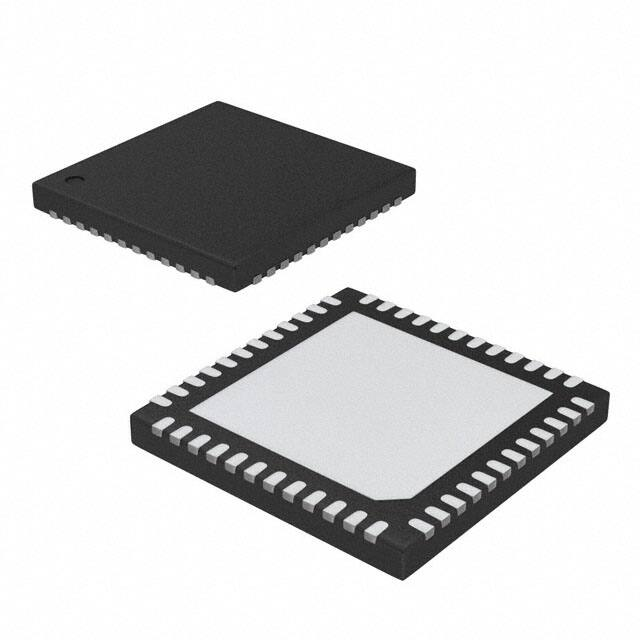
The MAX14900E is available in a 48-pin (7mm x 7mm)
QFN-EP or standard 48-pin TQFN-EP package, and is
specified over the -40°C to +125°C temperature range.
Applications
●● Programmable Logic Controllers
●● High-Density Digital Output Modules
●● Motor Controllers
●● PWM/PPO Control
Benefits and Features
●● Low Power for High-Density Modules
• 3mA (max) Total Supply Current
• 165mΩ (max) High-Side RON at +125°C
●● Fast Switching Ideal for Accurate, High-Speed
Control Systems
• 2µs Propagation Delays (High-Side Mode)
• 0.8µs Propagation Delays (Push-Pull Mode)
• 100kHz (max) Push-Pull Mode Switching Rate
●● Extensive Fault Feedback Eases Maintenance and
Reduces Installation Time
• Global and Per-Channel Diagnostics
• Open Load/Wire Detection
• Thermal Shutdown Fault Indication
• Output Logic State Feedback
• Undervoltage Lockout
●● Small Packages with Serial Interface Allows Making
High-Density Modules
• Daisy-Chainable SPI Minimizes Isolation Cost
• 7mm x 7mm, 48-Pin QFN and TQFN Packages
Functional Diagram
VL
VDD
V5
VL
FLTR
PUSHPL
V5
UV MONITOR
OL/IN1
IN2
IN5
IN6
PARALLEL
INTERFACE
MAX14900E
DRIVE + MONITOR
CONFIG
AND
SETTING
CS
DRIVE + MONITOR
SERIAL
INTERFACE
DRIVE + MONITOR
REXT
O5
VDD
O4
O3
O3
O2
OVERTEMP
AGND
O2
VDD
OVERLOAD
OPEN LOAD
O4
VDD
VDD
DRIVE + MONITOR
EN
19-6563; Rev 4; 4/15
O5
EN
DIAGNOSTICS
O7
O6
VDD
EN
DRIVE + MONITOR
FAULT
O6
EN
SDO
Ordering Information and Typical Operating Circuit appear
at end of data sheet.
VDD
EN
SRIAL
SDI
O7
EN
DRIVE + MONITOR
S16/IN8
O8
VDD
DRIVE + MONITOR
CNFG/IN7
CLK
DRIVE + MONITOR
O8
EN
CRC/IN3
CERR/IN4
VDD
VDD
PGND
O1
O1
�MAX14900E
Octal, High-Speed, Industrial, High-Side Switch
Absolute Maximum Ratings
(All voltages referenced to AGND = PGND.)
VDD.........................................................................-0.3V to +40V
O_.............................................................. -0.3V to (VDD + 0.3V)
V5, VL, FAULT, IN_, PUSHPL,
FLTR, SRIAL, CLK, SDI, CS, EN.........................-0.3V to +6V
REXT............................................................ -0.3V to (V5 + 0.3V)
SDO.............................................................. -0.3V to (VL + 0.3V)
Continuous Reverse Current (O_)........................................2.0A
Inductive Kickback Current (O_)...........................................1.9A
Continuous Current (Any Other Terminal).......................±100mA
Continuous Power Dissipation (TA = +70°C)
(derate 38.5mW/°C above +70°C).............................4400mW
Operating Temperature Range.......................... -40°C to +125°C
Junction Temperature........................................Internally Limited
Storage Temperature Range............................. -65°C to +150°C
Lead Temperature (soldering, 10s).................................. +300°C
Soldering Temperature (reflow)........................................+260°C
Stresses beyond those listed under “Absolute Maximum Ratings” may cause permanent damage to the device. These are stress ratings only, and functional operation of the device at these
or any other conditions beyond those indicated in the operational sections of the specifications is not implied. Exposure to absolute maximum rating conditions for extended periods may affect
device reliability.
Package Thermal Characteristics (Note 1)
Junction-to-Ambient Thermal Resistance (θJA)...............18°C/W
Junction-to-Case Thermal Resistance (θJC)......................1°C/W
Note 1: Package thermal resistances were obtained using the method described in JEDEC specification JESD51-7, using a four-layer
board. For detailed information on package thermal considerations, refer to www.maximintegrated.com/thermal-tutorial.
Electrical Characteristics
(VDD = 10V to 36V, V5 = 4.5V to 5.5V, VL = 2.5V to 5.5V, TA = -40°C to +125°C, unless otherwise noted. Typical values are at VDD = 24V,
V5 = 5V, VL = 3.3V, and TA = +25°C.) (Note 2)
PARAMETER
SYMBOL
CONDITIONS
MIN
TYP
MAX
UNITS
36
V
DC CHARACTERISTICS
VDD Supply Voltage
VDD Supply Current
VDD
IDD
VDD Disable Supply Current
IDD_DIS
VDD Undervoltage-Lockout
Threshold
VDD_
UVLO
VDD Undervoltage-Lockout
Hysteresis
VDD_
V5 Supply Voltage
V5 Supply Current
UVHYS
EN = high, O_ in push-pull mode
and unloaded
0.7
1.5
EN = high, O_ in high-side mode
and unloaded
0.7
1.5
EN = low
0.7
1.5
mA
7.8
8.5
V
V5 = 5V, VDD rising
I5
V5_UVLO
V5 Undervoltage-Lockout
Hysteresis
V5_UVHYS
V5 POR Threshold
V5_POR
VL Supply Voltage
VL
VL Supply Current
IL
VL POR Threshold
VL_POR
mA
7.0
V5 = 5V
V5
V5 Undervoltage-Lockout
Threshold
www.maximintegrated.com
10
2.5
4.5
O_ in push-pull or high-side mode,
CS = high, DC output
VDD = 24V, V5 rising
3.8
VDD = 24V
5.5
V
0.9
1.5
mA
4
4.2
V
0.3
1.6
V
2.4
V
5.5
V
9
40
µA
1.6
2.4
V
2.5
Logic inputs unconnected
V
Maxim Integrated │ 2
�MAX14900E
Octal, High-Speed, Industrial, High-Side Switch
Electrical Characteristics (continued)
(VDD = 10V to 36V, V5 = 4.5V to 5.5V, VL = 2.5V to 5.5V, TA = -40°C to +125°C, unless otherwise noted. Typical values are at VDD = 24V,
V5 = 5V, VL = 3.3V, and TA = +25°C.) (Note 2)
PARAMETER
SYMBOL
CONDITIONS
MIN
TYP
MAX
UNITS
85
165
mΩ
1.7
2.0
A
+20
µA
DRIVER OUTPUTS (O_)
High-Side Mode On-Resistance
RON_HS
High-side mode, EN = high, O_ = high,
IO_ = 500mA
High-Side Mode Current Limit
ILIM_HS
High-side mode, EN = high, O_ = high
1.4
High-Side Mode Leakage
Current
ILKG_HS
EN = low, VO_ = 0V
-1
Push-Pull Mode On-Resistance
RON_PP
Push-pull
mode,
EN = high
IO_ = +50mA,
O_ = high
1.6
4
5.2
10
0V < VO_ < VDD - 3V,
O_ = high
200
ILIM_PP
Push-pull
mode,
EN = high,
during blanking
time
IO_ = -50mA, O_ = low
3V < VO_ < VDD,
O_ = low
200
Push-Pull Current Limit
Ω
500
mA
300
Current-Limit Autoretry Blanking
Time
tBLANK
Push-pull mode, EN = high,
O_ connected to VDD or PGND
90
µs
Current-Limit Autoretry Off-Time
tRETRY
Push-pull mode, EN = high,
O_ connected to VDD or PGND
11
ms
OPEN-LOAD DETECTION (O_)
Open-Load Pullup Current
Open-Load and Status-Detect
Threshold
IOL
VTOL_
High-side mode, O_ = off,
0V < VO_ < (VDD – 2V), OL detect = on
65
80
110
µA
EN = high, OL detect = on,
high-side mode, O_ = off
6.3
7
7.7
V
LOGIC INPUTS (IN_, PUSHPL, FLTR, SRIAL, CLK, SDI, CS, EN)
Input Logic-High Voltage
VIH
Input Logic-Low Voltage
VIL
0.7 x VL
0.3 x VL
0.1 x
VL
Input Threshold Hysteresis
VITHYS
Input Pulldown/Pullup Resistor
RPULL
(Note 3)
Open-Drain Output Logic-Low
Voltage
VODL
ISINK = 5mA
LOGIC OUTPUTS (FAULT, CERR/IN4, SDO)
Open-Drain Output Leakage
Current
ILKG_OD
SRIAL = high, output not asserted,
VOUT = 5.5V
SDO Output Logic-High Voltage
VOH
ISOURCE = 5mA
SDO Output Logic-Low Voltage
VOL
ISINK = 5mA
SDO Pulldown Resistor
www.maximintegrated.com
RSDO
V
CS = high
140
200
-1
V
270
kΩ
0.33
V
+1
µA
VL - 0.33
140
V
V
200
0.33
V
270
kΩ
Maxim Integrated │ 3
�MAX14900E
Octal, High-Speed, Industrial, High-Side Switch
Electrical Characteristics (continued)
(VDD = 10V to 36V, V5 = 4.5V to 5.5V, VL = 2.5V to 5.5V, TA = -40°C to +125°C, unless otherwise noted. Typical values are at VDD = 24V,
V5 = 5V, VL = 3.3V, and TA = +25°C.) (Note 2)
PARAMETER
SYMBOL
CONDITIONS
MIN
TYP
MAX
UNITS
tPDHS_LH
High-side mode, delay from IN_ transition
(parallel mode) or CS rising-edge
(serial mode) to O_ rising by 0.5V;
RL = 48Ω, CL = 1nF, tR/tF ≤ 20ns,
FLTR = low, Figure 1 (Note 4)
0.2
1
µs
tPDHS_HL
High-side mode, delay from IN_ transition
(parallel mode) or CS rising-edge
(serial mode) to O_ falling by 0.5V,
RL = 48Ω, CL = 1nF, tR/tF ≤ 20ns,
FLTR = low, Figure 1 (Note 4)
0.9
2
µs
tPDPP_LH
Push-pull mode, delay from IN_ transition
(parallel mode) or CS rising-edge
(serial mode) to O_ settling to within
0.8 x VDD, RL = 5kΩ, CL = 1nF,
FLTR = low, Figure 2
0.3
0.7
µs
tPDPP_HL
Push-pull mode, delay from IN_ transition
(parallel mode) or CS rising-edge
(serial mode) to O_ settling to within
0.2 x VDD, RL = 5kΩ, CL = 1nF,
FLTR = low, Figure 2
0.3
0.8
µs
High-side mode, 20% to 80%, RL = 48Ω,
CL = 1nF, Figure 1
1.5
4
Push-pull mode, 20% to 80%, RL = 5kΩ,
CL = 1nF, Figure 2
0.1
0.4
Push-pull mode, 20% to 80%, RL = 240Ω,
VCC = 24V, CL = 1nF, Figure 2
0.1
0.4
TIMING CHARACTERISTICS
High-Side Mode LTH Output
Propagation Delay
High-Side Mode HTL Output
Propagation Delay
Push-Pull Output LTH
Propagation Delay
Push-Pull Output HTL
Propagation Delay
Output Rise and Fall Time
Output Switching Rate
Channel-to-Channel Skew
CRC Error-Detect Propagation
Delay
CRC Error-Clear Propagation
Delay
Pulse Length of Rejected Glitch
tR, tF
fO
tPDSK_LH,
tPDSK_HL
tPDL_
CERR
tPDH_CERR
tGL
Admitted Pulse Length
Glitch Filter Propagation
Delay Time
www.maximintegrated.com
tPDGF
Push-pull mode, RL = 5kΩ or IL = 100mA
to ground, CL = 1nF, SRIAL = low
Push-pull mode, Figure 2 (Note 5)
-100
µs
100
kHz
+100
ns
Error detected on SDI data, from CS
rising-edge to CERR/IN4 falling-edge;
ISOURCE = 5mA, Figure 3
14.5
30
ns
Error cleared, from CS rising-edge to
CERR/IN4 rising, ISOURCE = 5mA,
Figure 3
17
40
ns
80
ns
FLTR = high
0
FLTR = high
300
FLTR = high
ns
140
300
ns
Maxim Integrated │ 4
�MAX14900E
Octal, High-Speed, Industrial, High-Side Switch
Electrical Characteristics (continued)
(VDD = 10V to 36V, V5 = 4.5V to 5.5V, VL = 2.5V to 5.5V, TA = -40°C to +125°C, unless otherwise noted. Typical values are at VDD = 24V,
V5 = 5V, VL = 3.3V, and TA = +25°C.) (Note 2)
PARAMETER
SYMBOL
CONDITIONS
MIN
TYP
MAX
UNITS
SPI TIMING CHARACTERISTICS (Figure 4)
CLK Clock Period
tCH+CL
50
ns
CLK Pulse-Width High
tCH
5
ns
CLK Pulse-Width Low
tCL
5
ns
FLTR = low (Note 4)
5
CS Fall-to-CLK Rise Time
tCSS
SDI Hold Time
tDH
5
ns
SDI Setup Time
tDS
5
ns
Output Data Propagation Delay
tDO
CL = 10pF. CLK falling-edge to SDO stable
tFT
CL = 10pF
SDO Rise and Fall Times
CS Hold Time
CS Pulse-Width High
tCSH
tCSPW
FLTR = high
(Note 4)
ns
300
25
4
50
FLTR = low (Note 4)
50
FLTR = high
280
ns
ns
ns
ns
PROTECTION SPECIFICATIONS
Channel Thermal-Shutdown
Threshold
Thermal-Shutdown Hysteresis
TC_SD
TC_SD_HYS
Global Thermal-Shutdown
Threshold
TG_SD
Global Thermal-Shutdown
Hysteresis
TG_SD_HYS
ESD Protection
Temperature rising
VESD
Temperature rising
+170
°C
15
°C
150
°C
10
°C
O_ pins, Human Body Model (Note 6)
±15
All other pins, Human Body Model
±2
kV
Note
Note
Note
Note
2: All units are production tested at TA = +25°C. Specifications over temperature are guaranteed by design.
3: All logic input pins except CS have a pulldown resistor. CS has a pullup resistor.
4: Specifications are guaranteed by design; not production tested.
5: Channel-to-channel skew is defined as the difference in propagation delays between channels on the same device with the
same polarity.
Note 6: Bypass VDD pins to AGND with a 1µF capacitor as close as possible to the device for high-ESD protection.
www.maximintegrated.com
Maxim Integrated │ 5
�MAX14900E
Octal, High-Speed, Industrial, High-Side Switch
Test Circuits/Timing Diagrams
VL
0.1µF
VL
1µF
VDD
1µF
V5
VDD
V5
50Ω
TEST
SOURCE
MAX14900E
IN_/CS
FLTR
O_
PUSHPL
AGND
CL
PGND
VL
RL
VL
IN_
50%
AGND
CS
50%
tPDHS_LH
VDD
AGND
tPDHS_HL
VDD
tPDHS_LH
0.5V
AGND
VDD
80%
O_
tPDHS_HL
VDD - 0.5V
O_
0.5V
AGND
50%
VDD
VDD - 0.5V
O_
50%
80%
O_
AGND
20%
AGND
tR
tF
20%
tR
tF
Figure 1. High-Side Mode Timing Characteristics
www.maximintegrated.com
Maxim Integrated │ 6
�MAX14900E
Octal, High-Speed, Industrial, High-Side Switch
Test Circuits/Timing Diagrams (continued)
VL
0.1µF
VL
1µF
V5
V5
MAX14900E
IN_/CS
TEST
SOURCE
O_
FLTR
AGND
CL
PGND
RL
VL
VL
IN_
50%
AGND
VDD
VDD
VDD
PUSHPL
50Ω
1µF
CS
50%
tPDPP_LH
50%
AGND
tPDPP_HL
VDD
0.8 x VDD
O_
tPDPP_LH
50%
tPDPP_HL
0.8 x VDD
O_
0.2 x VDD
AGND
VDD
tPDSK_LH
0.2 x VDD
AGND
tPDSK_HL
VDD
0.8 x VDD
O_
80%
O_
AGND
0.2 x VDD
AGND
tR
tF
20%
tR
tF
Figure 2. Push-Pull Mode Timing Characteristics
www.maximintegrated.com
Maxim Integrated │ 7
�MAX14900E
Octal, High-Speed, Industrial, High-Side Switch
Test Circuits/Timing Diagrams (continued)
VL
CS
50%
0V
50%
tPDH_CERR
tPDL_CERR
VL
VL - 0.5V
CERR/IN4
0.5V
0V
Figure 3. CRC Error Detection Timing
CS
tCSS
tCL
tCH
tCSH
CLK
tDS
tDH
SDI
tDO
SDO
tFT
Figure 4. SPI Timing Diagram
www.maximintegrated.com
Maxim Integrated │ 8
�MAX14900E
Octal, High-Speed, Industrial, High-Side Switch
Typical Operating Characteristics
(VDD = +24V, V5 = VL = 5.0V, TA = +25°C, unless otherwise noted.)
4
3
PUSH-PULL MODE
HIGH-SIDE FET
IO = 50mA
8
350
300
250
HIGH-SIDE MODE
IO = 500mA
200
150
250
HIGH-SIDE MODE
IO = 500mA
4
200
3
150
100
1
50
0
0
0
PROPAGATION DELAY vs. VDD
PUSH-PULL PROPAGATION DELAY
vs. TEMPERATURE
1000
900
1000
800
tPDPP_HL
tPDPP_LH
400
1.0
0.9
0.8
tPDHS_LH
VDD = 36V
200
-40 -25 -10 5 20 35 50 65 80 95 110 125
TEMPERATURE (°C)
www.maximintegrated.com
tPDPP_HL
VDD = 36V
tPDPP_HL
VDD = 24V
tPDPP_HL
VDD = 10V
500
400
300
200
tPDPP_LH t
PDPP_LH
VDD = 36V V = 24V
DD
tPDPP_LH
VDD = 10V
-40 -25 -10 5 20 35 50 65 80 95 110 125
IDD vs. VDD
PUSH-PULL MODE
O_ UNLOADED
1.0
0.9
0.8
0.7
0.7
0.6
0.6
IDD (mA)
IDD (mA)
tPDHS_LH
VDD = 24V
600
TEMPERATURE (°C)
800
tPDHS_LH
VDD = 10V
700
0
10 12 14 16 18 20 22 24 26 28 30 32 34 36
PUSH-PULL MODE: RL = 5kΩ, CL = 1nF
HIGH-SIDE MODE: RL = 48Ω, CL = 1nF
800
100
tPDHS_LH
PUSH-PULL MODE
RL = 5kΩ, CL = 1nF
MAX14900E toc06
600
MAX14900E toc04
TEMPERATURE (°C)
PUSH-PULL MODE: RL = 5kΩ, CL = 1nF
HIGH-SIDE MODE: RL = 48Ω, CL = 1nF
0
-40 -25 -10 5 20 35 50 65 80 95 110 125
VDD (V)
PROPAGATION DELAY (ns)
1200
10 12 14 16 18 20 22 24 26 28 30 32 34 36
MAX14900E toc05
HIGH-SIDE PROPAGATION DELAY (ns)
300
2
1000
0
350
50
HIGH-SIDE PROPAGATION DELAY
vs. TEMPERATURE
400
400
1
VDD (V)
600
5
450
100
0
1200
6
PUSH-PULL MODE
HIGH-SIDE FET
IO = 50mA
500
2
200
1400
7
PUSH-PULL MODE
LOW-SIDE FET
IO = 50mA
MAX14900E toc02
400
VDD = 36V
0.5
0.4
0.5
0.4
0.3
0.3
0.2
0.2
0.1
0.1
0
10 12 14 16 18 20 22 24 26 28 30 32 34 36
VDD (V)
0
IDD vs. TEMPERATURE
PUSH-PULL MODE
O_ UNLOADED
VDD = 24V
VDD = 36V
MAX14900E toc07
5
9
RON vs. TEMPERATURE
RON HIGH-SIDE MODE (mΩ)
6
450
RON PUSH-PULL MODE (Ω)
7
1400
PROPAGATION DELAY (ns)
PUSH-PULL MODE
LOW-SIDE FET
IO = 50mA
8
10
MAX14900E toc03
RON PUSH-PULL MODE (Ω)
9
500
RON HIGH-SIDE MODE (mΩ)
MAX14900E toc01
RON vs. VDD
10
VDD = 10V
-40 -25 -10 5 20 35 50 65 80 95 110 125
TEMPERATURE (°C)
Maxim Integrated │ 9
�MAX14900E
Octal, High-Speed, Industrial, High-Side Switch
Typical Operating Characteristics (continued)
(VDD = +24V, V5 = VL = 5.0V, TA = +25°C, unless otherwise noted.)
PP MODE POWER DISSIPATION
vs. SWITCHING FREQUENCY
90
POWER DISSIPATION (mW)
70
60
80
70
50
40
30
20
10
0
90
IL = 100mA
ONE CHANNEL SWITCHING
ALL OTHER CHANNELS LOW
TA = +25°C
POWER DISSIPATION (mW)
80
toc08
VDD = 24V
0.01
0.1
VDD = 30V
VDD = 36V
1
10
50
40
30
20
VDD = 24V
10
0.01
1.4
1.0
IL = 10mA
CL = 10nF
ONE CHANNEL SWITCHING
ALL OTHER CHANNELS LOW
TA = +25°C
0.8
1.2
VDD = 30V
0.4
VDD = 24V
0.2
0.01
0.1
1
10
1.0
180.0
POWER DISSIPATION (mW)
160.0
140.0
toc12
VDD = 30V
0.4
VDD = 24V
0.2
60.0
VDD = 24V
40.0
0.01
0.1
1
10
100
140.0
PP MODE POWER DISSIPATION
vs. SWITCHING FREQUENCY
WITH RC LOAD
toc13
IL = 10mA
CL = 1nF
ONE CHANNEL SWITCHING
ALL OTHER CHANNELS LOW
TA = +85°C
120.0
VDD = 36V
100.0
VDD = 30V
80.0
60.0
VDD = 24V
40.0
20.0
20.0
0.0
200.0
180.0
VDD = 30V
80.0
toc11
VDD = 36V
0.6
160.0
VDD = 36V
100.0
100
SWITCHING FREQUENCY (kHz)
IL = 10mA
CL = 1nF
ONE CHANNEL SWITCHING
ALL OTHER CHANNELS LOW
TA = +25°C
120.0
10
0.8
0.0
100
POWER DISSIPATION (mW)
200.0
1
IL = 10mA
CL = 10nF
ONE CHANNEL SWITCHING
ALL OTHER CHANNELS LOW
TA = +85°C
SWITCHING FREQUENCY (kHz)
PP MODE POWER DISSIPATION
vs. SWITCHING FREQUENCY
WITH RC LOAD
VDD = 36V
PP MODE POWER DISSIPATION
vs. SWITCHING FREQUENCY
WITH RC LOAD
1.6
1.4
VDD = 36V
0.6
0.0
toc10
POWER DISSIPATION (W)
POWER DISSIPATION (W)
1.2
0.1
VDD = 30V
SWITCHING FREQUENCY (kHz)
SWITCHING FREQUENCY (kHz)
PP MODE POWER DISSIPATION
vs. SWITCHING FREQUENCY
WITH RC LOAD
toc09
IL = 100mA
ONE CHANNEL SWITCHING
ALL OTHER CHANNELS LOW
TA = +85°C
60
0
100
PP MODE POWER DISSIPATION
vs. SWITCHING FREQUENCY
0.01
0.1
1
10
SWITCHING FREQUENCY (kHz)
www.maximintegrated.com
100
0.0
0.01
0.1
1
10
100
SWITCHING FREQUENCY (kHz)
Maxim Integrated │ 10
�MAX14900E
Octal, High-Speed, Industrial, High-Side Switch
Pin Configurations
N.C.
N.C.
N.C.
REXT
EN
V5
AGND
FLTR
N.C.
N.C.
N.C.
29
28
27
26
25
SRIAL
37
24 PUSHPL
VDD
38
23 VDD
O5
39
22 O4
PGND
40
21 PGND
O6
41
VDD
42
VDD
43
18 VDD
O7
44
17 O2
PGND
45
16 PGND
O8
46
VDD
47
FAULT
48
20 O3
19 VDD
MAX14900E
15 O1
EP*
+
14 VDD
1
2
3
4
5
6
7
8
9
10
11
12
CERR/IN4
CRC/IN3
IN2
OL/IN1
13 VL
SDO
VDD
PUSHPL
18
19
20
VDD
VDD
21
22
23
24
14
15
16
17
O3
PGND
O4
13
VL
N.C.
N.C.
N.C.
30
SDI
12
FLTR
31
CLK
OL/IN1
EP*
27
26
25
V5
AGND
32
CS
9
10
11
MAX14900E
REXT
EN
33
IN5
CERR/IN4
CRC/IN3
IN2
31
30
29
28
34
IN6
SDI
SDO
5
6
7
8
35
S16/IN8
34
33
32
36
CNFG/IN7
2
3
4
N.C.
N.C.
N.C.
N.C.
N.C.
38 VDD
37 SRIAL
36
35
VDD
O1
PGND
O2
IN5
CS
CLK
1
+
S16/IN8
CNFG/IN7
IN6
45 PGND
44 O7
43 VDD
42 VDD
41 O6
40 PGND
39 O5
48 FAULT
47 VDD
46 O8
TOP VIEW
QFN
7mm x 7mm
TQFN
7mm x 7mm
*CONNECT EP TO AGND.
Pin Description
PIN
NAME
FUNCTION
S16/IN8
16-Bit Serial-Select Input/IN8 Input. In serial mode (SRIAL = high), drive S16/IN8 high to select 16-bit
serial operation. Drive S16/IN8 low to select 8-bit serial operation. In parallel mode (SRIAL = low), S16/IN8
sets the O8 output on/off in high-side mode or high/low in push-pull mode. S16/IN8 has an internal 200kΩ
pulldown resistor.
2
CNFG/IN7
Configure Select Input/IN7 Input. In serial mode (SRIAL = high), drive CNFG/IN7 high to select perchannel configuration over the serial interface. Drive CNFG/IN7 low to select setting the O_ outputs over
the serial interface. In parallel mode (SRIAL = low), CNFG/IN7 sets the O7 output on/off in high-side mode
or high/low in push-pull mode. CNFG/IN7 has an internal 200kΩ pulldown resistor.
3
IN6
IN6 Input. In parallel mode (SRIAL = low), IN6 sets the O6 output on/off in high-side mode or high/low in
push-pull mode. IN6 has an internal 200kΩ pulldown resistor.
4
IN5
IN5 Input. In parallel mode (SRIAL = low), IN5 sets the O5 output on/off in high-side mode or high/low in
push-pull mode. IN5 has an internal 200kΩ pulldown resistor.
5
CS
SPI Chip-Select Input. CS is the SPI active-low chip select. CS has an internal 200kΩ pullup resistor.
6
CLK
Serial-Clock Input. CLK is the SPI serial-clock input (up to 20MHz) and has an internal 200kΩ pulldown
resistor.
7
SDI
Serial-Data Input. SDI is the SPI serial-data input and has an internal 200kΩ pulldown resistor.
8
SDO
Serial-Data Output. SDO is the SPI serial-data output. SDO has an internal 200kΩ pulldown resistor
when CS is logic-high.
1
www.maximintegrated.com
Maxim Integrated │ 11
�MAX14900E
Octal, High-Speed, Industrial, High-Side Switch
Pin Description (continued)
PIN
NAME
FUNCTION
9
CERR/IN4
CRC Error Detection Output/IN4 Input. In serial mode (SRIAL = high) with error checking enabled
(CRC/IN3 = high), CERR/IN4 is an active-low open-drain output that asserts when a CRC error is detected
on SDI data. In parallel mode (SRIAL = low), CERR/IN4 sets the O4 output on/off in high-side mode or
high/low in push-pull mode. CERR/IN4 has an internal 200kΩ pulldown resistor when SRIAL = 0.
10
CRC/IN3
CRC Enable Input/IN3 Input. In serial mode (SRIAL = high), drive CRC/IN3 high to enable CRC
generation/error detection on SPI data. In parallel mode (SRIAL = low), CRC/IN3 sets the O3 output
on/off in high-side mode or high/low in push-pull mode. CRC/IN3 has an internal 200kΩ pulldown resistor.
11
IN2
IN2 Input. In parallel mode (SRIAL = low), IN2 sets the O2 output on/off in high-side mode or high/low in
push-pull mode. IN2 has an internal 200kΩ pulldown resistor.
Open-Load Enable Input/IN1 Input. In serial mode (SRIAL = high), drive OL/IN1 high to enable open-load
detection on all eight O_ outputs that are configured in high-side mode, overriding the serial configuration.
Drive OL/IN1 low to disable open-load detection unless enabled by the serial interface. In parallel mode
(SRIAL = low), OL/IN1 sets the O1 output on/off in high-side mode or high/low in push-pull mode. OL/IN1
has a 200kΩ pulldown resistor that is always connected.
12
OL/IN1
13
VL
14, 18,
19, 23,
38, 42,
43, 47
VDD
15
O1
16, 21,
40, 45
PGND
17
O2
Driver Output 2. May be configured as a high-side switch or push-pull output.
20
O3
Driver Output 3. May be configured as a high-side switch or push-pull output.
22
O4
Driver Output 4. May be configured as a high-side switch or push-pull output.
Logic Supply Input. VL defines the logic levels on all I/O logic interface pins from 2.5V to 5.5V.
Bypass VL to AGND with a 0.1µF ceramic capacitor as close as possible to the device.
Supply Voltage Input. VDD supply is 10V to 36V. Bypass the VDD pins to a ground plane with a 1µF
ceramic capacitor. Externally connect all VDD pins and ensure that the maximum trace resistance
between each VDD pin is less than 10mΩ.
Driver Output 1. May be configured as a high-side switch or push-pull output.
Power Ground. Connect PGND to the ground plane.
Global Push-Pull/High-Side Select Input. In parallel mode (SRIAL = low), drive PUSHPL high to globally
configure all O_ outputs to operate in push-pull mode, overriding the serial configuration. Drive PUSHPL
low to configure all O_ outputs to operate in high-side mode unless configured as push-pull by the serial
interface. PUSHPL has an internal 200kΩ pulldown resistor.
24
PUSHPL
25–27,
33–36
N.C.
No Connection. Not internally connected.
28
FLTR
Glitch Filter Enable Input. Set FLTR high to enable glitch filtering on every logic input except SDI and CLK.
FLTR has an internal 200kΩ pulldown resistor.
29
AGND
Analog Ground. Connect AGND to the ground plane.
30
V5
5V Supply Input. Bypass V5 to AGND with a 1µF ceramic capacitor as close as possible to the device.
31
EN
Enable Input. Drive EN high to enable normal operation for all O_ outputs. Drive EN low to force all
O_ outputs into high-impedance mode. EN has an internal 200kΩ pulldown resistor.
32
REXT
www.maximintegrated.com
External Resistor Connection. Connect a 56kΩ ±1% resistor from REXT to AGND.
Maxim Integrated │ 12
�MAX14900E
Octal, High-Speed, Industrial, High-Side Switch
Pin Description (continued)
PIN
NAME
FUNCTION
Serial/Parallel Select Input. Drive SRIAL high to set and configure the O_ outputs through the serial
interface. Drive SRIAL low to set the O_ outputs through the parallel (IN_) pins. SRIAL does not affect
the read back of diagnostics/status information through the serial interface. SRIAL has an internal 200kΩ
pulldown resistor.
37
SRIAL
39
O5
Driver Output 5. May be configured as a high-side switch or push-pull output.
41
O6
Driver Output 6. May be configured as a high-side switch or push-pull output.
44
O7
Driver Output 7. May be configured as a high-side switch or push-pull output.
46
O8
Driver Output 8. May be configured as a high-side switch or push-pull output.
48
FAULT
—
EP
Global Fault Output. FAULT is an open-drain, active-low output that asserts when a fault condition
(thermal shutdown, open-load, and/or overload protection) is detected on any O_ output.
Exposed Pad. Connect EP to a large ground plane, which is electrically connected to PGND, using a via
farm to minimize thermal impedance; not intended as an electrical connection point.
Functional Diagram
VL
VDD
V5
VL
FLTR
PUSHPL
V5
UV MONITOR
OL/IN1
IN6
PARALLEL
INTERFACE
MAX14900E
DRIVE + MONITOR
CONFIG
AND
SETTING
SRIAL
CS
SDI
O6
DRIVE + MONITOR
DRIVE + MONITOR
O5
O5
VDD
O4
O3
O3
VDD
O2
OPEN LOAD
O2
VDD
OVERLOAD
OVERTEMP
O4
VDD
EN
DIAGNOSTICS
O7
O6
VDD
EN
DRIVE + MONITOR
REXT
VDD
EN
SERIAL
INTERFACE
SDO
FAULT
O7
EN
S16/IN8
O8
EN
DRIVE + MONITOR
CNFG/IN7
CLK
O8
VDD
DRIVE + MONITOR
CRC/IN3
IN5
DRIVE + MONITOR
EN
IN2
CERR/IN4
VDD
VDD
DRIVE + MONITOR
O1
O1
EN
AGND
www.maximintegrated.com
PGND
Maxim Integrated │ 13
�MAX14900E
Octal, High-Speed, Industrial, High-Side Switch
Table 1. Serial/Parallel Operating Modes
SDI DATA
SDO DATA
SRIAL
S16/IN8
CNFG/
IN7
SETTING
CONFIG
FAULT
STATUS
Parallel mode with optional SPI
configuration, diagnostics, and monitoring
0
X
X
N/A
16-bit
8-bit
8-bit
8-bit serial mode with SPI setting and
diagnostics
1
0
0
8-bit
N/A
8-bit
N/A
8-bit serial mode with SPI configuration
and diagnostics
1
0
1
N/A
8-bit
8-bit
N/A
16-bit serial mode with SPI setting,
configuration, diagnostics, and monitoring
1
1
0
8-bit
8-bit
8-bit
8-bit
16-bit serial mode with SPI configuration,
diagnostics, and monitoring
1
1
1
N/A
16-bit
8-bit
8-bit
OPERATING MODE
X = Don’t care
Detailed Description
The MAX14900E is an octal low-propagation delay
850mA high-side switch that can be operated as a pushpull driver with high switching-rate capability. Each channel can be configured to operate in high-side or push-pull
mode. Push-pull mode drives capacitive loads such as
long cables that need to be driven at high switching rates.
In high-side mode, each channel switches up to 850mA
load current with 165mΩ (max) on-resistance.
The MAX14900E’s switches/drivers are configured
either individually by a serial SPI interface and/or globally by a parallel interface. In parallel operating mode
(SRIAL = low), the IN_ inputs directly control the O_ outputs
and the SPI interface configures each channel and reads
back diagnostic and state status. In serial operating mode
(SRIAL = high), the SPI interface is used to configure and
set the state of each channel while the parallel inputs
provide optional configuration possibilities.
Current limiting, overload protection, and thermal
shutdown circuitry protect each switch/driver. The device
features per-channel diagnostic detection that feeds
back per-channel thermal shutdown and output state
information. In high-side mode, multiple channels can be
connected in parallel to achieve higher load currents.
Serial/Parallel Operating Modes
A serial SPI and parallel interface allow configuration,
monitoring, and driving of the MAX14900E. The serial
interface supports per-channel configuration, setting, and
diagnostics/monitoring while the parallel interface allows
direct driving of the switches/outputs. Table 1 details how
www.maximintegrated.com
Table 2. Parallel Driving Truth Table
IN_
O_ STATE
PUSH-PULL
HIGH-SIDE
0
Low
Off
1
High
On
the device utilizes each interface depending on the status
of the configuration select inputs.
Parallel Operating Mode
In parallel operating mode (SRIAL = low), the eight IN_
inputs directly set the O_ switches on/off in high-side
mode or high/low in push-pull mode (Table 2). The
serial interface can optionally be used to configure each
output as a high-side switch or as a push-pull driver and to
enable open-load detection for each high-side switch. The
serial interface can also be used in parallel mode to read
out per-channel fault, open-load detection, and output
logic state information.
The outputs can be configured globally for push-pull operation by the PUSHPL input. Global diagnostic fault and
open-load information is reported by the FAULT output.
Serial Operating Mode
In serial operating mode (SRIAL = high), the switches/
drivers are set, configured, and monitored by the SPI
interface. The S16/IN8, CNFG/IN7, CRC/IN3, and OL/IN1
inputs and the CERR/IN4 output provide further configuration and monitoring options in serial operating mode.
The remaining IN_ inputs are not used. See the Serial
Controller Interface section for more information.
Maxim Integrated │ 14
�MAX14900E
Octal, High-Speed, Industrial, High-Side Switch
Configuration
The global configuration inputs affect all eight O_ channels
while serial configuration is per channel. See Table 3.
The serial interface can be used to configure each output
individually to be in push-pull or high-side mode and to
enable open-load detection for that channel if it is in highside mode. The PUSHPL and OL/IN1 inputs override the
per-channel serial configuration when they are set high.
Output Drivers
The drivers can be configured for high-side or push-pull
operation. When configured in high-side mode, each driver
can safely source 850mA (max) load current continuously.
The high-side switches have active current limiting in the
range between 1.4A (min) and 2.0A (max).
When a driver is in push-pull mode, the output drives
resistive/capacitive loads at high switching rates with load
currents up to 100mA to ground. The RON is 4Ω (max) for
the high-side and 10Ω (max) for the low-side drivers in
push-pull mode.
Monitoring the Output Logic State
The voltage state of each O_ driver/switch can be read
out via SPI. If the voltage on an O_ output is higher than
the 7V (typ) threshold, then the corresponding S_ bit is
logic 1 in the status byte. If the voltage on an O_ output
is below the threshold, then the corresponding S_ bit is
logic 0. Status monitoring can be read out via 16-bit serial
mode. This is possible on all modes and states of the
outputs: on/off/high/low.
Open-Load Detection
When configured in high-side mode, the device can detect
when no load is connected to the O_ outputs or when a
wire to a load is open circuit. Open-load detection can be
globally enabled in serial mode via the OL/IN1 input, or
on a per-channel basis via the serial interface in parallel
and serial modes. The detection circuitry applies an 80µA
current to the load and monitors the O_ voltage. Openload detection occurs when the outputs are configured
in high-side mode and is active while the high-side driver
is off.
When an open-load condition is detected on a high-side
switch, the corresponding switch’s fault bit is set and the
global FAULT output is asserted. Turning off a high-side
driver that has a large capacitive load and low bleed
resistance triggers a temporary detection of an open-load
condition and assert FAULT until the O_ voltage decays
to below the 7V (typ) threshold.
Table 3. Global Configuration Inputs
INPUT
SRIAL
CONFIGURATION FUNCTION
FLTR
X
Enables anti-glitch filtering on all logic input pins except SDI and CLK
0 = Glitch filtering disabled
1 = Glitch filtering enabled
PUSHPL
X
Configures all O_ outputs as push-pull or high-side
0 = All drivers high-side mode unless configured as push-pull by serial interface
1 = All drivers push-pull mode
EN
X
Enables normal operation of all O_ outputs
0 = All O_ outputs high impedance
1 = Normal operation
OL/IN1
1
Enables global open-load detection in serial mode
0 = Open-load detection disabled unless enabled by serial interface
1 = Open-load detection enabled for all high-side mode switches
CRC/IN3
1
Enables CRC generation and error detection of SPI data
0 = CRC disabled
1 = CRC enabled
X = Don’t care
www.maximintegrated.com
Maxim Integrated │ 15
�MAX14900E
Octal, High-Speed, Industrial, High-Side Switch
Thermal Shutdown Protection
Thermal overload circuitry constantly monitors each
switch/driver and a global thermal shutdown circuit
monitors average chip temperature. When a local thermal
shutdown condition occurs for one of the drivers, it is
disabled while the others continue to operate. When the
local temperature falls to below the activation threshold (TC_SD – TC_SD_HYS), that driver automatically
re-enables. A global thermal shutdown does not disable
the O_ outputs but prevents any channel from re-enabling
itself until the global temperature sensor is below the limit.
The FAULT output is asserted when any thermal shutdown condition occurs. In addition, F_ bits are set for
channels that are in thermal shutdown in the SPI SDO
data.
Overload and Short-Circuit Protection
The device protects each O_ output against overload and
short-circuit conditions while operating in push-pull and
high-side mode.
In high-side mode, the device actively limits each channel’s output current to 1.7A. As long as no thermal
shutdown occurs, this current limiting condition persists
continuously.
In push-pull mode, the device limits the load current to
300mA/500mA (typ). Overload faults are detected when
an O_ output is in push-pull mode and an overcurrent
condition forces the output voltage to above 1V (for O_ = low)
or below (VDD - 1V) (for O_ = high) for more than the
blanking time 90µs (typ). When the cause of the output
voltage level mismatch is removed, the driver resumes
normal operation.
POR and UVLO Conditions
The MAX14900E features undervoltage lockout (UVLO)
and power-on reset (POR) circuitry on its power supply
inputs to ensure that the device is in a known state
on power-up or when there is a droop on one of the
supplies. If either VL or V5 falls to below its POR threshold,
the device goes into its reset state and all configuration
settings are lost.
www.maximintegrated.com
When VDD or V5 is below its UVLO threshold, all O_
outputs are disabled and the 80µA open-load detection
current sources are turned off. The device resumes normal operation when the UVLO condition is removed. As
long as VL and V5 stay above their POR thresholds, the
SPI interface remains active and configuration settings
are not affected.
In 16-bit serial mode when a UVLO is present, a series
of all ones in the serial SDO status/fault read back bits
reports this condition.
FAULT Output
The global FAULT output asserts when a fault condition is
detected on any O_ output. The types of fault conditions
reported by FAULT are thermal shutdown, open-load (if
enabled), and overload protection (in push-pull mode
only). The global FAULT is not initiated in a UVLO condition.
Thermal shutdown faults are detected when the
internal temperature of any driver exceeds the thermal
shutdown threshold (TC_SD). The fault is cleared when the
temperature falls to below the activation threshold (TC_SD
– TC_SD_HYS).
Open-load faults are detected when the voltage at an O_
output in high-side mode with the HS switch turned off is
above the detection threshold of 7V. This happens when
the O_ output is not connected to any external load and
the 80µA pullup current charges the node. A brief openload condition can occur after an HS switch is turned off
and the load has not discharged capacitance yet.
In push-pull mode, if the voltage level at an O_ output differs from the programmed value for longer than the 90µs
(typ) blanking time due to overcurrent, the driver is turned
off for the 11ms (typ) retry time. During the retry period,
the FAULT output is asserted and the fault bit is set for
that driver in the serial data. The fault is cleared after the
fault condition is removed at the end of the current retry
period (11ms).
Maxim Integrated │ 16
�MAX14900E
Octal, High-Speed, Industrial, High-Side Switch
Serial Controller Interface
and status information is sampled and stored in the internal SPI shift register and the SDO output becomes active.
This data is clocked out of SDO on each falling CLK edge
while new SDI data is sampled and stored in the shift
register on each rising CLK edge. When CS transitions
high at the end of the SPI cycle, the current data in the
SPI shift register is latched into the MAX14900E and the
new configuration and/or setting data changes the driver
states. Figure 6 illustrates the sampling of internal signals
dependent on CS transitions.
The MAX14900E can be configured, controlled and/or
monitored on a per-channel basis via its SPI interface (see
Table 1). Daisy-chaining multiple MAX14900E devices
is supported to reduce the required number of CS and/
or isolator pins. Figure 5 shows an example of daisychaining two MAX14900E devices. Daisy-chaining operates
both with 8-bit and 16-bit serial data: S16/IN8 = X.
The MAX14900E uses SPI mode 0 with CPOL = 0 and
CPHA = 0. When the CS input transitions low, diagnostics
SCLK
MAX14900E
CLK
µC
MOSI
SDI
CS
MAX14900E
CLK
D
A
T
A
B
I
T
S
S
H
I
F
T
R
E
G
D
I
A
G
N
S
T
C
SDO
SDI
CS
D
A
T
A
B
I
T
S
S
H
I
F
T
R
E
G
D
I
A
G
N
S
T
C
SDO
CS
MISO
Figure 5. Daisy-Chained MAX14900E Devices with 8-Bit Serial Mode
CS
DIAGNOSTICS
/STATUS
LATCHED
OUTPUT
PREVIOUS STATE
NEW STATE
Figure 6. Internal Sampling Events Timing Diagram
www.maximintegrated.com
Maxim Integrated │ 17
�MAX14900E
Octal, High-Speed, Industrial, High-Side Switch
8-Bit Serial Mode with Setting and Monitoring
In serial mode with 8-bit setting and 8-bit monitoring
(SRIAL = high, S16/IN8 = low, CNFG/IN7 = low), the SPI
shift register is 8 bits long (Figure 7). The DO_ bits set
the state of the respective O_ output (Table 4). The F_
bits report fault information of the respective O_ output
(Table 7).
8-Bit Serial Mode with Configuration and
Monitoring
In serial mode with 8-bit configuration and 8-bit monitoring (SRIAL = high, S16/IN8 = low, CNFG/IN7 = high), the
SPI shift register is 8 bits long (Figure 8). The C_ bits
configure push-pull/high-side mode for the respective O_
output (Table 5). The F_ bits report fault information for
the respective O_ output (Table 7).
CS
CLK
DO8
SDI
SDO
Hi-Z
F8
DO7
DO6
DO5
DO4
DO3
DO2
DO1
F7
F6
F5
F4
F3
F2
F1
C7
C6
C5
C4
C3
C2
C1
F7
F6
F5
F4
F3
F2
F1
Figure 7. Serial Timing in 8-Bit Setting Serial Mode
CS
CLK
C8
SDI
SDO
Hi-Z
F8
Figure 8. Serial Timing in 8-Bit Configuration Serial Mode
www.maximintegrated.com
Maxim Integrated │ 18
�MAX14900E
Octal, High-Speed, Industrial, High-Side Switch
16-Bit Serial Mode with 8-Bit Setting/8-Bit
Configuration
In serial mode with 8-bit setting/8-bit configuration and
16-bit monitoring (SRIAL = high, S16/IN8 = high, CNFG/
IN7 = low), the SPI shift register is 16 bits long (Figure 9).
The DO_ bits set the state of the respective O_ output and
the C_ bits configure push-pull/high-side mode (Table 4
and Table 5). The F_ and S_ bits report the status information for each channel (Table 8).
Parallel Mode/16-Bit Serial Mode with 16-Bit
Configuration
In parallel and serial mode with 16-bit serial configuration
and 16-bit monitoring (SRIAL = low or SRIAL = high, S16/
Table 4. Serial Setting Truth Table
Setting, Configuration, and Monitor
Bit Definitions
Table 3 to Table 8 define the effects of the setting, configuration, and monitoring bits.
If PUSHPL = high, then all outputs are configured as
push-pull mode regardless of C_.
Table 5. 8-Bit Serial Configuration
Truth Table
O_ STATE
DO_
IN8 = high, CNFG/IN7 = high), the SPI shift register is
16 bits long (Figure 10). The C1_ and C0_ bits configure
push-pull/high-side mode and open-load detection for
each respective channel (Table 6). The F_ and S_ bits
report the status information for each channel (Table 8).
PUSH-PULL
OPERATION
HIGH-SIDE
OPERATION
C_
O_ CONFIGURATION
0
Low
Off
0
High-side mode
1
High
On
1
Push-pull mode
CS
CLK
SDI
SDO
Hi-Z
DO8
DO7
DO6
DO5
DO4
DO3
DO2
DO1
C8
C7
C6
C5
C4
C3
C2
C1
F8
F7
F6
F5
F4
F3
F2
F1
S8
S7
S6
S5
S4
S3
S2
S1
Figure 9. 16-Bit Serial Timing with 8-Bit Setting/8-Bit Configuration
CS
CLK
SDI
SDO
Hi-Z
C18
C17
C16
C15
C14
C13
C12
C11
C08
C07
C06
C05
C04
C03
C02
C01
F8
F7
F6
F5
F4
F3
F2
F1
S8
S7
S6
S5
S4
S3
S2
S1
Figure 10. 16-Bit Serial Timing with 16-Bit Configuration
www.maximintegrated.com
Maxim Integrated │ 19
�MAX14900E
Octal, High-Speed, Industrial, High-Side Switch
16-Bit Serial Configuration
Open-load detection is only available for outputs configured in high-side mode. If PUSHPL = high, then all
outputs are configured as push-pull mode regardless of
the C_ bits. In serial modes, if OL/IN1 = high, then all outputs that are configured as high side will have open-load
detect on, regardless of the C1_ bits.
8-Bit Serial Diagnostics
If a driver is configured in push-pull mode, then a fault
means that an overload or a thermal shutdown is present on that channel. If the driver is configured in highside mode, then a fault means that an overtemperature
condition is detected. If open-load detection is enabled
in high-side mode, then the F_ bit is set when either an
open-load (only possible with the high-side switch off) or
an overtemperature is detected. In a UVLO condition,
eight F_ bits are logic one.
16-Bit Serial Diagnostics
Logic-level status (S_bits) detection is only valid when no
fault is present. Each S_ bit in normal (no fault) operating
condition reports whether or not the O_ voltage is above
(= 1) or below (= 0) 7V (typ).
When all F_ and S_ bits are logic one, a UVLO condition
is present.
Table 6. 16-Bit Serial Configuration
Truth Table
C1_
C0_
O_ CONFIGURATION
0
0
High-side mode, open-load detect off
0
1
Push-pull mode
1
0
High-side mode, open-load detect on
1
1
Push-pull mode
Table 7. 8-Bit Diagnostics Truth Table
F_
O_ CONDITION
0
No fault present
1
Fault (overload, open load, or UVLO) present
Table 8. 16-Bit Serial Diagnostics
Truth Table
F_
S_
O_ STATUS
0
0
No fault detected, logic state of O_ is low
0
1
No fault detected, logic state of O_ is high
1
0
Fault detected, logic state not defined
1
1
UVLO detected
www.maximintegrated.com
CRC Error Checking on Serial Interface
In serial mode (SRIAL = high), CRC error detection can
be enabled by setting CRC/IN3 high to minimize incorrect
operation due to noise on the SDI/SDO/CLK signals. With
CRC error detection enabled, the MAX14900E detects
errors on the SDI data that it receives from the controller
and it calculates a CRC on the SDO data that it sends to
the controller and appends this check byte to the SDO
data.
This ensures that both the SPI data sent and received
by the MAX14900E has a low likelihood of undetected
errors.
The check byte appended to all 8-bit/16-bit SDO data by
the MAX14900E contains a 7-bit frame check sequence
(FCS). This FCS is based on the CRC generator polynomial x7 + x5 + x4 + x2 + x + 1. The CRC initialization condition is 0x7F. The MAX14900E in turn expects a check byte
appended to all 8-/16-bit SDI data that it receives containing a FCS based on the same polynomial (Figure 11).
The controller should calculate the 7 FCS bits (CRI_) on
the 8-/16-bit data including the logic 1 in the first position
of the check byte. Thus the CRC is calculated on 9 or 17
bits. CRI1 is the LSB of the FCS. The MAX14900E verifies this received CRC. If the MAX14900E detects CRC
errors on the received SDI data, then it ignores this data
and does not change its configuration and/or output setting. Instead, the CERR/IN4 output is asserted and the
ERR bit is set in the check byte that it appends to the
8-/16-bit SDO diagnostic/status data that it sends back to
the controller during the following serial communication
cycle (Figure 12).
ERR is the error feedback bit that is sent back to the
controller to signal that a CRC error was detected on the
CS
CLK
SDI
1
CRI7
CRI6
CRI5
CRI4
CRI3
CRI2
CRI1
Figure 11. CRC Check Byte Expected From Controller
CS
CLK
SDO
ERR CRO7 CRO6 CRO5 CRO4 CRO3 CRO2 CRO1
Hi-Z
Figure 12. CRC Check Byte Sent by MAX14900E
Maxim Integrated │ 20
�MAX14900E
Octal, High-Speed, Industrial, High-Side Switch
previous SDI data reception. Note that ERR is delayed
by one SPI cycle, i.e., it indicates that a CRC error was
detected in the previous SPI data cycle. The CERR/IN4
output is immediately set active when a CRC error is
detected, allowing the controller to resend the last SDI
data or take other action.
The CRO_ bits are the CRC bits that the MAX14900E
calculates on the 8-/16-bit diagnostics and/or status data
plus the ERR bit i.e., the output FCS is calculated on
9/17 bits. This allows the controller to detect errors on the
SDO data received from the MAX14900E.
Applications Information
Driving Inductive Loads
In high-side mode, when the high-side switch turns off, an
inductive load will cause the O_ voltage to swing negative
in order to continue sourcing the load’s inductive current
while the inductor field collapses. The internal diodes support turn-off of inductive loads of up to 1.5H and currents
of up to 1.9A.
Driving Lamp Loads
Lamp loads are incandescent lamps where the filament
resistance is strongly dependent on the filament’s temperature. The initial startup current is high because a cold
filament has a very low resistance. The MAX14900E will
reliably turn on 15W lamps over the operating temperature range.
Driving Capacitive Loads
When charging/discharging purely capacitive loads with a
push-pull driver, the driver dissipates power that is proportional to switching frequency. The power can be estimated
by PD ~ C x VDD2 x f, where C is the load capacitance,
VDD is the supply voltage, and f is the switching frequency. For example, in an application with a 1nF load
and 100kHz switching frequency, each driver dissipates
130mW at VDD = 36V. When driving purely capacitive
loads consider a maximum capacitance of around 10nF.
Multiple SPI Devices on Shared Bus
The SDO output is high impedance when CS is logichigh to allow connecting multiple devices in parallel on a
shared SPI bus with the SDO lines connected together.
When SDO is high impedance, an internal 200kΩ pulldown resistor is enabled to pull SDO to GND weakly.
Paralleling of Outputs
In high-side mode, multiple outputs can be connected
together in parallel to achieve higher load currents. The
total load current should be shared equally between
these high-side switches that are operated in parallel.
This is achieved by having identical trace resistances for
all the PCB tracks from the O_ pins to the common star
www.maximintegrated.com
connection point. This is particularly important, since the
on-resistance of each high-side switch is low: 85mΩ (typ).
Board Layout
High-speed switches require proper layout and design
procedures for optimum performance. Ensure that powersupply bypass capacitors are placed as close as possible
to the device. Connect all VDD pins to a VDD plane.
Ensure that all VDD pins have no more than 10mΩ
between them. In this case a 1µF capacitor should be
placed to the ground plane as close to the VDD pins as
possible. In the case low resistance paths are not possible between the VDD pins, bypass each pin to GND via
a 100nF capacitor.
A suppressor/TVS diode should be used between VDD
and GND to clamp high-surge transients on the VDD supply input and surges from the O_ outputs. The standoff
voltage should be higher than the maximum operating
voltage of the equipment while the breakdown voltage
should be around 40V.
As long field supply cables can generate large voltage
transients on the VDD supply due to large di/dt, it is recommended to add a large capacitor on VDD at the point
of field supply entry. Capacitance should be as large as
possible, but 47µF electrolytic capacitor is recommended
as a minimum.
High ESD Protection
Electrostatic discharge (ESD)-protection structures are
incorporated on all pins to protect against electrostatic
discharges up to ±2kV Human Body Model (HBM)
encountered during handling and assembly.
All O_ outputs are further protected against ESD up to
±15kV (HBM) without damage, when the part is operative
in the application circuit with a 1µF bypass capacitor on
VDD and a suppressor/TVS diode.
In order to achieve even higher ESD levels, connect
external diodes from each output to GND and to VDD as
described in the Surge Protection section.
Surge Protection
The MAX14900E O_ pin is tolerant to ±600V/(42Ω +
0.5µF) 1.2µs/50µs surge testing, when only using a TVS
diode on VDD and without protection diodes on the O_
pins. It achieved over ±1.5kV/(42Ω + 0.5µF) IEC610004-5 surge testing when using the Typical Operating
Circuit. The silicon diodes on O_ must have low forward
voltage diodes that support the surge currents, like
MURA205T3G. A surge-suppressor diode on the VDD
supply must have low output impedance at the high surge
currents. The SM30TY is suitable for this. Place all diodes
and the VDD capacitor as close to the MAX14900E pins
as possible.
Maxim Integrated │ 21
�MAX14900E
Octal, High-Speed, Industrial, High-Side Switch
Typical Operating Circuit
24V
24V
36V
TVS
47µF
1µF
24V
5V
STEP-DOWN
VDD
SRIAL
MAX15062
O1
V5
10kΩ
O2
O3
FAULT
SDI
MAX14900E
02
24V
EN
100nF
01
24V
VL
03
24V
O4
04
24V
CS
O5
CLK
3.3V
VDDA
O6
VDDB
CONTROLLER
O7
SDO
ISOLATION
MAX14850
GPIO
56kΩ
REXT
AGND
GND
PUSHPL
5V
GNDA
06
24V
CNFG
VDDA
SPI
05
24V
PGND
07
24V
O8
08
24V
GNDB
36V
TVS
1µF
24V
VDD
V5 VL
O1
SRIAL
24V
09
EN
SDI
O2
CNFG
FAULT
O3
MAX14900E
O4
CS
O6
SDO
56kΩ
www.maximintegrated.com
REXT
AGND
24V
O7
PUSHPL
PGND
O8
11
12
24V
O5
CLK
10
24V
24V
13
14
24V
24V
15
16
Maxim Integrated │ 22
�MAX14900E
Octal, High-Speed, Industrial, High-Side Switch
Ordering Information
Chip Information
TEMP
RANGE (°C)
PINPACKAGE
MAX14900EAGM+CKT
-40 to +125
48 QFN-EP**
MAX14900EAGM+TCKT
-40 to +125
48 QFN-EP**
MAX14900EAGM+CKH
-40 to +125
48 TQFN-EP**
MAX14900EAGM+TCKH
-40 to +125
48 TQFN-EP**
PART
PROCESS: BiCMOS
+Denotes a lead(Pb)-free/RoHS-compliant package.
T =Tape and reel.
**EP = Exposed pad.
www.maximintegrated.com
Maxim Integrated │ 23
�MAX14900E
Octal, High-Speed, Industrial, High-Side Switch
Package Information
For the latest package outline information and land patterns (footprints), go to www.maximintegrated.com/packages. Note that a “+”,
“#”, or “-” in the package code indicates RoHS status only. Package drawings may show a different suffix character, but the drawing
pertains to the package regardless of RoHS status.
PACKAGE
TYPE
PACKAGE
CODE
OUTLINE
NO.
LAND
PATTERN NO.
48 QFN
K4877+1
21-100009
90-100003
48 TQFN
T4877+6
21-0144
90-0130
www.maximintegrated.com
Maxim Integrated │ 24
�MAX14900E
Octal, High-Speed, Industrial, High-Side Switch
Package Information
For the latest package outline information and land patterns (footprints), go to www.maximintegrated.com/packages. Note that a “+”,
“#”, or “-” in the package code indicates RoHS status only. Package drawings may show a different suffix character, but the drawing
pertains to the package regardless of RoHS status.
www.maximintegrated.com
Maxim Integrated │ 25
�MAX14900E
Octal, High-Speed, Industrial, High-Side Switch
Package Information
For the latest package outline information and land patterns (footprints), go to www.maximintegrated.com/packages. Note that a “+”,
“#”, or “-” in the package code indicates RoHS status only. Package drawings may show a different suffix character, but the drawing
pertains to the package regardless of RoHS status.
www.maximintegrated.com
Maxim Integrated │ 26
�MAX14900E
Octal, High-Speed, Industrial, High-Side Switch
Package Information
For the latest package outline information and land patterns (footprints), go to www.maximintegrated.com/packages. Note that a “+”,
“#”, or “-” in the package code indicates RoHS status only. Package drawings may show a different suffix character, but the drawing
pertains to the package regardless of RoHS status.
www.maximintegrated.com
Maxim Integrated │ 27
�MAX14900E
Octal, High-Speed, Industrial, High-Side Switch
Package Information
For the latest package outline information and land patterns (footprints), go to www.maximintegrated.com/packages. Note that a “+”,
“#”, or “-” in the package code indicates RoHS status only. Package drawings may show a different suffix character, but the drawing
pertains to the package regardless of RoHS status.
www.maximintegrated.com
Maxim Integrated │ 28
�MAX14900E
Octal, High-Speed, Industrial, High-Side Switch
Package Information
For the latest package outline information and land patterns (footprints), go to www.maximintegrated.com/packages. Note that a “+”,
“#”, or “-” in the package code indicates RoHS status only. Package drawings may show a different suffix character, but the drawing
pertains to the package regardless of RoHS status.
www.maximintegrated.com
Maxim Integrated │ 29
�MAX14900E
Octal, High-Speed, Industrial, High-Side Switch
Package Information
For the latest package outline information and land patterns (footprints), go to www.maximintegrated.com/packages. Note that a “+”,
“#”, or “-” in the package code indicates RoHS status only. Package drawings may show a different suffix character, but the drawing
pertains to the package regardless of RoHS status.
www.maximintegrated.com
Maxim Integrated │ 30
�MAX14900E
Octal, High-Speed, Industrial, High-Side Switch
Revision History
REVISION
NUMBER
REVISION
DATE
0
3/13
Initial release
1
6/14
Added new features
2
11/14
Changed current limit and added TQFN package option
3
1/15
Updated General Description, Benefits and Features, Ordering Information, and
Package Information sections
4/15
Updated Functional Diagram and Maximum Power Dissipation in the Absolute
Maximum Ratings section, corrected mislabeled axis and symbols in Typical
Operating Characteristics, and added the Paralleling of Outputs section under
Applications Information
4
PAGES
CHANGED
DESCRIPTION
—
1, 4, 5, 7, 9, 10,
12, 14, 15, 17-21
1–3, 13, 16,
20–23
1, 23-30
1-2, 4, 10-11, 13,
15-18, 21
For pricing, delivery, and ordering information, please contact Maxim Direct at 1-888-629-4642, or visit Maxim Integrated’s website at www.maximintegrated.com.
Maxim Integrated cannot assume responsibility for use of any circuitry other than circuitry entirely embodied in a Maxim Integrated product. No circuit patent licenses
are implied. Maxim Integrated reserves the right to change the circuitry and specifications without notice at any time. The parametric values (min and max limits)
shown in the Electrical Characteristics table are guaranteed. Other parametric values quoted in this data sheet are provided for guidance.
Maxim Integrated and the Maxim Integrated logo are trademarks of Maxim Integrated Products, Inc.
© 2015 Maxim Integrated Products, Inc. │ 31
�