EVALUATION KIT AVAILABLE
300mA LDO Voltage Regulators
with Tracker Output and Overvoltage Protector
19-0996; Rev 2; 2/15
32 TQFN-EP*
MAX15010ATJ+
-40°C to +125°C
32 TQFN-EP*
+Denotes a lead(Pb)-free/RoHS-compliant package.
*EP = Exposed pad.
Selector Guide
PART
OVP
CONTROLLER
LDO
TRACKER
MAX15008
✓
✓
✓
MAX15010
✓
✓
—
Pin Configurations
IN
IN
EN_PROT
EN_TRK
24
OUT_LDO
TOP VIEW
23
22
21
20
19
18
17
HOLD 25
16
EN_LDO
N.C. 26
15
FB_LDO
N.C. 27
14
REF
N.C. 28
13
SOURCE
12
GATE
MAX15008
FB_TRK 29
TRACK 30
N.C. 31
*EP
+
2
3
4
5
6
7
8
N.C.
1
RESET
N.C. 32
*EP = EXPOSED PAD
Typical Operating Circuits appear at end of data sheet.
-40°C to +125°C
PGND
●● Multimedia Power Supply
PIN-PACKAGE
ADJ
Applications
MAX15008ATJ+
TEMP RANGE
SGND
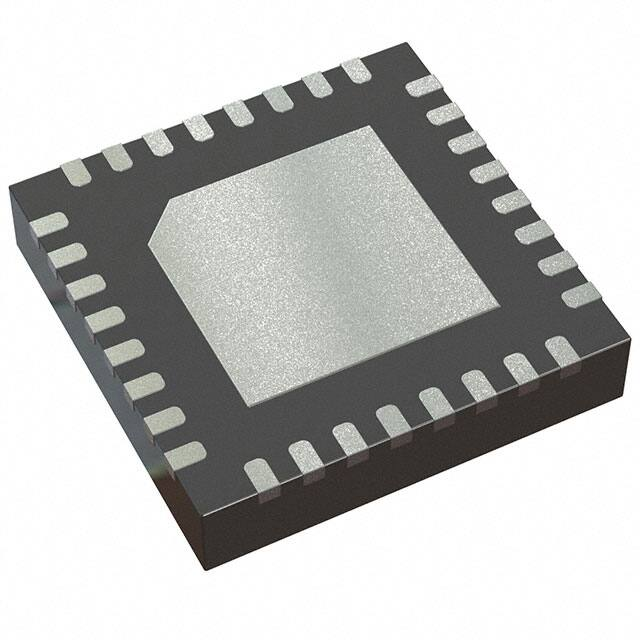
The MAX15008/MAX15010 are available in a thermally
enhanced, 32-pin (5mm x 5mm) TQFN package and
are fully specified over the -40°C to +125°C operating
temperature range.
PART
N.C.
The MAX15008 OVP controller operates with an external
enhancement mode n-channel MOSFET. While the monitored voltage remains below the adjustable threshold, the
MOSFET stays on. When the monitored voltage exceeds
the OVP threshold, the OVP controller quickly turns off the
external MOSFET. The OVP controller is configurable as
a load-disconnect switch or a voltage limiter.
Ordering Information
OUT_LDO
The voltage tracker accurately (±3mV) tracks a voltage
applied to its input from either the LDO output or an
external source. It can supply up to 50mA of current to
a remote sensor, allowing for precise ratiometric tracking
in industrial applications. A separate enable input turns
the tracker on or off, reducing supply current when the
tracker is unused. The voltage tracker also features protection against battery reversal, an output short circuit to
the battery, or an output voltage excursion below ground
potential to as much as -5V.
●● 300mA LDO Regulator, Voltage Tracker, and OVP
Controller (MAX15008)
●● 300mA LDO Regulator and Voltage Tracker
(MAX15010)
●● 50mA Voltage Tracker with ±3mV Tracking Accuracy
●● 5V to 40V Wide Operating Supply Voltage Range
●● 67µA Quiescent Current LDO Regulator
●● OVP Controller Disconnects or Limits Output from
Battery Overvoltage Conditions (MAX15008)
●● LDO Regulator with Enable, Hold, and Reset
Features
OUT_TRK
The 300mA LDO regulator consumes less than 67µA
quiescent current at light loads and is well suited to power
always-on circuits during “key off” conditions. The LDO
features independent enable and hold inputs, as well as a
microprocessor (µP) reset output with an adjustable reset
timeout period.
Features
N.C.
The MAX15008 features a 300mA LDO regulator, a
voltage tracker, and an overvoltage protection (OVP)
controller to protect downstream circuits from highvoltage transients. The MAX15010 includes only the
300mA LDO voltage regulator and voltage tracker. Both
devices operate over a wide 5V to 40V supply voltage
range and are able to withstand load-dump transients up
to 45V. The MAX15008/MAX15010 feature short-circuit
and thermal-shutdown protection.
N.C.
General Description
N.C.
MAX15008/MAX15010
11
N.C.
10
FB_PROT
9
CT
TQFN
(5mm x 5mm)
Pin Configurations continued at end of data sheet.
�MAX15008/MAX15010
300mA LDO Voltage Regulators
with Tracker Output and Overvoltage Protector
Absolute Maximum Ratings
(All pins referenced to SGND, unless otherwise noted.)
IN, GATE................................................................-0.3V to +45V
TRACK....................................................................-20V to +45V
EN_LDO, EN_PROT, EN_TRK...................-0.3V to (VIN + 0.3V)
SOURCE.....................................................-0.3V to (VIN + 0.3V)
TRACK to OUT_TRK..............................................-40V to +40V
OUT_TRK, FB_TRK, ADJ.........................................-5V to +45V
OUT_LDO, FB_LDO, FB_PROT, RESET..............-0.3V to +12V
GATE to SOURCE.................................................-0.3V to +12V
HOLD..............................................-0.3V to (VOUT_LDO + 0.3V)
REF to SGND...........................................................-0.3V to +6V
CT to SGND...........................................................-0.3V to +12V
SGND to PGND.....................................................-0.3V to +0.3V
IN, OUT_LDO Current.......................................................700mA
TRACK, OUT_TRK Current..............................................350mA
Current Sink/Source (all remaining pins)............................50mA
Continuous Power Dissipation (TA = +70°C)
32-Pin TQFN (derate 34.5mW/°C above +70°C)........... 2.7W*
Thermal Resistance
θJA.............................................................................29.0°C/W
θJC...............................................................................1.7°C/W
Operating Temperature Range.......................... -40°C to +125°C
Junction Temperature.......................................................+150°C
Storage Temperature Range............................. -60°C to +150°C
Lead Temperature (soldering, 10s).................................. +300°C
*As per JEDEC51 Standard, Multilayer Board (PCB).
Stresses beyond those listed under “Absolute Maximum Ratings” may cause permanent damage to the device. These are stress ratings only, and functional operation of the device at these
or any other conditions beyond those indicated in the operational sections of the specifications is not implied. Exposure to absolute maximum rating conditions for extended periods may affect
device reliability.
Electrical Characteristics
(VIN = VTRACK = +14V, VSGND = VPGND = 0V, CGATE = 6000pF, CIN = 10µF (ESR ≤ 1.5Ω), COUT_LDO = 22µF (ceramic), CTRACK =
3.3µF (ceramic) (ESR ≤ 1.5Ω), COUT_TRK = 10µF (ESR ≤ 1.5Ω), CREF = 1000pF, VOUT_LDO = 5V, TA = TJ = -40°C to +125°C, unless
otherwise noted. Typical values are at TA = +25°C.) (Note 1)
PARAMETER
Supply Voltage Range
SYMBOL
CONDITIONS
VIN
IIN
MAX15010
Shutdown Supply Current
www.maximintegrated.com
ISHDN
TYP
5
MAX15008
Supply Current
MIN
EN_LDO =
EN_PROT
= EN_TRK
= 0V,
measured
from SGND
MAX
UNITS
40
V
EN_LDO = IN, EN_TRK =
EN_PROT = 0V, IOUT_LDO
= 0µA, LDO on, tracker off,
protector off, measured
from SGND
67
85
EN_LDO = EN_TRK = IN,
EN_PROT = 0V, LDO on,
IOUT_LDO = 100µA, tracker
on, IOUT_TRK = 0µA,
protector off, VFB_TRK =
VOUT_TRK, VADJ = VREF,
measured from SGND
120
180
EN_LDO = EN_TRK =
EN_PROT = IN, LDO on,
IOUT_LDO = 100µA, tracker
on, IOUT_TRK = 0µA,
protector on, VFB_TRK =
VOUT_TRK; VADJ = VREF,
measured from SGND
190
280
EN_LDO = EN_TRK =
IN, LDO on, IOUT_LDO =
100µA, tracker on, IOUT_
TRK = 0µA, measured from
SGND
115
160
TA = -40°C to +85°C
16
30
µA
µA
TA = -40°C to +125°C
40
Maxim Integrated │ 2
�MAX15008/MAX15010
300mA LDO Voltage Regulators
with Tracker Output and Overvoltage Protector
Electrical Characteristics (continued)
(VIN = VTRACK = +14V, VSGND = VPGND = 0V, CGATE = 6000pF, CIN = 10µF (ESR ≤ 1.5Ω), COUT_LDO = 22µF (ceramic), CTRACK =
3.3µF (ceramic) (ESR ≤ 1.5Ω), COUT_TRK = 10µF (ESR ≤ 1.5Ω), CREF = 1000pF, VOUT_LDO = 5V, TA = TJ = -40°C to +125°C, unless
otherwise noted. Typical values are at TA = +25°C.) (Note 1)
PARAMETER
SYMBOL
IN Undervoltage Lockout
VUVLO
IN Undervoltage Lockout
Hysteresis
VUVLO_HYST
CONDITIONS
VIN falling, GATE disabled
MIN
TYP
MAX
UNITS
4.10
4.27
4.45
V
260
Internal Voltage Reference
REF
IREF = 0µA
Internal Voltage Reference
Maximum Current
IREF
∆VREF = ±200mV
1.21
1.235
-6
mV
1.26
V
+6
µA
Thermal-Shutdown
Temperature
TSHDN
+160
°C
Thermal Hysteresis
THYST
20
°C
LDO
Output Voltage
FB_LDO Set-Point Voltage
VOUT_LDO
VFB_LDO
Dual Mode™ FB_LDO
Threshold
VFB_LDO_TH
FB_LDO Input Current
IFB_LDO
LDO Output Voltage Range
VLDO_ADJ
ILOAD = 1mA, FB_LDO = SGND
4.92
5
5.09
ILOAD = 300mA, VIN = 8V,
FB_LDO = SGND
4.80
5
5.11
With respect to SGND, ILOAD = 1mA,
VOUT_LDO = 5V (adjustable output option)
1.21
1.235
1.26
FB_LDO rising
0.125
FB_LDO falling
0.064
VFB_LDO = 1V
Adjustable output option (Note 2)
nA
1.8
11.0
V
ILOAD = 300mA
775
1500
ILOAD = 200mA
520
1000
LDO Output Current
IOUT_LDO
(Note 4)
300
LDO Output Current Limit
ILIM_LDO
OUT_LDO = GND, VIN = 6V
330
OUT_LDO Load Regulation
OUT_LDO Power-Supply
Rejection Ratio
∆VOUT/
∆IOUT
PSRR
V
+100
VDO
OUT_LDO Line Regulation
mV
mA
500
700
6V ≤ VIN ≤ 40V, ILOAD = 1mA,
VOUT_LDO = 5V
0.03
0.2
6V ≤ VIN ≤ 40V, ILOAD = 1mA,
VOUT_LDO = 3.3V
0.03
0.1
6V ≤ VIN ≤ 40V, ILOAD = 20mA,
FB_LDO = SGND, VOUT_LDO = 5V
0.27
1
6V ≤ VIN ≤ 40V, ILOAD = 20mA,
VOUT_LDO = 3.3V
0.27
0.5
1mA to 300mA, VIN = 8V,
FB_LDO = SGND, VOUT_LDO = 5V
0.054
0.15
1mA to 300mA, VIN = 6.3V,
VOUT_LDO = 3.3V
0.038
0.1
ILOAD = 10mA, f = 100Hz, 500mVP-P,
COUT_LDO = 22µF, VOUT_LDO = 5V
V
-100
LDO Dropout Voltage
(Note 3)
∆VOUT/
∆VIN
V
mA
mV/V
mV/mA
60
dB
Dual Mode is a trademark of Maxim Integrated Products, Inc.
www.maximintegrated.com
Maxim Integrated │ 3
�MAX15008/MAX15010
300mA LDO Voltage Regulators
with Tracker Output and Overvoltage Protector
Electrical Characteristics (continued)
(VIN = VTRACK = +14V, VSGND = VPGND = 0V, CGATE = 6000pF, CIN = 10µF (ESR ≤ 1.5Ω), COUT_LDO = 22µF (ceramic), CTRACK =
3.3µF (ceramic) (ESR ≤ 1.5Ω), COUT_TRK = 10µF (ESR ≤ 1.5Ω), CREF = 1000pF, VOUT_LDO = 5V, TA = TJ = -40°C to +125°C, unless
otherwise noted. Typical values are at TA = +25°C.) (Note 1)
PARAMETER
SYMBOL
OUT_LDO Startup-Delay
Time
tSTARTUP_
OUT_LDO OvervoltageProtection Threshold
VOV_TH
OUT_LDO OvervoltageProtection Sink Current
IOV
DELAY
CONDITIONS
MIN
TYP
IOUT_LDO = 0mA, from EN_LDO rising
to 10% of VOUT_LDO (nominal),
FB_LDO = SGND
30
1mA sink from OUT_LDO
105
VOUT_LDO = VOUT (nominal) x 1.15
8
MAX
UNITS
µs
110
19
%VOUT_LDO
mA
ENABLE/HOLD INPUTS
EN_LDO, EN_PROT, EN_TRK
Input Threshold Voltage
EN_LDO, EN_PROT, EN_TRK
Input Pulldown Current
HOLD Input Threshold Voltage
HOLD Input Pullup
VIH
VIL
IEN_PD
RESET Voltage-Threshold Low
VOUT_LDO-to-RESET Delay
CT Ramp Current
CT Ramp Threshold
0.7
EN_ is internally pulled low to SGND
VIH
1
V
µA
1.4
VIL
0.4
V
IHOLD_PU
HOLD is internally pulled high to OUT_
LDO
90.0
92.5
95.0
VRESET_H
RESET goes HIGH when rising
VOUT_LDO crosses this threshold,
FB_LDO = SGND
%VOUT_LDO
RESET goes HIGH when rising VOUT_
LDO crosses this threshold
90.0
92.5
95.0
%VFB_LDO
RESET goes LOW when falling VOUT_
LDO crosses this threshold,
FB_LDO = SGND
88
90
92
%VOUT_LDO
RESET goes LOW when falling VOUT_
LDO crosses this threshold
88
90
92
%VFB_LDO
RESET
RESET Voltage-Threshold
High
2
VRESET_L
tRESET_FALL
0.6
VOUT_LDO falling, 0.1V/µs
µA
19
µs
ICT
VCT = 0V
1.50
2.0
2.35
µA
VCT_TH
VCT rising
1.19
1.235
1.27
V
ISINK = 1mA, output asserted
0.1
V
Output not asserted
150
nA
1.27
V
RESET Output-Voltage Low
VOL
RESET Open-Drain Leakage
Current
ILEAK_RESET
LOAD DUMP PROTECTOR (MAX15008 only)
FB_PROT Threshold Voltage
FB_PROT Threshold
Hysteresis
FB_PROT Input Current
www.maximintegrated.com
VTH_PROT
FB_PROT rising
1.20
VHYST
IFB_PROT
1.235
4
VFB_PROT = 1.4V
-100
%VTH_PROT
+100
nA
Maxim Integrated │ 4
�MAX15008/MAX15010
300mA LDO Voltage Regulators
with Tracker Output and Overvoltage Protector
Electrical Characteristics (continued)
(VIN = VTRACK = +14V, VSGND = VPGND = 0V, CGATE = 6000pF, CIN = 10µF (ESR ≤ 1.5Ω), COUT_LDO = 22µF (ceramic), CTRACK =
3.3µF (ceramic) (ESR ≤ 1.5Ω), COUT_TRK = 10µF (ESR ≤ 1.5Ω), CREF = 1000pF, VOUT_LDO = 5V, TA = TJ = -40°C to +125°C, unless
otherwise noted. Typical values are at TA = +25°C.) (Note 1)
PARAMETER
SYMBOL
CONDITIONS
Startup Response Time
tSTART
EN_PROT rising, EN_LDO = IN, to
VGATE = 0.5V
GATE Rise Time
tGATE
GATE rising to +8V, VSOURCE = 0V
FB_PROT to GATE Turn-Off
Propagation Delay
GATE Output High Voltage
GATE Output Pulldown Current
tOV
VGATE
IGATEPD
MIN
TYP
MAX
20
µs
1
ms
FB_PROT step from VTH_PROT - 250mV
to VTH_PROT + 250mV
0.6
VSOURCE = VIN = 5.5V,
RGATE to IN = 1MΩ
IN +
3.2
IN +
3.5
IN +
3.8
VSOURCE = VIN; VIN ≥ 14V,
RGATE to IN = 1MΩ
IN +
7.0
IN +
8.1
IN +
9.5
VGATE = 5V, VEN_PROT = 0V
63
100
GATE = SGND
45
GATE Charge-Pump Current
IGATE
GATE-to-SOURCE Clamp
Voltage
VCLMP
12
VTRACK
UNITS
16
µs
V
mA
µA
18
V
5
40
V
VADJ,VFB_TRK
1.1
TRACK
- 0.5
V
VCM
1.1
TRACK
- 0.5
V
TRACKER
Tracker Supply Voltage Range
ADJ, FB_TRK Input Voltage
Tracker Output Common-Mode
Range
Tracking Accuracy Over Line
∆VQ_LINE
IOUT_LDO = 20mA, VFB_TRK =
VOUT_TRK = 5V, VTRACK = 6V to 28V,
∆VQ = VFB_TRK - VADJ
-3
+3
mV
Tracking Accuracy Over Load
∆VQ_LOAD
VTRACK = 6V, 0.1mA ≤ IOUT_TRK ≤
50mA, VADJ = VOUT_TRK = 5V,
∆VQ = VFB_TRK - VADJ
-3
+3
mV
ADJ, FB_TRK Input Current
Dropout Voltage
Tracker Output Current
Output Current Limit
Current Consumption
OUT_TRK Power-Supply
Rejection Ratio
OUT_TRK Reverse Current
Note
Note
Note
Note
IFB_TRK, IADJ
VDO
IOUT_TRK
IOUT_TRK_LIM
IQ
PSRR
IOUT_TRK_
REVERSE
VFB_TRK = VADJ = 5V
0.03
0.2
µA
VOUT_TRK = 5V, IOUT_TRK = 50mA
0.28
0.5
V
VADJ = VOUT_TRK = 5V
50
VOUT_TRK = 0V
85
mA
100
115
mA
IQ = ITRACK - IOUT_TRK, IOUT_TRK =
50mA, VADJ = VFB_TRK = 5V, EN_LDO
= EN_PROT = SGND, EN_TRK = IN
2.7
6
mA
IOUT_LDO = 10mA, f = 100Hz,
500mVP-P, VOUT_TRK = VFB_TRK,
VADJ = 5V
60
dB
VTRACK = 14V, VOUT_TRK = VFB_TRK =
40V, VADJ = 5V
10
µA
1: Limits to -40°C are guaranteed by design.
2: 1.8V is the minimum limit for proper HOLD functionality.
3: Dropout is defined as VIN - VOUT_LDO when VOUT_LDO is 98% of the value of VOUT_LDO for VIN = VOUT_LDO + 1.5V.
4: Maximum output current may be limited by the power dissipation of the package.
www.maximintegrated.com
Maxim Integrated │ 5
�MAX15008/MAX15010
300mA LDO Voltage Regulators
with Tracker Output and Overvoltage Protector
Typical Operating Characteristics
(VIN = VEN_ = +14V, CIN = 10µF, COUT_LDO = 22µF, CTRACK = COUT_TRK = 10µF, VOUT_LDO = 5V, FB_LDO = SGND, TA = +25°C,
unless otherwise specified.)
TA = +85°C
TA = +125°C
56
0
70
50
0.1 0.2 0.3 0.4 0.5 0.6 0.7 0.8 0.9 1.0
0
PSRR (dB)
-20
-30
-40
-50
10
100
-20
-30
-40
-50
-70
1000
0.1
1
10
100
1000
MAX15008 toc03
400
350
300
250
200
100
-25
0
25
50
75
100 125 150
LDO OUTPUT VOLTAGE
vs. INPUT VOLTAGE
6
MAX15008 toc07
VREF (V)
1.235
1.230
1.225
IOUT_LDO = 10mA
5
VOUT_LDO (V)
1.240
-50
TEMPERATURE (°C)
REF VOLTAGE
vs. TEMPERATURE
1.220
VIN UVLO HYSTERESIS
vs. TEMPERATURE
FREQUENCY (kHz)
FREQUENCY (Hz)
1.245
20 40 60 80 100 120 140
150
-60
IOUT_LDO = 10mA
1
0
TEMPERATURE (°C)
IOUT_LDO = 10mA
-10
TRACKER PSRR (dB)
-10
0.1
-60 -40 -20
TRACKER POWER-SUPPLY REJECTION RATIO
MAX15008 toc04
0
0.01
0
0 25 50 75 100 125 150 175 200 225 250 275 300
LOAD CURRENT (mA)
LDO POWER-SUPPLY REJECTION RATIO
-70
5
TA = +125°C
LOAD CURRENT (mA)
-60
15
10
TA = +85°C
60
54
52
80
MAX15008 toc06
58
20
UVLO HYSTERESIS (mV)
60
25
MAX15008 toc08
64
62
TA = -40°C
90
TA = +25°C
ISHDN (A)
TA = +25°C
66
100
MAX15008 toc05
68
30
MAX15008 toc02
TA = -40°C
GROUND CURRENT (µA)
GROUND CURRENT (µA)
72
110
MAX15008 toc01
74
70
SHUTDOWN SUPPLY CURRENT
vs. TEMPERATURE
LDO GROUND CURRENT
vs. LOAD CURRENT
LDO GROUND CURRENT
vs. LOAD CURRENT
IOUT_LDO = 300mA
(PULSED)
4
3
2
1
-50
-25
0
25
50
75
100 125 150
TEMPERATURE (°C)
www.maximintegrated.com
0
0
10
20
30
40
VIN (V)
Maxim Integrated │ 6
�MAX15008/MAX15010
300mA LDO Voltage Regulators
with Tracker Output and Overvoltage Protector
Typical Operating Characteristics (continued)
(VIN = VEN_ = +14V, CIN = 10µF, COUT_LDO = 22µF, CTRACK = COUT_TRK = 10µF, VOUT_LDO = 5V, FB_LDO = SGND, TA = +25°C,
unless otherwise specified.)
MAX15008 toc09
MAX15008 toc10
5.10
VOUT_LDO
5V, AC-COUPLED
20mV/div
VOUT_LDO (V)
0A
VOUT_LDO
5V, AC-COUPLED
100mV/div
400µs/div
TRACKER LOAD-TRANSIENT RESPONSE
TRACKER ACCURACY
vs. LOAD CURRENT
4.95
VADJ - VOUT_TRK (mV)
-1.0
-1.5
-2.0
-2.5
-3.0
400µs/div
MAX15008 toc13
-0.5
VOUT_TRK
5V, AC-COUPLED
20mV/div
ADJ = OUT_LDO
FB_TRK = OUT_TRK
0
10
20
30
40
VIN = 8V
-50
-25
0
25
50
75
100 125 150
50
60
70
3
2
1
IOUT_TRK = 100µA
0
-1
-2
-3
-4
IOUT_TRK = 1mA
-75 -50 -25
0
IOUT_TRK = 70mA
25
50
75 100 125 150
TEMPERATURE (°C)
IOUT_TRK (mA)
LINE-TRANSIENT RESPONSE
LINE-TRANSIENT RESPONSE
MAX15008 toc15
MAX15008 toc16
VIN
20V/div
VIN
10V/div
0V
VOUT_LDO
3.3V, AC-COUPLED
50mV/div
0V
VOUT_LDO
3.3V, AC-COUPLED
20mV/div
VOUT_TRK
3.3V, AC-COUPLED
20mV/div
VOUT_TRK
3.3V, AC-COUPLED
50mV/div
VOUT_PROT
20V/div
0V
40ms/div
www.maximintegrated.com
IOUT_LDO = 300µA
4.85
TRACKER ACCURACY (VFB_TRK = VADJ)
vs. TEMPERATURE
0
IOUT_TRK
50mA/div
0A
IOUT_LDO = 100µA
4.90
TEMPERATURE (°C)
TRACKER ACCURACY (mV)
MAX15008 toc12
IOUT_LDO = 10µA
5.00
4.80
2ms/div
IOUT_LDO = 100µA
5.05
IOUT_LDO
100mA/div
IOUT_LDO
100mA/div
0A
MAX15008 toc11
LDO OUTPUT VOLTAGE
vs. TEMPERATURE
LDO LOAD-TRANSIENT RESPONSE
MAX15008 toc14
LDO LOAD-TRANSIENT RESPONSE
VOUT_PROT
10V/div
0V
40ms/div
Maxim Integrated │ 7
�MAX15008/MAX15010
300mA LDO Voltage Regulators
with Tracker Output and Overvoltage Protector
Typical Operating Characteristics (continued)
(VIN = VEN_ = +14V, CIN = 10µF, COUT_LDO = 22µF, CTRACK = COUT_TRK = 10µF, VOUT_LDO = 5V, FB_LDO = SGND, TA = +25°C,
unless otherwise specified.)
LDO DROPOUT VOLTAGE
vs. LOAD CURRENT
STARTUP RESPONSE THROUGH VIN
MAX15008 toc17
900
800
VIN
10V/div
IOUT_LDO = 100mA
IOUT_TRK = 100mA
EN_LDO = EN_TRK = IN
700
600
VRESET
5V/div
500
400
VOUT_LDO
5V/div
300
0
VOUT_TRK
5V/div
0
100
200
300
MAX15008 toc20
VIN
10V/div
VRESET
5V/div
IOUT_LDO = 100mA
IOUT_TRK = 70mA
VEN_TRK = VEN_LDO = VIN
0V
VIN
20V/div
VEN_LDO
5V/div
0V
VOUT_TRK
5V/div
0V
0V
0V
VOUT_LDO
5V/div
EN_LDO = EN_TRK
IOUT_LDO = 100mA
IOUT_TRK = 70mA
80
0V
HOLD
5V/div
0V
RESET
5V/div
30
20
10
HOLD PULLED UP
TO OUT_LDO
0V
GROUND CURRENT DISTRIBUTION
HISTOGRAM (TA = +125°C)
60
50
40
30
20
10
65
67
69
71
73
75
GROUND CURRENT (µA)
www.maximintegrated.com
77
79
0
45
47
49
51
0V
0V
70
NUMBER OF PARTS
NUMBER OF PARTS
VOUT_LDO
5V/div
0V
200ms/div
GROUND CURRENT DISTRIBUTION
HISTOGRAM (TA = -40°C)
40
0
VEN_LDO
5V/div
400µs/div
50
0V
MAX15008 toc22
VRESET
5V/div
60
0V
LDO, EN_LDO, AND HOLD TIMING
0V
MAX15008 toc23
70
0V
20ms/div
MAX15008 toc21
20ms/div
0V
0V
IOUT_LDO = 100mA
IOUT_TRK = 100mA
VEN_TRK = VEN_LDO
VOUT_TRK
5V/div
SHUTDOWN RESPONSE THROUGH EN
VOUT_TRK
5V/div
MAX15008 toc19
VOUT_LDO
5V/div
20ms/div
0V
VOUT_LDO
5V/div
VRESET
5V/div
0V
IOUT_LDO (mA)
SHUTDOWN RESPONSE THROUGH VIN
0V
0V
200
100
0V
VIN
20V/div
VEN_LDO
5V/div
MAX15008 toc24
LDO DROPOUT VOLTAGE (mV)
STARTUP RESPONSE THROUGH EN
MAX15008 toc18
1000
57 61 65 69 73 77
55 59 63 67 71 75 79
GROUND CURRENT (µA)
53
Maxim Integrated │ 8
�MAX15008/MAX15010
300mA LDO Voltage Regulators
with Tracker Output and Overvoltage Protector
Typical Operating Characteristics (continued)
(VIN = VEN_ = +14V, CIN = 10µF, COUT_LDO = 22µF, CTRACK = COUT_TRK = 10µF, VOUT_LDO = 5V, FB_LDO = SGND, TA = +25°C,
unless otherwise specified.)
PROTECTOR STARTUP RESPONSE
(MAX15008 ONLY)
PROTECTOR GATE VOLTAGE
vs. INPUT VOLTAGE (MAX15008 ONLY)
45
40
MAX15008 toc27
VIN
10V/div
VGATE
35
30
IOUT_PROT = 1A
VOV = 25V
VGATE
10V/div
25
20
0V
VOUT_PROT
10V/div
10
VIN
5
0
5
10
15
20
25
30
35
40
OVERVOLTAGE LIMIT FAULT
(MAX15008 ONLY)
MAX15008 toc28
VGATE
20V/div
0V
6
5
4
3
2
1
0V
www.maximintegrated.com
0V
400µs/div
MAX15008 toc29
RESET TIMEOUT DELAY (ms)
0V
40ms/div
0V
VOUT_PROT
20V/div
RESET TIMEOUT DELAY
vs. CRESET
7
VIN
20V/div
VOUT_PROT
20V/div
VGATE
20V/div
10ms/div
VIN (V)
IOUT_PROT = 1A
OV THRESHOLD = 35V
0V
IOUT_PROT = 1A
0V
0
RESET TIMEOUT DELAY
vs. TEMPERATURE
2.0
MAX15008 toc30
15
0
VIN
10V/div
0V
1.8
RESET TIMEOUT DELAY (ms)
GATE VOLTAGE (V)
MAX15008 toc26
MAX15008 toc25
50
OVERVOLTAGE SWITCH FAULT
(MAX15008 ONLY)
1.6
CRESET = 2.2nF
1.4
1.2
1.0
0.8
0.6
0.4
CRESET = 220pF
0.2
0
2
4
6
CRESET (nF)
8
10
0
-50
-25
0
25
50
75
100 125 150
TEMPERATURE (°C)
Maxim Integrated │ 9
�MAX15008/MAX15010
300mA LDO Voltage Regulators
with Tracker Output and Overvoltage Protector
Pin Description
PIN
NAME
FUNCTION
MAX15008
MAX15010
1, 2, 8, 11,
23, 24, 26–
28, 31, 32
1, 2, 8,
10–13, 18, 23,
24, 26, 27, 28,
31, 32
N.C.
3
3
OUT_TRK
4
4
ADJ
5
5
SGND
Signal Ground
No Connection. Not internally connected.
Tracker Output. Bypass OUT_TRK to SGND with a 10µF (min) capacitor with low ESR
(≤ 1.5Ω).
Tracker Amplifier Input. Connect ADJ to OUT_LDO or to an external source to track.
Alternatively, connect ADJ to REF to provide the reference voltage to the tracker.
6
6
PGND
Ground. PGND is also the return path for the overvoltage protector pulldown current for
the MAX15008. In this case, connect PGND to SGND at the negative terminal of the
bypass capacitor connected to the source of the external MOSFET. For the MAX15010,
connect PGND to SGND together to the local ground plane.
7
7
RESET
Active-Low Open-Drain Reset Output. RESET is low while OUT_LDO is below the reset
threshold. Once OUT_LDO has exceeded the reset threshold, RESET remains low for
the duration of the reset timeout period before going high.
9
9
CT
Reset Timeout Adjust Input. Connect a capacitor (CRESET) from CT to ground to adjust
the reset timeout period. See the Setting the RESET Timeout Period section.
—
Overvoltage Threshold Adjustment Input. Connect FB_PROT to an external resistive
voltage-divider network to adjust the desired overvoltage threshold. Use FB_PROT to
FB_PROT
monitor a system input or output voltage. See the Setting the Overvoltage Threshold
(MAX15008 Only) section.
12
—
GATE
Protector Gate Drive Output. Connect GATE to the gate of an external n-channel
MOSFET. GATE is the output of a charge pump with a 45µA pullup current to 7.1V (typ)
above IN during normal operation. GATE is quickly turned off through a 63mA internal
pulldown during an overvoltage condition. GATE then remains low until FB_PROT has
decreased 96% below the threshold. GATE pulls low when EN_PROT is low.
13
—
SOURCE
Output-Voltage Sense Input. Connect SOURCE to the source of the external n-channel
MOSFET.
14
14
REF
1.235V Voltage Reference Output. Bypass REF to SGND with a 1nF or larger capacitor.
10
www.maximintegrated.com
Maxim Integrated │ 10
�MAX15008/MAX15010
300mA LDO Voltage Regulators
with Tracker Output and Overvoltage Protector
Pin Description (continued)
PIN
MAX15008
MAX15010
15
15
NAME
FUNCTION
FB_LDO
LDO Voltage Feedback Input. Connect FB_LDO to SGND to select the preset +5V
output voltage. Connect FB_LDO to an external resistive voltage-divider for adjustable
output operation. See the Setting the Output Voltage section.
16
16
EN_LDO
Active-High LDO Enable Input. Connect EN_LDO to IN or to a logic-high voltage to turn
on the regulator. To place the LDO in shutdown, pull EN_LDO low or leave unconnected
and leave HOLD unconnected. EN_LDO is internally pulled to SGND through a 1µA
current sink. See the Control Logic section.
17
17
EN_TRK
Active-High Tracker Enable Input. Connect EN_TRK to IN or to a logic-high voltage to
turn on the tracker. Pull EN_TRK low or leave unconnected to place tracker in shutdown.
EN_TRK is internally pulled to SGND through a 1µA current sink.
18
—
19, 20
19, 20
21, 22
21, 22
25
25
Protector Enable Input. Drive EN_PROT low to force GATE low and turn off the external
EN_PROT n-channel MOSFET. EN_PROT is internally pulled to SGND by a 1µA sink. Connect
EN_PROT to IN for normal operation.
IN
Regulator Input. Bypass IN to SGND with a 10µF capacitor (ESR ≤ 1.5Ω).
LDO Regulator Output. Bypass OUT_LDO to SGND with a low-ESR capacitor with a
OUT_LDO minimum value of 22µF. Fixed +5V or adjustable output (+1.8V to +11V). See the Setting
the Output Voltage section.
HOLD
Active-Low Hold Input. If EN_LDO is high when HOLD is forced low, the regulator
latches the state of the EN_LDO input and allows the regulator to remain turned on
when EN_LDO is subsequently pulled low. To shut down the regulator, release HOLD
after EN_LDO is pulled low. If HOLD functionality is unused, connect HOLD to OUT_
LDO or leave unconnected. HOLD is internally pulled up to OUT_LDO through a
0.6µA current source. See the Control Logic section.
29
29
FB_TRK
Tracker Amplifier Feedback. Connect FB_TRK directly to OUT_TRK or through an
external resistive voltage-divider.
30
30
TRACK
Tracker Input. Bypass TRACK to the SGND with a 3.3µF ceramic capacitor.
EP
EP
EP
www.maximintegrated.com
Exposed Pad. Connect EP to SGND plane. EP also functions as a heatsink to maximize
thermal dissipation. Do not use as the main ground connection.
Maxim Integrated │ 11
�MAX15008/MAX15010
300mA LDO Voltage Regulators
with Tracker Output and Overvoltage Protector
Functional Diagram
IN
5V TO 40V
VIN
ENABLE LDO
HOLD
LDO
IN
EN_LDO
HOLD
VREF 1.235V
BIAS AND VOLTAGE
REFERENCE
CONTROL
LOGIC
VREF
REF
M
U
X
-20V TO +40V
5V LDO
OUTPUT
OUT_LDO
TRACK
FB_LDO
0.125V
2A
CT
0.92 x VREF
ADJ
RESET
VREF
REVERSE-BATTERY
PROTECTION
RESET
OUTPUT
OUT_TRK
TRACKER
OUTPUT
TRACKER
ENABLE
TRACKER
EN_TRK
FB_TRK
IN
GATE UVLO
VIN
4.75V
GATE
VREF
ENABLE
PROTECTOR
SOURCE
EN_PROT
OVERVOLTAGE PROTECTOR
(MAX15008 ONLY)
EP
www.maximintegrated.com
SGND
PROTECTOR
OUTPUT
FB_PROT
PGND
Maxim Integrated │ 12
�MAX15008/MAX15010
300mA LDO Voltage Regulators
with Tracker Output and Overvoltage Protector
Detailed Description
The MAX15008/MAX15010 integrate a 300mA LDO voltage regulator, a voltage tracker, and an OVP controller.
These devices operate over a wide 5V to 40V supply
voltage range and are able to withstand voltage transients
up to 45V.
The MAX15008/MAX15010 feature a 300mA LDO
regulator that consumes less than 70µA of current under
light-load conditions and feature a fixed 5V or an adjustable output voltage (1.8V to 11V). Connect FB_LDO to
ground to select a fixed 5V output voltage, or select the
LDO output voltage by connecting an external resistive
voltage-divider at FB_LDO. The regulator sources at least
300mA of current and includes a current limit of 330mA
(min). Enable the LDO by pulling EN_LDO high.
The tracker can be powered from the LDO input supply
voltage or an independent voltage source. It is designed
to supply power to a remote sensor and is able to handle
the severe conditions in industrial applications. Set the
tracker output voltage by connecting a resistive voltagedivider to OUT_TRK and connecting ADJ to the tracking
source. The tracker feedback (FB_TRK) and a separate
tracker reference voltage input (ADJ) offer the flexibility of
setting the tracker output to be lower, equal to, or higher
than the main (LDO) output. Pull EN_TRK to SGND to
turn the tracker off and keep the device in always-on, lowquiescent-current operation.
The OVP controller (MAX15008 only) relies on an external
MOSFET with adequate voltage rating (VDSS) to protect
downstream circuitry from overvoltage transients. The
OVP controller drives the gate of the external n-channel
MOSFET, and is configurable to operate as an overvoltage protection switch or as a closed-loop voltage limiter.
GATE Voltage (MAX15008 Only)
The MAX15008 uses a high-efficiency charge pump
to generate the GATE voltage for the external n-channel MOSFET. Once the input voltage (VIN) exceeds
the undervoltage-lockout (UVLO) threshold, the internal
charge pump fully enhances the external n-channel
MOSFET. An overvoltage condition occurs when the
voltage at FB_PROT goes above the threshold voltage
(VTH_PROT). After VTH_PROT is exceeded, GATE is
quickly pulled to PGND with a 63mA pulldown current.
The MAX15008 includes an internal clamp from GATE
to SOURCE that ensures that the voltage at GATE never
www.maximintegrated.com
exceeds one diode drop below SOURCE during gate
discharge. The voltage clamp also prevents the GATE-toSOURCE voltage from exceeding the absolute maximum
rating for the VGS of the external MOSFET in case the
source terminal is accidentally shorted to 0V.
Overvoltage Monitoring (MAX15008 Only)
The OVP controller monitors the voltage at FB_PROT
and controls an external n-channel MOSFET, isolating, or
limiting the load during an overvoltage condition. Operation
in OVP switch mode or limiter mode depends on the
connection between FB_PROT and the external MOSFET.
Overvoltage Switch Mode
When operating in OVP switch mode, the FB_PROT
divider is connected to the drain of the external
MOSFET. The feedback path consists of the
voltage-divider tapped at FB_PROT, FB_PROT’s internal
comparator, the internal gate-charge pump/gate
pulldown, and the external n-channel MOSFET
(Figure 1). When the programmed overvoltage threshold is exceeded, the internal comparator quickly pulls
GATE to ground and turns off the external MOSFET,
disconnecting the power source from the load. In this
configuration, the voltage at the source of the
MOSFET is not monitored. When the voltage at
FB_PROT decreases below the overvoltage threshold,
the MAX15008 raises the voltage at GATE, reconnecting
the load to the power source.
VIN
IN
GATE
MAX15008
FB_PROT
SOURCE
PROTECTOR
OUTPUT
SGND
Figure 1. Overvoltage Switch Configuration (MAX15008)
Maxim Integrated │ 13
�MAX15008/MAX15010
300mA LDO Voltage Regulators
with Tracker Output and Overvoltage Protector
Overvoltage-Limiter Mode
When operating in overvoltage-limiter mode, the feedback
path consists of SOURCE, FB_PROT’s internal comparator, the internal-gate charge pump/gate pulldown, and
the external n-channel MOSFET (Figure 2). This configuration results in the external MOSFET operating as a
hysteretic voltage regulator.
During normal operation, GATE is enhanced 8.1V
above VIN. The external MOSFET source voltage is
monitored through a resistive voltage-divider between
SOURCE and FB_PROT. When VSOURCE exceeds the
adjustable overvoltage threshold, an internal pulldown
switch discharges the gate voltage and quickly turns
the MOSFET off. Consequently, the source voltage
begins to fall. The VSOURCE fall time is dependent on
the MOSFET’s gate charge, the internal charge-pump
current, the output load, and any load capacitance at
SOURCE. When the voltage at FB_PROT is below
the overvoltage threshold by an amount equal to the
hysteresis, the charge pump restarts and turns the
MOSFET back on. In this way, the OVP controller
attempts to regulate VSOURCE around the overvoltage
threshold. SOURCE remains high during overvoltage
transients and the MOSFET continues to conduct during
an overvoltage event. The hysteresis of the FB_PROT
comparator and the gate turn-on delay force the external
MOSFET to operate in a switched on/off sequence during
an overvoltage event.
Exercise caution when operating the MAX15008 in
voltage-limiting mode for long durations. Care must
be taken against prolonged or repeated exposure to
overvoltage events while delivering large amounts of
load current as the power dissipation in the external
MOSFET may be high under these conditions. To prevent
damage to the MOSFET, implement proper heatsinking.
The capacitor connected between SOURCE and ground
can also be damaged if the ripple current rating for the
capacitor is exceeded.
As the transient voltage decreases, the voltage at
SOURCE falls. For fast-rising transients and very large
MOSFETs, connect an additional capacitor from GATE to
www.maximintegrated.com
VIN
IN
GATE
MAX15008
PROTECTOR
OUTPUT
SOURCE
FB_PROT
SGND
Figure 2. Overvoltage Limiter (MAX15008)
PGND. This capacitor acts as a voltage-divider working
against the MOSFET’s drain-to-gate capacitance. If using
a very low gate-charge MOSFET, additional capacitance
from GATE to ground might be required to reduce the
switching frequency.
Control Logic
The MAX15008/MAX15010 LDO features two logic inputs
(EN_LDO and HOLD), making these devices suitable for
industrial applications. For example, when the ignition key
signal drives EN_LDO high, the regulator turns on and
remains on even if EN_LDO goes low, as long as HOLD
is forced low and stays low after initial regulator power-up.
In this state, releasing HOLD turns the regulator output
(OUT_LDO) off. This feature makes it possible to implement a self-holding circuit without external components.
Forcing EN_LDO low and HOLD high (or unconnected)
places the regulator into shutdown mode, reducing the
supply current to less than 16µA. Table 1 shows the state
of OUT_LDO with respect to EN_LDO and HOLD. Leave
HOLD unconnected or connect directly to OUT_LDO to
allow the EN_LDO input to act as a standard on/off logic
input for the regulator.
Maxim Integrated │ 14
�MAX15008/MAX15010
300mA LDO Voltage Regulators
with Tracker Output and Overvoltage Protector
Table 1. EN_LDO/HOLD Truth Table/State Table
EN_LDO
HOLD
OUT_LDO
Initial State
Low
Don’t care
OFF
EN_LDO is pulled to SGND through an internal pulldown. HOLD
is unconnected and is internally pulled up to OUT_LDO. The
regulator is disabled.
Turn-On State
High
Don’t care
ON
EN_LDO is externally driven high turning regulator on. HOLD is
pulled up to OUT_LDO.
Hold Setup State
High
Low
ON
HOLD is externally pulled low while EN_LDO remains high
(latches EN_LDO state).
Hold State
Low
Low
ON
EN_LDO is driven low or left unconnected. HOLD remains
externally pulled low keeping the regulator on.
Off State
Low
High or
unconnected
OFF
HOLD is driven high or left unconnected while EN_LDO is low.
The regulator is turned off and EN_LDO/HOLD logic returns to the
initial state.
OPERATION STATE
COMMENT
Applications Information
Setting the Output Voltage
The MAX15008/MAX15010 feature dual-mode operation:
these devices operate in either a preset voltage mode
or an adjustable mode. In preset voltage mode, internal
feedback resistors set the linear regulator output voltage
(VOUT_LDO) to 5V. To select the preset 5V output voltage,
connect FB_LDO to SGND.
To select an adjustable output voltage between 1.8V and
11V, use two external resistors connected as a voltagedivider to FB_LDO (Figure 3). Set the output voltage
using the following equation:
VIN
IN
OUT_LDO
MAX15008
MAX15010
R1
FB_LDO
R2
SGND
VOUT_LDO = VFB_LDO x (R1 + R2)/R2
where VFB_LDO = 1.235V and R2 ≤ 50kΩ.
Figure 3. Setting the LDO Output Voltage
www.maximintegrated.com
Maxim Integrated │ 15
�MAX15008/MAX15010
300mA LDO Voltage Regulators
with Tracker Output and Overvoltage Protector
Setting the RESET Timeout Period
The RESET timeout period is adjustable to accommodate
a variety of applications. Set the RESET timeout period
by connecting a capacitor (CRESET), between CT and
SGND. Use the following formula to select the reset timeout period (tRESET):
tRESET = CRESET x VCT_TH/ICT
where tRESET is in seconds and CRESET is in µF.
VCT_TH is the CT ramp threshold in volts and ICT is the
CT ramp current in µA, as described in the Electrical
Characteristics table.
Leave CT open to select an internally fixed timeout period
of 10µs. To maintain reset timeout accuracy, use a lowleakage (< 10nA) type capacitor.
Tracker Input/Feedback Adjustment
The tracker can be powered from the LDO input supply
voltage or an independent voltage source. It is designed
to supply power to a remote sensor and its supply input
(TRACK) and is able to handle the severe conditions in
industrial applications such as battery reversal and loaddump transients up to 45V.
The tracker feedback (FB_TRK) and a separate tracker
reference voltage input (ADJ) offer the flexibility of setting
VIN
IN
LDO
OUTPUT
OUT_LDO
MAX15008
MAX15010
the tracker output to be lower, equal to, or higher than the
main (LDO) output. Other external voltages can also be
tracked.
Connect ADJ to OUT_LDO and FB_TRK to OUT_TRK to
track the LDO output voltage directly (Figure 4a). To track
a voltage higher than VOUT_LDO, directly connect ADJ to
OUT_LDO and connect FB_TRK to OUT_TRK through
a resistive voltage-divider (Figure 4b). To track a voltage
lower than the LDO regulator output (VOUT_LDO), directly
connect FB_TRK to OUT_TRK and connect ADJ to
OUT_LDO through a resistive voltage-divider (Figure 4c).
To track an external voltage (VX) with a generic attenuation/amplification ratio, connect resistive voltage-dividers
between ADJ and the voltage input or output to be tracked
(VX), and between OUT_TRK and FB_TRK (Figure 4d).
Pay attention to the resistive loading of the voltage VX
due to the divider R5 and R6.
To track the internal REF voltage (1.235V), directly,
connect ADJ to REF. The voltage at FB_TRK or ADJ should
be greater than or equal to 1.1V and less than VTRACK 0.5V. Resistors should have a tolerance of 1% or better.
Their values should be low enough to ensure that the divider current is at least 100x the maximum input bias current
at pins FB_TRK and ADJ (IFB_TRK_ADJ, max = 0.2µA).
VIN
IN
ADJ
MAX15008
MAX15010
TRACK
FB_TRK
R4
TO TRACK VOUT_LDO:
VOUT_TRK = VOUT_LDO
TO TRACK A VOLTAGE HIGHER THAN
VOUT_LDO:
VOUT_TRK = VOUT_LDO x (R3 + R4) / R4,
R3 + R4 < VOUT_TRK / 20A
(a)
(b)
OUT_LDO
IN
MAX15008
MAX15010
TRACK
TRACKER
OUTPUT
R3
TRACKER
OUTPUT
FB_TRK
VIN
ADJ
OUT_TRK
TRACK
OUT_TRK
LDO
OUTPUT
OUT_LDO
R5
LDO
OUTPUT
ADJ
R6
OUT_TRK
VIN
R5
ADJ
IN
MAX15008
MAX15010
(c)
TRACKER
OUTPUT
R3
TRACKER
OUTPUT
FB_TRK
R4
FB_TRK
TO TRACK A VOLTAGE LOWER THAN VOUT_LDO:
VOUT_TRK = VOUT_LDO x R6 / (R5 + R6),
R5 + R6 < VOUT_LDO / 20A
R6
OUT_TRK
TRACK
VX
TO TRACK A GENERIC VOLTAGE VX:
VOUT_TRK = VX x (R6 / (R5 + R6)) x ((R3 + R4) / R4),
R5 + R6 < VX / 20A, R3 + R4 < VOUT_TRK / 20A
(d)
Figure 4. Tracker Input and Feedback Adjustment
www.maximintegrated.com
Maxim Integrated │ 16
�MAX15008/MAX15010
300mA LDO Voltage Regulators
with Tracker Output and Overvoltage Protector
Setting the Overvoltage Threshold
(MAX15008 Only)
Input Transients Clamping
The MAX15008 provides an accurate means to set
the overvoltage threshold for the OVP controller using
FB_PROT. Use a resistive voltage-divider to set the
desired overvoltage threshold (Figure 5). FB_PROT has a
rising 1.235V threshold with a 4% falling hysteresis.
Begin by selecting the total end-to-end resistance, RTOTAL
= R5 + R6. Choose RTOTAL to yield a total current equivalent to a minimum of 100 x IFB_PROT (FB_PROT’s input
maximum bias current) at the desired overvoltage threshold. See the Electrical Characteristics table.
When the external MOSFET is turned off during an
overvoltage event, stray inductance in the power path
may cause additional input-voltage spikes that exceed
the VDSS rating of the external MOSFET or the absolute
maximum rating for the MAX15008 (IN, TRACK). Minimize
stray inductance in the power path using wide traces and
minimize the loop area included by the power traces and
the return ground path.
For further protection, add a zener diode or transient voltage suppressor (TVS) rated below the absolute maximum
rating limits (Figure 6).
For example:
With an overvoltage threshold (VOV) set to 20V, RTOTAL
< 20V/(100 x IFB_PROT), where IFB_PROT is FB_PROT’s
maximum 100nA bias current:
VIN
IN
RTOTAL < 2MΩ
Use the following formula to calculate R6:
MAX15008
R6 = VTH_PROT x RTOTAL/VOV
TVS
where VTH_PROT is the 1.235V FB_PROT rising
threshold and VOV is the desired overvoltage threshold.
R6 = 124kΩ:
LOAD
GATE
SOURCE
RTOTAL = R5 + R6
where R5 = 1.88MΩ. Use a standard 1.87MΩ resistor.
SGND
A lower value for total resistance dissipates more power,
but provides better accuracy and robustness against
external disturbances.
Figure 6. Protecting the MAX15008 Input from High-Voltage
Transients
IN
VIN
R5
VIN
GATE
MAX15008
FB_PROT
SOURCE
PROTECTOR
OUTPUT
IN
GATE
MAX15008
SOURCE
PROTECTOR
OUTPUT
R5
R6
FB_PROT
SGND
SGND
R6
Figure 5. Setting the Overvoltage Threshold (MAX15008)
www.maximintegrated.com
Maxim Integrated │ 17
�MAX15008/MAX15010
300mA LDO Voltage Regulators
with Tracker Output and Overvoltage Protector
External MOSFET Selection
subsequently switched on and off during an overvoltage event. The output voltage at SOURCE resembles
a periodic sawtooth waveform. Calculate the period of
the waveform (tOVP) by summing three time intervals
(Figure 8):
Select the external MOSFET with adequate voltage
rating (VDSS) to withstand the maximum expected loaddump input voltage. The on-resistance of the MOSFET
(RDS(ON)) should be low enough to maintain a minimal
voltage drop at full load, limiting the power dissipation of
the MOSFET.
During regular operation, the power dissipated by the
MOSFET is:
PNORMAL = ILOAD2 x RDS(ON)
Normally, this power loss is small and is safely handled by
the MOSFET. However, when operating the MAX15008
in overvoltage-limiter mode under prolonged or frequent
overvoltage events, select an external MOSFET with an
appropriate power rating.
During an overvoltage event, the power dissipation in
the external MOSFET is proportional to both load current
and to the drain-source voltage, resulting in high power
dissipated in the MOSFET (Figure 7). The power
dissipated across the MOSFET is:
POV_LIMITER = VQ1 x ILOAD
where VQ1 is the voltage across the MOSFET’s drain and
source during overvoltage-limiter operation, and ILOAD is
the load current.
Overvoltage-Limiter Mode Switching
Frequency
When the MAX15008 is configured in overvoltagelimiter mode, the external n-channel MOSFET is
VMAX
ILOAD
IN
POVP = VOV × 0.98 × I GATEPD ×
t1
t OVP
where VOV is the overvoltage-threshold voltage in volts
and IGATEPD is the 63mA (typ) GATE pulldown current.
Output Discharge Time (t1)
When the voltage at SOURCE exceeds the adjusted overvoltage threshold, GATE’s internal pulldown is
enabled until VSOURCE drops by 4%. The internal current
sink (IGATEPD) and the external load current (ILOAD),
discharge the external capacitance from SOURCE to
ground.
GATE
GATE
SOURCE
t2
LOAD
FB_PROT
SGND
Figure 7. Power Dissipated Across MOSFETs During an
Overvoltage Fault (Overvoltage-Limiter Mode)
www.maximintegrated.com
The worst-case internal power dissipation contribution in
overvoltage-limiter mode (POVP) in watts can be approximated using the following equation:
VSOURCE
MAX15008
TVS
During an overvoltage event, the power dissipated inside
the MAX15008 is due to the gate pulldown current
(IGATEPD). This amount of power dissipation is worse
when ISOURCE = 0 (CSOURCE is discharged only by the
internal current sink).
VOV
+ VQ1 -
VSOURCE
tOVP = t1 + t2 + t3
where t1 is the VSOURCE output discharge time, t2 is the
GATE delay time, and t3 is the VSOURCE output charge
time.
SOURCE
t3
t1
tOVP
Figure 8. MAX15008 Timing Diagram
Maxim Integrated │ 18
�MAX15008/MAX15010
300mA LDO Voltage Regulators
with Tracker Output and Overvoltage Protector
Calculate the discharge time (t1) using the following
equation:
=
t 1 C SOURCE ×
0.04 × VOV
ILOAD + I GATEPD
where ∆VSOURCE = (VOV x 0.04) + ∆V2 in volts, and Crss
is the MOSFET’s reverse-transfer capacitance in pF. Any
external capacitance between GATE and PGND adds up
to Crss.
Power Dissipation/Junction Temperature
where t1 is in ms, VOV is the adjusted overvoltage threshold in volts, ILOAD is the external load current in mA, and
IGATEPD is the 63mA (typ) internal pulldown current of
GATE. CSOURCE is the value of the capacitor connected
between the source of the MOSFET and PGND in µF.
During normal operation, the MAX15008/MAX15010 have
two main sources of internal power dissipation: the LDO
and the voltage tracker.
GATE Delay Time (t2)
where VIN is the LDO input supply voltage in volts,
VOUT_LDO is the output voltage of the LDO in volts, and
IOUT_LDO is the LDO total load current in mA.
When SOURCE falls 4% below the overvoltage threshold voltage, the internal current sink is disabled and the
internal charge pump begins recharging the external
GATE voltage. Due to the external load, the SOURCE
voltage continues to drop until the gate of the MOSFET
is recharged. The time needed to recharge GATE and
reenhance the external MOSFET is approximately:
=
t 2 C iss ×
VGS(TH) + VF
I GATE
Calculate the power dissipation due to the LDO as:
PLDO = (VIN - VOUT_LDO) x IOUT_LDO
Calculate power dissipation due to the tracker as:
PTRK = (VTRACK - VOUT_TRK) x IOUT_TRK
where VTRACK is the tracker input-supply voltage in volts,
VOUT_TRK is the output voltage of the tracker in volts, and
IOUT_TRK is the tracker load current in mA.
The total power dissipation PDISS in mW as:
PDISS = PLDO + PTRK
where t2 is in µs, Ciss is the input capacitance of the
MOSFET in pF, and VGS(TH) is the gate-to-source threshold voltage of the MOSFET in volts. VF is the 0.7V (typ)
internal clamp-diode forward voltage of the MOSFET in
volts, and IGATE is the charge-pump current, 45µA (typ).
Any external capacitance between GATE and PGND
adds up to Ciss.
For prolonged exposure to overvoltage events, use the
VIN and VTRACK voltages expected during overvoltage conditions. Under these circumstances, the corresponding internal power-dissipation contribution (POVP)
calculated in the Overvoltage-Limiter Mode Switching
Frequency section should also be included in the total
power dissipation (PDISS).
During t2, the SOURCE capacitance (CSOURCE) loses
charge through the output load. The voltage across
CSOURCE decreases by ∆V2 until the MOSFET reaches
its VGS(TH) threshold. Approximate ∆V2 using the following formula:
For a given ambient temperature (TA), calculate the
junction temperature (TJ) as follows:
ILOAD × t 2
∆V2 =
C SOURCE
SOURCE Output Charge Time (t3)
Once the GATE voltage exceeds the gate-to-source threshold (VGS(TH)) of the external MOSFET, the MOSFET turns
on and the charge through the internal charge pump with
respect to the drain potential (QG) determines the slope of
the output-voltage rise. The time required for the SOURCE
voltage to rise again to the overvoltage threshold is:
t3 =
C rss × ∆VSOURCE
I GATE
www.maximintegrated.com
TJ = TA + PDISS x θJA
where TJ and TA are in °C and θJA is the junction-toambient thermal resistance in °C/W, as listed in the
Absolute Maximum Ratings section.
The junction temperature should never exceed +150°C
during normal operation.
Thermal Protection
When the junction temperature exceeds TJ = +160°C, the
MAX15008/MAX15010 shut down to allow the device to
cool. When the junction temperature drops to +140°C, the
thermal sensor turns all enabled blocks on again, resulting in a cycled output during continuous thermal-overload
conditions. Thermal protection protects the MAX15008/
MAX15010 from excessive power dissipation. For
continuous operation, do not exceed the absolute
maximum junction temperature rating of +150°C.
Maxim Integrated │ 19
�MAX15008/MAX15010
300mA LDO Voltage Regulators
with Tracker Output and Overvoltage Protector
Typical Operating Circuits
DC-DC
VOUT1
MAX5073
VOUT2
CSOURCE
5V TO 40V INPUT
GATE SOURCE
IN
FB_PROT
PGND
CIN
CTRACK
MAX15008
LDO ON/OFF
PROTECTOR ON/OFF
TRACKER ON/OFF
HOLD
COUT_TRK
ADJ
5V
300mA
OUT_LDO
EN_LDO
C
RPU
EN_TRK
HOLD
RESET/EN
I/O
RESET
REF
CRESET
VCC
COUT_LDO
FB_LDO
EN_PROT
CT
5V TO 40V INPUT
TRACKER OUTPUT
50mA
OUT_TRK
FB_TRK
TRACK
SGND
CREF
IN
FB_TRK
CIN
OUT_TRK
TRACKER OUTPUT
COUT_TRK
TRACK
CTRACK
MAX15010
LDO ON/OFF
EN_LDO
TRACKER ON/OFF
EN_TRK
HOLD
CREF
ADJ
5V
300mA
OUT_LDO
FB_LDO
HOLD
REF
RESET
CT
PGND
SGND
RPU
COUT_LDO
VCC
C
RESET/EN
I/O
CRESET
www.maximintegrated.com
Maxim Integrated │ 20
�MAX15008/MAX15010
300mA LDO Voltage Regulators
with Tracker Output and Overvoltage Protector
Pin Configurations (continued)
N.C.
N.C.
OUT_LDO
OUT_LDO
IN
IN
N.C.
EN_TRK
TOP VIEW
24
23
22
21
20
19
18
17
Chip Information
PROCESS: BiCMOS
Package Information
HOLD 25
16
EN_LDO
N.C. 26
15
FB_LDO
N.C. 27
14
REF
N.C. 28
13
N.C.
12
N.C.
11
N.C.
10
N.C.
9
CT
MAX15010
FB_TRK 29
TRACK 30
N.C. 31
*EP
+
www.maximintegrated.com
4
5
6
7
8
SGND
PGND
RESET
N.C.
N.C.
*EP = EXPOSED PAD
3
ADJ
2
OUT_TRK
1
N.C.
N.C. 32
For the latest package outline information and land patterns
(footprints), go to www.maximintegrated.com/packages. Note
that a “+”, “#”, or “-” in the package code indicates RoHS status
only. Package drawings may show a different suffix character,
but the drawing pertains to the package regardless of RoHS
status.
PACKAGE
TYPE
PACKAGE e
CODE
OUTLINE
NO.
LAND
PATTERN NO.
32 TQFN-EP
T3255+4
21-0140
90-0012
TQFN
(5mm x 5mm)
Maxim Integrated │ 21
�MAX15008/MAX15010
300mA LDO Voltage Regulators
with Tracker Output and Overvoltage Protector
Revision History
REVISION
NUMBER
REVISION
DATE
PAGES
CHANGED
0
9/07
Initial release
1
1/08
Removed future product asterisks, updated Electrical Characteristics table and Typical
Operating Characteristics section.
1, 2, 6, 8
2
2/15
No /V OPNs in Ordering Information; removed automotive references from General
Description, Features, Applications, Detailed Description, Control Logic, Applications
Information, and Tracker Input/Feedback Adjustment sections; added Package
Information table
1, 13–16,
22–24
DESCRIPTION
—
For pricing, delivery, and ordering information, please contact Maxim Direct at 1-888-629-4642, or visit Maxim Integrated’s website at www.maximintegrated.com.
Maxim Integrated cannot assume responsibility for use of any circuitry other than circuitry entirely embodied in a Maxim Integrated product. No circuit patent licenses
are implied. Maxim Integrated reserves the right to change the circuitry and specifications without notice at any time. The parametric values (min and max limits)
shown in the Electrical Characteristics table are guaranteed. Other parametric values quoted in this data sheet are provided for guidance.
Maxim Integrated and the Maxim Integrated logo are trademarks of Maxim Integrated Products, Inc.
© 2015 Maxim Integrated Products, Inc. │ 22
�