EVALUATION KIT AVAILABLE
MAX44291/MAX44292/
MAX44294
36V, Single/Dual/Quad, Low-Noise Amplifiers
with Maximum 0.5µV/°C Offset Drift
General Description
The MAX44291/MAX44292/MAX44294 are single/dual/
quad low-noise, precision operational amplifiers. The low
offset and low noise specifications and high supply range
make the MAX44291/MAX44292/MAX44294 ideal for
sensor interfaces, loop-powered systems, and various
types of medical and data acquisition instruments.
The MAX44291/MAX44292/MAX44294 operate with a
wide supply voltage range from a 4.5V to 36V single
supply or dual ±2.25V to ±18V supplies, and consume
only 1.2mA/channel (typ). The MAX44291 features a
shutdown input that reduces the supply current to 1μA/
channel (typ) when in shutdown mode.
The rail-to-rail output swing maximizes the dynamic range
when driving high-resolution ADCs even with low supply
voltage. These devices achieve 10MHz of gain-bandwidth
product.
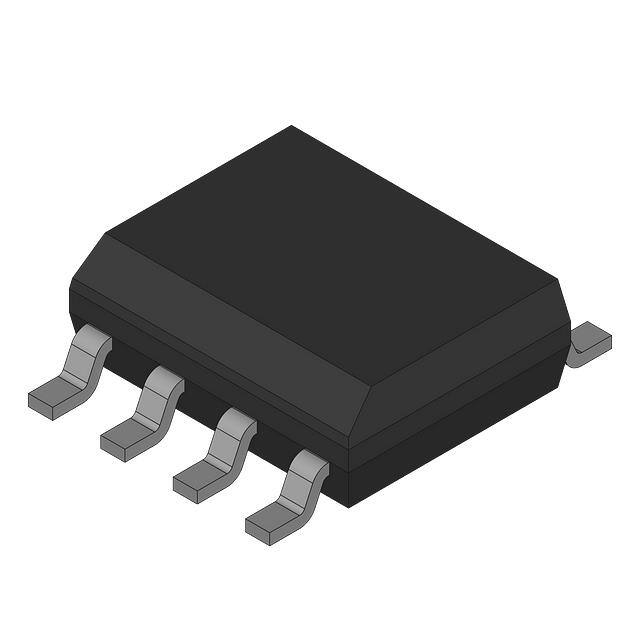
The MAX44291/MAX44292/MAX44294 are available in
8-pin μMAX® (single), 8-pin SO (dual), and 14-pin SO
(quad) packages and are specified over the -40°C to
+125°C automotive temperature range.
µMAX is a registered trademark of Maxim Integrated Products, Inc.
Ordering Information appears at end of data sheet.
Typical Application Circuit
Benefits and Features
●● Low Input Noise and High Bandwidth to Drive
Precision ADCs
• 4.9nV/√Hz Low Input Noise
• 10MHz Gain-Bandwidth Product
●● Low Input Offset Ensures Accurate Results Over
Temperature
• 125µV (max) Low Input Offset Voltage
• 0.5µV/°C (max) Offset Drift
●● Low 1.2mA Quiescent Current (Per Channel) Does
Not Break the Power Budget
●● ESD Protection Provides Robust Front-End
• ±8kV Human Body Model
• ±1kV Charged Device Model
●● Wide Supply for High-Voltage Front-Ends
• Single 4.5V to 36V or Dual ±2.25V to ±18V Supply
Ranges
●● 8-Pin µMAX and 8-/14-Pin SO Packages Save Board
Space
Applications
●●
●●
●●
●●
Portable Logic Controllers
Instrumentation
Test and Measurement Systems
Sensor Interfaces
RVAR
R2
+15V
GND
R1
R1
R2
+5V
+15V
½ MAX44292
½ MAX44292
AIN
AVDD REF
50Ω 4.096V
VOUT
MAX6126
MAX11100
10µF
AGND
-15V
19-7384; Rev 1; 5/15
LOAD CELL APPLICATION
SPI
INTERFACE
GND
VDD
MICROPROCESSOR
�MAX44291/MAX44292/
MAX44294
36V, Single/Dual/Quad, Low-Noise Amplifiers with
Maximum 0.5µV/°C Offset Drift
Absolute Maximum Ratings
VDD to VSS. ...........................................................-0.3V to +40V
Common-Mode Input Voltage........ (VSS - 0.3V) to (VDD + 0.3V)
SHDN............................................. (VSS - 0.3V) to (VDD + 0.3V)
Differential Input Voltage (IN_+ - IN_-)...................................10V
OUT_ to VSS............................................. -0.3V to (VDD + 0.3V)
Continuous Input Current (any pin)...................................±20mA
Output Short-Circuit Duration (OUT_)...................................... 1s
Continuous Power Dissipation (TA = +70°C)
µMAX (derate 4.8mW/°C above + 70°C)..................387.8mW
8-Pin SO (derate 7.40mW/°C above + 70°C).........588.20mW
14-Pin SO (derate 12.2mW/°C above + 70°C).......975.60mW
Operating Temperature Range.......................... -40°C to +125°C
Junction Temperature.......................................................+150°C
Storage Temperature Range............................. -65°C to +150°C
Lead Temperature (soldering, 10s).................................. +300°C
Soldering Temperature (reflow)........................................+260°C
Stresses beyond those listed under “Absolute Maximum Ratings” may cause permanent damage to the device. These are stress ratings only, and functional operation of the device at these
or any other conditions beyond those indicated in the operational sections of the specifications is not implied. Exposure to absolute maximum rating conditions for extended periods may affect
device reliability.
Package Thermal Characteristics (Note 1)
µMAX
Junction-to-Ambient Thermal Resistance (θJA)......206.3°C/W
Junction-to-Case Thermal Resistance (θJC)................42°C/W
8-SO
Junction-to-Ambient Thermal Resistance (θJA)..........136°C/W
Junction-to-Case Thermal Resistance (θJC)................38°C/W
14-SO
Junction-to-Ambient Thermal Resistance (θJA)...........82°C/W
Junction-to-Case Thermal Resistance (θJC)................32°C/W
Note 1: Package thermal resistances were obtained using the method described in JEDEC specification JESD51-7, using a four-layer
board. For detailed information on package thermal considerations, refer to www.maximintegrated.com/thermal-tutorial.
Electrical Characteristics
(VDD = +15V, VSS = -15V, RL = 10kΩ to VGND = 0V, VIN_+ = VIN_- = VGND = 0V, VSHDN = 0V (MAX44291 only), TA = -40°C to +125°C.
Typical values are at TA = +25°C, unless otherwise noted.) (Note 2)
PARAMETER
SYMBOL
CONDITIONS
MIN
TYP
MAX
UNITS
36
V
1.2
1.9
POWER SUPPLY
Supply Voltage Range
Supply Current
Power-Supply Rejection Ratio
VDD
IDD
PSRR
Guaranteed by PSRR
RL = ∞
4.5
TA = +25°C
-40°C ≤ TA ≤ +125°C
2.1
TA = +25°C
125
-40°C ≤ TA ≤ +125°C
120
140
mA
dB
SHUTDOWN (MAX44291 Only)
Shutdown Input Voltage
VSHDN
Shutdown Current
ISHDN
Device disabled
Device enabled
VDD - 0.35
VDD
VSS
VSHDN = VDD
VDD - 3.0
1
V
µA
DC SPECIFICATIONS
Input Common-Mode Range
Common-Mode Rejection Ratio
www.maximintegrated.com
VCM
CMRR
Guaranteed by CMRR test
VSS +
1.8
VSS + 1.8V ≤ VCM ≤ VDD - 1.4V,
TA = +25°C
120
VSS + 2V ≤ VCM ≤ VDD - 1.6V,
-40°C ≤ TA ≤ +125°C
110
VDD
- 1.4
V
135
dB
Maxim Integrated │ 2
�MAX44291/MAX44292/
MAX44294
36V, Single/Dual/Quad, Low-Noise Amplifiers with
Maximum 0.5µV/°C Offset Drift
Electrical Characteristics (continued)
(VDD = +15V, VSS = -15V, RL = 10kΩ to VGND = 0V, VIN_+ = VIN_- = VGND = 0V, VSHDN = 0V (MAX44291 only), TA = -40°C to +125°C.
Typical values are at TA = +25°C, unless otherwise noted.) (Note 2)
PARAMETER
Input Offset Voltage
Input Offset Voltage Drift
Input Bias Current
Input Offset Current
Open-Loop Gain
SYMBOL
VOS
TCVOS
IB
IOS
CONDITIONS
TYP
MAX
30
125
-40°C ≤ TA ≤ +125°C
165
(Note 3)
TA = +25°C
0.2
0.5
6
25
-40°C ≤ TA ≤ +125°C
55
TA = +25°C
4
-40°C ≤ TA ≤ +125°C
AVOL
VSS + 0.2V ≤
VOUT ≤ VDD 0.2V, RL = 10kΩ
VOH
VDD - VOUT
Output Voltage Swing
Output Short-Circuit Current
MIN
TA = +25°C
12
30
TA = +25°C
130
-40°C ≤ TA ≤ +125°C
125
TA = +25°C
140
100
-40°C ≤ TA ≤ +125°C
TA = +25°C
VOL
VOUT - VSS
ISC
To VDD or VSS (1s max)
eN
-40°C ≤ TA ≤ +125°C
µV
µV/°C
nA
nA
dB
160
220
100
UNITS
160
mV
220
60
mA
f = 1kHz
4.9
nV/√Hz
0.1Hz ≤ f ≤ 10Hz
288
nVP-P
f = 1kHz
0.89
pA/√Hz
AC SPECIFICATIONS
Input Voltage-Noise Density
Input Voltage Noise
Input Current-Noise Density
Gain-Bandwidth Product
iN
VIN = 100mVP-P
10
MHz
Slew Rate
SR
AV = 1V/V, VOUT = 2VP-P
5
V/µs
Settling Time
tS
To 0.01%, VOUT = 10VP-P, CL = 100pF, AV
= 1V/V
2
µs
Total Harmonic Distortion Plus
Noise
Capacitive Loading
GBW
THD+N
f = 1kHz, VOUT = 2VP-P, AV = 1V/V
-110
dB
CL
No sustained oscillation, AV = 1V/V
100
pF
Note 2: All devices are 100% production tested at TA = +25°C. Temperature limits are guaranteed by design.
Note 3: Guaranteed by design.
www.maximintegrated.com
Maxim Integrated │ 3
�MAX44291/MAX44292/
MAX44294
36V, Single/Dual/Quad, Low-Noise Amplifiers with
Maximum 0.5µV/°C Offset Drift
Typical Operating Characteristics
(VDD = +15V, VSS = -15V, RL = 10kΩ connected to GND. VIN_+ = VIN_- = VGND = 0V, VSHDN = 0V, TA = +25°C, unless otherwise
specified.)
INPUT OFFSET VOLTAGE HISTOGRAM
30
toc01
1.04
15
10
1.025
1.02
1.015
20
30
40
50
1.005
60
toc04
6
9 12 15 18 21 24 27 30 33 36 39
toc05
TA = -40°C
TA = +125°C
4
3
TA = +85°C TA = +25°C
2
5
0
15
COMMON-MODE VOLTAGE (V)
140
130
120
110
-50
-25
0
25
50
75
TEMPERATURE (°C)
www.maximintegrated.com
100
125
150
50
75
100
125
150
toc06
TA = -40°C
8
7
6
TA = +85°C TA = +125°CT = +25°C
A
5
4
3
1
-15
-5
5
COMMON-MODE VOLTAGE (V)
0
15
-15
-5
5
15
COMMON-MODE VOLTAGE (V)
COMMON-MODE REJECTION RATIO
vs. FREQUENCY
toc08
0
COMMON-MODE REJECTION RATIO (dB)
COMMON-MODE REJECTION RATIO (dB)
150
100
25
2
COMMON-MODE REJECTION RATIO
vs. TEMPERATURE
toc07
160
0
INPUT BIAS CURRENT(-)
vs. COMMON-MODE VOLTAGE
10
1
-5
-25
9
5
TA = +85°C
TA = +125°C
-15
-50
TEMPERATURE (°C)
INPUT BIAS CURRENT(+)
vs. COMMON-MODE VOLTAGE
6
INPUT BIAS CURRENT (nA)
INPUT OFFSET VOLTAGE (µv)
3
SUPPLY VOLTAGE (V)
INPUT OFFSET VOLTAGE
vs. COMMON-MODE VOLTAGE
TA = -40°C
1.2
1.18
0
INPUT OFFSET VOLTAGE (µV)
TA = +25°C
1.21
INPUT BIAS CURRENT (nA)
10
1.22
1.19
1.01
0
toc03
1.23
1.03
5
SUPPLY CURRENT vs.
TEMPERATURE
1.24
SUPPLY CURRENT (mA)
SUPPLY CURRENT (mA)
OCCURRENCE (%)
20
-20
-22
-24
-26
-28
-30
-32
-34
-36
-38
-40
-42
-44
-46
-48
toc02
1.035
25
0
SUPPLY CURRENT vs.
SUPPLY VOLTAGE
-20
-40
-60
-80
-100
-120
10
1000
100000
10000000
FREQUENCY (Hz)
Maxim Integrated │ 4
�MAX44291/MAX44292/
MAX44294
36V, Single/Dual/Quad, Low-Noise Amplifiers with
Maximum 0.5µV/°C Offset Drift
Typical Operating Characteristics (continued)
(VDD = +15V, VSS = -15V, RL = 10kΩ connected to GND. VIN_+ = VIN_- = VGND = 0V, VSHDN = 0V, TA = +25°C, unless otherwise
specified.)
POWER-SUPPLY REJECTION RATIO
vs. TEMPERATURE
toc09
150
145
140
135
130
125
-25
0
25
50
75
100
125
-40
-60
-80
-100
-140
150
10
1000
TEMPERATURE (°C)
140
350
120
OPEN-LOOP GAIN (dB)
300
250
200
150
toc13
20
0
PHASE
-20
-40
100
GAIN in dB
80
65°
Phase
Margin
60
-60
-80
-100
100
20
-120
50
0
-140
10
20
30
-20
1
OUTPUT SINK CURRENT (mA)
0.1Hz TO 10Hz NOISE vs. TIME
0
100
10000
1000000
20
30
20
15
10
5
0
-160
INPUT VOLTAGE-NOISE DENSITY
vs. FREQUENCY
toc14
25
100000000
toc15
10
100
1000
10000
FREQUENCY (Hz)
INPUT CURRENT-NOISE DENSITY
vs. FREQUENCY
10
100000
toc16
9
8
7
6
5
4
3
2
1
0
1s/div
10
FREQUENCY (Hz)
40nV/div
www.maximintegrated.com
200
OUTPUT SOURCE CURRENT (mA)
40
0
300
0
10000000
INPUT CURRENT-NOISE DENSITY (nA/√Hz)
OUTPUT VOLTAGE LOW (mV)
100000
OPEN-LOOP GAIN
vs. FREQUENCY
160
toc12
400
0
400
FREQUENCY (Hz)
OUTPUT VOLTAGE LOW vs.
OUTPUT CURRENT (SINK)
450
500
100
-120
INPUT VOLTAGE-NOISE DENSITY (nV/√Hz)
-50
toc11
600
-20
PHASE (°)
120
OUTPUT VOLTAGE HIGH vs.
OUTPUT CURRENT(SOURCE)
700
OUTPUT VOLTAGE HIGH (mV)
155
POWER-SUPPLY REJECTION RATIO
vs. FREQUENCY
toc10
0
POWER-SUPPLY REJECTION RATIO (dB)
POWER-SUPPLY REJECTION RATIO (dB)
160
10
100
1000
10000
100000
FREQUENCY (Hz)
Maxim Integrated │ 5
�MAX44291/MAX44292/
MAX44294
36V, Single/Dual/Quad, Low-Noise Amplifiers with
Maximum 0.5µV/°C Offset Drift
Typical Operating Characteristics (continued)
(VDD = +15V, VSS = -15V, RL = 10kΩ connected to GND. VIN_+ = VIN_- = VGND = 0V, VSHDN = 0V, TA = +25°C, unless otherwise
specified.)
OUTPUT IMPEDANCE vs.
FREQUENCY
160
SLEW-RATE RISING EDGE
toc17
INPUT SMALL-SIGNAL STEP RESPONSE
toc18
toc19
OUTPUT IMPEDANCE (Ω)
140
120
100
INPUT
100mV/div
INPUT
2V/div
80
60
OUTPUT
1V/div
40
OUTPUT
100mV/div
20
0
1
100
10000
1000000
FREQUENCY (Hz)
100ns/div
100000000
INPUT LARGE-SIGNAL STEP RESPONSE
10µs/div
SMALL-SIGNAL STEP RESPONSE
toc20
SMALL-SIGNAL STEP RESPONSE
toc21
Gain = 1V/V, CL = 10pF,
INPUT = 100mVP-P
INPUT
1V/div
OUTPUT
1V/div
INPUT
100mV/div
INPUT
100mV/div
OUTPUT
100mV/div
OUTPUT
100mV/div
400ns/div
200ns/div
200ns/div
LARGE-SIGNAL STEP RESPONSE
STEP RISING EDGE OUTPUT
toc23
Gain = 1V/V, CL = 10pF,
INPUT = 10VP-P
OUTPUT
100mV/div
OUTPUT
5V/div
2µs/div
www.maximintegrated.com
toc24
Gain = 1V/V, CL = 10pF,
INPUT = 100mVP-P
INPUT
100mV/div
INPUT
5V/div
toc22
Gain = 1V/V, CL = 100pF,
INPUT = 100mVP-P
1µs/div
Maxim Integrated │ 6
�MAX44291/MAX44292/
MAX44294
36V, Single/Dual/Quad, Low-Noise Amplifiers with
Maximum 0.5µV/°C Offset Drift
Typical Operating Characteristics (continued)
(VDD = +15V, VSS = -15V, RL = 10kΩ connected to GND. VIN_+ = VIN_- = VGND = 0V, VSHDN = 0V, TA = +25°C, unless otherwise
specified.)
STEP RISING EDGE OUTPUT
STEP FALLING EDGE OUTPUT
toc25
toc26
-20
INPUT
5V/div
OUTPUT
5V/div
toc27
-10
CROSSTALK (dB)
INPUT
5V/div
CROSSTALK vs. FREQUENCY
0
Gain = 1V/V, CL = 100pF,
INPUT = 10VP-P
OUTPUT
5V/div
-30
-40
-50
-60
-70
-80
2µs/div
-90
2µs/div
10
1000
100000
10000000
-20
-40
-60
-80
160
700
600
100
STABLE
80
UNSTABLE
60
40
100
1000
10000
0
100000
FREQUENCY (Hz)
500
UNSTABLE
400
300
STABLE
200
100
0
200
400
600
800
1000
0
0
CAPACITIVE LOAD (pF)
SHUTDOWN ENABLE
SHUTDOWN DISABLE
toc31
SHDN
2V/div
OUTPUT
1V/div
OUTPUT
1V/div
4µs/div
20000
40000
60000
LOAD RESISTANCE (Ω)
SHDN
2V/div
www.maximintegrated.com
toc30
800
120
20
10
OP AMP STABILITY vs.
CAPACITIVE AND RESISTIVE LOADS
toc29
140
-100
-120
ISOLATION RESISTANCE vs.
CAPACITIVE STABILITY
CAPACITIVE LOAD (pF)
0
TOTAL HARMONIC DISTORTION PLUS NOISE
vs. FREQUENCY
toc28
ISOLATION RESISTANCE (Ω)
TOTAL HARMONIC DISTORTION PLUS NOISE (dB)
FREQUENCY (Hz)
toc32
4µs/div
Maxim Integrated │ 7
�MAX44291/MAX44292/
MAX44294
36V, Single/Dual/Quad, Low-Noise Amplifiers with
Maximum 0.5µV/°C Offset Drift
Pin Configurations
TOP VIEW
N.C.
1
+
8
SHDN
MAX44291
INA-
2
7
VDD
INA+
3
6
OUTA
VSS
4
5
N.C.
OUTA
1
INA-
2
INA+
VSS
µMAX
+
OUTA 1
+
14 OUTD
8
VDD
7
OUTB
3
6
INB-
VDD 4
11 VSS
4
5
INB+
INB+ 5
10 INC+
INB- 6
9 INC-
MAX44292
SO
INA- 2
INA+ 3
MAX44294
OUTB 7
13 IND12 IND+
8 OUTC
SO
Pin Description
PIN
MAX44291
MAX44292
MAX44294
µMAX
8 SO
14 SO
1, 5
—
—
2
2
3
3
4
4
6
1
7
NAME
FUNCTION
N.C.
No Connection. Not internally connected.
2
INA-
Channel A Negative Input
3
INA+
Channel A Positive Input
11
VSS
Negative Supply Voltage
1
OUTA
8
4
VDD
Channel A Output
Positive Supply Voltage
8
—
—
SHDN
Active-High Shutdown Input
—
5
5
INB+
Channel B Positive Input
—
6
6
INB-
Channel B Negative Input
—
7
7
OUTB
Channel B Output
—
—
8
OUTC
Channel C Output
—
—
9
INC-
Channel C Negative Input
—
—
10
INC+
Channel C Positive Input
—
—
12
IND+
Channel D Positive Input
—
—
13
IND-
Channel D Negative Input
—
—
14
OUTD
www.maximintegrated.com
Channel D Output
Maxim Integrated │ 8
�MAX44291/MAX44292/
MAX44294
36V, Single/Dual/Quad, Low-Noise Amplifiers with
Maximum 0.5µV/°C Offset Drift
Detailed Description
The MAX44291/MAX44292/MAX44294 are precision,
low-noise, 10MHz bandwidth amplifiers with exceptional
distortion performance. They are designed in a new 36V,
high-speed complementary BiCMOS process that is optimized for excellent AC dynamic performance combined
with high-voltage operation.
The MAX44291/MAX44292/MAX44294 are unity-gain
stable and operate either with single-supply voltage from
4.5V to 36V or with dual supplies from ±2.25V to ±18V.
INA+
INA-
250Ω
250Ω
MAX44291
MAX44292
MAX44294
Applications Information
High Operating Supply Voltage Range
The MAX44291/MAX44292/MAX44294 operate with a
wide voltage range from single supply +4.5V to +36V or
dual supplies from ±2.25V to ±18V. These devices consume only 1.2mA (typical) of supply current per channel.
Although the MAX44291/MAX44292/MAX44294 support
high-voltage operation with excellent performance, the
devices also operate in many battery-operated or portable
equipment applications at 5V.
Input Protection
The MAX44291/MAX44292/MAX44294 have a typical
ESD protection scheme with diodes from input, output,
and shutdown pins to either rails. Also, as shown in Figure
1, the protection scheme shows diodes and a resistor
string between the inputs to protect the IC from large
differential inputs. Input series resistors act as currentlimiting resistors when a large differential voltage is accidentally applied.
Rail-to-Rail Output Stage
The MAX44291/MAX44292/MAX44294 output stage
swings to within 100mV (typ) of either power-supply
rail with a 10kΩ load to ground and provides a 10MHz
GBW with a 5V/µs slew rate. The devices are unity-gain
stable, and can drive a 100pF capacitive load without
compromising stability. Stability with higher capacitive
loads can be improved by adding an isolation resistor in
series with the op-amp output. This resistor improves the
circuit’s phase margin by isolating the load capacitor from
the amplifier’s output. The graph in the Typical Operating
Characteristics shows a profile of the isolation resistor
and capacitive load values that maintain the devices in
the stable region.
www.maximintegrated.com
Figure 1. Showing Input Differential Protection Scheme
Shutdown (MAX44291 Only)
The MAX44291 shutdown input is referenced to the positive supply. See the Electrical Characteristics table for the
proper levels of functionality. A high level (above VDD 0.35V) disables the op amp and puts the output into highimpedance state. A low level (below VDD - 3V) enables
the device. As an example, if the op amp is powered with
dual supplies of ±15V, the device is enabled when the
shutdown voltage is at or below 12V. The device is disabled when the shutdown voltage is at or above 14.65V. If
the op amp is powered with 36V single supply, the device
is enabled when the shutdown voltage is at or below 33V.
The device is disabled when the shutdown voltage is at
or above 35.65V. This input must be connected to either
a valid high or low voltage. Do not leave it unconnected.
When in shutdown mode, the amplifier consumes only
1.8µA (typical) of supply current.
Power Supplies and Layout
The MAX44291/MAX44292/MAX44294 operate with dual
supplies from ±2.25V to ±18V or with a single supply
from +4.5V to +36V with respect to ground. When used
with dual supplies, bypass both VDD and VSS with 0.1µF
capacitor to ground closer to VDD and 10µF capacitor
to ground closer to where the power supply connection
is made. When used with a single supply, bypass VDD
with a 0.1µF and 10µF capacitors to ground as explained
above. Careful layout technique helps optimize performance by decreasing the amount of stray capacitance
at the amplifier inputs and outputs. To decrease stray
capacitance, minimize trace lengths by placing external
components close to the amplifier pins.
Maxim Integrated │ 9
�MAX44291/MAX44292/
MAX44294
36V, Single/Dual/Quad, Low-Noise Amplifiers with
Maximum 0.5µV/°C Offset Drift
Electrostatic Discharge (ESD)
The MAX44291/MAX44292/MAX44294 have built-in circuits to protect from electrostatic discharge (ESD) events.
An ESD event produces a short, high-voltage pulse that is
transformed into a short current pulse once it discharges
through the device. The built-in protection circuit provides
a current path around the op amp that prevents it from
being damaged. The energy absorbed by the protection
circuit is dissipated as heat.
The MAX44291/MAX44292/MAX44294 guarantee ESD
protection up to 8kV with Human Body Model (HBM).
The Human Body Model simulates the ESD phenomenon
wherein a charged body directly transfers its accumulated electrostatic charge to the ESD-sensitive device. A
common example of this phenomenon is when a person
accumulates static charge by walking across a carpet and
www.maximintegrated.com
then transferring all of the charge to an ESD-sensitive
device by touching it.
Not all ESD events involve the transfer of charge into the
device. Electrostatic discharge from a charged device to
another conductive body at lower potential is also a form
of ESD. Such an ESD event is known as Charged Device
Model (CDM) ESD, which can be even more destructive than HBM ESD (despite its shorter pulse duration)
because of its high current. The MAX44291/MAX44292/
MAX44294 guarantee CDM ESD protection up to 1kV.
Maxim Integrated │ 10
�MAX44291/MAX44292/
MAX44294
36V, Single/Dual/Quad, Low-Noise Amplifiers with
Maximum 0.5µV/°C Offset Drift
Package Information
Ordering Information
PART
TEMP RANGE
PIN-PACKAGE
MAX44291AUA+
-40°C to +125°C
8 µMAX
MAX44292ASA+
-40°C to +125°C
8 SO
MAX44294ASD+
-40°C to +125°C
14 SO
+Denotes lead(Pb)-free/RoHS-compliant package.
Chip Information
PROCESS: BiCMOS
www.maximintegrated.com
For the latest package outline information and land patterns
(footprints), go to www.maximintegrated.com/packages. Note
that a “+”, “#”, or “-” in the package code indicates RoHS status
only. Package drawings may show a different suffix character, but
the drawing pertains to the package regardless of RoHS status.
PACKAGE
TYPE
PACKAGE
CODE
OUTLINE
NO.
LAND PATTERN
NO.
8 µMAX
U8+1
21-0036
90-0092
8 SO
S8+2
21-0041
90-0096
14 SO
S14M+4
21-0041
90-0112
Maxim Integrated │ 11
�MAX44291/MAX44292/
MAX44294
36V, Single/Dual/Quad, Low-Noise Amplifiers with
Maximum 0.5µV/°C Offset Drift
Revision History
REVISION
NUMBER
REVISION
DATE
0
10/14
Initial release
1
5/15
Added the MAX44292 and MAX44294 to data sheet.
DESCRIPTION
PAGES
CHANGED
—
1–12
For pricing, delivery, and ordering information, please contact Maxim Direct at 1-888-629-4642, or visit Maxim Integrated’s website at www.maximintegrated.com.
Maxim Integrated cannot assume responsibility for use of any circuitry other than circuitry entirely embodied in a Maxim Integrated product. No circuit patent licenses
are implied. Maxim Integrated reserves the right to change the circuitry and specifications without notice at any time. The parametric values (min and max limits)
shown in the Electrical Characteristics table are guaranteed. Other parametric values quoted in this data sheet are provided for guidance.
Maxim Integrated and the Maxim Integrated logo are trademarks of Maxim Integrated Products, Inc.
© 2015 Maxim Integrated Products, Inc. │ 12
�