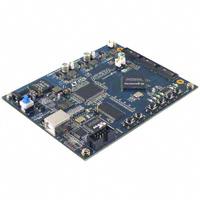
Cyclone III FPGA Starter Board
Reference Manual
101 Innovation Drive
San Jose, CA 95134
www.altera.com
Document Version:
Document Date:
1.4
April 2012
�© 2012 Altera Corporation. All rights reserved. ALTERA, ARRIA, CYCLONE, HARDCOPY, MAX, MEGACORE, NIOS, QUARTUS and STRATIX are
Reg. U.S. Pat. & Tm. Off. and/or trademarks of Altera Corporation in the U.S. and other countries. All other trademarks and service marks are the
property of their respective holders as described at www.altera.com/common/legal.html. Altera warrants performance of its semiconductor products
to current specifications in accordance with Altera's standard warranty, but reserves the right to make changes to any products and services at any
time without notice. Altera assumes no responsibility or liability arising out of the application or use of any information, product, or service described
herein except as expressly agreed to in writing by Altera. Altera customers are advised to obtain the latest version of device
specifications before relying on any published information and before placing orders for products or services.
Part Number MNL-01016-1.4
ii
0
Cyclone III FPGA Starter Board Reference Manual
Altera Corporation
April 2012
�Contents
Chapter 1. Introduction
General Description ...............................................................................................................................
Board Component Blocks ................................................................................................................
Block Diagram ..................................................................................................................................
Handling the Board ...............................................................................................................................
1–1
1–2
1–3
1–3
Chapter 2. Board Components and Interfaces
Board Overview ..................................................................................................................................... 2–1
Featured Device ..................................................................................................................................... 2–5
Clocking Circuitry ................................................................................................................................. 2–6
Jumpers ................................................................................................................................................... 2–7
Interfaces ................................................................................................................................................. 2–8
USB Interface ..................................................................................................................................... 2–8
HSMC Expansion Connector .......................................................................................................... 2–9
General User Interfaces ................................................................................................................. 2–10
Push-Buttons .............................................................................................................................. 2–11
LEDs ............................................................................................................................................ 2–12
Memory ................................................................................................................................................. 2–13
Parallel Flash ................................................................................................................................... 2–13
DDR SDRAM .................................................................................................................................. 2–15
SSRAM ............................................................................................................................................. 2–17
Power Supply ....................................................................................................................................... 2–19
Statement of China-RoHS Compliance ............................................................................................ 2–20
Additional Information
Revision History ............................................................................................................................... Info–i
How to Contact Altera ..................................................................................................................... Info–i
Typographic Conventions .............................................................................................................. Info–ii
Altera Corporation
April 2012
iii
Preliminary
�Contents
iv
Preliminary
Stratix Device Handbook, Volume 1
Altera Corporation
April 2012
�1. Introduction
General
Description
The Cyclone® III starter board provides a hardware platform that offers a
unique opportunity to customize your development environment via
expansion connectors and daughtercards, as well as evaluate the
feature-rich, low-power Altera® Cyclone III device.
For more functionality, you can expand the starter board through
daughtercards connected to the Altera® High Speed Mezzanine Card
(HSMC) connector.
f
For the latest information about available HMSC daughtercards, go to
www.altera.com/products/devkits/kit-index.html.
The main features of the Cyclone III starter board are:
■
■
■
■
■
■
■
Low-power consumption Altera Cyclone III EP3C25 chip in a
324-pin FineLine BGA (FBGA) package
Expandable through HSMC connector
32-megabyte (MB) DDR SDRAM
16-MB parallel flash device for configuration and storage
1-MB high-speed SSRAM memory
Four user push-button switches
Four user LEDs
The main advantages of the Cyclone III starter board are:
■
■
■
■
■
Altera Corporation
April 2012
Facilitates a fast and successful FPGA design experience with
example designs and demonstrations.
Directly configure and communicate with the Cyclone III device via
the on-board USB-Blaster™ circuitry and JTAG header
Active parallel flash configuration
Low power consumption
Cost-effective modular design
1–1
Preliminary
�General Description
Board Component Blocks
■
■
■
■
■
■
Altera Cyclone III EP3C25F324 FPGA
●
25K logic elements (LEs)
●
66 M9K memory blocks (0.6 Mb)
●
16 18x18 multiplier blocks
●
Four PLLs
●
214 I/Os
Clock management system
●
One 50-MHz clock oscillator to support a variety of protocols
●
The Cyclone III device distributes the following clocks from its
on-board PLLs:
• DDR clock
• SSRAM clock
• Flash clock
HSMC connector
●
Provides 12 V and 3.3 V interface for installed daughtercards
●
Provides up to 84 I/O pins for communicating with HSMC
daughtercards
General user-interface
●
Four user LEDs
●
Two board-specific LEDs
●
Push-buttons:
• System reset
• User reset
• Four general user push-buttons
Memory subsystem
●
Synchronous SRAM device
• 1-MB standard synchronous SRAM
• 167-MHz
• Shares bus with parallel flash device
●
Parallel flash device
• 16-MB device for active parallel configuration and storage
• Shares bus with SRAM device
●
DDR SDRAM device
• 56-pin, 32-MB DDR SDRAM
• 167-MHz
• Connected to FPGA via dedicated 16-bit bus
Built-in USB-Blaster interface
●
With the Altera EPM3128A CPLD
●
For external configuration of Cyclone III device
●
For system debugging with the SignalTap® and Nios®
debugging console
●
Communications port for Board Diagnostic graphical user
interface (GUI)
1–2
Cyclone III FPGA Starter Board Reference Manual
Altera Corporation
April 2012
�Introduction
Block Diagram
Figure 1–1 shows a functional block diagram of the Cyclone III FPGA
starter board.
Figure 1–1. Cyclone III FPGA Starter Board
HSMC
84
Switches
4
4
LEDs
4
4
Cyclone III
EP3C25F324
USB
Blaster
42
DDR
32MB
When handling the board, it is important to observe the following
precaution:
c
Altera Corporation
April 2012
Parallel Flash
16MB
SSRAM
1MB
4
Handling the
Board
72
Static Discharge Precaution—Without proper anti-static handling,
the board can be damaged. Therefore, use anti-static handling
precautions when touching the board.
1–3
Cyclone III FPGA Starter Board Reference Manual
�Handling the Board
1–4
Cyclone III FPGA Starter Board Reference Manual
Altera Corporation
April 2012
�2. Board Components and
Interfaces
Board Overview
This chapter provides operational and connectivity detail for the board’s
major components and interfaces and is divided into the following major
blocks:
■
■
■
■
■
■
■
1
Featured device
Clocking circuitry
Jumpers
Interfaces
●
USB interface
●
Altera® HSMC expansion connector
●
General user interfaces
Memory
Power supply
Statement of China-RoHS compliance
The board schematics, physical layout database, and
manufacturing files for the Cyclone® III FPGA starter board are
included in the Cyclone III FPGA Starter Kit in the following
directory:
\cycloneIII_3c25_start\board_design_files
f
Altera Corporation
April 2012
For information on powering-up the Cyclone III FPGA starter board and
installing the demonstration software, refer to the Cyclone III FPGA
Starter Kit User Guide.
2–1
Preliminary
�Board Overview
Figure 2–1 shows the top view of the Cyclone III FPGA starter board.
Figure 2–1. Top View of the Cyclone III FPGA Starter Board
FPGA Core Power
Measurement (JP6)
2.5 V I/O Power
Measurement (JP3)
1-MB SSRAM (U5)
DC Power
Input (J2)
Power Switch
(SW1)
16-MB
Parallel
Flash (U6)
HSMC
Connector (J1)
USB
Connector
(J3)
Flash LED
Cyclone III Device (U1)
Configuration Done LED
USB
UART (U8)
JTAG Header (J4)
32-MB
DDR SDRAM (U4)
Reconfigure
and Reset
Push Buttons
User Push Button Switches
User LEDs
50-MHz
System Clock
2–2
Cyclone III FPGA Starter Board Reference Manual
Altera Corporation
April 2012
�Board Components and Interfaces
Figure 2–2 shows the diagonal view of the Cyclone III FPGA starter
board.
Figure 2–2. Diagonal View of the Cyclone III FPGA Starter Board
Altera Corporation
April 2012
2–3
Cyclone III FPGA Starter Board Reference Manual
�Board Overview
Table 2–1 describes the components and lists their corresponding board
references.
Table 2–1. Cyclone III FPGA Starter Board (Part 1 of 2)
Type
Component/
Interface
Board Reference
Description
Page
Featured Device
FPGA
Cyclone III
device
U1
EP3C25F324-C8, 324-pin FBGA package
2–5
I/O
Push-button
switches
Button1–Button4, CPU
Reset, Reconfigure
Four push-button switches for user-defined,
logic inputs.
2–11
I/O
LEDs
LED1–LED4,
Conf_Done, Link,
Power, Flash_CEN,
Load
Four user-defined LEDs
2–12
User Interfaces
Connections & Interfaces
I/O
USB UART
U8
USB interface to the Cyclone III device for
external FPGA configuration and
communication with applications running on
the FPGA.
2–8
Input
HSMC
Connector
J1
Header for connecting the HSMC interface.
2–9
2–8
Configuration & Reset
Input
JTAG header
J4
Jumper header to select which JTAG source
the board uses, for example, the JTAG
header configuration or the USB JTAG
configuration.
Input
USB
connector
J3
2–8
Type B USB Connector that allows for
connecting a Type A-B USB cable between a
PC and the board.
Display
Configuration
done LED
Conf_Done
LED that illuminates when FPGA is
successfully configured.
2–12
Flash
16-MB
parallel flash
memory
U6
16 MB of non-volatile memory.
2–13
Display
Flash LED
LED that illuminates when the flash is being
accessed.
N/A
SSRAM
1-MB
high-speed
SSRAM
U5
256K x 32 synchronous SRAM
2–17
DDR SDRAM
32-MB DDR
SDRAM
U4
4M x16 x 4 DDR SDRAM
2–15
Memory
2–4
Cyclone III FPGA Starter Board Reference Manual
Altera Corporation
April 2012
�Board Components and Interfaces
Table 2–1. Cyclone III FPGA Starter Board (Part 2 of 2)
Type
Component/
Interface
Board Reference
Description
Page
Clock Circuitry
Oscillator
Clock
Y1
50-MHz clock oscillator used for the system
clock.
2–6
Input
DC power
jack
J2
12-V DC unregulated power source.
2–19
Input
Power switch
SW1
Switches the board’s power on and off.
2–19
Probe point
Current sense JP6
resistor
Measure FPGA core power with current
sense resistor.
N/A
Probe point
Current sense JP3
resistor
Measure 2.5-V I/O power (shared between
devices) with current sense resistor.
N/A
Power Supply
Featured
Device
The Cyclone III FPGA Starter Kit features the EP3C25F324 device (U1) in
a 324-pin FineLine BGA (FBGA) package. Table 2–2 lists Cyclone III
device features.
Table 2–2. Cyclone III Device Features
Architectural
Feature
Altera’s
third-generation of
low-cost FPGAs
Results
●
●
●
●
Lowest power
consumption
FPGA available
●
●
●
●
●
Increased system
integration
●
●
●
●
●
Altera Corporation
April 2012
Lowest overall FPGA system cost available
Staggered I/O ring to decrease die area
Wide range of low-cost packages
Support for low-cost serial and parallel flash for configuration options
Based on the TSMC’s low-power 65nm process
Supports hot-socketing
Unused I/O banks can be powered down
Extends battery life for portable or hand-held applications
Eliminates or reduces cooling system costs
Densities up to 119,088 logic elements
High memory-to-logic ratio
Highest multiplier-to-logic ratio in the industry
Up to four dynamically reconfigurable, cascadable phase-locked-loops (PLLs), each
with up to five outputs
Multi-value on-chip termination (OCT) support with calibration feature.
2–5
Cyclone III FPGA Starter Board Reference Manual
�Clocking Circuitry
Table 2–3 lists the Cyclone III EP3C25F324 device pin count.
Table 2–3. Cyclone III Device Pin Count
Board Component
Pins
SRAM/flash (shared bus)
72
SDRAM (DDR)
42 (1) (2)
Push-buttons
4
LEDs
4 (1)
USB-Blaster/configuration
4
HSMC
84 (1)
Total Pins Used
210
Total EP3C25F324 pins
214
Unused pins
4
Notes to Table 2–3:
(1)
(2)
The Cyclone III EP3C25F324 only supports one I/O standard in an I/O bank. I/O
banks 3 and 4 are shared among the DDR, HSMC and LEDs.
In several DDR designs, some of the I/O pins that share the same banks with the
DDR are unavailable for use due to different I/O standards. Therefore, if you
have added DDR to your system, I/O banks 3 and 4 is to be configured as SSTL-2
only while the HSMC and LEDs pins which are not using SSTL-2, should be
removed.
You can configure the Cyclone III device via the on-board USB-Blaster™ or
through the JTAG interface using an external programming cable (sold
separately).
f
Clocking
Circuitry
For additional information about Altera devices, go to
www.altera.com/products/devices.
The Cyclone III FPGA starter board’s clocking circuitry is designed to be
simple and easy to use. A single 50-MHz clock input is used and all other
clocks are generated using the Cyclone III device’s phase-locked loops
(PLLs). The dedicated PLLs are used to distribute the flash, SSRAM, and
HSMC clocks.
Table 2–4 shows the clock pinout.
Table 2–4. Clock Pinout
Signal Name
50 MHz
FPGA Pin
B9, V9
2–6
Cyclone III FPGA Starter Board Reference Manual
Direction
Input
Type
2.5 V
Altera Corporation
April 2012
�Board Components and Interfaces
Figure 2–3 shows the simplest clocking scheme with a single clock input;
however, much more complex clocking schemes can be implemented
with Cyclone III FPGAs.
Figure 2–3. Cyclone III FPGA Starter Board’s Clocking Scheme
16 MB
Parallel Flash
H4
A2
50 MHz
Oscillator
B9, V9
Cyclone III
EP3C25F324
U2, V2
Out:
A1,
C14,
D14,
V18,
U18
Note: Reference numbers are FPGA pin numbers.
Jumpers
SSRAM
32 MB DDR
In:
A9
F18,
F17
N18,
N17
HSMC
Table 2–5 lists board jumpers and jumper operational descriptions.
Table 2–5. Board Jumpers (Part 1 of 2)
Jumper Board
Reference
Altera Corporation
April 2012
Jumper Operational Descriptions
JP1 and JP2
Removing both shunts adds the HSMC connector to the JTAG
chain. If the shunts are in place on both jumpers, then the HSMC
connector is removed from the JTAG chain.
JP3
Sense resistor for measuring the power consumed by the 2.5 V
supply to VCCIO, the DDR, the flash I/O, and the SSRAM.
JP4
1.25 V termination supply for DDR2. To supply an external
voltage, remove the jumper and connect the external supply to
pin 2. (Pin 2 has a rounded shape on the bottom of the board.)
2–7
Cyclone III FPGA Starter Board Reference Manual
�Interfaces
Table 2–5. Board Jumpers (Part 2 of 2)
Jumper Board
Reference
Interfaces
Jumper Operational Descriptions
JP5
3.3 V supply for the MAX device and HSMC. To supply an
external voltage, remove the jumper and connect the external
supply to pin 2. (Pin 2 has a rounded shape on the bottom of the
board.)
JP6
Sense resistor for measuring the power consumed by the 1.2 V
VCCINT supply to the Cyclone III device.
JP7
1.8 V power supply to flash device. To supply an external
voltage, remove the jumper and connect the external supply to
pin 2. (Pin 2 has a rounded shape on the bottom of the board.)
JP8
Removing the shunt enables the embedded USB-Blaster
circuitry. When the shunt is in place, use any external cable such
as the ByteBlaster II, EthernetBlaster, or USB-Blaster cable to
configure the Cyclone III device. (The board ships without the
JTAG header populated.)
This section describes the following Cyclone III FPGA starter board’s
interface blocks:
■
■
■
USB interface
HSMC expansion connector
General user interfaces
USB Interface
The USB-Blaster circuitry is built onto the board. Plug the USB cable
(provided with the kit) into USB connector J3 on the board and the other
end to a USB port on your computer to program and communicate with
the Cyclone III device via the JTAG port.
A USB physical connection is used to enable computers to communicate
with the starter board. To simplify the USB interface, the board contains a
FTDI FT245 FIFO circuit. The data from the FTDI chip is translated into a
JTAG stream using the Altera EMP3128A CPLD connected to the Cyclone
III device’s dedicated JTAG port.
The 5 V supply for the FTDI device is drawn from the USB connection.
The rest of the circuit operates on 3.3 V supply with a maximum of
100 mA and 1.8 V supply with a maximum of 900 mA voltage.
2–8
Cyclone III FPGA Starter Board Reference Manual
Altera Corporation
April 2012
�Board Components and Interfaces
HSMC Expansion Connector
The board provides one HSMC connector. The HSMC connector is a
modified version of standard high-speed Samtec connectors. To provide
better signal integrity between the host boards and daughtercards when
using high-speed transceivers, the standard high-speed Samtec connector
is modified by removing every third pin in bank -1.
1
CMOS utilization of the HSMC pins is assumed and no options
for supporting other differential signaling is provided with the
board. The eight clock-data-recovery high-speed transceiver
channels are not connected.
Table 2–6 lists the ordering codes and shows the relationship between the
standard Samtec Q-series connectors and the modified parts’ ordering
codes.
Table 2–6. Altera-Specific & Standard Samtec Part Numbers
Altera-Specific Samtec
Part Number
Standard Samtec Part
Number
Daughtercards
ASP-122952-01
QTH-090-01-L-D-A
Host boards
ASP-122953-01
QTH-090-01-L-D-A
The board provides both 12 V unregulated and 3.3 V regulated power
supply to the HSMC connector for any installed daughtercards.
f
For more information about the HSMC, refer to the High Speed Mezzanine
Card (HSMC) Specification.
Table 2–7 lists the guaranteed minimum on-board power supply levels.
Designated pins on the HSMC connector deliver the power rails.
Table 2–7. HSMC Power Requirements
Voltage
Altera Corporation
April 2012
Current Rating
Maximum Power
12 V
1.0 A
12.0 W
3.3 V
2.0 A
6.6 W
2–9
Cyclone III FPGA Starter Board Reference Manual
�Interfaces
Table 2–8 lists the HSMC A connector board reference and manufacturing
information.
Table 2–8. HSMC A Connector Manufacturing Information
Board Reference
J1
Description
High speed
Mezzanine card
connector
Manufacturer
Samtec
Manufacturer
Part Number
ASP-12953-01
The HSMC uses the Samtec connector’s header provided on the board.
Figure 2–4 shows the outline of the Samtec header.
Figure 2–4. Samtec Connector’s Header
2.413
((90 POS / 30 x .7875) + .050)
.78 REF
.571
.150 REF
(29 EQ Spaces @ .0197)
02
.245 REF .285 REF
01
DP Bank
.626 REF
.036 REF
.006 REF
General User Interfaces
To allow you to fully use the I/O capabilities of the Cyclone III device, the
following user interfaces are available on the board (remaining I/Os are
connected to additional board resources):
■
■
Push-buttons: System and user reset, and user-defined push-buttons
LEDs: Board-specific and user-defined LEDs
Some of the board’s buttons and LEDs have a specific board function
while others are user-defined and are provided to control FPGA designs.
2–10
Cyclone III FPGA Starter Board Reference Manual
Altera Corporation
April 2012
�Board Components and Interfaces
Push-Buttons
The board has system reset, user reset, and user push-buttons. Table 2–9
lists the pinout for all push-buttons. The push-buttons are in logic “1”
until depressed.
Table 2–9. Push-Button Pinout
Signal Name
FPGA Pin
Direction
Type
KEY0
F1
Input
2.5 V
KEY1
F2
Input
2.5 V
KEY2
A10
Input
2.5 V
KEY3
B10
Input
2.5 V
CPU_RESET_N
N2
Input
2.5 V
RECONFIGURE
H5 (nConfig)
Input
2.5 V
Figure 2–5 shows the push-buttons.
Figure 2–5. Push-Buttons
System Reset Push-Buttons
The system reset push-button starts a reconfiguration of the FPGA from
flash memory.
User Reset Push-Buttons
The user reset push-button is an input to the Cyclone III device. This
push-button is intended to be the master reset signal for the FPGA
designs loaded into the Cyclone III device. The user reset push-button is
connected to the DEV_CLRn pin on the FPGA. The DEV_CLRn setting is a
pin option in the Quartus II software that you must enable to function as
DEV_CLRn instead of a standard I/O.
Altera Corporation
April 2012
2–11
Cyclone III FPGA Starter Board Reference Manual
�Interfaces
User Push-Buttons
The four user push-buttons are intended for use in controlling FPGA
designs loaded into the Cyclone III device. There is no board-specific
function for these four push-buttons.
LEDs
The board has user LEDs and board-specific LEDs. Table 2–10 lists both
user and board-specific LED pinout. A logic “0” illuminate the LEDs.
Table 2–10. Board LED Pinout
Signal Name
FPGA Pin Name
Direction
Type
LED0
P13
Output
2.5 V
LED1
P12
Output
2.5 V
LED2
N12
Output
2.5 V
LED3
N9
Output
2.5 V
Power LED
—
—
—
MAX Load LED
—
—
—
conf done LED
—
—
—
Flash LED
—
—
—
HSMC Present LED
—
—
—
Figure 2–6 shows the LEDs.
Figure 2–6. LEDs
User LEDs
Status and debugging signals are driven to the user LEDs from FPGA
designs loaded into the Cyclone III device. There is no board-specific
function for the user LEDs.
2–12
Cyclone III FPGA Starter Board Reference Manual
Altera Corporation
April 2012
�Board Components and Interfaces
Board Specific LEDs
The power LED illuminates when the board’s power is on and working.
The configuration done LED illuminates when the FPGA is configured.
1
Memory
Because of the Quartus II software pin placement rules in
various memory banks, you may only be able to use one or two
of the LEDs with DDR designs.
■
Configuration done LED: The Conf_Done LED illuminates when
the FPGA is configured with any design.
■
Flash signal LED: The flash_CE_n LED illuminates when the CE_n
signal to the flash is asserted indicating the flash is being accessed.
■
Power LED: The power LED illuminates when power is applied to
the board.
The Cyclone III FPGA starter board includes the following memories:
■
■
■
Parallel flash
DDR SDRAM
SSRAM
Parallel Flash
The Cyclone III starter board has a 8M x 16 low voltage parallel flash.
Table 2–11 lists the parallel flash board reference and manufacturing
information.
Table 2–11. Parallel Flash Manufacturing Information
Board Reference
U6
Description
Manufacturer
8M x16 low voltage parallel flash
Intel
Manufacturer Part Number
PC28F128P30BF65
Table 2–12 shows the parallel flash signal name, corresponding FPGA
pin, signal direction, type, and board reference U6 flash pin.
Table 2–12. Parallel Flash Memory Pinout (Part 1 of 3)
Signal Name
FPGA Pin
Direction
Type
U6 (Flash) Pin
flash_sram_a1
E12
Output
2.5 V
A1
flash_sram_a2
A16
Output
2.5 V
B1
flash_sram_a3
B16
Output
2.5 V
C1
flash_sram_a4
A15
Output
2.5 V
D1
Altera Corporation
April 2012
2–13
Cyclone III FPGA Starter Board Reference Manual
�Memory
Table 2–12. Parallel Flash Memory Pinout (Part 2 of 3)
Signal Name
FPGA Pin
Direction
Type
U6 (Flash) Pin
flash_sram_a5
B15
Output
2.5 V
D2
flash_sram_a6
A14
Output
2.5 V
A2
flash_sram_a7
B14
Output
2.5 V
C2
flash_sram_a8
A13
Output
2.5 V
A3
flash_sram_a9
B13
Output
2.5 V
B3
flash_sram_a10
A12
Output
2.5 V
C3
flash_sram_a11
B12
Output
2.5 V
D3
flash_sram_a12
A11
Output
2.5 V
C4
flash_sram_a13
B11
Output
2.5 V
A5
flash_sram_a14
C10
Output
2.5 V
B5
flash_sram_a15
D10
Output
2.5 V
C5
flash_sram_a16
E10
Output
2.5 V
D7
flash_sram_a17
C9
Output
2.5 V
D8
flash_sram_a18
D9
Output
2.5 V
A7
flash_sram_a19
A7
Output
2.5 V
B7
flash_sram_a20
A6
Output
2.5 V
C7
flash_sram_a21
B18
Output
2.5 V
C8
flash_sram_a22
C17
Output
2.5 V
A8
flash_sram_a23
C18
Output
2.5 V
G1
flash_sram_a24
G14
Output
2.5 V
H8
flash_sram_a25
B17
Output
2.5 V
B6
flash_sram_dq0
H3
Bidirectional
2.5 V
F2
flash_sram_dq1
D1
Bidirectional
2.5 V
E2
flash_sram_dq2
A8
Bidirectional
2.5 V
G3
flash_sram_dq3
B8
Bidirectional
2.5 V
E4
flash_sram_dq4
B7
Bidirectional
2.5 V
E5
flash_sram_dq5
C5
Bidirectional
2.5 V
G5
flash_sram_dq6
E8
Bidirectional
2.5 V
G6
flash_sram_dq7
A4
Bidirectional
2.5 V
H7
flash_sram_dq8
B4
Bidirectional
2.5 V
E1
flash_sram_dq9
E7
Bidirectional
2.5 V
E3
flash_sram_dq10
A3
Bidirectional
2.5 V
F3
flash_sram_dq11
B3
Bidirectional
2.5 V
F4
flash_sram_dq12
D5
Bidirectional
2.5 V
F5
2–14
Cyclone III FPGA Starter Board Reference Manual
Altera Corporation
April 2012
�Board Components and Interfaces
Table 2–12. Parallel Flash Memory Pinout (Part 3 of 3)
Signal Name
FPGA Pin
Direction
B5
flash_sram_dq13
Bidirectional
Type
U6 (Flash) Pin
2.5 V
H5
flash_sram_dq14
A5
Bidirectional
2.5 V
G7
flash_sram_dq15
B6
Bidirectional
2.5 V
E7
flash_we_n
D18
Output
2.5 V
G8
flash_ce_n
E2
Output
2.5 V
B4
flash_oe_n
D17
Output
2.5 V
F8
flash_reset_n
C3
Output
2.5 V
D4
flash_adv_n
H14
Output
2.5 V
F6
flash_clk (dclk)
H4
Output
2.5 V
E6
flash_wait
H13
Output
2.5 V
F7
DDR SDRAM
The Cyclone III FPGA starter board has a 4M x 16 x 4 DDR SDRAM.
Table 2–13 lists DDR SDRAM board reference and manufacturing
information.
Table 2–13. DDR SDRAM Manufacturing Information
Board Reference
U4
Description
Manufacturer
4M x16 x 4 DDR SDRAM
PowerChip
Semiconductor
Manufacturer Part Number
A2S56D40CTP-G5PP
Table 2–14 shows the DDR SDRAM signal name, corresponding FPGA
pin, signal direction, type, and board reference U4 DDR pin.
Table 2–14. DDR SDRAM Pinout (Part 1 of 3) Note (1)
Signal Name
FPGA Pin
Direction
Type
U3
Bidirectional
ddr_dqs1
T8
Bidirectional
SSTL-2
51
ddr_dm0
V3
Output
SSTL-2
47
ddr_dm1
V8
Output
SSTL-2
20
ddr_ba0
V11
Output
SSTL-2
26
ddr_ba1
V12
Output
SSTL-2
27
ddr_cas_n
T4
Output
SSTL-2
22
Altera Corporation
April 2012
SSTL-2
U4 (DDR) Pin
ddr_dqs0
16
2–15
Cyclone III FPGA Starter Board Reference Manual
�Memory
Table 2–14. DDR SDRAM Pinout (Part 2 of 3) Note (1)
Signal Name
FPGA Pin
Direction
Type
U4 (DDR) Pin
ddr_cke
R13
Output
SSTL-2
44
ddr_cs_n
V1
Output
SSTL-2
24
ddr_ras_n
V16
Output
SSTL-2
23
ddr_we_n
U15
Output
SSTL-2
21
ddr_clk
U2
Bidirectional
SSTL-2
45
ddr_clk_n
V2
Bidirectional
SSTL-2
46
ddr_a0
U1
Output
SSTL-2
29
ddr_a1
U5
Output
SSTL-2
30
ddr_a2
U7
Output
SSTL-2
31
ddr_a3
U8
Output
SSTL-2
32
ddr_a4
P8
Output
SSTL-2
35
ddr_a5
P7
Output
SSTL-2
36
ddr_a6
P6
Output
SSTL-2
37
ddr_a7
T14
Output
SSTL-2
38
ddr_a8
T13
Output
SSTL-2
39
ddr_a9
V13
Output
SSTL-2
40
ddr_a10
U17
Output
SSTL-2
28
ddr_a11
V17
Output
SSTL-2
41
ddr_a12
U16
Output
SSTL-2
42
ddr_dq0
U4
Bidirectional
SSTL-2
2
ddr_dq1
V4
Bidirectional
SSTL-2
4
ddr_dq2
R8
Bidirectional
SSTL-2
5
ddr_dq3
V5
Bidirectional
SSTL-2
7
ddr_dq4
P9
Bidirectional
SSTL-2
8
ddr_dq5
U6
Bidirectional
SSTL-2
10
ddr_dq6
V6
Bidirectional
SSTL-2
11
ddr_dq7
V7
Bidirectional
SSTL-2
13
ddr_dq8
U13
Bidirectional
SSTL-2
54
ddr_dq9
U12
Bidirectional
SSTL-2
56
ddr_dq10
U11
Bidirectional
SSTL-2
57
ddr_dq11
V15
Bidirectional
SSTL-2
59
ddr_dq12
U14
Bidirectional
SSTL-2
60
ddr_dq13
R11
Bidirectional
SSTL-2
62
ddr_dq14
P10
Bidirectional
SSTL-2
63
2–16
Cyclone III FPGA Starter Board Reference Manual
Altera Corporation
April 2012
�Board Components and Interfaces
Table 2–14. DDR SDRAM Pinout (Part 3 of 3) Note (1)
Signal Name
ddr_dq15
FPGA Pin
V14
Direction
Bidirectional
Type
SSTL-2
U4 (DDR) Pin
65
Note to Table 2–14:
(1)
The Cyclone III EP3C25F324 only supports one I/O standard in an I/O bank. I/O banks 3 and 4 are shared among
the DDR, HSMC and LEDs. In several DDR designs, some of the I/O pins that share the same banks with the DDR
are unavailable for use due to different I/O standards. Therefore, if you have added DDR to your system, I/O
banks 3 and 4 is to be configured as SSTL-2 only while the HSMC and LEDs pins which are not using SSTL-2,
should be removed.
SSRAM
The Cyclone III FPGA starter board has a 256K x 32 synchronous SRAM.
Table 2–15 lists SSRAM board reference and manufacturing
information.
Table 2–15. SSRAM Manufacturing Information
Board Reference
U5
Description
Manufacturer
256K x 32 synchronous SRAM
Integrated Silicon
Solutions, Inc.
Manufacturer Part Number
IS61LPS25636A-200TQL1
Table 2–16 shows the SSRAM signal name, corresponding FPGA pin,
signal direction, type, and board reference U5 SSRAM pin.
Table 2–16. SSRAM Pinout (Part 1 of 3)
Signal Name
FPGA Pin
Direction
Type
U5 (SSRAM) Pin
flash_sram_a2
A16
Output
2.5 V
37
flash_sram_a3
B16
Output
2.5 V
36
flash_sram_a4
A15
Output
2.5 V
35
flash_sram_a5
B15
Output
2.5 V
34
flash_sram_a6
A14
Output
2.5 V
33
flash_sram_a7
B14
Output
2.5 V
32
flash_sram_a8
A13
Output
2.5 V
44
flash_sram_a9
B13
Output
2.5 V
45
flash_sram_a10
A12
Output
2.5 V
46
flash_sram_a11
B12
Output
2.5 V
47
flash_sram_a12
A11
Output
2.5 V
48
flash_sram_a13
B11
Output
2.5 V
49
Altera Corporation
April 2012
2–17
Cyclone III FPGA Starter Board Reference Manual
�Memory
Table 2–16. SSRAM Pinout (Part 2 of 3)
Signal Name
FPGA Pin
flash_sram_a14
C10
flash_sram_a15
flash_sram_a16
Direction
Type
U5 (SSRAM) Pin
Output
2.5 V
50
D10
Output
2.5 V
81
E10
Output
2.5 V
82
flash_sram_a17
C9
Output
2.5 V
99
flash_sram_a18
D9
Output
2.5 V
100
flash_sram_a19
A7
Output
2.5 V
43
flash_sram_a20
A6
Output
2.5 V
42
flash_sram_a21
B18
Output
2.5 V
39
flash_sram_a22
C17
Output
2.5 V
38
flash_sram_dq0
H3
Bidirectional
2.5 V
52
flash_sram_dq1
D1
Bidirectional
2.5 V
53
flash_sram_dq2
A8
Bidirectional
2.5 V
56
flash_sram_dq3
B8
Bidirectional
2.5 V
57
flash_sram_dq4
B7
Bidirectional
2.5 V
58
flash_sram_dq5
C5
Bidirectional
2.5 V
59
flash_sram_dq6
E8
Bidirectional
2.5 V
62
flash_sram_dq7
A4
Bidirectional
2.5 V
63
flash_sram_dq8
B4
Bidirectional
2.5 V
68
flash_sram_dq9
E7
Bidirectional
2.5 V
69
flash_sram_dq10
A3
Bidirectional
2.5 V
72
flash_sram_dq11
B3
Bidirectional
2.5 V
73
flash_sram_dq12
D5
Bidirectional
2.5 V
74
flash_sram_dq13
B5
Bidirectional
2.5 V
75
flash_sram_dq14
A5
Bidirectional
2.5 V
78
flash_sram_dq15
B6
Bidirectional
2.5 V
79
flash_sram_dq16
C16
Bidirectional
2.5 V
2
flash_sram_dq17
D12
Bidirectional
2.5 V
3
flash_sram_dq18
E11
Bidirectional
2.5 V
6
flash_sram_dq19
D2
Bidirectional
2.5 V
7
flash_sram_dq20
E13
Bidirectional
2.5 V
8
flash_sram_dq21
E14
Bidirectional
2.5 V
9
flash_sram_dq22
A17
Bidirectional
2.5 V
12
flash_sram_dq23
D16
Bidirectional
2.5 V
13
flash_sram_dq24
C12
Bidirectional
2.5 V
18
2–18
Cyclone III FPGA Starter Board Reference Manual
Altera Corporation
April 2012
�Board Components and Interfaces
Table 2–16. SSRAM Pinout (Part 3 of 3)
Signal Name
FPGA Pin
Direction
Type
A18
Bidirectional
flash_sram_dq26
F8
Bidirectional
2.5 V
22
flash_sram_dq27
D7
Bidirectional
2.5 V
23
flash_sram_dq25
2.5 V
U5 (SSRAM) Pin
19
flash_sram_dq28
F6
Bidirectional
2.5 V
24
flash_sram_dq29
E6
Bidirectional
2.5 V
25
flash_sram_dq30
G6
Bidirectional
2.5 V
28
flash_sram_dq31
C7
Bidirectional
2.5 V
29
sram_oe_n
E9
Output
2.5 V
86
sram_ce1_n
F9
Output
2.5 V
98
sram_we_n
G13
Output
2.5 V
87
sram_be_n0
F10
Output
2.5 V
93
sram_be_n1
F11
Output
2.5 V
94
sram_be_n2
F12
Output
2.5 V
95
sram_be_n3
F13
Output
2.5 V
96
sram_adsc_n
F7
Output
2.5 V
85
sram_clk
A2
Output
2.5 V
89
Power Supply
The power supply block distributes clean power from the 12 V input
supply to the Cyclone III device through on-board regulators.
To provide various voltage options, the board uses several Linear
Technologies’ regulators. Switching regulators are used for digital circuits
and linear regulators are used for analog circuits. Board regulators are
used to generate the voltages listed in Table 2–17.
Table 2–17. Board Regulators
Output
MAX
Variance
Voltage
Current
(+/- mV)
(V)
(A)
Board
Access
Point
Regulator
Board
Reference
Linear
Technologies
Part #
Where Used
1.20
50
3.0
JP6 (1)
REG4
LT1959CS8
Cyclone III Core voltage
1.25
50
1.0
JP4
REG2
LTC3413
DDR termination voltage
2.50
50
6.0
JP3 (1)
REG1
LTM4603EV
DDR, SRAM, Flash, PLLs, other
bias voltages
1.80
80
1.5
JP7
REG5
LT1959CS8
Parallel flash interface, USB buffers
and other I/O
Altera Corporation
April 2012
2–19
Cyclone III FPGA Starter Board Reference Manual
�Statement of China-RoHS Compliance
Table 2–17. Board Regulators
Output
MAX
Variance
Voltage
Current
(+/- mV)
(V)
(A)
Board
Access
Point
Regulator
Board
Reference
Linear
Technologies
Part #
Where Used
3.30
100
2.0
JP5
REG3
LT1959CS8
I/O voltage and power for most
components including HSMC
12.00
200
1.0
SW1
N/A
N/A
Input supply voltage. All other
voltages (including HSMC voltage)
are derive from this regulator.
Note to Table 2–17:
(1)
A 0.01 current sense resistor is added to select jumper points for FPGA core power and I/O power measurement.
f
You can measure the core and I/O voltage with a current meter while the
Cyclone III device is in standby mode. For more information on this
circuit, refer to the Cyclone III FPGA Starter Kit User Guide.
Table 2–18 lists hazardous substances included with the kit.
Statement
of China-RoHS
Compliance
Table 2–18. Table of Hazardous Substances’ Name and Concentration, Notes (1),(2)
Lead
(Pb)
Part Name
Cadmium
(Cd)
Hexavalent
Chromium
(Cr6+)
Mercury
(Hg)
Polybrominated
diphenyl Ethers
(PBDE)
Polybrominated
biphenyls (PBB)
Cyclone III
FPGA starter
board
X*
0
0
0
0
0
12-V power
supply
0
0
0
0
0
0
Type A-B
USB cable
0
0
0
0
0
0
User guide
0
0
0
0
0
0
Notes to Table 2–18:
(1)
(2)
0 indicates that the concentration of the hazardous substance in all homogeneous materials in the parts is below
the relevant threshold of the SJ/T11363-2006 standard.
X* indicates that the concentration of the hazardous substance of at least one of all homogeneous materials in the
parts is above the relevant threshold of the SJ/T11363-2006 standard, but it is exempted by EU RoHS.
2–20
Cyclone III FPGA Starter Board Reference Manual
Altera Corporation
April 2012
�Board Components and Interfaces
Altera Corporation
April 2012
2–21
Cyclone III FPGA Starter Board Reference Manual
�Statement of China-RoHS Compliance
2–22
Cyclone III FPGA Starter Board Reference Manual
Altera Corporation
April 2012
�Additional Information
Revision History
The table below displays the revision history for the chapters in this
reference manual.
Chapter
Date
Version
2
April 2012
1.4
●
Updated description for JP8 board jumper in Table 2–5.
Changes Made
2
July 2010
1.3
●
Updated manufacturer part number for Table 2–11.
All
March 2010
1.2
●
Updated DDR notes description in the board-specific
LED and DDR SRAM pinout tables.
Corrected jumper operational descriptions for JP8 in
Table 2–5.
Corrected column heading to “Maximum Power” in
Table 2–7.
Updated parallel flash manufacturing information in
memory section.
Moved front matter to back.
●
●
●
●
All
June 2008
1.1
●
●
●
●
All
April 2007
How to Contact
Altera
1.0
●
Updated starter kit install path directory.
Updated FPGA pins in clock pinout table and figure.
Updated FTDI part number in USB interface section.
Added DDR notes in the board-specific LED and DDR
SRAM pinout sections.
First publication.
For the most up-to-date information about Altera products, refer to the
following table.
Contact Note (1)
Contact
Method
Address
Technical support
Website
www.altera.com/support
Technical training
Website
www.altera.com/training
Email
custrain@altera.com
Product literature
Website
www.altera.com/literature
Non-technical support (General)
Email
nacomp@altera.com
(Software Licensing)
Email
authorization@altera.com
Note to Table:
(1)
Altera Corporation
April 2012
You can also contact your local Altera sales office or sales representative.
Info-i
Preliminary
�How to Contact Altera
Typographic
Conventions
Visual Cue
Cyclone FPGA Device Handbook
This document uses the typographic conventions shown below.
Meaning
Bold Type with Initial
Capital Letters
Command names, dialog box titles, checkbox options, and dialog box options are
shown in bold, initial capital letters. Example: Save As dialog box.
bold type
External timing parameters, directory names, project names, disk drive names,
filenames, filename extensions, and software utility names are shown in bold
type. Examples: fMAX, \qdesigns directory, d: drive, chiptrip.gdf file.
Italic Type with Initial Capital
Letters
Document titles are shown in italic type with initial capital letters. Example: AN 75:
High-Speed Board Design.
Italic type
Internal timing parameters and variables are shown in italic type.
Examples: tPIA, n + 1.
Variable names are enclosed in angle brackets (< >) and shown in italic type.
Example: , .pof file.
Initial Capital Letters
Keyboard keys and menu names are shown with initial capital letters. Examples:
Delete key, the Options menu.
“Subheading Title”
References to sections within a document and titles of on-line help topics are
shown in quotation marks. Example: “Typographic Conventions.”
Courier type
Signal and port names are shown in lowercase Courier type. Examples: data1,
tdi, input. Active-low signals are denoted by suffix n, e.g., resetn.
Anything that must be typed exactly as it appears is shown in Courier type. For
example: c:\qdesigns\tutorial\chiptrip.gdf. Also, sections of an
actual file, such as a Report File, references to parts of files (e.g., the AHDL
keyword SUBDESIGN), as well as logic function names (e.g., TRI) are shown in
Courier.
1., 2., 3., and
a., b., c., etc.
Numbered steps are used in a list of items when the sequence of the items is
important, such as the steps listed in a procedure.
■
Bullets are used in a list of items when the sequence of the items is not important.
●
•
v
The checkmark indicates a procedure that consists of one step only.
1
The hand points to information that requires special attention.
c
A caution calls attention to a condition or possible situation that can damage or
destroy the product or the user’s work.
w
A warning calls attention to a condition or possible situation that can cause injury
to the user.
r
The angled arrow indicates you should press the Enter key.
f
The feet direct you to more information on a particular topic.
Info-ii
Preliminary
Altera Corporation
April 2012
�