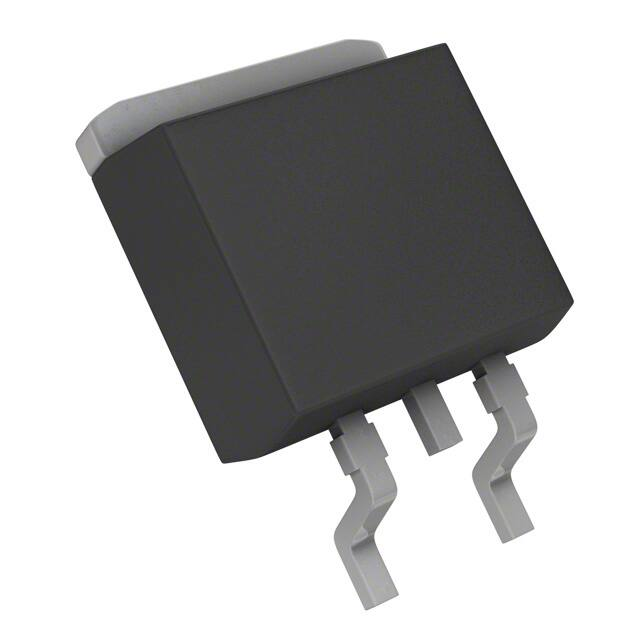
HITFET - BTS3035TF
Smart Low-Si de Power Switch
1
Overview
Basic Features
•
Single channel device
•
Very low output leakage current in OFF state
•
Electrostatic discharge protection (ESD)
•
Embedded protection functions (see below)
•
Green Product (RoHS compliant)
•
AEC Qualified
Applications
•
Suitable for resistive, inductive and capacitive loads
•
Replaces electromechanical relays, fuses and discrete circuits
Description
The BTS3035TF is a 35 mΩ single channel Smart Low-Side Power Switch within a PG-TO252-3 package
providing embedded protective functions. The power transistor is built by an N-channel vertical power
MOSFET.
The device is monolithically integrated. The BTS3035TF is automotive qualified and is optimized for 12 V
automotive applications.
Type
Package
Marking
BTS3035TF
PG-TO252-3
S3035TF
Table 1
Product Summary
Operating voltage range
VOUT
0 .. 31 V
Maximum load voltage
VBAT(LD)
40 V
Maximum input voltage
VIN
5.5 V
Maximum On-State resistance at TJ = 150°C, VIN = 5 V
RDS(ON)
70 mΩ
Nominal load current
IL(NOM)
5A
Minimum current limitation
IL(LIM)
20 A
Maximum OFF state load current at TJ ≤ 85°C
IL(OFF)_85
0.6 µA
Datasheet
www.infineon.com/hitfet
1
Rev. 1.0
2016-06-01
�HITFET - BTS3035TF
Smart Low-Side Power Switch
Overview
Protection Functions
•
Over temperature shut-down with automatic-restart
•
Active clamp over voltage protection
•
Current limitation
Detailed Description
The device is able to switch all kind of resistive, inductive and capacitive loads, limited by maximum clamping
energy and maximum current capabilities.
The BTS3035TF offers ESD protection on the IN pin which refers to the Source pin (Ground).
The over temperature protection prevents the device from overheating due to overload and/or bad cooling
conditions. The temperature information is given by a temperature sensor in the power MOSFET.
The BTS3035TF has an auto-restart thermal shut-down function. The device will turn on again, if input is still
high, after the measured temperature has dropped below the thermal hysteresis.
The over voltage protection can be activated during load dump or inductive turn off conditions. The power
MOSFET is limiting the drain-source voltage, if it rises above the VOUT(CLAMP).
Datasheet
2
Rev. 1.0
2016-06-01
�HITFET - BTS3035TF
Smart Low-Side Power Switch
Table of Contents
1
Overview . . . . . . . . . . . . . . . . . . . . . . . . . . . . . . . . . . . . . . . . . . . . . . . . . . . . . . . . . . . . . . . . . . . . . . . . 1
Table of Contents . . . . . . . . . . . . . . . . . . . . . . . . . . . . . . . . . . . . . . . . . . . . . . . . . . . . . . . . . . . . . . . . . 3
2
Block Diagram . . . . . . . . . . . . . . . . . . . . . . . . . . . . . . . . . . . . . . . . . . . . . . . . . . . . . . . . . . . . . . . . . . . 4
3
3.1
3.2
3.3
Pin Configuration . . . . . . . . . . . . . . . . . . . . . . . . . . . . . . . . . . . . . . . . . . . . . . . . . . . . . . . . . . . . . . . . .
Pin Assignment BTS3035TF . . . . . . . . . . . . . . . . . . . . . . . . . . . . . . . . . . . . . . . . . . . . . . . . . . . . . . . . . . . . . . . .
Pin Definitions and Functions . . . . . . . . . . . . . . . . . . . . . . . . . . . . . . . . . . . . . . . . . . . . . . . . . . . . . . . . . . . . . .
Voltage and current definition . . . . . . . . . . . . . . . . . . . . . . . . . . . . . . . . . . . . . . . . . . . . . . . . . . . . . . . . . . . . .
5
5
5
5
4
4.1
4.2
4.3
4.3.1
4.3.2
General Product Characteristics . . . . . . . . . . . . . . . . . . . . . . . . . . . . . . . . . . . . . . . . . . . . . . . . . . . .
Absolute Maximum Ratings . . . . . . . . . . . . . . . . . . . . . . . . . . . . . . . . . . . . . . . . . . . . . . . . . . . . . . . . . . . . . . . .
Functional Range . . . . . . . . . . . . . . . . . . . . . . . . . . . . . . . . . . . . . . . . . . . . . . . . . . . . . . . . . . . . . . . . . . . . . . . . .
Thermal Resistance . . . . . . . . . . . . . . . . . . . . . . . . . . . . . . . . . . . . . . . . . . . . . . . . . . . . . . . . . . . . . . . . . . . . . . .
PCB set up . . . . . . . . . . . . . . . . . . . . . . . . . . . . . . . . . . . . . . . . . . . . . . . . . . . . . . . . . . . . . . . . . . . . . . . . . . . . .
Transient Thermal Impedance . . . . . . . . . . . . . . . . . . . . . . . . . . . . . . . . . . . . . . . . . . . . . . . . . . . . . . . . . . .
6
6
7
8
8
9
5
5.1
5.2
5.3
5.3.1
5.3.1.1
5.4
5.5
5.6
Power Stage . . . . . . . . . . . . . . . . . . . . . . . . . . . . . . . . . . . . . . . . . . . . . . . . . . . . . . . . . . . . . . . . . . . .
Output On-state Resistance . . . . . . . . . . . . . . . . . . . . . . . . . . . . . . . . . . . . . . . . . . . . . . . . . . . . . . . . . . . . . . .
Resistive Load Output Timing . . . . . . . . . . . . . . . . . . . . . . . . . . . . . . . . . . . . . . . . . . . . . . . . . . . . . . . . . . . . .
Inductive Load . . . . . . . . . . . . . . . . . . . . . . . . . . . . . . . . . . . . . . . . . . . . . . . . . . . . . . . . . . . . . . . . . . . . . . . . . .
Output Clamping . . . . . . . . . . . . . . . . . . . . . . . . . . . . . . . . . . . . . . . . . . . . . . . . . . . . . . . . . . . . . . . . . . . . . .
Maximum Load Inductance . . . . . . . . . . . . . . . . . . . . . . . . . . . . . . . . . . . . . . . . . . . . . . . . . . . . . . . . . .
Reverse Current capability . . . . . . . . . . . . . . . . . . . . . . . . . . . . . . . . . . . . . . . . . . . . . . . . . . . . . . . . . . . . . . . .
Inverse Current capability . . . . . . . . . . . . . . . . . . . . . . . . . . . . . . . . . . . . . . . . . . . . . . . . . . . . . . . . . . . . . . . .
Characteristics . . . . . . . . . . . . . . . . . . . . . . . . . . . . . . . . . . . . . . . . . . . . . . . . . . . . . . . . . . . . . . . . . . . . . . . . . .
11
11
11
12
12
13
13
14
14
6
6.1
6.2
6.3
6.4
Protection Functions . . . . . . . . . . . . . . . . . . . . . . . . . . . . . . . . . . . . . . . . . . . . . . . . . . . . . . . . . . . . .
Over Voltage Clamping on OUTput . . . . . . . . . . . . . . . . . . . . . . . . . . . . . . . . . . . . . . . . . . . . . . . . . . . . . . . .
Thermal Protection . . . . . . . . . . . . . . . . . . . . . . . . . . . . . . . . . . . . . . . . . . . . . . . . . . . . . . . . . . . . . . . . . . . . . .
Short Circuit Protection / Current limitation . . . . . . . . . . . . . . . . . . . . . . . . . . . . . . . . . . . . . . . . . . . . . . . .
Characteristics . . . . . . . . . . . . . . . . . . . . . . . . . . . . . . . . . . . . . . . . . . . . . . . . . . . . . . . . . . . . . . . . . . . . . . . . . .
15
15
15
15
16
7
7.1
7.2
Input Stage . . . . . . . . . . . . . . . . . . . . . . . . . . . . . . . . . . . . . . . . . . . . . . . . . . . . . . . . . . . . . . . . . . . . . 17
Input Circuit . . . . . . . . . . . . . . . . . . . . . . . . . . . . . . . . . . . . . . . . . . . . . . . . . . . . . . . . . . . . . . . . . . . . . . . . . . . . . 17
Characteristics . . . . . . . . . . . . . . . . . . . . . . . . . . . . . . . . . . . . . . . . . . . . . . . . . . . . . . . . . . . . . . . . . . . . . . . . . . 17
8
8.1
8.2
8.3
Electrical Characteristics . . . . . . . . . . . . . . . . . . . . . . . . . . . . . . . . . . . . . . . . . . . . . . . . . . . . . . . . .
Power Stage . . . . . . . . . . . . . . . . . . . . . . . . . . . . . . . . . . . . . . . . . . . . . . . . . . . . . . . . . . . . . . . . . . . . . . . . . . . .
Protection . . . . . . . . . . . . . . . . . . . . . . . . . . . . . . . . . . . . . . . . . . . . . . . . . . . . . . . . . . . . . . . . . . . . . . . . . . . . . .
Input Stage . . . . . . . . . . . . . . . . . . . . . . . . . . . . . . . . . . . . . . . . . . . . . . . . . . . . . . . . . . . . . . . . . . . . . . . . . . . . .
18
18
19
21
9
9.1
9.2
9.3
Characterization Results . . . . . . . . . . . . . . . . . . . . . . . . . . . . . . . . . . . . . . . . . . . . . . . . . . . . . . . . .
Power Stage . . . . . . . . . . . . . . . . . . . . . . . . . . . . . . . . . . . . . . . . . . . . . . . . . . . . . . . . . . . . . . . . . . . . . . . . . . . .
Protection . . . . . . . . . . . . . . . . . . . . . . . . . . . . . . . . . . . . . . . . . . . . . . . . . . . . . . . . . . . . . . . . . . . . . . . . . . . . . .
Input Stage . . . . . . . . . . . . . . . . . . . . . . . . . . . . . . . . . . . . . . . . . . . . . . . . . . . . . . . . . . . . . . . . . . . . . . . . . . . . .
22
22
33
34
10
10.1
Application Information . . . . . . . . . . . . . . . . . . . . . . . . . . . . . . . . . . . . . . . . . . . . . . . . . . . . . . . . . . 36
Application Diagram . . . . . . . . . . . . . . . . . . . . . . . . . . . . . . . . . . . . . . . . . . . . . . . . . . . . . . . . . . . . . . . . . . . . . 36
11
Package Outlines . . . . . . . . . . . . . . . . . . . . . . . . . . . . . . . . . . . . . . . . . . . . . . . . . . . . . . . . . . . . . . . . 37
12
Revision History . . . . . . . . . . . . . . . . . . . . . . . . . . . . . . . . . . . . . . . . . . . . . . . . . . . . . . . . . . . . . . . . . 38
Datasheet
3
Rev. 1.0
2016-06-01
�HITFET - BTS3035TF
Smart Low-Side Power Switch
Block Diagram
2
Block Diagram
OUT
IN
Gate
Driving
Unit
ESD
Protection
Over
Voltage
Protection
Overtemperature
Protection
Short circuit
detection /
Current
Limitation
GND
BlockDiagram_3pin.emf
Figure 1
Datasheet
Block Diagram
4
Rev. 1.0
2016-06-01
�HITFET - BTS3035TF
Smart Low-Side Power Switch
Pin Configuration
3
Pin Configuration
3.1
Pin Assignment BTS3035TF
(top view )
4 (Tab)
2
Figure 2
3.2
1
Pin Configuration. PG-TO252-3
3
Pin Definitions and Functions
Pin
Symbol
Function
1
IN
Input pin
2,4
OUT
Drain, Load connection for power DMOS
3
GND
Ground, Source of power DMOS
3.3
Voltage and current definition
Figure 3 shows all external terms used in this data sheet, with associated convention for positive values.
VBAT
V BAT
ZL
I IN
I L , ID
IN
OUT
VIN
VOUT
GND
I GND
GND
Figure 3
Datasheet
Naming definition of electrical parameters
5
Rev. 1.0
2016-06-01
�HITFET - BTS3035TF
Smart Low-Side Power Switch
General Product Characteristics
4
General Product Characteristics
4.1
Absolute Maximum Ratings
Table 2
Absolute Maximum Ratings 1)
Tj = -40°C to +150°C; all voltages with respect to ground, positive current flowing into pin (unless otherwise
specified)
Parameter
Symbol
Values
Unit
Note or Test Condition
Number
Min.
Typ. Max.
–
–
40
V
internally clamped
P_4.1.1
Battery voltage for short circuit VBAT(SC)
protection
–
–
31
V
l = 0 or 5 m
RSC = 20 mΩ + RCable
RCable = l * 16 mΩ/m
LSC = 5 µH + LCable
LCable = l * 1 µH/m
VIN = 5 V
P_4.1.2
Battery voltage for load dump
protection
VBAT(LD)
–
–
40
V
2)
P_4.1.4
VIN
-0.3
Voltages
Output voltage
VOUT
RI = 2 Ω
RL = 4.5 Ω
tD = 400 ms
suppressed pulse
Input Pin
Input Voltage
Input current
in inverse condition on OUT to
GND
–
5.5
V
-
P_4.1.7
mA
3)
P_4.1.10
IIN
–
| IL |
–
–
IL(LIM) A
-
P_4.1.11
EAS
–
–
105
mJ
IL(0) = IL(NOM)
VBAT = 13.5 V
TJ(0) = 150°C
P_4.1.13
Unclamped repetitive inductive EAR(10k)
energy pulse with 10 k cycles
–
–
105
mJ
IL(0) = IL(NOM)
VBAT = 13.5 V
TJ(0) = 105°C
P_4.1.21
Unclamped repetitive inductive EAR(100k)
energy pulse with 100 k cycles
–
–
84
mJ
IL(0) = IL(NOM)
VBAT = 13.5 V
TJ(0) = 105°C
P_4.1.25
Unclamped repetitive inductive EAR(1M)
energy pulse with 1 M cycles
–
–
67
mJ
IL(0) = IL(NOM)
VBAT = 13.5 V
TJ(0) = 105°C
P_4.1.29
–
2
VOUT < -0.3 V
Power Stage
Load current
Energies
Unclamped single inductive
energy single pulse
Datasheet
6
Rev. 1.0
2016-06-01
�HITFET - BTS3035TF
Smart Low-Side Power Switch
General Product Characteristics
Table 2
Absolute Maximum Ratings 1) (cont’d)
Tj = -40°C to +150°C; all voltages with respect to ground, positive current flowing into pin (unless otherwise
specified)
Parameter
Symbol
Values
Unit
Min.
Typ. Max.
Note or Test Condition
Number
Temperatures
Operating temperature
TJ
-40
–
+150 °C
–
P_4.1.37
Storage temperature
TSTG
-55
–
+150 °C
–
P_4.1.38
VESD
-4
–
4
kV
HBM4)
P_4.1.39
4)
P_4.1.40
P_4.1.41
ESD Susceptibility
ESD susceptibility (all pins)
ESD susceptibility OUT-pin to
GND
VESD
-10
–
10
kV
HBM
ESD susceptibility
VESD
-2
–
2
KV
CDM5)
1) Not subject to production test, specified by design.
2) VBAT(LD) is setup without the DUT connected to the generator per ISO 7637-1;
RI is the internal resistance of the load dump test pulse generator;
tD is the pulse duration time for load dump pulse (pulse 5) according ISO 7637-1, -2.
3) Maximum allowed value. Consider also inverse input current in inverse condition P_8.3.7 in Chapter 8
4) ESD susceptibility, HBM according to ANSI/ESDA/JEDEC JS001 (1.5 kΩ, 100 pF)
5) ESD susceptibility, Charged Device Model “CDM” ESDA STM5.3.1 or ANSI/ESD S.5.3.1
Notes
1. Stresses above the ones listed here may cause permanent damage to the device. Exposure to absolute
maximum rating conditions for extended periods may affect device reliability.
2. Integrated protection functions are designed to prevent IC destruction under fault conditions described in the
data sheet. Fault conditions are considered as “outside” normal operating range. Protection functions are
not designed for continuous repetitive operation.
4.2
Table 3
Functional Range
Functional Range 1)
Please refer to “Electrical Characteristics” on Page 18 for test conditions
Parameter
Symbol
Values
Unit Note or Test Condition Number
Min.
Typ. Max.
Battery Voltage Range for Nominal VBAT(NOR)
Operation
6.0
–
18.0
V
–
P_4.2.1
Extended Battery Voltage Range
for Operation
VBAT(EXT)
0
–
31
V
parameter deviations
possible
P_4.2.2
Input Voltage Range for Nominal
Operation
VIN(NOR)
3.0
–
5.5
V
–
P_4.2.3
Junction Temperature
TJ
-40
–
150
°C
–
P_4.2.5
Datasheet
7
Rev. 1.0
2016-06-01
�HITFET - BTS3035TF
Smart Low-Side Power Switch
General Product Characteristics
1) Not subject to production test, specified by design
Note:
Within the functional range the IC operates as described in the circuit description. The electrical
characteristics are specified within the conditions given in the related electrical characteristics
table.
4.3
Thermal Resistance
Note:
This thermal data was generated in accordance with JEDEC JESD51 standards.
For more information, go to www.jedec.org.
Table 4
Thermal Resistance PG-TO252-3
Parameter
Symbol
Junction to Soldering Point
RthJSP
Values
Min.
Typ.
Max.
–
1.8
–
Unit
Note or
Test Condition
Number
K/W
1) 2)
P_4.3.1
P_4.3.5
P_4.3.9
Junction to Ambient (2s2p)
RthJA(2s2p) –
25
–
K/W
3) 4)
Junction to Ambient
(1s0p+600 mm2 Cu)
RthJA(1s0p) –
39
–
K/W
1) 5)
1) Not subject to production test, specified by design
2) Specified RthJSPvalue is simulated at natural convection on a cold plate setup (all pins are fixed to ambient
temperature).
TA = 85°C. Device is loaded with 1W power.
3) Not subject to production test, specified by design
4) Specified RthJA value is according to Jedec JESD51-2,-5,-7 at natural convection on FR4 2s2p board;
The product (Chip+Package) was simulated on a 76.2 x 114.3 x 1.5 mm board with 2 inner copper layers (2 x 70 µm Cu,
2 x 35 µm Cu). Where applicable a thermal via array under the ex posed pad contacted the first inner copper layer.
TA = 85°C, Device is loaded with 1 W power.
5) Specified RthJA value is according to Jedec JESD51-2,-5,-7 at natural convection on FR4 1s0p board;
The product (Chip+Package) was simulated on a 76.2 x 114.3 x 1.5 mm board with additional heatspreading copper
area of 600 mm2 and 70 µm thickness. TA = 85°C, Device is loaded with 1 W power.
4.3.1
PCB set up
The following PCB set up was implemented to determine the transient thermal impedance1)
1,5 mm
70µm modelled (traces)
35µm, 100% metalization*
70µm, 5% metalization*
Figure 4
Cross section JEDEC2s2p
1) (*) means percentual Cu metalization on each layer
Datasheet
8
Rev. 1.0
2016-06-01
�HITFET - BTS3035TF
Smart Low-Side Power Switch
General Product Characteristics
1,5 mm
70µm modelled (traces, cooling area)
70µm; 5% metalization*
Figure 5
Cross section JEDEC1s0p
JEDEC 1s0p / 600mm²
Figure 6
4.3.2
Datasheet
JEDEC 1s0p / footprint
JEDEC 2s2p
Detail:Solder Pads
Vias
PCB layout
Transient Thermal Impedance
9
Rev. 1.0
2016-06-01
�HITFET - BTS3035TF
Smart Low-Side Power Switch
General Product Characteristics
30
25
ZthJA [K/W]
20
15
10
5
0
0,000001 0,00001
0,0001
0,001
0,01
0,1
1
10
100
1000
10000
tp. [s]
Figure 7
Typical transient thermal impedance ZthJA = f(tp), TA = 85°C
Value is according to Jedec JESD51-2,-7 at natural convection on FR4 2s2p board; The
product (Chip+Package) was simulated on a 76.2 x 114.3 x 1.5 mm³ board with 2 inner
copper layers (2 x 70 µm Cu, 2 x 35 µm Cu). Device is dissipating 1 W power.
120
JEDEC 1s0p / footprint
100
JEDEC 1s0p / 300mm²
JEDEC 1s0p / 600mm²
ZthJA [K/W]
80
60
40
20
0
0,000001 0,00001
0,0001
0,001
0,01
0,1
1
10
100
1000
10000
tp. [s]
Figure 8
Datasheet
Typical transient thermal impedance ZthJA = f(tp), Ta = 85°C
Value is according to Jedec JESD51-3 at natural convection on FR4 1s0p board. Device is
dissipating 1 W power.
10
Rev. 1.0
2016-06-01
�HITFET - BTS3035TF
Smart Low-Side Power Switch
Power Stage
5
Power Stage
5.1
Output On-state Resistance
The on-state resistance depends on the junction temperature TJ and on the applied input voltage. Figure 9
show this dependencies in terms of temperature and voltage for the typical on-state resistance RDS(ON). The
behavior in reverse polarity is described in“Reverse Current capability” on Page 13
100
80
RDS(ON) [m:]
3V
60
5V
40
20
0
-40
-20
0
20
40
60
80
100
120
140
TJ [°C]
Figure 9
Typical On-State Resistance,
RDS(ON) = f(TJ), VIN = 3 V; VIN = 5 V
5.2
Resistive Load Output Timing
Figure 10 shows the typical timing when switching a resistive load.
V IN
VIN(TH)
t
VOUT
VBAT
90 %
-(Δ V/Δ t)ON
(ΔV/Δt)OFF
50 %
10 %
t DON
tF
tDOFF
tON
Figure 10
Datasheet
tR
t OFF
t
Switching.e
Definition of Power Output Timing for Resistive Load
11
Rev. 1.0
2016-06-01
�HITFET - BTS3035TF
Smart Low-Side Power Switch
Power Stage
5.3
Inductive Load
5.3.1
Output Clamping
When switching off inductive loads with low side switches, the Drain-Source voltage VOUT rises above battery
potential, because the inductance intends to continue driving the current. To prevent unwanted high voltages
the device has a voltage clamping mechanism to keep the voltage at VOUT(CLAMP). During this clamping
operation mode the device heats up as it dissipates the energy from the inductance. Therefore the maximum
allowed load inductance is limited. See Figure 11 and Figure 12 for more details.
VBAT
ZL
IL
OUT ( DMOS Drain
VOUT
GND ( DMOS Source)
IGND
Figure 11
Output Clamp Circuitry
V IN
t
IOUT
t
V OUT
VOUT(CLAMP)
VBAT
t
Figure 12
Datasheet
I d
Switching an Inductive Load
12
i
O
Cl
f
Rev. 1.0
2016-06-01
�HITFET - BTS3035TF
Smart Low-Side Power Switch
Power Stage
5.3.1.1
Maximum Load Inductance
While demagnetization of inductive loads, energy has to be dissipated by the BTS3035TF.
This energy can be calculated by the following equation:
⎡VBAT − VOUT (CLAMP)
⎤
⎛
⎞
RL × I L
⎟ + IL ⎥ × L
× ln ⎜1 −
E = VOUT ( CLAMP) × ⎢
⎜ V −V
⎟
RL
⎢⎣
⎥⎦ RL
BAT
OUT ( CLAMP ) ⎠
⎝
(5.1)
Following equation simplifies under the assumption of RL = 0
E=
⎞
⎛
1
VBAT
2
⎟
LI L × ⎜1 −
⎟
⎜
2
V
V
−
BAT
OUT ( CLAMP) ⎠
⎝
(5.2)
For maximum single avalanche energy please also refer to EAS value in “Energies” on Page 6.
1000
L [mH]
100
10
1
1
10
IL [A]
Figure 13
Maximum load inductance for single pulse
L = f(IL), TJ(0) = TJ, start = 150°C, VBAT = 13.5 V
5.4
Reverse Current capability
A reverse battery situation means the OUT pin is pulled below GND potentials to -VBAT via the load ZL.
In this situation the load is driven by a current through the intrinsic body diode of the BTS3035TF. During
Reverse Battery all protection functions like current limitation, over temperature shut down and over voltage
clamping are not available.
Datasheet
13
Rev. 1.0
2016-06-01
�HITFET - BTS3035TF
Smart Low-Side Power Switch
Power Stage
The device is dissipating a power loss which is defined by the driven current and the voltage drop on the DMOS
reverse body diode “-VOUT”.
5.5
Inverse Current capability
An inverse current situation means the OUT pin is pulled below GND potential by current flowing from GND to
OUT (for example in half-bridge configuration and inductive load using freewheeling via the low side path).
In this situation the load is driven by a current through the intrinsic body diode (device off) of the BTS3035TF.
During Inverse operation all protection functions like current limitation, over temperature shut-down and
over voltage clamping are not available.
The device is dissipating a power loss which is defined by the driven current and the voltage drop on the DMOS
reverse body diode “-VOUT”.
Input current behavior during inverse condition on Output
Please note that during inverse current on drain an increased input current can flow. To limit this current it is
needed to place a resistor (RIN) in line with the input, also to prevent the microcontroller I/O pins from latching
up in this case. The value of this resistor is a compromise of input voltage level in normal operation and
maximum allowed device input current IIN or I/O current (for example of microcontroller).
R IN (min) =
VOHuC (max)
(5.3)
I IN (max)
with IIN(max) = 2 mA (see also “Absolute Maximum Ratings” on Page 6) allow for the device;
VOHµC(max) maximum high level voltage of the control signal (microcontroller I/O)
5.6
Characteristics
Please see “Power Stage” on Page 11 for electrical characteristic table.
Datasheet
14
Rev. 1.0
2016-06-01
�HITFET - BTS3035TF
Smart Low-Side Power Switch
Protection Functions
6
Protection Functions
The device provides embedded protection functions. Integrated protection functions are designed to prevent
IC destruction under fault conditions described in the datasheet. Fault conditions are considered as “outside”
normal operation. Protection functions are not designed for continuous repetitive operation.
6.1
Over Voltage Clamping on OUTput
The BTS3035TF is equipped with a voltage clamp circuitry that keeps the drain-source (OUT to GND) voltage
VDS at a certain level VOUT(CLAMP). The over voltage clamping is overruling the other protection functions. Power
dissipation has to be limited to not exceed the maximum allowed junction temperature.
This function is also used in terms of inductive clamping. Please see also Chapter 5.3.1 for more details.
6.2
Thermal Protection
The device is protected against over temperature due to overload and / or bad cooling conditions. To ensure
this a temperature sensor is located in the power MOSFET.
The BTS3035TF has a thermal protection function with automatic restart. After the device has switched off due
to over temperature the device will stay off until the junction temperature has dropped down below the
thermal hysteresis “Thermal Protection” on Page 15.
Thermal shutdown
Thermal restart
IN
5V
0V
t
Tj
TJ(SD )
ΔT J(SD)_HYS
t
VOUT
VBAT
t
Thermal _ fault_ restart.emf
Figure 14
6.3
Thermal protective switch OFF scenario with thermal restart
Short Circuit Protection / Current limitation
The condition short circuit is an overload condition to the device. If the load current reaches the limitation
value of IL(LIM) the device limits the current and starts heating up. When the thermal shutdown temperature is
reached, the device turns off.
The time from the beginning of current limitation until the over temperature switch off depends strongly on
the cooling conditions.
If input is still high, the device will turn on again after the measured temperature has dropped below the
thermal hysteresis.
Figure 15 shows this simplified behavior.
Datasheet
15
Rev. 1.0
2016-06-01
�HITFET - BTS3035TF
Smart Low-Side Power Switch
Protection Functions
Occurrence of Over current
or high ohmic Short circuit
Turn off due to over temperature
Restart into short circuit after cooling down
Restart into normal load condition
IN
5V
0
t
ID
Vbat /Zsc
IL(LIM )
t
Tj
TJ(SD)
ΔTJ_HY S
t
Short_circuit_restart.emf
Figure 15
Short circuit protection via current limitation and over temperature switch off with autorestart
6.4
Characteristics
Please see “Protection Functions” on Page 15 for electrical characteristic table.
Datasheet
16
Rev. 1.0
2016-06-01
�HITFET - BTS3035TF
Smart Low-Side Power Switch
Input Stage
7
Input Stage
7.1
Input Circuit
Figure 16 shows the input circuit of the BTS3035TF. In case of open or floating input pin, the device will
automatically switch off and remain off. An ESD Zener structure protects the input circuit against ESD pulses.
ESD protection circuit
IN
GND
Figure 16
7.2
Input circuit.emf
Simplified Input circuitry
Characteristics
Please see “Input Stage” on Page 21 for electrical characteristic table.
Datasheet
17
Rev. 1.0
2016-06-01
�HITFET - BTS3035TF
Smart Low-Side Power Switch
Electrical Characteristics
8
Electrical Characteristics
8.1
Power Stage
Please see Chapter “Power Stage” on Page 11 for parameter description and further details.
Table 5
Electrical Characteristics: Power Stage
Tj = -40°C to +150°C, VBAT = 6 V to 18 V, all voltages with respect to ground, positive current flowing into pin
(unless otherwise specified)
Parameter
Symbol
Values
Unit Note or
Test Condition
Min. Typ. Max.
Number
On-State resistance
at hot temperature (150°C)
RDS(ON)_150
–
58
70
mΩ
TJ = 150°C;
VIN = 5 V;
IL = IL(NOM)
P_8.1.1
On-State resistance
at ambient temperature (25°C)
RDS(ON)_25
–
30
–
mΩ
TJ = 25°C;
VIN = 5 V;
IL = IL(NOM)
P_8.1.5
Nominal load current
IL(NOM)
–
5
–
A
1)
P_8.1.25
OFF state load current,
Output leakage current
IL(OFF)_85
–
OFF state load current,
Output leakage current
IL(OFF)_150
–
1.3
4.3
µA
VBAT = 18 V;
VIN = 0 V;
TJ = 150°C
P_8.1.33
Reverse body diode forward voltage
-VOUT
–
0.8
1.1
V
IL = -IL(NOM);
VIN = 0 V
P_8.1.45
Power Stage
Datasheet
TJ < 150°C;
TA = 85°C
VIN = 5 V
–
0.6
µA
2)
P_8.1.29
VBAT = 13.5 V;
VIN = 0 V;
TJ ≤ 85°C
18
Rev. 1.0
2016-06-01
�HITFET - BTS3035TF
Smart Low-Side Power Switch
Electrical Characteristics
Table 5
Electrical Characteristics: Power Stage (cont’d)
Tj = -40°C to +150°C, VBAT = 6 V to 18 V, all voltages with respect to ground, positive current flowing into pin
(unless otherwise specified)
Parameter
Symbol
Values
Unit Note or
Test Condition
Min. Typ. Max.
Number
Dynamic characteristics - switching times single pulseVBAT = 13.5 V, RL = 2.2Ω;
for definition details see Figure 10 “Definition of Power Output Timing for Resistive Load” on Page 11
Turn-on time
3)
tON
35
tOFF
70
Turn-on delay time
tDON
5
15
25
µs
VIN = 0 V to 5 V;
VOUT = 90% VBAT
P_8.1.48
Turn-off delay time
tDOFF
40
75
120
µs
VIN = 5 V to 0 V;
VOUT = 10% VBAT
P_8.1.49
Fall time, Falling output voltage (turn- tF
on)
30
60
90
µs
VIN = 0 V to 5 V;
VOUT = 90% VBAT to
VOUT = 10% VBAT
P_8.1.50
Rise time, Rising output voltage
tR
30
60
90
µs
VIN = 5 V to 0 V;
VOUT = 10% VBAT to
VOUT = 90% VBAT
P_8.1.51
Turn-on Slew rate
-(ΔV/Δt)ON 0.22 0.45 0.65 V/µs
5)
P_8.1.52
0.22 0.45 0.65 V/µs
6)
Turn-off time
Turn-off Slew rate
1)
2)
3)
4)
5)
6)
(ΔV/Δt)OFF
75
115
µs
P_8.1.46
VIN = 0 V to 5 V;
VOUT = 10% VBAT
135
210
µs
4)
P_8.1.47
VIN = 5 V to 0 V;
VOUT = 90% VBAT
VOUT = 90% VBAT to
VOUT = 50% VBAT
P_8.1.53
VOUT = 50% VBAT to
VOUT = 90% VBAT
Not subject to production test, calculated by RthJA (JEDEC 2s2p, PCB) and RDS(ON)
Not subject to production test, specified by design;
Not subject to production test, calculated with delay time ON and fall time
Not subject to production test, calculated with delay time OFF and rise time
Not subject to production test, calculated slew rate between 90% and 50% VOUT;
Not subject to production test, calculated slew rate between 50% and 90% VOUT;
8.2
Protection
Please see Chapter “Protection Functions” on Page 15 for parameter description and further details.
Note:
Datasheet
Integrated protection functions are designed to prevent IC destruction under fault conditions
described in the data sheet. Fault conditions are considered as “outside” normal operating range.
Protection functions are not designed for continuous repetitive operation
19
Rev. 1.0
2016-06-01
�HITFET - BTS3035TF
Smart Low-Side Power Switch
Electrical Characteristics
Table 6
Electrical Characteristics: Protection
Tj = -40°C to +150°C, VBAT = 6 V to 18 V, all voltages with respect to ground, positive current flowing into pin
(unless otherwise specified)
Parameter
Symbol
Values
Unit Note or
Test Condition
Min. Typ. Max.
Number
Thermal shut down
junction temperature
TJ(SD)
150
Thermal hysteresis
ΔTJ_HYS
–
15
–
K
1)
P_8.2.3
VOUT(CLAMP)
40
45
–
V
VIN = 0 V;
ID = 14 mA
P_8.2.9
20
30
40
A
VIN = 5 V;
P_8.2.13
Thermal Protection
175
–
°C
1)
P_8.2.1
3 V < VIN < 5.5 V
Overvoltage Protection
Drain clamp voltage
Current limitation (see also Figure 15)
Current limitation
IL(LIM)
1) Not subject to production test, specified by design.
Datasheet
20
Rev. 1.0
2016-06-01
�HITFET - BTS3035TF
Smart Low-Side Power Switch
Electrical Characteristics
8.3
Input Stage
Please see Chapter “Input Stage” on Page 17 for description and further details.
Table 7
Electrical Characteristics: Input
Tj = -40°C to +150°C, VBAT = 6 V to 18 V, all voltages with respect to ground, positive current flowing into pin
(unless otherwise specified)
Parameter
Symbol
Values
Min.
Typ.
Max.
Unit Note or
Test Condition
Number
Input
Input Current,
normal ON state
IIN(ON)
–
82
110
µA
VIN = 5.0 V
P_8.3.1
Input Current,
protection mode
IIN(PROT)
–
191
260
µA
VIN = 5.0 V
P_8.3.3
Input current, inverse condition on IIN(-VOUT)
OUT to GND
–
15
–
mA
1) 2)
P_8.3.7
Input pull down current
IIN-GND
10
VIN(TH)
0.8
Input Voltage on-threshold
VOUT < -0.3 V;
-0.3 V ≤ VIN