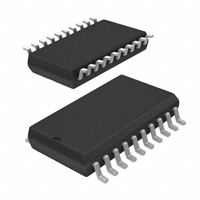
D a t a S h e e t , R e v. 1 . 0 , M ar c h 2 00 8
B TS 41 30 Q G A
S m a rt H i g h - S i d e P o w e r S w i t c h
A u to m o t i v e P o w e r
�BTS 4130QGA
1
Overview 3
2
Block Diagram 5
3
3.1
3.2
3.3
Pin Configuration 6
Pin Assignment 6
Pin Definitions and Functions 6
Voltage and Current Definition 7
4
4.1
4.2
4.3
General Product Characteristics 8
Absolute Maximum Ratings 8
Functional Range 9
Thermal Resistance 9
5
5.1
5.2
5.3
5.3.1
5.4
Power Stage 10
Output ON-State Resistance 10
Turn ON / OFF Characteristics 10
Inductive Output Clamp 11
Maximum Load Inductance 12
Electrical Characteristics Power Stage 13
6
6.1
6.2
6.3
6.4
6.5
6.5.1
6.6
Protection Mechanisms 14
Loss of Ground Protection 14
Undervoltage Protection 14
Overvoltage Protection 14
Reverse Polarity Protection 15
Overload Protection 15
Current Limitation 16
Electrical Characteristics Protection Functions 17
7
7.1
7.2
7.2.1
7.2.2
7.3
Diagnostic Mechanism 18
ST 0/1/2/3 Pin 18
ST0/1/2/3 Signal in Case of Failures 18
Diagnostic in Open Load, Channel OFF 19
ST 0/1 Signal in case of Over Temperature 20
Electrical Characteristics Diagnostic Functions 21
8
8.1
8.2
Input Pins 22
Input Circuitry 22
Electrical Characteristics 22
9
9.1
Application Information 23
Further Application Information 23
10
Package Outlines 24
11
Revision History 25
Datasheet
2
1.0, 2008-27-02
�Smart High-Side Power Switch
BTS4130QGA
Four Channel Device
1
Overview
Basic Features
•
•
•
•
•
•
•
•
•
•
•
Withstand low Cranking Voltage
Fit for 12V Application
Four Channel device
Very low Stand-by Current
CMOS Compatible Inputs
Electrostatic Discharge Protection (ESD)
Optimized Electromagnetic Compatibility
Logic ground independent from load ground
Very low Leakage Current from OUT to the load in OFF State
Green Product (RoHS compliant)
AEC Qualified
PG-DSO-20-32
Description
The BTS4130QGA is a quad channel Smart High-Side Power Switch. It is embedded in a PG-DSO-20-32
package, providing protective functions and diagnostics. The power transistor is built by a N-channel power
MOSFET with charge pump. The device is monolithically integrated in Smart technology. It is specially designed
to drive relays as well as resistive loads in the harsh automotive environment.
Table 1
Electrical Parameters (short form)
Parameter
Symbol
Value
Operating voltage range
VSOP
Vs (USO)
PBULB
VS (AZ)
RDS(ON)
IL (nom)
IL_SCR
IS(off)
-Vs(REV)
5.5V .... 20V
Undervoltage switch OFF at Tj = -40°C
Maximum load per channel
Over voltage protection
Max ON State resistance at Tj = 150°C per channel
Nominal load current (one channel active)
Minimum current limitation
Standby current for the whole device with load
Maximum reverse battery voltage
3.2V
2 * R5W, relays or LED
43V
260mΩ
1.8A
5A
16µA
32V
Type
Package
Marking
BTS4130QGA
PG-DSO-20-32
BTS4130QGA
Data Sheet
3
Rev. 1.0, 2008-03-18
�BTS4130QGA
Overview
Diagnostic Feature
•
•
•
Open load detection in OFF state
Feedback of the thermal shutdown in ON state
Diagnostic feedback with open drain output
Protection Functions
•
•
•
•
•
•
•
•
Short circuit protection
Overload protection
Current limitation
Thermal shutdown
Overvoltage protection (including load dump) with external resistor
Reverse battery protection with external resistor
Loss of ground and loss of VS protection
Electrostatic discharge protection (ESD)
Application
•
All types of resistiv, inductive and capacitive loads
Data Sheet
4
Rev. 1.0, 2008-03-18
�BTS4130QGA
Block Diagram
2
Block Diagram
Channel 0
VS
voltage sensor
internal
power
supply
over
temperature
driver
logic
IN0
ESD
protection
T
clamp for
inductive load
gate control
&
charge pump
over current
switch off
OUT 0
open load detection
ST 0/1
VS
Channel 1
T
IN1
Control and protection circuit equivalent to channel 0
OUT 1
Channel 2
VS
voltage sensor
internal
power
supply
over
temperature
driver
logic
IN2
ESD
protection
T
clamp for
inductive load
gate control
&
charge pump
over current
switch off
OUT 2
open load detection
ST 2/3
VS
Channel 3
T
IN3
Control and protection circuit equivalent to channel 0
OUT 3
Block diagram .emf
GND
Figure 1
Data Sheet
Block diagram for the BTS4130QGA
5
Rev. 1.0, 2008-03-18
�BTS4130QGA
Pin Configuration
3
Pin Configuration
3.1
Pin Assignment
Vs
1
20
Vs
GND0/1
2
19
Vs
IN0
3
18
OUT0
ST 0/1
4
17
OUT1
IN1
5
16
Vs
GND2/3
6
15
Vs
IN2
7
14
OUT2
ST2/3
8
13
OUT3
IN3
9
12
Vs
Vs
10
11
Vs
Pinout SO20 shared diag.vsd
Figure 2
Pin Configuration
3.2
Pin Definitions and Functions
Pin
Symbol
Function
1, 10, 11,
12, 15, 16,
19, 20
VS
Battery voltage; Design the wiring for the simultaneous maximum short circuit
currents from channel 0 and 1 and also for low thermal resistance
2
GND0/1
Ground; Ground connection for channel 0 and 1
3
IN0
Input channel 0; Input signal for channel 0. Activate the channel in case of logic
high level
4
ST 0/1
Diagnostic feedback; of channel 0/1. Open drain.
5
IN1
Input channel 1; Input signal for channel 1. Activate the channel in case of logic
high level
6
GND2/3
Ground; Ground connection for channel 2 and 3
7
IN2
Input channel 2; Input signal for channel 2. Activate the channel in case of logic
high level
8
ST 2/3
Diagnostic feedback; of channel 2/3. Open drain.
9
IN3
Input channel 3; Input signal for channel 3. Activate the channel in case of logic
high level
Data Sheet
6
Rev. 1.0, 2008-03-18
�BTS4130QGA
Pin Configuration
Pin
Symbol
Function
13
OUT3
Output 3; Protected High side power output channel 3
14
OUT2
Output 2; Protected High side power output channel 2
17
OUT1
Output 1; Protected High side power output channel 1
18
OUT0
Output 0; Protected High side power output channel 0
3.3
Voltage and Current Definition
Figure 3 shows all terms used in this data sheet, with associated convention for positive values.
IS
VS
VS
IIN 0
V IN 0
IIN 1
IN0
OUT0
IN1
OUT1
VIN 1
IST0/1
VST0 /1
VD S0
VD S1
VD S2
VD S3
IOU T0
IOU T1
ST 0/1
IIN 2
IIN 3
IST2/3
IN2
OUT2
IN3
OUT3
IOU T2
IOU T3
ST 2/3
GND
IGN D
VOU T0
V OU T1
V OU T2
VOU T3
Voltage and current convention quad
shared diag.vsd
Figure 3
Data Sheet
Voltage and current definition
7
Rev. 1.0, 2008-03-18
�BTS4130QGA
General Product Characteristics
4
General Product Characteristics
4.1
Absolute Maximum Ratings
Absolute Maximum Ratings 1)
TJ = 25°C; (unless otherwise specified)
Pos.
Parameter
Symbol
Limit values
Unit
Conditions
Min.
Max.
-0.3
43
V
–
–
32
V
–
0
20
V
RECU = 20mΩ,
RCable = 16mΩ/m,
LCable = 1µH/m,
Voltages
4.1.1
4.1.2
4.1.3
VS
Reverse polarity Voltage
- VS(REV)
Supply voltage for short circuit protection Vbat(SC)
Supply voltage
l = 0 or 5m 2)
see Chapter 6
Input pins
4.1.4
Voltage at INPUT pins
4.1.5
Current through INPUT pins
4.1.6
Current through INPUT pins pulsed
VIN
IIN
IIN
-10
16
V
–
-0.3
0.3
mA
–
-5
5
mA
Only for testing
IST0/1
IST2/3
-5
5
mA
–
-5
5
mA
–
Status pin
4.1.7
Current through ST 0/1 pin
4.1.8
Current through ST 2/3 pin
Power stage
4.1.9
Load current
| IL |
–
IL(LIM)
A
–
4.1.10
Power dissipation (DC), all channel
active
PTOT
–
1.4
W
4.1.11
Maximum Switchable energy, single
pulse
EAS
–
76
mJ
TA = 85°C,
Tj V(OL)
L1)
X
H
X
H
H
L
L
L
L
H
X
H
X
L
L
H
X
L
X
L
L
X
L
X
H
H
X
L
X
L
X
L
X
L
H
X
H
X
L
L
Open Load channel 0/2
Open Load channel 1/3
Over temperature both channel
Over temp channel 0/2
Over temp channel 1/3
1) L if potential at the output exceeds the Openload detection voltage
Data Sheet
18
Rev. 1.0, 2008-03-18
�BTS4130QGA
Diagnostic Mechanism
7.2.1
Diagnostic in Open Load, Channel OFF
For open load diagnosis in OFF-state, an external output pull-up resistor (ROL) is recommended. For calculation
of the pull-up resistor value, the leakage currents and the open load threshold voltage VOL(OFF) has to be taken into
account. Figure 13 gives a sketch of the situation and Figure 14 shows the typical timing diagram.
Ileakage defines the leakage current in the complete system, including IL(OFF) (see Chapter 5.4) and external
leakages e.g. due to humidity, corrosion, etc... in the application.
To reduce the stand-by current of the system, an open load resistor switch SOL is recommended.
If the channel is OFF, the output is no longer pulled down by the load and VOUT voltage rises to nearly VS. This is
recognized by the device as open load. The voltage threshold is given by VOL(OFF). In that case, the ST 0/1 signal
is switched to a logical low VST01(L).
Vb a t
SOL
VS
R OL
OUT
ILOFF
OL
comp.
Ileakage
VOL(OFF)
GND
R GND
Rleakage
O pen Load in O FF.vsd
Figure 13
Open load detection in OFF electrical equivalent circuit
IN
V OUT
t
V(OL)
t
IL
t
ST 0/1 or ST 2/3
V ST(HIGH)
VST(LOW)
t
Diagnostic In Open load quad shared diag.vsd
Figure 14
Data Sheet
ST 0/1 in open load condition
19
Rev. 1.0, 2008-03-18
�BTS4130QGA
Diagnostic Mechanism
7.2.2
ST 0/1 Signal in case of Over Temperature
In case of over temperature, the junction temperature reaches the thermal shutdown temperature TjSC.
In that case, the ST 0/1 signal is toggling between VST01(L) and VST01(H). Figure 15 gives a sketch of the situation.
IN
t
V OUT
t
ST 0/1
t
T JSC
∆T JSC
TJ
t
Diagnostic In Overload shared toggling.vsd
Figure 15
Sense signal in overtemperature condition
.
Data Sheet
20
Rev. 1.0, 2008-03-18
�BTS4130QGA
Diagnostic Mechanism
7.3
Electrical Characteristics Diagnostic Functions
Electrical Characteristics: Diagnostics
VS = 12 V, Tj = -40 °C to +150 °C. Typical values are given at Tj = 25°C
Pos.
Parameter
Symbol
Limit values
Unit
Conditions
Min.
Typ.
Max.
VOL(OFF)
1.7
2.8
4.0
V
–
Status output (open drain)
High level; Zener limit voltage
VST (HIGH)
5.4
–
–
V
IST= +1.6mA1),
Status output (open drain)
Low level
VST (LOW)
–
–
0.6
V
IST= +1.6mA1)
Load condition threshold for diagnostic
7.3.1
Open Load detection voltage
ST 0/1 or ST 2/3 pin
7.3.2
7.3.3
Zener Limit voltage
Diagnostic timing
7.3.4
Status change after positive
input slope with open load
tdST(ON_OL)
–
10
20
µs
–2)
7.3.5
Status change after positive
input slope with overload
tdST(ON_OvL)
30
–
–
µs
–2)
7.3.6
Status change after negative
input slope with open load
tdST(OFF_OL)
–
–
500
µs
–
7.3.7
Status change after negative
tdST(OFF)
input slope with overtemperature
–
–
20
µs
–2)
1) If ground resistor RGND is used, the voltage drop across this resistor has to be added
2) Not subject to production test, specified by design
Data Sheet
21
Rev. 1.0, 2008-03-18
�BTS4130QGA
Input Pins
8
Input Pins
8.1
Input Circuitry
The input circuitry is CMOS compatible. The concept of the Input pin is to react to voltage transition and not to
voltage threshold. With the Schmidt trigger, it is impossible to have the device in an un-defined state, if the voltage
on the input pin is slowly increasing or decreasing. The output is either OFF or ON but cannot be in an linear or
undefined state. The input circuitry is compatible with PWM applications. Figure 16 shows the electrical equivalent
input circuitry. The pull down current source ensures the channel is OFF with a floating input.
IN
RI
II
To driver’s logic
ESD
Input circuitry.vsd
Figure 16
Input pin circuitry
8.2
Electrical Characteristics
Electrical Characteristics: Diagnostics
VS = 12 V, Tj = -40 °C to +150 °C, all voltages with respect to ground, positive current flowing into pin
(unless otherwise specified) Typical values are given at Tj = 25°C
Pos.
Parameter
Symbol
Limit values
Unit
Conditions
Min.
Typ.
Max.
–
–
1
V
–1)
2.5
–
–
V
–1)
–
0.2
–
V
–2)
5
–
20
µA
10
35
60
µA
VIN = 0.4V
VIN = 5V
2.5
4
6
kΩ
See Figure 16
INput pins characteristics
8.2.1
Low level input voltage
8.2.2
High level input voltage
8.2.3
Input voltage hysteresis
8.2.4
Low level input current
8.2.5
High level input current
8.2.6
Input resistance
VIN(L)
VIN(H)
VIN(HYS)
IIN(L)
IIN(H)
RI
1) If ground resistor RGND is used, the voltage drop across this resistor has to be added
2) Not subject to production test, specified by design
Data Sheet
22
Rev. 1.0, 2008-03-18
�BTS4130QGA
Application Information
9
Application Information
Note: The following information is given as a hint for the implementation of the device only and shall not be
regarded as a description or warranty of a certain functionality, condition or quality of the device.
VDD
VBAT
VDD
Vdd
Vs
OUT
IN0
OUT0
OUT
IN1
OUT1
IN
Microcontroller
(e.g. XC22xx)
ST0/1
VDD
OUT
IN2
OUT2
OUT
IN3
OUT3
ST2/3
IN
GND
GND
Figure 17
Application diagram with BTS4130QGA
Note: This is a very simplified example of an application circuit. The function must be verified in the real application.
9.1
•
Further Application Information
For further information you may visit http://www.infineon.com/
Data Sheet
23
Rev. 1.0, 2008-03-18
�BTS4130QGA
Package Outlines
1.27
8˚ ma
x
7.6 -0.2 1)
+0.09
0.35 x 45˚
0.23
2.65 max
2.45 -0.2
Package Outlines
0.2 -0.1
10
0.4 +0.8
0.35 +0.15 2)
0.2 24x
20
10.3 ±0.3
0.1
11
GPS05094
1 12.8 1) 10
-0.2
Index Marking
1) Does not include plastic or metal protrusions of 0.15 max per side
2) Does not include dambar protrusion of 0.05 max per side
Figure 18
PG-DSO-20-32 (Plastic Dual Small Outline Package)
Green Product (RoHS compliant)
To meet the world-wide customer requirements for environmentally friendly products and to be compliant with
government regulations the device is available as a green product. Green products are RoHS-Compliant (i.e Pbfree finish on leads and suitable for Pb-free soldering according to IPC/JEDEC J-STD-020).
Data Sheet
24
Rev. 1.0, 2008-03-18
�BTS4130QGA
Revision History
11
Revision History
Version
Date
Changes
1.0
2008-03-18
Creation of the data sheet
Data Sheet
25
Rev. 1.0, 2008-03-18
�Edition 2008-03-18
Published by
Infineon Technologies AG
81726 Munich, Germany
© 2008 Infineon Technologies AG
All Rights Reserved.
Legal Disclaimer
The information given in this document shall in no event be regarded as a guarantee of conditions or
characteristics. With respect to any examples or hints given herein, any typical values stated herein and/or any
information regarding the application of the device, Infineon Technologies hereby disclaims any and all warranties
and liabilities of any kind, including without limitation, warranties of non-infringement of intellectual property rights
of any third party.
Information
For further information on technology, delivery terms and conditions and prices, please contact the nearest
Infineon Technologies Office (www.infineon.com).
Warnings
Due to technical requirements, components may contain dangerous substances. For information on the types in
question, please contact the nearest Infineon Technologies Office.
Infineon Technologies components may be used in life-support devices or systems only with the express written
approval of Infineon Technologies, if a failure of such components can reasonably be expected to cause the failure
of that life-support device or system or to affect the safety or effectiveness of that device or system. Life support
devices or systems are intended to be implanted in the human body or to support and/or maintain and sustain
and/or protect human life. If they fail, it is reasonable to assume that the health of the user or other persons may
be endangered.
�