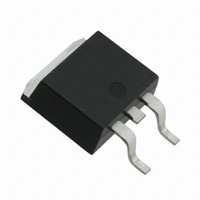
IPD30N06S4L-23
OptiMOS®-T2 Power-Transistor
Product Summary
V DS
60
V
R DS(on),max
23
mΩ
ID
30
A
Features
PG-TO252-3-11
• N-channel - Enhancement mode
• AEC Q101 qualified
• MSL1 up to 260°C peak reflow
• 175°C operating temperature
• Green Product (RoHS compliant)
• 100% Avalanche tested
Type
Package
Marking
IPD30N06S4L-23
PG-TO252-3-11
4N06L23
Maximum ratings, at T j=25 °C, unless otherwise specified
Parameter
Symbol
Continuous drain current
ID
Conditions
Value
T C=25°C, V GS=10V
30
T C=100°C, V GS=10V1)
21
Unit
A
Pulsed drain current1)
I D,pulse
T C=25°C
120
Avalanche energy, single pulse1)
E AS
I D=15A
18
mJ
Avalanche current, single pulse
I AS
-
30
A
Gate source voltage
V GS
-
±16
V
Power dissipation
P tot
T C=25°C
36
W
Operating and storage temperature
T j, T stg
-
-55 ... +175
°C
IEC climatic category; DIN IEC 68-1
-
-
55/175/56
−
Rev. 1.0
page 1
2009-03-23
�IPD30N06S4L-23
Parameter
Symbol
Values
Conditions
Unit
min.
typ.
max.
Thermal characteristics1)
Thermal resistance, junction - case
R thJC
-
-
-
4.2
SMD version, device on PCB
R thJA
minimal footprint
-
-
62
6 cm2 cooling area2)
-
-
40
K/W
Electrical characteristics, at T j=25 °C, unless otherwise specified
Static characteristics
Drain-source breakdown voltage
V (BR)DSS V GS=0V, I D= 1mA
60
-
-
Gate threshold voltage
V GS(th)
V DS=V GS, I D=10µA
1.2
1.7
2.2
Zero gate voltage drain current
I DSS
V DS=60V, V GS=0V,
T j=25°C
-
0.01
1
-
5
100
V DS=60V, V GS=0V,
T j=125°C2)
V
µA
Gate-source leakage current
I GSS
V GS=16V, V DS=0V
-
-
100
nA
Drain-source on-state resistance
R DS(on)
V GS=4.5V, I D=15A
-
27
40
mΩ
V GS=10V, I D=30A
-
18
23
Rev. 1.0
page 2
2009-03-23
�IPD30N06S4L-23
Parameter
Symbol
Values
Conditions
Unit
min.
typ.
max.
-
1200
1560
-
325
420
Dynamic characteristics1)
Input capacitance
C iss
Output capacitance
C oss
Reverse transfer capacitance
Crss
-
18
36
Turn-on delay time
t d(on)
-
4
-
Rise time
tr
-
1
-
Turn-off delay time
t d(off)
-
15
-
Fall time
tf
-
3
-
Gate to source charge
Q gs
-
4.9
6.4
Gate to drain charge
Q gd
-
2.1
4.2
Gate charge total
Qg
-
16.1
21
Gate plateau voltage
V plateau
-
4.1
-
V
-
-
30
A
-
-
120
0.6
0.95
1.3
V
-
10
-
ns
-
10
-
nC
V GS=0V, V DS=25V,
f =1MHz
V DD=30V, V GS=10V,
I D=30A, R G=3.5Ω
pF
ns
Gate Charge Characteristics1)
V DD=48V, I D=30A,
V GS=0 to 10V
nC
Reverse Diode
Diode continous forward current1)
IS
Diode pulse current1)
I S,pulse
Diode forward voltage
V SD
V GS=0V, I F=30A,
T j=25°C
Reverse recovery time1)
t rr
V R=30V, I F=I S,
di F/dt =100A/µs
Reverse recovery charge1)
Q rr
1)
T C=25°C
Specified by design. Not subject to production test.
2)
Device on 40 mm x 40 mm x 1.5 mm epoxy PCB FR4 with 6 cm 2 (one layer, 70 µm thick) copper area for drain
connection. PCB is vertical in still air.
Rev. 1.0
page 3
2009-03-23
�IPD30N06S4L-23
2 Drain current
P tot = f(T C); V GS ≥ 6 V
I D = f(T C); V GS ≥ 6 V
40
40
30
30
I D [A]
P tot [W]
1 Power dissipation
20
10
20
10
0
0
0
50
100
150
200
0
50
100
T C [°C]
150
200
T C [°C]
3 Safe operating area
4 Max. transient thermal impedance
I D = f(V DS); T C = 25 °C; D = 0
Z thJC = f(t p)
parameter: t p
parameter: D =t p/T
1000
101
0.5
100
100
0.1
0.05
Z thJC [K/W]
I D [A]
1 µs
10 µs
100 µs
0.01
10-1
single pulse
10
10-2
1 ms
10-3
1
0.1
1
10
100
10-5
10-4
10-3
10-2
10-1
100
t p [s]
V DS [V]
Rev. 1.0
10-6
page 4
2009-03-23
�IPD30N06S4L-23
5 Typ. output characteristics
6 Typ. drain-source on-state resistance
I D = f(V DS); T j = 25 °C
R DS(on) = f(I D); T j = 25 °C
parameter: V GS
parameter: V GS
120
40
6V
10 V
4V
4.5 V
5V
100
6V
35
R DS(on) [mΩ]
I D [A]
80
5V
60
4.5 V
40
4V
30
25
20
20
10 V
0
15
0
1
2
3
4
5
6
0
20
40
V DS [V]
60
80
100
120
140
180
I D [A]
7 Typ. transfer characteristics
8 Typ. drain-source on-state resistance
I D = f(V GS); V DS = 6V
R DS(on) = f(T j); I D = 30 A; V GS = 10 V
parameter: T j
120
36
-55 °C
100
32
25 °C
28
R DS(on) [mΩ]
I D [A]
80
60
175 °C
40
20
20
16
0
0
1
2
3
4
5
6
V GS [V]
Rev. 1.0
24
12
-60
-20
20
60
100
T j [°C]
page 5
2009-03-23
�IPD30N06S4L-23
9 Typ. gate threshold voltage
10 Typ. capacitances
V GS(th) = f(T j); V GS = V DS
C = f(V DS); V GS = 0 V; f = 1 MHz
parameter: I D
104
2.5
2
1.5
C [pF]
V GS(th) [V]
100 µA
10 µA
Ciss
103
Coss
1
102
0.5
Crss
101
0
-60
-20
20
60
100
140
0
180
5
10
15
T j [°C]
11 Typical forward diode characteristicis
12 Avalanche characteristics
IF = f(VSD)
I A S= f(t AV)
parameter: T j
parameter: T j(start)
103
100
102
10
25
30
25 °C
100 °C
I AV [A]
I F [A]
101
150 °C
1
175 °C
25 °C
0.6
0.8
100
0.1
0
0.2
0.4
1
1.2
1.4
V SD [V]
Rev. 1.0
20
V DS [V]
0.1
1
10
100
1000
t AV [µs]
page 6
2009-03-23
�IPD30N06S4L-23
13 Avalanche energy
14 Drain-source breakdown voltage
E AS = f(T j); I D = 15 A
V BR(DSS) = f(T j); I D = 1 mA
66
20
64
V BR(DSS) [V]
E AS [mJ]
15
10
62
60
5
58
56
0
25
75
125
-55
175
-15
T j [°C]
25
65
105
145
T j [°C]
15 Typ. gate charge
16 Gate charge waveforms
V GS = f(Q gate); I D = 30 A pulsed
parameter: V DD
10
V GS
9
Qg
8
12 V
48 V
7
V GS [V]
6
5
V g s(th)
4
3
2
Q g (th)
Q sw
1
Q gs
0
0
3
6
9
12
15
Q gate
Q gd
18
Q gate [nC]
Rev. 1.0
page 7
2009-03-23
�IPD30N06S4L-23
Published by
Infineon Technologies AG
81726 Munich, Germany
© Infineon Technologies AG 2009
All Rights Reserved.
Legal Disclaimer
The information given in this document shall in no event be regarded as a guarantee of conditions
or characteristics. With respect to any examples or hints given herein, any typical values stated
herein and/or any information regarding the application of the device, Infineon Technologies hereby
disclaims any and all warranties and liabilities of any kind, including without limitation, warranties
of non-infringement of intellectual property rights of any third party.
Information
For further information on technology, delivery terms and conditions and prices, please contact
the nearest Infineon Technologies Office (www.infineon.com).
Warnings
Due to technical requirements, components may contain dangerous substances.
For information on the types in question, please contact the nearest Infineon Technologies Office.
Infineon Technologies components may be used in life-support devices or systems only with the
express written approval of Infineon Technologies, if a failure of such components can reasonably be
expected to cause the failure of that life-support device or system or to affect the safety or
effectiveness of that device or system. Life support devices or systems are intended to be implanted
in the human body or to support and/or maintain and sustain and/or protect human life.
If they fail, it is reasonable to assume that the health of the user or other persons may be endangered.
Rev. 1.0
page 8
2009-03-23
�IPD30N06S4L-23
Revision History
Version
Date
Changes
Revision 1.0
Rev. 1.0
23.03.2009 Final data sheet
page 9
2009-03-23
�