PD - 95902
SMPS MOSFET
IRFBA90N20DPbF
HEXFET® Power MOSFET
Applications
High frequency DC-DC converters
l Lead-Free
l
VDSS
200V
RDS(on) max
ID
0.023Ω
98A
Benefits
l
l
l
Low Gate-to-Drain Charge to Reduce
Switching Losses
Fully Characterized Capacitance Including
Effective COSS to Simplify Design, (See
App. Note AN1001)
Fully Characterized Avalanche Voltage
and Current
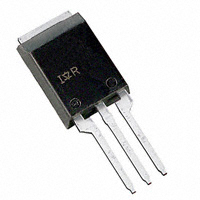
Super-220™
Absolute Maximum Ratings
Parameter
ID @ TC = 25°C
ID @ TC = 100°C
IDM
PD @TC = 25°C
VGS
dv/dt
TJ
TSTG
Continuous Drain Current, VGS @ 10V
Continuous Drain Current, VGS @ 10V
Pulsed Drain Current
Power Dissipation
Linear Derating Factor
Gate-to-Source Voltage
Peak Diode Recovery dv/dt
Operating Junction and
Storage Temperature Range
Soldering Temperature, for 10 seconds
Recommended Clip Force
Max.
98
71
Units
A
390
650
4.3
± 30
6.3
-55 to + 175
W
W/°C
V
V/ns
°C
300 (1.6mm from case )
20
N
Thermal Resistance
Parameter
RθJC
RθCS
RθJA
Notes
Junction-to-Case
Case-to-Sink, Flat, Greased Surface
Junction-to-Ambient
through
www.irf.com
Typ.
Max.
Units
–––
0.50
–––
0.23
–––
58
°C/W
are on page 8
1
09/15/04
�IRFBA90N20DPbF
Static @ TJ = 25°C (unless otherwise specified)
Parameter
Drain-to-Source Breakdown Voltage
∆V(BR)DSS/∆TJ Breakdown Voltage Temp. Coefficient
RDS(on)
Static Drain-to-Source On-Resistance
VGS(th)
Gate Threshold Voltage
V(BR)DSS
IDSS
Drain-to-Source Leakage Current
IGSS
Gate-to-Source Forward Leakage
Gate-to-Source Reverse Leakage
Min.
200
–––
–––
3.0
–––
–––
–––
–––
Typ.
–––
0.22
–––
–––
–––
–––
–––
–––
Max. Units
Conditions
–––
V
VGS = 0V, ID = 250µA
––– V/°C Reference to 25°C, ID = 1mA
0.023
Ω
VGS = 10V, ID = 59A
5.0
V
VDS = VGS, ID = 250µA
25
VDS = 200V, VGS = 0V
µA
250
VDS = 160V, VGS = 0V, TJ = 150°C
100
VGS = 30V
nA
-100
VGS = -30V
Dynamic @ TJ = 25°C (unless otherwise specified)
gfs
Qg
Qgs
Qgd
td(on)
tr
td(off)
tf
Ciss
Coss
Crss
Coss
Coss
Coss eff.
Parameter
Forward Transconductance
Total Gate Charge
Gate-to-Source Charge
Gate-to-Drain ("Miller") Charge
Turn-On Delay Time
Rise Time
Turn-Off Delay Time
Fall Time
Input Capacitance
Output Capacitance
Reverse Transfer Capacitance
Output Capacitance
Output Capacitance
Effective Output Capacitance
Min.
41
–––
–––
–––
–––
–––
–––
–––
–––
–––
–––
–––
–––
–––
Typ.
–––
160
45
75
23
160
39
77
6080
1040
150
7500
410
790
Max. Units
Conditions
–––
S
VDS = 50V, ID = 59A
240
ID = 59A
67
nC
VDS = 160V
110
VGS = 10V
–––
VDD = 100V
–––
I
D = 59A
ns
–––
RG = 1.2Ω
–––
VGS = 10V
–––
VGS = 0V
–––
VDS = 25V
–––
pF
ƒ = 1.0MHz
–––
VGS = 0V, VDS = 1.0V, ƒ = 1.0MHz
–––
VGS = 0V, VDS = 160V, ƒ = 1.0MHz
–––
VGS = 0V, VDS = 0V to 160V
Avalanche Characteristics
Parameter
EAS
IAR
EAR
Single Pulse Avalanche Energy
Avalanche Current
Repetitive Avalanche Energy
Typ.
Max.
Units
–––
–––
–––
960
59
65
mJ
A
mJ
Diode Characteristics
IS
ISM
VSD
trr
Qrr
ton
2
Parameter
Continuous Source Current
(Body Diode)
Pulsed Source Current
(Body Diode)
Diode Forward Voltage
Reverse Recovery Time
Reverse RecoveryCharge
Forward Turn-On Time
Min. Typ. Max. Units
Conditions
D
MOSFET symbol
98
––– –––
showing the
A
G
integral reverse
––– ––– 390
S
p-n junction diode.
––– ––– 1.5
V
TJ = 25°C, IS = 59A, VGS = 0V
––– 220 340
nS
TJ = 25°C, IF = 59A
––– 1.9 2.8
µC
di/dt = 100A/µs
Intrinsic turn-on time is negligible (turn-on is dominated by LS+LD)
www.irf.com
�IRFBA90N20DPbF
1000
1000
VGS
15V
12V
10V
8.0V
7.0V
6.0V
5.5V
BOTTOM 5.0V
VGS
15V
12V
10V
8.0V
7.0V
6.0V
5.5V
BOTTOM 5.0V
100
TOP
ID, Drain-to-Source Current (A)
ID, Drain-to-Source Current (A)
TOP
10
1
5.0V
0.1
100
5.0V
10
20µs PULSE WIDTH
Tj = 25°C
20µs PULSE WIDTH
Tj = 175°C
0.01
1
0.1
1
10
100
0.1
1
VDS, Drain-to-Source Voltage (V)
3.5
RDS(on) , Drain-to-Source On Resistance
100.00
10.00
T J = 25°C
1.00
VDS = 15V
20µs PULSE WIDTH
7.0
9.0
11.0
13.0
VGS, Gate-to-Source Voltage (V)
Fig 3. Typical Transfer Characteristics
www.irf.com
I D = 98A
3.0
T J = 175°C
15.0
2.5
(Normalized)
ID, Drain-to-Source Current (Α)
1000.00
5.0
100
Fig 2. Typical Output Characteristics
Fig 1. Typical Output Characteristics
0.10
10
VDS, Drain-to-Source Voltage (V)
2.0
1.5
1.0
0.5
V GS = 10V
0.0
-60
-40
-20
0
20
40
60
80
TJ , Junction Temperature
100 120 140 160 180
( ° C)
Fig 4. Normalized On-Resistance
Vs. Temperature
3
�IRFBA90N20DPbF
VGS = 0V,
f = 1 MHZ
Ciss = Cgs + Cgd, Cds SHORTED
Crss = Cgd
Coss = Cds + Cgd
C, Capacitance(pF)
10000
Ciss
Coss
1000
Crss
100
10
12.0
ID= 59A
VGS, Gate-to-Source Voltage (V)
100000
10.0
VDS= 160V
VDS= 100V
8.0
VDS= 40V
6.0
4.0
2.0
0.0
1
10
100
1000
0
20 40 60 80 100 120 140 160 180 200
VDS, Drain-to-Source Voltage (V)
QG Total Gate Charge (nC)
Fig 6. Typical Gate Charge Vs.
Gate-to-Source Voltage
Fig 5. Typical Capacitance Vs.
Drain-to-Source Voltage
10000
ID, Drain-to-Source Current (A)
ISD, Reverse Drain Current (A)
1000.00
1000
T J = 175°C
100.00
100
T J = 25°C
10.00
1.00
100µsec
10
1
VGS = 0V
1msec
10msec
Tc = 25°C
Tj = 175°C
Single Pulse
0.1
0.10
0.0
0.5
1.0
1.5
2.0
2.5
VSD, Source-toDrain Voltage (V)
Fig 7. Typical Source-Drain Diode
Forward Voltage
4
OPERATION IN THIS AREA
LIMITED BY R DS(on)
3.0
1
10
100
1000
VDS , Drain-toSource Voltage (V)
Fig 8. Maximum Safe Operating Area
www.irf.com
�IRFBA90N20DPbF
100
RD
V DS
LIMITED BY PACKAGE
VGS
I D , Drain Current (A)
80
D.U.T.
RG
+
-VDD
10V
60
Pulse Width ≤ 1 µs
Duty Factor ≤ 0.1 %
40
Fig 10a. Switching Time Test Circuit
VDS
20
90%
0
25
50
75
100
125
TC , Case Temperature
150
175
( °C)
10%
VGS
Fig 9. Maximum Drain Current Vs.
Case Temperature
td(on)
tr
t d(off)
tf
Fig 10b. Switching Time Waveforms
(Z thJC)
1
D = 0.50
0.1
Thermal Response
0.20
0.10
0.05
0.01
0.02
0.01
P DM
SINGLE PULSE
(THERMAL RESPONSE)
t1
t2
Notes:
1. Duty factor D =
2. Peak T
0.001
0.00001
0.0001
0.001
0.01
t1 / t 2
J = P DM x Z thJC
+TC
0.1
1
t 1, Rectangular Pulse Duration (sec)
Fig 11. Maximum Effective Transient Thermal Impedance, Junction-to-Case
www.irf.com
5
�IRFBA90N20DPbF
2000
15V
DRIVER
D.U.T
RG
+
V
- DD
IAS
20V
tp
1600
A
0.01Ω
Fig 12a. Unclamped Inductive Test Circuit
V(BR)DSS
tp
EAS , Single Pulse Avalanche Energy (mJ)
L
VDS
ID
TOP
24A
42A
BOTTOM
59A
1200
800
400
0
25
50
75
100
125
150
175
( °C)
Starting T , JJunction Temperature
Fig 12c. Maximum Avalanche Energy
Vs. Drain Current
I AS
Fig 12b. Unclamped Inductive Waveforms
Current Regulator
Same Type as D.U.T.
QG
10 V
50KΩ
12V
.2µF
.3µF
QGS
QGD
D.U.T.
VG
+
V
- DS
VGS
3mA
Charge
Fig 13a. Basic Gate Charge Waveform
6
IG
ID
Current Sampling Resistors
Fig 13b. Gate Charge Test Circuit
www.irf.com
�IRFBA90N20DPbF
Peak Diode Recovery dv/dt Test Circuit
Circuit Layout Considerations
• Low Stray Inductance
• Ground Plane
• Low Leakage Inductance
Current Transformer
+
D.U.T
+
-
-
+
RG
•
•
•
•
dv/dt controlled by RG
Driver same type as D.U.T.
ISD controlled by Duty Factor "D"
D.U.T. - Device Under Test
Driver Gate Drive
P.W.
Period
D=
+
-
VDD
P.W.
Period
VGS=10V
*
D.U.T. ISD Waveform
Reverse
Recovery
Current
Body Diode Forward
Current
di/dt
D.U.T. VDS Waveform
Diode Recovery
dv/dt
Re-Applied
Voltage
Body Diode
VDD
Forward Drop
Inductor Curent
Ripple ≤ 5%
ISD
* VGS = 5V for Logic Level Devices
Fig 14. For N-Channel HEXFET® Power MOSFETs
www.irf.com
7
�IRFBA90N20DPbF
Super-220 ( TO-273AA ) Package Outline
11.00 [.433]
10.00 [.394]
A
5.00 [.196]
4.00 [.158]
9.00 [.
8.00 [.
B
0.25 [
1.50 [.059]
0.50 [.020]
4
15.00 [.590]
14.00 [.552]
1
2
13.50 [.
12.50 [.
3
4.00 [.157]
3.50 [.138]
14.50 [.570]
13.00 [.512]
3X
2.55 [.100]
4X
1.30 [.051]
0.90 [.036]
0.25 [.010]
2X
B A
1.00 [.039]
0.70 [.028]
3.00 [.118]
2.50 [.099]
MOSFET
IGBT
Notes:
Repetitive rating; pulse width limited by
max. junction temperature.
Starting TJ = 25°C, L = 0.55mH
R G = 25Ω, IAS = 59A.
ISD ≤ 59A, di/dt ≤ 170A/µs, VDD ≤ V(BR)DSS,
Pulse width ≤ 300µs; duty cycle ≤ 2%.
Coss eff. is a fixed capacitance that gives the same charging time
as Coss while VDS is rising from 0 to 80% VDSS
Calculated continuous current based on maximum allowable
junction temperature. Package limitation current is 95A.
TJ ≤ 175°C
8
www.irf.com
�IRFBA90N20DPbF
Super-220 (TO-273AA) Part Marking Information
EXAMPLE: THIS IS AN IRFBA22N50A WITH
ASSEMBLY LOT CODE 1789
ASSEMBLED ON WW 19, 1997
IN THE ASSEMBLY LINE "C"
PART NUMBER
INTERNATIONAL RECTIFIER
LOGO
IRFBA22N50A
719C
17
89
ASSEMBLY LOT CODE
Note: "P" in assembly line position
indicates "Lead-Free"
DATE CODE
YEAR 7 = 1997
WEEK 19
LINE C
TOP
Super-220 not recommended for surface mount application.
Data and specifications subject to change without notice.
This product has been designed and qualified for the Industrial market.
Qualification Standards can be found on IR’s Web site.
IR WORLD HEADQUARTERS: 233 Kansas St., El Segundo, California 90245, USA Tel: (310) 252-7105
TAC Fax: (310) 252-7903
Visit us at www.irf.com for sales contact information.09/04
www.irf.com
9
�IMPORTANT NOTICE
The information given in this document shall in no
event be regarded as a guarantee of conditions or
characteristics (“Beschaffenheitsgarantie”) .
With respect to any examples, hints or any typical
values stated herein and/or any information
regarding the application of the product, Infineon
Technologies hereby disclaims any and all
warranties and liabilities of any kind, including
without limitation warranties of non-infringement
of intellectual property rights of any third party.
In addition, any information given in this document
is subject to customer’s compliance with its
obligations stated in this document and any
applicable legal requirements, norms and
standards concerning customer’s products and any
use of the product of Infineon Technologies in
customer’s applications.
The data contained in this document is exclusively
intended for technically trained staff. It is the
responsibility of customer’s technical departments
to evaluate the suitability of the product for the
intended application and the completeness of the
product information given in this document with
respect to such application.
For further information on the product, technology,
delivery terms and conditions and prices please
contact your nearest Infineon Technologies office
(www.infineon.com).
WARNINGS
Due to technical requirements products may
contain dangerous substances. For information on
the types in question please contact your nearest
Infineon Technologies office.
Except as otherwise explicitly approved by Infineon
Technologies in a written document signed by
authorized
representatives
of
Infineon
Technologies, Infineon Technologies’ products may
not be used in any applications where a failure of
the product or any consequences of the use thereof
can reasonably be expected to result in personal
injury.
�