Da ta S he et, D S 1, S ep . 2 00 2
DFE-T V2.2
Quad ISDN 4B3T Echocanceller
Digital Front End
PEF 24901, Version 2.2
W i r ed
Communications
N e v e r
s t o p
t h i n k i n g .
�Edition 2002-09-30
Published by Infineon Technologies AG,
St.-Martin-Strasse 53,
D-81541 München, Germany
© Infineon Technologies AG 10/22/02.
All Rights Reserved.
Attention please!
The information herein is given to describe certain components and shall not be considered as warranted
characteristics.
Terms of delivery and rights to technical change reserved.
We hereby disclaim any and all warranties, including but not limited to warranties of non-infringement, regarding
circuits, descriptions and charts stated herein.
Infineon Technologies is an approved CECC manufacturer.
Information
For further information on technology, delivery terms and conditions and prices please contact your nearest
Infineon Technologies Office in Germany or our Infineon Technologies Representatives worldwide.
Warnings
Due to technical requirements components may contain dangerous substances. For information on the types in
question please contact your nearest Infineon Technologies Office.
Infineon Technologies Components may only be used in life-support devices or systems with the express written
approval of Infineon Technologies, if a failure of such components can reasonably be expected to cause the failure
of that life-support device or system, or to affect the safety or effectiveness of that device or system. Life support
devices or systems are intended to be implanted in the human body, or to support and/or maintain and sustain
and/or protect human life. If they fail, it is reasonable to assume that the health of the user or other persons may
be endangered.
�DFE-T
PEF 24901
Data Sheet
Revision History:
2002-09-30
Previous Version:
Preliminary Data Sheet, DS1, 6.99
Page
DS1
Subjects (major changes since last revision)
update related documents
Chapter 1
conforms to ITU-T G.961 (not ITU-T I.430)
removed transparent channel
Chapter 1.1
Removed: Sophisticated power management for restricted power
mode
Removed: Monitor Time-Out (MTO) procedure
’LTD’ supported
Coefficients are no more retrievable by MON-8 commands
Figure 2,
Figure 6,
Table 1
logic symbol, pin conf., pin definitions: removed TP1, MTO
49, 53: no function, may be clamped to GND or VDD, respectively,
for compatibility to former versions
Chapter 1.3
added DELIC-PB, restriction on DELIC-PB, added Vbat, removed
solution with ELIC/IDEC (IDEC is discontinued)
Page 19
added note on CLOCK and FSC from same source
Figure 4
added connection between pin CLOCK and FSC
Table 1,
Table 2
changed: pins CLS 0..3 indicate 1 ms clock of the received frame.
Table 1
added footnote to PU/PD to TCK in case that JTAG is reset: e.g.
pull-down 47 kΩ
Table 1
removed from all PD/PU-pins: internal pullup (160 kΩ), added
footnote to PU/PD: e.g. 10 to 20 kΩ
Table 1
removed from PUP: (as soon as 1.FSC was received after reset)
Chapter 2.3
updated pinning changes
Table 3
added new table ’pin controlled test modes’
Chapter 3.1
removed dedicated block diagram
Chapter 3.2.2
replaced double last look criterion by real reaction times
Chapter 3.2.3
removed MON0 commands
Chapter 3.2.3
removed MTO function
Chapter 3.3
NOP is always set to one
added note: activation of the interface to the analog front end
Data Sheet
3
DS1, 2002-09-30
�DFE-T
PEF 24901
Data Sheet
Revision History:
2002-09-30
DS1
Chapter 3.5
removed from 1 kHz Frame: ’..40 kHz block clock’
Chapter 3.5.1
removed ’After successful synchronization, resynchronization will
occur if the syncword is not detected at the expected position in 64
consecutive frames.
The U-transceiver is synchronized, if it detects the syncword four
times consecutively within a period of 1 ms.’
Chapter 3.5.8,
removed U2A (not supported)
Chapter 3.5.11.2
Page 15,
Page 45
removed statement on performance on 0.6mm FTZ loops
Page 47
removed transparent messages
Table 12
refined description of signal detection, removed transparent channel
from table 4B3T signal elements
Chapter 3.5.9
refined description C/I-codes, changed validation times of C/Icommands, introduced LTD
Figure 17
updated state machine
Table 14
updated differences to the former state machine
Chapter 3.5.11.1 changes to state machine inputs:
C/I=AR1: no reset of receiver
C/I DC: state Deactivted is entered
Chapter 3.5.11.2 C/I-indication ’AI’ is also issued if test loop #1 has been activated
Page 64
Transparent state may also be entered by loopback 1 (not loopback
2)
Chapter 3.5.5
reworked chapter block error counter
Chapter 3.5.11.1 AR1, AR2, and AR4: added description of resolving loopback
requests
Chapter 3.6
changed chapter ’clock generation’,
Chapter 4.1
added to HW reset: ’...the 15.36 MHz ...’, ’ ...Note that FSC and
DCL...’
Chapter 4.2
the DFE-T goes in power down, if the U-transceiver is in state
’Deactivated’ and no MONITOR message is pending
Figure 26
testloops repeater: #4
Chapter 4.4.1.2
removed fig: ’Loopback #2’
Data Sheet
4
DS1, 2002-09-30
�DFE-T
PEF 24901
Data Sheet
Revision History:
2002-09-30
DS1
Figure 27
reworked
Chapter 4.4.1.3
DLB is always transparent
Chapter 4.4.2
reworked chapter RDS, added note with active states
Chapter 4.4.3
reworked operation
Chapter 4.4.4.2
added note: Data Through is pure test mode
Chapter 4.4.5
removed chapter: DSP access - not supported
Chapter 4.4.5
added note on pin 16 and 49
Table 18
changed coding of instruction BYPASS: ’1111’ (instead of ’11XX’)
Table 19
Table 20
restricted tables to commands and indications for DFE-T V2.2
Table 19
added note on response to 87xxh
Table 20
coding of MON-8 command AST = ’810X’ (not ’880X’);
AST is sent in upstream direction
Page 89
removed MON-0: not supported
Chapter 6
reworked fig. DFE-T V2.2 Register Map
Chapter 6.1
reworked register summary
Chapter 6.1.1
Chapter 6.1.2
new chapters added:
registers TEST and LOOP are evaluated and executed immediately
Chapter 6.2
reworked detailed register description
Chapter 7.1
updated
Chapter 7.2
updated
Chapter 7.3
updated
Figure 29
removed 100 pF load capacitance
Chapter 7.4
updated
Table 23
Table 25
updated
Chapter 7.5
removed clock input capacitance
Chapter 7.6
updated
For questions on technology, delivery and prices please contact the Infineon
Technologies Offices in Germany or the Infineon Technologies Companies and
Representatives worldwide: see our webpage at http://www.infineon.com.
Data Sheet
5
DS1, 2002-09-30
�DFE-T
PEF 24901
Preface
This document describes the interfaces, functions and behavior of the QUAD ISDN 4B3T
Echocanceller Digital Front End (DFE-T V2.2). The PEF 24901 is the digital part of a twochip solution featuring four times ISDN basic rate access at 144 kbit/s. DFE-T V2.2
supersedes the existing versions, DFE-T V1.1 and DFE-T V1.2.
The corresponding Analog Front End, the AFE V2.1 (PEF 24902) is described in detail
in the Data Sheet V1.1, the Delta Sheet V1.2 and the Data Sheet V2.1.
Organization of this Document
This Data Sheet is divided into 9 chapters. It is organized as follows:
• Chapter 1, Introduction
Gives a general description of the product and its family, lists the key features, and
presents some typical applications.
• Chapter 2, Pin Description
Lists pin locations with associated signals, categorizes signals according to function,
and describes signals.
• Chapter 3, Functional Description
Gives a functional overview of the device, shows a block diagram, specifies the
various interfaces and describes the provided U-transceiver functions.
• Chapter 4, Operational Description
Describes the reset and power-down behavior, illustrates the activation and
deactivation procedures, shows how the device is tested and how maintenance data
can be retrieved.
• Chapter 5, Monitor Commands
Lists all available Monitor Commands that can be applied.
• Chapter 6, Register Description
Lists all register functions that are addressable by the new MON-12 protocol.
• Chapter 7, Electrical Characteristics
Denotes the operating conditions and gives the exact interface timing.
• Chapter 8, Package Outlines
• Chapter 9, Appendix A: Standards and Specifications
Data Sheet
7
DS1, 2002-09-30
�DFE-T
PEF 24901
• Chapter 10, Terminology
• Chapter 11, Index
Related Documentation
•
•
•
•
•
DFE-T V2.2 Product Brief 03.01
DFE-T V2.2 Delta Sheet 11.01
AFE V1.1 Data Sheet 05.96
AFE V1.2 Delta Sheet 06.97
AFE V2.1 Data Sheet 01.01
Data Sheet
8
DS1, 2002-09-30
�DFE-T
PEF 24901
Table of Contents
Page
1
1.1
1.2
1.3
1.4
Introduction . . . . . . . . . . . . . . . . . . . . . . . . . . . . . . . . . . . . . . . . . . . . . . .
Features . . . . . . . . . . . . . . . . . . . . . . . . . . . . . . . . . . . . . . . . . . . . . . . . . . .
Logic Symbol . . . . . . . . . . . . . . . . . . . . . . . . . . . . . . . . . . . . . . . . . . . . . . .
System Integration . . . . . . . . . . . . . . . . . . . . . . . . . . . . . . . . . . . . . . . . . . .
Operational Overview . . . . . . . . . . . . . . . . . . . . . . . . . . . . . . . . . . . . . . . .
14
15
17
18
22
2
2.1
2.2
2.3
Pin Descriptions . . . . . . . . . . . . . . . . . . . . . . . . . . . . . . . . . . . . . . . . . . .
Pin Diagram . . . . . . . . . . . . . . . . . . . . . . . . . . . . . . . . . . . . . . . . . . . . . . . .
Pin Definitions and Functions . . . . . . . . . . . . . . . . . . . . . . . . . . . . . . . . . .
Pinning Changes from DFE-T V1.2 to DFE-T V2.2 . . . . . . . . . . . . . . . . . .
24
24
25
31
3
3.1
3.2
3.2.1
3.2.2
3.2.3
3.2.4
3.3
3.4
3.5
3.5.1
3.5.2
3.5.3
3.5.4
3.5.5
3.5.6
3.5.7
3.5.8
3.5.9
3.5.10
3.5.11
3.5.11.1
3.5.11.2
3.5.11.3
3.6
Functional Description . . . . . . . . . . . . . . . . . . . . . . . . . . . . . . . . . . . . . .
Functional Overview . . . . . . . . . . . . . . . . . . . . . . . . . . . . . . . . . . . . . . . . .
IOM®-2 Interface . . . . . . . . . . . . . . . . . . . . . . . . . . . . . . . . . . . . . . . . . . . .
IOM®-2 Interface Frame Structure . . . . . . . . . . . . . . . . . . . . . . . . . . . .
IOM®-2 Command/ Indicate Channel . . . . . . . . . . . . . . . . . . . . . . . . . .
IOM®-2 Monitor Channel . . . . . . . . . . . . . . . . . . . . . . . . . . . . . . . . . . . .
MON-12 Protocol . . . . . . . . . . . . . . . . . . . . . . . . . . . . . . . . . . . . . . . . . .
Interface to the Analog Front End . . . . . . . . . . . . . . . . . . . . . . . . . . . . . . .
General Purpose I/Os . . . . . . . . . . . . . . . . . . . . . . . . . . . . . . . . . . . . . . . .
U-Transceiver Functions . . . . . . . . . . . . . . . . . . . . . . . . . . . . . . . . . . . . . .
4B3T Frame Structure . . . . . . . . . . . . . . . . . . . . . . . . . . . . . . . . . . . . . .
Maintenance Channel . . . . . . . . . . . . . . . . . . . . . . . . . . . . . . . . . . . . . .
Coding from Binary to Ternary Data . . . . . . . . . . . . . . . . . . . . . . . . . . .
Decoding from Ternary to Binary Data . . . . . . . . . . . . . . . . . . . . . . . . .
Monitoring of Code Violations . . . . . . . . . . . . . . . . . . . . . . . . . . . . . . . .
Scrambler / Descrambler . . . . . . . . . . . . . . . . . . . . . . . . . . . . . . . . . . . .
4B3T Signal Elements . . . . . . . . . . . . . . . . . . . . . . . . . . . . . . . . . . . . . .
Awake Protocol . . . . . . . . . . . . . . . . . . . . . . . . . . . . . . . . . . . . . . . . . . .
C/I Codes . . . . . . . . . . . . . . . . . . . . . . . . . . . . . . . . . . . . . . . . . . . . . . . .
State Machine Notation . . . . . . . . . . . . . . . . . . . . . . . . . . . . . . . . . . . . .
LT Mode State Diagram . . . . . . . . . . . . . . . . . . . . . . . . . . . . . . . . . . . . .
State Machine Inputs . . . . . . . . . . . . . . . . . . . . . . . . . . . . . . . . . . . . .
State Machine Outputs . . . . . . . . . . . . . . . . . . . . . . . . . . . . . . . . . . .
State Description . . . . . . . . . . . . . . . . . . . . . . . . . . . . . . . . . . . . . . . .
Clock Generation . . . . . . . . . . . . . . . . . . . . . . . . . . . . . . . . . . . . . . . . . . . .
32
32
33
34
35
35
39
41
44
44
45
47
48
48
49
50
50
53
54
56
57
59
61
62
65
4
4.1
4.2
4.3
4.3.1
4.3.2
4.3.3
Operational Description . . . . . . . . . . . . . . . . . . . . . . . . . . . . . . . . . . . . .
Reset . . . . . . . . . . . . . . . . . . . . . . . . . . . . . . . . . . . . . . . . . . . . . . . . . . . . .
Power Down . . . . . . . . . . . . . . . . . . . . . . . . . . . . . . . . . . . . . . . . . . . . . . .
Layer 1 Activation/ Deactivation Procedures . . . . . . . . . . . . . . . . . . . . . . .
Complete Activation Initiated by Exchange . . . . . . . . . . . . . . . . . . . . . .
Complete Activation Initiated by TE . . . . . . . . . . . . . . . . . . . . . . . . . . . .
Complete Activation Initiated by Exchange with Repeater . . . . . . . . . .
66
66
66
67
68
69
70
Data Sheet
9
2002-09-30
�DFE-T
PEF 24901
Table of Contents
Page
4.3.4
4.3.5
4.3.6
4.3.7
4.3.8
4.4
4.4.1
4.4.1.1
4.4.1.2
4.4.1.3
4.4.2
4.4.3
4.4.4
4.4.4.1
4.4.4.2
4.4.4.3
4.4.4.4
4.4.4.5
4.4.4.6
4.4.4.7
4.4.4.8
4.4.5
Complete Activation Initiated by Terminal with Repeater . . . . . . . . . . .
Deactivation . . . . . . . . . . . . . . . . . . . . . . . . . . . . . . . . . . . . . . . . . . . . . .
Activation of Loop#1 . . . . . . . . . . . . . . . . . . . . . . . . . . . . . . . . . . . . . . .
Activation of Loop#4 . . . . . . . . . . . . . . . . . . . . . . . . . . . . . . . . . . . . . . .
Activation of Loop#2 . . . . . . . . . . . . . . . . . . . . . . . . . . . . . . . . . . . . . . .
Maintenance and Test Functions . . . . . . . . . . . . . . . . . . . . . . . . . . . . . . . .
Test Loopbacks . . . . . . . . . . . . . . . . . . . . . . . . . . . . . . . . . . . . . . . . . . .
Analog Loopback (No.1) . . . . . . . . . . . . . . . . . . . . . . . . . . . . . . . . . .
Loopback No.2 . . . . . . . . . . . . . . . . . . . . . . . . . . . . . . . . . . . . . . . . . .
Available Loopbacks by Register Map . . . . . . . . . . . . . . . . . . . . . . . .
Block Error Counter (RDS Error Counter) . . . . . . . . . . . . . . . . . . . . . . .
Bit Error Rate Counter . . . . . . . . . . . . . . . . . . . . . . . . . . . . . . . . . . . . . .
System Measurements . . . . . . . . . . . . . . . . . . . . . . . . . . . . . . . . . . . . .
Send Single Pulses Test Mode (SSP) . . . . . . . . . . . . . . . . . . . . . . . .
Data Through Mode (DT) . . . . . . . . . . . . . . . . . . . . . . . . . . . . . . . . . .
Reset Mode . . . . . . . . . . . . . . . . . . . . . . . . . . . . . . . . . . . . . . . . . . . .
Pulse Mask Measurement . . . . . . . . . . . . . . . . . . . . . . . . . . . . . . . . .
Power Spectral-Density Measurement . . . . . . . . . . . . . . . . . . . . . . .
Return-Loss Measurement . . . . . . . . . . . . . . . . . . . . . . . . . . . . . . . .
Quiet Mode Measurement . . . . . . . . . . . . . . . . . . . . . . . . . . . . . . . . .
Insertion Loss Measurement . . . . . . . . . . . . . . . . . . . . . . . . . . . . . . .
Boundary Scan . . . . . . . . . . . . . . . . . . . . . . . . . . . . . . . . . . . . . . . . . . .
5
Monitor Commands . . . . . . . . . . . . . . . . . . . . . . . . . . . . . . . . . . . . . . . . . 89
6
6.1
6.1.1
6.1.2
6.2
6.2.1
6.2.2
6.2.3
6.2.4
6.2.5
Register Description . . . . . . . . . . . . . . . . . . . . . . . . . . . . . . . . . . . . . . . . 91
Register Summary . . . . . . . . . . . . . . . . . . . . . . . . . . . . . . . . . . . . . . . . . . . 92
Reset of U-Transceiver Functions During Deactivation or with
CI Code RESET . . . . . . . . . . . . . . . . . . . . . . . . . . . . . . . . . . . . . . . . . . . .92
Mode Register Evaluation Timing . . . . . . . . . . . . . . . . . . . . . . . . . . . . . 93
Detailed Register Description . . . . . . . . . . . . . . . . . . . . . . . . . . . . . . . . . . 93
TEST - Test Register . . . . . . . . . . . . . . . . . . . . . . . . . . . . . . . . . . . . . . . 93
LOOP - Loopback Register . . . . . . . . . . . . . . . . . . . . . . . . . . . . . . . . . . 94
RDS - Block Error Counter Register . . . . . . . . . . . . . . . . . . . . . . . . . . . 95
BERC - Bit Error Rate Counter Register . . . . . . . . . . . . . . . . . . . . . . . . 96
LP_SEL - Line Port Selection Register . . . . . . . . . . . . . . . . . . . . . . . . . 96
7
7.1
7.2
7.3
7.4
7.4.1
7.4.2
Electrical Characteristics . . . . . . . . . . . . . . . . . . . . . . . . . . . . . . . . . . . . 97
Absolute Maximum Ratings . . . . . . . . . . . . . . . . . . . . . . . . . . . . . . . . . . . . 97
Operating Range . . . . . . . . . . . . . . . . . . . . . . . . . . . . . . . . . . . . . . . . . . . 97
DC Characteristics . . . . . . . . . . . . . . . . . . . . . . . . . . . . . . . . . . . . . . . . . . . 98
AC Characteristics . . . . . . . . . . . . . . . . . . . . . . . . . . . . . . . . . . . . . . . . . . . 99
Reset Timing . . . . . . . . . . . . . . . . . . . . . . . . . . . . . . . . . . . . . . . . . . . . 100
IOM®-2 Interface Timing . . . . . . . . . . . . . . . . . . . . . . . . . . . . . . . . . . . 101
Data Sheet
10
71
72
73
74
75
76
77
77
78
78
81
81
82
82
82
83
83
83
83
83
83
84
2002-09-30
�DFE-T
PEF 24901
Table of Contents
Page
7.4.3
7.4.4
7.5
7.6
7.6.1
7.6.2
Interface to the Analog Front End . . . . . . . . . . . . . . . . . . . . . . . . . . . .
Boundary Scan Timing . . . . . . . . . . . . . . . . . . . . . . . . . . . . . . . . . . . .
Capacitances . . . . . . . . . . . . . . . . . . . . . . . . . . . . . . . . . . . . . . . . . . . . . .
Power Supply . . . . . . . . . . . . . . . . . . . . . . . . . . . . . . . . . . . . . . . . . . . . . .
Supply Voltage . . . . . . . . . . . . . . . . . . . . . . . . . . . . . . . . . . . . . . . . . . .
Power Consumption . . . . . . . . . . . . . . . . . . . . . . . . . . . . . . . . . . . . . .
8
Package Outlines . . . . . . . . . . . . . . . . . . . . . . . . . . . . . . . . . . . . . . . . . . 105
9
Appendix A: Standards and Specifications . . . . . . . . . . . . . . . . . . . . 106
10
Terminology . . . . . . . . . . . . . . . . . . . . . . . . . . . . . . . . . . . . . . . . . . . . . . 107
11
Index . . . . . . . . . . . . . . . . . . . . . . . . . . . . . . . . . . . . . . . . . . . . . . . . . . . . 110
Data Sheet
11
102
103
104
104
104
104
2002-09-30
�DFE-T
PEF 24901
List of Figures
Figure 1
Figure 2
Figure 3
Figure 4
Figure 5
Figure 6
Figure 7
Figure 8
Figure 9
Figure 10
Figure 11
Figure 12
Figure 13
Figure 14
Figure 15
Figure 16
Figure 17
Figure 18
Figure 19
Figure 20
Figure 21
Figure 22
Figure 23
Figure 24
Figure 25
Figure 26
Figure 27
Figure 28
Figure 29
Figure 30
Figure 31
Figure 32
Data Sheet
Page
DFE-T/ AFE 2nd Generation Chip Set . . . . . . . . . . . . . . . . . . . . . . . . . 14
Logic Symbol . . . . . . . . . . . . . . . . . . . . . . . . . . . . . . . . . . . . . . . . . . . . 17
16-Line Card Application with DELIC-PB Solution. . . . . . . . . . . . . . . . 18
Connecting Two AFE/DFE-T Chip Sets . . . . . . . . . . . . . . . . . . . . . . . . 19
Recommended Clocking Scheme for More Than Two
DFE-T/AFE Chip Sets . . . . . . . . . . . . . . . . . . . . . . . . . . . . . . . . . . . . . 21
Pin Configuration . . . . . . . . . . . . . . . . . . . . . . . . . . . . . . . . . . . . . . . . . 24
Block Diagram and Data Flow Diagram (DFE-T V2.2 + AFE V2.1) . . . 32
Clock Supply and Data Exchange between Master and Slave . . . . . . 33
Multiplexed Frame Structure of the IOM®-2 Interface . . . . . . . . . . . . . 35
Handshake Protocol with a 2-Byte Monitor Message/Response . . . . . 37
Abortion of Monitor Channel Transmission . . . . . . . . . . . . . . . . . . . . . 39
Interface to the Analog Front End . . . . . . . . . . . . . . . . . . . . . . . . . . . . 41
Frame Structure on SDX/SDR . . . . . . . . . . . . . . . . . . . . . . . . . . . . . . . 42
Awake Procedure Initiated by the LT . . . . . . . . . . . . . . . . . . . . . . . . . . 53
Awake Procedure Initiated by the NT . . . . . . . . . . . . . . . . . . . . . . . . . 54
State Diagram Example . . . . . . . . . . . . . . . . . . . . . . . . . . . . . . . . . . . . 56
LT State Diagram . . . . . . . . . . . . . . . . . . . . . . . . . . . . . . . . . . . . . . . . . 57
Activation Initiated by Exchange . . . . . . . . . . . . . . . . . . . . . . . . . . . . . 68
Activation Initiated by TE . . . . . . . . . . . . . . . . . . . . . . . . . . . . . . . . . . . 69
Activation with Repeater Initiated by LT. . . . . . . . . . . . . . . . . . . . . . . . 70
Activation with Repeater Initiated by TE . . . . . . . . . . . . . . . . . . . . . . . 71
Deactivation (Always Initiated by the Exchange) . . . . . . . . . . . . . . . . . 72
Activation of Loop#1 . . . . . . . . . . . . . . . . . . . . . . . . . . . . . . . . . . . . . . 73
Activation of Loop#1A (Repeater) . . . . . . . . . . . . . . . . . . . . . . . . . . . . 74
Activation of Loop#2 . . . . . . . . . . . . . . . . . . . . . . . . . . . . . . . . . . . . . . 75
Test Loopbacks . . . . . . . . . . . . . . . . . . . . . . . . . . . . . . . . . . . . . . . . . . 77
Loopbacks Featured by Register LOOP . . . . . . . . . . . . . . . . . . . . . . . 80
DFE-T V2.2 Register Map . . . . . . . . . . . . . . . . . . . . . . . . . . . . . . . . . . 91
Input/Output Waveform for AC Tests . . . . . . . . . . . . . . . . . . . . . . . . . . 99
Reset Timing . . . . . . . . . . . . . . . . . . . . . . . . . . . . . . . . . . . . . . . . . . . 100
IOM®-2 Interface Timing (Double Clock Mode). . . . . . . . . . . . . . . . . 101
Boundary Scan Timing. . . . . . . . . . . . . . . . . . . . . . . . . . . . . . . . . . . . 103
12
2002-09-30
�DFE-T
PEF 24901
List of Tables
Table 1
Table 2
Table 3
Table 4
Table 5
Table 6
Table 7
Table 8
Table 9
Table 10
Table 11
Table 12
Table 13
Table 14
Table 15
Table 16
Table 17
Table 18
Table 19
Table 20
Table 21
Table 22
Table 23
Table 24
Table 25
Table 26
Table 27
Data Sheet
Page
Pin Definitions and Functions . . . . . . . . . . . . . . . . . . . . . . . . . . . . . . . 25
Pinning Changes . . . . . . . . . . . . . . . . . . . . . . . . . . . . . . . . . . . . . . . . . 31
Pin Controlled Test Modes with DFE-T V2.2 . . . . . . . . . . . . . . . . . . . . 31
IOM®-2 Data Rates . . . . . . . . . . . . . . . . . . . . . . . . . . . . . . . . . . . . . . . 34
Assignments of IOM® Channels to Time-Slots No. on
SDX/SDR and Line Ports No. . . . . . . . . . . . . . . . . . . . . . . . . . . . . . . . 41
Coding of the 4B3T Data Pulse (AOUT/BOUT) . . . . . . . . . . . . . . . . . . 42
Frame Structure for Downstream Transmission LT to NT . . . . . . . . . . 45
Frame Structure for Upstream Transmission NT to LT . . . . . . . . . . . . 46
MMS 43 Coding Table . . . . . . . . . . . . . . . . . . . . . . . . . . . . . . . . . . . . . 48
4B3T Decoding Table . . . . . . . . . . . . . . . . . . . . . . . . . . . . . . . . . . . . . 49
Coding of the 4B3T Signal Elements . . . . . . . . . . . . . . . . . . . . . . . . . . 51
4B3T Signal Elements . . . . . . . . . . . . . . . . . . . . . . . . . . . . . . . . . . . . . 52
Command / Indicate Codes . . . . . . . . . . . . . . . . . . . . . . . . . . . . . . . . . 55
Differences to the former LT-SM of the DFE-T V1.x . . . . . . . . . . . . . . 58
Timers . . . . . . . . . . . . . . . . . . . . . . . . . . . . . . . . . . . . . . . . . . . . . . . . . 61
Active States . . . . . . . . . . . . . . . . . . . . . . . . . . . . . . . . . . . . . . . . . . . . 81
Boundary Scan Cells. . . . . . . . . . . . . . . . . . . . . . . . . . . . . . . . . . . . . . 84
TAP Controller Instructions: . . . . . . . . . . . . . . . . . . . . . . . . . . . . . . . . 86
Defined MON-8 Commands for DFE-T V2.2 . . . . . . . . . . . . . . . . . . . . 89
Defined MON-8 Indications for DFE-T V2.2. . . . . . . . . . . . . . . . . . . . . 89
Register Map Reference Table . . . . . . . . . . . . . . . . . . . . . . . . . . . . . . 92
Reset of U-Transceiver Functions During Deactivation or
with CI Code RESET . . . . . . . . . . . . . . . . . . . . . . . . . . . . . . . . . . . . . . 93
IOM®-2 Dynamic Input Characteristics . . . . . . . . . . . . . . . . . . . . . . . 101
IOM®-2 Dynamic Output Characteristics . . . . . . . . . . . . . . . . . . . . . . 102
Interface Signals of AFE and DFE-T . . . . . . . . . . . . . . . . . . . . . . . . . 102
Boundary Scan Dynamic Timing Requirements . . . . . . . . . . . . . . . . 103
Power Consumption . . . . . . . . . . . . . . . . . . . . . . . . . . . . . . . . . . . . . 104
13
2002-09-30
�DFE-T
PEF 24901
Introduction
1
Introduction
The Quad ISDN 4B3T Echocanceller Digital Front End (DFE-T) is the digital part of an
optimized two-chip solution featuring 4x ISDN basic rate access at 144 kbit/s. The PEF
24901 is designed to provide in conjunction with the Quad ISDN Echocanceller Analog
Front End (PEF 24902 V2.1) full duplex data transmission at the U-reference point
according to FTZ Guideline 1TR 220, ETSI TS 102 080 and ITU-T G.961 standards.
The DFE-T 2nd generation has been completely reengineered to guarantee the
availability of the well proved DFE-T/AFE solution over the year 2000. PEF 24901 V2.2
is downwards pin compatible and functionally equivalent to the DFE-T V1.x. Thus, line
card manufacturers can make use of the most advanced process technology without the
need to change their current design (besides the changeover to 3.3 V power supply).
No software changes are required if the DFE-T V2.2 is deployed in existing DFE-T V1.x
solutions. Some new features are provided such as enhanced monitoring and test
functions. The data rate is programmable from 1 Mbit/s to 4 Mbit/s.
15.36MHz
Hybrid
4x U
Hybrid
Hybrid
AFE V2.1
DFE-T V2.2
PEF 24902
PEF 24901
IOM®-2
Hybrid
Relay Driver/
Power Controller
Figure 1
chipset
DFE-T/ AFE 2nd Generation Chip Set
The output and input pins are throughout 5 V TTL compatible although the PEF 24901
is processed in advanced 3.3 V CMOS technology. A power down state with very low
power consumption is featured.
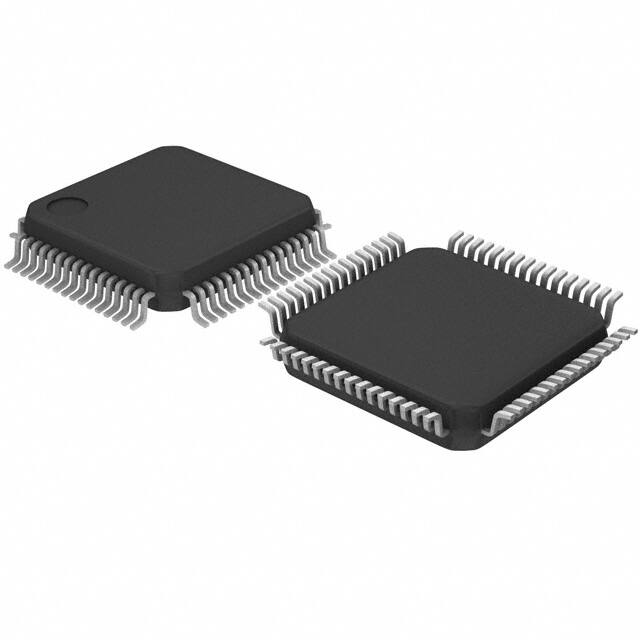
The PEF 24901 comes in a P-MQFP-64 package.
Data Sheet
14
2002-09-30
�Quad ISDN 4B3T Echocanceller Digital Front End
DFE-T V2.2
PEF 24901
Version 2.2
1.1
Features
U-Interface
• Digital part of a two-chip solution featuring full duplex
data transmission and reception over two-wire metallic
subscriber loops providing 4x ISDN basic rate access
P-MQFP-64-1, -2, -3, -8
at 144 kbit/s
• Conforms to:
– FTZ 1TR 220 (1991)
– ETSI TS 102 080 V1.3.1 (1998)
– ITU-T G.961 (1995)
• 4B3T-block code at 120-kHz symbol rate
• Subscriber loop length without repeater:
– up to 4.2 km on 0.4 mm wire
• LT mode
• 1 kbit/s maintenance channel for transmission of data loopback commands and
detected transmission errors
• Activation/ deactivation controller
• Adaptive echo cancellation and equalization
• Automatic gain control and polarity adaption
• Clock recovery (frame and bit synchronization)
• Transmission error counters for line monitoring
• Remote and local control of test loops
System Interface
• IOM®-2 interface with programmable data rates (1 Mbit/s to 4 Mbit/s)
• 4 relay driver pins per port addressable by Monitor command
• 2 status pins per port accessible via Monitor channel
Type
Package
PEF 24901
P-MQFP-64
Data Sheet
15
2002-09-30
�DFE-T
PEF 24901
Introduction
Other Features
•
•
•
•
•
•
•
Software compatible to the PEF 24901 V1.2
Inputs and outputs 5 V TTL compatible
DOUT (open drain) accepts pull-up to 3.3 V or 5 V
Advanced low power CMOS technology
+3.3 V ±0.3 V Power Supply
Extended temperature range (– 40 ... to 85 °C) available
Boundary-Scan, JTAG IEEE 1149.1
Add-On Features and Differences with Respect to DFE-T V1.2
•
•
•
•
•
•
•
•
•
•
•
•
+3.3 V instead of +5 V power supply
LT-RP mode is not supported
DOUT configurable either as open drain or push-pull (tristate) output
Bit Error Rate measurement per port
Additional digital local loops
C/I code ’HI’ are no more supported
C/I code mnemonics adapted to 2B1Q notation for consistency reasons - coding has
been retained unchanged
State machine notation is aligned to that of 2B1Q for consistency reasons
New MON-12 class features internal register access
Coefficients are no more retrievable by MON-8 commands
The Boundary-Scan instructions ’CLAMP’ and HIGHZ are supported in version 2.2
(’SSP’ is omitted since for this function a dedicated pin is reserved)
JTAG Boundary-Scan with dedicated reset line TRST
(replaces power-on reset functionality)
Data Sheet
16
2002-09-30
�DFE-T
PEF 24901
Introduction
1.2
Logic Symbol
+3.3V
Boundary Scan
0V
4
VDD
VSS
IOM®-2 Interface
AFE/DFE Interface
TMS TCK TDI TDO TRST
4
FSC
SDX
DCL
SDR
4
DIN
PDM0 .. 3
DOUT
IOM®-2 Mode Pins
SLOT0
SLOT1
4
PUP
D0A, D0B, D0C, D0D
CL15
4
D3A, D3B, D3C, D3D
2
2
CLS0
ST00, ST01
CLS1
CLS2
ST30, ST31
CLS3
DT SSP
RES
Mode Settings
Figure 2
Data Sheet
Clocks
Relay Driver/ Status Pins
DFE-T V2.2
logsym
Logic Symbol
17
2002-09-30
�DFE-T
PEF 24901
Introduction
1.3
System Integration
This paragraph shows how the DFE-T V2.2 may be integrated in systems using other
Infineon ISDN devices. The PEF 24901 V2.2 is optimized for use in the following
applications:
– Digital Line Cards for Central Office
– Digital Line Cards for Access Networks (LT mode only)
– PBX applications (LT mode only)
Figure 3 illustrates a line card solution. The DELIC-PB (PEB 20571) supersedes the
ELIC® (PEB 20550) and features up to 32 HDLC controllers on-chip. The DELIC controls
up to 4 devices of DFE-T V2.2 on a single IOM®-2 interface. In this application an
additional clock doubler is necessary to generate the 8.192 MHz DCL clock for the DFET derived from the 4.096 MHz BCL clock of the DELIC.
Test Unit
1
2
AFE
V2.1
DFE-T
V2.2
PEF 24902
PEF 24901
PCM HW
IOM-2
DELIC-PB
PEB 20571
Signalling
3
4
Q-IHPC
RAM
PEB 2426
µC
VBAT
appl_delic
Figure 3
Data Sheet
16-Line Card Application with DELIC-PB Solution
18
2002-09-30
�DFE-T
PEF 24901
Introduction
Figure 4 shows how a 8 channel line card application is realized by use of two AFE/
DFE-T chip sets:
One AFE PLL generates the synchronized 15.36 MHz clock and provides the master
clock at pin CL15 for the other 3 devices. The internal PLL of the first AFE synchronizes
the 15.36 MHz master clock onto a PTT reference clock of either 8 kHz or 2048 kHz.
Infineon recommends to feed the FSC clock input of the DFE-T V2.2 and the PLL
reference clock input (pin CLOCK) of the AFE from the same clock source.
The PLL of the second AFE is deactivated. The 15.36 MHz master clock is applied at pin
CL15. CL15 is configured as input if XIN is clamped either to VDD or to VSS. Pin XOUT
has to be left open and CLOCK shall be tied to GND.
15.36 MHz
Hybrid
4x U
Hybrid
XIN
XOUT
8/ 2048 kHz PTT
Reference Cock
CLOCK
IOM®-2
PDM0..3
SDR
AFE V2.1
PEF 24902
Hybrid
Hybrid
CL15
DFE-T V2.2
PEF 24901
SDX
15.36MHz
CL15
1-4MBit/s
15.36MHz
CL15
Hybrid
4x U
Hybrid
CL15
SDX
AFE V2.1
PEF 24902
Hybrid
FSC
DCL
DIN
DOUT
SDR
DFE-T V2.2
PEF 24901
PDM0..3
Hybrid
XIN
XOUT
CLOCK
VDD/
VSS
N.C.
VSS
clkchain1
Figure 4
Connecting Two AFE/DFE-T Chip Sets
The DFE-T devices are supplied by the first AFE at pin CL15 with the synchronized
15.36 MHz clock. The IOM®-2 channels the DFE-T devices are assigned to can be
programmed by the two slot pins. Starting from channel no. 0/4/8/12 always four
subsequent channels are occupied.
Data Sheet
19
2002-09-30
�DFE-T
PEF 24901
Introduction
Alternatively the clocking scheme as shown in Figure 5 may be applied if more than 3
devices are to be clocked (e.g. in a 16-channel line card application). Instead to supply
the 2nd AFE with the master clock at pin CL15, here the 15.36 MHz master clock is input
at pin XIN. Thereby pin CL15 is configured as output and passes the 15.36 MHz clock
on to the attached DFE-T. If the clock chain is extended in the same way by another two
AFE/DFE-T chip sets a 16-channel line card application can be realized with just one
single crystal. Note that the 15.36 MHz clock is inverted once by the AFE if it is input at
XIN and output at CL15. This way the duty cycle is recovered again.
Data Sheet
20
2002-09-30
�DFE-T
PEF 24901
Introduction
15.36MHz
Hybrid
4x U
Hybrid
XIN
XOUT
8/ 2048kHz PTT
Reference Cock
CLOCK
IOM®-2
PDM0..3
SDR
AFE V2.1
PEF 24902
Hybrid
Hybrid
CL15
SDX
15.36MHz
FSC
DCL
DIN
DOUT
DFE-T V2.2
PEF 24901
CL15
15.36MHz
Hybrid
4x U
Hybrid
XIN
N.C.
VSS
XOUT
CLOCK
1-4MBit/s
PDM0..3
SDR
AFE V2.1
SDX
PEF 24902
Hybrid
Hybrid
CL15
15.36MHz
DFE-T V2.2
PEF 24901
CL15
15.36MHz
Hybrid
4x U
Hybrid
Hybrid
Hybrid
XIN
N.C.
VSS
XOUT
CLOCK
AFE V2.1
PEF 24902
CL15
clkchain2
Figure 5
Data Sheet
Recommended Clocking Scheme for More Than Two DFE-T/AFE
Chip Sets
21
2002-09-30
�DFE-T
PEF 24901
Introduction
1.4
Operational Overview
The DFE-T V2.2 operates always in LT mode.
System Interface Configurations
The following parameters of the system interface are configurable:
• Open Drain/ Push-Pull Mode
Configured as open drain the output pin DOUT is floating and a pull-up resistor is
required. In push-pull mode the output pin is high impedance outside the active time
slots.
• IOM®-2 Channel Assignment
IOM®-2 channels are always assigned in blocks of four.
SLOT1
SLOT0
Assigned IOM®-2 Channels
0
0
0 .. 3
0
1
4 .. 7
1
0
8 .. 11
1
1
12 .. 15
• IOM®-2 Data Rates
DCL Frequency
[kHz]
Data Rate
[kBit/s]
IOM®-2 Channels
2048
1024
4
3072
1536
6
4096
2048
8
6144
3072
12
8192
4096
16
Send Single Pulses Test Mode
In test mode ’Send Single Pulses’ +1 pulses spaced by 1 ms are transmitted on all U
lines. The test mode is activated by pin SSP= set to ’1’. The SSP test function can be as
well stimulated by C/I= SSP besides the fact that the HW selection impacts all line ports
while the SW selection impacts only the chosen line.
Data Sheet
22
2002-09-30
�DFE-T
PEF 24901
Introduction
Data Through Mode
In test mode ’Data Through’ the U-transceiver is forced to enter the ’Transparent’ state
and to issue U4 independently of the wake-up protocol. The DT test mode is activated
by pin DT= set to ’1’. The DT test function can be as well stimulated by C/I= DT besides
the fact that the HW selection impacts all line ports while the SW selection impacts only
the chosen line.
Data Sheet
23
2002-09-30
�DFE-T
PEF 24901
Pin Descriptions
2
Pin Descriptions
2.1
Pin Diagram
48 47 46 45 44 43 42 41 40 39 38 37 36 35 34 33
32
31
30
52
29
53
28
54
27
55
26
56
25
P-MQFP-64
57
24
58
23
59
22
60
21
61
20
62
19
63
18
64
17
1 2 3 4 5 6 7 8 9 10 11 12 13 14 15 16
Figure 6
Data Sheet
DIN
DOUT
N.C.
TDI
TDO
CL15
SDR
VDD
PDM3
PDM2
VSS
PDM1
PDM0
DCL
FSC
49
50
51
TMS
N.C.
D2D
D3D
CLS2
N.C.
VDD
SLOT0
SSP
VSS
N.C.
N.C.
RES
CLS3
DT
TRST
TCK
VDD
D1B
N.C.
D0B
D3A
D2A
D1D
D0D
D3C
SLOT1
D2C
D1C
D0C
VSS
D3B
D2B
(top view)
PUP
D1A
D0A
CLS0
ST00
ST01
ST10
VSS
ST11
ST20
VDD
ST21
CLS1
ST30
ST31
SDX
pinning
Pin Configuration
24
2002-09-30
�DFE-T
PEF 24901
Pin Descriptions
2.2
Table 1
Pin No.
Pin Definitions and Functions
Pin Definitions and Functions
Symbol
Input (I)
Output (O)
Function
IOM®-2 Interface
13
FSC
I
Frame Synchronization Clock (8 kHz)
the start of the first B1-channel in time-slot 0 is
marked,
FSC is expected to be ’1’ for at least two DCL
periods.
12
DCL
I
Data Clock
clock rate ranges from 2048 to 8192 kHz
(1024 to 4096 kBit/s)
14
DIN
I
Data In
input of IOM®-2 data synchronous to DCL
clock
15
DOUT
O
(OD/PuP)
Data Out
output of IOM®-2 data synchronous to DCL
clock
Mode Selection Pins
60
RES
I
Reset
triggers asynchronous HW reset, Schmitt
trigger input
’1’= inactive
’0’= active
(see Table 3)
55
SLOT0
I
IOM®-2 Channel Slot Selection 0
assigns IOM®-2 channels in blocks of 4
SLOT1, 0:
’00’= IOM®-2 channels 0 to 3
’01’= IOM®-2 channels 4 to 7
’10’= IOM®-2 channels 8 to 11
’11’= IOM®-2 channels 12 to 15
Data Sheet
25
2002-09-30
�DFE-T
PEF 24901
Pin Descriptions
Table 1
Pin Definitions and Functions (cont’d)
Pin No.
Symbol
Input (I)
Output (O)
Function
45
SLOT1
I
(PD)
IOM®-2 Channel Slot Selection 1
assigns IOM®-2 channels in blocks of 4
32
PUP
I
(PD)
Push Pull Mode
in push pull mode ’0’ and ’1’ is actively driven
during an occupied time slot outside the active
time slots DOUT is high impedance (tristate)
’1’= configures DOUT as push/pull output
’0’= configures DOUT as open drain output
56
SSP
I
Send Single Pulses (SSP) Test Mode
enables/disables SSP test mode
’1’= SSP test mode enabled,
+1 pulses are issued at the four line ports in
1ms intervals
’0’= SSP test mode disabled
This pin function corresponds to the SW
selection by C/I= SSP besides the fact that the
HW selection impacts all line ports while the
SW selection impacts only the chosen line
Note: For activation of SSP test mode, pin
RES and pin DT must be inactive
(see Table 3)
62
DT
I
Data Through (DT) Test Mode
enables/disables DT test mode
’1’= DT test mode enabled,
the U-transceiver is forced on all line ports to
enter the ’Transparent’ state
’0’= DT test mode disabled
This pin function corresponds to the SW
selection by C/I= DT besides the fact that the
HW selection impacts all line ports while the
SW selection impacts only the chosen line
Note: For activation of DT test mode, pin RES
and pin SSP must be inactive
(see Table 3)
Data Sheet
26
2002-09-30
�DFE-T
PEF 24901
Pin Descriptions
Table 1
Pin No.
Pin Definitions and Functions (cont’d)
Symbol
Input (I)
Output (O)
Function
Interface to the Analog Front End
4
CL15
I
15.36 MHz Master Clock Input
11
PDM0
I
Pulse Density Modulated Receive Data of Line
Port 0
pulse density modulated bit stream from the
PEB 24902 Quad AFE that is output from the
second-order sigma-delta ADC
10
PDM1
I
Pulse Density Modulated Receive Data of Line
Port 1
pulse density modulated bit stream from the
PEB 24902 Quad AFE that is output from the
second-order sigma-delta ADC
8
PDM2
I
Pulse Density Modulated Receive Data of Line
Port 2
pulse density modulated bit stream from the
PEB 24902 Quad AFE that is output from the
second-order sigma-delta ADC
7
PDM3
I
Pulse Density Modulated Receive Data of Line
Port 3
pulse density modulated bit stream from the
PEB 24902 Quad AFE that is output from the
second-order sigma-delta ADC
5
SDR
I
Serial Data Receive Line
interface signal from the PEB 24902 Quad
AFE that transports level detect information for
the wake-up recognition of all 4 lines
Data Sheet
27
2002-09-30
�DFE-T
PEF 24901
Pin Descriptions
Table 1
Pin Definitions and Functions (cont’d)
Pin No.
Symbol
Input (I)
Output (O)
Function
17
SDX
O
Serial Data Transmit Line
interface to the PEB 24902 Quad AFE for the
transmit and control data. Transmission is
based on clock CL15 (15.36 Mbit/s). For each
line port the following bits are exchanged:
TD0, TD1: Transmit data
RANGE: Range select
LOOP: Analog loopback switch
PDOW: Power down/power up
Synchronization information
Relay Driver/ Status Pins
30,
35,
42,
47
D0A
D0B
D0C
D0D
O
Relay Driver Pins of Line Port 0
addressable via MON-8 command in IOM®-2
channel 0/4/8/12. The logic values of the bit
positions A,B,C, D of the MON-8 command
’SETD’ determine the output setting.
Default value after pin-reset is low. C/I-code
reset does not affect the current status.
31,
37,
43,
48
D1A
D1B
D1C
D1D
O
Relay Driver Pins of Line Port 1
addressable via MON-8 command in IOM®-2
channel 1/5/9/13. The logic values of the bit
positions A,B,C, D of the MON-8 command
’SETD’ determine the output setting.
Default value after pin-reset is low. C/I-code
reset does not affect the current status.
33,
39,
44,
50
D2A
D2B
D2C
D2D
O
Relay Driver Pins of Line Port 2
addressable via MON-8 command in IOM®-2
channel 2/6/10/14. The logic values of the bit
positions A,B,C, D of the MON-8 command
’SETD’ determine the output setting.
Default value after pin-reset is low. C/I-code
reset does not affect the current status.
Data Sheet
28
2002-09-30
�DFE-T
PEF 24901
Pin Descriptions
Table 1
Pin Definitions and Functions (cont’d)
Pin No.
Symbol
Input (I)
Output (O)
Function
34,
40,
46,
51
D3A
D3B
D3C
D3D
O
Relay Driver Pins of Line Port 3
addressable via MON-8 command in IOM®-2
channel 3/7/11/15. The logic values of the bit
positions A,B,C, D of the MON-8 command
’SETD’ determine the output setting.
Default value after pin-reset is low. C/I-code
reset does not affect the current status.
28,
27
ST00
ST01
I
Status Pin of Line Port 0
change of status is passed to IOM®-2 channel
0/4/8/12 via the MON-8 message ’AST’ at bit
positions S0, S1.
Connect to either VDD or VSS if not used.
26,
24
ST10
ST11
I
Status Pin of Line Port 1
change of status is passed to IOM®-2 channel
1/5/9/13 via the MON-8 message ’AST’ at bit
positions S0, S1.
Connect to either VDD or VSS if not used.
23,
21
ST20
ST21
I
Status Pin of Line Port 2
change of status is passed to IOM®-2 channel
2/6/10/14 via the MON-8 message ’AST’ at bit
positions S0, S1.
Connect to either VDD or VSS if not used.
19,
18
ST30
ST31
I
Status Pin of Line Port3
change of status is passed to IOM®-2 channel
3/7/11/15 via the MON-8 message ’AST’ at bit
positions S0, S1.
Connect to either VDD or VSS if not used.
29
CLS0
O
Clock of 1 ms period to indicate the received
frame of Port 0
can be used for monitoring and test purposes
20
CLS1
O
Clock of 1 ms period to indicate the received
frame of Port 1
can be used for monitoring and test purposes
Test Pins
Data Sheet
29
2002-09-30
�DFE-T
PEF 24901
Pin Descriptions
Table 1
Pin Definitions and Functions (cont’d)
Pin No.
Symbol
Input (I)
Output (O)
Function
52
CLS2
O
Clock of 1 ms period to indicate the received
frame of Port 2
can be used for monitoring and test purposes
61
CLS3
O
Clock of 1 ms period to indicate the received
frame of Port 3
can be used for monitoring and test purposes
49
N.C.
I
No function
May be clamped to ground for compatibility to
former versions.
53
N.C.
I
No function
May be clamped to VDD for compatibility to
former versions.
JTAG Boundary Scan
64
TCK
I
Test Clock1)
1
TMS
I
(PU)
Test Mode Select
2
TDI
I
(PU)
Test Data Input
3
TDO
O
Test Data Output
63
TRST
I
(PU)
JTAG Boundary Scan Disable
resets the TAP controller state machine
(asynchronous reset), active low. Clamp
TRST to GND if the Boundary Scan logic is not
used
’1’= reset inactive
’0’= reset active
Power Supply Pins
6, 22, 38, 54
VDD
3.3 V ±0.3 V supply voltage
9, 25, 41, 57
VSS
0 V ground
1)
In case that JTAG is reset via TRST = 0, pin TCK shall be pulled to either power or ground, e.g. with a pulldown of 47 kΩ.
Data Sheet
30
2002-09-30
�DFE-T
PEF 24901
Pin Descriptions
OD:
PuP:
PD:
PU:
Open Drain
Push Pull
Internal Pull Down (e.g. 10 to 20 kΩ)
Internal Pull Up (e.g. 10 to 20 kΩ)
2.3
Pinning Changes from DFE-T V1.2 to DFE-T V2.2
Table 2
Pinning Changes
Pin No.
V2.2
V1.2
Comment
29, 20, 52, 61
CLS0, 1, 2, 3 CLS0 1, 2, 3
Clock of 1 ms Period to indicate
the received frame of Port 0, 1, 2,
3 (before: 120 kHz Transmit Baud
Clock)
32
PUP
SLOT2
additional push-pull mode for pin
DOUT eases interface adaption,
SLOT2 was not used in V1.2
45
SLOT1
N.C.
increased max data rate (4 MBit/s)
requires an additional SLOT pin
49
N.C.
TP3
no function
53
N.C.
LT
as in V1.x LT-RP mode is neither
supported in V2.2
55
SLOT0
SLOT
renamed
56
SSP
TSP
dedicated pin for ’Send Single
Pulses’ test mode
62
DT
TP2
dedicated pin for ’Data Through’
test mode
63
TRST
TP1
power-on-reset is replaced by a
dedicated reset line
Pin-Controlled Test Modes
Table 3
Pin Controlled Test Modes with DFE-T V2.2
Mode
RES Pin
SSP Pin
DT Pin
Reset (Master Reset)
0
don’t care
don’t care
Data-Through
1
0
1
Send-Single-Pulses
1
1
0
Undefined
1
1
1
Data Sheet
31
2002-09-30
�DFE-T
PEF 24901
Functional Description
3
Functional Description
3.1
Functional Overview
A functional overview of the DFE-T V2.2 is given in Figure 7. Besides the signal
processing and frame formatting blocks the PEF 24901 features an on-chip activation/
deactivation controller and programmable general purpose I/O pins for the control of test
relays and power feeding circuits. An application specific DSP core services all four lines
and cuts chip size to a minimum.
AFE
DFE-T V2.2
DSP
LIU
U Protocol Processing Unit
M
U
X
DAC
Echo
Canceller
Hybrid
4x U
Σ∆
ADC
Level Detection
for Wake Up
Bandgap,
Bias, Refer.
PDM
Filter
+
4B3T
Encoder
Scrambler
SIU
U
Framing
Framing
System
Interface
Unit
SyncWord
A
G
C
Equalizer
Timing
Recovery
M
U
X
DeScrambler
4B3T
Decoder
IOM®-2
U DeFraming
Activation/Deactivation
Controller
Clock Generation
Mode Setting
Clocks
Mode Pins
I/O Control
General
Purpose I/Os
dataflow
Figure 7
Data Sheet
Block Diagram and Data Flow Diagram (DFE-T V2.2 + AFE V2.1)
32
2002-09-30
�DFE-T
PEF 24901
Functional Description
3.2
IOM®-2 Interface
The IOM®-2 interface is a four-wire serial interface providing a symmetrical full-duplex
communication link to layer-1 and layer-2 backplane devices. It transports user data,
control/programming and status information via dedicated time multiplexed channels.
The structure used follows the 2B + 1 D-channel structure of ISDN. The ISDN-user data
rate of 144 kbit/s (B1 + B2 + D) on the U-interface is transmitted transparently in both
directions (U IOM®) over the interface.
FSC
DCL
IOM®-2
Slave
IOM®-2
Master
DU
DD
DCL
FSC
DU
DD
n. Bit of Frame
1. Bit of Frame
2. Bit of Frame
3. Bit of Frame
iomif
Figure 8
Clock Supply and Data Exchange between Master and Slave
The Frame Sync Signal FSC is a 8 kHz signal delimiting the frames. This signal is used
to determine the start of a frame.
The data is clocked by a Data Clock (DCL) which operates at twice the data rate. The
data clock is a square wave signal with a duty cycle ratio of typically 1:1. Incoming data
is sampled on the falling edge of the DCL-clock.
Data is carried over Data Upstream (DD) and Data Downstream (DU) signals. The
upstream and downstream directions are always defined with respect to the exchange:
Downstream refers to information flowing from the exchange to the subscriber, upstream
is defined vice versa.
The output line is operating either as open drain or push-pull output. Both modes are
selected by signal “PUP”. In open drain mode an external pull-up resistor is required. The
absence of a pull-up resistor is not automatically recognized (i.e. no push-pull detection).
Data Sheet
33
2002-09-30
�DFE-T
PEF 24901
Functional Description
Within one FSC-period, 128 to 512-bit are transmitted, corresponding to DCLfrequencies ranging from 2048 kHz up to 8192 kHz. The following table shows possible
operating frequencies of the IOM®-2-interface.
IOM®-2 Data Rates
Table 4
DCL Frequency
[kHz]
Data Rate
[kBit/s]
IOM®-2 Channels
2048
1024
4
3072
1536
6
4096
2048
8
6144
3072
12
8192
4096
16
3.2.1
IOM®-2 Interface Frame Structure
The typical IOM®-2 line card application comprises a DCL-frequency of 4096 kHz with a
nominal bit rate of 2048 kbit/s. Therefore eight channels are available, each consisting
of the basic frame with a nominal data rate of 256 kbit/s. The downstream data (DD) is
transferred on signal DIN, the upstream data (DU) on signal DOUT. The IOM®-2 channel
assignment is programmable by pin strapping (SLOT1,0).
The basic IOM®-2 frame and clocking structure consists of:
channel
bits
B1
B2
Monitor
D
Command / Indicate
MR
MX
8
8
8
2
4
1
1
• Two 64-kbit/s channels B1 and B2
• The monitor channel for transferring maintenance information between layer-1 and
layer-2 devices
• Two bits for the 16-kbit/s D-channel
• Four command / indication (C/I) bits for controlling of layer-1 functions (activation/
deactivation and additional control functions) by the layer-2 controller
• Two bits MR and MX for handling the monitor channel
Data Sheet
34
2002-09-30
�DFE-T
PEF 24901
Functional Description
Figure 9
3.2.2
Multiplexed Frame Structure of the IOM®-2 Interface
IOM®-2 Command/ Indicate Channel
The Command/Indication (C/I) channel carries real-time control and status information
between the DFE-T V2.2 and a layer-1 control device. A new C/I code must be detected
in six consecutive IOM®-2 frames to be considered valid, unconditional commands (i.e.
RES, SSP, DT and commands in the states “Test” and “Reset”) must be applied up to 2
ms before they are recognized. An indication is issued permanently by the DFE-T V2.2
on DOUT until a new indication needs to be forwarded.
The C/I code is 4-bit wide and located at bit positions 27–30 in each time-slot. A listing
and explanation of the U-transceiver C/I codes can be found on page 3-54.
3.2.3
IOM®-2 Monitor Channel
The Monitor channel represents a second method of initiating and reading U-transceiver
specific information. Features of the monitor channel are supplementary to the
command/indicate channel. Unlike the command/indicate channel with an emphasis on
status control, the monitor channel provides access to internal bits (maintenance,
overhead) and test functions (local loop-backs, block error counter etc.).
Besides the known MON-8 commands the new MON-12 commands are introduced in
the DFE-T V2.2:
Data Sheet
35
2002-09-30
�DFE-T
PEF 24901
Functional Description
New MON-12 Class
By use of MON-12 commands the DFE-T V2.2 provides the ability to address parts of
the device internal register map and thus to address functions that have been added with
version 2.2. MON-12 commands are always prioritized and processed first if other
Monitor commands are outstanding. See Chapter 3.2.4 for the details.
This means that Monitor commands are split into two categories. Each category derives
its name from the first nibble (4 bits) of the two byte long message. These are:
• MON-12
• MON-8
(Internal Register Map)
(Local Functions)
The various MON-8-commands are discussed in detail in chapter Chapter 5.
Structure
The structure of the Monitor channel is 8-bit wide, located at bit position 17 – 24 in every
time-slot. Monitor commands/messages sent to/from the U-transceiver are always 2
bytes long.
Transmission of multiple monitor bytes is specified by IOM®-2 (see next section
“Handshake Procedure” for details). For handshake control in multiple byte transfers, bit
31, monitor read “MR”, and bit 32, monitor transmit “MX”, of every time-slot are used.
Verification
A double last-look criterion is implemented for the monitor channel. If the monitor
message that was received consecutively after a change has been detected is not
identical to the message that was received before the message will be aborted.
Handshake Procedure
IOM®-2 provides a sophisticated handshake procedure for the transfer of monitor
messages. For handshake control two bits, MX and MR, are assigned to each IOM®-2
frame (on DIN and DOUT). The monitor transmit bit (MX) indicates when a new byte has
been issued in the monitor channel (active low). The transmitter postpones transmitting
the next information until the correct reception has been confirmed. A correct reception
will be confirmed by setting the monitor read bit (MR) to low.
The monitor channel is full duplex and operates on a pseudo-asynchronous base, i.e.
while data transfer on the bus takes place synchronized to frame synchronization, the
flow of monitor data is controlled by the MR- and MX-bits. Monitor data will be transmitted
repeatedly until its reception is acknowledged.
Figure 10 illustrates a monitor transfer at maximum speed. The transmission of a 2-byte
monitor command followed by a 2-byte response requires a minimum of 16 IOM®-2
frames (reception 8 frames + transmission 8 frames = 1.875 ms). In case the controller
is able to confirm the receipt of first response byte in the frame immediately following the
Data Sheet
36
2002-09-30
�DFE-T
PEF 24901
Functional Description
MX-transition on DOUT from high to low (marker 8 in Figure 10), 1 byte may be saved
(8 frames + 7 frames).
Transmission and reception of monitor messages can be performed simultaneously by
the U-transceiver. In the procedure depicted in Figure 10 it would be possible for the Utransceiver to transmit monitor data in marker 1–4 (excluding EOM-indication) and
receive monitor data from marker 7 onwards.
M 1/2:Monitor message 1. and 2. byte
R 1/2:Monitor response 1. and 2. byte
MX
DIN
MR
1
0
3
5
1
0
MR
1
0
Ack. 1.Byte
Ack. 2.Byte
EOM
8
M1 M1 M1 M2 M2 FF
MX
Mon. Data DOUT
Tx 2.Byte
EOM
1
1
0
Mon. Data DIN
DOUT
Tx 1.Byte
FF FF FF FF FF
Tx 1.Byte
FF FF FF FF FF
Tx 2.Byte
EOM
Ack. 1.Byte
7
Ack. 2.Byte
EOM
2
FF
4
6
FF FF FF FF FF FF FF R1 R1
R1 R2 R2 FF FF
FF
ITD04230
Figure 10
Handshake Protocol with a 2-Byte Monitor Message/Response
Idle State
After the bits MR and MX have been held inactive (i.e. high) for two or more successive
IOM®-frames, the channel is considered idle in this direction.
Standard Transmission Procedure
1. The first byte of monitor data is placed by the external controller on the DIN line of the
DFE-T V2.2 and MX is activated (low; marker 1 in Figure 10).
2. The DFE-T V2.2 reads the data of the monitor channel and acknowledges by setting
the MR-bit of DOUT active (marker 2 in Figure 10):
- in the third IOM-2 frame if the transmitted bytes are identical in first and second
received frame
- or later if for instance the double last look criterion is not fulfilled within the first and
second receiver frame
Data Sheet
37
2002-09-30
�DFE-T
PEF 24901
Functional Description
3. The second byte of monitor data is placed by the controller on DIN and the MX-bit is
set inactive for one single IOM®-frame. This is performed at a time convenient to the
controller (marker 3 in Figure 10).
4. The DFE-T V2.2 latches the new data byte in the frame, where the rising edge of MX
has been detected. In the frame immediately following the MX-transition active-toinactive, the MR-bit of DOUT is set inactive. If double last look is fulfilled, then the
receiver will make a MR-transition inactive-to-active exactly one IOM®-frame later,
which the external controller will regard as acknowledgement (marker 4 in Figure 10).
Else the receiver will sent an Abort Request.
5. After both monitor data bytes have been transferred to the DFE-T V2.2, the controller
transmits “End Of Message” (EOM) by setting the MX-bit inactive for two or more
IOM®-frames (marker 5 in Figure 10).
6. In the frame following the transition of the MX-bit from active to inactive, the DFE-T
V2.2 sets the MR-bit inactive (as was the case in step 4). As it detects EOM, it keeps
the MR-bit inactive (marker 6 in Figure 10). The transmission of the 2 byte monitor
command by the controller is complete. In case of a three byte message, the
transmission of the 3rd byte is similar to the procedure described in points 3 – 5.
7. If the DFE-T V2.2 is requested to return an answer it will commence with the response
as soon as possible. Figure 10 illustrates the case where the response can be sent
immediately (marker 7 in Figure 10).
The procedure for the response is similar to that described in points 1 – 6 except for
the transmission direction.
Transmission of the 2nd monitor byte will be started by the DFE-T V2.2 in the frame
immediately following the acknowledgment of the first byte. The U-transceiver does
not delay the monitor transfer.
Transmission Abortion
If no EOM is detected after the first two monitor bytes, or received bytes are not identical
in the first two received frames, transmission will be aborted through receiver by setting
the MR-bit inactive for two or more IOM®-2-frames. The controller reacts with EOM. This
situation is illustrated in Figure 11.
Data Sheet
38
2002-09-30
�DFE-T
PEF 24901
Functional Description
Figure 11
3.2.4
Abortion of Monitor Channel Transmission
MON-12 Protocol
MON-12 commands feature direct access to the device internal register map via the
Monitor channel. This means that although the DFE-T V2.2 features no microcontroller
interface internal register functions can be directly addressed by use of MON-12
commands.
A MON-12 read request command must be first acknowledged by the DFE-T V2.2 before
a subsequent read request can be triggered. In case of a failure condition the DFE-T
V2.2 repeats the last outstanding MON-12 answer. MON-12 commands are prioritized
over the other MON classes.
If U-interface functions are addressed then the value of register LP_SEL determines the
register bank of the channel that is referred to. As a result the desired line port number
must be programmed first in register LP_SEL before any U-interface register can be
accessed. For this reason MON-12 commands may not be issued simultaneously on
different IOM®-2 channels, but must be issued consecutively if they address U-interface
functions.
For registers that are addressable by MON-12 commands please refer to the register
map in Chapter 6.2.
MON-12 commands are of the following format:
• A MON-12 write command comprises 3 bytes, the first byte contains the MON-12
header, the second byte the register address, the third byte the register value.
• A MON-12 read request command comprises 2 bytes, the first byte contains the
MON-12 header, the second byte the register address of the data that is requested.
Data Sheet
39
2002-09-30
�DFE-T
PEF 24901
Functional Description
1. Byte
1100
w=1 0 0 0
MON-12
AAAA
3. Byte
AAAA
Register Address
1. Byte
1100
2. Byte
r=0 0 0 0
MON-12
DDDD
DDDD
Register Value
2. Byte
AAAA
AAAA
Register Address
• After a read request the DFE-T V2.2 reacts with a 3-byte message. A MON-12 read
answer comprises 3 bytes, the first byte contains the MON-12 header, the second
byte the register address, the third byte the register value.
1. Byte
1100
MON-12
Data Sheet
r=0 0 0 0
2. Byte
AAAA
3. Byte
AAAA
Register Address
40
DDDD
DDDD
Register Value
2002-09-30
�DFE-T
PEF 24901
Functional Description
3.3
Interface to the Analog Front End
The interface to the PEF 24902 AFE V2.2 is a 6-wire interface (see Figure 12). On SDX
and SDR transmit and receive data is exchanged as well as control information for the
start-up procedure by means of time division multiplexing.
On SDX transmit data, power-up/down information, range function and analog loopback
requests are transferred.
On SDR level status information is received for all line ports.
On PDM0..PDM3 the ADC output data from the AFE is transferred to the DFE-T V2.2.
The timing of all signals is based on the 15.36 MHz master clock which is provided by
the AFE.
SDX
SDR
AFE V2.1
PDM0
PDM1
PEF 24902
DFE-T V2.2
PEF 24901
PDM2
PDM3
dfe_afe_if
Figure 12
Interface to the Analog Front End
The 128 available bits (related to the 15.36 MHz clock) on SDR/SDX during a 120 kHz
period are divided into 9 time-slots. 8 time-slots are 13-bits long and are reserved for
data transmission, 1 time-slot is 24-bits long and used for synchronization purposes. The
DFE-T V2.2 uses four of them, time-slots no. 1, 3, 5 and 7. Table 5 shows the
assignment of the IOM®-2 channels to the time-slots on SDX/SDR and the assignment
of the time-slots to the line ports.
Table 5
Assignments of IOM® Channels to Time-Slots No. on SDX/SDR and
Line Ports No.
IOM®-2 Channel No.
Time-Slot No.
Line Port No.
0/4/8/12
1
0
1/5/9/13
3
1
2/6/10/14
5
2
3/7/11/15
7
3
Data Sheet
41
2002-09-30
�DFE-T
PEF 24901
Functional Description
The status on SDR is synchronized to SDX. Each time-slot on SDR carries the
corresponding LD bit during the last 12 bits of the slot.
Figure 13
Frame Structure on SDX/SDR
The data on SDX is interpreted as follows:
NOP:
The NOP bit is always set to ’1’.
PDOW:
If the PDOW bit is set to ’1’, the assigned line port is switched to power
down. Otherwise it is switched to power-up.
RANGE:
RANGE = ’1’ activates the range function, otherwise the range function is
deactivated. "Range function activated" refers to high input levels.
LOOP:
LOOP = ’1’ activates the loop function, i.e. the loop is closed. Otherwise the
line port is in normal operation.
SY:
First bit of the time-slots with transmission data. For synchronization and bit
allocation on SDX, SY is set to ’1’ on SDX and ’0’ on SDR.
"0":
Reserved bit. Reserved bits are currently not defined and shall be set to ’0’.
Some of these bits may be used for test purposes or can be assigned a
function in later versions.
Data Sheet
42
2002-09-30
�DFE-T
PEF 24901
Functional Description
The 4B3T data is coded with the bits TD1, TD0:
Table 6
Coding of the 4B3T Data Pulse (AOUT/BOUT)
4B3T Data Pulse
TD1
TD0
0
0
0
+1
1
0
–1
1
1
The data on SDR is interpreted as follows:
LD:
The level detect information is communicated to the DFE-T V2.2 on SDR.
If the signal amplitude reaches the wake-up level, the LD bit toggles with
the signal frequency. If the input signal at the U-interface is below the
wake-up level, the LD bit is tied to either low or high.
SY:
First bit of the time-slots with transmission data. For synchronization and bit
allocation on SDX, SY is set to ’1’ on SDX and ’0’ on SDR.
Note: After reset , the interface to the analog frontend is activated with reception of FSC
clock. If after activation the FSC is no more delivered, the interface to the analog
front end keeps running.
Data Sheet
43
2002-09-30
�DFE-T
PEF 24901
Functional Description
3.4
General Purpose I/Os
The DFE-T V2.2 features 6 general purpose I/O pins per line port. This way transparent
control of test relays and power feeding circuits is possible via the IOM®-2 Monitor
channel. Four of the six pins are outputs, two are inputs.
Setting Relay Driver Pins
Four relay driver output pins Dij (where i = 0, 1, 2, 3 denotes the line port no. and j = A,
B, C, D specifies the pin) are available per line port. The logic state of the four relay driver
outputs which are assigned to the same line port can be set by a single MON-8
command, called ’SETD’. The value is latched as long as no other SETD command with
different relay driver settings is received.
The state of the relay driver pins is not affected by any software reset (C/I= RES). The
state of all relay driver pins after hardware reset is „low“.
Reading Status Pins
Each line port owns two status pins ST ij (where i = 0,1, 2, 3 denotes the line port no. and
j = 0, 1 specifies the pin) whose logical value is reported in the associated Monitor
channel. Any signal change at one of the status pins ST1..4 causes automatically the
issue of a two-byte MON-8 message ’AST’ whose two least significant bits reflect the
status of pin STij.
However, this automatic mechanism is only enabled again, if the previous status pin
message has been transferred and acknowledged correctly according to the Monitor
channel handshake protocol. It takes the DFE-T V2.2 at least 8x IOM®-2 frames (1 ms)
to transmit the 2-byte MON-8 message. Thus, repeated changes within periods shorter
than 8x IOM®-2 frames will overwrite the status pin register information. For this reason
only the value of the last recent status change will be reported. Note that the MON-8
transfer time depends also on the reaction time (acknowledge by MR-bit) of the DFE-T
counterpart.
Besides this automatic report the DFE-T V2.2 will issue the status pin Monitor message
’AST’ upon the MON-8 request ’RST’ .
The STij pins have to be tied to either VDD or GND, if they are not used.
3.5
U-Transceiver Functions
The 4B3T U-interface performs full duplex data transmission and reception at the Ureference point according to ETSI TS102080 and FTZ 1TR 220. It applies the 4B3T
block code together with adaptive echo cancelling and equalization. Transmission
performance shall be such that it meets all ETSI and FTZ test loops with margin.
The U-interface is designed for data transmission on twisted pair wires in local telephone
loops with ISDN basic rate access and a user bit rate of 144 kbit/s.
Data Sheet
44
2002-09-30
�DFE-T
PEF 24901
Functional Description
The following information is transmitted over the twisted pair:
• Bidirectional:
– B1, B2, D data channels
– 120 kHz Symbol clock, 160 kbit/s Transmission rate
– 1 kHz Frame
– Activation
• From LT to NT side:
– Power feeding
– Deactivation
– Remote control of test loops
• From NT to LT side:
– Indication of monitored code violations
On the U-interface transmission ranges of 4.2 km on wires of 0.4 mm diameter wires are
achieved without additional signal regeneration in the loop. The transmission ranges can
be doubled by inserting a repeater for signal regeneration.
3.5.1
4B3T Frame Structure
1 ms frames are transmitted across the U-interface, each consisting of:
• 108 symbols: 144-bit scrambled and coded B1 + B2 + D data
• 11 symbols: Barker code for both symbol and frame synchronization (not scrambled)
• 1 symbol: Ternary maintenance symbol (not scrambled)
The 108 user data symbols are split into four equally structured groups. Each group
(27 ternary symbols, resp. 36 bits) contains the user data of two IOM®-2 frames in the
same order (8B + 8B + 2D + 8B + 8B + 2D).
Different syncwords are used for each direction:
• Downstream from LT to NT
• Upstream from NT to LT
+++–––+––+–
–+––+–––+++
On the NT side the transmitted Barker code begins 60 symbols after the received Barker
code and vice versa.
Table 7
1
Frame Structure for Downstream Transmission LT to NT
2
D1
3
D1
13
14
D1/2
D1/2
25
26
D2
D2
Data Sheet
4
D1
15
D1/2
27
D2
5
D1
16
D2
28
D3
6
D1
17
D2
29
D3
7
D1
18
D1
19
D2
30
8
D2
31
D3
D3
45
9
D1
20
D2
32
D3
10
D1
21
D2
33
D3
D1
22
D2
34
D3
11
12
D1
23
D1
24
D2
35
D2
36
D3
D3
2002-09-30
�DFE-T
PEF 24901
Functional Description
Table 7
37
Frame Structure for Downstream Transmission LT to NT (cont’d)
38
D3
49
D3
50
D4
61
62
74
86
63
D7/8
41
42
D3/4
D3/4
D3/4
52
53
54
D4
64
D5
75
87
76
65
77
88
66
78
55
67
D5/6
79
56
D4
57
D5
68
D5/6
80
D6
91
45
D4
D5
D6
90
44
D4
D5
D6
89
43
D4
D5
D6
D7
99
D4
D5
D6
D7
98
40
D4
D6
M
97
51
D5
D6
85
D3
D4
D5
73
39
D5
69
D5/6
81
D6
92
D6
93
46
D4
58
D5
70
D6
82
D7
94
47
48
D4
59
D4
60
D5
71
D5
72
D6
83
D6
84
D7
D7
95
96
D7/8
D7/8
D7
D7
D7
D7
D7
D7
D7
100
101
102
103
104
105
106
107
108
D8
D8
D8
D8
D8
D8
D8
D8
D8
D8
D8
109
110
111
112
113
114
115
116
117
118
119
120
D8
+
+
+
–
–
–
+
–
–
+
–
D1 ... D8
M
+, –
Ternary 2B + D data of IOM-2 frames 1 ... 8
Maintenance symbol
Syncword
Table 8
Frame Structure for Upstream Transmission NT to LT
1
2
U1
3
U1
13
14
U1/2
U1/2
25
26
M
37
U3
49
U2
38
U3
50
U4
61
–
62
Data Sheet
4
U1
15
U1/2
27
U2
39
U3
51
+
63
5
U1
16
U2
28
U2
40
U3
52
–
64
6
U1
17
U2
29
U3
7
U1
18
U1
19
U2
30
8
U2
31
U3
U3
41
42
43
U3/4
U3/4
U3/4
53
54
55
–
65
+
66
–
67
46
9
U1
20
U2
32
U3
44
U4
56
–
68
10
U1
21
U2
33
U3
45
U4
57
–
69
U1
22
U2
34
U3
46
U4
58
+
70
11
12
U1
23
24
U2
35
47
71
U3
48
U4
+
U2
36
U3
59
U1
U4
60
+
72
2002-09-30
�DFE-T
PEF 24901
Functional Description
Table 8
Frame Structure for Upstream Transmission NT to LT (cont’d)
U4
73
U4
74
U5
85
97
75
U5
86
U6
U4
98
76
U5
87
U6
U4
U5
88
U6
99
U4
77
U4
78
U5
89
U5
79
U5
90
U5/6
91
U5
80
U5/6
92
U5
81
U5/6
93
U5
82
U6
94
U5
83
U5
84
U6
95
U6
96
U6
U6
U6
U6
U6
U6
U7
U7
U7
100
101
102
103
104
105
106
107
108
U7/8
U7/8
U7/8
U7
U7
U7
U7
U7
U7
U7
U7
U7
109
110
111
112
113
114
115
116
117
118
119
120
U8
U8
U8
U8
U8
U8
U8
U8
U8
U8
U8
U8
U1 ... U8
Ternary 2B + D data of IOM-2 frames 1... 8
M
Maintenance symbol
+, -
Syncword
3.5.2
Maintenance Channel
The 4B3T frame structure provides a 1 kbit/s M(aintenance)-channel for the transfer of
remote loopback commands, error indications and transparent messages.
Loopback Commands
The LT station uses the M-channel to request remote loopbacks. Loopback commands
are coded with a series of ’0’ and ’+’ symbols.
• A continuous series of ’+0’ requests for loopback 1A activation in the repeater
• A continuous series of ’+’ requests for loopback 2 activation in the NT
• A continuous series of ’0’ requests for deactivation of any loopback
The NT station reacts as soon as the pattern has been detected in 8 consecutive
symbols.
Error Indications
The NT U-transceiver reports line code violations via the M-channel to the exchange by
setting one M-Bit to ’+’ polarity.
Transparent Messages
Transparent messages are not supported.
Data Sheet
47
2002-09-30
�DFE-T
PEF 24901
Functional Description
3.5.3
Coding from Binary to Ternary Data
Each 4 bit block of binary data is encoded into 3 ternary symbols using the MMS 43 block
code according to Table 9.
The number of the next column to be used, is given at the right hand side of each block.
The left hand signal elements in the table (both ternary and binary) are transmitted first.
Table 9
MMS 43 Coding Table
S1
t→
S2
t→
S3
t→
S4
t→
t→
0
0
0
1
0
–
+
1
0
–
+
2
0
–
+
3
0
–
+
4
0
1
1
1
–
0
+
1
–
0
+
2
–
0
+
3
–
0
+
4
0
1
0
0
–
+
0
1
–
+
0
2
–
+
0
3
–
+
0
4
0
0
1
0
+
–
0
1
+
–
0
2
+
–
0
3
+
–
0
4
1
0
1
1
+
0
–
1
+
0
–
2
+
0
–
3
+
0
–
4
1
1
1
0
0
+
–
1
0
+
–
2
0
+
–
3
0
+
–
4
1
0
0
1
+
–
+
2
+
–
+
3
+
–
+
4
–
–
–
1
0
0
1
1
0
0
+
2
0
0
+
3
0
0
+
4
–
–
0
2
1
1
0
1
0
+
0
2
0
+
0
3
0
+
0
4
–
0
–
2
1
0
0
0
+
0
0
2
+
0
0
3
+
0
0
4
0
–
–
2
0
1
1
0
–
+
+
2
–
+
+
3
–
–
+
2
–
–
+
3
1
0
1
0
+
+
–
2
+
+
–
3
+
–
–
2
+
–
–
3
1
1
1
1
+
+
0
3
0
0
–
1
0
0
–
2
0
0
–
3
0
0
0
0
+
0
+
3
0
–
0
1
0
–
0
2
0
–
0
3
0
1
0
1
0
+
+
3
–
0
0
1
–
0
0
2
–
0
0
3
1
1
0
0
+
+
+
4
–
+
–
1
–
+
–
2
–
+
–
3
3.5.4
Decoding from Ternary to Binary Data
Decoding is done in the reverse manner of coding. The received blocks of 3 ternary
symbols are converted into blocks of 4 bits. The decoding algorithm is given in Table 10.
As in the encoding table the left hand symbol of each block (both binary and ternary) is
the first bit and the right hand is the last. If a ternary block "0 0 0" is received, it is decoded
to binary "0 0 0 0". This pattern usually occurs only during deactivation.
Data Sheet
48
2002-09-30
�DFE-T
PEF 24901
Functional Description
Table 10
4B3T Decoding Table
Ternary Block
0 0 0,
0
0
0
0
0– +
0
0
0
1
+ – 0
0
0
1
0
0
0
1
1
0
1
0
0
0 0 +,
+ 0 +,
Binary Block
0 – 0
– – 0
– + 0
0 + +,
– 0 0
0
1
0
1
– + +,
– – +
0
1
1
0
0
1
1
1
– 0 +
+ 0 0,
0 – –
1
0
0
0
+ – +,
– – –
1
0
0
1
+ + –,
+ – –
1
0
1
0
1
0
1
1
+ 0 –
+ + +,
– + –
1
1
0
0
0 + 0,
– 0 –
1
1
0
1
1
1
1
0
1
1
1
1
0 + –
+ + 0,
3.5.5
0 0 –
Monitoring of Code Violations
The running digital sum monitor (RDSM) computes the running digital sum from the
received ternary symbols by adding the polarity of the received user data (+ 1, 0, –1). At
the end of each block, the running digital sum is supposed to reflect the number of the
next column in Table 9 "MMS 43 Coding Table" on Page 48.
A code violation has occurred if the running digital sum is less than one or more than four
at the end of a ternary block, or if the ternary block 0 0 0 (three user symbols with zero
polarity) is found in the received data.
If at the end of a ternary block no error was found, the running digital sum retains its
current value. If the counter value is greater than 4, it is set to 4 at the beginning of the
next ternary block, if its value is 0 or less, it is set to one. So after a code violation has
been detected, the RDSM synchronizes itself within a period depending on the received
data pattern. Note there are some transmission errors which do not cause a code
violation.
Data Sheet
49
2002-09-30
�DFE-T
PEF 24901
Functional Description
3.5.6
Scrambler / Descrambler
Scrambler
The binary transmit data from the IOM®-2 interface is scrambled with a polynomial of
23 bits, before it is sent to the 4B3T coder. The scrambling algorithm ensures that no
sequences of permanent binary 0 s or 1 s are transmitted.
– The scrambler polynomial in LT mode and NT mode with the analog loop closed is:
z
– 23
+z
–5
+1
– The scrambler polynomial in NT mode with open analog loop is:
z
– 23
+z
– 18
+1
Descrambler
The received data (after decoding from ternary to binary) is multiplied with a polynomial
of 23 bits in order to recover the original data before it is forwarded to the IOM®-2
interface. The descrambler itself is synchronized after 23 symbols.
– The descrambler polynomial in LT mode with open analog loop is:
z
– 23
+z
– 18
+1
– The descrambler polynomial in NT mode or in LT with the analog loop closed is:
z
3.5.7
– 23
+z
–5
+1
4B3T Signal Elements
For control and monitoring purposes of the activation/deactivation progress the following
signal elements are defined by TS 102 080 and FTZ 1 TR 220.
Encoding Scheme
The table below describes the characteristics of the defined 4B3T signal elements.
Data Sheet
50
2002-09-30
�DFE-T
PEF 24901
Functional Description
Table 11
Coding of the 4B3T Signal Elements
Upstream from NT to LT
Downstream from LT to NT
U1W:
16 times
ternary + + + + + + + + – – – – – – – –
A tone of:
Frequency: 7.5 kHz
Period: 2.13 ms
U2W
16 times
ternary + + + + + + + + – – – – – – – –
A tone of:
Frequency: 7.5 kHz
Period: 2.13 ms
U1A:
Binary continuous "0"
before scrambling.
No frame, ternary "0"
instead of Barker code
U2A:
Binary continuous "0"
before scrambling.
No frame, ternary "0"
instead of Barker code
U1:
Binary continuous "0"
before scrambling.
Frame (Transmitting Barker code)
U2:
Binary continuous "0"
before scrambling.
Frame (Transmitting Barker code)
U3:
Binary continuous "1"
before scrambling.
Frame (Transmitting Barker code)
U4H:
Binary continuous "1"
before scrambling with duration of 1 ms.
Frame (Transmitting Barker code)
U5:
Binary data from the
digital interface.
Frame (Transmitting Barker code)
U4:
Binary data from the
digital interface.
Frame (Transmitting Barker code)
U0:
Ternary continuous "0"
No frame, no signal level
U0:
Ternary continuous "0"
No frame, no signal level
Detection of U0, U1, U2, U3 and U4H
• The DFE-T V2.2 detects an U1 or U3 signal element if continuous binary ’0’ or ’1’,
respectively, is found on the descrambler output for at least 8 subsequent U-frames.
Thus these signal elements are detected valid after 8 to 9 ms.
• U4H is recognized if the NT finds at least 16 subsequent binary 1 s in the data stream.
• U0 is recognized if the LT finds one complete frame with continuous zero level. The
significance of the U0 signal element is given in Table 12.
Data Sheet
51
2002-09-30
�DFE-T
PEF 24901
Functional Description
Significance of the 4B3T Signal Elements
Table 12 lists the defined 4B3T signal elements that are exchanged across the Ureference point in the course of an activation or deactivation process.
Table 12
4B3T Signal Elements
U0
No signal or deactivation signal that is used in both directions.
Downstream, it requests the NT to deactivate. Upstream, the NT
acknowledges by U0 that it is deactivated.
U1W
Awake or awake acknowledge signal upstream (7.5 kHz) used in the
awake procedure of the U-interface.
U2W
Awake or awake acknowledge signal downstream (7.5 kHz) used in the
awake procedure of the U-interface.
U2
The LT sends U2 to enable the own echo canceller to adapt the
coefficients. By the Barker code the NT at the other end is enabled to
synchronize. The detection of U2 is used by the NT as a criterion for
synchronization.
The M-channel on U may be used to transfer loop commands.
U1A
U1A is similar to U1 but without framing information. While the NT
synchronizes on the received signal, it sends out U1A to enable its echo
canceller to adapt its coefficients, but sends no Barker code to prevent the
LT from synchronizing on the still asynchronous signal. Due to proceeding
synchronization, the U-frame may jump from time to time. U1A can not be
detected by the far-end LT.
U1
When synchronized, the NT sends the Barker code and the LT may
synchronize itself. U1 indicates additionally that a terminal equipment has
not yet activated. Upon receiving U1 the LT indicates the synchronized
state by C/I ’UAI’ to layer-2.
Usually during activation, no U1 signal is detected in the LT because the
TE is activated first and U1 changes to U3 before being detected.
The M-channel on U may be used to transfer code error indications.
U3
U3 indicates that the whole link to the TE is synchronous in both directions.
On detecting U3 the LT requests the NT by U4H to establish a fully
transparent connection.
The M-channel on U may be used to transfer code error indications.
Data Sheet
52
2002-09-30
�DFE-T
PEF 24901
Functional Description
Table 12
U4H
4B3T Signal Elements (cont’d)
U4H requires the NT to go to the ’Transparent’ state. On detecting U4H the
NT stops sending signal U3 and informs the S-transceiver or a layer-2
device via the IOM®-2 interface.
The M-channel on U may be used to transfer loop commands.
U4
U4 transports operational data on B and D channels. The M-channel on U
may be used to transfer loop commands.
U5
U5 transports operational data on B and D channels. The M-channel on U
may be used to transfer code error indications.
SP
The DFE-T V2.2 sends periodically single pulses once per millisecond on
the U-interface. The test mode can be used for pulse mask
measurements.
3.5.8
Awake Protocol
For the awake process two signals are defined ’U1W’ and ’U2W’. Depending on the call
direction (up-, downstream) U1W and U2W are interpreted as awake or acknowledge
signals (see figures below).
12 ms
7 ms
LT
INFO U2W
INFO U2
2.133 ms
13 ms
NT
INFO U1W
INFO U1A
2.133 ms
ITD06385
Figure 14
Data Sheet
Awake Procedure Initiated by the LT
53
2002-09-30
�DFE-T
PEF 24901
Functional Description
6 ms
7 ms
LT
INFO U2W
INFO U2
2.133 ms
13 ms
NT
INFO U1W
INFO U1A
2.133 ms
Figure 15
ITD06386
Awake Procedure Initiated by the NT
Acting as Calling Station
After sending the awake signal, the awaking device waits for the acknowledge. After
12 ms the awake signal is repeated, if no acknowledge has been recognized. If an
acknowledge signal has been recognized, the DFE-T V2.2 waits for its possible
repetition (in case of previous coincidence of two awake signals).
If no repetition was detected, the DFE-T V2.2 starts transmitting U2 with a delay of 7 ms.
If such a repetition is detected, the DFE-T V2.2 interprets it as an awake signal and
behaves like a device awoken by the far-end.
Acknowledging a Wake-Up Call
If the DFE-T V2.2 detects an awake signal on U, an acknowledge signal is sent out.
Afterwards the DFE-T V2.2 waits for a possible repetition of the awake signal (in case
the acknowledge signal has not been recognized).
If no repetition is found, the awoken DFE-T V2.2 starts sending U2 after 7 ms from
detecting the awake signal. If a repeated awake signal is found, the procedure in the
awoken DFE-T V2.2 starts again.
3.5.9
C/I Codes
The Control/Indicate (C/I) channel is used to control the operational status of the DFE-T
V2.2 and to issue corresponding indications. The four C/I channels operate completely
independently
Table 13 presents all defined C/I codes (former C/I code names of the DFE-T V1.2 are
given in brackets).
Data Sheet
54
2002-09-30
�DFE-T
PEF 24901
Functional Description
A new command or indication will be recognized valid after it has been detected in two
to five successive IOM®-frames (Unconditional commands must be applied up to 2 ms
before they are recognized). Indications are strictly state orientated. Refer to the state
diagram in the following section for commands and indications applicable in various
states.
Commands have to be applied continuously on DIN until the command is validated by
the DFE-T V2.2 and the desired action has been initiated. Afterwards the command may
be changed.
An indication is issued permanently by the DFE-T V2.2 on DOUT until a new indication
needs to be forwarded. Because a number of states issue identical indications it is not
possible to identify every state individually.
Table 13
Command / Indicate Codes
Code
LT-Mode
DIN
DOUT
0000
DR
–
0001
–
DEAC(DA)
0010
–
–
0011
LTD
– (HI)
0100
–
RSY (RSYU)
0101
SSP
–
0110
DT(TEST)
–
0111
–
UAI(RDS)
1000
AR(ARN)
AR(ARU)
1001
AR1
–
1010
AR2
–
1011
AR4
–
1100
–
AI(AIU)
1101
RES
–
1110
–
–
1111
DC(DID)
DI(DIU)
AI
Activation Indication
DI
Deactivation Indication.
AR
Activation Request
DR
Deactivation Request
Data Sheet
55
2002-09-30
�DFE-T
PEF 24901
Functional Description
AR1
Activation Request Loop 1
RES
Reset
AR2
Activation Request Loop 2
RSY
Resynchronization Indication
AR4
Activation Request Loop 4
SSP
Send-Single-Pulses
DC
Deactivation Confirmation
DT
Data Through Mode
DEAC
Deactivation Accepted
UAI
U Activation Indication
LTD
LT Disable
3.5.10
State Machine Notation
The following state diagram describes all the actions/reactions resulting from any
command or detected signal and resulting from the various operating modes.
The states with its inputs and outputs are interpreted as shown below:
IN
Transmitted U-Signal
State Name
C/I Channel Indication
(DOUT)
OUT
SM_expl
Figure 16
State Diagram Example
Each state has one or more transitions to other states. These transitions depend on
certain conditions which are noted next to the transition lines. These conditions are the
only possibility to leave a state. If more conditions have to be fulfilled together, they are
put into parentheses with an AND operator (&). If more than one condition leads to the
same transition, they are put into parentheses with an OR operator (|). The meaning of
a condition may be inverted by the NOT operator (/). Only the described states and
transitions exist.
At some transitions, an internal timer is started. The start of a timer is indicated by TxS
(’x’ is the timer number). Transitions that are caused if a timer has expired are labelled
by TxE.
Some conditions lead to the same target state. To reduce the number of lines and the
complexity of the figures, a state named “ANY STATE” acts on behalf of all state.
The state machine is designed to cope with all ISDN devices with IOM®-2 standard
interfaces. Undefined situations are excluded. In any case the involved devices will enter
defined conditions as soon as the line is deactivated.
Data Sheet
56
2002-09-30
�DFE-T
PEF 24901
Functional Description
3.5.11
LT Mode State Diagram
AR, AR1,
AR2, AR4
(T05E & U0)
U0
Deac. Acknowledge
DI
U0
Deactivating
DEAC
T05S
DC
AR1
U0
Deactivated
DR
AWR
DI
AR, AR1,
AR2, AR4
T12S
T12S
U2W
Start Awaking Uk0
T12S
DR
AR
T12S
AWT
T7S
(T12E & /AR1)
(T12E & AR1)
U0
Awake Signal Sent
DR
DR
U2W
Sending Awake-Ack.
AR
AR
(AWR & /AR1)
T7S
AWT
T7S
U0
Ack. Sent / Received
AR
AWR
DR
T7E
U2
Synchronizing
DR
DR
U1
AR
U2
Uk0 Synch. no TE?
UAI / RSY
U3
(U3 | AR1)
T1S
U4H
Link to TE Synch.
UAI / RSY
T1S
DR
AR1, DR
T1E
DEAC
T1S
U4
Wait 1ms
U0
Reset
DR
AR1, DR
SP / U0
Test
DEAC
UAI / RSY
T1E
SSP, Pin-SSP
LTD
U4
Transparent
DR
DT, Pin-DT
ANY STATE
RES, Pin RES
AI / RSY
LT_SM_4B3T_cus.emf
Figure 17
Data Sheet
LT State Diagram
57
2002-09-30
�DFE-T
PEF 24901
Functional Description
Table 14
Differences to the former LT-SM of the DFE-T V1.x
No. V1.2 State/
Signal
1.
State
’Maintenance’
Change in V2.2
Comment
split into two states
- Reset State
- Test State
simplifies SM implementation
transition with C/I-code ’AR1’:
new: from state ’Reset’ or
’Test’ to state ’Deactivating’
old: to state ’Start Awaking
Uk0’: no more supported
2.
Any State
transition condition PFOFF& / no more support of the IEC type
AR1 doesn’t exist any more power controller interface
3.
State
’Maintenance’
C/I code ’HI’ is omitted and no
more available
4.
State
’Power Down’
renamed to: ’Deactivated’
5.
State ’Data
Transmission’
renamed to state:
’Transparent’
6.
Renamed C/I
codes
old ->new
ARN, ARU ->AR
ARL->AR1
AIU->AI
DA->DEAC
DID->DC
DIU->DI
RSYU->RSY
TEST->DT
RDS->UAI
consistency to 2B1Q coding
Timer variables introduced
Name Duration, see Table 15
7.
Data Sheet
58
2002-09-30
�DFE-T
PEF 24901
Functional Description
3.5.11.1 State Machine Inputs
C/I-Commands
AR
Activation Request
The U-transceiver is requested to enter the power-up state and to start an
activation procedure by sending the wake-up signal U2W.
AR1
Activation Request Local Loop-back
The U-Transceiver is requested to operate an analog loop-back. An
activation procedure is started. Any other C/I-channel input defined in
Table 13 causes the analog loop to be opened1).
AR2
Activation Request Loop 2 in the NT
The U-Transceiver is requested to enter the power-up state and to start an
activation procedure by sending the wake-up signal U2W. The loop 2
request is signalled via the Maintenance channel by a continuous plus
polarity in the M-symbol. Any other C/I-channel input than AR2 (and AR4,
see below) resets the M-symbol to zero.
AR4
Activation Request Loop 4 in the Repeater
The U-Transceiver is requested to enter the power-up state and to start an
activation procedure by sending the wake-up signal U2W. The loop 4
request is signalled via the Maintenance channel by a series of alternating
plus and zero polarity in the M-symbol. Any other C/I-channel input than
AR4 (and AR2, see above) resets the M-symbol to zero.
DC
Deactivation Confirmation
DC informs the U-transceiver that the upstream unit is also deactivated.
The U-transceiver is now ready to receive awake signals. Upon DC state
Deactivated is entered, where the U-transceiver allows to turn off the
clocks.
DR
Deactivation Request
The U-transceiver is requested to start a deactivation procedure.
DT
Data Through Test Mode
Unconditional command is used for test purposes only and forces the Utransceiver to transit to the transparent state and to issue U4 independent
of the wake-up protocol. A far-end transceiver needs not to be connected.
In case a far-end transceiver is present it is assumed to be in the same
condition.
LTD
LT Disable
This unconditional command forces the U-transceiver to state Test, where
it transmits info U0. No further action is initiated.
Data Sheet
59
2002-09-30
�DFE-T
PEF 24901
Functional Description
RES
Reset
Unconditional command which resets the functions related to the channel;
no line signal (signal U0) will be sent out.
SSP
Send Single Pulses
Unconditional command which requests the transmission of single pulses
with a period of 1 ms.
1)
Undefined C/I-code intputs may not open the analog loopback.
Pins
RES
Pin-Reset
A HW reset was applied and released again. Pin reset impacts all line ports
while the SW selection impacts only the chosen line. As long as pin RES is
low, the issued C/I-code is DI instead of DEAC for all channels. After putting
RES to high the C/I-codes change to DEAC.
SSP
Pin-Send Single Pulses
Corresponds to C/I code ’SSP’ besides the fact that the HW selection
impacts all line ports while the SW selection impacts only the chosen line.
C/I-message DEAC will be issued.
U-Interface Events
U0
U0 detected
U0 is recognized after one complete frame with continuous zero level.
U1
U1 detected
The U-transceiver detects U1 if continuous binary ’0’ is found on the
descrambler output for at least 8 subsequent U-frames. U1 is detected after
8 to 9 ms.
U3
U3 detected
The U-transceiver detects U3 if continuous binary ’1’ is found on the
descrambler output for at least 8 subsequent U-frames. U3 is detected after
8 to 9 ms.
AWR
Awake signal (U1W) detected
AWT
Awake signal (U2W) has been sent out
TxE
Timer ended, the started timer has expired
Data Sheet
60
2002-09-30
�DFE-T
PEF 24901
Functional Description
Timers
The start of timers is indicated by TxS, the expiry by TxE. The following table shows
which timers are used.
Table 15
Timers
Timer
Duration (ms)
Function
State
T05
0.5
C/I code recognition
Deactivated
T1
1.0
Defines duration of U4H
Link to TE Synch
NT reaction time
Wait 1ms
Supervises U1W repetition
Ack. sent / received
T7
7.0
Sending awake- ack.
T12
12.0
Supervises U2W repetition
Start awaking Uk0,
Awake signal sent
3.5.11.2 State Machine Outputs
Below the signals and indications are summarized that are issued on IOM®-2 (C/Iindications) and on the U-interface (predefined U-signals).
C/I Indications
AR
Activation Request
The AR code indicates that a start-up procedure is in progress.
AI
Activation Indication
’AI’ indicates that the whole transmission line is now synchronized and
transparent from the LT to the TE or that the test loop #1 has been
activated..
DEAC
Deactivation Accepted
DEAC is issued in response to a DR-code and in the states Reset and Test.
DI
Deactivation Indication
DI informs the upstream unit that the U-transmission line is deactivated.
Data Sheet
61
2002-09-30
�DFE-T
PEF 24901
Functional Description
RSY
Resynchronization Indication
RSY informs that the U-transceiver is not synchronous. RSY is issued if the
U-transceiver is in one of the fully activated states and has lost
synchronization afterwards (transmission of U signal will not be
interrupted).
UAI
U-Activation Indication
The U-transceiver has detected U1 or U3 indicating that the transmission
line between the two U-interface stations is now synchronized.
Signals on U-Interface
The signals U0, U2W, U2, U4H, U4 and SP are transmitted on the U-interface. They are
defined in detail in Table 12 "4B3T Signal Elements" on Page 52.
Signals on IOM-2
The Data (B+B+D) is set to all ’1’s in all states besides the states listed in Table 16.
3.5.11.3 State Description
In this section each LT state is described with its function.
The C/I-channel output and the transmitted signal elements on U are already specified
by the state diagram. Below they are only referred to, if within a state there are more than
one of them specified. In this case, the C/I-channel output and the transmitted signal
element depend on the given inputs.
Acknowledge Sent / Received
If awaking the U-transceiver has received the acknowledge signal. If being awoken the
U-transceiver has sent the acknowledge. In both cases the U-transceiver waits for a
possible repetition or time-out.
Awake Signal Sent
The U-transceiver is awaking the U-interface and waits for the acknowledge by the NT
or for the time-out (12 ms) after sending the awake signal.
Deactivation Acknowledge
In the Deactivation Acknowledge state no signal (signal U0) is transmitted on the Uinterface. The U-transceiver is ready to enter the power-down state.
Data Sheet
62
2002-09-30
�DFE-T
PEF 24901
Functional Description
Deactivating
The U-transceiver deactivates the U-interface sending U0 and waits in turn for signal U0
to enter the ’Deactivated’ state. Timer T05 ensures that the C/I code DEAC is recognized
by the exchange.
Deactivated
On the receipt of ’DC’ in the C/I channel the U-transceiver may enter the power-down
state. In power-down mode all power consuming parts of the device which are not
required for the wake-up detection are switched off.
The U-transceiver waits either for an activation request (AR, AR1, AR2, AR4) from the
exchange or for a wake-up signal U1W from the NT.
Link to TE Synchron
The whole transmission system from the LT to the TE is now synchronized in both
directions of transmission. Signal U4H is sent until the expiry of timer T1. U4H requires
the NT to establish a transparent link to the TE.
If synchronization has been lost the U-transceiver issues RSY on the C/I-channel until it
has resynchronized again.
Reset
The Reset state is entered by the unconditional command RES or pin-RES. All stored
coefficients are erased. The U-transceiver leaves the Reset state if pin-RES is set
inactive (’1’) and the C/I code DR or AR1 is applied. The U-transceiver does not react on
the receipt of a wake-up signal.
Synchronizing
After the awake procedure, the U-transceiver trains its receiver coefficients until it is able
to detect the signals U1 or U3.
Sending Awake-Acknowledge
On the receipt of the awake signal U1W the U-transceiver responds with the
transmission of U2W.
Start Awaking Uk0
On the receipt of AR, AR1, AR2 or AR4 in the C/I-channel the U-transceiver is sending
the awake signal U2W.
Data Sheet
63
2002-09-30
�DFE-T
PEF 24901
Functional Description
Uk0 Synch. no TE?
After the recognition of U1 the U-interface is synchronized in both directions. That is
1152 subsequent bits have been transferred and received without any bit error. In case
of an analog loop the U-transceiver leaves this state again immediately.
If in 64 subsequent U-frames the Barker-code can not be detected at the expected
position, the U-transceiver issues RSY on the C/I-channel until it has resynchronized.
The criteria for resynchronization is that the Barker-code has been detected at the same
position in 4 subsequent frames.
Test
Test mode is entered by the unconditional command LTD, SSP or pin-SSP. The Test
state is left if pin SSP is set inactive (’0’) and the C/I code DR or AR1 is applied. The test
signal SSP is issued as long as pin SSP is active or C/I=SSP is applied.
Transparent
The transmission line is fully activated. User data can be exchanged by U4/U5.
Transparent state may also be entered in the case of a loop-back 1. The exchange is
informed by C/I code AI that the transparent state has been reached.
If synchronization has been lost the U-transceiver issues RSY on the C/I-channel until it
has resynchronized again.
Wait 1 ms
If the Wait 1 ms state has been reached, the U-Transceiver in the exchange waits 1 ms
to ensure that the whole link is already transparent before it is indicated by C/I code AI
to the exchange.
If synchronization has been lost the U-transceiver issues RSY on the C/I-channel until it
has resynchronized again.
Data Sheet
64
2002-09-30
�DFE-T
PEF 24901
Functional Description
3.6
Clock Generation
The U-transceiver has to synchronize onto an externally provided PTT-master clock. A
phase locked loop (PLL) is integrated in the AFE (PEF 24902) to generate the 15.36 MHz
system clock. A synchronized system clock guarantees that U-interface transmission will
be synchronous to the PTT-master clock.
The AFE is able to synchronize onto a 8 kHz or a 2048 kHz system clock. Infineon
recommends to feed the FSC clock input of the DFE-T V2.2 and the PLL reference
clock input (pin CLOCK) of the AFE from the same clock source. Please refer to the
PEF 24902 Data Sheet for further details on the PLL.
For the connection of the AFE clock output line with the DFE-T V2.2 clock input line
(CL15) please refer to Figure 4 and Figure 5.
Data Sheet
65
2002-09-30
�DFE-T
PEF 24901
Operational Description
4
Operational Description
The scope of this section is to describe how the DFE-T V2.2 works and behaves in the
system environment. Activation/ deactivation control procedures are exemplary given for
SW programmers reference.
4.1
Reset
There are two different ways to apply a reset,
• either as a hardware reset by setting pin RES to low
• or as a software reset by applying ’C/I= RES’
Hardware Reset
A hardware reset affects all design components and takes effect immediately
(asynchronous reset style). No clock signal other than the 15.36 MHz master clock shall
be required for reset execution.
Software Reset
A software reset triggered by ’C/I= RES’ has only effect on the addressed line port. The
remaining line ports, the system interface, the relay driver/ status pins and any global
functions are not affected. Note that FSC and DCL clock signal must be provided for the
C/I code processing.
C/I ’RES’ resets the receiver and the activation/deactivation state machine.
Transmission on U is stopped (signal U0). It is an unconditional command and is
therefore applicable in any state.
4.2
Power Down
Each building block of the DFE-T V2.2 is optimized with respect to power consumption
and support a power down mode. See chapter Chapter 7.6.2 for the specified max.
power consumption.
The DFE-T V2.2 goes in power down mode
• if the U-transceiver is in state ’Deactivated’ and no MONITOR message is pending
There are two events that awake the DFE-T V2.2 again from power down mode,
• when a wake up tone (U1W) has been detected on U
• when any of the C/I codes AR, AR1, AR2 or AR4 is applied at DIN
Regarding the DFE-T V2.2 power down mode means that
• the DSP clock is turned off
• all other digital circuits (excluding the IOM®-2 interface) go in power down mode
• no timing signals are delivered (CLS0, ... , CLS3)
Data Sheet
66
2002-09-30
�DFE-T
PEF 24901
Operational Description
• as the internal control logic of the activation/deactivation procedures is event driven
power is saved as soon as one of the four lines transits in the DEACTIVATED state
Regarding a connected AFE power down mode means that
• no signal (signal U0) is sent on the U-interface
• only functions that are necessary to detect the wake up conditions are kept active
• transmit path, receive path and auxiliary functions of the analog line port are switched
to a low power consuming mode when the power down function is activated. This
implies the following:
• the ADC, the relevant output is tied to GND.
• the DAC and the output buffer; the outputs AOUTx/ BOUTx are tied to GND.
• the internal DC voltage reference is switched off.
• the range and the loop functions are deactivated.
4.3
Layer 1 Activation/ Deactivation Procedures
This chapter illustrates the interactions during activation and deactivation between the
LT and NT station. An activation can be initiated by either of the two stations involved. A
deactivation procedure can be initiated only by the exchange. The status of a
transmission line is classified by one of the seven activation/deactivation states (also
referred to by number in the activation/ deactivation procedures on the following sides):
1. Activation States:
1.1 Line awake
Each individual line is being awoken, but is not yet synchronized, data
transmission is not yet possible
1.2 Synchronization downstream
Synchronization is always done downstream first, the whole line has to
synchronize on the exchange
1.3 Synchronization upstream
Because the delay differs from line to line, bit synchronization is necessary in the
LT
1.4 Synchronized
All layer-1 units of the link are told by the exchange that synchronization has been
finished
2. Transparent State:
In the activated state, the user data is transmitted from exchange to TE and vice versa.
3. Deactivation States:
Deactivation is done in two steps on each individual line separately.
3.1 Deactivation request downstream
3.2 Deactivation acknowledge upstream
The transmission link is totally deactivated thereafter.
Data Sheet
67
2002-09-30
�DFE-T
PEF 24901
Operational Description
The exchange of control information is partially state oriented on the U-interface. Some
signal elements are given as long as no other information has to be transferred, other
signal elements have distinct durations.
4.3.1
Complete Activation Initiated by Exchange
•
IOM®-2
U Line
IOM®-2
DC
3
INFO U0
3
DC
3
DI
3
INFO U0
3
DI
3
AR
1.1
AR
1.1
INFO U2W
1.1
RSY
1.1
INFO U1W
1.1
INFO U1A
INFO U2
1.2
AR
1.2
AR
INFO U1
AI
1.3
INFO U3
1.3
UAI
1.3
INFO U4H
1.4
AI
1.4
INFO U5
2
1 ms
INFO U4
2
AI
2
Layer-1
Controller
Layer-1
Controller
DFE-T V2.2
U-Transceiver
NT
LT
Downstream
Upstream
actbyLT_4b3t
Figure 18
Data Sheet
Activation Initiated by Exchange
68
2002-09-30
�DFE-T
PEF 24901
Operational Description
4.3.2
Complete Activation Initiated by TE
•
IOM®-2
IOM®-2
U Line
DC
3
INFO U0
3
DC
3
DI
3
INFO U0
3
DI
3
TIM
1.1
AR
1.1
INFO U1W
1.1
AR
1.1
INFO U2W
1.1
RSY
1.1
INFO U1A
INFO U2
1.2
AR
1.2
INFO U1
AR
AI
1.3
INFO U3
1.3
UAI
1.3
INFO U4H
1.4
AI
1.4
INFO U5
2
1 ms
INFO U4
2
AI
2
Layer-1
Controller
U-Transceiver
Layer-1
Controller
DFE-T V2.2
NT
LT
Downstream
Upstream
actbyNT_4b3t
Figure 19
Data Sheet
Activation Initiated by TE
69
2002-09-30
�DFE-T
PEF 24901
Operational Description
4.3.3
Complete Activation Initiated by Exchange with Repeater
•
IOM®-2
U Line
IOM®-2
U Line
IOM®-2
DC
3
INFO U0
3
DC
3
INFO U0
3
DC
3
DI
3
INFO U0
3
DI
3
INFO U0
3
DI
3
AR
1.1
AR
1.1
INFO U2W
1.1
RSY
1.1
INFO U2W
1.1
RSY
1.1
INFO U1W
1.1
AR
1.1
INFO U1A
INFO U1W
1.1
INFO U2A
INFO U2
1.2
INFO U1A
1.1
INFO U5
2
AR
1.2
INFO U4
(INFO U2)
2
AR
1.2
INFO U1
1.3
(INFO U1)
AI
1.3
AI
1.3
INFO U3
1.3
UAI
1.3
(INFO U3)
AI
1.3
UAI
INFO U4H
1.4
(INFO U4H)
AI
1.4
U-Transceiver
S-Transceiver
AI
1.4
INFO U5
2
U-Transceiver
1 ms
INFO U4
2
U-Transceiver
AI
2
Repeater (may be omitted)
NT
Downstream
Layer-1
Controller
DFE-T V2.2
LT
Upstream
actwithLTRP_4b3t
Figure 20
Data Sheet
Activation with Repeater Initiated by LT
70
2002-09-30
�DFE-T
PEF 24901
Operational Description
4.3.4
Complete Activation Initiated by Terminal with Repeater
•
IOM®-2
U Line
IOM®-2
U Line
IOM®-2
DC
3
INFO U0
3
DC
3
INFO U0
3
DC
3
DI
3
INFO U0
3
DI
3
INFO U0
3
DI
3
TIM
1.1
AR
1.1
RSY
1.1
INFO U1W
1.1
TIM
1.1
AR
1.1
INFO U2W
1.1
RSY
1.1
INFO U1W
1.1
AR
1.1
INFO U2W
1.1
INFO U2A
INFO U1A
INFO U1A
INFO U2
1.2
AR
1.2
INFO U4
(INFO U2)
2
AR
1.2
INFO U5
2
INFO U1
1.3
(INFO U1)
AI
1.3
AI
1.3
INFO U3
1.3
UAI
1.3
(INFO U3)
AI
1.3
UAI
INFO U4H
1.4
(INFO U4H)
AI
1.4
U-Transceiver
S-Transceiver
AI
1.4
INFO U5
2
U-Transceiver
1 ms
INFO U4
2
U-Transceiver
AI
2
Repeater (may be omitted)
NT
Downstream
Layer-1
Controller
DFE-T V2.2
LT
Upstream
actwithNTRP_4b3t
Figure 21
Data Sheet
Activation with Repeater Initiated by TE
71
2002-09-30
�DFE-T
PEF 24901
Operational Description
4.3.5
Deactivation
•
IOM®-2
IOM®-2
U Line
IOM®-2
U Line
DR
3.1
INFO U0
3.1
DR
3.1
INFO U0
3.1
DR
3.1
INFO U0
3.2
DEAC
3.1
DI
3.2
INFO U0
3.2
DC
3.2
DI
3.2
DI
3.2
DC
3.2
DC
3.2
Layer-1
Controller
DEAC
3.1
U-Transceiver
U-Transceiver
U-Transceiver
Repeater (may be omitted)
NT
Layer-1
Controller
DFE-T V2.2
LT
Upstream
Downstream
deac_4b3t
Figure 22
Data Sheet
Deactivation (Always Initiated by the Exchange)
72
2002-09-30
�DFE-T
PEF 24901
Operational Description
4.3.6
Activation of Loop#1
•
IOM®-2
U Line
IOM®-2
DC
3
INFO U0
3
DC
3
DI
3
INFO U0
3
DI
3
ARL
1.1
AR
1.1
INFO U2W
1.1
INFO U2
1.2
UAI
1.3
INFO U4H
1.4
INFO U4
2
1 ms
AI
2
Layer-1
Controller
Layer-1
Controller
DFE-T V2.2
U-Transceiver
NT
LT
Downstream
Upstream
act_loop1_4b3t
Figure 23
Data Sheet
Activation of Loop#1
73
2002-09-30
�DFE-T
PEF 24901
Operational Description
4.3.7
Activation of Loop#4
•
IOM®-2
IOM®-2
U Line
U Line
IOM®-2
DC
3
INFO U0
3
DC
3
INFO U0
3
DC
3
DI
3
INFO U0
3
DI
3
INFO U0
3
DI
3
ARL1A
1.1
AR
1.1
INFO U2W
1.1
INFO U2W
1.1
RSY
1.1
INFO U1W
1.1
AR
1.1
INFO U1A
evtl.
INFO U2A
1.1
INFO U2
1.2
AR2
1.2
INFO U4
(INFO U2)
2
INFO U1
1.3
UAI
AI
1.3
INFO U3
1.3
INFO U4H
1.4
AIL
1.4
INFO U5
2
INFO U4
2
S-Transceiver
U-Transceiver
U-Transceiver
UAI
U-Transceiver
1 ms
AI
2
Repeater
NT
Downstream
Layer-1
Controller
DFE-T V2.2
LT
Upstream
act_loop1a_4b3t
Figure 24
Data Sheet
Activation of Loop#1A (Repeater)
74
2002-09-30
�DFE-T
PEF 24901
Operational Description
4.3.8
Activation of Loop#2
•
IOM®-2
U Line
IOM®-2
AI
2
INFO U4
2
AR
3
AI
2
INFO U5
2
AI
3
2B+D
ARL2
2
INFO U4 (M-Bit= 8x '+' )
2
AIL
2
2B+D
AR
2
INFO U4 (M-Bit= 8x '0' )
2
AI
2
2B+D
Layer-1
Controller
U-Transceiver
Layer-1
Controller
DFE-T V2.2
NT
LT
Downstream
Upstream
act_loop2_4b3t
Figure 25
Data Sheet
Activation of Loop#2
75
2002-09-30
�DFE-T
PEF 24901
Operational Description
4.4
Maintenance and Test Functions
This chapter summarizes all features provided by the U-transceiver to support
maintenance functions and system measurements. They are classified into three main
groups:
– maintenance functions to close and open test loopbacks
– features facilitating the recognition of transmission errors
– test modes required for system measurements
The next four sections describe how these maintenance functions are used in
applications.
Data Sheet
76
2002-09-30
�DFE-T
PEF 24901
Operational Description
4.4.1
Test Loopbacks
Four different loopbacks are defined for maintenance purposes and in order to facilitate
the location of defect systems. The position of each loopback is illustrated in Figure 26.
Remote control by the exchange is featured. When a test loop is closed all channels (B1
+ B2 + D) are looped back and data from the other end of the line is ignored. There are
no separate loops for single channels.
•
U
U
IOM®-2
S-BUS
Loop 2
Loop 2
S-Transceiver
U-Transceiver
IOM®-2
Loop 4
NT
U-Transceiver
IOM®-2
Loop 2
Layer-1 Controller
IOM®-2
U-Transceiver
Repeater (optional)
Loop 1
U-Transceiver
Exchange
U-Transceiver
IOM®-2
Loop 3
Layer-1 Controller
U-Transceiver
PBX or TE
Figure 26
loop_4b3t
Test Loopbacks
All test loops are transparent loops. The line signal is still transmitted although the analog
loop is closed. Nevertheless the NT receives this signal and synchronizes on it. The NT
can not distinguish between line signals sent from the LT during loop 1 or loop 4 and
signals sent during normal operation. Loopback no.1 is closed by the DFE-T V2.2 itself,
whereas loopback no 4 and no.2 are remote controlled by C/I code ’AR4’ and ’AR2’ and
are closed in the repeater or in the NT, respectively. Loopback no.3 is not supported
since the DFE-T V2.2 operates only in LT mode.
4.4.1.1
Analog Loopback (No.1)
The analog loop no.1 is closed in the DFE-T V2.2 as close to the U-interface as possible.
The signal from the line driver is fed back directly to the input. It is like a short-circuit
between the pins AOUT and AIN as well as between BOUT and BIN. The input signal
Data Sheet
77
2002-09-30
�DFE-T
PEF 24901
Operational Description
from the hybrid is ignored in this mode. The analog loop mode is controlled via the IOM®2 C/I-channel code ’AR1’.
To request a LT-repeater to close the analog loop no.4, C/I code ’AR4’ must be applied
to the DFE-T V2.2. It will send in turn alternating plus and zero polarity within 8
subsequent frames in the M-channel (+ 0 + 0 + 0 + 0 ...).
4.4.1.2
Loopback No.2
Loopback no. 2 is controlled by the exchange. It is transparent which means that all bits
that are looped back are also passed on to the S-bus. The DFE-T V2.2 features the
remote control of loop no.2 via its C/I channel. C/I code ’AR2’ requests the NT to close
the loop, ’AR’ or ’DR’ requests the NT to open the loop again.
The DFE-T V2.2 translates the received C/I codes into the following pattern sequence in
the M-channel of the U-interface:
• continuous ’+’ polarity
The NT closes loopback no.2 after 8 consecutive pulses with plus polarity has been
received in the M-channel (+ + + + + + + + ...).
• continuous ’0’ polarity
The NT clears loopback no.2 after 8 consecutive zeros has been received in the Mchannel (0 0 0 0 0 0 0 0 ...) or on a deactivation request.
During normal transmission without loops, the M-symbol is set to zero.
The loopback comprises both B-channels and the D-channel. It is closed in the NT as
close to the S-transceiver as possible.
4.4.1.3
Available Loopbacks by Register Map
Besides the standardized remote loopbacks the DFE-T V2.2 features additional local
loopbacks for enhanced test and debugging facilities. The loopbacks that are additionally
available with the internal LOOP register are shown in Figure 27.They are closed in the
DFE-T V2.2 itself.
By the LOOP register it can be configured whether the digital looback is closed only for
the B1 and/or B2 or for all ISDN-BA channels and whether the loopback is closed
towards the IOM®-2 interface or towards the U-Interface.
The bit TRANS in the LOOP register allows for selection of transparent or nontransparent loopback mode. In transparent mode the data is both passed on and looped
back. In non-transparent mode the data is not forwarded but substituted by 1 s (idle
code).
Note: The digital framer/deframer loopback (DLB) is always transparent.
Besides the loopbacks in the system interface a further digital loopback, the Framer/
Deframer loopback is featured. It allows to test all digital functions of the 4B3T Utransceiver besides the signal processing blocks. However, an activation procedure is
Data Sheet
78
2002-09-30
�DFE-T
PEF 24901
Operational Description
not possible by closing the Framer/Deframer Loopback. Therefore, before loop DLB may
be closed, the DFE-T V2.2 must be in a transparent state, e.g. by applying C/I-command
’Data Through DT’. If DLB is set to ’1’ in state ’Deactivated’, then a subsequent activation
fails.
Note: Block errors will be noticed, while DLB is active and a remote loop back (C/I=AR2
or AR4) is commanded. Bits LB1, LB2, LBBD and U/IOM should be set to ’0’
before closing the Digital Loopback.Otherwise, contradictory commands may
conflict with each other.
Data Sheet
79
2002-09-30
�DFE-T
PEF 24901
Operational Description
•
LOOP.LB1=1 or
LOOP.LB2=1 or
LOOP.LBBD= 1
&
LOOP.U/IOM= 0
LOOP.LB1=1 or
LOOP.LB2=1 or
LOOP.LBBD= 1
&
LOOP.U/IOM= 1
DFE-T V2.2
DSP
Layer-1 Controller
4B3T
Coder
Scrambler
SIU
U
Framing
Echo
Canceller
PDM
Filter
+
IOM®-2
A
G
C
Equalizer
4B3T
Decoder
DeScrambler
U DeFraming
Timing
Recovery
Activation/ Deactivation
Controller
System
Interface
Unit
LOOP.DLB= 1
DFE-T V2.2
DSP
Layer-1 Controller
SIU
4B3T
Coder
Scrambler
U
Framing
4B3T
Decoder
DeScrambler
U DeFraming
Echo
Canceller
PDM
Filter
+
IOM®-2
A
G
C
Equalizer
Timing
Recovery
Activation/ Deactivation
Controller
System
Interface
Unit
loopreg
Figure 27
Data Sheet
Loopbacks Featured by Register LOOP
80
2002-09-30
�DFE-T
PEF 24901
Operational Description
4.4.2
Block Error Counter (RDS Error Counter)
The DFE-T V2.2 provides a block error counter per channel. This feature allows
monitoring the transmission quality on the U-interface.
On the NT side a block error is given, if a U-frame with at least one code violation has
been detected (near-end block error). In the following frame the NT transmits a positive
M-symbol upstream.
On the LT side a block error is given, if a U-frame with at least one code violation has
been detected (near-end block error) or a positive M-symbol has been received from the
NT (far-end block error).
The current status of the block error counter can be retrieved by the IOM-2 interface.
When the block error counter is read (via MON-8 command RDS or MON-12 read
access to register RDS), it is automatically reset. The counter is enabled in all states
listed in Table 16 and reset in all other states. The counter is saturated at its maximum
value (255).
Table 16
Active States
Uk0 Synch. no TE ?
Link to TE Synch.
Wait 1ms
Transparent
Note that every frame with a detected code violation causes about 10 to 20 binary bit
errors on average. So a bit error rate of 10–7 in both directions is equivalent to 2 detected
frame errors within 1000 s in the LT (1 frame error detected in the NT and transmitted
via M-symbol).
4.4.3
Bit Error Rate Counter
For bit error rate monitoring the DFE-T V2.2 features an 16-bit Bit Error Rate counter
(BERC) per line. The function is channel selective. The measurement is performed for
the B1, B2 and the D channel. Prerequisite is that loop #2 of the addressed line port has
been closed before on the NT side via the M-channel.
Operation:
•
•
•
•
•
The respective loopback command has to be transmitted to the NT.
The system sets the respective channel to ’all zeros’.
The respective lineport is addressed by setting the LP_SEL register.
The BERC counter is reset to ’0000’ by reading the low significant BERC register.
The BERC counter can be started after some time (full round trip delay) by selecting
the channel (s) to be checked in bits TEST.BER.
Data Sheet
81
2002-09-30
�DFE-T
PEF 24901
Operational Description
• The BERC is stopped by setting TEST.BER to ’00’.
• The number of bit errors (received ’1’s) can be read in register BERC.
• The system can enable normal data transmission again.
4.4.4
System Measurements
The DFE-T V2.2 features dedicated test modes to enable and ease system
measurements. How these test modes can be used to conduct the most frequently
needed system measurements is described in the following sections.
4.4.4.1
Send Single Pulses Test Mode (SSP)
In the send-single-pulses test mode, the U-transceiver transmits on the U-interface +1
pulses spaced by 1 ms. Two options exist for selecting the “Send-Single-Pulses” (SSP)
mode:
– hardware selection:
– software selection:
Pin-SSP= ’1’ (see Table 3)1)
C/I code= SSP (0101B)
Both methods are fully equivalent besides the fact that the HW selection impacts all line
ports while the SW selection impacts only the chosen line. The SSP-test mode is
required for pulse mask measurements.
4.4.4.2
Data Through Mode (DT)
When selecting the data-through test mode the DFE-T V2.2 is forced directly into the
“Transparent” state. This is possible from any state in the state diagram.
Note: Data-Through is a pure test mode. It is not suited to replace the activation/
deactivation procedures for normal operation, which are described in
Chapter 4.3.
The Data-Through option (DT) provides the possibility to transmit a standard scrambled
U-signal even if no U-interface wake-up protocol is possible. This feature is of interest if
no counter station can be connected to supply the wake-up protocol signals. As with the
SSP-mode, two options are available.
– hardware selection:
– software selection:
Pin-DT= ’1’ (see Table 3)1)
C/I code= DT (0110B)
Note that the hardware selection offers the option to initiate further actions via C/I-code
(e.g. simultaneous stimulation of an analog loop-back by C/I ’AR1’).
The DT-mode is required for power spectral density and total power measurements.
1)
The digital interface has to be active, before pin-SSP / pin-DT become effective (see Page 43)
Data Sheet
82
2002-09-30
�DFE-T
PEF 24901
Operational Description
4.4.4.3
Reset Mode
In the reset mode the DFE-T V2.2 does not transmit any signals. The chip is in the
“Reset” state. All echo canceller and equalizer coefficients are reset. As can be seen
from the state diagram, no activation is possible if the device is in the “Reset” state.
For measurements two methods are recommended in order to transfer the U-transceiver
into the master-reset mode:
– hardware selection:
– software selection:
Pin-RES= ’0’ (see Table 3)
C/I-code= RES (0001B)
The reset test mode is used for the return-loss measurements.
4.4.4.4
–
–
–
–
Pulse mask is defined in FTZ Guideline 1TR 220 and ETSI TS 102 080
U-interface has to be terminated with 150 Ω
U-transceiver is in “Send-Single-Pulses” mode (C/I = ’SSP’ or Pin-SSP = ’1’)
Measurements are done using an oscilloscope
4.4.4.5
–
–
–
–
Power Spectral-Density Measurement
PSD is defined in FTZ Guideline 1TR 220 and ETSI TS 102 080
U-interface has to be terminated with 150 Ω
U-transceiver is in “Data-Through” mode (C/I = ’DT’ or Pin-DT= ’1’)
For measurements a spectrum analyzer is employed
4.4.4.6
–
–
–
–
Pulse Mask Measurement
Return-Loss Measurement
Return loss is defined in FTZ Guideline 1TR 220 and ETSI TS 102 080
U-transceiver is in “Reset” state (C/I = ’RES’ or Pin-RES= ’0’)
Measure complex impedance “Z” from 5 kHz – 100 kHz
Calculate return loss with formula:
RL(dB) = 20log (abs((Z + 150) / (Z –150)))
4.4.4.7
Quiet Mode Measurement
– Quiet mode is defined in FTZ Guideline 1TR 220 and ETSI TS 102 080
– U-transceiver is in the “Reset” state (C/I = ’RES’ or Pin-RES= ’0’)
– Trigger and exit criteria have to be realized externally
4.4.4.8
Insertion Loss Measurement
– Insertion loss is defined in FTZ Guideline 1TR 220 and ETSI TS 102 080
– U-transceiver is in “Data-Through” mode (C/I = ’DT’ or Pin-DT= ’1’)
– Trigger and exit criteria have to be realized externally
Data Sheet
83
2002-09-30
�DFE-T
PEF 24901
Operational Description
4.4.5
Boundary Scan
The DFE-T V2.2 provides a boundary scan support for a cost effective board testing. It
consists of:
•
•
•
•
•
•
Boundary scan according to IEEE 1149.1 specification
Test Access Port controller (TAP)
Five dedicated pins (TCK, TMS, TDI, TDO, TRST)
Pins TRST, TDI and TMS are provided with an internal pullup resistor
One 32-bit IDCODE register
Pin TRST tied to low resets the Boundary Scan TAP Controller
(recommended setting for normal operation if the Boundary Scan logic is not used)
• Instructions CLAMP and HIGHZ were added, instruction SSP was removed in V2.2
Boundary Scan
All pins except the power supply pins, the "Not Connected" pins and the pins TDI, TDO,
TCK, TMS, and TRST are included in the boundary scan chain. Depending on the pin
functionality one, two or three boundary scan cells are provided.
Note: Pin 16 (former MTO) and pin 49 (former TP3) are included in the Boundary Scan
despite they are N.C. (not connected) in the pin list.
Table 17
Boundary Scan Cells.
Pin Type
Number of Boundary
Scan Cells
Usage
Input
1
input
Output
2
output, enable
I/O
3
input, output, enable
When the TAP controller is in the appropriate mode data is shifted into or out of the
boundary scan via the pins TDI/TDO using the 6.25 MHz clock on pin TCK.
The pins are included in the following sequence in the boundary scan chain:
•
Boundary Scan Pin Number
Number
TDI ––>
Pin Name
Type
Number of
Scan Cells
1.
62
DT
I
1
2.
61
CLS3
I/O
3
3.
60
RES1)
I
1
4.
56
SSP
I
1
Data Sheet
84
2002-09-30
�DFE-T
PEF 24901
Operational Description
Boundary Scan Pin Number
Number
TDI ––>
5.
55
Pin Name
Type
Number of
Scan Cells
SLOT0
I
1
In V2.2 pin 53 is not provided with a BScan cell (N.C.)
6.
52
CLS2
I/O
3
7.
51
D3D
I/O
3
8.
50
D2D
I/O
3
9.
49
N.C.
(former TP3)
I
1
10.
48
D1D
I/O
3
11.
47
D0D
I/O
3
12.
46
D3C
I/O
3
13.
45
SLOT1
I
1
14.
44
D2C
I/O
3
15.
43
D1C
I/O
3
16.
42
D0C
I/O
3
17.
40
D3B
I/O
3
18.
39
D2B
I/O
3
19.
37
D1B
I/O
3
20.
35
D0B
I/O
3
21.
34
D3A
I/O
3
22.
33
D2A
I/O
3
23.
32
PUP
I
1
24.
31
D1A
I/O
3
25.
30
D0A
I/O
3
26.
29
CLS0
I/O
3
27.
28
ST00
I
1
28.
27
ST01
I
1
29.
26
ST10
I
1
30.
24
ST11
I
1
31.
23
ST20
I/O
3
Data Sheet
85
2002-09-30
�DFE-T
PEF 24901
Operational Description
Boundary Scan Pin Number
Number
TDI ––>
Pin Name
Type
Number of
Scan Cells
32.
21
ST21
I/O
3
33.
20
CLS1
I/O
3
34.
19
ST30
I/O
3
35.
18
ST31
I/O
3
36.
17
SDX
I/O
3
37.
16
N.C.
(former MTO)
I
1
38.
15
DOUT
I/O
3
39.
14
DIN
I
1
40.
13
FSC
I
1
41.
12
DCL
I
1
42.
11
PDM0
I
1
43.
10
PDM1
I
1
44.
8
PDM2
I
1
45.
7
PDM3
I
1
46.
5
SDR
I
1
47.
4
CL15
I
1
1)
In the BDSL file, pin 60 is named RESQ.
TAP Controller
The Test Access Port (TAP) controller implements the state machine defined in the
JTAG standard IEEE 1149.1. Transitions on the pin TMS cause the TAP controller to
perform a state change. Before operation the TAP controller has to be reset by TRST.
According to the IEEE 1149 standard 7 instructions are executable. The instructions
’CLAMP’ and ’HIGHZ’ were added. Instruction ’SSP’ is no more supported since its
function is identical to that of the SSP pin.
Table 18
TAP Controller Instructions
Code
Instruction
Function
0000
EXTEST
External testing
0001
INTEST
Internal testing
0010
SAMPLE/PRELOAD
Snap-shot testing
Data Sheet
86
2002-09-30
�DFE-T
PEF 24901
Operational Description
Code
Instruction
Function
0011
IDCODE
Reading ID code
0100
CLAMP
Reading outputs
0101
HIGHZ
Z-State of all boundary scan output pins
1111
BYPASS
Bypass operation
EXTEST is used to examine the board interconnections.
When the TAP controller is in the state "update DR", all output pins are updated with the
falling edge of TCK. When it has entered state "capture DR" the levels of all input pins
are latched with the rising edge of TCK. The in/out shifting of the scan vectors is typically
done using the instruction SAMPLE/PRELOAD.
INTEST supports internal chip testing.
When the TAP controller is in the state "update DR", all inputs are updated internally with
the falling edge of TCK. When it has entered state "capture DR" the levels of all outputs
are latched with the rising edge of TCK. The in/out shifting of the scan vectors is typically
done using the instruction SAMPLE/PRELOAD.
0001 (INTEST) is the default value of the instruction register.
SAMPLE/PRELOAD provides a snap-shot of the pin level during normal operation or is
used to preload (TDI) / shift out (TDO) the boundary scan with a test vector. Both
activities are transparent to the system functionality.
IDCODE Register
The 32-bit identification register is serially read out via TDO. It contains the version
number (4 bits), the device code (16 bits) and the manufacturer code (11 bits). The LSB
is fixed to "1".
Version
Device Code
Manufacturer Code
0001
0000 0000 0110 0111
0000 1000 001
Output
1
-->
TDO
Note: In the state "test logic reset" the code "0011" is loaded into the instruction code
register.
CLAMP allows the state of the signals included in the boundary scan driven from the
PEF 24901 to be determined from the boundary scan register while the bypass register
is selected as the serial path between TDI and TDO. These output signals driven from
the DFE-T V2.2 will not change while CLAMP is selected.
HIGHZ sets all output pins included to the boundary scan path into a high impedance
state. In this state, an in-circuit test system may drive signals onto the connections
Data Sheet
87
2002-09-30
�DFE-T
PEF 24901
Operational Description
normally driven by the DFE-T V2.2 outputs without incurring the risk of damage to the
DFE-T V2.2.
BYPASS, a bit entering TDI is shifted to TDO after one TCK clock cycle, e.g. to skip
testing of selected ICs on a printed circuit board.
Data Sheet
88
2002-09-30
�DFE-T
PEF 24901
Monitor Commands
5
Monitor Commands
This chapter summarizes the Monitor commands and messages that are available for
DFE-T V2.2. Please refer to section Chapter 3.2.3 for a detailed description of the
Monitor handshake procedure.
Defined MON-8 Commands for DFE-T V2.2
In Table 19 the Monitor-8 commands are defined1). Each command is executed after
having been transferred by proper use of the handshake procedure.
•
Table 19
Defined MON-8 Commands for DFE-T V2.2
Code
(Hex)
D
U
80 00
RID
Read Identification
requests the U-Transceiver to issue the ID code
80 EF
RDS
Read and Reset the Block Error Counter
81 7X
SETD
Set Relay Driver Pins DiA, DiB, DiC, DiD
per port the status of 4 output pins can be set via this MON-8
command,
Binary: 1000 0001 0111 DCBA
RST
Read Request of Status Pins
via this MON-8 command information on the current status of
general purpose input pins can be retrieved,
per port 2 status pins are provided
(X=
DCBA)
81 00
Function
The indications are summarized in Table 20. The messages "Answer Identification",
"Answer Block Error Counter Read Request" and "Answer ’RST’ Request" are two-byte
messages.
•
Table 20
Code
(Hex)
80 08
1)
Defined MON-8 Indications for DFE-T V2.2
D
U
Function
AID
Answer Identification
The DFE-T V2.2 replies the ID code.
The DFE-T V2.2 responds to 87xxH in the data downstream Monitor channel with 87xxH in the data upstream
Monitor channel, but no further action is initiated.
Data Sheet
89
2002-09-30
�DFE-T
PEF 24901
Monitor Commands
Table 20
Defined MON-8 Indications for DFE-T V2.2 (cont’d)
80 XX
ARD
S
Answer Block Error Counter Read Request
2nd monitor byte contains the 8-bit counter value ’XX’
81 0X
AST
Answer ’RST’ Request
also issued without request on change of either STi0, STi1
pin,
Binary: 1000 1000 0000 00S1S0
(X=
00S1S0)
Data Sheet
90
2002-09-30
�DFE-T
PEF 24901
Register Description
6
Register Description
In this section the complete register map is described that is provided with the new MON12 protocol. For the protocol details please refer to Chapter 3.2.4.
The register address arrangement is given in Figure 28. The U-interface registers are
provided per line port. By register LP_SEL it can be determined which U register bank
and by that which line port number is addressed. LP_SEL adds an offset value to the
current address. The offset value is latched as long as register LP_SEL is overwritten
again.
6..0
U Registers
U Registers
+
ADR
U Register
Banks
Offset
1CH
Line Port 3
Line Port 2
Line Port 1
LP_SEL
10H
Line Port 0
0FH TEST
regmap_cust
Figure 28
Data Sheet
DFE-T V2.2 Register Map
91
2002-09-30
�DFE-T
PEF 24901
Register Description
6.1
Register Summary
ADR 7
6
5
TEST
0FH
0
0
LOOP
10H
0
DLB
RDS
12H
BERC
LP_SEL
4
3
1
0
WR/
RD
1/n
Ch
.
0
0
0
0
WR/
RD*
1/4
1
LBBD
LB2
LB1
WR/
RD*
1/4
Block Error Counter Value
RD
1/4
13H
BERC Counter Value (Bit 15-8)
RD
1/4
14H
BERC Counter Value (Bit 7-0)
1CH
0
BER
2
TRA
NS
0
U/
IOM
0
0
0
0
LN2
LN1 WR/
RD*
1
*) read-back function for test use
l
Table 21
Register Map Reference Table
Reg Name Access
Address
Reset
Value
Comment
Page
No.
TEST
WR
0FH
00H
TEST Register
all test modes disabled
93
LOOP
WR
10H
08H
LOOP Register
94
transparent loop mode set, all
local loops deactivated
RDS
RD
12H
00H
Running Digital Sum
Counter
95
BERC
RD
13H − 14H
0000H
BER Counter Value
96
LP_SEL
WR
1CH
00H
Line Port Selection Reg.
line port 1 is selected by
default
96
6.1.1
Reset of U-Transceiver Functions During Deactivation or with CI
Code RESET
The following U-transceiver registers are reset upon transition to state ’deactivating’ or
with software reset:
Data Sheet
92
2002-09-30
�DFE-T
PEF 24901
Register Description
•
Table 22
Reset of U-Transceiver Functions During Deactivation or with CI
Code RESET
Register
Reset to
TEST
00H
LOOP
Affected Bits/ Comment
only the bits LBBD, LB2 and LB1 are reset
6.1.2
Mode Register Evaluation Timing
Registers TEST and LOOP are evaluated and executed immediately.
6.2
Detailed Register Description
6.2.1
TEST - Test Register
The Test register sets the U-transceiver in the desired test mode. Note that the test
modes ’Data Through’ and ’Send Single Pulses’ are activated via the C/I channel or by
pin strapping.
read*)/write
TEST
Reset value: 00H
7
6
0
0
BER
5
4
BER
Address: 0FH
3
2
1
0
0
0
0
0
Bit Error Rate Measurement Function
allows to measure the BER of the B1-, B2- and D-channel in the
Transparent state,
prerequisite: closed loopback #2 on the NT side, reset of the BERC
counter by read access and a continuous series of zeros is sent
Data Sheet
00 =
Bit Error Rate (BERC) counter disabled
01 =
Reserved
10 =
Reserved
11 =
Bit Error Rate counter (BERC) is enabled,
starts BER measurement for the B1-, B2- and D-channel,
zeros are sent in channel B1, B2 and D
93
2002-09-30
�DFE-T
PEF 24901
Register Description
6.2.2
LOOP - Loopback Register
The Loop register controls local digital loopbacks of the DFE-T V2.2. The analog
loopback (No. 1) and remote loopbacks are closed by use of C/I codes. For the loopback
configurations that are available by the LOOP register see also Chapter 4.4.1.
read*)/write
LOOP
Reset value: 08H
Address: 10H
7
6
5
4
3
2
1
0
0
DLB
TRANS
U/
IOM®
1
LBBD
LB2
LB1
DLB
TRANS
Data Sheet
Close Framer/Deframer loopback
the loopback is closed at the analog/digital interface
prerequisite is that LB1, LB2, LBBD and U/IOM® are set to ’0’
only user data is looped and no maintenance data is not looped back
the DLB loop operates always in transparent mode
0=
Framer/Deframer loopback open
1=
Framer/Deframer loopback closed
Transparent/ Non-Transparent Loopback
in transparent mode data is both passed on and looped back whereas in
non-transparent mode data is not forwarded but substituted by ’1’s (idle
code) and just looped back
if LBBD, LB2, LB1 is closed towards the IOM® interface and bit TRANS is
set to ’0’ then the state machine has to be put into state ’Transparent’ first
(e.g. by C/I = DT) before data is output on the U-interface
bit TRANS has no effect on DLB (always transparent) and the analog
loopbacks (AR1 operates always in transparent mode)
0=
transparent mode
1=
non-transparent mode
’1’s are sent on the IOM®-2 interface in the corresponding time-slot
94
2002-09-30
�DFE-T
PEF 24901
Register Description
U/IOM®
Close LBBD, LB2, LB1 Towards U or Towards IOM®
Switch that selects whether loopback LB1, LB2 or LBBD is closed towards
U or towards IOM®-2
the setting affects all test loops, LBBD, LB2 and LB1
an individual selection for LBBD, LB2, LB1 is not possible
LBBD
0=
LB1, LB2, LBBD loops are closed from IOM®-2 to IOM®-2
1=
LB1, LB2, LBBD loops are closed from U to U
Close complete loop (B1, B2, D) near the system interface
the direction towards the loop is closed is determined by bit ’U/IOM®’
LB2
0=
complete loopback open
1=
complete loopback closed
Close loop B2 near the system interface
the direction towards the loop is closed is determined by bit ’U/IOM®’
LB1
0=
loopback B2 open
1=
loopback B2 closed
Close loop B1 near the system interface
the direction towards the loop is closed is determined by bit ’U/IOM®’
6.2.3
0=
loopback B1 open
1=
loopback B1 closed
RDS - Block Error Counter Register
The Block Error Counter register ’RDS’ monitors and counts code violations of the nearend and far-end side. The counter stops at 255 and does not overflow. If the register is
read out the block error counter is automatically reset to ’0’.
The register value can be requested either by the MON-8 command ’RDS’ or can be
directly addressed using the MON-12 protocol.
RDS
Reset value: 00H
7
read
6
5
4
Address: 12H
3
2
1
0
Block Error Counter Value
Data Sheet
95
2002-09-30
�DFE-T
PEF 24901
Register Description
6.2.4
BERC - Bit Error Rate Counter Register
The Bit Error Rate Counter register contains the number of bit errors that occurred during
the period the bit TEST.BER was set active. If the low-significant register is read out the
BERC register is automatically reset to ’0’
BERC
Reset value: 0000H
15
read
14
13
12
Address: 13-14H
11
10
9
8
1
0
Bit Error Rate Counter Value
7
6
5
4
3
2
Bit Error Rate Counter Value
6.2.5
LP_SEL - Line Port Selection Register
The Line Port Selection register selects the register bank that is associated with the
addressed line port. All line port specific register operations - line port specific registers
are indicated by a ’4’ in the last column of the register summary - are performed on the
line port that is addressed by the value of LP_SEL.
LP_SEL
Reset value: 00H
read/write
Address: 1CH
7
6
5
4
3
2
1
0
0
0
0
0
0
0
LN2
LN1
LN2,1
Data Sheet
Line Port Number
00 =
Line port no. 0 is addressed by the following command
01 =
Line port no. 1 is addressed by the following command
10 =
Line port no. 2 is addressed by the following command
11 =
Line port no. 3 is addressed by the following command
96
2002-09-30
�DFE-T
PEF 24901
Electrical Characteristics
7
Electrical Characteristics
7.1
Absolute Maximum Ratings
Parameter
Symbol
TA
Tstg
Storage temperature
VDD
IC supply voltage
Input/Output voltage on Input pins and on high VS
Ambient temperature under bias
Limit Values
Unit
– 40 to 85
°C
– 65 to 125
°C
– 0.3 to 4.6
V
– 0.3 to 5.5
V
10
mA
ohmic Output pin with respect to ground
Maximum current supplied to any pin for more Imax
than 5 ms
ESD robustness1)
HBM: 1.5 kΩ, 100 pF
1)
VESD,HBM 2000
V
According to MIL-Std 883D, method 3015.7 and ESD Ass. Standard EOS/ESD-5.1-1993.
Note: Stresses above those listed here may cause permanent damage to the
device. Exposure to absolute maximum rating conditions for extended
periods may affect device reliability.
7.2
Operating Range
Parameter
Ambient temperature
Supply voltage
Ground
Voltage applied to input
pin
Voltage applied to output
pin in high-ohmic state
(open drain)
Symbol
TA
VDD
VSS
VS
Limit Values
Unit Test Condition
min.
max.
– 40
85
°C
3.0
3.6
V
0
0
V
-0.3
VDD + 3.3
V
(max. 5.25)
VS
VDD + 3.3
-0.3
V
(max. 5.25)
Note: In the operating range, the functions given in the circuit description are fulfilled.
Data Sheet
97
2002-09-30
�DFE-T
PEF 24901
Electrical Characteristics
7.3
DC Characteristics
Parameter
Symbol
Limit Values
Unit Notes
min.
max.
– 0.3
0.8
V
2.0
5.25
V
Output low voltage
VIL
VIH
VOL
0.45
V
Output high voltage
VOH
2.4
Input leakage current
IIL
-1
Input low voltage
1)
Input high voltage
V
1
µA
IOL = 7 mA 2)
IOL = 2 mA 3)
IOH = – 7 mA 1)
IOH = – 2 mA 2)
VDD = 3.3 V,
VSS = 0 V; all other
pins are floating;
0 V< VIN < VDD
Output leakage current
IOZ
-1
1
µA
Input pull down current
IPD
IPU
50
200
µA
-170
-50
µA
Input pull up current
1)
Apply to all inputs and to DOUT in high ohmic state
2)
Apply to: DOUT
3)
Apply to all other Output pins except DOUT
VDD = 3.3 V,
VSS = 0 V;
0 V< VOUT < VDD
VIN = VDD
VIN = VSS
Note: The listed characteristics are ensured over the operating range of the integrated
circuit. Typical characteristics specify mean values expected over the production
spread. If not otherwise specified, typical characteristics apply at TA = 25 °C and
the given supply voltage.
Data Sheet
98
2002-09-30
�DFE-T
PEF 24901
Electrical Characteristics
7.4
AC Characteristics
Inputs are driven to 2.4 V for a logical ’1’ and to 0.45 V for a logical ’0’. Timing
measurements are made at 2.0 V for a logical ’1’ and 0.8 V for a logical ’0’. The AC
testing input/output waveforms are shown in Figure 29.
•
2.4 V
2.0 V
2.0 V
Test Points
0.4 V
0.8 V
0.8 V
AC_char
Figure 29
Data Sheet
Input/Output Waveform for AC Tests
99
2002-09-30
�DFE-T
PEF 24901
Electrical Characteristics
7.4.1
Reset Timing
•
Parameter
Symbol
Limit Values
min.
Active Low Period
tRES
200
Unit
Remark
ns
the end of reset
execution is
delayed internally
for 900 µs with
respect to the low
active phase
max.
15.36 MHz master
clock has to be
applied
•
tRES
RES
900µs
reset
intern
Reset_timing
Figure 30
Data Sheet
Reset Timing
100
2002-09-30
�DFE-T
PEF 24901
Electrical Characteristics
IOM®-2 Interface Timing
7.4.2
The dynamic characteristics of the IOM®-2-interface are given in Figure 31. In case the
period of signals is stated the time reference will be at 1.4 V; in all other cases 0.8 V (low)
and 2.0 V (high) thresholds are used as reference.
•
tr
TDCL
tf
DCL
twH
twL
FSC
thF
tsF
twFH
tdDF
DOUT
Data Valid
thD
tdDC
DIN
Data Valid
tsD
ITD05637
Figure 31
IOM®-2 Interface Timing (Double Clock Mode)
Table 23
IOM®-2 Dynamic Input Characteristics
Parameter
Symbol
Limit Values
min.
typ.
Unit
max.
DCL rise/fall time
tr, tf
DCL period
TDCL
122
DCL pulse width, high
low
twH
twL
53
53
FSC rise/fall
tr, tf
FSC setup time
tsF
10
ns
FSC hold time
thF
10
ns
FSC pulse width, high
low
twFH
twFL
2 × TDCL
2 × TDCL
ns
DIN setup time
tsD
10
ns
DIN hold time
thD
10
ns
Data Sheet
101
60
ns
ns
(TDCL)/2
(TDCL)/2
ns
ns
60
ns
2002-09-30
�DFE-T
PEF 24901
Electrical Characteristics
•
IOM®-2 Dynamic Output Characteristics
Table 24
Parameter
Symbol
Limit Values
min. typ.
Unit Test Condition
max.
DCL Data delay clock 1)
Pin PUP = ’0’
tdDC
100
ns
Pin PUP = ’1’
tdDC
40
ns
FSC Data delay frame 1)
tdDF
20
ns
CL = 150 pF,
Charged with 5 V
CL = 100 pF,
Charged with 3.3 V
CL = 150 pF
Notes:1)The point of time at which the output data will be valid is referred to the rising edges of
either FSC (tdDF ) or DCL (tdDC ). The rising edge of the signal appearing last (normally
DCL) shall be the reference.
7.4.3
Interface to the Analog Front End
The AC characteristics of the AFE-interface pins are optimized to fit to AFE Version 2.1
if the following loads are not exceeded.
•
Table 25
Interface Signals of AFE and DFE-T
Pin
Signal Driving Device
Max. Capacitive Load
Max. Connection Resistance
CL15
AFE
50 pF; 2 Ω
SDR
AFE
20 pF; 2 Ω
PDM0…3
AFE
20 pF; 2 Ω
SDX
DFE-T
20 pF; 2 Ω
Data Sheet
102
2002-09-30
�DFE-T
PEF 24901
Electrical Characteristics
7.4.4
Boundary Scan Timing
•
Figure 32
Boundary Scan Timing
•
Table 26
Boundary Scan Dynamic Timing Requirements
Parameter
Symbol
Limit Values
min.
max.
Unit
test clock period
tTCP
160
-
ns
test clock period low
tTCPL
70
-
ns
test clock period high
tTCPH
70
-
ns
TMS set-up time to TCK
tMSS
30
-
ns
TMS hold time from TCK
tMSH
30
-
ns
TDI set-up time to TCK
tDIS
30
-
ns
TDI hold time from TCK
tDIH
30
-
ns
TDO valid delay from TCK
tDOD
-
60
ns
Data Sheet
103
2002-09-30
�DFE-T
PEF 24901
Electrical Characteristics
7.5
Capacitances
Parameter
Symbol
Limit Values
min.
max.
CIN
COUT
Input capacitance
Output capacitance
7.6
Power Supply
7.6.1
Supply Voltage
Unit Notes
7
pF
10
pF
VDD to GND = +3.3 V ±0.3 V
7.6.2
Power Consumption
All measurements with random 2B+D data in active states, 3.3 V (0°C - 70°C)
Table 27
Power Consumption
Mode
Limit Values
Unit
Test Conditions
typ.
max.
Power-up
all Channels
85
100
mA
3.3 V, open outputs,
inputs at VDD /VSS
Power-down
33
35
mA
3.3 V, open outputs,
inputs at VDD /VSS
Data Sheet
104
2002-09-30
�DFE-T
PEF 24901
Package Outlines
8
Package Outlines
P-MQFP-64
(Plastic Metric Quad Flat Package)
GPM05247
You can find all of our packages, sorts of packing and others in our
Infineon Internet Page “Products”: http://www.infineon.com/products.
Dimensions in mm
SMD = Surface Mounted Device
Data Sheet
105
2002-09-30
�DFE-T
PEF 24901
Appendix A: Standards and Specifications
9
Appendix A: Standards and Specifications
The table below lists the relevant standards concerning transmission performance the
DFE-T V2.2 claims to comply with.
•
Organization
Valid
for
ETSI
European
Telecommunications
Standards Institute
EU
FTZ
Fernmeledetechnisches D
Zentralamt
Data Sheet
Document
TS 102 080
V1.3.1 (1998-11),
formerly called
ETR080
Transmission and
Multiplexing (TM);
Integrated Services
Digital Network (ISDN)
basic rate access;
Digital transmission
system on metallic local
lines
1 TR 220
08/91
Spezifikation der ISDNSchnittstelle Uk0
Schicht 1
1 TR 210
11/87
ISDN Aktivierung/
Deaktivierung des
Basisanschlusses
Schicht 1
1 TR 215
04/90
Euro-ISDN Aktivierung/
Deaktivierung des
Basisanschlusses
Schicht 1
106
2002-09-30
�DFE-T
PEF 24901
Terminology
10
Terminology
A
A/D
Analog to digital
ADC
Analog to digital converter
AGC
Automatic gain control
AIN
Differential U-interface input
ANSI
American National Standardization Institute
AOUT
Differential U-interface output
B
B1, B2
64-kbit/s voice and data transmission channel
BIN
Differential U-interface input
BOUT
Differential U-interface output
C
C/I
Command/Indicate (channel)
D
D
16-kbit/s data and control transmission channel
D/A
Digital-to-analog
DAC
Digital-to-analog converter
DCL
Data clock
DD
Data downstream
DT
Data through test mode
DU
Data upstream
E
EC
Echo canceller
EOM
End of message
ETSI
European Telephone Standards Institute
F
FEBE
Far-end block error
FIFO
First-in first-out (memory)
FSC
Frame synchronizing clock
G
Data Sheet
107
2002-09-30
�DFE-T
PEF 24901
Terminology
GND
Ground
H
HDLC
High-level data link control
I
IEC-Q
ISDN-echo cancellation circuit conforming to 2B1Q-transmission
code
IOM®-2
ISDN-oriented modular 2nd generation
INFO
U- and S-interface signal as specified by ANSI/ ETSI
ISDN
Integrated services digital network
L
LBBD
Loop-back of B- and D-channels
LT
Line termination
M
MON
Monitor channel command
MR
Monitor read bit
MTO
Monitor procedure time-out
MX
Monitor transmit bit
N
NEBE
Near-end block error
NT
Network termination
P
PLL
Phase locked loop
PSD
Power spectral density
PTT
Post, telephone, and telegraph administration
PU
Power-up
R
RMS
Root mean square
S
S/T
Two-wire pair interface
SSP
Send single pulses (test mode)
T
TE
Data Sheet
Terminal equipment
108
2002-09-30
�DFE-T
PEF 24901
Terminology
U
U
Single wire pair interface
4B3T
Transmission code requiring 120 kHz bandwidth
Data Sheet
109
2002-09-30
�DFE-T
PEF 24901
Index
11
Index
I
Absolute Maximum Ratings 97
AC Characteristics 99
Activation 67
Activation of Loop#1 73
Activation of Loop#2 75
Awake Protocol 53
Initiated by Exchange 68
Initiated by TE 69
Analog Loopback (No.1) 77
Awake Protocol 53
IDCODE 87
Insertion Loss Measurement 83
Interface to the Analog Front End
SDX/SDR Frame Structure 42
Timing 102
IOM®-2 Interface 33
C/I Channel 35
Channel Assignment 22
Data Rates 22
Frame Structure 34
Monitor Channel 35
Timing 101
B
L
Bit Error Rate Counter 81
Boundary Scan 84
Timing 103
Local Loopbacks 78
Logic Symbol 17
Loopback No.2 78
C
M
C/I Codes 54
Capacitances 104
Code Violations 49
Command/ Indicate Channel 35
Maintenance and Test Functions 76
Maintenance Channel 47
MON-8 Commands 89
Monitor Channel 35
Monitor Commands 89
A
D
Data-Through Mode 82
DC Characteristics 98
Deactivation 67
Deactivation 72
Descrambler 50
O
Operating Range 97
P
FTZ 106
Functional Description 32
Package Outlines 105
Pin Descriptions 24
Pin Diagram 24
Pinning Changes 31
Power Consumption 104
Power Down 66
Power Spectral-Density Measurement 83
Power Supply 104
Pulse Mask Measurement 83
G
Q
General Purpose I/Os 44
Quiet Mode Measurement 83
E
Electrical Characteristics 97
ETSI 106
F
Data Sheet
110
2002-09-30
�DFE-T
PEF 24901
Index
R
Register Summary 92
Relay Driver Pins 44
Pin Description 28
Reset 66
Timing 100
Return-Loss Measurement 83
S
Scrambler 50
Signal Elements 4B3T 52
Single-Pulses Test Mode 82
State Machine 56
Inputs 59
LT State Diagram 57
Outputs 61
State Description 62
State Machine Notation 56
Status Pins 44
Pin Description 28
Supply Voltage 104
System Integration 18
System Measurements 82
T
TAP Controller 86
U
U-Transceiver 44
(De)Scrambler 50
4B3T Frame Structure 45
4B3T Signal Elements 52
C/I Codes 54
Decoding Table 48
M-Channel 47
MMS 43 Coding Table 48
State Machine Notation 56
Data Sheet
111
2002-09-30
�Infineon goes for Business Excellence
“Business excellence means intelligent approaches and clearly
defined processes, which are both constantly under review and
ultimately lead to good operating results.
Better operating results and business excellence mean less
idleness and wastefulness for all of us, more professional
success, more accurate information, a better overview and,
thereby, less frustration and more satisfaction.”
Dr. Ulrich Schumacher
http://www.infineon.com
Published by Infineon Technologies AG
�