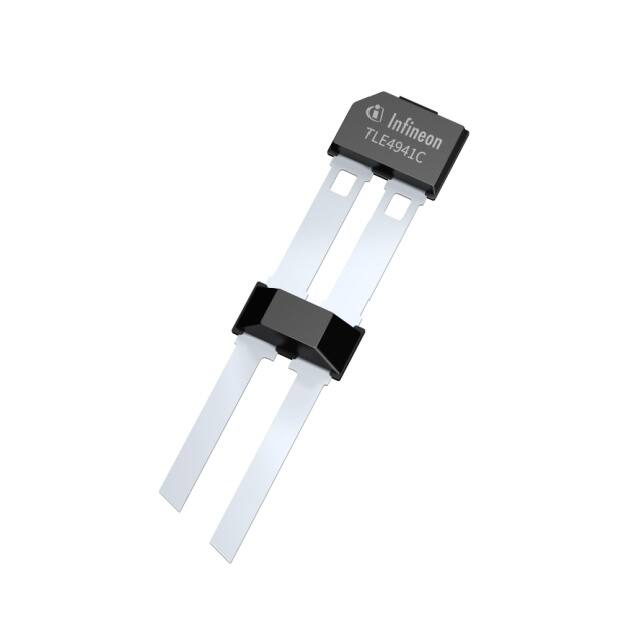
Whe el S pe ed Sensor
iGMR based Wheel Speed Sensor
TL E 5 041 p lus C
Da ta Sh e et
V 1.2, 2018-01-18
AT V SC
�Edition 2018-01-18
Published by
Infineon Technologies AG
81726 Munich, Germany
© 2018 Infineon Technologies AG
All Rights Reserved.
Legal Disclaimer
The information given in this document shall in no event be regarded as a guarantee of conditions or
characteristics. With respect to any examples or hints given herein, any typical values stated herein and/or any
information regarding the application of the device, Infineon Technologies hereby disclaims any and all warranties
and liabilities of any kind, including without limitation, warranties of non-infringement of intellectual property rights
of any third party.
Information
For further information on technology, delivery terms and conditions and prices, please contact the nearest
Infineon Technologies Office (www.infineon.com).
Warnings
Due to technical requirements, components may contain dangerous substances. For information on the types in
question, please contact the nearest Infineon Technologies Office.
Infineon Technologies components may be used in life-support devices or systems only with the express written
approval of Infineon Technologies, if a failure of such components can reasonably be expected to cause the failure
of that life-support device or system or to affect the safety or effectiveness of that device or system. Life support
devices or systems are intended to be implanted in the human body or to support and/or maintain and sustain
and/or protect human life. If they fail, it is reasonable to assume that the health of the user or other persons may
be endangered.
�TLE5041plusC
Revision History January 2018, V 1.2
Previous version V 1.1, 2013-05
Change
Subjects (major changes since previous revision)
V 1.2
Update SP Numbers due to PCN 2017-106
V 1.1
Chapter 1
Sensor picture added
Chapter 3.4.1
Periode jitter extended, dBx down to 1mT. Test conditions removed. See Table 4
Chapter 3.4.1
Equation added to Figure 12 “Period jitter definition is valid for measurement on risingto-rising or falling-to-falling edge” on Page 18
Chapter 3.4.2.1
Magnetic induction areas where the jitter exceeds Sjit1 extended to the lifetime of the
sensor. Comment “ valid at 0 ” hours removed from Table 6 “Magnetic induction area
where period jitter exceeds Sjit1” on Page 19
Trademarks of Infineon Technologies AG
AURIX™, C166™, CanPAK™, CIPOS™, CIPURSE™, EconoPACK™, CoolMOS™, CoolSET™,
CORECONTROL™, CROSSAVE™, DAVE™, EasyPIM™, EconoBRIDGE™, EconoDUAL™, EconoPIM™,
EiceDRIVER™, eupec™, FCOS™, HITFET™, HybridPACK™, I²RF™, ISOFACE™, IsoPACK™, MIPAQ™,
ModSTACK™, my-d™, NovalithIC™, OptiMOS™, ORIGA™, PRIMARION™, PrimePACK™, PrimeSTACK™,
PRO-SIL™, PROFET™, RASIC™, ReverSave™, SatRIC™, SIEGET™, SINDRION™, SIPMOS™,
SmartLEWIS™, SOLID FLASH™, TEMPFET™, thinQ!™, TRENCHSTOP™, TriCore™.
Other Trademarks
Advance Design System™ (ADS) of Agilent Technologies, AMBA™, ARM™, MULTI-ICE™, KEIL™,
PRIMECELL™, REALVIEW™, THUMB™, µVision™ of ARM Limited, UK. AUTOSAR™ is licensed by AUTOSAR
development partnership. Bluetooth™ of Bluetooth SIG Inc. CAT-iq™ of DECT Forum. COLOSSUS™,
FirstGPS™ of Trimble Navigation Ltd. EMV™ of EMVCo, LLC (Visa Holdings Inc.). EPCOS™ of Epcos AG.
FLEXGO™ of Microsoft Corporation. FlexRay™ is licensed by FlexRay Consortium. HYPERTERMINAL™ of
Hilgraeve Incorporated. IEC™ of Commission Electrotechnique Internationale. IrDA™ of Infrared Data
Association Corporation. ISO™ of INTERNATIONAL ORGANIZATION FOR STANDARDIZATION. MATLAB™ of
MathWorks, Inc. MAXIM™ of Maxim Integrated Products, Inc. MICROTEC™, NUCLEUS™ of Mentor Graphics
Corporation. Mifare™ of NXP. MIPI™ of MIPI Alliance, Inc. MIPS™ of MIPS Technologies, Inc., USA. muRata™
of MURATA MANUFACTURING CO., MICROWAVE OFFICE™ (MWO) of Applied Wave Research Inc.,
OmniVision™ of OmniVision Technologies, Inc. Openwave™ Openwave Systems Inc. RED HAT™ Red Hat, Inc.
RFMD™ RF Micro Devices, Inc. SIRIUS™ of Sirius Satellite Radio Inc. SOLARIS™ of Sun Microsystems, Inc.
SPANSION™ of Spansion LLC Ltd. Symbian™ of Symbian Software Limited. TAIYO YUDEN™ of Taiyo Yuden
Co. TEAKLITE™ of CEVA, Inc. TEKTRONIX™ of Tektronix Inc. TOKO™ of TOKO KABUSHIKI KAISHA TA.
UNIX™ of X/Open Company Limited. VERILOG™, PALLADIUM™ of Cadence Design Systems, Inc. VLYNQ™
of Texas Instruments Incorporated. VXWORKS™, WIND RIVER™ of WIND RIVER SYSTEMS, INC. ZETEX™ of
Diodes Zetex Limited.
Last Trademarks Update 2011-02-24
Data Sheet
3
V 1.2, 2018-01-18
�TLE5041plusC
Table of Contents
Table of Contents
Table of Contents . . . . . . . . . . . . . . . . . . . . . . . . . . . . . . . . . . . . . . . . . . . . . . . . . . . . . . . . . . . . . . . . 4
List of Figures . . . . . . . . . . . . . . . . . . . . . . . . . . . . . . . . . . . . . . . . . . . . . . . . . . . . . . . . . . . . . . . . . . . 5
List of Tables . . . . . . . . . . . . . . . . . . . . . . . . . . . . . . . . . . . . . . . . . . . . . . . . . . . . . . . . . . . . . . . . . . . . 6
1
1.1
1.2
1.3
Product Description . . . . . . . . . . . . . . . . . . . . . . . . . . . . . . . . . . . . . . . . . . . . . . . . . . . . . . . . . . . . . .
Overview . . . . . . . . . . . . . . . . . . . . . . . . . . . . . . . . . . . . . . . . . . . . . . . . . . . . . . . . . . . . . . . . . . . . . . . .
Features . . . . . . . . . . . . . . . . . . . . . . . . . . . . . . . . . . . . . . . . . . . . . . . . . . . . . . . . . . . . . . . . . . . . . . . .
Target Applications . . . . . . . . . . . . . . . . . . . . . . . . . . . . . . . . . . . . . . . . . . . . . . . . . . . . . . . . . . . . . . . .
7
7
7
7
2
2.1
2.2
2.3
2.4
2.4.1
2.4.2
2.4.3
2.4.4
Functional Description . . . . . . . . . . . . . . . . . . . . . . . . . . . . . . . . . . . . . . . . . . . . . . . . . . . . . . . . . . . . 8
General . . . . . . . . . . . . . . . . . . . . . . . . . . . . . . . . . . . . . . . . . . . . . . . . . . . . . . . . . . . . . . . . . . . . . . . . . 8
Sensitive area . . . . . . . . . . . . . . . . . . . . . . . . . . . . . . . . . . . . . . . . . . . . . . . . . . . . . . . . . . . . . . . . . . . . 9
Pin Description . . . . . . . . . . . . . . . . . . . . . . . . . . . . . . . . . . . . . . . . . . . . . . . . . . . . . . . . . . . . . . . . . . . 9
Block Diagram . . . . . . . . . . . . . . . . . . . . . . . . . . . . . . . . . . . . . . . . . . . . . . . . . . . . . . . . . . . . . . . . . . 10
Uncalibrated Mode . . . . . . . . . . . . . . . . . . . . . . . . . . . . . . . . . . . . . . . . . . . . . . . . . . . . . . . . . . . . . . 11
Calibrated Mode . . . . . . . . . . . . . . . . . . . . . . . . . . . . . . . . . . . . . . . . . . . . . . . . . . . . . . . . . . . . . . . 12
Behavior at Magnetic Input Signals Slower than fmag < 1Hz . . . . . . . . . . . . . . . . . . . . . . . . . . . . . 12
Undervoltage behavior . . . . . . . . . . . . . . . . . . . . . . . . . . . . . . . . . . . . . . . . . . . . . . . . . . . . . . . . . . . 12
3
3.1
3.2
3.3
3.4
3.4.1
3.4.2
3.4.2.1
3.4.3
3.4.4
3.5
3.5.1
3.5.2
3.5.3
Specification . . . . . . . . . . . . . . . . . . . . . . . . . . . . . . . . . . . . . . . . . . . . . . . . . . . . . . . . . . . . . . . . . . .
Application Circuit . . . . . . . . . . . . . . . . . . . . . . . . . . . . . . . . . . . . . . . . . . . . . . . . . . . . . . . . . . . . . . . .
Absolute Maximum Ratings . . . . . . . . . . . . . . . . . . . . . . . . . . . . . . . . . . . . . . . . . . . . . . . . . . . . . . . .
Operating Range . . . . . . . . . . . . . . . . . . . . . . . . . . . . . . . . . . . . . . . . . . . . . . . . . . . . . . . . . . . . . . . .
Characteristics . . . . . . . . . . . . . . . . . . . . . . . . . . . . . . . . . . . . . . . . . . . . . . . . . . . . . . . . . . . . . . . . . .
Electrical Parameters . . . . . . . . . . . . . . . . . . . . . . . . . . . . . . . . . . . . . . . . . . . . . . . . . . . . . . . . . . . .
Magnetic Input Characteristics . . . . . . . . . . . . . . . . . . . . . . . . . . . . . . . . . . . . . . . . . . . . . . . . . . . .
Operating area for Period Jitter Sjit1 . . . . . . . . . . . . . . . . . . . . . . . . . . . . . . . . . . . . . . . . . . . . . . .
Typical Diagrams (measured performance) . . . . . . . . . . . . . . . . . . . . . . . . . . . . . . . . . . . . . . . . . .
Electrostatic discharge protection . . . . . . . . . . . . . . . . . . . . . . . . . . . . . . . . . . . . . . . . . . . . . . . . . .
Electro Magnetic Compatibility (EMC) . . . . . . . . . . . . . . . . . . . . . . . . . . . . . . . . . . . . . . . . . . . . . . . .
ISO 7637-2:2011 and ISO 16750-2:2010 . . . . . . . . . . . . . . . . . . . . . . . . . . . . . . . . . . . . . . . . . . . .
ISO 7637-3:2007 . . . . . . . . . . . . . . . . . . . . . . . . . . . . . . . . . . . . . . . . . . . . . . . . . . . . . . . . . . . . . . .
ISO 11452-3:2004 . . . . . . . . . . . . . . . . . . . . . . . . . . . . . . . . . . . . . . . . . . . . . . . . . . . . . . . . . . . . . .
13
13
14
15
16
16
18
19
21
24
24
25
25
25
4
4.1
4.2
4.3
4.4
4.5
4.6
Package Information . . . . . . . . . . . . . . . . . . . . . . . . . . . . . . . . . . . . . . . . . . . . . . . . . . . . . . . . . . . .
Package Parameters . . . . . . . . . . . . . . . . . . . . . . . . . . . . . . . . . . . . . . . . . . . . . . . . . . . . . . . . . . . . .
Bending for assembly . . . . . . . . . . . . . . . . . . . . . . . . . . . . . . . . . . . . . . . . . . . . . . . . . . . . . . . . . . . . .
Package surface to silicon . . . . . . . . . . . . . . . . . . . . . . . . . . . . . . . . . . . . . . . . . . . . . . . . . . . . . . . . .
Package Outline . . . . . . . . . . . . . . . . . . . . . . . . . . . . . . . . . . . . . . . . . . . . . . . . . . . . . . . . . . . . . . . . .
Packing . . . . . . . . . . . . . . . . . . . . . . . . . . . . . . . . . . . . . . . . . . . . . . . . . . . . . . . . . . . . . . . . . . . . . . . .
Marking . . . . . . . . . . . . . . . . . . . . . . . . . . . . . . . . . . . . . . . . . . . . . . . . . . . . . . . . . . . . . . . . . . . . . . . .
26
26
26
26
27
28
29
References . . . . . . . . . . . . . . . . . . . . . . . . . . . . . . . . . . . . . . . . . . . . . . . . . . . . . . . . . . . . . . . . . . . . 30
Data Sheet
4
V 1.2, 2018-01-18
�TLE5041plusC
List of Figures
List of Figures
Figure 1
Figure 2
Figure 3
Figure 4
Figure 5
Figure 6
Figure 7
Figure 8
Figure 9
Figure 10
Figure 11
Figure 12
Figure 13
Figure 14
Figure 15
Figure 16
Figure 17
Figure 18
Figure 19
Figure 20
Figure 21
Figure 22
Figure 23
Data Sheet
Side read placement of the TLE5041plusC besides a magnetic encoder wheel . . . . . . . . . . . . . . . 8
Sensing element positions of TLE5041plusC . . . . . . . . . . . . . . . . . . . . . . . . . . . . . . . . . . . . . . . . . . 9
TLE5041plusC block diagram. . . . . . . . . . . . . . . . . . . . . . . . . . . . . . . . . . . . . . . . . . . . . . . . . . . . . 10
Differential amplitude and threshold dBlimit . . . . . . . . . . . . . . . . . . . . . . . . . . . . . . . . . . . . . . . . . . . 10
TLE5041plusC differential arrangement of sensing elements . . . . . . . . . . . . . . . . . . . . . . . . . . . . 11
Offset calibration of TLE5041plusC . . . . . . . . . . . . . . . . . . . . . . . . . . . . . . . . . . . . . . . . . . . . . . . . 11
Undervoltage behavior . . . . . . . . . . . . . . . . . . . . . . . . . . . . . . . . . . . . . . . . . . . . . . . . . . . . . . . . . . 12
Basic application circuit . . . . . . . . . . . . . . . . . . . . . . . . . . . . . . . . . . . . . . . . . . . . . . . . . . . . . . . . . 13
Advanced application circuit including protection and EMC components. . . . . . . . . . . . . . . . . . . . 13
Test circuit for the TLE5041plusC . . . . . . . . . . . . . . . . . . . . . . . . . . . . . . . . . . . . . . . . . . . . . . . . . 16
Slew Rate definition . . . . . . . . . . . . . . . . . . . . . . . . . . . . . . . . . . . . . . . . . . . . . . . . . . . . . . . . . . . . 17
Period jitter definition is valid for measurement on rising-to-rising or falling-to-falling edge . . . . . . 18
Operating area for period jitter Sjit1 . . . . . . . . . . . . . . . . . . . . . . . . . . . . . . . . . . . . . . . . . . . . . . . . . 19
Supply Current = f(T) (left), Supply Current Ratio IHigh / ILow = f(T) (right) . . . . . . . . . . . . . . . . . . . 21
Slew Rate = f(T), RM = 75 Ω . . . . . . . . . . . . . . . . . . . . . . . . . . . . . . . . . . . . . . . . . . . . . . . . . . . . . . 21
Magnetic Threshold dBLimit = f(T) (left), Magnetic Threshold dBLimit = f(f) (right). . . . . . . . . . . . . . . 22
Magnetic Threshold dBLimit = f(f) . . . . . . . . . . . . . . . . . . . . . . . . . . . . . . . . . . . . . . . . . . . . . . . . . . . 22
Period Jitter = f(T) at dBX = 2 mT (left) , Duty Cycle = f(T) at dBX = 2 mT (right) . . . . . . . . . . . . . . 23
EMC test circuit for the TLE5041plusC. . . . . . . . . . . . . . . . . . . . . . . . . . . . . . . . . . . . . . . . . . . . . . 24
Distance from package surface to silicon (=sensing element) . . . . . . . . . . . . . . . . . . . . . . . . . . . . 26
Package dimensions. . . . . . . . . . . . . . . . . . . . . . . . . . . . . . . . . . . . . . . . . . . . . . . . . . . . . . . . . . . . 27
Packing dimensions in mm . . . . . . . . . . . . . . . . . . . . . . . . . . . . . . . . . . . . . . . . . . . . . . . . . . . . . . . 28
Packing dimensions in mm . . . . . . . . . . . . . . . . . . . . . . . . . . . . . . . . . . . . . . . . . . . . . . . . . . . . . . . 29
5
V 1.2, 2018-01-18
�TLE5041plusC
List of Tables
List of Tables
Table 1
Table 2
Table 3
Table 4
Table 5
Table 6
Table 7
Table 8
Table 9
Table 10
Table 11
Data Sheet
Pin description . . . . . . . . . . . . . . . . . . . . . . . . . . . . . . . . . . . . . . . . . . . . . . . . . . . . . . . . . . . . . . . . . 9
Absolute maximum ratings . . . . . . . . . . . . . . . . . . . . . . . . . . . . . . . . . . . . . . . . . . . . . . . . . . . . . . . 14
Operating range . . . . . . . . . . . . . . . . . . . . . . . . . . . . . . . . . . . . . . . . . . . . . . . . . . . . . . . . . . . . . . . 15
Electrical parameters . . . . . . . . . . . . . . . . . . . . . . . . . . . . . . . . . . . . . . . . . . . . . . . . . . . . . . . . . . . 16
Magnetic input values . . . . . . . . . . . . . . . . . . . . . . . . . . . . . . . . . . . . . . . . . . . . . . . . . . . . . . . . . . . 18
Magnetic induction area where period jitter exceeds Sjit1 . . . . . . . . . . . . . . . . . . . . . . . . . . . . . . . . 19
ESD protection . . . . . . . . . . . . . . . . . . . . . . . . . . . . . . . . . . . . . . . . . . . . . . . . . . . . . . . . . . . . . . . . 24
Conducted pulses along supply lines . . . . . . . . . . . . . . . . . . . . . . . . . . . . . . . . . . . . . . . . . . . . . . . 25
Pulses by capacitive coupling on signal lines . . . . . . . . . . . . . . . . . . . . . . . . . . . . . . . . . . . . . . . . . 25
Radiated immunity . . . . . . . . . . . . . . . . . . . . . . . . . . . . . . . . . . . . . . . . . . . . . . . . . . . . . . . . . . . . . 25
Package parameters. . . . . . . . . . . . . . . . . . . . . . . . . . . . . . . . . . . . . . . . . . . . . . . . . . . . . . . . . . . . 26
6
V 1.2, 2018-01-18
�iGMR based Wheel Speed Sensor
1
Product Description
1.1
Overview
TLE5041plusC
The TLE5041plusC is a wheel speed sensor designed for sophisticated
vehicle control systems. The rotational speed is sensed accurately,
enabling the sensor to be used as a component of indirect tire pressure
monitoring systems. It is based on integrated giant magneto resistive
(GMR) elements sensitive to the direction of a magnetic field. Excellent
repeatability and sensitivity is specified over a wide temperature range. To
meet harsh automotive requirements, robustness to electrostatic
discharge (ESD) and electromagnetic compatibility (EMC) has been
maximized. State of the art BiCMOS technology is used for monolithic integration of sensing elements and signal
conditioning circuitry, thus requiring no external components.
1.2
•
•
•
•
•
•
•
•
•
•
•
Features
Low jitter
High sensitivity
Immunity against external magnetic disturbances
Wide air-gap performance
2 mm sensing iGMR element pitch for use with magnetic encoder wheels
Differential front end highly immune to disturbing fields
Two-wire current interface
Monolithic integration on a single die
No external components required
Insensitive to mechanical stress
Wide junction temperature range -40°C to 170°C
1.3
Target Applications
Wheel speed sensing (ABS) or stability control systems with iTPMS feature.
•
•
•
General wheel speed sensing (ABS)
ESP
Indirect tire pressure monitoring (iTPMS)
Product Type
Marking
Ordering Code
Package
TLE5041plusC
541CPS
SP001952936
PG-SSO-2-53
Data Sheet
7
V 1.2, 2018-01-18
�TLE5041plusC
Functional Description
2
Functional Description
The integrated GMR sensor detects differential magnetic fields in x-direction. Two iGMR sensing elements are
arranged at a distance of 2mm. Their output signals are processed differentially. To detect the motion of objects
the magnetic field must be provided by a magnetized encoder wheel mounted on the rotating axis.
Magnetic offsets and device offsets are cancelled by a self-calibration algorithm. Self-calibration is done after start
up and requires only a short history of magnetic input. After calibration switching occurs exactly at the zero
crossing for sinusoidal signals or generally speaking the arithmethical mean of any magnetic input signal.
Switching is indicated by a high or low supply current level.
2.1
General
The sensor is sensitive to magnetic field gradients in x direction. In Figure 1 the typical placement of the
TLE5041plusC facing a magnetic encoder wheel is shown. The figure also indicates the coordinate system, which
is valid throughout this document. Other sensor positions and encoder wheels are possible, the coordinate system
is therefore related to the sensor. The iGMR structures (sensitive areas) are located at the front side of the
package which is marked.
Magnetic encoder wheel
n
tio
ta
ro
rotation = X-motion
N S N
Y
S N
X
Sensor location
N S N
S N
X
„air-gap“
z-distance
Z
Sensing elements face the
marked package front
Figure 1
Data Sheet
Side read placement of the TLE5041plusC besides a magnetic encoder wheel
8
V 1.2, 2018-01-18
�TLE5041plusC
Functional Description
2.2
Sensitive area
Figure 2
Sensing element positions of TLE5041plusC
2.3
Pin Description
Table 1
Pin description
Pin No.
Symbol
In/Out
1
VDD
Supply
2
GND
Supply
Data Sheet
Function
Output node
9
V 1.2, 2018-01-18
�TLE5041plusC
Functional Description
2.4
Block Diagram
The device is supplied internally by a voltage regulator within the PMU. An on chip oscillator serves as clock
generator for the digital part of the circuit.
The TLE5041plusC incorporates two GMR sensing elements spaced at 2mm. The signal path is comprised of a
differential amplifier, a noise limiting low pass filter and two comparators. An offset cancellation loop is in place to
compensate magnetic and electric offsets. The regulation loop consists of a tracking A/D converter, the digital core
to evaluate the offset and the offset DAC to feed in the corrective voltage.
The current interface is triggered by the main comparator.
ESD
PMU
Current
Modulator
MainComparator
BandgapBiasing
VDD
async logic
Pre-Amplifier
+/-
LPFilter
+/GMR4
Left
TrackingADC
GMR2
Right
D-Core
hys.-ctrl
GMR3
Right
Tracking-ADC
Algorithm
GMR1
Left
GND
Offset-DAC
Fuses
Figure 3
Oscillator
TLE5041plusC block diagram
The device can be in one of two operating modes, namely uncalibrated mode or calibrated mode. The term
calibration is related to the offset correction algorithm. The device starts up in uncalibrated mode. Most
performance parameters will not be guaranteed in this mode. While the magnet moves, the device observes the
magnetic input and adjusts for signal offsets. After a few periods the offset is calibrated and the device operates
with its full performance.
To prevent unwanted switching, the changes below a certain value dBLimit are not considered to switch the output.
14mA
dB
dB_limit
7mA
dB_limit
Figure 4
Data Sheet
Differential amplitude and threshold dBlimit
10
V 1.2, 2018-01-18
�TLE5041plusC
Functional Description
Bx, right
hidden fixed
hysteresis = dBlimit
Bx, left
dBx
t
zero crossing, output
switching
Output
switching
sensing right
sensing left
x
z
moving direction
Figure 5
TLE5041plusC differential arrangement of sensing elements
2.4.1
Uncalibrated Mode
When the device is supplied after power down, the device is awake after power on time tPOR. The digital core
immediately starts tracking the signal. In order to trigger a first edge, the magnetic signal has to exceed a threshold
DNC (digital noise constant d1). Refer to Figure 6 where the first switching point is after the magnetic input has
exceeded dBstartup_x . The algorithm works in both directions, thus for rising and falling slopes.
dB
dBmax
d1
d2 = (dBmax – dBstartup_x )/4
t
td,input
Offset
correction
tpor
d3 = (dBmax – dBmin)/4
dBmin
Output signal
Phase shift change
Calibrated Mode
Uncalibrated Mode
d1 = dBstartup_x
t1 = initial calibration delay time = tpor + td,input
Offset correction = (dBm ax + dBmin)/2
Figure 6
Data Sheet
Offset calibration of TLE5041plusC
11
V 1.2, 2018-01-18
�TLE5041plusC
Functional Description
2.4.2
Calibrated Mode
In calibrated mode the output will switch at zero-crossing of the input signal. Oscillations of the Offset DAC are
avoided by switching into a low-jitter mode. Signals below a defined threshold dΒLimit do not trigger the current
interface to avoid unwanted output switching. Offset determination is done continuously in calibrated mode.
The phase shift between input and output signal is no longer determined by the ratio between digital noise constant
and signal amplitude. Therefore a sudden change in the phase shift may occur during the transition from
uncalibrated to calibrated mode.
2.4.3
Behavior at Magnetic Input Signals Slower than fmag < 1Hz
Magnetic changes exceeding dBstartup can cause output switching of the TLE5041plusC even at fmag significantly
lower than 1 Hz. Depending on their amplitude edges slower than Δtstartup might be detected. If the digital noise
constant (dBstartup) is not exceeded before Δtstartup a new initial self-calibration is started. In other words dBstartup
needs to be exceeded before Δtstartup. Output switching strongly depends on signal amplitude and initial phase.
2.4.4
Undervoltage behavior
The voltage supply comparator has an integrated hysteresis Vhys with the maximum value of the release level Vrel
< 4.5V. This determines the minimum required supply voltage VDD of the chip. A minimum hysteresis Vhys of 0.7V
is implemented thus avoiding a toggling of the output when the supply voltage VDD is modulated due to the
additional voltage drop at RM when switching from low to high current level and VDD = 4.5V (designed for use with
RM ≤ 75Ω).
Ihigh
I low
VDD *
V rel
Vhys
V res
Vhys = V rel - Vres
*direct on pins
Figure 7
Data Sheet
Undervoltage behavior
12
V 1.2, 2018-01-18
�TLE5041plusC
Specification
3
Specification
3.1
Application Circuit
TLE5041plusC is designed to operate with a minimum amount of external components as shown in Figure 9.
Refer to Figure 9 for the recommended application circuit with reverse bias protection, over voltage protection and
EMC capacitors. Component values depend on the application.
Inserting a 10 Ω resistor in the VDD path (R1) causes some additional voltage drop, limiting the maximum current
through diode D2, adding to the overall circuits robustness. Increasing R1 further reduces supply voltage
headroom.
TLE5041plusC
VDD
ECU_VDD
GND
Uout
30Ω - 75Ω
ECU_GND
Figure 8
Basic application circuit
Figure 9
Advanced application circuit including protection and EMC components
Data Sheet
13
V 1.2, 2018-01-18
�TLE5041plusC
Specification
3.2
Absolute Maximum Ratings
If not indicated otherwise, absolute maximum ratings are valid at Tj = -40°C to 150°C and 4.5V ≤ VDD ≤ 20V.
Table 2
Absolute maximum ratings
Parameter
Symbol
Values
Min.
Supply voltage
VDD
Reverse polarity voltage
Vrev
Reverse polarity current
Irev
Junction temperature 1)
Power-on cycles
Passive life time
1)
Maximum magnetic induction
over lifetime 2)
Typ.
Unit
Note / Test Condition
V
Tj < 80 °C
Max.
-0.3
20
V
22
V
t = 10 * 5 min.
24
V
t = 10 * 5 min., including voltage
drop over RM ≥ 30 Ω
24
V
30 min. @ Tj = 25±5°C
27
V
t ≤ 400 ms, including voltage
drop over RM ≥ 30 Ω
V
with current limitation Irev
200
mA
t < 4 h, external current
limitation required
300
mA
t < 1 h, external current
limitation required
-22
Tj
either
-40
125
°C
limited to 10000 h
or
-40
150
°C
limited to 5000 h
or
-40
160
°C
limited to 2500 h
or
-40
170
°C
limited to 500 h
additional
190
°C
t = 4 h, VDD < 16.5 V
additional -10
60
°C
limited to 30000 h
npo
500.000
times
LTpassive
15
a
Tj ≤ 50 °C, VDD = 0 V
BX
-300
300
mT
Tj = 25 °C
BY
-300
300
mT
Tj = 25 °C
BZ
-1000
1000
mT
Tj = 25 °C
1) This life time statement is an anticipation based on extrapolation of Infineon qualification test results. The actual life time
of a component depends on its form of application and type of use etc. and may deviate from such a statement. The life
time statement shall in no event extend the agreed warranty period.
2) Conversion: B = µ0 * H, µ0 = 4 * π * 10-7 mT/A
Attention: Stresses above the max. values listed here may cause permanent damage to the device.
Exposure to absolute maximum rating conditions for extended periods may affect device
reliability. Maximum ratings are absolute ratings; exceeding only one of these values may
cause irreversible damage to the integrated circuit.
Data Sheet
14
V 1.2, 2018-01-18
�TLE5041plusC
Specification
3.3
Operating Range
The following operating conditions must not be exceeded in order to ensure correct operation of the
TLE5041plusC.
All parameters specified in the following sections refer to these operating conditions, unless otherwise noted.
Table 3
Operating range
Parameter
Symbol
Values
Min.
Supply voltage
1)
VDD
Supply voltage modulation 2)
VAC
Operating junction temperature
Tj
Typ.
4.5
Unit Note / Test Condition
Max.
20
V
6
Vpp
VDD = 13 V, 0 < fmod < 150 kHz
either
-40
125
°C
limited to 10000 h
or
-40
150
°C
limited to 5000 h
or
-40
160
°C
limited to 2500 h
or
-40
170
°C
limited to 500 h
Tj_var
-20
20
K/s
no unwanted or missing pulses
Magnetic induction amplitude at
each GMR element 4) 5)
BX
-75
75
mT
TJ = 25 °C
Differential magnetic induction 4) 5)
dBX
-150
150
mT
TJ = 25 °C
Static differential magnetic preinduction4)
dBXoffset -2
2
mT
Dynamic and static homogeneous
external disturbance fields 4)
Bext_XYZ -2
2
mT
Magnetic signal frequency 4)
fMAG
5000
Hz
Junction temperature variation
1)
2)
3)
4)
5)
3) 4)
1
In calibrated mode. Same field at
both probes, no unwanted pulses
Directly at the sensor pins, not including the voltage drop at RM.
Sinusoidal shape of supply voltage variation.
Junction temperature change homogenously distributed on the die, equal change at both iGMR sensing elements.
Not subject to production test, verified by design/characterisation.
Consider magnetic induction temperature coefficient of -0.18 %/K.
Data Sheet
15
V 1.2, 2018-01-18
�TLE5041plusC
Specification
3.4
Characteristics
All parameters are related to the application test circuit shown in Figure 10.
Figure 10
Test circuit for the TLE5041plusC
3.4.1
Electrical Parameters
The indicated electrical parameters apply over operating range, unless otherwise specified. The magnetic input is
assumed sinusoidal with constant amplitude and offset. Typical values are at VDD = 12V and TA = 25°C.
Table 4
Electrical parameters
Parameter
Symbol
Values
Min.
Typ.
Max.
Unit
Note / Test Condition
initial state is low
Supply current - initial
IINIT
5.9
7
8.4
mA
Supply current - output low
ILOW
5.9
7
8.4
mA
Supply current - output high
IHIGH
11.8
14
16.8
mA
Supply current ratio
kI
1.9
2.1
2.3
kI = IHIGH / ILOW
Output current slew rate 1)
SRr, SRf 8
24
mA/µs RM = 75 Ω, RM = 30 Ω
Line regulation
2)
SL
90
µA/V
dIX / dVDD, quasi static
Power on time
2) 3)
tPOR
100
µs
time required for stable IINIT
Magnetic edges required for
offset calibration 2) 4)
nstart
4
Number of edges in
uncalibrated mode 2)
nuncalib
4
5th edge correct
Number of edges supressed2) nsupressed
0
after power-on or reset
Magnetic edges required for
first output pulse 2) 5)
nfirst_pulse 1
2
after power-on or reset
Systematic phase error of
output edges during start-up
and uncalibrated mode 2)
Φuncalib
-90
+90
°
Systematic phase error of “uncal”
edge; nth vs. n + 1th edge (does not
include random phase error)
-45
-90
+45
+90
°
dBX > 4 x dBStartup_X
dBX < 4 x dBStartup_X
10
%
Within one signal period, assumig
sinusoidal input signal
300
µs
min-max detection starts after this
time, additional to tPOR
100
µs
dBX ≥ 1mT
Phase shift change during
∆Φswitch
transition from uncalibrated to
calibrated mode 2)
Max. permissible change of
signal offset with time2)6)
dBX_Offset
Initial calibration delay time 2)7) td, input
Switching delay time 2)8)
Data Sheet
120
tD
16
V 1.2, 2018-01-18
�TLE5041plusC
Specification
Table 4
Electrical parameters
Parameter
Symbol
2)
Values
Unit
Note / Test Condition
Min.
Typ.
Max.
40
50
60
%
dBX ≥ 2 mT, Bext_XYZ = 0 mT,
differential offset jumps are not
considered9)
Duty cycle
DC
Period Jitter 2) 10)
Sjit1
± 0.3
%
± 3 σ value of period T
-10 °C ≤ Tj ≤ 80 °C
dBX ≥ 1 mT
100 Hz ≤ fMAG ≤ 1000 Hz,
Bext_XYZ = 0 mT, valid in the operating
area described in Chapter 3.4.2.1
Sjit2
±2
%
± 3 σ value of period T
-40 °C ≤ Tj ≤ 150 °C
dBX ≥ 1 mT
1 Hz ≤ fMAG ≤ 2500 Hz, B11)ext_XYZ <
0.15 mT
Sjit3
±3
%
± 3 σ value of period T
-40 °C ≤ Tj < 170 °C
dBX ≥ 1 mT
1 Hz ≤ fMAG ≤ 5000 Hz, B11)ext_XYZ <
0.15 mT
590
ms
848
ms
Time allowed for edge to
exceed dBX_Startup 2)
Watchdog reset time 2)
tWD_reset
590
1)
2)
3)
4)
Refer to Figure 11
Not subject to production test, verified by design/characterisation.
VDD ≥ 4.5V.
One magnetic edge is defined as a monotonic signal change of more than 0.6 mT.
5) A loss of edges may occur at high frequencies.
6) Percentage of amplitude
7) Occurrence of initial calibration delay time td, input: if there is no input signal change (e.g. at vehicle halt) a new initial
calibration is triggered each tWD_reset according to Chapter 2.4.3. This calibration has a duriation of td, input. During this
calibration time no input signal change is detected.
8) Internal signal propagation delay time between magnetic input signal and electrical output signal in calibrated mode.
9) During fast offset alterations, due to the calibration algorithm, exceeding the specified duty cycle is permitted for short time
periods.
10) Refer to Figure 12
11) Verified by design
I
tr
Ihigh
tf
90%
50%
I low
10%
t1
T
t
Figure 11
Data Sheet
Slew Rate definition
17
V 1.2, 2018-01-18
�TLE5041plusC
Specification
Figure 12
Period jitter definition is valid for measurement on rising-to-rising or falling-to-falling edge
3.4.2
Magnetic Input Characteristics
All magnetic input values specified at constant sinusoidal amplitude and constant offset over operating range,
unless otherwise specified. Magnetic values are referred to the location at the silicon surface. Typical values are
related to VDD = 12V and TA = 25°C.
Table 5
Magnetic input values
Parameter
Symbol
Values
Unit
Notes
min.
typ.
max.
0.1
0.18
0.3
mT
1 Hz < fMAG < 5000 Hz,
BY < 0.15 mT, Bext_XYZ =
0mT
Start-up threshold peak to peak value3) dBStartup_X 0.2
0.36
0.6
mT
1 Hz < fMAG < 5000 Hz,
BY < 0.15 mT, Bext_XYZ = 0
mT
0.1
mT
Threshold limit
1) 2) 3)
dBLimit_X
4)
Internal offset drift3)
dBX_Drift
0
1) Refer to Figure 6 “Offset calibration of TLE5041plusC” on Page 11. dBLimit_X is a 99% criteria, calculated out of
measured sensitivity.
2)Threshold limit dBLimit_X is increased by 25% under influence of an in-plane magnetic induction perpendicular to
the sensitive direction (refer to Chapter 3.3 “Operating Range” on Page 15 of Bext_XYZ).
Note: In typical encoder wheel applications, at large air gaps where dBX is as low as dBLimit_X, the in-plane
magnetic induction perpendicular to the sensitive direction BY is smaller than 0.15mT.
3) Not subject to production test, verified by design/characterisation
4) dBStartup_X is the minimum DNC at start-up.
Data Sheet
18
V 1.2, 2018-01-18
�TLE5041plusC
Specification
3.4.2.1
Operating area for Period Jitter Sjit1
It has to be ensured that the operating location of the sensor is selected in accordance to BX_Area and BY_Area
referring to Table 6. The operating location is defined by air gap and displacement in Y direction. Therefore the
project specific encoder wheel parameters have to be characterized.
Air Gap
Limit threshold dBLimit_X
BX = 1mT
Operating area
with low period
jitter Sjit1
Combinations of BX Area and
BY Area :
The specification of Sjit1
is not valid in these
areas.
BX Area
BY Area
BY Area
Encoder Wheel (Example)
Axis of rotation
0
Displacement (Y-direction)
Figure 13
Operating area for period jitter Sjit1
Marked areas are defined by a combination of BY and BX field components. Table 6 shows field amplitudes (field
offsets are not considered) related to these areas.
In most cases the areas marked in figure Figure 13 are at low air gaps, close to the pole wheel.
Table 6
Magnetic induction area where period jitter exceeds Sjit1
Symbol Values
Parameter
Magnetic induction area in X-direction
1)
Magnetic induction area in Y-direction
1)
Unit
Notes
min.
max.
BX_Area
2.9
10
mT
in combination with BY_Area
BY_Area
0.7
2.9
mT
in combination with BX_Area
1) Not subject to production test. Verified by characterisation.
The sequence to find the areas marked in Figure 13 is:
•
•
The encoder wheel magnetic field shall be characterised (measurement of BX and BY at the sensor location).
Is the amplitude of the magnetic induction BX between the minimum and maximum value of BX_Area?
– If the answer is NO: no further action required
– If the answer is YES: For low jitter Sjit1 the magnetic field at the sensor location shall not have a value
between the minimum and maximum value of BY_Area
Data Sheet
19
V 1.2, 2018-01-18
�TLE5041plusC
Specification
Note: This information applies especially to narrow pole wheels. Depending on the pole wheel these areas are at
a magnetic air gap of 0.8mm to 2.8mm. At a specific air gap the mounting tolerance in Y-direction can be
between +/- 0.5mm to +/-2mm. This effect is usually observed when using narrow pole wheels, it is
recommended to investigate the magnetic field of every pole wheel used. Air gap and tolerance in Y-direction
are typical application values mentioned here are for information only, without specification character. For
further information and support please contact Infineon.
Data Sheet
20
V 1.2, 2018-01-18
�TLE5041plusC
Specification
3.4.3
Typical Diagrams (measured performance)
ILow , IHigh [mA]
IHigh / ILow
15
2,3
14
2,2
13
12
2,1
11
10
2,0
9
8
1,9
7
6
1,8
‐40
0
40
80
120
160
‐40
Tj [°C]
Figure 14
0
40
80
120
160
Tj [°C]
Supply Current = f(T) (left), Supply Current Ratio IHigh / ILow = f(T) (right)
Slewrate [mA/µs]
24
22
20
18
16
14
12
10
8
‐40
0
40
80
120
160
Tj [°C]
Figure 15
Data Sheet
Slew Rate = f(T), RM = 75 Ω
21
V 1.2, 2018-01-18
�TLE5041plusC
Specification
dBlimit [mT], f=1kHz
dBlimit [mT], Tj=25°C
0,30
0,30
0,25
0,25
0,20
0,20
0,15
0,15
0,10
‐40
0
40
80
120
0,10
160
Tj [°C]
Figure 16
1
10
100
1000
10000
f [Hz]
Magnetic Threshold dBLimit = f(T) (left), Magnetic Threshold dBLimit = f(f) (right)
dBlimit [mT], Tj=170°C
0,30
0,25
0,20
0,15
0,10
1
10
100
1000
10000
f [Hz]
Figure 17
Data Sheet
Magnetic Threshold dBLimit = f(f)
22
V 1.2, 2018-01-18
�TLE5041plusC
Specification
Duty Cycle [%], f=1kHz
Period Jitter [%], f=1kHz,
3sigma‐value
0,10
0,09
0,08
0,07
0,06
0,05
0,04
0,03
0,02
0,01
0,00
55
54
53
52
51
50
49
48
47
46
‐40
0
40
80
120
45
160
Tj [°C]
Figure 18
Data Sheet
‐40
0
40
80
120
160
Tj [°C]
Period Jitter = f(T) at dBX = 2 mT (left) , Duty Cycle = f(T) at dBX = 2 mT (right)
23
V 1.2, 2018-01-18
�TLE5041plusC
Specification
3.4.4
Electrostatic discharge protection
Characterized according to Human Body Model (HBM) test in compliance with EIA/JESD22-A114-B HBM (covers
MIL STD 883D)
Table 7
Parameter
ESD protection
Symbol
Values
min.
Unit
Notes
max.
ESD voltage
VHBM
±12
kV
Method AEC-Q100 (1.5 kΩ, 100 pF)
ESD voltage
VSDM
±2
kV
Method ANSI/ESD SP5.3.2-2008
3.5
Electro Magnetic Compatibility (EMC)
The device is characterized according to the IC level EMC requirements described in the “Generic IC EMC Test
Specification” Version 1.2 from 20071).
Additionally component level EMC characterizations according to ISO 7637-2:2011, ISO 7637-3:2007 and ISO
16750-2:2010 regarding pulse immunity and CISPR 25 (2009-01) Ed. 3.0 regarding conducted emissions are
performed.
Note: Characterization of electromagnetic compatibility is carried out on sample base. Not all specification
parameters can be monitored during EMC exposure. Only functional parameters, e.g., switching current and
duty cycle have been monitored.
Figure 19 outlines all needed external components to operate the DUT under application conditions. The
(additional) outlined components can effect the final EMC result. They are treated as inherent part of the DUT
during component level EMC characterizations.
Figure 19
EMC test circuit for the TLE5041plusC
1) The document is available online at http://www.zvei.org/Verband/Publikationen/Seiten/Generic-IC-EMCTestSpecification-english.aspx.
Data Sheet
24
V 1.2, 2018-01-18
�TLE5041plusC
Specification
3.5.1
ISO 7637-2:2011 and ISO 16750-2:2010
Refer to EMC test circuit; dBx= 2mT (amplitude of sinus signal); VDD= 13.5V, fMAG= 100Hz; T=25°C
Table 8
Conducted pulses along supply lines
Test Pulse
TP1
1)
TP2a
1)
TP2b
2)
TP3a
1)
Symbol
Level/Typ
Status
VEMC
IV / -150V
C / A (after stress)
IV / 112V
C
- / 10V
C
IV / -220V
A
IV / 150V
A
TP3b 1)
3)
IV / -7V
C
TP5a
3)
IV / 86.5V
C
TP5b
4)
Us*= 28.5V
C
TP4
1)
2)
3)
4)
according to ISO 7637-2:2011
according to ISO 7637-2:2004
according to ISO 16750-2:2010
According to ISO 16750-2:2010. A central load dump of 42V is used. Us = 42 V - 13.5 V.
3.5.2
ISO 7637-3:2007
Refer to EMC test circuit; dBx= 2mT (amplitude of sinus signal); VDD= 13.5V, fMAG= 100Hz; T=25°C
Table 9
Pulses by capacitive coupling on signal lines
Test Pulse
Symbol
Level/Typ
Status
TP3a
VEMC
IV / -220 V
A
IV / 150V
A
TP3b
3.5.3
ISO 11452-3:2004
Refer to EMC test circuit; dBx= 2mT (amplitude of sinus signal); VDD= 13.5V, fMAG= 100Hz; T=25°C
Table 10
Radiated immunity
Parameter
Symbol
Level/Typ
Remark
EMC field strength
ETEM-Cell
IV / 250 V/m
AM (80%, 1kHz)
Data Sheet
25
V 1.2, 2018-01-18
�TLE5041plusC
Package Information
4
Package Information
Pure tin plating (green lead plating) is used with the plastic single small outline package PG-SSO-2-53. The
product complies to restrictions of hazardous substances (RoHS) when marked with the letter G in front or after
the date code. Additionally it shows a data matrix on the back side of the package.
4.1
Package Parameters
Table 11
Package parameters
Parameter
Symbol Limit Values
Unit
Notes
K/W
Junction-to-Air 1)
min. typ. max.
Thermal Resistance
RthJA
Lead Frame
190
material K62 (UNS:C18090)
CuSn1CrNiTi
Lead pull out Force
FPO
10
N
for each lead 2)
1) According to Jedec JESD51-7
2) according to IEC 60068-2-21 (fifth edition 1999-1)
4.2
Bending for assembly
By following our package handling and assembly recommendation remarks for Sensor-packages the sensor
terminals can be bent without causing incipient cracks influencing the sensor element function. Please contact
your local Infineon application support.
4.3
Package surface to silicon
The distance from the package surface to the surface of the silicon chip d = 0.3 mm ± 0.08 mm.
Front side
Back side
iGMR elements
Figure 20
Data Sheet
Distance from package surface to silicon (=sensing element)
26
V 1.2, 2018-01-18
�TLE5041plusC
Package Information
4.4
Package Outline
Figure 21
Package dimensions
Data Sheet
27
V 1.2, 2018-01-18
�TLE5041plusC
Package Information
4.5
Packing
The TLE5041plusC is delivered in Ammopack as described below.
Figure 22
Data Sheet
Packing dimensions in mm
28
V 1.2, 2018-01-18
�TLE5041plusC
Package Information
4.6
Marking
Front side marking
The TLE5041plusC is delivered in Ammopack as described below.
Figure 23
Packing dimensions in mm
Position
Marking
Description
1st Line
GYYWW
G: green package
YY: production year
WW: production week
2nd Line
123456
Marking
Position
Marking
Description
1st Line
xxxxxxx
Data Matrix Code
2nd Line
0123456789
Data Matrix Code
Backside marking
Data Sheet
29
V 1.2, 2018-01-18
�w w w . i n f i n e o n . c o m
Published by Infineon Technologies AG
�