SPIDER+ 12V
TLE75080-EMD
SPI Driver for Enhanced Relay Control
Data Sheet
Rev. 1.0, 2016-06-22
Automotive Power
�TLE75080-EMD
Table of Contents
1
Overview . . . . . . . . . . . . . . . . . . . . . . . . . . . . . . . . . . . . . . . . . . . . . . . . . . . . . . . . . . . . . . . . . . . . . . . 6
2
2.1
2.2
Block Diagram and Terms . . . . . . . . . . . . . . . . . . . . . . . . . . . . . . . . . . . . . . . . . . . . . . . . . . . . . . . . . 9
Block Diagram . . . . . . . . . . . . . . . . . . . . . . . . . . . . . . . . . . . . . . . . . . . . . . . . . . . . . . . . . . . . . . . . . . . 9
Terms . . . . . . . . . . . . . . . . . . . . . . . . . . . . . . . . . . . . . . . . . . . . . . . . . . . . . . . . . . . . . . . . . . . . . . . . . 10
3
3.1
3.2
Pin Configuration . . . . . . . . . . . . . . . . . . . . . . . . . . . . . . . . . . . . . . . . . . . . . . . . . . . . . . . . . . . . . . . 11
Pin Assignment . . . . . . . . . . . . . . . . . . . . . . . . . . . . . . . . . . . . . . . . . . . . . . . . . . . . . . . . . . . . . . . . . . 11
Pin Definitions and Functions . . . . . . . . . . . . . . . . . . . . . . . . . . . . . . . . . . . . . . . . . . . . . . . . . . . . . . . 12
4
4.1
4.2
4.3
4.3.1
4.3.2
General Product Characteristics . . . . . . . . . . . . . . . . . . . . . . . . . . . . . . . . . . . . . . . . . . . . . . . . . . .
Absolute Maximum Ratings . . . . . . . . . . . . . . . . . . . . . . . . . . . . . . . . . . . . . . . . . . . . . . . . . . . . . . . .
Functional Range . . . . . . . . . . . . . . . . . . . . . . . . . . . . . . . . . . . . . . . . . . . . . . . . . . . . . . . . . . . . . . . .
Thermal Resistance . . . . . . . . . . . . . . . . . . . . . . . . . . . . . . . . . . . . . . . . . . . . . . . . . . . . . . . . . . . . . .
PCB set up . . . . . . . . . . . . . . . . . . . . . . . . . . . . . . . . . . . . . . . . . . . . . . . . . . . . . . . . . . . . . . . . . . . .
Thermal Impedance . . . . . . . . . . . . . . . . . . . . . . . . . . . . . . . . . . . . . . . . . . . . . . . . . . . . . . . . . . . . .
14
14
16
17
17
19
5
5.1
5.2
5.3
Control Pins . . . . . . . . . . . . . . . . . . . . . . . . . . . . . . . . . . . . . . . . . . . . . . . . . . . . . . . . . . . . . . . . . . .
Input pins . . . . . . . . . . . . . . . . . . . . . . . . . . . . . . . . . . . . . . . . . . . . . . . . . . . . . . . . . . . . . . . . . . . . . .
IDLE pin . . . . . . . . . . . . . . . . . . . . . . . . . . . . . . . . . . . . . . . . . . . . . . . . . . . . . . . . . . . . . . . . . . . . . . .
Electrical Characteristics Control Pins . . . . . . . . . . . . . . . . . . . . . . . . . . . . . . . . . . . . . . . . . . . . . . . .
20
20
20
21
6
6.1
6.1.1
6.1.2
6.1.3
6.1.4
6.1.5
6.1.6
6.2
6.2.1
6.2.2
6.3
Power Supply . . . . . . . . . . . . . . . . . . . . . . . . . . . . . . . . . . . . . . . . . . . . . . . . . . . . . . . . . . . . . . . . . .
Operation Modes . . . . . . . . . . . . . . . . . . . . . . . . . . . . . . . . . . . . . . . . . . . . . . . . . . . . . . . . . . . . . . . .
Power-up . . . . . . . . . . . . . . . . . . . . . . . . . . . . . . . . . . . . . . . . . . . . . . . . . . . . . . . . . . . . . . . . . . . . .
Sleep mode . . . . . . . . . . . . . . . . . . . . . . . . . . . . . . . . . . . . . . . . . . . . . . . . . . . . . . . . . . . . . . . . . . .
Idle mode . . . . . . . . . . . . . . . . . . . . . . . . . . . . . . . . . . . . . . . . . . . . . . . . . . . . . . . . . . . . . . . . . . . . .
Active mode . . . . . . . . . . . . . . . . . . . . . . . . . . . . . . . . . . . . . . . . . . . . . . . . . . . . . . . . . . . . . . . . . . .
Limp Home mode . . . . . . . . . . . . . . . . . . . . . . . . . . . . . . . . . . . . . . . . . . . . . . . . . . . . . . . . . . . . . .
Definition of Power Supply modes transition times . . . . . . . . . . . . . . . . . . . . . . . . . . . . . . . . . . . . .
Reset condition . . . . . . . . . . . . . . . . . . . . . . . . . . . . . . . . . . . . . . . . . . . . . . . . . . . . . . . . . . . . . . . . . .
Undervoltage on VS . . . . . . . . . . . . . . . . . . . . . . . . . . . . . . . . . . . . . . . . . . . . . . . . . . . . . . . . . . . . .
Low Operating Power on VDD . . . . . . . . . . . . . . . . . . . . . . . . . . . . . . . . . . . . . . . . . . . . . . . . . . . . .
Electrical Characteristics Power Supply . . . . . . . . . . . . . . . . . . . . . . . . . . . . . . . . . . . . . . . . . . . . . . .
22
25
26
26
26
26
27
27
28
28
29
30
7
7.1
7.1.1
7.1.2
7.1.3
7.2
7.3
7.4
Power Stages . . . . . . . . . . . . . . . . . . . . . . . . . . . . . . . . . . . . . . . . . . . . . . . . . . . . . . . . . . . . . . . . . .
Output ON-state resistance . . . . . . . . . . . . . . . . . . . . . . . . . . . . . . . . . . . . . . . . . . . . . . . . . . . . . . . .
Switching Resistive Loads . . . . . . . . . . . . . . . . . . . . . . . . . . . . . . . . . . . . . . . . . . . . . . . . . . . . . . . .
Inductive Output Clamp . . . . . . . . . . . . . . . . . . . . . . . . . . . . . . . . . . . . . . . . . . . . . . . . . . . . . . . . . .
Maximum Load Inductance . . . . . . . . . . . . . . . . . . . . . . . . . . . . . . . . . . . . . . . . . . . . . . . . . . . . . . .
Inverse Current Behavior . . . . . . . . . . . . . . . . . . . . . . . . . . . . . . . . . . . . . . . . . . . . . . . . . . . . . . . . . .
Switching Channels in parallel . . . . . . . . . . . . . . . . . . . . . . . . . . . . . . . . . . . . . . . . . . . . . . . . . . . . . .
Electrical Characteristics Power Stages . . . . . . . . . . . . . . . . . . . . . . . . . . . . . . . . . . . . . . . . . . . . . . .
36
36
36
36
37
37
38
39
8
8.1
8.2
8.3
8.4
8.5
8.6
Protection Functions . . . . . . . . . . . . . . . . . . . . . . . . . . . . . . . . . . . . . . . . . . . . . . . . . . . . . . . . . . . .
Over Load Protection . . . . . . . . . . . . . . . . . . . . . . . . . . . . . . . . . . . . . . . . . . . . . . . . . . . . . . . . . . . . .
Over Temperature Protection . . . . . . . . . . . . . . . . . . . . . . . . . . . . . . . . . . . . . . . . . . . . . . . . . . . . . . .
Over Temperature and Over Load Protection in Limp Home mode . . . . . . . . . . . . . . . . . . . . . . . . . .
Reverse Polarity Protection . . . . . . . . . . . . . . . . . . . . . . . . . . . . . . . . . . . . . . . . . . . . . . . . . . . . . . . .
Over Voltage Protection . . . . . . . . . . . . . . . . . . . . . . . . . . . . . . . . . . . . . . . . . . . . . . . . . . . . . . . . . . .
Electrical Characteristics Protection . . . . . . . . . . . . . . . . . . . . . . . . . . . . . . . . . . . . . . . . . . . . . . . . . .
42
42
42
43
43
43
44
9
9.1
Diagnosis . . . . . . . . . . . . . . . . . . . . . . . . . . . . . . . . . . . . . . . . . . . . . . . . . . . . . . . . . . . . . . . . . . . . . . 46
Over Load and Over Temperature . . . . . . . . . . . . . . . . . . . . . . . . . . . . . . . . . . . . . . . . . . . . . . . . . . . 46
Data Sheet
2
Rev. 1.0, 2016-06-22
�TLE75080-EMD
Table of Contents
9.2
9.3
Output Status Monitor . . . . . . . . . . . . . . . . . . . . . . . . . . . . . . . . . . . . . . . . . . . . . . . . . . . . . . . . . . . . . 46
Electrical Characteristics Diagnosis . . . . . . . . . . . . . . . . . . . . . . . . . . . . . . . . . . . . . . . . . . . . . . . . . . 48
10
10.1
10.2
10.3
10.4
10.5
10.6
10.6.1
10.6.2
10.6.3
10.6.4
Serial Peripheral Interface (SPI) . . . . . . . . . . . . . . . . . . . . . . . . . . . . . . . . . . . . . . . . . . . . . . . . . . .
SPI Signal Description . . . . . . . . . . . . . . . . . . . . . . . . . . . . . . . . . . . . . . . . . . . . . . . . . . . . . . . . . . . .
Daisy Chain Capability . . . . . . . . . . . . . . . . . . . . . . . . . . . . . . . . . . . . . . . . . . . . . . . . . . . . . . . . . . . .
Timing Diagrams . . . . . . . . . . . . . . . . . . . . . . . . . . . . . . . . . . . . . . . . . . . . . . . . . . . . . . . . . . . . . . . . .
Electrical Characteristics . . . . . . . . . . . . . . . . . . . . . . . . . . . . . . . . . . . . . . . . . . . . . . . . . . . . . . . . . .
SPI Protocol . . . . . . . . . . . . . . . . . . . . . . . . . . . . . . . . . . . . . . . . . . . . . . . . . . . . . . . . . . . . . . . . . . . .
SPI Registers Overview . . . . . . . . . . . . . . . . . . . . . . . . . . . . . . . . . . . . . . . . . . . . . . . . . . . . . . . . . . .
Standard Diagnosis . . . . . . . . . . . . . . . . . . . . . . . . . . . . . . . . . . . . . . . . . . . . . . . . . . . . . . . . . . . . .
Register structure . . . . . . . . . . . . . . . . . . . . . . . . . . . . . . . . . . . . . . . . . . . . . . . . . . . . . . . . . . . . . .
Register summary . . . . . . . . . . . . . . . . . . . . . . . . . . . . . . . . . . . . . . . . . . . . . . . . . . . . . . . . . . . . . .
SPI command quick list . . . . . . . . . . . . . . . . . . . . . . . . . . . . . . . . . . . . . . . . . . . . . . . . . . . . . . . . . .
11
11.1
Application Information . . . . . . . . . . . . . . . . . . . . . . . . . . . . . . . . . . . . . . . . . . . . . . . . . . . . . . . . . . 62
Further Application Information . . . . . . . . . . . . . . . . . . . . . . . . . . . . . . . . . . . . . . . . . . . . . . . . . . . . . . 63
12
Package Outlines . . . . . . . . . . . . . . . . . . . . . . . . . . . . . . . . . . . . . . . . . . . . . . . . . . . . . . . . . . . . . . . 64
13
Revision History . . . . . . . . . . . . . . . . . . . . . . . . . . . . . . . . . . . . . . . . . . . . . . . . . . . . . . . . . . . . . . . . 66
Data Sheet
3
49
49
50
51
52
55
58
58
59
60
61
Rev. 1.0, 2016-06-22
�TLE75080-EMD
List of Figures
List of Figures
Figure 1
Figure 2
Figure 3
Figure 4
Figure 5
Figure 6
Figure 7
Figure 8
Figure 9
Figure 10
Figure 11
Figure 12
Figure 13
Figure 14
Figure 15
Figure 16
Figure 17
Figure 18
Figure 19
Figure 20
Figure 21
Figure 22
Figure 23
Figure 24
Figure 25
Figure 26
Figure 27
Figure 28
Figure 29
Figure 30
Figure 31
Figure 32
Figure 33
Figure 34
Data Sheet
Block Diagram of TLE75080-EMD . . . . . . . . . . . . . . . . . . . . . . . . . . . . . . . . . . . . . . . . . . . . . . . . . . 9
Voltage and Current definition . . . . . . . . . . . . . . . . . . . . . . . . . . . . . . . . . . . . . . . . . . . . . . . . . . . . 10
Pin Configuration TLE75080-EMD in PG-SSOP-24-9 . . . . . . . . . . . . . . . . . . . . . . . . . . . . . . . . . . 11
2s2p PCB Cross Section . . . . . . . . . . . . . . . . . . . . . . . . . . . . . . . . . . . . . . . . . . . . . . . . . . . . . . . . 17
PC Board for Thermal Simulation with 600 mm² Cooling Area . . . . . . . . . . . . . . . . . . . . . . . . . . . 18
PC Board for Thermal Simulation with 2s2p Cooling Area . . . . . . . . . . . . . . . . . . . . . . . . . . . . . . 18
Typical Thermal Impedance. PCB setup according Chapter 4.3.1 . . . . . . . . . . . . . . . . . . . . . . . . 19
Typical Thermal Resistance. PCB setup 1s0p . . . . . . . . . . . . . . . . . . . . . . . . . . . . . . . . . . . . . . . 19
Input Mapping . . . . . . . . . . . . . . . . . . . . . . . . . . . . . . . . . . . . . . . . . . . . . . . . . . . . . . . . . . . . . . . . 20
TLE75080-EMD Internal Power Supply concept . . . . . . . . . . . . . . . . . . . . . . . . . . . . . . . . . . . . . . 22
“Cranking Operative Range” . . . . . . . . . . . . . . . . . . . . . . . . . . . . . . . . . . . . . . . . . . . . . . . . . . . . . 23
Operation Mode state diagram . . . . . . . . . . . . . . . . . . . . . . . . . . . . . . . . . . . . . . . . . . . . . . . . . . . . 25
Transition Time diagram . . . . . . . . . . . . . . . . . . . . . . . . . . . . . . . . . . . . . . . . . . . . . . . . . . . . . . . . . 28
VS Undervoltage Behavior . . . . . . . . . . . . . . . . . . . . . . . . . . . . . . . . . . . . . . . . . . . . . . . . . . . . . . . 29
Switching a Resistive Load. . . . . . . . . . . . . . . . . . . . . . . . . . . . . . . . . . . . . . . . . . . . . . . . . . . . . . . 36
Output Clamp concept . . . . . . . . . . . . . . . . . . . . . . . . . . . . . . . . . . . . . . . . . . . . . . . . . . . . . . . . . . 37
Over Load current thresholds . . . . . . . . . . . . . . . . . . . . . . . . . . . . . . . . . . . . . . . . . . . . . . . . . . . . . 42
Latch OFF at Over Load . . . . . . . . . . . . . . . . . . . . . . . . . . . . . . . . . . . . . . . . . . . . . . . . . . . . . . . . . 42
Restart timer in Limp Home mode . . . . . . . . . . . . . . . . . . . . . . . . . . . . . . . . . . . . . . . . . . . . . . . . . 43
Output Status Monitor timing . . . . . . . . . . . . . . . . . . . . . . . . . . . . . . . . . . . . . . . . . . . . . . . . . . . . . 46
Output Status Monitor - concept . . . . . . . . . . . . . . . . . . . . . . . . . . . . . . . . . . . . . . . . . . . . . . . . . . . 47
Serial Peripheral Interface . . . . . . . . . . . . . . . . . . . . . . . . . . . . . . . . . . . . . . . . . . . . . . . . . . . . . . . 49
Combinatorial Logic for TER bit. . . . . . . . . . . . . . . . . . . . . . . . . . . . . . . . . . . . . . . . . . . . . . . . . . . 49
Daisy Chain Configuration . . . . . . . . . . . . . . . . . . . . . . . . . . . . . . . . . . . . . . . . . . . . . . . . . . . . . . . 50
Data Transfer in Daisy Chain Configuration . . . . . . . . . . . . . . . . . . . . . . . . . . . . . . . . . . . . . . . . . . 51
Timing Diagram SPI Access . . . . . . . . . . . . . . . . . . . . . . . . . . . . . . . . . . . . . . . . . . . . . . . . . . . . . . 51
Relationship between SI and SO during SPI communication. . . . . . . . . . . . . . . . . . . . . . . . . . . . . 55
Register content sent back to µC . . . . . . . . . . . . . . . . . . . . . . . . . . . . . . . . . . . . . . . . . . . . . . . . . . 55
TLE75080-EMD response after a error in transmission . . . . . . . . . . . . . . . . . . . . . . . . . . . . . . . . . 56
TLE75080-EMD response after coming out of Power-On reset at VDD . . . . . . . . . . . . . . . . . . . . . 56
TLE75080-EMD response after a command syntax error . . . . . . . . . . . . . . . . . . . . . . . . . . . . . . . 56
TLE75080-EMD Application Diagram . . . . . . . . . . . . . . . . . . . . . . . . . . . . . . . . . . . . . . . . . . . . . . 62
PG-SSOP-24-9 Package drawing . . . . . . . . . . . . . . . . . . . . . . . . . . . . . . . . . . . . . . . . . . . . . . . . . 64
TLE75080-EMD Package pads and stencil . . . . . . . . . . . . . . . . . . . . . . . . . . . . . . . . . . . . . . . . . . 64
4
Rev. 1.0, 2016-06-22
�TLE75080-EMD
List of Tables
List of Tables
Table 1
Table 2
Table 3
Table 4
Table 5
Table 6
Table 7
Table 8
Table 9
Table 10
Table 11
Table 12
Table 13
Table 14
Table 15
Table 16
Table 17
Table 18
Table 19
Data Sheet
Product Summary . . . . . . . . . . . . . . . . . . . . . . . . . . . . . . . . . . . . . . . . . . . . . . . . . . . . . . . . . . . . . . 6
Absolute Maximum Ratings . . . . . . . . . . . . . . . . . . . . . . . . . . . . . . . . . . . . . . . . . . . . . . . . . . . . . . 14
Functional range . . . . . . . . . . . . . . . . . . . . . . . . . . . . . . . . . . . . . . . . . . . . . . . . . . . . . . . . . . . . . . 16
Thermal Resistance . . . . . . . . . . . . . . . . . . . . . . . . . . . . . . . . . . . . . . . . . . . . . . . . . . . . . . . . . . . . 17
Electrical Characteristics: Control Pins . . . . . . . . . . . . . . . . . . . . . . . . . . . . . . . . . . . . . . . . . . . . . 21
Device capability as function of VS and VDD . . . . . . . . . . . . . . . . . . . . . . . . . . . . . . . . . . . . . . . . . 24
Device function in relation to operation modes, VS and VDD voltages . . . . . . . . . . . . . . . . . . . . . . 26
Electrical Characteristics Power Supply . . . . . . . . . . . . . . . . . . . . . . . . . . . . . . . . . . . . . . . . . . . . 30
Electrical Characteristics: Power Stage . . . . . . . . . . . . . . . . . . . . . . . . . . . . . . . . . . . . . . . . . . . . . 39
Electrical Characteristics Protection . . . . . . . . . . . . . . . . . . . . . . . . . . . . . . . . . . . . . . . . . . . . . . . 44
Electrical Characteristics Diagnosis . . . . . . . . . . . . . . . . . . . . . . . . . . . . . . . . . . . . . . . . . . . . . . . . 48
Electrical Characteristics Serial Peripheral Interface (SPI) . . . . . . . . . . . . . . . . . . . . . . . . . . . . . . 52
SPI Command summary . . . . . . . . . . . . . . . . . . . . . . . . . . . . . . . . . . . . . . . . . . . . . . . . . . . . . . . . 57
Standard Diagnosis . . . . . . . . . . . . . . . . . . . . . . . . . . . . . . . . . . . . . . . . . . . . . . . . . . . . . . . . . . . . 58
Register structure - all registers . . . . . . . . . . . . . . . . . . . . . . . . . . . . . . . . . . . . . . . . . . . . . . . . . . . 59
Register addressing space . . . . . . . . . . . . . . . . . . . . . . . . . . . . . . . . . . . . . . . . . . . . . . . . . . . . . . 59
Addressable registers . . . . . . . . . . . . . . . . . . . . . . . . . . . . . . . . . . . . . . . . . . . . . . . . . . . . . . . . . . . 60
SPI command quick list . . . . . . . . . . . . . . . . . . . . . . . . . . . . . . . . . . . . . . . . . . . . . . . . . . . . . . . . . 61
Suggested Component values . . . . . . . . . . . . . . . . . . . . . . . . . . . . . . . . . . . . . . . . . . . . . . . . . . . . 62
5
Rev. 1.0, 2016-06-22
�SPI Driver for Enhanced Relay Control
1
TLE75080-EMD
Overview
Features
•
16-bit serial peripheral interface for control and diagnosis
•
Daisy Chain capability SPI also compatible with 8-bit SPI devices
•
2 CMOS compatible parallel input pins with Input Mapping
functionality
•
Cranking capability down to VS = 3.0 V (supports LV124)
•
Digital supply voltage range compatible with 3.3 V and 5 V
microcontrollers
•
Two independent battery feeds (VS1, VS2) for high-side channels
•
Very low quiescent current (with usage of IDLE pin)
•
Limp Home mode (with usage of IDLE and IN pins)
•
Green Product (RoHS compliant)
•
AEC Qualified
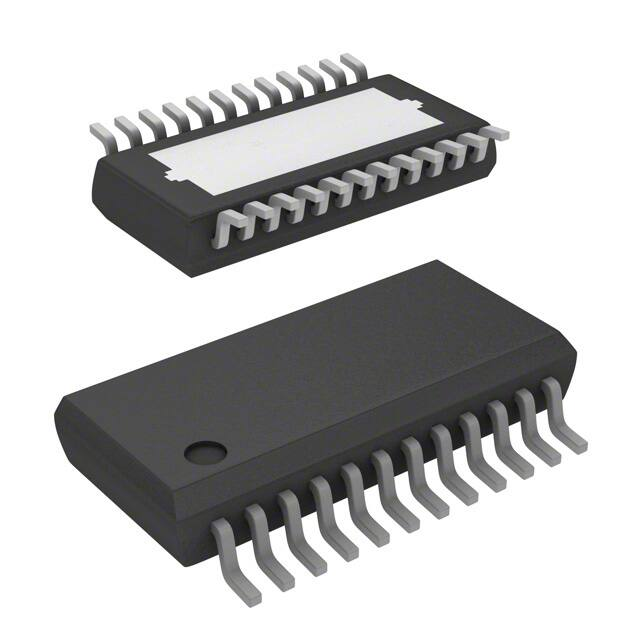
PG-SSOP-24-9
Package
Marking
PG-SSOP-24-9
TLE75080EMD
Description
The TLE75080-EMD is an eight channel high-side power switch in PG-SSOP-24-9 package providing embedded
protective functions. It is specially designed to control relays and LEDs in automotive and industrial applications.
A serial peripheral interface (SPI) is utilized for control and diagnosis of the loads as well as of the device. For
direct control and PWM there are two input pins available connected to two outputs by default. Additional or
different outputs can be controlled by the same input pins (programmable via SPI).
Table 1
Product Summary
Parameter
Symbol
Values
Analog supply voltage
VS
3.0 V … 28 V
Digital supply voltage
VDD
3.0 V … 5.5 V
Minimum overvoltage protection
VS(AZ)
42 V (see Chapter 8.5 for details)
Maximum on-state resistance at TJ = 150 °C
RDS(ON)
2.2 Ω
Nominal load current (TA = 85 °C, all channels)
IL(NOM)
330 mA
Maximum Energy dissipation - repetitive
EAR
10 mJ @ IL(EAR) = 220 mA
Maximum Source to Ground clamping voltage
VOUT(CL)
-16 V
Maximum overload switch OFF threshold
IL(OVL0)
2.3 A
Maximum total quiescent current at TJ ≤ 85 °C
ISLEEP
5 µA
Maximum SPI clock frequency
fSCLK
5 MHz
Data Sheet
6
Rev. 1.0, 2016-06-22
�TLE75080-EMD
Overview
Applications
•
High-side switches for 12 V in automotive or industrial applications such as lighting, heating, motor driving,
energy and power distribution
•
Especially designed for driving relays, LEDs and motors.
Protective Functions
•
Reverse battery protection on VS without external components
•
Short circuit to ground and battery protection
•
Stable behavior at under voltage conditions (“Lower Supply Voltage Range for Extended Operation”)
•
Over Current latch OFF
•
Thermal shutdown latch OFF
•
Overvoltage protection
•
Loss of ground protection
•
Loss of battery protection
•
Electrostatic discharge (ESD) protection
Diagnostic Features
•
Latched diagnostic information via SPI register
•
Over Load detection at ON state
•
Open Load detection at OFF state using Output Status Monitor function
•
Output Status Monitor
•
Input Status Monitor
Application Specific Functions
•
Fail-safe activation via Input pins in Limp-Home Mode
•
SPI with Daisy Chain capability
•
Safe operation at low battery voltage (cranking)
•
Two supply pins for different battery feeds (each pin is the power drain of four high-side channels)
Detailed Description
The TLE75080-EMD is an eight channel high-side switch providing embedded protective functions. The output
stages incorporate eight high-side switches (typical RDS(ON) at TJ = 25°C is 1 Ω).
The 16-bit serial peripheral interface (SPI) is utilized to control and diagnose the device and the loads. The SPI
interface provides daisy chain capability in order to assemble multiple devices (also devices with 8 bit SPI) in one
SPI chain by using the same number of microcontroller pins.
This device is designed for low supply voltage operation, therefore being able to keep its state at low battery
voltage (VS ≥ 3.0 V). The SPI functionality, including the possibility to program the device, is available only when
the digital power supply is present (see Chapter 6 for more details).
The TLE75080-EMD is equipped with two input pins that are connected to two outputs, making them controllable
even when the digital supply voltage is not available. With the Input Mapping functionality it is possible to connect
the input pins to different outputs, or assign more outputs to the same input pin. In this case more channels can
be controlled with one signal applied to one input pin.
Data Sheet
7
Rev. 1.0, 2016-06-22
�TLE75080-EMD
Overview
In Limp Home mode (Fail-Safe mode) the input pins are directly routed to channels 2 and 3. When IDLE pin is
“low”, it is possible to activate the two channels using the input pins independently from the presence of the digital
supply voltage.
The device provides diagnosis of the load via Open Load at OFF state (with DIAG_OSM.OUTn bits) and short
circuit detection. For Open Load at OFF state detection, a internal current source IOL can be activated via SPI.
Each output stage is protected against short circuit. In case of Overload, the affected channel switches OFF when
the Overload Detection Current IL(OVLn) is reached and can be reactivated via SPI. In Limp Home mode operation,
the channels connected to an input pin set to “high” restart automatically after Output Restart time tRETRY(LH) is
elapsed. Temperature sensors are available for each channel to protect the device against Over Temperature.
The power transistors are built by N-channel power MOSFET with one central chargepump . The inputs are ground
referenced TTL compatible. The device is monolithically integrated in Smart Power Technology.
Data Sheet
8
Rev. 1.0, 2016-06-22
�TLE75080-EMD
Block Diagram and Terms
2
Block Diagram and Terms
2.1
Block Diagram
VS 1
VS
VS 2
VDD
temperature
sensor
Over Load
detection
power supply
IDLE
Power mode
control
Output Status
Monitor
IN0
Limp Home
high -side
gate control
IN1
input register
CSN
SCLK
SI
SO
control,
diagnostic
and
protective
functions
OUT7_HS
OUT6_HS
OUT5_HS
OUT4_HS
OUT3_HS
OUT2_HS
OUT1_HS
OUT0_HS
SPI
diagnosis
register
GND
BlockDiagram _080noLED.emf
Figure 1
Data Sheet
Block Diagram of TLE75080-EMD
9
Rev. 1.0, 2016-06-22
�TLE75080-EMD
Block Diagram and Terms
2.2
Terms
Figure 2 shows all terms used in this data sheet, with associated convention for positive values.
VS
IVS
VS
IVDD
VDD
IIDLE
IV S1
VDD
VS1
IDLE
VIDLE
VDS6
V DS4
VDS 2
OUT0_HS
I IN0
V IN0
VOUT0
IL_S2
IN0
OUT2_HS
IN1
OUT4_HS
I IN1
VIN1
VDS0 V S1
IL_S0
V OUT2
IL_S4
IL_S6
VOUT4
OUT6_HS
VOUT6
IVS 2
VS2
ICSN
VCSN
ISCLK
V SCLK
CSN
OUT1_HS
SCLK
OUT3_HS
SI
OUT5_HS
SO
OUT7_HS
ISI
VSI
VDS 5
VDS3
IL_S3
V DS1 VS 2
VOUT1
VOUT3
IL_S5
ISO
VSO
VDS7
IL_S1
V OUT5
IL_S7
GND
VOUT7
IGND
Terms_8HS.emf
Figure 2
Voltage and Current definition
In all tables of electrical characteristics the channel related symbols without channel numbers are valid for each
channel separately (e.g. VDS specification is valid for VDS0 ... VDS7).
Furthermore, parameters relative to output current can be indicated without specifying whether the current is going
into the Drain pin or going out of the Source pin, unless otherwise specified. For instance, nominal output current
can be indicated in the following ways: IL(NOM) IL_HS(NOM) IL_S(NOM)
All SPI registers bits are marked as follows: ADDR.PARAMETER (e.g. HWCR.RST) with the exception of the bits in
the Diagnosis frames which are marked only with PARAMETER (e.g. UVRVS).
Data Sheet
10
Rev. 1.0, 2016-06-22
�TLE75080-EMD
Pin Configuration
3
Pin Configuration
3.1
Pin Assignment
CSN
SCLK
SI
SO
GND
OUT0_HS
n.c.
OUT2_HS
VS1
OUT4_HS
OUT6_HS
n.c.
1
2
3
4
5
6
7
8
9
10
11
12
25
SUB
exposed pad (bottom)
(top view)
24
23
22
21
20
19
18
17
16
15
14
13
VDD
IN0
IN1
IDLE
VS
OUT1_HS
n.c.
OUT3_HS
VS2
OUT5_HS
OUT7_HS
n.c.
PinOut_8HS.emf
Figure 3
Data Sheet
Pin Configuration TLE75080-EMD in PG-SSOP-24-9
11
Rev. 1.0, 2016-06-22
�TLE75080-EMD
Pin Configuration
3.2
Pin
Pin Definitions and Functions
Symbol
I/O
Function
Power Supply Pins
20
VS
–
Analog supply VS
Positive supply voltage for power switches gate control (incl. protections)
9
VS1
–
Analog supply VS1
Positive supply voltage for power switches drain current (channels 0, 2,
4 and 6)
16
VS2
–
Analog supply VS2
Positive supply voltage for power switches drain current (channels 1, 3,
5 and 7)
24
VDD
–
Digital supply VDD
Supply voltage for SPI with support function to VS
5
GND
–
Ground
Ground connection
1
CSN
I
Chip Select
“low” active, integrated pull-up to VDD
2
SCLK
I
Serial Clock
“high” active, integrated pull-down to ground
3
SI
I
Serial Input
“high” active, integrated pull-down to ground
4
SO
O
Serial Output
“Z” (tri-state) when CSN is “high”
SPI Pins
Input and Stand-by Pins
21
IDLE
I
Idle mode
power mode control, “high” activates Idle mode, integrated pull-down to
ground
23
IN0
I
Input pin 0
connected to channel 2 by default and in Limp Home mode, “high” active,
integrated pull-down to ground
22
IN1
I
Input pin 1
connected to channel 3 by default and in Limp Home mode, “high” active,
integrated pull-down to ground
Power Ouput Pins
6
OUT0_HS
O
Source of high-side power transistor (channel 0)
8
OUT2_HS
O
Source of high-side power transistor (channel 2)
10
OUT4_HS
O
Source of high-side power transistor (channel 4)
11
OUT6_HS
O
Source of high-side power transistor (channel 6)
14
OUT7_HS
O
Source of high-side power transistor (channel 7)
15
OUT5_HS
O
Source of high-side power transistor (channel 5)
17
OUT3_HS
O
Source of high-side power transistor (channel 3)
Data Sheet
12
Rev. 1.0, 2016-06-22
�TLE75080-EMD
Pin Configuration
Pin
Symbol
I/O
Function
19
OUT1_HS
O
Source of high-side power transistor (channel 1)
Not Connected pins / Cooling Tab
7, 12, 13, 18
n.c.
–
Not Connected, internally not bonded
25
GND
–
Exposed pad
It is recommended to connect it to PCB ground for cooling and EMC - not
usable as electrical GND pin. Electrical ground must be provided by pin 5.
Data Sheet
13
Rev. 1.0, 2016-06-22
�TLE75080-EMD
General Product Characteristics
4
General Product Characteristics
4.1
Absolute Maximum Ratings
Table 2
Absolute Maximum Ratings 1)
TJ = -40 °C to +150 °C
all voltages with respect to ground, positive current flowing into pin (unless otherwise specified)
Voltage ranges specifed for VS apply also to VS1 and VS2 (unless otherwise specified)
Parameter
Symbol
Values
Min.
Typ. Max.
Unit
Note /
Test Condition
Number
Supply Voltages
Analog Supply voltage
VS
-0.3
–
28
V
–
P_4.1.1
Digital Supply voltage
VDD
-0.3
–
5.5
V
–
P_4.1.2
Supply voltage for load dump
protection
VS(LD)
–
–
42
V
2)
P_4.1.3
Supply voltage for short circuit
protection (single pulse)
VS(SC)
0
–
28
V
–
P_4.1.4
Reverse polarity voltage
-VS(REV)
–
–
16
V
3)
P_4.1.5
TJ(0) = 25 °C
t ≤ 2 min
See Chapter 11 for
general setup.
RL = 70 Ω on all
channels
Current through VS pin
IVS
-10
–
10
mA
t ≤ 2 min
P_4.1.7
Current through VDD pin
IVDD
-50
–
10
mA
t ≤ 2 min
P_4.1.8
Load current
| IL |
–
–
IL(OVL0)
A
single channel
P_4.1.9
Voltage at power transistor
VDS
-0.3
–
42
V
–
P_4.1.10
Power transistor source voltage
VOUT_S
-16
–
VOUT_D
V
–
P_4.1.11
Power Stages
+0.3
Power transistor drain voltage
(VOUT_S ≥ 0 V)
VOUT_D
Power transistor drain voltage
(VOUT_S < 0 V)
VOUT_D
Maximum energy dissipation
single pulse
Maximum energy dissipation
single pulse
Data Sheet
VOUT_S
–
42
V
–
P_4.1.12
-0.3
–
42
V
–
P_4.1.59
EAS
–
–
50
mJ
4)
P_4.1.13
EAS
–
-0.3
TJ(0) = 25 °C
IL(0) = 2*IL(EAR)
–
25
mJ
4)
P_4.1.14
TJ(0) = 150 °C
IL(0) = 400 mA
14
Rev. 1.0, 2016-06-22
�TLE75080-EMD
General Product Characteristics
Table 2
Absolute Maximum Ratings (cont’d)1)
TJ = -40 °C to +150 °C
all voltages with respect to ground, positive current flowing into pin (unless otherwise specified)
Voltage ranges specifed for VS apply also to VS1 and VS2 (unless otherwise specified)
Parameter
Maximum energy dissipation
repetitive pulses - IL(EAR)
Symbol
EAR
Values
Min.
Typ. Max.
–
–
10
Unit
Note /
Test Condition
Number
mJ
4)
P_4.1.15
TJ(0) = 85 °C
IL(0) = IL(EAR)
2*106 cycles
IDLE pin
Voltage at IDLE pin
VIDLE
-0.3
5.5
V
–
P_4.1.23
Current through IDLE pin
IIDLE
-0.75
0.75
mA
–
P_4.1.25
Current through IDLE pin
IIDLE
-10.0
2.0
mA
t ≤ 2 min.
P_4.1.26
Voltage at input pins
VIN
-0.3
5.5
V
–
P_4.1.28
Current through input pins
IIN
-0.75
0.75
mA
–
P_4.1.30
Current through input pins
IIN
-10.0
2.0
mA
t ≤ 2 min.
P_4.1.31
Voltage at chip select pin
VCSN
-0.3
5.5
V
–
P_4.1.33
Current through chip select pin
ICSN
-0.75
0.75
mA
–
P_4.1.34
Current through chip select pin
ICSN
-10.0
2.0
mA
t ≤ 2 min.
P_4.1.35
Voltage at serial clock pin
VSCLK
-0.3
5.5
V
Current through serial clock pin
ISCLK
-0.75
0.75
mA
–
P_4.1.38
Current through serial clock pin
ISCLK
-10.0
2.0
mA
t ≤ 2 min.
P_4.1.39
Voltage at serial input pin
VSI
-0.3
5.5
V
Current through serial input pin
ISI
-0.75
0.75
mA
–
P_4.1.42
Current through serial input pin
ISI
-10.0
2.0
mA
t ≤ 2 min.
P_4.1.43
Voltage at serial output pin SO
VSO
-0.3
VDD+0.3 V
P_4.1.58
Current through serial output pin ISO
SO
-0.75
0.75
mA
P_4.1.45
Current through serial output pin ISO
SO
-2.0
10.0
mA
t ≤ 2 min.
P_4.1.46
Input Pins
SPI Pins
P_4.1.37
P_4.1.41
Temperatures
Junction Temperature
TJ
-40
–
150
°C
–
P_4.1.48
Storage Temperature
Tstg
-55
–
150
°C
–
P_4.1.49
ESD Susceptibility HBM
OUT pins vs. VS or GND
VESD
-4
–
4
kV
5)
P_4.1.50
ESD Susceptibility HBM
other pins
VESD
ESD Susceptibility
Data Sheet
HBM
-2
–
2
kV
5)
P_4.1.51
HBM
15
Rev. 1.0, 2016-06-22
�TLE75080-EMD
General Product Characteristics
Table 2
Absolute Maximum Ratings (cont’d)1)
TJ = -40 °C to +150 °C
all voltages with respect to ground, positive current flowing into pin (unless otherwise specified)
Voltage ranges specifed for VS apply also to VS1 and VS2 (unless otherwise specified)
Parameter
Symbol
ESD Susceptibility CDM
Pin 1, 12, 13, 24 (corner pins)
VESD
ESD Susceptibility CDM
VESD
Values
Min.
Typ. Max.
-750
–
750
Unit
Note /
Test Condition
Number
V
6)
P_4.1.52
CDM
-500
–
500
V
6)
P_4.1.54
CDM
1) Not subject to production test, specified by design.
2) For a duration of ton = 400 ms; ton/toff = 10%; limited to 100 pulses
3) Device is mounted on a FR4 2s2p board according to Jedec JESD51-2,-5,-7 at natural convection; the Product
(Chip+Package) was simulated on a 76.2 *114.3 *1.5 mm board with 2 inner copper layers (2 * 70 µm Cu, 2 * 35 µm Cu).
Where applicable a thermal via array under the exposed pad contacted the first inner copper layer.
4) Pulse shape represents inductive switch off: IL(t) = IL(0) x (1 - t / tpulse); 0 < t < tpulse
5) ESD susceptibility, HBM according to ANSI/ESDA/JEDEC JS001 (1.5k Ω, 100 pF)
6) ESD susceptibility, Charged Device Model “CDM” ESDA STM5.3.1 or ANSI/ESD S.5.3.1
Notes
1. Stresses above the ones listed here may cause permanent damage to the device. Exposure to absolute
maximum rating conditions for extended periods may affect device reliability.
2. Integrated protection functions are designed to prevent IC destruction under fault conditions described in the
data sheet. Fault conditions are considered as “outside” normal operating range. Protection functions are not
designed for continuous repetitive operation.
4.2
Functional Range
Table 3
Functional range
Parameter
Supply Voltage Range for
Normal Operation
Symbol
VS(NOR)
Upper Supply Voltage Range VS(EXT,UP)
for Extended Operation
Values
Unit
Note /
Test Condition
Number
P_4.2.1
Min.
Typ.
Max.
7
–
18
V
–
18
–
28
V
Parameter deviation P_4.2.2
possible
–
7
V
Parameter deviation P_4.2.3
possible
Lower Supply Voltage Range VS(EXT,LOW) 3
for Extended Operation
Junction Temperature
TJ
-40
–
150
°C
–
P_4.2.4
Logic supply voltage
VDD
3
–
5.5
V
–
P_4.2.5
Note: Within the functional or operating range, the IC operates as described in the circuit description. The electrical
characteristics are specified within the conditions given in the Electrical Characteristics table.
Data Sheet
16
Rev. 1.0, 2016-06-22
�TLE75080-EMD
General Product Characteristics
4.3
Thermal Resistance
Note: This thermal data was generated in accordance with JEDEC JESD51 standards. For more information, go
to www.jedec.org.
Table 4
Thermal Resistance
Parameter
Symbol
Junction to Soldering Point
RthJSP
Values
Min.
Typ.
Max.
–
5
7
Unit
Note / Test Condition Number
K/W
1)
P_4.3.4
measured to exposed
pad (pin 25)
Junction to Ambient
RthJA
–
32
–
K/W
1)2)
P_4.3.5
1) not subject to production test, specified by design
2) Specified RthJA value is according to Jedec JESD51-2,-5,-7 at natural convection on FR4 2s2p board; the Product
(Chip+Package) was simulated on a 76.2 * 114.3 * 1.5 mm board with 2 inner copper layers (2 * 70 µm Cu, 2 * 35 µm Cu).
Where applicable a thermal via array under the exposed pad contacted the first inner copper layer.
4.3.1
PCB set up
70µm
1.5mm
35µm
0.3mm
Figure 4
Data Sheet
Zth_PCB_2s2p.emf
2s2p PCB Cross Section
17
Rev. 1.0, 2016-06-22
�TLE75080-EMD
General Product Characteristics
Figure 5
PC Board for Thermal Simulation with 600 mm² Cooling Area
Figure 6
PC Board for Thermal Simulation with 2s2p Cooling Area
Data Sheet
18
Rev. 1.0, 2016-06-22
�TLE75080-EMD
General Product Characteristics
4.3.2
Thermal Impedance
8 channels High Side
100
Zth-JA [K/W]
Tamb = 105°C
10
1
2s2p
1s0p - 600 mm²
1s0p - 300 mm²
1s0p - footprint
0.1
0.0001
0.001
0.01
0.1
1
10
100
1000
Time [s]
Figure 7
Typical Thermal Impedance. PCB setup according Chapter 4.3.1
8 channels High Side
100.00
1s0p - Tamb = 105°C
90.00
Rth-JA [K/W]
80.00
70.00
60.00
50.00
40.00
30.00
Figure 8
Data Sheet
0
100
200
300
Area [mm²]
400
500
600
700
Typical Thermal Resistance. PCB setup 1s0p
19
Rev. 1.0, 2016-06-22
�TLE75080-EMD
Control Pins
5
Control Pins
The device has three pins (IN0, IN1 and IDLE) to control directly the device without using SPI.
5.1
Input pins
TLE75080-EMD has two input pins available. Each input pin is connected by default to one channel (IN0 to
channel 2, IN1 to channel 3). Input Mapping Registers MAPIN0 and MAPIN1 can be programmed to connect
additional or different channels to each input pin, as shown in Figure 9. The signals driving the channels are an
OR combination between OUT register status, IN0 and IN1 (according to Input Mapping registers status).
IN1
Limp Home mode
(default )
IIN1
MAPIN1
&
8
8
IN0
Limp Home mode
(default )
IIN0
OR
MAPIN0
&
8
8
8
OR
OUT
Channel 7
Channel 6
Channel 5
Channel 4
Channel 3
Channel 2
Channel 1
Channel 0
8
8
InputMapping_8ch.emf
Figure 9
Input Mapping
The logic level of the input pins can be monitored via the Input Status Monitor Register (INST). The Input Status
Monitor is operative also when TLE75080-EMD is in Limp Home mode. If one of the Input pins is set to “high” and
the IDLE pin is set to “low”, the device switches into Limp Home mode and activates the channel mapped by
default to the input pins. See Chapter 6.1.5 for further details.
5.2
IDLE pin
The IDLE pin is used to bring the device into Sleep mode operation when is set to “low” and all input pins are set
to “low”.When IDLE pin is set to “low” while one of the input pins is set to “high” the device enters Limp Home mode.
To ensure a proper mode transition, IDLE pin must be set for at least tIDLE2SLEEP (P_6.3.54, transition from “high”
to “low”) or tSLEEP2IDLE (P_6.3.53, transition from “low” to “high”).
Setting the IDLE pin to “low” has the following consequences:
•
All registers in the SPI are reset to default values
•
VDD and VS Undervoltage detection circuits are disabled to decrease current consumption (if both inputs are
set to “low”)
•
No SPI communication is allowed (SO pin remains in high impedance state also when CSN pin is set to “low”)
if both input pins are set to “low”
Data Sheet
20
Rev. 1.0, 2016-06-22
�TLE75080-EMD
Control Pins
5.3
Electrical Characteristics Control Pins
Table 5
Electrical Characteristics: Control Pins
VDD = 3 V to 5.5 V, VS = 7 V to 18 V, TJ = -40 °C to +150 °C (unless otherwise specified)
Typical values: VDD = 5 V, VS = 13.5 V, TJ = 25 °C
Parameter
Symbol
Values
Min.
Typ.
Unit
Note /
Test Condition
Number
Max.
IDLE pin
L-input level
VIDLE(L)
0
0.8
V
–
P_5.3.1
H-input level
VIDLE(H)
2.0
5.5
V
–
P_5.3.2
L-input current
IIDLE(L)
5
12
20
μA
VIDLE = 0.8 V
P_5.3.3
H-input current
IIDLE(H)
14
28
45
μA
VIDLE = 2.0 V
P_5.3.4
L-input level
VIN(L)
0
0.8
V
–
P_5.3.5
H-input level
VIN(H)
2.0
5.5
V
–
P_5.3.6
L-input current
IIN(L)
5
12
20
μA
VIN = 0.8 V
P_5.3.7
H-input current
IIN(H)
14
28
45
μA
VIN = 2.0 V
P_5.3.8
Input Pins
Data Sheet
21
Rev. 1.0, 2016-06-22
�TLE75080-EMD
Power Supply
6
Power Supply
The TLE75080-EMD is supplied by four supply voltages:
VS (analog supply voltage used also for the logic)
• VS1 (analog supply voltage used as drain for channels 0, 2, 4 and 6)
• VS2 (analog supply voltage used as drain for channels 1, 3, 5 and 7)
• VDD (digital supply voltage)
The VS supply line is connected to a battery feed and used, in combination with VDD supply, for the driving circuitry
of the power stages. In situations where VS voltage drops below VDD voltage (for instance during cranking events
•
down to 3.0 V), an increased current consumption may be observed at VDD pin.
VS and VDD supply voltages have an undervoltage detection circuit, which prevents the activation of the associated
function in case the measured voltage is below the undervoltage threshold. More in detail:
•
An undervoltage on both VS and VDD supply voltages prevents the activation of the power stages and any SPI
communication (the SPI registers are reset)
•
An undervoltage on VDD supply prevents any SPI communication. SPI read/write registers are reset to default
values.
•
An undervoltage on VS supply forces the TLE75080-EMD to drain all needed current for the logic from VDD
supply. All channels are disabled, and are enabled again as soon as VS ≥ VS(OP).
Figure 10 shows a basic concept drawing of the interaction between supply pins VS and VDD, the output stage
drivers and SO supply line.
VS1
CP
GD
HS
VS
Ch. 0,2,4,6
IVS
VS2
VREG
VDD
GD
UVR
VDD
IVDD
HS
UVR
VS
Ch. 1,3,5,7
SO
SPI
SupplyConcept_8HS.emf
Figure 10
TLE75080-EMD Internal Power Supply concept
When 3.0 V ≤ VS ≤ VDD - VSDIFF TLE75080-EMD operates in “Cranking Operative Range” (COR). In this condition
the current consumption from VDD pin increases while it decreases from VS pin where the total current
consumption remains within the specified limits. Figure 11 shows the voltage levels at VS pin where the device
goes in and out of COR. During the transition to and from COR operative region, IVS and IVDD change between
values defined for normal operation and for COR operation. The sum of both current remains within limits specified
in “Overall current consumption” section (see Table 8).
Data Sheet
22
Rev. 1.0, 2016-06-22
�TLE75080-EMD
Power Supply
VS
VDD + V SDIFF
VDD
V DD - V SDIFF
3.0 V
t
COR
(no)
yes
(no)
t
IVS
Supply transition
Supply transition
IVDD
t
SupplyConcept_COR.emf
Figure 11
“Cranking Operative Range”
Furthermore, when VS(UV) ≤ VS ≤ VS(OP) it may be not possible to switch ON a channel that was previously OFF.
All channels that are already ON keep their state unless they are switched OFF via SPI or via INn pins. An
overview of channel behavior according to different VS and VDD supply voltages is shown in Table 6 (the table is
valid after a successful power-up, see Chapter 6.1.1 for more details).
Data Sheet
23
Rev. 1.0, 2016-06-22
�TLE75080-EMD
Power Supply
Table 6
Device capability as function of VS and VDD
VS ≤ 3.0 V
3.0 V = VS(UV),max
(P_6.3.1)
3.0 V < VS ≤ VS(OP)
(VS(OP) = P_6.3.2)
VDD ≤ VDD(UV)
(VDD(UV) = P_6.3.25)
VDD = VDD(LOP)
(VDD(LOP) = P_6.3.24)
VDD > VDD(LOP)
channels cannot be
controlled
channels cannot be
controlled
channels cannot be
controlled
SPI registers reset
SPI registers available
SPI registers available
SPI communication not
available (fSCLK = 0 MHz)
SPI communication possible SPI communication possible
(fSCLK = 1 MHz) (P_10.4.34) (fSCLK = 5 MHz) (P_10.4.22)
Limp Home mode not
available
Limp Home mode available
(channels are OFF)
channels cannot be
controlled by SPI
Limp Home mode available
(channels are OFF)
channels can be switched
channels can be switched
1)
ON and OFF (SPI control)
ON and OFF (SPI control)1)
(RDS(ON) deviations possible) (RDS(ON) deviations possible)
SPI registers reset
SPI registers available
SPI registers available
SPI communication not
available (fSCLK = 0 MHz)
SPI communication possible SPI communication possible
(fSCLK = 1 MHz) (P_10.4.34) (fSCLK = 5 MHz) (P_10.4.22)
Limp Home mode available1) Limp Home mode available1) Limp Home mode available1)
(RDS(ON) deviations possible) (RDS(ON) deviations possible) (RDS(ON) deviations possible)
VS ≥ VS(OP)
channels can be switched
ON and OFF
(small RDS(ON) dev. possible
when VS = VS(EXT,LOW))
channels can be switched
ON and OFF
(small RDS(ON) dev. possible
when VS = VS(EXT,LOW))
SPI registers reset
SPI registers available
SPI registers available
SPI communication not
available (fSCLK = 0 MHz)
SPI communication possible SPI communication possible
(fSCLK = 5 MHz) (P_10.4.22) (fSCLK = 5 MHz) (P_10.4.22)
channels cannot be
controlled by SPI
Limp Home mode available Limp Home mode available Limp Home mode available
(small RDS(ON) dev. possible (small RDS(ON) dev. possible (small RDS(ON) dev. possible
when VS = VS(EXT,LOW))
when VS = VS(EXT,LOW))
when VS = VS(EXT,LOW))
1) undervoltage condition on VS must be considered - see Chapter 6.2.1 for more details
Data Sheet
24
Rev. 1.0, 2016-06-22
�TLE75080-EMD
Power Supply
6.1
Operation Modes
TLE75080-EMD has the following operation modes:
•
Sleep mode
•
Idle mode
•
Active mode
•
Limp Home mode
The transition between operation modes is determined according to following levels and states:
•
logic level at IDLE pin
•
logic level at INn pins
•
OUT.OUTn bits state
•
HWCR.ACT bit state
The state diagram including the possible transitions is shown in Figure 12. The behaviour of TLE75080-EMD as
well as some parameters may change in dependence from the operation mode of the device. Furthermore, due
to the undervoltage detection circuitry which monitors VS and VDD supply voltages, some changes within the same
operation mode can be seen accordingly.
The operation mode of the TLE75080-EMD can be observed by:
•
status of output channels
•
status of SPI registers
•
current consumption at VDD pin (IVDD)
•
current consumption at VS pin (IVS)
The default operation mode to switch ON the loads is Active mode. If the device is not in Active mode and a request
to switch ON one or more outputs comes (via SPI or via Input pins), it will switch into Active or Limp Home mode,
according to IDLE pin status. Due to the time needed for such transitions, output turn-on time tON will be extended
due to the mode transition latency.
init
IDLE = „high“
INn = „low“
Sleep
INn = „high“
& IDLE = „low“
IDLE = „low“
Idle
INn = „low“
& VDD < VDD(UV)
IDLE = „low“
& INn = „low“
HWCR.ACT = 0
& OUT.OUTn = 0
& INn = „low“
Limp Home
IDLE = „high“
Active
IDLE = „low“
& INn = „high“
HWCR.ACT = 1
or OUT.OUTn = 1
or INn = „high“
Figure 12
Data Sheet
OpModes.emf
Operation Mode state diagram
25
Rev. 1.0, 2016-06-22
�TLE75080-EMD
Power Supply
Table 7 shows the correlation between device operation modes, VS and VDD supply voltages, and state of the most
important functions (channels operativity, SPI communication and SPI registers).
Table 7
Device function in relation to operation modes, VS and VDD voltages
Operation
Mode
Function
Undervoltage
condition on VS1)
VDD ≤ VDD(UV)
Undervoltage
condition on VS
VDD > VDD(UV)
VS not in
undervoltage
VDD ≤ VDD(UV)
VS not in
undervoltage
VDD >VDD(UV)
Sleep
Channels
not available
not available
not available
not available
SPI comm.
not available
not available
not available
not available
SPI registers
reset
reset
reset
reset
Channels
not available
not available
not available
not available
SPI comm.
not available
✔
not available
✔
SPI registers
reset
✔
reset
✔
Channels
not available
not available
✔ (IN pins only)
✔
SPI comm.
not available
✔
not available
✔
SPI registers
reset
✔
reset
✔
Channels
not available
not available
✔ (IN pins only)
✔ (IN pins only)
SPI comm.
not available
✔ (read-only)
not available
✔ (read-only)
reset
✔ (read-only)
reset
✔ (read-only)2)
Idle
Active
Limp Home
SPI registers
2)
1) see Chapter 6.2.1 for more details
2) see Chapter 6.1.5 for a detailed overview
6.1.1
Power-up
The Power-up condition is satisfied when one of the supply voltages (VS or VDD) is applied to the device and the
INn or IDLE pins are set to “high”. If VS is above the threshold VS(OP) or if VDD is above the threshold VDD(LOP) the
internal power-on signal is set.
6.1.2
Sleep mode
When TLE75080-EMD is in Sleep mode, all outputs are OFF and the SPI registers are reset, independently from
the supply voltages. The current consumption is minimum. See parameters IVDD(SLEEP) and IVS(SLEEP), or parameter
ISLEEP for the whole device.
6.1.3
Idle mode
In Idle mode, the current consumption of the device can reach the limits given by parameters IVDD(IDLE) and IVS(IDLE),
or by parameter IIDLE for the whole device. The internal voltage regulator is working. Diagnosis functions are not
available. The output channels are switched OFF, independently from the supply voltages. When VDD is available,
the SPI registers are working and SPI communication is possible. In Idle mode the ERRn bits are not cleared for
functional safety reasons.
6.1.4
Active mode
Active mode is the normal operation mode of TLE75080-EMD when no Limp Home condition is set and it is
necessary to drive some or all loads. Voltage levels of VDD and VS influence the behavior as described at the
beginning of Chapter 6. Device current consumption is specified with IVDD(ACTIVE) and IVS(ACTIVE) (IACTIVE for the
Data Sheet
26
Rev. 1.0, 2016-06-22
�TLE75080-EMD
Power Supply
whole device). The device enters Active mode when IDLE pin is set to “high” and one of the input pins is set to
“high” or one OUT.OUTn bit is set to “1”. If HWCR.ACT is set to “0”, the device returns to Idle mode as soon as all
inputs pins are set to “low” and OUT.OUTn bits are set to “0”. If HWCR.ACT is set to “1”, the device remains in Active
mode independently of the status of input pins and OUT.OUTn bits. An undervoltage condition on VDD supply
brings the device into Idle mode, if all input pins are set to “low”. Even if the registers MAPIN0 and MAPIN1 are
both set to “00H” but one of the input pins INn is set to “high”, the device goes into Active mode.
6.1.5
Limp Home mode
TLE75080-EMD enters Limp Home mode when IDLE pin is “low” and one of the input pins is set to “high”,
switching ON the channel connected to it. SPI communication is possible but only in read-only mode (SPI registers
can be read but cannot be written). More in detail:
•
UVRVS and LOPVDD are set to “1”
•
MODE bits are set to “01B” (Limp Home mode)
•
TER bit is set to “1” on the first SPI command after entering Limp Home mode. Afterwards it works normally
•
OLOFF bits is set to “0”
•
ERRn bits work normally
•
DIAG_OSM.OUTn bits can be read and work normally
•
All other registers are set to their default value and cannot be programmed as long as the device is in Limp
Home mode
See Table 6 for a detailed overview of supply voltage conditions required to switch ON channels 2 and 3 during
Limp Home. All other channels are OFF.
A transmission of SPI commands during transition from Active to Limp Home mode or Limp Home to Active mode
may result in undefined SPI responses.
6.1.6
Definition of Power Supply modes transition times
The channel turn-ON time is as defined by parameter tON when TLE75080-EMD is in Active mode or in Limp Home
mode. In all other cases, it is necessary to add the transition time required to reach one of the two aforementioned
Power Supply modes (as shown in Figure 13).
Data Sheet
27
Rev. 1.0, 2016-06-22
�TLE75080-EMD
Power Supply
init
tSLEEP2IDLE
tLH2SLEEP
Sleep
tIDLE2SLEEP
tACTIVE2SLEEP
Idle
tSLEEP2LH
Channel ON
tON
Limp Home
tON
tACTIVE2IDLE
tLH2ACTIVE
Active
tIDLE2ACTIVE
tACTIVE2LH
OpModesTimings.emf
Figure 13
Transition Time diagram
6.2
Reset condition
One of the following 3 conditions resets the SPI registers to the default value:
•
VDD is not present or below the undervoltage threshold VDD(UV)
•
IDLE pin is set to “low”
•
a reset command (HWCR.RST set to “1”) is executed
–
ERRn bits are not cleared by a reset command (for functional safety)
–
UVRVS and LOPVDD bits are cleared by a reset command
In particular, all channels are switched OFF (if there are no input pin set to “high”) and the Input Mapping
configuration is reset.
6.2.1
Undervoltage on VS
Between VS(UV) and VS(OP) the undervoltage mechanism is triggered. If the device is operative and the supply
voltage drops below the undervoltage threshold VS(UV), the logic set the bit UVRVS to “1”. As soon as the supply
voltage VS is above the minimum voltage operative threshold VS(OP), the bit UVRVS is set to “0” after the first
Standard Diagnosis readout. Undervoltage condition on VS influences the status of the channels, as described in
Table 6. Figure 14 sketches the undervoltage behavior (the “VS - VDS” line refers to a channel which is
programmed to be ON).
Data Sheet
28
Rev. 1.0, 2016-06-22
�TLE75080-EMD
Power Supply
VS
VS(OP)
VS(UV)
VS(HYS)
t
VS - VDS
t
UVRVS
1
0
1
t
Supply_UVRVS.emf
Figure 14
VS Undervoltage Behavior
6.2.2
Low Operating Power on VDD
When VDD supply voltage is in the range indicated by VDD(LOP), the bit LOPVDD is set to “1”. As soon as VDD >
VDD(LOP) the bit LOPVDD is set to “0” after the first Standard Diagnosis readout.
If VDD supply voltage is not present, a voltage applied to pins CSN or SO can supply the internal logic (not
recommended in normal operation due to internal design limitations).
Data Sheet
29
Rev. 1.0, 2016-06-22
�TLE75080-EMD
Power Supply
6.3
Electrical Characteristics Power Supply
Table 8
Electrical Characteristics Power Supply
VDD = 3 V to 5.5 V, VS = 7 V to 18 V, TJ = -40 °C to +150 °C, all voltages with respect to ground, positive currents
flowing as described in Figure 2 (unless otherwise specified)
Typical values: VDD = 5 V, VS = 13.5 V, TJ = 25 °C
Parameter
Symbol
Values
Min.
Typ.
Max.
Unit
Note /
Test Condition
Number
VS pin
Analog supply undervoltage
shutdown
VS(UV)
1.5
–
3.0
V
OUTn = ON
from VDS ≤ 1 V
to UVRVS = 1B
RL = 50 Ω
P_6.3.1
Analog supply minimum
operative voltage
VS(OP)
–
–
4.0
V
OUT.OUTn = 1B
from UVRVS = 1B
to VDS ≤ 1 V
RL = 50 Ω
P_6.3.2
Undervoltage shutdown
hysteresis
VS(HYS)
–
1
–
V
1)
P_6.3.3
Analog supply current
consumption in Sleep mode
with loads
IVS(SLEEP)
–
0.1
3
µA
1)
P_6.3.4
Analog supply current
consumption in Sleep mode
with loads
IVS(SLEEP)
–
VIDLE floating
VINn floating
VCSN = VDD
TJ ≤ 85 °C
0.1
–
µA
1)
P_6.3.63
VIDLE floating
VINn floating
VCSN = VDD
TJ ≤ 85 °C
VS = 13.5 V
Analog supply current
consumption in Sleep mode
with loads
IVS(SLEEP)
–
0.1
20
µA
VIDLE floating
VINn floating
VCSN = VDD
TJ = 150 °C
Analog supply current
consumption in Idle mode
with loads
IVS(IDLE)
–
–
2.2
mA
IDLE = “high”
P_6.3.6
VINn floating
fSCLK = 0 MHz
HWCR.ACT = 0B
OUT.OUTn = 0B
DIAG_IOL.OUTn =
0B
VCSN = VDD
Data Sheet
30
P_6.3.5
Rev. 1.0, 2016-06-22
�TLE75080-EMD
Power Supply
Table 8
Electrical Characteristics Power Supply (cont’d)
VDD = 3 V to 5.5 V, VS = 7 V to 18 V, TJ = -40 °C to +150 °C, all voltages with respect to ground, positive currents
flowing as described in Figure 2 (unless otherwise specified)
Typical values: VDD = 5 V, VS = 13.5 V, TJ = 25 °C
Parameter
Symbol
Values
Min.
Typ.
Max.
Unit
Note /
Test Condition
Number
Analog supply current
consumption in Idle mode
with loads (COR)
IVS(IDLE)
–
–
0.3
mA
P_6.3.7
IDLE = “high”
VINn floating
fSCLK = 0 MHz
HWCR.ACT = 0B
OUT.OUTn = 0B
DIAG_IOL.OUTn =
0B
VCSN = VDD
VS ≤ VDD - 1 V
Analog supply current
consumption in Active mode
with loads - channels OFF
IVS(ACTIVE)
–
–
7.7
mA
IDLE = “high”
P_6.3.10
VINn floating
fSCLK = 0 MHz
HWCR.ACT = 1B
OUT.OUTn = 0B
DIAG_IOL.OUTn =
0B
VCSN = VDD
Analog supply current
consumption in Active mode
with loads - channels OFF
(COR)
IVS(ACTIVE)
–
–
5.0
mA
P_6.3.14
IDLE = “high”
VINn floating
fSCLK = 0 MHz
HWCR.ACT = 1B
OUT.OUTn = 0B
DIAG_IOL.OUTn =
0B
VCSN = VDD
VS ≤ VDD - 1 V
Analog supply current
consumption in Active mode
with loads - channels ON
IVS(ACTIVE)
–
–
7.7
mA
IDLE = “high”
P_6.3.16
VINn floating
fSCLK = 0 MHz
HWCR.ACT = 1B
OUT.OUTn = 1B
DIAG_IOL.OUTn =
0B
VCSN = VDD
Analog supply current
consumption in Active mode
with loads - channels ON
(COR)
IVS(ACTIVE)
–
2.3
5.0
mA
P_6.3.22
IDLE = “high”
VINn floating
fSCLK = 0 MHz
HWCR.ACT = 1B
OUT.OUTn = 1B
DIAG_IOL.OUTn =
0B
VCSN = VDD
VS ≤ VDD - 1 V
Data Sheet
31
Rev. 1.0, 2016-06-22
�TLE75080-EMD
Power Supply
Table 8
Electrical Characteristics Power Supply (cont’d)
VDD = 3 V to 5.5 V, VS = 7 V to 18 V, TJ = -40 °C to +150 °C, all voltages with respect to ground, positive currents
flowing as described in Figure 2 (unless otherwise specified)
Typical values: VDD = 5 V, VS = 13.5 V, TJ = 25 °C
Parameter
Symbol
Values
Min.
Typ.
Max.
Unit
Note /
Test Condition
Number
VDD pin
Logic Supply Operating
voltage
VDD(OP)
3.0
–
5.5
V
fSCLK = 5 MHz
P_6.3.23
Logic Supply Lower
Operating Voltage
VDD(LOP)
3.0
–
4.5
V
–
P_6.3.24
Undervoltage shutdown
VDD(UV)
1
–
3.0
V
VSI = 0 V
VSCLK = 0 V
VCSN = 0 V
P_6.3.25
SO from “low” to
high impedance
1)
Logic supply current in Sleep IVDD(SLEEP)
mode
–
Logic supply current in Sleep IVDD(SLEEP)
mode
–
–
10
µA
VIDLE floating
VINn floating
VCSN = VDD
TJ = 150 °C
P_6.3.27
0.1
2.5
µA
P_6.3.26
VIDLE floating
VINn floating
VCSN = VDD
TJ ≤ 85 °C
Logic supply current in Idle
mode
IVDD(IDLE)
–
–
0.3
mA
IDLE = “high”
VINn floating
fSCLK = 0 MHz
HWCR.ACT = 0B
OUT.OUTn = 0B
VCSN = VDD
P_6.3.28
Logic supply current in Idle
mode (COR)
IVDD(IDLE)
–
–
2.2
mA
IDLE = “high”
VINn floating
fSCLK = 0 MHz
HWCR.ACT = 0B
OUT.OUTn = 0B
VCSN = VDD
VS ≤ VDD - 1 V
P_6.3.29
–
–
0.3
mA
IDLE = “high”
VINn floating
fSCLK = 0 MHz
HWCR.ACT = 1B
OUT.OUTn = 0B
VCSN = VDD
P_6.3.30
Logic supply current in Active IVDD(ACTIVE)
mode - channels OFF
Data Sheet
32
Rev. 1.0, 2016-06-22
�TLE75080-EMD
Power Supply
Table 8
Electrical Characteristics Power Supply (cont’d)
VDD = 3 V to 5.5 V, VS = 7 V to 18 V, TJ = -40 °C to +150 °C, all voltages with respect to ground, positive currents
flowing as described in Figure 2 (unless otherwise specified)
Typical values: VDD = 5 V, VS = 13.5 V, TJ = 25 °C
Parameter
Symbol
Values
Unit
Note /
Test Condition
Number
Min.
Typ.
Max.
Logic supply current in Active IVDD(ACTIVE)
mode - channels OFF (COR)
–
–
2.7
mA
IDLE = “high”
VINn floating
fSCLK = 0 MHz
HWCR.ACT = 1B
OUT.OUTn = 0B
VCSN = VDD
VS ≤ VDD - 1 V
P_6.3.33
Logic supply current in Active IVDD(ACTIVE)
mode - channels ON
–
–
0.3
mA
IDLE = “high”
VINn floating
fSCLK = 0 MHz
HWCR.ACT = 1B
OUT.OUTn = 1
VCSN = VDD
P_6.3.35
Logic supply current in Active IVDD(ACTIVE)
mode - channels ON (COR)
–
–
3.5
mA
P_6.3.66
IDLE = “high”
VINn floating
fSCLK = 0 MHz
HWCR.ACT = 1B
OUT.OUTn = 1B
DIAG_IOL.OUTn =
0B
VCSN = VDD
VS ≤ VDD - 1 V
–
5
µA
1)
Overall current consumption
Overall current consumption
in Sleep mode
IVS(SLEEP) + IVDD(SLEEP)
ISLEEP
–
Overall current consumption
in Sleep mode
IVS(SLEEP) + IVDD(SLEEP)
ISLEEP
–
Overall current consumption
in Sleep mode
IVS(SLEEP) + IVDD(SLEEP)
ISLEEP
–
Data Sheet
P_6.3.40
VIDLE floating
VINn floating
VCSN = VDD
TJ ≤ 85 °C
–
5
µA
1)
P_6.3.64
VIDLE floating
VINn floating
VCSN = VDD
TJ ≤ 85 °C
VS = 13.5 V
–
30
33
µA
VIDLE floating
VINn floating
VCSN = VDD
TJ = 150 °C
P_6.3.41
Rev. 1.0, 2016-06-22
�TLE75080-EMD
Power Supply
Table 8
Electrical Characteristics Power Supply (cont’d)
VDD = 3 V to 5.5 V, VS = 7 V to 18 V, TJ = -40 °C to +150 °C, all voltages with respect to ground, positive currents
flowing as described in Figure 2 (unless otherwise specified)
Typical values: VDD = 5 V, VS = 13.5 V, TJ = 25 °C
Parameter
Symbol
Values
Min.
Typ.
Max.
Unit
Note /
Test Condition
Number
Overall current consumption
in Idle mode
IVS(IDLE) + IVDD(IDLE)
IIDLE
–
–
2.5
mA
IDLE = “high”
P_6.3.42
VINn floating
fSCLK = 0 MHz
HWCR.ACT = 0B
OUT.OUTn = 0B
DIAG_IOL.OUTn =
0B
VCSN = VDD
Overall current consumption
in Active mode - channels
OFF
IVS(ACTIVE) + IVDD(ACTIVE)
IACTIVE
–
–
8
mA
IDLE = “high”
P_6.3.45
VINn floating
fSCLK = 0 MHz
HWCR.ACT = 1B
OUT.OUTn = 0B
DIAG_IOL.OUTn =
0B
VCSN = VDD
Overall current consumption IACTIVE
in Active mode - channels ON
IVS(ACTIVE) + IVDD(ACTIVE)
–
–
8
mA
IDLE = “high”
P_6.3.50
VINn floating
fSCLK = 0 MHz
HWCR.ACT = 1B
OUT.OUTn = 1B
DIAG_IOL.OUTn =
0B
VCSN = VDD
VSDIFF
–
200
–
mV
1)
P_6.3.52
tSLEEP2IDLE
–
200
400
µs
1)
P_6.3.53
Voltage difference between
VS and VDD supply lines
Timings
Sleep to Idle delay
from IDLE pin to
TER + INST register
= 8680H (see
Chapter 10.6.1 for
details)
Idle to Sleep delay
tIDLE2SLEEP
–
100
200
µs
1)
P_6.3.54
from IDLE pin to
Standard Diagnosis
= 0000H (see
Chapter 10.5 for
details)
external pull-down
SO to GND
required
Data Sheet
34
Rev. 1.0, 2016-06-22
�TLE75080-EMD
Power Supply
Table 8
Electrical Characteristics Power Supply (cont’d)
VDD = 3 V to 5.5 V, VS = 7 V to 18 V, TJ = -40 °C to +150 °C, all voltages with respect to ground, positive currents
flowing as described in Figure 2 (unless otherwise specified)
Typical values: VDD = 5 V, VS = 13.5 V, TJ = 25 °C
Parameter
Idle to Active delay
Symbol
tIDLE2ACTIVE
Values
Min.
Typ.
Max.
–
100
200
Unit
Note /
Test Condition
Number
µs
1)
P_6.3.55
from INn or CSN
pins to MODE = 10B
Active to Idle delay
tACTIVE2IDLE
–
100
200
µs
1)
P_6.3.56
from INn or CSN
pins to MODE = 11B
Sleep to Limp Home delay
Limp Home to Sleep delay
Limp Home to Active delay
tSLEEP2LH
tLH2SLEEP
tLH2ACTIVE
–
–
–
300
+tON
600
+tON
µs
200
+tOFF
400
+tOFF
µs
50
100
µs
1)
P_6.3.57
from INn pins
to VDS = 10% VS
1)
P_6.3.58
from INn pins to
Standard Diagnosis
= 0000H (see
Chapter 10.6.1 for
details). External
pull-down SO to
GND required
1)
P_6.3.59
from IDLE pin to
MODE = 10B
Active to Limp Home delay
tACTIVE2LH
–
50
100
µs
1)
P_6.3.60
from IDLE pin to
TER + INST register
= 8683H (IN0 = IN1
= “high”) or
8682H(IN1 = “high”,
IN0 = “low”) or
8681H (IN1 = “low”,
IN0 = “high”) (see
Chapter 10.5 for
details)
Active to Sleep delay
tACTIVE2SLEEP –
50
100
µs
1)
P_6.3.61
from IDLE pin to
Standard Diagnosis
= 0000H (see
Chapter 10.6.1 for
details). External
pull-down SO to
GND required.
1) Not subject to production test - specified by design
Data Sheet
35
Rev. 1.0, 2016-06-22
�TLE75080-EMD
Power Stages
7
Power Stages
The TLE75080-EMD is an eight channels high-side relay switch. The power stages are built by N-channel lateral
power MOSFET transistors.
The supply voltages VS1 and VS2 can be connected to any potential between ground and VS. A charge pump is
connected to the output MOSFET gate.
7.1
Output ON-state resistance
The ON-state resistance RDS(ON) depends on the supply voltage as well as the junction temperature TJ.
7.1.1
Switching Resistive Loads
When switching resistive loads the following switching times and slew rates can be considered.
INn /
OUT.OUTn
t ON
V DS
t OFF
t DELAY (ON)
t
t DELAY (OFF)
90% of V S
70% of V S
70%
dV /
dtOFF
dV /
dtON
30%
30% of V S
10% of V S
t
SwitchON .emf
Figure 15
Switching a Resistive Load
7.1.2
Inductive Output Clamp
When switching off inductive loads, the voltage across the power switch rises to VDS(CL) potential, because the
inductance intends to continue driving the current. The potential at Output pin is not allowed to go below VOUT(CL).
The voltage clamping is necessary to prevent device destruction.
Figure 16 shows a concept drawing of the implementation. Nevertheless, the maximum allowed load inductance
is limited. The clamping structure protects the device in all operative modes (Sleep, Idle, Active, Limp Home).
Data Sheet
36
Rev. 1.0, 2016-06-22
�TLE75080-EMD
Power Stages
VS
High-side
Channel
VSn
VDS
VDS (CL)
I L_S
OUTn
VOUTn
V OUT(CL)
IL
GND
L,
RL
PowerStage_HS.emf
Figure 16
Output Clamp concept
7.1.3
Maximum Load Inductance
During demagnetization of inductive loads, energy has to be dissipated in the TLE75080-EMD. Equation (7.1)
and Equation (7.2) can be used for high-side switches :
RL ⋅ IL ⎞
V OUTS ( CL )
L
E = ( V S – V OUTS ( CL ) ) ⋅ --------------------------- ⋅ ln ⎛⎝ 1 – --------------------------⎠ + I L ⋅ -----RL
RL
V OUTS ( CL )
(7.1)
RL ⋅ IL ⎞
V OUT ( CL )
L
E = ( V S – V OUT ( CL ) ) ⋅ ------------------------ ⋅ ln ⎛ 1 – ----------------------- + I L ⋅ -----⎝
RL
RL
V OUT ( CL )⎠
(7.2)
The maximum energy, which is converted into heat, is limited by the thermal design of the component. The EAR
value provided in Table 2 assumes that all channels can dissipate the same energy when the inductances
connected to the outputs are demagnetized at the same time.
7.2
Inverse Current Behavior
During inverse current (VOUTn > VSn) the affected channels stays in ON- or in OFF- state. Furthermore, during
applied inverse currents the ERRn bit can be set if the channel is in ON-state and the over temperature threshold
is reached.
The general functionality (switch ON and OFF, protection, diagnostic) of unaffected channels is not influenced by
inverse currents applied to other channels. Parameter deviations are possible especially for the following ones
(Over Temperature protection is not influenced):
•
Switching capability: tON, tOFF, dV/dtON, -dV/dtOFF
•
Protection: IL(OVL0), IL(OVL1)
•
Diagnostic: VOUT(OL)
Reliability in Limp Home condition for the unaffected channels is unchanged.
Note: No protection mechanism like temperature protection or over load protection is active during applied inverse
currents. Inverse currents cause power losses inside the DMOS, which increase the overall device
temperature. This could lead to a switch OFF of unaffected channels due to Over Temperature
Data Sheet
37
Rev. 1.0, 2016-06-22
�TLE75080-EMD
Power Stages
7.3
Switching Channels in parallel
In case of appearance of a short circuit with channels in parallel, it may happen that the two channels switch OFF
asynchronously, therefore bringing an additional thermal stress to the channel that switches OFF last. In order to
avoid this condition, it is possible to parametrize in the SPI registers the parallel operation of two neighbour
channels (bits HWCR.PAR). When operating in this mode, the fastest channel to react to an Over Load or Over
Temperature condition will deactivate also the other. The inductive energy that two channels can handle once set
in parallel is lower than twice the single channel energy (see P_7.6.11). It is possible to synchronize the following
couples of channels:
•
channel 0 and channel 2 → HWCR.PAR (0) set to “1”
•
channel 1 and channel 3 → HWCR.PAR (1) set to “1”
•
channel 4 and channel 6 → HWCR.PAR (2) set to “1”
•
channel 5 and channel 7 → HWCR.PAR (3) set to “1”
The synchronization bits influence only how the channels react to Over Load or Over Temperature conditions.
Synchronized channels have to be switched ON and OFF individually by the micro-controller.
Data Sheet
38
Rev. 1.0, 2016-06-22
�TLE75080-EMD
Power Stages
7.4
Electrical Characteristics Power Stages
Table 9
Electrical Characteristics: Power Stage
VDD = 3 V to 5.5 V, VS = 7 V to 18 V, TJ = -40 °C to +150 °C (unless otherwise specified)
Typical values: VDD = 5 V, VS = 13.5 V, TJ = 25 °C
Parameter
Symbol
Values
Min.
Typ.
Max.
RDS(ON)
–
1.0
–
RDS(ON)
–
Unit
Note /
Test Condition
Number
Ω
1)
P_7.6.1
Output Characteristics
On-State Resistance
On-State Resistance
TJ = 25 °C
1.8
2.2
Ω
TJ = 150 °C
IL = IL(EAR) =
P_7.6.2
220 mA
Nominal load current
(all channels active)
IL(NOM)
–
Nominal load current
(all channels active)
IL(NOM)
–
Nominal load current
(half of channels active)
IL(NOM)
–
IL(EAR)
Load current for maximum
energy dissipation - repetitive
(all channels active)
–
Inverse current capability per -IL(IC)
channel
–
Maximum energy dissipation EAR
repetitive pulses - 2*IL(EAR)
(two channels in parallel)
–
330
5002)3)
mA
1)
P_7.6.3
TA = 85 °C
TJ ≤ 150 °C
260
5002)3)
mA
1)
P_7.6.4
TA = 105 °C
TJ ≤ 150 °C
470
5002)3)
mA
1)
P_7.6.5
TA = 85 °C
TJ ≤ 150 °C
220
–
mA
1)
P_7.6.8
TA = 85 °C
TJ ≤ 150 °C
IL(EAR)
–
mA
1)
P_7.6.9
No influences on
switching
functionality of
unaffected
channels parameter
deviations possible
–
15
mJ
1)
P_7.6.11
TJ(0) = 85 °C
IL(0) = 2*IL(EAR)
2*106 cycles
HWCR.PAR = “1” for
affected channels
Power stage voltage drop at
low battery
VDS(OP)
–
–
1
V
RL = 50 Ω
VS = VS(OP),max
VS1 = VS(OP),max
VS2 = VS(OP),max
P_7.6.15
refer to Figure 16
Drain to Source Output
clamping voltage
Data Sheet
VDS(CL)
42
46
39
55
V
IL = 20 mA
VS = VSn= 36 V
P_7.6.16
Rev. 1.0, 2016-06-22
�TLE75080-EMD
Power Stages
Table 9
Electrical Characteristics: Power Stage (cont’d)
VDD = 3 V to 5.5 V, VS = 7 V to 18 V, TJ = -40 °C to +150 °C (unless otherwise specified)
Typical values: VDD = 5 V, VS = 13.5 V, TJ = 25 °C
Parameter
Symbol
Values
Min.
Typ.
Max.
Unit
Note /
Test Condition
Number
Source to Ground Output
clamping voltage
VOUT(CL)
-25
–
-16
V
IL = 20 mA
VS = VSn= 7 V
P_7.6.18
Output leakage current
(each channel)
TJ ≤ 85 °C
IL(OFF)
–
0.01
0.5
µA
1)
P_7.6.47
VIN = 0 V or floating
VDS = 28 V
VOUT_S = 1.5V
OUT.OUTn = 0
TJ ≤ 85 °C
Output leakage current
(each channel)
TJ = 150 °C
IL(OFF)
–
0.1
5
µA
1)
P_7.6.49
VIN = 0 V or floating
VDS = 28 V
VOUT_S = 1.5V
OUT.OUTn = 0
TJ = 150 °C
Timings
Turn-ON delay
tDELAY(ON)
(from INn pin or bit to VOUT =
10% VS)
1
Turn-OFF delay
tDELAY(OFF)
(from INn pin or bit to VOUT =
90% VS)
1
Turn-ON time
tON
(from INn pin or bit to VOUT =
90% VS)
6
Turn-OFF time
tOFF
(from INn pin or bit to VOUT =
10% VS)
6
Turn-ON/OFF matching
tON - tOFF
4
8
µs
RL = 50 Ω
VS = 13.5 V
P_7.6.35
Active mode or
Limp Home mode
6
12
µs
RL = 50 Ω
VS = 13.5 V
P_7.6.36
Active mode or
Limp Home mode
15
35
µs
RL = 50 Ω
VS = 13.5 V
P_7.6.37
Active mode or
Limp Home mode
15
35
µs
RL = 50 Ω
VS = 13.5 V
P_7.6.38
Active mode or
Limp Home mode
-10
0
10
µs
RL = 50 Ω
VS = 13.5 V
P_7.6.39
Active mode or
Limp Home mode
Turn-ON slew rate
VDS = 30% to 70% VS
dV/dtON
0.7
1.3
1.9
V/µs
RL = 50 Ω
VS = 13.5 V
P_7.6.40
Active mode or
Limp Home mode
Data Sheet
40
Rev. 1.0, 2016-06-22
�TLE75080-EMD
Power Stages
Table 9
Electrical Characteristics: Power Stage (cont’d)
VDD = 3 V to 5.5 V, VS = 7 V to 18 V, TJ = -40 °C to +150 °C (unless otherwise specified)
Typical values: VDD = 5 V, VS = 13.5 V, TJ = 25 °C
Parameter
Turn-OFF slew rate
VDS = 70% to 30% VS
Symbol
-dV/dtOFF
Values
Min.
Typ.
Max.
0.7
1.3
1.9
Unit
Note /
Test Condition
Number
V/µs
RL = 50 Ω
VS = 13.5 V
P_7.6.41
Active mode or
Limp Home mode
Internal reference frequency
synchronization time
tSYNC
–
5
10
µs
1)
P_7.6.45
1) Not subject to production test - specified by design
2) If one channel has IL(NOM),max applied, the remaining channels must be underloaded accordingly so that TJ < 150°C
3) IL(NOM),max can reach IL(OVL1),min
Data Sheet
41
Rev. 1.0, 2016-06-22
�TLE75080-EMD
Protection Functions
8
Protection Functions
8.1
Over Load Protection
The TLE75080-EMD is protected in case of over load or short circuit of the load. There are two over load current
thresholds (see Figure 17):
•
•
IL(OVL0) between channel switch ON and tOVLIN
IL(OVL1) after tOVLIN
Every time the channel is switched OFF for a time longer than 2 * tSYNC the over load current threshold is set back
to IL(OVL0).
INn
OUT.OUTn
t
IL(OVL0)
IL(OVL)
IL(OVL 1)
t
tOVLIN
OverLoadStep.emf
Figure 17
Over Load current thresholds
In case the load current is higher than IL(OVL0) or IL(OVL1), after time tOFF(OVL) the over loaded channel is switched
OFF and the according diagnosis bit ERRn is set. The channel can be switched ON after clearing the protection
latch by setting the corresponding HWCR_OCL.OUTn bit to “1”. This bit is set back to “0” internally after de-latching
the channel. Please refer to Figure 18 for details.
INn
OUT.OUTn
t
ILn
IL(OVLn)
tOFF(OVL)
t
ERRn
0
1
0
t
SPI command to set
HWCR_OCL.OUTn = 1b
HWCR_OCL.OUTn
t
0
1
0
t
OverLoad.emf
Figure 18
Latch OFF at Over Load
8.2
Over Temperature Protection
A temperature sensor is integrated for each channel, causing an overheated channel to switch OFF to prevent
destruction. The according diagnosis bit ERRn is set (combined with Over Load protection). The channel can be
Data Sheet
42
Rev. 1.0, 2016-06-22
�TLE75080-EMD
Protection Functions
switched ON after clearing the protection latch by setting the corresponding HWCR_OCL.OUTn bit to “1”. This bit is
set back to “0” internally after de-latching the channel.
8.3
Over Temperature and Over Load Protection in Limp Home mode
When TLE75080-EMD is in Limp Home mode, channels 2 and 3 can be switched ON using the input pins. In case
of Over Load, Short Circuit or Over Temperature the channels switch OFF. If the input pins remain “high”, the
channels restart with the following timings:
•
10 ms (first 8 retries)
•
20 ms (following 8 retries)
•
40 ms (following 8 retries)
•
80 ms (as long as the input pin remains “high” and the error is still present)
If at any time the input pin is set to “low” for longer than 2*tSYNC, the restart timer is reset. At the next channel
activation while in Limp Home mode the timer starts from 10 ms again. See Figure 19 for details. Over Load
current thresholds behave as described in Chapter 8.1.
IN0
IN1
IL2
IL3
0
1
8
1
8
1
0
8
t RETRY0(LH)
tRETRY 1(LH)
t RETRY2(LH)
tRETRY 3(LH)
10 ms
20 ms
40 ms
80 ms
1
tRETRY 0(LH)
t
t
10 ms
LHrestart.emf
Figure 19
Restart timer in Limp Home mode
8.4
Reverse Polarity Protection
In Reverse Polarity (also known as Reverse Battery) condition, High-Side channels have Reversave™
functionality. Each ESD diode of the logic and supply pins contributes to total power dissipation. Channels with
Reversave™ functionality are switched ON almost with the same RDS(ON) (see parameter RDS(REV)). The reverse
current through the channels has to be limited by the connected loads. The current through digital power supply
VDD and input pins has to be limited as well (please refer to the Absolute Maximum Ratings listed on Chapter 4.1).
Note: No protection mechanism like temperature protection or current limitation is active during reverse polarity.
8.5
Over Voltage Protection
In the case of supply voltages between VS(SC) and VS(LD) the output transistors are still operational and follow the
input pins or the OUT register.
In addition to the output clamp for inductive loads as described in Chapter 7.1.2, there is a clamp mechanism
available for over voltage protection for the logic and all channels, monitoring the voltage between VS and GND
pins (VS(AZ)).
Data Sheet
43
Rev. 1.0, 2016-06-22
�TLE75080-EMD
Protection Functions
8.6
Electrical Characteristics Protection
Table 10
Electrical Characteristics Protection
VDD = 3 V to 5.5 V, VS = 7 V to 18 V, TJ = -40 °C to +150 °C (unless otherwise specified)
Typical values: VDD = 5 V, VS = 13.5 V, TJ = 25 °C
Parameter
Symbol
Values
Min.
Typ.
Max.
1.3
1.7
2.3
Unit
Note /
Test Condition
Number
A
TJ = -40 °C
P_8.8.19
A
1)
P_8.8.20
Over Load
Over Load detection current
IL(OVL0)
IL(OVL0)
1.25
Over Load detection current
IL(OVL0)
1
1.45
2
A
TJ = 150 °C
P_8.8.21
Over Load detection current
IL(OVL1)
0.7
0.95
1.3
A
TJ = -40 °C
P_8.8.22
A
1)
P_8.8.23
Over Load detection current
Over Load detection current
Over Load detection current
1.55
2.3
TJ = 25 °C
IL(OVL1)
0.65
IL(OVL1)
0.5
0.85
1.3
TJ = 25 °C
0.8
1.25
A
TJ = 150 °C
P_8.8.24
P_8.8.5
P_8.8.26
Over Load threshold switch
delay time
tOVLIN
110
170
260
µs
1)
Over Load shut-down delay
time
tOFF(OVL)
4
7
11
µs
1)
Over Temperature and Over Voltage
Thermal shut-down
temperature
TJ(SC)
150
1751)
2201)
°C
Over voltage protection
VS(AZ)
42
50
60
V
P_8.8.7
IVS = 10 mA
P_8.8.8
Sleep mode
Reverse Polarity
1)
On-State Resistance during
Reverse Polarity
(High-Side channels )
RDS(REV)
–
On-State Resistance during
Reverse Polarity
(High-Side channels )
RDS(REV)
–
Restart time in Limp Home
mode
tRETRY0(LH)
7
10
13
ms
1)
P_8.8.13
Restart time in Limp Home
mode
tRETRY1(LH)
14
20
26
ms
1)
P_8.8.14
Restart time in Limp Home
mode
tRETRY2(LH)
28
40
52
ms
1)
P_8.8.15
Restart time in Limp Home
mode
tRETRY3(LH)
56
80
104
ms
1)
P_8.8.16
1.0
–
Ω
P_8.8.11
VS = -VS(REV)
IL = IL(EAR)
TJ = 25 °C
1.8
–
Ω
1)
P_8.8.12
VS = -VS(REV)
IL = IL(EAR)
TJ = 150 °C
Timings
Data Sheet
44
Rev. 1.0, 2016-06-22
�TLE75080-EMD
Protection Functions
1) Not subject to production test - specified by design
Data Sheet
45
Rev. 1.0, 2016-06-22
�TLE75080-EMD
Diagnosis
9
Diagnosis
The SPI of TLE75080-EMD provides diagnosis information about the device and the load status. Each channel
diagnosis information is independent from other channels. An error condition on one channel has no influence on
the diagnostic of other channels in the device (unless configured to work in parallel, see Chapter 7.3 for more
details).
9.1
Over Load and Over Temperature
When either an Over Load or an Over Temperature occurs on one channel, the diagnosis bit ERRn is set
accordingly. As described in Chapter 8.1 and Chapter 8.2, the channel latches OFF and must be reactivated
setting corresponding HWCR_OCL.OUTn bit to “1”.
9.2
Output Status Monitor
The device compares each channel VOUT with VOUT(OL)and sets the corresponding DIAG_OSM.OUTn bits
accordingly. The bits are updated every time DIAG_OSM register is read.
VOUT > VOUT(OL) → DIAG_OSM.OUTn = “1”
A diagnosis current IOL in parallel to the power switch can be enabled by programming the DIAG_IOL.OUTn bit,
•
which can be used for Open Load at OFF detection. Each channel has its dedicated diagnosis current source. If
the diagnosis current IOL is enabled or if the channel changes state (ON → OFF or OFF → ON) it is necessary to
wait a time tOSM for a reliable diagnosis. Enabling IOL current sources increases the current consumption of the
device. Even if an Open Load is detected, the channel is not latched OFF.
See Figure 20 for a timing overview (the values of DIAG_IOL.OUTn refer to a channel in normal operation
properly connected to the load).
INn
OUT.OUTn
Output voltage
comparator
t
0
x
1
x
tON + tOSM
0
t
tOFF + tOSM
SPI readout of
DIAG_OSM.OUTn
t
DIAG_OSM.OUTn
x
1
x
0
0
t
OutStatMon_timings.emf
Figure 20
Output Status Monitor timing
Output Status Monitor diagnostic is available when VS = VS(NOR) and VDD ≥ VDD(UV).
Due to the fact that Output Status Monitor checks the voltage level at the outputs in real time, for Open Load in
OFF diagnostic it is necessary to synchronize the reading of DIAG_OSM register with the OFF state of the
channels.
Figure 21 shows how Output Status Monitor is implemented at concept level.
Data Sheet
46
Rev. 1.0, 2016-06-22
�TLE75080-EMD
Diagnosis
VS
High-side
Channel
VOUT > VOUT(OL) Æ DIAG_OSM.OUTn = „1"
VSn
VDS
IOL
DIAG_OSM.OUTn
OUTn
VOUTn
VOUT(OL)
GND
IOL
ROL
OutStatMon_HS.emf
Figure 21
Output Status Monitor - concept
In Standard Diagnosis the bit OLOFF represents the OR combination of all DIAG_OSM.OUTn bits for all channels
in OFF state which have the corresponding current source IOL activated.
Data Sheet
47
Rev. 1.0, 2016-06-22
�TLE75080-EMD
Diagnosis
9.3
Electrical Characteristics Diagnosis
Table 11
Electrical Characteristics Diagnosis
VDD = 3 V to 5.5 V, VS = 7 V to 18 V, TJ = -40 °C to +150 °C (unless otherwise specified)
Typical values: VDD = 5 V, VS = 13.5 V, TJ = 25 °C
Parameter
Symbol
Values
Min.
Typ.
Max.
Unit
Note /
Test Condition
Number
Output Status Monitor
Output Status Monitor
comparator settling time
tOSM
–
–
20
µs
1)
P_9.5.1
Output Status Monitor
threshold voltage
VOUT(OL)
3
3.3
3.6
V
2)
P_9.5.3
Output diagnosis current
IOL
70
85
100
µA
ROL
30
Open Load equivalent
resistance
P_9.5.5
VOUT = 3.3 V
–
300
kΩ
1)
P_9.5.6
1) Not subject to production test - specified by design
2) Output status detection voltages are referenced to ground (GND pin)
Data Sheet
48
Rev. 1.0, 2016-06-22
�TLE75080-EMD
Serial Peripheral Interface (SPI)
10
Serial Peripheral Interface (SPI)
The serial peripheral interface (SPI) is a full duplex synchronous serial slave interface, which uses four lines: SO,
SI, SCLK and CSN. Data is transferred by the lines SI and SO at the rate given by SCLK. The falling edge of CSN
indicates the beginning of an access. Data is sampled in on line SI at the falling edge of SCLK and shifted out on
line SO at the rising edge of SCLK. Each access must be terminated by a rising edge of CSN. A modulo 8/16
counter ensures that data is taken only when a multiple of 8 bit has been transferred after the first 16 bits.
Otherwise a TER bit is asserted. In this way the interface provides daisy chain capability with 16 bit as well as with
8 bit SPI devices.
SO
MSB
14
13
12
11
10
9
8
7
6
5
4
3
2
1
SI
MSB
14
13
12
11
10
9
8
7
6
5
4
3
2
1
LSB
LSB
CSN
SCLK
time
SPI _16bit.emf
Figure 22
Serial Peripheral Interface
10.1
SPI Signal Description
CSN - Chip Select
The system microcontroller selects the TLE75080-EMD by means of the CSN pin. Whenever the pin is in “low”
state, data transfer can take place. When CSN is in "high" state, any signals at the SCLK and SI pins are ignored
and SO is forced into a high impedance state.
CSN “high” to “low” Transition
•
The requested information is transferred into the shift register.
•
SO changes from high impedance state to "high" or “low” state depending on the logic OR combination
between the transmission error flag (TER) and the signal level at pin SI. This allows to detect a faulty
transmission even in daisy chain configuration.
•
If the device is in Sleep mode, SO pin remains in high impedance state and no SPI transmission occurs.
TER
SI
OR
1
SO
0
SI
SPI
SO
S
CSN
SCLK
S
SPI _TER.emf
Figure 23
Data Sheet
Combinatorial Logic for TER bit
49
Rev. 1.0, 2016-06-22
�TLE75080-EMD
Serial Peripheral Interface (SPI)
CSN “low” to "high" Transition
•
Command decoding is only done, when after the falling edge of CSN exactly a multiple (1, 2, 3, …) of eight
SCLK signals have been detected after the first 16 SCLK pulses. In case of faulty transmission, the
transmission error bit (TER) is set and the command is ignored.
•
Data from shift register is transferred into the addressed register.
SCLK - Serial Clock
This input pin clocks the internal shift register. The serial input (SI) transfers data into the shift register on the falling
edge of SCLK while the serial output (SO) shifts diagnostic information out on the rising edge of the serial clock.
It is essential that the SCLK pin is in “low” state whenever chip select CSN makes any transition, otherwise the
command may be not accepted.
SI - Serial Input
Serial input data bits are shift-in at this pin, the most significant bit first. SI information is read on the falling edge
of SCLK. The input data consists of two parts, control bits followed by data bits. Please refer to Chapter 10.5 for
further information.
SO Serial Output
Data is shifted out serially at this pin, the most significant bit first. SO is in high impedance state until the CSN pin
goes to “low” state. New data appears at the SO pin following the rising edge of SCLK.
Please refer to Chapter 10.5 for further information.
10.2
Daisy Chain Capability
The SPI of TLE75080-EMD provides daisy chain capability. In this configuration several devices are activated by
the same CSN signal MCSN. The SI line of one device is connected with the SO line of another device (see
Figure 24), in order to build a chain. The end of the chain is connected to the output and input of the master device,
MO and MI respectively. The master device provides the master clock MCLK which is connected to the SCLK line
of each device in the chain.
Figure 24
SO
SPI
SI
SO
SPI
SCLK
SI
device 3
CSN
SCLK
MI
MCSN
MCLK
SO
SPI
CSN
SI
CSN
MO
device 2
SCLK
device 1
SPI_DaisyChain_1.emf
Daisy Chain Configuration
In the SPI block of each device, there is one shift register where each bit from SI line is shifted in each SCLK. The
bit shifted out occurs at the SO pin. After sixteen SCLK cycles, the data transfer for one device is finished. In single
chip configuration, the CSN line must turn “high” to make the device acknowledge the transferred data. In daisy
Data Sheet
50
Rev. 1.0, 2016-06-22
�TLE75080-EMD
Serial Peripheral Interface (SPI)
chain configuration, the data shifted out at device 1 has been shifted in to device 2. When using three devices in
daisy chain, several multiples of 8 bits have to be shifted through the devices (depending on how many devices
with 8 bit SPI and how many with 16 bit SPI). After that, the MCSN line must turn “high” (see Figure 25).
MI
SO device 3
SO device 2
SO device 1
MO
SI device 3
SI device 2
SI device 1
MCSN
MCLK
SPI_DaisyChain_2.emf
Figure 25
Data Transfer in Daisy Chain Configuration
10.3
Timing Diagrams
t CSN(lead)
t CSN(lag)
tCSN(td)
tSCLK(P )
CSN
tSCLK (H)
V CSN(H)
V CSN(L)
tSCLK (L)
V SCLK(H)
V SCLK(L)
SCLK
tSI (s u)
t SI (h)
V SI (H)
V SI (L)
SI
t SO(en)
tSO(v )
tSO (dis )
V SO(H)
V SO(L)
SO
SPI _Timings.emf
Figure 26
Data Sheet
Timing Diagram SPI Access
51
Rev. 1.0, 2016-06-22
�TLE75080-EMD
Serial Peripheral Interface (SPI)
10.4
Electrical Characteristics
VDD = 3 V to 5.5 V, VS = 7 V to 18 V, TJ = -40 °C to +150 °C (unless otherwise specified)
Typical values: VDD = 5 V, VS = 13.5 V, TJ = 25 °C
Table 12
Electrical Characteristics Serial Peripheral Interface (SPI)
Parameter
Symbol
Values
Min.
Typ.
Max.
Unit Note /
Number
Test Condition
Input Characteristics (CSN, SCLK, SI) - “low” level of pin
CSN
VCSN(L)
0
–
0.8
V
–
P_10.4.1
SCLK
VSCLK(L)
0
–
0.8
V
–
P_10.4.2
SI
VSI(L)
0
–
0.8
V
–
P_10.4.3
Input Characteristics (CSN, SCLK, SI) - “high” level of pin
CSN
VCSN(H)
2
–
VDD
V
–
P_10.4.4
SCLK
VSCLK(H)
2
–
VDD
V
–
P_10.4.5
SI
VSI(H)
2
–
VDD
V
–
P_10.4.6
L-input pull-up current at CSN pin
-ICSN(L)
30
60
90
μA
VDD = 5 V
VCSN = 0.8 V
P_10.4.7
H-input pull-up current at CSN pin
-ICSN(H)
20
40
65
μA
VDD = 5 V
VCSN = 2 V
P_10.4.8
SCLK
ISCLK(L)
5
12
20
μA
VSCLK = 0.8 V
P_10.4.9
SI
ISI(L)
5
12
20
μA
VSI = 0.8 V
P_10.4.10
SCLK
ISCLK(H)
14
28
45
μA
VSCLK = 2 V
P_10.4.11
SI
ISI(H)
14
28
45
μA
VSI = 2 V
P_10.4.12
L level output voltage
VSO(L)
0
–
0.4
V
ISO = -1.5 mA
P_10.4.13
H level output voltage
VSO(H)
VDD -
–
VDD
V
ISO = 1.5 mA
P_10.4.14
Input Pull-Up Current at Pin CSN
L-Input Pull-Down Current at Pin
H-Input Pull-Down Current at Pin
Output Characteristics (SO)
0.4
Output tristate leakage current
ISO(OFF)
-1
–
1
μA
VCSN =VDD
VSO = 0 V
P_10.4.15
Output tristate leakage current
ISO(OFF)
-1
–
1
μA
VCSN =VDD
VSO = VDD
P_10.4.16
Enable lead time (falling CSN to
rising SCLK)
tCSN(lead)
200
–
–
ns
1)
P_10.4.17
Enable lag time (falling SCLK to
rising CSN)
tCSN(lag)
200
Timings
Data Sheet
VDD = 4.5 V or
VS > 7 V
–
–
ns
1)
P_10.4.18
VDD = 4.5 V or
VS > 7 V
52
Rev. 1.0, 2016-06-22
�TLE75080-EMD
Serial Peripheral Interface (SPI)
Table 12
Electrical Characteristics Serial Peripheral Interface (SPI) (cont’d)
Parameter
Transfer delay time (rising CSN to
falling CSN)
Symbol
tCSN(td)
Output enable time (falling CSN to tSO(en)
SO valid)
Values
Min.
Typ.
Max.
Unit Note /
Number
Test Condition
250
–
–
ns
1)
P_10.4.19
VDD = 4.5 V or
VS > 7 V
–
–
200
ns
1)
P_10.4.20
VDD = 4.5 V or
VS > 7 V
CL = 20 pF at SO
pin
Output disable time (rising CSN to tSO(dis)
SO tristate)
–
–
200
ns
1)
P_10.4.21
VDD = 4.5 V or
VS > 7 V
CL = 20 pF at SO
pin
Serial clock frequency
Serial clock period
Serial clock “high” time
Serial clock “low” time
fSCLK
–
tSCLK(P)
200
tSCLK(H)
75
tSCLK(L)
75
MHz
1)
P_10.4.22
–
–
ns
1)
P_10.4.23
VDD = 4.5 V or
VS > 7 V
–
–
ns
1)
P_10.4.24
VDD = 4.5 V or
VS > 7 V
–
–
ns
1)
P_10.4.25
VDD = 4.5 V or
VS > 7 V
20
Data hold time (falling SCLK to SI) tSI(h)
20
tSO(v)
5
VDD = 4.5 V or
VS > 7 V
Data setup time (required time SI to tSI(su)
falling SCLK)
Output data valid time with
capacitive load
–
–
–
ns
1)
P_10.4.26
VDD = 4.5 V or
VS > 7 V
–
–
ns
1)
P_10.4.27
VDD = 4.5 V or
VS > 7 V
–
–
100
ns
1)
P_10.4.28
VDD = 4.5 V or
VS > 7 V
CL = 20 pF at SO
pin
Enable lead time (falling CSN to
rising SCLK)
tCSN(lead)
1
Enable lag time (falling SCLK to
rising CSN)
tCSN(lag)
1
Transfer delay time (rising CSN to
falling CSN)
tCSN(td)
1.25
Data Sheet
–
–
μs
1)
P_10.4.29
VDD = VS = 3.0 V
–
–
μs
1)
P_10.4.30
VDD = VS = 3.0 V
–
–
μs
1)
P_10.4.31
VDD = VS = 3.0 V
53
Rev. 1.0, 2016-06-22
�TLE75080-EMD
Serial Peripheral Interface (SPI)
Table 12
Electrical Characteristics Serial Peripheral Interface (SPI) (cont’d)
Parameter
Symbol
Output enable time (falling CSN to tSO(en)
SO valid)
Values
Min.
Typ.
Max.
Unit Note /
Number
Test Condition
–
–
1
μs
1)
P_10.4.32
VDD = VS = 3.0 V
CL = 20 pF at SO
pin
Output disable time (rising CSN to tSO(dis)
SO tristate)
–
–
1
μs
1)
P_10.4.33
VDD = VS = 3.0 V
CL = 20 pF at SO
pin
Serial clock frequency
Serial clock period
Serial clock “high” time
Serial clock “low” time
fSCLK
–
tSCLK(P)
1
tSCLK(H)
375
tSCLK(L)
375
MHz
1)
P_10.4.34
–
–
μs
1)
P_10.4.35
VDD = VS = 3.0 V
–
–
ns
1)
P_10.4.36
VDD = VS = 3.0 V
–
–
ns
1)
P_10.4.37
VDD = VS = 3.0 V
100
Data hold time (falling SCLK to SI) tSI(h)
100
tSO(v)
1
VDD = VS = 3.0 V
Data setup time (required time SI to tSI(su)
falling SCLK)
Output data valid time with
capacitive load
–
–
–
ns
1)
P_10.4.38
VDD = VS = 3.0 V
–
–
ns
1)
P_10.4.39
VDD = VS = 3.0 V
–
–
500
ns
1)
P_10.4.40
VDD = VS = 3.0 V
CL = 20 pF at SO
pin
1) Not subject to production test, specified by design
Data Sheet
54
Rev. 1.0, 2016-06-22
�TLE75080-EMD
Serial Peripheral Interface (SPI)
10.5
SPI Protocol
The relationship between SI and SO content during SPI communication is shown in Figure 27. SI line represents
the frame sent from the µC and SO line is the answer provided by TLE75080-EMD.
SI
frame A
frame B
frame C
SO
(previous
response )
response to
frame A
response to
frame B
SPI_SI2SO.emf
Figure 27
Relationship between SI and SO during SPI communication
The SPI protocol provides the answer to a command frame only with the next transmission triggered by the µC.
Although the biggest majority of commands and frames implemented in TLE75080-EMD can be decoded without
the knowledge of what happened before, it is advisable to consider what the µC sent in the previous transmission
to decode TLE75080-EMD response frame completely.
More in detail, the sequence of commands to “read” and “write” the content of a register looks as follows:
SI
write register A
read register A
(new command )
SO
(previous
response )
Standard
diagnostic
register A
content
SPI_RWseq.emf
Figure 28
Register content sent back to µC
There are 3 special situations where the frame sent back to the µC is not related directly to the previous received
frame:
•
in case an error in transmission happened during the previous frame (for instance, the clock pulses were not
multiple of 8 with a minimum of 16 bits), shown in Figure 29
•
when TLE75080-EMD logic supply comes out of Power-On reset condition or after a Software Reset, as shown
in Figure 30
•
in case of command syntax errors
–
“write” command starting with “11” instead of “10”
–
“read” command starting with “00” instead of “01”
–
“read” or “write” commands on registers which are “reserved” or “not used”
Data Sheet
55
Rev. 1.0, 2016-06-22
�TLE75080-EMD
Serial Peripheral Interface (SPI)
SI
frame A
(error in transmission )
SO
(previous response )
(new command)
Standard diagnostic + TER
SPI_SO_TER.emf
Figure 29
TLE75080-EMD response after a error in transmission
VDD ≥ VDD(PO)
SI
SO
frame A
frame B
frame C
INST register + TER
(8680h)
(SO = „Z“)
response to frame B
SPI _SO_POR.emf
Figure 30
TLE75080-EMD response after coming out of Power-On reset at VDD
SI
frame A
(syntax or addressing error )
(new command)
SO
(previous response )
Standard diagnostic
SPI_SO_SyntaxError.emf
Figure 31
TLE75080-EMD response after a command syntax error
A summary of all possible SPI commands is presented in Table 13, including the answer that TLE75080-EMD
sends back at the next transmission.
Data Sheet
56
Rev. 1.0, 2016-06-22
�TLE75080-EMD
Serial Peripheral Interface (SPI)
Table 13
SPI Command summary1)
Requested Operation
Frame sent to SPIDER+ (SI pin)
Frame received from SPIDER+ (SO
pin) with the next command
Read Standard Diagnosis
0xxxxxxxxxxxxx01B
(“xxxxxxxxxxxxB” = don´t care)
0dddddddddddddddB
(Standard Diagnosis)
Write 8 bit register
10aaaabbccccccccB
where:
“aaaaB” = register address ADDR0
“bbB” = register address ADDR1
“ccccccccB” = new register content
0dddddddddddddddB
(Standard Diagnosis)
Read 8 bit registers
01aaaabbxxxxxx10B
where:
“aaaaB” = register address ADDR0
“bbB” = register address ADDR1
“xxxxxxB” = don´t care
10aaaabbccccccccB
where:
“aaaaB” = register address ADDR0
“bbB” = register address ADDR1
“ccccccccB” = register content
1) “a” = address bits for ADDR0 field, “b” = address bit for ADDR1 field, “c” = register content, “d” = diagnostic bit
Data Sheet
57
Rev. 1.0, 2016-06-22
�TLE75080-EMD
Serial Peripheral Interface (SPI)
10.6
SPI Registers Overview
10.6.1
Standard Diagnosis
Table 14
Standard Diagnosis
15
0
14
13
12
UVR LOP MODE
VS VDD
11
10
9
TER 0
8
7
OL
OFF
ERR
6
5
Field
Bits
Type
Description
UVRVS
14
r
VS Undervoltage Monitor
0B
1B
LOPVDD
13
r
4
3
2
1
0
Default
7800H
No undervoltage condition on VS detected (see Chapter 6.2.1
for more details)
(default) There was at least one VS Undervoltage condition since
last Standard Diagnosis readout
VDD Lower Operating Range Monitor
VDD is above VDD(LOP)
0B
1B
(default) There was at least one “VDD = VDD(LOP)” condition since
last Standard Diagnosis readout
MODE
12:11
r
Operative Mode Monitor
00B (reserved)
01B Limp Home Mode
10B Active Mode
11B (default) Idle Mode
TER
10
r
Transmission Error
0B
Previous transmission was successful
(modulo 16 + n*8 clocks received, where n = 0, 1, 2...)
1B
(default) Previous transmission failed
The first frame after a reset is TER set to “high” and the INST register.
The second frame is the Standard Diagnosis with TER set to “low” (if
there was no fail in the previous transmission).
OLOFF
8
r
Open Load in OFF Diagnosis
0B
(default) All channels in OFF state (which have DIAG_IOL.OUTn
bit set to “1”) have VOUT_S < VOUT_S(OL)
1B
At least one channel in OFF state (with DIAG_IOL.OUTn bit set
to “1”) has VOUT_S > VOUT_S(OL)
Channels in ON state are not considered
ERRn
n = 7 to 0
n:0
r
Over Load / Over Temperature Diagnosis of channel n
0B
(default) No failure detected
1B
Over Temperature or Over Load
Data Sheet
58
Rev. 1.0, 2016-06-22
�TLE75080-EMD
Serial Peripheral Interface (SPI)
10.6.2
Register structure
The register banks the digital part have following structure:
Table 15
15
14
Register structure - all registers
13
12
11
10
9
r = 0 r = 1 ADDR0
w=1 w=0
8
ADDR1
7
6
5
4
3
DATA
2
1
0
Default
XXXXH
Table 16 summarizes the available registers with their addresing space and size
Table 16
Register addressing space
Register name
ADDR0 ADDR1 Size
Type
Purpose
OUT
n = 7 to 0
0000B
00B
n
r/w
Power output control register
bits OUT.OUTn
0B
(default) Output is OFF
1B
Output is ON
MAPIN0
n = 7 to 0
0001B
00B
n
r/w
Input Mapping (Input Pin 0)
bits MAPIN0.OUTn
0B
(default) The output is not connected to the input pin
1B
The output is connected to the input pin
Note: Channel 2 has the corresponding bit set to “1” by
default
MAPIN1
n = 7 to 0
0001B
01B
n
r/w
Input Mapping (Input Pin 1)
bits MAPIN1.OUTn
0B
(default) The output is not connected to the input pin
1B
The output is connected to the input pin
Note: Channel 3 has the corresponding bit set to “1” by
default
INST
0001B
10B
8
r
Input Status Monitor
bit TER
0B
Previous transmission was successful
(modulo 16 + n*8 clocks received, where n = 0, 1, 2...)
1B
(default) Previous transmission failed
bits INST.RES (6:2) - reserved
bits INST.INn (1:0)
0B
(default) The input pin is set to “low”
The input pin is set to “high”
1B
First register transmitted after a reset of the logic
Data Sheet
59
Rev. 1.0, 2016-06-22
�TLE75080-EMD
Serial Peripheral Interface (SPI)
Table 16
Register addressing space (cont’d)
Register name
ADDR0 ADDR1 Size
Type
Purpose
DIAG_IOL
n = 7 to 0
0010B
00B
n
r/w
Open Load diagnostic current control
bits DIAG_IOL.OUTn
0B
(default) Diagnosis current not enabled
1B
Diagnosis current enabled
DIAG_OSM
n = 7 to 0
0010B
01B
n
r
Output Status Monitor
bits DIAG_OSM.OUTn
0B
(default) VOUT_S < VOUT_S(OL)
1B
VOUT_S > VOUT_S(OL)
HWCR
0011B
00B
8
r/w
Hardware Configuration Register
bit HWCR.ACT (7) (Active Mode)
0B
(default) Normal operation or device leaves Active
Mode
1B
Device enters Active Mode
(see Chapter 6.1 for a description of the possible operative
mode transitions)
bit HWCR.RST (6) (Reset)
0B
(default) Normal operation
1B
Execute Reset command (self clearing)
bits HWCR.PAR (3:0) (channels operating in parallel)
0B
(default) Normal operation
1B
two neighbour channels have Over Load and Over
Temperature synchronized (see Chapter 7.3 for more
details)
bits 5:4 - reserved (default: 0B)
HWCR_OCL
n = 7 to 0
0011B
01B
n
w
Output Clear Latch
bits HWCR_OCL.OUTn
0B
(default) Normal operation
Clear the error latch for the selected output
1B
10.6.3
Register summary
All registers with addresses not mentioned in Table 17 have to be considered as “reserved”. “Read” operations
performed on those registers return the Standard Diagnosis. The column “Default” indicates the content of the
register (8 bits) after a reset.
Table 17
15
14
Addressable registers
13-10
9
8
7
6
5
4
3
2
1
0
Default
r = 0 r = 1 0000
w=1 w=0
00
OUT.OUTn
00H
r = 0 r = 1 0001
w=1 w=0
00
MAPIN0.OUTn
04H
Data Sheet
60
Rev. 1.0, 2016-06-22
�TLE75080-EMD
Serial Peripheral Interface (SPI)
Table 17
15
Addressable registers
14
13-10
9
8
7
6
5
4
3
2
1
0
Default
r = 0 r = 1 0001
w=1 w=0
01
MAPIN1.OUTn
0
0001
10
TER
r = 0 r = 1 0010
w=1 w=0
00
DIAG_IOL.OUTn
00H
0
0010
01
DIAG_OSM.OUTn
00H
r = 0 r = 1 0011
w=1 w=0
00
HWCR
.ACT
r = 0 r = 1 0011
w=1 w=0
01
HWCR_OCL.OUTn
1
1
10.6.4
08H
(reserved)
HWCR
.RST
(reserved)
INST.INn
00H
00H
HWCR.PAR
00H
SPI command quick list
A summary of the most used SPI commands (read and write operations on all registers) is shown in Table 18
Table 18
SPI command quick list
Register
“read” command”
“write” command
content written
OUT
4002H
80XXH
XXH = xxxxxxxxB
MAPIN0
4402H
84XXH
XXH = xxxxxxxxB
MAPIN1
4502H
85XXH
XXH = xxxxxxxxB
INST
4602H
n.a. (read-only)
–
DIAG_IOL
4802H
88XXH
XXH = xxxxxxxxB
DIAG_OSM
4902H
n.a. (read-only)
–
HWCR
4C02H
8CXXH
XXH = xxxxxxxxB
HWCR_OCL
4D02H
8DXXH
XXH = xxxxxxxxB
Data Sheet
61
Rev. 1.0, 2016-06-22
�TLE75080-EMD
Application Information
11
Application Information
Note: The following information is given as a hint for the implementation of the device only and shall not be
regarded as a description or warranty of a certain functionality, condition or quality of the device.
VBA TT
VDD
RVDD
CVDD
CVS
VBA TT1
VBA TT2
IN0_LH
IN1_LH
VDD
VDD
GPO
RIN
IN0
GPO
RIN
IN1
GPO
RIDLE
RLH
VS
VS1
OUT0_HS
IDLE
OUT2_HS
ZVS
OUT4_HS
LIMPHOME
OUT6_HS
VS2
OUT7_HS
COUT
COUT
COUT
COUT
GND
ZOUT0
SO
ZOUT2
RSO
OUT5_HS
ROUT6
GPI
GND
OUT3_HS
COUT
SI
COUT
SCLK
RSI
COUT
RSCLK
GPO
COUT
GPO
OUT1_HS
ZOUT3
CSN
ZOUT1
RCSN
ROUT7
GPO
Application_8HS.emf
Figure 32
TLE75080-EMD Application Diagram
Note: This is a very simplified example of an application circuit. The function must be verified in the real application.
Table 19
Suggested Component values
Reference
Value
Purpose
RIN
4.7 kΩ
Protection of the micro-controller during Over Voltage and Reverse Polarity
Guarantee TLE75080-EMD channels OFF during Loss of Ground
RIDLE
4.7 kΩ
Protection of the micro-controller during Over Voltage and Reverse Polarity
Guarantee TLE75080-EMD channels OFF during Loss of Ground
RCSN
500 Ω
Protection of the micro-controller during Over Voltage and Reverse Polarity
RSCLK
500 Ω
Protection of the micro-controller during Over Voltage and Reverse Polarity
RSI
500 Ω
Protection of the micro-controller during Over Voltage and Reverse Polarity
RSO
500 Ω
Protection of the micro-controller during Over Voltage and Reverse Polarity
RVDD
100 Ω
Logic supply voltage spikes filtering
CVDD
100 nF
Logic supply voltage spikes filtering
CVS
68 nF
Analog supply voltage spikes filtering
Data Sheet
62
Rev. 1.0, 2016-06-22
�TLE75080-EMD
Application Information
Table 19
Suggested Component values (cont’d)
Reference
Value
Purpose
ZVS
P6SMB30
Protection of device during Over Voltage. Zener diode
COUT
10 nF
Protection of TLE75080-EMD against ESD and BCI
11.1
Further Application Information
•
Please contact us for information regarding the Pin FMEA
•
For further information you may contact http://www.infineon.com/
Data Sheet
63
Rev. 1.0, 2016-06-22
�TLE75080-EMD
Package Outlines
2)
0.2
M
0.1 C D
0.08 C
Seating Plane
C A-B D 24x
0.64 !0.25
6 !0.2
D
0.2
M
D
24
13
12
B
8.65 !0.1
Index Marking
1
12
24
13
2.65 !0.25
Bottom View
A
1
3.9 !0.11)
8" MAX.
2x
0.19 +0.06
0.35 x 45"
1.7 MAX.
C
0.65
0.25 !0.05
STAND OFF
(1.47)
Package Outlines
0.1+0
-0.1
12
6.4 !0.25
0.1 C A-B 2x
1) Does not include plastic or metal protrusion of 0.15 max. per side
2) Does not include dambar protrusion of 0.13 max.
PG-SSOP-24-4, -9-PO V01
Figure 33
PG-SSOP-24-9 Package drawing
2.65
5.69
1.31
6.4
0.45
0.65
PG-SSOP-24-4-FP V01
Figure 34
Data Sheet
TLE75080-EMD Package pads and stencil
64
Rev. 1.0, 2016-06-22
�TLE75080-EMD
Package Outlines
Note: Although the package footprint refer to PG-SSOP-24-4, they can be used as reference also the PG-SSOP24-9 (physical dimensions are the same).
Green Product (RoHS compliant)
To meet the world-wide customer requirements for environmentally friendly products and to be compliant with
government regulations the device is available as a green product. Green products are RoHS-Compliant (i.e Pbfree finish on leads and suitable for Pb-free soldering according to IPC/JEDEC J-STD-020).
For further information on alternative packages, please visit our website:
http://www.infineon.com/packages.
Data Sheet
65
Dimensions in mm
Rev. 1.0, 2016-06-22
�TLE75080-EMD
Revision History
13
Revision History
Page or Item
Changes since previous revision
All
Rev. 1.0, 2016-06-22
TLE75080-EMD
Datasheet released
Trademarks of Infineon Technologies AG
AURIX™, C166™, CanPAK™, CIPOS™, CIPURSE™, EconoPACK™, CoolMOS™, CoolSET™,
CORECONTROL™, CROSSAVE™, DAVE™, DI-POL™, EasyPIM™, EconoBRIDGE™, EconoDUAL™,
EconoPIM™, EconoPACK™, EiceDRIVER™, eupec™, FCOS™, HITFET™, HybridPACK™, I²RF™,
ISOFACE™, IsoPACK™, MIPAQ™, ModSTACK™, my-d™, NovalithIC™, OptiMOS™, ORIGA™,
POWERCODE™; PRIMARION™, PrimePACK™, PrimeSTACK™, PRO-SIL™, PROFET™, RASIC™,
ReverSave™, SatRIC™, SIEGET™, SINDRION™, SIPMOS™, SmartLEWIS™, SOLID FLASH™, TEMPFET™,
thinQ!™, TRENCHSTOP™, TriCore™.
Other Trademarks
Advance Design System™ (ADS) of Agilent Technologies, AMBA™, ARM™, MULTI-ICE™, KEIL™,
PRIMECELL™, REALVIEW™, THUMB™, µVision™ of ARM Limited, UK. AUTOSAR™ is licensed by AUTOSAR
development partnership. Bluetooth™ of Bluetooth SIG Inc. CAT-iq™ of DECT Forum. COLOSSUS™,
FirstGPS™ of Trimble Navigation Ltd. EMV™ of EMVCo, LLC (Visa Holdings Inc.). EPCOS™ of Epcos AG.
FLEXGO™ of Microsoft Corporation. FlexRay™ is licensed by FlexRay Consortium. HYPERTERMINAL™ of
Hilgraeve Incorporated. IEC™ of Commission Electrotechnique Internationale. IrDA™ of Infrared Data
Association Corporation. ISO™ of INTERNATIONAL ORGANIZATION FOR STANDARDIZATION. MATLAB™ of
MathWorks, Inc. MAXIM™ of Maxim Integrated Products, Inc. MICROTEC™, NUCLEUS™ of Mentor Graphics
Corporation. MIPI™ of MIPI Alliance, Inc. MIPS™ of MIPS Technologies, Inc., USA. muRata™ of MURATA
MANUFACTURING CO., MICROWAVE OFFICE™ (MWO) of Applied Wave Research Inc., OmniVision™ of
OmniVision Technologies, Inc. Openwave™ Openwave Systems Inc. RED HAT™ Red Hat, Inc. RFMD™ RF
Micro Devices, Inc. SIRIUS™ of Sirius Satellite Radio Inc. SOLARIS™ of Sun Microsystems, Inc. SPANSION™
of Spansion LLC Ltd. Symbian™ of Symbian Software Limited. TAIYO YUDEN™ of Taiyo Yuden Co.
TEAKLITE™ of CEVA, Inc. TEKTRONIX™ of Tektronix Inc. TOKO™ of TOKO KABUSHIKI KAISHA TA. UNIX™
of X/Open Company Limited. VERILOG™, PALLADIUM™ of Cadence Design Systems, Inc. VLYNQ™ of Texas
Instruments Incorporated. VXWORKS™, WIND RIVER™ of WIND RIVER SYSTEMS, INC. ZETEX™ of Diodes
Zetex Limited.
Last Trademarks Update 2011-11-11
Data Sheet
66
Rev. 1.0, 2016-06-22
�Edition 2016-06-22
Published by
Infineon Technologies AG
81726 Munich, Germany
© 2016 Infineon Technologies AG
All Rights Reserved.
Legal Disclaimer
The information given in this document shall in no event be regarded as a guarantee of conditions or
characteristics. With respect to any examples or hints given herein, any typical values stated herein and/or any
information regarding the application of the device, Infineon Technologies hereby disclaims any and all warranties
and liabilities of any kind, including without limitation, warranties of non-infringement of intellectual property rights
of any third party.
Information
For further information on technology, delivery terms and conditions and prices, please contact the nearest
Infineon Technologies Office (www.infineon.com).
Warnings
Due to technical requirements, components may contain dangerous substances. For information on the types in
question, please contact the nearest Infineon Technologies Office.
Infineon Technologies components may be used in life-support devices or systems only with the express written
approval of Infineon Technologies, if a failure of such components can reasonably be expected to cause the failure
of that life-support device or system or to affect the safety or effectiveness of that device or system. Life support
devices or systems are intended to be implanted in the human body or to support and/or maintain and sustain
and/or protect human life. If they fail, it is reasonable to assume that the health of the user or other persons may
be endangered.
�