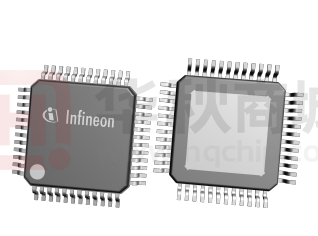
TLE9012DQU
Li-ion battery monitoring and balancing IC
Features
•
•
•
•
•
•
•
•
•
•
•
•
•
•
•
•
Voltage monitoring of up to 12 battery cells connected in series
Hot plugging support
Dedicated 16-bit delta-sigma ADC for each cell with selectable
measurement mode
High-accuracy measurement for SoC and SoH calculation
Integrated stress sensor with digital compensation algorithm and
temperature-compensated measurements
Secondary ADC with same averaging filter characteristics as advanced Endto-End safety mechanism
Five temperature measurement channels for external NTCs
Internal temperature sensors
Integrated balancing switch allows up to 200 mA balancing current
Differential robust serial 2 Mbit/s communication interface
Additional four GPIO pins to e.g. connect an external EEPROM
Internal round robin cycle routine triggers majority of diagnostics
mechanisms
- Automatic balancing over- and undercurrent detection scheme
- Automatic open load and open wire detection scheme
- Automatic NTC measurement unit monitoring scheme
End-to-end CRC secured iso UART/UART communication
Emergency mode for communication
ISO 26262 Safety Element out of Context for safety requirements up to
ASIL D
Green Product (RoHS compliant)
Potential applications
Multi-cell battery monitoring and balancing system IC designed for Li-ion battery packs used in hybrid electric
vehicles (HEV), plug-in hybrid electric vehicles (PHEV), battery electric vehicles (BEV) as well as in 12 V Li-ion
batteries.
Product validation
Qualified for automotive applications. Product validation according to AEC-Q100.
Datasheet
Please read the sections "Important notice" and "Warnings" at the end of this document
www.infineon.com/battery-management-systems
Rev. 1.0
2022-01-24
�TLE9012DQU
Li-ion battery monitoring and balancing IC
Description
Description
The TLE9012DQU is a Li-ion battery monitoring and balancing IC.
The main function of the TLE9012DQU is to monitor the temperature of the battery and voltage of up to 12 cells
as well as the communication to the host controller.
Type
Package
Marking
TLE9012DQU
PG-TQFP-48
TLE9012DQU
Datasheet
2
Rev. 1.0
2022-01-24
�TLE9012DQU
Li-ion battery monitoring and balancing IC
Table of contents
Table of contents
Features . . . . . . . . . . . . . . . . . . . . . . . . . . . . . . . . . . . . . . . . . . . . . . . . . . . . . . . . . . . . . . . . . . . . . . . . . . . . . . . 1
Potential applications . . . . . . . . . . . . . . . . . . . . . . . . . . . . . . . . . . . . . . . . . . . . . . . . . . . . . . . . . . . . . . . . . . 1
Product validation . . . . . . . . . . . . . . . . . . . . . . . . . . . . . . . . . . . . . . . . . . . . . . . . . . . . . . . . . . . . . . . . . . . . . 1
Description . . . . . . . . . . . . . . . . . . . . . . . . . . . . . . . . . . . . . . . . . . . . . . . . . . . . . . . . . . . . . . . . . . . . . . . . . . . . 2
Table of contents . . . . . . . . . . . . . . . . . . . . . . . . . . . . . . . . . . . . . . . . . . . . . . . . . . . . . . . . . . . . . . . . . . . . . . . 3
1
Block diagram . . . . . . . . . . . . . . . . . . . . . . . . . . . . . . . . . . . . . . . . . . . . . . . . . . . . . . . . . . . . . . . . . . . . . . . . . 5
2
2.1
2.2
Pin configuration . . . . . . . . . . . . . . . . . . . . . . . . . . . . . . . . . . . . . . . . . . . . . . . . . . . . . . . . . . . . . . . . . . . . . . .6
Pin assignment . . . . . . . . . . . . . . . . . . . . . . . . . . . . . . . . . . . . . . . . . . . . . . . . . . . . . . . . . . . . . . . . . . . . . . . . . 6
Pin definitions and functions . . . . . . . . . . . . . . . . . . . . . . . . . . . . . . . . . . . . . . . . . . . . . . . . . . . . . . . . . . . . . 6
3
3.1
3.2
3.3
General product characteristics . . . . . . . . . . . . . . . . . . . . . . . . . . . . . . . . . . . . . . . . . . . . . . . . . . . . . . . . . 9
Absolute maximum ratings . . . . . . . . . . . . . . . . . . . . . . . . . . . . . . . . . . . . . . . . . . . . . . . . . . . . . . . . . . . . . . .9
Functional range . . . . . . . . . . . . . . . . . . . . . . . . . . . . . . . . . . . . . . . . . . . . . . . . . . . . . . . . . . . . . . . . . . . . . . . 12
Thermal resistance . . . . . . . . . . . . . . . . . . . . . . . . . . . . . . . . . . . . . . . . . . . . . . . . . . . . . . . . . . . . . . . . . . . . . 13
4
4.1
Monitoring of internal oscillators . . . . . . . . . . . . . . . . . . . . . . . . . . . . . . . . . . . . . . . . . . . . . . . . . . . . . . 14
Electrical characteristics monitoring of internal oscillators . . . . . . . . . . . . . . . . . . . . . . . . . . . . . . . . . 14
5
5.1
5.2
Power Management Unit (PMU) . . . . . . . . . . . . . . . . . . . . . . . . . . . . . . . . . . . . . . . . . . . . . . . . . . . . . . . . 15
Functional description . . . . . . . . . . . . . . . . . . . . . . . . . . . . . . . . . . . . . . . . . . . . . . . . . . . . . . . . . . . . . . . . . .15
Electrical characteristics power management unit (PMU) . . . . . . . . . . . . . . . . . . . . . . . . . . . . . . . . . . 16
6
6.1
6.2
Watchdog and wake-up function (WD) . . . . . . . . . . . . . . . . . . . . . . . . . . . . . . . . . . . . . . . . . . . . . . . . . .20
Functional description . . . . . . . . . . . . . . . . . . . . . . . . . . . . . . . . . . . . . . . . . . . . . . . . . . . . . . . . . . . . . . . . . .20
Electrical characteristics watchdog and wake-up function (WD) . . . . . . . . . . . . . . . . . . . . . . . . . . . . 22
7
7.1
7.2
Measurement control (MC) . . . . . . . . . . . . . . . . . . . . . . . . . . . . . . . . . . . . . . . . . . . . . . . . . . . . . . . . . . . . .24
Functional description . . . . . . . . . . . . . . . . . . . . . . . . . . . . . . . . . . . . . . . . . . . . . . . . . . . . . . . . . . . . . . . . . .24
Electrical characteristics measurement control (MC) . . . . . . . . . . . . . . . . . . . . . . . . . . . . . . . . . . . . . . . 25
8
8.1
Primary cell voltage measurement (PCVM) . . . . . . . . . . . . . . . . . . . . . . . . . . . . . . . . . . . . . . . . . . . . . 28
Functional description . . . . . . . . . . . . . . . . . . . . . . . . . . . . . . . . . . . . . . . . . . . . . . . . . . . . . . . . . . . . . . . . . .28
8.2
Electrical characteristics primary cell voltage measurement (PCVM) . . . . . . . . . . . . . . . . . . . . . . . . .28
9
9.1
9.2
Secondary cell voltage measurement (SCVM) . . . . . . . . . . . . . . . . . . . . . . . . . . . . . . . . . . . . . . . . . . . 33
Functional description . . . . . . . . . . . . . . . . . . . . . . . . . . . . . . . . . . . . . . . . . . . . . . . . . . . . . . . . . . . . . . . . . .33
Electrical characteristics secondary cell voltage measurement (SCVM) . . . . . . . . . . . . . . . . . . . . . . .33
10
10.1
10.2
Block voltage measurement (BVM) . . . . . . . . . . . . . . . . . . . . . . . . . . . . . . . . . . . . . . . . . . . . . . . . . . . . . 36
Functional description . . . . . . . . . . . . . . . . . . . . . . . . . . . . . . . . . . . . . . . . . . . . . . . . . . . . . . . . . . . . . . . . . .36
Electrical characteristics block voltage measurement (BVM) . . . . . . . . . . . . . . . . . . . . . . . . . . . . . . . . 36
11
11.1
Auxiliary voltage measurement (AVM) . . . . . . . . . . . . . . . . . . . . . . . . . . . . . . . . . . . . . . . . . . . . . . . . . .38
Functional description . . . . . . . . . . . . . . . . . . . . . . . . . . . . . . . . . . . . . . . . . . . . . . . . . . . . . . . . . . . . . . . . . .38
Datasheet
3
Rev. 1.0
2022-01-24
�TLE9012DQU
Li-ion battery monitoring and balancing IC
Table of contents
11.2
Electrical characteristics auxiliary voltage measurement (AVM) . . . . . . . . . . . . . . . . . . . . . . . . . . . . . 38
12
12.1
12.2
Temperature measurement unit (TMP) . . . . . . . . . . . . . . . . . . . . . . . . . . . . . . . . . . . . . . . . . . . . . . . . . 40
Functional description . . . . . . . . . . . . . . . . . . . . . . . . . . . . . . . . . . . . . . . . . . . . . . . . . . . . . . . . . . . . . . . . . .40
Electrical characteristics temperature measurement (TMP) . . . . . . . . . . . . . . . . . . . . . . . . . . . . . . . . .42
13
13.1
13.2
Cell balancing (CB) . . . . . . . . . . . . . . . . . . . . . . . . . . . . . . . . . . . . . . . . . . . . . . . . . . . . . . . . . . . . . . . . . . . . 45
Functional description . . . . . . . . . . . . . . . . . . . . . . . . . . . . . . . . . . . . . . . . . . . . . . . . . . . . . . . . . . . . . . . . . .45
Electrical characteristics cell balancing (CB) . . . . . . . . . . . . . . . . . . . . . . . . . . . . . . . . . . . . . . . . . . . . . . 48
14
14.1
14.2
Cell diagnostics (CD) . . . . . . . . . . . . . . . . . . . . . . . . . . . . . . . . . . . . . . . . . . . . . . . . . . . . . . . . . . . . . . . . . . 49
Functional description . . . . . . . . . . . . . . . . . . . . . . . . . . . . . . . . . . . . . . . . . . . . . . . . . . . . . . . . . . . . . . . . . .49
Electrical characteristics cell diagnostics (CD) . . . . . . . . . . . . . . . . . . . . . . . . . . . . . . . . . . . . . . . . . . . . . 50
15
15.1
15.2
General-purpose input/output (GPIO/PWM) . . . . . . . . . . . . . . . . . . . . . . . . . . . . . . . . . . . . . . . . . . . . 52
Functional description . . . . . . . . . . . . . . . . . . . . . . . . . . . . . . . . . . . . . . . . . . . . . . . . . . . . . . . . . . . . . . . . . .52
Electrical characteristics general-purpose input/output (GPIO/PWM) . . . . . . . . . . . . . . . . . . . . . . . . 52
16
16.1
16.1.1
16.1.2
16.1.3
16.2
Communication . . . . . . . . . . . . . . . . . . . . . . . . . . . . . . . . . . . . . . . . . . . . . . . . . . . . . . . . . . . . . . . . . . . . . . . 54
Functional description . . . . . . . . . . . . . . . . . . . . . . . . . . . . . . . . . . . . . . . . . . . . . . . . . . . . . . . . . . . . . . . . . .54
Register write modes . . . . . . . . . . . . . . . . . . . . . . . . . . . . . . . . . . . . . . . . . . . . . . . . . . . . . . . . . . . . . . . . . 56
Communication frames . . . . . . . . . . . . . . . . . . . . . . . . . . . . . . . . . . . . . . . . . . . . . . . . . . . . . . . . . . . . . . . 56
Register read modes . . . . . . . . . . . . . . . . . . . . . . . . . . . . . . . . . . . . . . . . . . . . . . . . . . . . . . . . . . . . . . . . . . 58
Electrical characteristics communication . . . . . . . . . . . . . . . . . . . . . . . . . . . . . . . . . . . . . . . . . . . . . . . . . 58
17
17.1
17.2
Round robin (RR) . . . . . . . . . . . . . . . . . . . . . . . . . . . . . . . . . . . . . . . . . . . . . . . . . . . . . . . . . . . . . . . . . . . . . .60
Functional description . . . . . . . . . . . . . . . . . . . . . . . . . . . . . . . . . . . . . . . . . . . . . . . . . . . . . . . . . . . . . . . . . .60
Electrical characteristics round robin (RR) . . . . . . . . . . . . . . . . . . . . . . . . . . . . . . . . . . . . . . . . . . . . . . . . 64
18
18.1
18.2
Emergency mode (EMM) and ERR pin (ERR) . . . . . . . . . . . . . . . . . . . . . . . . . . . . . . . . . . . . . . . . . . . . . 66
Functional description . . . . . . . . . . . . . . . . . . . . . . . . . . . . . . . . . . . . . . . . . . . . . . . . . . . . . . . . . . . . . . . . . .66
Electrical characteristics emergency mode (EMM) and ERR pin (ERR) . . . . . . . . . . . . . . . . . . . . . . . . 70
19
19.1
19.2
Application information . . . . . . . . . . . . . . . . . . . . . . . . . . . . . . . . . . . . . . . . . . . . . . . . . . . . . . . . . . . . . . .71
External circuitry and components . . . . . . . . . . . . . . . . . . . . . . . . . . . . . . . . . . . . . . . . . . . . . . . . . . . . . . .71
Typical application diagram . . . . . . . . . . . . . . . . . . . . . . . . . . . . . . . . . . . . . . . . . . . . . . . . . . . . . . . . . . . . .73
20
Package information . . . . . . . . . . . . . . . . . . . . . . . . . . . . . . . . . . . . . . . . . . . . . . . . . . . . . . . . . . . . . . . . . . 74
Revision history . . . . . . . . . . . . . . . . . . . . . . . . . . . . . . . . . . . . . . . . . . . . . . . . . . . . . . . . . . . . . . . . . . . . . . .75
Disclaimer . . . . . . . . . . . . . . . . . . . . . . . . . . . . . . . . . . . . . . . . . . . . . . . . . . . . . . . . . . . . . . . . . . . . . . . . . . . . 76
Datasheet
4
Rev. 1.0
2022-01-24
�TLE9012DQU
Li-ion battery monitoring and balancing IC
1 Block diagram
Sleep regulator
VS
Power Management Unit
Main regulator
Sleep oscillator
Main oscillator
Device watchdog (WD)
incl. extended WD
Diagnosis Unit
incl. Round Robin
Power management diagnosis
U12P
IFH_H
IFH_L
ERR
VIO
VDDC
Block diagram
VREGOUT(VDDA)
1
isoUART
Interface
High-Side
PWM1
U12
G11
ΔΣ ADC 16bit
Chan. #11
DIAG
P
Ref. A
G10
GPIO0/UART_LS
DIAG
P
COMP
#10
ΔΣ ADC 16bit
Block #13
U2
Ref. A
ΔΣ ADC 16bit
Chan. #1
DIAG
P
Ref. A
G0
ΔΣ ADC 16bit
Chan. #0
DIAG
P
VDDA
REF. A
GND
SAR
11bit
Digital Control
&
Registers
Figure 1
Datasheet
TMP4
TMP3
TMP2
TMP1
TMP0
TMP_GND
COMP
#0
VDDA
REF. B
isoUART
Interface
Low-Side
Ref. B
DAC 11bit
GND
IFL_L
GND
COMP
#1
SAR MUX
G1
U0
GPIO1/UART_HS
ΔΣ ADC 16bit
Chan. #10
Ref. B
U1
PWM0
IFL_H
U10
COMP
#11
Temperature Mesurement Unit
U11
UART /
PWM/
GPIO
Cell Management Unit
Ref. A
Block diagram
5
Rev. 1.0
2022-01-24
�TLE9012DQU
Li-ion battery monitoring and balancing IC
2 Pin configuration
2
Pin configuration
2.1
Pin assignment
Figure 2
Pin configuration (top view)
2.2
Pin definitions and functions
Pin Symbol
Pin type Function
1
G5
A_I / O
Cell-balancing channel 5.
2
U5
A_I
Cell voltage measurement channel 5, negative terminal (positive terminal of cell 4).
3
G4
A_I / O
Cell-balancing channel 4.
4
U4
A_I
Cell voltage measurement channel 4, negative terminal (positive terminal of cell 3).
5
G3
A_I / O
Cell-balancing channel 3.
6
U3
A_I
Cell voltage measurement channel 3, negative terminal (positive terminal of cell 2).
7
G2
A_I / O
Cell-balancing channel 2.
8
U2
A_I
Cell voltage measurement channel 2, negative terminal (positive terminal of cell 1).
9
G1
A_I / O
Cell-balancing channel 1.
10
U1
A_I
Cell voltage measurement channel 1, negative terminal (positive terminal of cell 0).
11
G0
A_I / O
Cell-balancing channel 0.
12
U0
A_I
Cell voltage measurement channel 0, negative terminal (same potential as local
GND).
13
TMP4
IO
Temperature sensor 4. If not used connect pin to GND. If TMP4 is disabled, the pin
can be used as 0 to 2 V auxiliary ADC miscellaneous pin.
Datasheet
6
Rev. 1.0
2022-01-24
�TLE9012DQU
Li-ion battery monitoring and balancing IC
2 Pin configuration
Pin Symbol
Pin type Function
14
TMP3
IO
Temperature sensor 3. If not used connect pin to GND. If TMP3 is disabled, the pin
can be used as 0 to 2 V auxiliary ADC miscellaneous pin.
15
GND
GND
Local GND of CSC (cell supervision circuit) device
16
TMP2
IO
Temperature sensor 2. If not used connect pin to GND. If TMP2 is disabled, the pin
can be used as 0 to 2 V auxiliary ADC miscellaneous pin.
17
TMP1
IO
Temperature sensor 1. If not used connect pin to GND. If TMP1 is disabled, the pin
can be used as 0 to 2 V auxiliary ADC miscellaneous pin.
18
TMP0
IO
Temperature sensor 0. If not used connect pin to GND. If TMP0 is disabled, the pin
can be used as 0 to 2 V auxiliary ADC miscellaneous pin.
19
TMP_GN IO
D
Temperature sensor reference. This pin can be connected to local GND.
20
PWM1
IO
PWM output channel 1. This pin also has a general purpose input/output function.
If not used connect pin to GND.
21
PWM0
IO
PWM output channel 0. This pin also has a general purpose input/output function.
If not used connect pin to GND.
22
GND
GND
Local GND of CSC device (cell supervision circuit).
23
IFL_L
D_I / O
Lower isolated UART (iso UART) L pin.
24
IFL_H
D_I / O
Lower isolated UART (iso UART) H pin.
25
IFH_H
D_I / O
Upper isolated UART (iso UART) H pin.
26
IFH_L
D_I / O
Upper isolated UART (iso UART) L pin.
27
VDDC
Supply
Buffer capacitor pin for internal iso UART supply.
28
GPIO0 / D_I / O
UART_LS
General-purpose input/output channel 0. This pin also has the function of
UART_LS. If not used connect pin to GND.
29
GPIO1 / D_I / O
UART_HS
General-purpose input/output channel 1. This pin also has the function of
UART_HS. If not used connect pin to GND.
30
VIO
Supply for GPIO interface.
31
VREGOU S
T
Output pin for the internal regulator.
32
n.c.
n.c.
Not connected. Connect to GND in application.
33
ERR
HV_D_O
Error output to microcontroller; open drain PMOS connected to VS. If not used,
leave unconnected.
34
VS
S
Supply pin of internal regulator VVREGOUT.
35
U12P
S
Positive supply pin. Connect to positive terminal of topmost cell in block. Input for
the sleep regulator.
36
U12
A_I
Cell voltage measurement channel 11, positive terminal (most upper cell in the
block).
37
G11
A_I / O
Cell-balancing channel 11.
38
U11
A_I
Cell voltage measurement channel 11, negative terminal (positive terminal of cell
10).
Datasheet
S
7
Rev. 1.0
2022-01-24
�TLE9012DQU
Li-ion battery monitoring and balancing IC
2 Pin configuration
Pin Symbol
Pin type Function
39
G10
A_I / O
Cell-balancing channel 10.
40
U10
A_I
Cell voltage measurement channel 10, negative terminal (positive terminal of cell
9).
41
G9
A_I / O
Cell-balancing channel 9.
42
U9
A_I
Cell voltage measurement channel 9, negative terminal (positive terminal of cell 8).
43
G8
A_I / O
Cell-balancing channel 8.
44
U8
A_I
Cell voltage measurement channel 8, negative terminal (positive terminal of cell 7).
45
G7
A_I / O
Cell-balancing channel 7.
46
U7
A_I
Cell voltage measurement channel 7, negative terminal (positive terminal of cell 6).
47
G6
A_I / O
Cell-balancing channel 6.
48
U6
A_I
Cell voltage measurement channel 6 negative terminal (positive terminal of cell 5).
49
Exposed
Pad
GNDA
Cooling tab. Connect to GND in the application.
Pin types: A = analog, D = digital, HV = high-voltage, I = input, O = output, I/O = bidirectional, P = power, S =
supply
Datasheet
8
Rev. 1.0
2022-01-24
�TLE9012DQU
Li-ion battery monitoring and balancing IC
3 General product characteristics
3
General product characteristics
Within the functional or operating range, the IC operates as described in the circuit description. The electrical
characteristics are specified within the conditions given in the electrical characteristics table.
This thermal data was generated in accordance with JEDEC JESD51 standards. For more information, go to
www.jedec.org.
3.1
Absolute maximum ratings
Table 1
Absolute maximum ratings
Tj = -40°C to +150°C, all voltages with respect to GND, positive current flowing into pin (unless otherwise
specified)
Parameter
Symbol
Values
Unit
Note or condition
PNumber
75
V
–
PRQ-486
Min. Typ. Max.
Voltages
Supply
voltage VS
VVS_max
-0.3
–
Supply
voltage VS
relative
VVS_rel_max VVREG –
OUT 0.3
–
V
–
PRQ-489
Transient
high voltage
Vtransient_hi 75
–
90
V
Maximum transient duration 60 sec. Valid
for following pins vs. GND: VS, U12P, U12,
Gn, Un (0 ≤ n ≤ 11)
PRQ-521
gh_max
Supply
VU12P_max
voltage U12P
-0.3
–
75
V
–
PRQ-487
Supply
voltage VIO
VVIO_max
-0.3
–
5.5
V
–
PRQ-488
Regulator
output
VREGOUT
VVREGOUT_
-0.3
–
3.6
V
–
PRQ-490
Regulator
VVDDC_max
output VDDC
-0.3
–
3.6
V
Assuming IVDDC ≤ 1 mA continuous current
PRQ-491
Cell sense
VUn_max
input voltage
absolute Un
-0.3
–
75
V
0 ≤ n ≤ 12
PRQ-494
Cell sense
input
voltages
relative Un
max
VUn_rel_max VUn-1 –
-x
VUn-1 V
+9
1.
2.
3.
4.
5.
Cell
VGn_max
balancing pin
absolute Gn
-0.3
–
75
V
1 ≤ n ≤ 12
PRQ-495
x = -0.0016 × Tj + 0.54
Typical clamping voltage
Maximum allowed current into/out
of the pin: 40 mA
For 7.5 V < VUn < 9 V: Current flowing
into the pin is below 10 mA
0 ≤ n ≤ 11
PRQ-496
(table continues...)
Datasheet
9
Rev. 1.0
2022-01-24
�TLE9012DQU
Li-ion battery monitoring and balancing IC
3 General product characteristics
Table 1
(continued) Absolute maximum ratings
Tj = -40°C to +150°C, all voltages with respect to GND, positive current flowing into pin (unless otherwise
specified)
Parameter
Symbol
Values
Unit
Note or condition
PNumber
Min. Typ. Max.
Cell
balancing
pins relative
Gn
VGn_rel_max VUn - –
0.3
VUn+1 V
+ 0.3
0 ≤ n ≤ 11
PRQ-497
General
purpose I/O
voltages
absolute
GPIOq
VGPIOq_max -0.3
–
5.5
V
0≤q≤1
PRQ-505
General
purpose I/O
voltages
relative
GPIOq
VGPIOq_rel_
-0.3
–
VVIO V
+ 0.3
0≤q≤1
PRQ-506
-0.3
–
75
V
–
PRQ-510
Open drain
output pin
relative ERR
VERR_rel_ma -0.3
–
VVS + V
0.3
–
PRQ-509
iso UART
interface
IFL_x
VIFL_L_max
VIFL_H_max
–
6.6
1)
PRQ-493
iso UART
interface
IFH_x
VIFH_L_max -4.1
VIFH_H_max
max
Open drain
VERR_max
output pin
absolute ERR
x
Temperature VTMPz_max
sensor input
voltages
absolute
TMPz
-4.1
V
BCI test maximum 300 mA injected via
twisted pair cable onto iso UART interface
(maximum pin current 150 mA)
–
6.6
V
1)
PRQ-492
BCI test maximum 300 mA injected via
twisted pair cable onto iso UART interface
(maximum pin current 150 mA)
-0.3
–
3.63
V
0≤z≤4
PRQ-863
Temperature VTMPz_rel_m -0.3
sensor input ax
voltages
relative TMPz
–
VVREG V
OUT +
0.3
0≤z≤4
PRQ-864
(table continues...)
Positive and negative transients with a maximum duration of 100 ns allowed between ± 8 V; This should
simulate ESD events; however, during normal and steady-state condition voltage on these pins must stay
inside the maximum ratings specified.
1
Datasheet
10
Rev. 1.0
2022-01-24
�TLE9012DQU
Li-ion battery monitoring and balancing IC
3 General product characteristics
Table 1
(continued) Absolute maximum ratings
Tj = -40°C to +150°C, all voltages with respect to GND, positive current flowing into pin (unless otherwise
specified)
Parameter
Symbol
Values
Unit
Note or condition
PNumber
Min. Typ. Max.
Temperature VTMP_GND_
sensor input max
voltage
absolute
TMP_GND
-0.3
–
2.75
V
–
PRQ-503
Temperature VTMP_GND_r -0.3
sensor input el_max
voltages
relative
TMP_GND
–
VVREG V
OUT +
0.3
–
PRQ-504
Pulse width
modulation
I/O voltages
absolute
PWMp
VPWMp_max -0.3
–
5.5
V
0≤p≤1
PRQ-865
Pulse width
modulation
I/O voltages
relative
PWMp
VPWMp_rel_
-0.3
–
VVIO V
+ 0.3
0≤p≤1
PRQ-866
Ground pin
GND
VGND
0
–
0
V
Absolute GND
PRQ-511
ESD
VESD_2kV_m -2
robustness 2 ax
kV
–
2
kV
2)
PRQ-514
ESD
VESD_4kV_m -4
robustness 4 ax
kV
–
max
ESD robustness
ESD
robustness
CDM 500 V
HBM; all pins
VESD_cdm_al -500 –
l_max
4
kV
2)
PRQ-515
HBM; robustness versus GND for pins: VS,
U12P, Un, Gn, TMPz, TMP_GND, IFH_x,
IFL_x
500
V
3)
PRQ-516
CDM; all pins
(table continues...)
1
2
3
Positive and negative transients with a maximum duration of 100 ns allowed between ± 8 V; This should
simulate ESD events; however, during normal and steady-state condition voltage on these pins must stay
inside the maximum ratings specified.
ESD robustness, HBM according to ANSI/ESDA/JEDEC JS-001 (1.5 kΩ, 100 pF).
ESD robustness, Charged Device Model JESD22-C101.
Datasheet
11
Rev. 1.0
2022-01-24
�TLE9012DQU
Li-ion battery monitoring and balancing IC
3 General product characteristics
Table 1
(continued) Absolute maximum ratings
Tj = -40°C to +150°C, all voltages with respect to GND, positive current flowing into pin (unless otherwise
specified)
Parameter
Symbol
Values
Unit
Note or condition
PNumber
V
3)
PRQ-517
Min. Typ. Max.
ESD
robustness
CDM 750 V
VESD_Corner -750 –
750
CDM; corner pins
_max
Temperatures
Junction
temperature
Tj_max
-40
–
150
°C
–
PRQ-512
Storage
temperature
Tstg_max
-55
–
150
°C
–
PRQ-513
Notes:
1. Stresses above the ones listed here may cause permanent damage to the device. Exposure to absolute
maximum rating conditions for extended periods may affect device reliability.
2. Integrated protection functions are designed to prevent IC destruction under fault conditions described in the
datasheet. Fault conditions are considered as outside normal operating range. Protection functions are not
designed for continuous repetitive operation.
3.2
Functional range
Table 2
Functional range
Tj = -40°C to +150°C, all voltages with respect to GND, positive current flowing into pin (unless otherwise
specified)
Parameter
Symbol
Values
Unit
Note or condition
PNumber
Min. Typ. Max.
Supply
voltage VS
VVS_function 4.75
–
60
V
–
PRQ-518
Supply
VU12P_functi 4.75
voltage U12P onal
–
60
V
–
PRQ-519
Supply
voltage VIO
–
5.5
V
–
PRQ-520
al
VVIO_functio 3
nal
Cell sense
VUn_function VUn-1 –
input voltage al
-x
Un
3
VUn-1 V
+7
1.
2.
1 ≤ n ≤ 12
x = -0.0016 × Tj + 0.54
PRQ-1358
ESD robustness, Charged Device Model JESD22-C101.
Datasheet
12
Rev. 1.0
2022-01-24
�TLE9012DQU
Li-ion battery monitoring and balancing IC
3 General product characteristics
3.3
Thermal resistance
Table 3
Thermal resistance
VVS = VVS_functional, Tj = -40°C to +150°C, all voltages with respect to GND, positive current flowing into pin (unless
otherwise specified)
Parameter
Symbol
Values
Unit
Note or condition
PNumber
Min. Typ. Max.
Junction to
case
RthJC
–
6
–
K/W
4)
PRQ-522
Junction to
ambient
RthJA
–
30
–
K/W
4)5)
PRQ-523
4
5
Not subject to production test, specified by design.
Specified RthJA value is according to JEDEC JESD51-5,-7 at natural convection on FR4 2s2p board; The
product (chip and package) was simulated on a 76.2 × 114.3 × 1.5 mm board with 2 inner copper layers
(2 × 70 µm Cu, 2 × 35 µm Cu). The thermal via array under the exposed pad consists of 16 vias with a
diameter of 0.3 mm and a plating thickness of 25 µm.
Datasheet
13
Rev. 1.0
2022-01-24
�TLE9012DQU
Li-ion battery monitoring and balancing IC
4 Monitoring of internal oscillators
4
Monitoring of internal oscillators
The IC includes monitoring of two internal oscillators:
1.
Main oscillator operating at fmain_osc
2.
Sleep oscillator operating at fsleep_osc → in sleep mode only the sleep mode oscillator is active
In normal mode both oscillators are active. The oscillators monitor each other for drift and stuck-at errors. As
soon as the IC detects an error, it enters sleep mode. The oscillator error prevents reliable writing to any register
and hence the IC does not set any error bit before entering sleep mode.
4.1
Electrical characteristics monitoring of internal oscillators
Table 4
Electrical characteristics
VVS = VVS_functional, Tj = -40°C to +150°C, all voltages with respect to GND, positive current flowing into pin (unless
otherwise specified)
Parameter
Symbol
Values
Unit
Note or condition
PNumber
Min. Typ. Max.
Oscillator
Main unit
oscillator
frequency
fmain_osc
13.4
4
14
14.5
6
MHz
–
PRQ-564
Sleep unit
oscillator
frequency
fsleep_osc
90
100
110
kHz
–
PRQ-565
Datasheet
14
Rev. 1.0
2022-01-24
�TLE9012DQU
Li-ion battery monitoring and balancing IC
5 Power Management Unit (PMU)
5
Power Management Unit (PMU)
5.1
Functional description
The IC has an internal power supply unit connected to the pins VS, U12P and GND. It consumes energy
from the monitored battery cells and generates the internal supply voltages for the IC as well as the output
voltages VVDDC and VVREGOUT.
Note: The output pins VDDC and VREGOUT require a capacitance to ground as stated in the Application
information/External components.
Note: No supply currents are drawn from Un pins.
V_Bl+
RF
RU12P
RVS
RF
U12P
U12
RF
U11
Reg
startup
Reg
3V3
VS
CU12P
VREGOUT 3.3 V
Analog
If GPIOs
are used
CVS
VIO
3.3 / 5V
GPIO
VDDC
Reg
Comm
IF
CVDDC
Logic
CVREGOUT
GND
V_Bl-
Figure 3
Typical power supply configuration using the internal voltage regulator
The IC has a sleep mode with reduced current consumption supplied via U12P and GND.
The IC can be put into sleep mode by setting the sleep mode bit. The sleep mode features a reduced current
consumption, IU12P_sleep, supplied via U12P and GND.
To supply the communication interface, the device provides a regulated output voltage VVDDC on pin VDDC.
If the voltage VVDDC falls below the undervoltage threshold VVDDC_th_UV for a longer time than tPS_ERR_deg, then
the IC enters sleep mode. The power supply error sleep bit in the general diagnostics register indicate a fault,
which can be read after waking the IC.
The device provides a regulated output voltage VVREGOUT with an output current IVREGOUT on pin VREGOUT which
can supply the GPIOs of the device or other loads.
The multi purpose supply incorporates an overcurrent protection. If the current IVREGOUT exceeds IVREGOUT_th_OC
for a longer time than tPS_ERR_deg, then it switches off the output voltage supply. The IC enters sleep mode after
the deglitching time tPS_ERR_deg. The power supply error sleep bit in the general diagnostics register indicates a
fault, which can be read after waking up the IC.
Datasheet
15
Rev. 1.0
2022-01-24
�TLE9012DQU
Li-ion battery monitoring and balancing IC
5 Power Management Unit (PMU)
The voltage at the VIO pin sets the logic levels and supplies the GPIOs. The pin can be connected directly to the
VREGOUT pin or to another desired voltage level using an external regulator.
If the voltage VVIO falls below the undervoltage threshold VVIO_th_UV_fall for a longer time than tPS_ERR_deg,
then the IC sets the VIO undervoltage error bit in the general purpose input/output register. After VVIO has
exceeded the VVIO_th_UV_rise threshold for longer than tPS_ERR_deg, the UV_VIO bit can be cleared with a write
command.
Note: If the GPIO.VIO_UV bit is 0, the GPIO functionality is enabled and wake-up via GPIO is possible.
IVREGOUT
deglitch
(tPS_fault_deg)
IVREGOUT_th_OC
VVDDC
deglitch
(tPS_fault_deg)
VVDDC_th_UV
VVIO
deglitch
(tPS_fault_deg)
VVIO_th_UV
Figure 4
Set
PS_ERR_SLEEP
bit in GEN_DIAG
register
IC enters sleep
mode
Set VIO_UV bit in
GPIO register
Power supply monitoring
The IC ensures wake-up and operation even if any single wire connected to a cell is open in case of
failure (assumption: U12P and VS connected on PCB level). If an absolute maximum rating is violated due
to an open wire, then performance degradation may occur.
5.2
Electrical characteristics power management unit (PMU)
Table 5
Electrical characteristics
VVS = VVS_functional, Tj = -40°C to +150°C, all voltages with respect to GND, positive current flowing into pin (unless
otherwise specified)
Parameter
Symbol
Values
Unit
Note or condition
PNumber
Min. Typ. Max.
Internal regulators
VREGOUT
internal
regulator
output
voltage
VVREGOUT
VDDC output VVDDC
voltage
3.3
3.45
3.6
V
–
PRQ-544
2.42
2.5
2.63
V
–
PRQ-549
(table continues...)
Datasheet
16
Rev. 1.0
2022-01-24
�TLE9012DQU
Li-ion battery monitoring and balancing IC
5 Power Management Unit (PMU)
Table 5
(continued) Electrical characteristics
VVS = VVS_functional, Tj = -40°C to +150°C, all voltages with respect to GND, positive current flowing into pin (unless
otherwise specified)
Parameter
Symbol
Values
Unit
Note or condition
PNumber
mA
1.
2.
Tj = 25°C
Assumed cycle 100 ms period and
16-Bit mode (12 cells activated)
• 5% cell Voltage Measurement
• 40% NTC current source
activated
• 5% diagnostics (Temperature
and RR)
• 7% communication
• 43% idle
Current to charge-up external
interface components not included
(see IVS_comm_ext)
PRQ-563
Typical value at Tj = 25°C
-40°C ≤ Tj ≤ 85°C;
Round robin in sleep mode
deactivated
PRQ-553
Min. Typ. Max.
Supply currents
Current
IVS_100ms_c 5.4
consumption yc_RT
in 100 ms
period - RT
5.6
5.8
3.
U12P sleep
IU12P_sleep
mode current
–
2.5
9.9
µA
1.
2.
3.
U12P sleep
IU12P_sleep_ –
mode current RT
- room
temperature
2.5
3.5
µA
Tj = 25°C
PRQ-554
U12P idle
current
IU12P_idle
–
2.5
10
µA
IC in idle mode
PRQ-556
VS sleep
mode
leakage
current
IVS_sleep
-1
–
1
µA
-40°C < Tj < 85°C
PRQ-555
VS idle
current
IVS_idle
–
4.9
6.5
mA
IC in idle mode
PRQ-557
–
–
5
mA
No load on VIO
PRQ-1373
VREGOUT
IVREGOUT
current
consumption
multi
purpose
supply
(table continues...)
Datasheet
17
Rev. 1.0
2022-01-24
�TLE9012DQU
Li-ion battery monitoring and balancing IC
5 Power Management Unit (PMU)
Table 5
(continued) Electrical characteristics
VVS = VVS_functional, Tj = -40°C to +150°C, all voltages with respect to GND, positive current flowing into pin (unless
otherwise specified)
Parameter
Symbol
Values
Unit
Note or condition
PNumber
Min. Typ. Max.
VIO current
IVIO_comm
consumption
during GPIO
communicati
on
–
–
5
mA
No load on VREGOUT
PRQ-558
VS current
IVS_meas
consumption
during PCVM,
SCVM and
BVM
measuremen
t
–
22.5
24
mA
1.
2.
3.
4.
5.
PCVM of all 12 cells
SCVM
BVM
VIO connected to VREGOUT
Including idle consumption IVS_idle
PRQ-559
VS current
IVS_RR
consumption
during round
robin scheme
running
–
9.0
11
mA
1.
Average current consumption
during round robin
VIO connected to VREGOUT
Including idle consumption IVS_idle
NR_TEMP_SENSE ≥ 2,
PART_CONFIG = 0xFFF, CVM_DEL =
0x01
PRQ-560
VS current
IVS_comm
consumption
during
communicati
on
–
2.
3.
4.
VS current
IVS_comm_is –
consumption oU
during iso
UART
communicati
on including
external
interface
components
IVS_idl IVS_idl mA
6)
e_typ
+ 0.9 + 1.2
e_max
1.
2.
–
IVS_co mA
mm +
7.6
6)
1.
2.
3.
4.
5.
PRQ-561
GPIO communication.
Current to charge external interface
components not included.
PRQ-562
Cser = 1 nF
BRiso_U = 2 Mbit/s
Rser = 39 Ω
CisoUART_F = 220 pF
Valid for one iso UART interface in
TX mode
Protection and Detection
VREGOUT
overcurrent
threshold
IVREGOUT_th 31
40
60
mA
Tested during idle mode
PRQ-545
_OC
(table continues...)
6
Not subject to production test; verified by design or characterization.
Datasheet
18
Rev. 1.0
2022-01-24
�TLE9012DQU
Li-ion battery monitoring and balancing IC
5 Power Management Unit (PMU)
Table 5
(continued) Electrical characteristics
VVS = VVS_functional, Tj = -40°C to +150°C, all voltages with respect to GND, positive current flowing into pin (unless
otherwise specified)
Parameter
Symbol
Values
Unit
Note or condition
PNumber
Min. Typ. Max.
VIO
VVIO_th_UV_f 2.2
undervoltage all
threshold
falling
–
2.76
V
–
PRQ-546
VIO
VVIO_th_UV_r 2.24
undervoltage ise
threshold
rising
–
2.9
V
–
PRQ-547
VIO
VVIO_th_UV_ 40
undervoltage hys
threshold
hysteresis
100
160
mV
–
PRQ-548
VDDC
VVDDC_th_U 2.15
undervoltage V
threshold
–
2.42
V
–
PRQ-550
VDDC
VVDDC_th_U 80
undervoltage V_hys
threshold
hysteresis
100
140
mV
–
PRQ-551
Power supply tPS_ERR_deg 8
error
detection
deglitch time
15
24
µs
6)
PRQ-552
6
Not subject to production test; verified by design or characterization.
Datasheet
19
Rev. 1.0
2022-01-24
�TLE9012DQU
Li-ion battery monitoring and balancing IC
6 Watchdog and wake-up function (WD)
6
Watchdog and wake-up function (WD)
6.1
Functional description
The following events trigger a wake-up:
1.
A wake-up pattern received via the iso UART or UART interfaces. The signal alternates with the frequency
fWAKEUP. After nWAKE_det signal periods received by the IC, it performs a wake-up. The IC completes the
wake-up process within twake. After that the IC forwards the same wake-up signal for nWAKEUP periods.
The IC forwards a wake-up signal received via UART to the iso UART interface, a wake-up signal received
via iso UART to the adjacent iso UART interface.
2.
A round robin sleep timeout.
3.
An EMM signal recognized as wake-up signal.
The IC generates the wake-up pattern on:
•
IFL, if the IC received a valid wake-up pattern on interface IFH.
- (1) indicates the source of wake-up, (2) indicates the propagation on IFL_x
•
IFH, if the IC received a valid wake-up pattern on interface IFL.
- (3) indicates the source of wake-up, (4) indicates the propagation on IFH_x
•
IFL, if the IC received a valid wake-up pattern on interface GPIO1/UART_HS.
- (5) indicates the source of wake-up, (6) indicates the propagation on IFL_x
• IFH, if the IC received a valid wake-up pattern on interface GPIO0/UART_LS.
- (7) indicates the source of wake-up, (8) indicates the propagation on IFH_x
Datasheet
20
Rev. 1.0
2022-01-24
�TLE9012DQU
Li-ion battery monitoring and balancing IC
6 Watchdog and wake-up function (WD)
Primary on Top
RX
(1)
IFH_H
IFH_L
Sensing IC
Sleep mode
IFL_H
Primary on Top
(5)
RX
GPIO1/
UART_HS
IFH_H
Sensing IC
RX
IFL_L
RX
Sleep mode
GPIO0/
UART_LS
RX
GPIO1/
UART_HS
Sensing IC
RX
IFH_H
IFH_L
RX - TX
Direction set
IFL_H
(2)
TX
Primary on Bottom
(3)
RX
IFL_H
IFL_L
Sleep mode
IFH_H
RX
GPIO1/
UART_HS
RX
RX
IFL_L
Figure 5
RX – TX
Direction set
IFH_H
Sensing IC
RX – RX
Direction set
IFH_H
RX
IFH_L
TX - TX
Direction set
IFL_H
TX
(6)
IFL_L
IFH_H
Sensing IC
RX
IFH_L
Sleep mode
IFH_L
RX
GPIO0/
UART_LS
TX
IFL_H
RX
IFL_L
Primary on Bottom
(7)
Sensing IC
IFL_H
TX
IFL_L
GPIO0/
UART_LS
Sensing IC
RX
IFH_L
GPIO1/
UART_HS
TX
IFH_L
(4)
RX
GPIO0/
UART_LS
IFL_H
RX
IFL_L
Sensing IC
TX - TX
Dircetion set
IFH_H
TX
(8)
IFH_L
RX – RX
Direction set IFL_H
RX
IFL_L
Wake-up signal propagation
The device configures the communication interface automatically after wake-up.
The device configures the iso UART interface of the wake-up signal received as RX during idle mode (no
communication) until the next wake-up. The device configures the other iso UART interface as TX in idle mode
until the next wake-up.
The IC has a 7-bit watchdog counter which is counting downwards. The watchdog counter must be serviced via
an UART or iso UART command before it reaches 0. Otherwise the device enters sleep mode. The watchdog
counter can be set to maximum tWD_max with a resolution of tWD_LSB, via the watchdog counter register.
Note: After the IC wake-up, the watchdog counter is set to its maximum value tWD_max
If a longer counter interval is needed, the IC can be put into an extended watchdog mode by setting the
operation mode register. In this mode the maximum time until the watchdog counter expires is defined by
tWD_EXT_max with a resolution of tWD_EXT_LSB. When the counter expires, the device enters sleep mode.
The device provides a free-running 9-bit main counter which is counting upwards and can be checked via the
communication interface reading the watchdog counter register.
The maximum length is tCount_max with a resolution of tCount_LSB. The precisely timed reading of the main
counter gives an indication of the main oscillator speed.
If bitfield RR_CONFIG.RR_SYNC is set, then a WDOG_CNT write command resets the main counter. This prepares
for a broadcast read of all main counters.
After the device wakes up on a standard wake-up signal the device's node ID is set to 0 by default. In this state,
the device does not forward any communication. A node ID other than 0 must be set in the address (ID) bits of
configuration register before the watchdog timer expires. Only then the device forwards communication.
Note: If an EMM signal is received, the device forwards it even though the device is not enumerated.
Datasheet
21
Rev. 1.0
2022-01-24
�TLE9012DQU
Li-ion battery monitoring and balancing IC
6 Watchdog and wake-up function (WD)
6.2
Electrical characteristics watchdog and wake-up function (WD)
Table 6
Electrical characteristics
VVS = VVS_functional, Tj = -40°C to +150°C, all voltages with respect to GND, positive current flowing into pin (unless
otherwise specified)
Parameter
Symbol
Values
Unit
Note or condition
PNumber
PRQ-572
Min. Typ. Max.
Wake-up function
WD wake-up
signal
frequency
fWAKEUP
48
50
1040 kHz
–
WD device
wake-up
time
tWAKE
200
370
500
µs
48 kHz wake-up frequency.
PRQ-573
From the first falling edge of the input
pattern to the first edge of the propagated
wake-up sequence.
WD wake-up
- number of
detected
periods
nWAKE_det
4
–
8
period –
s
PRQ-574
8
–
8
period –
s
PRQ-575
14.5
16
17.8
ms
7)
PRQ-576
WD wake-up nWAKE
propagation length in
periods
Watchdog counter
WD interval
step
tWD_LSB
WD
maximum
interval
tWD_max
WD interval
step extended
tWD_EXT_LSB 13.5
WD
maximum
interval extended
tWD_EXT_ma 28.9
EXT_WD = 0
1.8
2.03
2.3
s
7)
PRQ-578
EXT_WD = 0
15.0
7
17
31.9
35.5
min
7)
PRQ-577
EXT_WD = 1
h
7)
PRQ-579
EXT_WD = 1
x
Main counter
WD main
counter
interval step
tCount_LSB
281
292.
57
305
µs
7)
PRQ-580
(table continues...)
7
Not subject to production test; verified by design or characterization.
Datasheet
22
Rev. 1.0
2022-01-24
�TLE9012DQU
Li-ion battery monitoring and balancing IC
6 Watchdog and wake-up function (WD)
Table 6
(continued) Electrical characteristics
VVS = VVS_functional, Tj = -40°C to +150°C, all voltages with respect to GND, positive current flowing into pin (unless
otherwise specified)
Parameter
Symbol
Values
Unit
Note or condition
PNumber
ms
7)
PRQ-581
Min. Typ. Max.
WD main
counter
maximum
interval
7
tCount_max
144.
03
149.
8
156.
03
Not subject to production test; verified by design or characterization.
Datasheet
23
Rev. 1.0
2022-01-24
�TLE9012DQU
Li-ion battery monitoring and balancing IC
7 Measurement control (MC)
7
Measurement control (MC)
7.1
Functional description
The various voltage measuring modules on the IC follow these rules:
•
All voltage measurements (PCVM, SCVM, BVM, BAVM, AVM) can be manually triggered by a communication
command.
•
A triggered measurement sets a lock bit which inhibits a measurement triggered by a cyclical task. The
device clears the lock bit after completion of the measurement.
•
BVM, PCVM and SCVM can be triggered simultaneously.
•
Bipolar auxiliary voltage measurement (BAVM), PCVM and SCVM can be triggered simultaneously.
The IC provides two independent reference voltages which are used with the SD-ADC blocks.
1.
PCVM uses reference A.
2.
BVM, AVM, and SCVM use reference B.
The resolution of the various voltage measurements is Vx_LSB and is defined by the LSB of the digital conversion.
x=PCVM; SCVM; AVM; BVM
The measurement time tVM of the PCVM, SCVM and BVM is configurable in the measurement control register.
PCVM/SCVM uses the cell voltage measurement mode bits, while BVM uses the block/auxiliary bits.
Table 7
Voltage measurement modes
CVM_Mode/ BVM_Mode
[2:0]
PCVM/BVM
resolution
[bit]
SCVM resolution
[bit]
tVM
[ms]
111
14
11
tVM_LR
110
16
11
4.68
101
15
11
2.34
100
14
11
1.17
011
13
11
0.59
010
12
11
0.29
001
11
11
0.15
000
10
11
0.07
Note: The resolution of AVM is 10 bit. The resolution of SCVM is 11 bit. tvm of SCVM is adjusted to CVM_MODE
configuration.
Setting the start bit of a measurement in the measurement control register initiates a voltage measurement.
The result of the measurement is the average of the cell voltage over the measurement time and is available in
the RESULT register.
The resolution of the measured value (in bit) can be configured using the measurement control register.
On completion of a measurement the device clears the corresponding start bit. For manually triggered
measurements (PCVM, SCVM, BVM), the result registers are set to 0 during measurement time tVM and
measurement delay time tVM_DEL, except in long-running mode.
In long-running mode, the result register is updated after the end of the measurement.
The result registers of the voltage measurement keep the results irrespective of internal cyclic diagnostics
checks.
The configurable delay time tVM_del delays the start of the cell voltage, block voltage and bipolar auxiliary
voltage measurements (PCVM, SCVM, BVM and BAVM) with a resolution of tVM_del_LSB.
Datasheet
24
Rev. 1.0
2022-01-24
�TLE9012DQU
Li-ion battery monitoring and balancing IC
7 Measurement control (MC)
The maximum delay time is defined by tVM_del_max.
If the long-running mode is selected for PCVM and/or BVM by writing the corresponding bits in the
measurement control register, the IC measures eight times in a row using the 14-bit measurement mode. If
the long-running mode is selected for SCVM by writing the corresponding bits in the measurement control
register, the IC performs eight times several 11-bit measurements while the measurement time tVM of a
14-bit measurement. After the long running measurements are finished the PCVM result register contains the
average of all 14-bit measurements while the SCVM result register contains the average value of all 11-bit
measurements.
Each of those measurements starts automatically after the time trestart, for a total measurement time
tVM_LR equals tVM_LR = 8 * trestart.
The time trestart is defined by the configurable 6-bitfield of the operation mode register with a resolution
of trestart_LSB within the range of trestart_range.
PCVM / BVM
14-bit meas
14-bit meas
trestart
tVM_14-bit
tVM_del
14-bit meas
14-bit meas
14-bit meas
14-bit meas
14-bit meas
14-bit meas
8×trestart
Measurement
start command
SCVM
11-bit 11-bit
meas meas
tVM_del
11-bit
meas
11-bit 11-bit
meas meas
trestart
11-bit 11-bit
meas meas
11-bit
meas
11-bit
meas
11-bit 11-bit
meas meas
11-bit
meas
11-bit 11-bit
meas meas
11-bit
meas
11-bit 11-bit
meas meas
11-bit
meas
11-bit 11-bit
meas meas
11-bit
meas
11-bit 11-bit
meas meas
11-bit
meas
tVM_14-bit
8×trestart
Measurement
start command
Figure 6
Voltage measurement long-running mode
7.2
Electrical characteristics measurement control (MC)
Table 8
Electrical characteristics
VVS = VVS_functional, Tj = -40°C to +150°C, all voltages with respect to GND, positive current flowing into pin (unless
otherwise specified)
Parameter
Symbol
Values
Unit
Note or condition
PNumber
Min. Typ. Max.
MC PCVM,
fs_ADC
BAVM, AVM
and BVM ADC
sampling
frequency
13.4
4
14
14.5
6
MHz
8)
PRQ-600
MC PCVM,
SCVM, BAVM
and BVM
propagation
delay within
IC
0
–
10
µs
8)
PRQ-592
tVM_prop
Time between completion of a received
measurement start command and the
actual start of the measurement delay
time tVM_del.
(table continues...)
8
Not subject to production test; verified by design or characterization.
Datasheet
25
Rev. 1.0
2022-01-24
�TLE9012DQU
Li-ion battery monitoring and balancing IC
7 Measurement control (MC)
Table 8
(continued) Electrical characteristics
VVS = VVS_functional, Tj = -40°C to +150°C, all voltages with respect to GND, positive current flowing into pin (unless
otherwise specified)
Parameter
Symbol
Values
Min. Typ. Max.
Unit
Note or condition
PNumber
MC PCVM,
SCVM, BAVM
and BVM
start delay
timer
resolution
tVM_del_LSB 35.1
36.6
38.1
μs
8)
PRQ-593
MC PCVM,
SCVM, BAVM
and BVM
start delay
timer
maximum
interval
tVM_del_max 1.09
1.13
1.18
ms
8)
PRQ-594
s
8)
PRQ-602
MC Voltage
tVM
measuremen
t time
–
2m / f –
1.
2.
3.
s_ADC
m bits: 10 ≤ m ≤ 16
Mode: CVM_MODE; BVM_MODE
Except for long-running mode
Long-running mode
MC longtrestart_LSB
running
mode restart
resolution
–
MC longtrestart_rang 1.17
running
e
restart range
104
–
µs
–
PRQ-1297
–
7.7
ms
–
PRQ-1312
Full scale ranges
MC PCVM,
SCVM and
comparator
full-scale
range
FSRPCVM
FSRSCVM
FSRComp
0
–
5
V
8)
PRQ-623
MC BVM fullscale range
FSRBVM
4.75
–
60
V
8)
PRQ-666
MC BAVM full- FSRBAVM
scale range
Measured at VU12P - VGND
-2
–
2
V
–
PRQ-1387
(table continues...)
8
Not subject to production test; verified by design or characterization.
Datasheet
26
Rev. 1.0
2022-01-24
�TLE9012DQU
Li-ion battery monitoring and balancing IC
7 Measurement control (MC)
Table 8
(continued) Electrical characteristics
VVS = VVS_functional, Tj = -40°C to +150°C, all voltages with respect to GND, positive current flowing into pin (unless
otherwise specified)
Parameter
Symbol
Values
Unit
Note or condition
PNumber
Min. Typ. Max.
MC AVM and
TMP fullscale range
FSRAVM
FSRTMP
0
–
2
V
8)
PRQ-792
–
FSRP –
CVM/
2m
V
8)
PRQ-599
Measurement resolution
MC PCVM
resolution
VPCVM_LSB
MC SCVM
resolution
VSCVM_LSB
–
FSRS –
CVM /
211
V
8)
PRQ-624
MC BVM
resolution
VBVM_LSB
–
FSRB –
VM /
2m
V
8)
PRQ-667
MC BAVM
resolution
VBAVM_LSB
FSRB –
AVM/2
V
MC AVM
resolution
VAVM_LSB
FSRA –
1
VM/2
V
8
–
m bits: 10 ≤ m ≤ 16
m bits: 10 ≤ m ≤ 16
PRQ-1388
m bits: 10 ≤ m ≤ 16
m
–
8)
8)
PRQ-682
0
Not subject to production test; verified by design or characterization.
Datasheet
27
Rev. 1.0
2022-01-24
�TLE9012DQU
Li-ion battery monitoring and balancing IC
8 Primary cell voltage measurement (PCVM)
8
Primary cell voltage measurement (PCVM)
8.1
Functional description
The primary cell voltage measurement (PCVM) unit of the IC can measure each cell voltage individually and
simultaneously using the Un pins. The measured voltage is defined as VPCVM = (VUn+1 - VUn) (0 ≤ n ≤ 11) and is
measured with the defined accuracy PCVMERR and a relative accuracy of PCVMERR_rel.
The primary cell voltage measurement is initiated by setting the PCVM_START bitfield in the MEAS_CTRL
register. The primary cell voltage is calculated using: VPCVM [V] = (FSRPCVM / 216) × RESULT[LSB16]
The measurement is triggered by a host controller command synchronously for all cells connected to the IC.
These conditions apply:
•
The maximum start measurement propagation delay is tVM_prop.
•
The maximum PCVM time deviation between channels within one IC is DevPCVM_IC.
•
The maximum PCVM time deviation across all ICs in a chain is DevPCVM_chain.
•
The start of the measurement is delayed by the configurable time tVM_del.
•
The maximum iso UART propagation delay is tisoU_prop_del.
The number of activated cells can be configured in the PART_CONFIG register. With the register minimum value
0000H no cell is activated and with maximum value 0FFFH all 12 cells are activated.
8.2
Electrical characteristics primary cell voltage measurement (PCVM)
Table 9
Electrical characteristics
VVS = VVS_functional, Tj = -40°C to +150°C, all voltages with respect to GND, positive current flowing into pin (unless
otherwise specified)
Parameter
Symbol
Values
Unit
Note or condition
µA
1.
2.
3.
Min. Typ. Max.
PNumber
Cell sense inputs
PCVM
IUn_PCVM
differential
input current
Un
18
25
32
4.
Input leakage IUn_leak
current Un
-1.0
–
1.0
µA
1.
2.
3.
During PCVM
PRQ-590
VPCVM = 5 V
This differential current flows
into Un+1 and has the opposite
direction on Un for the channels (0
≤ n ≤ 12)
The typical average value IUn_PCVM =
VPCVM / 200 kΩ
0 ≤ n ≤ 12
In sleep mode and idle mode
VUn ≤ 5.5 V
PRQ-591
(table continues...)
Datasheet
28
Rev. 1.0
2022-01-24
�TLE9012DQU
Li-ion battery monitoring and balancing IC
8 Primary cell voltage measurement (PCVM)
Table 9
(continued) Electrical characteristics
VVS = VVS_functional, Tj = -40°C to +150°C, all voltages with respect to GND, positive current flowing into pin (unless
otherwise specified)
Parameter
Symbol
Values
Unit
Note or condition
PNumber
%
9)
PRQ-596
Min. Typ. Max.
Synchronization timing
Maximum
PCVM time
deviation
between
channels
within IC
DevPCVM_IC -0.5
Maximum
PCVM time
deviation
across ICs
DevPCVM_ch -4
–
+0.5
Deviation between tVM.
–
4
%
9)
PRQ-597
0.9
mV
10) 11)
PRQ-603
ain
Primary cell voltage measurement
PCVM
relative
accuracy
initial - RT
PCVMERR_i -0.9
PCVM
relative
accuracy
PCVMERR_r -1
–
Relative accuracy over all devices against
each other within the given conditions:
1.
16-bit mode
2.
(VUn+1 - VUn) = 4.3 V
3.
Tj = 25°C
4.
±3 sigma distribution within
absolute minimum and maximum
limits
nit
el
–
1
mV
Relative accuracy over all devices against
each other within the given conditions:
1.
16-bit mode
2.
Δ(VUn+1 - VUn) = 600 mV within 2.5 V
≤ (VUn+1 - VUn) ≤ 4.3 V
3.
ΔTj = 10 K within -40°C ≤ Tj ≤ 70°C
4.
Over a period of t0 and t0+x (x ≤ 12
hours) 12)
PRQ-1848
(table continues...)
9
10
11
12
Not subject to production test; verified by design or characterization.
Initial accuracy verified by Infineon backend.
With 12 cells attached and activated
Test condition: The IC is pre assembled on a PCB. A PCVM is started at any time t0 within the device lifetime. The IC is in sleep
mode between t0 and t0+x and RR_ERR_CNT.RR_SLEEP_CNT bitfield is 000H.
Datasheet
29
Rev. 1.0
2022-01-24
�TLE9012DQU
Li-ion battery monitoring and balancing IC
8 Primary cell voltage measurement (PCVM)
Table 9
(continued) Electrical characteristics
VVS = VVS_functional, Tj = -40°C to +150°C, all voltages with respect to GND, positive current flowing into pin (unless
otherwise specified)
Parameter
Symbol
Values
Unit
Note or condition
PNumber
mV
13) 14)11)
PRQ-605
Min. Typ. Max.
PCVM
PCVMERR_E -2.1
accuracy EoL OL_1
-1
–
PCVM
PCVMERR_E -2.5
accuracy EoL OL_2
-2
–
PCVM
PCVMERR_E -3.2
accuracy EoL OL_3
-3
–
PCVM
PCVMERR_E -3.7
accuracy EoL OL_4
-4
–
2.1
1.
2.
3.
4.
2.5
mV
13) 14)11)
1.
2.
3.
4.
3.2
mV
mV
PRQ-1360
16-bit mode
1 V ≤ (VUn+1 - VUn) ≤ 3.6 V
-40°C ≤ Tj ≤ 50°C
±3 sigma distribution within
absolute minimum and limits
13) 14)11)
1.
2.
3.
4.
PRQ-606
16-bit mode
3.6 V < VUn+1 - VUn) ≤ 4.3 V
Tj = 25°C
±3 sigma distribution within
absolute minimum and
maximum limits
13) 14)11)
1.
2.
3.
4.
3.7
16-bit mode
2.5 V ≤ (VUn+1 - VUn) ≤ 3.6 V
Tj = 25°C
±3 sigma distribution within
absolute minimum and
maximum limits
PRQ-1361
16-bit mode
3.6 V < (VUn+1 - VUn) ≤ 4.3 V
-40°C ≤ Tj ≤ 50°C
±3 sigma distribution within
absolute minimum and
maximum limits
(table continues...)
13
14
11
Lower resolution has additional quantization error e.g. additional PCVMERR_EOL ± 2 LSB[m]; m bits: 14 ≤
m ≤ 15
Please contact Infineon for more details for other ADC resolutions.
End-of-Life (EoL) accuracy; according to AEC-Q100 Grade 1 Rev. H automotive qualification
With 12 cells attached and activated
Datasheet
30
Rev. 1.0
2022-01-24
�TLE9012DQU
Li-ion battery monitoring and balancing IC
8 Primary cell voltage measurement (PCVM)
Table 9
(continued) Electrical characteristics
VVS = VVS_functional, Tj = -40°C to +150°C, all voltages with respect to GND, positive current flowing into pin (unless
otherwise specified)
Parameter
Symbol
Values
Unit
Note or condition
PNumber
mV
13) 14)11)
PRQ-607
Min. Typ. Max.
PCVM
PCVMERR_E -4.1
accuracy EoL OL_5
-5
–
PCVM
PCVMERR_E -4.5
accuracy EoL OL_6
-6
–
PCVM
PCVMERR_E -4.5
accuracy EoL OL_7
-7
–
PCVM
PCVMERR_E -5.5
accuracy EoL OL_8
-8
–
4.1
1.
2.
3.
4.
4.5
mV
13) 14)11)
1.
2.
3.
4.
4.5
mV
mV
PRQ-609
16-bit mode
0.05 V ≤ (VUn+1 - VUn) ≤ 1 V
-40°C ≤ Tj ≤ 150°C
±3 sigma distribution within
absolute minimum and
maximum limits
13) 14)11)
1.
2.
3.
4.
PRQ-608
16-bit mode
3.6 V < (VUn+1 - VUn) ≤ 4.3 V
-40°C ≤ Tj ≤ 150°C
±3 sigma distribution within
absolute minimum and maximum
limits
13) 14)11)
1.
2.
3.
4.
5.5
16-bit mode
1 V ≤ (VUn+1 - VUn) ≤ 3.6 V
-40°C ≤ Tj ≤ 150°C
±3 sigma distribution within
absolute minimum and maximum
limits
PRQ-611
16-bit mode
4.3 V < (VUn+1 - VUn) ≤ 4.8 V
-40°C ≤ Tj ≤ 150°C
±3 sigma distribution within
absolute minimum and maximum
limits
(table continues...)
13
14
11
Lower resolution has additional quantization error e.g. additional PCVMERR_EOL ± 2 LSB[m]; m bits: 14 ≤
m ≤ 15
Please contact Infineon for more details for other ADC resolutions.
End-of-Life (EoL) accuracy; according to AEC-Q100 Grade 1 Rev. H automotive qualification
With 12 cells attached and activated
Datasheet
31
Rev. 1.0
2022-01-24
�TLE9012DQU
Li-ion battery monitoring and balancing IC
8 Primary cell voltage measurement (PCVM)
Table 9
(continued) Electrical characteristics
VVS = VVS_functional, Tj = -40°C to +150°C, all voltages with respect to GND, positive current flowing into pin (unless
otherwise specified)
Parameter
Symbol
Values
Unit
Note or condition
PNumber
mV
13) 11)
PRQ-1852
Min. Typ. Max.
PCVM
PCVMERR_E -3.9
accuracy EoL OL_9
-9
–
PCVM
PCVMERR_E -4.3
accuracy EoL OL_10
- 10
–
PCVM
PCVMERR_E -20
accuracy EoL OL_10bit
- 10-bit
–
13
11
14
3.9
1.
2.
3.
4.
4.3
mV
13) 14) 11)
1.
2.
3.
4.
20
mV
16-bit mode
1 V < (VUn+1 - VUn) ≤ 3.6 V
-40°C ≤ Tj ≤ 70°C
±3 sigma distribution within
absolute minimum and maximum
limits
16-bit mode
3.6 V < (VUn+1 - VUn) ≤ 4.3 V
-40°C ≤ Tj ≤ 70°C
±3 sigma distribution within
absolute minimum and maximum
limits
14) 11)
1.
2.
3.
4.
PRQ-1853
PRQ-612
10-bit mode
0.05 V ≤ (VUn+1 - VUn) ≤ 4.8 V
-40°C ≤ Tj ≤ 150°C
±3 sigma distribution within
absolute minimum and
maximum limits
Lower resolution has additional quantization error e.g. additional PCVMERR_EOL ± 2 LSB[m]; m bits: 14 ≤
m ≤ 15
Please contact Infineon for more details for other ADC resolutions.
With 12 cells attached and activated
End-of-Life (EoL) accuracy; according to AEC-Q100 Grade 1 Rev. H automotive qualification
Datasheet
32
Rev. 1.0
2022-01-24
�TLE9012DQU
Li-ion battery monitoring and balancing IC
9 Secondary cell voltage measurement (SCVM)
9
Secondary cell voltage measurement (SCVM)
9.1
Functional description
The device includes a secondary cell voltage measurement (SCVM) unit. The measured voltage VSCVM = (VGn VUn) (0 ≤ n ≤ 11) is measured with the accuracy SCVMERR_EOL and a resolution of VSCVM_LSB.
The secondary cell voltage measurement is initiated by setting the SCVM_START bitfield in the MEAS_CTRL
register. The secondary cell voltage is calculated using: VSCVM [V] = (FSRSCVM / 211) × RESULT[LSB11]
The SCVM unit can measure the voltage of at least one cell simultaneously with the primary cell voltage
measurement within tVM_prop. At least one cell must be enabled in the SCVM configuration register. The
corresponding cells for SCVM must also be activated in the PART_CONFIG register.
Note: A binary search algorithm follows the highest and the lowest cell voltage of all cells enabled in the
SCVM_CONFIG register for each sample. Within the sampling time 1/fs_SCVM_ADC both voltages are sampled once.
The SCVM averages all samples of the lowest and all samples of the highest voltage over the entire measurement
time.
A 2-bit update counter in each SCVM register, SCVM lowest cell voltage and SCVM highest cell voltage, indicates
the availability of a new secondary cell voltage measurement.
After the measurement time, the SCVM needs additional time tSCVM_ave to calculate the average results. After
tSCVM_ave, the value of the highest voltage measured by the SCVM is stored in the SCVM highest cell voltage
register. The lowest voltage is stored in SCVM lowest cell voltage register, respectively.
Note: If a single cell is measured, then calculate the average of the two results registers to improve filtering.
9.2
Electrical characteristics secondary cell voltage measurement
(SCVM)
Table 10
Electrical characteristics
VVS = VVS_functional, Tj = -40°C to +150°C, all voltages with respect to GND, positive current flowing into pin (unless
otherwise specified)
Parameter
Symbol
Values
Unit
Note or condition
PNumber
μA
15)
PRQ-621
Min. Typ. Max.
Cell sensing inputs
SCVM
IGn_SCVM
differential
input current
Gn
–
7
10
Input leakage IGn_leak
current Gn
-1.0
–
1.0
DevSCVM_PC -0.5
–
+0.5
1.
2.
3.
Average during SCVM
VSCVM = 5 V
This differential current flows into
Gn and has the opposite direction
on Un for channels 0 ≤ n ≤ 11
µA
1.
2.
3.
0 ≤ n ≤ 11
In sleep mode and idle mode
VGn ≤ 5.5 V
%
Within one IC, the maximum deviation
PRQ-622
between SCVM (11-bit) time and PCVM (11bit) time.
PRQ-642
Synchronization timing
SCVM to
PCVM time
deviation
VM
(table continues...)
15
Not subject to production test; verified by design or characterization.
Datasheet
33
Rev. 1.0
2022-01-24
�TLE9012DQU
Li-ion battery monitoring and balancing IC
9 Secondary cell voltage measurement (SCVM)
Table 10
(continued) Electrical characteristics
VVS = VVS_functional, Tj = -40°C to +150°C, all voltages with respect to GND, positive current flowing into pin (unless
otherwise specified)
Parameter
Symbol
Values
Unit
Note or condition
Min. Typ. Max.
SCVM data
averaging
time
tSCVM_ave
286
298
311
µs
PNumber
PRQ-1390
Secondary cell voltage measurement
fs_AD –
C / 64
MHz
15)
PRQ-625
SCVM
SCVMERR_E -19
accuracy EoL OL_1
- limited
range
–
mV
16)
PRQ-626
SCVM
SCVMERR_E -28
accuracy EoL OL_2
–
SCVM ADC
sampling
frequency
Maximum
deviation
between
PCVM and
SCVM
fs_SCVM_ADC –
Δ
-25
19
1.
2.
3.
28
mV
16)
1.
2.
3.
–
25
mV
2.7 V ≤ (VGn+1 - VUn) ≤ 4.3 V
-40°C ≤ Tj ≤ 50°C
±3 sigma distribution within
absolute minimum and maximum
limits
PRQ-627
1 V ≤ (VGn+1 - VUn) ≤ 4.8 V
-40°C ≤ Tj ≤ 150°C
±3 sigma distribution within
absolute minimum and
maximim limits
1 V ≤ (VUn+1 - VUn) ≤ 4.8 V
PRQ-1305
PRQ-629
PCVM_vs_SCV
M
Analog undervoltage and overvoltage comparators
FSRC –
omp /
210
V
15)
Comparator COMPERR_1 -30
accuracy limited range
–
30
mV
1.
2.
3.
(VGn - VUn) = 3.6 V
-40ºC ≤ Tj ≤ 25ºC
±3 sigma distribution within
absolute minimum and maximum
limits
PRQ-1300
Comparator
accuracy
–
50
mV
1.
2.
1 V < (VGn - VUn) < 4.7 V
-40°C < Tj < 150°C
PRQ-630
Comparator
resolution
FSRVComp_ –
LSB
COMPERR_2 -50
(table continues...)
15
16
Not subject to production test; verified by design or characterization.
End-of-Life accuracy; according to AEC-Q100 Grade 1 Rev. H automotive qualification
Datasheet
34
Rev. 1.0
2022-01-24
�TLE9012DQU
Li-ion battery monitoring and balancing IC
9 Secondary cell voltage measurement (SCVM)
Table 10
(continued) Electrical characteristics
VVS = VVS_functional, Tj = -40°C to +150°C, all voltages with respect to GND, positive current flowing into pin (unless
otherwise specified)
Parameter
Symbol
Values
Unit
Note or condition
PNumber
MHz
15)
PRQ-632
µs
15)
PRQ-635
Min. Typ. Max.
Comparator
sampling
frequency
fCOMP
1
–
Comparator
checking
time
tcomp
–
210 / –
fs_AD
15
–
C
Not subject to production test; verified by design or characterization.
Datasheet
35
Rev. 1.0
2022-01-24
�TLE9012DQU
Li-ion battery monitoring and balancing IC
10 Block voltage measurement (BVM)
10
Block voltage measurement (BVM)
10.1
Functional description
The IC can measure the sum total voltage of all the cells connected to the device using separate pins,
called block voltage. The block voltage VBVM = (VU12P - VGND) is measured with the accuracy BVMERR_EOL and a
configurable resolution of VBVM_LSB.
The block voltage measurement is initiated by setting the BVM_START bitfield in the MEAS_CTRL register. The
block voltage is calculated: VBVM [V] = (FSRBVM / 216) × RESULT_BVM [LSB16]
10.2
Electrical characteristics block voltage measurement (BVM)
Table 11
Electrical characteristics
VVS = VVS_functional, Tj = -40°C to +150°C, all voltages with respect to GND, positive current flowing into pin (unless
otherwise specified)
Parameter
Symbol
Values
Unit
Note or condition
PNumber
µA
17)
PRQ-664
Min. Typ. Max.
Cell sense inputs
BVM input
IU12P_BVM
current U12P
–
280
400
During BVM
Block voltage measurement
Maximum
DevBVM_PCV -0.5
BVM to PCVM M_IC
time
deviation
within IC
–
Maximum
BVM time
deviation
across ICs
–
DevBVM_cha -4
+0.5
%
PRQ-670
Deviation between BVM tVM and PCVM
tVM with the same resolution setting.
4
%
17)
PRQ-671
Deviation between BVM tVM over all ICs
with the same resolution setting.
in
BVM
BVMERR_EO -63
accuracy EoL L_1
-1
17)
–
63
mV
18)
1.
2.
3.
4.
PRQ-1850
14-bit to 16-bit mode
4.75 V ≤ VBVM ≤ 51.6 V
-40°C ≤ Tj ≤ 70°C
±3 sigma distribution within
absolute minimum and maximum
limits
(table continues...)
17
18
Not subject to production test; verified by design or characterization.
End-of-Life accuracy; according to AEC-Q100 Grade 1 Rev. H automotive qualification
Datasheet
36
Rev. 1.0
2022-01-24
�TLE9012DQU
Li-ion battery monitoring and balancing IC
10 Block voltage measurement (BVM)
Table 11
(continued) Electrical characteristics
VVS = VVS_functional, Tj = -40°C to +150°C, all voltages with respect to GND, positive current flowing into pin (unless
otherwise specified)
Parameter
Symbol
Values
Unit
Note or condition
PNumber
mV
18)
PRQ-672
Min. Typ. Max.
BVM
BVMERR_EO -70
accuracy EoL L_2
-2
–
70
1.
2.
3.
4.
BVM
BVMERR_10 -250 –
accuracy EoL Bit
- 10 Bit
110
BVM versus
BVMERR_vs_ BVME –
sum of PCVM PCVM
RR_EO
relative
L_2_m
accuracy EoL
in + 1
2×
PCV
MERR
BVME mV
18
17
PRQ-673
10-bit mode
4.75 V ≤ VBVM ≤ 60 V
-40°C ≤ Tj ≤ 150°C
±3 sigma distribution within
absolute minimum and maximum
limits
14-bit to 16-bit mode
PRQ-676
1.
2.
3.
4.
PRQ-1851
RR_EO
L_2_m
ax + 1
2×
PCV
MERR
_EOL_
6_min
6_max
–
17) 18)
1.
2.
3.
4.
_EOL_
Relative ADC ERRPCVM_B -78
error margin VM_10bit
- sum of
PCVM versus
BVM EoL
mV
14-bit to 16-bit mode
4.75 V ≤ VBVM ≤ 60 V
-40°C ≤ Tj ≤ 150°C
±3 sigma distribution within
absolute minimum and maximum
limits
78
mV
10-bit mode
-40°C ≤ Tj ≤ 150°C
1 V ≤ (VUn+1 - VUn) ≤ 4.8 V
Plausibility check as part of the
round robin scheme
End-of-Life accuracy; according to AEC-Q100 Grade 1 Rev. H automotive qualification
Not subject to production test; verified by design or characterization.
Datasheet
37
Rev. 1.0
2022-01-24
�TLE9012DQU
Li-ion battery monitoring and balancing IC
11 Auxiliary voltage measurement (AVM)
11
Auxiliary voltage measurement (AVM)
11.1
Functional description
The IC also provides the possibility to measure other voltages, called auxiliary voltage measurement. The
auxiliary voltage VAVMz = (VTMPz - VTMP_GND ), (0 ≤ z ≤ 4) is measured with the accuracy AVMERR_EOL and a resolution
of VAVM_LSB.
The auxiliary voltage measurement is initiated by setting the AVM_START bitfield in the MEAS_CTRL register.
The auxiliary voltage is calculated using: VAVMz [V] = (FSRAVM / 210) × RESULT [LSB10]
Additional to the unipolar AVM the device can be configured to measure a bipolar voltage applied on the
TMP3 and TMP4 pins instead. The voltage VBAVM = (VTMP4- VTMP3) is measured with the accuracy BAVMERR_EOL and
a configurable resolution of VBAVM_LSB.
The BAVM measurement is enabled by setting the AVM_CONFIG.AUX_BIPOLAR bitfield, the resolution is set by
the MEAS_CTRL.BVM_MODE and the measurement is triggered by the MEAS_CTRL.BVM_START bit. The BAVM
measurement result is stored in the BVM result register.
The bipolar voltage is calculated using: VBAVM = (BVM.RESULT[signed LSB15] × 2 V) / 215[LSB15]
Note: Either BVM or BAVM can be performed synchronized to the PCVM/SCVM.
All external temperature measurement channels can be selected to be measured by the AVM function:
To measure an auxiliary voltage using a TMP channel, the temperature measurement function must be disabled
in the temperature measurement configuration register. Since only one auxiliary voltage can be measured at a
time, the configured auxiliary channels are measured sequentially.
11.2
Electrical characteristics auxiliary voltage measurement (AVM)
Table 12
Electrical characteristics
VVS = VVS_functional, Tj = -40°C to +150°C, all voltages with respect to GND, positive current flowing into pin (unless
otherwise specified)
Parameter
Symbol
Values
Unit
Note or condition
PNumber
mV
19)
PRQ-684
Min. Typ. Max.
AVM accuracy AVMERR_EO -10
EoL
L
–
BAVM
BAVMERR_E -5
accuracy EoL OL
–
10
1.
2.
3.
4.
5
mV
10-bit mode
0.1 V ≤ VAVMy ≤ 1.95 V
-40°C ≤ Tj ≤ 150°C
±3 sigma distribution within
absolute minimum and maximum
limits
19)
1.
2.
3.
4.
PRQ-1389
14-bit to 16-bit mode
-2 V ≤ VTMP3/4 ≤ 2 V
-40°C ≤ Tj ≤ 150°C
±3 sigma distribution within
absolute minimum and maximum
limits
(table continues...)
19
End-of-Life accuracy; according to AEC-Q100 Grade 1 Rev. H automotive qualification
Datasheet
38
Rev. 1.0
2022-01-24
�TLE9012DQU
Li-ion battery monitoring and balancing IC
11 Auxiliary voltage measurement (AVM)
Table 12
(continued) Electrical characteristics
VVS = VVS_functional, Tj = -40°C to +150°C, all voltages with respect to GND, positive current flowing into pin (unless
otherwise specified)
Parameter
Symbol
Values
Unit
Note or condition
PNumber
1.
2.
3.
4.
PRQ-1829
Min. Typ. Max.
BAVM
BAVMERR_E BAV –
accuracy EoL OL_LR
MERR
- long_EOL
running
- 13
mode
Datasheet
BAV mV
MERR
_EOL
+ 13
39
Long-running mode
-2 V ≤ VTMP3/4 ≤ 2 V
-40°C ≤ Tj ≤ 150°C
+/- 3 sigma distribution within
absolute minimum and maximum
limits
Rev. 1.0
2022-01-24
�TLE9012DQU
Li-ion battery monitoring and balancing IC
12 Temperature measurement unit (TMP)
12
Temperature measurement unit (TMP)
12.1
Functional description
The temperature measurement unit provides the possibility to measure up to five external temperature NTCs as
well as two internal temperature sensors and provides the results in the corresponding temperature registers.
A valid bit, which is cleared after readout, indicates a new measurement result in both cases.
The NTCs are measured with an accuracy of NTCERR whilst the internal sensor accuracy is defined by TERR_int_abs.
Device
VDDA
VDDA
I0: ITMPz_0
I0
I1 I2
I3
I1: ITMPz_1
I0
I1 I2
I3
I2: ITMPz_2
2
3
ITMP 0/2/4
I3: ITMPz_3
1
2
0
Automatic source selection to maximize ADC
resolution
ITMPz_x + 1
if RESULT > THSrc_overflow
ITMPz_x
if RESULT < THSrc_underflow
ITMPz_x → ITMPz_x - 1
3
ITMP 1/3
1
0
TMP0
TMP1
TMP0
TMP4
TMP2
TMP3
TMP4
NTC0
NTC4
RDIAG
RDIAG
RTMPz
RDIAG_320
0
CTMPz
1
EXT_TEMP_1.RESULT
13th SD-ADC
3
EXT_TEMP_2.RESULT
4
Optional
filter
EXT_TEMP_0.RESULT
RDIAG_5
2
5
EXT_TEMP_3.RESULT
EXT_TEMP_4.RESULT
RPD_on
4
RPD_on
0
EXT_TEMP_R_DIAG.RESULT
Optionally set via
TEMP_MUX_DIAG_SEL
bitfield
Figure 7
External temperature measurement
If not all provided measurement channels are needed, unused channels must be deactivated in the
temperature configuration register.
Note: The TMP channels must be connected in consecutive order starting with TMP0. Deactivated channels can be
used as AVM inputs.
The internal temperature measurement as well as the measurement of the selected NTC channels are triggered
via the internal round robin. Within three round robin cycles all NTCs are updated.
Note: The first round robin after wake-up does not measure any NTC.
Datasheet
40
Rev. 1.0
2022-01-24
�TLE9012DQU
Li-ion battery monitoring and balancing IC
12 Temperature measurement unit (TMP)
NR_TEMP_SENSE = 100B
NR_EXT_TEMP_START = 000B
Round Robin
tRR e.g. 50ms
tsettle TMP0/1
tsettle TMP2/3
tRR e.g. 50ms
tsettle TMP1/0
tRR e.g. 50ms
tsettle TMP3/2
Alternating channel measurement order within round robin. Always first
measured channel used for further diagnosis checks (pull-down & RDIAG)
Figure 8
TMP triggering
To measure an external NTC, the device provides four selectable internal current sources ITMPz_i (0 ≤ z ≤ 4, 0
≤ i ≤ 3). The device automatically identifies which one of the four sources is the best one to use in the next
round robin for each NTC channel individually by using the overflow and underflow thresholds THSrc_overflow
and THSrc_underflow.
Current source ITMPz_1 is selected first. If, for example, an overflow is detected, the next lower source is selected.
A valid result is available (or NTC short/open is detected) after maximum three round robin cycles per activated
NTC channel.
Note: The source is activated prior to the measurement. The time is defined by tsettle.
For every TMP channel, a result register is available. The results register contains the following information:
•
The result of the measurement.
•
The used current source.
•
The valid bit is set to indicate a new measurement. Reading the result clears the valid bit.
•
Whether the pull-down of this channel was activated.
•
Whether a pull-down error occurred.
The NTC resistor value is calculated by using the voltage measurement result and the selected current source.
RNTC [Ω] = EXT_TEMP_z.RESULT [LSB10] × FSRTMP [V] × 4EXT_TEMP_z.INTC ) / (210 × 320 µA) - RTMP; INTC = 0 to 3 (used
current source).
To check if the temperature measurement unit works correctly the IC performs internal diagnostics checks as
part of the round robin:
1.
It measures an internal diagnostics resistor RDIAG_x with the current source ITMPz_x (0 ≤ x ≤ 4, 0 ≤ z ≤ 4)
used for TMPz.
2.
It activates the pull down switch of the selected TMP channel after the measurement and it measures
the channel again. The measured value is then compared with the expected value RPD_ON. An open wire
or increased resistance value can be detected and is indicated by setting the GEN_DIAG.EXT_T_ERR
(external temperature error).
Note: Only one TMP channel is checked per RR cycle (channel that was measured first during RR). The pull down
resistor can be activated by setting the corresponding bits in the auxiliary voltage measurement configuration
register
The device checks whether an overtemperature condition at the NTC exists by comparing the voltage
measurement result against the external overtemperature threshold.
Datasheet
41
Rev. 1.0
2022-01-24
�TLE9012DQU
Li-ion battery monitoring and balancing IC
12 Temperature measurement unit (TMP)
The 10-bit overtemperature threshold is configurable with a resolution of VTMP_LSB using
the external overtemperature threshold bits of the temperature measurement configuration register
TEMP_CONF.EXT_OT_THR.
Note: In order to ensure the detection of an external overtemperature, the overtemperature threshold must be
defined within the range of 250 to 800 (LSB10).
The device additionally checks if an overtemperature condition on at least one of the internal temperature
sensors exists by comparing the measurement result against internal overtemperature threshold which is valid
for both sensors.
The 10-bit overtemperature threshold is configurable with a resolution of Tint_LSB using the internal
overtemperature threshold bits of the internal temperature measurement configuration register
INT_OT_WARN_CONF.INT_OT_THR (recommended value: Tj = 150°C).
If the overtemperature threshold is reached, the device disables the balancing function and sets the internal
overtemperature warning flag.
The junction temperature Tj can be calculated using the formula: Temperature [°C] = -Tint_LSB ×
INT_TEMP_x.RESULT + 547.3, (1 ≤ x ≤ 2)
12.2
Electrical characteristics temperature measurement (TMP)
Table 13
Electrical characteristics
VVS = VVS_functional, Tj = -40°C to +150°C, all voltages with respect to GND, positive current flowing into pin (unless
otherwise specified)
Parameter
Symbol
Values
Unit
Note or condition
PNumber
Min. Typ. Max.
Internal temperature sensor
TMP internal Tint_LSB
temperature
resolution
–
TMP internal TERR_int_abs -10
temperature
accuracy EoL
absolute
0.66
24
–
K
20)
PRQ-787
–
10
°C
–
PRQ-788
FSRT –
MP/2
V
–
PRQ-1303
External temperature sensors
TMP
VTMP_LSB
measuremen
t resolution
–
TMP
TMPERR_1
measuremen
t accuracy - 1
-2
–
2
%
Accuracy of measured NTC resistance
value in the range of 1.22 kΩ to 390 kΩ
PRQ-789
TMP
TMPERR_2
measuremen
t accuracy - 2
-4.2
–
4.2
%
Accuracy of measured NTC resistance
value in the range of 610 Ω to 1.22 kΩ
PRQ-790
TMP
TMPERR_3
measuremen
t accuracy - 3
-6.2
–
6.2
%
Accuracy of measured NTC resistance
value in the range of 400 Ω to 610 Ω
PRQ-791
10
(table continues...)
20
Not subject to production test; verified by design or characterization.
Datasheet
42
Rev. 1.0
2022-01-24
�TLE9012DQU
Li-ion battery monitoring and balancing IC
12 Temperature measurement unit (TMP)
Table 13
(continued) Electrical characteristics
VVS = VVS_functional, Tj = -40°C to +150°C, all voltages with respect to GND, positive current flowing into pin (unless
otherwise specified)
Parameter
Symbol
Values
Unit
Note or condition
Ω
PNumber
–
PRQ-797
1000 –
LSB10
20)
PRQ-803
200
–
LSB10
20)
PRQ-804
40
41.8 ms
+ tvm
20)
PRQ-777
Min. Typ. Max.
TMP pulldown switch
on-state
resistance
RPD_on
TMP source
selection
overflow
threshold
THsrc_overfl –
TMP source
selection
underflow
threshold
THsrc_underf –
TMP current
source
activation
before RR
starts
–
–
400
ow
low
tsettle
38.4
tRR > tsettle
TMP
ITMPz_3
measuremen
t current
source 3
4.5
5
5.5
μA
1.
2.
0≤z≤4
Within FSRTMP
PRQ-868
TMP
ITMPz_2
measuremen
t current
source 2
19.0
20
21.1
μA
1.
2.
0≤z≤4
Within FSRTMP
PRQ-869
TMP
ITMPz_1
measuremen
t current
source 1
75.9
80
84.1
μA
1.
2.
0≤z≤4
Within FSRTMP
PRQ-870
TMP
ITMPz_0
measuremen
t current
source 0
304.
0
320
336.
0
μA
1.
2.
0≤z≤4
Within FSRTMP
PRQ-871
TMP internal RDIAG_320
diagnostics
resistor
source
0_320uA
3.82
5
5.1
6.37
5
kΩ
–
PRQ-799
(table continues...)
20
Not subject to production test; verified by design or characterization.
Datasheet
43
Rev. 1.0
2022-01-24
�TLE9012DQU
Li-ion battery monitoring and balancing IC
12 Temperature measurement unit (TMP)
Table 13
(continued) Electrical characteristics
VVS = VVS_functional, Tj = -40°C to +150°C, all voltages with respect to GND, positive current flowing into pin (unless
otherwise specified)
Parameter
Symbol
Values
Unit
Note or condition
PNumber
Min. Typ. Max.
TMP internal RDIAG_80
diagnostics
resistor
source
1_80uA
8.4
11.2
14
kΩ
–
PRQ-800
TMP internal RDIAG_20
diagnostics
resistor
source
2_20uA
19.8
75
26.5
33.1
25
kΩ
–
PRQ-801
TMP internal RDIAG_5
diagnostics
resistor
source 3_5uA
46.5
62
77.5
kΩ
–
PRQ-802
Datasheet
44
Rev. 1.0
2022-01-24
�TLE9012DQU
Li-ion battery monitoring and balancing IC
13 Cell balancing (CB)
13
Cell balancing (CB)
13.1
Functional description
The IC supports balancing of each cell in the cell stack individually in any combination including all channels in
parallel with a balancing current per cell of IBAL.
Overview of balancing current for one cell:
RF
U12P
U12
RF
G11
Vcell11
RBAL
CF
CFB
U11
RF
U3
RF
Vcell2
IBAL
G2
RBAL
CF
CFB
U2
RF
RF × IBAL
G1
Vcell1
RBAL
CF
CFB
U1
RF
G0
Vcell0
RBAL
CF
CFB
U0
RF
Figure 9
GND
Passive balancing
To activate cell balancing, the respective bit in the balancing settings register can bet set for each cell
individually.
If the PBOFF bit in the measurement control register is set, then the IC pauses balancing automatically. The
balancing is paused for the duration of a PCVM/SCVM/BVM measurement (tVM + tVM_del) so that the cell voltage
measurement is not corrupted by any ongoing balancing.
MEAS_CTRL.PBOFF ="1"
MEAS_CTRL.CVM_DEL = "1"
Balancing PAUSED
Balancing ON
Balancing ON
tVM_del
VUn-VUn-1
VCELL
VCELL- IBAL × RF
Voltage
Measurement
tVM
Commands
from host controller
Figure 10
Datasheet
Start Balancing
Command
Start Cell voltage
Measurement Command
Balancing and cell voltage measurement
45
Rev. 1.0
2022-01-24
�TLE9012DQU
Li-ion battery monitoring and balancing IC
13 Cell balancing (CB)
The IC can balance each cell for an individual period of time, without necessary periodic WDOG
communication.
The individual time tBAL is compared to the balancing counter. tBAL is defined by tBAL_OFFn_LSB with a maximum
interval defined by tBAL_OFFn_max. The balancing of each cell is active until the balancing counter reaches the
cell individual threshold.
If the extended watchdog function is enabled and a write command to the communication watchdog register is
performed, then the balancing timer counter starts. The device deactivates time goal balancing as soon as the
counter reaches the individual threshold tBAL.
The IC supports a PWM balancing function with the period of tRR and a PWM step size of tBAL_PWM_LSB. The
function can be configured via the communication interfaces by the host controller. If balancing for one or more
cells is activated, then the device activates the balancing switch during the on-time of the PWM and deactivates
it during the off-time of the PWM. Other functions such as the voltage measurement and round robin task can
overrule the PWM balancing function.
MEAS_CTRL.PBOFF ="1"
MEAS_CTRL.CVM_DEL = "1"
balancing balancing “on”
“off”
balancing “on”
balancing “off”
balancing “on”
balancing “off”
x × tBAL_PWM_LSB
x × tBAL_PWM_LSB
tVM_del
VUn-VUn-1
VCELL
VCELL- IBAL × RF
RR
Commands
from host controller
tRR
Voltage
Measurement
tRR
Set duty cycle
and start
balancing
Figure 11
tVM
RR
tRR
Start Cell voltage
Measurement Command
PWM balancing function
Balancing is available in PCVM/SCVM long-running mode. If the PBOFF bit is set, then the device pauses cell
balancing during the delay time of the measurement and during the measurement itself.
Note: Only if tvm_del + tvm_14bit < trestart.
In addition to the internal passive balancing function, the IC also supports the use of an external passive
balancing device. It is recommended to connect a PMOS logic level type device to the corresponding Gn pin as
an external balancing device.
Datasheet
46
Rev. 1.0
2022-01-24
�TLE9012DQU
Li-ion battery monitoring and balancing IC
13 Cell balancing (CB)
Cell Supervision Circuit PCB
CU12P
RU12P
RF
GND
U12p
Sensing IC
CEMC
U12
RF
CELL
#11
ROC/UC
CELL
#10
CF
RB
U10
RF
Ref. A
ΔΣ ADC 16bit
Chan. #11
Ref. A
G10
CFB
ΔΣ ADC 16bit
Chan. #10
ROC/UC in case of balancing
diagnosis needed
ROC/UC
U2
RF
CF
RB
CEMC
G1
CFB
ROC/UC
CELL
#0
U11
RF
ROC/UC RBAL
CELL
#1
G11
CFB
RBAL
CEMC
CEMC
CF
RB
CEMC
RBAL
U1
RF
CF
RB
CEMC
RBAL
U0
RF
ΔΣ ADC 16bit
Chan. #1
Ref. A
G0
CFB
ROC/UC
Ref. A
ΔΣ ADC 16bit
Chan. #0
CEMC
GND
Figure 12
External balancing device
The IC supports overcurrent and undercurrent diagnostics for the external balancing device, using an
additional resistor ROC/UC.
Note: For the calculation of the overcurrent and undercurrent thresholds the voltage drop IBAL × ROC/UC is used.
Datasheet
47
Rev. 1.0
2022-01-24
�TLE9012DQU
Li-ion battery monitoring and balancing IC
13 Cell balancing (CB)
13.2
Electrical characteristics cell balancing (CB)
Table 14
Electrical characteristics
VVS = VVS_functional, Tj = -40°C to +150°C, all voltages with respect to GND, positive current flowing into pin (unless
otherwise specified)
Parameter
Symbol
Values
Min. Typ. Max.
Unit
Note or condition
PNumber
CB balancing RBAL_on_1
switch onstate
resistance - 1
1.5
2.6
5.0
Ω
1.
2.
1.5 V ≤ (VUn+1 - VUn) ≤ 5 V
IBAL ≤ 150 mA
PRQ-643
CB balancing RBAL_on_2
switch onstate
resistance - 2
1.6
2.8
5.6
Ω
1.
2.
1.5 V ≤ (VUn+1 - VUn) ≤ 5 V
150 mA < IBAL ≤ 200 mA
PRQ-1849
CB balancing IBAL
current
–
–
200
mA
1.5 V ≤ (VUn+1 - VUn) ≤ 5 V
PRQ-645
CB Individual tBAL_OFFn_L 7.24
balancing
SB
time interval
step
7.54
7.85
min
1.
2.
1 ≤ n ≤ 12
EXT_WD = 1
PRQ-647
CB Individual tBAL_OFFn_
balancing
max
timer
maximum
interval
3.9
4.06
h
1.
2.
3.
1 ≤ n ≤ 12
EXT_WD = 1, no WDOG timeout
5-bit counter
PRQ-648
tRR /
8
–
ms
21)
Passive balancing timer
3.74
PWM balancing
CB balancing tBAL_PWM_L –
PWM step
SB
size
21
PRQ-1363
Not subject to production test; verified by design or characterization.
Datasheet
48
Rev. 1.0
2022-01-24
�TLE9012DQU
Li-ion battery monitoring and balancing IC
14 Cell diagnostics (CD)
14
Cell diagnostics (CD)
14.1
Functional description
The IC provides automatic open wire and open load detection for each wire connected to a cell. The device
performs the detection by a voltage measurement while sinking the current IOL_DIAG into the balancing pin
during a round robin cycle. It checks the odd channels in the first cycle and the even channels in the
subsequent cycle.
If the delta voltage ((VUn+1 - VUn) before OL compared to (VUn+1 - VUn) during OL) is not between the
minimum and maximum open load threshold, then a failure is detected. The open wire and open loaddetection threshold can be configured with a resolution of OLthr_LSB until the maximum threshold of OLthr_max is
reached using the cell voltage thresholds register.
Un+1
RF
IOL_DIAG
Vcelln
RBAL
CF
CFB
Gn
BAL_ON
OL_DIAG
Un
RF
Diagnostics
VOL_THR
Balancing
Broken wire
Figure 13
Open wire and open load diagnostics detection schematic
If the device detects an open wire or open load, then it indicates it in the corresponding bitfield of the
diagnostics open load register as well as in the open load error bit of the general diagnostic register.
Even channels
tVM_del
UY-UY-1
IOL_diag × RF
tVM_del
Odd channels
tVM_del
tVM
IOL_diag × RF
OL_THR_MIN
OL_THR_MAX
VCELL
Block (BVM)
Cells (PCVM 10Bit)
tVM_del + tVM
Datasheet
OL_THR _MIN
OL_THR _MAX
VCELL
UX-UX-1
Figure 14
tVM
Odd PCVM (10Bit)
Odd Cells OL diag
Even PCVM (10Bit)
Even Cells OL diag
tVM_del + tVM
tVM_del + tVM
Open wire and open load diagnostics detection process
49
Rev. 1.0
2022-01-24
�TLE9012DQU
Li-ion battery monitoring and balancing IC
14 Cell diagnostics (CD)
For OL_THR_MIN=0, no OL error is detected if the cell voltage is not decreased during activated OL current.
For OL_THR_MAX=0, no OL error is detected if the cell voltage is decreased more than the value in the
OL_THR_MAX register.
As part of the round robin the device performs a balancing overcurrent and an undercurrent check for each
cell for which the balancing function is active. The overcurrent threshold OCthr and the undercurrent
threshold UCthr is configurable with a resolution of CDthr_LSB until the maximum threshold of OCthr_max or
UCthr_max respectively is reached using the balancing current threshold register.
If the device detects an balancing overcurrent or balancing undercurrent error, then it deactivates
balancing. It reports error details in the BAL_DIAG_OC/BAL_DIAG_UC result register and summarized in the
GEN_DIAG.BAL_ERR_OC/BAL_ERR_UC bitfields.
By setting the configuration bit OP_MODE.I_DIAG_EN, the device discharges all configured channels with the
diagnostics current IOL_DIAG regardless of the BAL_SETTINGS register and independent of round robin.
14.2
Electrical characteristics cell diagnostics (CD)
Table 15
Electrical characteristics
VVS = VVS_functional, Tj = -40°C to +150°C, all voltages with respect to GND, positive current flowing into pin (unless
otherwise specified)
Parameter
Symbol
Values
Unit
Note or condition
PNumber
Min. Typ. Max.
Open load
CD sink
current for
open load
detection
IOL_DIAG
10
15
18.3
mA
0.75 V < (VGn - VUn) < 5 V
PRQ-650
CD open load OLthr_LSB
threshold
resolution
–
19.5
–
mV
22)
PRQ-652
CD open load OLthr_max
threshold
maximum
value
–
1.23
–
V
22)
PRQ-651
Overcurrent & undercurrent
CD balancing CDthr_LSB
overcurrent
or
undercurrent
error
threshold
resolution
–
19.5
–
mV
22)
PRQ-655
CD maximum OCthr_max
balancing
overcurrent
error
threshold
–
4.98
–
V
22)
PRQ-653
1.
2.
OC_thr = overcurrent threshold
IOC_thr = OC_THR [V] / RF
(table continues...)
22
Not subject to production test; verified by design or characterization.
Datasheet
50
Rev. 1.0
2022-01-24
�TLE9012DQU
Li-ion battery monitoring and balancing IC
14 Cell diagnostics (CD)
Table 15
(continued) Electrical characteristics
VVS = VVS_functional, Tj = -40°C to +150°C, all voltages with respect to GND, positive current flowing into pin (unless
otherwise specified)
Parameter
Symbol
Values
Unit
Note or condition
PNumber
V
22)
PRQ-654
Min. Typ. Max.
CD maximum UCthr_max
balancing
undercurrent
error
threshold
–
CD balancing tBAL_OC_DET –
overcurrent
detection
time
22
4.98
–
1.
2.
–
tRR_
max
ms
UC_thr = undercurrent threshold
IUC_thr = UC_THR [V] / RF
22)
PRQ-646
Equivalent to maximum round robin cycle
time if the error counter is disabled (which
is the default value, M_NR_ERR_BAL_OC =
1)
Not subject to production test; verified by design or characterization.
Datasheet
51
Rev. 1.0
2022-01-24
�TLE9012DQU
Li-ion battery monitoring and balancing IC
15 General-purpose input/output (GPIO/PWM)
15
General-purpose input/output (GPIO/PWM)
15.1
Functional description
The device provides individual GPIOq/PWMp (0 ≤ q ≤ 1, 0 ≤ p ≤ 1) pins which can be used for digital input
or digital output.
After receiving a wake-up signal via iso UART, GPIOq can be used as GPIOs. A wake-up signal via UART sets the
GPIOq pins to act as interface pins.
PWMp can be used as GPIO or be configured to act as PWM unit.
PWMp can be configured to act as PWM outputs using the GPIO register.
The period TPWM and the duty cycle DPWM can be configured with their respective resolution TPWM_LSB
and DPWM_LSB.
15.2
Electrical characteristics general-purpose input/output (GPIO/PWM)
Table 16
Electrical characteristics
VVS = VVS_functional, Tj = -40°C to +150°C, all voltages with respect to GND, positive current flowing into pin (unless
otherwise specified)
Parameter
Symbol
Values
Unit
Note or condition
PNumber
Min. Typ. Max.
GPIO/PWM
period
resolution
TPWM_LSB
–
2
–
µs
Bitfield with 5 bits.
PRQ-1338
GPIO/PWM
duty cycle
resolution
DPWM_LSB
–
3.57
–
%
1.
2.
Bitfield with 5 bits.
100% DC = 11100B
PRQ-1339
GPIO/PWM
input "low"
level
VGPIOq_low
VPWMp_low
0
–
VVIO V
× 0.3
1.
2.
0≤q≤1
0≤p≤1
PRQ-1393
GPIO/PWM
input "high"
level
VGPIOq_high VVIO –
VPWMp_high × 0.7
VVIO
V
1.
2.
0≤q≤1
0≤p≤1
PRQ-825
–
0.45
V
1.
2.
3.
IGPIO ≤ 5 mA
0≤q≤1
0≤p≤1
PRQ-826
GPIO/PWM
output high
level
VGPIOq_high VVIO - –
VPWMp_high 0.45
VVIO
V
1.
2.
3.
IGPIO ≥ -5 mA
0≤q≤1
0≤p≤1
PRQ-827
GPIO/PWM
output
current
IGPIOq
IPWMp
5
mA
1.
Current capability of GPIO/PWM
output
0≤q≤1
0≤p≤1
PRQ-829
GPIO/PWM
VGPIOq_low
output "low" VPWMp_low
level
0
-5
–
2.
3.
(table continues...)
Datasheet
52
Rev. 1.0
2022-01-24
�TLE9012DQU
Li-ion battery monitoring and balancing IC
15 General-purpose input/output (GPIO/PWM)
Table 16
(continued) Electrical characteristics
VVS = VVS_functional, Tj = -40°C to +150°C, all voltages with respect to GND, positive current flowing into pin (unless
otherwise specified)
Parameter
Symbol
Values
Unit
Note or condition
PNumber
pF
23)
PRQ-830
Min. Typ. Max.
External
capacitance
on GPIOq/
PWMp
23
CGPIOq
CPWMp
–
–
30
1.
2.
0≤q≤1
0≤p≤1
Not subject to production test; verified by design or characterization.
Datasheet
53
Rev. 1.0
2022-01-24
�TLE9012DQU
Li-ion battery monitoring and balancing IC
16 Communication
16
Communication
16.1
Functional description
The device supports the following communication interfaces.
1.
UART
2.
iso UART
iso UART communications allows to stack multiple devices.
The device can be used in different configurations:
•
Direct connection via UART, for low voltage applications
•
Primary on bottom (PoB) communication with EMM function
•
Primary on top (PoT) communication with EMM function
•
Ring communication with EMM function
Normal Communication: PoB
HV+
Normal Communication: PoT
Host Controller
Sensing IC
microcontroller
CSC
UART
Normal Communication: RING mode
Transceiver
IC
(Comm.)
IFL
IFL
HV+
IFH
IFH
Sensing IC
transformer
HV+
Sensing IC
IFH
CSC
CSC
IFL
Sensing IC
IFL
CSC
IFH
IFL
CSC
Battery
Stack
transformer
Sensing IC
CSC
IFL
Host Controller
Sensing IC
IFL
IFL
CSC
IFH
IFL
IFH
Sensing IC
IFH
microcontroller
Sensing IC
UART
Transceiver
IC
(Comm.)
Sensing IC
CSC
Battery
Stack
IFH
Battery
Stack
IFH
CSC
Sensing IC
IFL
CSC
IFL
IFH
IFH
IFL
IFH
Sensing IC
transformer
Sensing IC
CSC
IFH
CSC
IFL
Sensing IC
IFL
HVtransformer
CSC
IFH
IFL
Sensing IC
CSC
Host Controller
IFH
IFH
microcontroller
Figure 15
UART
HV-
Sensing IC
CSC
Transceiver
IC
(Comm.)
HV-
Communication configurations
The IC communication direction is determined during a wake-up cycle. The device configures the iso UART
interface or the UART interface, which receives the wake-up pattern, as RX. The device configures the other
interface as TX. To change the direction and consequently the pins, the device must be put to sleep and woken
up again.
There is a reply delay treply_delay, which determines the time between the last stop bit of the read/write
command (incoming command from the primary) and the first falling edge of the reply frame from the
secondary.
The device forwards a received message to the next device in the system. The time between receiving and
forwarding the message depends upon the receiving interface:
•
Receiving on UART and forwarding on iso UART: tUART_isoU_del
•
Receiving on iso UART and forwarding on iso UART: tisoU_prop_del
•
Receiving on iso UART and forwarding on UART: tUART_isoU_del
Datasheet
54
Rev. 1.0
2022-01-24
�TLE9012DQU
Li-ion battery monitoring and balancing IC
16 Communication
Assuming 4 secondaries with PoB configuration, communication with BMS_IC_#3
microcontroller
READ request for IC_#3 (40bits)
UART
IFL
REPLY IC_#3 (50Bits)
UART
Transceiver
IFH
READ request for IC_#3 (40bits)
REPLY IC_#3 (50Bits)
IFL
Ring Mode (dotted lines)
BMS_IC_#1
IFH
REPLY IC_#3 (50Bits)
READ request for IC_#3 (40bits)
IFL
BMS_IC_#2
IFH
REPLY IC_#3 (50Bits)
READ request for IC_#3 (40bits)
IFL
BMS_IC_#3
IFH
READ request for IC_#3 (40bits)
REPLY IC_#3 (50Bits)
IFL
BMS_IC_#4
IFH
READ request for IC_#3 (40bits)
REPLY IC_#3 (50Bits)
treply_delay
Pass through delay
tisoUART_prop_del
Figure 16
Pass through delay
tisoUART_prop_del
Communication propagation delays
iso UART waveform specification
Overdrive current
0.009
0.008
0.007
0.006
iod in A
Pulse correctly detected
0.005
0.004
0.003
Pulse not detected
0.002
0.001
1.00E-08
2.00E-08
3.00E-08
4.00E-08
5.00E-08
6.00E-08
7.00E-08
8.00E-08
9.00E-08
1.00E-07
tpulse in s
Figure 17
Datasheet
iso UART waveform specification
55
Rev. 1.0
2022-01-24
�TLE9012DQU
Li-ion battery monitoring and balancing IC
16 Communication
16.1.1
Register write modes
There are the following approaches for writing content into the device:
• Direct write: Writes a single register in a single device.
• Broadcast write: Writes a single register in all devices in the same stack with one write command.
With broadcast write, each device of the chain first writes data. On successful write it switches its RX and TX
units to allow the reply frame to be transferred. The last device in the chain (final node) initiates the reply
frame and the device switch their RX and TX units back to their initial state.
16.1.2
Communication frames
UART and iso UART communication consists of sending or retrieving sets of frames. A frame consists of 8 bits
preceded by a start bit and followed by a stop bit.
The following frames are available:
• Synchronization frame
• ID frame
• Address frame
• Data frames
• CRC frame
• Reply frame
Note: Frames start with the most significant bit (MSB).
Synchronization frame
The communication is always initiated by sending a fixed synchronization frame.
Sync frame
0 0 0 0 1 1 1 1 0 1
MSB
Start Bit
Figure 18
Stop Bit
Synchronization frame
ID frame
The ID frame defines, which device receives the message. It also determines the type of command.
ID frame
ID[5:0]
0 x 0 x x x x x x 1
W/R
Start Bit
MSB
Figure 19
ID frame
Table 17
Bit assignment ID frame
Stop Bit
ID frame bits
Function
W/R[7]
1: Write command
0: Read command
ID[5:0]
000000: Default
x: ID
111111: Broadcast command
Datasheet
56
Rev. 1.0
2022-01-24
�TLE9012DQU
Li-ion battery monitoring and balancing IC
16 Communication
Note: The ID 00H is only available after reset, before enumeration. The ID 3FH is exclusively used for broadcast
commands.
Address frame
The address frame determines which register is affected by the read or write command.
Address frame
Addr[7:0]
0 x x x x x x x x 1
Start Bit
Figure 20
MSB
Stop Bit
Address frame
Data frame
The data frame contains the sent or retrieved data.
Data frame #2
Data[15:8]
0 x x x x x x x x 1
MSB
Start Bit
Figure 21
Data frame #1
Data[7:0]
0 x x x x x x x x 1
Stop Bit
Data frames
CRC frame
For read and write commands, an 8-bit CRC protection conforming to SAE J1850 for the entire message
including the synchronization frame is calculated and appended to the frames.
8-bit polynomial: G(z) = z8 + z4 + z3 + z2 + 1 (initial value = FFH; XOR value = FFH)
CRC frame
CRC[7:0]
0 x x x x x x x x 1
Start Bit
Figure 22
MSB
Stop Bit
CRC frame
Note: If the device encounters an invalid CRC, it neither accepts the message nor replies to it.
Reply frame
The device acknowledges a received write command with a reply frame. In case of a broadcast write command
only the last device in the chain generates the reply frame.
Reply frame
Res Status CRC
0 x x x x x x x x 1
Start Bit
Figure 23
MSB
Stop Bit
Reply frame
The message reply frame is protected by a 3-bit CRC calculated as: G(z) = z3 + z +1.
Datasheet
57
Rev. 1.0
2022-01-24
�TLE9012DQU
Li-ion battery monitoring and balancing IC
16 Communication
Table 18
Bit assignment reply frame
Reply-Frame
Function
bit[7:6]
Res [1:0]
Reserved
bit[5]
Status [2]
0: Write command successfully transmitted
1: CRC checked register error
bit[4]
Status [1]
0: Register address for write command valid
1: Register address for write command invalid
bit[3]
Status [0]
0: No fault in general diagnostics register
1: Fault in general diagnostics register
bit[2:0]
CRC [2:0]
3-bit reply CRC
16.1.3
Register read modes
There are the following approaches for reading content from the device:
•
Direct read: Read a single register from a single IC.
•
Broadcast read: Read a single register from all ICs in the same stack with one read command.
•
Multi read: Read multiple registers from a single IC. The read command for multiple registers is
configurable in the multi read register MULTI_READ_CFG and can read the following measurement results
with one read command of the MULTI_READ register:
- PCVM
- BVM
- SCVM
- External temperature measurement
- Internal temperature measurement
- RDIAG measurement
16.2
Electrical characteristics communication
Table 19
Electrical characteristics
VVS = VVS_functional, Tj = -40°C to +150°C, all voltages with respect to GND, positive current flowing into pin (unless
otherwise specified)
Parameter
Symbol
Values
Unit
Note or condition
PNumber
Propagation delay from UART to iso UART
PRQ-828
Min. Typ. Max.
GPIO/PWM physical layer
UART to iso
UART
propagation
delay
tUART_isoU_ –
25
70
ns
2
2.1
Mbit/s –
del
GPIO bit rate BRGPIO
0.97
PRQ-831
(table continues...)
Datasheet
58
Rev. 1.0
2022-01-24
�TLE9012DQU
Li-ion battery monitoring and balancing IC
16 Communication
Table 19
(continued) Electrical characteristics
VVS = VVS_functional, Tj = -40°C to +150°C, all voltages with respect to GND, positive current flowing into pin (unless
otherwise specified)
Parameter
Symbol
Values
Unit
Note or condition
PNumber
Min. Typ. Max.
iso UART physical layer
iso UART
current
threshold
"high"
IisoU_th_high 2.25
4.5
6.5
mA
(IIFx_H - IIFx_L) / 2
IIFx_H: Current in the iso UART high pin
IIFx_L: Current in the iso UART low pin
PRQ-832
iso UART
current
threshold
"low"
IisoU_th_low -6.5
-4.5
-2.25 mA
(IIFx_H - IIFx_L) / 2
IIFx_H: Current in the iso UART high pin
IIFx_L: Current in the iso UART low pin
PRQ-833
iso UART
propagation
delay
tisoU_prop_d –
25
70
24)
PRQ-834
ns
Propagation delay from IFH to IFL and IFL
to IFH
el
iso UART
overdrive
current
Iod
Reply delay
time
treply_delay
iso UART bit
rate
BRisoU
3
–
–
mA
25)
PRQ-1370
with tpulse = 38 ns
0
1.7
3
μs
25)
PRQ-837
internal reply delay time of one IC
0.97
2
2.1
Mbit/s –
PRQ-838
Series
Rser
resistor value
37.0
5
39
40.9
5
Ω
25) 26)
PRQ-836
Series
capacitor
value
0.95
1
1.05
nF
25) 26)
PRQ-835
19
22
27
Ω
–
PRQ-1845
Cser
Transceiver
RON
Ron @100mA
24
25
26
Tested with standard external circuit (Cser, Rser).
Not subject to production test; verified by design or characterization.
External RC network needs to be adjusted depending on the application constraints, for example cable
length.
Datasheet
59
Rev. 1.0
2022-01-24
�TLE9012DQU
Li-ion battery monitoring and balancing IC
17 Round robin (RR)
17
Round robin (RR)
17.1
Functional description
The device automatically performs a round robin (RR) scheme, which triggers several measurements as well as
internal diagnostics to check for possible faults independently of any communication commands.
The setting of the partition configuration register determines, which cells are measured and diagnosed.
Note: To manually start a round robin cycle, use the RR_CONFIG.RR_SYNC bitfield and then perform a write
command to WD_CNT.
The automatic round robin diagnostic cycle is performed periodically every tRR. The period is configurable from
tRR_min to tRR_max with a resolution of tRR_LSB.
The duration of the actual diagnostic checks is defined by tRR_duration. Note: The first round robin cycle is
performed immediately after each IC wake-up. If the WD_CNT command is missing or delayed for > tRR, then in
RR_SYNC mode the RR is performed automatically after tRR.
The IC wakes up periodically from sleep mode to perform one RR cycle on a programmable periodical
basis with an interval tRR_sleep from tRR_sleep_min to tRR_sleep_max with a resolution of tRR_sleep_LSB. If the number of
NTCs is > 0, then two RR schemes are executed after wake-up before the IC returns to sleep mode.
Sleep Mode
RR
RR
RR
RR
tRR_sleep
Normal Mode
RR
RR
tRR
Figure 24
RR
tRR
RR
tRR
RR
tRR
Round robin diagnostics timing during sleep mode
The following measurements are performed once during one round robin cycle in the following sequence:
1.
Temperature measurements of both internal temperature sensors
2.
ADC stress sensor compensation measurements and calculation
3.
PCVM (10-bit) for all activated cells
4.
BVM (10-bit)
5.
NTC resistance measurement
6.
NTC diagnostic measurements
Note: To measure all connected NTCs up to three cycles might be needed. The result registers of PCVM and BVM are
not updated.
During a round robin the following checks are performed subsequent to the corresponding measurements, if
set active.
1.
Internal overtemperature check
2.
The sum of all PCVMs is compared to the block voltage for a plausibility check
3.
Cell voltage overvoltage and undervoltage check. If the voltage of a cell violates the programmed
threshold (identified either by the digital or the analog comparator)
4.
Open load diagnostic for all voltage sensing and balancing pins
5.
Balancing overcurrent and undercurrent check for each cell where the balancing function is active
6.
NTC overtemperature check
7.
NTC diagnostics checks
Each fault detected in a RR check increases the respective error counter by 1.
Datasheet
60
Rev. 1.0
2022-01-24
�TLE9012DQU
Li-ion battery monitoring and balancing IC
17 Round robin (RR)
Internal temp. 1
OT check
Internal
temperature
meas. 1 (10Bit)
Internal temp. 2
OT check
Internal
temperature
meas. 2 (10Bit)
OV/UV check &
ADC error check
Comparator
OV/UV check
Compensation measurements
delay
PCVM (10Bit)
OL ODD PCVM
(10Bit)
delay
tVM
tcomp
tVM_del
tVM
OL EVEN PCVM
(10Bit)
delay
delay
tVM_del
tVM
tVM_del
tCVM
Bal. OC/UC diag.
check ODD channels
&
TMPx pull-down
diagnosis check
Bal. OC/UC
ODD PCVM
(10Bit)
delay
TMPx pulldown check
TMPy
TMPx
BVM (10Bit)
tVM
OL diag. check
EVEN channels
&
TMPy current
source selection
&
TMPy Sc/Oc/OT1
checks
OL diag. check
ODD channels
&
TMPx current
source selection
&
TMPx Sc/Oc/OT1
checks
tVM_del
tVM
Bal. OC/UC diag.
check EVEN channels
&
TMPx used current
source RDIAG meas.
Bal. OC/UC
EVEN PCVM
(10Bit)
TMPx used
source RDIAG
meas.
tVM_del
tVM
Bal. OC/UC diag. only performed
for channels with balancing state
ON in BAL_SETTINGS register
tRR_duration
1
Sc/Oc/OT =short circuit / open circuit / over temperature
Figure 25
RR task timing diagram
During a round robin cycle, the connections on the activated TMPz channels are checked for open or
short conditions. If it detects an open or short failure, then the corresponding fault bit in the external
overtemperature warning register is set. Additionally, the external temperature error bit of the general
diagnostics register is set. If the measured NTC value violates the corresponding thresholds, then an error
flag is set.
NTC_openthr ≤ EXT_TEMP_z.RESULT ≤ NTC_shortthr
Clearing the external temperature error bit of the general diagnostics register resets the external
overtemperature warning register.
Note: RR_ERR_CNT.NR_EXT_TEMP_START bitfields setting and the current source range selection
impacts the number of RRs needed to detect a failure condition.
If the device detects an error during a round robin cycle, the individual error counter is increased by one.
If the error counter is greater than nERROR, the respective error bit is set. The counter limit nERROR (3-bit) is
configurable and valid for all counters. It is possible to deactivate a specific error counter by setting a mask bit.
Note: Setting nERROR to 0, sets the error flag with the first detection of the failure condition.
The status of the diagnostics registers which have been updated during a round robin cycle can be read via a
command. If a fault was detected, the information is latched and can be cleared via a clear command.
Note: The following diagnostics registers are available:
•
General diagnosis GEN_DIAG
•
Cell voltage supervision warning flag CELL_UV
•
Cell voltage supervision warning flag CELL_OV
•
External overtemperature warning flags EXT_TEMP_DIAG
•
Diagnosis OPENLOAD DIAG_OL
•
Cell voltage supervision warning flags CELL_UV_DAC_COMP
•
Cell voltage supervision warning flags CELL_OV_DAC_COMP
•
Passive balancing diagnosis OVERCURRENT BAL_DIAG_OC (only if balancing function is active)
•
Passive balancing diagnosis UNDERCURRENT BAL_DIAG_UC (only if balancing function is active)
The IC keeps the diagnostic results (except for BAL_DIAG_OC and BAL_DIAG_UC) in sleep mode, as long as
the sleep mode supply is available on U12P pin. In sleep mode, the IC resets the passive balancing diagnostic
registers for overcurrent BAL_DIAG_OC and undercurrent BAL_DIAG_UC.
After the 10-bit cell voltage measurement task in the round robin cycle, the measurement results are compared
to configurable undervoltage and overvoltage thresholds. To configure the thresholds, the corresponding bits
in the cell voltage thresholds registers can be set with a resolution of VComp_LSB.
The undervoltage detection is disabled in case of UV_THR = 000H.
The overvoltage detection is disabled in case of OV_THR = 3FFH.
The IC has an automatic overvoltage and undervoltage detection. The comparator monitors the VGn VUn voltage and sets the OV/UV bits in the registers CELL_UV_DAC_COMP and CELL_OV_DAC_COMP.
The delta sigma ADC monitors the (VUn+1 - VUn) voltage and sets the OV/UV bits in the registers.
Datasheet
61
Rev. 1.0
2022-01-24
�TLE9012DQU
Li-ion battery monitoring and balancing IC
17 Round robin (RR)
In a round robin cycle, the balancing function is paused during overvoltage and undervoltage check.
If the RR_SYNC bit is set, then the IC synchronizes the start of the round robin cycle to the watchdog command.
If this bit is set, then the next round robin cycle is triggered every time the watchdog WD_CNT is served.
Additionally, the round robin counter is reset.
Note: Autonomous RR is active if tRR expires before WD_CNT command arrives. This mechanism can synchronize all
devices in the chain as well as the round robin to other tasks.
After triggering a PCVM, SCVM, BVM, or AVM, the IC performs that measurement and terminates the round robin
(case 3). The GEN_DIAG.LOCK_MEAS bit is set to 1 in this case and it is not possible to start a second manual
measurement since RR cannot be skipped a second time, see cases 2, 3 and 4 in Figure. After the measurement
is finished, the round robin task is restarted.
The round robin cycle has a lower priority than the triggered measurement.
Note: This is also true for a long running mode measurement.
Datasheet
62
Rev. 1.0
2022-01-24
�TLE9012DQU
Li-ion battery monitoring and balancing IC
17 Round robin (RR)
PCVM/SCVM/BVM
start meas. cmd
RR
1
No clash between
RR and PCVM/
BVM/SCVM
PCVM
BVM
SCVM
CVM_DEL
(option)
RR
tSCVM_ave
tVM_del + tVM + tSCVM_ave
tRR_duration
tRR_duration
RR_CNT
PCVM start bit
BVM start bit
SCVM start bit
Lock meas. bit
PCVM/SCVM/BVM
start meas. cmd
RR
CVM_DEL
(option)
2
RR delayed since
PCVM/BVM/SCVM
has priority
2nd PCVM/SCVM/
BVM start meas. cmd
(ignored!)
PCVM
BVM
SCVM
RR
tSCVM_ave
tVM_del + tVM + tSCVM_ave
tRR_duration
PCVM start bit
BVM start bit
SCVM start bit
Lock meas. bit
PCVM/SCVM/BVM
start meas. cmd
2nd PCVM/SCVM/
BVM start meas. cmd
(ignored!)
RR
CVM_DEL
(option)
3
RR terminated since PCVM/
BVM/SCVM has priority. RR
new start subsequently
PCVM start bit
PCVM
BVM
SCVM
RR
tSCVM_ave
tVM_del + tVM + tSCVM_ave
tRR_duration
BVM start bit
SCVM start bit
Lock meas. bit
PCVM/SCVM/BVM
start meas. cmd
2nd PCVM/SCVM/
BVM start meas. cmd
(ignored!)
RR
CVM_DEL
(option)
4
PCVM/BVM/SCVM has
priority (also valid for PCVM/
BVM/SCVM long running
mode)
PCVM start bit
BVM
PCVM LR
SCVM LR _
tVM_del + tVM + 7*trestart + tSCVM_ave
RR
tSCVM_ave
tRR_duration
BVM start bit
SCVM start bit
Lock meas. bit
Figure 26
Prioritizing PCVM, SCVM, BVM, and AVM versus round robin
If a round robin is delayed by a manually triggered measurement, then the device synchronizes the subsequent
RR scheme to start at the end of the measurement time tvm.
Datasheet
63
Rev. 1.0
2022-01-24
�TLE9012DQU
Li-ion battery monitoring and balancing IC
17 Round robin (RR)
Internal IC data, such as ADC trimming values is ECC protected and a register CRC check as well as an internal
data check is executed with a fixed hardware cycle time tCRC_check independent of the round robin scheme
interval time tRR. The registers with the following addresses are CRC protected: 01H, 02H, 03H, 04H, 05H, 08H, 09H,
0AH, 14H, 15H, 17H, 36H, 38H, 3AH, 3EH.
Note: The register CRC error as well as the internal IC error do not have an error counter.
17.2
Electrical characteristics round robin (RR)
Table 20
Electrical characteristics
VVS = VVS_functional , Tj = -40°C to +150°C, all voltages with respect to GND, positive current flowing into pin (unless
otherwise specified)
Parameter
Symbol
Values
Unit
Note or condition
PNumber
mV
27)
PRQ-766
27)
PRQ-767
27)
PRQ-774
Min. Typ. Max.
Overvoltage and undervoltage detection
OV/UV
threshold
resolution
VOVUV_LSB
–
FSRP –
CVM/
210
OV/UV
threshold
maximum
value
VOVUV_max
0
–
FSRP V
CVM
Round robin counter
RR scheme
duration
tRR_duration –
RR interval
step
tRR_LSB
–
1.2
ms
Only valid if the measurement delay
time tVM_del is not higher than tVM_del_LSB.
1.12
1.17
1.22
ms
27)
PRQ-770
RR minimum tRR_min
interval
6.7
7.1
7.4
ms
27)
PRQ-768
RR maximum tRR_max
interval time
149
155.
7
163
ms
27)
PRQ-769
15
16.6
7
sec
27)
PRQ-773
RR sleep
tRR_sleep_m 3.88
maximum
ax
interval time
4.26
4.74
h
27)
PRQ-771
Error counter nERROR
–
RR sleep
interval step
tRR_sleep_LS 13.6
4
B
0
7-bit counter
10-bit counter
7
-
27)
ms
27)
PRQ-776
3-bit counter
CRC check
cyclic
interval
tCRC_check
47
49.1
5
52
PRQ-775
(table continues...)
27
Not subject to production test; verified by design or characterization.
Datasheet
64
Rev. 1.0
2022-01-24
�TLE9012DQU
Li-ion battery monitoring and balancing IC
17 Round robin (RR)
Table 20
(continued) Electrical characteristics
VVS = VVS_functional , Tj = -40°C to +150°C, all voltages with respect to GND, positive current flowing into pin (unless
otherwise specified)
Parameter
Symbol
Values
Unit
Note or condition
PNumber
Min. Typ. Max.
RR
tcomp
compensatio
n
measuremen
t and
calculation
ADC ERROR
result
(ΣPCVM
versus BVM)
comparison
error
threshold
385
ADC_ERRth –
405
425
µs
27)
PRQ-1392
256
–
mV
–
PRQ-1304
64
–
LSB10 Using ITMPz_0 with 0 ≤ z ≤ 4
PRQ-1306
1023 –
LSB10 Using ITMPz_3 with 0 ≤ z ≤ 4
PRQ-1307
NTC Open / short diagnostics
NTC short
threshold
NTC_shortt –
NTC open
threshold
NTC_opent –
27
hr
hr
Not subject to production test; verified by design or characterization.
Datasheet
65
Rev. 1.0
2022-01-24
�TLE9012DQU
Li-ion battery monitoring and balancing IC
18 Emergency mode (EMM) and ERR pin (ERR)
18
Emergency mode (EMM) and ERR pin (ERR)
18.1
Functional description
One of the following reactions of the IC to an error can be configured in the general diagnostics register:
•
Indicate the issue via a "high" level on the ERR pin.
•
Send an emergency signal (EMM) via iso UART to each adjacent device in the chain.
The ERR pin is protected against short to GND.
The emergency signal is an alternating signal with the frequency fEMM. The EMM is received and sent via the iso
UART communication interfaces.
The IC can detect and forward an EMM signal in sleep mode. The EMM signal is used for the IC wake-up. On
detecting an EMM signal, the IC reproduces and forwards it to the opposite iso UART interface.
After the transmit process the IC returns to sleep mode.
Communication Frequency Comparison
EMM communication (fEMM)
Standard iso UART
communication (2 MHz)
Assuming Sleep mode
nEMM
Third device on IFL_x RX
Second device on IFH_x TX
nEMM
Second device on IFL_x RX
First device on IFH_x TX
nEMM_dect_wake-up
tWAKE
Second device detects
EMM signal
First device on IFL_x RX
Fault device IFH & IFL as TX
First device on IFH_x RX
nEMM
tWAKE
nEMM_dect_wake-up
First device detects
EMM signal
nEMM
First device on IFL_x TX
Second device on IFH_x RX
tWAKE
nEMM_dect_wake-up
First device configures
IFH_x as TX
Second device detects
EMM signal
nEMM
Second device on IFL_x TX
Third device on IFH_x RX
First device receives
EMM signal
Figure 27
Second device
configures north IF as TX
EMM in sleep mode process
With a chain in sleep mode, the EMM signal reaches the transceiver from both sides.
Datasheet
66
Rev. 1.0
2022-01-24
�TLE9012DQU
Li-ion battery monitoring and balancing IC
18 Emergency mode (EMM) and ERR pin (ERR)
Sleep Mode
Sleep Mode
HV+
TX
Dir. North
CSC
CSC
RX
RX
Fault Communication
Fault Communication
TX
Fault OV
transformer
Fault
Host Controller
TX
RX
IFL
microcontroller
CSC
Fault OV
Interface
Main Relay
UART
Transceiver
(Comm.)
Fault
RX
IFH
Dir. South
Fault OV
CSC
Fault OV
Interface
Main Relay
RX
WakeUp
TX
RX
IFL
CSC
Battery
Stack
Host Controller
TX
transformer
microcontroller
CSC
Transceiver
(Comm.)
Fault
TX
RX
WakeUp
UART
TX
RX
IFH
RX
RX
CSC
transformer
transformer
WakeUp
CSC
TX
RX
Fault Communication
Fault Communication
RX
RX
CSC
CSC
TX
HV-
Figure 28
Battery
Stack
WakeUp
HV+
TX
HV-
EMM in sleep mode path
In normal operation the communication mode (PoT or PoB) is already defined and the adjacent device shows
either a TX or RX interface. In case of EMM, the contiguous device showing a TX interface will not forward the
EMM signal. Therefore, the EMM signal follows the path that shows the RX interface back to the microcontroller.
Datasheet
67
Rev. 1.0
2022-01-24
�TLE9012DQU
Li-ion battery monitoring and balancing IC
18 Emergency mode (EMM) and ERR pin (ERR)
Dir. North
Assuming PoT mode
Second device on IFL_x TX
First device on IFH_x RX
Message lost: contiguous device in PoT
configuration
Fault device go
to idle mode
First device on IFL_x TX
Fault device IFH & IFL as TX
First device on IFH_x RX
First device go
to idle mode
First device on IFL_x TX
Second device on IFH_x RX
Transceiver
EMM detected
Second device on IFL_x TX
Transceiver IFH_x RX
Assuming PoB mode
Transceiver
EMM detected
Transceiver IFL_x RX
Second device on IFH_x TX
Fault device go
to idle mode
Dir. South
First device on IFL_x RX
Fault device IFH & IFL as TX
First device on IFL_x TX
Figure 29
Datasheet
Second device
go to idle mode
First device go
to idle mode
Second device on IFL_x RX
First device on IFH_x TX
First device on IFH_x RX
Second device on IFL_x TX
Second device
go to idle mode
Message lost: contiguous device in PoB
configuration
EMM in normal mode process
68
Rev. 1.0
2022-01-24
�TLE9012DQU
Li-ion battery monitoring and balancing IC
18 Emergency mode (EMM) and ERR pin (ERR)
Normal Communication: PoB
IFH
HV+
CSC
RX
Fault
Host Controller
Interface
Main Relay
RX
UART
Dir. South
RX
IFH
Fault
Host Controller
IFL
Interface
Main Relay
TX
UART
Fault
IFH
CSC
transformer
RX
CSC
TX
IFL
RX
IFH
CSC
TX
Fault Communication
IFH
Figure 30
IFL
RX
CSC
RX
IFH
RX
transformer
IFL
TX
IFL
RX
IFH
TX
Dir. South
Transceiver
(Comm.)
IFL
TX
CSC
Fault OV
TX
IFL
microcontroller
IFH
Fault OV
transformer
CSC
IFL
TX
TX
IFH
IFH
TX
Transceiver
(Comm.)
Fault
Dir. North
CSC
Fault OV
TX
IFL
microcontroller
IFL
TX
Fault OV
transformer
HV+
CSC
Battery
Stack
Dir. North
Fault Communication
IFH
RX
Battery
Stack
TX
Normal Communication: PoT
IFH
CSC
IFL
TX
HV-
IFL
HV-
EMM in normal mode path
A device which sends the EMM signal transmits it for nEMM periods. The number of periods the IC needs
to detect and forward an EMM signal depends on the operation mode:
1.
Idle mode: nEMM_dect
2.
Straight after wake-up caused by EMM: nEMM_dect_wake-up
The IC's ERR pin default state is low and is pulled down using the external pull-down resistor RERR_PD. If the
device detects an error, then it switches the ERR pin to VS until the following actions are performed:
•
The microcontroller clears the fault, which triggered the ERR signal.
•
The IC enters sleep mode.
If a fault that activates the ERR pin is detected in round robin sleep, then the IC remains in normal mode until
tWD_max elapses.
The following faults can trigger the EMM mode or the ERR pin, depending on the configuration in the ERR pin /
EMM mask register:
•
Overvoltage or undervoltage of a cell
•
External NTC resistance measurement fault
•
Open load diagnostics error for any voltage sensing and balancing pin
•
Balancing overcurrent and undercurrent error
•
ADC cross-check error
•
Internal overtemperature detected
•
Register CRC check fault detected
•
Internal IC error
Setting the corresponding bits in the ERR pin and EMM mask register prevents faults from leading to an
emergency signal (EMM) emission or to an ERR pin reaction.
Datasheet
69
Rev. 1.0
2022-01-24
�TLE9012DQU
Li-ion battery monitoring and balancing IC
18 Emergency mode (EMM) and ERR pin (ERR)
18.2
Electrical characteristics emergency mode (EMM) and ERR pin (ERR)
Table 21
Electrical characteristics
VVS = VVS_functional, Tj = -40°C to +150°C, all voltages with respect to GND, positive current flowing into pin (unless
otherwise specified)
Parameter
Symbol
Values
Unit
Note or condition
PNumber
Min. Typ. Max.
Emergency mode EMM
50
52
kHz
28)
PRQ-737
EMM number nEMM_dect_ 4
of periods to wake-up
detect EMM
signal straight after
wake-up
–
4
period 28)
s
1.
2.
PRQ-738
EMM number nEMM_dect
of periods to
detect EMM
signal - idle
mode
16
–
16
period 28)
s
IC is in idle mode and not enumerated (ID
= 0)
Transmitted
EMM signal
periods
32
–
32
period
s
28)
PRQ-742
EMM signal
frequency
fEMM
nEMM
48
Wake-up due to the EMM signal
During forwarding of the wake-up
signal
PRQ-740
ERR pin function
ERR fault
indication
voltage
VERR
VVS - –
0.25
V
VVS
V
IERR ≤ IERR_max
PRQ-743
ERR input
current
IERR
-1
–
–
mA
Current capability of pin additionally to
RERR_PD (= 100 kΩ) current
PRQ-744
75
100
–
kΩ
External pull down resistance
PRQ-745
ERR pullRERR_PD
down resistor
28
Not subject to production test; verified by design or characterization.
Datasheet
70
Rev. 1.0
2022-01-24
�TLE9012DQU
Li-ion battery monitoring and balancing IC
19 Application information
19
Application information
19.1
External circuitry and components
Communication
Cell Supervision Circuit PCB
Cser
EMC, Filter, Balancing
CisoUART_F
RU12P
Rser
IFH_L
CU12P
RF
CisoUART_F
VBLK+
GND
U12P
TLE9012DQU
35
Rser
IFH_H
RVS
Cser
26
VBLK+
25
34
CEMC
VS (VREGIN)
RF
CELL
#11
CEMC
RBAL
CF
36
G11
37
32
VREGOUT(VDDA)
31
CFB
U11
RF
CELL
#10
U12
CF
CEMC
RBAL
G10
VIO
38
27
39
VDDC
CFB
U10
RF
CVDDC
CVREGOUT
CVS
40
CEMC
22
U2
RF
CELL
#1
CF
CEMC
RBAL
RTMP
18
8
NTC0
TMP0
CTMP
G1
9
U1
10
CT_IN
CFB
RF
CELL
#0
GND
CEMC
CF
RBAL
G0
11
RTMP
13
CFB
RF
U0
12
GND
15
NTC4
TMP4
CTMP
CT_IN
NTC
NTC
CEMC
19
TMP_GND
RTMP_GND
CTMP_GND
NC
29/28
ERR
RPulldn
20/21
23
GPIOq PWMp
RPulldn
RPulldn
Rser
Cser
CisoUART_F
Other supporting
components
Figure 31
External circuitry TLE9012DQU
Table 22
External components
Name
Symbol
24
IFL_H
33
IFL_L
32
Other supporting components
Rser
Cser
CisoUART_F
Communication
Typ.
Unit
Ω
External filter resistor RF
RF
10
External filter resistor RU12P
RU12P
5.1
External balancing
resistor RBAL
RBAL
41
Ω
External filter
capacitor CF
CF
330
nF
EMC network
capacitor CEMC
CEMC
1
nF
Condition
Valid for pin U0 - U12
Ω
(table continues...)
Datasheet
71
Rev. 1.0
2022-01-24
�TLE9012DQU
Li-ion battery monitoring and balancing IC
19 Application information
Table 22
(continued) External components
Name
Symbol
Typ.
Unit
Filter capacitor
(Gn/Un) CFB
CFB
100
nF
Buffer capacitor CVS
CVS
100
nF
Filtering resistor RVS RVS
5.1
Buffer capacitor on
U12P
CU12P
100
Ω
Buffer capacitor on
VREGOUT
CVREGOUT
100
nF
Buffer capacitor on
VIO
CVIO
100
nF
Buffer capacitor on
VDDC
CVDDC
330
nF
Bypass capacitor on
iso UART
CisoUART_F
220
pF
Input capacitor on
TMP
CTMP
10
nF
NTC filter resistor
RTMP
RTMP
100
Ω
NTC filter capacitor
CT_IN
CT_IN
4.7
nF
External wiring
resistance
RWH_ch
0.2
Ω
Datasheet
Condition
nF
72
If VIO is connected
to VREGOUT,
then CVIO is omitted.
Rev. 1.0
2022-01-24
�TLE9012DQU
Li-ion battery monitoring and balancing IC
19 Application information
19.2
Typical application diagram
Cell Supervision Circuit (CSC)
Supply
iso UART
UART
twisted pair cable
Diagnostics unit
Sensing IC
Cell
balancing
Cell #11
Cell #10
Cell voltage
(ASIL-D)
NTC meas.
(ASIL-D)
Cell #0
Several other
battery modules
Several
other CSCs
BMS
Cell #10
Cell voltage
(ASIL-D)
NTC meas.
(ASIL-D)
Supply
Cell
balancing
Cell #10
Cell voltage
(ASIL-D)
NTC meas.
(ASIL-D)
Cell #0
UART
Diagnostics unit
Supply
UART
Cell
balancing
Diagnostics unit
iso UART
Cell #11
Sensing IC
UART
CSC
iso UART
Cell #11
Sensing IC
to MCU
Cell #0
To transceiver IC
UART – iso UART
transceiver
Figure 32
Datasheet
Typical application diagram
73
Rev. 1.0
2022-01-24
�TLE9012DQU
Li-ion battery monitoring and balancing IC
20 Package information
+0.
1±0.05
0.1±0.05
Stand Off
0.125-0.0075
35
Package information
1.2 Max
20
.7°
0.6±0.15
0°..
Seating plane
9
Coplanarity
7
1)
5
5
7
9
1)
0.5 × 45°
Exposed diepad
48
48
1
1
0.5
Pin1 Marking
0.22±0.05
1) Does not include plastic or metal protrusion of 0.25 Max per side
2) Exposed pad for soldering purpose
All dimensions are in units mm
The drawing is in compliance with ISO 128-30, Projection Method 1 [
Drawing according to ISO 8015, general tolerances ISO 2769-mk
Figure 33
]
PG-TQFP-48
Green Product (RoHS compliant)
To meet the world-wide customer requirements for environmentally friendly products and to be compliant
with government regulations the device is available as a Green Product. Green Products are RoHS compliant
(Pb-free finish on leads and suitable for Pb-free soldering according to IPC/JEDEC J-STD-020).
Information on alternative packages
Please visit www.infineon.com/packages.
Datasheet
74
Rev. 1.0
2022-01-24
�TLE9012DQU
Li-ion battery monitoring and balancing IC
Revision history
Revision history
Revision
Date
Changes
1.0
2022-01-24
Initial release of datasheet
Datasheet
75
Rev. 1.0
2022-01-24
�Trademarks
All referenced product or service names and trademarks are the property of their respective owners.
Edition 2022-01-24
Published by
Infineon Technologies AG
81726 Munich, Germany
© 2022 Infineon Technologies AG
All Rights Reserved.
Do you have a question about any
aspect of this document?
Email: erratum@infineon.com
Document reference
IFX-Z8F80064980
IMPORTANT NOTICE
The information given in this document shall in no
event be regarded as a guarantee of conditions or
characteristics (“Beschaffenheitsgarantie”).
With respect to any examples, hints or any typical
values stated herein and/or any information regarding
the application of the product, Infineon Technologies
hereby disclaims any and all warranties and liabilities
of any kind, including without limitation warranties of
non-infringement of intellectual property rights of any
third party.
In addition, any information given in this document is
subject to customer’s compliance with its obligations
stated in this document and any applicable legal
requirements, norms and standards concerning
customer’s products and any use of the product of
Infineon Technologies in customer’s applications.
The data contained in this document is exclusively
intended for technically trained staff. It is the
responsibility of customer’s technical departments to
evaluate the suitability of the product for the intended
application and the completeness of the product
information given in this document with respect to such
application.
WARNINGS
Due to technical requirements products may contain
dangerous substances. For information on the types
in question please contact your nearest Infineon
Technologies office.
Except as otherwise explicitly approved by Infineon
Technologies in a written document signed by
authorized representatives of Infineon Technologies,
Infineon Technologies’ products may not be used in
any applications where a failure of the product or
any consequences of the use thereof can reasonably
be expected to result in personal injury.
�Mouser Electronics
Authorized Distributor
Click to View Pricing, Inventory, Delivery & Lifecycle Information:
Infineon:
TLE9012DQUXUMA1
�