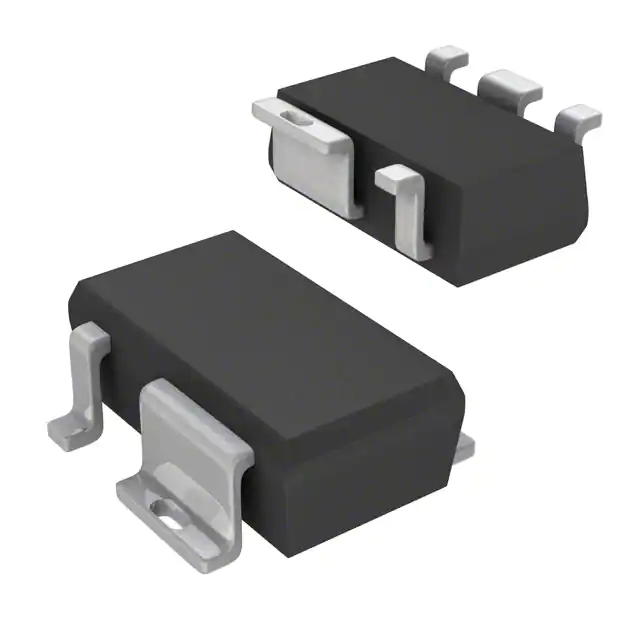
TLS202B1V50
Fixed Linear Voltage Post Regulator
Quality Requirement Category: Automotive
Features
•
Output Voltage: 5 V
•
Output Voltage Accuracy of ±3 %
•
Output Currents up to 150 mA
•
Extended Input Voltage Operating Range of 2.7 V to 18 V
•
Enable Functionality
•
Low Dropout Voltage: typ. 290mV
•
Very Low Current Consumption: typ. 50 µA
•
Very Low Shutdown Current: typ. 0.01 µA
•
High PSRR: typ. 58dB at 10 kHz
•
Output Current Limitation
•
Short Circuit protected
•
Overtemperature Shutdown
•
Wide Temperature Range From -40 °C up to 150 °C
•
Suitable for Use in Automotive Electronics as Post Regulator
•
Green Product (RoHS compliant)
•
AEC Qualified
Description
Functional Description
The TLS202B1V50 is a monolithic integrated fixed linear voltage post regulator for load currents up to 150 mA.
The IC regulates an input voltage VI up to 18 V to a fixed output voltage of 5 V with a precision of ±4 %. The
TLS202B1V50 is especially designed for applications requiring very low standby currents, e.g. with a
permanent connection to the preregulators like DCDC converters. The regulator is not designed to operate
with a direct connection to the battery. The component can be enabled/disabled via the Enable input. The
device is available in a very small surface mounted PG-SCT595 package. The device is designed for the harsh
environment of automotive applications. Therefore it is protected against overload, short circuit and
overtemperature conditions by the implemented output current limitation and the overtemperature
shutdown circuit. The TLS202B1V50 can be also used in all other applications requiring a stabilized 5 V
voltage.
Data Sheet
www.infineon.com
1
Rev. 1.0
2017-05-31
�TLS202B1V50
Fixed Linear Voltage Post Regulator
Choosing External Components
The input capacitor CI is recommended for compensating line influences. The output capacitor CQ is necessary
for the stability of the regulating circuit. Stability is guaranteed at values specified in “Functional Range” on
Page 6 within the whole operating temperature range.
Type
Package
Marking
TLS202B1MB V50
PG-SCT595
22
Data Sheet
2
Rev. 1.0
2017-05-31
�TLS202B1V50
Fixed Linear Voltage Post Regulator
Table of Contents
1
Block Diagram . . . . . . . . . . . . . . . . . . . . . . . . . . . . . . . . . . . . . . . . . . . . . . . . . . . . . . . . . . . . . . . . . . . 4
2
2.1
2.2
Pin Configuration . . . . . . . . . . . . . . . . . . . . . . . . . . . . . . . . . . . . . . . . . . . . . . . . . . . . . . . . . . . . . . . . . 5
Pin Assignment PG-SCT595 . . . . . . . . . . . . . . . . . . . . . . . . . . . . . . . . . . . . . . . . . . . . . . . . . . . . . . . . . . . . . . . . 5
Pin Definitions and Functions . . . . . . . . . . . . . . . . . . . . . . . . . . . . . . . . . . . . . . . . . . . . . . . . . . . . . . . . . . . . . . 5
3
3.1
3.2
3.3
General Product Characteristics . . . . . . . . . . . . . . . . . . . . . . . . . . . . . . . . . . . . . . . . . . . . . . . . . . . .
Absolute Maximum Ratings . . . . . . . . . . . . . . . . . . . . . . . . . . . . . . . . . . . . . . . . . . . . . . . . . . . . . . . . . . . . . . . .
Functional Range . . . . . . . . . . . . . . . . . . . . . . . . . . . . . . . . . . . . . . . . . . . . . . . . . . . . . . . . . . . . . . . . . . . . . . . . .
Thermal Resistance . . . . . . . . . . . . . . . . . . . . . . . . . . . . . . . . . . . . . . . . . . . . . . . . . . . . . . . . . . . . . . . . . . . . . . .
4
4.1
4.2
4.3
Voltage Regulator . . . . . . . . . . . . . . . . . . . . . . . . . . . . . . . . . . . . . . . . . . . . . . . . . . . . . . . . . . . . . . . . 8
Description Voltage Regulator . . . . . . . . . . . . . . . . . . . . . . . . . . . . . . . . . . . . . . . . . . . . . . . . . . . . . . . . . . . . . 8
Electrical Characteristics Voltage Regulator . . . . . . . . . . . . . . . . . . . . . . . . . . . . . . . . . . . . . . . . . . . . . . . . . 8
Typical Performance Characteristics Voltage Regulator . . . . . . . . . . . . . . . . . . . . . . . . . . . . . . . . . . . . . 10
5
5.1
5.2
5.3
Current Consumption . . . . . . . . . . . . . . . . . . . . . . . . . . . . . . . . . . . . . . . . . . . . . . . . . . . . . . . . . . . .
Description Current Consumption . . . . . . . . . . . . . . . . . . . . . . . . . . . . . . . . . . . . . . . . . . . . . . . . . . . . . . . . .
Electrical Characteristics Current Consumption . . . . . . . . . . . . . . . . . . . . . . . . . . . . . . . . . . . . . . . . . . . .
Typical Performance Characteristics Current Consumption . . . . . . . . . . . . . . . . . . . . . . . . . . . . . . . . . .
12
12
12
13
6
6.1
6.2
6.3
Enable Function . . . . . . . . . . . . . . . . . . . . . . . . . . . . . . . . . . . . . . . . . . . . . . . . . . . . . . . . . . . . . . . . .
Description Enable Function . . . . . . . . . . . . . . . . . . . . . . . . . . . . . . . . . . . . . . . . . . . . . . . . . . . . . . . . . . . . . .
Electrical Characteristics Enable Function . . . . . . . . . . . . . . . . . . . . . . . . . . . . . . . . . . . . . . . . . . . . . . . . . .
Typical Performance Characteristics Enable Function . . . . . . . . . . . . . . . . . . . . . . . . . . . . . . . . . . . . . . .
14
14
14
15
7
Application Information . . . . . . . . . . . . . . . . . . . . . . . . . . . . . . . . . . . . . . . . . . . . . . . . . . . . . . . . . . 16
8
Package Outlines . . . . . . . . . . . . . . . . . . . . . . . . . . . . . . . . . . . . . . . . . . . . . . . . . . . . . . . . . . . . . . . . 17
9
Revision History . . . . . . . . . . . . . . . . . . . . . . . . . . . . . . . . . . . . . . . . . . . . . . . . . . . . . . . . . . . . . . . . . 18
Data Sheet
3
6
6
6
7
Rev. 1.0
2017-05-31
�TLS202B1V50
Fixed Linear Voltage Post Regulator
Block Diagram
1
Block Diagram
I
Q
Current Limitation
Driver
EN
Temperature
Shutdown
Internal
Supply
Bandgap
Reference
GND
Figure 1
Data Sheet
Block Diagram
4
Rev. 1.0
2017-05-31
�TLS202B1V50
Fixed Linear Voltage Post Regulator
Pin Configuration
2
Pin Configuration
2.1
Pin Assignment PG-SCT595
5
1
4
2
3
SCT595.vsd
Figure 2
2.2
Pin Configuration Package PG-SCT595-5
Pin Definitions and Functions
Pin
Symbol Function
1
I
Input.
IC supply. For compensating line influences, a capacitor of 220 nF close to the IC pin is
recommended.
2
GND
Ground Reference.
Internally connected to Pin 5. Connect to heatsink area.
For thermal reasons both ground Pins 2 and 5 have to be soldered.
3
Q
Output.
Block to GND with a capacitor close to the IC terminals, respecting capacitance and ESR
requirements given in the “Functional Range” on Page 6”.
4
EN
Enable.
A low signal disables the IC. A high signal switches it on.
Connect to the input I, if the enable functionality is not required.
5
GND
Ground Reference.
Internally connected to Pin 2. Connect to heatsink area.
For thermal reasons both ground Pins 2 and 5 have to be soldered.
Data Sheet
5
Rev. 1.0
2017-05-31
�TLS202B1V50
Fixed Linear Voltage Post Regulator
General Product Characteristics
3
General Product Characteristics
3.1
Absolute Maximum Ratings
Table 1
Absolute Maximum Ratings 1)Tj = -40 °C to +150 °C; all voltages with respect to ground,
(unless otherwise specified)
Parameter
Symbol
Values
Unit
Note or Test Condition Number
Min.
Typ.
Max.
VI
-0.3
–
20
V
–
P_3.1.1
VQ
-0.3
–
5.5
V
–
P_3.1.2
VEN
-0.3
–
20
V
–
P_3.1.3
Junction temperature
Tj
-40
–
150
°C
–
P_3.1.4
Storage temperature
Tstg
-50
–
150
°C
–
P_3.1.5
ESD Absorption
VESD,HBM
-4
–
4
kV
Human Body Model
(HBM) 2)
P_3.1.6
ESD Absorption
VESD,CDM
-750
–
750
V
Charge Device Model
(CDM) 3) at all pins
P_3.1.7
Input I
Voltage
Output Q
Voltage
Enable EN
Voltage
Temperature
ESD Susceptibility
1) not subject to production test, specified by design
2) ESD susceptibility, HBM according to ANSI/ESDA/JEDEC JS001 (1.5 kΩ, 100 pF)
3) ESD susceptibility, Charged Device Model “CDM” ESDA STM5.3.1 or ANSI/ESD S.5.3.1
Note:
Stresses above the ones listed here may cause permanent damage to the device. Exposure to
absolute maximum rating conditions for extended periods may affect device reliability.
1. Integrated protection functions are designed to prevent IC destruction under fault conditions described in the
data sheet. Fault conditions are considered as “outside” normal operating range. Protection functions are
not designed for continuous repetitive operation.
3.2
Functional Range
Table 2
Parameter
Input voltage
Symbol
VI
Output Capacitor Requirements CQ
for Stability
Data Sheet
Values
Unit
Note or
Test Condition
Number
Min.
Typ.
Max.
2.7
–
18
V
1)
P_3.2.1
1
–
–
µF
2)
P_3.2.2
6
Rev. 1.0
2017-05-31
�TLS202B1V50
Fixed Linear Voltage Post Regulator
General Product Characteristics
Table 2
Parameter
Symbol
Values
Unit
Note or
Test Condition
Number
Min.
Typ.
Max.
Output Capacitor Requirements ESR(CQ)
for Stability
–
–
10
Ω
3)
P_3.2.3
Junction temperature
-40
–
150
°C
–
P_3.2.4
Tj
1) Regulation when VI>Vdrop+5V
2) The minimum output capacitance requirement is applicable for a worst case capacitance tolerance of 30%
3) relevant ESR value at f = 10 kHz
Note:
Within the functional or operating range, the IC operates as described in the circuit description. The
electrical characteristics are specified within the conditions given in the Electrical Characteristics
table.
3.3
Thermal Resistance
Note:
This thermal data was generated in accordance with JEDEC JESD51 standards. For more
information, go to www.jedec.org.
Table 3
Parameter
Junction to Ambient
Junction to Ambient
Symbol
RthJA
RthJA
Values
Min.
Typ.
Max.
–
81
–
–
217
–
Unit
Note or Test Condition Number
K/W
2s2p board 1)
K/W
Footprint only
P_3.3.1
2)
2
P_3.3.2
Junction to Ambient
RthJA
–
117
–
K/W
300 mm PCB heatsink
area 2)
P_3.3.3
Junction to Ambient
RthJA
–
103
–
K/W
600 mm2 PCB heatsink
area 2)
P_3.3.4
Junction to Soldering Point
RthJSP
–
30
–
K/W
Pins 2, 5 fixed to TA
P_3.3.5
1) Specified RthJA value is according to JESD51-2,-5,-7 at natural convection on FR4 2s2p board; The product
(chip+package) was simulated on a 76.2 x 114.3 x 1.5 mm board with 2 inner copper layers (2 x 70µm Cu, 2 x 35µm Cu).
Where applicable a thermal via array next to the package contacted to the first inner copper layer.
2) Package mounted on PCB FR4; 80 x 80 x 1.5 mm; 35 µm Cu, 5 µm Sn; horizontal position; zero airflow.
Not subject to production test; specified by design.
Data Sheet
7
Rev. 1.0
2017-05-31
�TLS202B1V50
Fixed Linear Voltage Post Regulator
Voltage Regulator
4
Voltage Regulator
4.1
Description Voltage Regulator
The output voltage VQ is controlled as follows: It is divided by the resistor divider. This fraction is then
compared to an internal reference and drives the pass transistor accordingly.
The control loop stability depends on the output capacitor CQ, the load current, the chip temperature and the
circuit design. To ensure stable operation, the requirements for output capacitance and equivalent series
resistance ESR, given in “Functional Range” on Page 6, have to be maintained. For details see also the typical
stability graph of ESR versus load current on Page 11. As the output capacitor also has to buffer load steps it
should be sized according to the needs of the application.
An input capacitor CI is recommended to compensate line influences. Connect the capacitors close to the
terminals of the component.
In case the load current is above the specified limit, e.g. in case of a short circuit, the output current limitation
limits the current. The output voltage is therefore decreasing at the same time.
The overtemperature shutdown circuit prevents the IC from immediate destruction under fault conditions
(e.g. output continuously short-circuited) by switching off the power stage. After the chip has cooled down,
the regulator restarts. This leads to an oscillatory behavior of the output voltage until the fault is removed.
However, junction temperatures above 150 °C are outside the maximum ratings and therefore significantly
reduce the IC’s lifetime.
Supply
II
I
Q
Regulated
Output Voltage
IQ
Current Limitation
C
Driver
CI
ESR
VI
CQ
Temperature
Shutdown
VQ
LOAD
Bandgap
Reference
GND
Figure 3
4.2
Data Sheet
Block Diagram Voltage Regulator Circuit
Electrical Characteristics Voltage Regulator
8
Rev. 1.0
2017-05-31
�TLS202B1V50
Fixed Linear Voltage Post Regulator
Voltage Regulator
Table 4
Electrical Characteristics VI = 6 V; Tj = -40 °C to +150 °C; all voltages with respect to ground
(unless otherwise specified)
Parameter
Symbol
Values
Unit
Note or Test Condition Number
Min.
Typ.
Max.
VQ
4.85
5
5.15
V
IQ = 10 mA ; Tj = 25 °C
P_4.2.1
VQ
4.8
5
5.2
V
IQ = 10 mA
P_4.2.2
Vdr
–
290
570
mV
IQ = 150 mA
P_4.2.3
Load Regulation
ΔVQ
-125
-40
–
mV
IQ = 1 mA to 150 mA
P_4.2.4
Line Regulation
ΔVQ
–
2
40
mV
VI = 6 V to 10 V ;
IQ = 1 mA
P_4.2.5
Output Current Limitation
IQ
151
300
–
mA
0 V ≤ VQ ≤ 4.5 V
P_4.2.6
Power Supply Ripple
Rejection 2)
PSRR
–
58
–
dB
ff = 10 kHz ; IQ = 50 mA ;
Tj = 25 °C ; Vin = 6 V ;
ΔVI = 1 Vpp ; Cout = 1 µF
(Ceramic Capacitor)
P_4.2.7
Overtemperature Shutdown
Threshold
Tj,sd
151
170
190
°C
–
P_4.2.8
Output Voltage
Output Voltage
Dropout Voltage
1)
1) Dropout voltage is defined as the difference between input and output voltage when the output voltage decreases
100 mV from output voltage measured at VI = VQ,nom + 1 V, ILoad = 150mA.
2) Parameter is not subject to production test, specified by design
Data Sheet
9
Rev. 1.0
2017-05-31
�TLS202B1V50
Fixed Linear Voltage Post Regulator
Voltage Regulator
4.3
Typical Performance Characteristics Voltage Regulator
VEN = 5 V (unless otherwise noted)
Output Voltage VQ vs.
Input Voltage VI (TLS202B1MB V50)
Output Voltage VQ vs.
Junction Temperature Tj (TLS202B1MB V50)
5.5
5
5.15
4.5
5.1
4
5.05
3
VQ [V]
VQ [V]
3.5
2.5
4.95
2
1.5
1
IQ = 10 mA
Tj = 25 °C
Tj = 150 °C
0
1
2
3
4
5
6
IQ = 50 mA
4.85
Tj = 125 °C
0.5
IQ = 1 mA
4.9
Tj = −40 °C
0
5
IQ = 100 mA
IQ = 150 mA
4.8
−50
7
0
50
Tj [°C]
VI [V]
150
Load Regulation Output Voltage VQ vs.
Load Current IQ (TLS202B1MB V50)
5.15
5.15
5.1
5.1
5.05
5.05
VQ [V]
VQ [V]
Line Regulation Output Voltage VQ vs.
Input Voltage VI (TLS202B1MB V50)
100
5
4.95
5
4.95
4.9
4.9
Tj = −40 °C
Tj = 25 °C
4.85
Tj = −40 °C
Tj = 25 °C
4.85
Tj = 125 °C
Tj = 125 °C
Tj = 150 °C
Tj = 150 °C
4.8
4.8
6
Data Sheet
8
10
12
VI [V]
14
16
18
0
50
100
150
IQ [mA]
10
Rev. 1.0
2017-05-31
�TLS202B1V50
Fixed Linear Voltage Post Regulator
Voltage Regulator
Dropout Voltage Vdr vs.
Load Current IQ (TLS202B1MB V50)
Qutput Current Limitation IQ,max vs.
Junction Temperature Tj (TLS202B1MB V50)
400
400
380
350
360
300
340
IQ,max [mA]
Vdr [mV]
250
200
320
300
280
150
260
100
Tj = −40 °C
240
Tj = 25 °C
50
Tj = 125 °C
220
Tj = 150 °C
0
0
50
100
VI = 6 V
200
−50
150
0
50
Tj [°C]
IQ [mA]
50
90
45
80
40
70
35
60
30
ESR(CQ) [Ω]
PSRR [dB]
100
50
40
20
15
20
10
10
5
2
3
4
10
10
5
10
6
0
10
50
100
150
IQ [mA]
f [Hz]
Data Sheet
Max ESR
Min ESR
25
30
10
150
Output Capacitor Series Resistance ESR(CQ) vs.
Output Current IQ (TLS202B1MB V50)
PSRR vs. Frequency (TLS202B1MB V50)
0
1
10
100
11
Rev. 1.0
2017-05-31
�TLS202B1V50
Fixed Linear Voltage Post Regulator
Current Consumption
5
Current Consumption
5.1
Description Current Consumption
The Current Consumption of the device is characterizing the current the device needs to operate. The
Quiescent Current is describing the Current Consumption in a very low load condition (e.g. the supplied
microcontroller is in sleep mode). The TLS202B1V50 has an Enable functionality to shutdown the device, in
case it is not needed. During shutdown the device has a very low Current Consumption. The Current
Consumption of the device can be determined by measuring the Current flowing out of the GND Pin and
defined as the delta between II and (IQ+IEN).
II
I
Q
IQ
TLS202B1
IEN
EN
C
VI
CI
ESR
VEN
CQ
VQ
LOAD
GND
Iq+IEN
Figure 4
Parameter Definition Current Consumption
5.2
Electrical Characteristics Current Consumption
Table 5
Electrical Characteristics VI = 6 V; Tj = -40 °C to +150 °C; all voltages with respect to ground
(unless otherwise specified)
Parameter
Symbol
Values
Min.
Typ.
Max.
Unit
Note or Test Condition Number
Quiescent Current
Iq = II – IQ
Iq
–
50
75
µA
IQ = 10 µA ; Tj = 25 °C
P_5.2.1
Quiescent Current
Iq = II – IQ
Iq
–
–
100
µA
IQ = 10 µA ; Tj ≤ 125 °C
P_5.2.2
Current Consumption
Iq = II – IQ
Iq
–
150
200
µA
IQ = 50 mA
P_5.2.3
Quiescent Current in
Shutdown
Iq,off
–
0.01
1
µA
VI = 6 V ; VEN = 0 V ;
Tj ≤ 125 °C ; VQ = 0 V
P_5.2.4
Data Sheet
12
Rev. 1.0
2017-05-31
�TLS202B1V50
Fixed Linear Voltage Post Regulator
Current Consumption
5.3
Typical Performance Characteristics Current Consumption
VEN = 5 V (unless otherwise noted)
Quiescent Current Iq vs.
Input Voltage VI (TLS202B1MB V50)
Current Consumption Iq vs.
Junction Temperature TJ (TLS202B1MB V50)
300
200
Tj = −40 °C
180
Tj = 25 °C
Tj = 125 °C
250
160
Tj = 150 °C
140
200
Iq [µA]
Iq [µA]
120
150
100
80
100
60
IQ = 10 µA
40
50
IQ = 0.1 mA
IQ = 50 mA
20
IQ = 100 mA
0
4
6
8
10
12
VI [V]
14
16
0
18
Current Consumption Iq vs.
Load Current IQ (TLS202B1MB V50)
0
50
Tj [°C]
100
150
180
160
140
Iq [µA]
120
100
80
60
Tj = −40 °C
40
Tj = 25 °C
Tj = 125 °C
20
Tj = 150 °C
0
0
20
40
60
80
100
IQ [mA]
Data Sheet
13
Rev. 1.0
2017-05-31
�TLS202B1V50
Fixed Linear Voltage Post Regulator
Enable Function
6
Enable Function
6.1
Description Enable Function
The TLS202B1V50 can be turned on or turned off by the EN Input. The parameter VEN is the voltage provided to
the EN Pin as shown in Figure 4 “Parameter Definition Current Consumption” on Page 12.
With voltage levels lower than VEN,Lo applied to the EN Input the device will be turned off. During this state the
device is in shutdown with a very low current consumption Iq,off.
By changing the voltage at the EN Input from VEN,Lo to VEN,Hi will trigger the start-up of the device. For voltages
higher than VEN,Hi the device will regulate the output voltage to the nominal value.
6.2
Electrical Characteristics Enable Function
Table 6
Electrical Characteristics VI = 6 V; Tj = -40 °C to +150 °C; all voltages with respect to ground
(unless otherwise specified)
Parameter
Symbol
Values
Min.
Typ.
Max.
Unit
Note or
Test Condition
Number
Enable High Voltage Level
VEN,Hi
2
–
–
V
VQ,on ≥ 4.75 V
P_6.2.1
Enable Low Voltage Level
VEN,Lo
–
–
0.4
V
VQ,off ≤ 200 mV
P_6.2.2
IEN
–
–
5
µA
VEN = 5 V
P_6.2.3
Enable Pin Current
1)
1) Enable pin current flows into the EN pin.
Data Sheet
14
Rev. 1.0
2017-05-31
�TLS202B1V50
Fixed Linear Voltage Post Regulator
Enable Function
6.3
Typical Performance Characteristics Enable Function
Enable Thresholds VEN vs.
Junction Temperature Tj (TLS202B1MB V50)
Power Up Timing (TLS202B1MB V50)
2
5
VEN increasing (Off−to−On)
VEN decreasing (On−to−Off) .
4.5
1.8
4
3.5
1.6
VEN,th [V]
V [V]
3
2.5
1.4
2
1.2
1.5
1
1
VEN
0.5
VQ
0
0
Data Sheet
50
100
150
200
t [µs]
250
300
0.8
350
15
0
50
Tj [°C]
100
150
Rev. 1.0
2017-05-31
�TLS202B1V50
Fixed Linear Voltage Post Regulator
Application Information
7
Application Information
Note:
The following information is given as a hint for the implementation of the device only and shall not
be regarded as a description or warranty of a certain functionality, condition or quality of the device.
I
Vin
1
e.g. 220nF
GND
5
GND
2
Q
VQ
EN
3
1µF
4
From µC
APPLICATION_DIAGRAM_EN - PACKAGE.VSD
Figure 5
Note:
Application Diagram
This is a very simplified example of an application circuit. The function must be verified in the real
application.
A typical application circuit of the TLS202B1V50 is shown in Figure 5. It shows a generic configuration of the
voltage regulator, with the recommendable minimum number of components one should use. Theoretically,
if there is no risk of high frequency noise at all, even the small input filter capacitor can be omitted. For a
normal operation mode of the device only an output capacitor and a small ceramic input capacitor are
needed. Depending on the application’s environment, additional components like an input buffer capacitor
or a reverse polarity protection diode can be considered as well.
Input Filter Capacitor CI
A small ceramic capacitor (e.g. 220nF in Figure 5) at the device input helps filtering high frequency noise. To
reach the best filter effect, this capacitor should be placed as close as possible to the input pin. The input filter
capacitor does not have an influence on the stability of the regulation loop of the device, but in case of fast
load changes an input capacitor can buffer the input voltage. Otherwise the parasitic inductance of the input
line length can drop the input voltage at the IC terminals and influence the output voltage.
Output Capacitor CQ
The output capacitor is the external component that is required in any case as it is a part of the device’s
regulation loop. To maintain stability of this loop, the TLS202B1V50 requires at least an output capacitor
respecting the values given in “Functional Range” on Page 6. The given parameters ensure a stable
regulation loop in general, in case of fast load changes in the application the output capacitance may have to
be increased according to the requirements for load responses.
Data Sheet
16
Rev. 1.0
2017-05-31
�TLS202B1V50
Fixed Linear Voltage Post Regulator
Package Outlines
8
Package Outlines
The device is available in a very small surface mounted PG-SCT595 package.
2.9 ±0.2
(2.2)
0.1 MAX.
0.25 M B
1
2
4
3
1.6 ±0.1
(0.23) 1)
(0.13)
5
0.6 +0.1
-0.05
1.1 MAX.
(0.3)
1)
2.5 ±0.1
(0.4)
(1.45)
0.25 ±0.1
1.2 +0.1
-0.05
B
0.3 +0.1
-0.05
0.15 +0.1
-0.06
A
0.95
0.2
1.9
M
A
1) Contour of slot depends on profile of gull-wing lead form
SCT595-PO V05
Figure 6
PG-SCT595
Green Product (RoHS compliant)
To meet the world-wide customer requirements for environmentally friendly products and to be compliant
with government regulations the device is available as a green product. Green products are RoHS-Compliant
(i.e Pb-free finish on leads and suitable for Pb-free soldering according to IPC/JEDEC J-STD-020).
For further information on alternative packages, please visit our website:
http://www.infineon.com/packages.
Data Sheet
17
Dimensions in mm
Rev. 1.0
2017-05-31
�TLS202B1V50
Fixed Linear Voltage Post Regulator
Revision History
9
Revision History
Revision
Date
Changes
1.0
2016-09-12
Initial Data Sheet.
Data Sheet
18
Rev. 1.0
2017-05-31
�Please read the Important Notice and Warnings at the end of this document
Trademarks of Infineon Technologies AG
µHVIC™, µIPM™, µPFC™, AU-ConvertIR™, AURIX™, C166™, CanPAK™, CIPOS™, CIPURSE™, CoolDP™, CoolGaN™, COOLiR™, CoolMOS™, CoolSET™, CoolSiC™,
DAVE™, DI-POL™, DirectFET™, DrBlade™, EasyPIM™, EconoBRIDGE™, EconoDUAL™, EconoPACK™, EconoPIM™, EiceDRIVER™, eupec™, FCOS™, GaNpowIR™,
HEXFET™, HITFET™, HybridPACK™, iMOTION™, IRAM™, ISOFACE™, IsoPACK™, LEDrivIR™, LITIX™, MIPAQ™, ModSTACK™, my-d™, NovalithIC™, OPTIGA™,
OptiMOS™, ORIGA™, PowIRaudio™, PowIRStage™, PrimePACK™, PrimeSTACK™, PROFET™, PRO-SIL™, RASIC™, REAL3™, SmartLEWIS™, SOLID FLASH™,
SPOC™, StrongIRFET™, SupIRBuck™, TEMPFET™, TRENCHSTOP™, TriCore™, UHVIC™, XHP™, XMC™.
Trademarks updated November 2015
Other Trademarks
All referenced product or service names and trademarks are the property of their respective owners.
Edition 2017-05-31
Published by
Infineon Technologies AG
81726 Munich, Germany
© 2017 Infineon Technologies AG.
All Rights Reserved.
Do you have a question about any
aspect of this document?
Email: erratum@infineon.com
IMPORTANT NOTICE
The information given in this document shall in no
event be regarded as a guarantee of conditions or
characteristics ("Beschaffenheitsgarantie").
With respect to any examples, hints or any typical
values stated herein and/or any information regarding
the application of the product, Infineon Technologies
hereby disclaims any and all warranties and liabilities
of any kind, including without limitation warranties of
non-infringement of intellectual property rights of any
third party.
In addition, any information given in this document is
subject to customer's compliance with its obligations
stated in this document and any applicable legal
requirements, norms and standards concerning
customer's products and any use of the product of
Infineon Technologies in customer's applications.
The data contained in this document is exclusively
intended for technically trained staff. It is the
responsibility of customer's technical departments to
evaluate the suitability of the product for the intended
application and the completeness of the product
information given in this document with respect to
such application.
For further information on technology, delivery terms
and conditions and prices, please contact the nearest
Infineon Technologies Office (www.infineon.com).
WARNINGS
Due to technical requirements products may contain
dangerous substances. For information on the types
in question please contact your nearest Infineon
Technologies office.
Except as otherwise explicitly approved by Infineon
Technologies in a written document signed by
authorized representatives of Infineon Technologies,
Infineon Technologies’ products may not be used in
any applications where a failure of the product or any
consequences of the use thereof can reasonably be
expected to result in personal injury.
�