Spec No.: JELF243A_0033P-01
P1/10
CHIP COILS (CHIP INDUCTORS) LQW31HN□□□□03□ REFERENCE SPECIFICATION
1. Scope
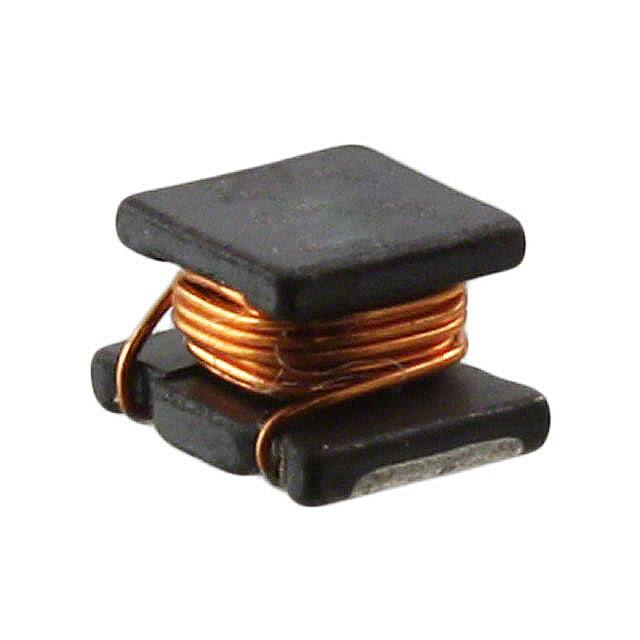
This reference specification applies to chip coils (chip inductors) LQW31HN_03 series for general electronic equipment.
2. Part Numbering
(Ex.)
LQ
W
31
Product Structure Dimension
ID
(L × W)
H
N
8N8
Application Category
and
characteristic
J
Inductance
0
3
Tolerance Performance
L
Electrode Packaging
specification L: taping
3. Part Number and Rating
Operating temperature range
-40°C to +85°C
Storage temperature range
-40°C to +85°C
Inductance
Customer
Part number
Tolerance
Q
(Min.)
DC resistance
(Ω)
Self-resonant
frequency
(MHz min.)
Rated
current
(mA)
8.8
J: ±5%
50
0.029±40%
1000
750
LQW31HN8N8K03L
8.8
K: ±10%
50
0.029±40%
1000
750
LQW31HN15NJ03L
14.7
J: ±5%
60
0.035±40%
1000
680
LQW31HN15NK03L
14.7
K: ±10%
60
0.035±40%
1000
680
Murata
Part number
Nominal
value
(nH)
LQW31HN8N8J03L
LQW31HN17NJ03L
17
J: ±5%
60
0.037±40%
1000
650
LQW31HN17NK03L
17
K: ±10%
60
0.037±40%
1000
650
LQW31HN23NJ03L
23
J: ±5%
60
0.046±40%
1000
590
LQW31HN23NK03L
23
K: ±10%
60
0.046±40%
1000
590
LQW31HN27NJ03L
27
J: ±5%
60
0.051±40%
1000
560
LQW31HN27NK03L
27
K: ±10%
60
0.051±40%
1000
560
LQW31HN33NJ03L
33
J: ±5%
60
0.057±40%
1000
530
LQW31HN33NK03L
33
K: ±10%
60
0.057±40%
1000
530
LQW31HN39NJ03L
39
J: ±5%
60
0.067±40%
1000
490
LQW31HN39NK03L
39
K: ±10%
60
0.067±40%
1000
490
LQW31HN47NJ03L
47
J: ±5%
60
0.11±40%
1000
380
LQW31HN47NK03L
47
K: ±10%
60
0.11±40%
1000
380
LQW31HN56NJ03L
56
J: ±5%
60
0.14±40%
1000
330
LQW31HN56NK03L
56
K: ±10%
60
0.14±40%
1000
330
LQW31HN64NJ03L
64
J: ±5%
60
0.18±40%
1000
290
LQW31HN64NK03L
64
K: ±10%
60
0.18±40%
1000
290
LQW31HN84NJ03L
84
J: ±5%
60
0.28±40%
1000
240
LQW31HN84NK03L
84
K: ±10%
60
0.28±40%
1000
240
LQW31HNR10J03L
100
J: ±5%
60
0.30±40%
900
230
LQW31HNR10K03L
100
K: ±10%
60
0.30±40%
900
230
4. Testing Conditions
Unless otherwise specified
Temperature: ordinary temperature (15°C to 35°C)
Humidity: ordinary humidity [25% to 85% (RH)]
In case of doubt
Temperature: 20°C±2°C
Humidity: 60% to 70% (RH)
Atmospheric pressure: 86 kPa to 106 kPa
MURATA MFG CO., LTD
�Spec No.: JELF243A_0033P-01
P2/10
5. Appearance and Dimensions
Unit mass (typical value): 0.020 g
6. Marking
No marking.
7. Electrical Performance
No.
Item
7.1
Inductance
Meet chapter 3 ratings.
Specification
Measuring equipment: Keysight E4991A or the
equivalent
Measuring frequency: 100 MHz
Measuring method: see "Electrical performance:
Measuring method for inductance/Q" in the chapter
"14. Appendix".
Test method
7.2
Q
Meet chapter 3 ratings.
Measuring equipment: Keysight E4991A or the
equivalent
Measuring frequency: 436 MHz
7.3
DC resistance
Meet chapter 3 ratings.
Measuring equipment: digital multimeter
7.4
Self-resonant
frequency
Meet chapter 3 ratings.
Measuring equipment: Keysight N5230A or the
equivalent
7.5
Rated current
Product temperature rise: 20°C max.
Inductance change rate: within ±10%
Apply the rated current specified in chapter 3.
8. Mechanical Performance
No.
8.1
Item
Shear test
Specification
No significant mechanical damage or no
sign of electrode peeling off shall be
observed.
Test method
Test substrate: glass-epoxy substrate
Force application direction:
Applying force: 10 N
Holding time: 5 s±1 s
MURATA MFG CO., LTD
�Spec No.: JELF243A_0033P-01
No.
P3/10
Item
Specification
Test method
8.2
Bending test
No significant mechanical damage or no
sign of electrode peeling off shall be
observed.
Test substrate: glass-epoxy substrate (100 mm × 40
mm × 1.6 mm)
Pressurizing speed: 1 mm/s
Deflection: 2 mm
Holding time: 30 s
8.3
Vibration
Appearance shall have no significant
mechanical damage.
Oscillation frequency: 10 Hz to 55 Hz to 10 Hz, for
approx. 1 min
Total amplitude: 1.5 mm
Test time: 3 directions perpendicular to each other, 2 h
for each direction (6 h in total)
8.4
Solderability
90% or more of the outer electrode shall
be covered with new solder seamlessly.
Flux: immersed in ethanol solution with a rosin content
of 25(wt)% for 5 s to 10 s
Solder: Sn-3.0Ag-0.5Cu solder
Pre-heating: 150°C±10°C/60 s to 90 s
Solder temperature: 240°C±5°C
Immersion time: 3 s±1 s
8.5
Resistance to
soldering heat
Appearance: No significant mechanical
damage shall be observed.
Inductance change rate: within ±5%
Flux: immersed in ethanol solution with a rosin content
of 25(wt)% for 5 s to 10 s
Solder: Sn-3.0Ag-0.5Cu solder
Pre-heating: 150°C±10°C/60 s to 90 s
Solder temperature: 270°C±5°C
Immersion time: 10 s±1 s
Post-treatment: left at a room condition for 24 h±2 h
9. Environmental Performance
The product is soldered on a substrate for test.
No.
Item
Specification
Test method
9.1
Heat resistance
Appearance: No significant mechanical
damage shall be observed.
Inductance change rate: within ±5%
Q change rate: within ±20%
Temperature: 85°C±2°C
Test time: 1000 h (+48 h, -0 h)
Post-treatment: left at a room condition for 24 h±2 h
9.2
Cold resistance
Appearance: No significant mechanical
damage shall be observed.
Inductance change rate: within ±5%
Q change rate: within ±20%
Temperature: -40°C±2°C
Test time: 1000 h (+48 h, -0 h)
Post-treatment: left at a room condition for 24 h±2 h
9.3
Humidity
Appearance: No significant mechanical
damage shall be observed.
Inductance change rate: within ±5%
Q change rate: within ±20%
Temperature: 40°C±2°C
Humidity: 90% (RH) to 95% (RH)
Test time: 1000 h (+48 h, -0 h)
Post-treatment: left at a room condition for 24 h±2 h
9.4
Temperature cycle Appearance: No significant mechanical
damage shall be observed.
Inductance change rate: within ±5%
Q change rate: within ±20%
Single cycle conditions:
Step 1: -40°C±2°C/30 min±3 min
Step 2: ordinary temperature/10 min to 15 min
Step 3: +85°C±2°C/30 min±3 min
Step 4: ordinary temperature/10 min to 15 min
Number of testing: 10 cycles
Post-treatment: left at a room condition for 24 h±2 h
MURATA MFG CO., LTD
�Spec No.: JELF243A_0033P-01
P4/10
10. Specification of Packaging
10.1 Appearance and dimensions of tape (8 mm width/plastic tape)
A
1.9±0.1
B
3.6±0.1
t
2.0±0.1
t'
0.2
(in mm)
* The dimensions of the cavity are measured at its bottom.
10.2 Taping specifications
Packing quantity
(Standard quantity)
2000 pcs/reel
Packing method
The products are placed in embossed cavities of a plastic tape and sealed by a cover tape.
Feed hole position
The feed holes on the plastic tape are on the right side when the cover tape is pulled toward the user.
Joint
The plastic tape and the cover tape are seamless.
Number of missing
products
Number of missing products within 0.1% of the number per reel or 1 pc., whichever is greater, and are
not continuous. The specified quantity per reel is kept.
10.3 Break down force of tape
Break down force of cover tape
10 N min.
10.4 Peeling off force of cover tape
Speed of peeling off
300 mm/min
Peeling off force
165 to 180 degree
0.2 N to 0.7 N (The lower limit is for typical value.)
F
Cover tape
Plastic tape
MURATA MFG CO., LTD
�Spec No.: JELF243A_0033P-01
P5/10
10.5 Dimensions of leader section, trailer section and reel
A vacant section is provided in the leader (start) section and trailer (end) section of the tape for the product. The leader
section is further provided with an area consisting only of the cover tape. (See the diagram below.)
10.6 Marking for reel
Customer part number, Murata part number, inspection number (*1), RoHS marking (*2), quantity, etc.
*1 Expression of inspection No.: (1) Factory code
(2) Date
□□
○○○○
First digit: year/last digit of year
(1)
(2)
(3)
Second digit: month/Jan. to Sep.→1 to 9, Oct. to Dec.→O, N, D
Third, Fourth digit: day
(3) Serial No.
*2 Expression of RoHS marking: (1) RoHS regulation conformity
ROHSY
()
(2) Murata classification number
(1)
(2)
10.7 Marking on outer box (corrugated box)
Customer name, purchasing order number, customer part number, Murata part number, RoHS marking (*2), quantity, etc.
10.8 Specification of outer box
Label
H
D
W
11.
Dimensions of outer box
(mm)
W
D
H
186
186
93
Standard reel quantity
in outer box (reel)
5
* Above outer box size is typical. It depends on a
quantity of an order.
Caution
Restricted
applications
Please contact us before using our products for the applications listed below which require especially high
reliability for the prevention of defects which might directly cause damage to the third party's life, body or
property.
(1) Aircraft equipment
(2) Aerospace equipment
(3) Undersea equipment
(4) Power plant control equipment
(5) Medical equipment
(6) Transportation equipment (vehicles, trains, ships, etc.)
(7) Traffic signal equipment
(8) Disaster/crime prevention equipment
(9) Data-processing equipment
(10) Applications of similar complexity and/or reliability requirements
to the applications listed in the above
MURATA MFG CO., LTD
�Spec No.: JELF243A_0033P-01
P6/10
12. Precautions for Use
This product is designed to be mounted by soldering. If you want to use other mounting method, for example, using a
conductive adhesive, please consult us beforehand.
12.1 Land dimensions
The following diagram shows the recommended land dimensions for flow and reflow soldering.
The land dimensions are designed in consideration of electrical characteristics and mountability. Use of other land
dimensions may preclude achievement of performance. In some cases, it may result in poor solderability, including positional
shift. If you use other land pattern, consider it adequately.
a
1.0
b
4.5
c
1.5
(in mm)
12.2 Flux and solder used
Flux
• Use a rosin-based flux.
• Do not use a highly acidic flux with a halide content exceeding 0.2(wt)% (chlorine conversion value).
• Do not use a water-soluble flux.
Solder
• Use Sn-3.0Ag-0.5Cu solder.
• Standard thickness of solder paste: 200 μm to 300 μm
12.3 Soldering conditions (flow, reflow)
• Pre-heating should be in such a way that the temperature difference between solder and product surface is limited to 150°C
max.
Cooling into solvent after soldering also should be in such a way that the temperature difference is limited to 100°C max.
Insufficient pre-heating may cause cracks on the product, resulting in the deterioration of product quality.
• Standard soldering profile and the limit soldering profile is as follows.
The excessive limit soldering conditions may cause leaching of the electrode and/or resulting in the deterioration of product
quality.
(1) Flow
Temp.
(℃)
265℃±3℃
250℃
Limit Profile
150
Heating Time
60s min.
Standard Profile
Time. (s)
Standard profile
Limit profile
Pre-heating
150°C/60 s min.
150°C/60 s min.
Heating
250°C/4 s to 6 s
265°C±3°C/5 s
2 times
2 times
Number of flow cycles
MURATA MFG CO., LTD
�Spec No.: JELF243A_0033P-01
P7/10
(2) Reflow
Temp.
(℃)
260℃
245℃±3℃
230℃
220℃
Limit Profile
180
150
Standard Profile
30s~60s
60s max.
90s±30s
Time. (s)
Standard profile
Limit profile
Pre-heating
150°C to 180°C/90 s±30 s
150°C to 180°C/90 s±30 s
Heating
Above 220°C/30 s to 60 s
Above 230°C/60 s max.
245°C±3°C
260°C/10 s
2 times
2 times
Peak temperature
Number of reflow cycles
12.4 Reworking with soldering iron
The following requirements must be met to rework a soldered product using a soldering iron.
Item
Requirement
Pre-heating
Tip temperature of soldering iron
Power consumption of soldering iron
Tip diameter of soldering iron
Soldering time
Number of reworking operations
150°C/approx. 1 min
350°C max.
80 W max.
ø3 mm max.
3 s (+1 s, -0 s)
2 times max.
* Avoid a direct contact of the tip of the soldering iron with the product. Such a
direction contact may cause cracks in the ceramic body due to thermal shock.
12.5 Solder volume
Solder shall be used not to increase the volume too much.
An increased solder volume increases mechanical stress on the product. Exceeding solder volume may cause the failure of
mechanical or electrical performance.
MURATA MFG CO., LTD
�Spec No.: JELF243A_0033P-01
P8/10
12.6 Product's location
The following shall be considered when designing and laying out PCBs.
(1) PCB shall be designed so that products are not subject to mechanical stress due to warping the board.
[Products direction]
Products shall be located in the sideways direction (length: a < b) to the mechanical stress.
a
b
〈 Poor example〉
〈 Good example〉
(2) Components location on PCB separation
It is effective to implement the following measures, to reduce stress in separating the board.
It is best to implement all of the following three measures; however, implement as many measures as possible to reduce
stress.
Contents of measures
Stress level
(1) Turn the mounting direction of the component parallel to the
board separation surface.
A > D*1
(2) Add slits in the board separation part.
A>B
(3) Keep the mounting position of the component away from the
board separation surface.
A>C
*1 A > D is valid when stress is added vertically to the perforation as with hand separation.
If a cutting disc is used, stress will be diagonal to the PCB, therefore A > D is invalid.
(3) Mounting components near screw holes
When a component is mounted near a screw hole, it may be affected by the board deflection that occurs during the
tightening of the screw.
Mount the component in a position as far away from the screw holes as possible.
12.7 Handling of substrate
After mounting products on a substrate, do not apply any stress to the product caused by bending or twisting to the substrate
when cropping the substrate, inserting and removing a connector from the substrate or tightening screw to the substrate.
Excessive mechanical stress may cause cracking in the product.
Bending
Twisting
MURATA MFG CO., LTD
�Spec No.: JELF243A_0033P-01
P9/10
12.8 Cleaning
The product shall be cleaned under the following conditions.
(1) The cleaning temperature shall be 60°C max. If isopropyl alcohol (IPA) is used, the cleaning temperature shall be 40°C
max.
(2) Perform ultrasonic cleaning under the following conditions. Exercise caution to prevent resonance phenomenon in
mounted products and the PCB.
Item
Requirement
Power
Time
20 W/L max.
5 min max.
Frequency
28 kHz to 40 kHz
(3) Cleaner
Alcohol-based cleaner: IPA
Aqueous agent: PINE ALPHA ST-100S
(4) There shall be no residual flux or residual cleaner. When using aqueous agent, rinse the product with deionized water
adequately and completely dry it so that no cleaner is left.
* For other cleaning, consult our technical department.
12.9 Storage and transportation
Storage period
Use the product within 12 months after delivery.
If you do not use the product for more than 12 months, check solderability before using it.
Storage conditions
• The products shall be stored in a room not subject to rapid changes in temperature and humidity.
The recommended temperature range is -10°C to +40°C. The recommended relative humidity
range is 15% to 85%.
Keeping the product in corrosive gases, such as sulfur, chlorine gas or acid, oxidizes the
electrode, resulting in poor solderability or corrosion of the coil wire of the product.
• Do not keep products in bulk packaging. Doing so may cause collision between the products or
between the products and other products, resulting in core chipping or wire breakage.
• Do not place the products directly on the floor; they should be placed on a palette so that they are
not affected by humidity or dust.
• Avoid keeping the products in a place exposed to direct sunlight, heat or vibration.
Transportation
Excessive vibration and impact reduces the reliability of the products. Exercise caution when
handling the products.
12.10 Resin coating
The inductance value may change due to high cure-stress of resin to be used for coating/molding products.
A wire breakage issue may occur by mechanical stress caused by the resin, amount/cured shape of resin, or operating
condition etc. Some resin contains some impurities or chloride possible to generate chlorine by hydrolysis under some
operating condition may cause corrosion of wire of coil, leading to wire breakage.
So, please pay your careful attention when you select resin in case of coating/molding the products with the resin.
Prior to use the coating resin, please make sure no reliability issue is observed by evaluating products mounted on your
board.
12.11 Handling of product
• Sharp material such as a pair of tweezers or other material such as bristles of cleaning brush, shall not be touched to the
winding portion to prevent the breaking of wire.
• Mechanical shock should not be applied to the products mounted on the board to prevent the breaking of the core.
13.
Note
(1) Please make sure that your product has been evaluated in view of your specifications with our product being mounted to
your product.
(2) You are requested not to use our product deviating from the reference specifications.
(3) The contents of this reference specification are subject to change without advance notice. Please approve our product
specifications or transact the approval sheet for product specifications before ordering.
MURATA MFG CO., LTD
�Spec No.: JELF243A_0033P-01
P10/10
14. Appendix
Electrical performance: Measuring method for inductance/Q (Q measurement is applicable only when the Q value is included
in the rating table.)
Perform measurement using the method described below. (Perform correction for the error deriving from the measuring
terminal.)
(1) Residual elements and stray elements of the measuring terminal can be expressed by the F parameter for the 2-pole
terminal as shown in the figure below.
(2) The product's impedance value (Zx) and measured impedance value (Zm) can be expressed as shown below, by using
the respective current and voltage for input/output.
Zm=
V1
I1
Zx=
V2
I2
(3) Thus, the relationship between the product's impedance value (Zx) and measured impedance value (Zm) is as follows.
Zx=α
Zm-β
1-ZmΓ
Here,
α = D/A = 1
β = B/D = Zsm - (1 - Yom Zsm) Zss
Γ = C/A = Yom
Zsm: measured impedance of short chip
Zss: residual impedance of short chip (0.771 nH)
Yom: measured admittance when measuring terminal is open
(4) Calculate inductance Lx and Qx using the equations shown below.
Im (Zx)
Lx: inductance of chip coil
Lx=
2πf
Qx: Q of chip coil
Im (Zx)
Qx=
f: measuring frequency
Re (Zx)
MURATA MFG CO., LTD
�










 工商网监
湘ICP备2023018690号
工商网监
湘ICP备2023018690号