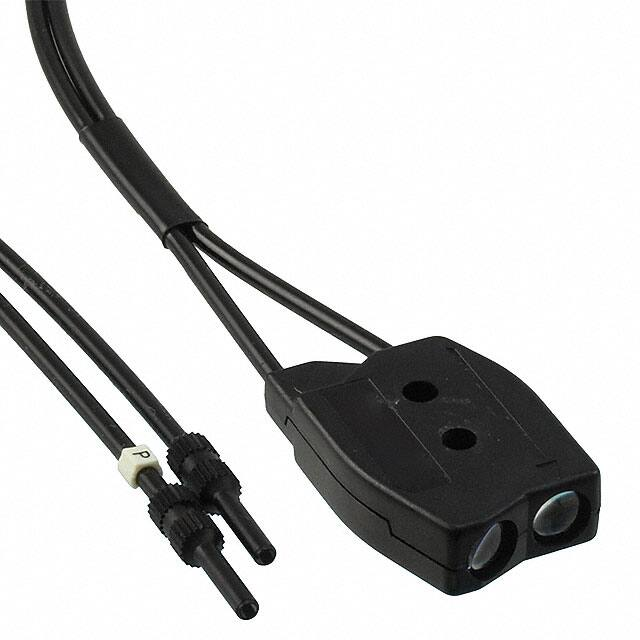
SERIES
Color Detection Fiber Sensor
PNP output
type available
Timer
Fiber
Selection
FIBER SENSORS
FZ-10
FZ-10
FX-11A
FX-CH
FX-311
Color Detection Analog Output Manually Set Bank Selection Unit
FX-303
FX-302
Digital Setting
FX-301
Reliable and precise
color discrimination
Conforming to
EMC Directive
UL Recognition
Red, green and blue LEDs
Easy set up
FZ-10 incorporates red, green and blue
LEDs as its beam sources, which
promise longer lifetime and greater
immunity against extraneous light than
fluorescent lamps and are also maintenance free.
Just pressing a button recognizes the reference color you want to detect as the
criterion. There are two methods to set the criterion, manual teaching and
auto-teaching. The tolerance adjuster also allows you to set the tolerance of color
equivalence in 16 grades.
�Criterion
Manual teaching
Auto-teaching
Place a workpiece bearing the reference
color under the fiber head and press the
teaching button.
Keep pressing the teaching button until a
workpiece bearing the reference color travels
past the fiber head.
Lenses
Fibers
Teaching
button
Teaching button
Red LED
Green LED
Blue LED
Half mirrors
Place a workpiece,
and press the button.
Press the button,
and feed a workpiece.
Excellent color detectability
Each of the red, green and blue components is digitally processed so that
precise color discrimination is possible.
FZ-10 can discriminate between white
and yellow or distinguish if a surface is
plated or not, that could never be possible with conventional fiber sensors
which were based on detection of light
intensity.
�Tolerance adjustment
Precise judgment
182
Rough judgment
Tolerance adjuster
10
12
14
8
6
4
FINE
Turn the adjuster clockwise. The closer it is to
‘FINE’, finer is the set
tolerance.
Narrow tolerance
Can discriminate between white and yellow surfaces.
Reference color
(Criterion)
Tolerance adjuster
The adjuster determines the tolerance of
equivalence with respect to the reference
color.
10
12
14
8
6
4
FINE
Turn the adjuster counterclockwise. The closer
it is to the ‘ ’ mark,
coarser is the set tolerance.
Wide tolerance
Dully gold-plated surface
is reliably detected.
Ramco Innovations - 1207 Maple Street, West Des Moines IA USA 50265 - 800-280-6933 - www.ramcoinnovations.com
�Evaluating if objects are plated or not
(Note 1)
Its precise color resolution discriminates a bare metal surface from a plated metal surface.
Detecting seals on boxes
It can reliably detect the presence of a
seal on every package in the pharmaceutical, cosmetic, food, tobacco, and
software industries.
Notes: 1) FD-L52 fiber head (high precision type) or FD-L53 fiber head (extremely small spot type) is recommended for applications in which specular objects,
having a high reflective index are to be detected, e.g., evaluating if metal objects are plated or not.
FD-L54 fiber head (long sensing range type) is recommended for applications where the object wavers on the assembly line.
Notes: 2) FZ-10 may not be able to detect color depending on object shape, color, glossiness, etc. Please test before actual use and contact our office if you have
any questions.
Miniature & space-effective
Four types of fibers are available
High-speed response time: 1 ms
The amplifier is only W20�H31.5�
D67 mm W0.787�H1.240�D2.638 in
in size and the fiber head is just 7 mm
0.276 in, 8 mm 0.315 in or 12 mm
0.472 in thick, so that it is mountable in
a tight space.
The fiber can be selected according to
the application and object size. The
color of even a small object can be reliably detected.
Small traveling objects can be sensed
even on a high-speed production line,
due to its response time of 1 ms.
FD-L51
(Standard type)
FD-L52
(High precision type)
Amplifier
Small and
fast
traveling
objects can
be reliably
sensed.
31.5 mm
1.240 in
Setting distance
20 mm 0.787 in
fixed
67 mm 2.638 in
Setting distance
Spot diameter 10 mm 0.394 in
"5 mm "0.197 in fixed
Spot
diameter
"2.5 mm
" 0.098 in
20 mm 0.787 in
FD-L53
(Extremely small spot type)
FD-L54
(Long sensing range type)
Fibers
8 mm
0.315 in
8 mm
0.315 in
Spot diameter
"1 mm "0.039 in
Setting distance
5 mm 0.197 in fixed
Setting distance
40 mm 1.575 in
fixed
Spot diameter "8 mm "0.315 in
7 mm
0.276 in
12 mm
0.472 in
FD-L52 fiber head (high precision type) or FD-L53 fiber head (extremely small spot type) is recommended for applications in which specular objects, having a high reflective index are to be
detected, e.g., evaluating if metal objects are plated or not.
FD-L54 fiber head (long sensing range type) is recommended for applications where the
object wavers on the assembly line.
Ramco Innovations - 1207 Maple Street, West Des Moines IA USA 50265 - 800-280-6933 - www.ramcoinnovations.com
183
FX-303
Synchronizing
sensor
Synchronizing
sensor
Color Detection Analog Output Manually Set Bank Selection Unit
FX-311
FX-11A
FX-CH
FZ-10
Synchronizing
sensor
Digital Setting
FX-302
FX-301
Detecting labels on different colored
objects
Even if objects are differently colored,
FZ-10 reliably detects the same color
label.
FIBER SENSORS
APPLICATIONS
Fiber
Selection
FZ-10
�FIBER SENSORS
FZ-10
ORDER GUIDE
Amplifiers
FX-301
Fiber
Selection
Type
Appearance
NPN output
type
FZ-11
PNP output
type
FZ-11P
FX-303
Output
NPN open-collector
transistor
PNP open-collector
transistor
Fibers
Appearance
Setting distance
20 mm 0.787 in
(fixed)
Standard
10 mm 0.394 in
(fixed)
High precision
FZ-10
FX-11A
FX-CH
FX-311
Color Detection Analog Output Manually Set Bank Selection Unit
Emitting element
Red LED
Green LED
Blue LED
Type
FX-302
Digital Setting
Model No.
Extremely small
spot
5 mm 0.197 in (fixed)
40 mm
1.575 in
(fixed)
Long sensing
range
Spot diameter
Fiber cable length
Model No.
"5 mm "0.197 in
(at the setting distance)
1 m 3.281 ft
FD-L51
"2.5 mm "0.098 in
(at the setting distance)
1 m 3.281 ft
FD-L52
"1 mm "0.039 in
(at the setting distance)
1 m 3.281 ft
FD-L53
"8 mm "0.315 in
(at the setting distance)
1 m 3.281 ft
FD-L54
Reference
Threaded head fiber
Color discrimination is also possible with FD-B8/FM2/G4 (standard fiber for the FX-301/302/303/311 series) in combination with the FZ-10 series amplifier.
As a standard fiber has a small head and is free-cut type, allowing you to cut the desired fiber cable length, it can be mounted in a narrow space.
FD-B8
Setting distance: 8 mm 0.315 in (fixed)
FD-FM2
Setting distance: 5 mm 0.197 in (fixed)
FD-G4
Setting distance: 4 mm 0.157 in (fixed)
M4
M6
M6
Caution: They cannot be used in an application which needs precision sensing.
Accessory
• MS-DIN-3
• (Amplifier mounting bracket)
P
D
OPTIONS
Universal sensor mounting stand
Designation
Model No.
Description
Universal sensor
mounting stand
(Note)
MS-AJ1-F
Horizontal mounting type Mounting stand
assembly for
fiber
Vertical mounting type
Using the arm which enables adjustment in the horizontal direction, sensing
can also be done from above an assembly line.
• MS-AJ1-F
MS-AJ2-F
Note: Refer to p.332l for details of the universal sensor mounting stand.
360�
rotation
20�
20�
Angle adjustment:�20°
184
• MS-AJ2-F
360�
rotation
Height
adjustment:
150 mm
5.906 in
approx.
Mounting hole
for M6 screw
360�
rotation
360�
rotation
20�
20�
Angle adjustment:�20°
Height
adjustment:
150 mm
5.906 in
approx.
Mounting hole
for M6 screw
Ramco Innovations - 1207 Maple Street, West Des Moines IA USA 50265 - 800-280-6933 - www.ramcoinnovations.com
�SPECIFICATIONS
Current consumption
Sensing object
Output
Utilization category
Output operation
Short-circuit protection
Response time
Indicators
Timer function
FD-L51, FD-L52, FD-L53, FD-L54
12 to 24 V DC�10 % Ripple P-P 10 % or less
45 mA or less
Opaque or translucent object larger than the spot diameter of the applicable fiber
NPN open-collector transistor
• Maximum sink current: 100 mA
• Applied voltage: 30 V DC or less (between output and 0 V)
• Residual voltage: 1 V or less (at 100 mA sink current)
0.4 V or less (at 16 mA sink current)
PNP open-collector transistor
• Maximum source current: 100 mA
• Applied voltage: 30 V DC or less (between output and�V)
• Residual voltage: 1 V or less (at 100 mA source current)
0.4 V or less (at 16 mA source current)
DC-12 or DC-13
Switchable either Coincident-ON or Incoincident-ON
Incorporated
1 ms or less (3 ms or less when auto-teaching has been engaged)
Power indicator: Green LED (lights up when the power is ON, blinks during auto-teaching)
Operation indicator: Red LED (lights up when the output is ON)
mBoth blink alternately when a manual teaching error occurs
Both blink simultaneously when the output is short-circuited
Approx. 40 ms fixed OFF-delay timer (switchable either effective or ineffective)
Teaching
Button operation, Switchable either manual-teaching or auto-teaching
Tolerance
Adjustable in 16 grades with the tolerance adjuster
Environmental resistance
Pollution degree
Ambient temperature
Ambient humidity
Ambient illuminance
EMC
Voltage withstandability
3 (Industrial environment)
�10 to�55 �C �14 to�131 �F (No dew condensation or icing allowed) (Note 1), Storage:�20 to�70 �C �4 to�158 �F
35 to 85 % RH, Storage: 35 to 85 % RH
Sunlight: 10,000 ?x at the light-receiving face, Incandescent light: 3,000 ?x at the light-receiving face
EN 50081-2, EN 50082-2, EN 60947-5-2
1,000 V AC for one min. between all supply terminals connected together and enclosure (Note 2)
Insulation resistance
20 MΩ, or more, with 250 V DC megger between all supply terminals connected together and enclosure (Note 2)
Vibration resistance
10 to 150 Hz frequency, 0.75 mm 0.030 in amplitude in X, Y and Z directions for two hours each
Shock resistance
Emitting element
Material
Cable
Cable extension
Weight
Accessories
FX-301
Supply voltage
FZ-11P
FX-303
Applicable fibers
PNP output
FZ-11
Digital Setting
FX-302
Item
NPN output
100 m/s2 acceleration (10 G approx.) in X, Y and Z directions for three times each
Red LED • Green LED • Blue LED (modulated)
Enclosure: ABS, Case cover: Polycarbonate, Fiber lock lever: PPS
0.2 mm2 3-core cabtyre cable, 2 m 6.562 ft long
Extension up to total 100 m 328.084 ft is possible with 0.3 mm2, or more, cable.
85 g approx.
MS-DIN-3 (Amplifier mounting bracket): 1 pc., Adjusting screwdriver: 1 pc.
Notes: 1) The amplifier should be used under the ambient temperature of�15 �C to�35 �C �59 �F to�95 �F when the tolerance adjuster is set from the 1st
grade to the 4th grade, which provide fine color resolution.
Notes: 2) The voltage withstandability and the insulation resistance values given in the above table are for the amplifier only.
Ramco Innovations - 1207 Maple Street, West Des Moines IA USA 50265 - 800-280-6933 - www.ramcoinnovations.com
185
Color Detection Analog Output Manually Set Bank Selection Unit
FX-311
FX-11A
FX-CH
FZ-10
Type
Model No.
Fiber
Selection
Amplifiers
FIBER SENSORS
FZ-10
�FIBER SENSORS
FZ-10
SPECIFICATIONS
Fibers
Type
Fiber
Selection
Item
Standard
High precision
Extremely small spot
Long sensing range
FD-L51
FD-L52
FD-L53
FD-L54
4 to 6 mm 0.157 to 0.236 in
30 to 50 mm 0.181 to 1.969 in
Model No.
FZ-11, FZ-11P
Applicable amplifiers
14 to 24 mm 0.511 to 0.945 in 8 to 11 mm 0.315 to 0.433 in
Sensing range (Note 1)
Setting distance
20 mm 0.787 in (fixed)
10 mm 0.394 in (fixed)
5 mm 0.197 in (fixed)
40 mm 1.575 in (fixed)
"5 mm 0.197 in
"2.5 mm 0.098 in
"1 mm 0.039 in
"8 mm 0.315 in
Spot diameter (at setting distance)
R25 mm 0.984 in or more (Note 2)
FX-301
Allowable bending radius
1 m 3.281 ft
Fiber cable length
�20 to�70 °C �4 to�158 °F (No dew condensation or icing allowed), Storage:�20 to�70 °C �4 to�158 °F
Ambient temperature
35 to 85 % RH, Storage: 35 to 85 % RH
Material
Fiber core: Acrylic, Sheath: Polyethylene, Fiber head: Polycarbonate, Lens: Polyalylate (FD-L54: Acrylic)
Weight
15 g approx.
Notes: 1) The sensing range of each fiber is the range for which white non-glossy paper can be detected at the sensitivity for which teaching has been done with
a white non-glossy paper (50�50 mm 1.969�1.969 in) at the respective rated setting distance and at the 16th grade (d mark) of tolerance.
Notes: 2) If the fiber cable is bent at less than R25 mm 0.984 in or less, the detectability may deteriorate.
Notes: 3) Since fiber FD-L51 (standard type) is easily affected by specular reflection, it is possible that teaching may not be properly done or sensing may be
unstable if objects of high reflectivity (mirror, plated objects, copper foil, etc.) are sensed. When such objects are to be sensed, please use FD-L52 (high
precision type) or FD-L53 (extremely small spot type) and make sure that the projected optical beam is perpendicular to the object surface.
I/O CIRCUIT AND WIRING DIAGRAMS
FZ-11
NPN output type
I/O circuit diagram
Wiring diagram
Color code
Sensor circuit
Brown
(Brown) �V
D
Load
Load
(Black) Output
Tr
100 mA max.
ZD
�
�
Black
12 to 24 V DC
�10 %
�
�
�10 %
�
�
�10 %
12 to 24 V DC
Blue
(Blue) 0 V
Internal circuit
Users’ circuit
Symbols ... D : Reverse supply polarity protection diode
ZD: Surge absorption zener diode
Tr : NPN output transistor
FZ-11P
PNP output type
Wiring diagram
I/O circuit diagram
Color code
Brown
(Brown) �V
Sensor circuit
FZ-10
FX-11A
FX-CH
FX-311
Color Detection Analog Output Manually Set Bank Selection Unit
FX-303
FX-302
Digital Setting
Ambient humidity
ZD
Tr
100 mA max.
(Black) Output
� 12 to 24 V
� �10 %
Load
D
Internal circuit
Black
DC
Load
12 to 24 V DC
Blue
(Blue) 0 V
Users’ circuit
Symbols ... D : Reverse supply polarity protection diode
ZD: Surge absorption zener diode
Tr : PNP output transistor
186
Ramco Innovations - 1207 Maple Street, West Des Moines IA USA 50265 - 800-280-6933 - www.ramcoinnovations.com
�PRECAUTIONS FOR PROPER USE
Refer to p.1135l for general precautions.
Amplifier
3
LOCK
AUTO
INVERSE
OFD
10
SET
MANUAL
NORMAL
NON
8
6
12
4
14
LOCK
AUTO
INVERSE
OFD
5
SET
MANUAL
NORMAL
6
NON
FINE
TOLERANCE
8
7
TEACH
JAPAN
1
9
Attached amplifier mounting
bracket or 35 mm 1.378 in width DIN rail
Description
2
1
1 Fiber lock lever
Function
Locks or unlocks fiber cables.
Lights up when the pow- Both blink alternately
er is ON, blinks during when a manual teaching
auto-teaching.
error occurs.
Both blink simultaneously
3 Operation indicator Lights up when the output when the output is shortcircuited.
(Red LED)
is ON.
2 Power indicator
(Green LED)
Note: Please take care that if the front
part is lifted without pushing the
amplifier forwards, the hooks on
the rear portion of the mounting
section are likely to break.
The teaching button is ineffective if this switch is set
4 Teaching protect on ‘LOCK’, but is effective if this switch set is on
switch
‘SET’.
How to connect the fiber cables
1 Unlock the fiber lock
lever by lowering it.
1 3
Fiber
lock lever
2 Insert the beamemitting fiber cable
Beam- 2
emitting
tagged with the mark
part
‘ P ’ into the beam-emitBeamting part ‘P’, and the
receiving part
beam-receiving fiber
Fiber cable
cable into the beamTag mark P
receiving part ‘D’.
They should be inserted gradually until the position
where they stop. If the emitting fiber cable and the
receiving fiber cable are reversely inserted, proper operation cannot be obtained.
3 Lock the fiber lock lever to the original position.
P
5 Setting mode
selection switch
Manual teaching is selected if the switch is set on
‘MANUAL’. Auto-teaching is selected if the switch is
set on ‘AUTO’.
Coincident-ON is selected if the switch is set on
6 Output operation ‘NORMAL’. Incoincident-ON is selected if the switch
mode switch
is set on ‘INVERSE’.
D
7 Timer operation
mode switch
The approx. 40 ms fixed OFF-delay timer is ineffective if this switch is set on ‘NON’, but is effective if this
switch is set on ‘OFD’.
8 Tolerance
adjuster
Determines the tolerance of equivalence with respect
to the reference color, that the sensor has been
taught, in 16 grades.
9 Teaching button
Teaches the sensor the reference color as the criterion.
While the button is held, the sensor emits blue,
red, and green beams one after the other.
(
)
Others
• Do not use during the initial transient time (0.5 sec.) after
the power supply is switched on.
• Periodical teaching should be done to maintain stable
sensing condition.
Ramco Innovations - 1207 Maple Street, West Des Moines IA USA 50265 - 800-280-6933 - www.ramcoinnovations.com
187
FX-303
2
How to remove the amplifier
1 Push the amplifier forward.
2 Lift up the front part of the
amplifier to remove it.
OUT
FZ–11
FX-301
POWER
2
Digital Setting
FX-302
1 Fit the rear part of the amplifier
on the attached amplifier mounting bracket (MS-DIN-3) or a
35 mm 1.378 in width DIN rail.
2 Press down the front part of the
amplifier on the amplifier mounting bracket (MS-DIN-3) or 35 mm
1.378 in width DIN rail to fit it.
4
1
Mounting
How to mount the amplifier
Fiber
Selection
Functional description
Color Detection Analog Output Manually Set Bank Selection Unit
FX-311
FX-11A
FX-CH
FZ-10
This product is not a safety sensor. Its use is not
intended or designed to protect life and prevent body
injury or property damage from dangerous parts of
machinery. It is a normal object detection sensor.
FIBER SENSORS
FZ-10
�FIBER SENSORS
FZ-10
PRECAUTIONS FOR PROPER USE
Refer to p.1135l for general precautions.
Amplifier
• During teaching, the FZ-10 series resolves the color projected by the spot into red, green, and blue components which
are processed as numerical values and stored into the EEPROM memory. If, during teaching, the spot area is not filled
by one uniform color, such as when the target objects are smaller than the spot area, or are partly proEmitting spot
jected upon, then colors other than the one you want to detect may also be sensed. Make sure that objects
fill the whole spot area during teaching, as well as, sensing.
The taught data is saved in the EEPROM even when the sensor power supply is switched off. However,
the guaranteed rewrite operations are limited to 100,000 times because of its lifetime.
Workpiece
• To manipulate the DIP switches, use a pair of tweezers, etc., with a tip width of 0.8 mm 0.031 in approx.
3
Setting
timer
operation
Setting by auto-teaching
4
k
2
Setting
output
operation
k
1
Setting
reference
color
k
• Procedure
Setting
tolerance
1. Setting reference color
• Prepare a sample object bearing the target color you want
to detect. Choose manual teaching or auto-teaching.
• Teaching the reference color on a moving object.
• If the sample object includes colors other than the
reference color, perform manual teaching. The sample object
must contain only one uniform color for correct auto-teaching.
Step
Setting by manual-teaching
• Teaching the reference color on a stationary object.
1
Step
2
1
Operation
Set the tolerance adjuster at the 16th grade
(d mark) with the adjusting screwdriver.
Set the teaching protect switch on ‘SET’.
Set the tolerance adjuster at the 16th grade
(d mark) with the adjusting screwdriver.
10
8
12
14
Set the teaching protect switch on ‘SET’.
4
3
LOCK
SET
AUTO
MANUAL
SET
AUTO
MANUAL
4
8
4
OUT
6
SET
MANUAL
NORMAL
NON
FINE
JAPAN
FZ–11
POWER
14
10
LOCK
AUTO
INVERSE
OFD
12
TEACH
TOLERANCE
Teaching button
Operation indicator (Red)
Run the sample object at the setting distance.
The sensor recognizes the first coming color other than the
background color as the criterion.
The traveling speed must satisfy the following two conditions.
(1) It should be 300 mm/sec. or more.
(2) The reference color must be exposed to the spot for 3 ms or more.
After the sample object moves away, the sensor takes 50 ms approx.
to complete the teaching. The sensor is not operable in this period.
The sensor automatically starts sensing after recognizing the
reference color as the criterion, and the power indicator (green)
stops blinking and lights up continuously.
Power indicator (Green)
4
8
4
OUT
6
SET
MANUAL
NORMAL
NON
FINE
JAPAN
FZ–11
POWER
LOCK
AUTO
INVERSE
OFD
14
10
12
TEACH
Teaching
button
Operation indicator (Red)
5
LOCK
Sample object
bearing
the reference color
Setting distance L
FD-L51: 20 mm 0.787 in
FD-L52: 10 mm 0.394 in
FD-L53: 5 mm 0.197 in
FD-L54: 40 mm 1.575 in
L
Sample object bearing
the reference color
m If the teaching fails, the operation indicator (red) and the power indicator (green) blink alternately.
Repeat the teaching operation after confirming that the light spot is
projected at right angle to the reference color sample and that the
distance to the sample is appropriate.
5
LOCK
Press the teaching button and release it. Then, the sensor enters into
the waiting state.
The sensor recognizes the background color, then enters into the
waiting state and the power indicator (green) starts blinking.
Setting distance L
FD-L51: 20 mm 0.787 in
FD-L52: 10 mm 0.394 in
FD-L53: 5 mm 0.197 in
FD-L54: 40 mm 1.575 in
Set the teaching protect switch on ‘LOCK’.
4
FINE
FINE
Place the sample object, bearing the reference color, under the fiber head
at the setting distance.
The surface of the sample object must face the fiber head
at right angle to the beam axis, and the reference color must fill the
whole spot area.
Press the teaching button and release it. Then, the sensor recognizes
the reference color as the criterion and starts sensing.
Sample object bearing
the reference color
6
Power indicator (Green)
Set the setting mode selection switch on
3 ‘MANUAL’.
Sample object bearing
the reference color
8
Set the setting mode selection switch on ‘AUTO’.
6
2
L
10
12
14
Operation
TOLERANCE
FZ-10
FX-11A
FX-CH
FX-311
Color Detection Analog Output Manually Set Bank Selection Unit
FX-303
FX-302
Digital Setting
FX-301
Fiber
Selection
Setting
m If the teaching fails, the power indicator (green) keeps blinking. The sensor still stays in the waiting state. Make sure of the perpendicularity of the sample object to the beam axis, the setting distance
between the fiber head and the sample, the time duration for which the
sample passes through the beam, and the consistency of the background color during the teaching. Then, run the sample object again.
m If your reference color is similar to the background color, the teaching may fail if the tolerance is set at the 16th grade(d mark). Make
the tolerance of the background color narrower with the tolerance
adjuster from the 1st to the 15th grade according to the contrast
between these colors. Then, run the sample object again.
(Refer to ‘4. Setting tolerance’ on p.189 for more details.)
Set the teaching protect switch on ‘LOCK’.
LOCK
SET
SET
m After the teaching, test the sensing.
If the sensor identifies other similar colors that you do not want to
detect, set the tolerance to be finer.
(Refer to ‘4. Setting tolerance’ on p.189 for more details.)
6
188
Ramco Innovations - 1207 Maple Street, West Des Moines IA USA 50265 - 800-280-6933 - www.ramcoinnovations.com
�• Either Coincident-ON or Incoincident-ON can be selected.
Output
operation
Operation
Output operation
mode switch
Coincident-ON
Set the output operation
mode switch on ‘NORMAL’.
INVERSE
NORMAL
Incoincident-ON
Set the output operation
mode switch on ‘INVERSE’.
INVERSE
NORMAL
• When the grade is changed, the output is turned ON,
once, for resetting.
• Even if the grade is changed, the reference color taught
earlier does not change until the sensor is taught again.
• When performing auto-teaching, it is possible that teaching
may fail depending upon the tolerance grade. If this happens, change the tolerance grade and repeat the teaching.
• For 16th to 5th grade, color identification is done based
upon the color (red, green, blue) component ratio. For 4th
to 1th grade (precise range), brightness is also considered
for color identification. Hence, when the adjuster is set to
the FINE side (4th to 1th grade), minute differences in
gloss or color shades are also detected.
3. Setting timer operation
Precise range
OFD
NON
NON
Timer
OFD
Normal
Sensing
Timer
condition
operation
mode switch Operation
Sensing
Not
sensing
CoincidentON
ON
IncoincidentON
ON
4. Setting tolerance
Not identified
OFF
OFF
ON
CoincidentON
IncoincidentON
Reference color
Not identified
Time chart
Grade 16 15 14 13 12 11 10 9 8 7 6 5 4 3 2 1
d
FINE
Tolerance of equivalence
• The FZ-10 series is incorporated with an OFF-delay timer
fixed for 40 ms approx. The OFF-delay timer operates when
the timer operation mode switch is set on ‘OFD’. Since the
output signal is extended by a fixed time interval, this function
is useful when the connected device has a slow response
time or if small objects are being detected, resulting in a short
output signal width.
T
T
T
T
OFF
ON
OFF
Timer period: T
40 ms approx.
• The tolerance adjuster determines the
tolerance of equivalence with respect
to the reference color in 16 grades.
• Set the arrow mark of the adjuster to
the desired grade from 1st to 16th
using the adjusting screwdriver.
Tolerance
adjuster
8
10
6
12
14
4
FINE
Precise
sensing
range
Tolerance in precise range (4th to 1st grade)
• Within the precise range, color is identified in all
aspects of hue, chroma, and lightness. Hence, the sensor
can discriminate the reference color from others even if
there is a subtle difference in glossiness or density.
• After the tolerance is set within the precise range, the
sensor should be used under an ambient temperature of
�15 to�35 °C �59 to�95 °F. Also, periodical teaching
should be done to maintain the stable sensing conditions.
Before teaching, wait for a warm-up time of 10 min. approx.
after switching on the power supply.
• Please take care that extraneous light or vibration may
affect the detectability.
Fiber
Mounting
• Mount with two M3 screws with a tightening torque of
0.5 N m or less.
M3 screws
• Several fiber heads of FD-L51, FD-L52, FD-L53 and
FD-L54 can be mounted close together as long as their
emitted spots do not overlap.
Others
• If the bending radius is smaller than the allowable value,
the sensing performance may deteriorate.
• Wipe dirt or stains from the sensing faces with a soft cloth.
Do not use any organic solvent for cleaning.
• Ensure that any strong extraneous light is not incident on
the receiving face of the fiber head.
• Do not move or bend the fiber cable after the sensitivity
setting. Detection may become unstable.
• Keep the fiber head surface intact. If it is scratched or
spoiled, the detectability will deteriorate.
• Do not expose the fiber cable to any organic solvents.
• Ensure that the fiber head is not directly exposed to water.
A water drop on the fiber head deteriorates the sensing.
• Do not apply excessive tensile force to the fiber cable.
Ramco Innovations - 1207 Maple Street, West Des Moines IA USA 50265 - 800-280-6933 - www.ramcoinnovations.com
189
FIBER SENSORS
FX-301
2. Setting output operation
FX-303
Amplifier
Fiber
Selection
Refer to p.1135l for general precautions.
Digital Setting
FX-302
PRECAUTIONS FOR PROPER USE
Color Detection Analog Output Manually Set Bank Selection Unit
FX-311
FX-11A
FX-CH
FZ-10
FZ-10
�FIBER SENSORS
FZ-10
DIMENSIONS (Unit: mm in)
FZ-11
FZ-11P
The CAD data in the dimensions can be downloaded from the SUNX website: http://www.sunx.co.jp/
MS-DIN-3
Amplifier
Amplifier mounting bracket
(Accessory for FZ-11�)
Fiber
Selection
Assembly dimensions with attached amplifier mounting bracket
Setting mode selection switch
Tolerance adjuster
Operation indicator (Red)
Teaching button
Fiber lock lever
4.4 0.173
2 0.079
Power indicator (Green)
20
0.787
Beamemitting
part
FX-302
Digital Setting
FX-301
18.5 20
0.787
10 0.728
0.394
P
20.5
0.807
Beamreceiving
part
31.5
1.240 3
0.118
10.5
0.413
D
8
0.315
FX-303
7.5
0.295
4.4
0.173
17
10 10.5
0.669 0.394 0.413
67
2.638
3 0.118
"4.2 "0.165 cable,
2 m 6.562 ft long
"7.6 "0.299
5.5
0.217
2-"4.4 "0.173
holes
29.1
1.146
19.1
0.752
2
0.079
4.4 0.173
29.1
1.146
9 0.354
2
0.079
2 0.079
2-"4.4 "0.173 holes
10
0.394 5.5 0.217
2 0.079
Attached amplifier mounting
bracket (MS-DIN-3)
15
0.591
36.5
1.437
4.4
0.173
14
0.551
2 0.079
"1.8 "0.071
0.7 0.028
15
0.591
35
1.378
22
0.866
15
0.591
0.3
0.012
27
1.063
Suitable for 35mm 1.378 in
width DIN rail
2
0.079
FZ-10
FX-11A
FX-CH
FX-311
Color Detection Analog Output Manually Set Bank Selection Unit
Note: The top view is shown without the cover.
FD-L51
FD-L52
Fiber
8
0.315
8
0.315
5
0.197
31
1.220
1,000
39.370
2 0.079
FD-L53
24
0.945
Tag mark on beam"4
emitting fiber cable "0.157
"2.2 "0.087
2-"3.2 "0.126 mounting holes
2 0.079
7
0.276
19.5
0.768
10
0.394
P
12 8
0.472 0.315
30
1.181
FD-L54
Fiber
1,000
39.370
Heat-shrink tube
4.5
0.177
10
0.394
P
12 8
0.472 0.315
28
1.102
5
0.197
33
1.299
19.5
0.768
10
0.394
Heat-shrink tube
4.5
21 0.177
0.827 10
0.394
Fiber
Tag mark on beam"4
emitting fiber cable "0.157
"2.2 "0.087
2-"3.2 "0.126 mounting holes
Fiber
7
0.276
5
0.197
12
0.472
35
1.378
1,000
39.370
Heat-shrink tube
P
4
30
1.181 0.157
10
0.394
Tag mark on beamemitting fiber cable
12 8
0.472 0.315
32
1.260
190
34
1.339
19.5
0.768
10
0.394
"4
"0.157
2-"3.2 "0.126 mounting holes "2.2 "0.087
1,000
39.370
19.5
0.768
10
0.394
Heat-shrink tube
6.5
26 0.256
1.024
13
0.512
P
Tag mark on beam"4
"0.157
emitting fiber cable
2-"3.2 "0.126 mounting holes "2.2 "0.087
1.5 0.059
12
0.472
8
0.315
Ramco Innovations - 1207 Maple Street, West Des Moines IA USA 50265 - 800-280-6933 - www.ramcoinnovations.com
�